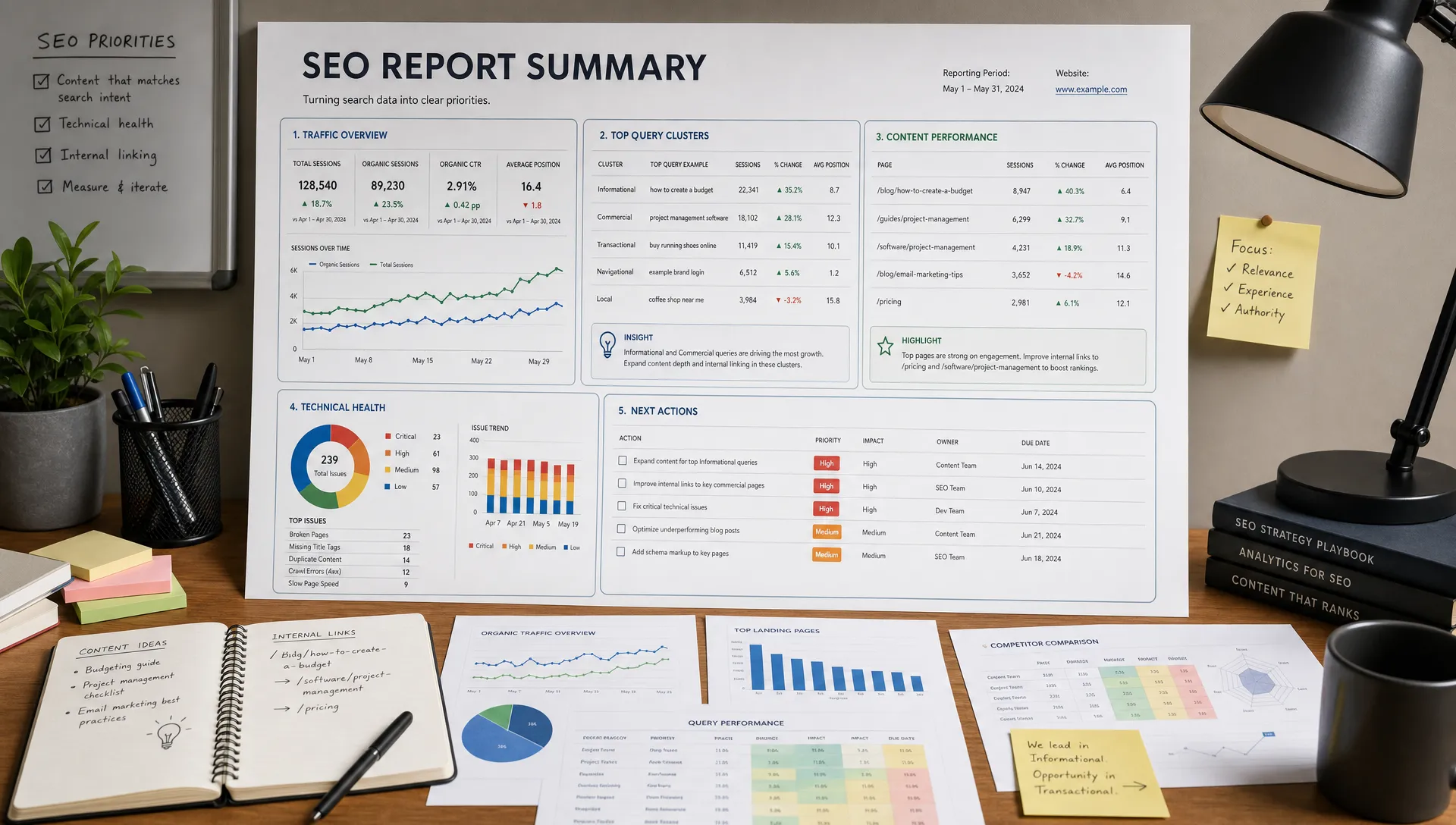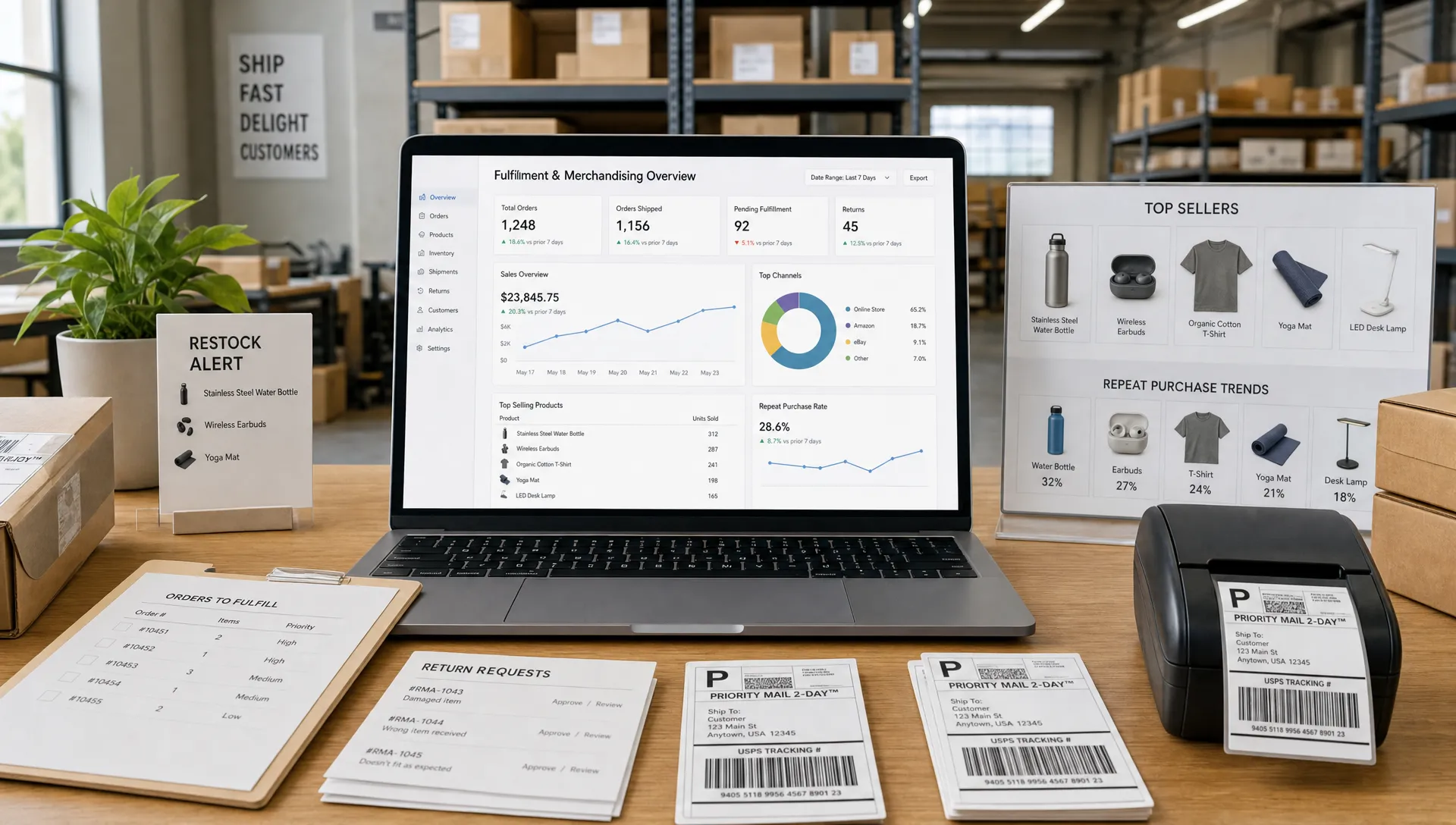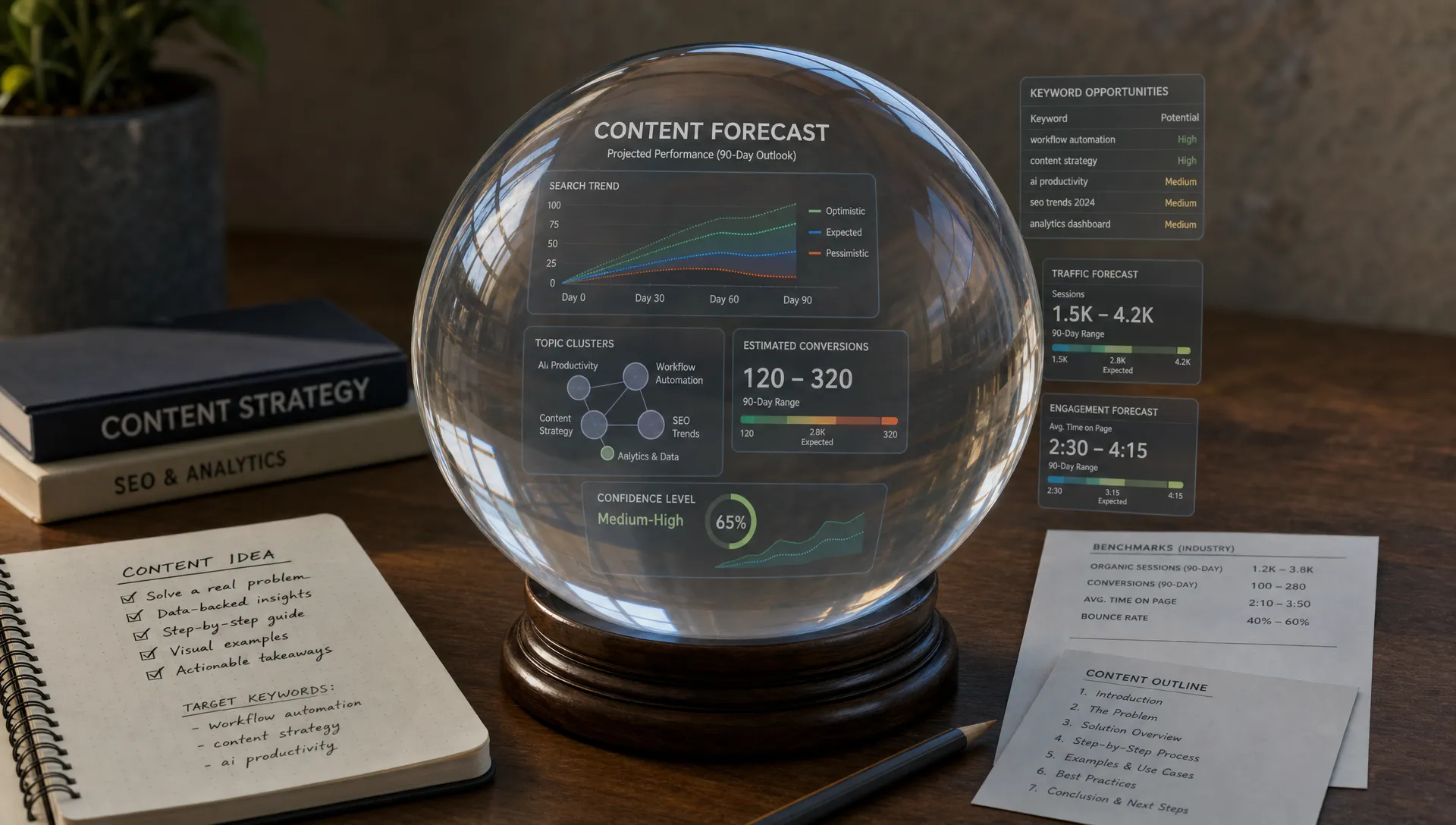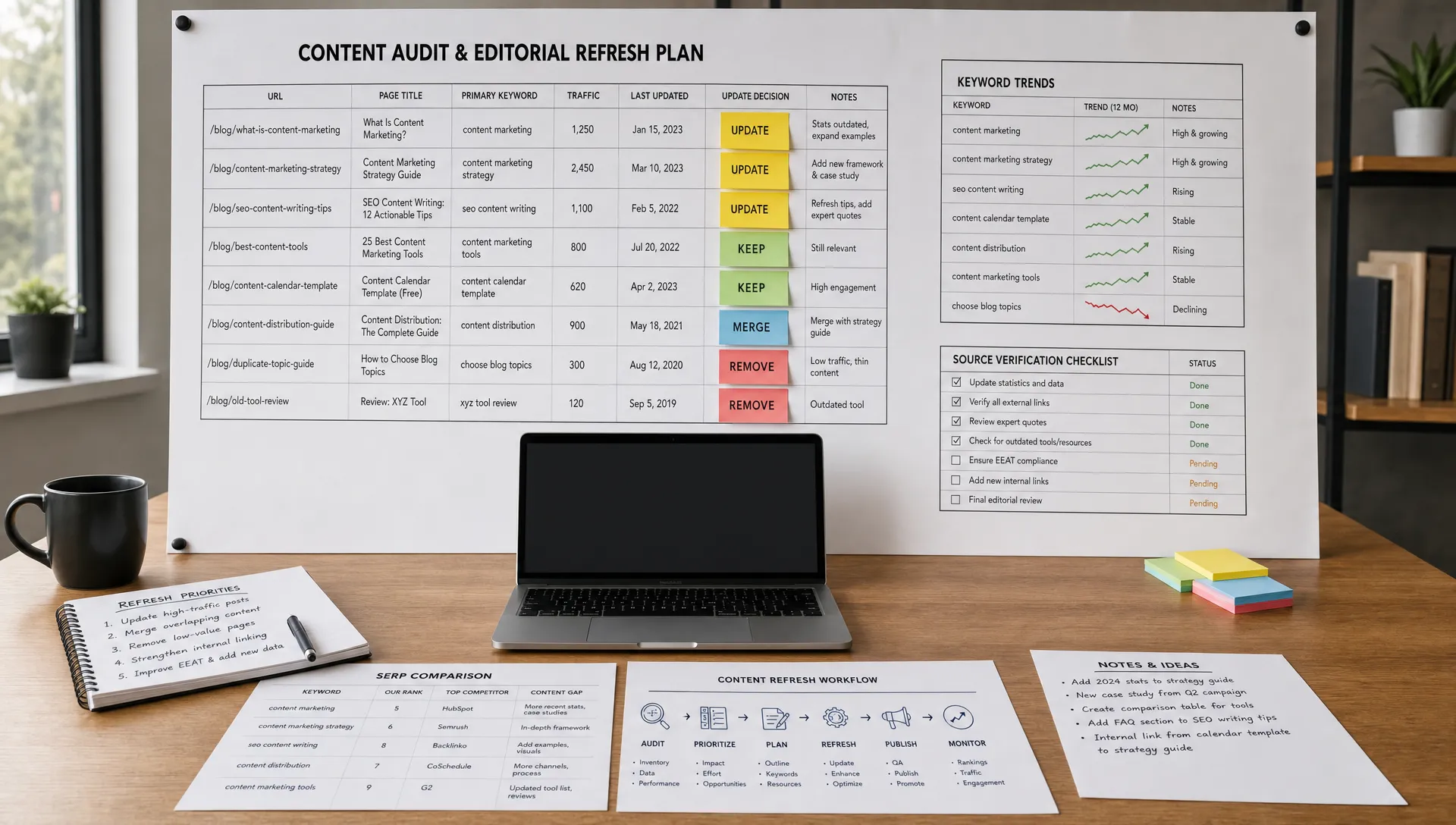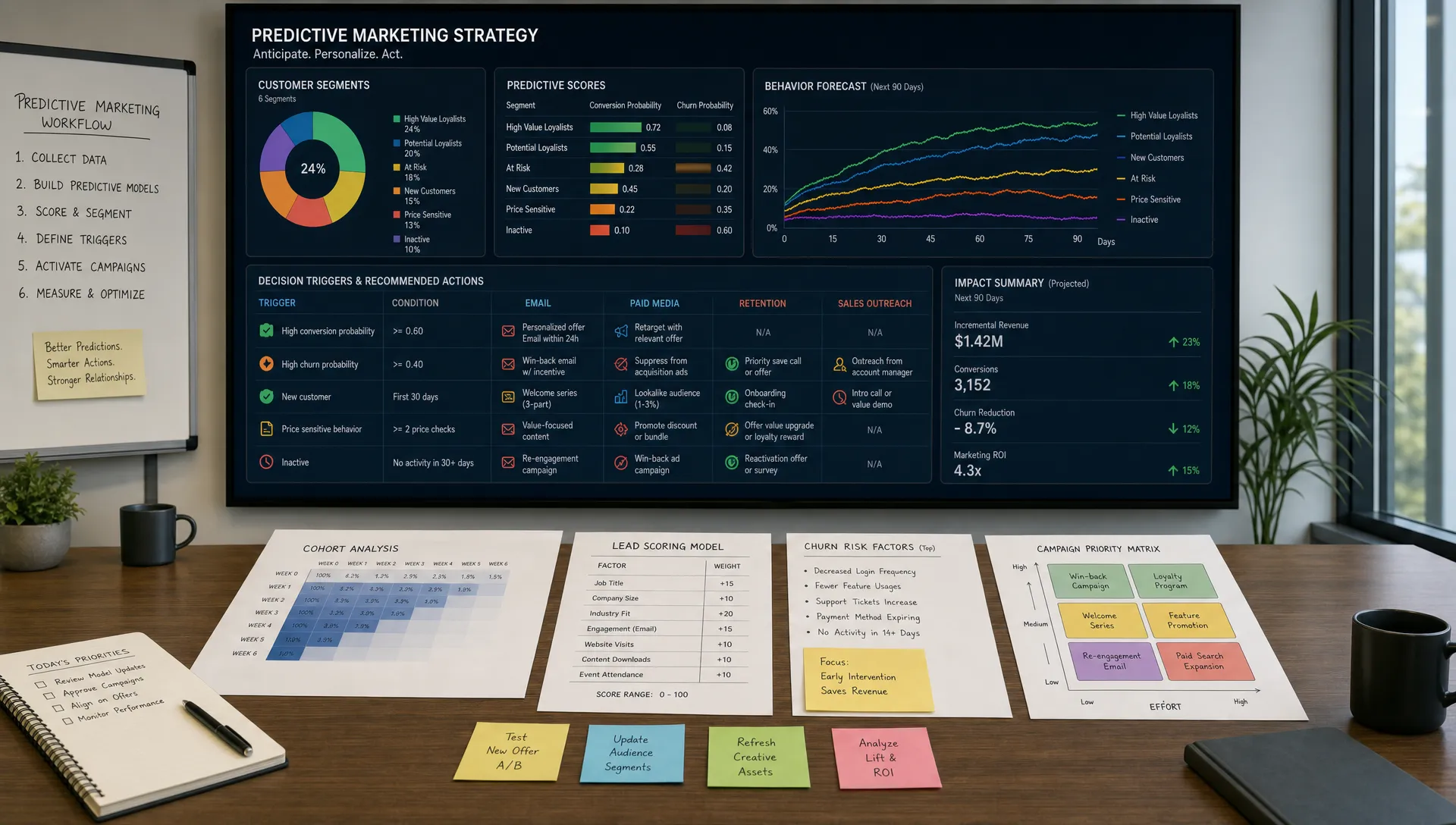
Predictive marketing is the practice of using data, analytics, and AI to forecast what customers are likely to do next, then using those predictions to make smarter marketing decisions. Instead of only looking backward at what happened in last month’s campaign, predictive marketing helps teams anticipate future behaviors such as who may buy, churn, click, upgrade, or need a different message.
For marketers, the appeal is simple: better timing, better targeting, and less wasted spend. But predictive marketing is not magic. It depends on clean data, well-defined goals, reliable models, and human judgment. When used responsibly, it can help teams move from reactive campaign management to proactive growth strategy.
Predictive marketing uses historical and real-time data to estimate the probability of future customer actions. Those estimates can then guide decisions across email, paid media, SEO, sales outreach, content creation, pricing, retention, and customer experience.
A predictive marketing system might answer questions like:
Traditional marketing often groups people by broad categories, such as industry, location, age range, or past purchases. Predictive marketing goes further by assigning probability-based scores to individuals, accounts, or segments. For example, instead of saying “small business owners are a good audience,” a predictive model might say “this account has a 72% probability of booking a demo in the next 30 days.”
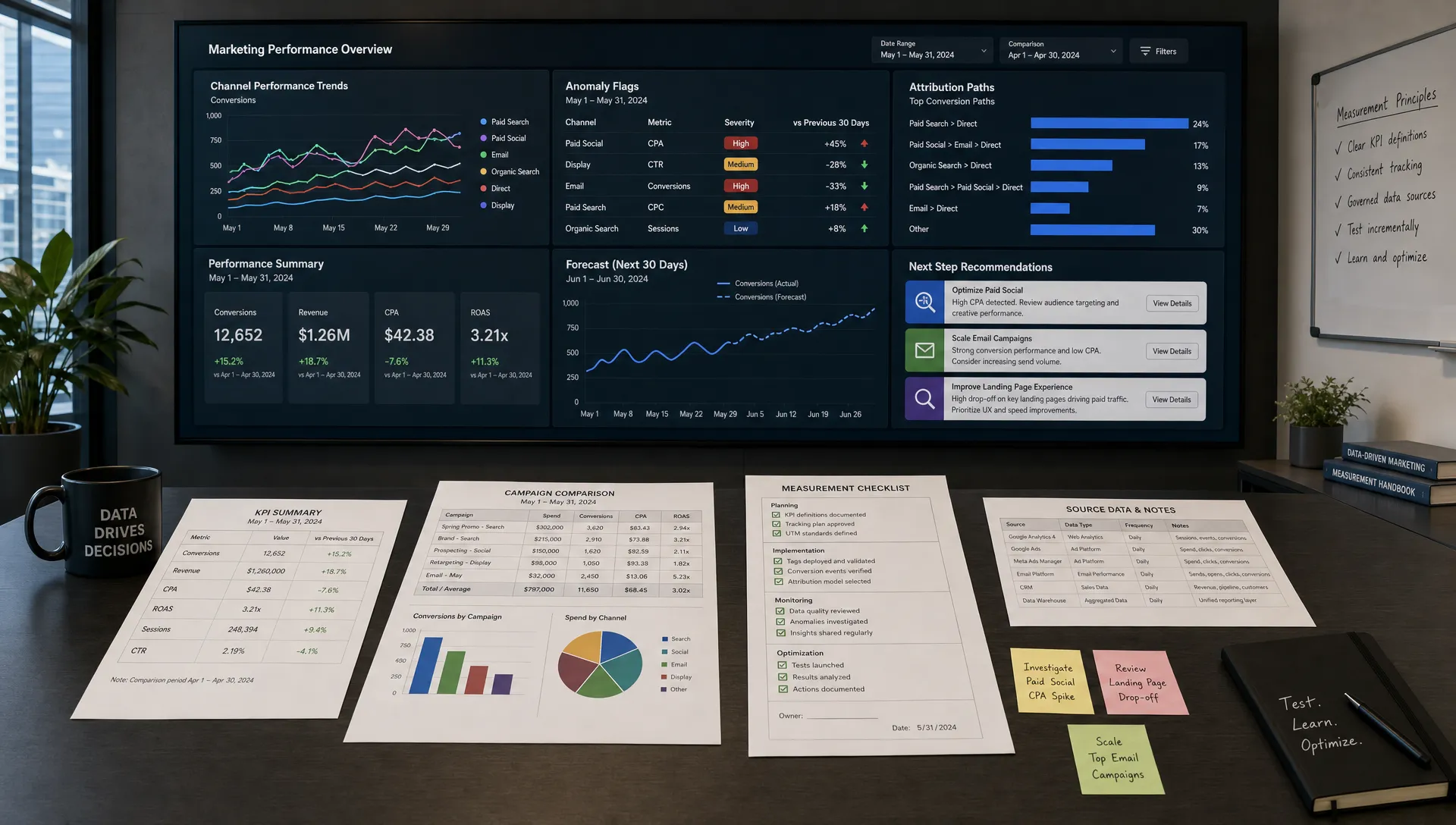
That shift matters because modern digital marketing is increasingly complex. Customers interact with brands across search, social, email, websites, apps, webinars, ads, review sites, and sales conversations. Predictive marketing helps make sense of those signals so teams can prioritize the next best action.
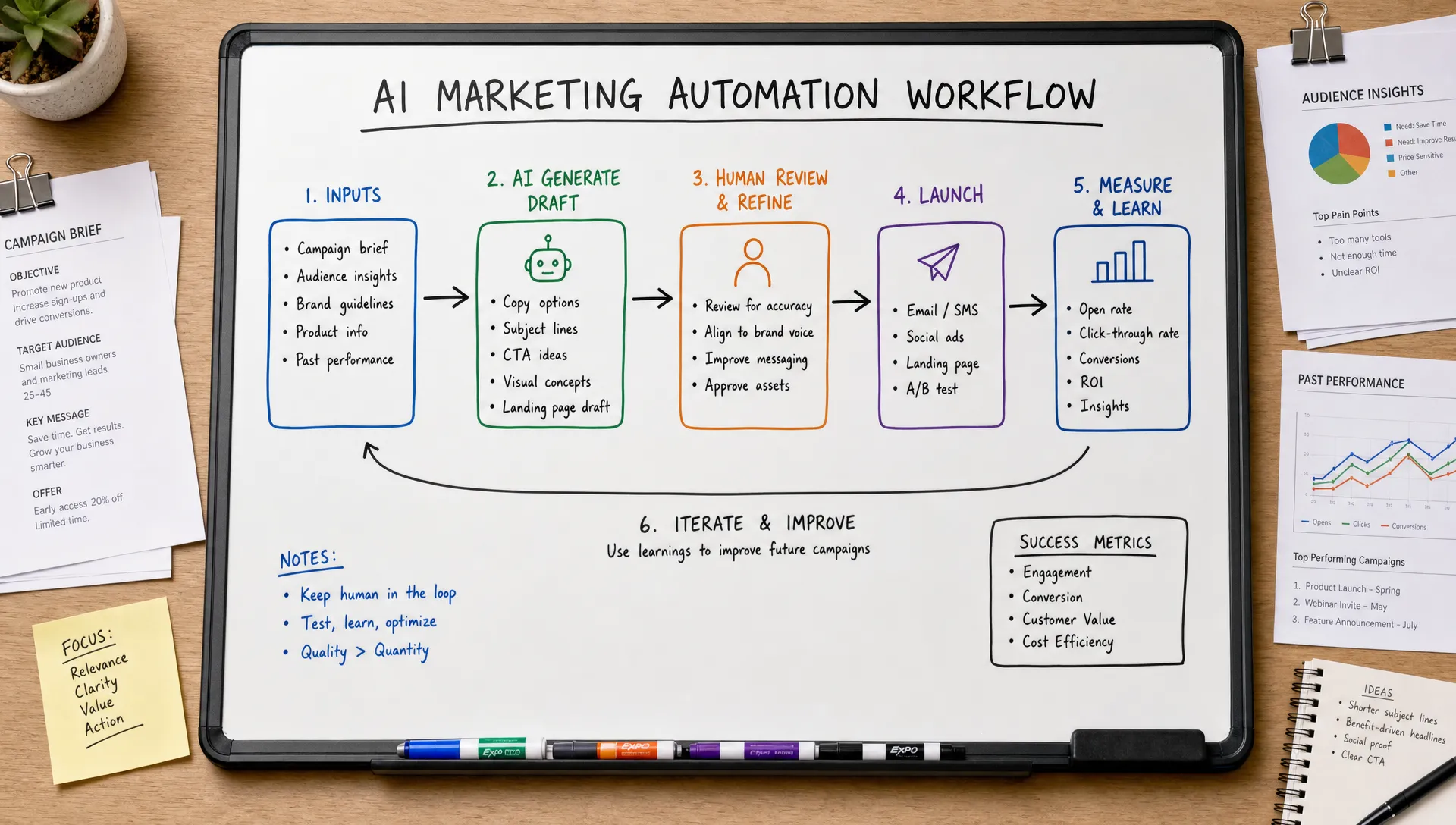
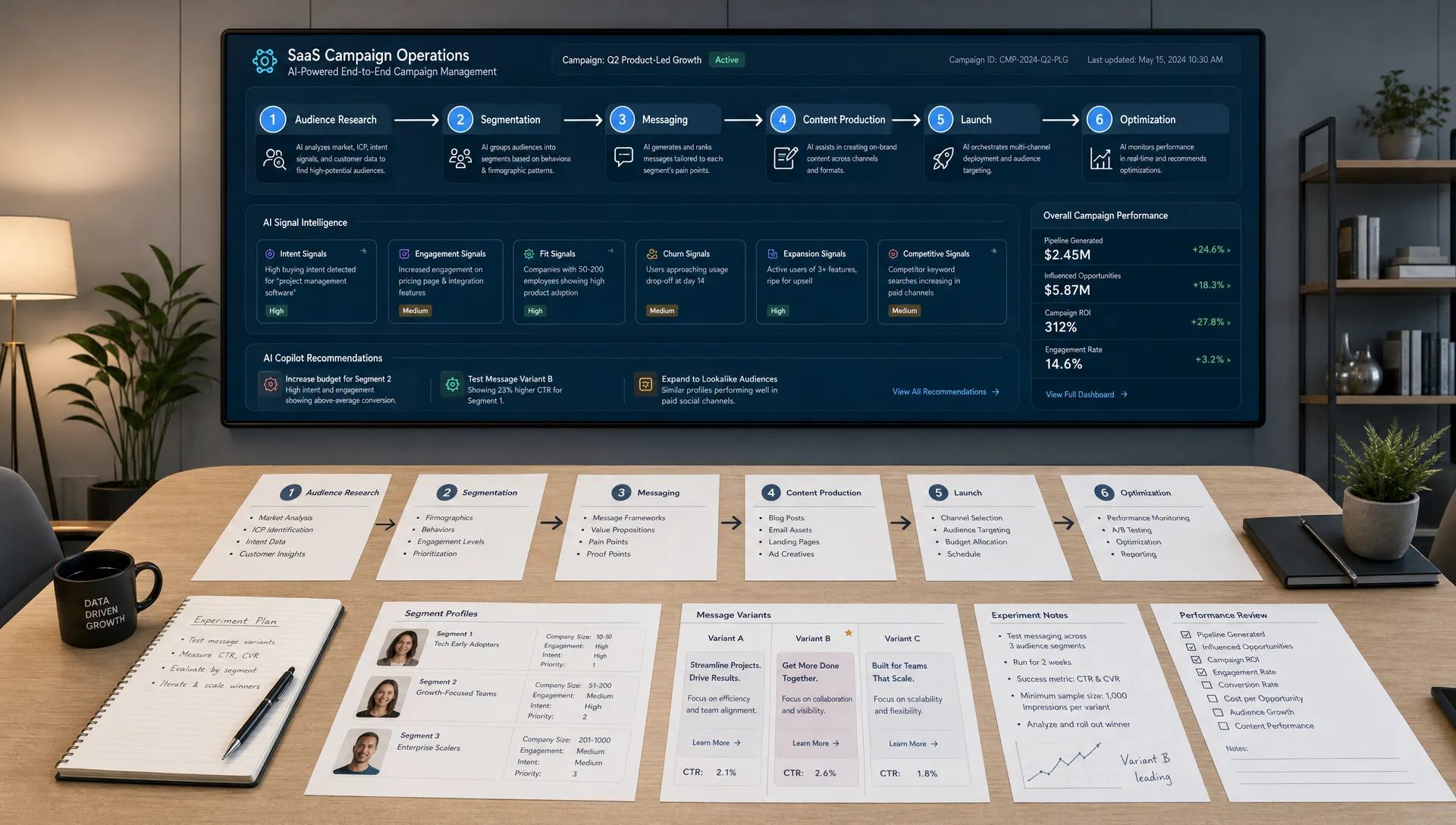
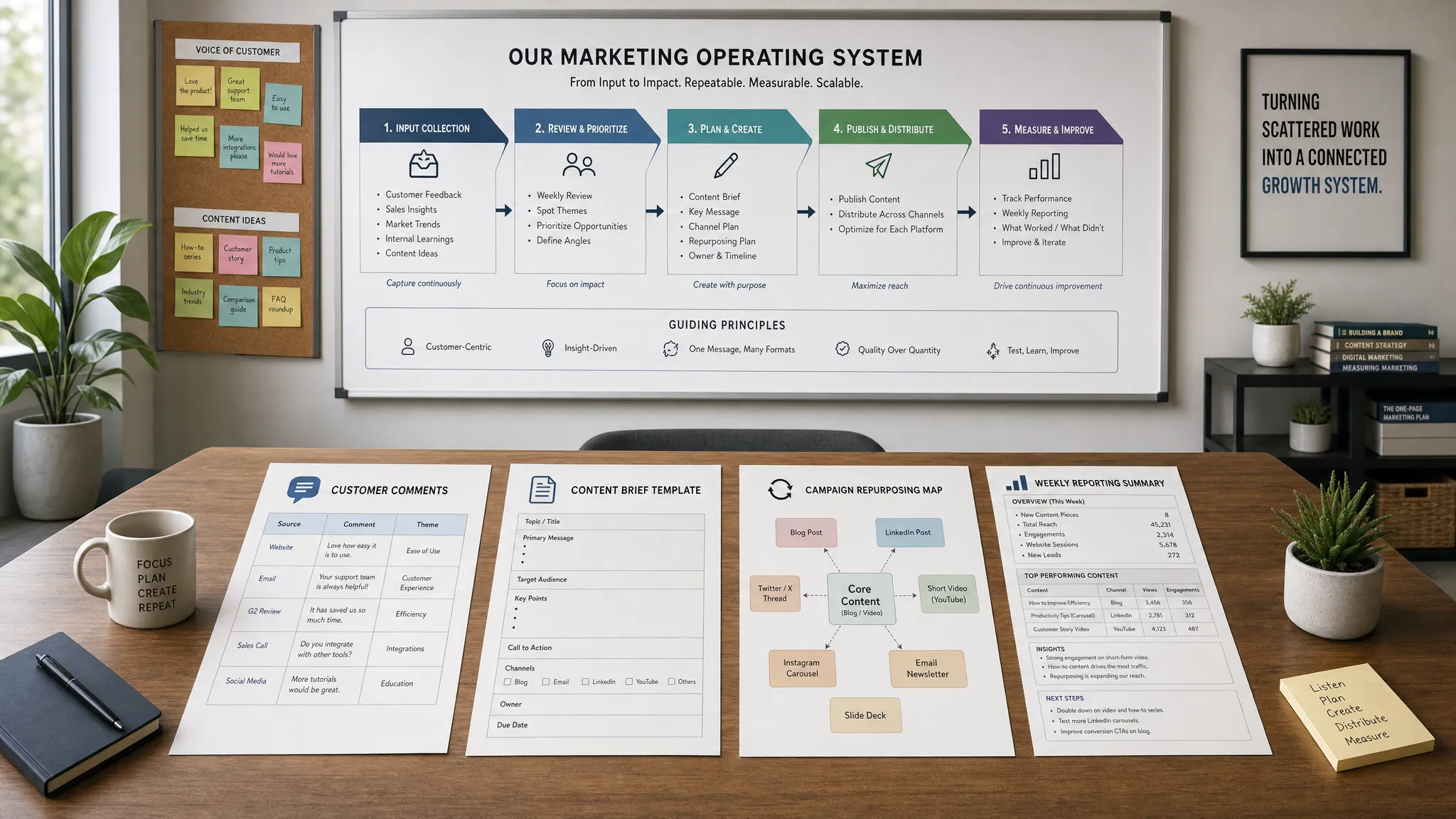
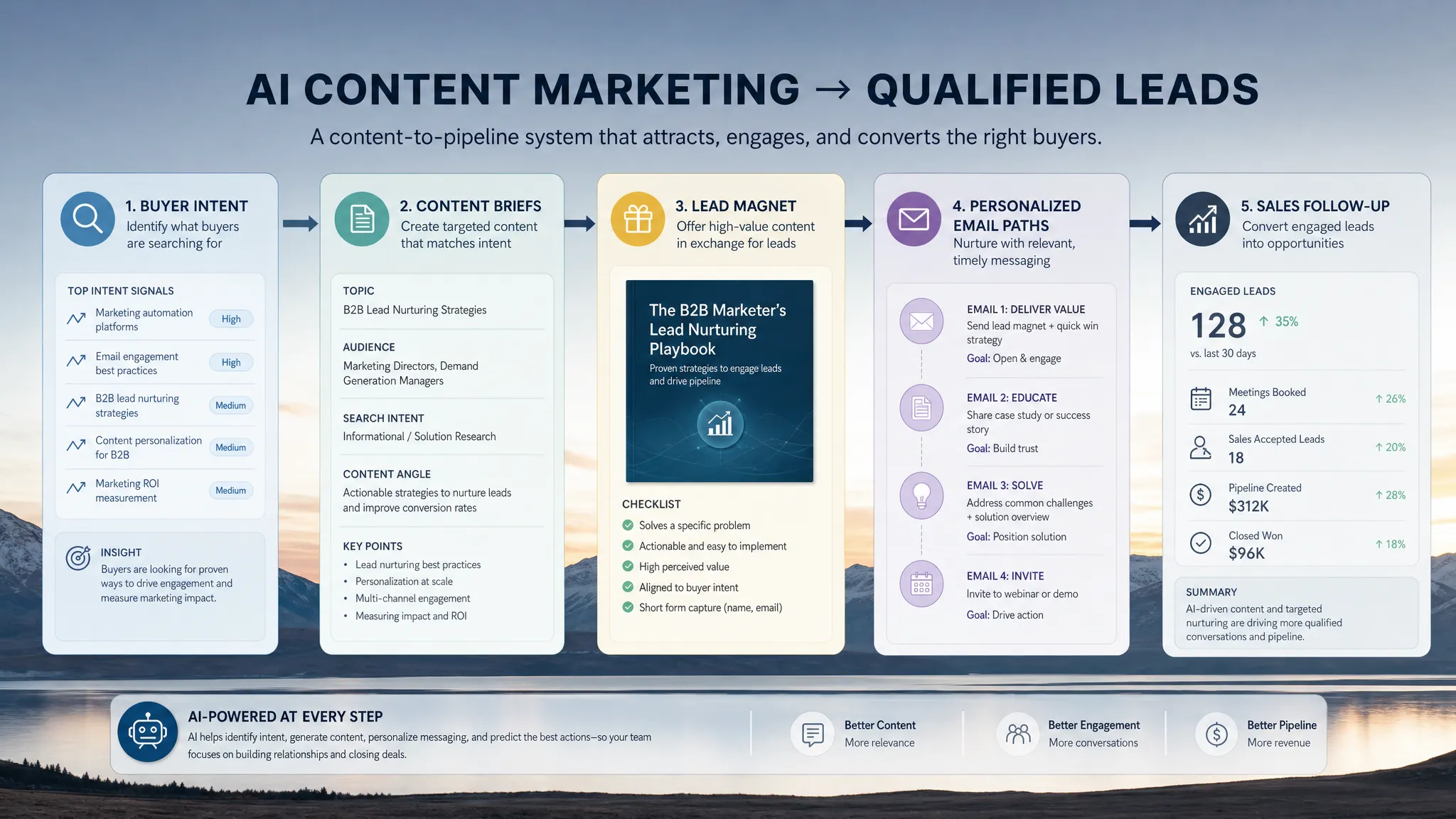
At a high level, predictive marketing works by combining data collection, statistical analysis, machine learning, and campaign activation. The exact technology stack varies by company, but the workflow usually follows the same pattern.
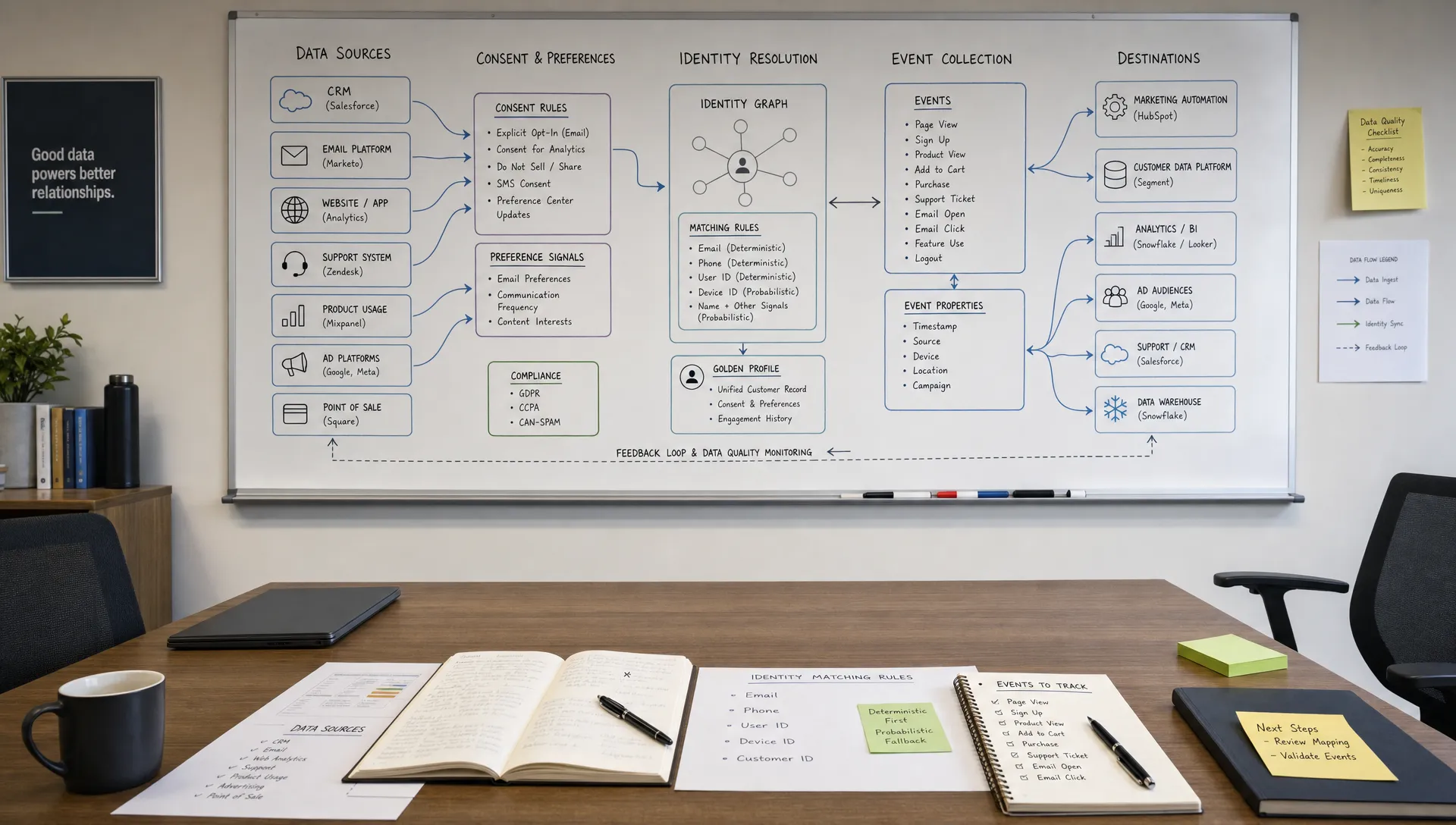
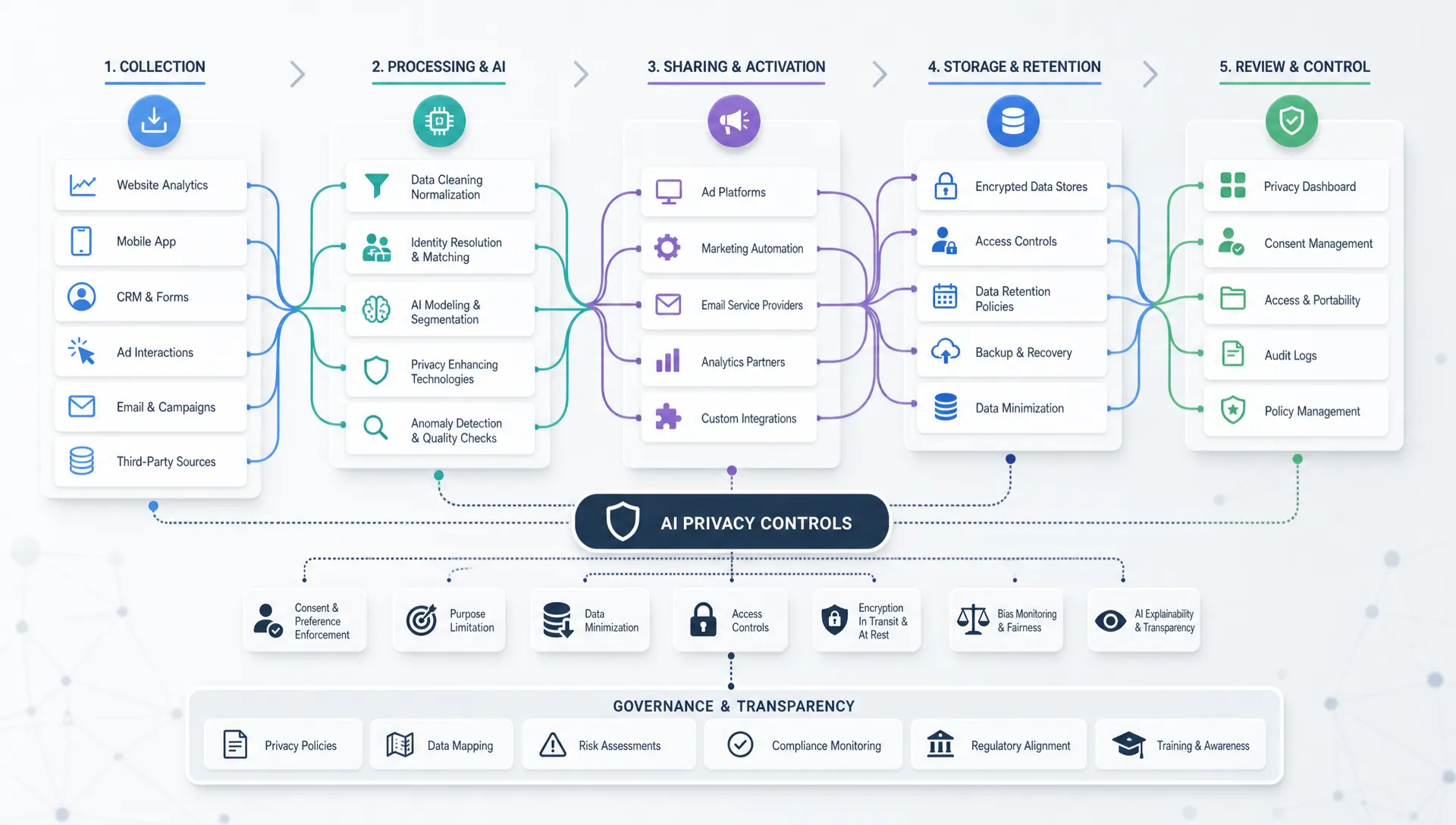
Predictive marketing starts with data. The model needs examples of past behavior before it can estimate future behavior. That data may come from a customer relationship management platform, website analytics, ad platforms, email tools, ecommerce systems, product usage, customer support conversations, or offline sales records.
Common predictive marketing data includes:
The most valuable data is usually first-party data, meaning information collected directly from your own customers and prospects. As privacy expectations and tracking limitations continue to evolve, first-party data has become a strategic asset for predictive marketing.
A predictive model needs a specific target. “Improve marketing” is too vague. A useful predictive marketing project starts with a measurable outcome, such as:
This step is critical because the business question shapes the data, the model, the activation plan, and the success metrics. A churn model, for example, will use different signals than a lead scoring model.
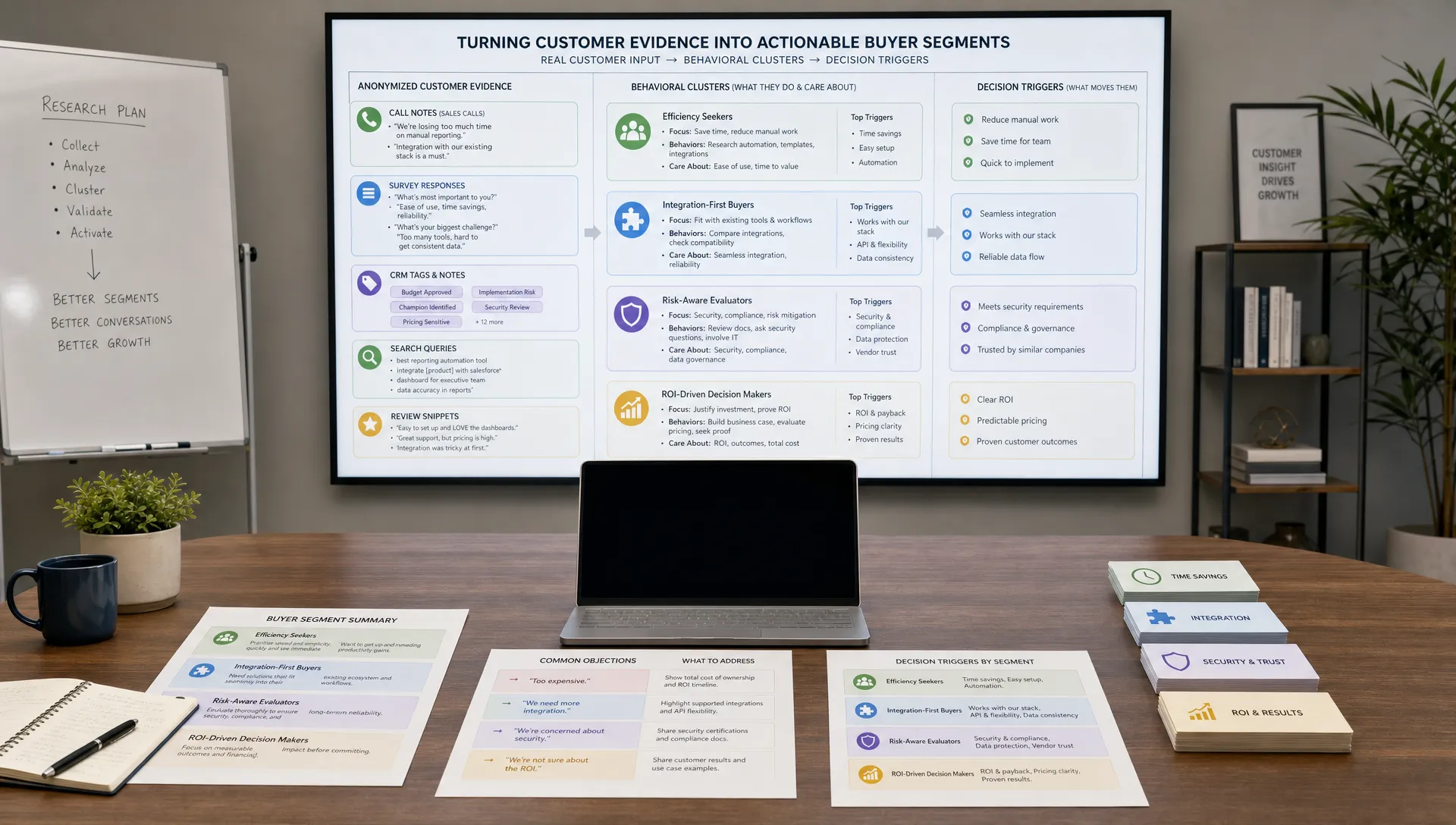
Once the goal is clear, analytics or machine learning models look for relationships between past signals and future outcomes. The system may discover that customers who visit pricing pages twice, compare product features, and open a case study email are more likely to request a demo. It may also identify negative signals, such as declining product usage or repeated support issues before churn.
The model does not “know” intent like a human would. It detects patterns and probabilities. That is why predictive marketing should be treated as decision support, not an automatic truth machine.
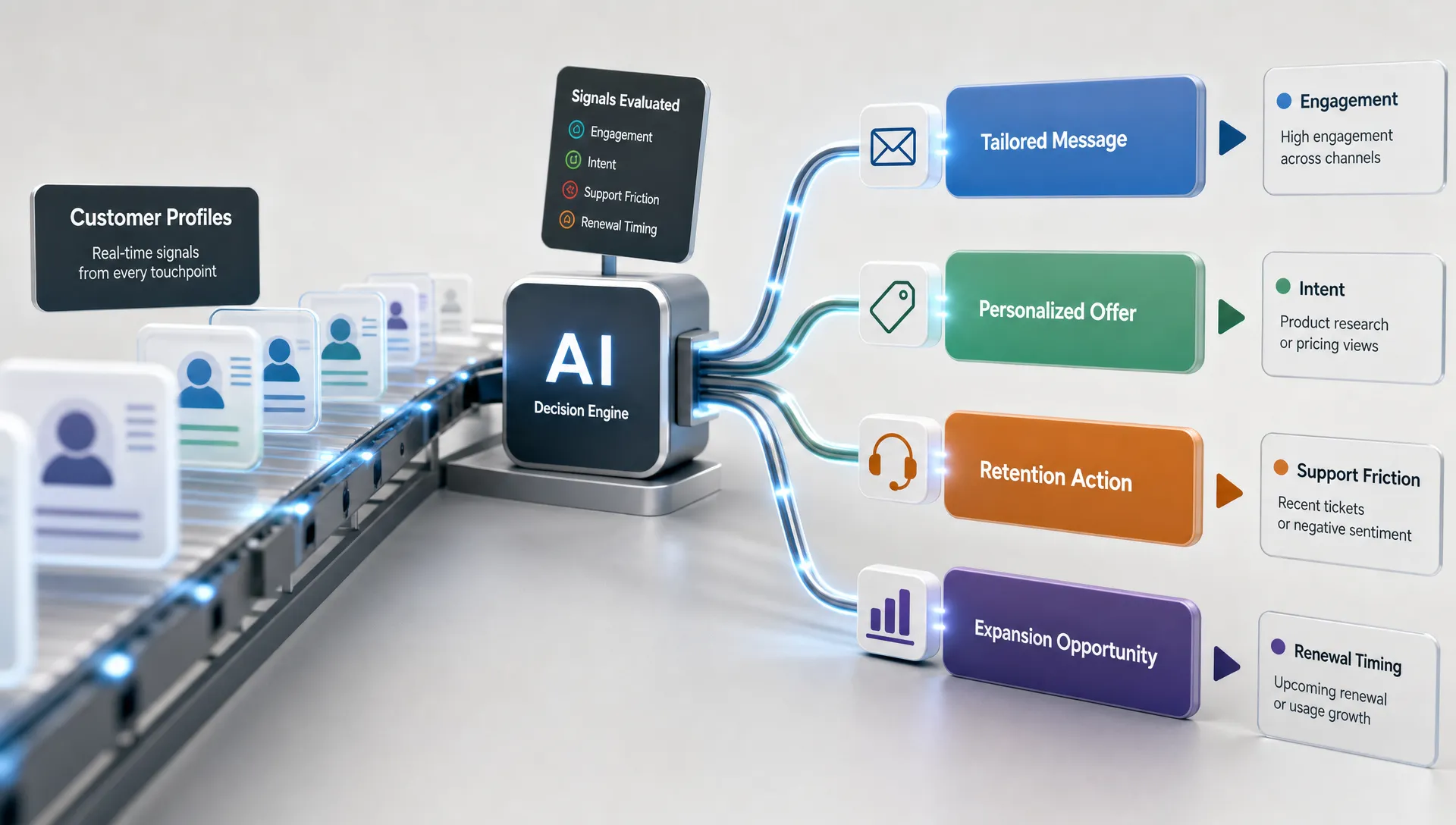
After training, the model generates predictions for current prospects, customers, accounts, or campaigns. These predictions are often expressed as scores, rankings, segments, or recommendations.
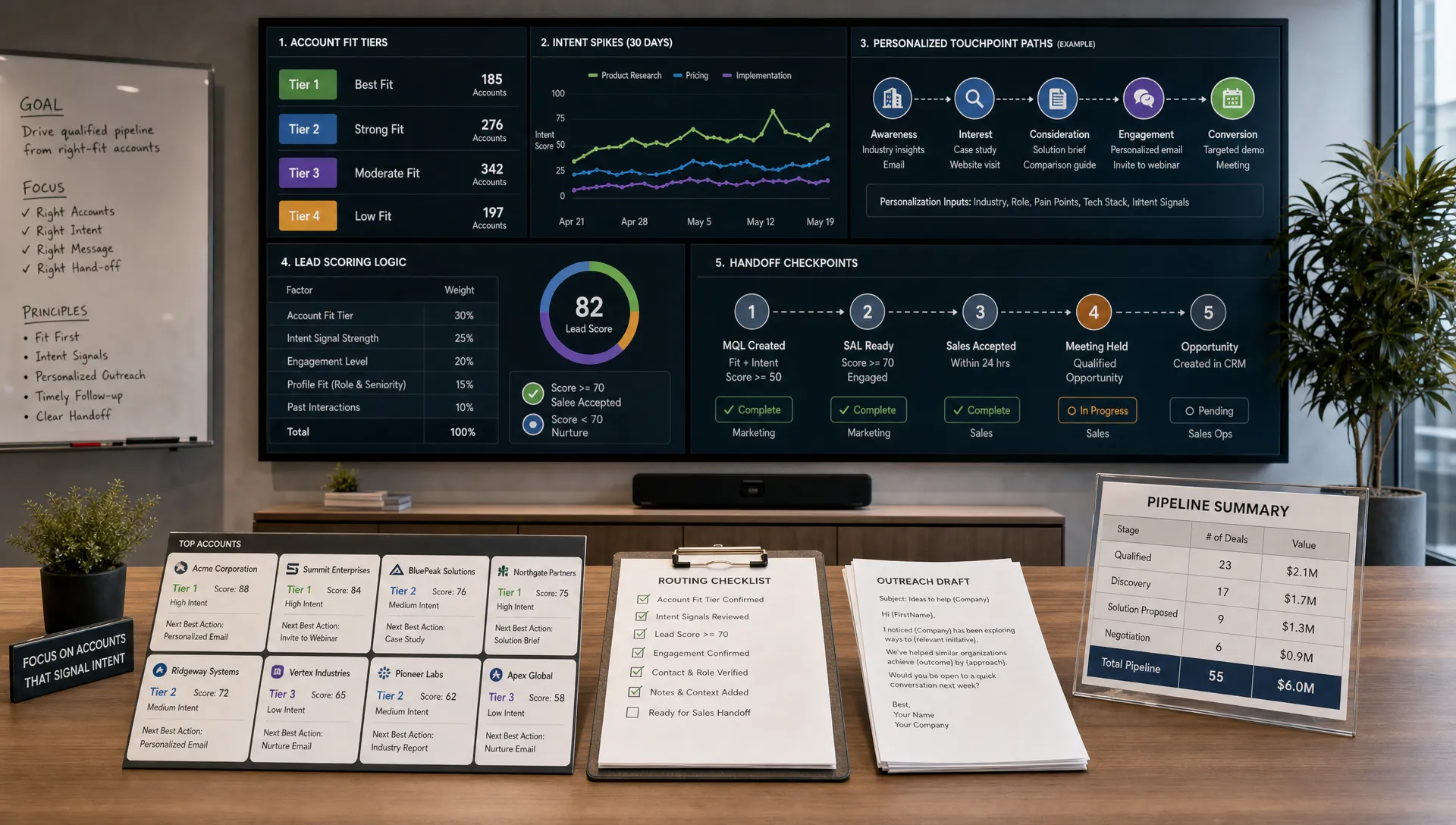
For example, a B2B SaaS team might score every account from 0 to 100 based on its likelihood to convert. An ecommerce brand might classify customers as high, medium, or low probability for repeat purchase. A content team might use predictive insights to identify topics with strong potential for both search demand and conversion intent.
Predictions become valuable only when they change what the team does. A score sitting in a dashboard is not enough. Predictive marketing becomes powerful when it informs campaign decisions.
A high-intent lead might be routed to sales faster. A customer with churn risk might receive a proactive onboarding email. A paid media team might shift budget toward audiences with higher predicted lifetime value. A content team might prioritize articles that attract users who are more likely to convert.
This is where predictive analytics connects with AI marketing automation. Automation can help deliver messages, adjust workflows, and personalize experiences based on predictive signals, while marketers set the strategy and guardrails.
Predictive marketing does not replace traditional marketing strategy. It strengthens it by making decisions more data-informed and forward-looking.
Area              | Traditional marketing                           | Predictive marketing
Main focus        | Past performance and broad audience assumptions | Future behavior and probability-based decisions
Segmentation      | Static groups based on known attributes         | Dynamic segments based on changing signals
Campaign timing   | Calendar-based or manually scheduled            | Triggered by predicted readiness or risk
Personalization   | Rule-based personalization                      | AI-assisted recommendations and next-best actions
Budget allocation | Based on historical channel results             | Based on predicted return, conversion, or lifetime value
Measurement | Reports what happened | Estimates what is likely to happen and tests the result Predictive marketing is useful across the customer journey, from awareness to retention. The best use case depends on your business model, sales cycle, data maturity, and growth goals.
Predictive lead scoring ranks leads or accounts by their likelihood to convert. Instead of giving points manually for actions like downloading a guide or visiting a pricing page, the model learns which behaviors actually correlate with revenue.
This is especially useful for B2B companies with long sales cycles or large lead volumes. Sales teams can focus on the accounts most likely to move forward, while marketing can nurture lower-intent leads until they show stronger buying signals.
Churn prediction identifies customers who may cancel, downgrade, or become inactive. Signals might include reduced product usage, fewer logins, declining email engagement, unresolved support tickets, or changes in purchase frequency.
Once a customer is flagged as high risk, marketing and customer success teams can intervene with education, offers, support, or personalized check-ins. This can be more cost-effective than trying to replace lost customers with new acquisition.
Predictive models can estimate which product, plan, service, or content asset is most relevant to a customer. Ecommerce companies use this for product recommendations. SaaS companies use it for upsell prompts, feature education, or plan upgrade campaigns.
The goal is not to push more messages. The goal is to reduce irrelevant communication and make each interaction more useful.
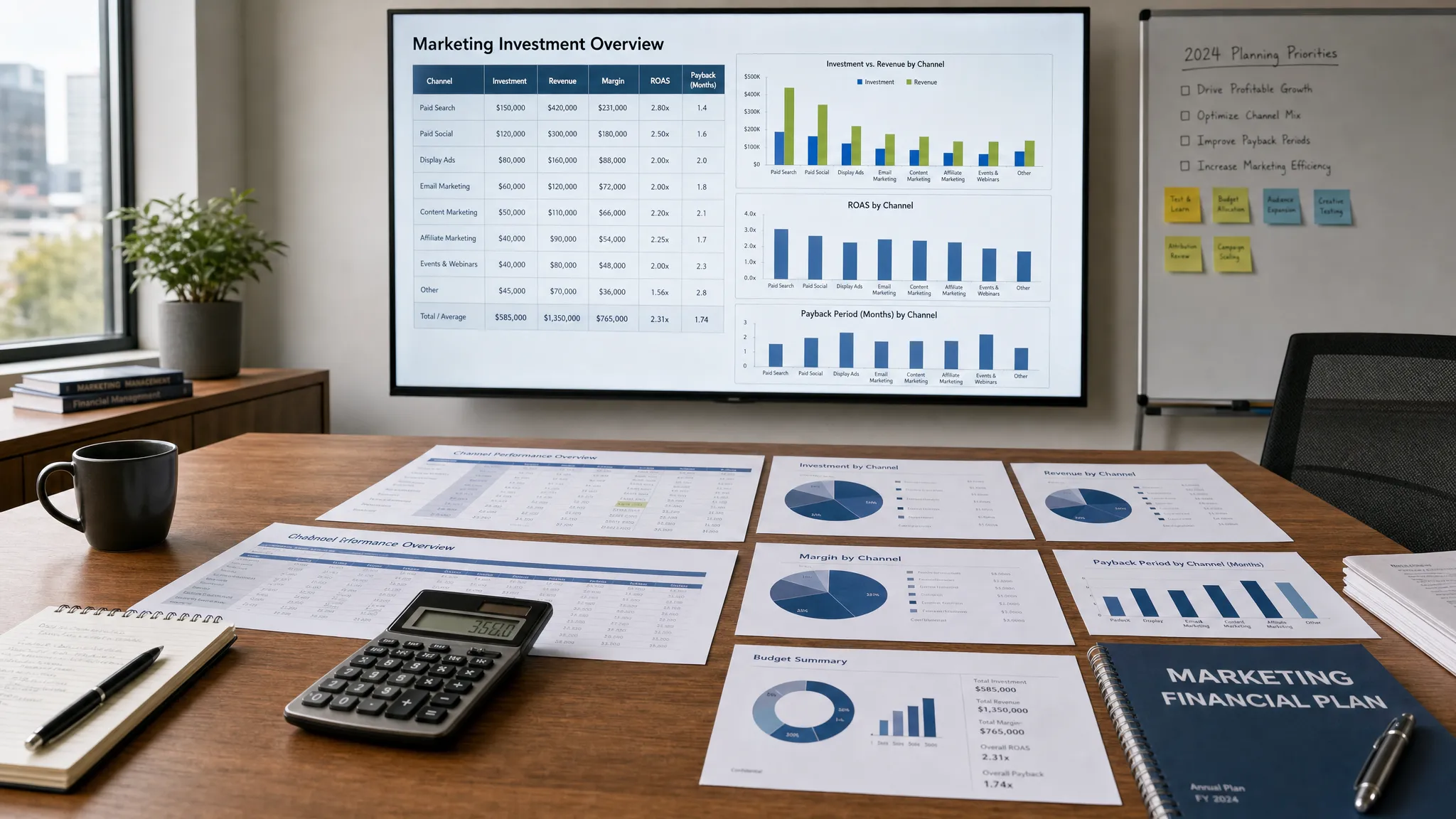
Paid media teams can use predictive signals to improve targeting, bidding, creative testing, and budget allocation. For example, a campaign can optimize not only for immediate conversions but also for predicted customer lifetime value.
If you are exploring this area, AIMarketer Hub’s guide to how AI advertising is changing paid media offers a helpful next step for understanding how AI-driven optimization is reshaping ad strategy.
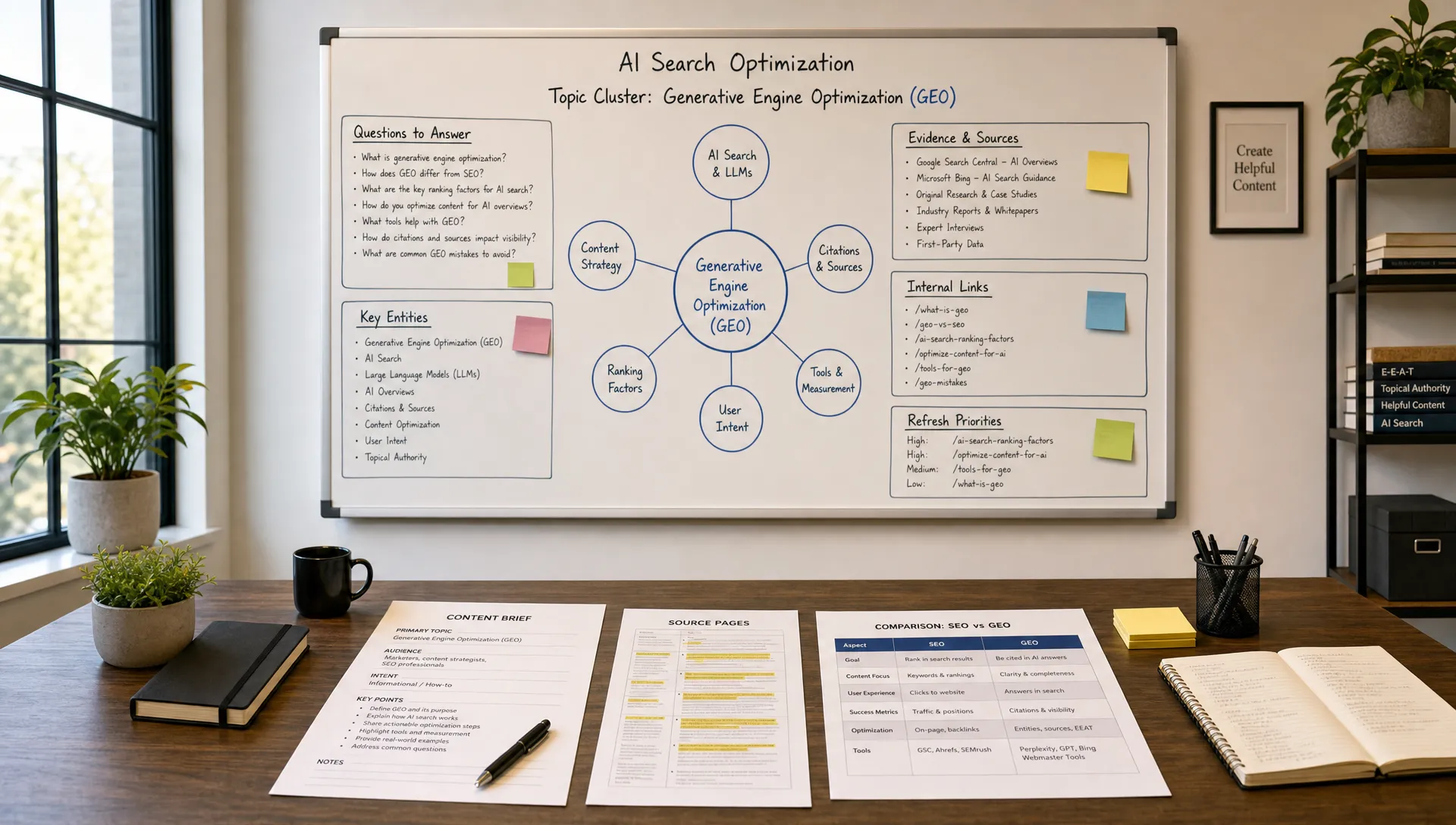
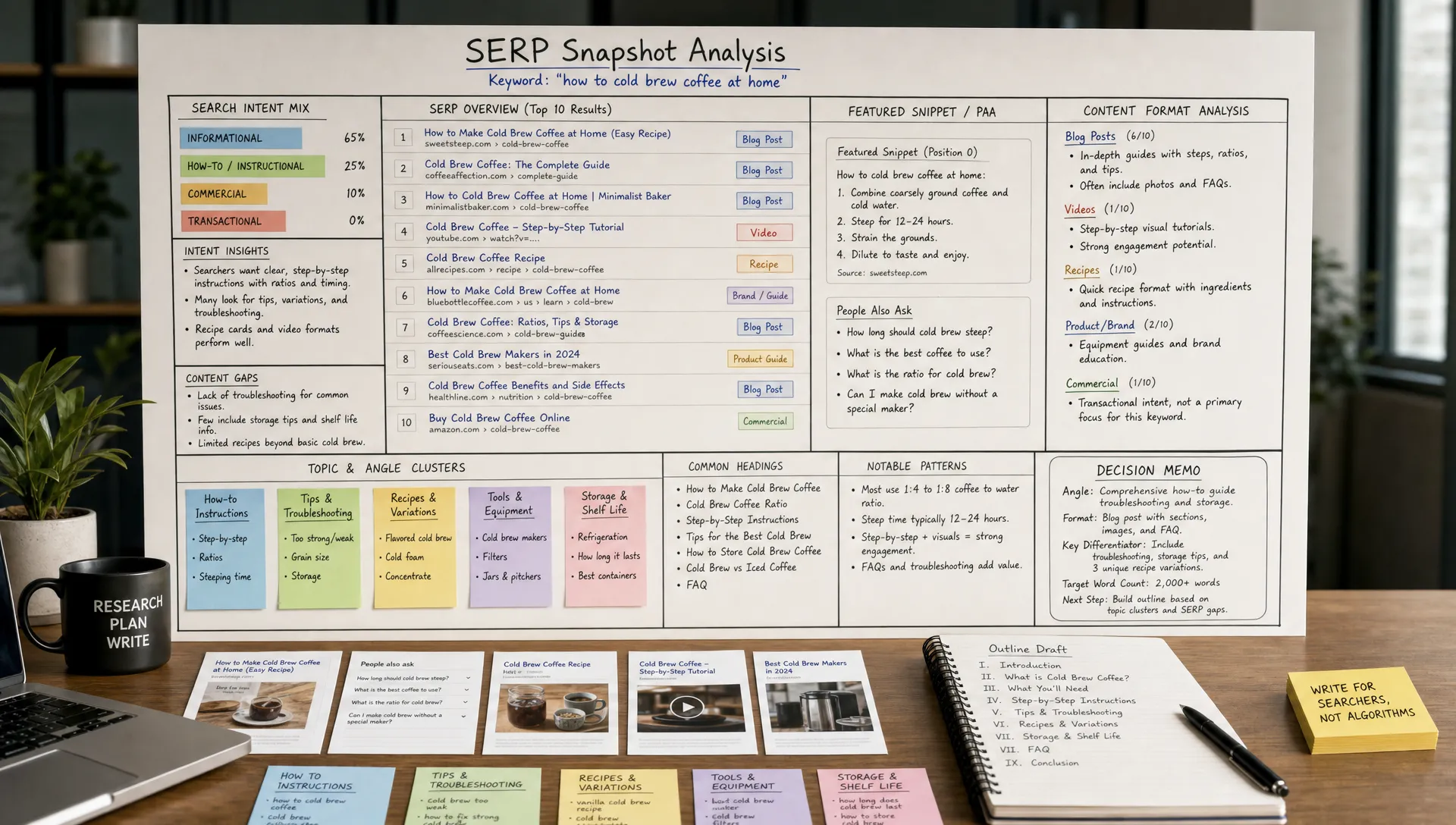
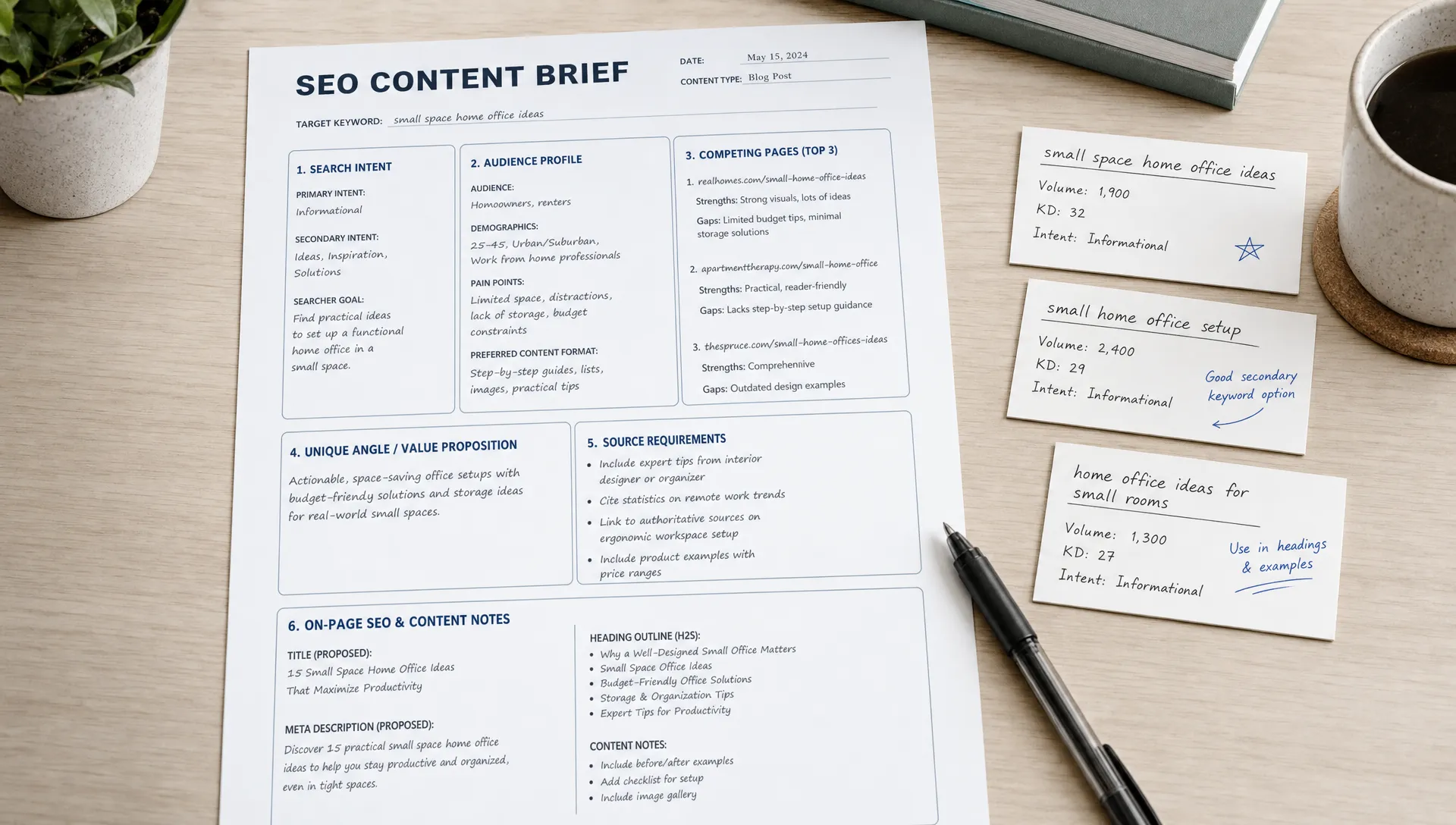
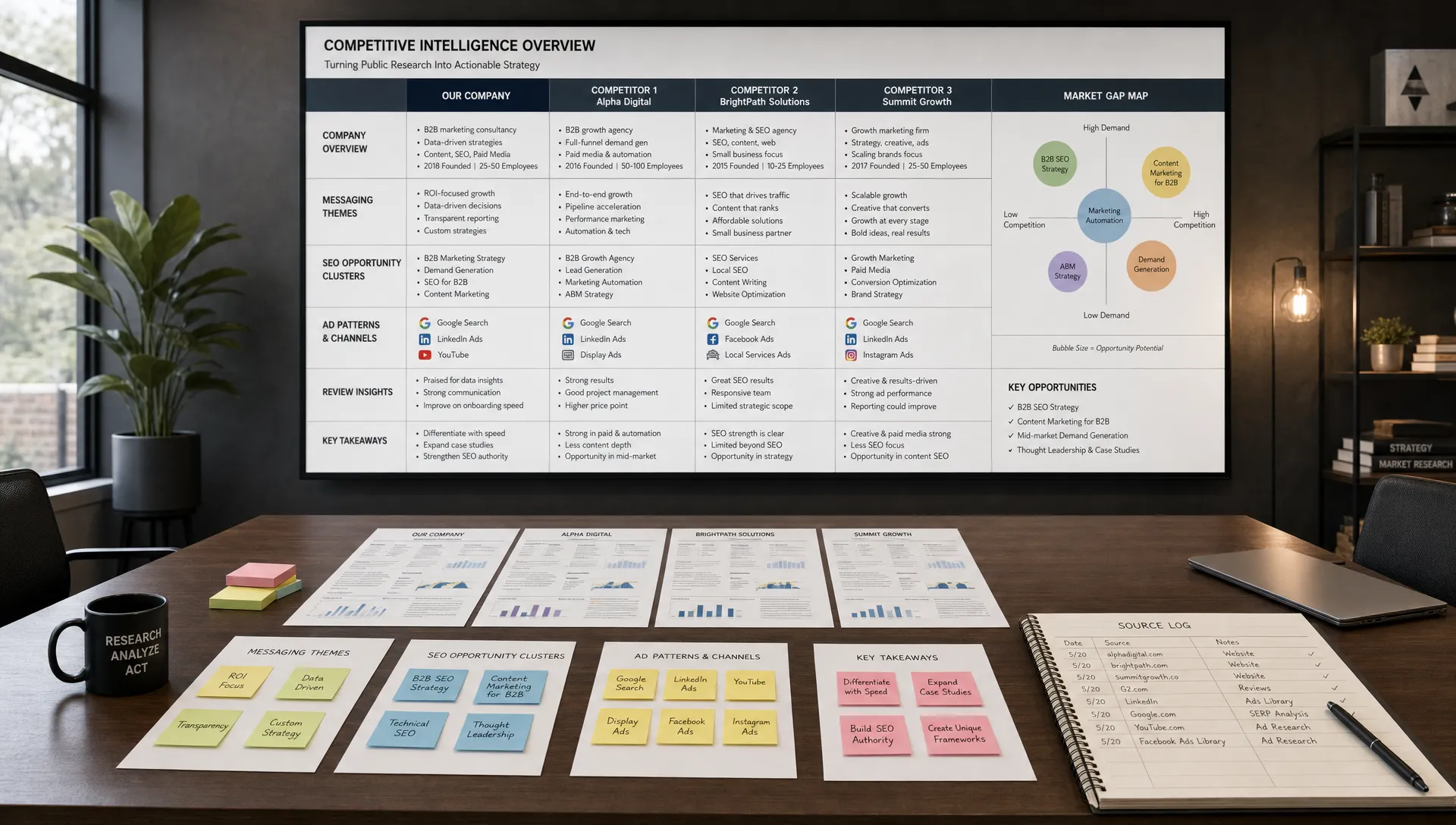
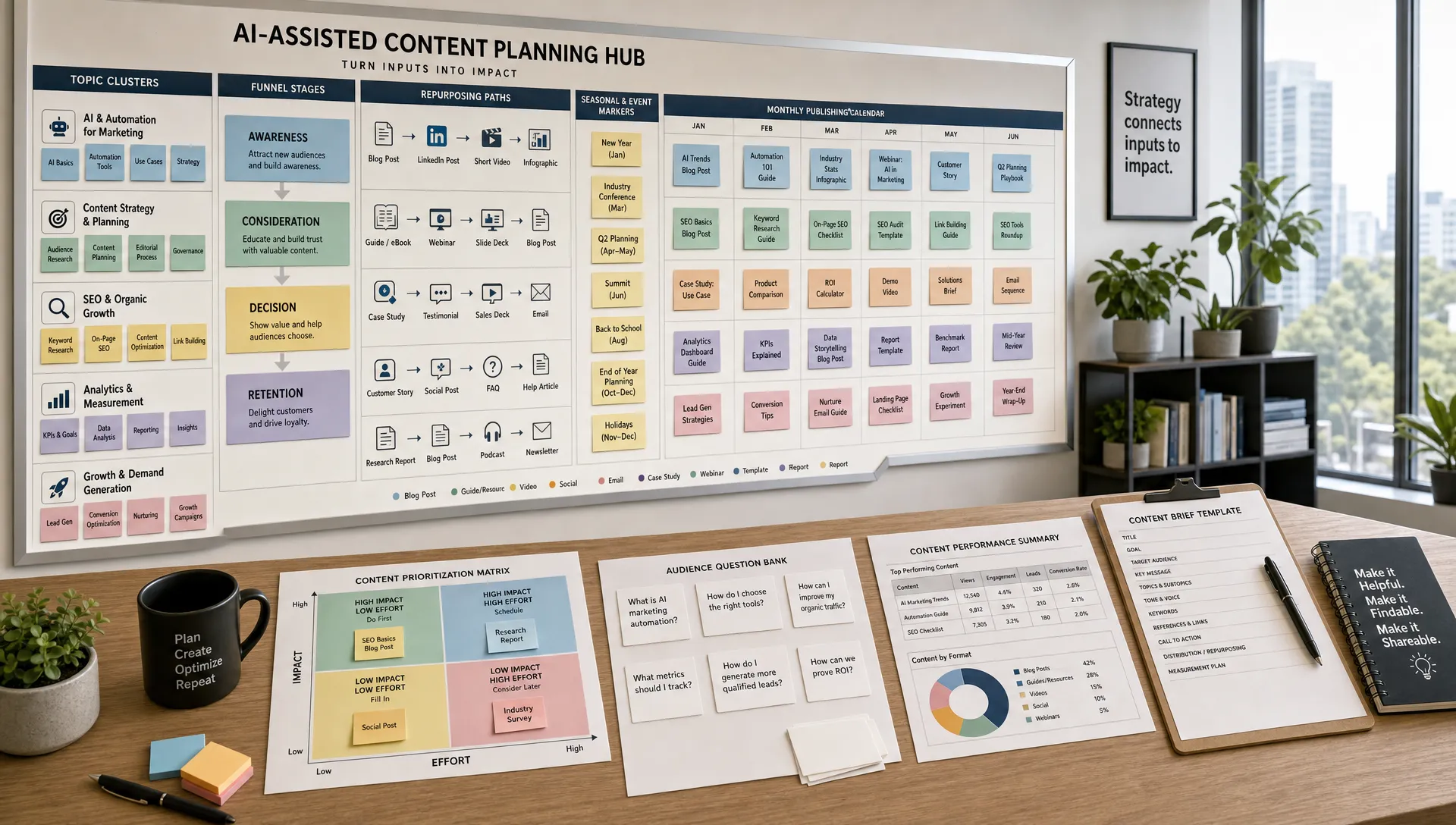
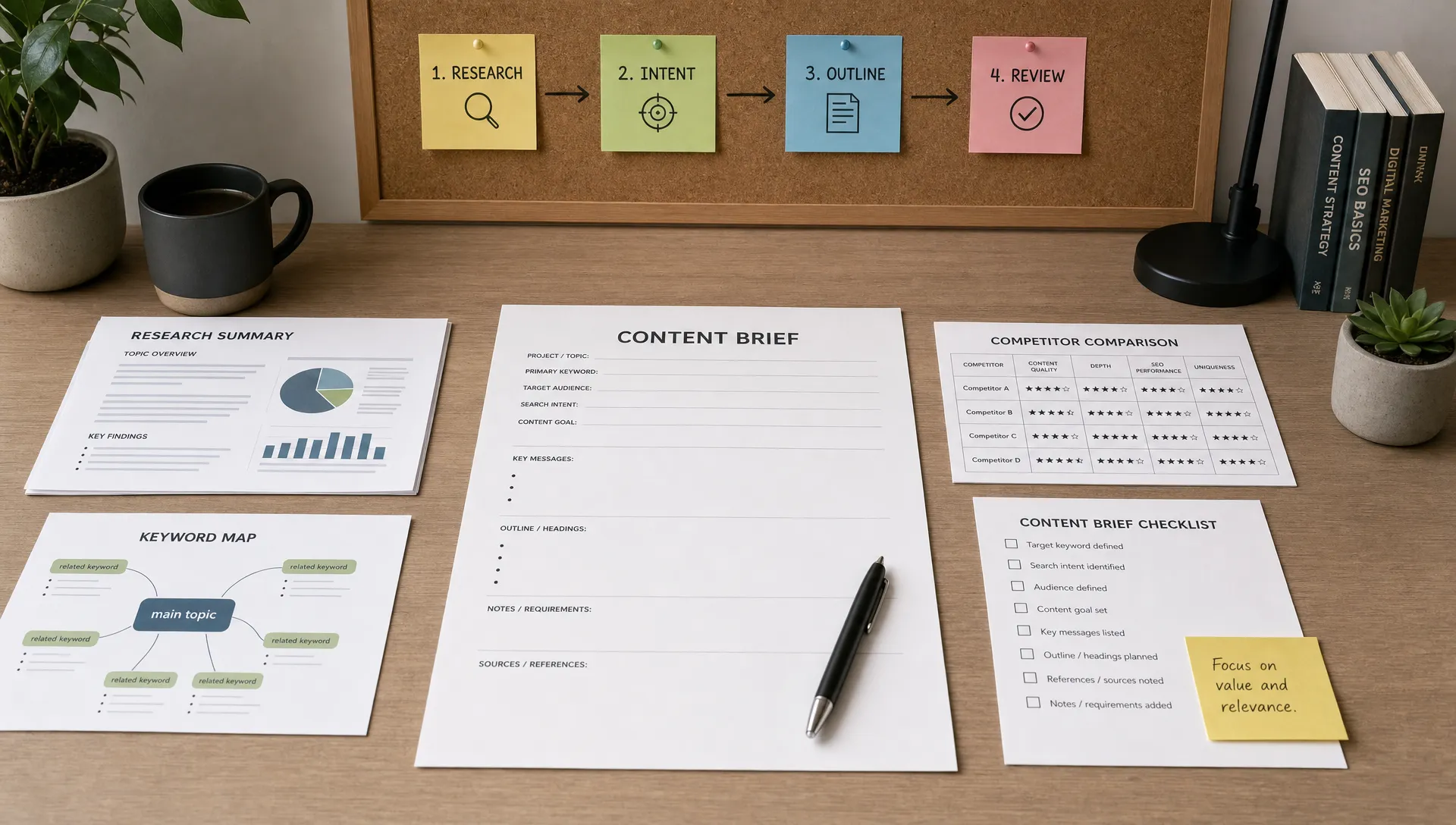
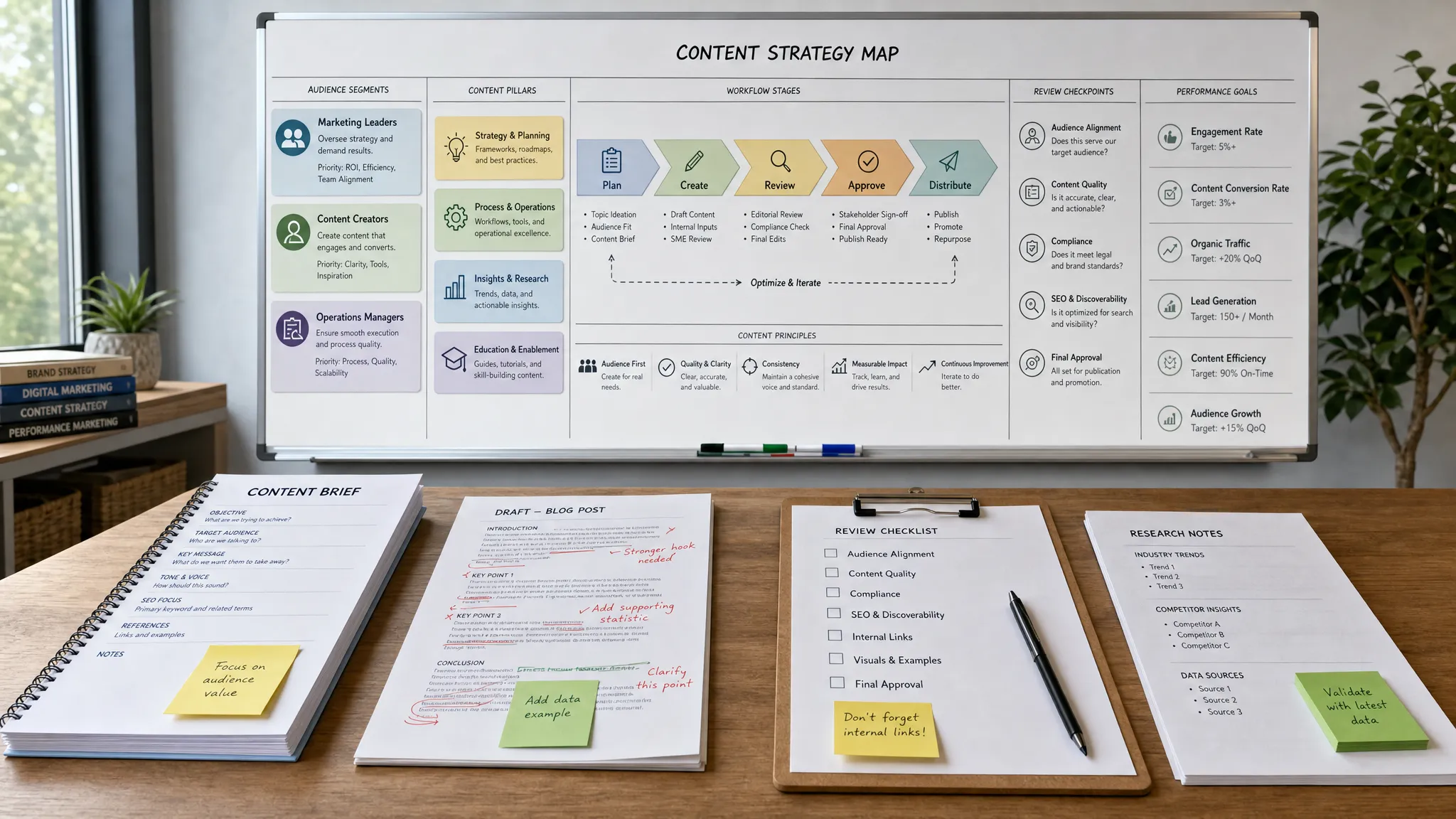
Predictive marketing can also support content creation. By analyzing search trends, audience behavior, conversion paths, and engagement data, teams can identify topics that are more likely to attract qualified traffic or influence pipeline.
This is different from generating content automatically. Predictive content planning is about choosing better topics, formats, and distribution channels before production starts. For teams using AI in the writing process, it pairs well with a disciplined approach to AI content generation for better ROI.
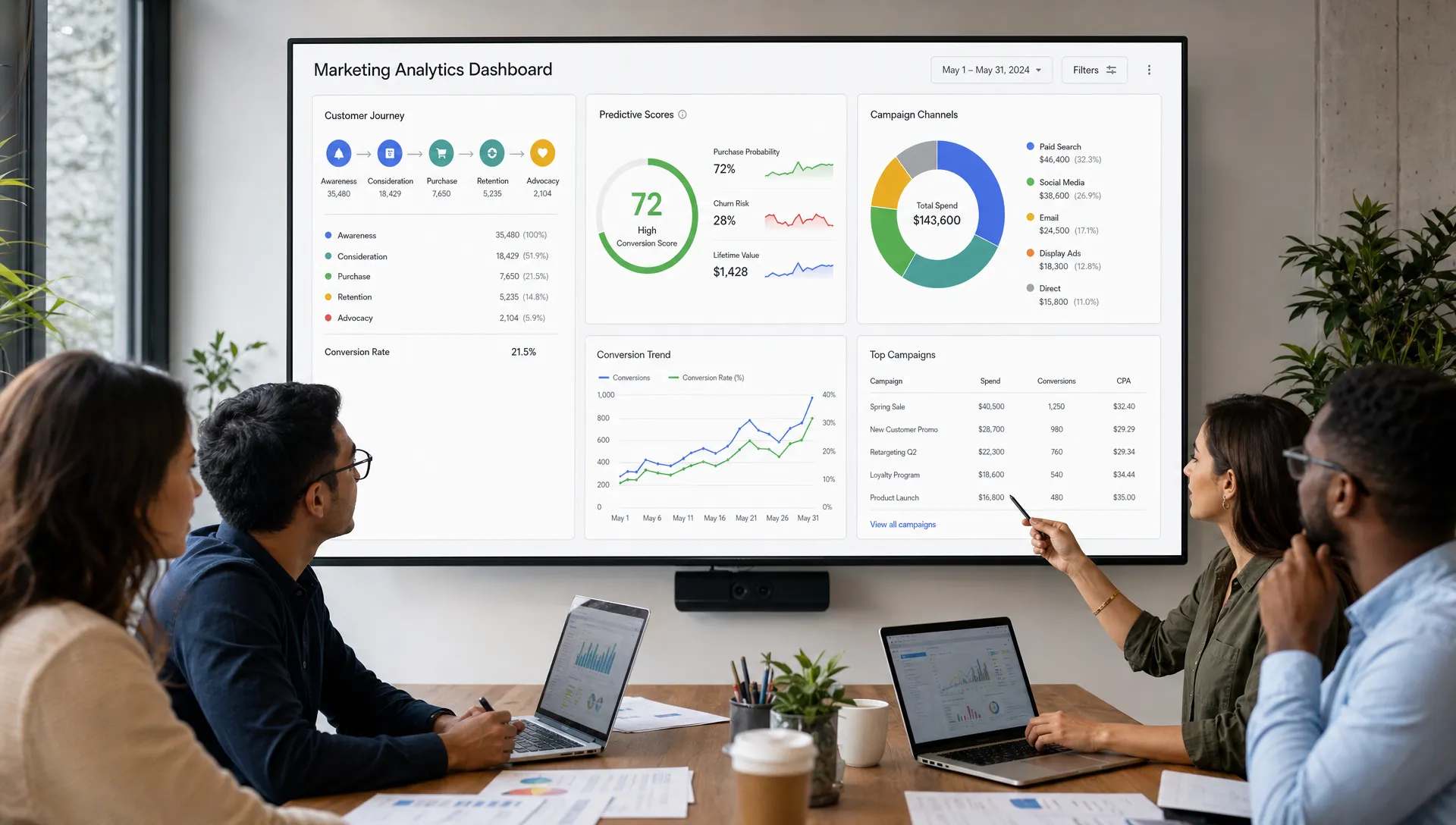
Predictive marketing does not require perfect data, but it does require relevant, trustworthy data. The right data depends on the prediction you want to make.
Prediction goal         | Useful data signals                                                           | Example action
Lead conversion         | Website behavior, form submissions, company size, source, past sales outcomes | Prioritize sales follow-up for high-fit leads
Churn risk              | Product usage, support tickets, renewal date, engagement decline              | Trigger retention campaign or customer success outreach
Repeat purchase         | Purchase frequency, product category, browsing history, email engagement      | Send personalized replenishment or recommendation message
Customer lifetime value | Acquisition source, order value, retention history, product mix               | Shift budget toward higher-value audience segments
Email engagement | Open history, click history, time zone, content preferences | Optimize send time and message type Predictive marketing can create value in several ways, especially when it is tied to clear business outcomes.
First, it helps teams prioritize. Most marketers have more campaigns, channels, and audience segments than they can manage perfectly. Predictive scores help identify where attention is most likely to pay off.
Second, it improves personalization. According to McKinsey research on personalization, companies that excel at personalization can generate meaningfully higher revenue from those activities. Predictive marketing supports personalization by estimating what each customer is likely to need next.
Third, it can reduce wasted spend. If a model shows that certain audiences have low conversion probability or low predicted lifetime value, marketers can adjust campaigns before overspending.
Fourth, it supports faster decision-making. Instead of waiting weeks to analyze completed campaigns, teams can use predictive indicators to make earlier adjustments.
Finally, it can improve alignment between marketing, sales, and customer success. When teams agree on predictive definitions of quality, risk, and opportunity, handoffs become more consistent.
Predictive marketing is powerful, but it has limits. Poorly designed systems can amplify bad assumptions, create privacy risks, or encourage over-automation.
One common issue is biased or incomplete data. If historical campaigns targeted only a narrow audience, the model may assume that audience is the only one worth pursuing. This can limit growth and reinforce past blind spots.
Another risk is confusing correlation with causation. A model may find that certain behaviors are associated with conversion, but that does not always mean those behaviors caused the conversion. Human analysis and testing are still essential.
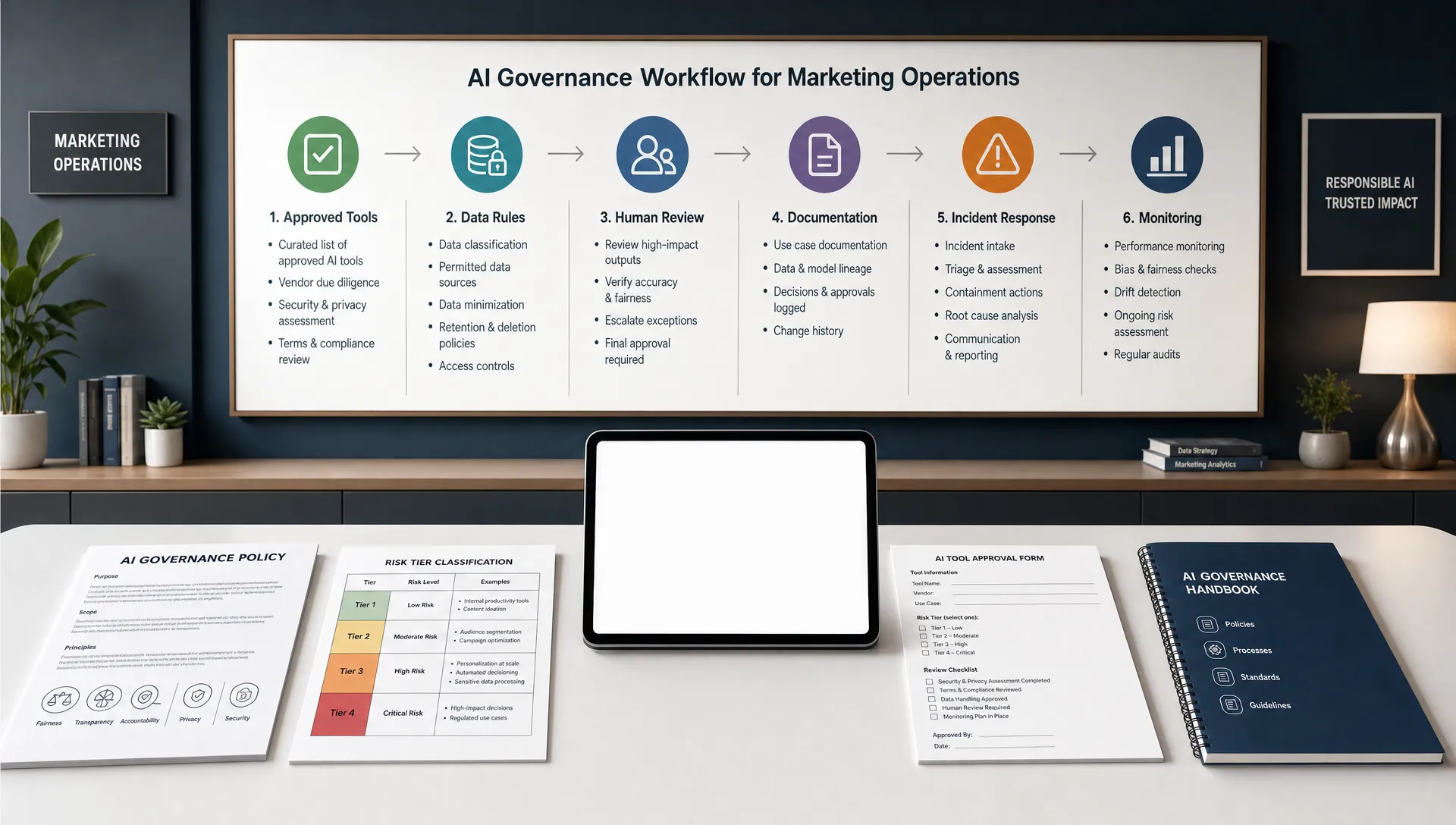
Privacy and consent also matter. Predictive marketing should follow applicable laws, platform policies, and customer expectations. The NIST AI Risk Management Framework is a useful reference for organizations thinking about AI governance, transparency, and risk management.
There is also the practical challenge of model drift. Customer behavior changes over time. A predictive model trained on last year’s buying patterns may become less accurate if the market, product, pricing, or audience changes. Models need monitoring and periodic retraining.
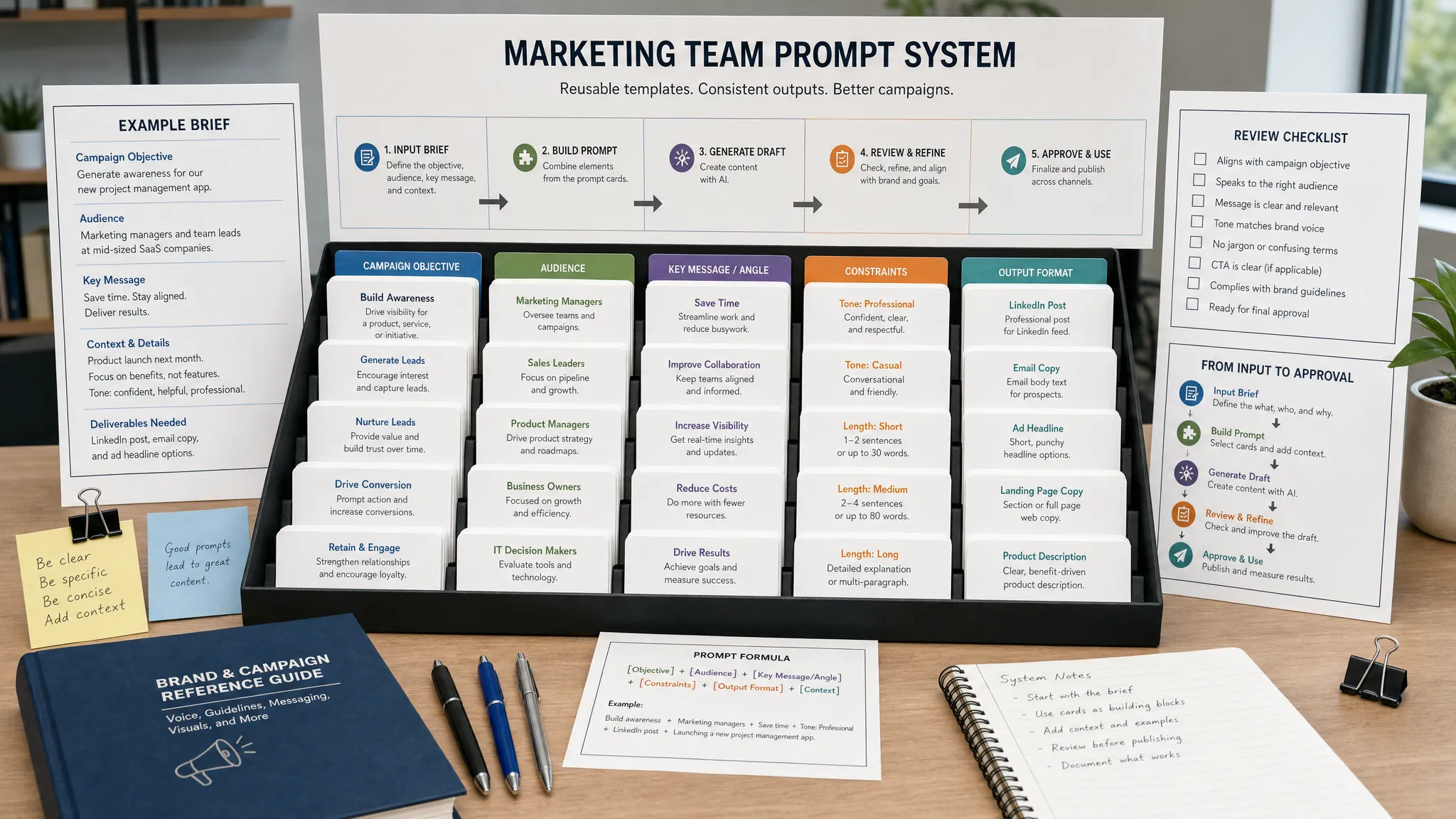
The best way to begin is not by buying the most advanced AI platform. It is by choosing a high-value use case and proving that predictive insights can improve a real marketing decision.
Choose one measurable question that matters to revenue or retention. For example, “Which leads are most likely to book a demo?” is better than “How can we use AI in marketing?” A narrow use case makes it easier to collect the right data and measure improvement.
Identify where your customer and marketing data lives. Look for gaps, duplicates, inconsistent fields, and disconnected systems. Make sure you can connect outcomes, such as purchases or closed deals, to earlier marketing touchpoints.
Before using predictions, measure current performance. If you are improving lead scoring, track current conversion rate, sales acceptance rate, speed to lead, and pipeline generated. Without a baseline, it is difficult to prove that predictive marketing helped.
Some teams start with built-in predictive features in their CRM, marketing automation platform, ecommerce platform, or analytics tool. Others use custom machine learning models. Smaller teams may begin with simpler scoring models before moving into advanced AI-powered analytics.
AIMarketer Hub focuses on practical AI marketing resources, tools, and guides for teams that want to automate and optimize without losing strategic control. For broader context, the guide on what smart teams do differently with digital marketing and AI explores how AI fits into modern marketing workflows.
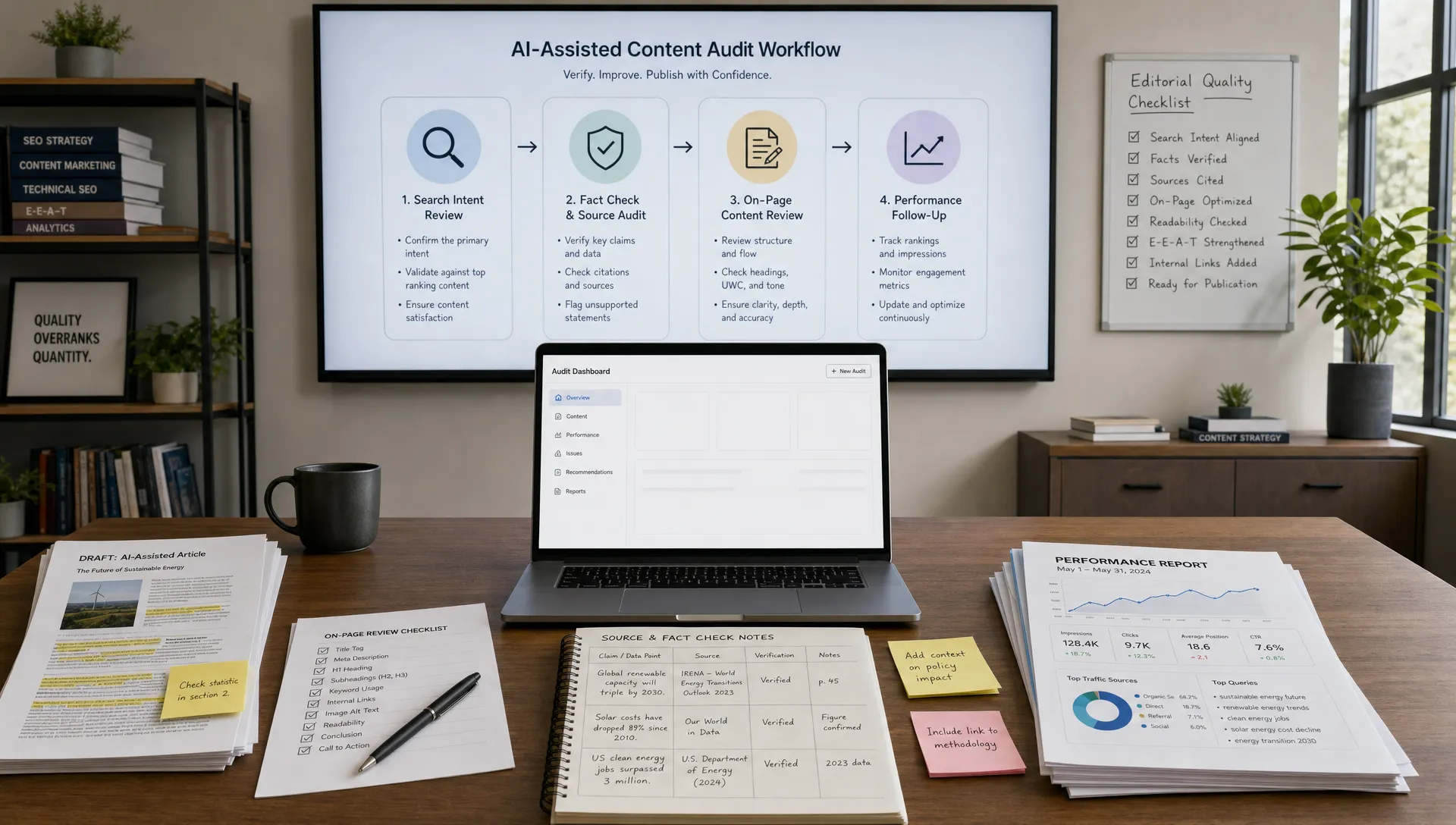
Predictions should be tested in the real world. Compare predicted high-value segments against actual conversions, revenue, retention, or engagement. Use controlled experiments when possible, such as A/B tests or holdout groups.
Predictive marketing works best when marketers use model outputs as input, not as unquestioned instructions. Human teams should review messaging, customer experience, brand fit, compliance, and ethical implications.
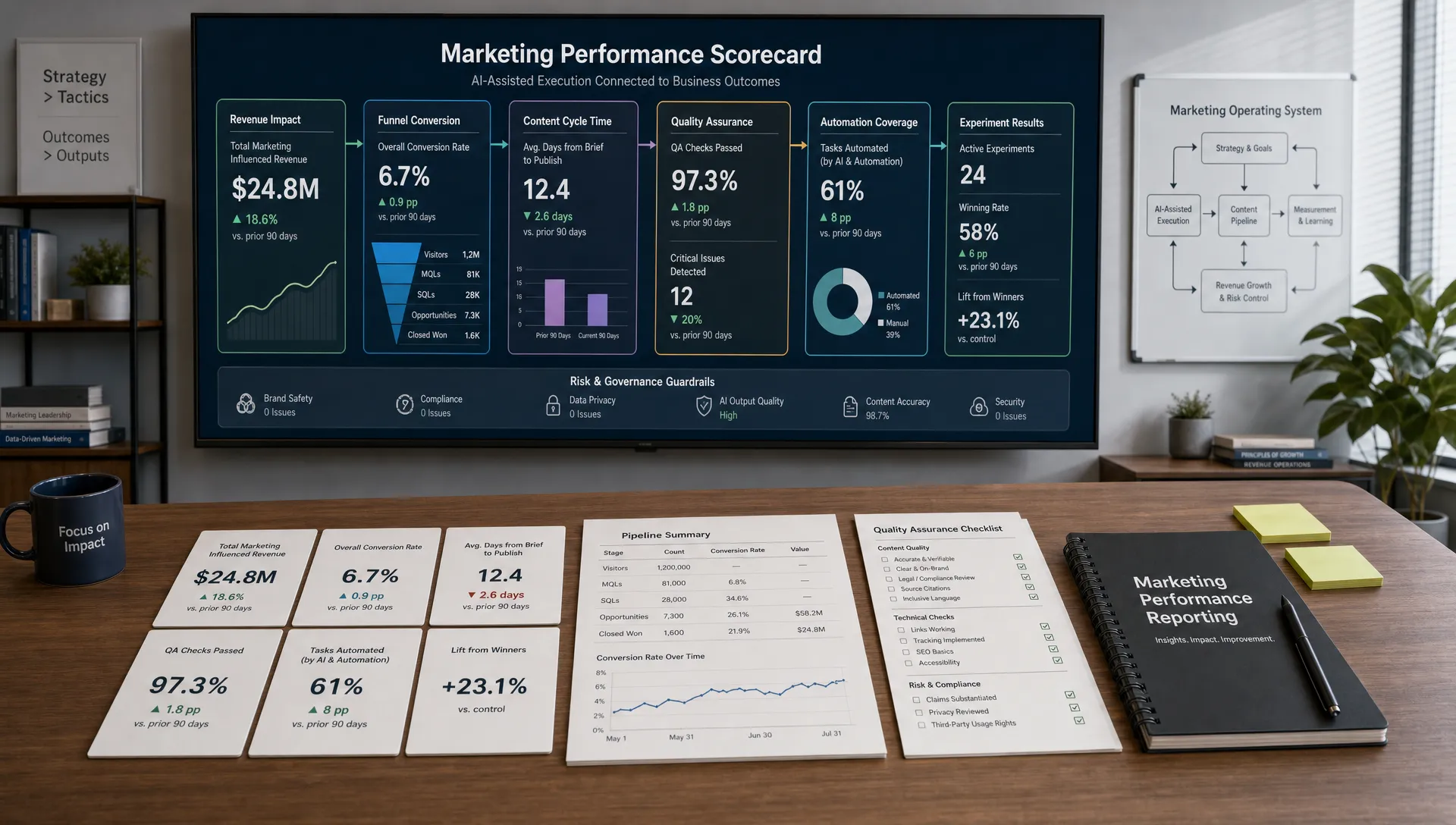
The right metrics depend on your use case, but a strong predictive marketing program should measure both model performance and business impact.
For model performance, teams often look at accuracy, precision, recall, lift, calibration, and false positives or false negatives. In plain English, you want to know whether the model is ranking the right people correctly and whether its probability scores are trustworthy.
For business impact, focus on marketing and revenue outcomes:
The key is to avoid optimizing for vanity metrics. A predictive model that increases clicks but attracts poor-fit customers may hurt the business. A good predictive marketing strategy connects predictions to meaningful outcomes.
Predictive AI and generative AI are related, but they are not the same.
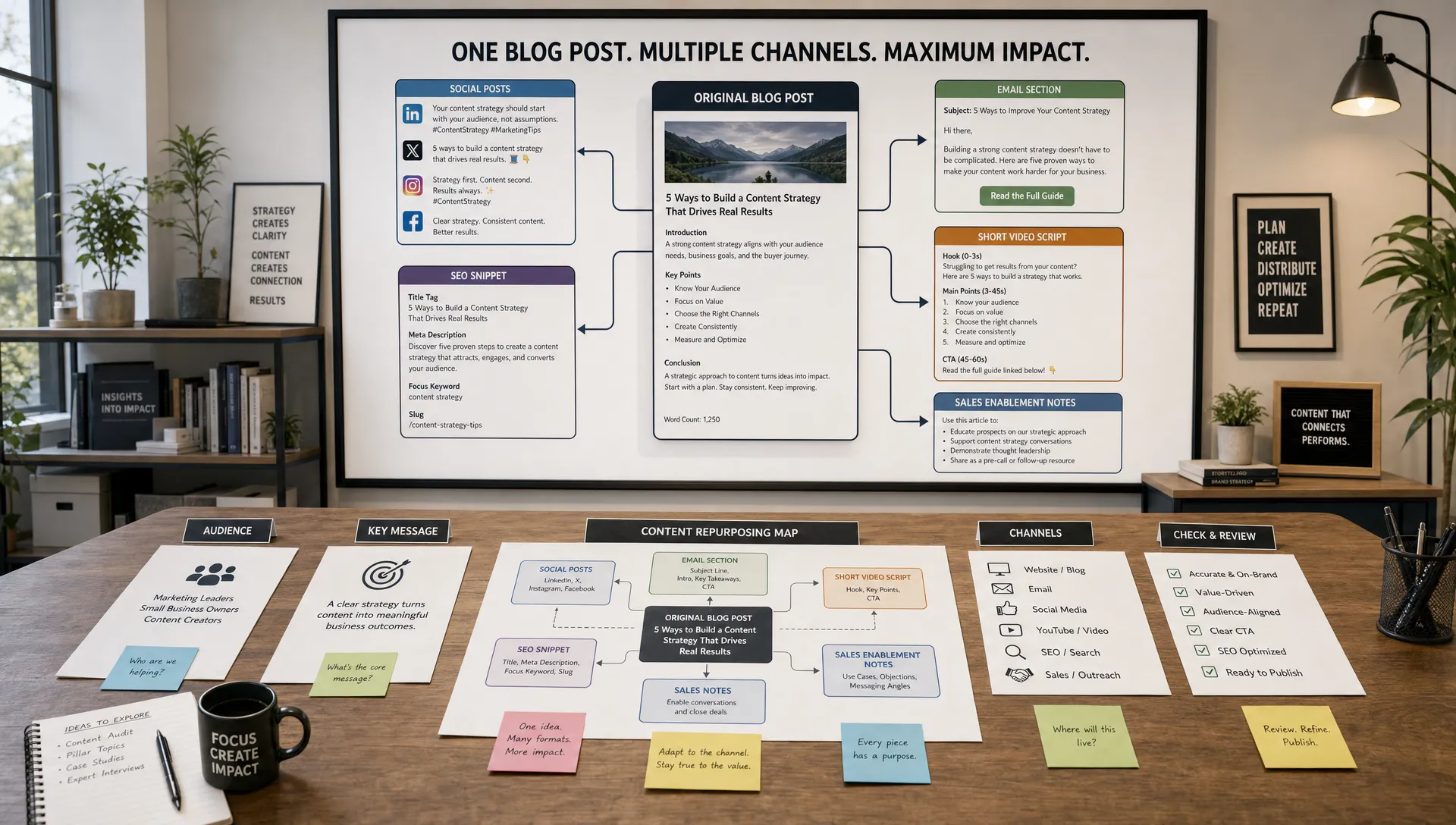
Predictive AI estimates what is likely to happen. Generative AI creates new content, such as ad copy, emails, landing page variations, images, or content outlines. In marketing, the two can work together.
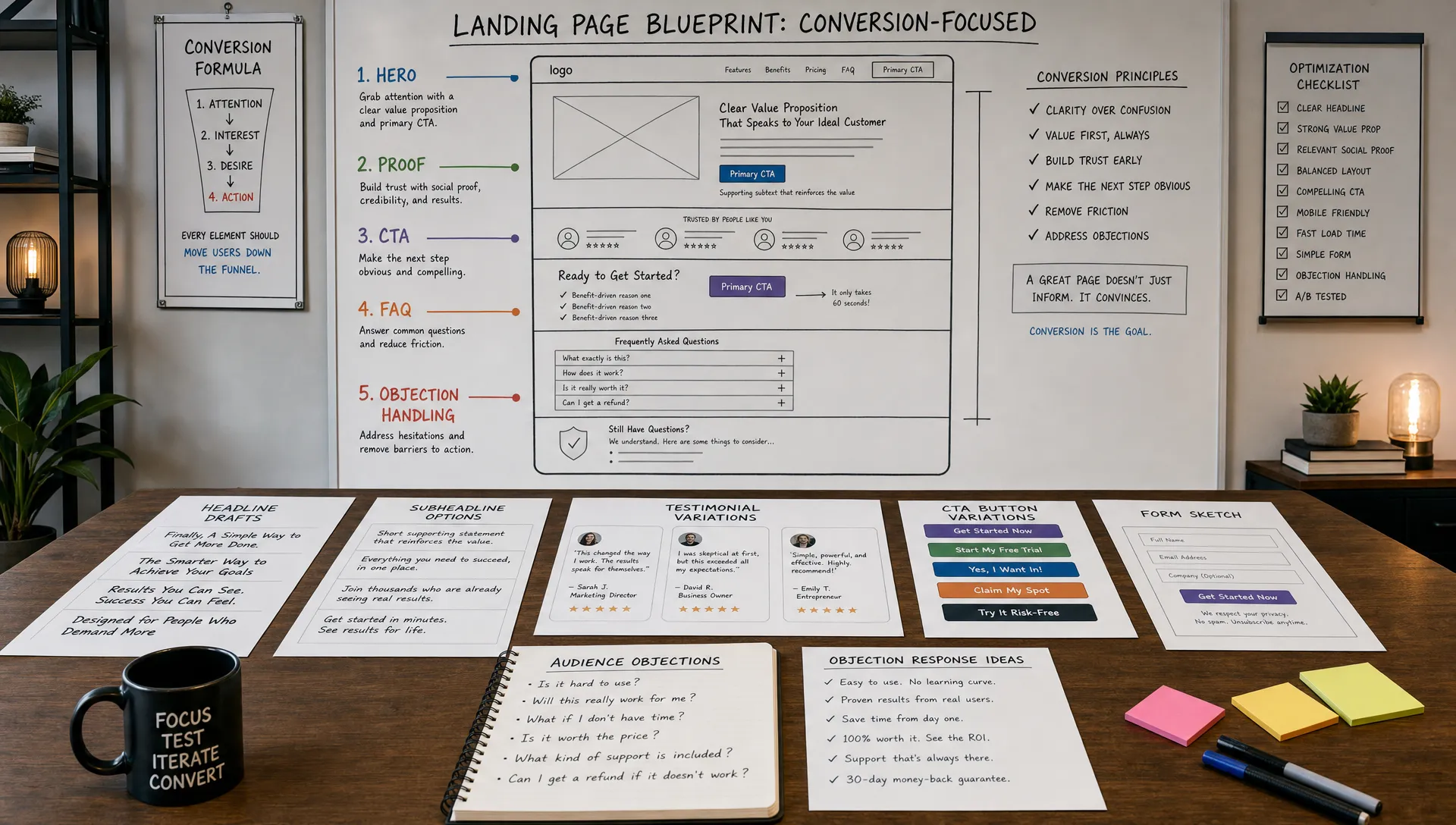
For example, a predictive model might identify that a segment is likely to respond to a cost-savings message. A generative AI tool can then help draft variations of that message for email, ads, and landing pages. The marketer reviews the creative, applies brand standards, and tests performance.
This combination is becoming increasingly important because marketing teams are expected to move faster while still staying relevant. Predictive marketing helps decide what to do next. Generative AI helps produce the assets needed to act on that decision.
What is predictive marketing in simple terms? Predictive marketing uses data and AI to estimate what customers are likely to do next, then helps marketers choose better messages, audiences, channels, and timing.
Is predictive marketing only for large companies? No. Large companies may have more data and advanced models, but smaller teams can start with simple predictive use cases such as lead scoring, churn risk, or email engagement using existing CRM and analytics data.
What is an example of predictive marketing? A SaaS company might predict which trial users are most likely to become paid customers based on product usage, email engagement, company size, and website behavior. Sales and onboarding teams can then prioritize those users.
How is predictive marketing different from marketing automation? Marketing automation executes workflows, such as sending emails or routing leads. Predictive marketing decides which actions are likely to work best based on data. The two are often used together.
Does predictive marketing require machine learning? Not always. Basic predictive scoring can use statistical rules or simpler models. However, machine learning is often used when there is enough data and the patterns are too complex for manual scoring.
What is the biggest mistake in predictive marketing? The biggest mistake is starting with technology instead of a business question. Predictive marketing works best when the team defines a clear outcome, uses reliable data, tests results, and keeps human oversight in place.
Predictive marketing helps teams move from hindsight to foresight. By analyzing customer data and estimating future behavior, it can improve targeting, personalization, retention, budget allocation, and marketing workflow automation.
The most successful teams do not treat predictive marketing as a shortcut. They treat it as a disciplined process: define the goal, prepare the data, build or choose the model, activate insights, measure outcomes, and improve over time.
If you are building a smarter AI marketing strategy, explore the practical guides, tools, and resources available at AIMarketer Hub. The right predictive approach can help your team act earlier, personalize better, and make marketing decisions with more confidence.