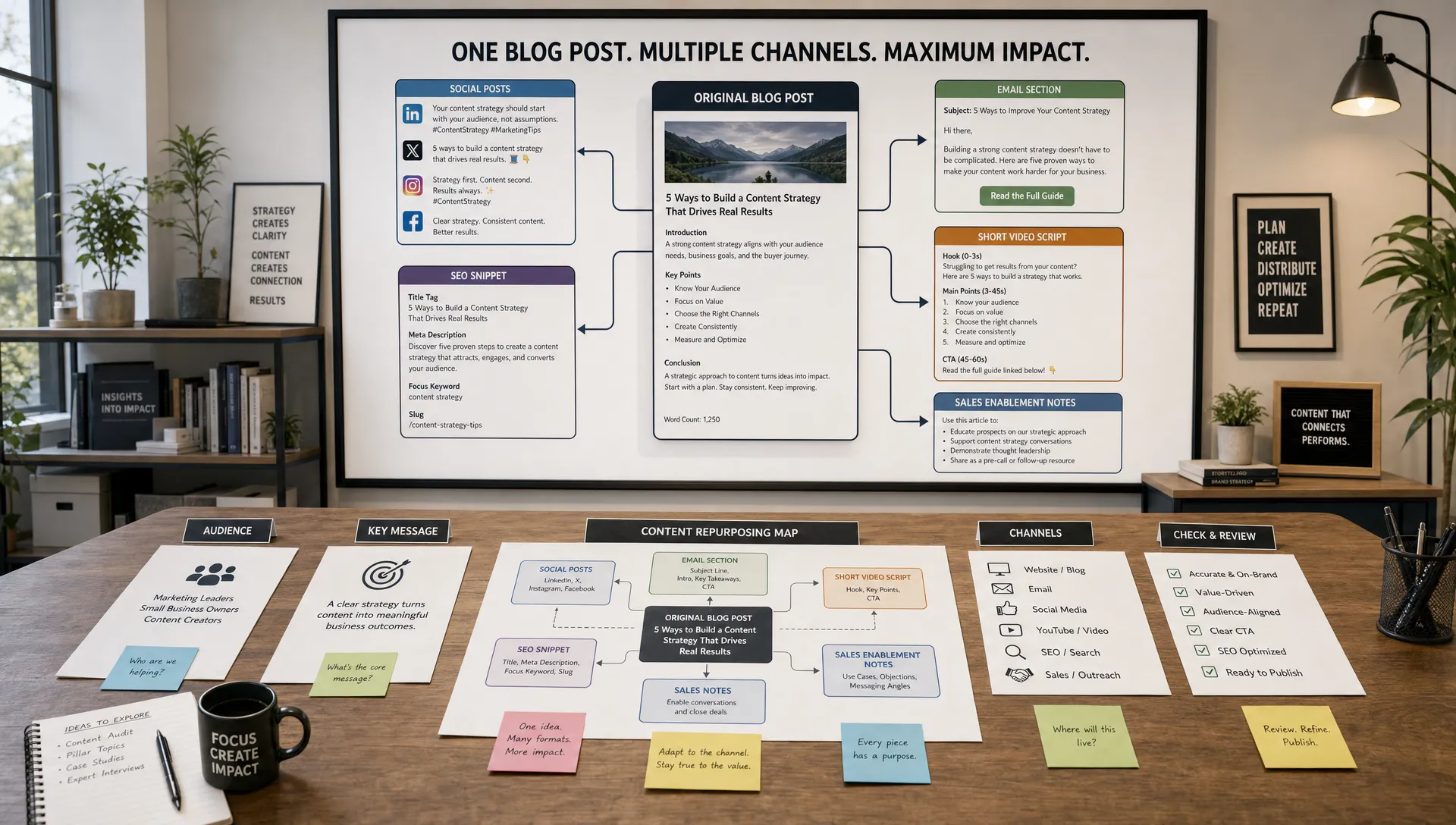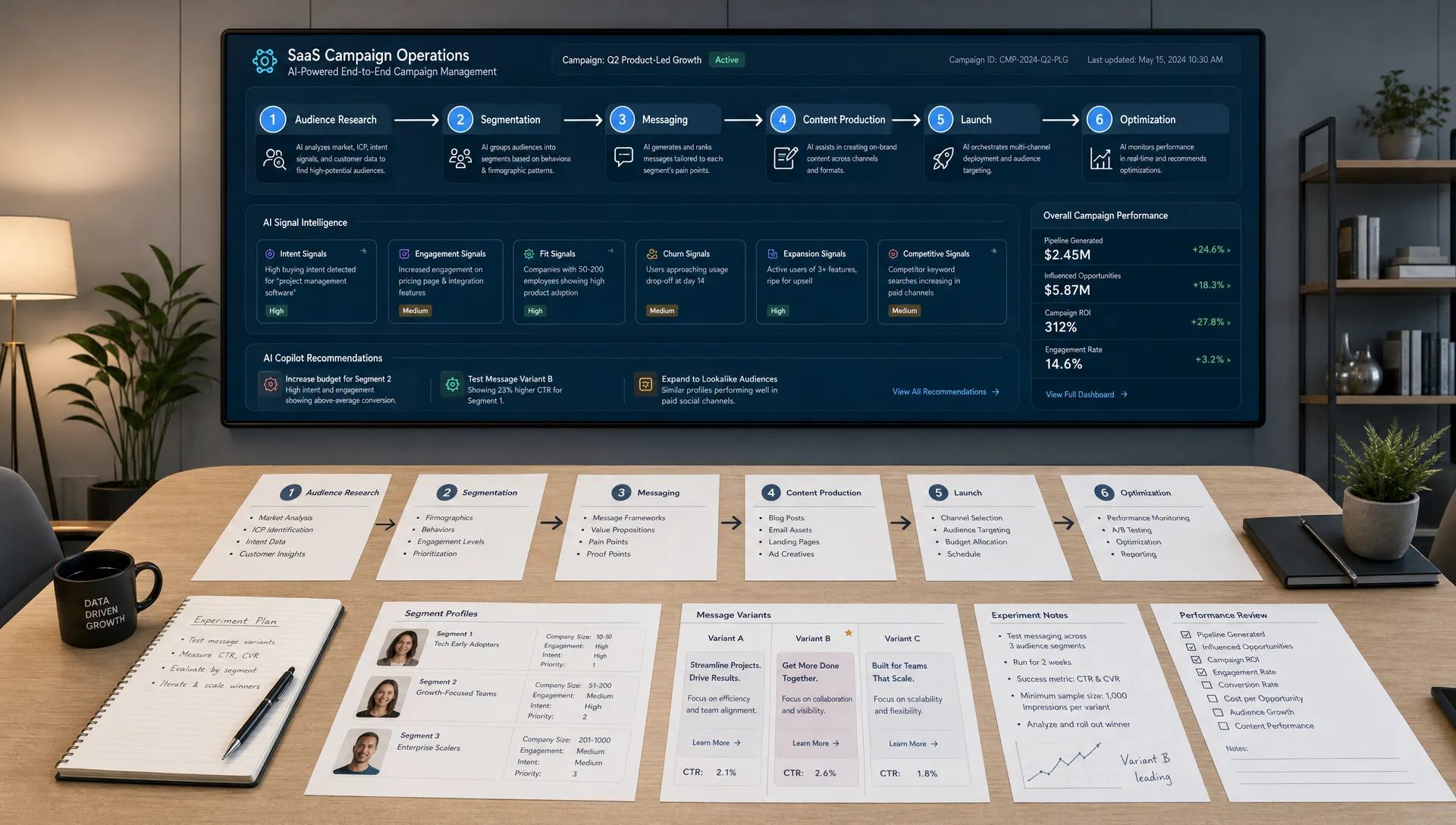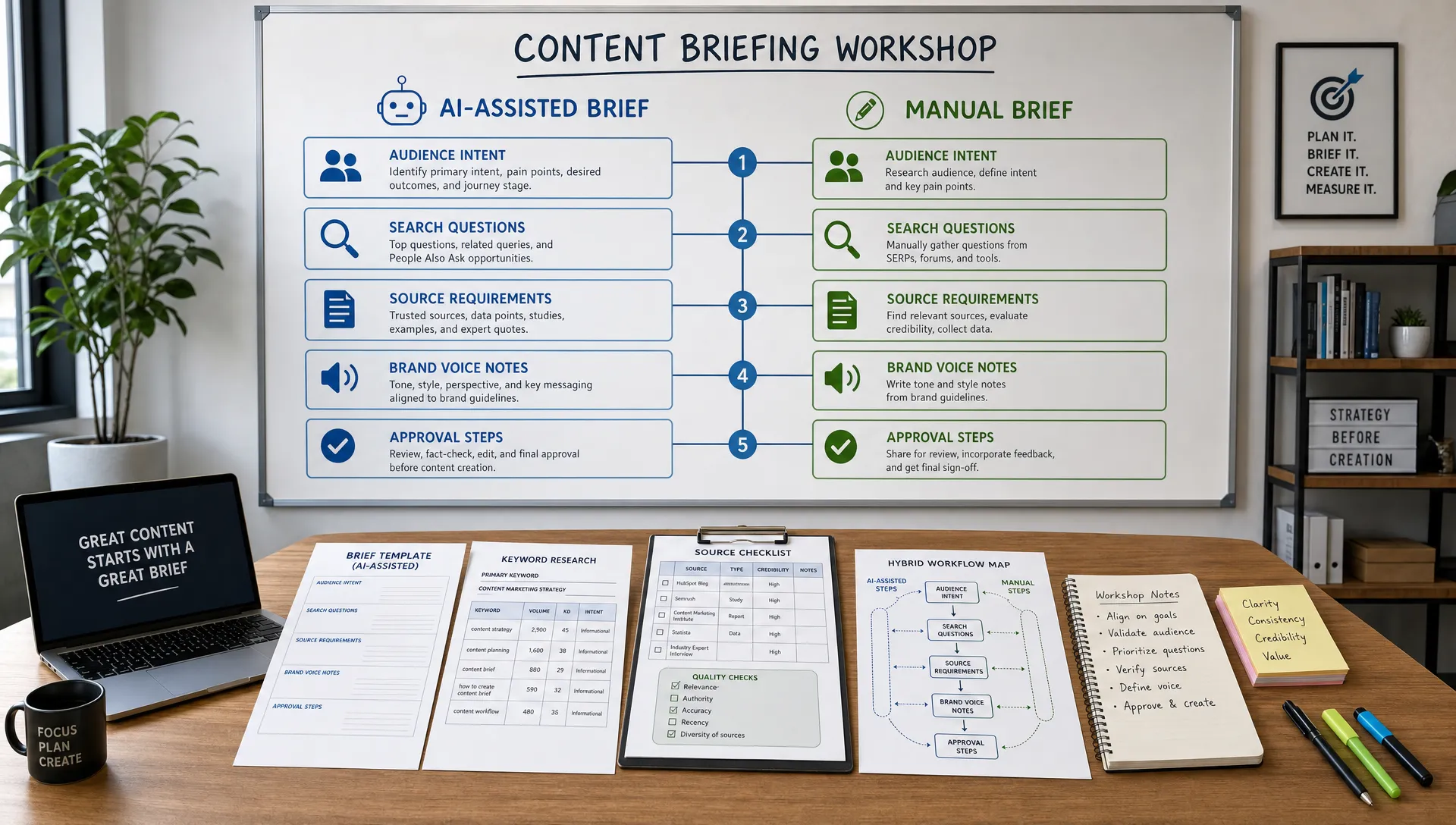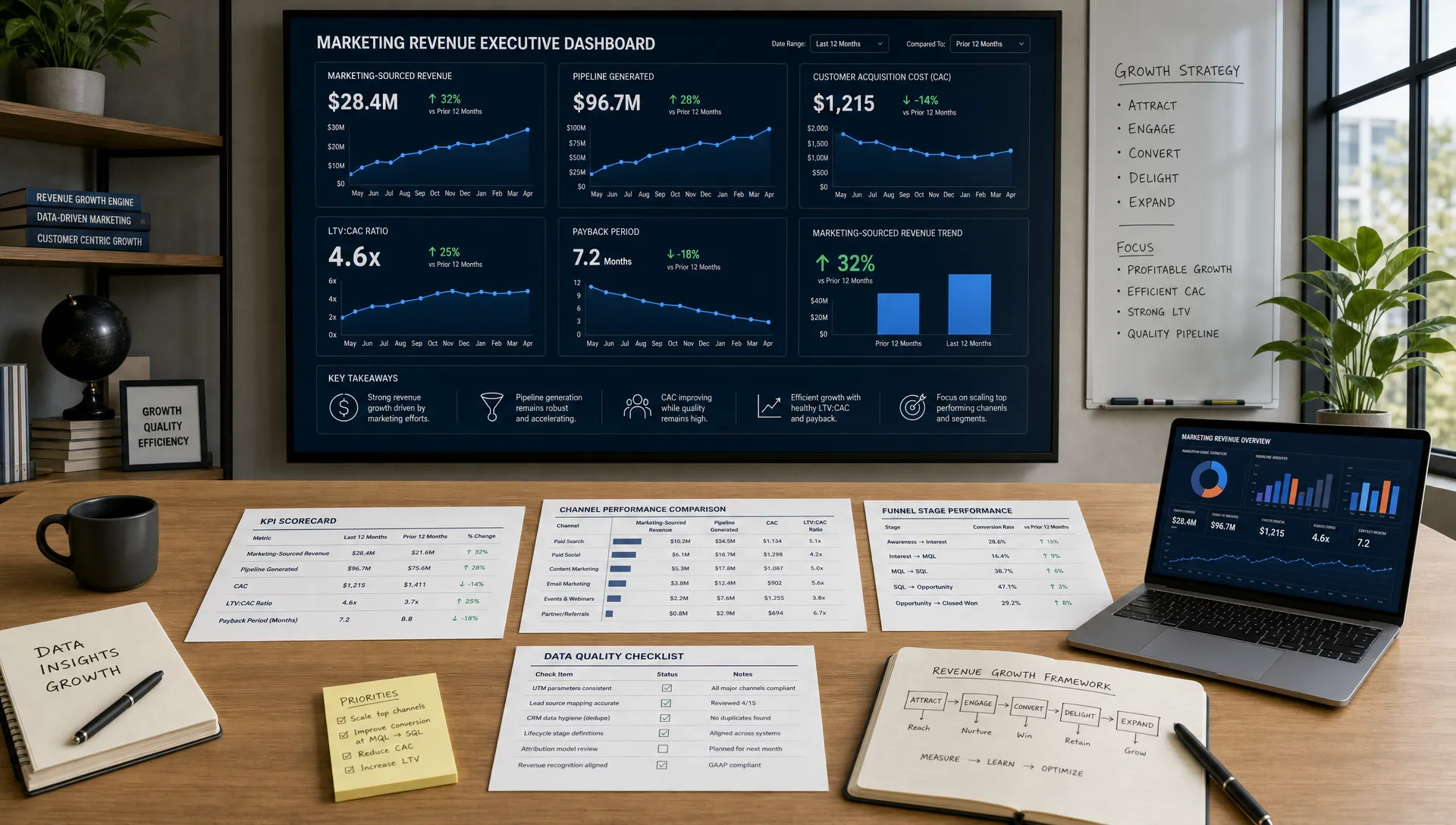
Social media marketing in 2026 is no longer about choosing between human creativity and automation. The best teams use AI as a practical layer across research, planning, content creation, publishing, community management, and reporting.
That matters because social has become too fast and fragmented for manual workflows alone. Short-form video, creator partnerships, paid social, social search, and community engagement all compete for the same limited team capacity. Meanwhile, audiences expect brands to be timely, useful, and recognizable on every platform.
The right AI tools for social media marketing can help, but only if you choose them for the job you actually need done. Some tools are excellent for scheduling and analytics. Others are better for design, short-form video, campaign copy, social listening, or AI marketing automation. The smartest stack is usually not one all-in-one platform. It is a focused combination of tools that removes bottlenecks without watering down your brand.
Below is a practical 2026 guide to the top AI tools worth considering, how they fit into a modern social workflow, and how to choose the right mix for your team.
Before comparing products, define the problem you want AI to solve. A creator who needs faster captions does not need the same stack as a B2B SaaS team tracking buying signals across LinkedIn, Reddit, and industry communities.
Strong social media AI tools usually support at least one of these needs:
Also pay close attention to governance. AI can help teams move faster, but social content still needs human review, especially for regulated industries, customer support issues, claims about products, and anything involving user data. If you need a deeper strategic foundation before choosing tools, AIMarketer Hub has a useful guide on how AI for digital marketing improves performance.
One more note before the list: feature names, pricing, and platform integrations change quickly. Use this guide to shortlist tools, then verify current details on each vendor's site before buying.
Tool                      | Best fit                           | Main AI value                                                                 | Best for
Sprout Social             | Enterprise social management       | AI-assisted publishing, engagement, listening, and analytics                  | Brands that need governance and reporting
Hootsuite                 | Multi-channel management           | Caption ideas, content suggestions, scheduling support, and social inbox help | Teams managing several networks
Buffer                    | Simple publishing workflows        | AI-assisted drafting, rewriting, and repurposing                              | Creators, startups, and lean teams
Later                     | Visual social planning             | Caption support, calendar planning, and creator-friendly workflows            | Instagram, TikTok, and Pinterest-heavy brands
Metricool                 | Planning and performance reporting | AI text support plus accessible analytics                                     | SMBs, agencies, and budget-conscious teams
Canva Magic Studio        | Social creative production         | AI design, copy, image, and presentation tools                                | Fast branded graphics and campaign assets
Adobe Express and Firefly | Design and generative creative     | AI image generation, editing, and brand-aware asset creation                  | Teams with higher creative standards
CapCut                    | Short-form video                   | Auto captions, editing automation, templates, and video enhancement           | TikTok, Reels, and Shorts production
Jasper                    | Marketing copy production          | Brand voice, campaign copy, and multi-format content generation               | Marketing teams with recurring campaigns
Copy.ai                   | Workflow automation                | AI-powered go-to-market and content workflows                                 | B2B teams connecting social to sales motions
HubSpot AI                | CRM-connected marketing            | Content assistance across marketing, sales, and customer journeys             | Revenue teams using social in a larger funnel
Brandwatch                | Social listening and intelligence  | Trend analysis, sentiment, audience insights, and competitive monitoring      | Enterprises and agencies
ChatGPT and Claude | Flexible AI strategy layer | Research, briefs, ideation, editing, and prompt-based workflows | Any team that can build strong processes Sprout Social is one of the strongest options for teams that need social media management, analytics, social listening, approvals, and collaboration in one place. Its value is not just content generation. It helps organize the operational side of social, which is often where larger teams lose time.
For 2026, Sprout is best suited to brands that need structure. Think multi-location companies, enterprise marketing departments, agencies, and teams that handle customer interactions through social channels. AI can assist with drafting, routing, analysis, and surfacing patterns, but the bigger benefit is centralizing the workflow.
Choose Sprout if you need stronger reporting, team permissions, approval flows, and listening capabilities. It may be more platform than a solo creator or very small business needs.
Hootsuite remains a recognizable choice for managing multiple social channels from one dashboard. Its AI writing assistant, commonly associated with OwlyWriter AI, is useful for turning campaign ideas into captions, post variations, and platform-specific copy.
Hootsuite is a good fit if your team wants a mature scheduling and publishing platform with AI layered into day-to-day execution. It is especially helpful when several people need to plan, schedule, respond, and report from the same workspace.
The practical use case is straightforward: use AI to draft the first version, then have a marketer refine the message for platform nuance and brand voice. AI can save time, but it should not be the final editor.
Buffer is ideal for creators, small businesses, and startups that want a simpler way to publish consistently. Its AI Assistant can help generate post ideas, rewrite copy, shorten captions, adjust tone, and repurpose content across channels.
Buffer's strength is usability. If your team does not need enterprise-grade approvals or advanced social listening, a lightweight publishing tool may be enough. For many lean teams, the biggest social media problem is not strategy complexity. It is maintaining a consistent posting rhythm while running the rest of the business.
Buffer pairs well with a design tool like Canva and a flexible AI assistant like ChatGPT or Claude. That stack can cover ideation, creation, scheduling, and light analysis without becoming too complex.
Later is a strong option for visual-first social media teams, especially those focused on Instagram, TikTok, Pinterest, and creator-style content calendars. Its visual planning experience makes it easier to see how campaigns will look before they go live.
Later works well for ecommerce brands, lifestyle businesses, creators, and social teams that care about visual consistency. AI assistance can help speed up captions and planning, but the platform's real advantage is visual organization.
If your social strategy depends heavily on product drops, seasonal campaigns, influencer content, and visual storytelling, Later deserves a place on your shortlist.
Metricool is a practical option for teams that want scheduling, analytics, competitor monitoring, and clear performance reporting without an overly complicated setup. It is popular with small businesses, agencies, consultants, and marketers who manage multiple accounts.
Its AI text capabilities can help with post drafts, but Metricool's broader value is visibility. It gives marketers a clearer view of what is working across channels, which posts are generating engagement, and where performance is trending.
Metricool is especially useful when you want to connect content planning with performance analytics. It is less about producing the flashiest creative and more about making social media management measurable.
Canva Magic Studio is one of the most useful AI tools for social media content creation because it removes friction from design. Marketers can create social graphics, resize assets, generate copy ideas, produce presentation-style campaign materials, and adapt visual concepts quickly.
For small teams, Canva is often the fastest path from idea to publishable asset. For larger teams, its brand kit and template approach can help keep social content consistent, as long as brand rules are properly set up and reviewed.
Use Canva when your bottleneck is producing enough on-brand creative for multiple platforms. It is especially strong for quote graphics, carousel posts, promotional assets, event visuals, thumbnails, and lightweight campaign designs.
Adobe Express and Adobe Firefly are strong choices for teams that want AI-assisted creative production with a more design-focused workflow. Adobe's ecosystem is especially relevant for teams already using Creative Cloud.
Firefly can support generative image creation and editing, while Adobe Express helps marketers turn ideas into social-ready assets. This combination is useful when content needs to look polished, brand-safe, and campaign-ready.
Choose Adobe Express and Firefly if your team has higher creative standards, established brand systems, or designers who want AI to speed up production rather than replace creative direction.
CapCut has become a go-to tool for short-form video production. For social media marketers, its value comes from fast editing, templates, auto captions, resizing, and creator-friendly workflows for TikTok, Instagram Reels, and YouTube Shorts.
AI features can help reduce the manual work involved in editing clips, adding subtitles, creating variations, and formatting videos for different platforms. That is valuable because short-form video often requires volume. One webinar, podcast, interview, customer story, or product demo can become multiple social clips.
CapCut is best for teams that need speed and platform-native video output. Just make sure your team has clear guidelines for music usage, rights, approvals, and brand fit.

Jasper is built for marketing content generation, which makes it useful for teams that produce recurring campaign assets. For social media, Jasper can help create captions, ad variations, campaign angles, launch messaging, and repurposed posts from longer assets.
Its brand voice and campaign-oriented features are the key reasons to consider it. A generic AI assistant can draft posts, but marketing teams often need repeatable workflows that align with positioning, audience segments, and campaign goals.
Jasper is a good fit for content teams, demand generation teams, and agencies that need to produce multiple assets from a central brief. It works best when humans provide strong inputs: audience, offer, objective, proof points, tone, and constraints.
Copy.ai is especially useful when social content is part of a larger go-to-market workflow. Instead of only generating captions, teams can build repeatable processes for turning inputs into campaign assets, outreach ideas, content variations, and sales-aligned messaging.
For B2B marketers, this matters because social rarely works in isolation. A LinkedIn campaign may connect to a webinar, landing page, email sequence, sales enablement asset, and follow-up motion. Copy.ai can help standardize parts of that workflow.
Choose Copy.ai if your main challenge is not just writing posts, but connecting social media content to broader marketing workflow automation.
HubSpot's AI tools are valuable for teams that already run marketing, sales, or customer operations through HubSpot. The key advantage is context. Social media content can sit closer to CRM data, email campaigns, landing pages, lead nurturing, and customer journeys.
This is useful for teams that view social as a revenue channel, not just an engagement channel. For example, a B2B company might use AI to help draft social posts for a webinar, create related email copy, summarize campaign performance, and support sales follow-up content.
HubSpot AI is not always the best standalone choice if you only need social scheduling. It becomes more powerful when your social strategy is connected to your CRM and lifecycle marketing.
Brandwatch is built for social listening, consumer intelligence, and brand monitoring. It is most relevant for enterprise teams, agencies, and companies that need to understand conversations at scale.
AI can help sort large volumes of social data, identify sentiment patterns, detect emerging topics, and support competitive analysis. This is especially useful for brands with high conversation volume or reputational risk.
Brandwatch is not primarily a caption-writing tool. Its strength is insight. Use it when you need to answer questions like what customers are saying, which competitors are gaining attention, what topics are emerging, and how sentiment is shifting over time.
ChatGPT and Claude are not traditional social media management platforms, but they are among the most flexible AI tools for marketers. They can help with research, creative ideation, content calendars, campaign briefs, audience analysis, comment response drafts, content repurposing, and performance summaries.
Their biggest advantage is adaptability. You can use them to build custom workflows around your brand, audience, and marketing goals. For example, you can paste a webinar transcript and ask for LinkedIn posts, short-form video hooks, newsletter angles, and a campaign theme. You can also ask for critique, not just generation.
The risk is inconsistency. Without strong prompts, examples, and review processes, general-purpose AI tools can produce content that sounds polished but generic. If this is a concern, pair them with a documented brand voice system. AIMarketer Hub's guide on using AI for marketing without losing your brand voice is a helpful next step.
The best tool is rarely the same for every organization. A better question is: what stack gives your team the most leverage with the least complexity?
Team type        | Recommended stack                                                           | Why it works
Solo creator     | ChatGPT or Claude, Canva, Buffer                                            | Covers ideas, visuals, and scheduling without heavy operations
Local business   | Canva, Metricool, ChatGPT or Claude                                         | Keeps content consistent and reporting simple
Ecommerce brand  | Later, Canva or Adobe Express, CapCut                                       | Supports visual planning, product creative, and short-form video
B2B SaaS team    | Jasper or Copy.ai, HubSpot AI, Sprout Social                                | Connects campaign content with CRM and social operations
Agency           | Sprout Social or Hootsuite, Brandwatch, Canva, Jasper                       | Supports collaboration, approvals, client reporting, and production volume
Enterprise brand | Sprout Social, Brandwatch, Adobe Express and Firefly, approved AI assistant | Balances governance, listening, creative quality, and scale For a broader view of how AI changes output capacity, see AIMarketer Hub's article on how AI for content creation saves time and scales output.
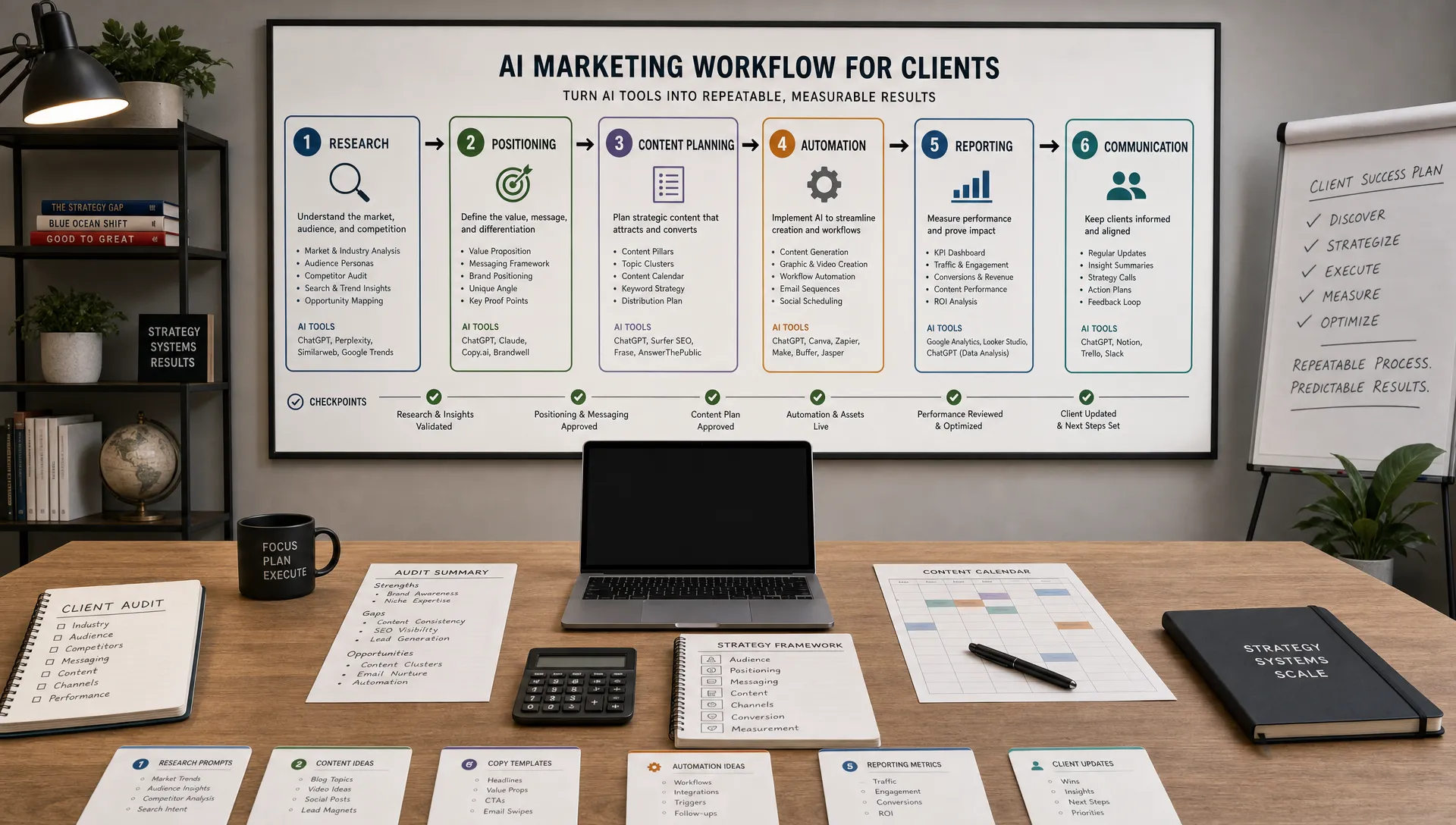
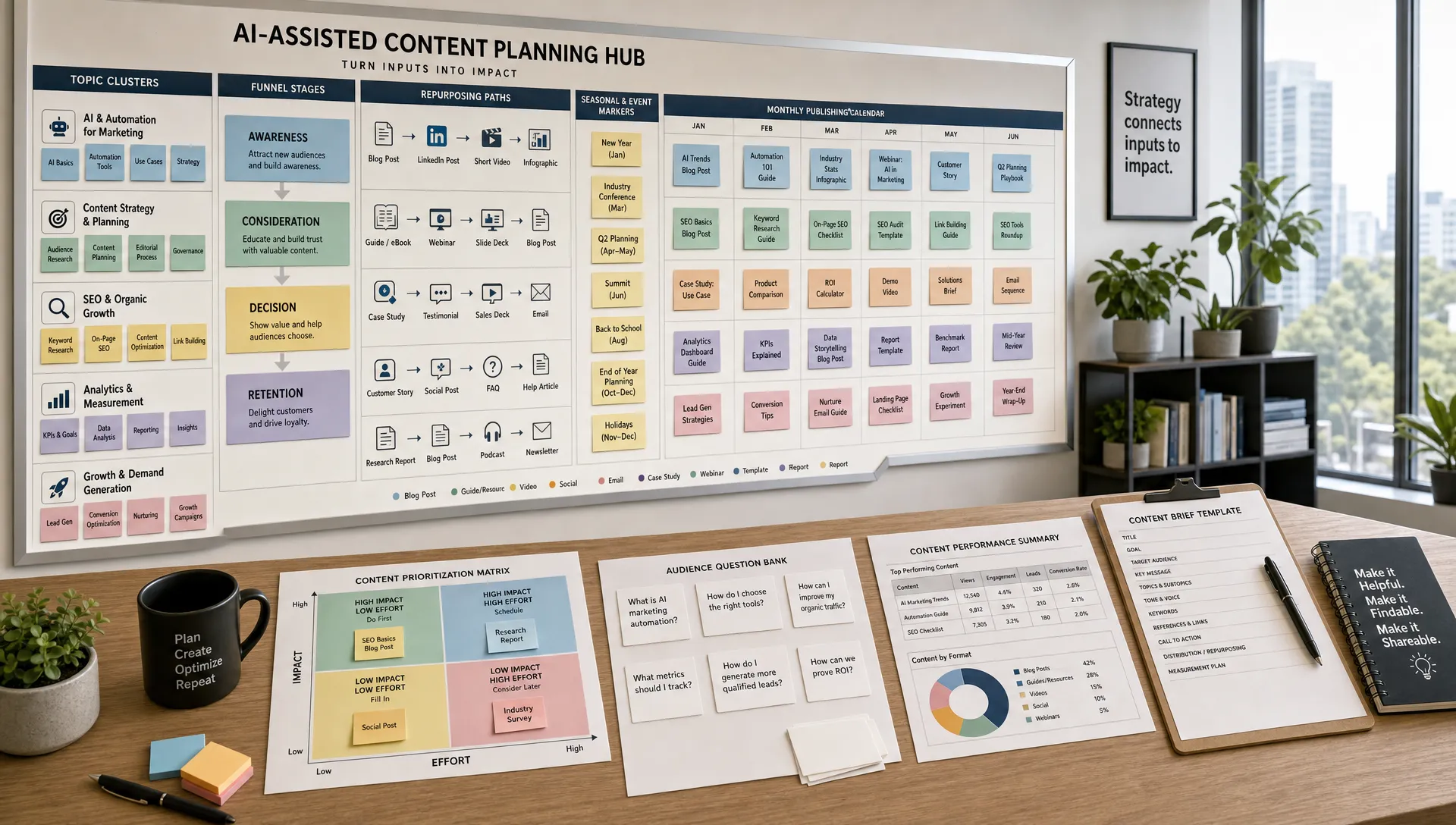
A strong AI-powered workflow starts before content creation. The goal is not to generate more posts for the sake of volume. The goal is to create better, faster, and more measurable social content.
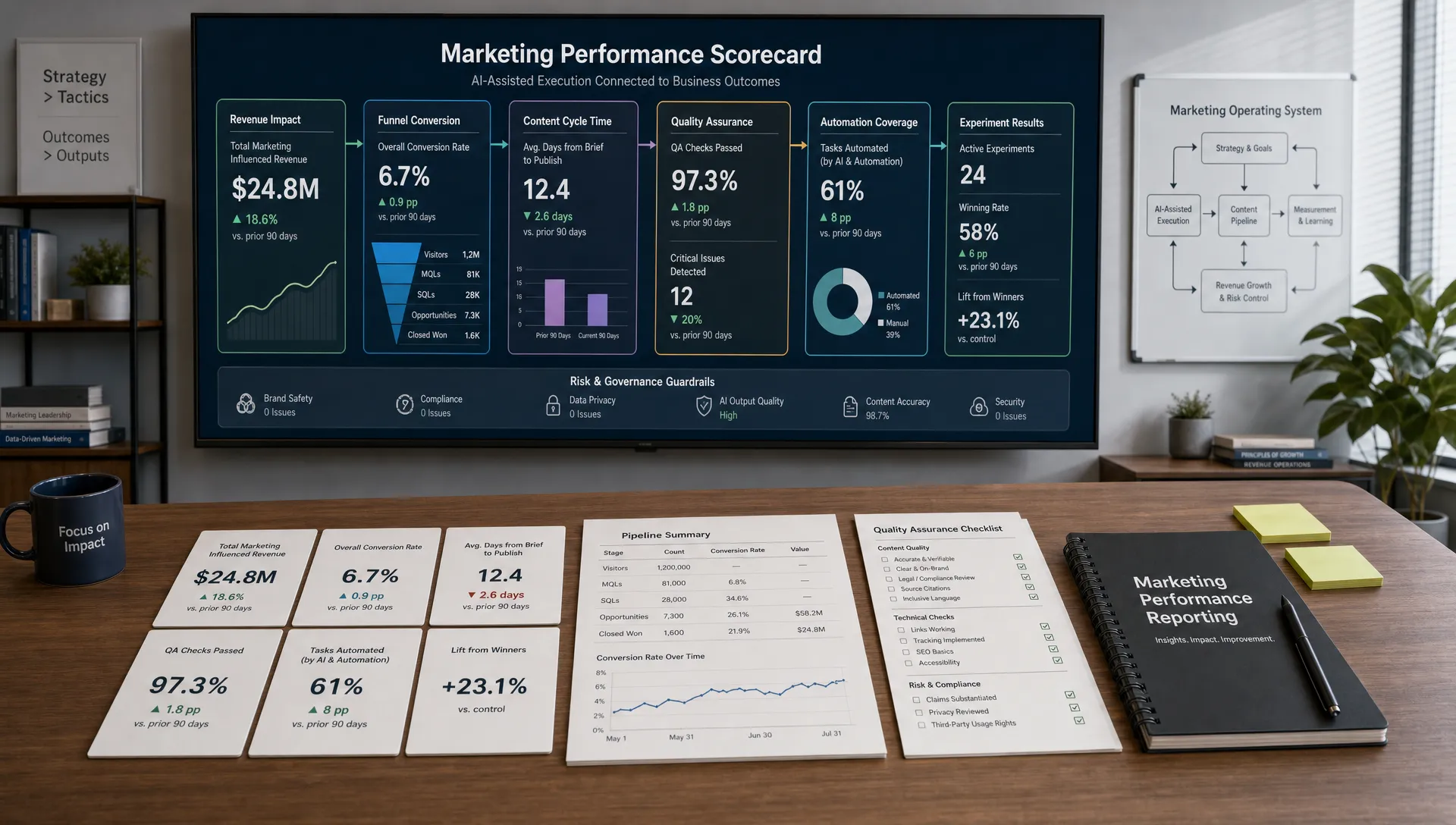
This loop is where AI-powered analytics become valuable. The best teams do not just ask AI to create. They ask it to learn from performance patterns, summarize what changed, and recommend what to test next.
The fastest way to waste money on AI tools is to buy too many overlapping platforms before your workflow is clear. Start with your biggest constraint, then add tools only when they solve a specific problem.
Another mistake is measuring AI success by output volume alone. More posts do not automatically mean better marketing. Track engagement quality, saves, shares, comments, click-through rates, conversion assists, customer insights, and time saved.
Watch out for these issues:
The best AI social media marketers in 2026 will not be the ones who automate everything. They will be the ones who know what to automate, what to supervise, and what to keep deeply human.
What is the best AI tool for social media marketing in 2026? The best tool depends on your use case. Sprout Social and Hootsuite are strong for social management, Canva and Adobe Express are strong for creative production, CapCut is excellent for short-form video, and ChatGPT or Claude are useful for flexible strategy and ideation.
Can AI create all of my social media content? AI can draft captions, generate ideas, repurpose content, and create visuals, but it should not replace strategy or human review. Your team still needs to verify claims, maintain brand voice, adapt content to platform culture, and handle sensitive engagement.
Which AI tools are best for small businesses? Small businesses often get the most value from a lean stack such as ChatGPT or Claude for ideation, Canva for creative assets, and Buffer or Metricool for scheduling and analytics. This keeps costs and complexity manageable.
Which AI tools are best for social listening? Brandwatch and Sprout Social are strong options for social listening and consumer intelligence. They are especially useful for larger teams that need sentiment analysis, competitive insights, trend detection, and brand monitoring.
How should I choose between all-in-one tools and specialized AI tools? Choose an all-in-one tool if your main challenge is managing publishing, approvals, engagement, and reporting in one workflow. Choose specialized tools when you need deeper capabilities in design, video, copywriting, social listening, or CRM-connected automation.
Will AI replace social media managers? AI is more likely to change the role than replace it. Social media managers will spend less time on repetitive drafting and formatting, and more time on strategy, creative direction, community insight, testing, and cross-channel coordination.
AI tools can speed up social media marketing, but the advantage comes from combining the right tools with clear strategy, strong prompts, brand governance, and performance analysis.
If you want practical marketing guides, AI resources, prompt ideas, SEO tools, calculators, and workflow support for smarter campaigns, explore AIMarketer Hub. Use it to build a leaner, more effective AI marketing system that helps your team create, optimize, and grow with confidence.