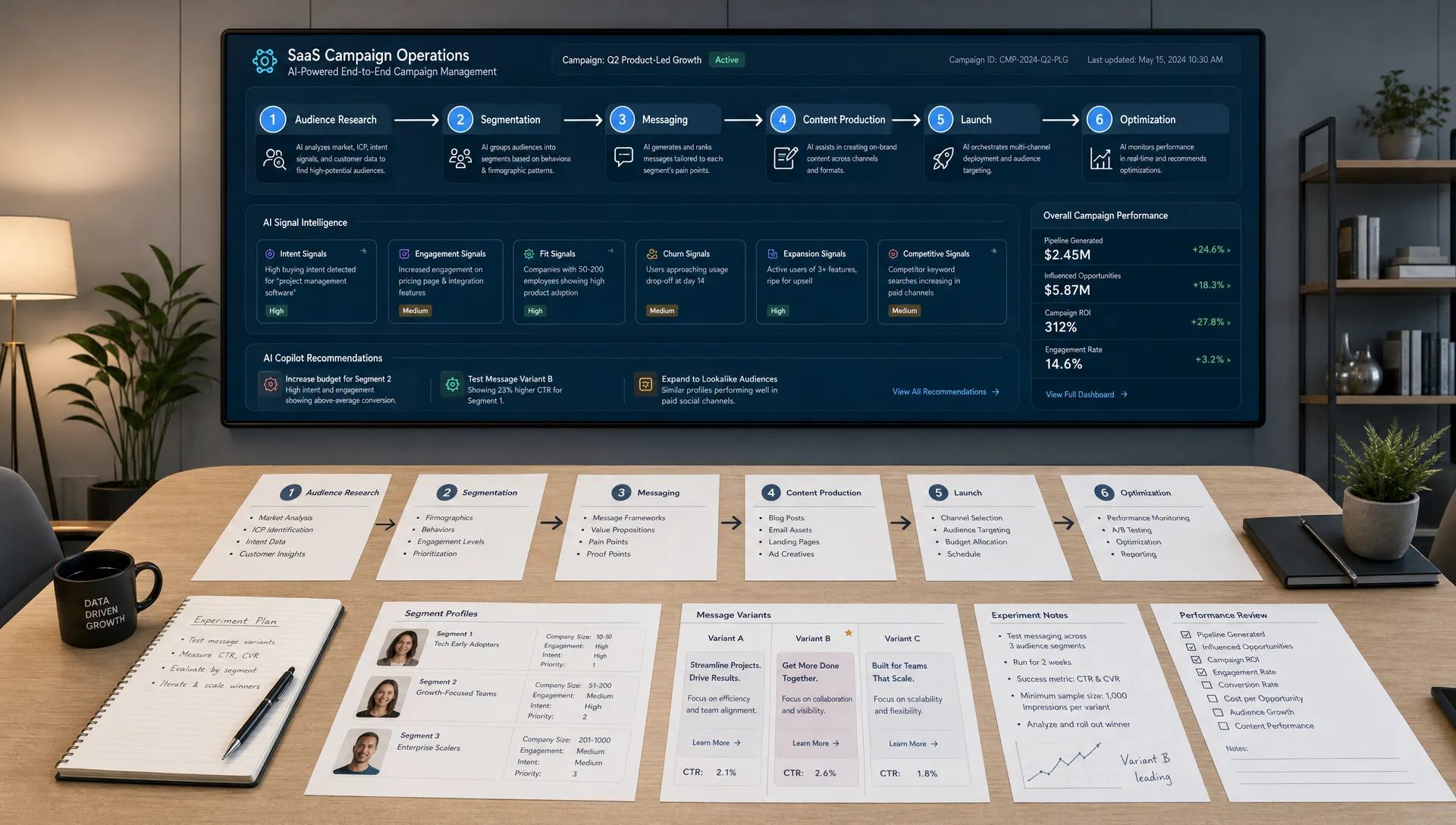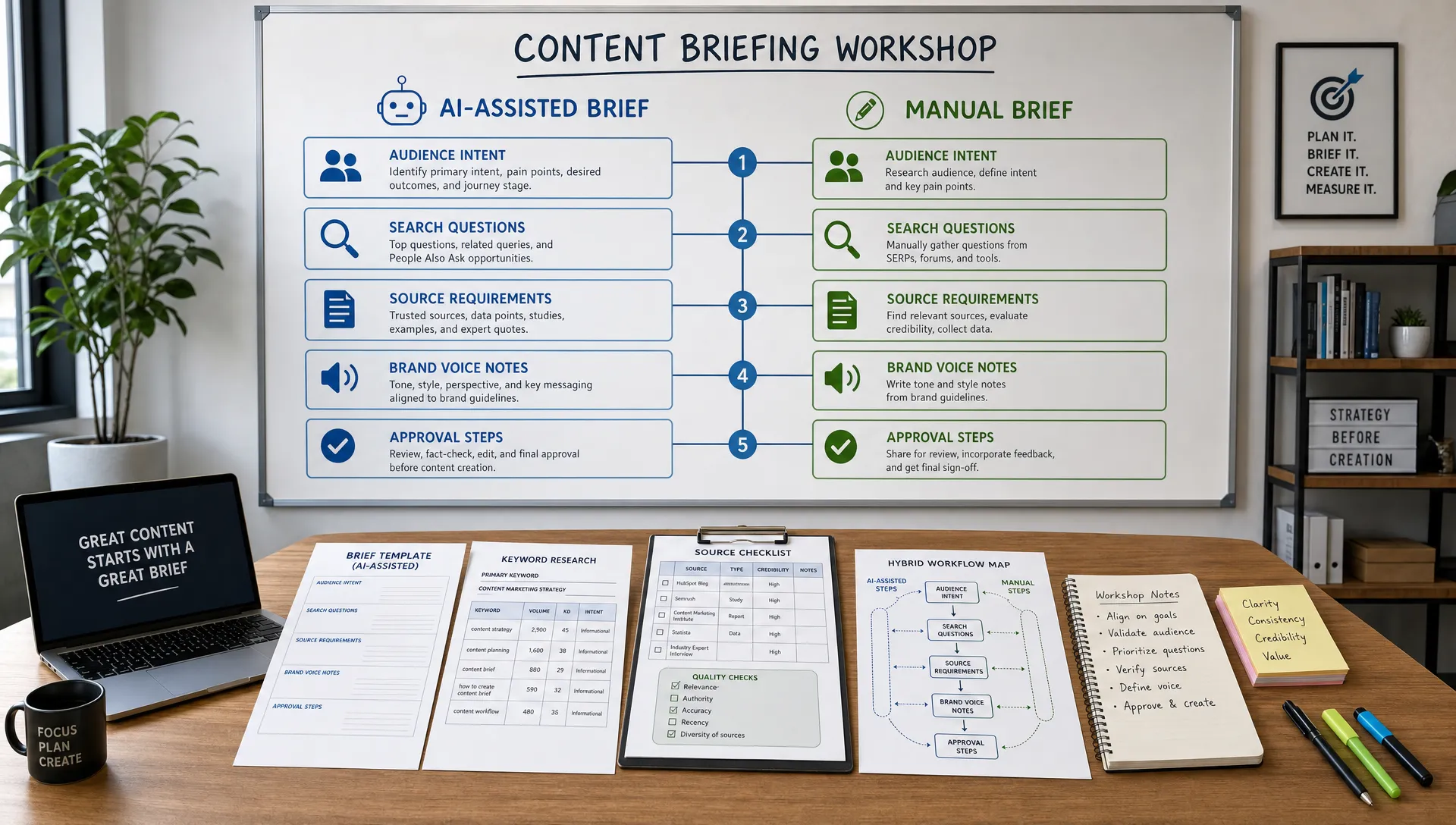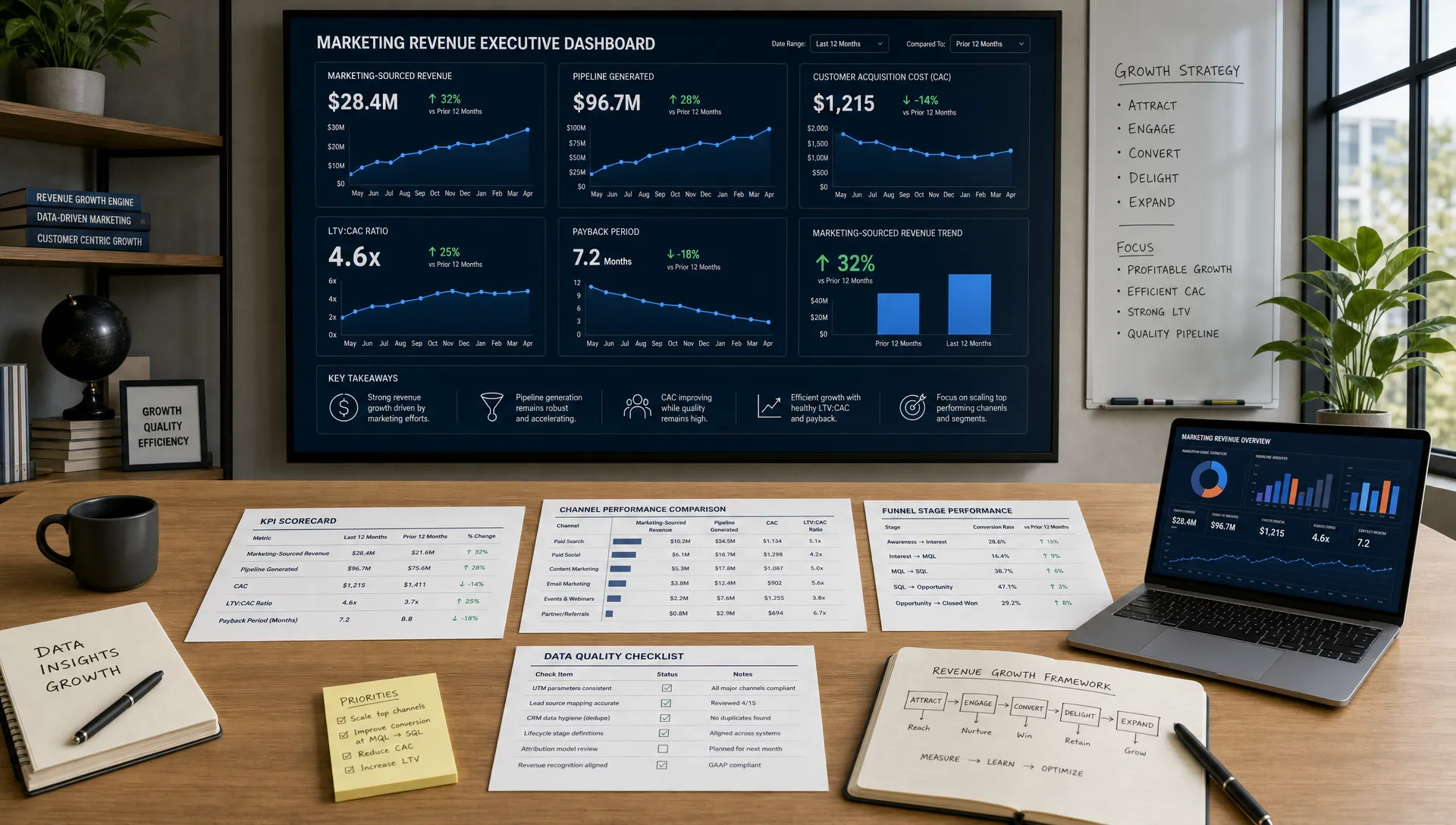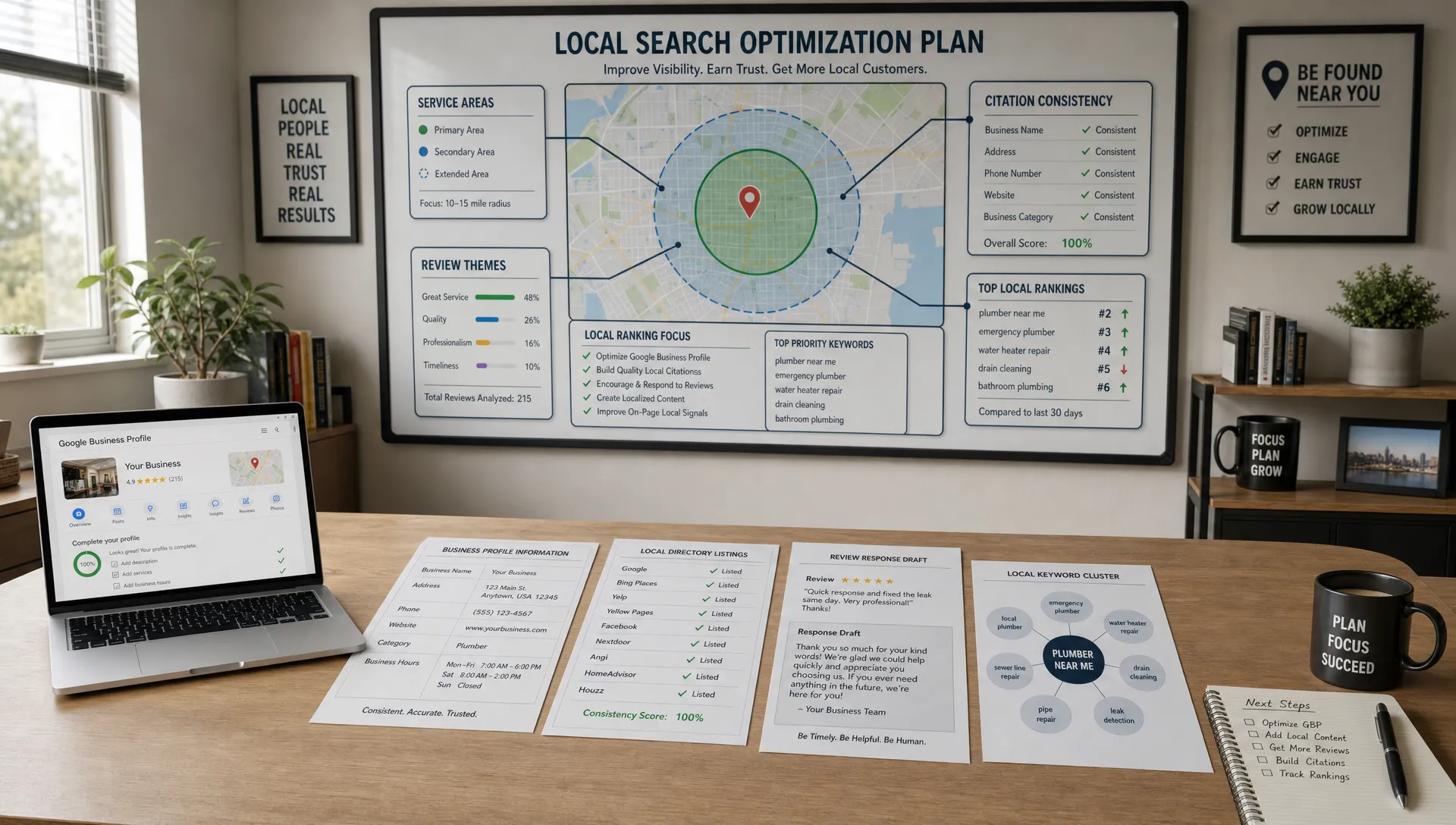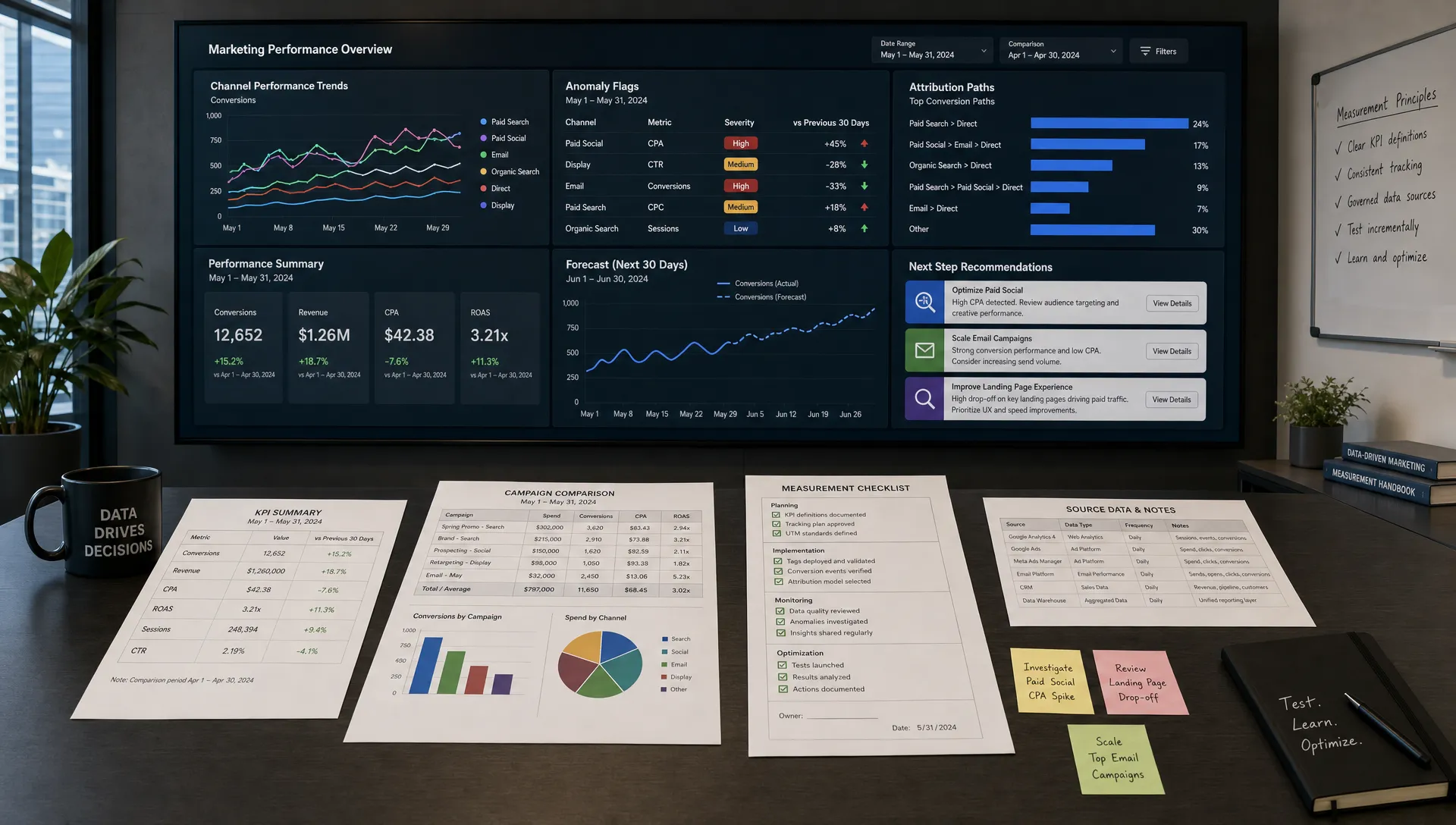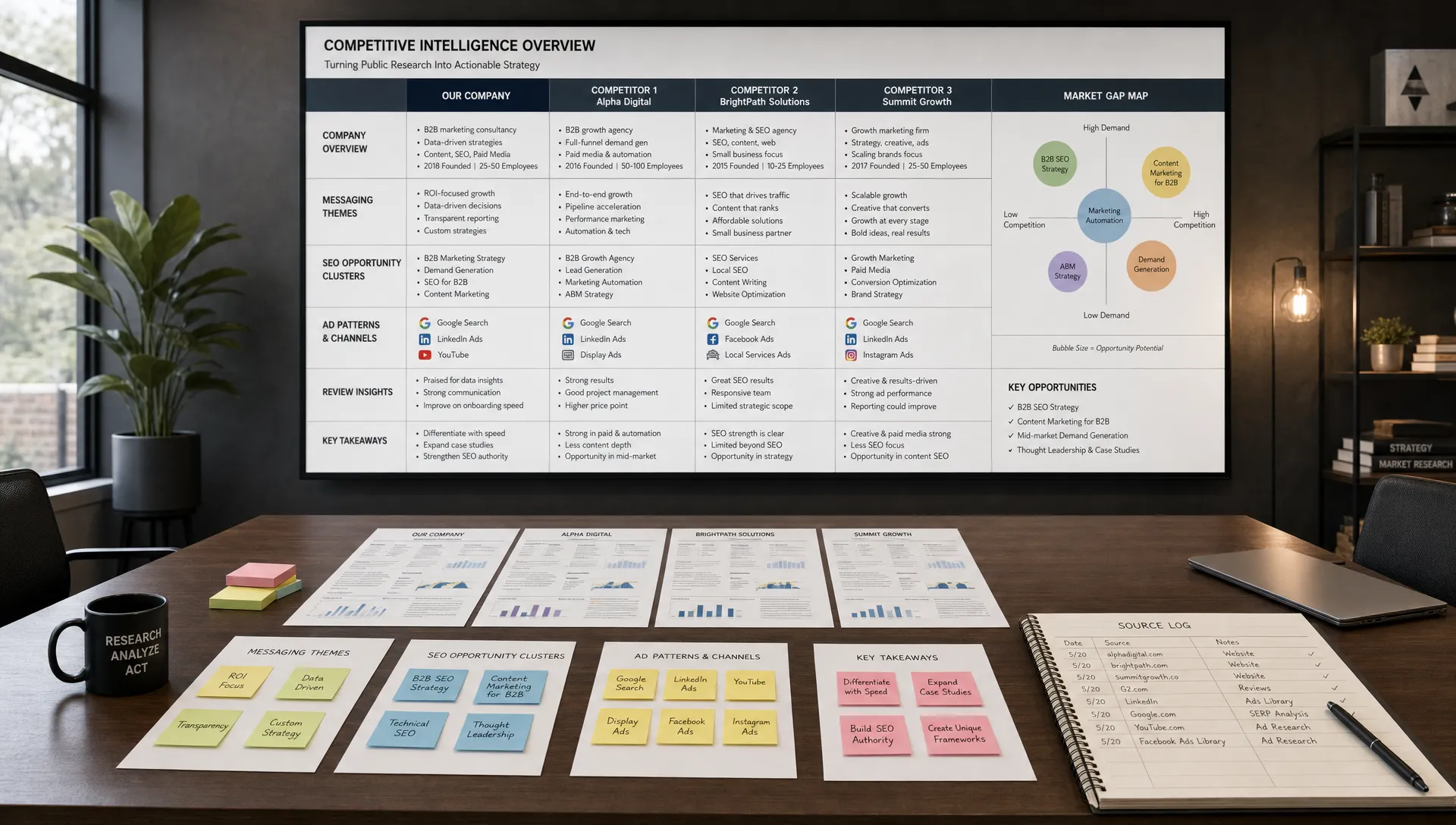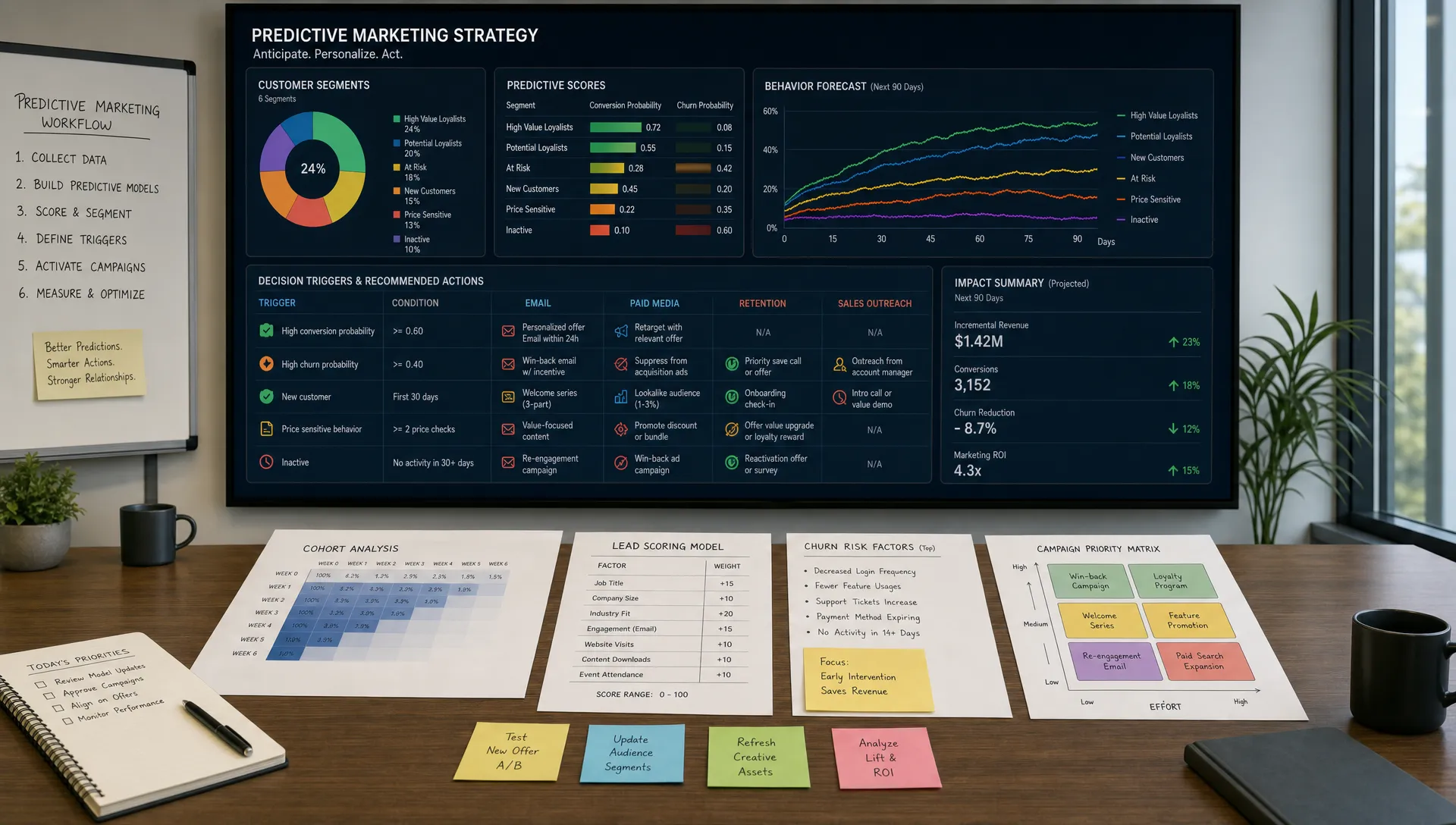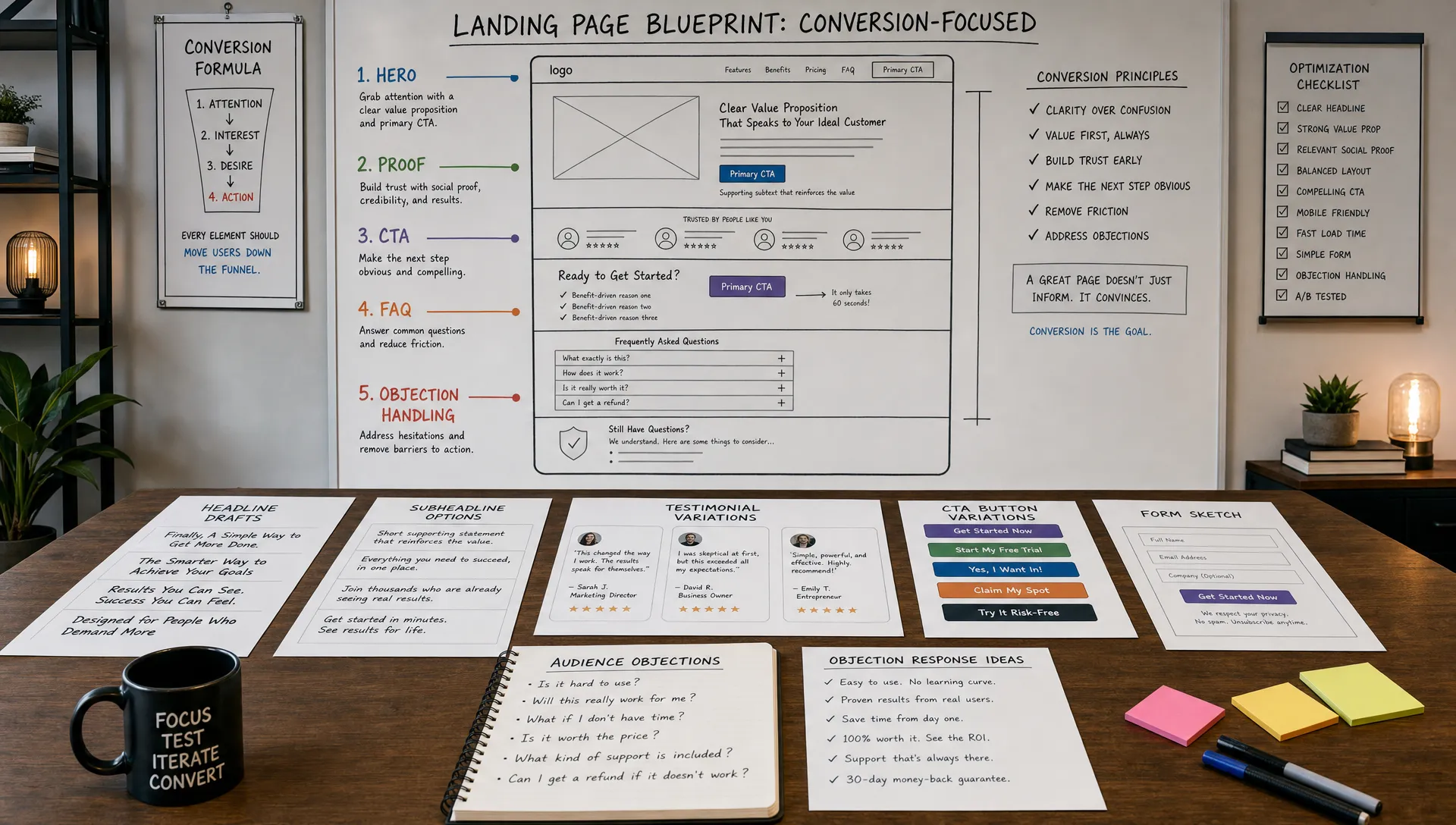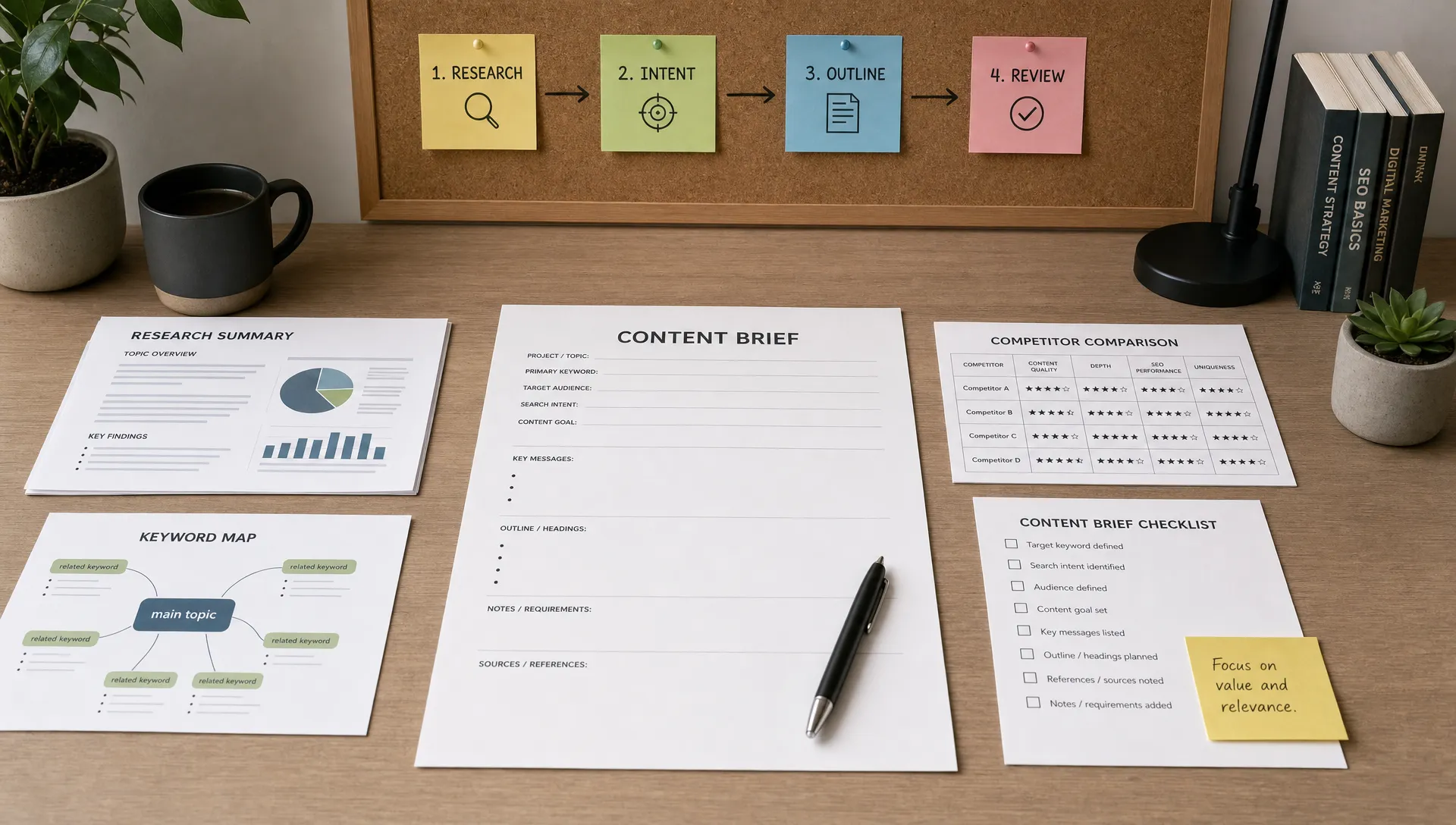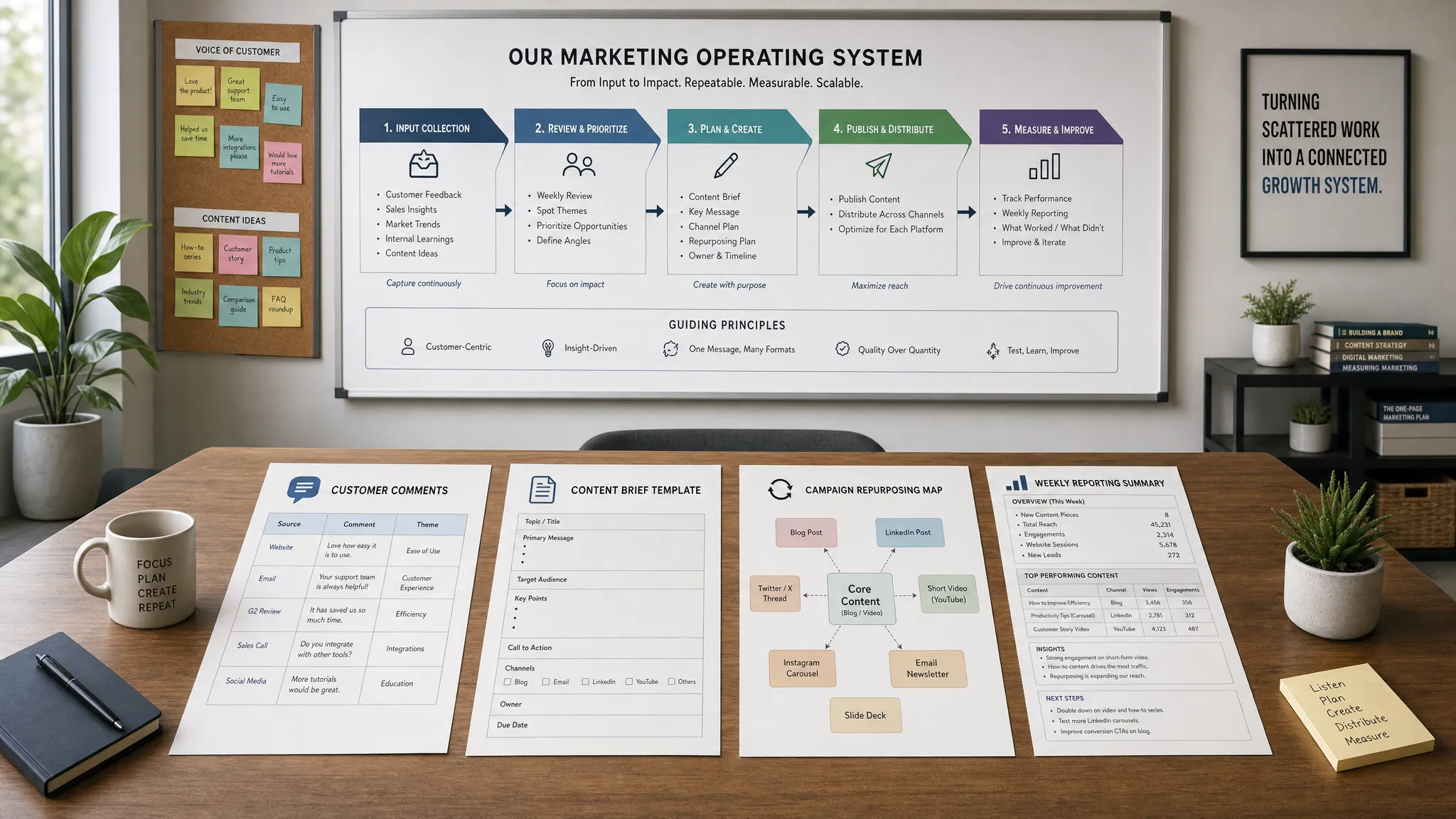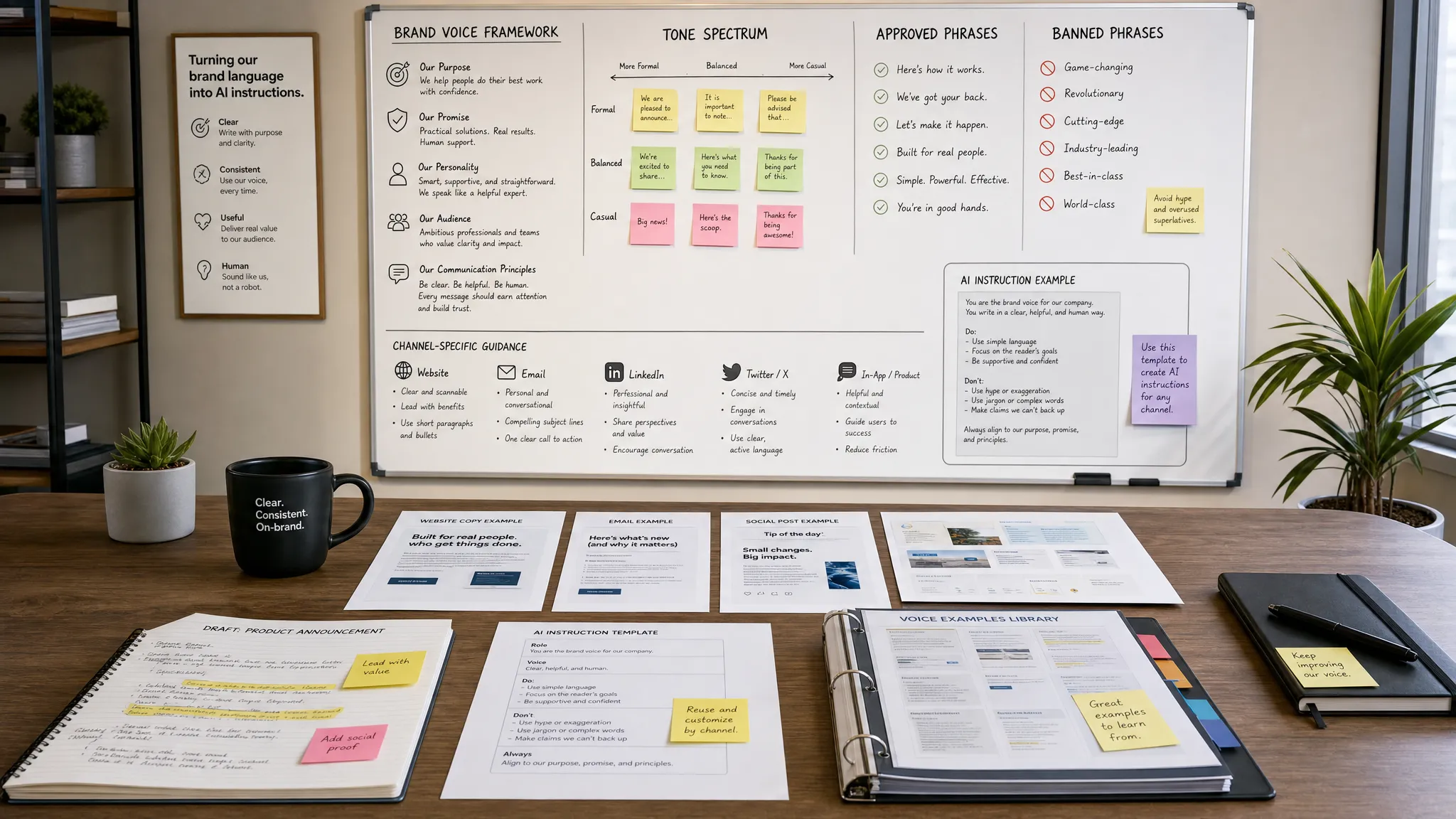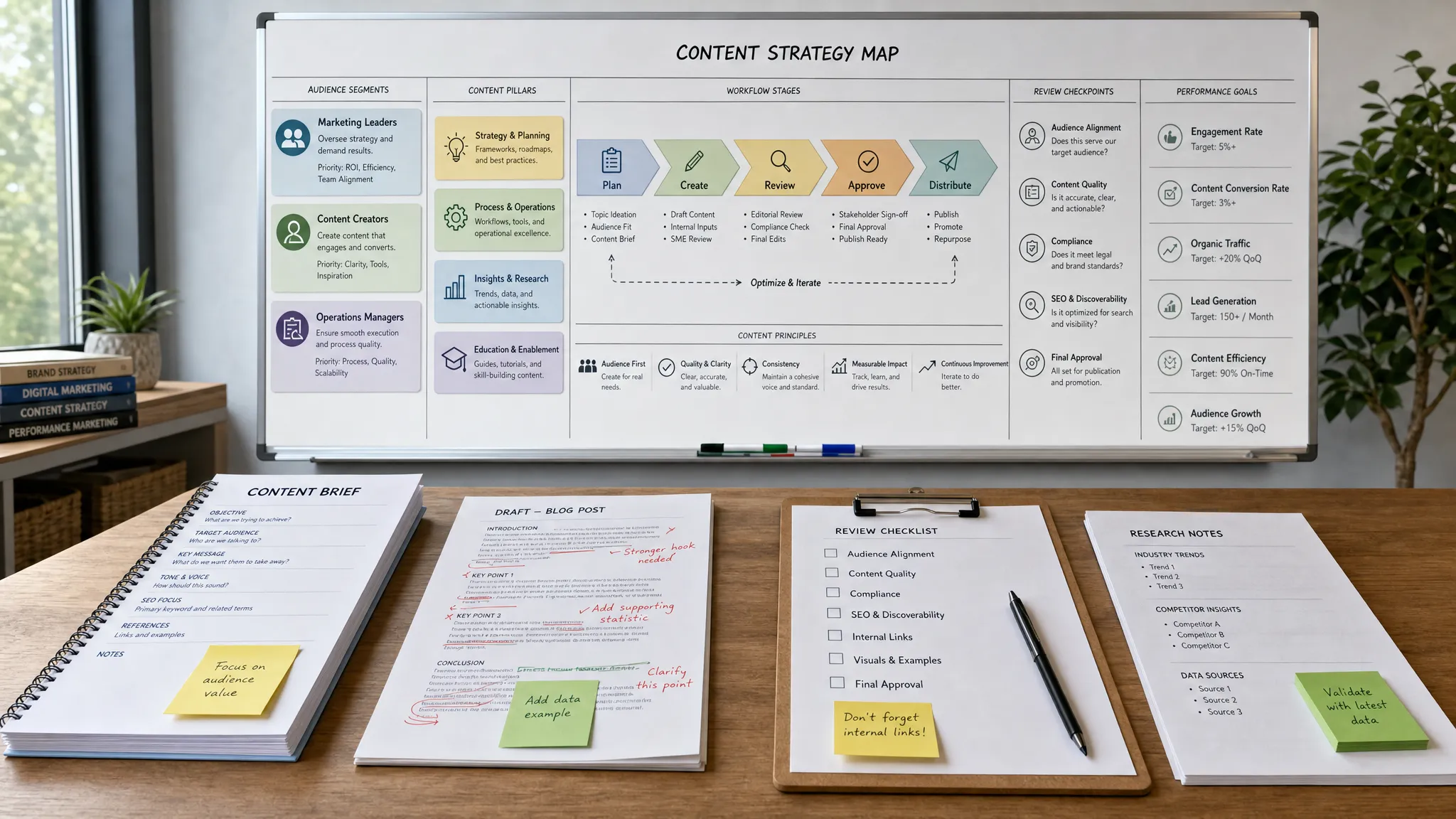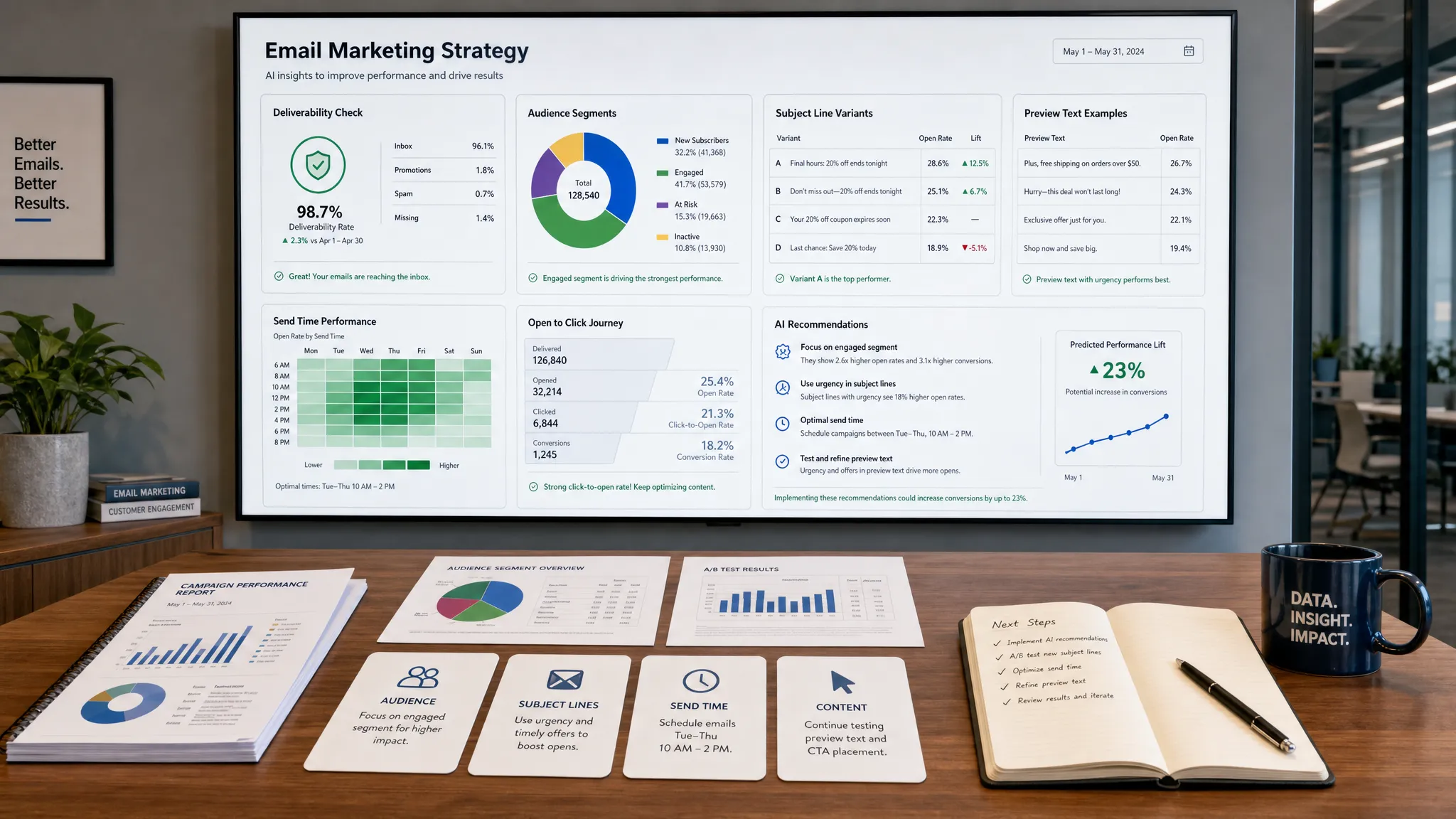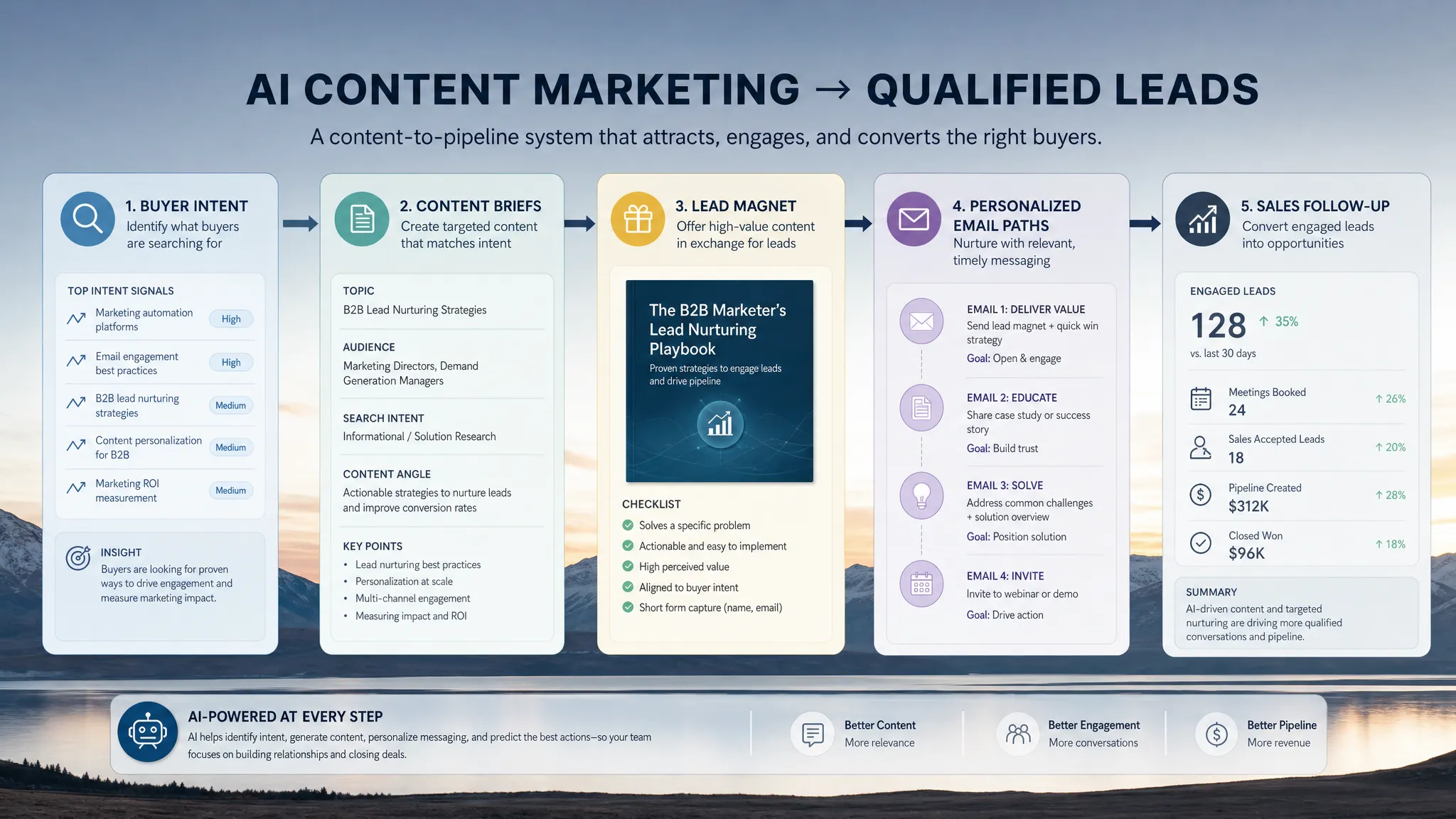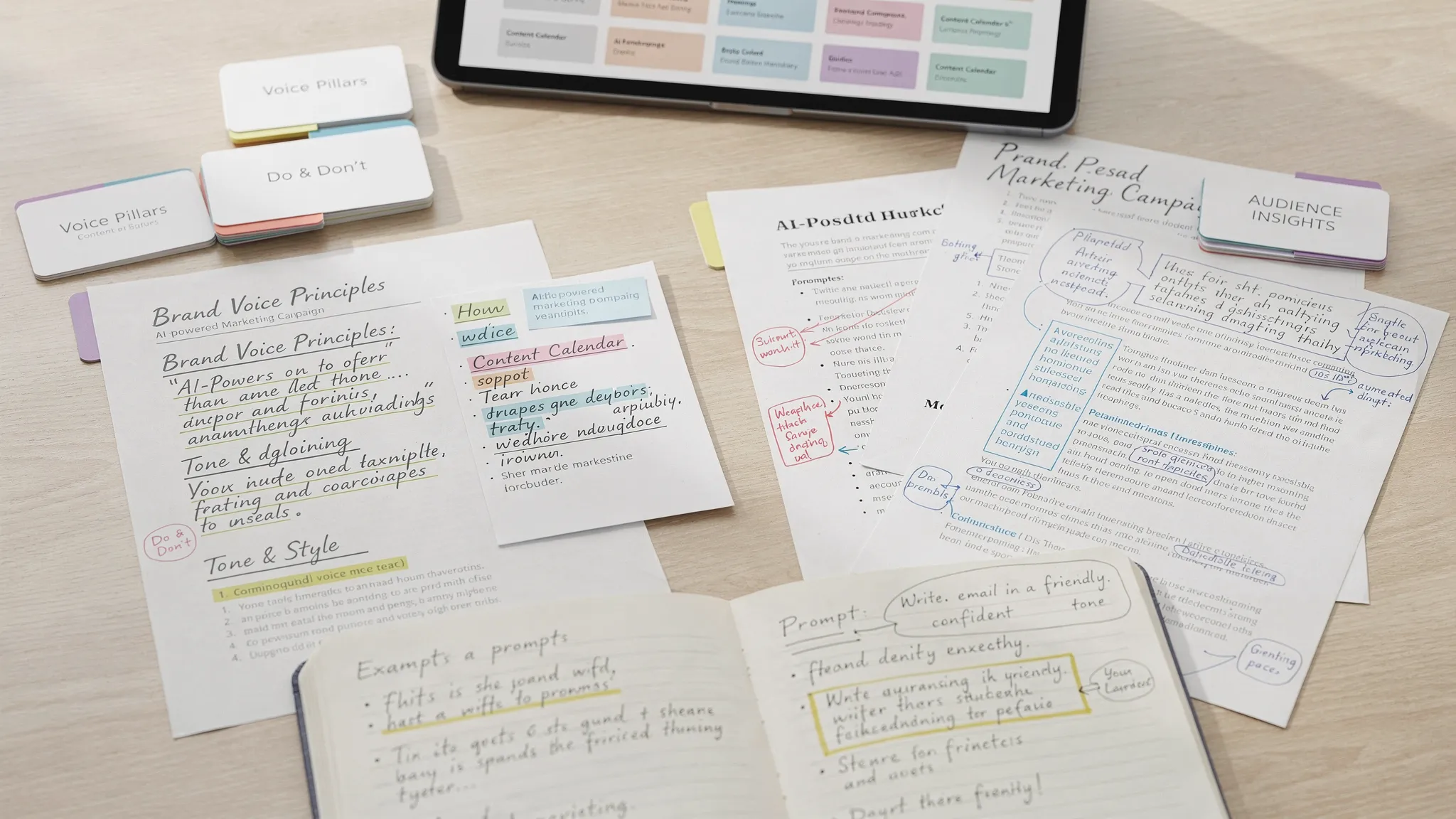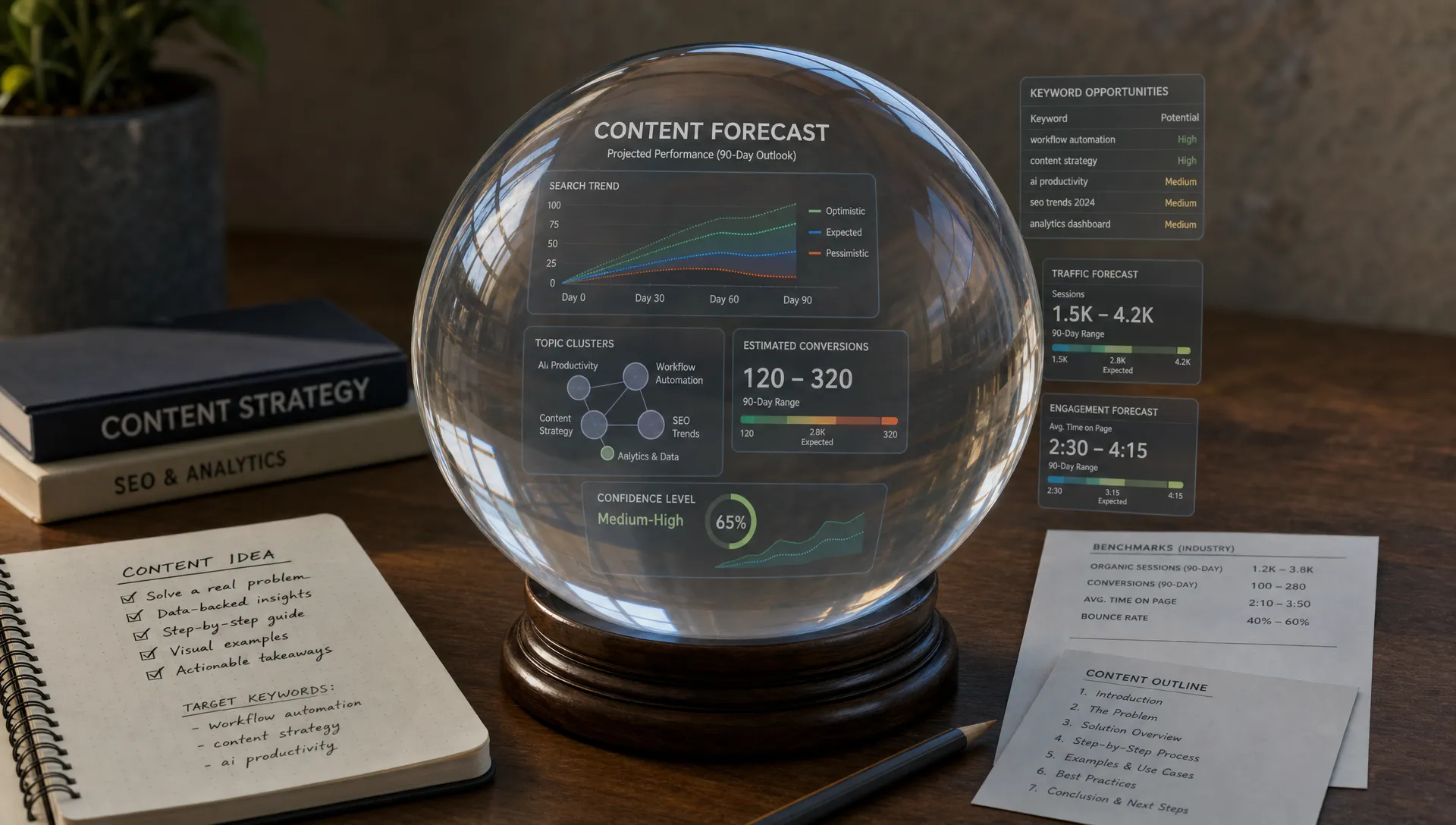
Forecasting content performance used to mean looking at last quarter’s traffic, guessing which topics might trend, and hoping the editorial calendar paid off. AI changes that. It helps marketers estimate which ideas are most likely to rank, attract qualified readers, earn engagement, and drive pipeline before the first draft is written.
But the goal is not to make AI “predict the future” perfectly. The goal is to make better content decisions with less guesswork.
When you forecast content performance with AI, you combine historical performance data, search demand, customer intent, competitive signals, distribution patterns, and conversion data into a practical decision system. That system helps answer questions like:
For marketing teams under pressure to do more with fewer resources, this is where AI marketing becomes especially valuable. It helps you prioritize the content bets that are most likely to create measurable business outcomes.
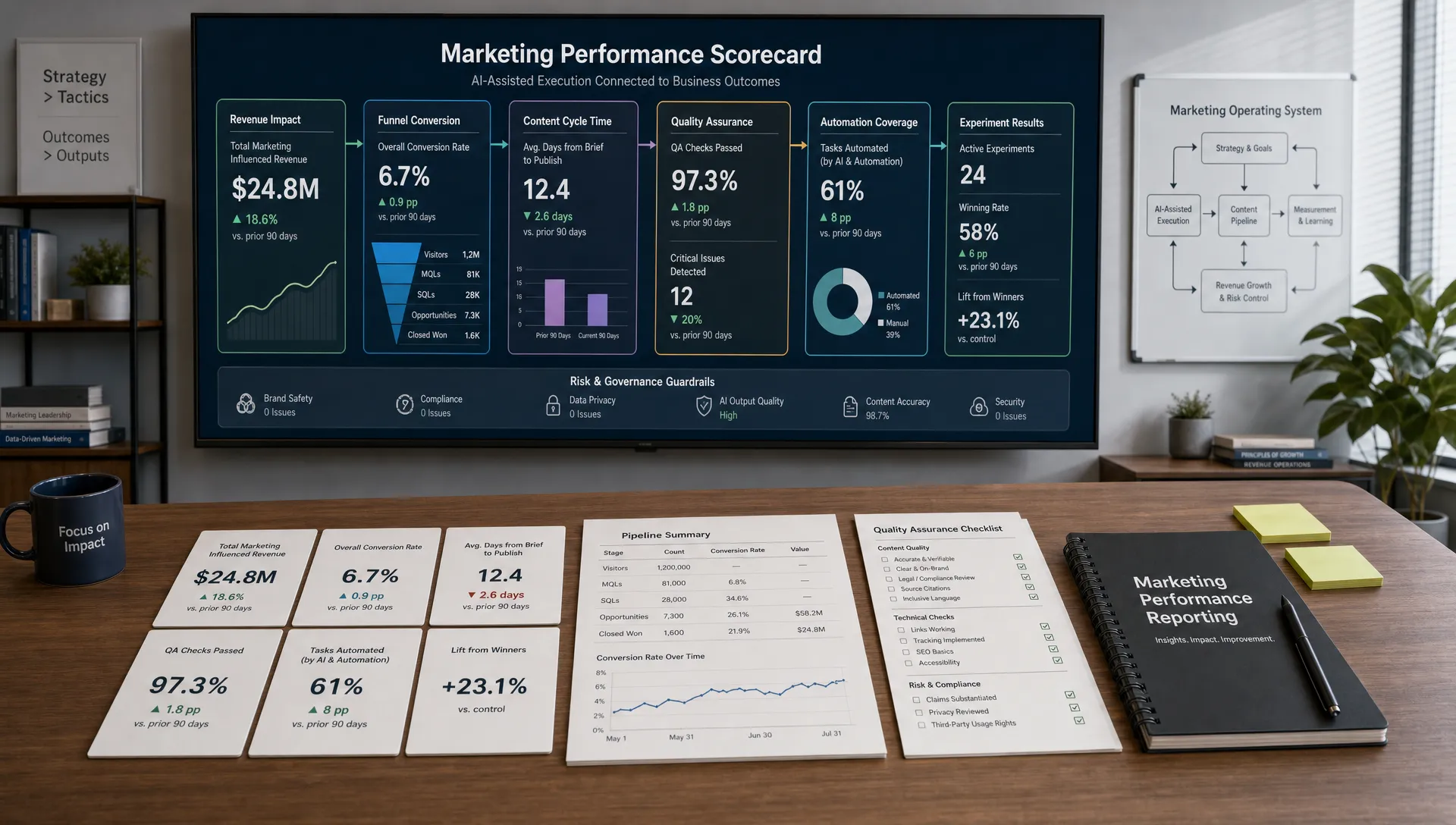
A content forecast is an estimate of future results based on available signals. Those results can include organic clicks, impressions, rankings, social engagement, email signups, demo requests, assisted conversions, or revenue contribution.
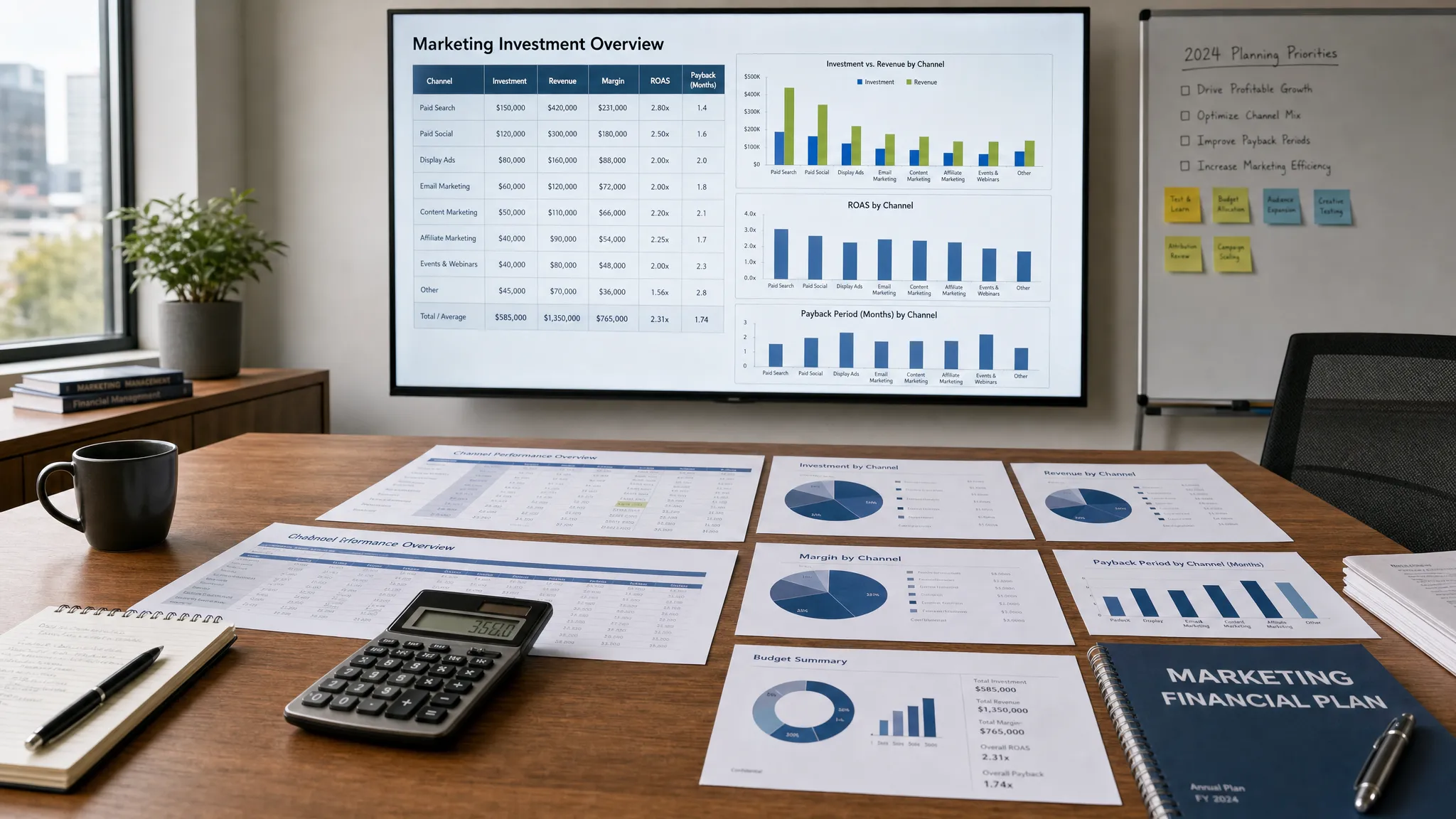
The best forecasts do not rely on one metric. A blog post may generate 20,000 visits and no pipeline, while a niche comparison article may generate 800 visits and influence high-value deals. AI can help you model both scenarios more clearly by connecting content data to business intent.
Think of forecasting as a way to score content opportunities before you invest in them. A good forecast should include three things: the likely upside, the level of uncertainty, and the effort required to win.
That means a forecast should not say, “This article will get 4,000 visits.” A stronger forecast says, “Based on similar topics, current search demand, ranking difficulty, and our domain performance, this article has a realistic 6-month range of 1,500 to 3,500 organic visits, with medium conversion potential and high strategic relevance.”
That distinction matters. Single-number predictions create false confidence. Forecast ranges help teams make smarter decisions.
Before building a model or prompting an AI assistant, define the decision you want to improve. Forecasting for SEO traffic requires different inputs than forecasting newsletter signups, sales-qualified leads, or paid content amplification.
For example, an SEO manager may want to know which keyword clusters have the best chance of reaching page one. A demand generation team may want to know which middle-funnel topics are most likely to produce demo requests. A content lead may want to compare whether a guide, checklist, calculator, or case study is the right format.
This is where many teams go wrong. They ask AI to “predict blog performance” without defining what performance means. Instead, choose a primary outcome and a secondary outcome. The primary outcome might be qualified leads. The secondary outcome might be organic traffic, engagement time, or newsletter growth.
If your content program already connects content production to ROI, AI forecasting becomes much more useful. AIMarketer Hub’s guide to AI content generation for better ROI is a helpful companion if you want to tie content planning more tightly to business outcomes.
AI forecasting is only as good as the data behind it. You do not need a perfect data warehouse to start, but you do need consistent inputs. For most marketing teams, the strongest forecasting data comes from a mix of first-party analytics, search data, content metadata, and conversion signals.
Useful inputs include historical page views, organic clicks, impressions, average ranking position, click-through rate, publication date, content format, word count, author or subject matter expert, backlinks, internal links, traffic source mix, conversion rate, and assisted revenue.
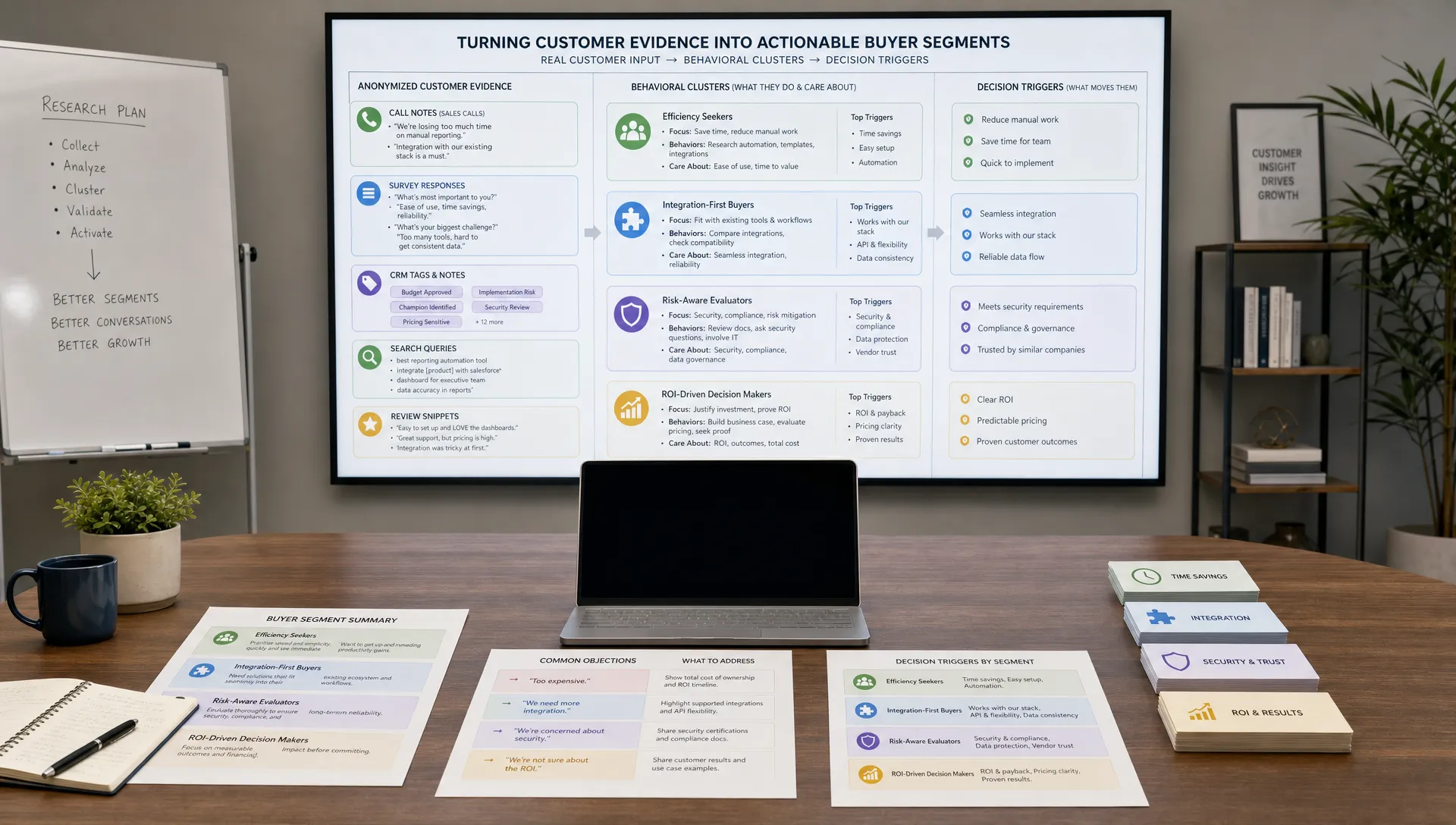
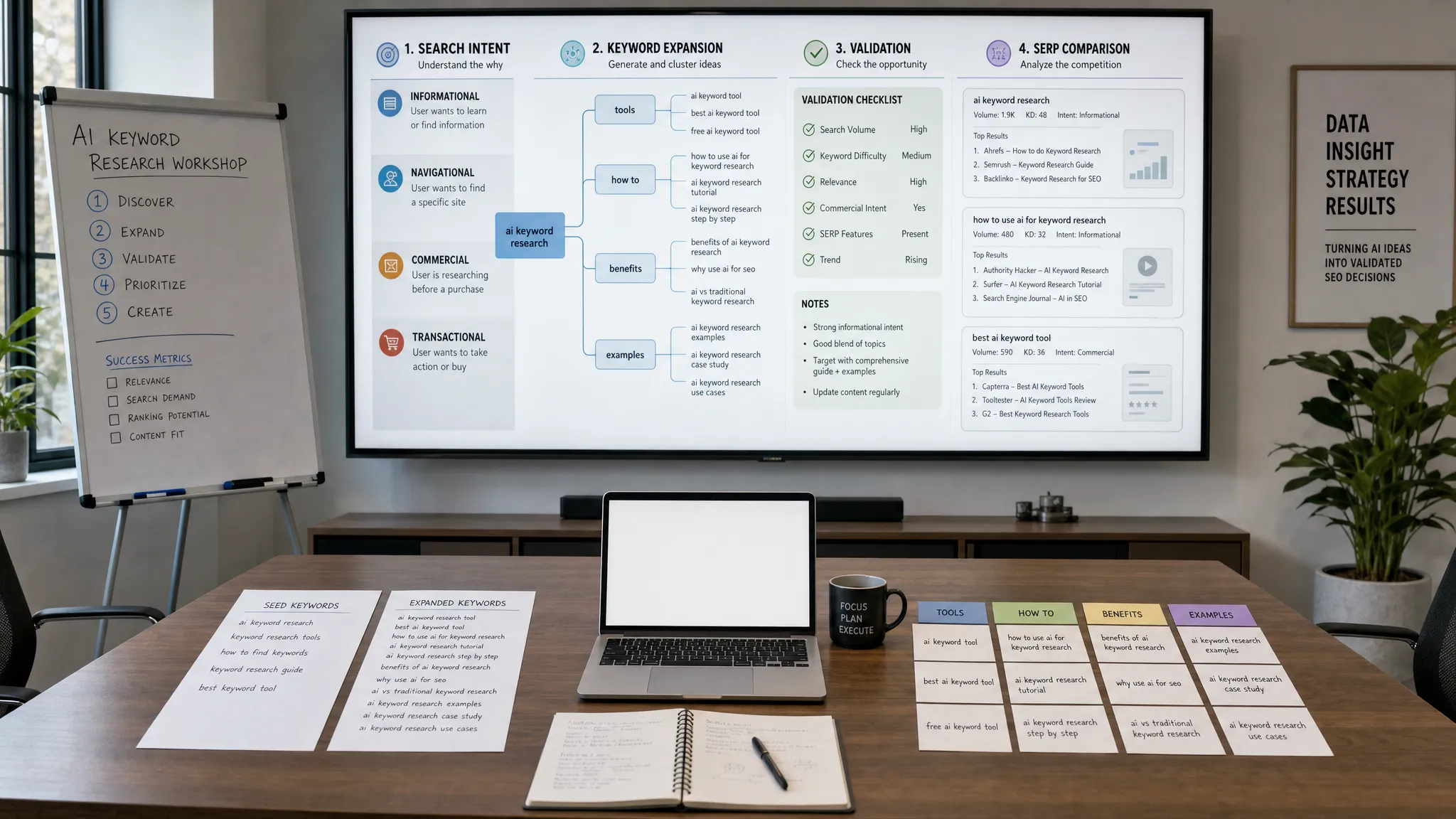
You should also include market signals. Search volume, keyword difficulty, SERP features, trend data, competitor rankings, social demand, seasonality, and audience questions can all improve the forecast. AI tools are particularly good at turning messy qualitative signals, such as customer interviews, sales calls, Reddit threads, support tickets, and review language, into structured topic and intent labels.
Clean data matters more than complex modeling. If your analytics double-count conversions, your attribution is inconsistent, or your content categories are unclear, AI will amplify those problems. Start by standardizing basic fields across your content inventory.
At minimum, tag every content asset with:
Once those tags are consistent, AI can compare new ideas against similar historical assets and produce more realistic projections.
Raw data is helpful, but forecasting improves when you create features that explain why content performs. In AI and machine learning, a feature is a variable used to make a prediction. In content marketing, useful features often describe intent, authority, competition, freshness, and distribution strength.
For example, “keyword volume” alone is not enough. A topic with 10,000 monthly searches may be too broad, too competitive, or too informational to convert. A topic with 500 monthly searches may have strong commercial intent and a much better chance of driving pipeline.
Strong content forecasting features include topic authority, based on how well your site already performs in a cluster. They also include SERP difficulty, based on the strength of competing pages. Intent fit matters too, because an article aligned with a high-intent pain point is more likely to convert than a general awareness post.
Freshness sensitivity is another important feature. Some topics decay quickly, such as AI tool comparisons, compliance updates, and platform tutorials. Others remain stable for years, such as foundational strategy guides. If your forecast ignores freshness, it may overvalue content that will need constant updates.
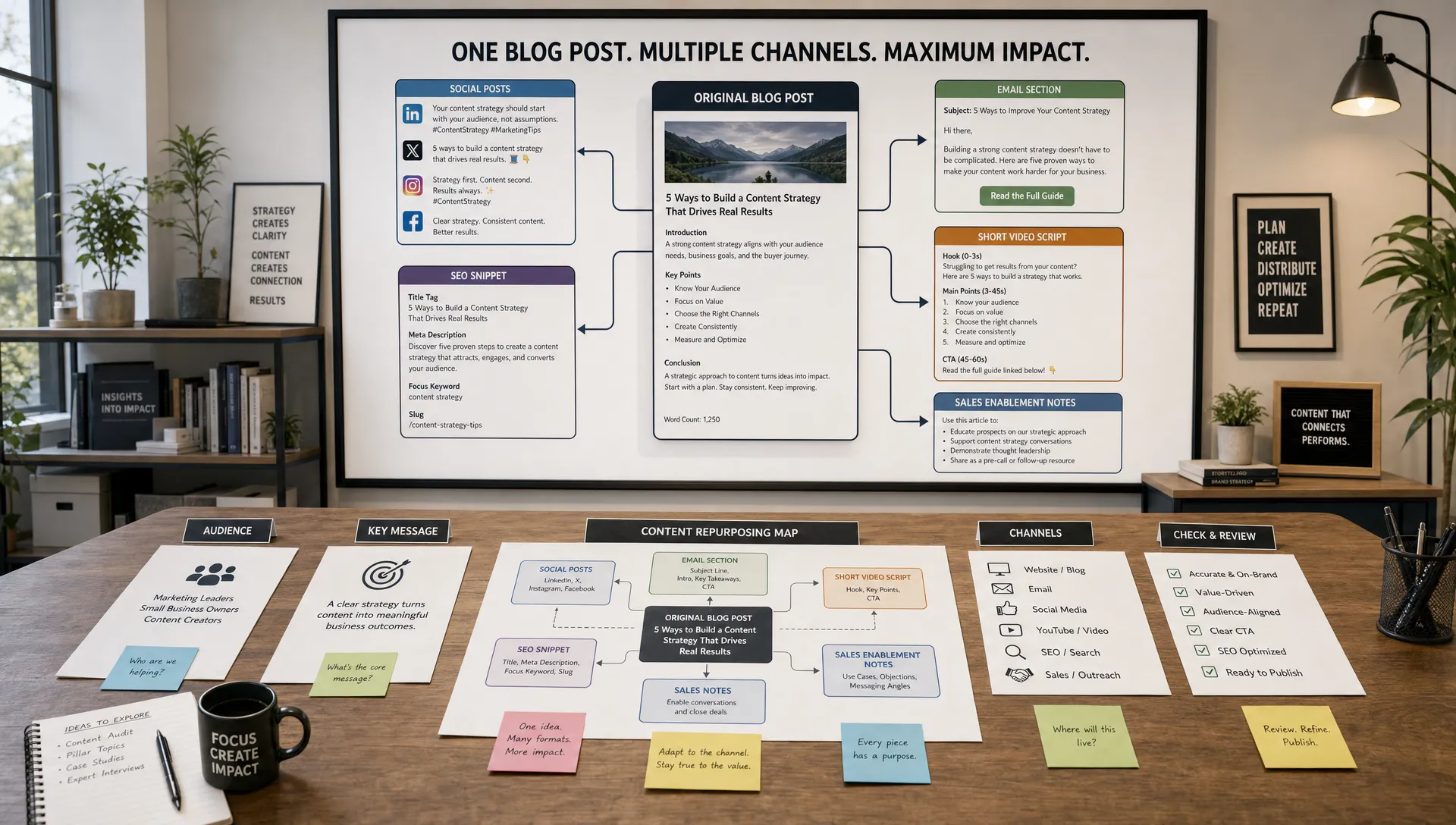
Distribution is also predictive. A piece supported by email, social, paid retargeting, sales enablement, and internal linking has a different performance ceiling than a post that simply goes live on the blog.
This is why AI-powered analytics should not only analyze search demand. They should model the full path from idea to audience to business result.
You do not need to start with an advanced machine learning model. In fact, most teams should begin with a simple baseline and improve from there. The best method depends on your data volume, analytics maturity, and decision complexity.
A practical first model is similarity-based forecasting. You compare a proposed content idea to past assets with similar topic, intent, format, and distribution level. AI can help cluster those past assets and summarize expected ranges. This is often enough to improve editorial prioritization.
A second method is scoring. You assign weighted scores to factors such as search demand, authority, intent fit, conversion potential, competitive difficulty, and production effort. AI can help score each factor, but your team should define the weights based on strategy.
A more advanced method is regression or classification modeling. Regression can estimate likely traffic, leads, or conversions. Classification can estimate whether a piece is likely to become a top performer, average performer, or low performer. This works best when you have a large content library and reliable historical results.
Time-series forecasting is useful for mature sites with predictable seasonality. It can help estimate traffic changes across months, quarters, and recurring industry cycles. This is especially helpful for finance, SaaS, legal, ecommerce, and real estate brands, where buyer demand often shifts with market conditions.
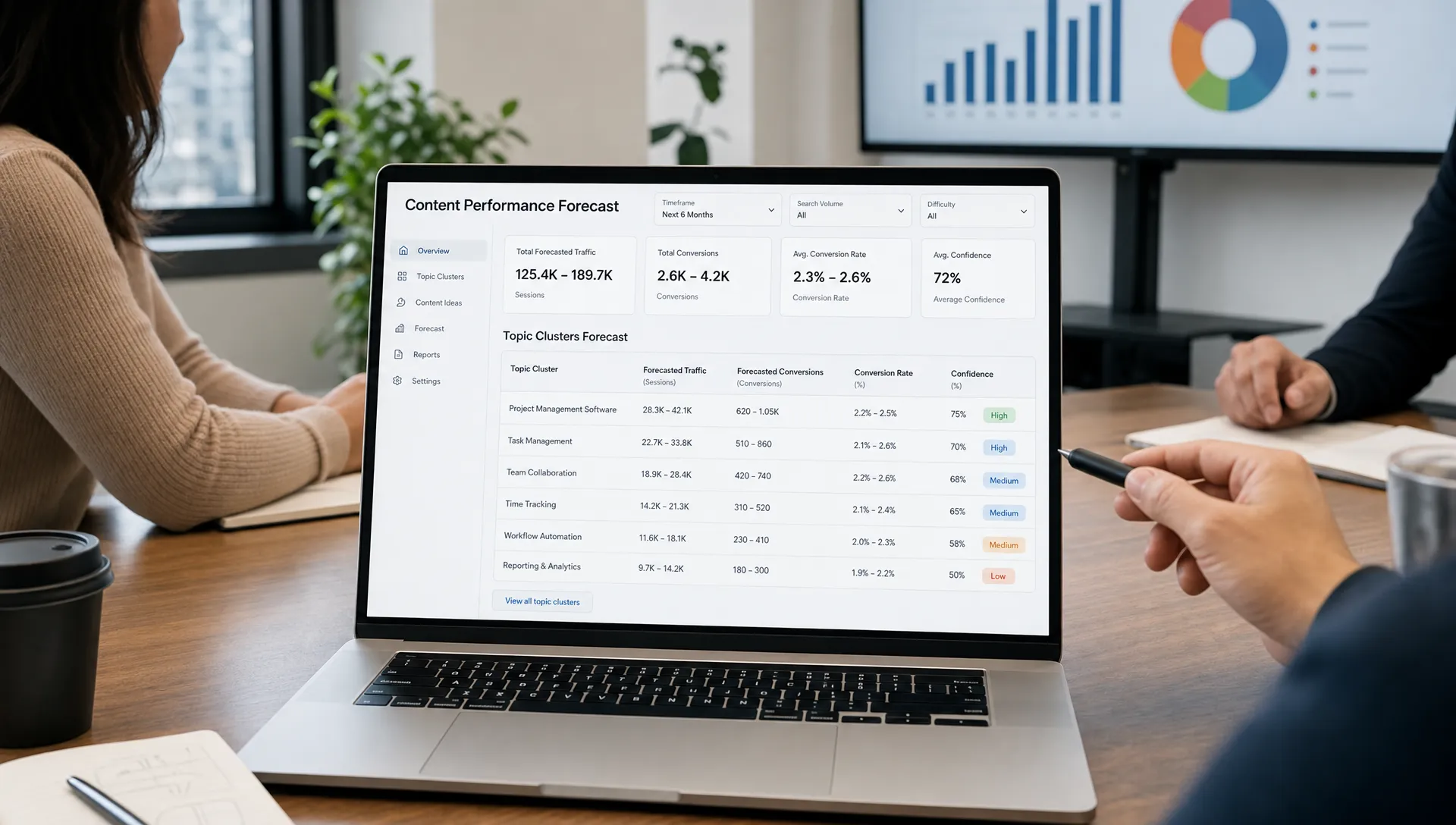
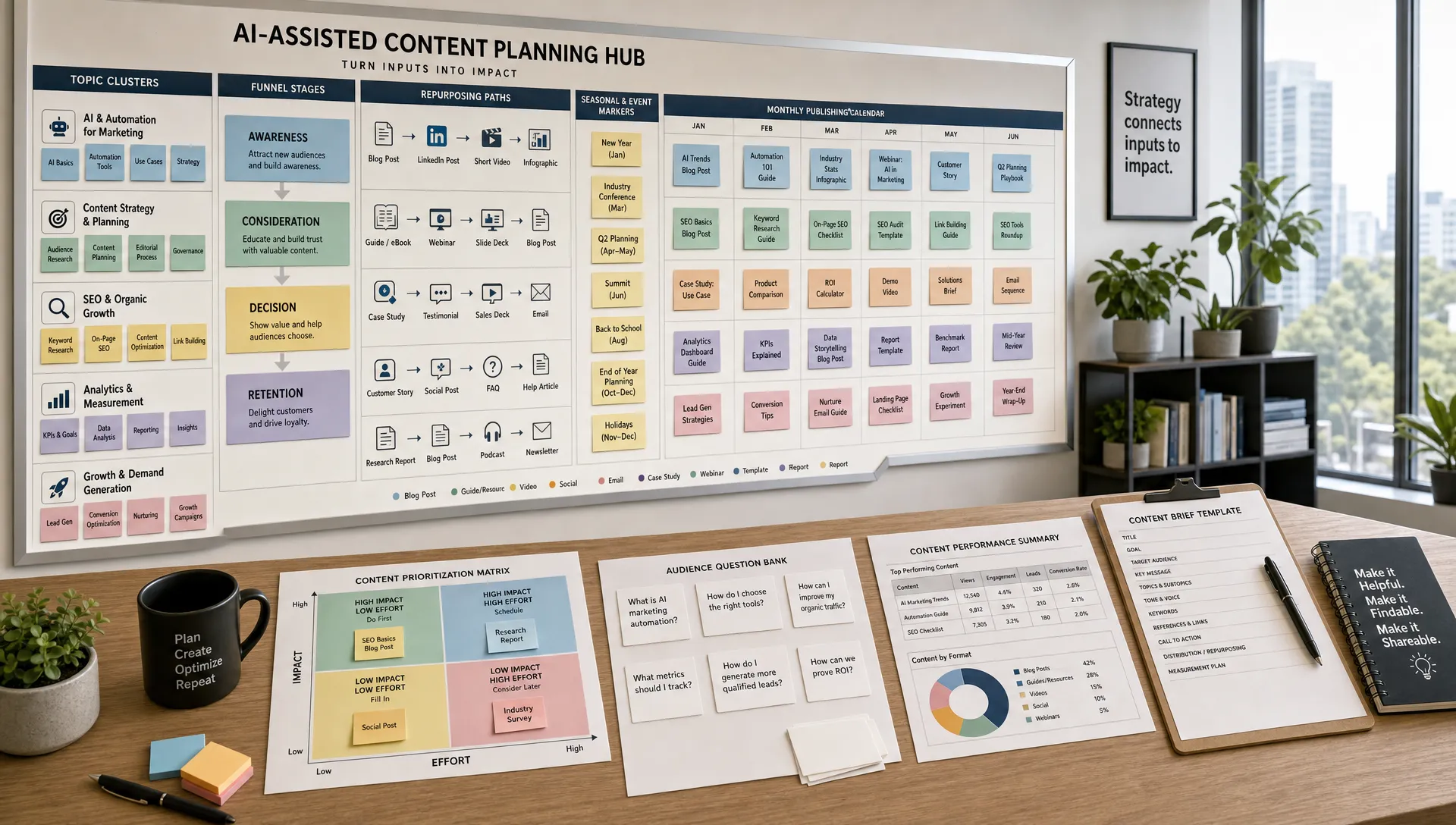
A content opportunity score turns complex forecasting inputs into an easier prioritization system. It should not replace human judgment, but it can make planning conversations much more objective.
A useful score combines upside, confidence, and effort. Upside estimates the potential business value. Confidence estimates how reliable the prediction is. Effort estimates the resources needed to create, update, promote, and maintain the asset.
For example, a high-upside topic with low confidence may be worth testing, but not worth building an entire campaign around. A medium-upside topic with high confidence and low effort may be a strong quick win. A low-upside topic with high production effort should probably be deprioritized unless it has strategic value beyond measurable traffic.
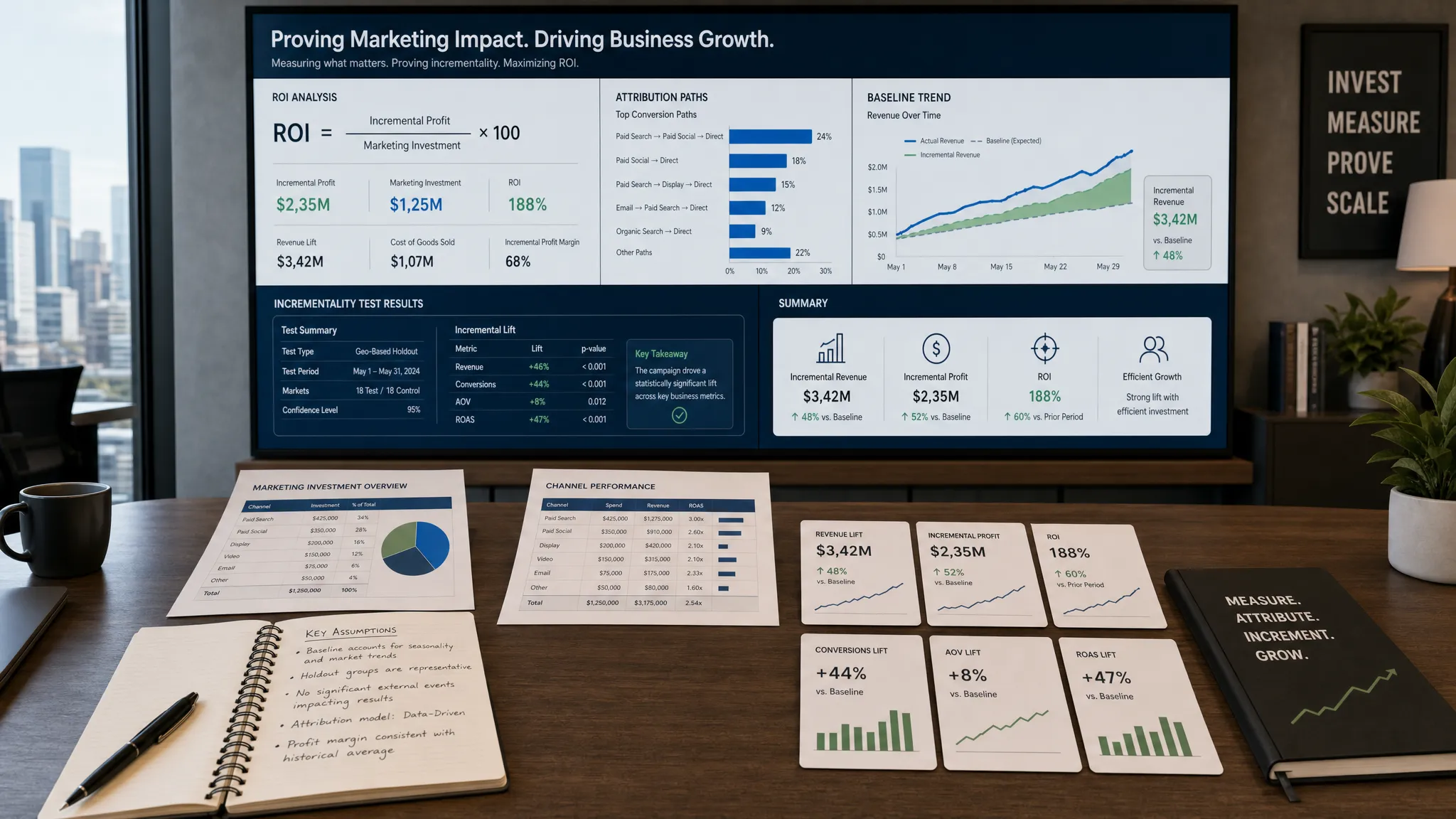
You can calculate expected value with a simple formula:
Expected value = estimated qualified visits × expected conversion rate × estimated conversion value
Then adjust that value based on content effort and confidence. AI can help estimate each variable, but the final decision should include market knowledge, customer insight, and strategic priorities.
For instance, a SaaS company might prioritize integration comparison pages because they convert well. A law firm might prioritize local service pages because intent is high. A real estate marketplace may weigh location demand, inventory freshness, and buyer intent more heavily, especially if users are trying to compare Dubai properties across neighborhoods, property types, and investment goals.
The point is simple: different business models need different forecasting signals.
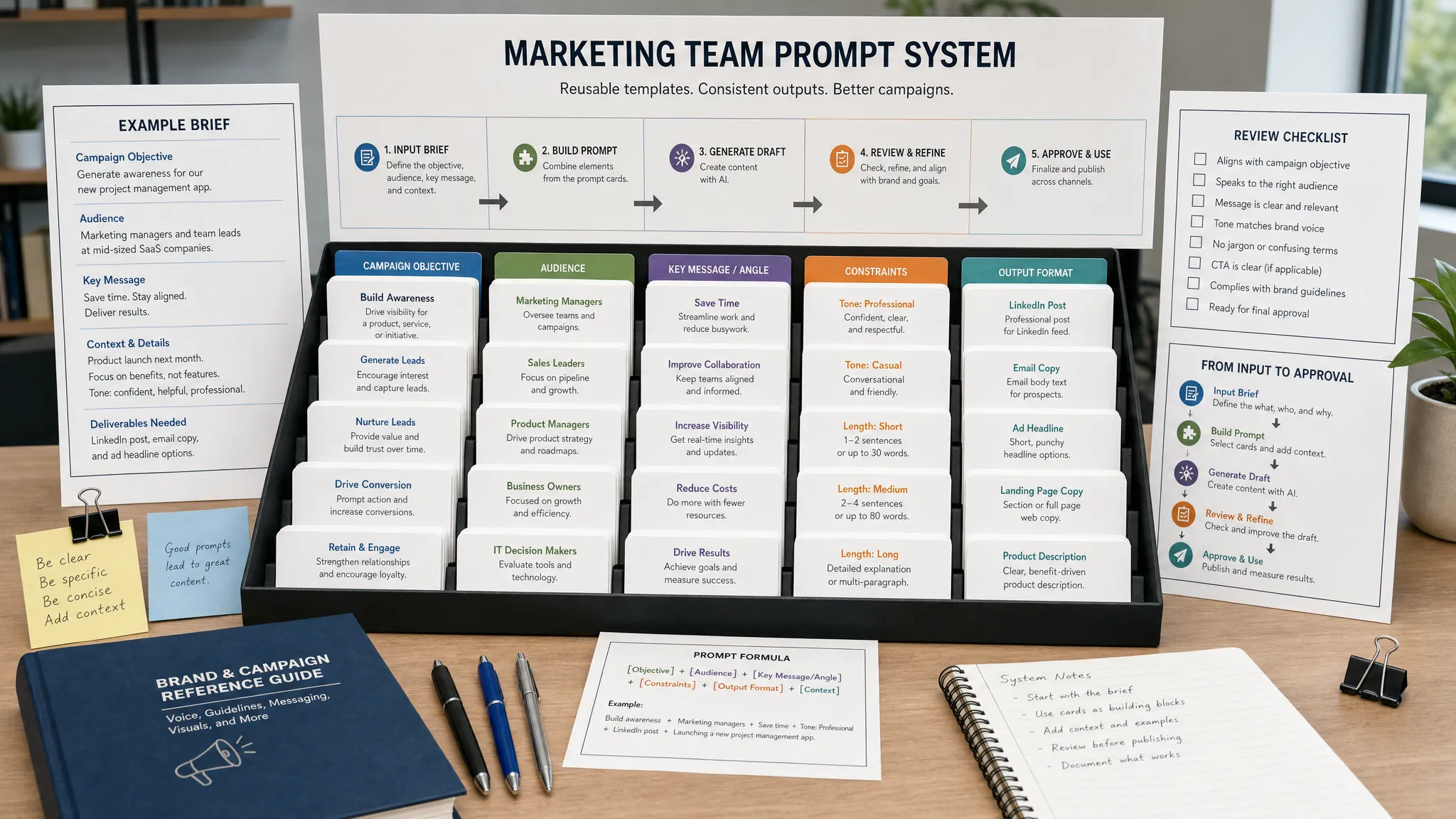
Once your data and scoring system are in place, AI can help evaluate content ideas before they enter the calendar. This is where forecasting becomes part of marketing workflow automation rather than a one-off analytics task.
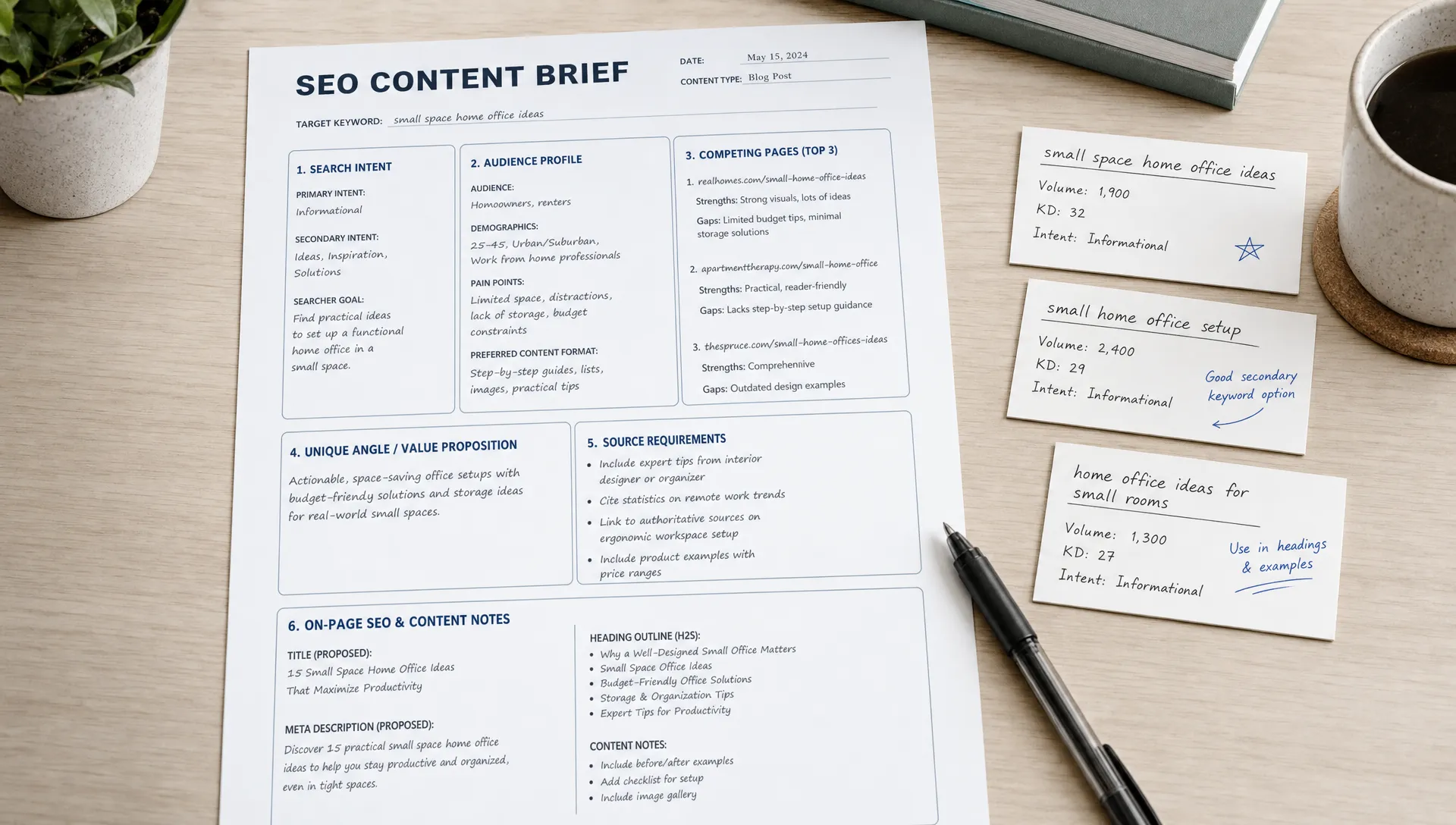
For every proposed topic, ask AI to evaluate the audience, intent, likely search demand, competitive environment, funnel stage, content format, and conversion path. Then compare the idea against historical content benchmarks.
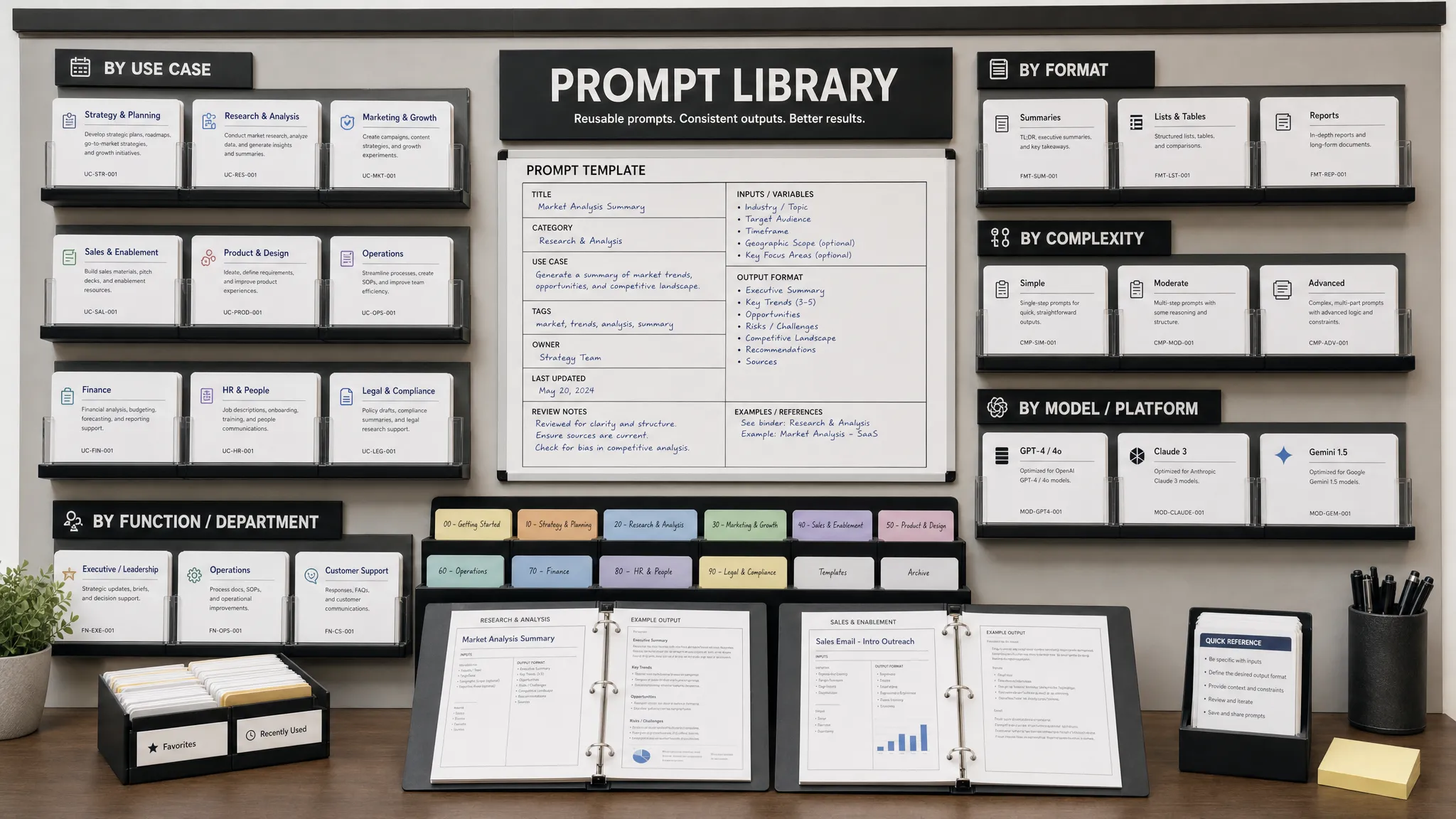
A useful AI prompt might look like this:
Analyze this proposed content idea using our historical content benchmarks. Estimate likely organic traffic range, conversion potential, ranking difficulty, freshness requirements, and recommended format. Compare it to similar published assets and explain the assumptions behind the forecast.
The key phrase is “explain the assumptions.” You do not want AI to produce a confident number without showing the logic. Ask for the signals, comparable pages, risks, and conditions that would change the forecast.
This workflow is especially powerful for content creation teams that publish frequently. Instead of asking, “Can we write this?” the team asks, “Is this content worth producing right now, and what outcome should we expect?”
If you are choosing tools to support this process, AIMarketer Hub’s review of the best AI tools for content creation can help you compare options for research, writing, optimization, and workflow fit.
Many teams use AI forecasting only for new content, but refresh forecasting can produce faster wins. Existing content already has data. That makes predictions more reliable.
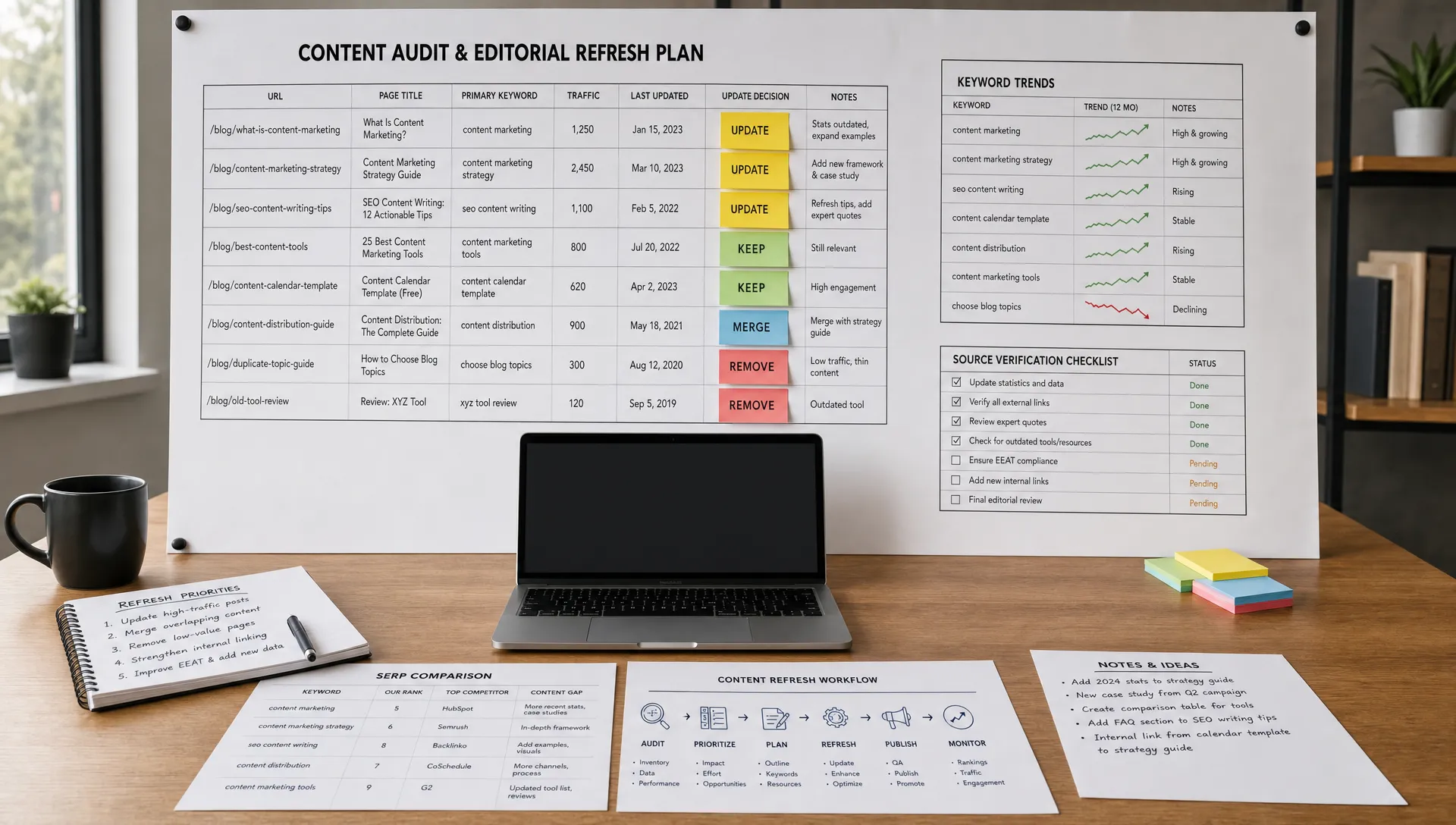
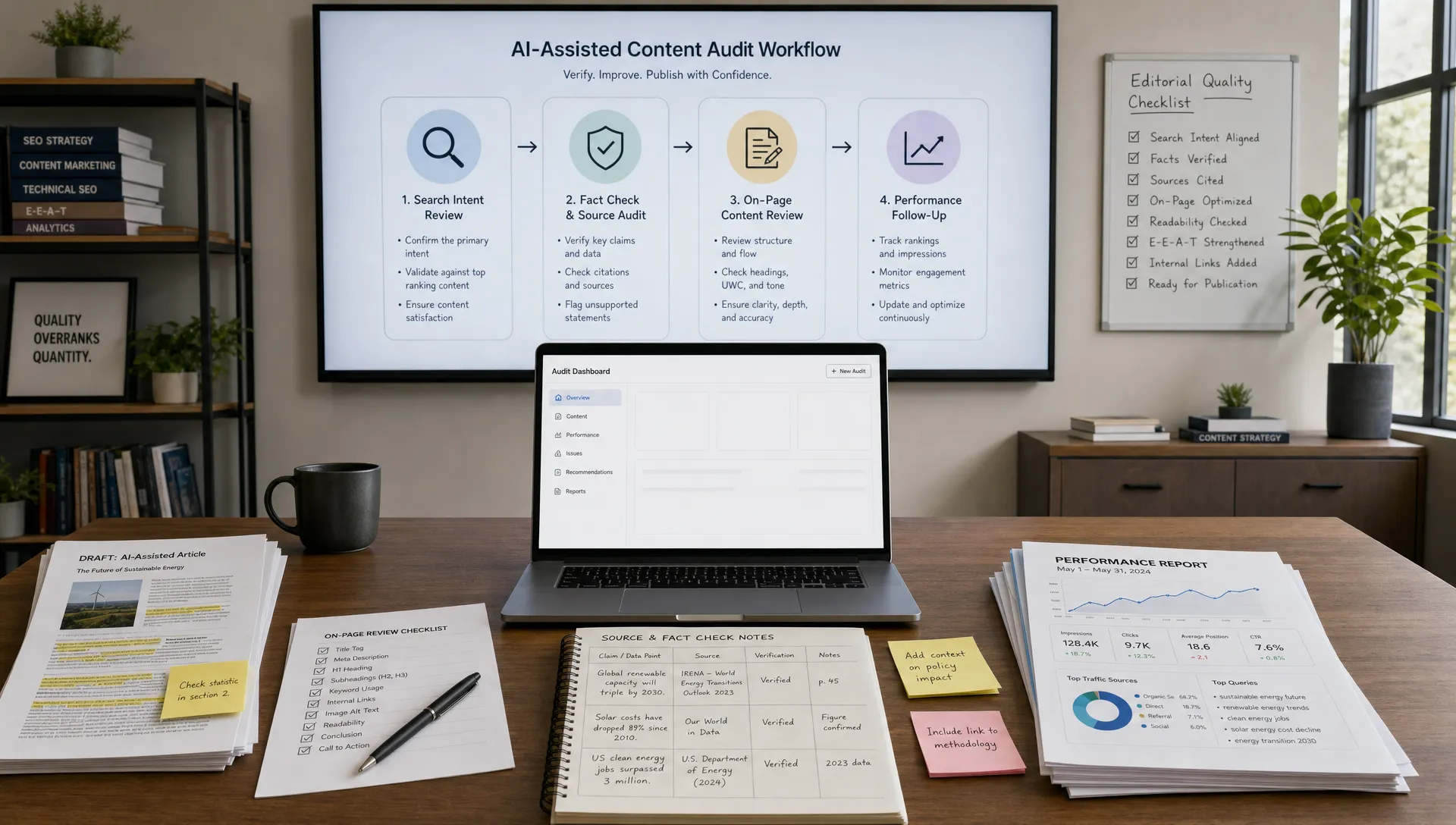
AI can identify pages that are losing impressions, slipping in rankings, underperforming for high-value keywords, or converting below their potential. It can also detect pages where search intent has changed since publication.
A refresh forecast should estimate what improvement is realistic after updating the content. That might include recovering lost traffic, improving click-through rate, expanding keyword coverage, increasing conversions, or improving internal link equity.
The best refresh candidates are not always the pages with the biggest traffic drop. Sometimes the best opportunities are pages ranking in positions 5 to 15 for high-intent keywords. A focused update, better structure, stronger examples, improved internal linking, and more current information can move those pages into a much more valuable position.
For a deeper workflow, see AIMarketer Hub’s guide to AI tools for content refresh and update work, which focuses specifically on identifying and improving stale content assets.
A forecast is only useful if you test it. Backtesting means applying your forecasting method to past content and comparing the forecasted outcome with the actual result.
For example, take articles published 6 to 12 months ago. Hide the actual results, then ask your model to forecast performance based on the data that would have been available before publication. Compare the forecast to what happened.
You do not need perfect accuracy. You need directional reliability. If your model consistently identifies the top 20 percent of opportunities, it can improve planning even if individual traffic estimates vary.
Track forecast accuracy using simple measures. Mean absolute error can show how far predictions are from actual outcomes. Forecast range accuracy can show how often actual results fall within your estimated range. Ranking accuracy can show whether your model correctly prioritizes winners over weaker opportunities.
You should also review misses manually. If a forecast was too optimistic, did the page fail because of ranking difficulty, poor promotion, weak internal links, low authority, or a mismatch between search intent and content angle? If a page outperformed expectations, did it benefit from a trend, a backlink, a social share, or a competitor decline?
Those insights are how the model gets better.
AI can improve content planning, but it can also create false precision. The biggest mistake is treating AI output as certainty. Content performance is affected by competitors, algorithm updates, seasonality, brand demand, distribution, and real-world events. A forecast should guide decisions, not eliminate judgment.
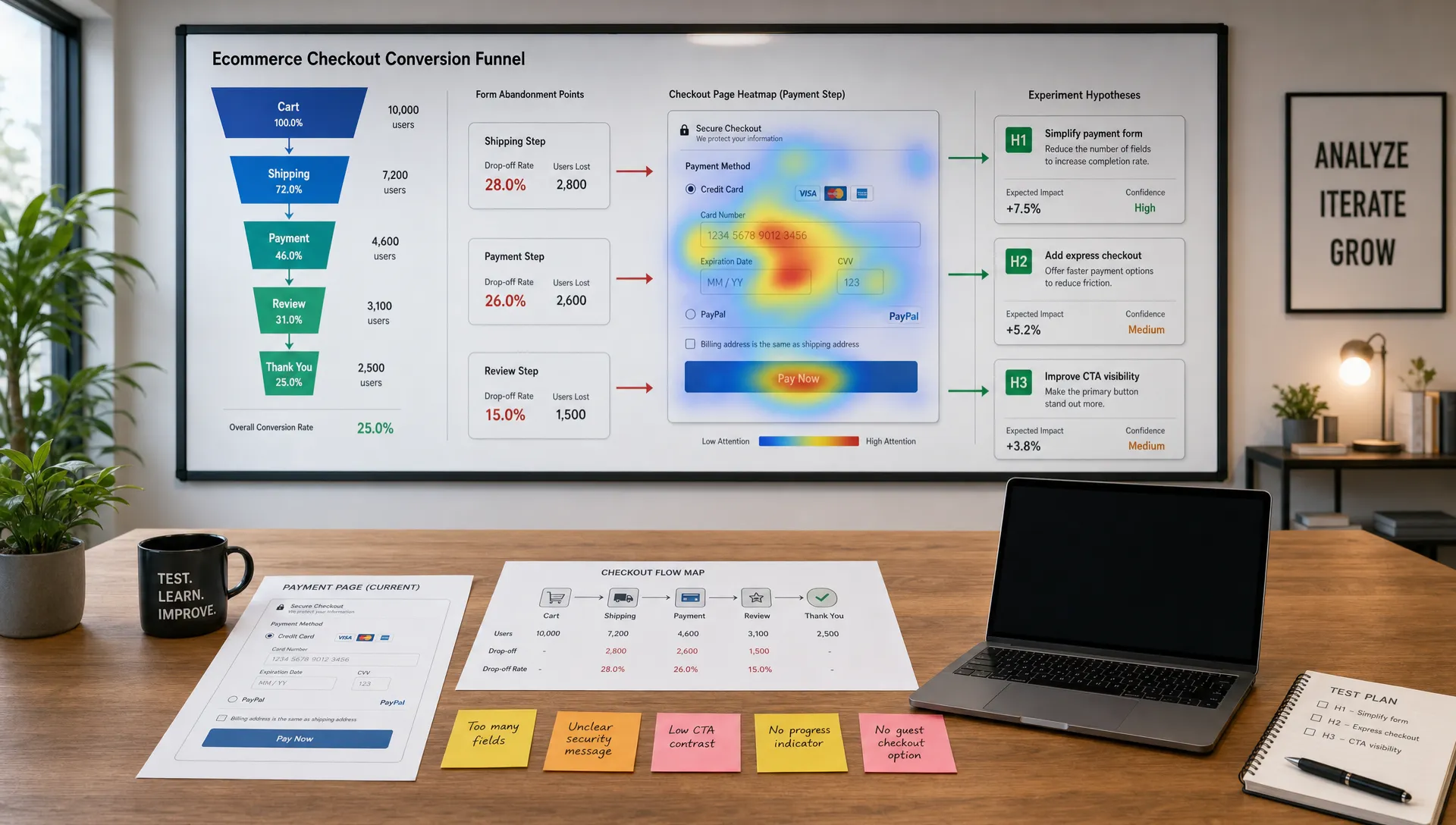
Another mistake is forecasting traffic while ignoring conversion quality. This leads teams toward broad topics that look impressive in analytics but do not support revenue. If your goal is growth, include lead quality and funnel movement in the model.
Data leakage is another risk. This happens when your model uses information that would not have been available at the time of prediction. For example, using future backlinks or post-publication rankings to forecast pre-publication performance will make your model look better than it really is.
Teams also overfit to past success. If your model only rewards what has already worked, it may reject emerging topics before they become valuable. Balance historical evidence with trend analysis and strategic bets.
Finally, avoid fully automated publishing decisions. AI can recommend priorities, but editors, strategists, and subject matter experts should still evaluate brand fit, originality, accuracy, and audience value.
The real advantage comes when forecasting becomes part of your content operating system. Every idea should enter the same evaluation process. Every published asset should be measured against its forecast. Every miss should improve the next round of planning.
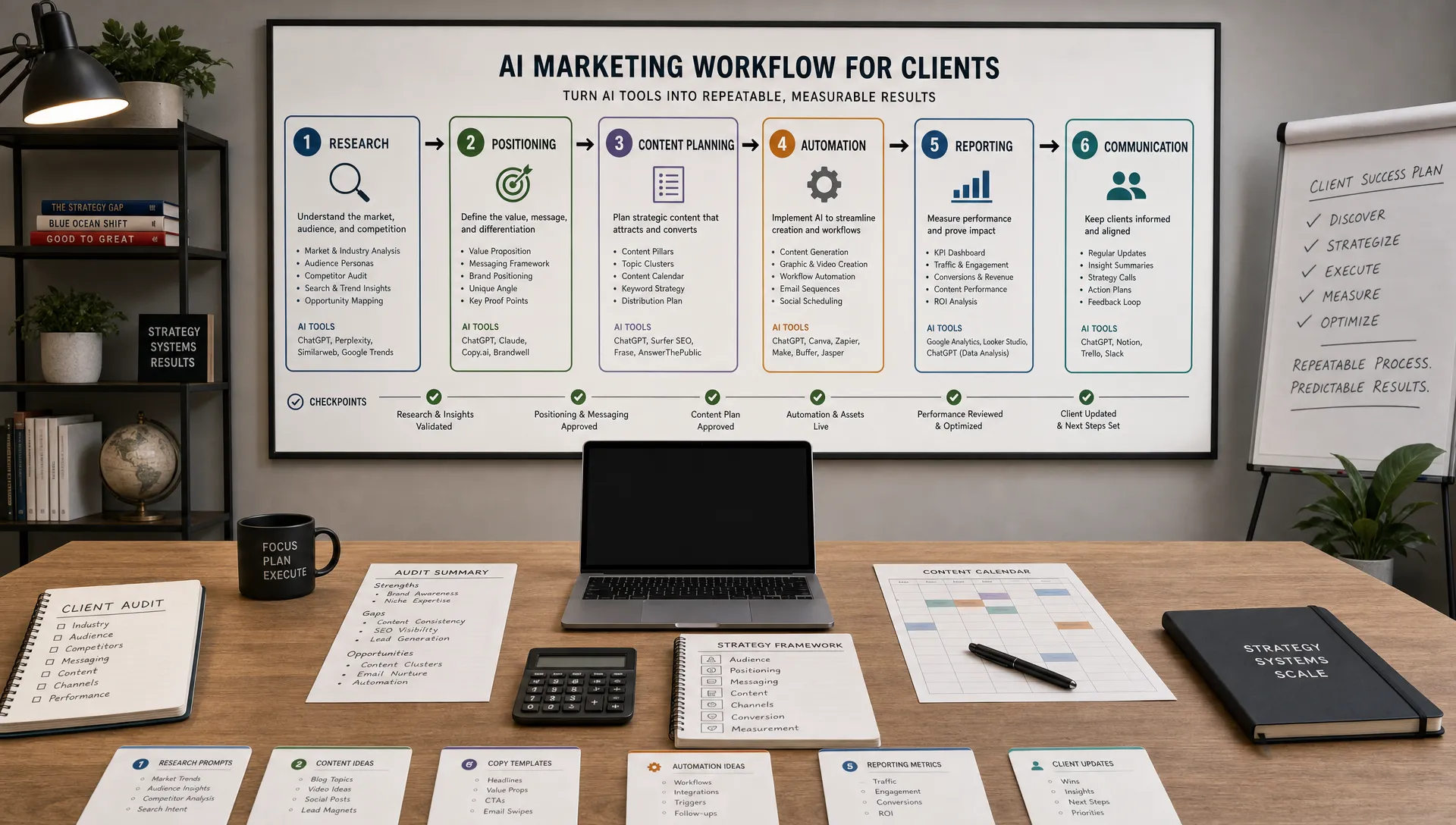
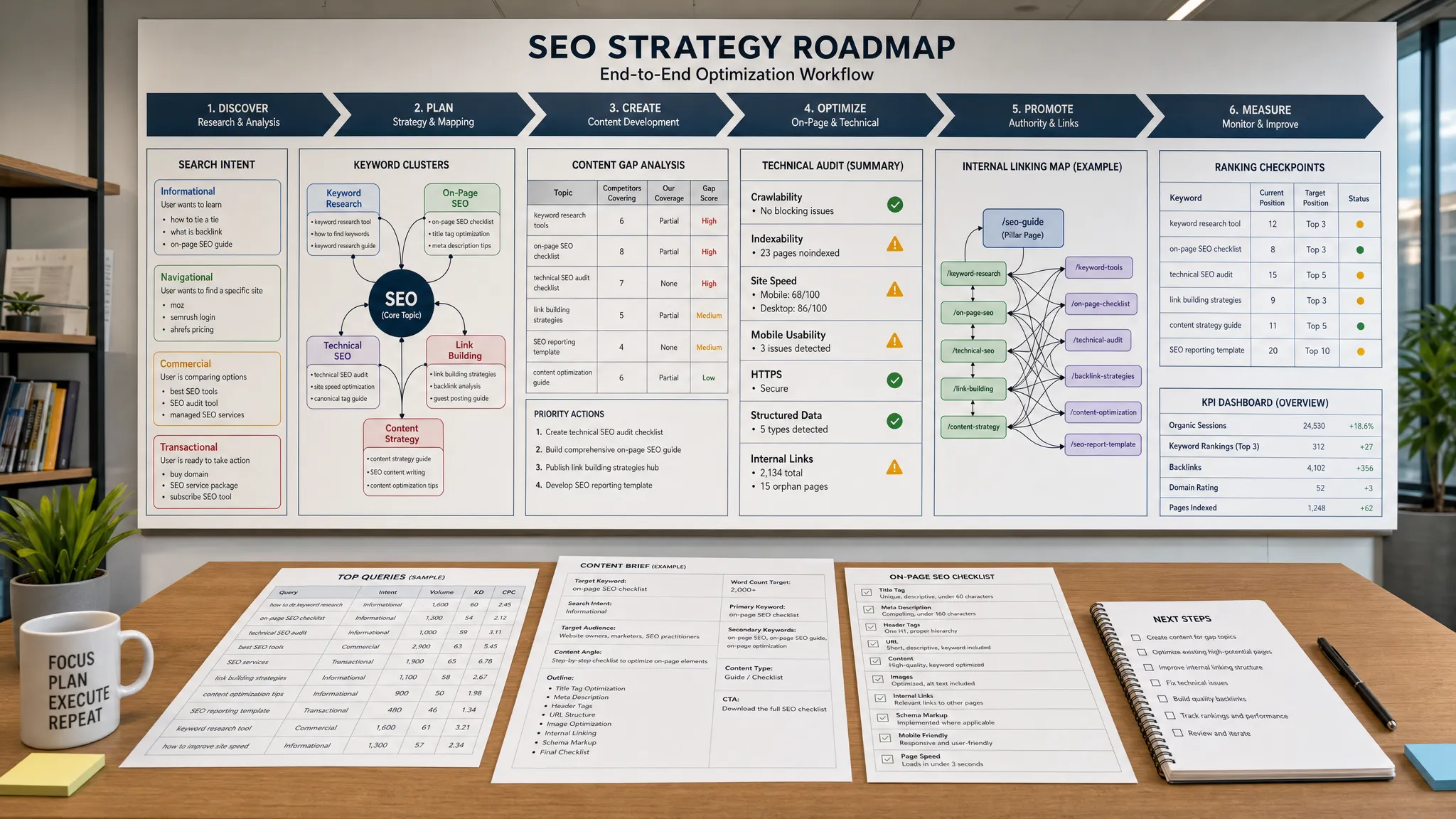
A simple workflow looks like this: collect ideas, enrich them with AI research, score opportunities, estimate performance ranges, prioritize the calendar, publish with a measurement plan, compare results, and update the model.
This process helps teams move from reactive content creation to strategic portfolio management. Some content will be low-risk and reliable. Some will be experimental. Some will be built for quick conversion. Some will build long-term authority. AI helps you balance the portfolio instead of treating every article as an isolated bet.
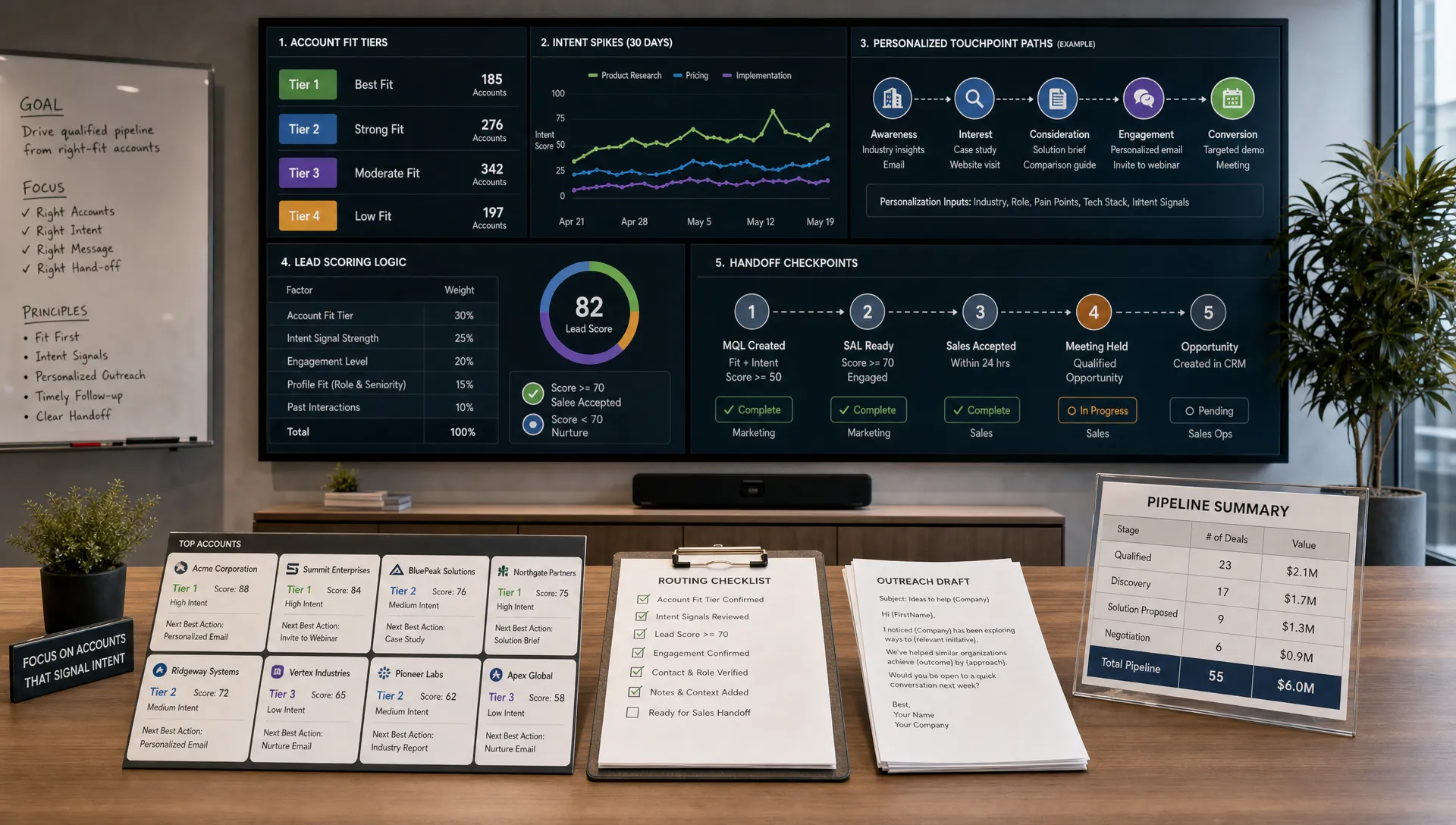
For teams focused on lead generation, forecasting also helps connect topics to buyer intent, nurture paths, and sales conversations. AIMarketer Hub’s guide to AI content marketing tactics that drive more leads expands on how to turn content into a more complete acquisition system.
Can AI accurately predict content performance? AI can estimate likely performance ranges, but it cannot predict results with certainty. The best use of AI is to improve prioritization by analyzing patterns, comparing similar assets, and identifying risks before production.
What data do I need to forecast content performance with AI? Start with analytics data, search performance, content metadata, conversion data, keyword research, and distribution history. You can improve the model over time with CRM data, sales feedback, customer questions, and competitive signals.
Should I forecast traffic or conversions? Forecast both if possible, but prioritize the metric that matches your business goal. Traffic is useful for awareness, while conversions, qualified leads, and assisted revenue are better indicators of business impact.
How often should content forecasts be updated? Update forecasts when market conditions change, after major algorithm updates, when competitors shift, or when new performance data becomes available. For fast-moving topics, monthly updates may be useful. For evergreen content, quarterly reviews may be enough.
Do small websites have enough data for AI forecasting? Yes, but they should start with simpler methods. Small sites can use similarity scoring, search intent analysis, competitor benchmarks, and confidence ranges until they have enough first-party data for more advanced models.
AI forecasting will not remove uncertainty from content marketing, but it will help you make smarter bets. By combining clean data, intent analysis, performance benchmarks, and human strategy, you can prioritize content that has a stronger chance of driving meaningful results.
If you want to build a more data-informed content workflow, AIMarketer Hub offers AI marketing tools, expert guides, prompt resources, SEO support, calculators, and industry-specific resources to help your team automate, optimize, and grow with more confidence.