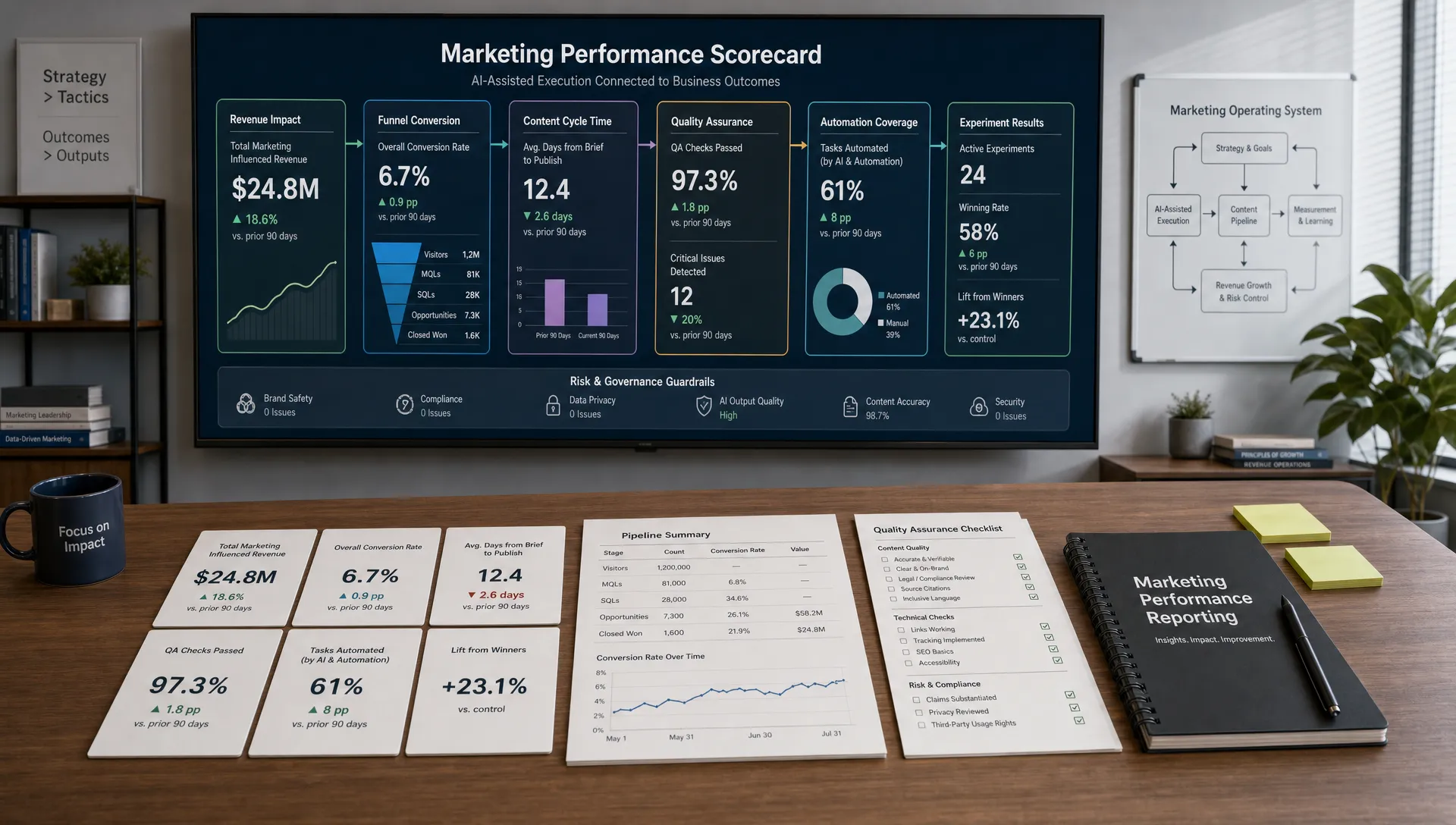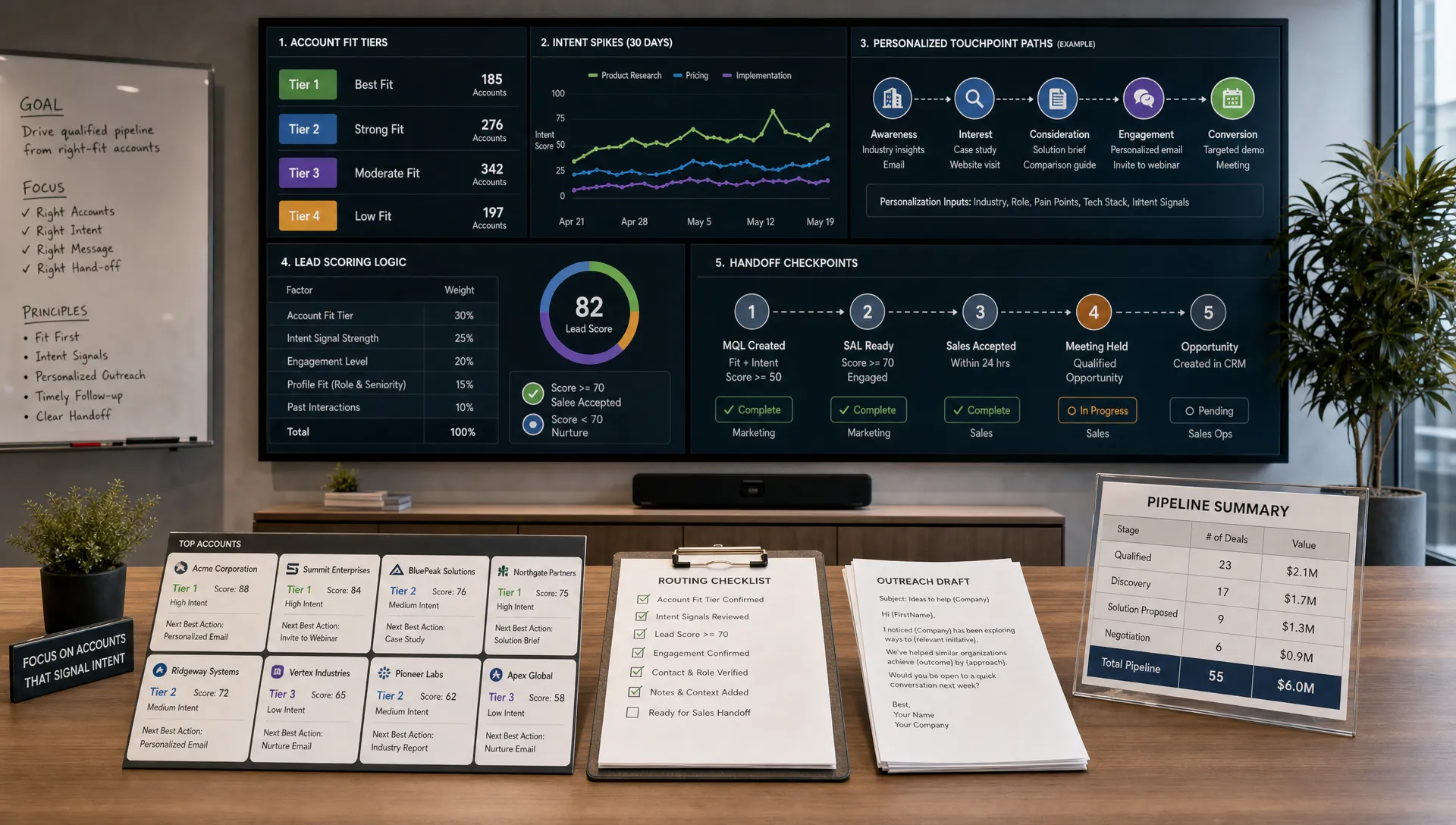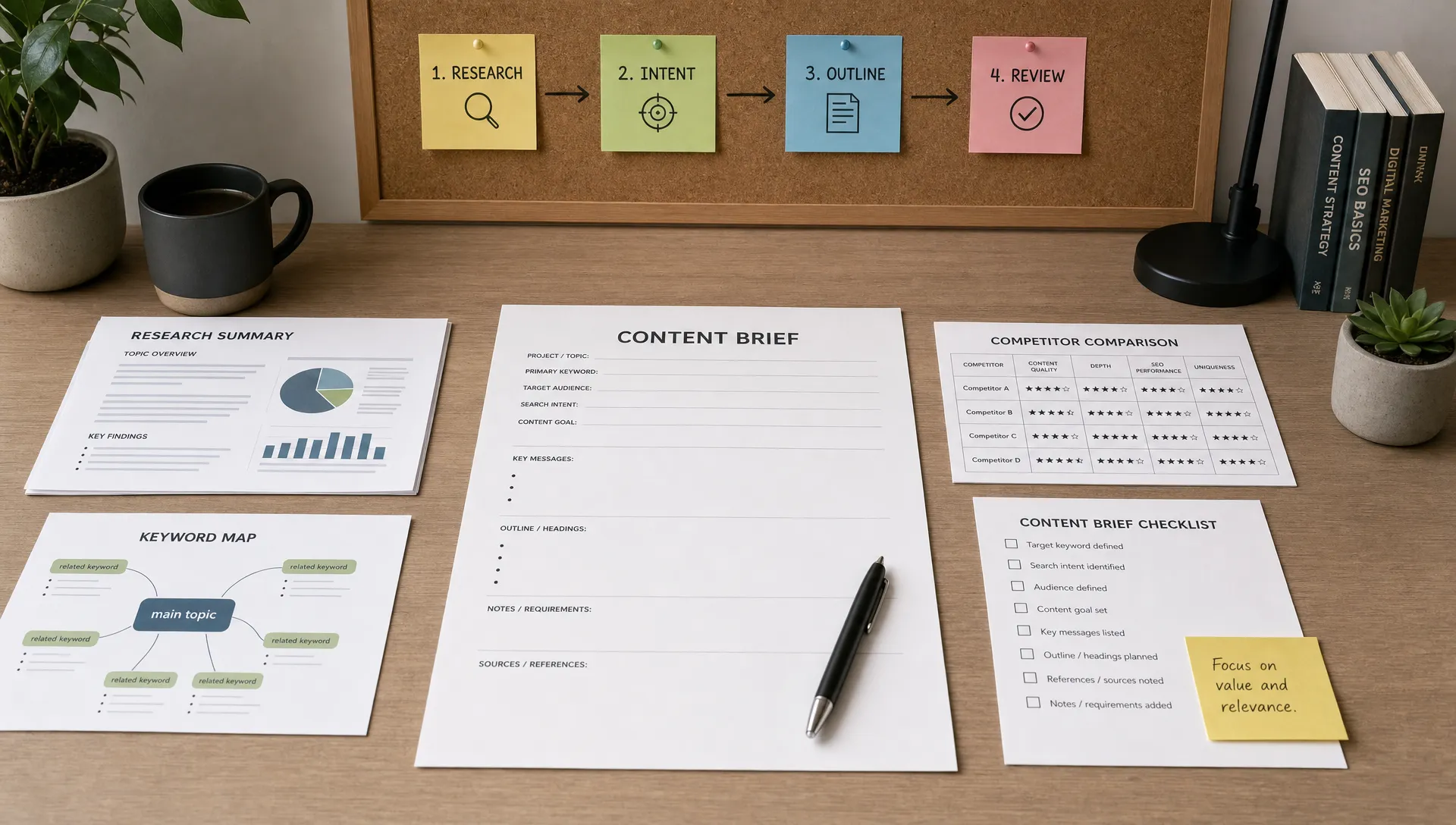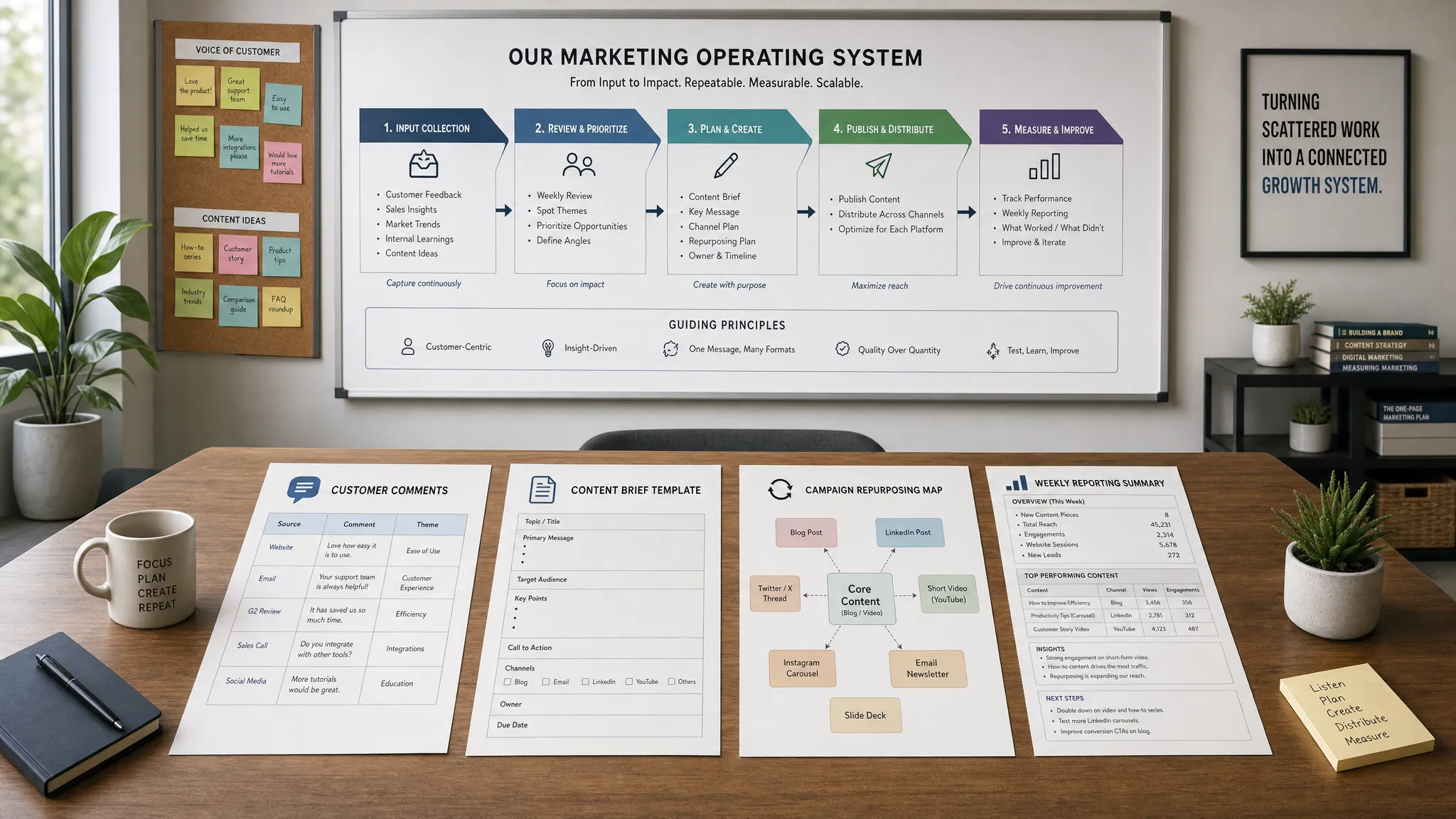
AI-ready customer data is not a warehouse packed with every click, form fill and transaction your business has ever collected. It is customer data that is clean enough, permissioned enough and structured enough for AI tools to use without producing misleading segments, awkward personalization or risky recommendations.
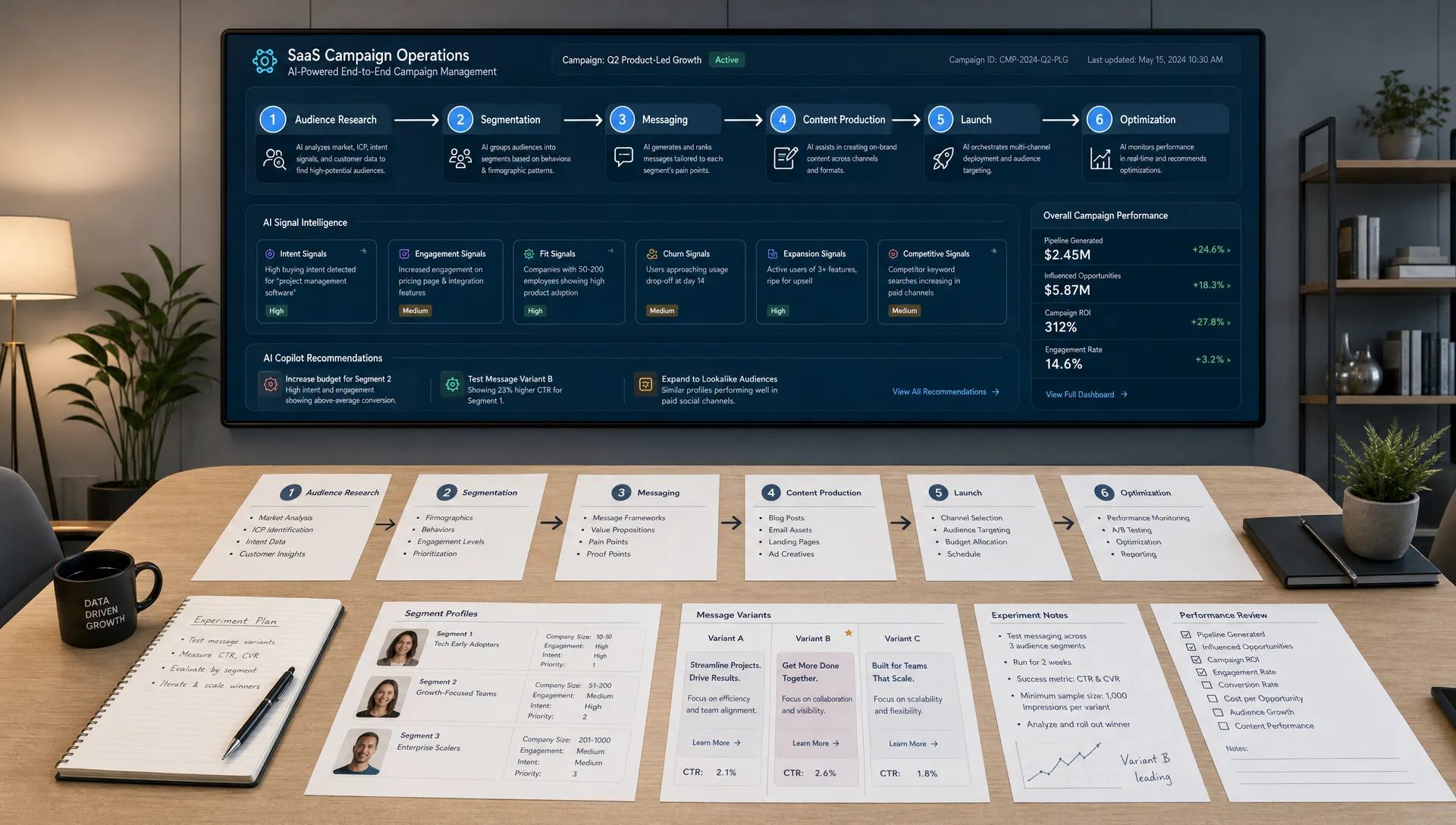
That distinction matters because AI marketing has moved from experimentation into daily execution. Teams now use AI for audience research, content creation, lifecycle journeys, lead scoring, creative testing, chat experiences and performance analysis. Yet the output quality still depends on the inputs. If your CRM is full of duplicate contacts, your lifecycle stages are inconsistent or your consent fields are missing, even the best AI tools will struggle.
Creating AI-ready customer data is a marketing workflow problem as much as a data engineering problem. The goal is to make customer signals usable for real decisions, such as who to target, what message to send, when to follow up and which offer fits the context.
Customer data becomes AI-ready when it can be reliably interpreted by both people and machines. That means the data is accurate, current, consistently labeled, tied to a clear customer identity and collected with the right permissions.
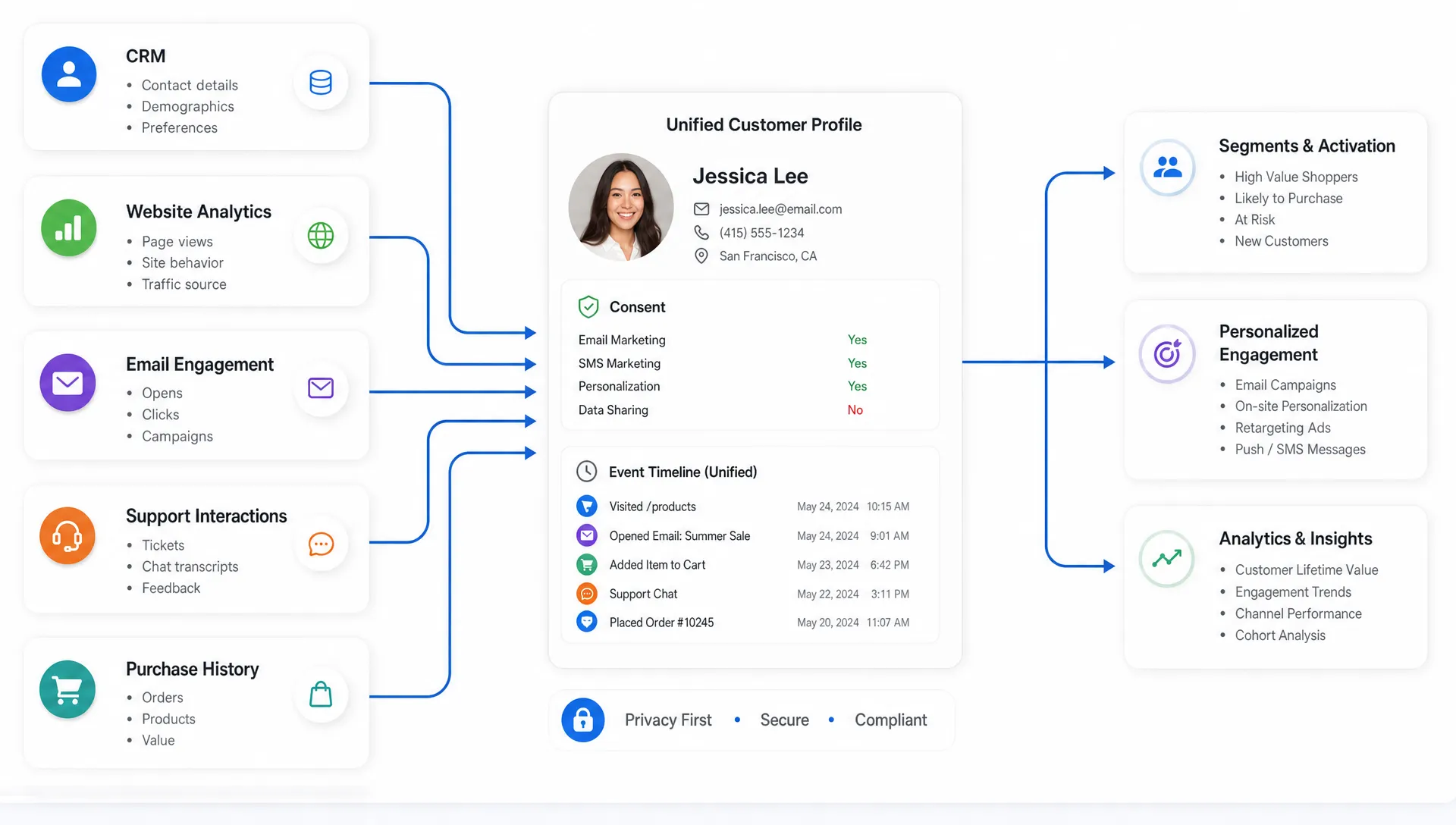
For marketing teams, AI-ready data usually includes several categories of information:
The specific mix depends on your business model. A SaaS company may care most about product usage and renewal signals. An ecommerce brand may prioritize browse behavior, cart activity and purchase frequency. A professional services firm may need account history, proposal stages and relationship notes.
The common thread is context. AI needs to know not just what happened, but who did it, when it happened, what it means and whether the business is allowed to use that signal.
Many teams begin by asking how to collect more data. A better starting point is to define the marketing decisions you want AI to support.
For example, a team might want to:
Each decision requires different data. Lead scoring may need firmographics, form submissions, content engagement and recent sales activity. Personalization may need category interest, purchase history, industry and lifecycle stage. Churn prediction may need product usage, support history, billing activity and relationship health.
This decision-first approach keeps your AI marketing automation focused. It also reduces privacy risk because you avoid collecting or exporting data that will not improve a specific outcome. If your team is still defining where AI should fit, AIMarketer Hub has a useful guide on how smart teams approach digital marketing and AI workflows without turning every project into a tool chase.
Before buying another platform or building a new dashboard, document where customer data already lives. Most marketing teams have useful signals scattered across more systems than they realize.
Common sources include CRM records, email platforms, ad accounts, analytics tools, ecommerce systems, form builders, webinar tools, customer support software, sales notes, spreadsheets, billing platforms and customer success tools. Operational platforms can also hold valuable marketing context. For example, event-based businesses may capture client preferences, contracts, invoices and communication history in event management and client workflow platforms, which can help reveal audience segments, service patterns and follow-up opportunities.
A simple data inventory should answer practical questions:
Do not skip the messy details. AI projects often fail because two systems define the same field differently. One platform may treat a lead as anyone who downloaded a guide. Another may reserve lead for a sales-qualified contact. If those records are combined without definitions, AI can learn the wrong patterns.
You do not need perfect data everywhere to get value from AI marketing. You do need clean data in the fields that drive decisions.
Start with the fields used for targeting, personalization, scoring and measurement. Typical high-value fields include email address, customer ID, company name, industry, job role, lifecycle stage, lead source, consent status, last activity date, purchase history and revenue tier.
Cleaning these fields means standardizing the format, reducing duplicates and removing values that are no longer useful. For example, a job role field that contains VP Marketing, vice president of marketing, Marketing VP and Head of Demand Gen may describe similar buyers but look unrelated to a model unless you normalize the values.
Pay special attention to these data quality issues:
Cleaning data is not glamorous, but it is one of the highest-return marketing operations tasks. A small improvement in core fields can make segmentation, personalization and reporting noticeably better.
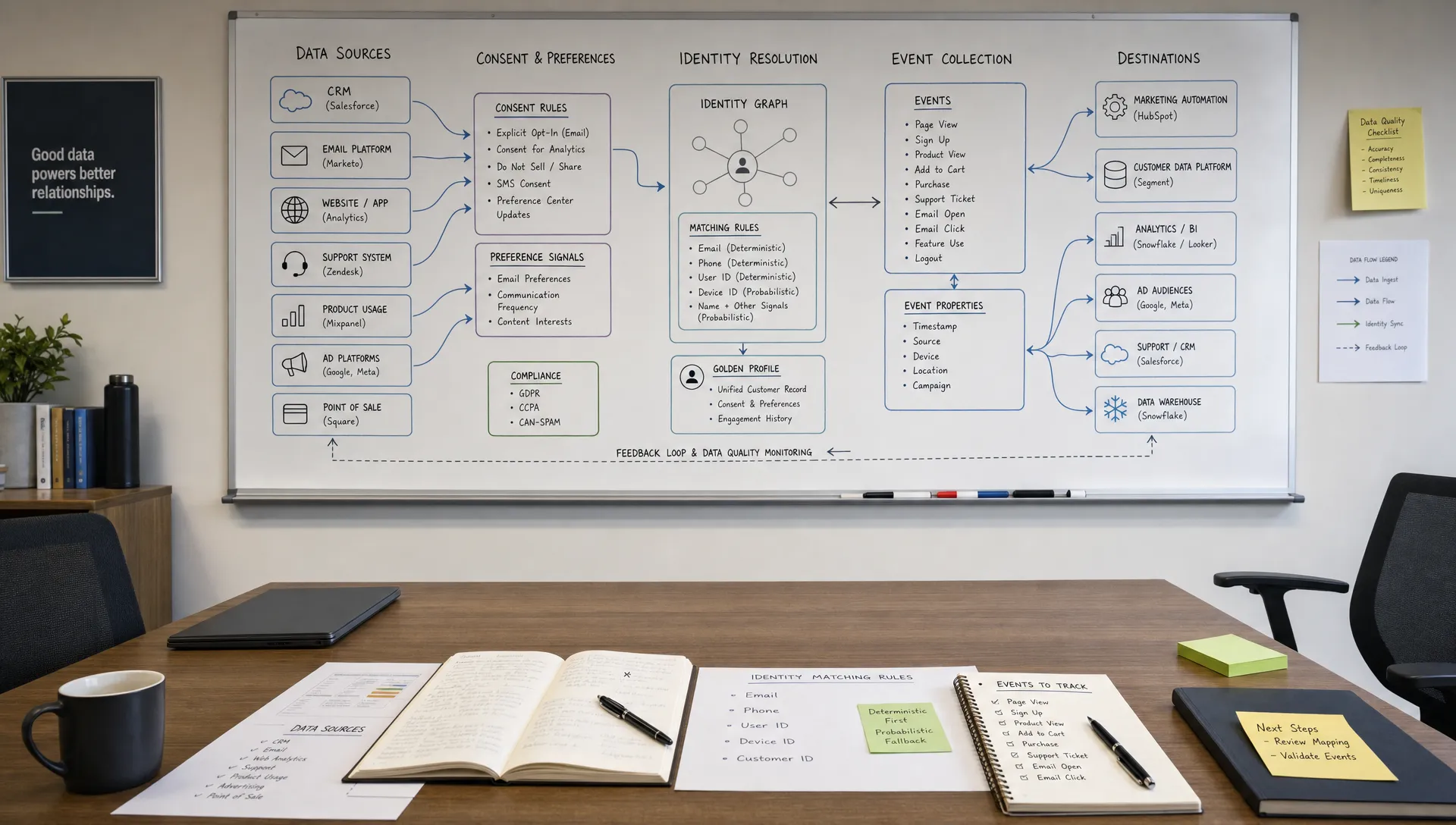
AI-ready customer data needs a way to connect activity to the right person or account. Without identity resolution, your tools may see the same customer as several unrelated records.
For B2C marketing, email address, phone number, loyalty ID or customer ID often acts as the primary identifier. For B2B marketing, you usually need both person-level and account-level identity. A single buying committee may include several contacts from the same company, each with different behaviors and influence.
A practical identity layer should define:
Use deterministic matching first, such as exact email, customer ID or account ID. Probabilistic matching can be useful in advanced environments, but it can also create errors if used too aggressively. For most marketing teams, a trustworthy basic identity framework beats an overcomplicated one that nobody can explain.
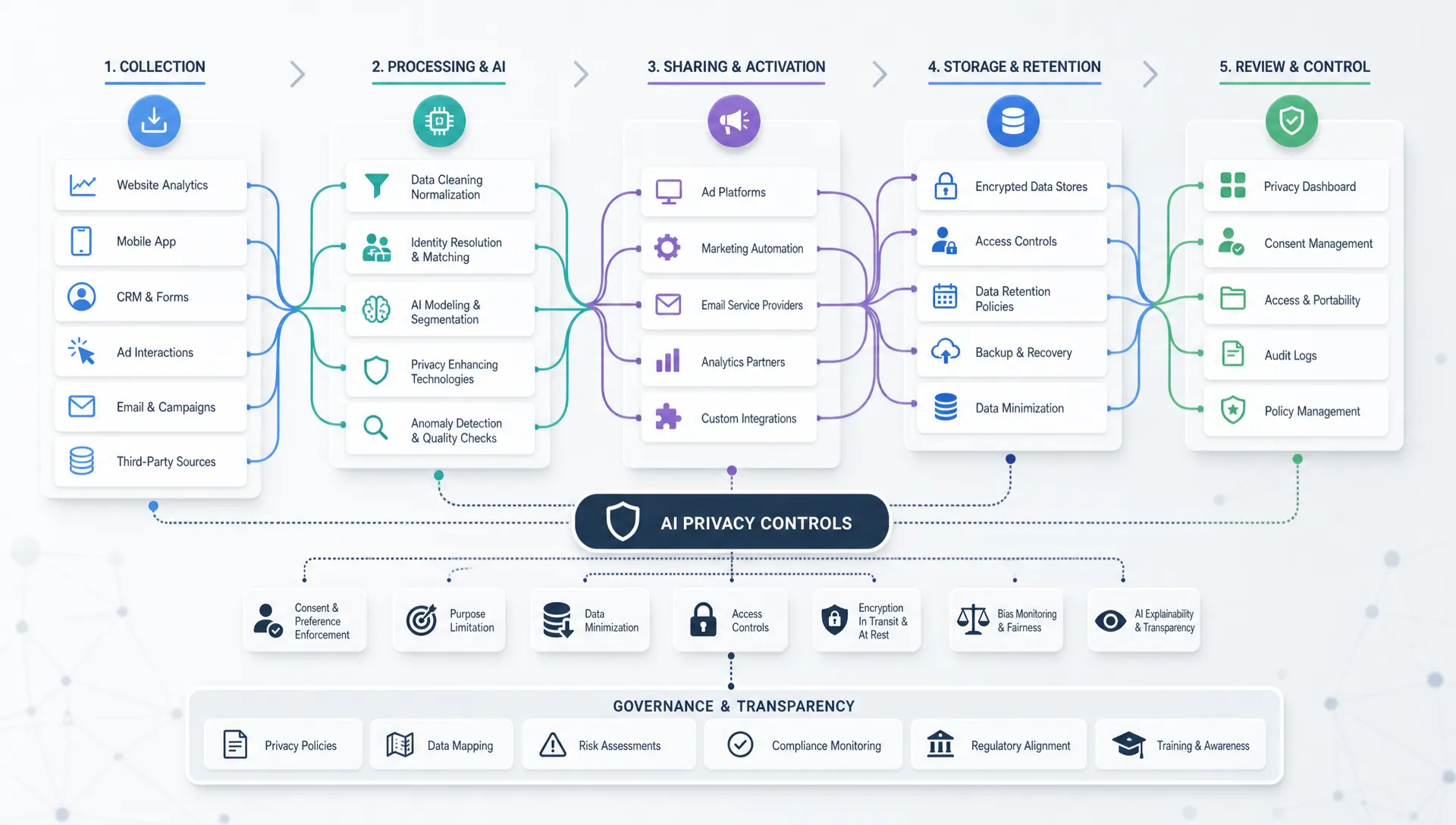
AI-ready does not mean AI can use everything. Marketing teams need to know what data they are allowed to process, personalize with, store and share with vendors.
Consent data should not live in a forgotten compliance system. It should be part of the customer profile and available to every workflow that activates data. If a customer has opted out of promotional email, that status should stop the campaign before AI generates a clever subject line. If a region requires specific consent for profiling or automated decision-making, that status should shape how the data is used.
Key privacy fields can include opt-in status, consent source, consent date, preferred channels, unsubscribe history, region, data retention status and restrictions on profiling. Sensitive data should be minimized unless there is a clear business and legal basis to use it.
Teams using AI should also set rules for prompts and exports. Do not paste personally identifiable information, confidential customer notes or regulated data into tools unless the vendor, contract, privacy settings and internal policies allow it. For a deeper framework, see AIMarketer Hub's AI marketing data privacy guide, which covers data mapping, vendor vetting, consent and practical controls.
Static profile fields are useful, but AI becomes far more powerful when it can analyze customer behavior over time. That is why event data matters.
An event is a recorded action with context. Instead of storing only a field such as interested in SEO, you record actions such as visited SEO services page, downloaded SEO checklist, attended SEO webinar or requested SEO audit. Those events provide stronger evidence because they show recency, frequency and progression.
A clean event should include the actor, action, object, timestamp and context. For example, customer 123 downloaded the enterprise pricing guide on August 12 from an email campaign while in the evaluation lifecycle stage.
Use clear event names that marketers can understand. Viewed product, submitted demo request, started trial, attended webinar, opened support ticket and renewed subscription are better than vague labels such as activity 1 or conversion event.
Event tracking also helps AI distinguish casual interest from serious intent. One blog visit may not mean much. A pattern of pricing page visits, comparison guide downloads and a demo request within seven days is much stronger.
AI tools can process data, but they cannot reliably guess your business definitions unless you provide them. Metadata makes customer data easier to interpret.
At minimum, maintain a basic data dictionary for your marketing fields. This can be a shared document, a wiki page or a managed catalog depending on your company size. The data dictionary should define field names, allowed values, source systems, owners, update frequency and business meaning.
For example, if your lifecycle stage field includes subscriber, marketing qualified lead, sales accepted lead, opportunity, customer and inactive customer, define what causes each stage to change. If your lead source field includes paid search, organic search, partner referral and outbound sales, define how each source is assigned.
This metadata is especially useful when you use AI for analysis. A model asked to summarize conversion patterns will perform better when it understands that MQL means marketing qualified lead, ARR means annual recurring revenue and inactive customer means no purchase or login in the last 180 days.
Avoid internal shorthand in fields that AI or new team members need to interpret. A code like LSTG_03 may work inside one system, but it creates friction when data moves into prompts, analytics tools or automation workflows.
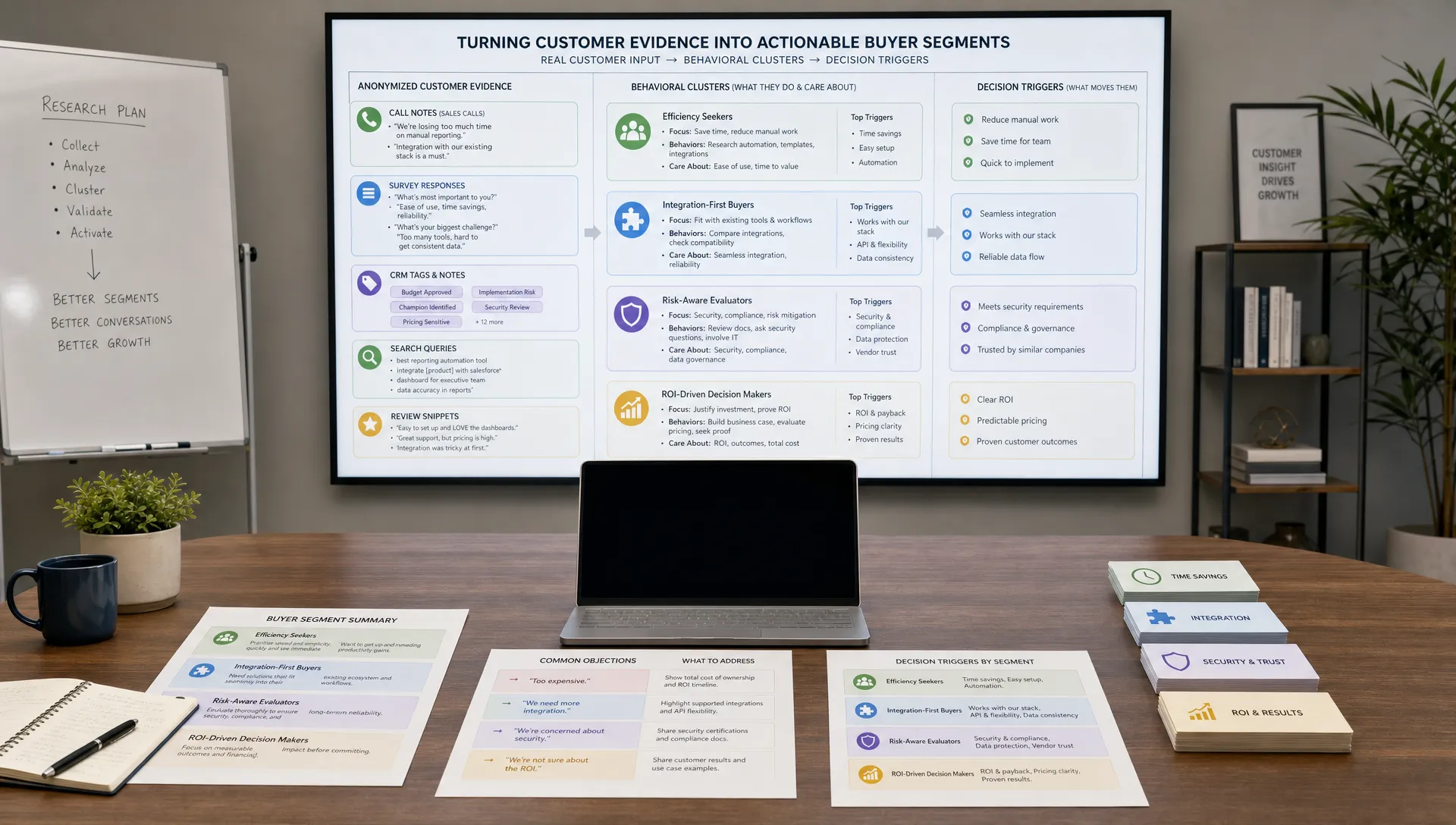
Some of the richest marketing insight is not stored in neat fields. It is buried in sales calls, support tickets, surveys, reviews, chat transcripts, onboarding notes and social comments.
AI can help analyze this unstructured data, but only if you prepare it responsibly. Start by removing data you should not use, such as sensitive personal details, private financial information or irrelevant internal notes. Then tag each record with helpful context, such as customer type, lifecycle stage, product, region, date and source.
Unstructured data is valuable for:
This is where AI can support better strategy, not just faster production. If you want to turn real customer evidence into useful audience segments, AIMarketer Hub's guide on creating buyer personas with AI shows how to move beyond generic persona templates.
AI models learn from examples. If your examples are poorly labeled, the output will be weak.
Marketing labels should connect to real outcomes whenever possible. Instead of labeling a contact as hot because someone said they look promising, define the behavior or business result behind the label. Did they request a quote, start a trial, attend a product demo, reach a revenue threshold or renew for a second year?
Useful labels may include converted, retained, churned, high lifetime value, sales qualified, product qualified, inactive, repeat buyer or expansion opportunity. The right labels depend on the decision you want AI to support.
Be careful with labels that contain bias or circular logic. If your sales team historically followed up only with large accounts, a model trained on closed deals may learn that small accounts are never worth attention, even if the real issue was lack of follow-up. Review labels with marketing, sales and customer success before using them for automation.
For lead prioritization, keep the model understandable. AIMarketer Hub's guide to AI lead scoring recommends focusing on fit, intent and timing signals rather than building a black box that sales will not trust.
AI-ready customer data needs ongoing quality control. A one-time cleanup helps, but data starts decaying as soon as people change jobs, customers switch preferences, campaigns launch and systems drift.
Set up a recurring review for the fields and events that power marketing automation. This does not have to be complex. Even a monthly data quality check can catch problems before they affect campaigns.
Review these areas regularly:
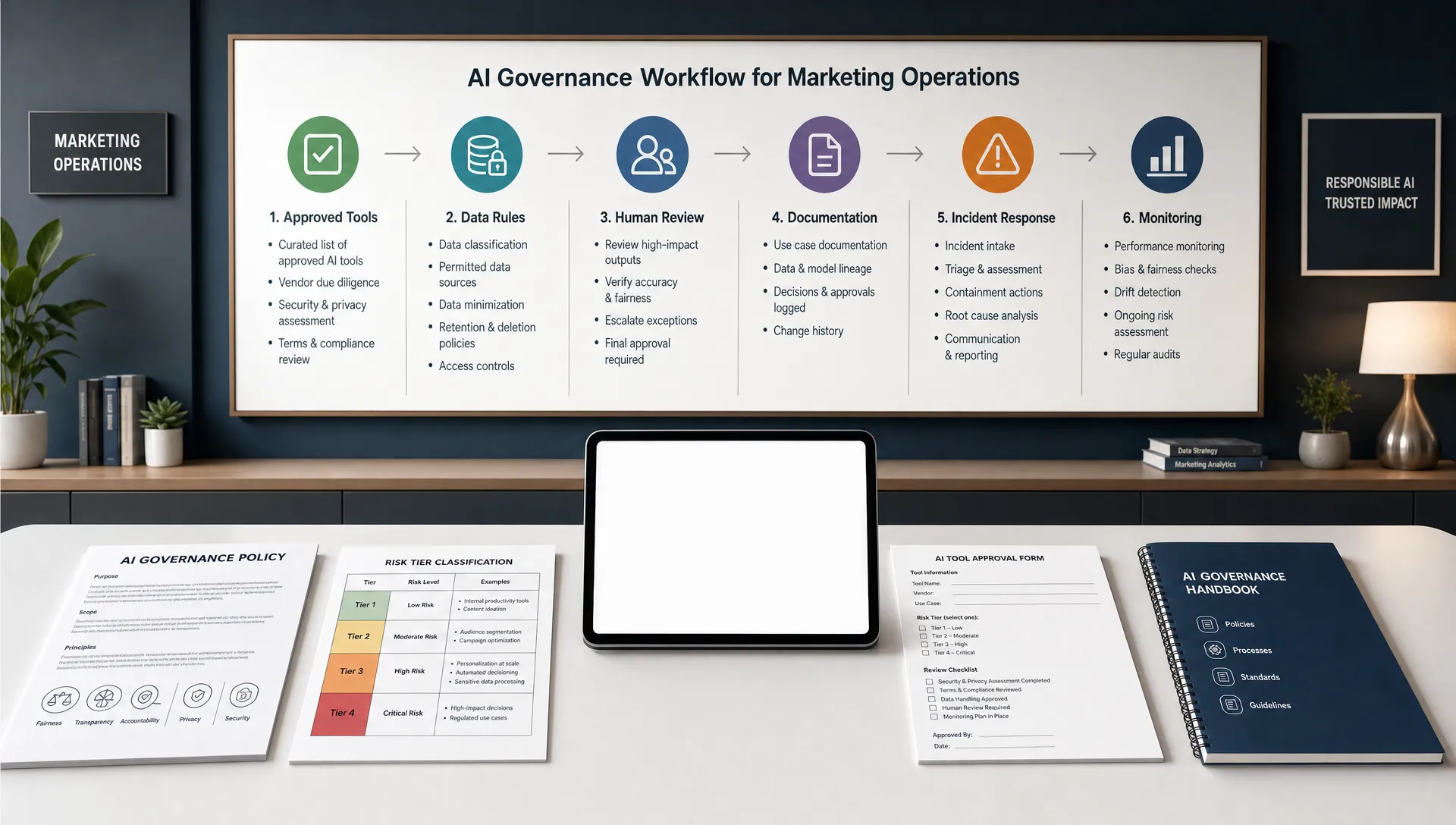
When AI is used for customer-facing actions, add human review to sensitive workflows. For example, a marketer should review new personalization rules before they affect a large campaign. Sales should validate lead scoring logic before routing changes go live. Compliance or legal should review workflows in regulated industries.
Customer data becomes valuable when it improves action. Once your data is clean, permissioned and structured, connect it to the places where marketing happens.
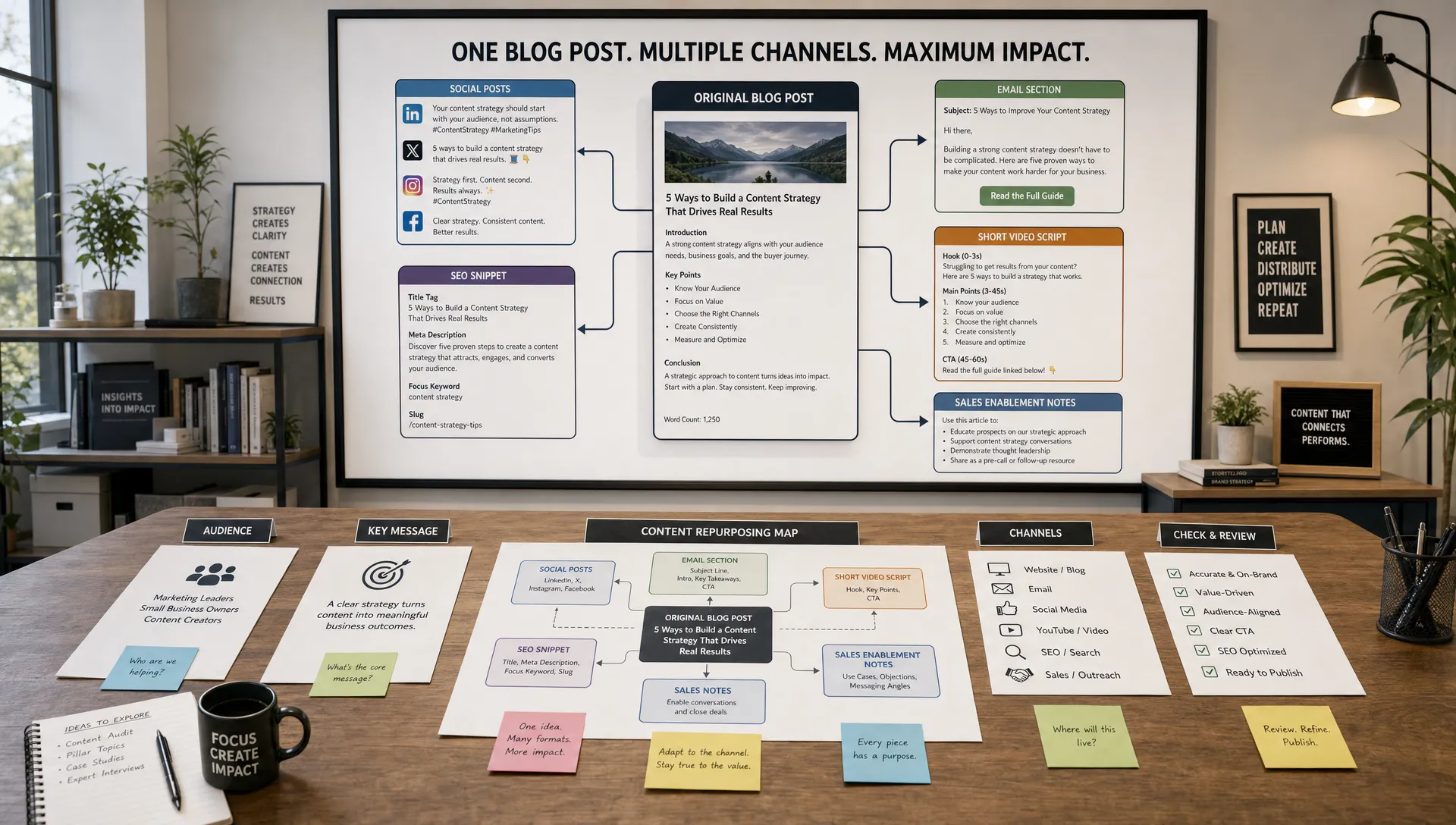
Activation channels may include email marketing, SMS, paid advertising, website personalization, sales outreach, chatbot flows, content recommendations, customer success plays and analytics dashboards. Each channel should receive only the data it needs for the approved use case.
For example, an email platform may need lifecycle stage, topic interest, consent status and last engagement date. A paid media audience may need a privacy-safe customer list or conversion signal. A sales workflow may need fit score, recent intent events and a short AI-generated summary based on approved data.
Avoid sending every field everywhere. Data minimization keeps systems cleaner and lowers risk. It also makes troubleshooting easier because each workflow has a defined data purpose.
You do not need a six-month transformation before improving AI marketing performance. A focused 30-day plan can create a usable foundation.
This plan works because it keeps the project close to revenue, retention or efficiency. Once one workflow improves, you can repeat the process for the next use case.
The biggest mistake is treating AI-ready data as a purely technical project. Marketing, sales, customer success, legal and operations all shape how customer data is defined and used. If those teams do not agree on lifecycle stages, source definitions or consent rules, automation will reflect that confusion.
Another mistake is collecting too much data before knowing why. More data can create more noise, more compliance work and more maintenance. Focus first on the signals that support decisions.
Teams also overestimate how much AI can fix messy data. AI can help clean, classify and summarize information, but it should not be used as a cover for broken processes. If campaign source tracking is inconsistent, customer IDs do not match or sales notes are unreliable, AI will amplify the uncertainty.
Finally, do not ignore adoption. Sales teams, content teams and campaign managers need to understand how AI-generated segments or scores are created. If people cannot trust the inputs, they will not trust the output.
AIMarketer Hub is built for marketers who want practical AI workflows, not abstract hype. Once your customer data foundation is improving, you can use AI content generation, prompt libraries, SEO tools, performance analytics and industry-specific guides to turn that data into better campaigns.
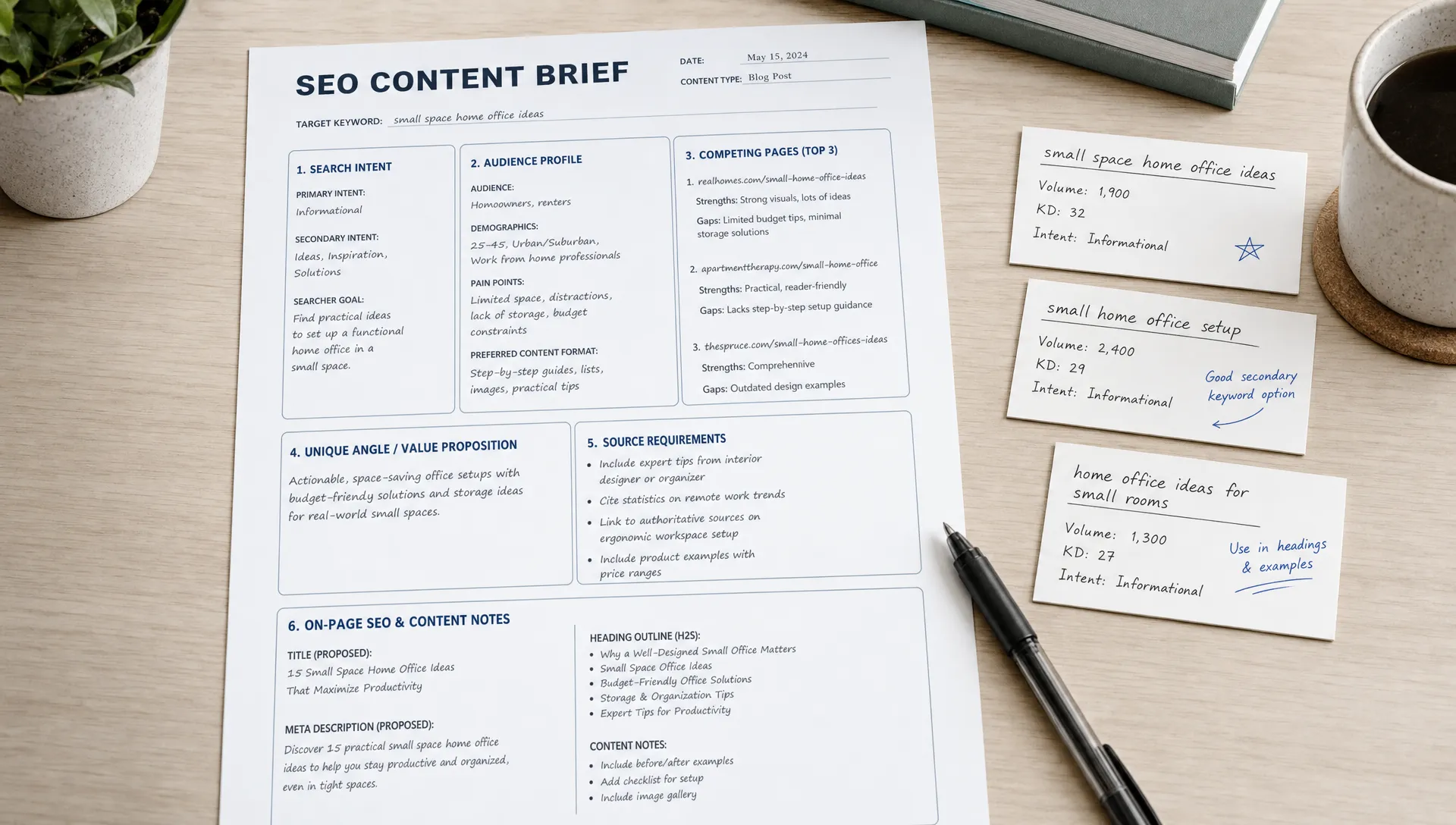
For example, cleaner customer data can improve the prompts you use for content briefs, the segments you analyze for messaging, the lead signals you pass to sales and the performance insights you use to refine campaigns. The stronger the data foundation, the more useful your AI marketing tools become.
What makes customer data AI-ready for marketing? Customer data is AI-ready when it is accurate, consistent, connected to a reliable customer identity, permissioned for the intended use and structured with enough context for AI tools to interpret it correctly.
Do small businesses need a customer data platform to use AI marketing? Not always. Many small teams can start with a clean CRM, consistent form fields, proper consent tracking, organized campaign data and a clear process for exporting or connecting data to AI tools. A customer data platform becomes more useful when data sources, audiences and activation channels become harder to manage manually.
Which customer data should marketers clean first? Start with fields that affect targeting, personalization, scoring and reporting. Email, customer ID, lifecycle stage, lead source, consent status, last activity date, purchase history, industry and role are common high-impact fields.
Can AI clean customer data automatically? AI can help detect duplicates, standardize categories, classify unstructured text and summarize customer interactions. Human review is still needed for business definitions, consent rules, sensitive data, merge decisions and automation logic.
How often should marketing teams audit customer data quality? High-impact fields and events should be reviewed at least monthly. Fast-moving businesses may need weekly checks for campaign source data, consent conflicts, duplicate records and lifecycle stage changes.
AI marketing performs best when your customer data is clean, connected and governed. Start with one use case, define the signals that matter, fix the fields that shape decisions and build quality checks before scaling automation.
If you want practical guides, tools and workflows for using AI in marketing, explore AIMarketer Hub and build a data foundation that makes every campaign smarter.