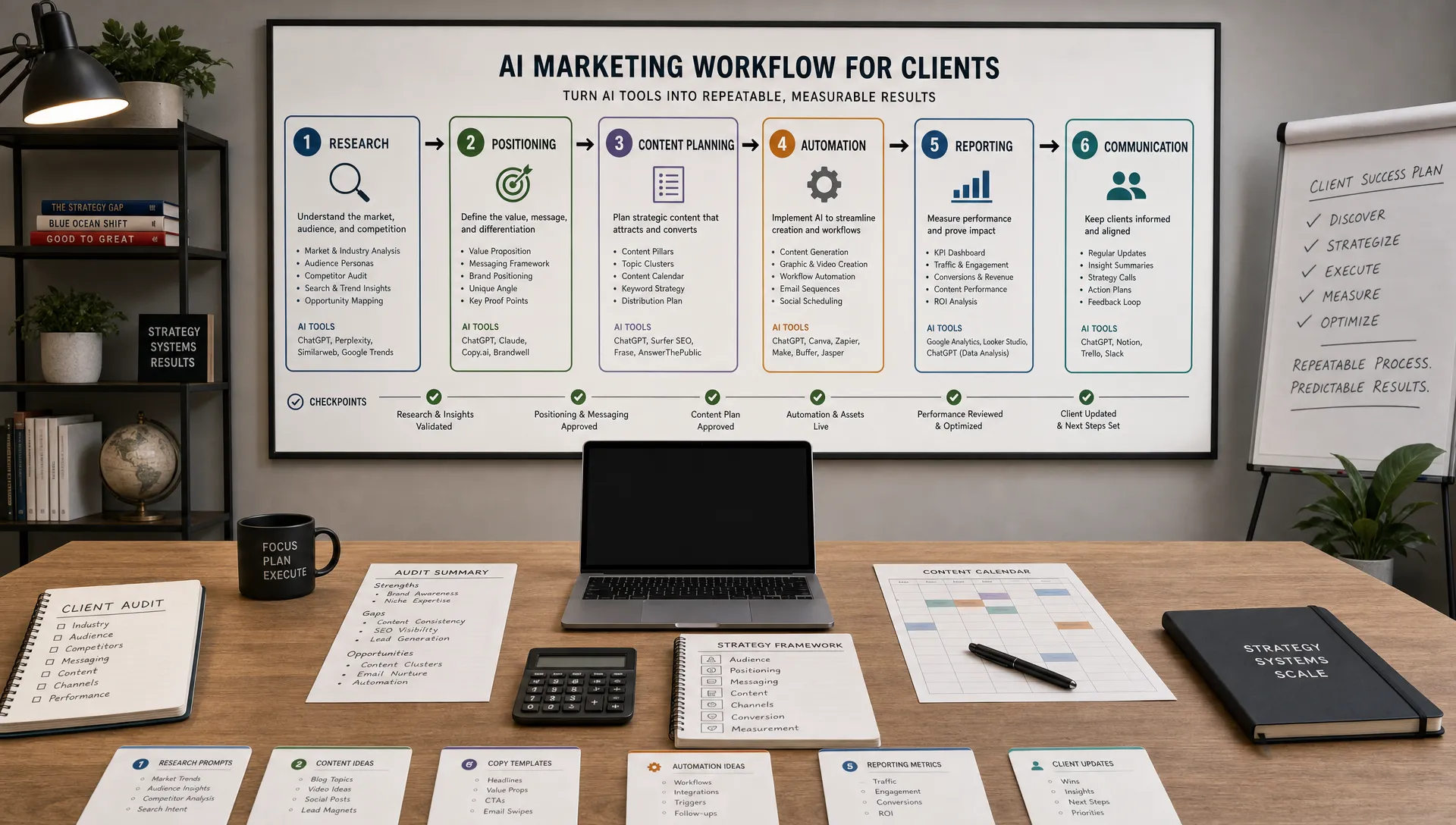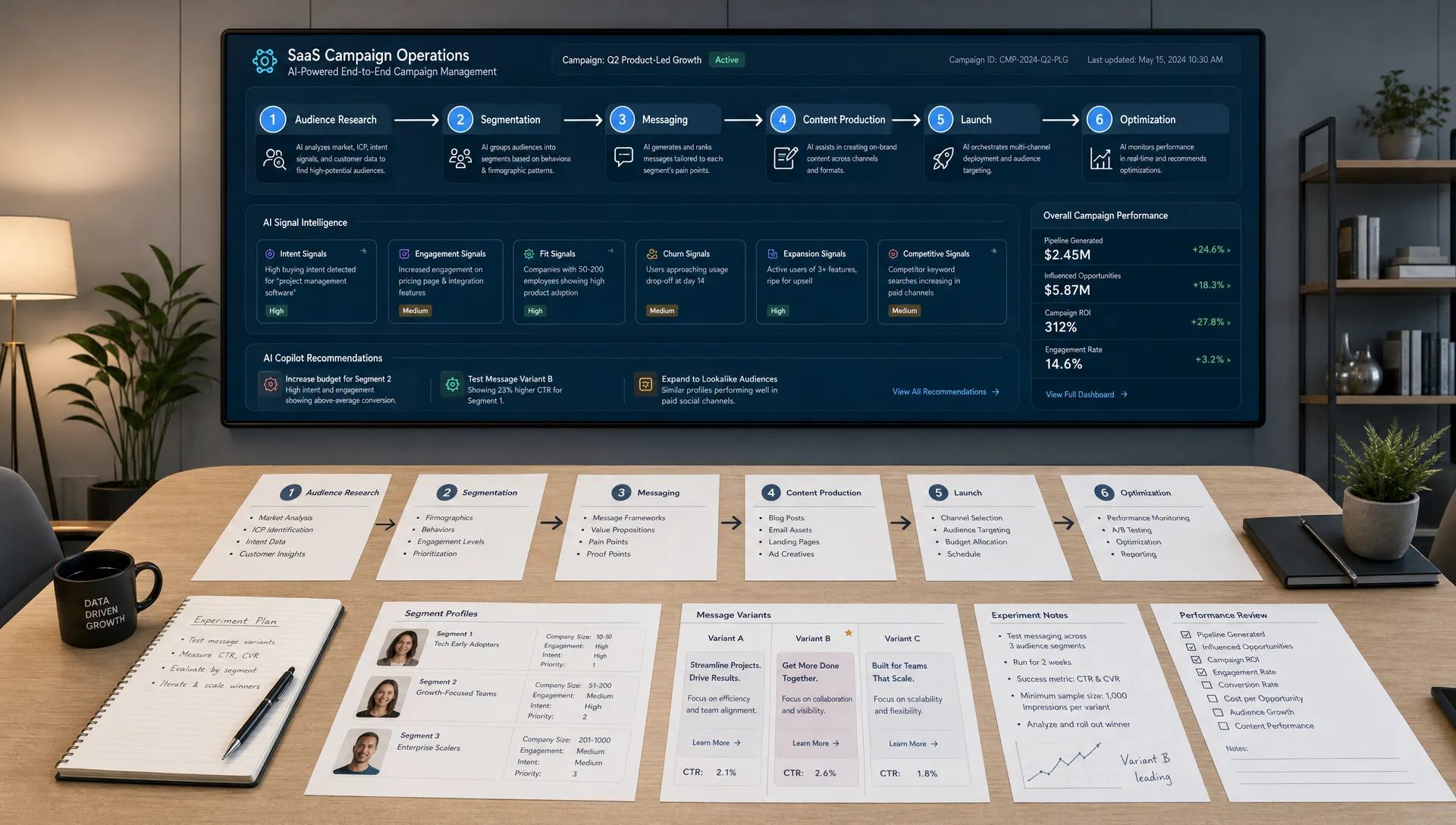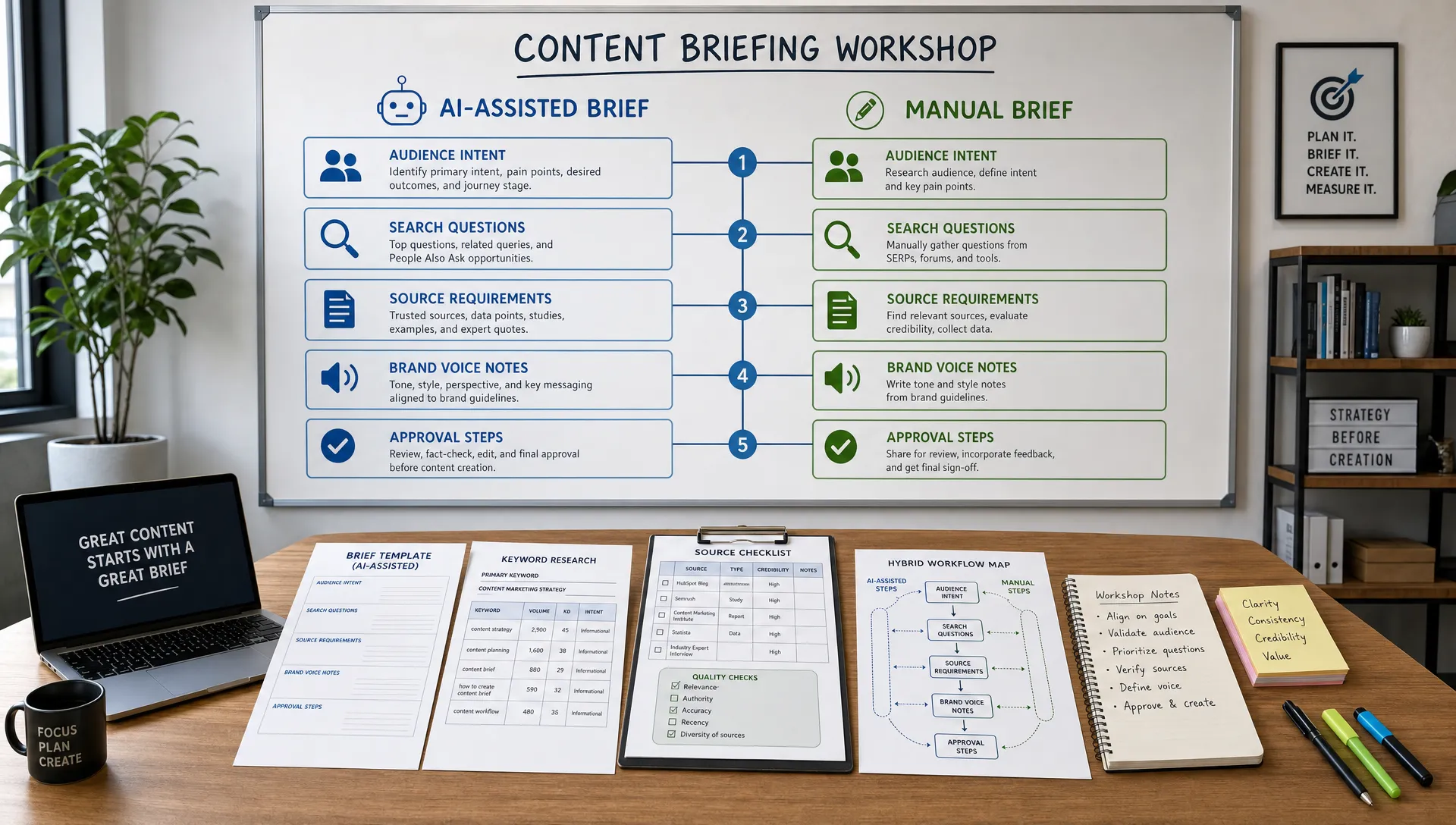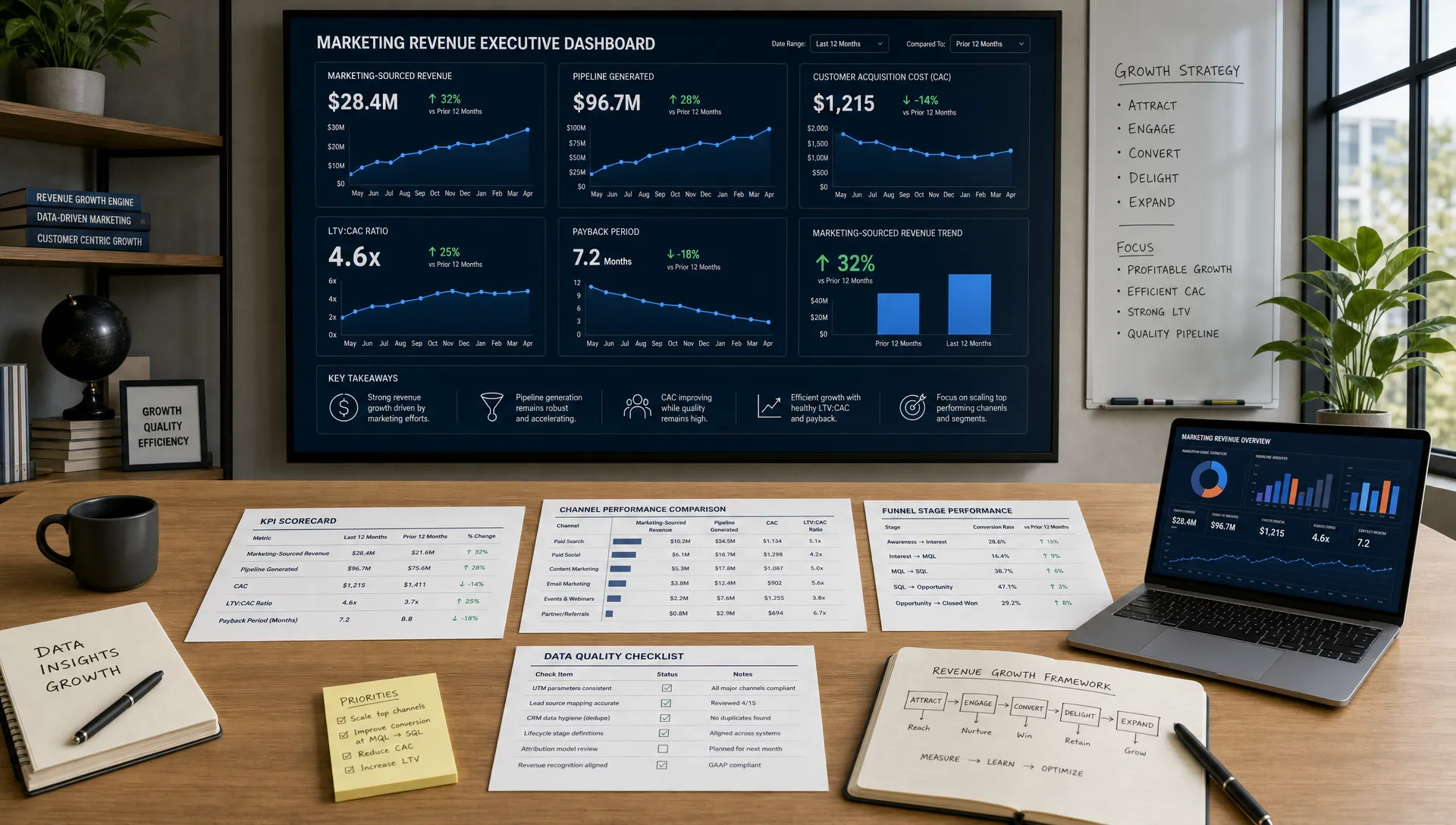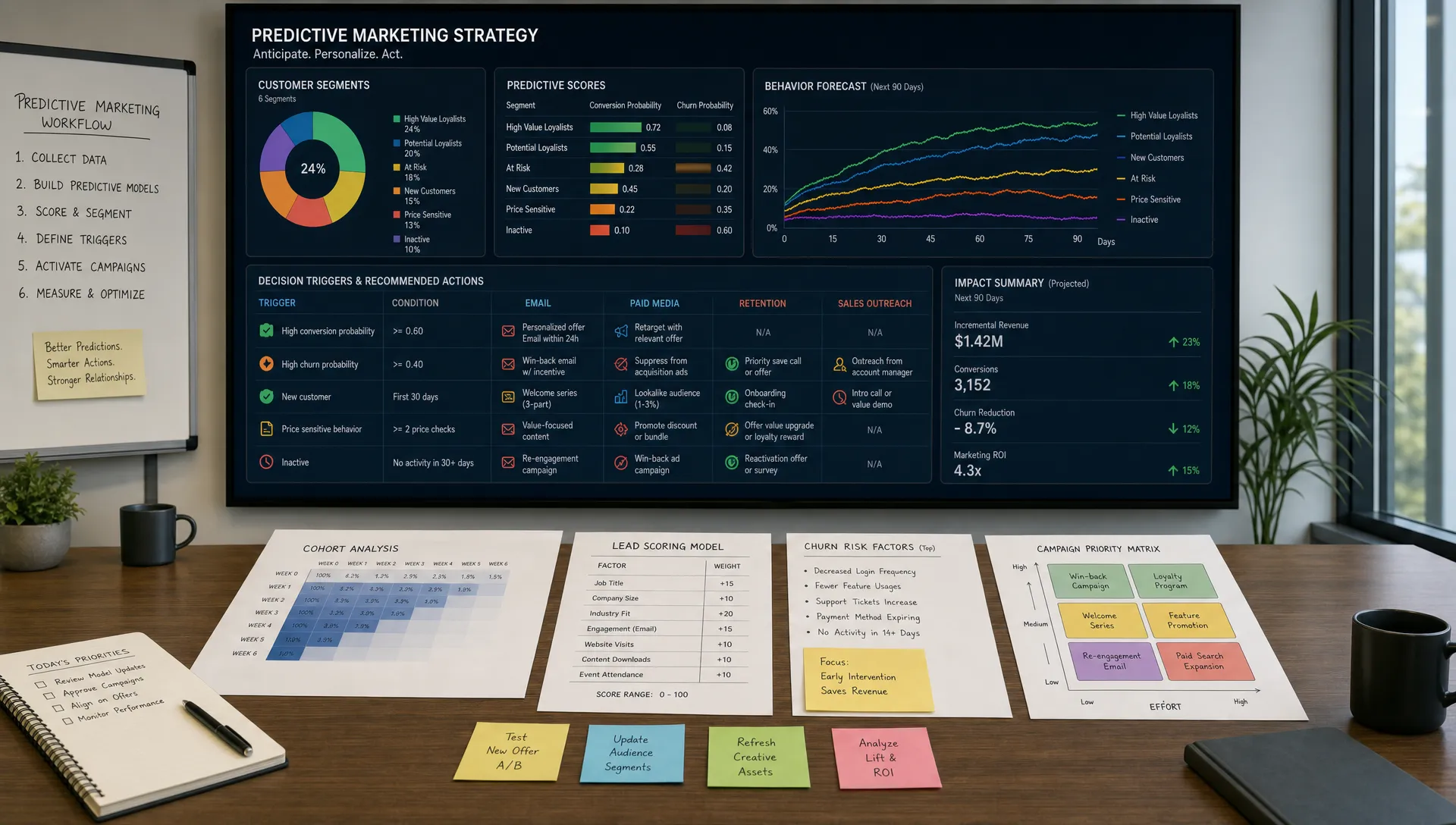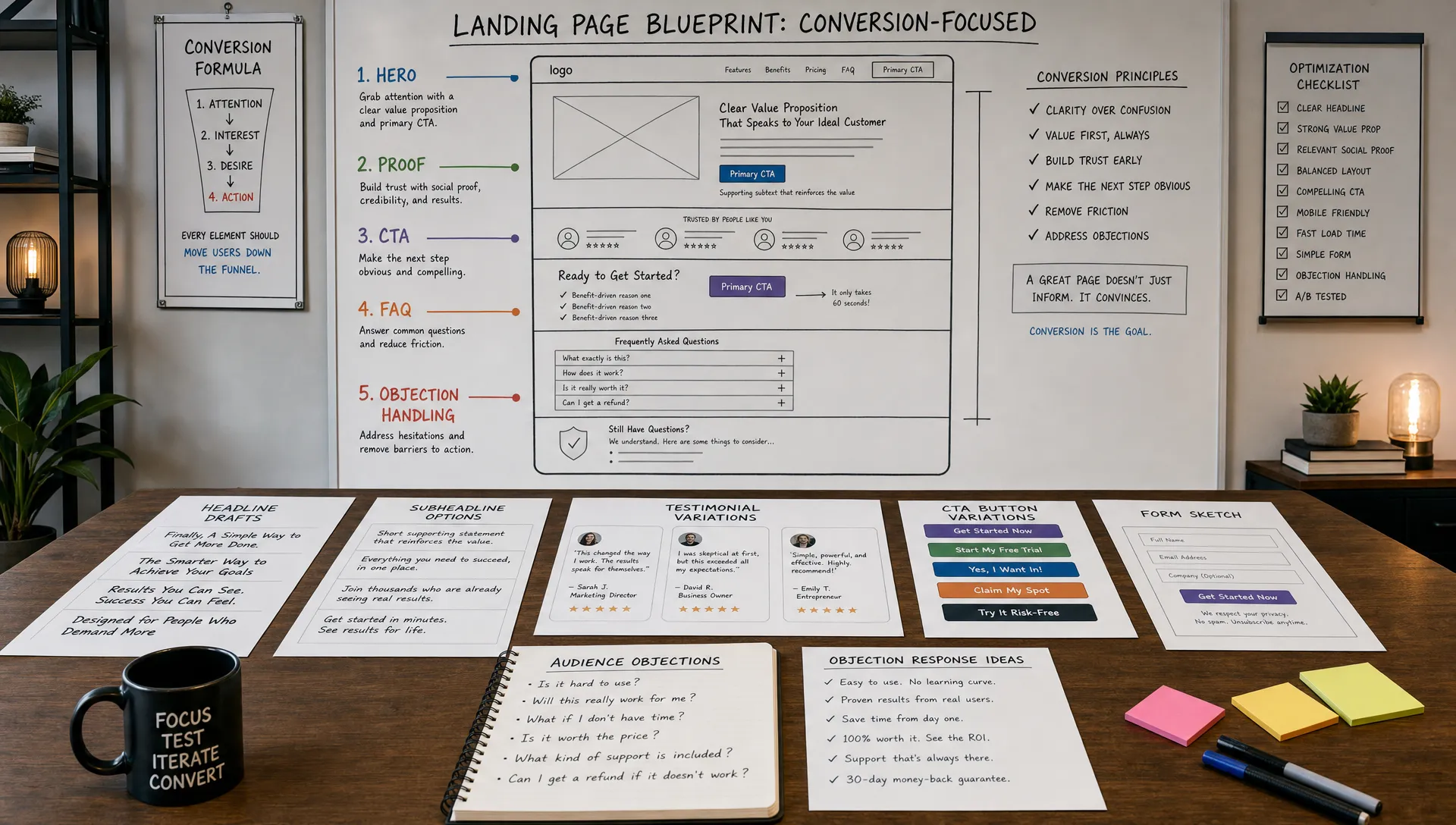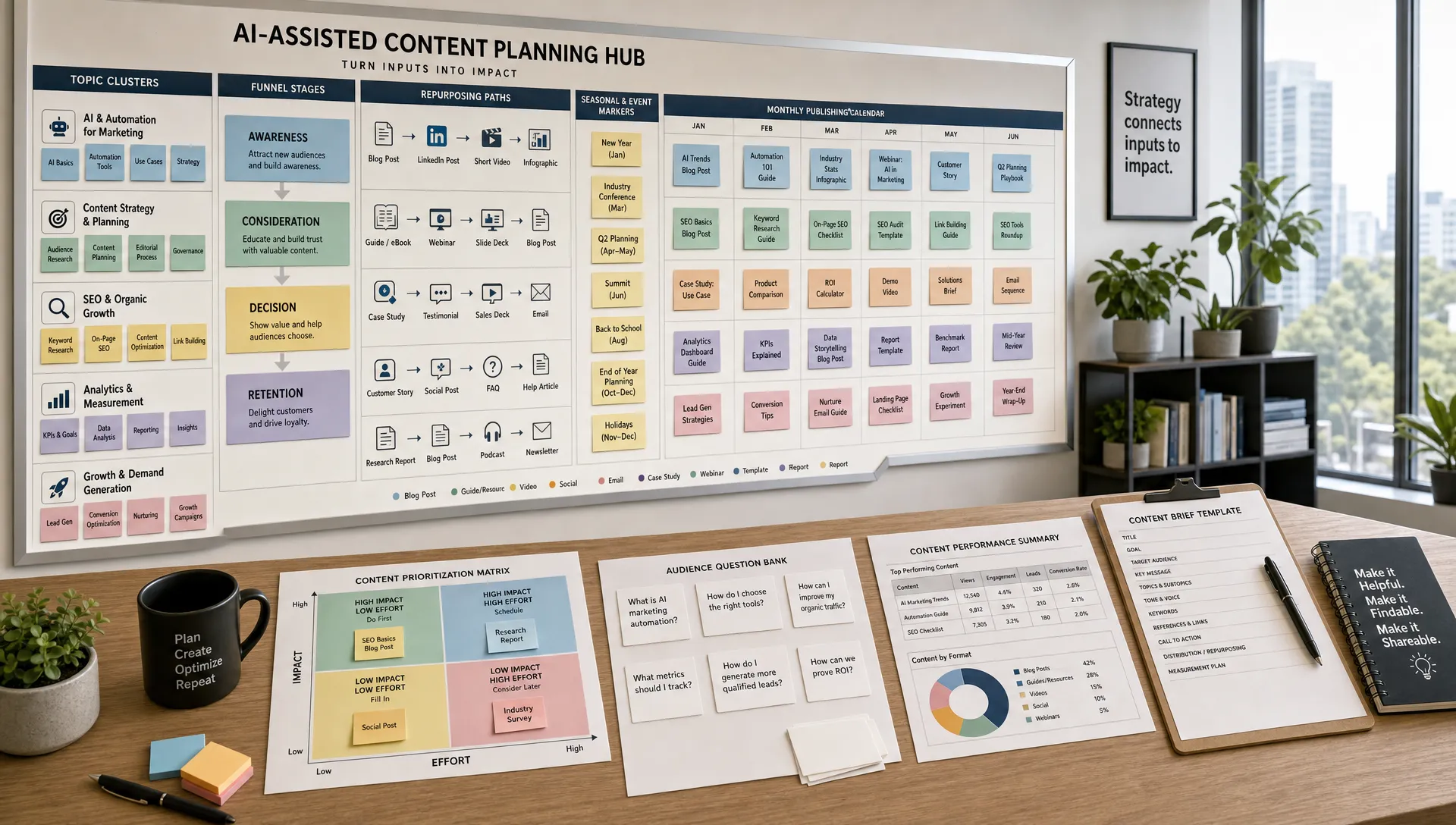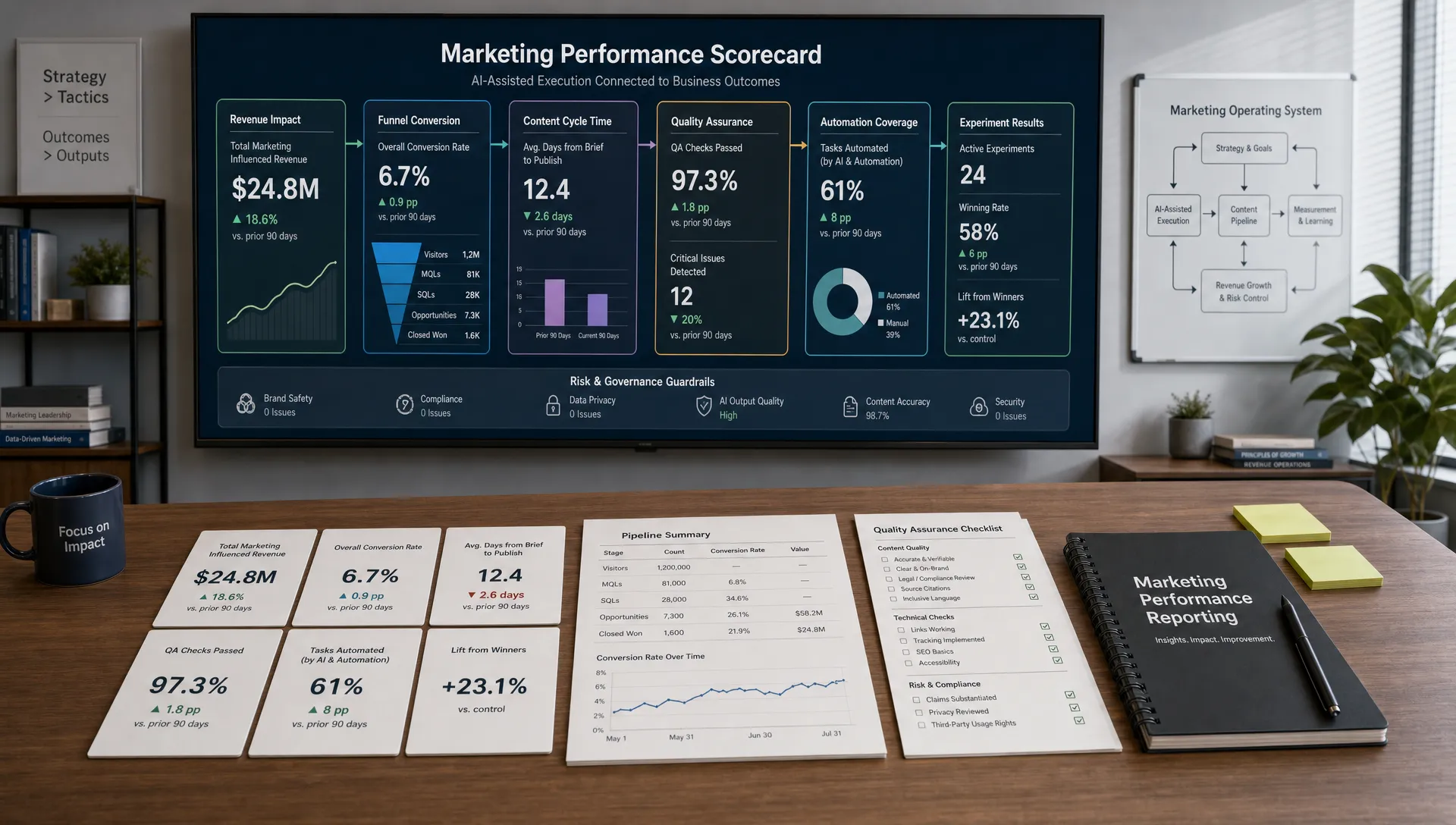
Buyer personas are only useful when they help your team make better marketing decisions. Too often, they become static profile cards filled with vague traits like “busy professional,” “values quality,” or “uses LinkedIn.” AI can make personas far more practical, but only if you use it to synthesize real customer evidence, not to invent fictional customers from thin air.
The best way to create buyer personas with AI is to treat the model as a research assistant. It can analyze call notes, survey responses, CRM data, search behavior, reviews, and campaign performance faster than a human team can. Your job is to provide clean inputs, ask sharper questions, validate the patterns, and turn the output into messaging, content, and campaign decisions.
Below is a practical workflow you can use to build AI-generated buyer personas that are specific, evidence-based, and useful across SEO, content creation, paid media, email, sales enablement, and marketing workflow automation.
A buyer persona is not a demographic sketch. It is a decision-making model that explains why a customer starts looking, how they evaluate options, what concerns slow them down, and what messages help them move forward.
AI is especially helpful because it can find patterns across messy, unstructured data. A marketer might read 20 sales calls and remember a few themes. An AI tool can scan hundreds of transcripts, tag repeated objections, cluster buying triggers, and summarize the language customers use when they describe their problems.
That matters because personalization is no longer optional. McKinsey research on personalization found that faster-growing companies generate substantially more revenue from personalization than slower-growing peers. Personas are one of the foundations that make that personalization more relevant.
A strong AI-generated buyer persona should help you answer questions like:
If your persona cannot improve a landing page, content brief, sales script, or email sequence, it is probably too generic.
The biggest mistake marketers make is asking AI to “create a buyer persona for my product” without giving it real customer data. The result may sound polished, but it will often reflect stereotypes and common internet patterns rather than your actual market.
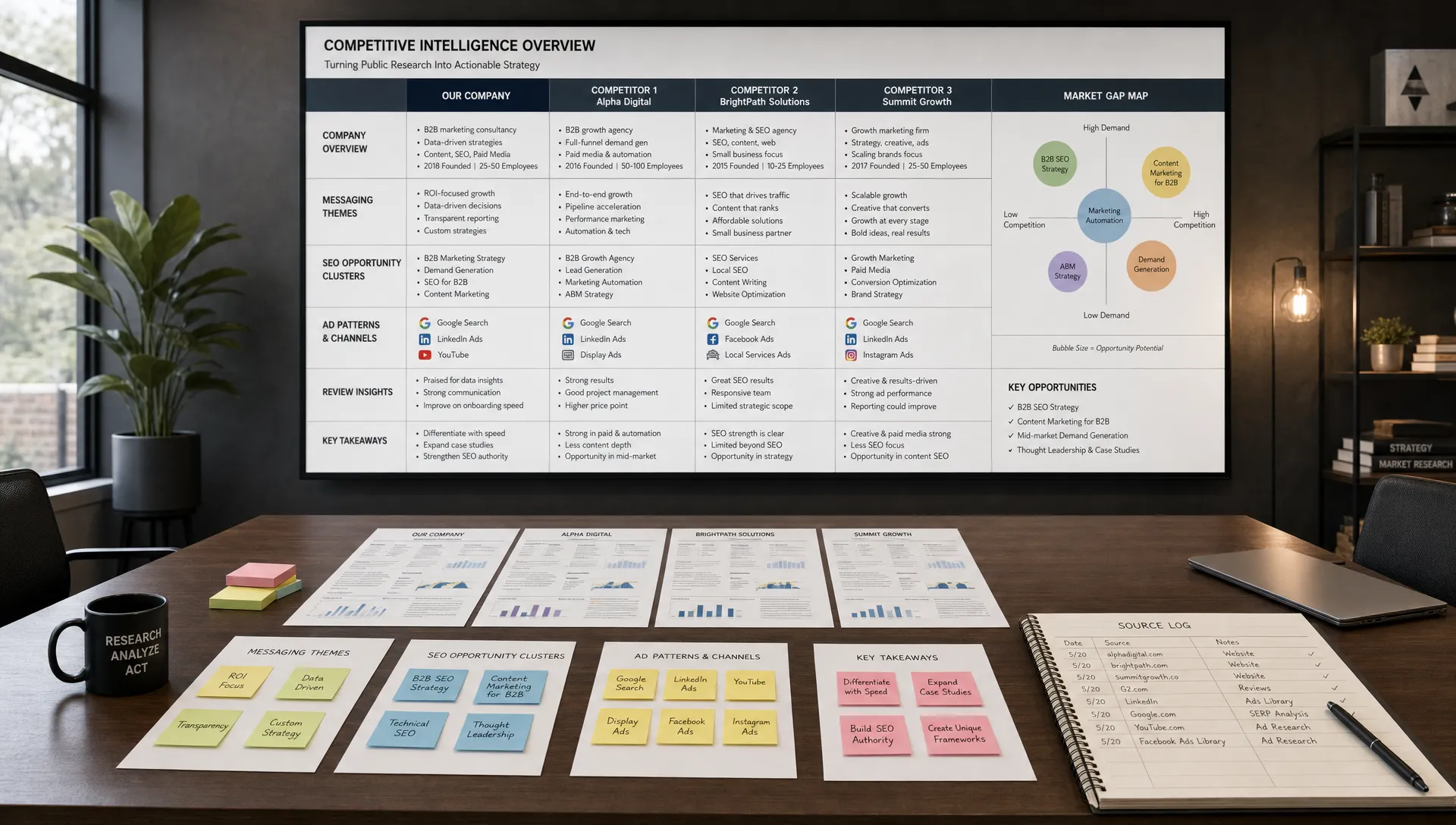
Before prompting any AI tool, gather source material that shows what customers do, say, ask, buy, ignore, and complain about. This does not require a perfect data warehouse. Even a small but well-chosen set of inputs can produce useful patterns.
Good inputs include:
Clean the data before using it. Remove personally identifiable information, confidential deal details, payment data, and anything your organization is not permitted to process with an AI system. If you work in a regulated industry, involve legal, compliance, or data governance teams before uploading customer information to any third-party tool.
This is where smart AI marketing starts to separate itself from basic automation. As AIMarketer Hub explains in its guide to digital marketing and AI, effective teams begin with customer insight and business problems, then use AI to scale the work.
Do not create personas just because a marketing plan template says you need them. Decide what decision the persona will support.
For example, you might be trying to:
The business question affects the persona structure. A persona for paid search needs keywords, urgency signals, objections, and offer preferences. A persona for product marketing needs buying committee roles, comparison criteria, and switching barriers. A persona for content strategy needs questions, formats, funnel stage, and proof points.
A simple framing prompt can help:
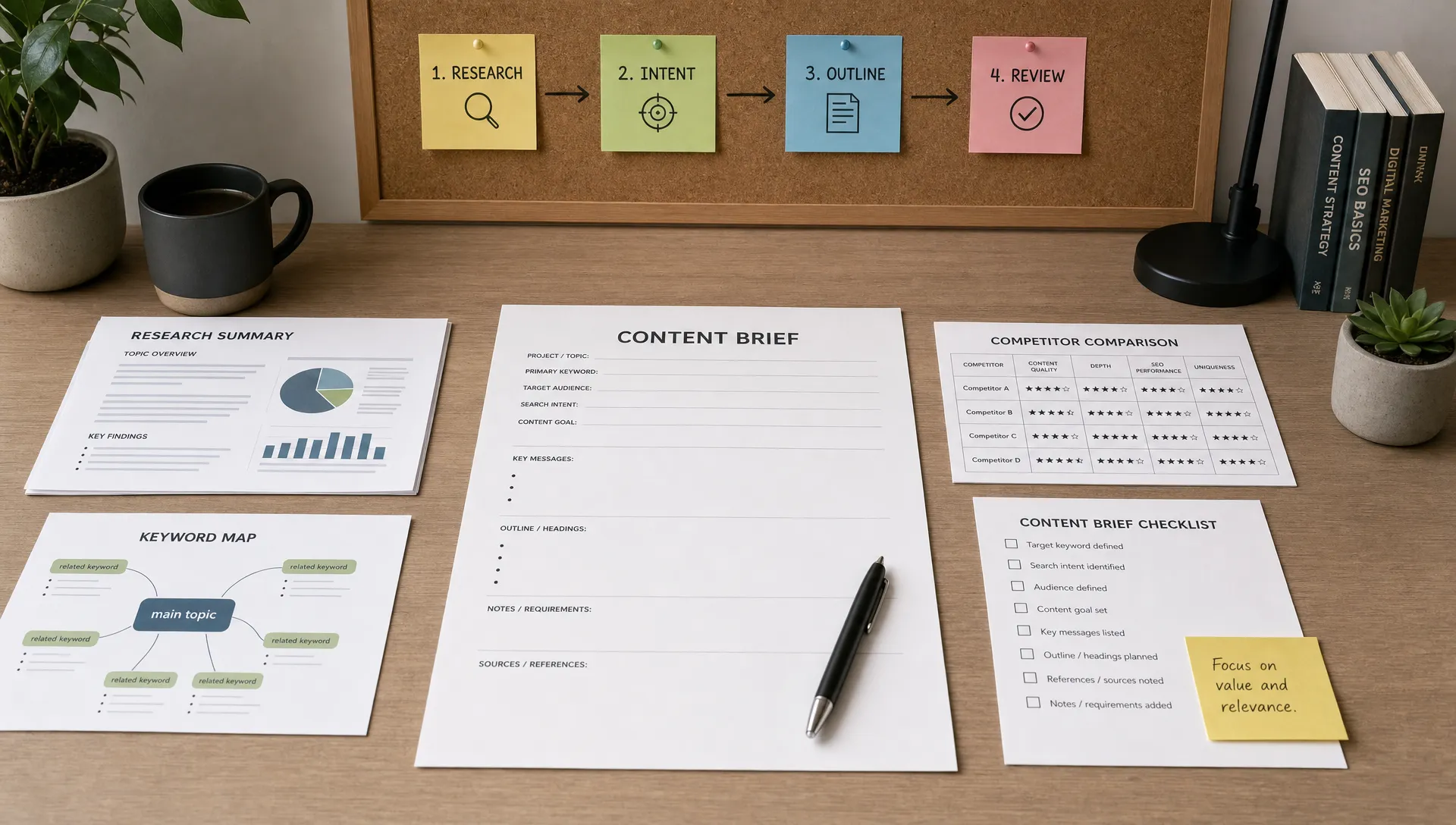
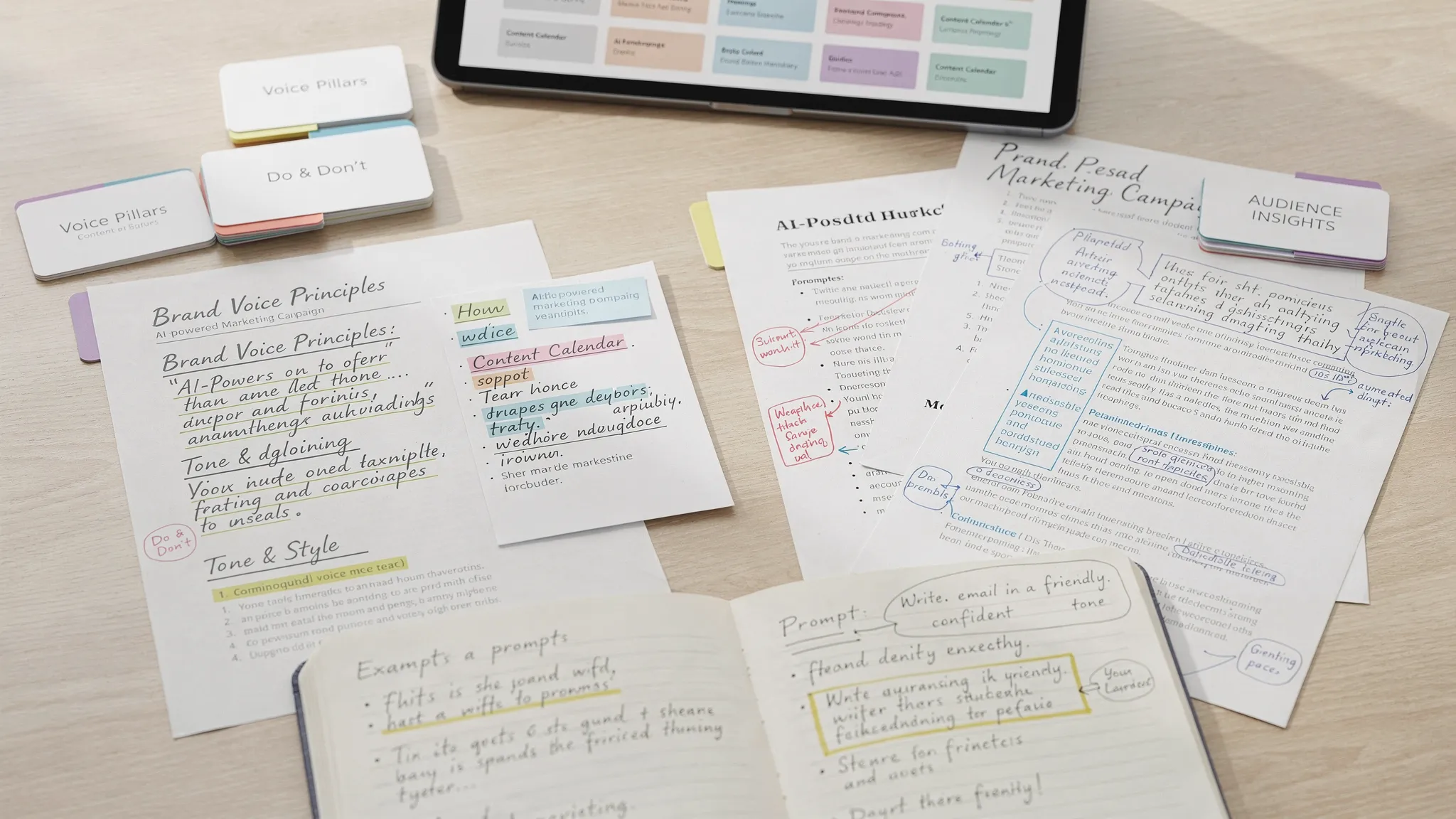
Act as a marketing strategist. I want to create buyer personas to improve [business goal]. Use the customer evidence below to identify distinct buyer segments based on needs, triggers, objections, and decision criteria. Do not invent details that are not supported by the source material. Flag any assumptions separately.
This instruction does two important things. It tells the AI what the persona is for, and it tells the model not to fill gaps with unsupported guesses.
Traditional personas often start with demographic categories. AI personas should start with behavior and intent.
For B2B, that could mean grouping buyers by company maturity, role in the buying committee, budget ownership, urgency, tech stack, or primary use case. For B2C, it could mean grouping by life event, purchase trigger, price sensitivity, research depth, trust concerns, or preferred buying channel.
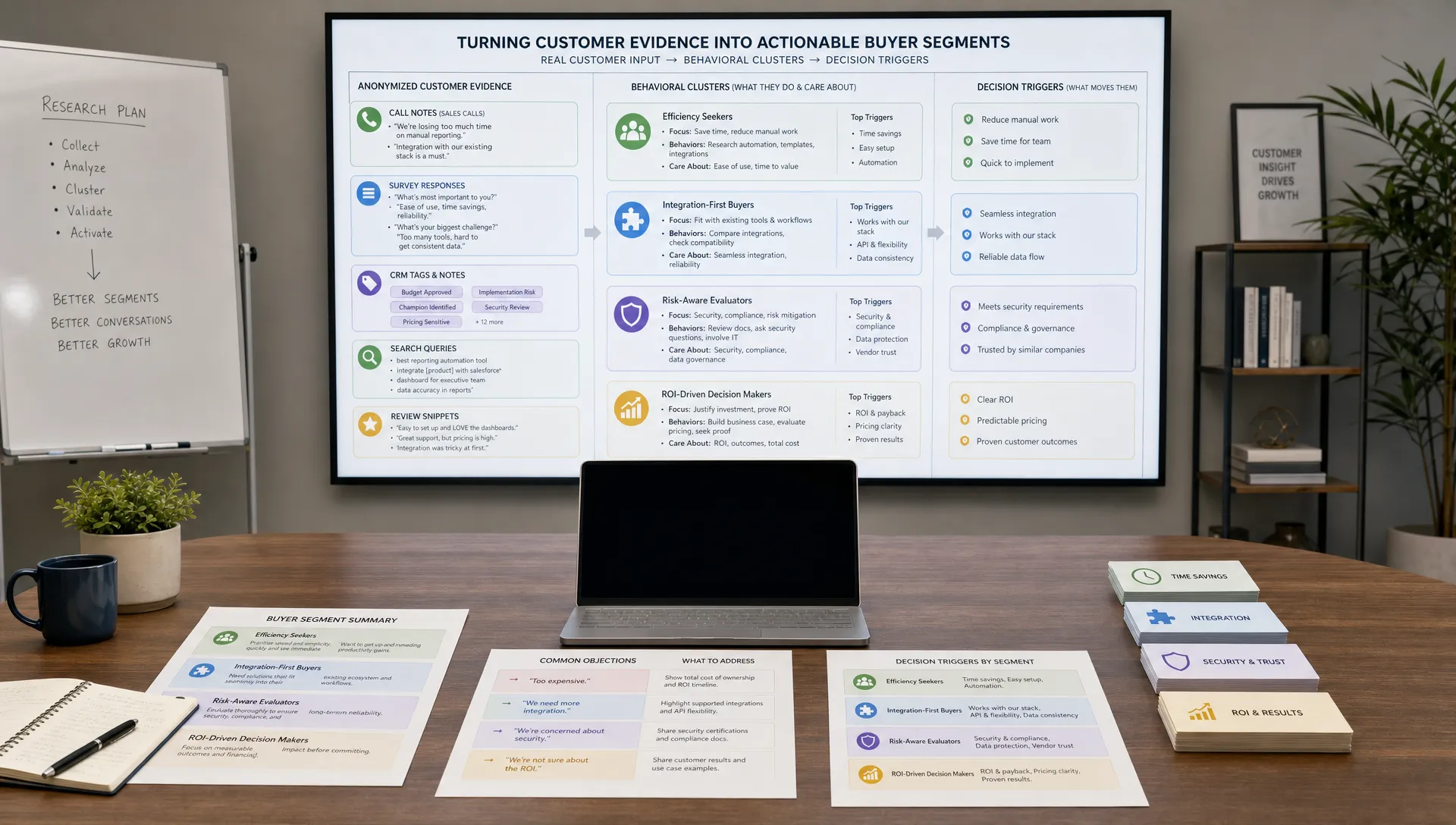
Ask AI to look for clusters rather than forcing it into a fixed number of personas. You can always consolidate later.
A useful clustering prompt looks like this:
Analyze the following customer data and group buyers into distinct clusters. For each cluster, summarize the shared trigger, desired outcome, main pain points, common objections, decision criteria, and evidence from the data. If clusters overlap, explain where they overlap and recommend whether they should be merged.
Once you have clusters, review them manually. Some may be true strategic segments. Others may simply be temporary campaign differences or noisy data. Keep only the personas that change how you market, sell, or support the customer.
After clustering, ask AI to generate a persona for each segment. The output should be structured enough to use across teams, but not so rigid that it becomes a cartoon.
A practical AI buyer persona includes:
The “source evidence” field is critical. Without it, the persona is hard to trust. Ask AI to cite the specific input type behind each insight, such as interview notes, CRM fields, support tickets, reviews, or analytics patterns. It does not need to reveal private customer details, but it should show where the conclusion came from.
A persona becomes much more valuable when it includes the buyer’s actual words. This is one of the strongest uses of AI in content creation.
Feed the model anonymized excerpts from interviews, reviews, sales calls, chat logs, or survey responses. Then ask it to extract repeated phrases, emotional language, objections, and outcome statements. The goal is not to copy customers word for word in every campaign. The goal is to understand how they frame the problem.
For example, a software buyer might not say, “We need enterprise workflow orchestration.” They might say, “Our team is wasting hours copying data between tools.” That phrasing is far more useful for headlines, landing pages, SEO briefs, and email subject lines.
Use a prompt like this:
Extract voice-of-customer language from the following responses. Group phrases by pain point, desired outcome, objection, urgency signal, and trust signal. Preserve the original wording where possible, but remove personal or sensitive information.
This step helps your personas move from abstract profiles to practical marketing assets.

AI can reveal patterns, but it can also overstate weak signals. Validation is what separates useful personas from convincing fiction.
Start with internal validation. Share the personas with sales, customer success, support, product marketing, and anyone who regularly speaks with customers. Ask them what feels accurate, what feels exaggerated, and what is missing.
Then validate externally. Run short customer interviews, add a survey question, review recent sales calls, or compare persona assumptions against actual conversion data. If a persona says buyers care most about speed, but your best-performing landing page emphasizes risk reduction, investigate the gap.
You can also use campaign testing as validation. Try different messaging angles for the same segment and measure outcomes. Look at click-through rate, conversion rate, demo quality, pipeline value, retention, or revenue, depending on your funnel.
A simple validation prompt can help your team spot weak areas:
Review this buyer persona against the evidence provided. Identify which claims are strongly supported, which are weakly supported, and which are assumptions. Recommend customer research questions that would validate or disprove the weakest claims.
Do not skip this step. The most dangerous AI output is the one that sounds right but has never been tested.
A buyer persona is not finished when the document looks good. It is finished when it changes what your team does.
Use each persona to improve specific marketing assets. For content strategy, map persona questions to funnel stages. For SEO, connect search intent to buyer triggers and objections. For email, build nurture paths around urgency, trust, and decision criteria. For sales enablement, translate objections into proof points and talk tracks. For paid media, create message tests based on pain points and desired outcomes.
For example, an AI-generated persona might show that one segment wants implementation speed, while another is more concerned with compliance risk. Those two buyers should not receive the same landing page headline, case study angle, or sales follow-up.
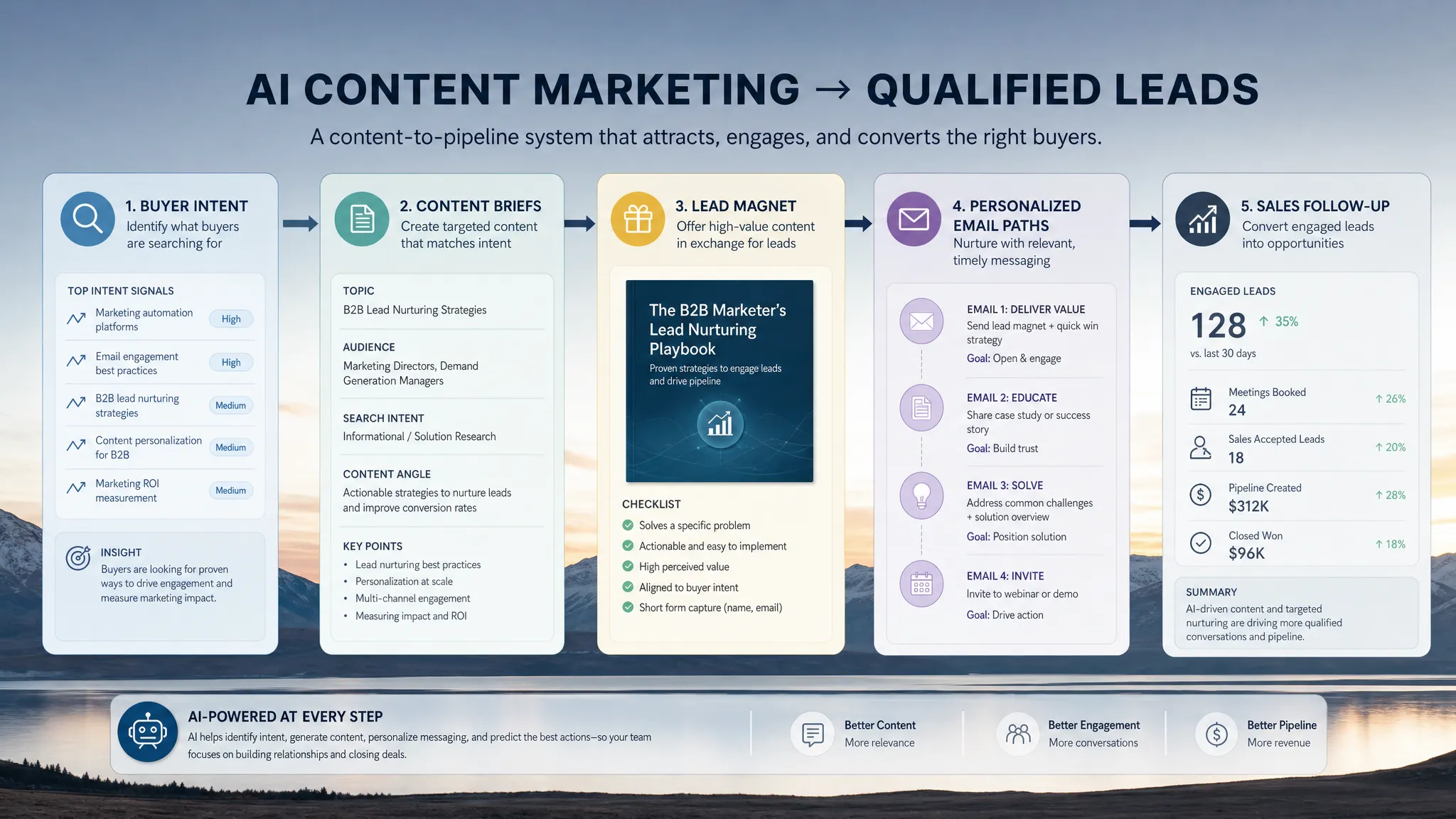
This is also where personas support better AI marketing automation. Once your segments are evidence-based, AI tools can help generate ad variations, content briefs, email drafts, and campaign ideas that match the buyer’s actual context. If your next step is turning persona insight into content that attracts qualified demand, AIMarketer Hub’s guide to AI content marketing tactics that drive more leads is a useful companion.
The best personas reflect how buying decisions actually happen in your market. A SaaS company, a law firm, a mortgage provider, and an ecommerce brand may all use AI, but the persona signals they care about will differ.
In SaaS, personas often need to account for buying committees. The end user, technical evaluator, budget owner, and executive sponsor may all care about different outcomes. AI can help summarize these roles from sales notes and closed-lost reasons.
In financial services, personas often revolve around life events, trust, risk, urgency, and education level. For instance, a mortgage brand offering a technology-driven mortgage experience with personalized guidance may need different messaging for first-time homebuyers, refinance shoppers, equity access customers, and veterans exploring specialized loan options.
In legal and professional services, buyers usually need confidence before they need creativity. AI personas should surface the questions prospects ask before making contact, the fears that delay outreach, and the proof signals that build trust.
In ecommerce, personas are often shaped by product category, repeat purchase behavior, price sensitivity, lifestyle motivation, and post-purchase expectations. AI can analyze reviews and support tickets to identify which features, benefits, and anxieties matter most.
The same process applies across industries, but the evidence you prioritize should match the buying context.
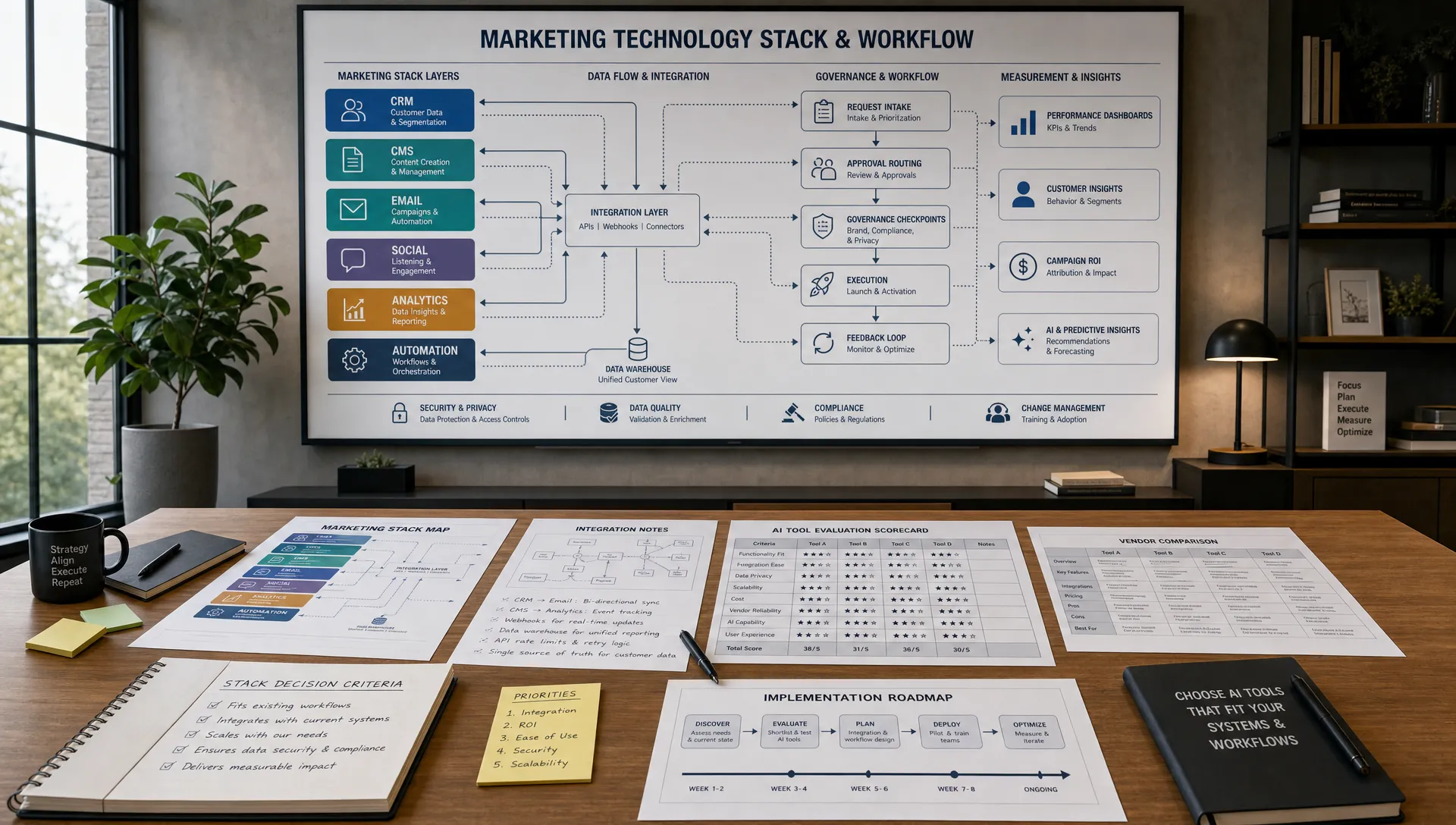
You do not need a complex stack to create AI buyer personas, but you do need tools that fit your data and review process.
A simple workflow might use one tool for data collection, one for transcription or summarization, one for analysis, and one for content activation. Larger teams may need integrations with CRM, analytics, customer research platforms, and marketing automation systems.
When evaluating AI tools, look for:
If you are comparing vendors, start with workflow fit rather than feature lists. The best platform is the one your team can use repeatedly, safely, and measurably. For a deeper evaluation framework, see AIMarketer Hub’s guide on how to pick the right AI marketing platform.
AI makes persona creation faster, but it also makes it easier to scale bad assumptions. Watch for these issues before rolling personas into campaigns.
One common mistake is over-relying on demographics. Age, location, job title, and income can matter, but they rarely explain motivation on their own. A first-time buyer and an experienced buyer may share demographics but need completely different messages.
Another mistake is creating too many personas. If you end up with 12 personas that all need similar content and offers, your segmentation is too detailed to be useful. Most teams should start with three to five actionable personas and expand only when the data supports it.
A third mistake is letting AI invent certainty. If the model says a segment “prefers webinars” but the source data does not show channel preference, mark it as an assumption. AI should help you manage uncertainty, not hide it.
Finally, do not treat personas as permanent. Markets shift, competitors change positioning, search behavior evolves, and customer expectations rise. Update personas quarterly for fast-moving markets and at least twice a year for more stable ones.
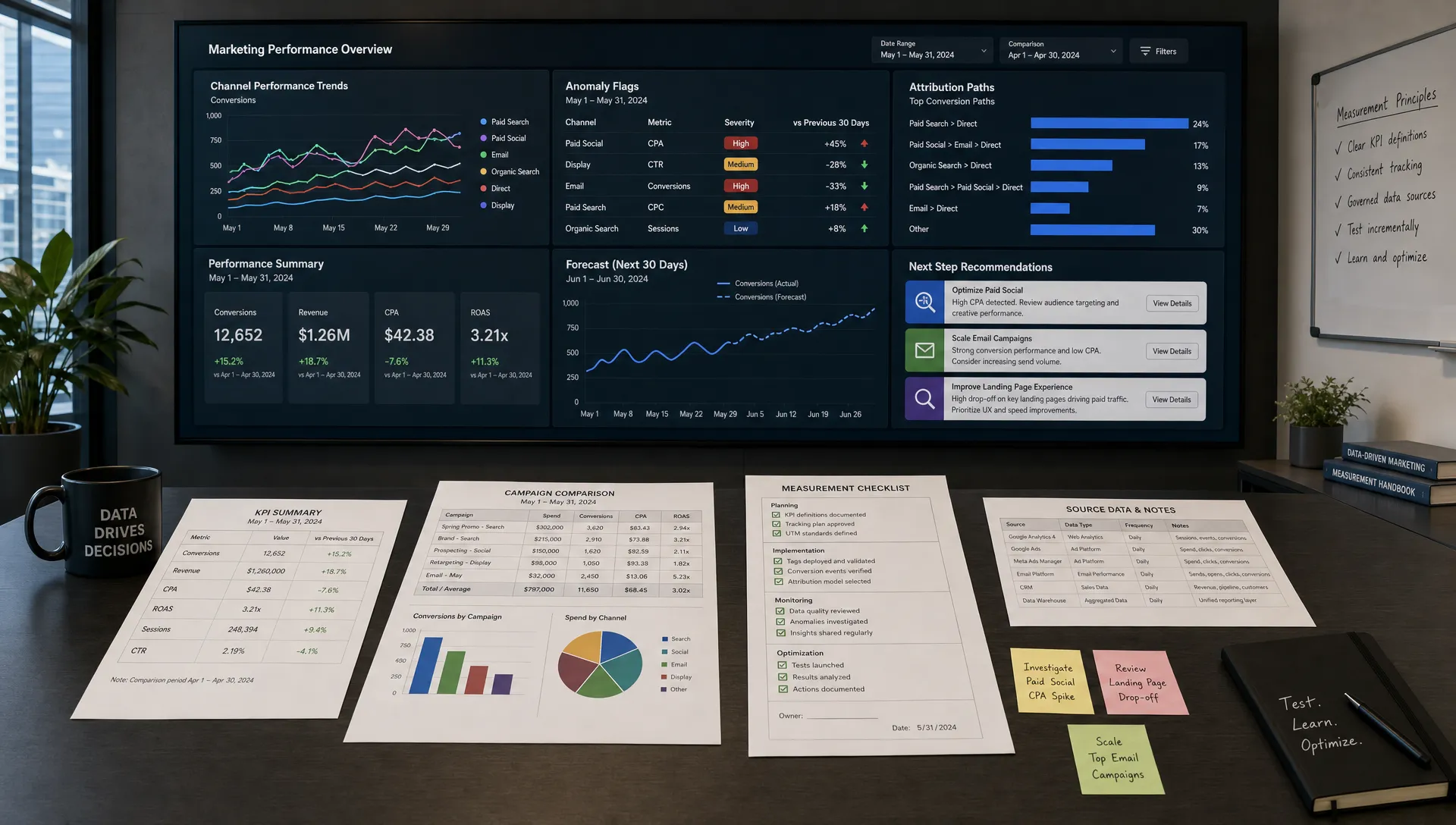
The value of a buyer persona should show up in marketing performance, not just team alignment.
Start by choosing one or two use cases. For example, apply the persona to a landing page, email sequence, paid campaign, or SEO content cluster. Compare performance before and after the update. Look at the metrics that match your goal, such as conversion rate, qualified leads, sales acceptance rate, content engagement, demo show rate, or pipeline influenced.
Qualitative feedback matters too. Ask sales whether leads are better informed. Ask customer success whether onboarding expectations are clearer. Review support tickets to see whether common confusion decreased after messaging changes.
If a persona does not improve decisions or outcomes, revise it. The goal is not to defend the persona. The goal is to understand the buyer better.
Can AI create buyer personas from scratch? AI can draft a generic persona from public knowledge, but it should not be trusted as a strategic asset without real customer data. The strongest personas come from your CRM, interviews, analytics, sales calls, reviews, surveys, and support conversations.
What is the best prompt for creating buyer personas with AI? The best prompt includes your business goal, source data, desired persona fields, and a clear instruction not to invent unsupported details. Ask the AI to separate evidence-backed insights from assumptions.
How many AI-generated buyer personas should a business have? Most teams should start with three to five personas. If two personas need the same messaging, content, and sales process, they can probably be merged. Add more only when the differences change your marketing actions.
Are AI buyer personas accurate? They can be accurate when they are based on clean, representative data and validated by customer-facing teams and real market behavior. They become unreliable when they are generated from vague prompts, biased samples, or unsupported assumptions.
How often should buyer personas be updated? Review personas at least twice a year, or quarterly in fast-changing markets. Update them whenever you launch a new product, enter a new segment, see major conversion changes, or notice new objections in sales conversations.
AI can help you create buyer personas faster, but speed is not the main advantage. The real advantage is clarity. When AI helps you identify patterns in real customer evidence, your team can create sharper content, stronger offers, better segmentation, and more relevant marketing automation.
Start with one high-value use case, gather trustworthy data, prompt carefully, validate with humans, and measure the impact. That is how AI-generated personas become a practical growth asset instead of another document no one uses.