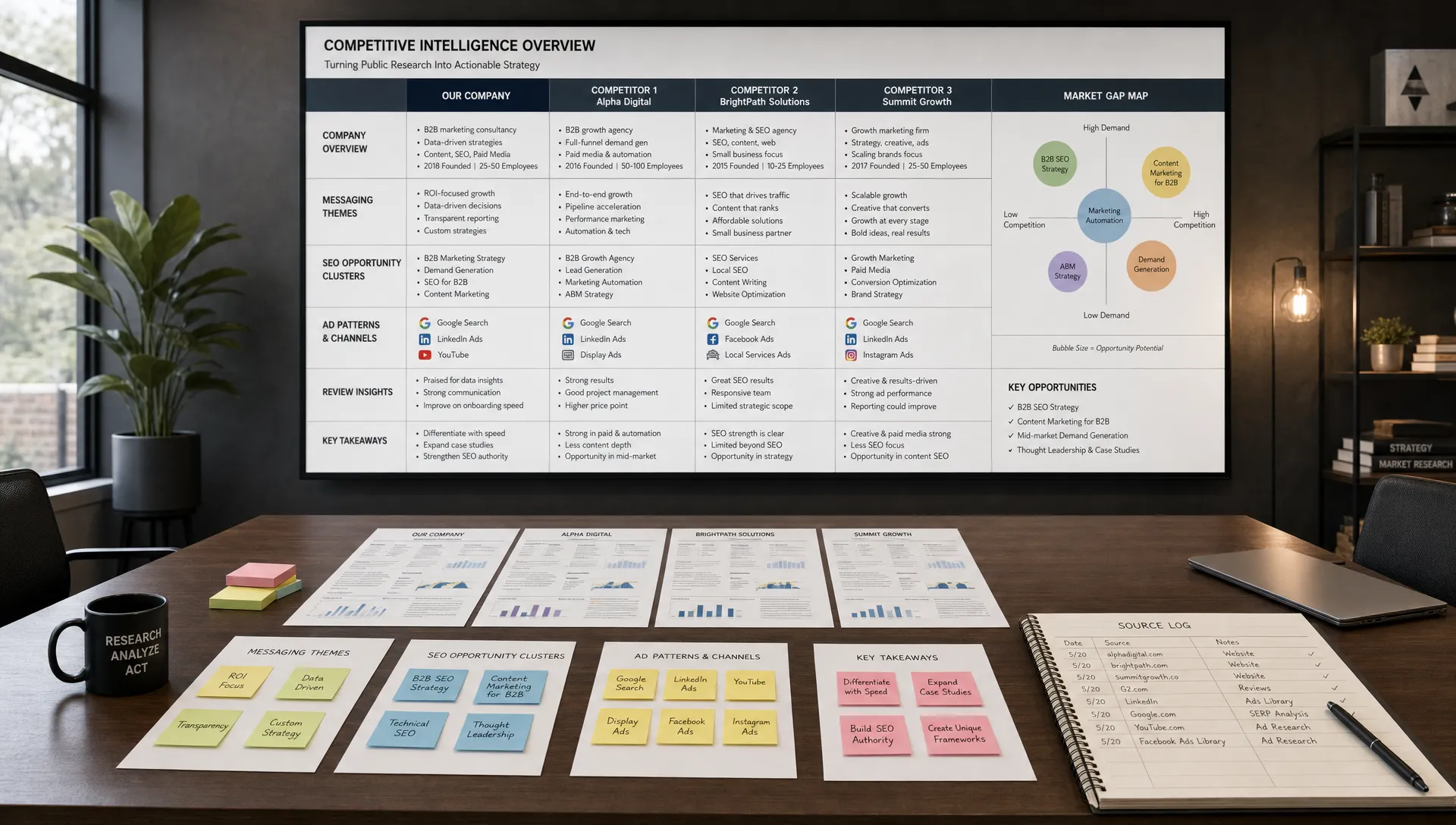
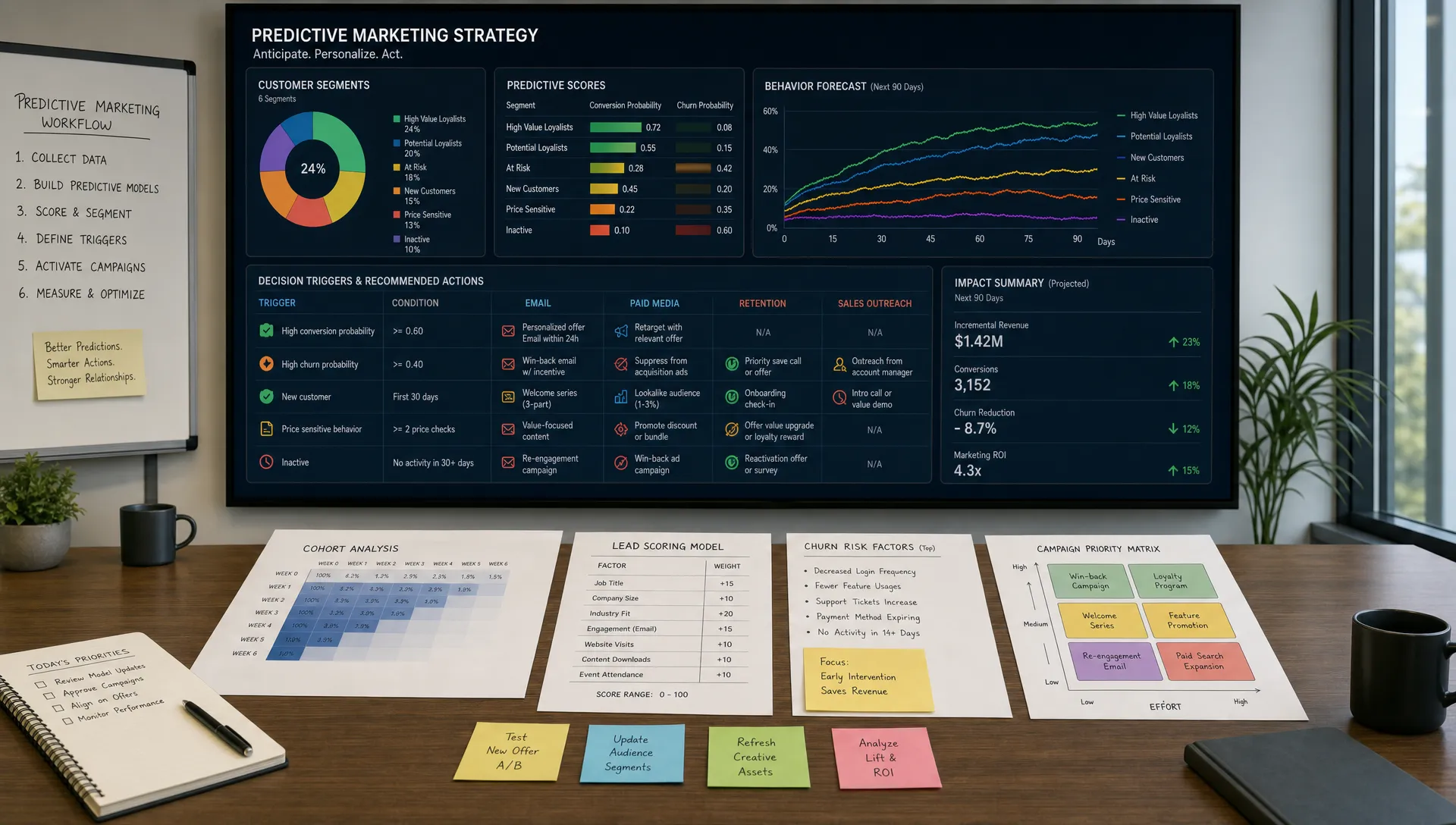
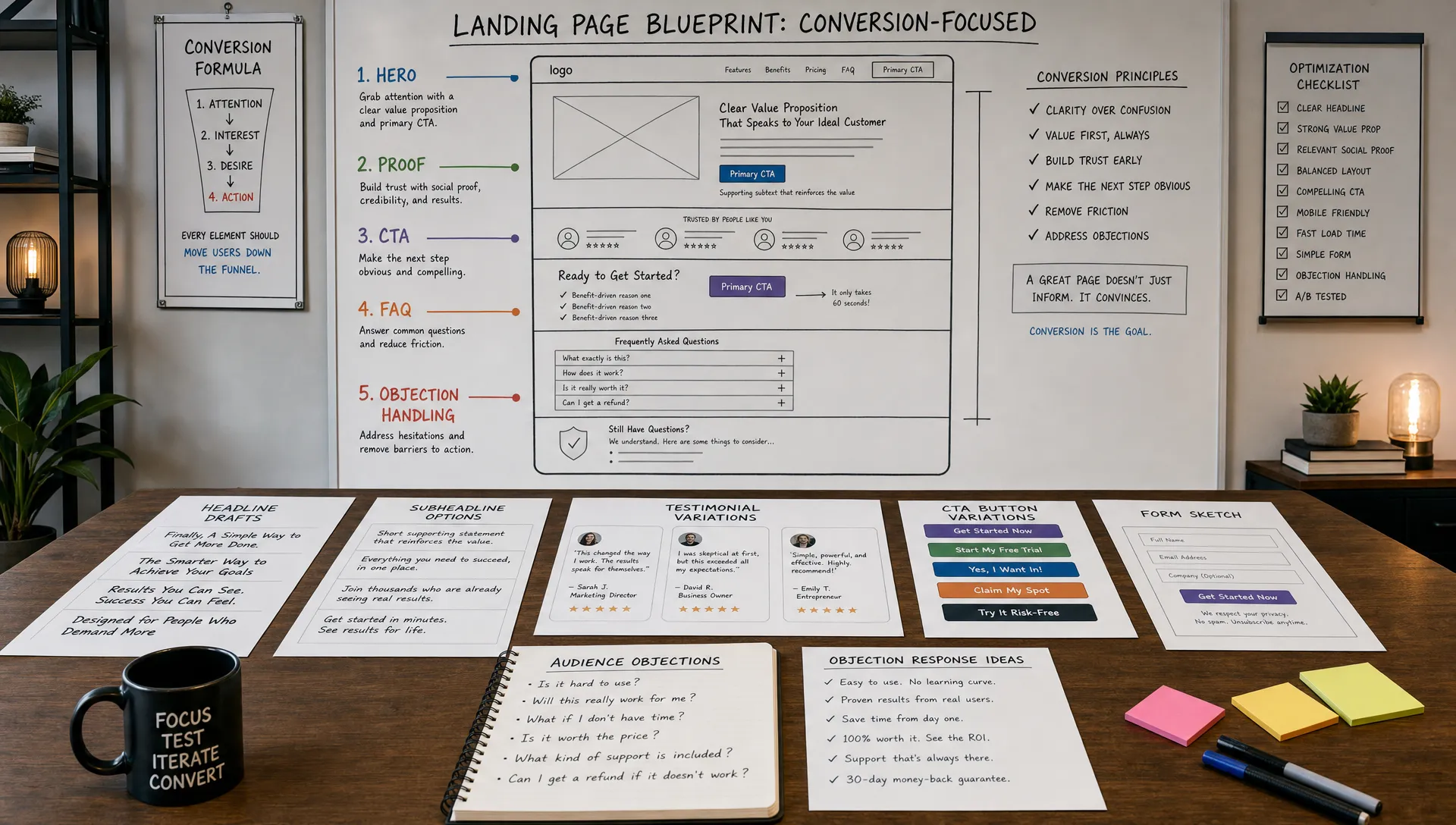
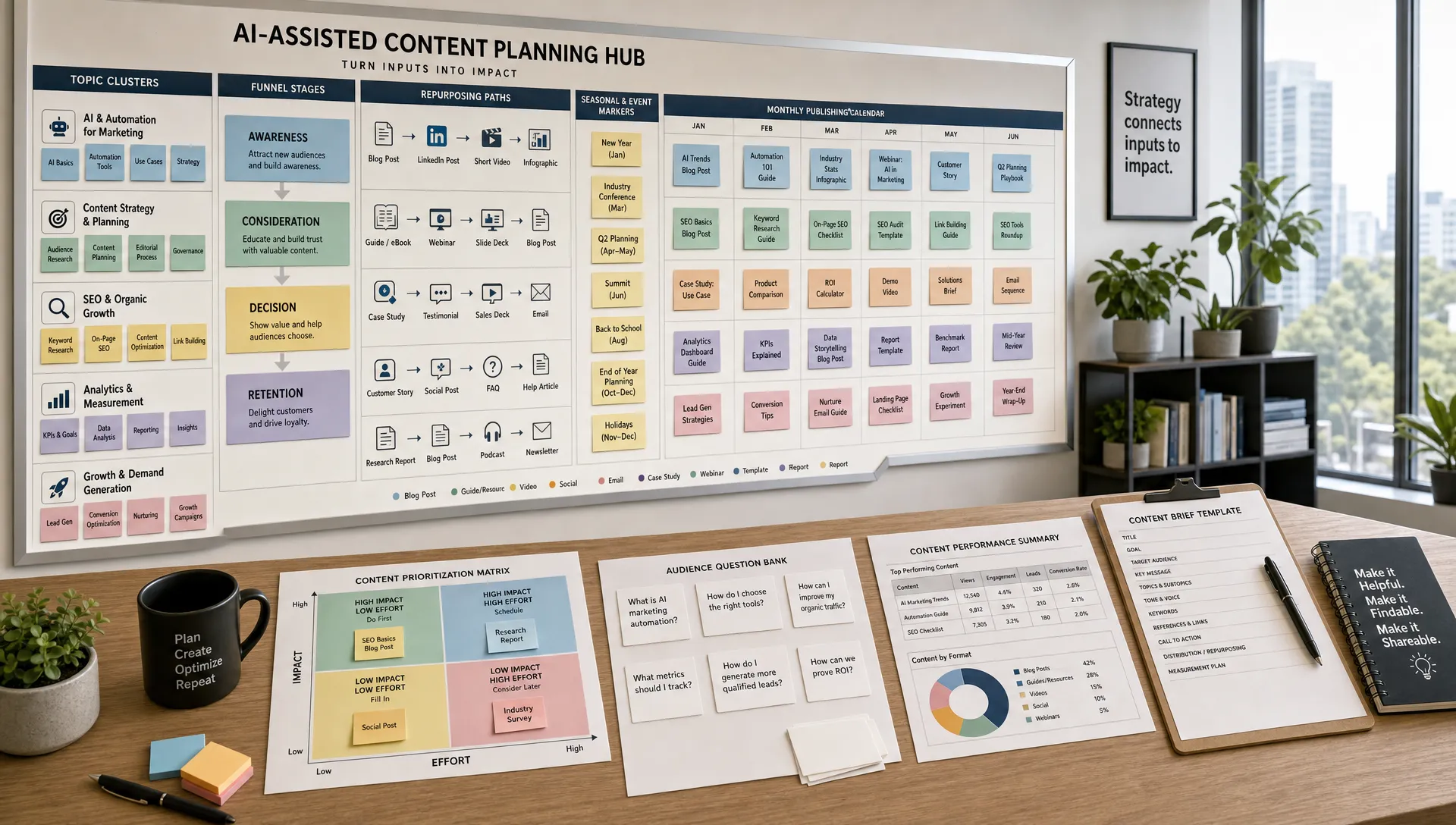
AI lead scoring can sound intimidating. Many teams picture complex predictive models, expensive data warehouses, and months of setup before sales sees a single useful number. In reality, the best place to start is much simpler: use AI to help your team prioritize the leads that are most likely to deserve attention now.
The goal is not to create a perfect forecasting machine. The goal is to help marketing and sales answer three practical questions faster: Who is a good fit? Who is showing real intent? Who needs follow-up, nurturing, or disqualification?
If you already collect form submissions, website behavior, email engagement, CRM notes, chat transcripts, or demo requests, you probably have enough data to start. The key is to avoid scoring everything and focus on the few signals that actually change what your team does next.
Lead scoring is a prioritization system. It gives each lead a score based on traits and behaviors that suggest how likely they are to become a customer. Traditional scoring usually relies on fixed rules, such as adding points when someone visits a pricing page or subtracting points when their company is outside your target market.
AI lead scoring builds on that. Instead of only counting obvious actions, AI can analyze patterns across multiple signals, including unstructured information like form answers, chatbot conversations, email replies, and sales notes. That makes it useful when leads do not fit neatly into a checklist.
But AI should not make the system mysterious. If your sales team cannot understand why a lead received a high score, they will not trust it. A simple scoring model with clear explanations usually beats a more advanced model that nobody uses.
Think of AI as a decision assistant, not the decision maker. It can rank, summarize, classify, and recommend next steps. Your team still defines what quality means.
The fastest way to overcomplicate lead scoring is to start with data science. The better starting point is the sales action you want to trigger.
For most teams, a lead score only needs to route people into three paths:
Once those actions are clear, scoring becomes much easier. You are not asking AI to predict the future with total certainty. You are asking it to help decide which path is most appropriate based on the evidence available.
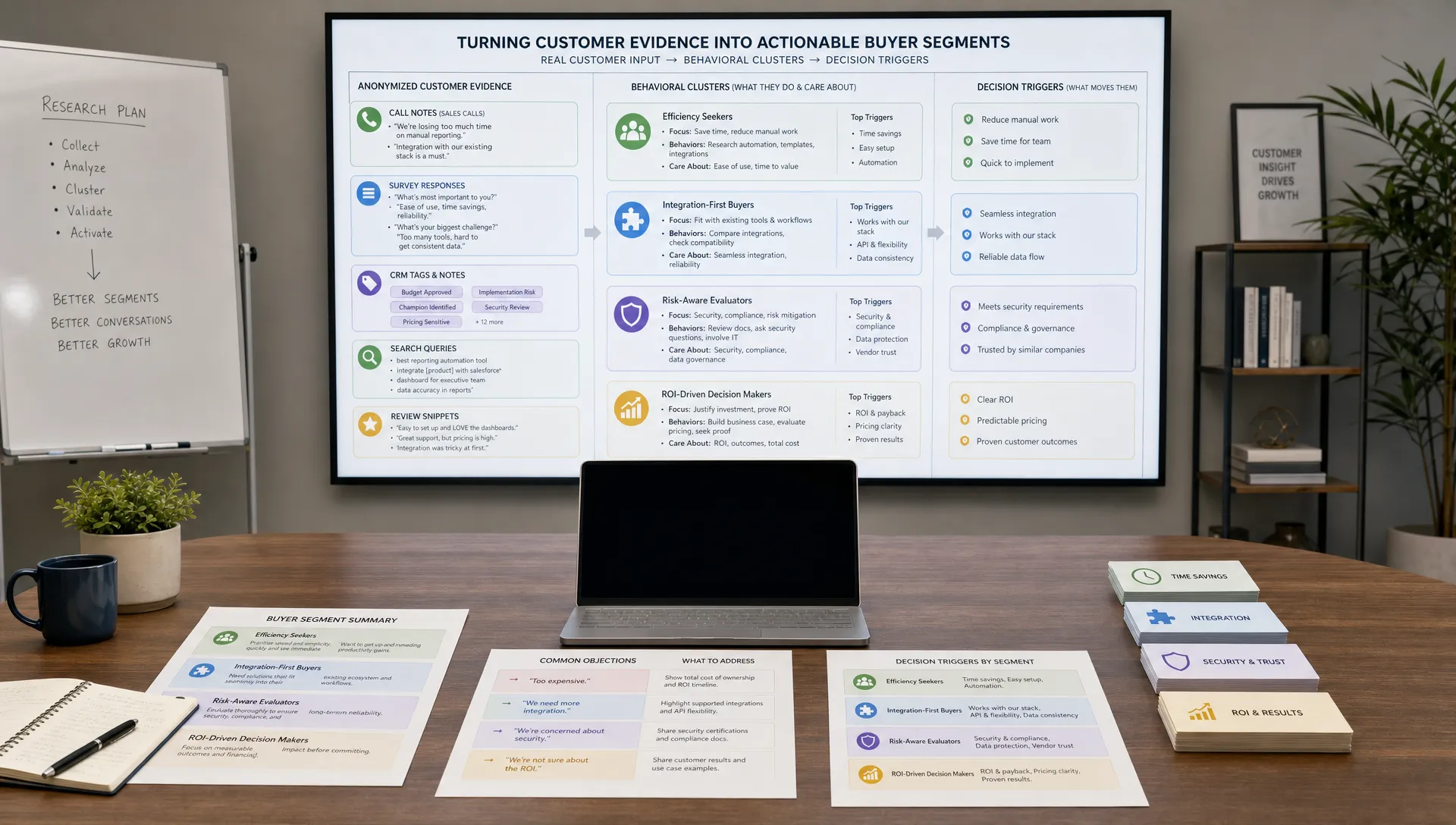
A practical exercise is to review 20 to 50 recent customers and 20 to 50 leads that never progressed. Look for the differences. Which sources produced better opportunities? Which pages did good leads view? Which form answers signaled urgency? Which job titles, industries, company sizes, or use cases tended to convert?
You do not need a huge sample to spot obvious patterns. You only need enough to build a starting model that your team can improve over time.
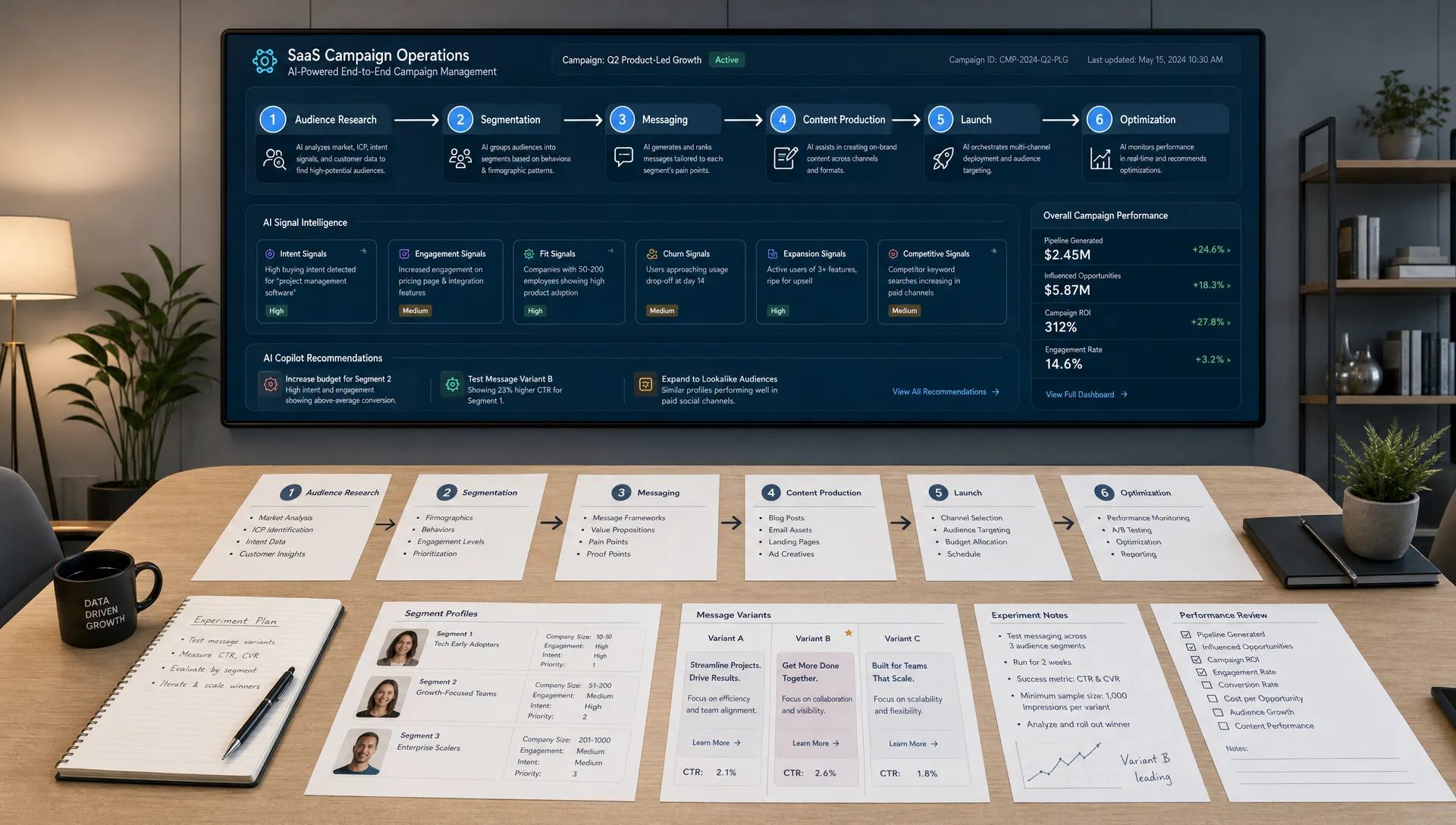
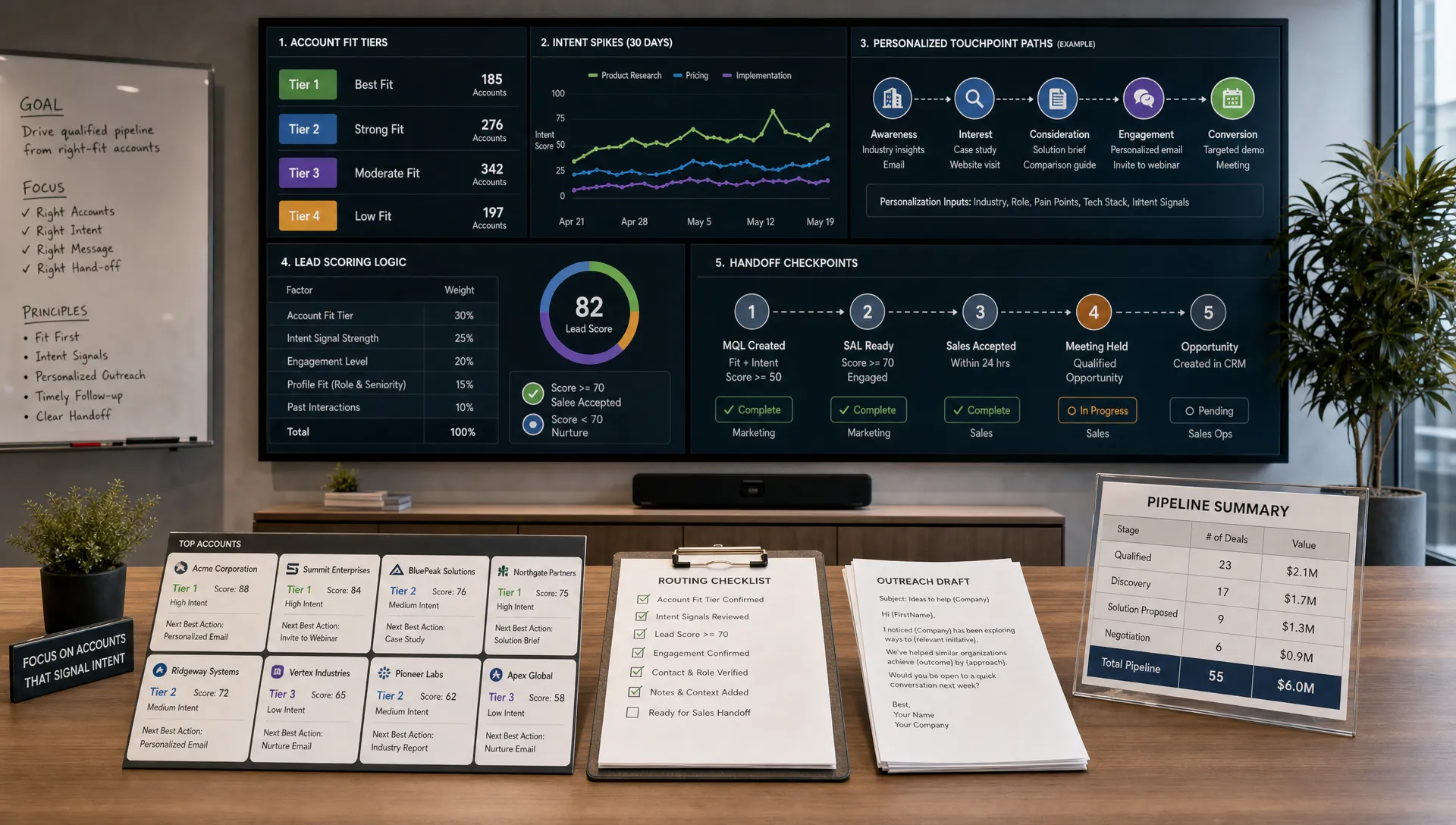
A simple AI scoring system works best when it separates signals into three groups: fit, intent, and timing. This keeps the model clear while still giving AI enough context to be useful.
Fit signals describe whether the lead resembles the type of customer you can actually help. Common examples include industry, company size, region, job role, business model, tech stack, budget range, and use case.
For example, a visitor researching custom woven labels and patches could be a relevant prospect for a supplier, apparel brand service, packaging consultant, or ecommerce operations tool. But fit still depends on context, such as whether they are a hobby creator, a growing brand, or a procurement manager planning repeat orders.
AI can help classify that context from form fields, company descriptions, website domains, and open-ended responses. The important point is that fit should reflect your real customer profile, not a generic definition of a good lead.
Intent signals show whether the lead is actively considering a solution. These signals are often behavioral. A pricing page visit is stronger than a casual blog view. A demo request is stronger than a newsletter signup. A return visit from the same company can matter more than a single click.
Intent is where AI can be especially useful because buyer behavior is rarely linear. A prospect might read a comparison article, ask a chatbot about implementation, download a guide, and then go quiet for two weeks. AI can combine those actions into a clearer picture than a simple point system.
If conversational data is part of your funnel, a chatbot can also capture the questions that reveal readiness. For a deeper look at that workflow, see this practical guide to AI chatbots for lead qualification.
Timing signals indicate whether a lead has a current reason to act. These are often hidden in language. Phrases like this quarter, before launch, replacing our current tool, hiring soon, urgent, or need pricing by Friday all suggest stronger timing than a vague research request.
AI can scan open-text responses, call summaries, emails, and chat logs for these clues. That does not mean every urgent phrase deserves immediate sales attention, but timing should influence the recommended next step.
A simple 100-point model is usually enough to start. You can adjust the weighting later, but beginning with a clear structure prevents the score from becoming a random collection of activities.
One practical split is:
Do not try to score every touchpoint equally. A lead who visits five educational blog posts may still be less ready than a lead who visits one pricing page and asks about implementation. AI can help identify that difference, but only if you define which behaviors matter.
The easiest way to keep lead scoring simple is to use rules for obvious signals and AI for messy ones.
Rules are good for things like company size, country, source, form field values, pricing page visits, and job titles. These are structured data points, so a basic automation can handle them.
AI is better for interpretation. It can summarize a chatbot conversation, classify a lead’s pain point, detect urgency in a form response, extract buying committee clues from an email, or compare a lead’s description to your ideal customer profile.
A simple scoring prompt can work surprisingly well as a starting point:
You are scoring an inbound lead for sales priority.
Use the company profile, form answers, website activity, and conversation notes.
Score the lead from 0 to 100.
Classify the lead as contact now, nurture, or low priority.
Explain the top 3 reasons for the score.
Identify any missing information.
Recommend the next best action.
Do not use sensitive personal attributes.
That kind of prompt is not a full system, but it creates a useful standard. It also forces the AI to provide reasons, which makes the output easier for sales to review.
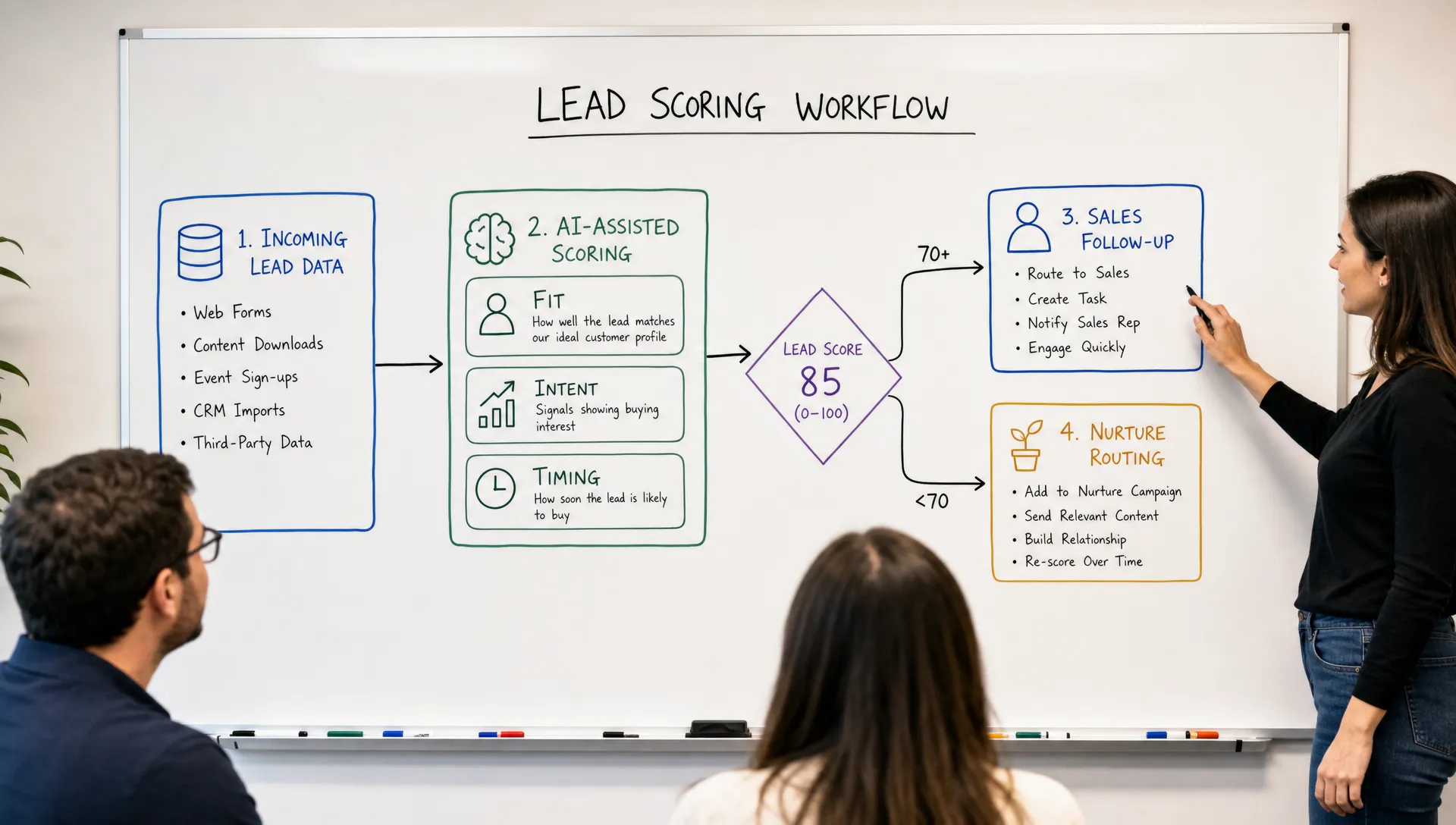
A lead score is only valuable if it changes what happens next. If every lead still gets the same email, the same delay, and the same sales handoff, scoring is just decoration.
Start with a few score bands. For example, leads from 80 to 100 might trigger same-day sales outreach, a CRM task, and a personalized follow-up email. Leads from 50 to 79 might enter a targeted nurture sequence and receive a softer call to action. Leads from 20 to 49 might stay in educational content until they show stronger intent. Leads below 20 might be suppressed, cleaned, or routed away from sales.
The exact numbers matter less than consistency. What matters is that sales and marketing agree on the action tied to each band.
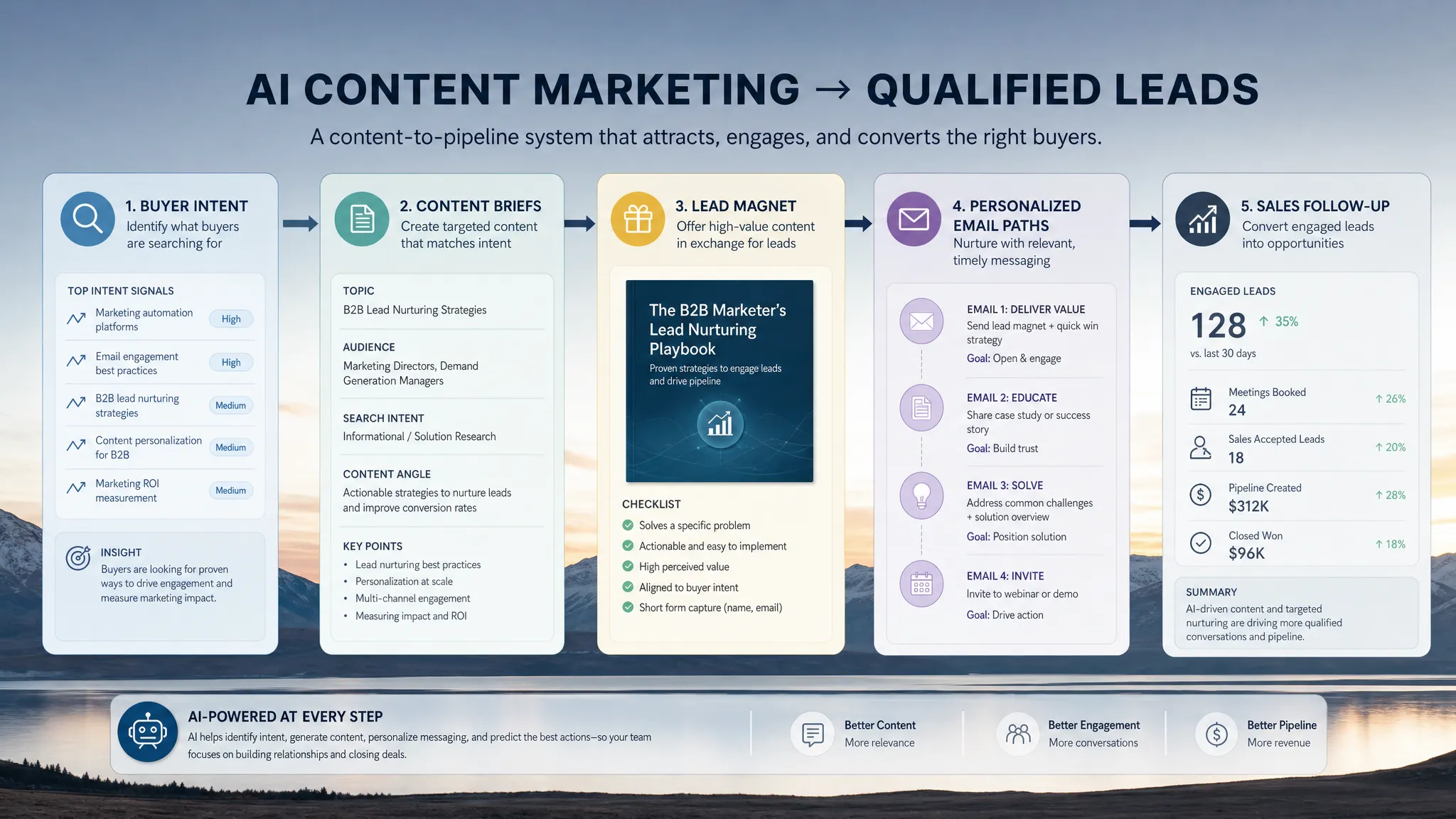
Nurture content also needs to match the reason a lead is not sales-ready. A good-fit lead with low urgency should not receive the same sequence as a high-intent lead from the wrong industry. If you are building content around lead stages, this guide on AI content marketing tactics that drive more leads can help connect scoring with useful follow-up assets.
Sales teams trust lead scores when they can see the why. A score of 87 is not very helpful by itself. A score of 87 with reasons like matched target industry, viewed pricing twice, asked about implementation timeline, and company has 200 employees is much more actionable.
Your AI output should include reason codes or short explanations. This helps sales personalize outreach and gives marketing a way to audit the model.
A good explanation should answer:
This is especially important for small teams. If sales believes the model is a black box, they may ignore it. If they see that the score reflects the same things they already care about, adoption becomes much easier.
AI scoring gets weaker when the input data is messy. Duplicate contacts, inconsistent job titles, missing company fields, vague form questions, and disconnected tools can all produce unreliable scores.
Before adding more automation, clean up the basics. Standardize the fields you actually use. Make sure source tracking works. Remove form fields that nobody reviews. Add one or two open-ended questions that reveal intent, such as what problem are you trying to solve or when do you need a solution in place.
You should also be careful with privacy and compliance. Use first-party data, business context, and consent-based engagement signals. Avoid sensitive personal attributes that are irrelevant to buying intent. AI lead scoring should prioritize business readiness, not make unfair assumptions about individuals.
You do not always need a dedicated predictive scoring platform on day one. Many teams can start with a CRM, marketing automation platform, spreadsheet export, chatbot data, and an AI assistant or workflow automation tool. The right stack depends on your lead volume, sales process, data quality, and compliance needs.
If you are evaluating software, focus less on flashy AI claims and more on whether the tool supports your actual workflow. Can it access the right data? Can it explain scores? Can your team adjust criteria? Does it integrate with your CRM and email tools? Can it trigger routing without manual work?
For a broader buying framework, use this guide on how to pick the right AI marketing platform before committing to a complex system.
Once the system is live, do not judge it by whether the scores feel smart. Judge it by whether it improves the sales and marketing process.
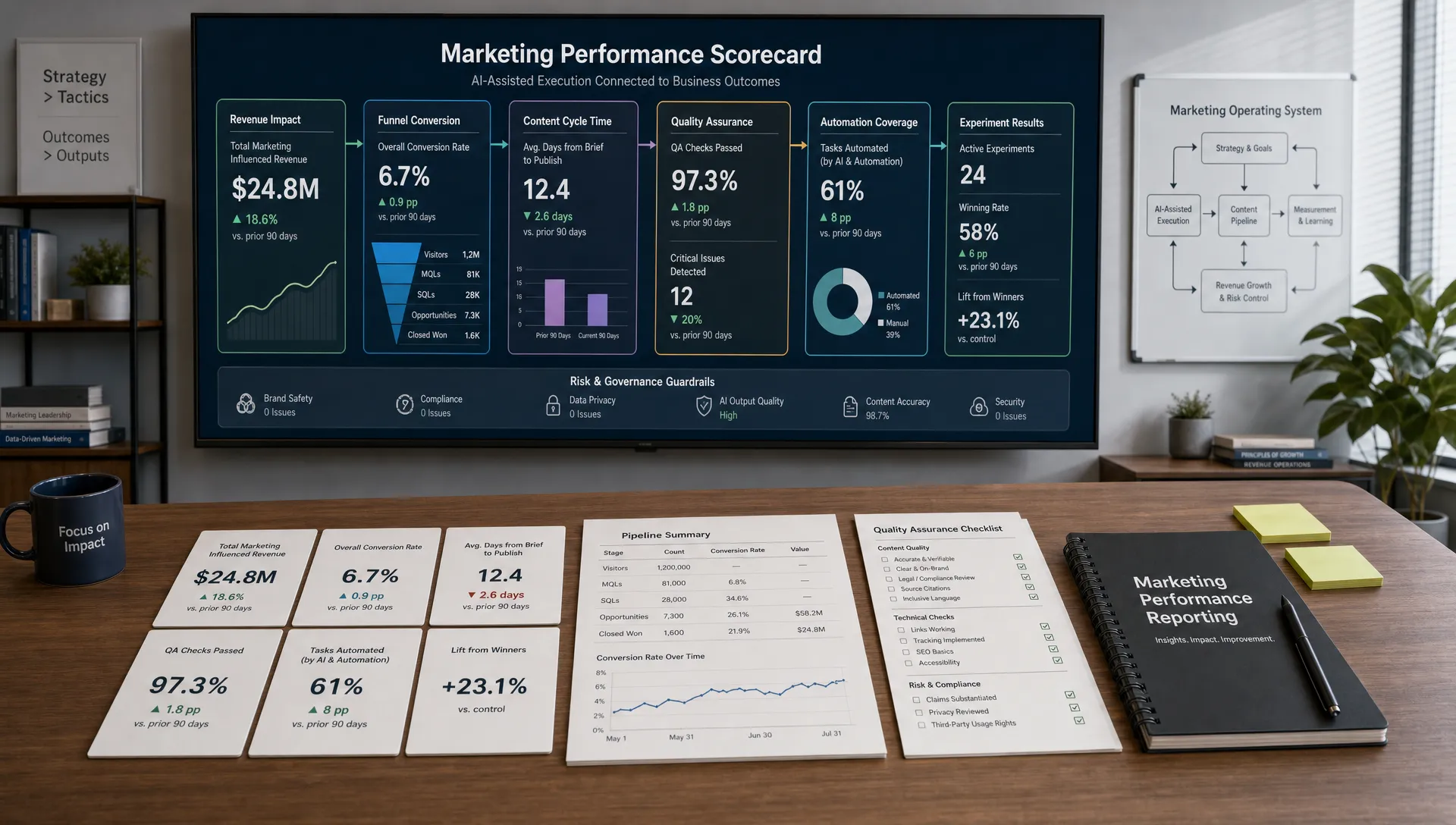
Track a few practical metrics. Speed to lead should improve for high-score prospects. Sales acceptance rate should rise if marketing is routing better leads. Conversion rates should be higher in top score bands than in lower ones. The number of false positives should decline over time. Pipeline and revenue attribution should eventually show whether high-score leads are actually becoming customers.
Also review false negatives. These are leads that scored low but later became good opportunities. False negatives are easy to miss because sales may not follow up quickly. Reviewing them helps you identify missing signals, overly strict fit rules, or intent patterns your model did not recognize.
Calibration should be a regular habit. Monthly is often enough at the beginning. Avoid changing the model every day, because sales needs consistency. Instead, collect feedback, review outcomes, then update the scoring criteria in batches.
Start by agreeing on what sales-ready means. Review recent wins, losses, and poor-fit leads. Write down the fit, intent, and timing signals that actually affected outcomes. Keep the first version short.
Create a 100-point model with clear categories. Use rules for structured data and AI for open-ended interpretation. Test the model on past leads and compare the score to what really happened.
Do not roll out scoring across every channel at once. Start with one important source, such as demo requests, contact forms, webinar leads, or chatbot-qualified leads. Route only the highest-score leads differently at first so you can see whether the model helps.
Ask sales which high-score leads were genuinely useful. Review low-score leads that progressed. Adjust weights, add missing negative signals, and simplify anything that creates confusion. Then expand gradually.
The biggest mistake is trying to make the first model perfect. Lead scoring should be useful before it is sophisticated. A rough model that improves follow-up today is better than a theoretical model that never launches.
Other common mistakes include:
If you avoid those traps, AI lead scoring becomes much more manageable. You can start with a lean model, connect it to a few useful actions, and improve it as your data grows.
What is the easiest way to score leads with AI? Start with a simple 100-point model based on fit, intent, and timing. Use rules for structured fields and AI to interpret open-ended answers, chat transcripts, email replies, and CRM notes.
Do small businesses need predictive lead scoring software? Not always. Many small teams can begin with CRM data, form submissions, website behavior, and an AI assistant. Dedicated software becomes more useful when lead volume, data complexity, or routing needs increase.
What data should AI use for lead scoring? Useful data includes company profile, job role, source, website activity, form answers, email engagement, chatbot conversations, demo requests, and sales notes. Use consent-based and business-relevant data only.
How often should lead scores be updated? Update scores when meaningful new data appears, such as a demo request, high-intent page visit, new form submission, or chatbot conversation. Review the scoring model itself monthly or quarterly, depending on lead volume.
Can AI lead scoring replace sales qualification? No. AI can prioritize and summarize leads, but sales still needs to validate fit, need, authority, budget, and timing. The best systems help sales focus, not remove human judgment.
AI lead scoring does not need to become a massive technical project. Start with clear sales actions, simple score bands, explainable AI output, and a feedback loop between marketing and sales.
If you want practical AI marketing guides, prompt ideas, SEO tools, calculators, and resources for building smarter workflows, explore AIMarketer Hub. The best AI systems are not the most complicated ones. They are the ones your team can understand, trust, and improve.