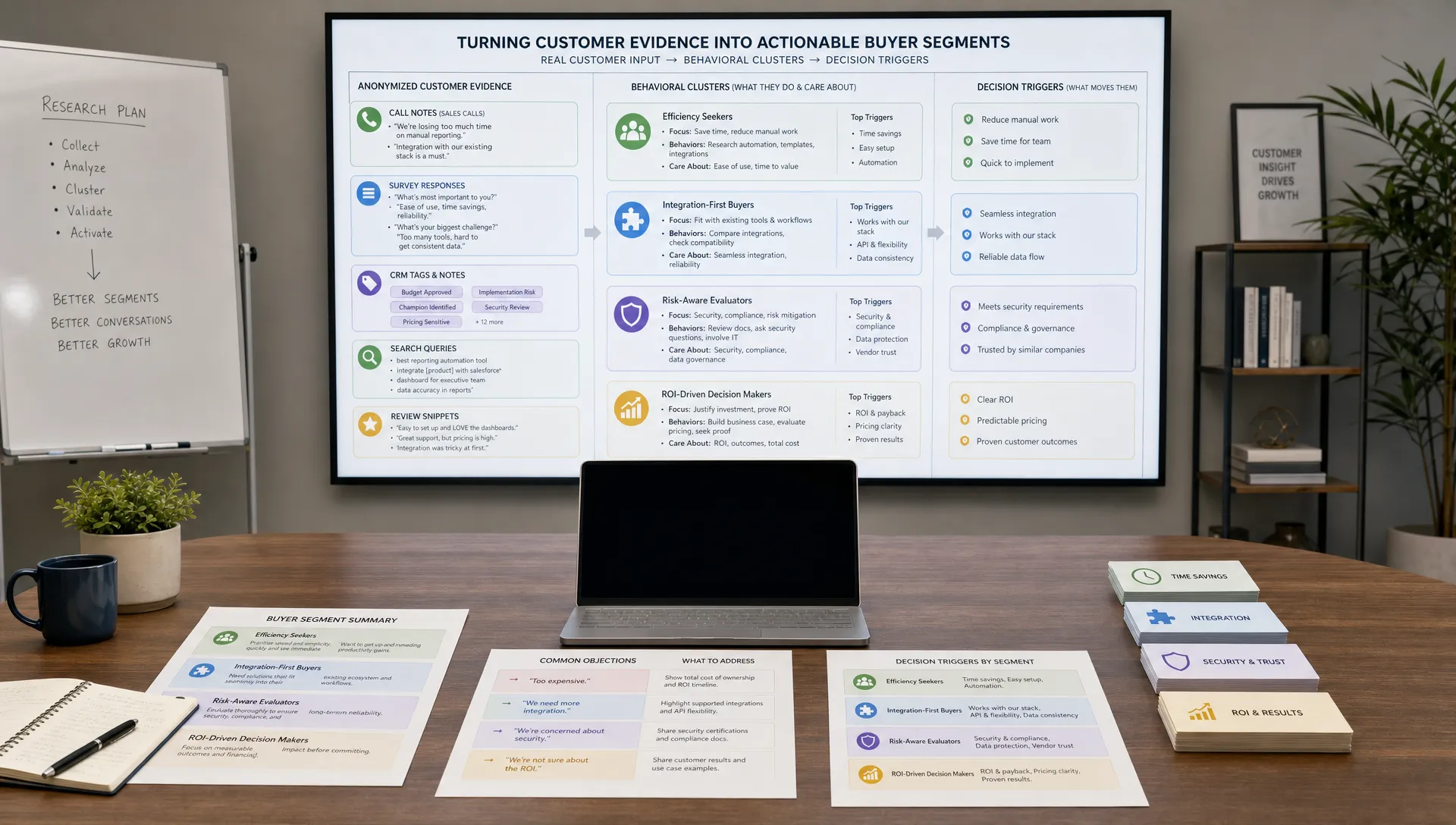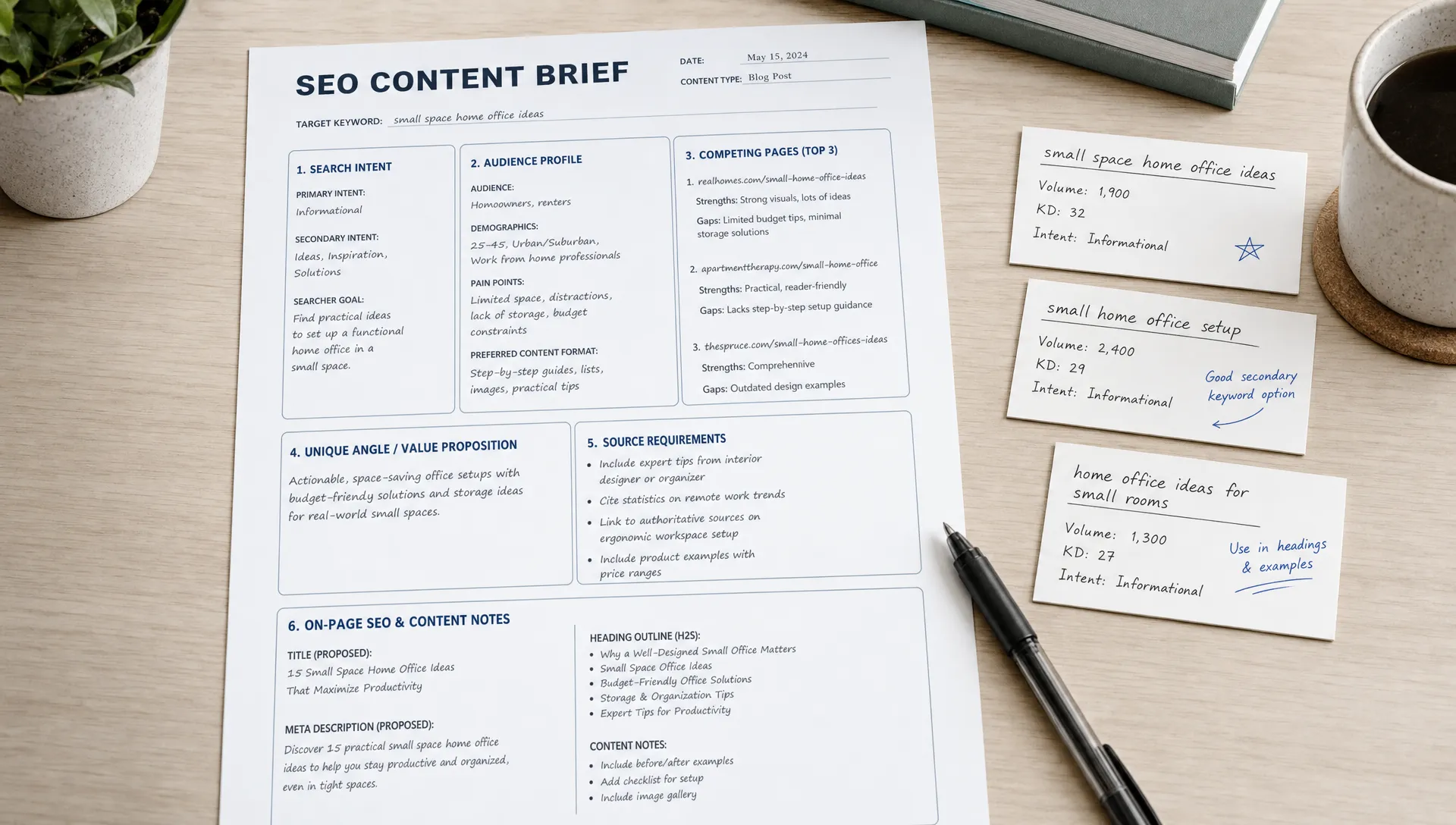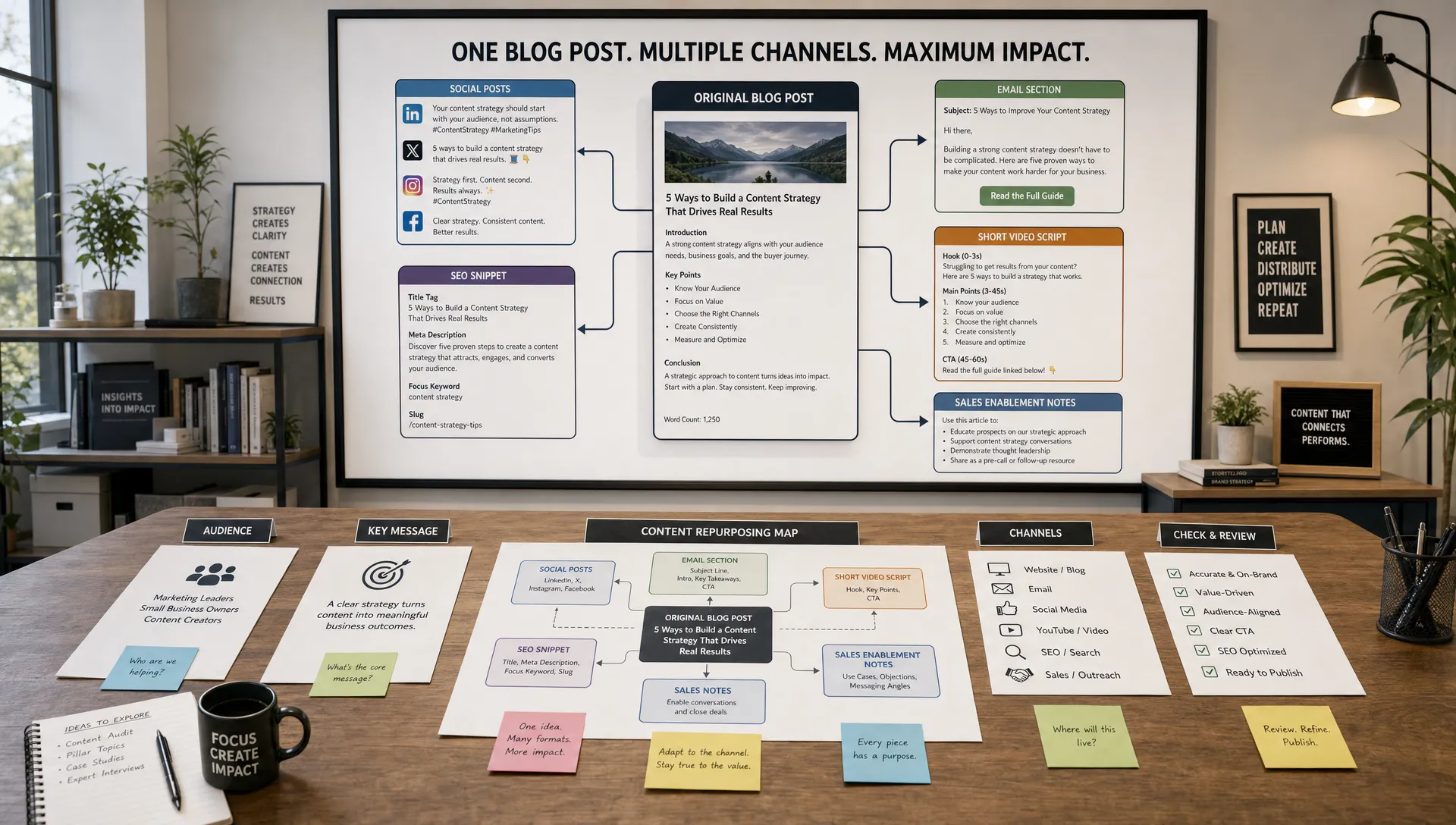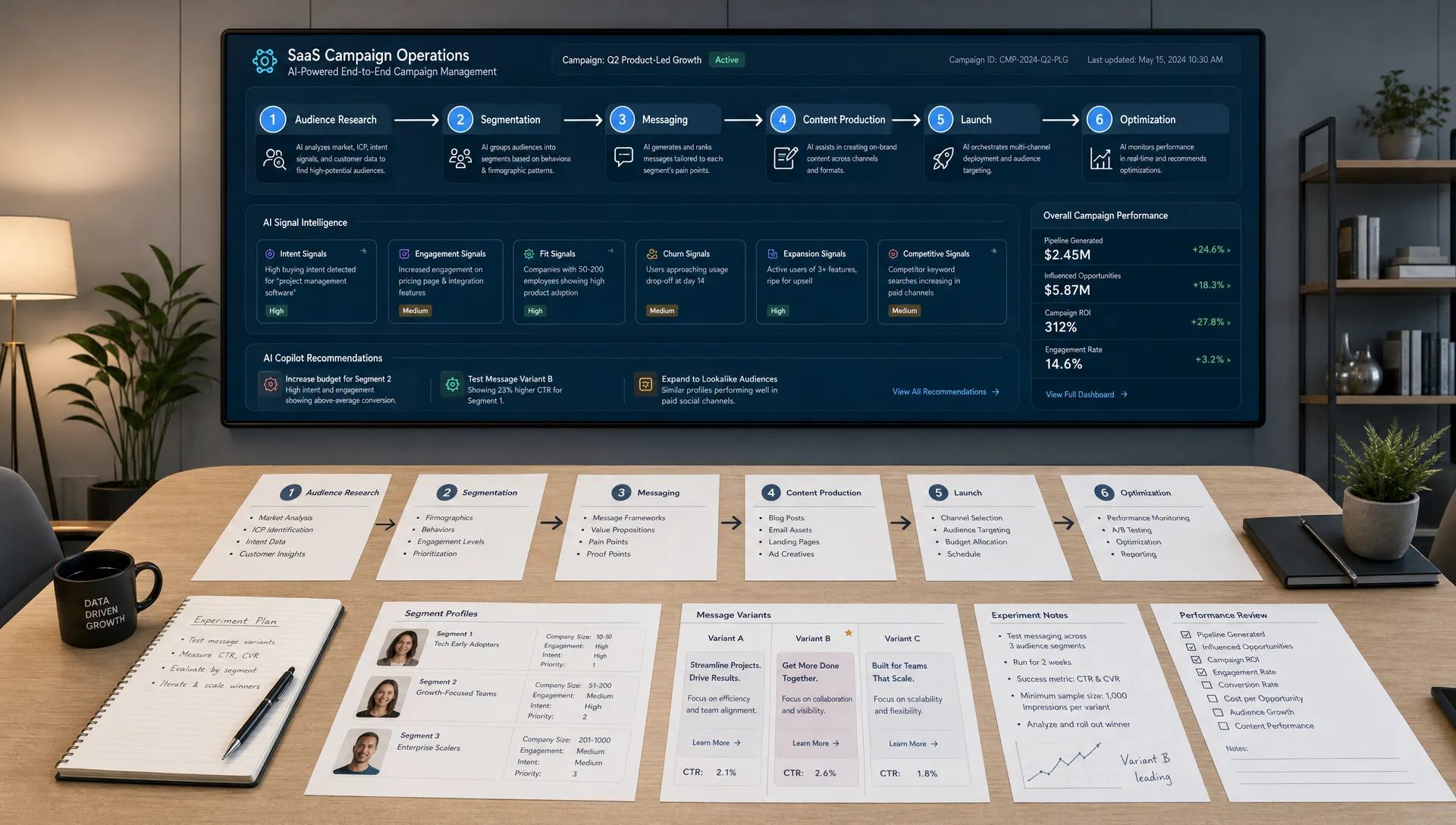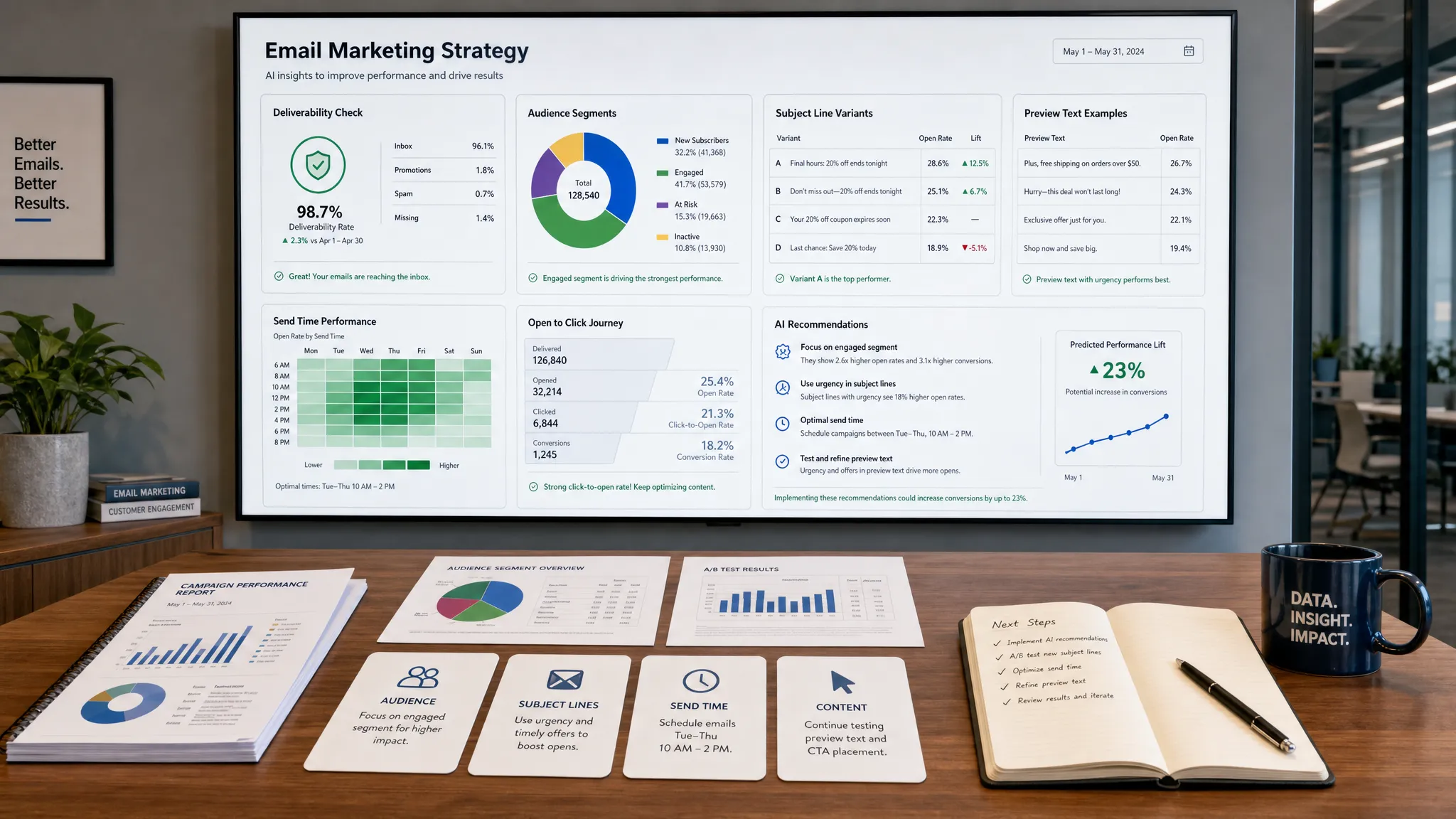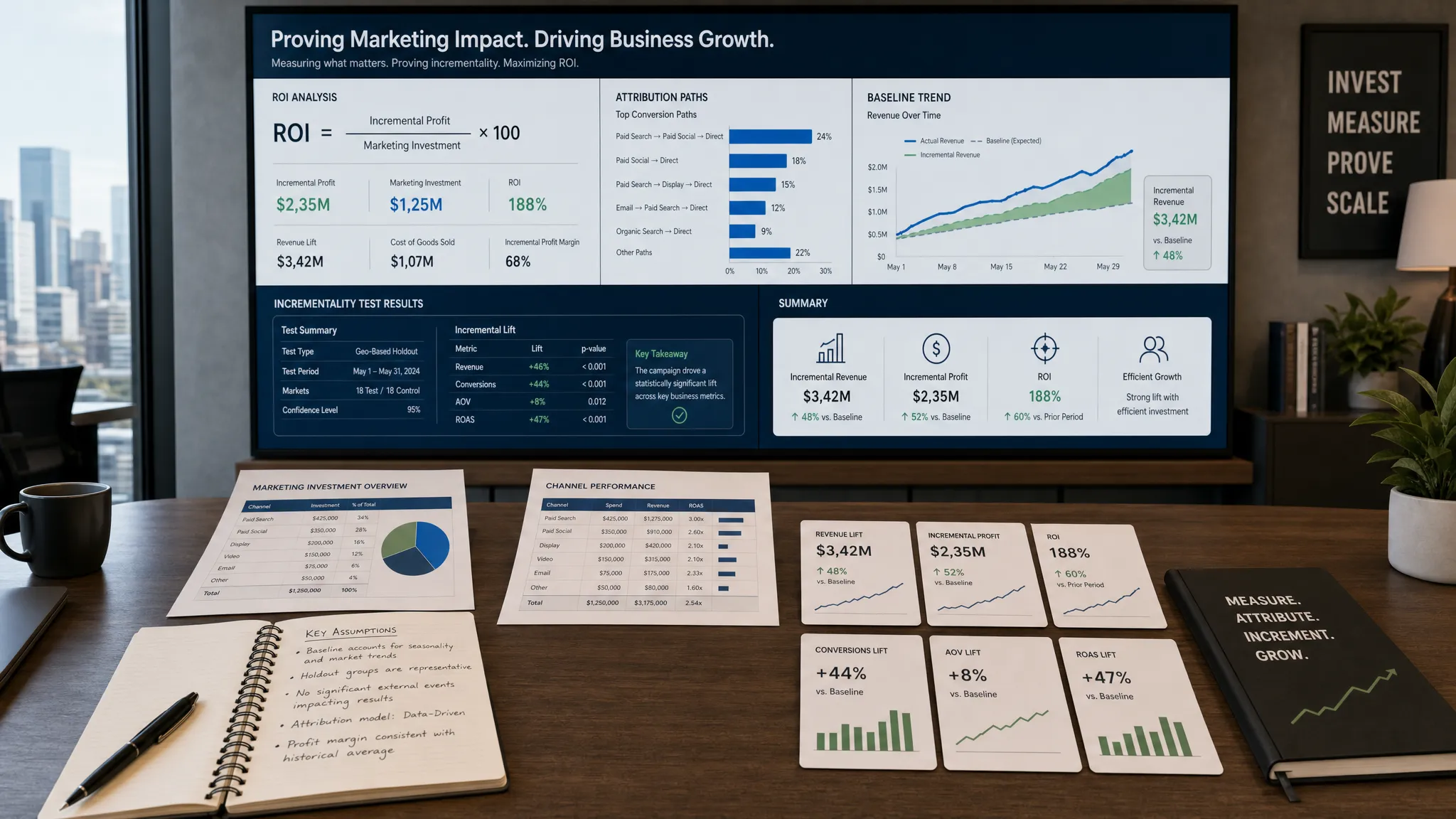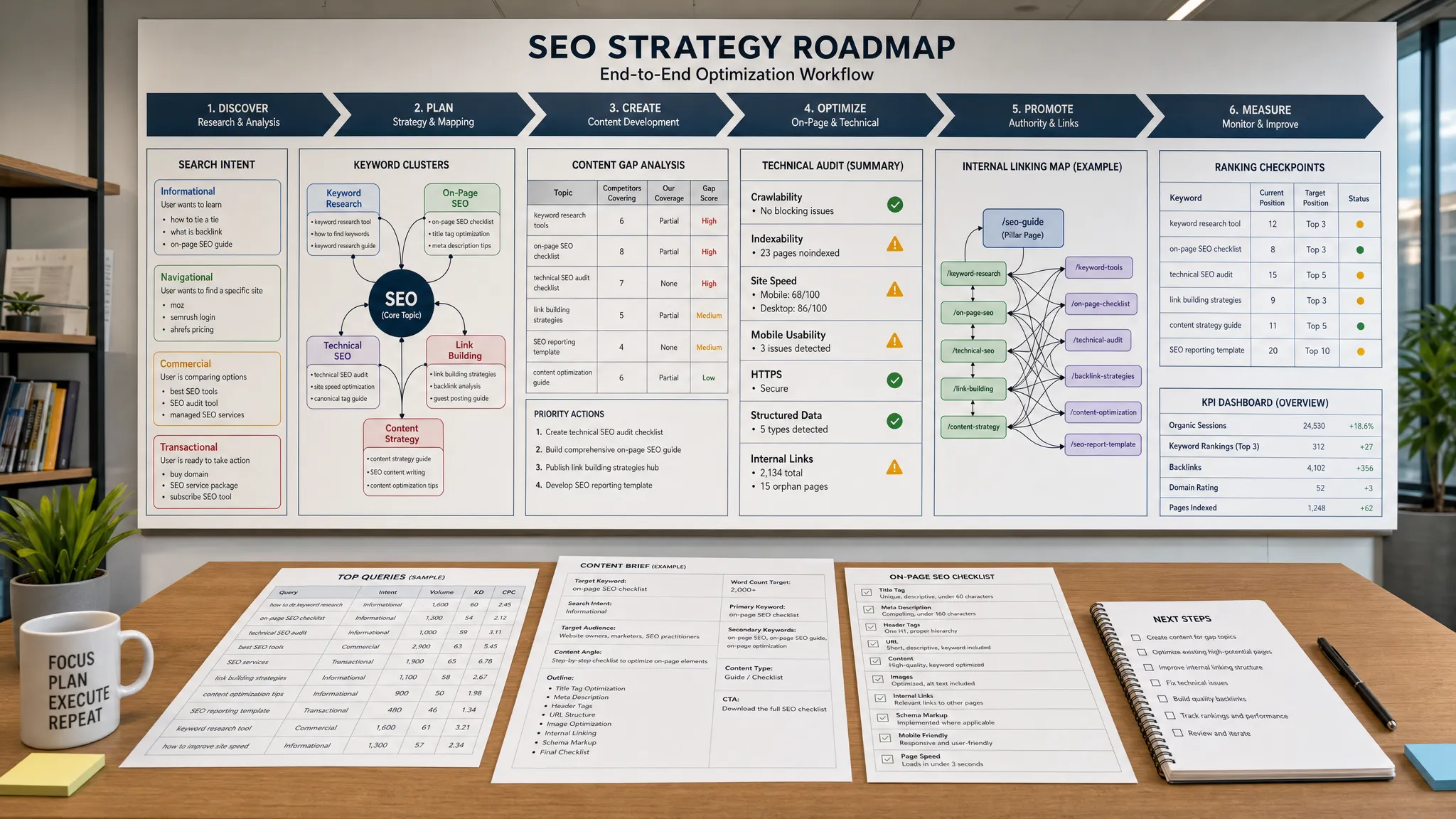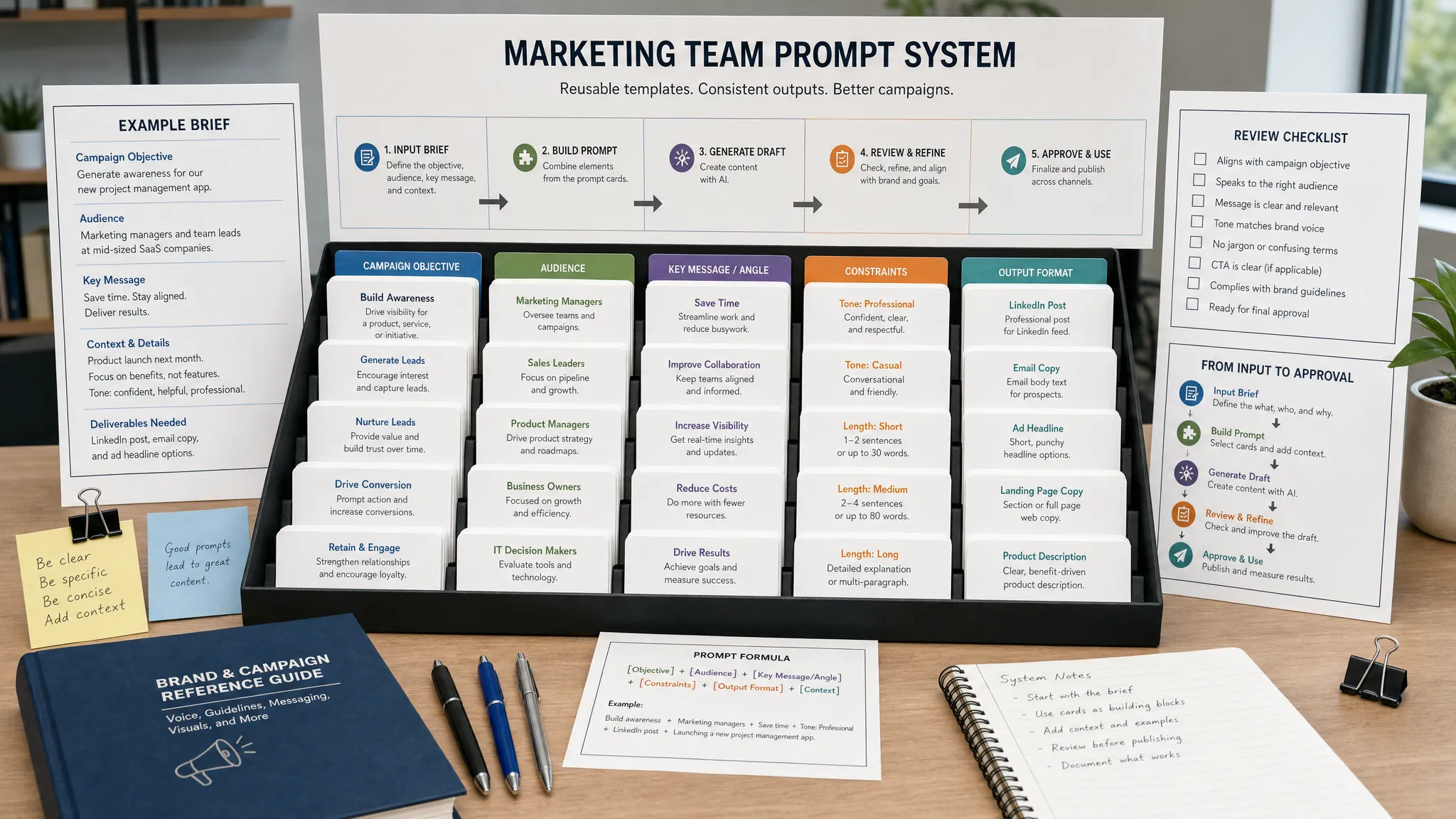
The best AI tools for your marketing stack are rarely the ones with the flashiest demos. They are the tools that solve a real workflow problem, fit your data and tech environment, protect your brand, and help your team produce better work faster.
That distinction matters because the AI marketing software market has become crowded. Every week seems to bring a new platform for content creation, SEO, paid ads, social media, customer research, email personalization, analytics, or marketing workflow automation. Buying too quickly can create tool sprawl, inconsistent brand output, security risk, and monthly subscriptions no one uses.
A smarter approach is to evaluate AI tools the way you would evaluate any strategic marketing investment: start with business goals, define the job to be done, test performance against a baseline, and only then commit. This guide gives you a practical framework for choosing AI tools that strengthen your marketing stack instead of complicating it.
Many teams begin with a question like, “Which AI content tool should we buy?” A better question is, “Where is our current marketing process slow, expensive, inconsistent, or hard to scale?”
AI is most useful when it removes friction from an existing workflow. For example, if your team spends hours turning one webinar into social posts, email copy, and blog outlines, an AI content generation tool may create immediate leverage. If your challenge is unclear attribution, another writing assistant will not fix the issue. You may need better AI-powered analytics or cleaner CRM data instead.
Before reviewing vendors, identify the most important use cases in your funnel. Common marketing use cases include:
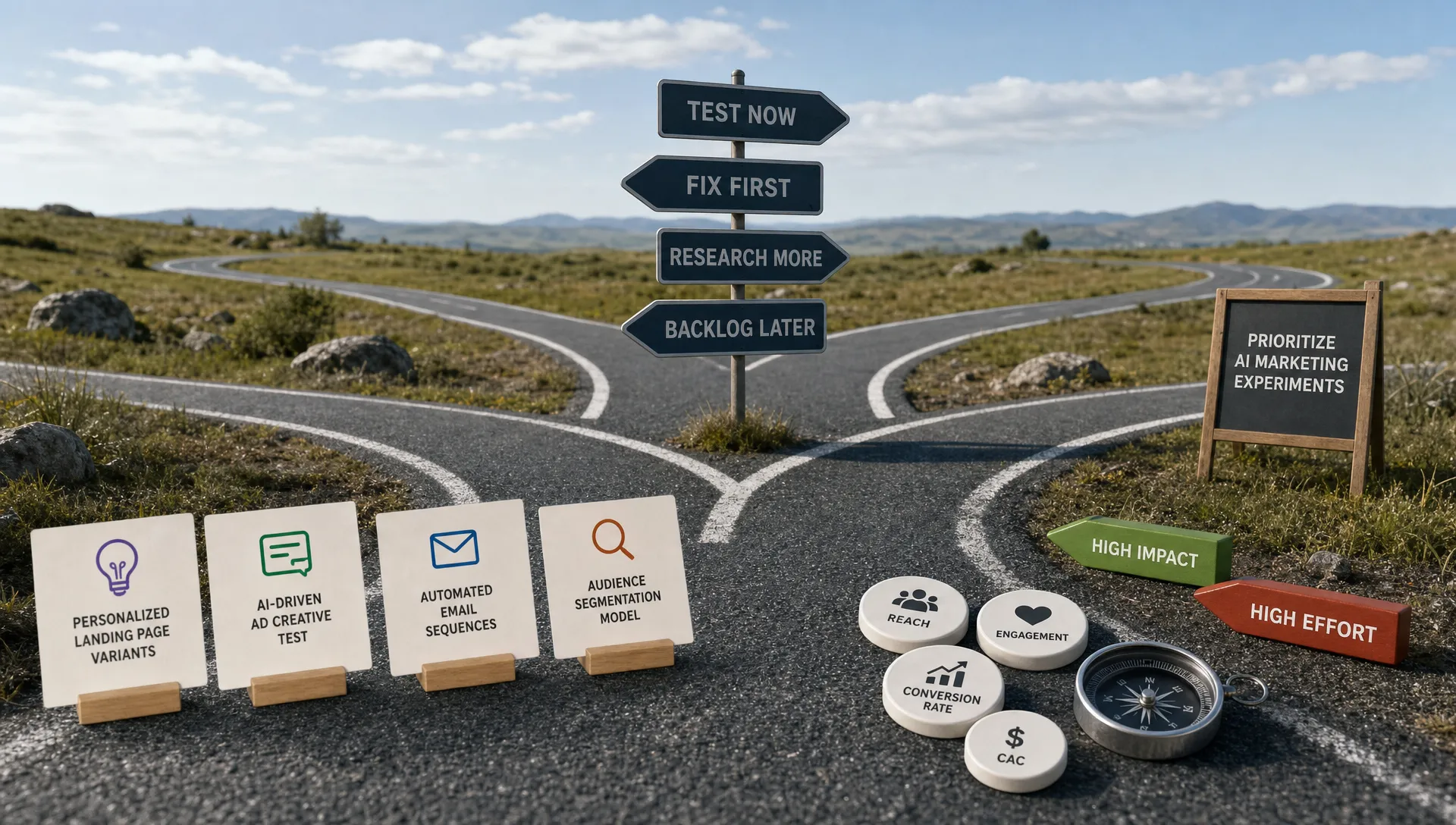
Once you have the list, rank each use case by impact and urgency. A task that saves 15 hours per month but has little effect on pipeline may matter less than a task that improves lead quality or speeds up campaign launches. For more on getting better returns from AI-assisted content, AIMarketer Hub’s guide to AI content generation tips for better ROI is a useful companion read.
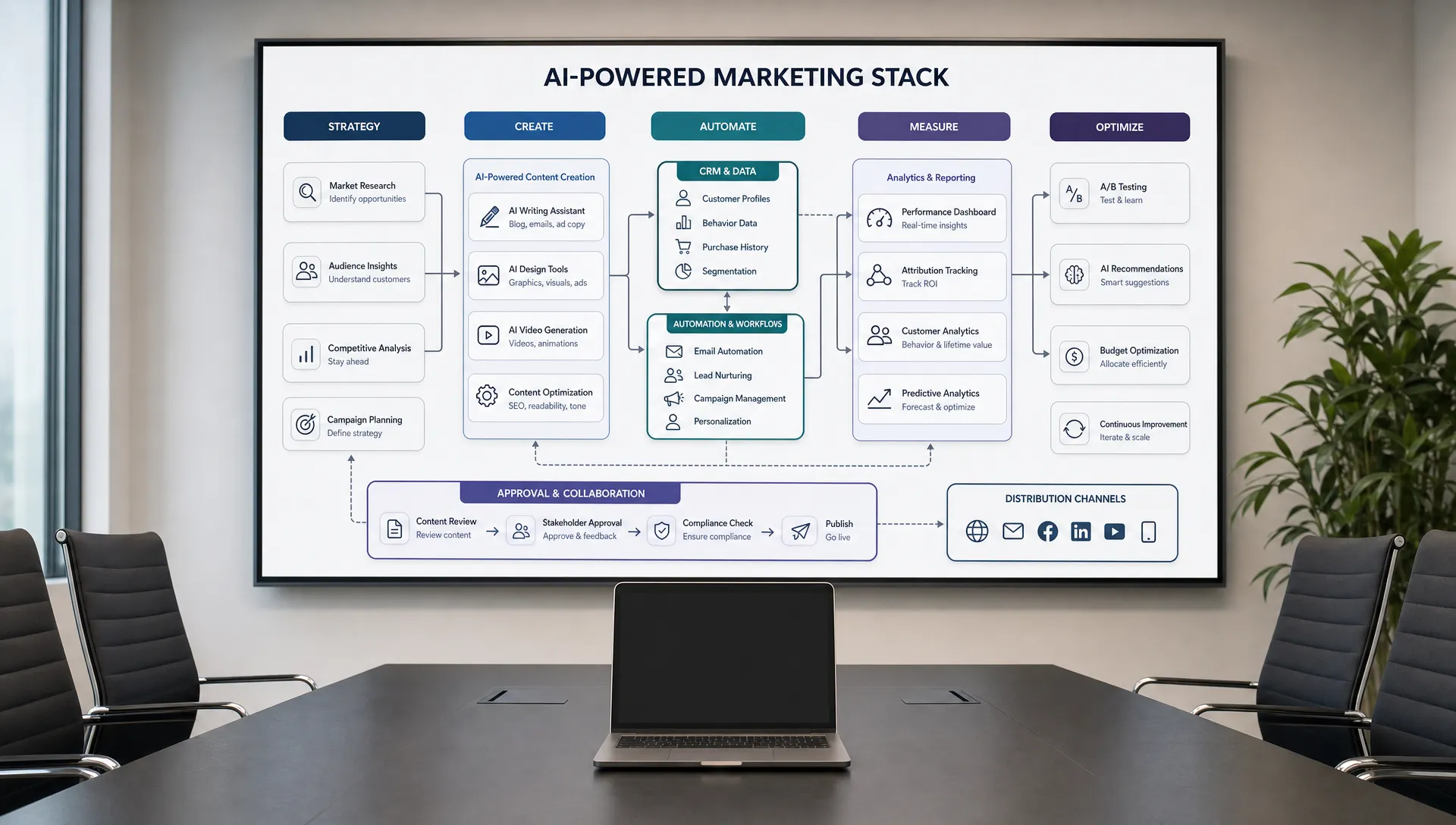
Your marketing stack is more than a collection of apps. It is the system your team uses to attract, convert, nurture, and retain customers. AI tools should strengthen that system, not sit outside it.
Start by mapping the tools you already use across five layers. First are your systems of record, such as your CRM, CMS, customer data platform, analytics platform, and email service provider. These contain the data your AI tools may need to access or enrich.
Second are your execution tools, such as ad platforms, social media schedulers, SEO platforms, design tools, marketing automation software, and sales enablement platforms. These are the places where campaigns are built and launched.
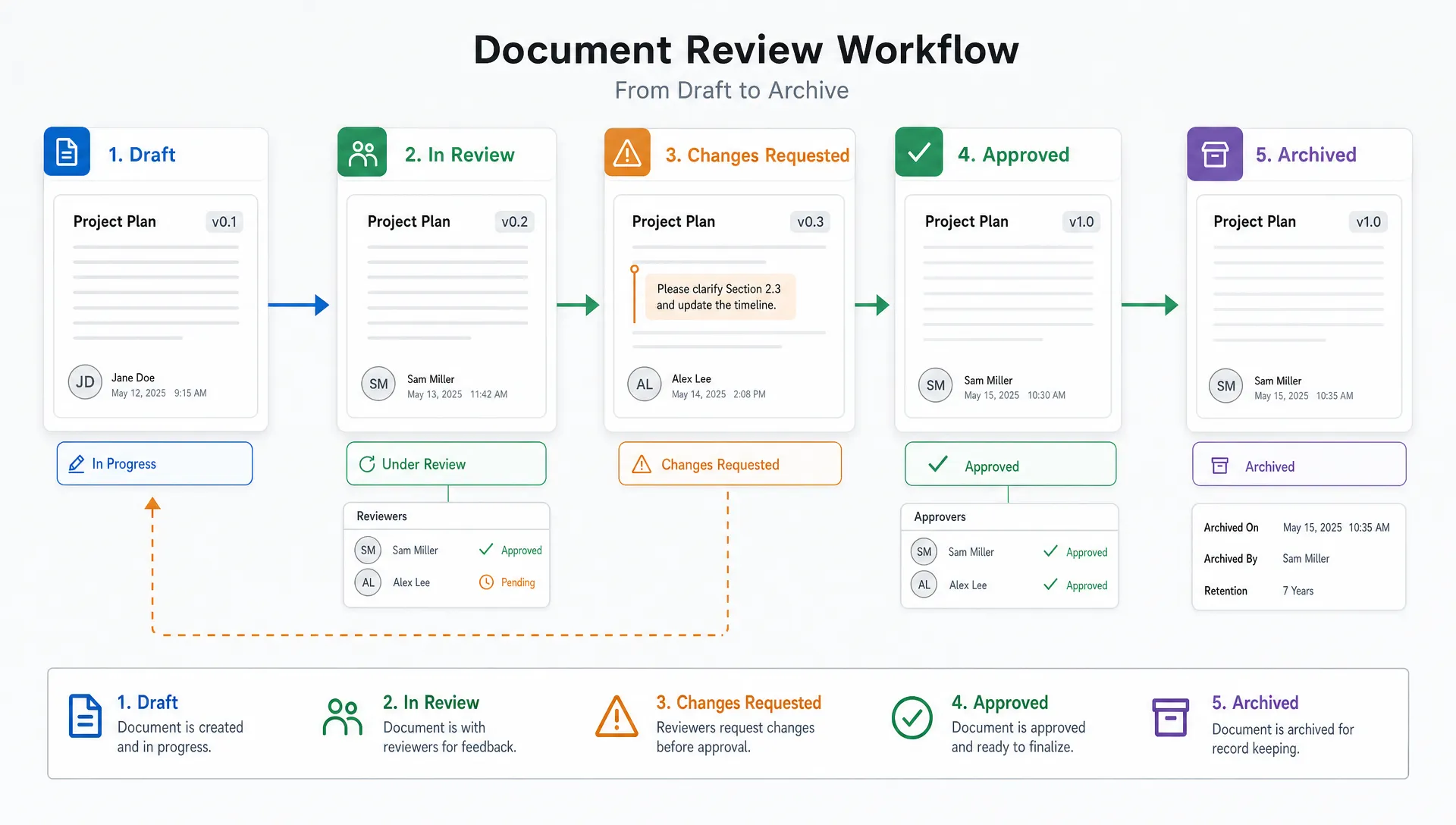
Third are your collaboration tools, including project management systems, document platforms, asset libraries, and approval workflows. If AI-generated work cannot move smoothly through these systems, adoption will suffer.
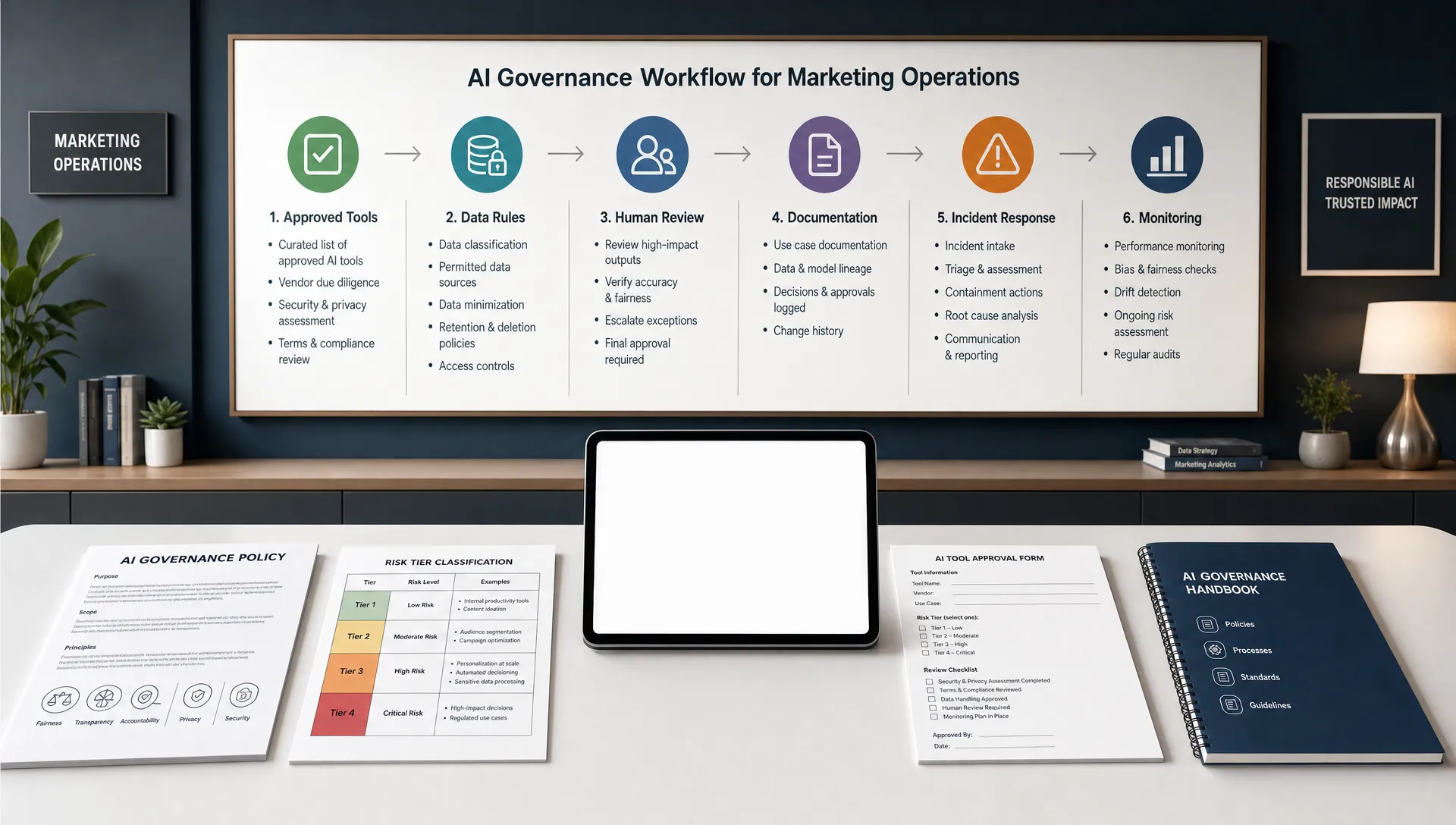
Fourth are your governance and compliance requirements. This includes data privacy rules, brand standards, legal review, accessibility, industry regulations, and internal AI usage policies.
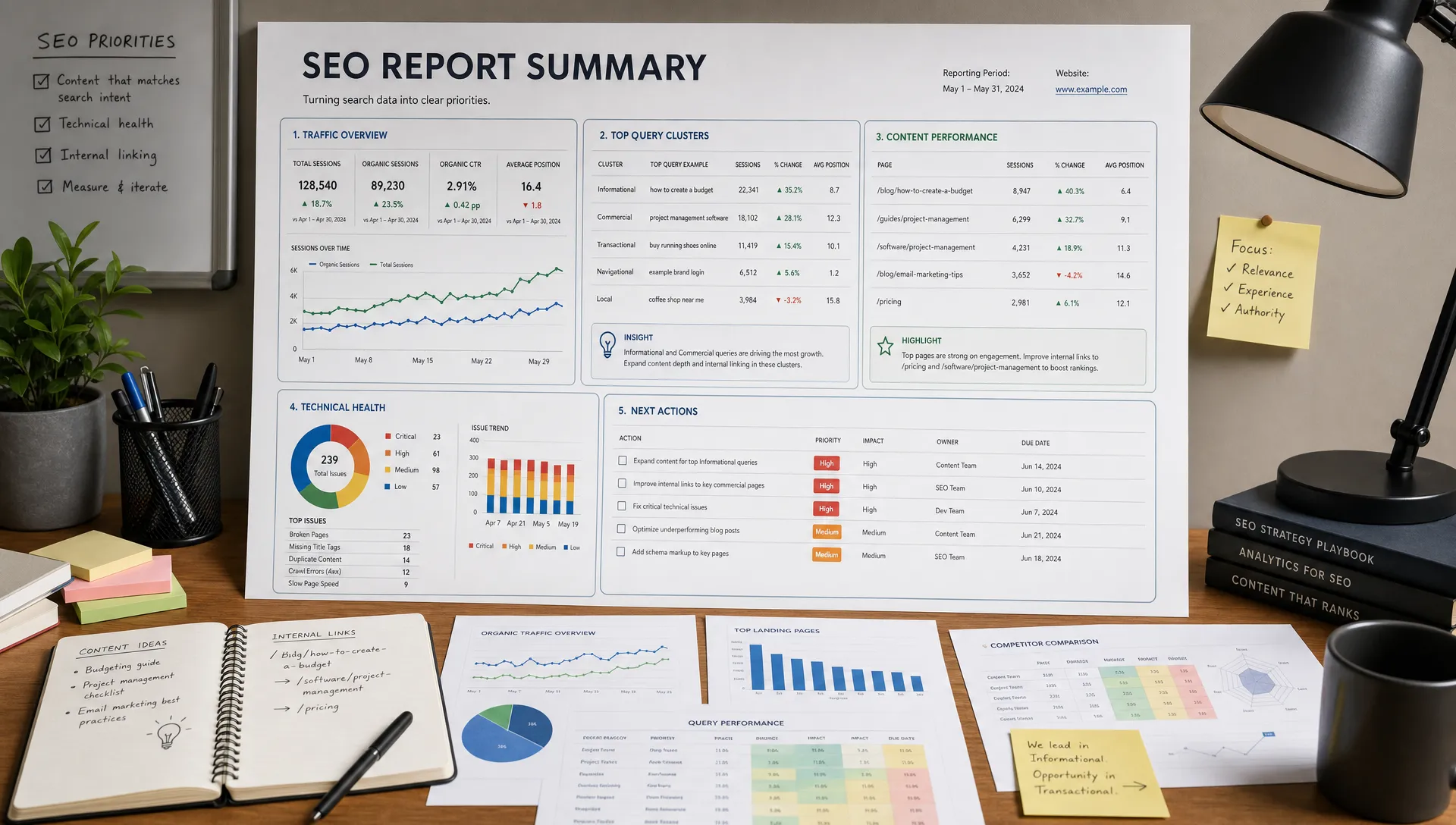
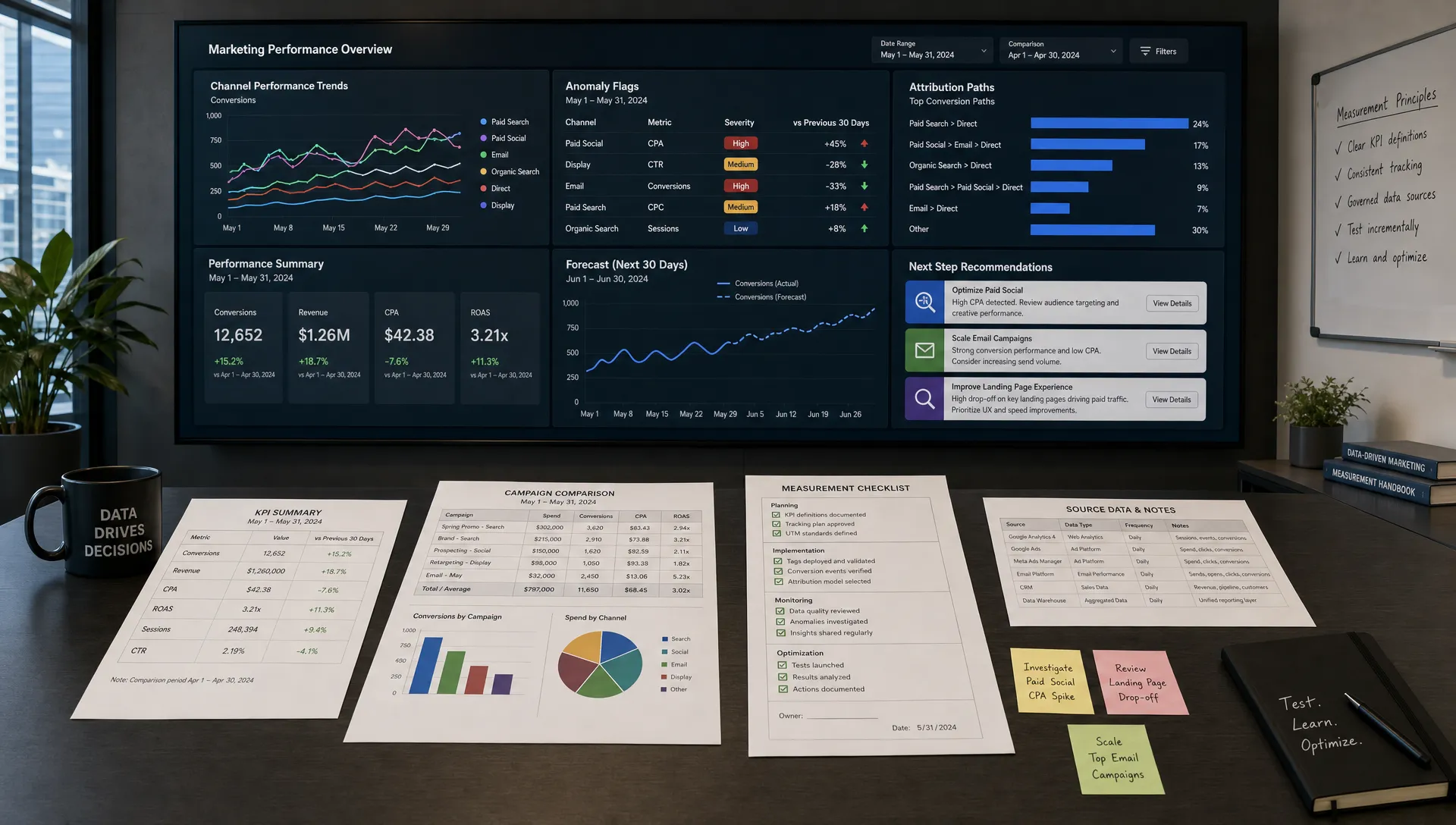
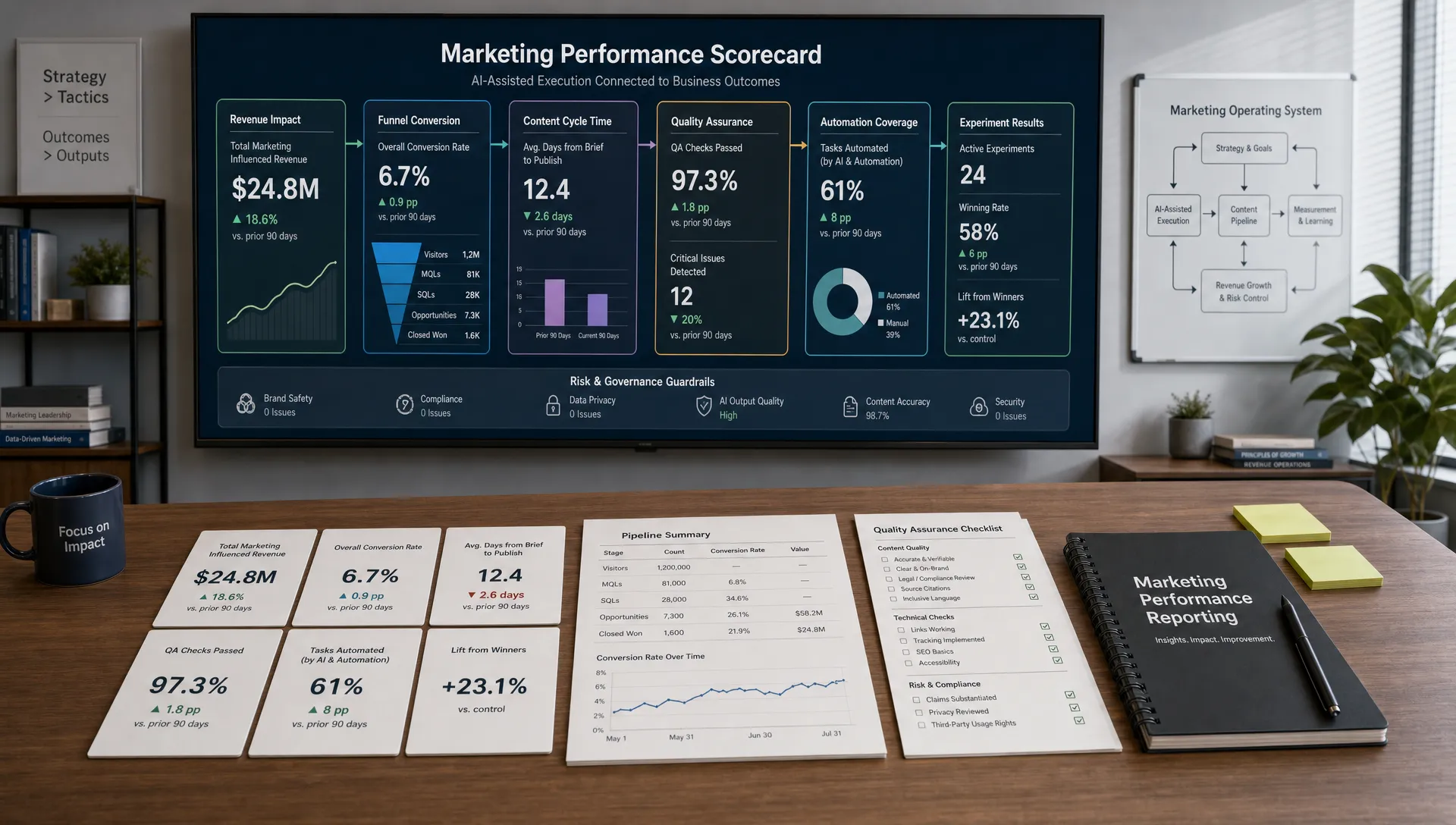
Fifth is your measurement layer. This includes dashboards, attribution models, business intelligence tools, and reporting processes. Without measurement, AI adoption becomes a productivity story rather than a performance story.
This stack map helps you decide whether you need a standalone AI tool, an AI feature inside a platform you already use, or a deeper automation layer connecting multiple systems. In many cases, the best tool is not the newest product. It is the one that reduces handoffs across tools your team already trusts.
Not all AI marketing tools serve the same purpose. A tool that generates blog drafts should not be evaluated the same way as a tool that forecasts churn or optimizes ad spend.
For practical evaluation, group tools into four categories.
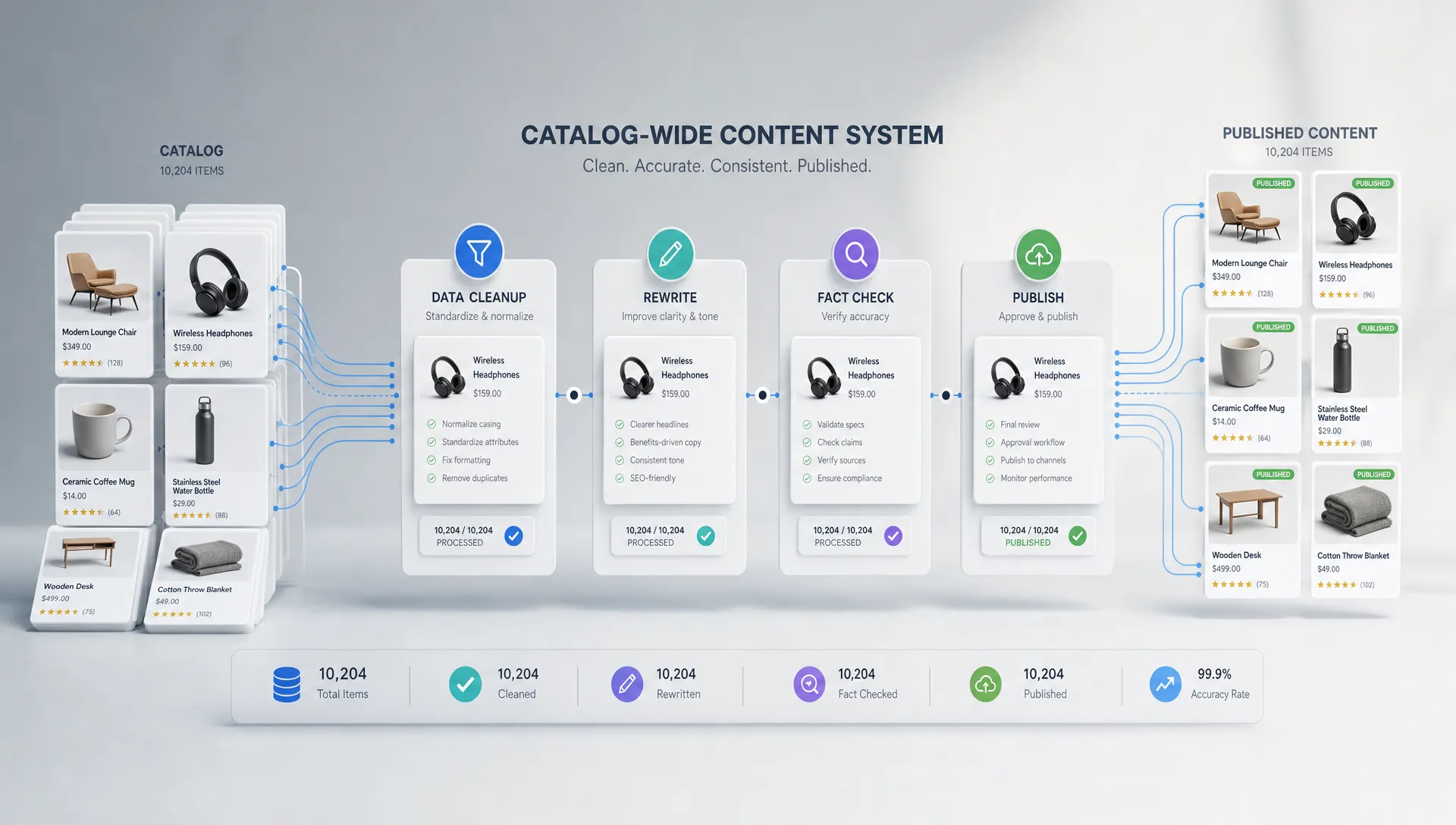
These tools help produce copy, images, video concepts, briefs, outlines, emails, scripts, social posts, product descriptions, and campaign assets. They are valuable when your bottleneck is output volume or first-draft speed. However, they require strong brand guidelines, human editing, and quality control.
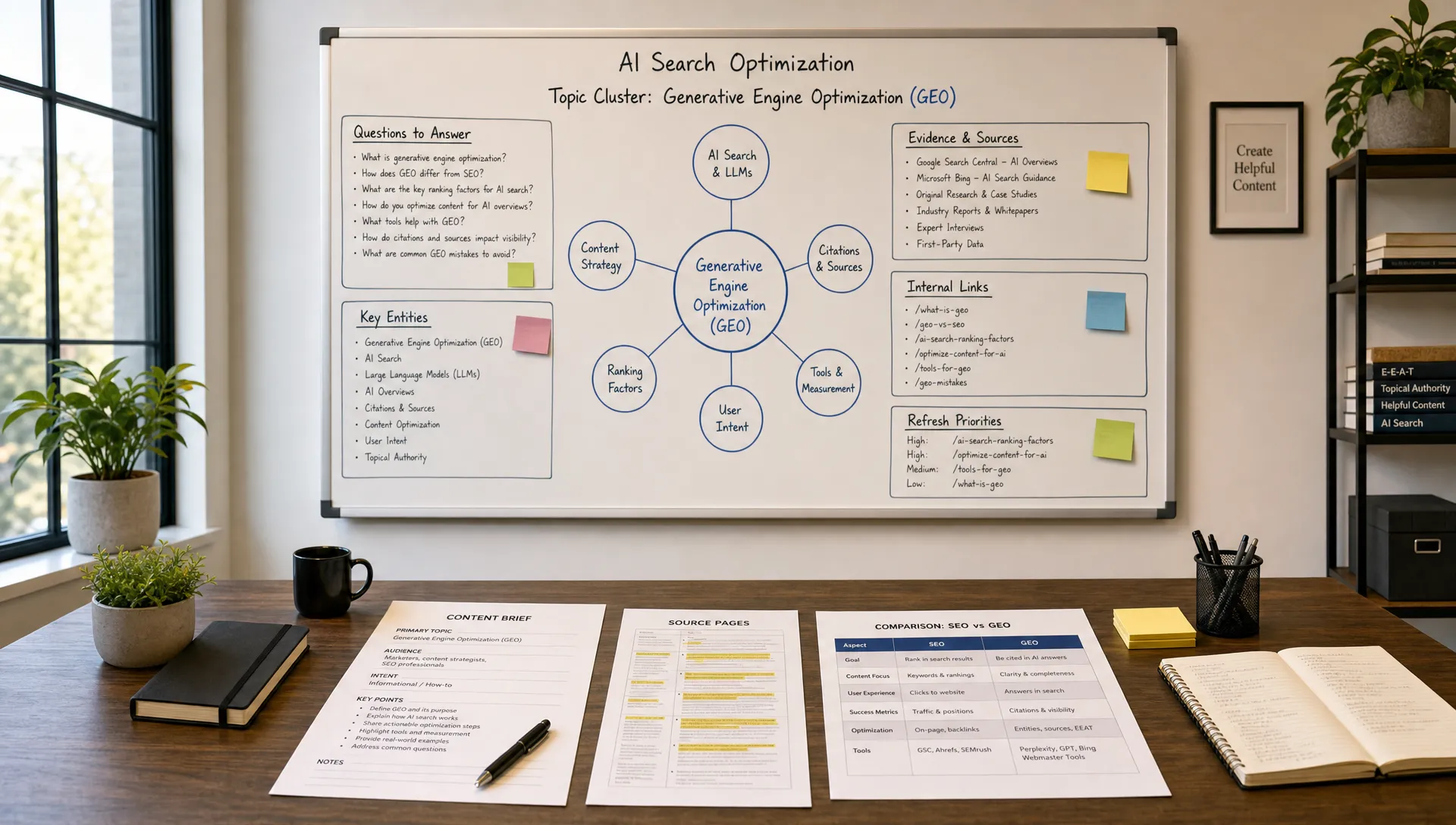
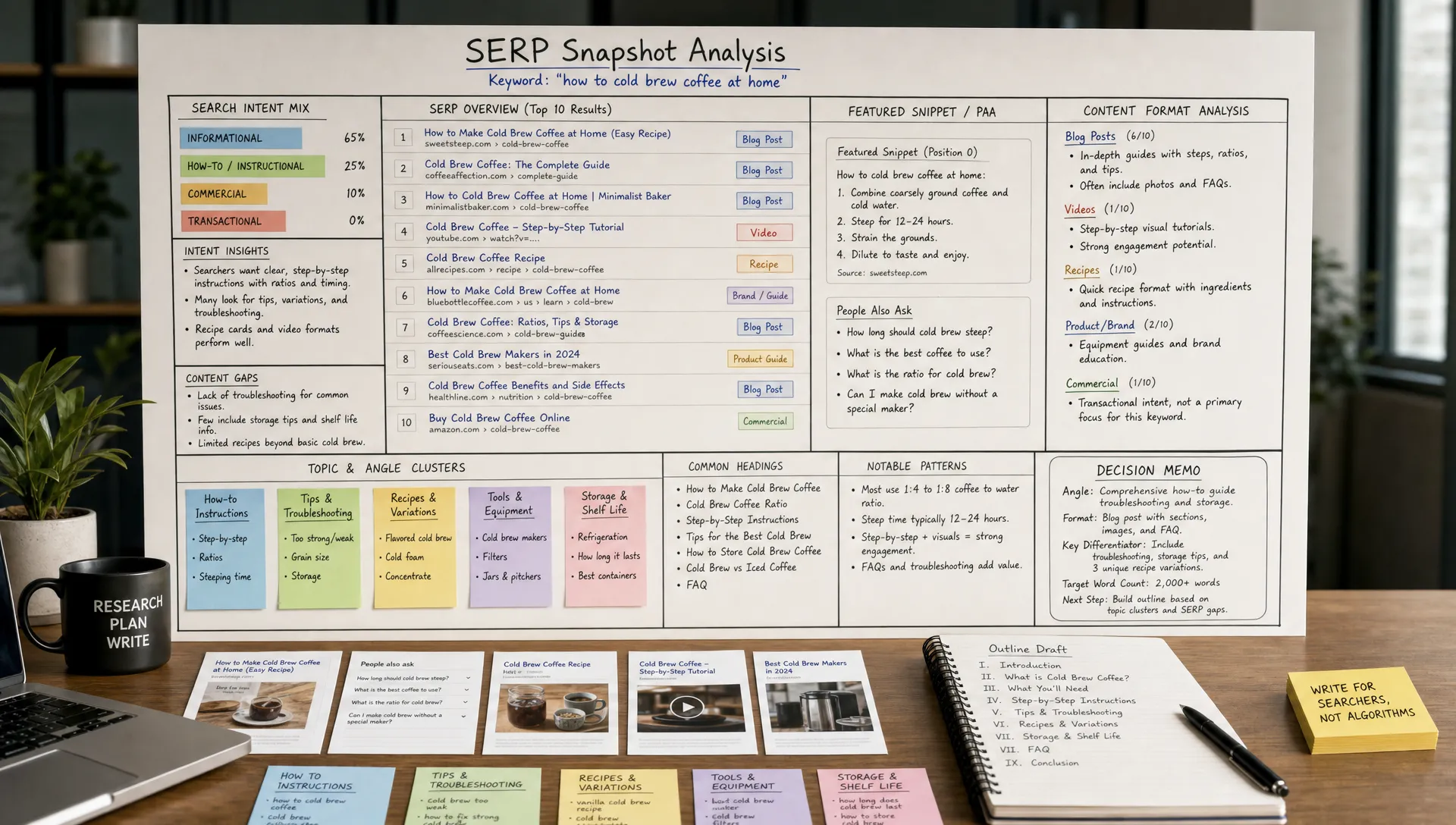
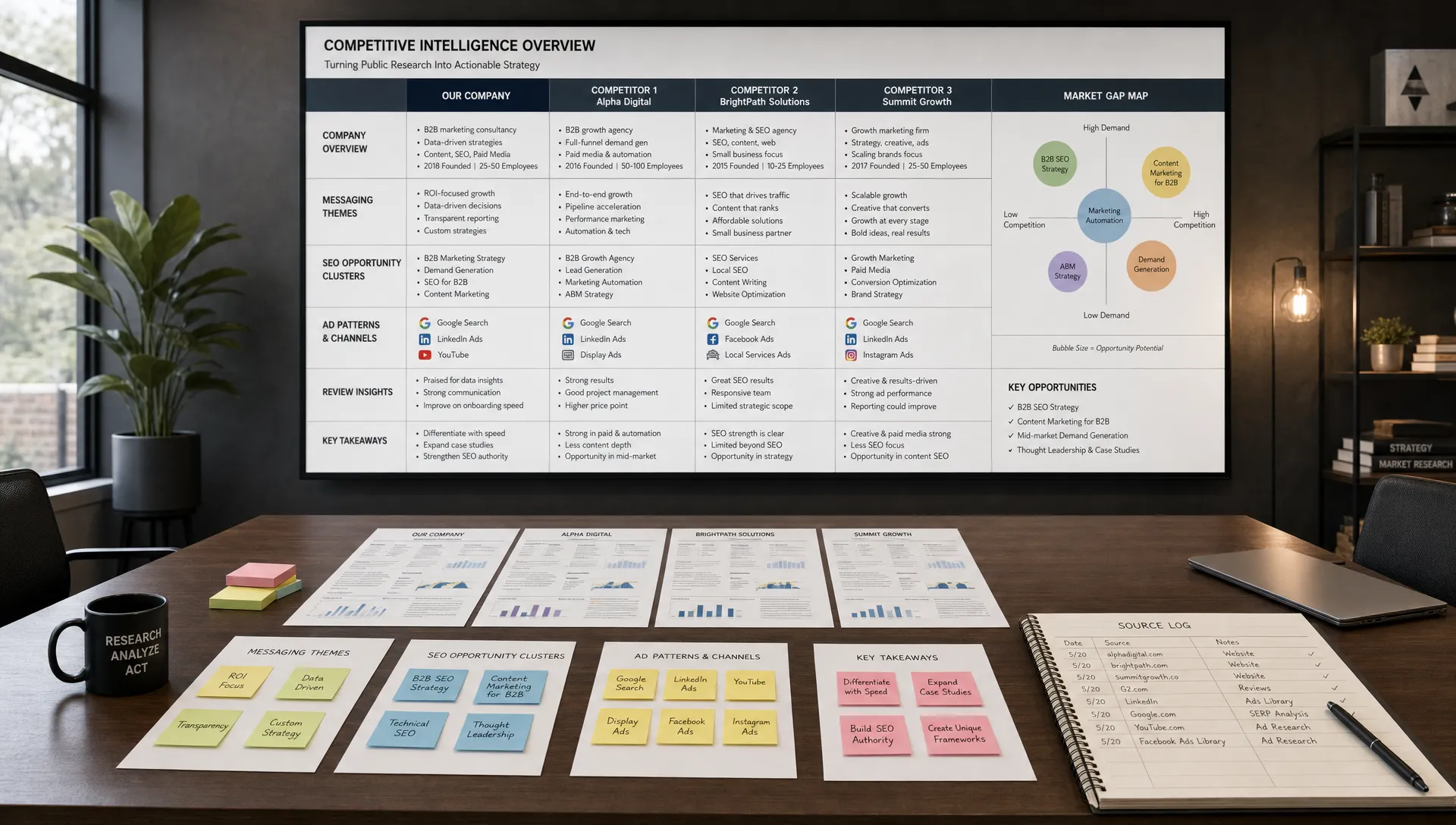
These tools analyze data, identify patterns, surface insights, forecast performance, or recommend actions. Examples include AI-powered analytics, customer segmentation, SEO opportunity discovery, and competitive intelligence. They are useful when your challenge is decision speed or data interpretation.
These tools connect steps in your workflow and trigger actions based on rules, behavior, or predictive signals. Examples include lead routing, email personalization, campaign QA, content repurposing workflows, and internal notifications. They work best when your process is already defined and repeatable.
These tools improve performance over time through testing, recommendations, or dynamic adjustments. Paid media optimization, conversion rate testing, landing page personalization, and send-time optimization often fit here.
Knowing the category prevents mismatched expectations. A content creation tool may save time, but it will not automatically improve conversion rates unless it is paired with strategy, testing, and measurement. If you are still comparing AI’s role against older marketing processes, the article on AI vs. traditional marketing can help clarify where automation adds value and where human judgment still leads.
Once you have a shortlist, score each AI tool across the criteria that matter most to your team. You do not need a complex procurement model. A simple 1 to 5 score for each criterion can quickly reveal which tools deserve a pilot.
The most important criteria are:
This framework prevents the classic mistake of choosing a tool based only on demo quality. A product can look impressive in a controlled presentation but fail when it meets messy customer data, strict review cycles, and real campaign deadlines.
AI tools are only as useful as their ability to fit into your daily workflow. If a tool cannot connect to the platforms your team already uses, it may create more copying, pasting, exporting, and manual QA.
Look closely at integrations with your CRM, CMS, analytics platform, email marketing system, social platforms, ad accounts, asset libraries, and collaboration tools. Native integrations are often easier to manage, but APIs and automation connectors can work if your team has technical support.
Do not stop at “it integrates with our platform.” Ask what the integration actually does. Can the tool read campaign data, write updates back into the system, sync customer segments, preserve metadata, trigger workflows, and respect permissions? A shallow integration may only move files, while a deeper one can remove entire manual steps.
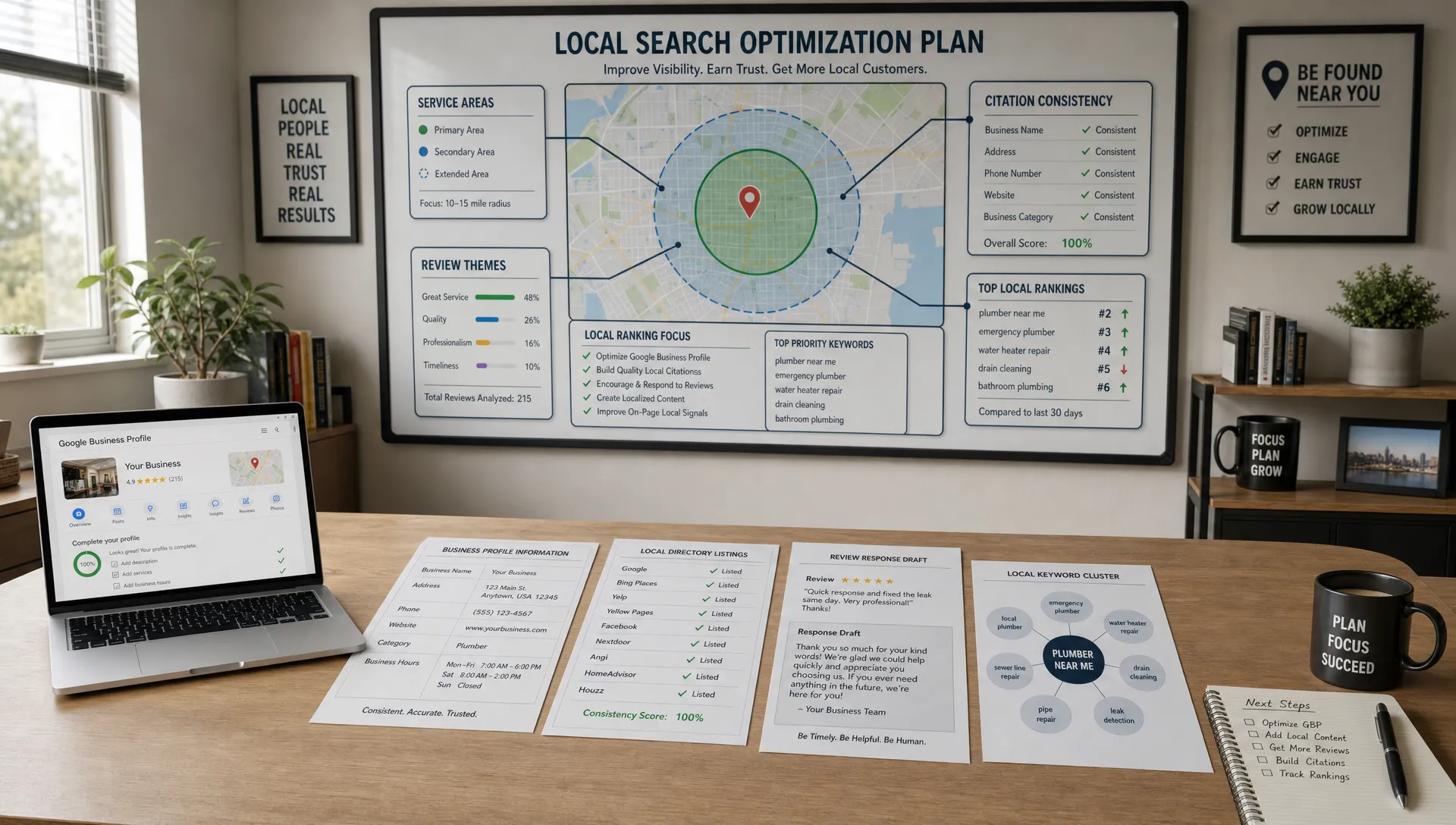
Also check whether the tool supports your preferred content formats and channels. A B2B SaaS team may need blog briefs, LinkedIn posts, nurture emails, sales enablement copy, and webinar repurposing. An ecommerce team may prioritize product descriptions, paid social variations, customer review analysis, and promotional email testing. The right integration profile depends on your go-to-market motion.
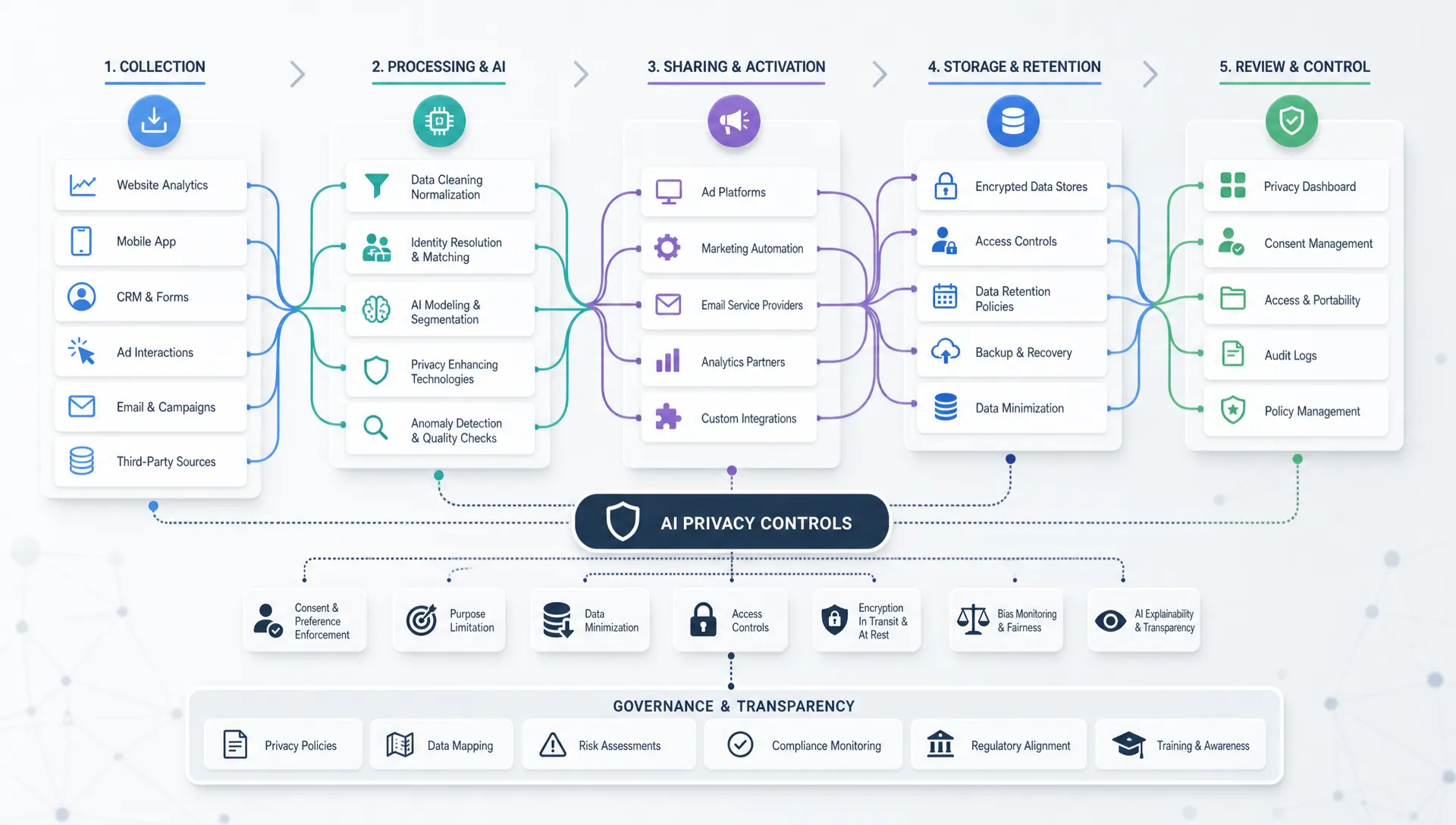
Marketers often handle sensitive information, including customer data, campaign performance, pricing strategy, audience segments, and unreleased product messaging. AI tools can create risk if teams paste confidential data into systems without clear policies.
Before adopting any AI platform, review how the vendor handles data. Key questions include whether your inputs are used to train public models, where data is stored, how long it is retained, whether data can be deleted, what access controls are available, and whether the vendor supports your compliance obligations.
For governance, the NIST AI Risk Management Framework is a helpful reference because it encourages organizations to manage AI around trustworthiness, transparency, accountability, and risk. Marketing teams do not need to become legal departments, but they do need clear rules for what employees can upload, how AI outputs are reviewed, and who approves public-facing content.
A strong AI governance process usually includes approved use cases, prohibited data types, human review requirements, documentation of AI-assisted workflows, and escalation paths for legal or brand concerns. This is especially important in finance, healthcare, legal, SaaS, and other regulated or high-trust sectors.
Generic AI output is easy to create. Useful branded output is harder.
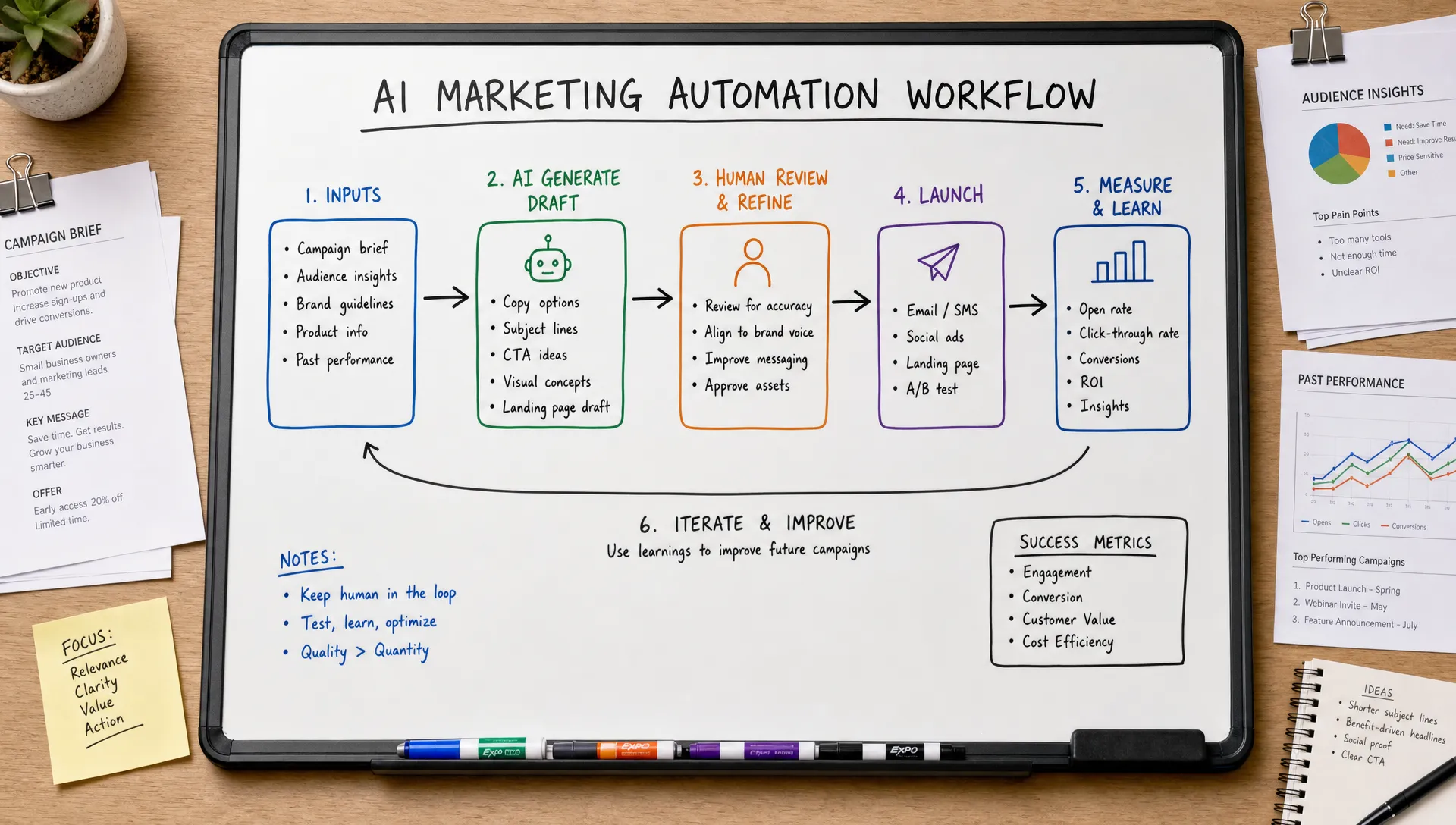
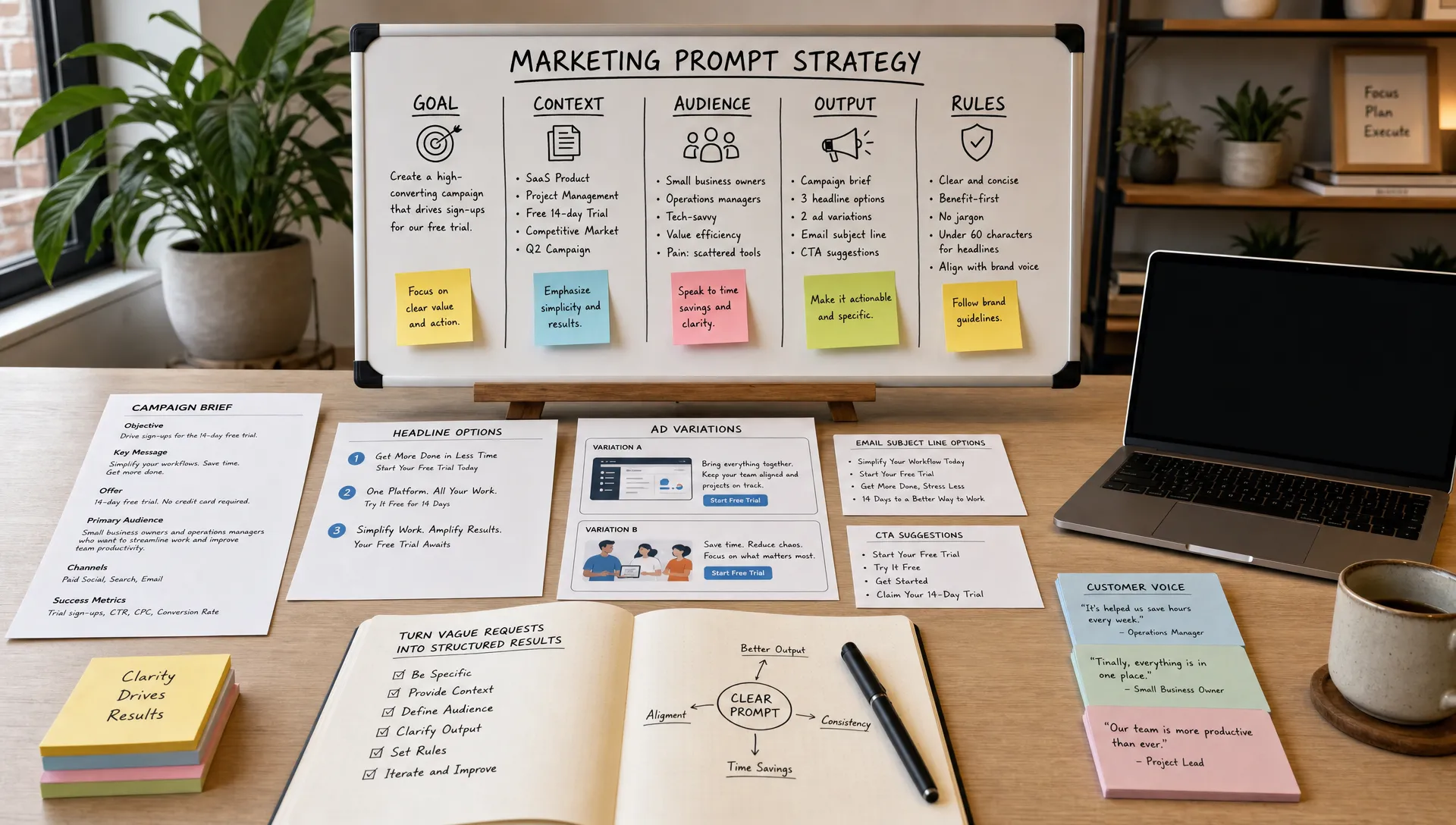
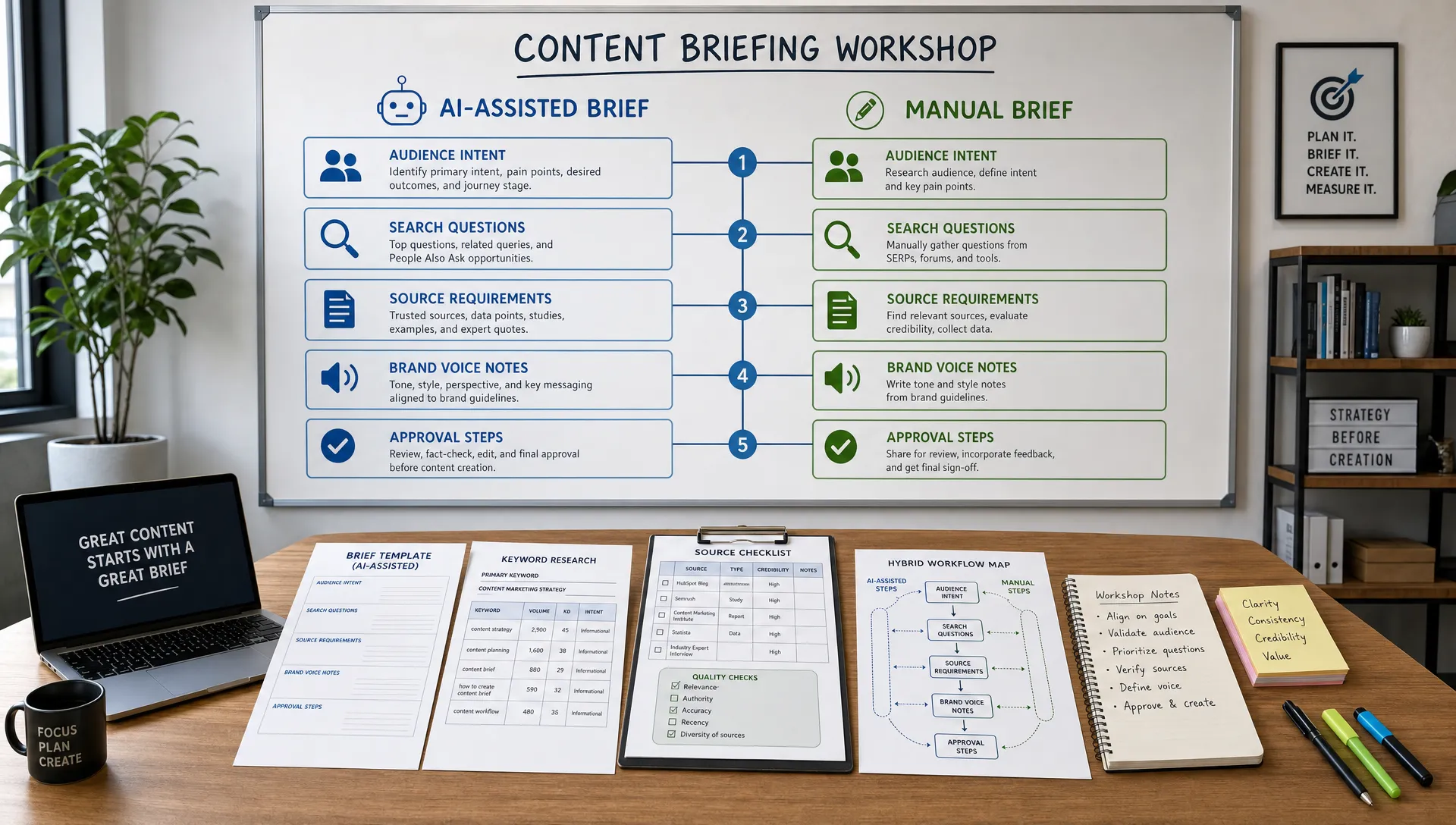
During evaluation, give each tool the same real-world tasks. Ask it to create a campaign brief, rewrite a product page section, generate email subject lines, summarize customer research, or produce social posts from an existing article. Then evaluate the output against your actual standards.
Look for accuracy, clarity, originality, tone, audience fit, strategic depth, and editing time. The key metric is not whether the first draft is perfect. The better question is whether the draft gets your team to a publishable asset faster without lowering quality.
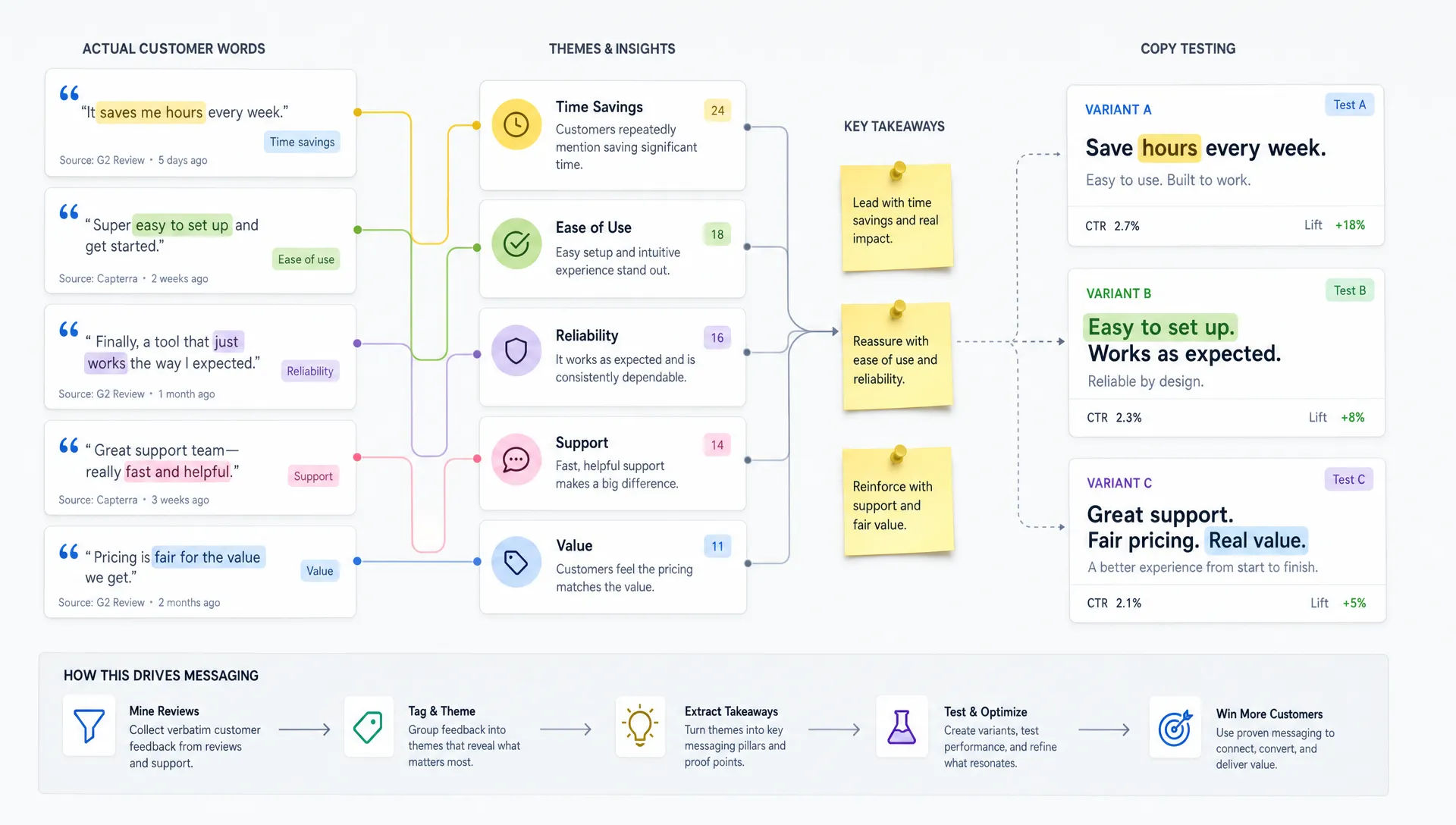
Brand voice deserves special attention. AI tools can flatten messaging if every competitor uses similar prompts and templates. Your team should feed tools with positioning documents, examples of approved content, customer language, product differentiators, and words to avoid. If brand consistency is a concern, read AIMarketer Hub’s guide on using AI for marketing without losing your brand voice.
A pilot gives you evidence before you invest in a full rollout. Keep it focused. Choose one or two high-value use cases, define success metrics, involve the people who will actually use the tool, and compare results against your current process.
A practical pilot can run for 30 to 60 days. Start by documenting the baseline. How long does the task take today? What does it cost? What quality issues appear most often? What performance metric are you trying to improve?
Then run the AI-assisted process on real work, not hypothetical prompts. Measure both productivity and performance. For example, a content tool might reduce drafting time by 40 percent, but if edits take longer or organic traffic does not improve, the business case may be weaker than it first appears.
Useful pilot metrics include time saved per asset, cost per deliverable, approval cycle time, content refresh rate, conversion rate, lead quality, paid media efficiency, email engagement, user adoption, and error reduction. The best metric depends on the use case. A reporting tool should be judged on decision speed and insight quality, while a content tool should be judged on production efficiency and performance outcomes.
At the end of the pilot, ask whether the tool should be adopted, rejected, or tested further. Avoid keeping tools simply because they are interesting. Every AI tool in your marketing stack should earn its place.
The subscription price is only part of the cost. AI tools often require setup, training, prompt development, workflow redesign, data cleanup, security review, and ongoing management.
A low-cost tool can become expensive if it creates inconsistent outputs, duplicate workflows, or extra review burden. A higher-cost platform can be worthwhile if it replaces manual work, consolidates tools, and improves measurable performance.
When evaluating total cost, consider implementation time, seat requirements, usage limits, overage fees, integration support, vendor onboarding, internal enablement, legal review, and the time managers spend maintaining quality. Also consider switching costs. If your team builds prompts, templates, workflows, and reporting around one platform, migrating later may take more effort than expected.
The goal is not to minimize software spend at all costs. The goal is to invest in AI tools that produce more value than they consume in budget, attention, and operational complexity.
Some AI tools look promising but fail under real marketing conditions. Watch for warning signs during demos, trials, and sales conversations.
Red flags include vague security answers, limited integration details, no clear admin controls, poor handling of brand guidelines, unreliable citations or sources, weak customer support, confusing pricing, heavy dependence on manual copying and pasting, and no way to measure business impact.
Be cautious with tools that promise fully autonomous marketing without human oversight. AI marketing automation can be powerful, but brand reputation, compliance, customer trust, and strategic judgment still require human responsibility.
Also be skeptical of platforms that claim to replace strategy. AI can accelerate research, generate options, detect patterns, and optimize repetitive tasks. It cannot fully understand your market context, business model, competitive positioning, customer relationships, and risk tolerance without guidance from experienced marketers.
The right AI tools depend on your team’s stage of growth.
A solo marketer or small business may benefit most from a simple stack: AI-assisted content creation, basic SEO tools, social repurposing, and lightweight analytics. The priority is speed, ease of use, and affordability.
A growing marketing team usually needs stronger collaboration and consistency. At this stage, look for shared prompt libraries, brand voice controls, approval workflows, CRM and CMS integrations, campaign planning support, and reporting that connects marketing activity to pipeline.
A larger or regulated organization should prioritize governance, permissions, compliance, auditability, data controls, enterprise integrations, and cross-functional workflows. The tool may need to support multiple brands, regions, teams, and approval paths.
In other words, do not copy another company’s stack just because it works for them. Their team size, data maturity, budget, industry, and funnel may be completely different from yours.
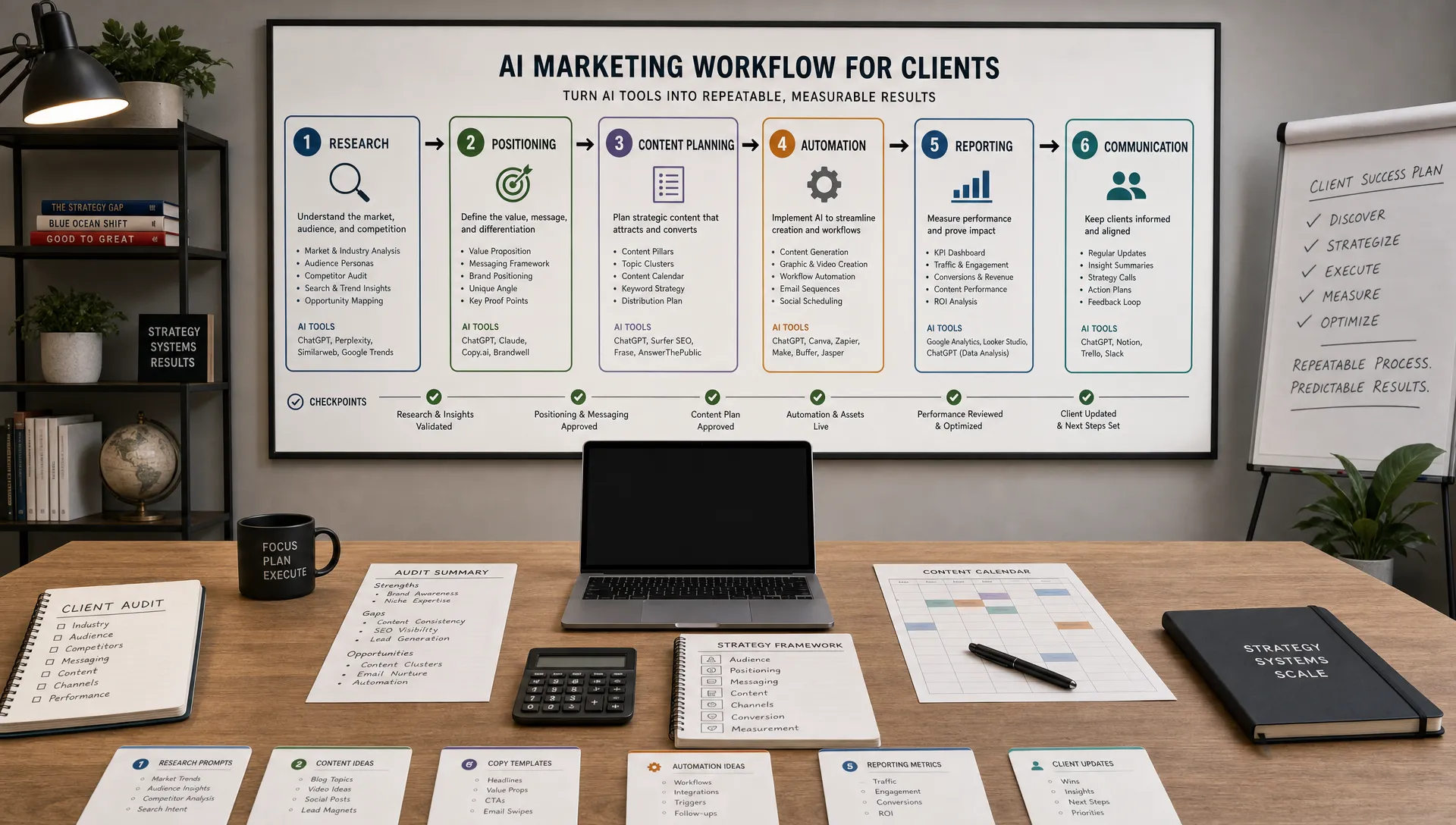
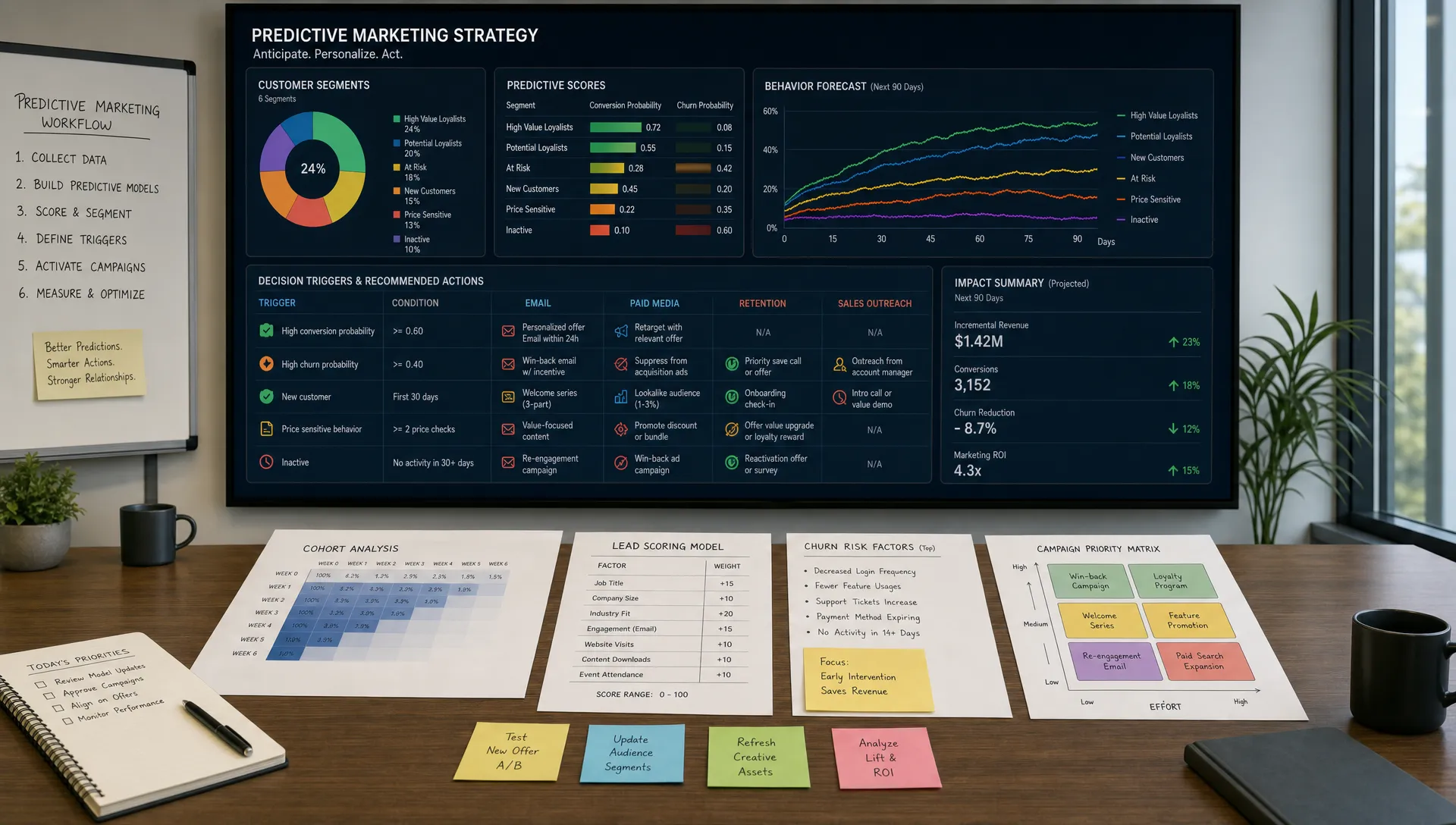
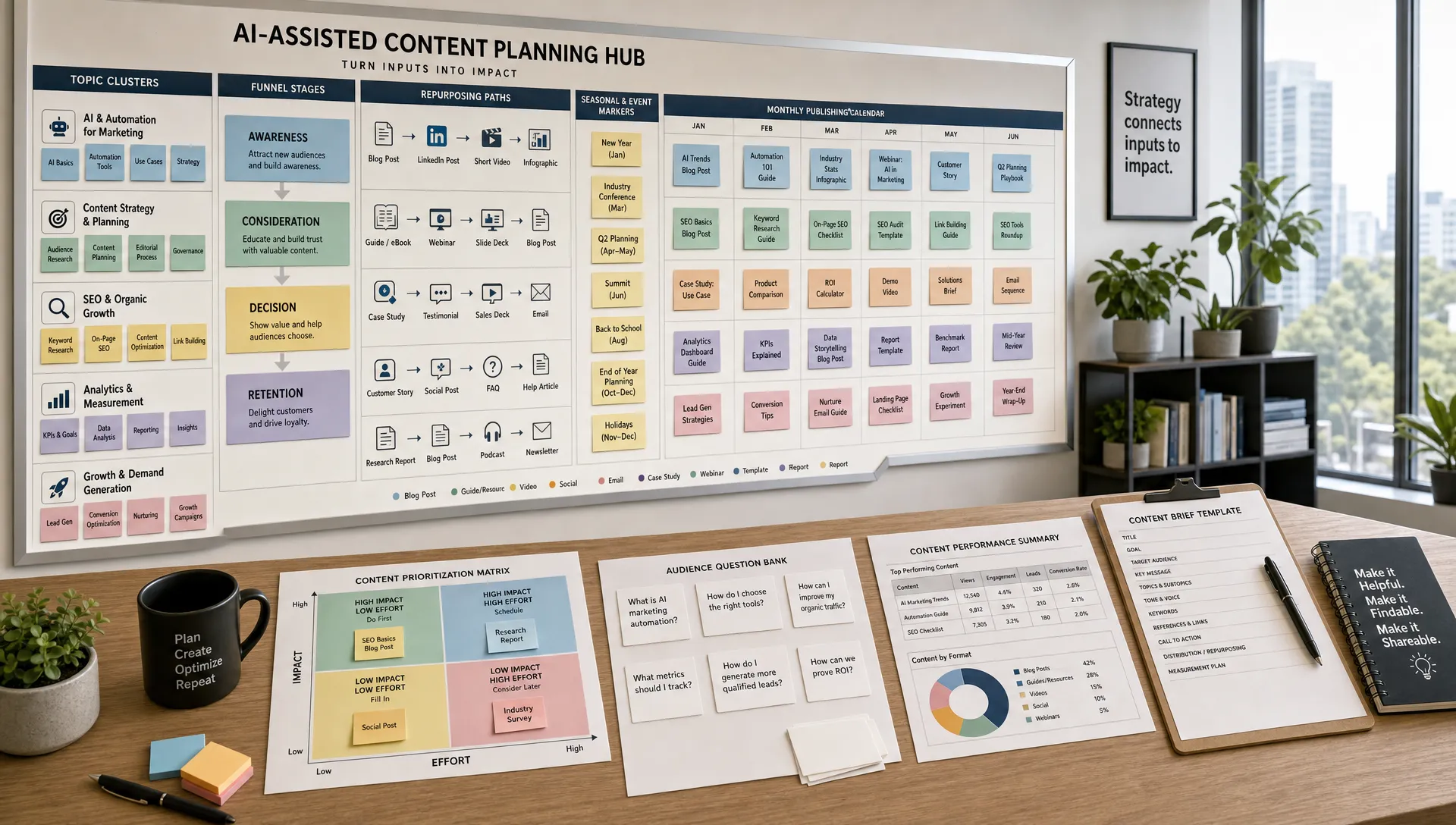
The strongest AI marketing stacks do not just make individual tasks faster. They create a learning system. Research informs strategy, strategy informs content, content performance informs optimization, and analytics guide the next campaign.
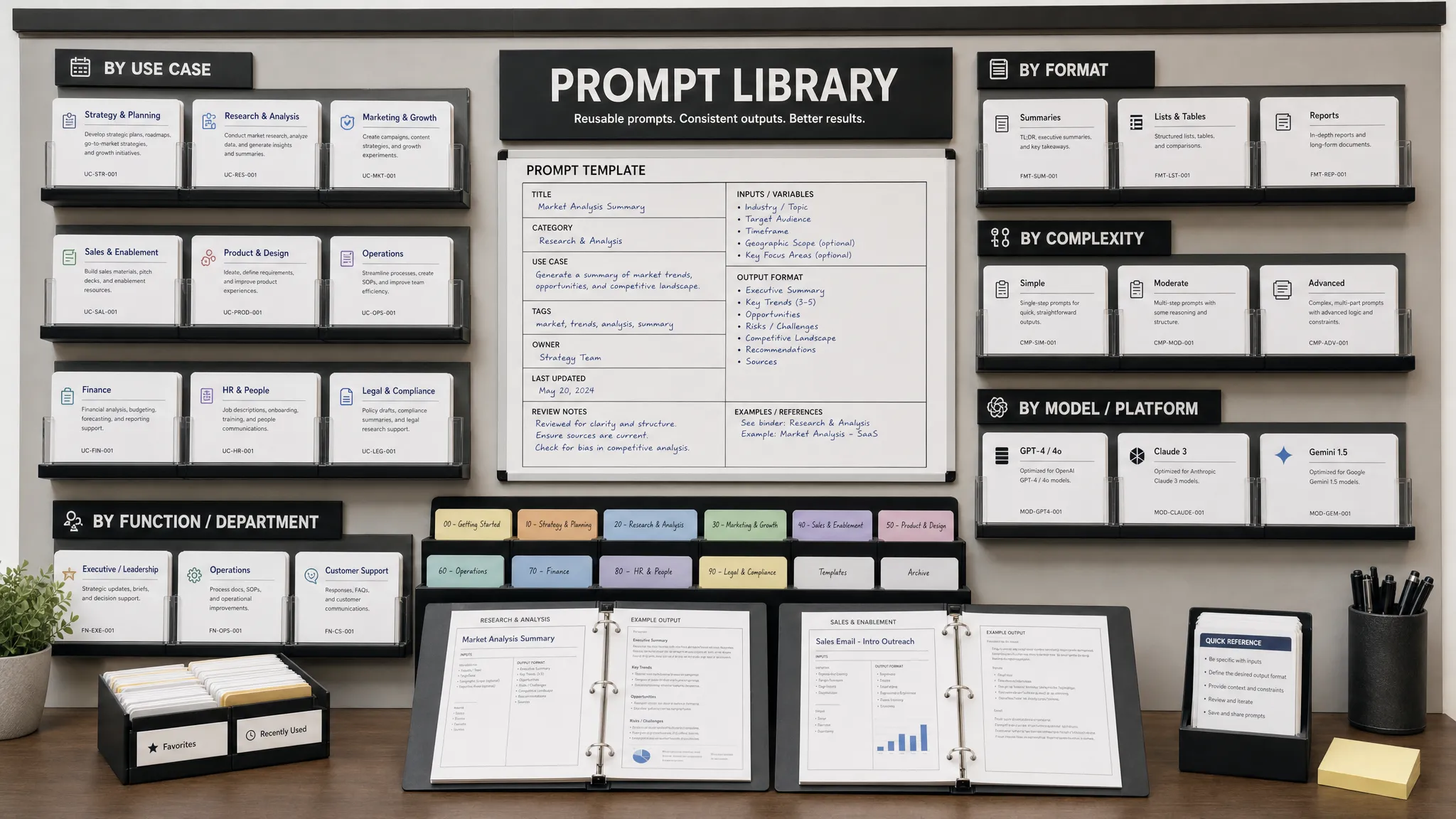
To build that kind of stack, prioritize tools that help your team reuse knowledge. Saved prompts, approved examples, campaign learnings, customer language, performance insights, and brand guidelines should become assets that improve future work.
This is where marketing workflow automation becomes more valuable than one-off content generation. When tools connect your insights, execution, and reporting, AI becomes part of how your team operates rather than a side experiment.
If you are exploring broader AI marketing strategies, the AIMarketer Hub blog offers practical guides, tools, and resources for marketers building smarter workflows.
What should I look for first when choosing AI tools for my marketing stack? Start with the use case. Identify the workflow problem you want to solve, such as slow content production, weak reporting, poor personalization, or manual campaign tasks. Then evaluate tools based on fit, integrations, governance, and measurable ROI.
Should I choose an all-in-one AI marketing platform or best-of-breed tools? Choose an all-in-one platform if your team needs simplicity, centralized workflows, and fewer integrations. Choose best-of-breed tools if you have specialized needs, technical support, and a clear process for connecting systems.
How do I measure ROI from AI marketing tools? Measure ROI by comparing the AI-assisted workflow against your previous baseline. Track time saved, production cost, approval speed, campaign performance, conversion rates, lead quality, and revenue influence where possible.
Are AI content creation tools safe for brand voice? They can be, but only with strong inputs and human review. Provide brand guidelines, approved examples, audience insights, product messaging, and clear editing standards. Avoid publishing AI-generated content without review.
How many AI tools should a marketing team use? There is no perfect number. Use as few as possible while covering your highest-impact workflows. Too many tools can create duplicated work, inconsistent outputs, and adoption problems.
Choosing AI tools for your marketing stack is not about chasing the biggest feature list. It is about building a practical system that helps your team create, optimize, automate, and measure better marketing.
Start small, test with real workflows, protect your data, involve your team, and measure results before scaling. If a tool improves quality, saves time, integrates cleanly, and supports your business goals, it belongs in your stack. If it adds complexity without measurable value, it does not.
For practical AI marketing guides, calculators, prompt resources, and tools that help teams make smarter decisions, explore AIMarketer Hub.