Scaling content with AI is not about asking a model to write more drafts. It is about designing a repeatable system that turns strategy, subject matter expertise, brand standards, SEO insights, and performance data into content your team can produce consistently.
That distinction matters. Many marketing teams adopt AI tools and see a short burst of output, then run into the same problems they had before: unclear briefs, inconsistent quality, slow reviews, duplicated topics, weak distribution, and no feedback loop. AI accelerates whatever workflow you already have. If the workflow is messy, AI makes the mess move faster.
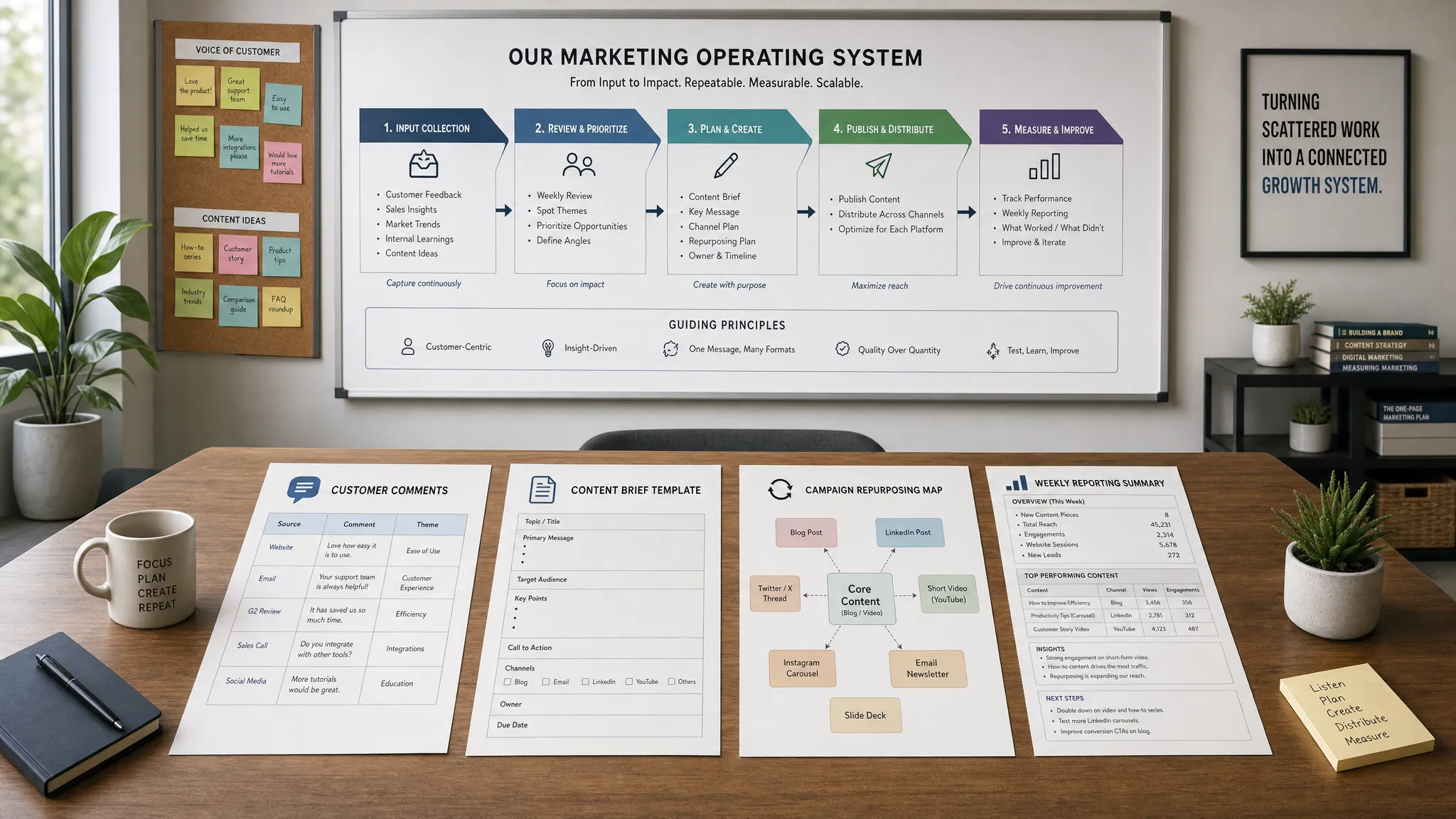
A scalable AI content workflow gives your team a better operating system. It clarifies who does what, where AI adds leverage, where humans must stay in control, and how each published asset improves the next one.
A scalable workflow is not simply a list of prompts. It is a production system that can handle more content without sacrificing accuracy, differentiation, or trust.
The strongest AI content workflows usually share five traits:
This aligns with how search quality is evaluated today. Google has repeatedly emphasized that content should be helpful, original, and created for people, regardless of whether AI is involved. Its guidance on AI-generated content makes the key point clear: automation is not the issue by itself, low-quality or manipulative content is.
So the goal is not to hide AI. The goal is to use it responsibly, with enough structure that every piece of content still reflects real expertise, audience understanding, and editorial judgment.
Before you compare AI tools, define what your content system needs to accomplish. A workflow built for SEO blog production will look different from one built for lifecycle emails, social campaigns, sales enablement, or industry-specific thought leadership.
Start by answering a few strategic questions. Who is the content for? What problems does it solve? Which parts of the funnel does it support? What makes your perspective different from what already exists in search results or social feeds? Which topics require expert review because they involve legal, finance, medical, security, or product claims?
This prevents a common scaling mistake: using AI to produce more content on topics that were never worth publishing in the first place. The best AI marketing automation systems do not remove strategy. They make strategy easier to execute.
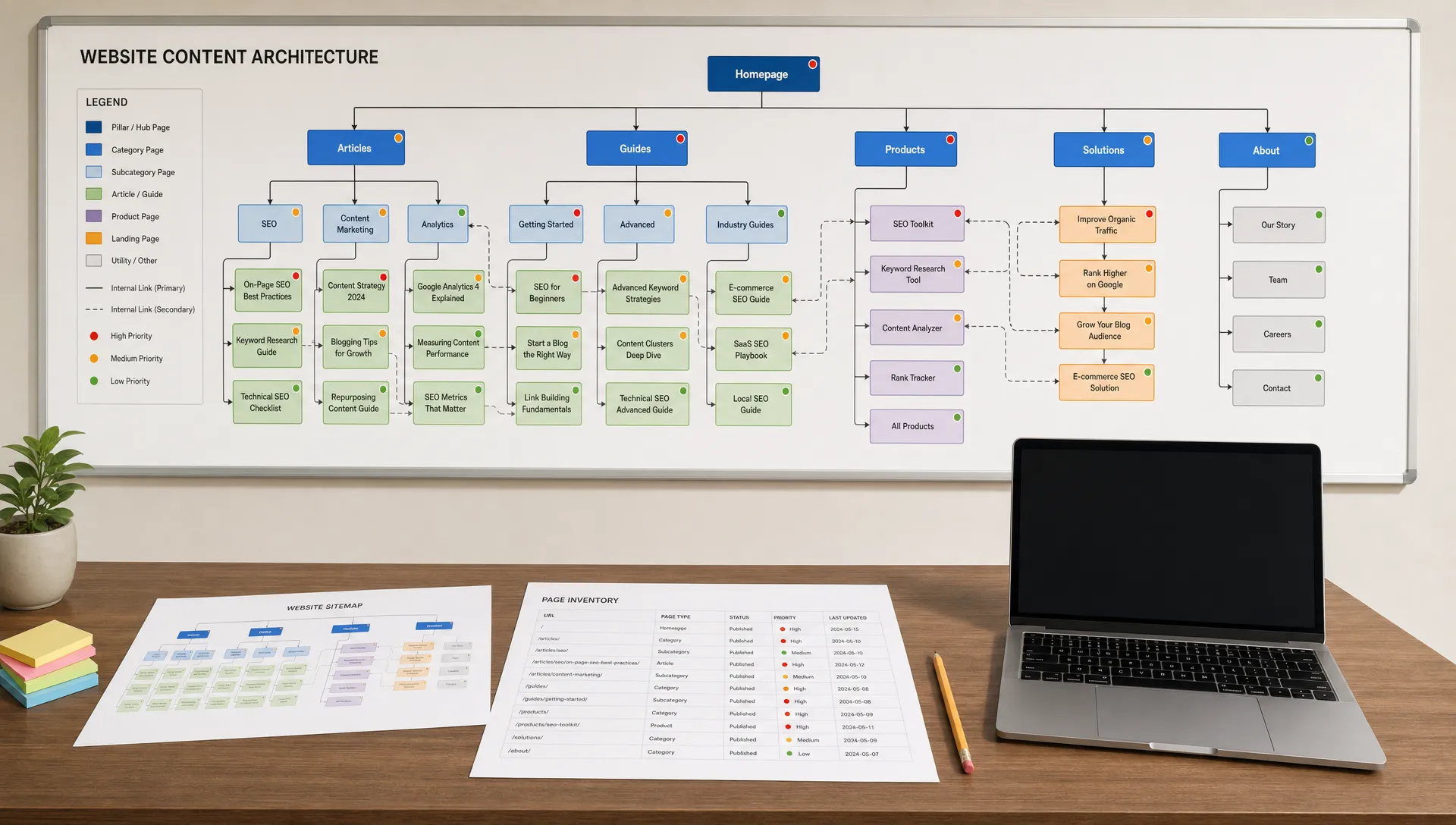
A simple content strategy layer should include your core audience segments, topic pillars, target funnel stages, priority channels, conversion goals, and editorial standards. Once those are documented, AI can help with ideation, clustering, brief creation, drafting, optimization, and repurposing without drifting away from business goals.
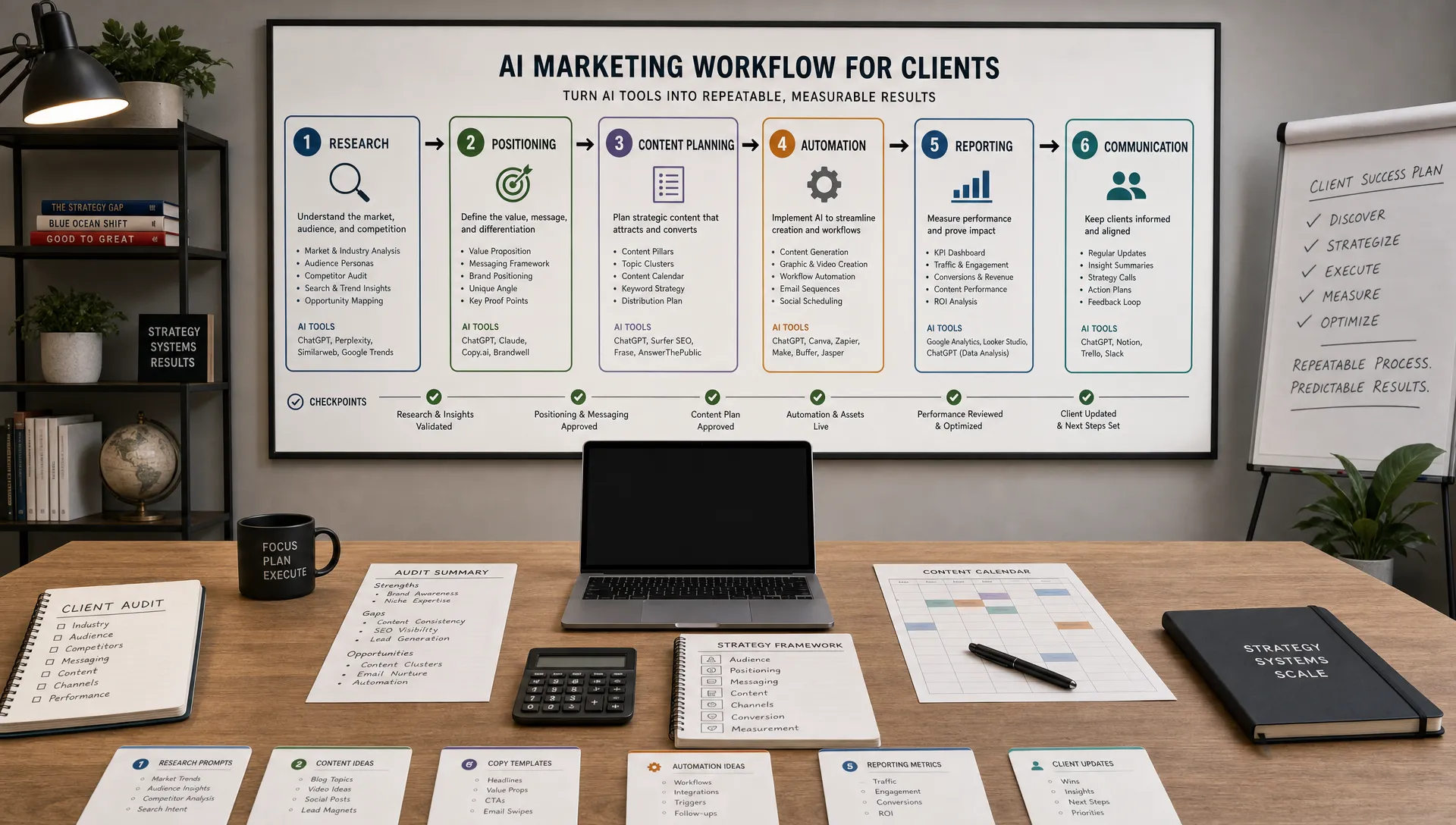
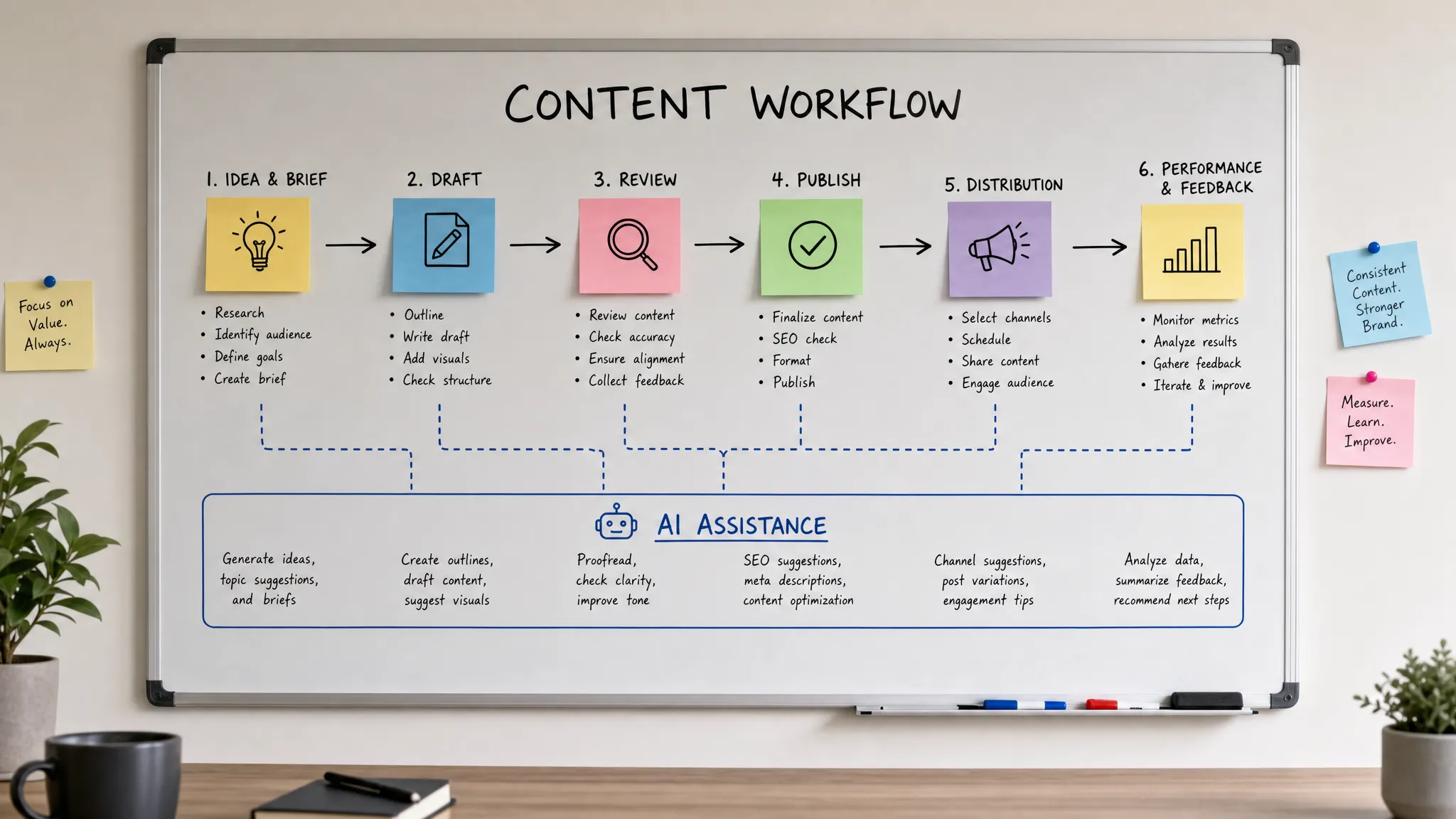
A scalable AI content workflow should cover the entire lifecycle, not just the writing stage. If AI only enters the process at the draft stage, you still leave major bottlenecks untouched.
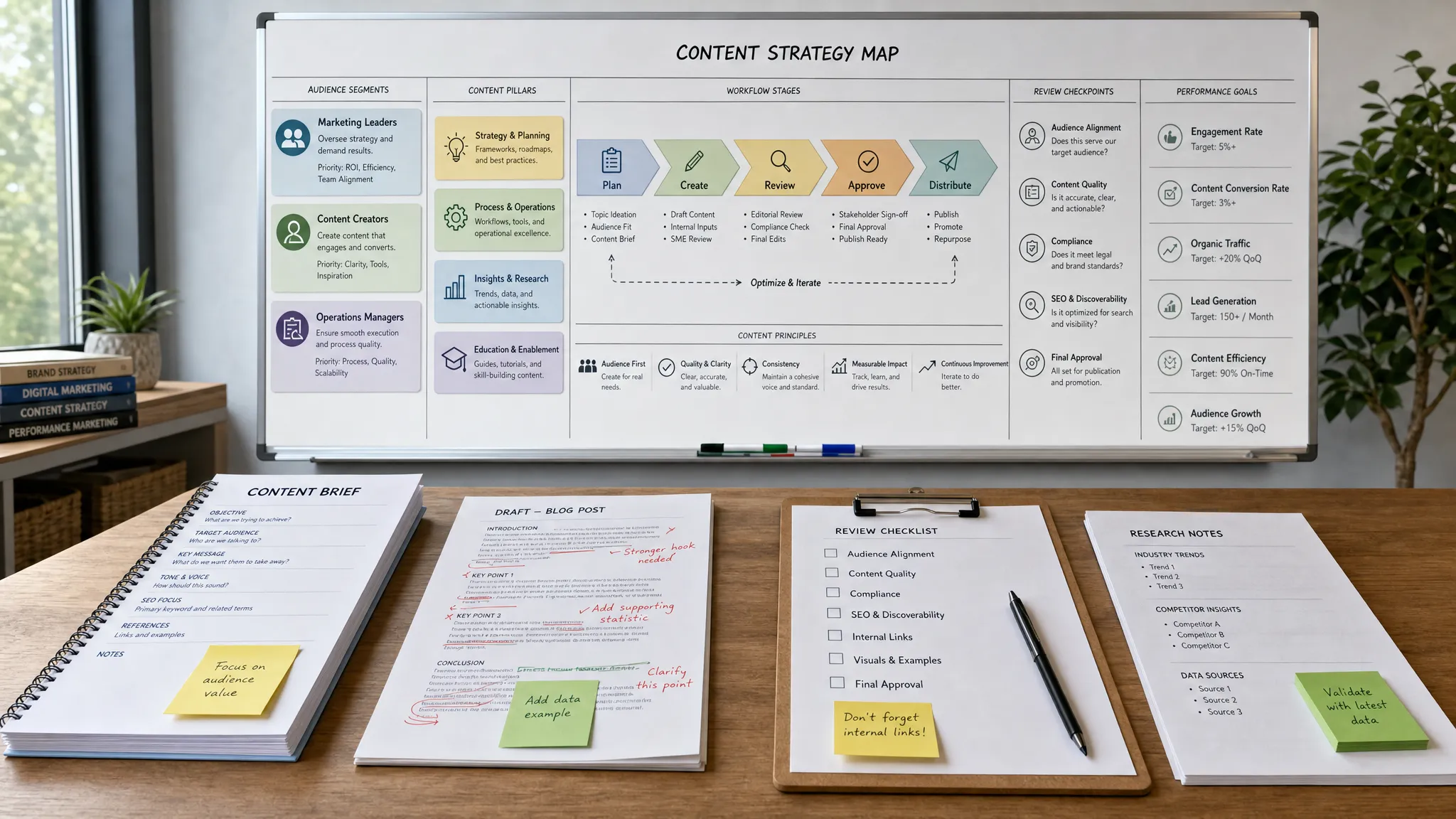
Think of the workflow as a sequence of connected decisions:
This map helps you see where AI tools can safely speed things up and where human judgment is non-negotiable. For example, AI can generate outline options, summarize source material, suggest FAQs, and create social variations. But a human should confirm the angle, validate claims, add original experience, and approve the final piece.
Once you have the map, assign ownership. A small team may have one person covering multiple responsibilities, but the responsibilities still need to be explicit. Someone owns topic approval. Someone owns expert input. Someone owns editing. Someone owns publishing. Someone owns measurement.
Without ownership, AI content production becomes a folder of drafts. With ownership, it becomes a reliable marketing workflow.
Scaling starts before the brief. Your team needs a consistent way to capture, evaluate, and prioritize content ideas.
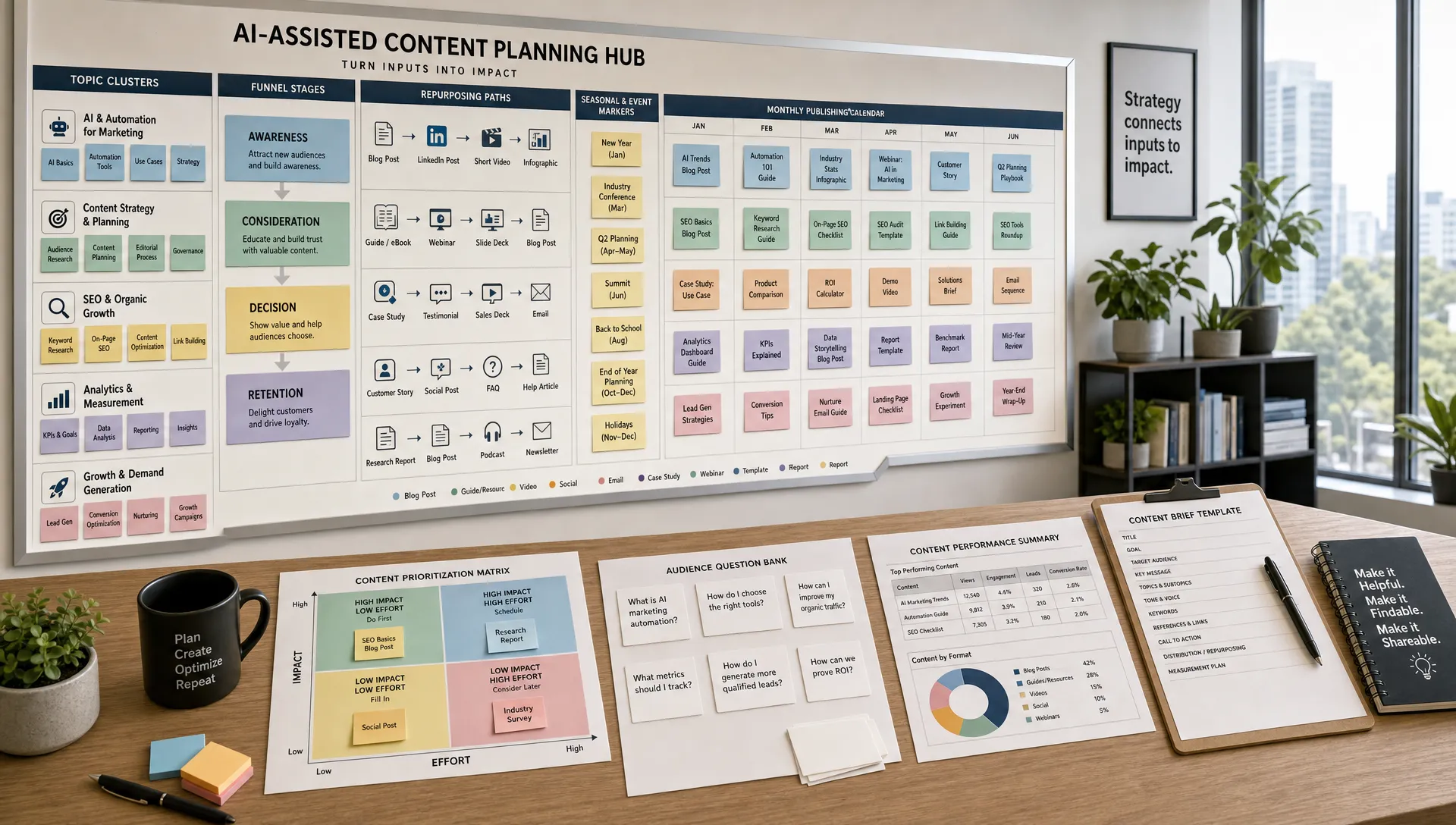
Content ideas can come from keyword research, customer questions, sales calls, support tickets, competitor gaps, industry news, product launches, webinars, and internal subject matter experts. AI can help cluster these ideas and identify recurring themes, but your team should still prioritize based on strategic value.
A useful intake form should capture the topic, audience, funnel stage, business objective, primary channel, target keyword if relevant, source material, subject matter expert, deadline, and desired call to action. This gives every idea enough context to become a brief.
You can also score ideas before they enter production. Consider factors such as search demand, conversion potential, audience urgency, topical authority, internal expertise, and update frequency. A high-volume keyword with weak business relevance may not deserve immediate attention. A niche topic with strong sales relevance may be a better candidate.
The point is to stop treating every idea as equal. AI makes it easy to generate endless topics. A scalable workflow makes it easier to choose the right ones.
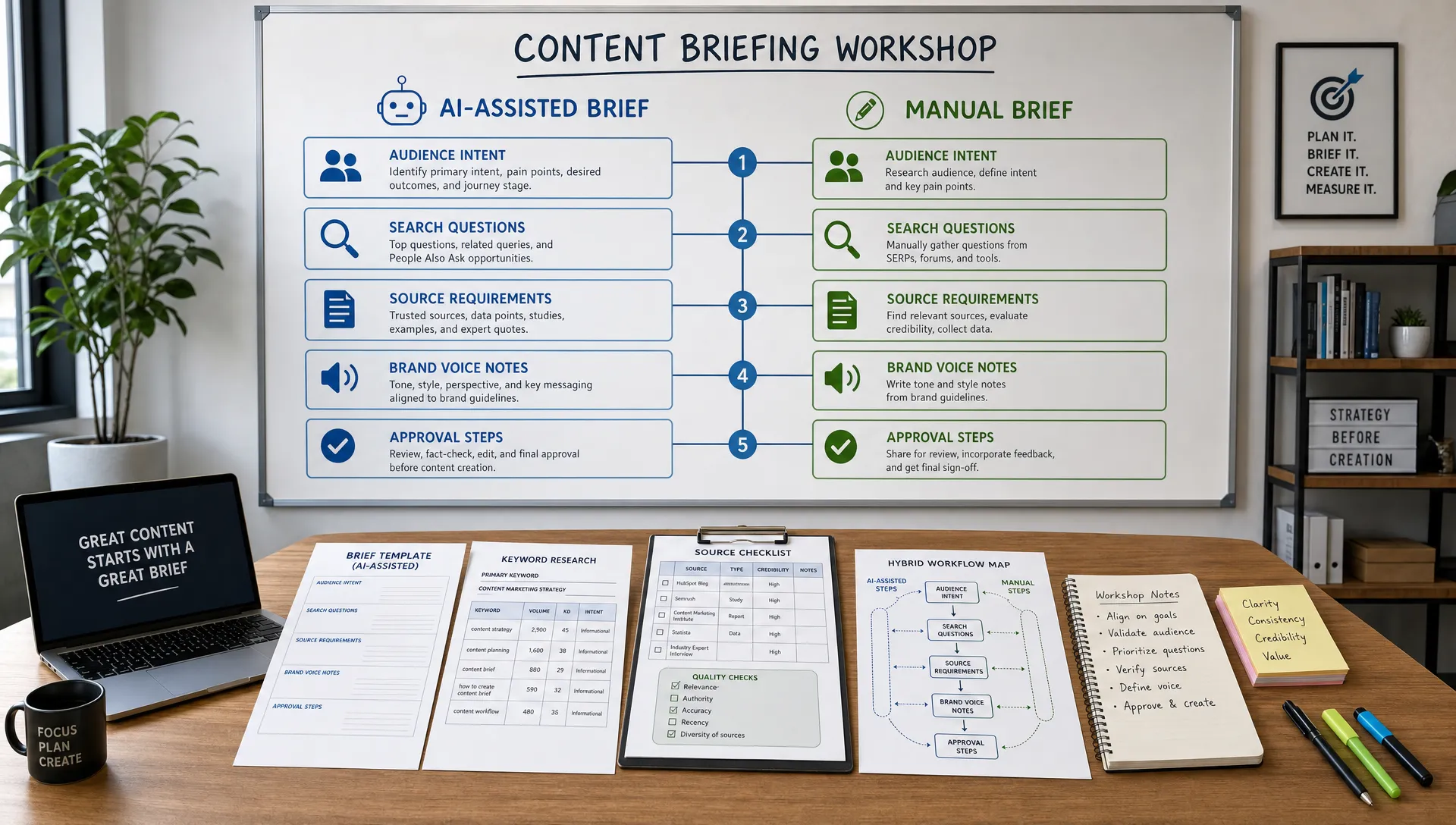
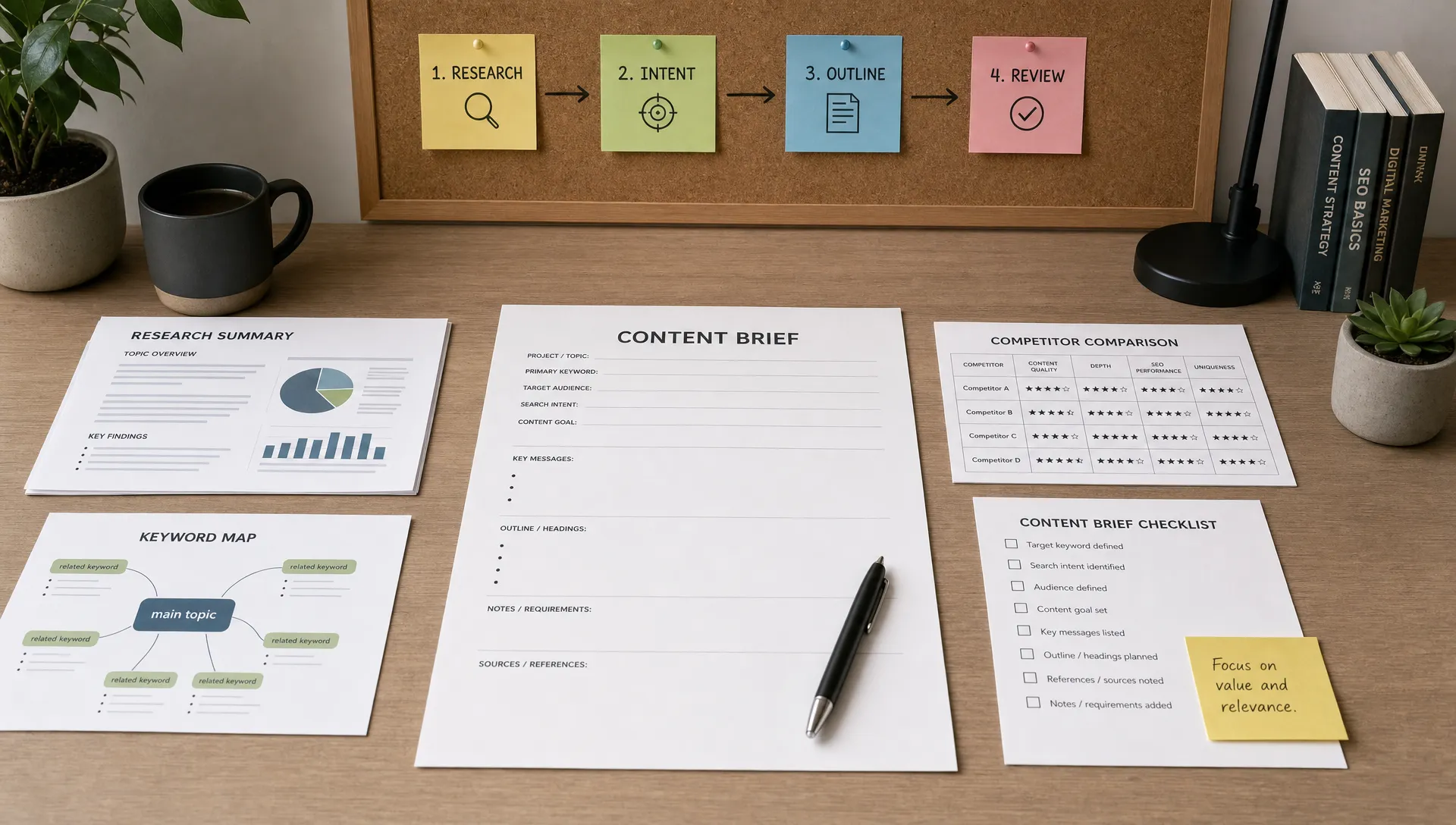
The quality of an AI-assisted draft depends heavily on the quality of the brief. A vague prompt produces generic content. A strong brief gives the AI model boundaries, context, and direction.
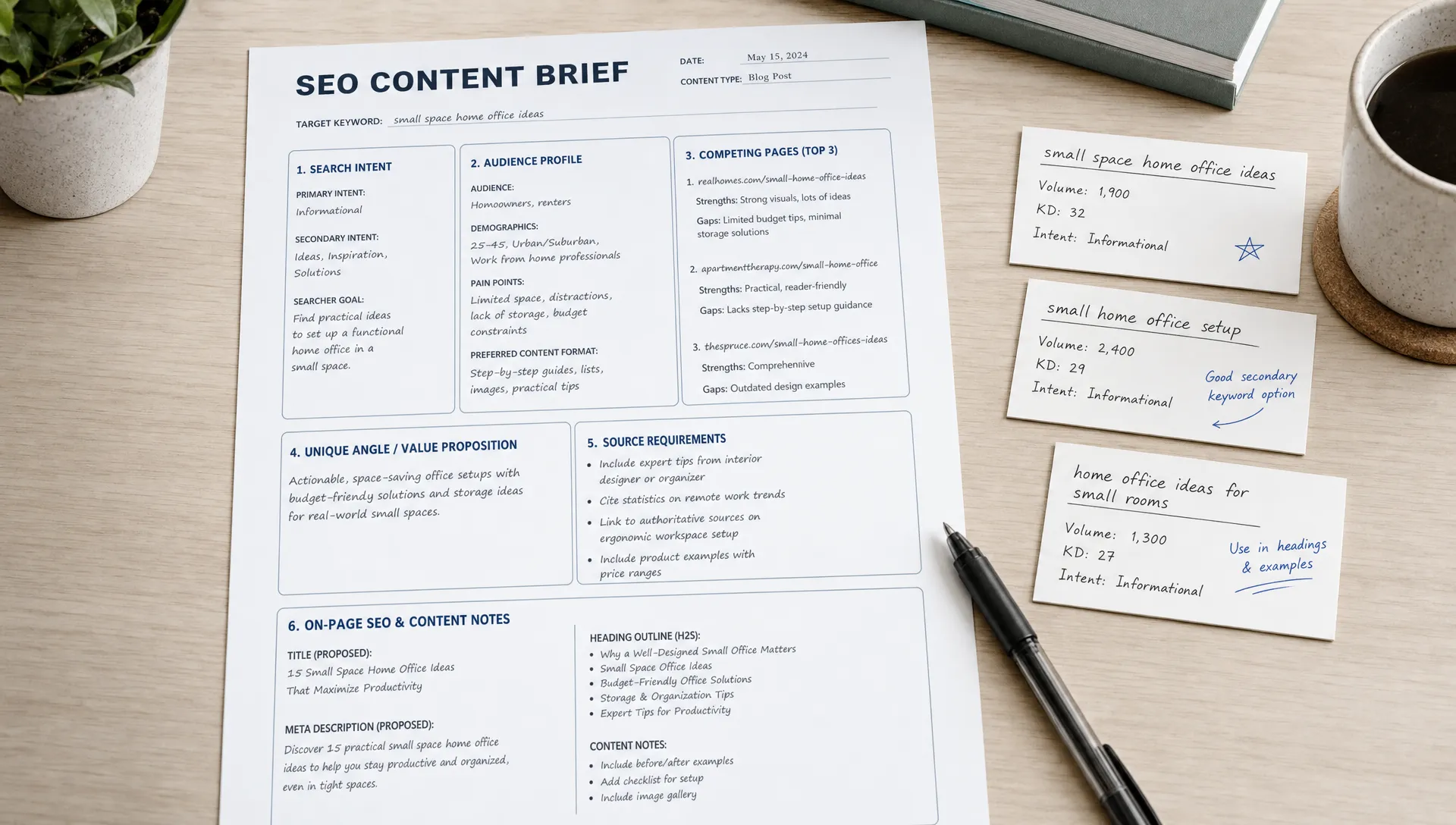
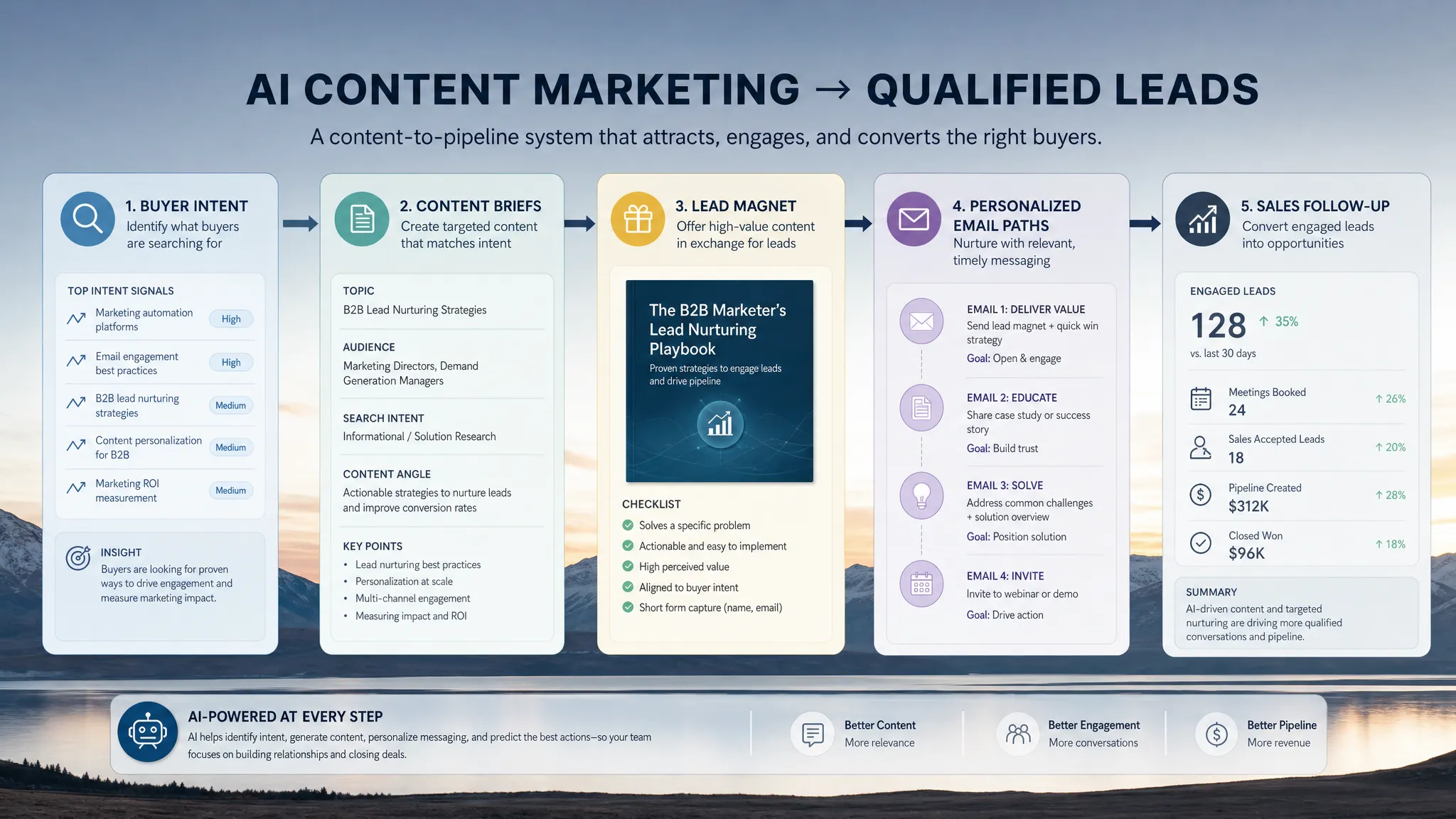
A scalable content brief should include the audience, pain point, search intent, funnel stage, target outcome, unique angle, required sources, internal links, product context, examples to include, examples to avoid, brand voice guidance, SEO requirements, and review criteria.
This is where many teams underinvest. They ask AI to “write a blog post about AI marketing” and then spend hours fixing the result. A better brief might say the article is for lean B2B SaaS teams, should focus on operational workflow rather than broad trends, should avoid hype, should include human review gates, and should end with a practical rollout plan.
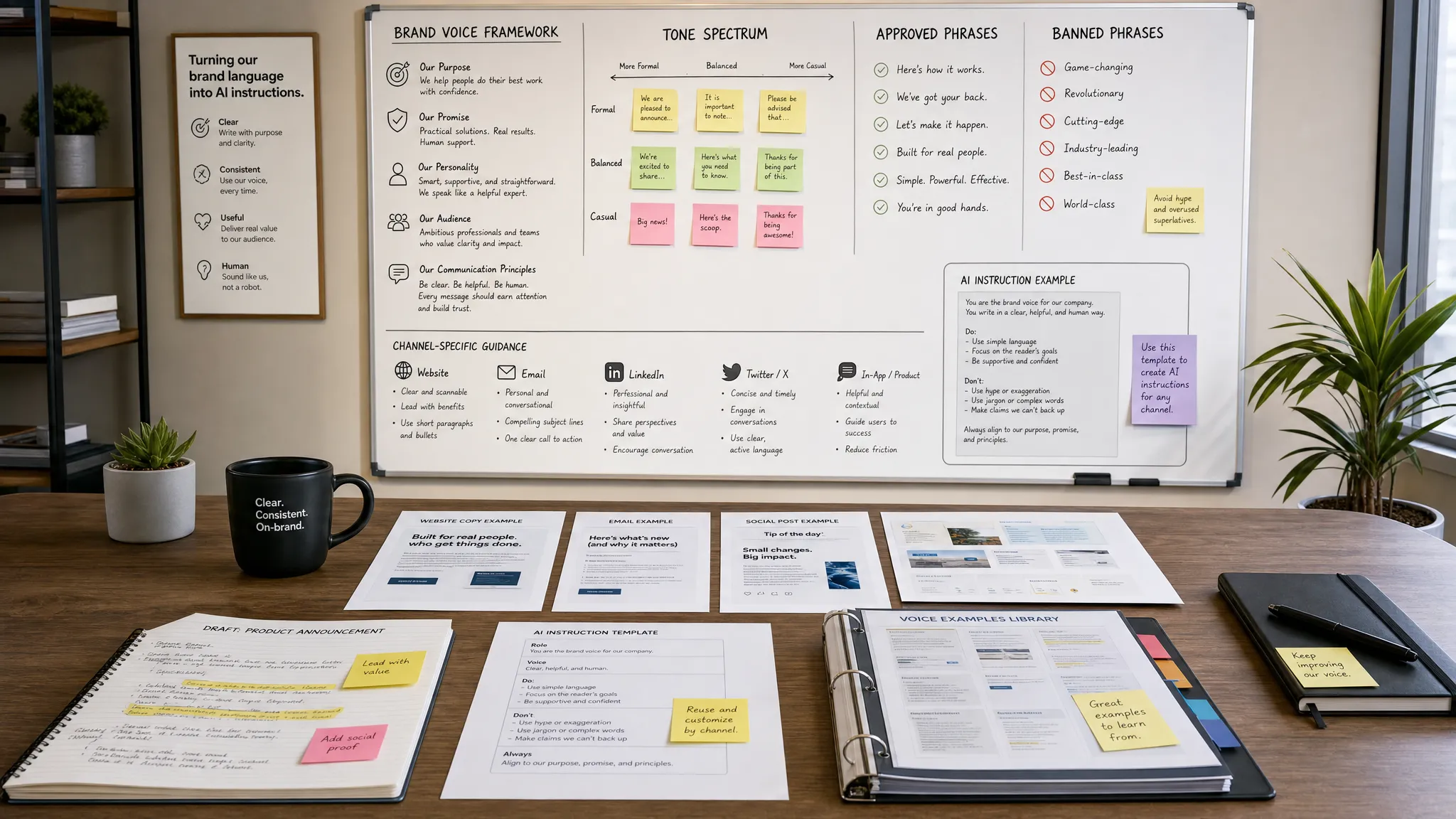
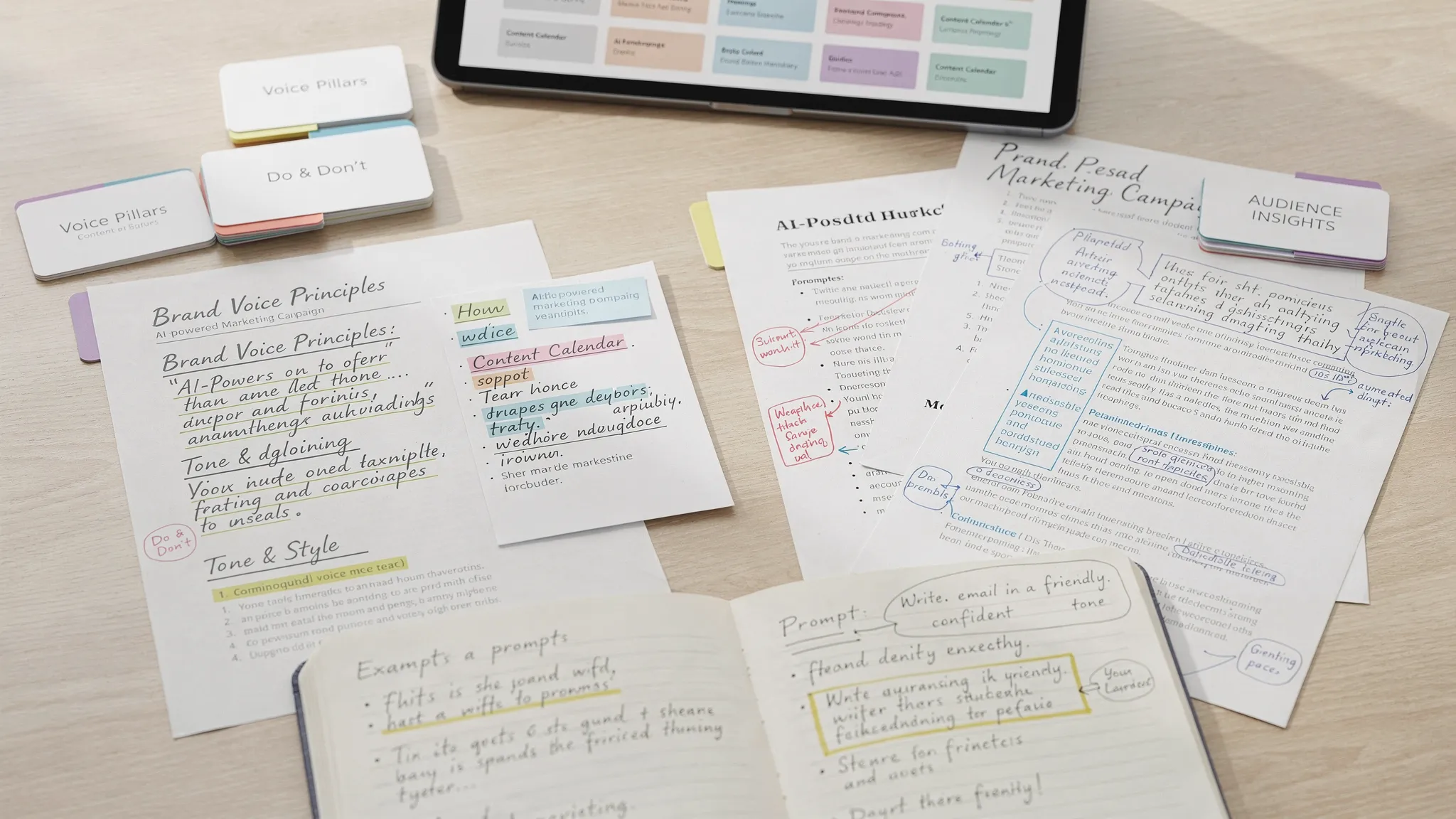
Brand voice is especially important when scaling content with AI. If your team has not documented tone, vocabulary, point of view, and formatting preferences, every AI-assisted piece can start to sound slightly different. For a deeper look at preserving consistency, AIMarketer Hub has a helpful guide on using AI without losing your brand voice.
A strong brief does not slow the workflow down. It reduces rewriting, review confusion, and brand drift.
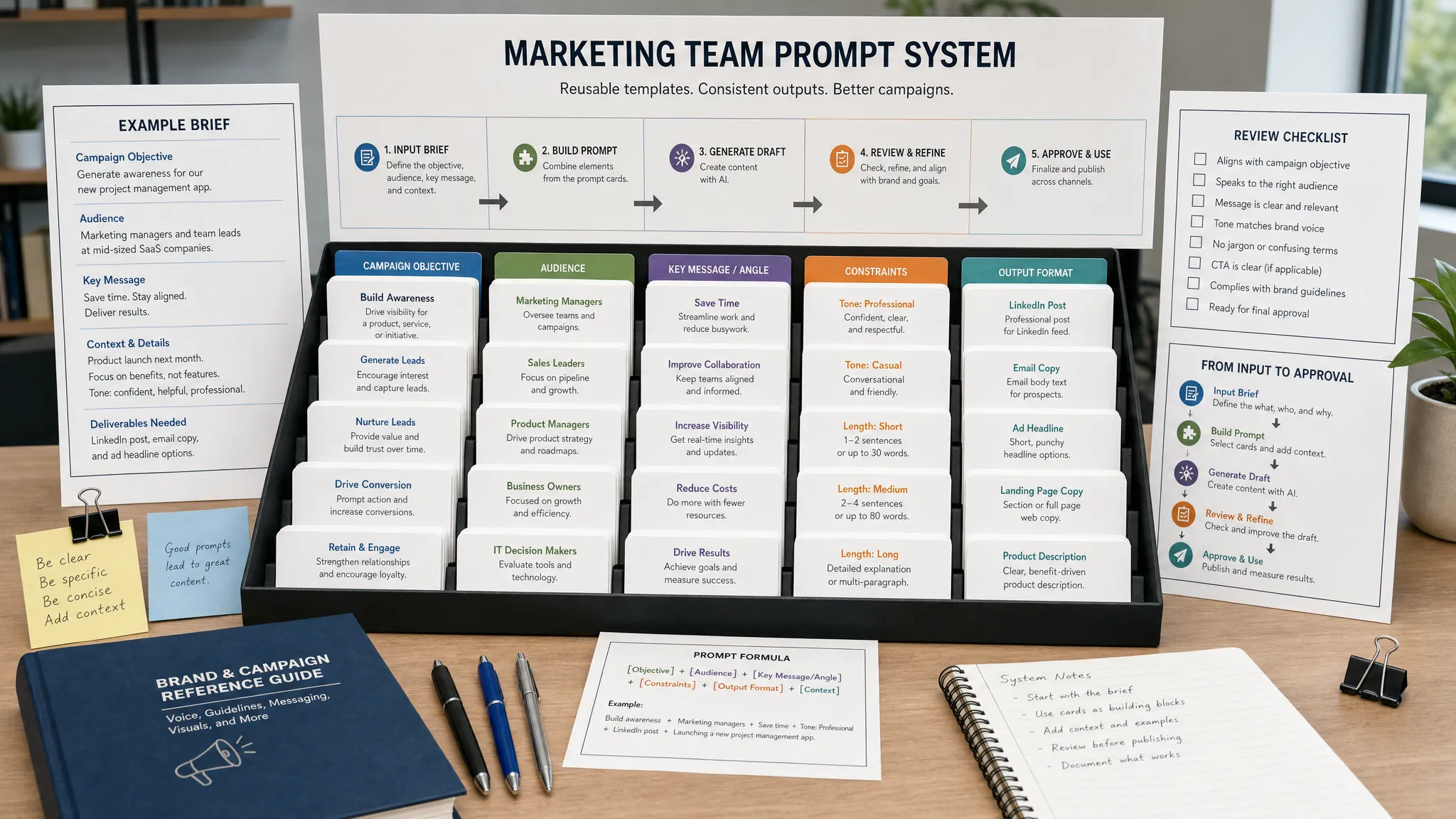
Prompting should be treated as workflow design, not improvisation. If every marketer writes their own prompts from scratch, output quality will vary widely.
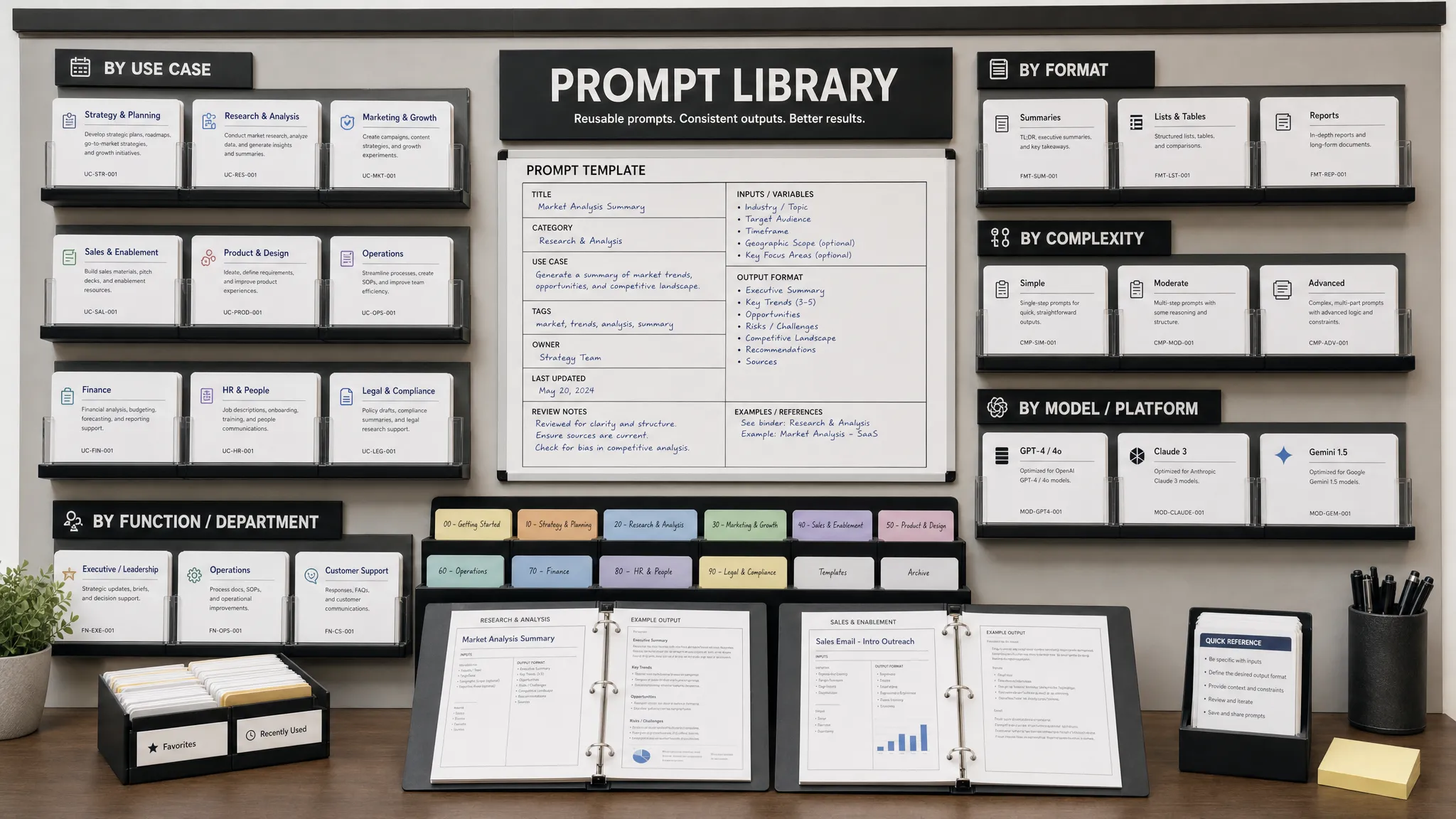
Create a prompt library for common content tasks, such as topic clustering, outline generation, draft creation, intro variations, meta descriptions, FAQ suggestions, content refresh recommendations, social repurposing, and email newsletter summaries.
Each prompt should include context, role, task, constraints, inputs, desired output format, and quality criteria. For example:
Act as a senior B2B content strategist. Using the brief below, create a detailed outline for a practical blog article. Prioritize search intent, original angle, reader usefulness, and clear section flow. Do not invent statistics or product claims. Include suggested expert input points and places where internal links may be relevant.

Brief:
[Paste approved brief]

Output:
- Recommended angle
- H2 and H3 outline
- Key points for each section
- Claims that require fact-checking
- Suggested FAQ questions
This type of prompt does not ask AI to replace the strategist. It asks AI to accelerate structured thinking within clear boundaries.
Over time, improve your prompt library based on editorial feedback. If drafts often sound too promotional, add constraints. If outlines miss buyer objections, add a section for objections. If the AI invents claims, strengthen source requirements. Your prompt library should evolve like any other marketing asset.
AI can generate a first draft quickly, but the first draft should not be treated as publish-ready. The real value comes when AI handles the blank page and humans apply judgment.
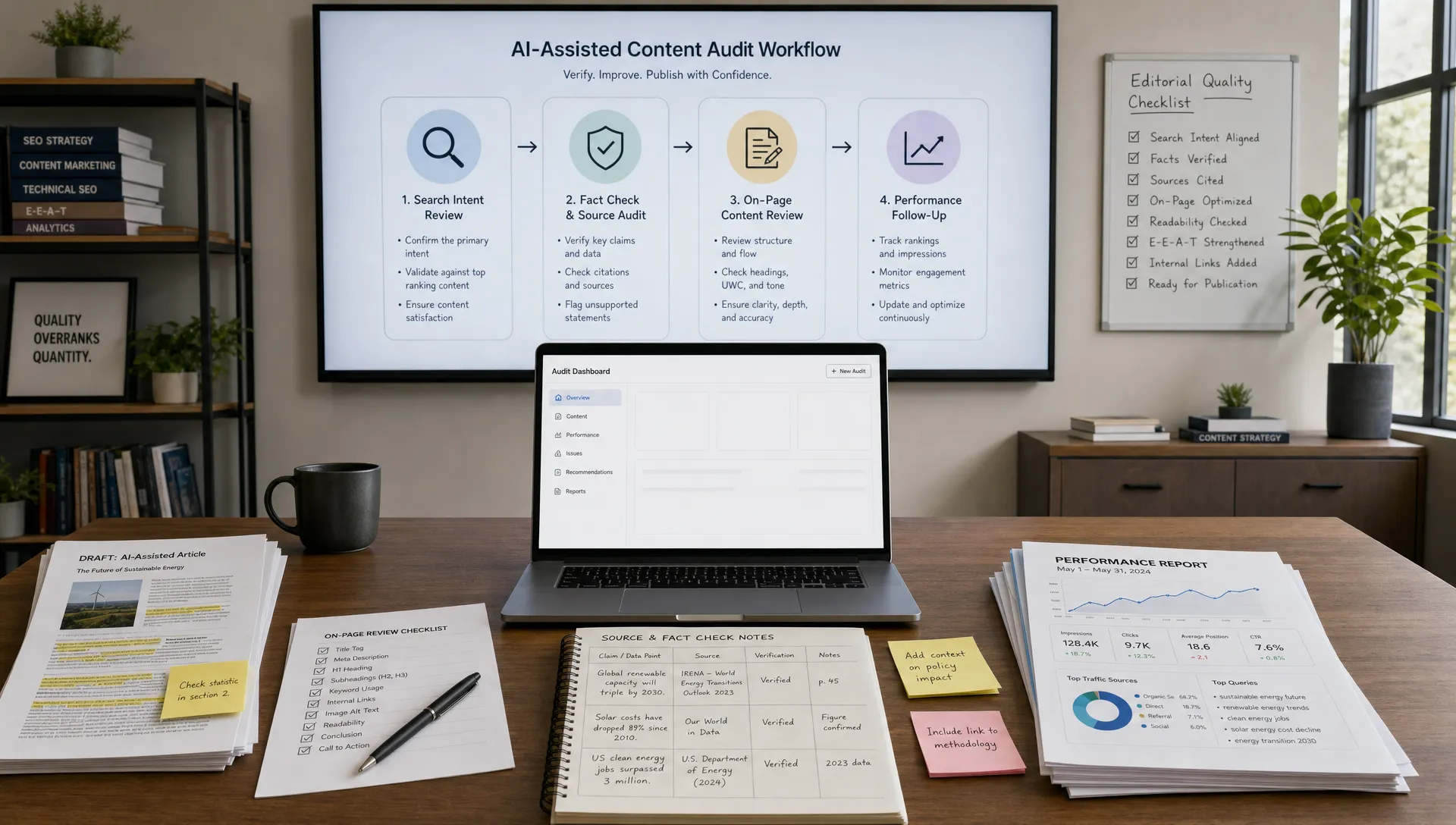
A practical review sequence includes strategic review, expert review, editorial review, SEO review, and conversion review. In a small team, one person may perform more than one review, but the checklist should still exist.
The strategic review asks whether the piece answers the right question for the right audience. The expert review checks accuracy, nuance, and missing context. The editorial review improves structure, clarity, tone, and flow. The SEO review confirms search intent, headings, metadata, internal links, and on-page completeness. The conversion review ensures the next step is relevant and not forced.
This is how you avoid the “AI sameness” problem. AI often produces competent but predictable content. Human reviewers add specificity, examples, tension, judgment, and point of view. Those are the elements readers remember.
SEO should not be a last-minute polish step. If search intent, structure, and content depth are ignored until the end, the editor may have to rebuild the article.
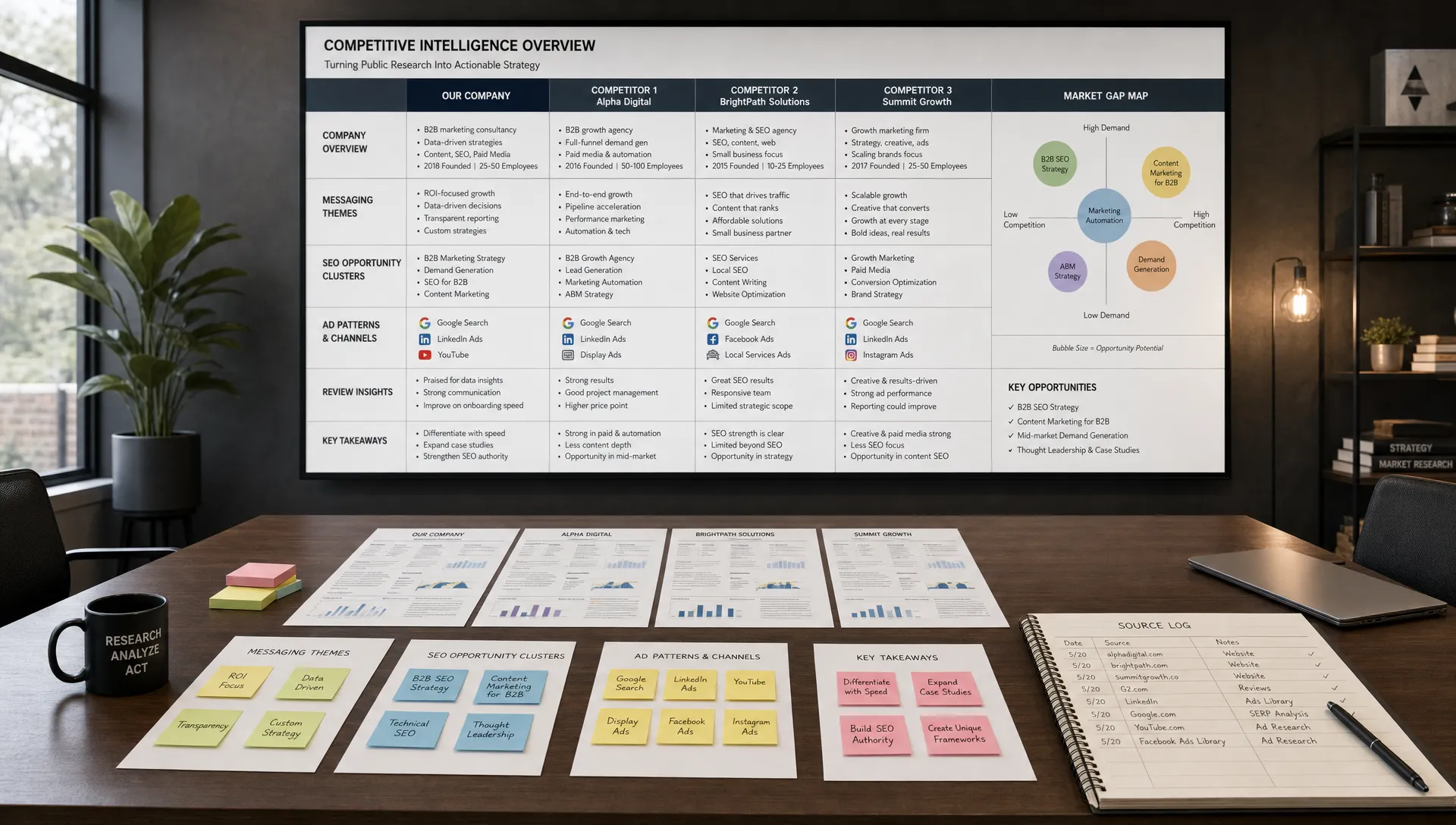
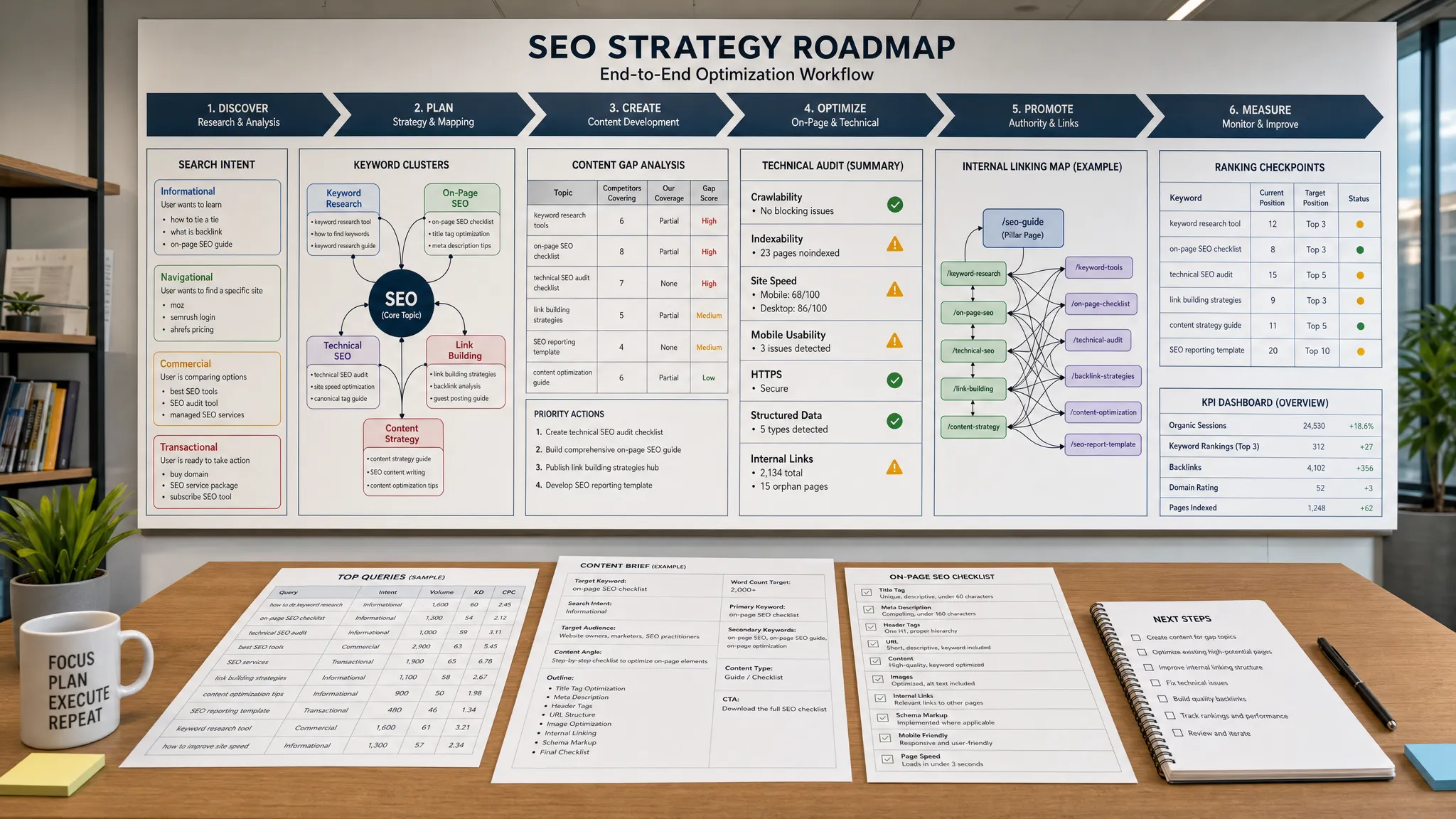
Bring SEO into the brief and outline stages. Identify the primary intent behind the query, what the reader already knows, what they need next, and what competing pages fail to explain. Then use AI to compare outline coverage, generate related questions, and spot missing subtopics.
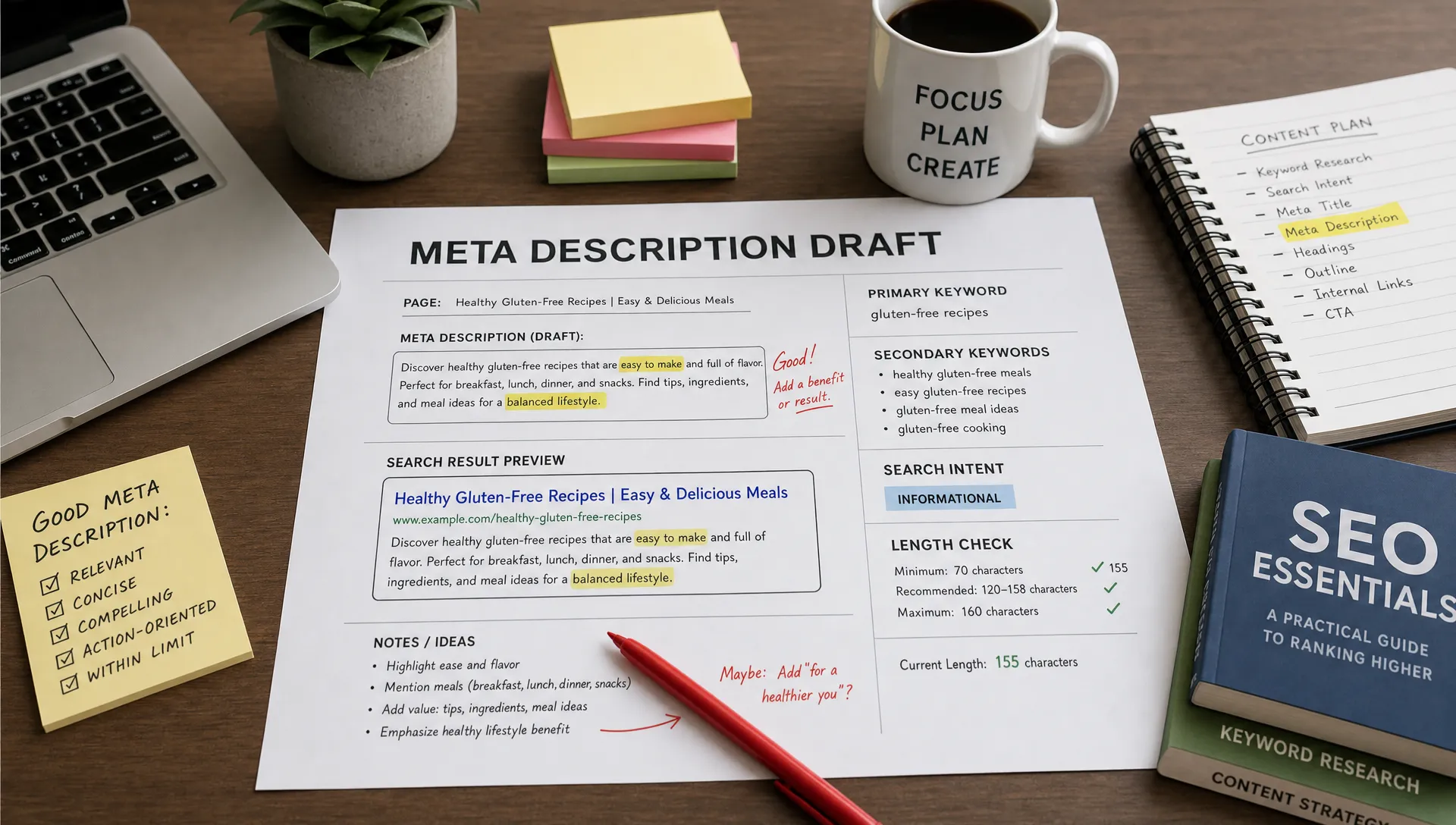
AI can also help draft title variations, meta descriptions, schema-friendly FAQs, and internal link suggestions. But the final decisions should be based on editorial relevance and user value, not keyword stuffing.
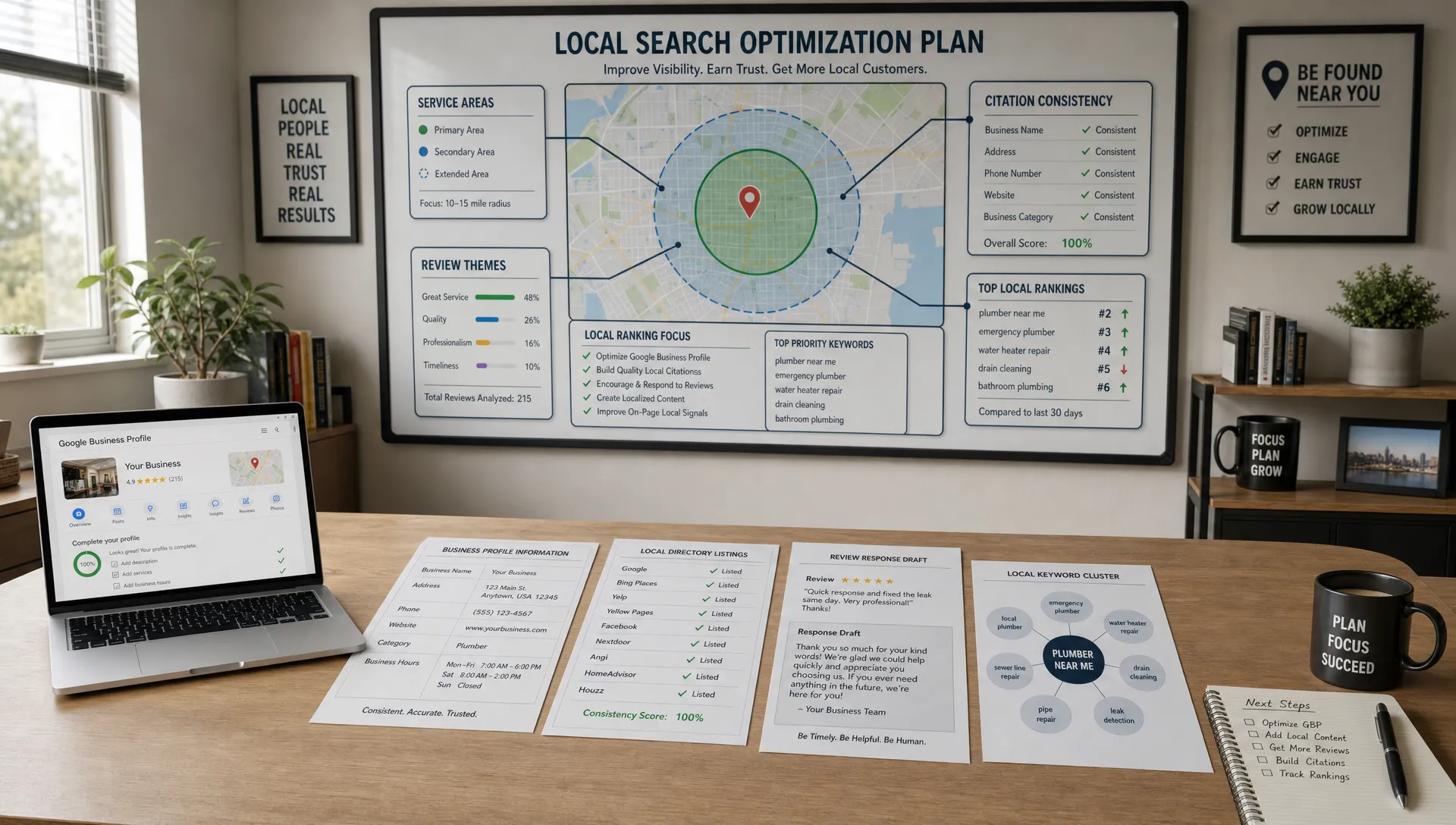
A scalable SEO workflow typically includes keyword validation, SERP review, outline approval, on-page optimization, internal linking, metadata creation, image alt text, and post-publication monitoring. If you are building a lean tech stack, this guide to AI SEO tools for small teams can help you evaluate what actually supports the workflow instead of adding noise.
The best SEO use of AI is not “write more keyword articles.” It is “understand the reader faster, structure answers better, and improve content based on evidence.”
Once your strategy, briefs, prompts, and review stages are clear, you can add marketing workflow automation. This is where scaling becomes much easier.
Automation can help create tasks when a topic is approved, notify a subject matter expert when input is needed, move drafts to the next review stage, generate content repurposing tasks after publication, and collect performance data on a schedule.
AI can also assist with low-risk production work, such as turning a blog outline into a newsletter draft, summarizing a webinar transcript, generating social post variations, creating content update recommendations, or formatting a draft for a CMS checklist.
The key is to avoid automating decisions that carry brand, legal, or trust risk. Claims about product performance, financial outcomes, legal guidance, health advice, security practices, or customer results should have human review. For organizations working in regulated or sensitive industries, governance should be part of the workflow from the beginning. The NIST AI Risk Management Framework is a useful reference for thinking about AI risk, transparency, and accountability.
A good rule: automate movement, formatting, summarization, and reminders before you automate judgment.
Governance sounds bureaucratic, but it is what allows teams to move faster with confidence. Without governance, every AI-assisted piece becomes a debate about what is allowed.
Your governance layer should answer practical questions. Which AI tools are approved? What information can be pasted into them? Which topics require expert review? How are sources verified? When should AI involvement be disclosed? Who approves final publication? How are outdated articles refreshed or retired?
Create a fact-checking standard. AI-generated drafts may include plausible but incorrect statements, outdated references, or unsupported claims. Require editors to verify statistics, quotes, legal or financial statements, and product claims against reliable sources. Whenever possible, cite original sources rather than summaries of summaries.
You should also maintain a source library. This can include customer research, product documentation, approved messaging, analyst reports, internal data, case studies, support insights, and expert interviews. The more approved context your team can provide, the less generic your AI-assisted content becomes.
Governance does not have to be complex. A one-page AI content policy, a review checklist, and a source standard can dramatically improve consistency.
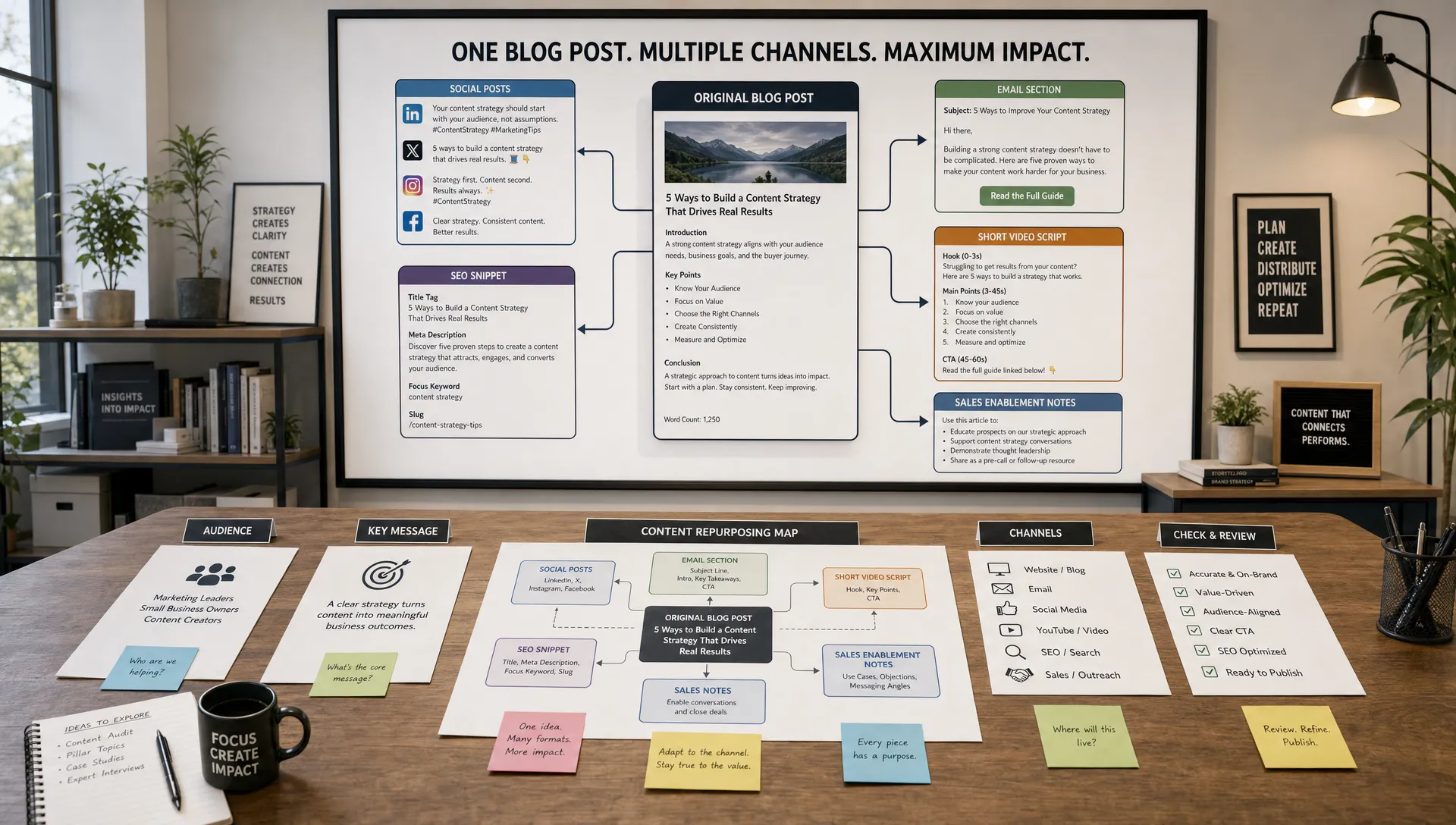
AI makes repurposing easier, but repurposing should still be strategic. The goal is not to turn every article into 30 mediocre assets. The goal is to adapt one strong idea into formats that fit different channels and audience moments.
A long-form guide can become a LinkedIn carousel, an email newsletter, a sales enablement one-pager, a short video script, a webinar outline, a FAQ entry, and several social posts. AI can create first-pass versions of these assets, but a marketer should tailor each one to the channel.
For example, a blog post built for search may need a direct, problem-led hook for LinkedIn. A newsletter version may need more editorial commentary. A sales enablement version may need sharper objections and proof points. A product page snippet may need tighter positioning and a clearer CTA.
Repurposing works best when it is planned during the brief stage. Ask where the core idea will be distributed before the article is written. This helps the writer capture examples, quotes, and sections that can be reused later.
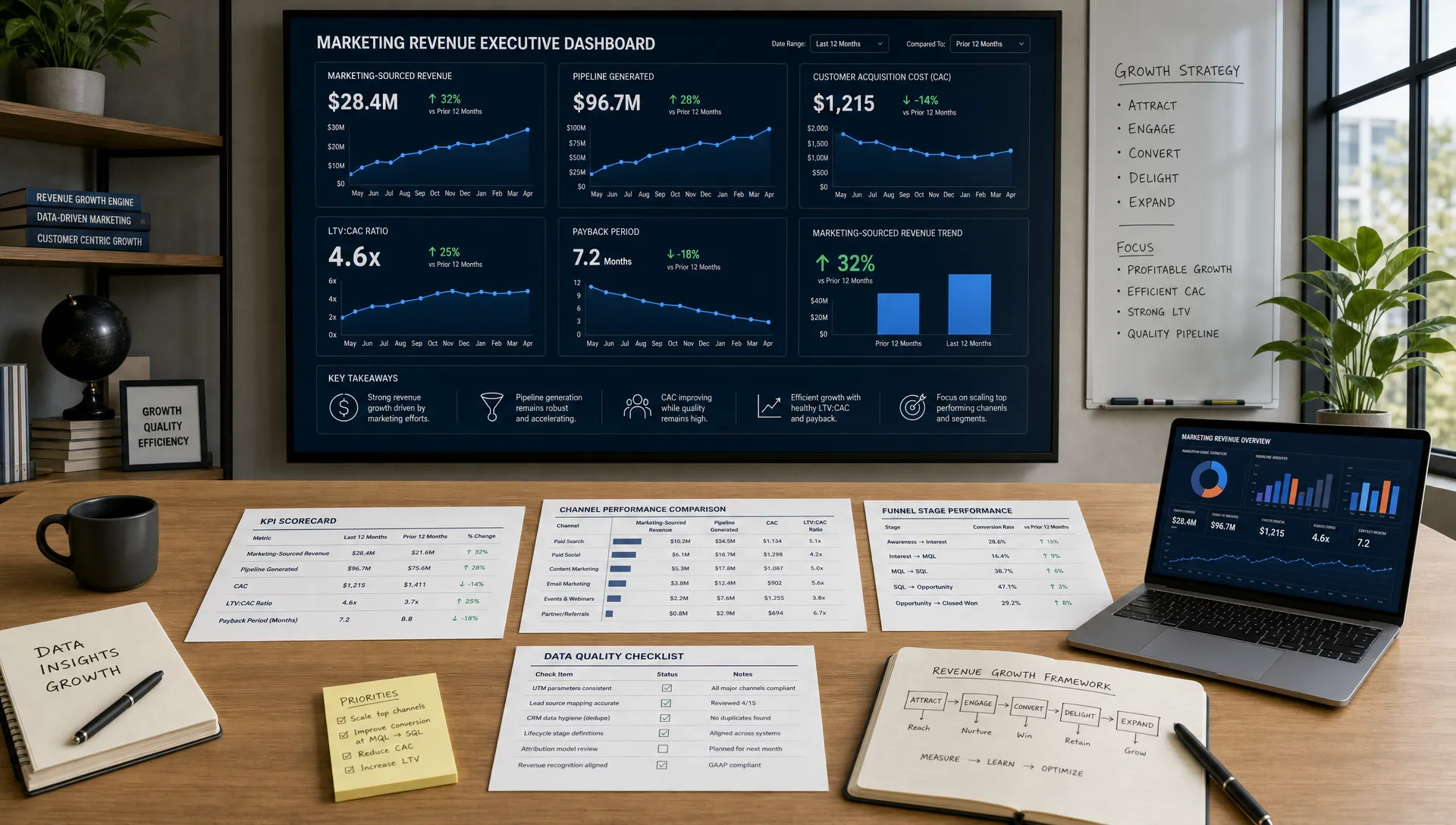
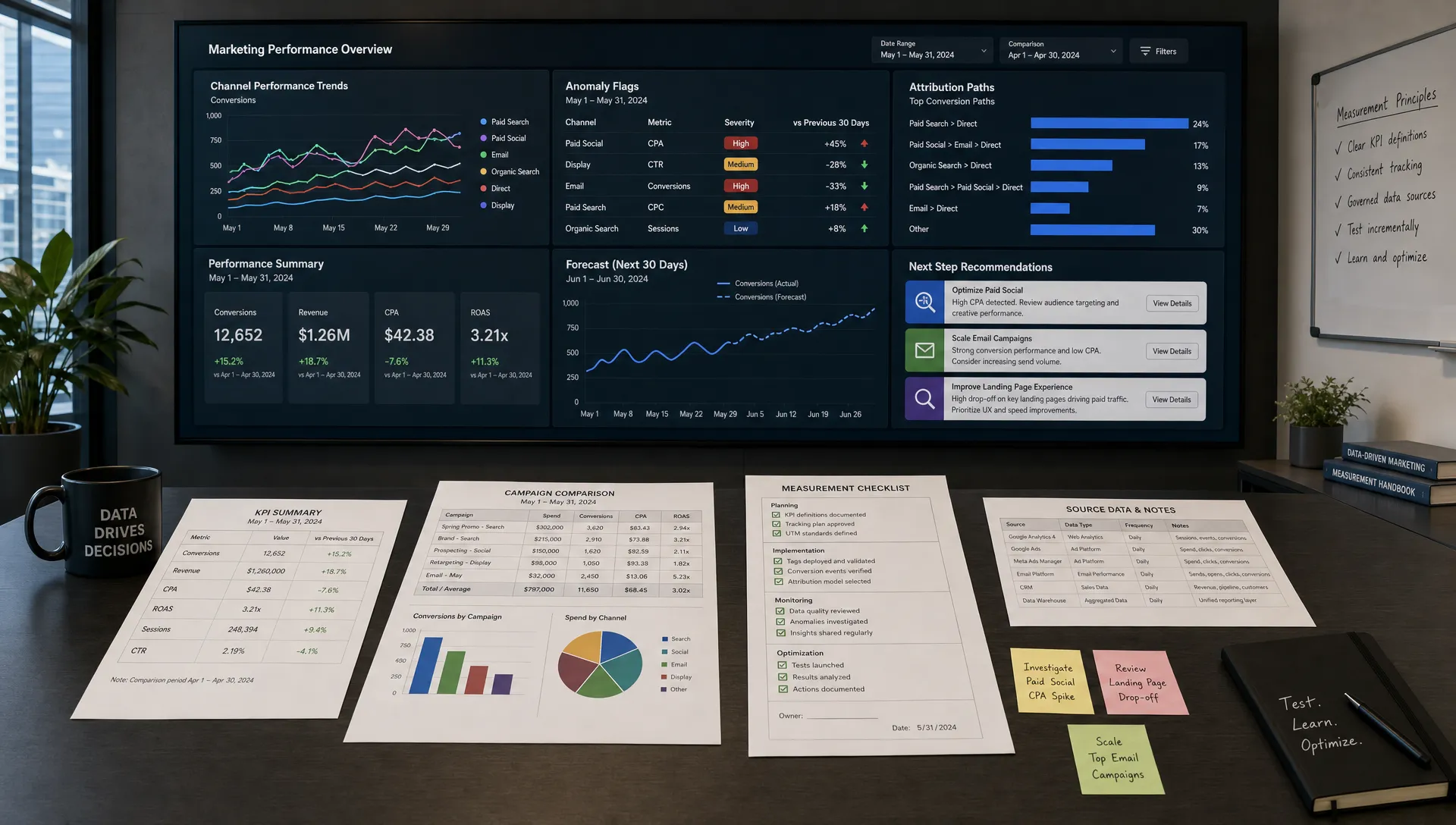
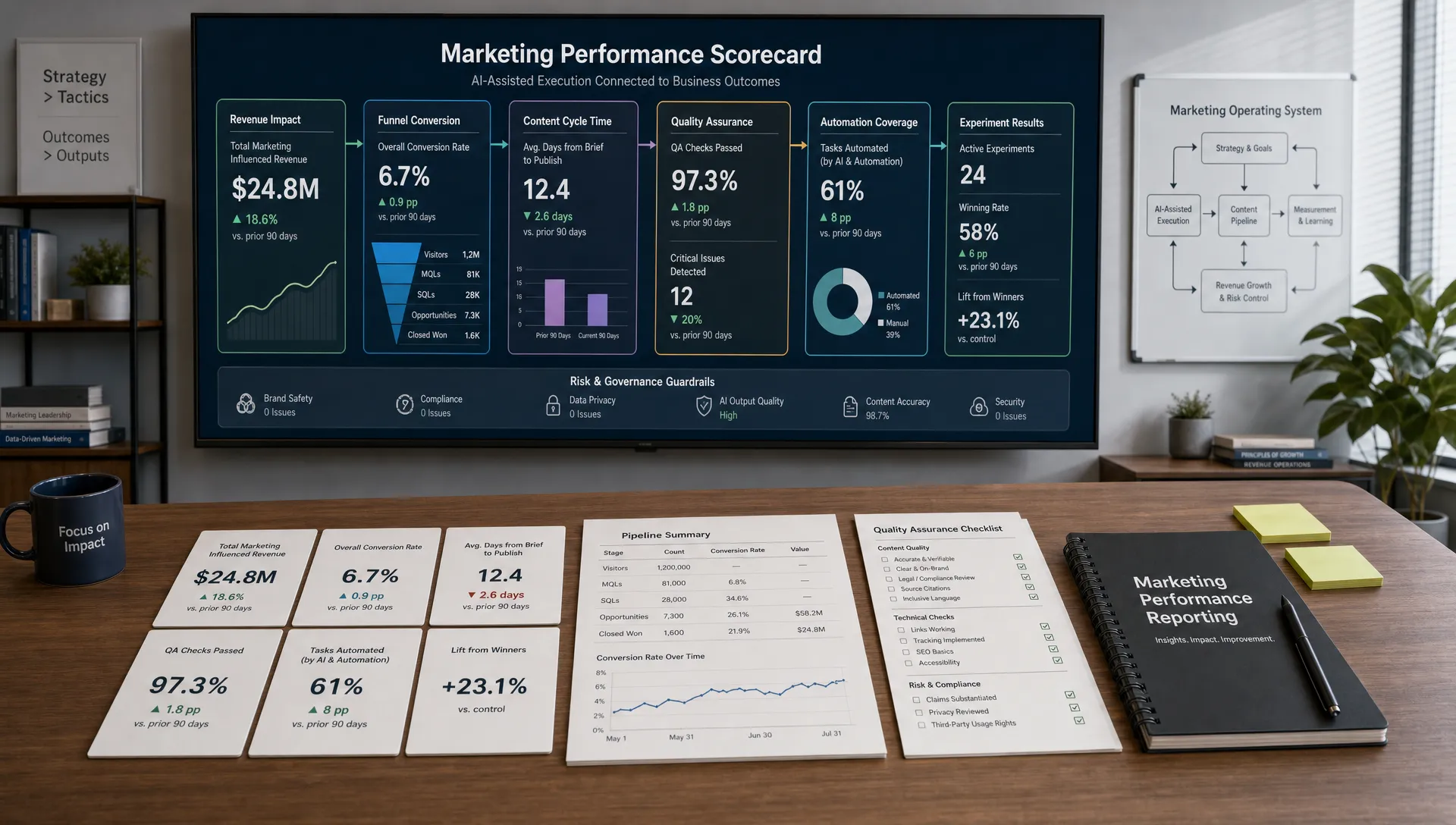
Most teams measure published content, but fewer measure the workflow that produced it. If you want to scale, you need both.
Content performance tells you whether the asset worked. Workflow performance tells you whether the system is improving.
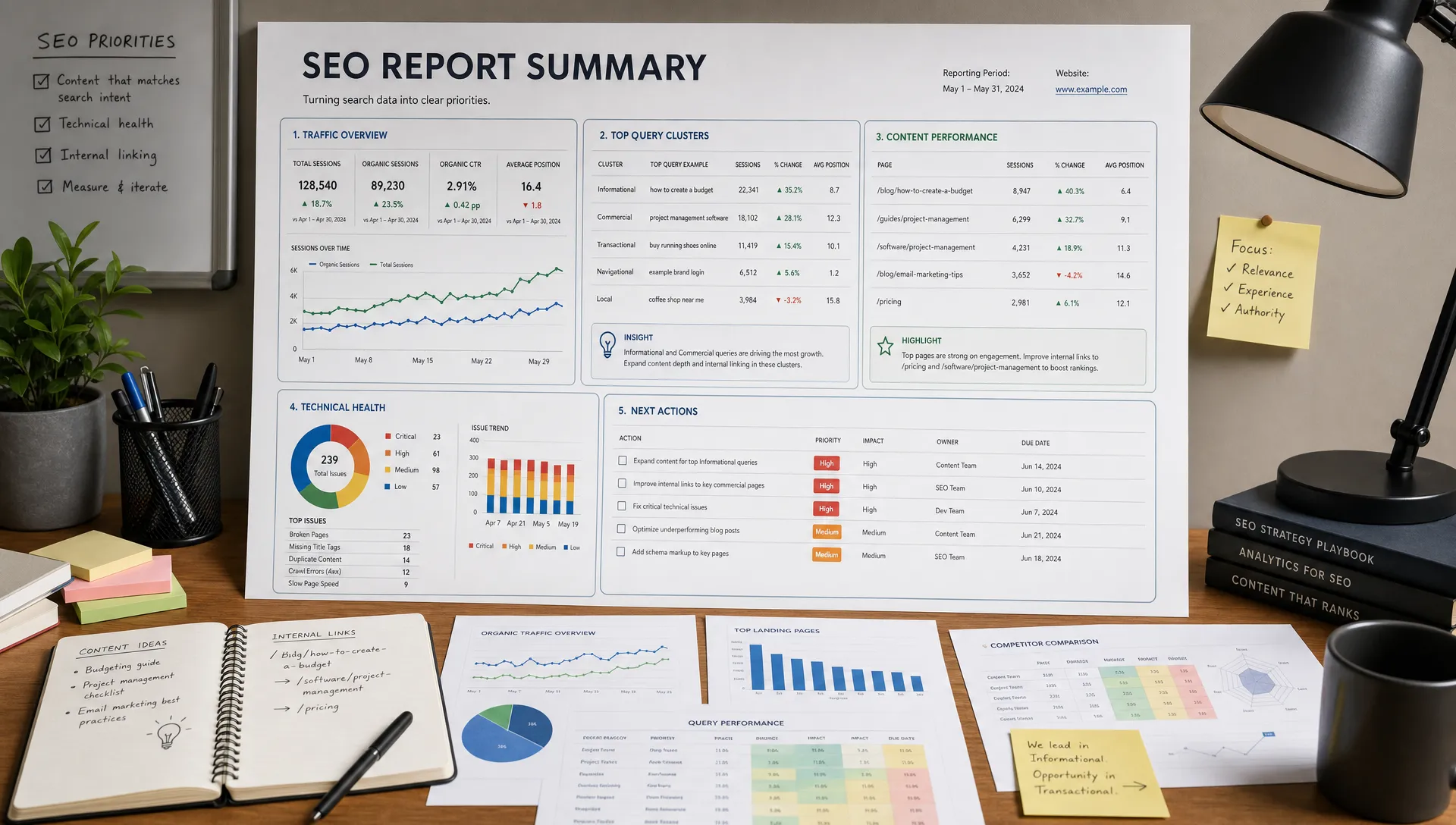
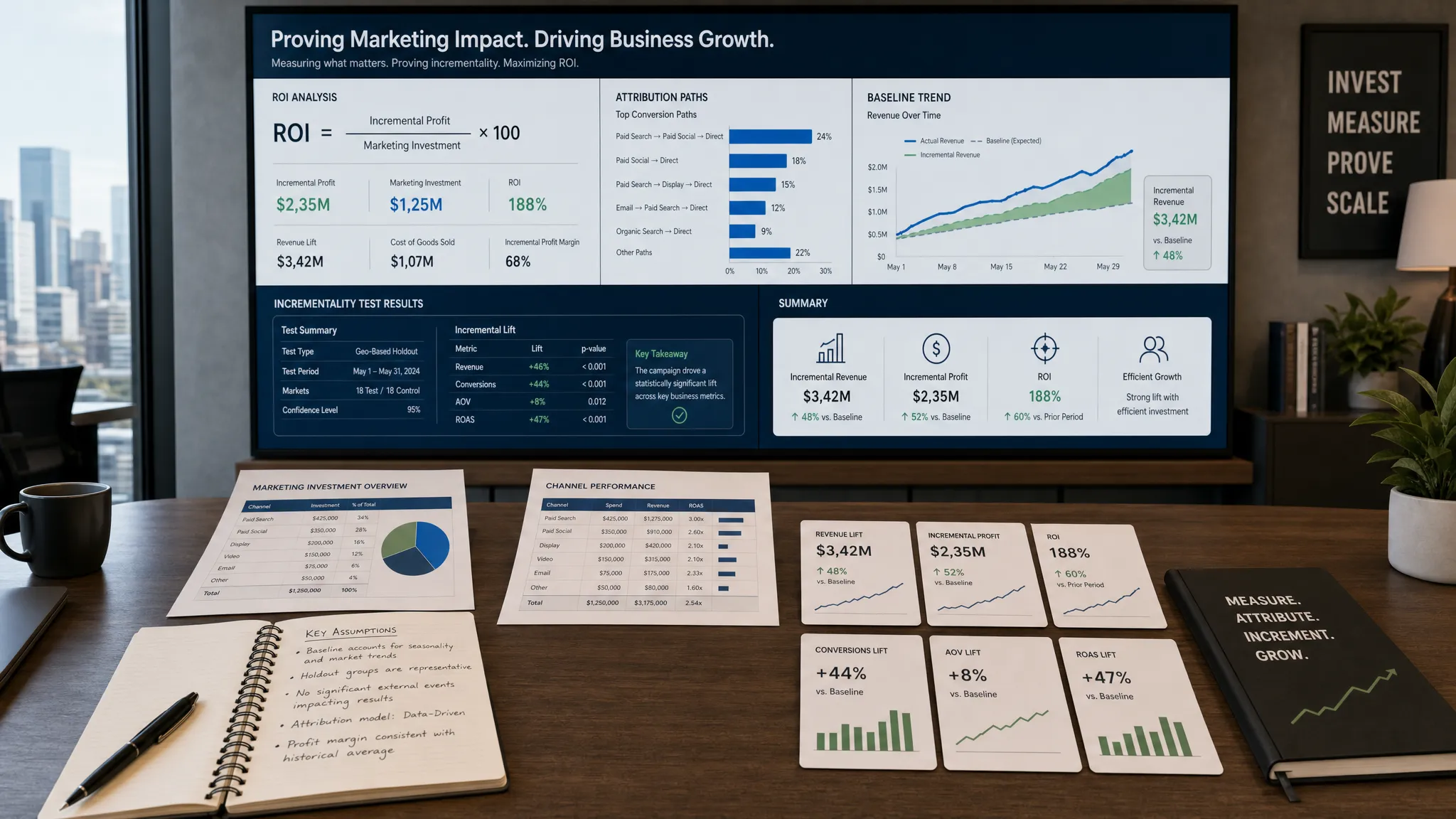
Track metrics such as brief approval time, draft turnaround time, number of revision rounds, edit intensity, missed deadlines, review bottlenecks, organic impressions, click-through rate, rankings, assisted conversions, newsletter signups, content updates, and repurposed asset performance.
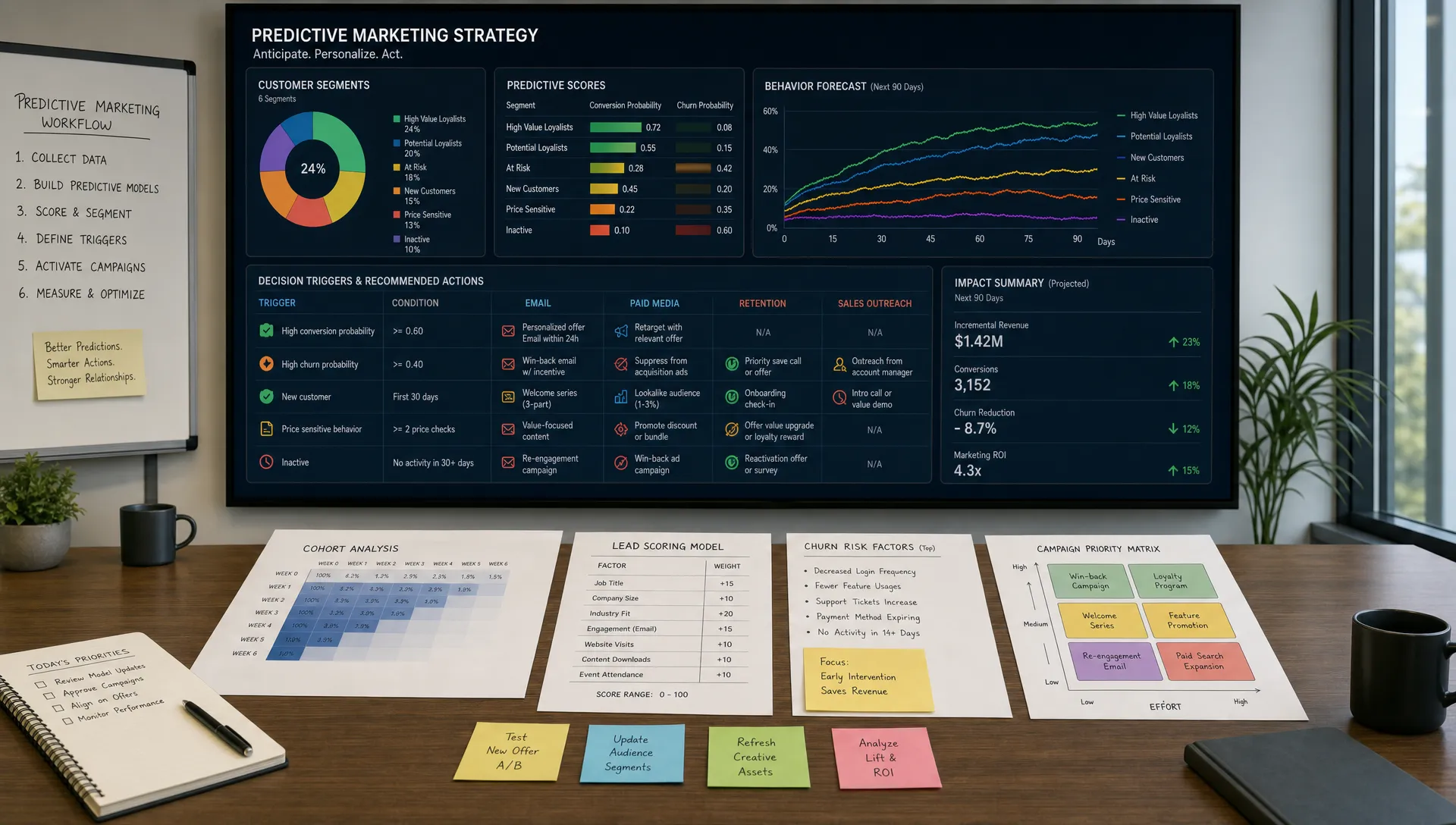
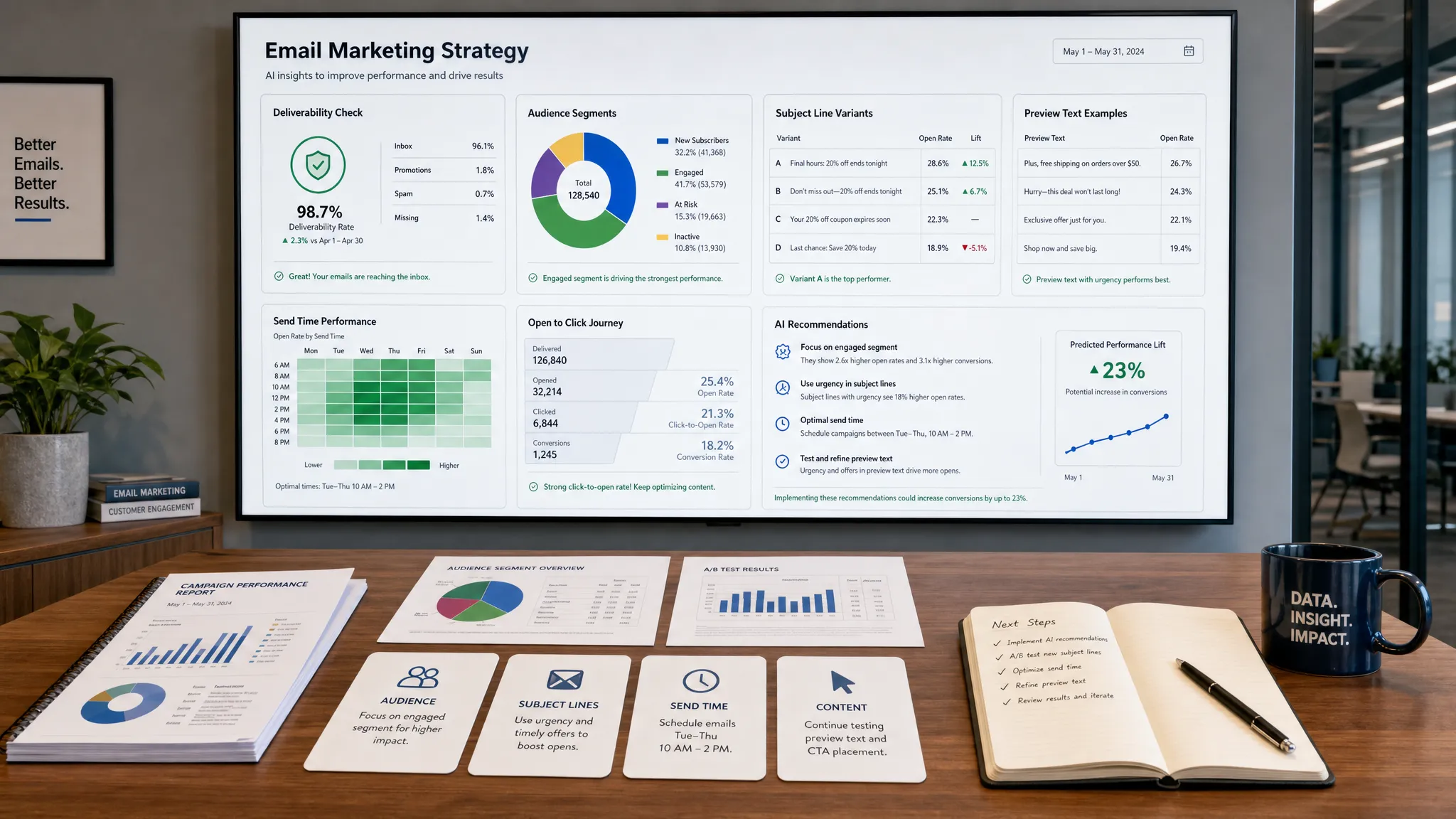
AI-powered analytics can help summarize trends, identify content decay, surface pages with high impressions but low CTR, and recommend updates. But again, the value is not the dashboard itself. The value is the editorial decision that follows.
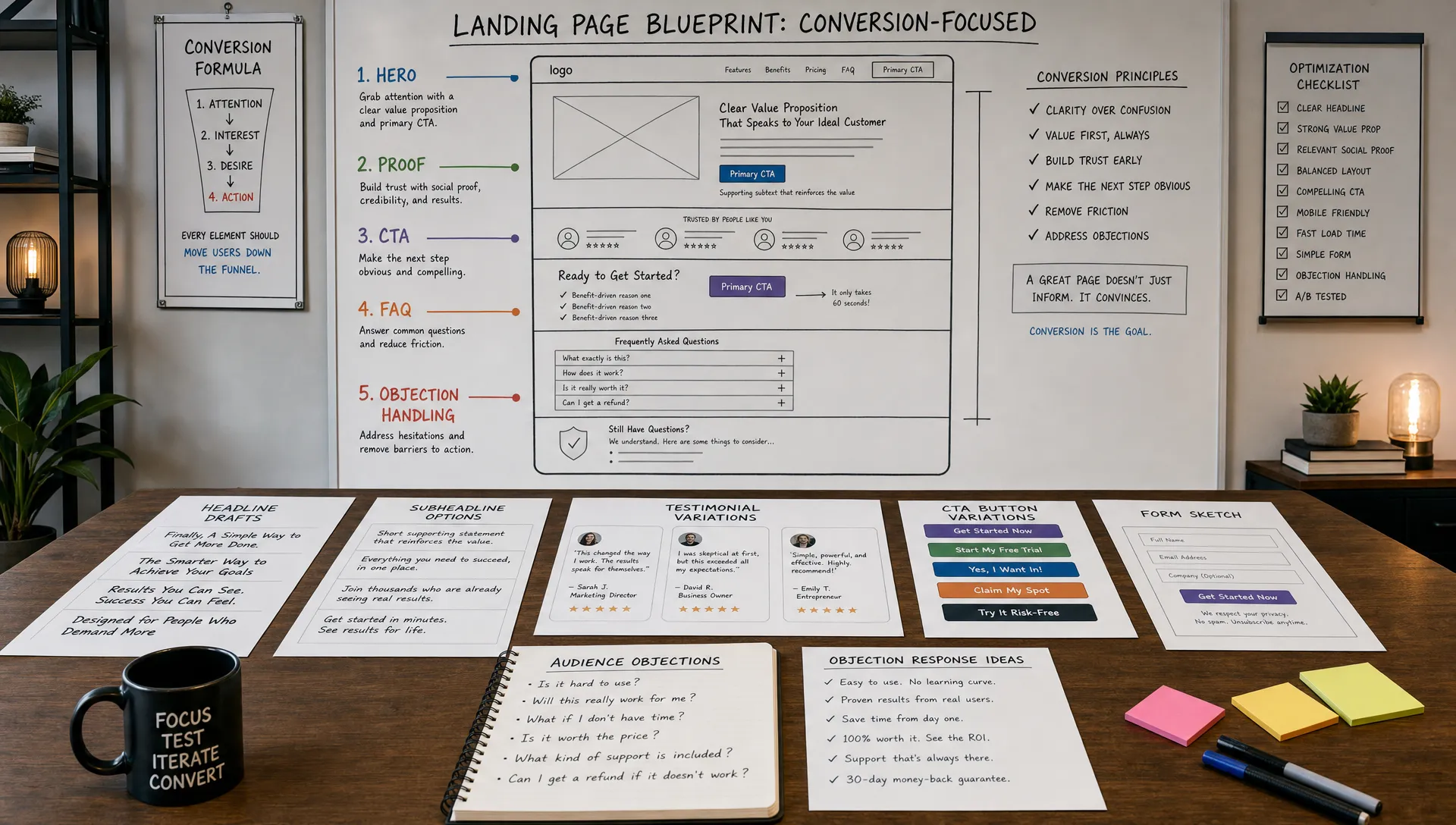
If an article ranks but does not convert, the CTA or intent match may need work. If drafts always require heavy edits, the brief or prompt may be weak. If subject matter experts delay reviews, the workflow may need shorter input requests. If repurposed posts underperform, the channel adaptation may be too generic.
This is the compounding advantage of a scalable AI content workflow: every cycle teaches the system how to improve.
You do not need to rebuild your entire content operation at once. Start with a focused pilot.
Review your current content process from idea to reporting. Identify where work slows down, where quality issues appear, and where AI could help without adding risk. Document your audience segments, content pillars, brand voice rules, and review requirements.
Create one intake form, one content brief template, one outline prompt, one draft prompt, one editorial checklist, and one repurposing prompt. Keep them simple enough that the team will actually use them.
Choose three to five pieces of content. Use the new workflow from intake through publication. Track how long each stage takes and where the process breaks. Ask editors and subject matter experts to note what felt better and what still felt messy.
Compare the pilot against your previous process. Look at cycle time, revision quality, reviewer workload, and early performance indicators. Improve the templates and prompts before adding more content types or channels.
This pilot approach keeps AI adoption practical. Instead of announcing a massive transformation, you build proof through a repeatable system.
The biggest mistake is treating AI as a shortcut around strategy. If the topic, audience, and angle are unclear, the draft will likely be unclear too.
Another mistake is scaling output before scaling review. Publishing more content without stronger QA can damage trust and waste search opportunity. Human review is not a bottleneck to eliminate. It is a quality layer to design well.
Teams also struggle when they use too many tools too early. A complicated stack can create more handoffs, more logins, and more confusion. Start with the workflow, then choose AI tools that support it.
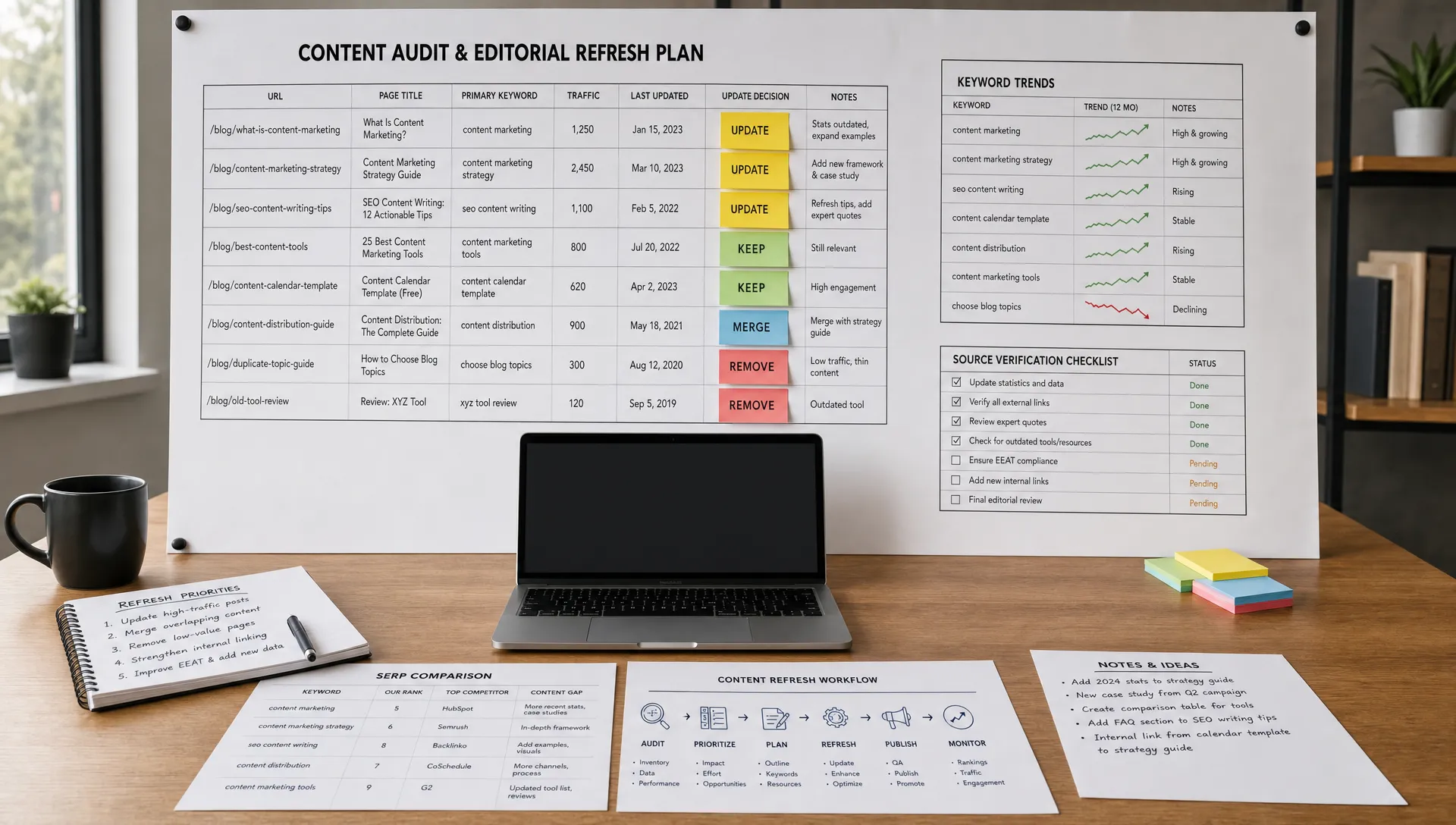
Finally, do not ignore updates. AI can help you publish faster, but existing content still needs maintenance. Refreshing high-potential articles can often produce better results than constantly creating new ones.
Can AI-generated content rank in search? Yes, AI-assisted content can rank if it is helpful, accurate, original, and aligned with search intent. Search engines evaluate content quality and usefulness, not just the production method. Human review, expert input, and strong sourcing are essential.
How many AI tools does a content team need? Most teams should start with a small stack: one AI writing or ideation tool, one SEO tool, one project management system, and one analytics source. Add tools only when they solve a real workflow bottleneck.
What should humans always review in an AI content workflow? Humans should review strategy, claims, expert nuance, brand voice, legal or financial implications, product positioning, and final publication decisions. AI can assist, but accountability stays with the team.
How do you keep AI content from sounding generic? Use detailed briefs, approved examples, customer language, expert quotes, original data, and a documented point of view. Generic prompts produce generic output. Specific inputs create better drafts.
What is the best first workflow to automate? Start with low-risk handoffs, such as task creation, review reminders, metadata drafts, repurposing drafts, and reporting summaries. Avoid automating final judgment until your standards and governance are mature.
A scalable AI content workflow is not a replacement for marketers. It is a structure that helps marketers spend less time on repetitive production and more time on strategy, insight, creativity, and performance improvement.
If you are building that system now, AIMarketer Hub offers practical AI marketing resources, guides, tools, and workflow ideas for teams that want to automate intelligently. You can also explore more guidance on AI content generation tips for better ROI as you refine your process.
Start small, document what works, protect quality, and let each content cycle improve the next one. That is how AI content scales without losing the trust that makes content worth creating in the first place.