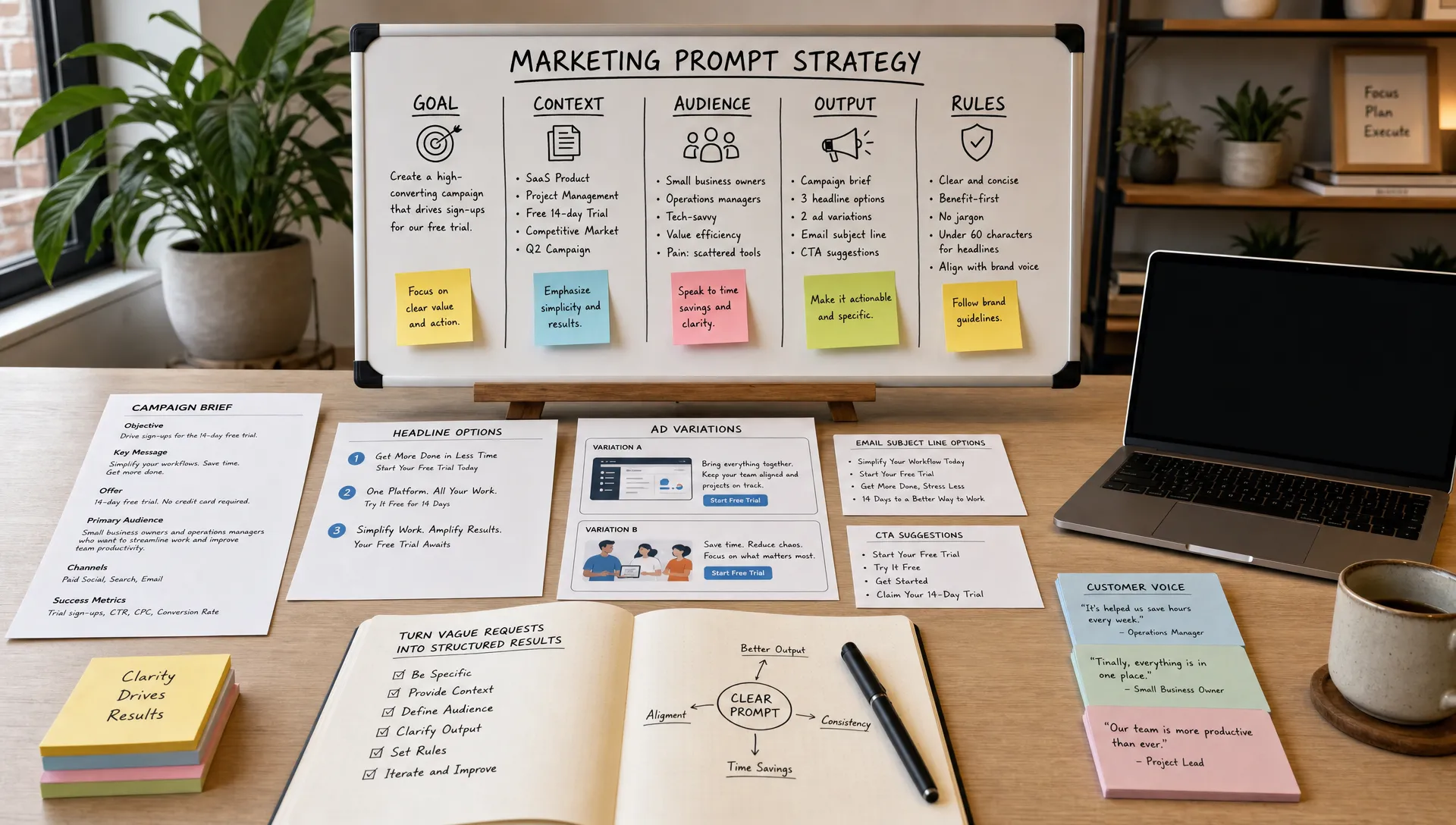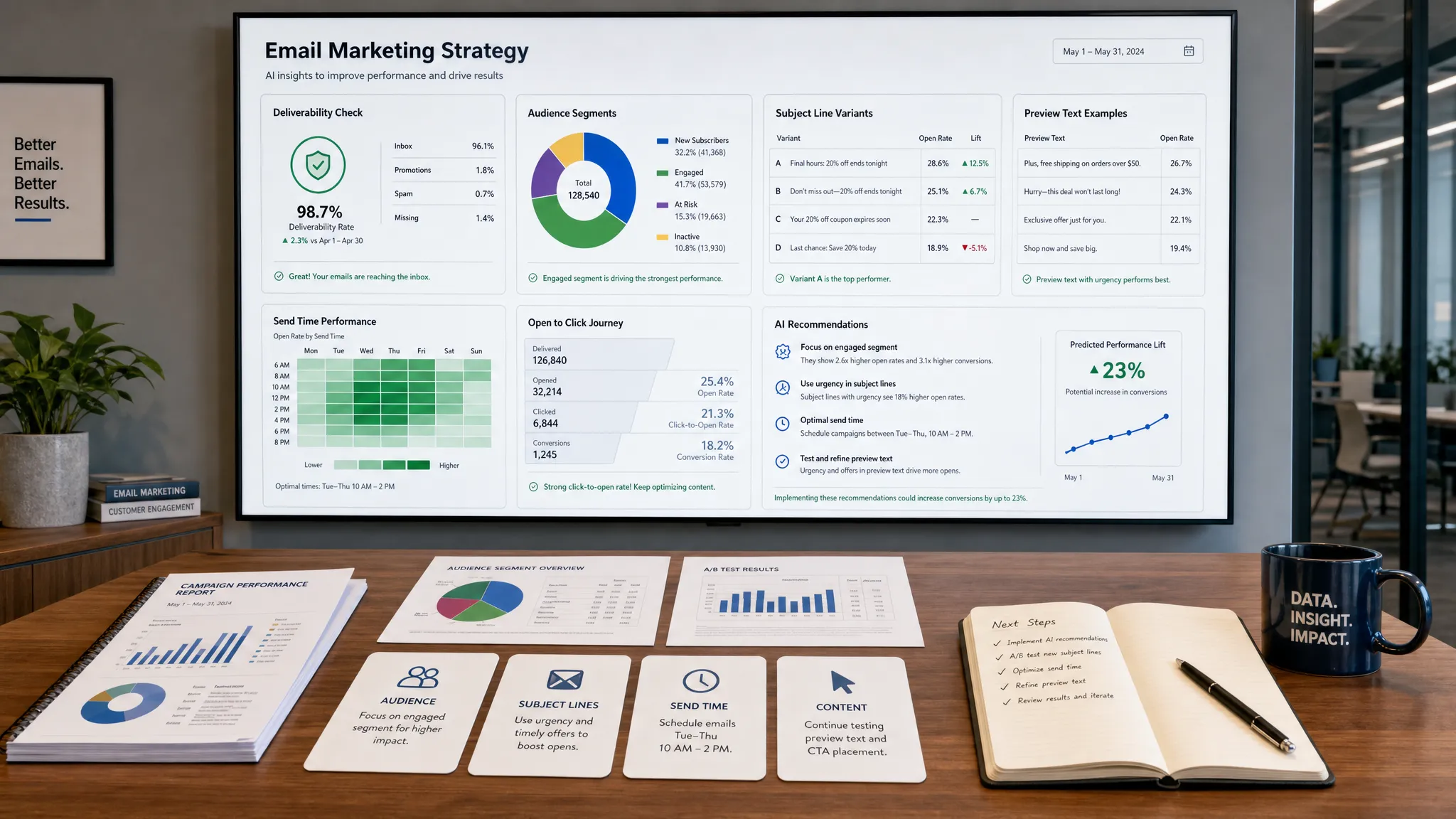
The best email subject lines rarely come from asking AI to “write something catchy.” They come from prompts that give the model context, constraints, audience psychology, and a clear job to do.
That matters because the inbox is more competitive than ever. Your subject line is not just a headline. It is the promise that determines whether your email earns attention, gets ignored, or feels like bait. And while open rate is still useful, it is no longer a perfect measurement. Apple’s Mail Privacy Protection can affect open tracking by preloading email content, so marketers should treat opens as a directional signal and also watch clicks, replies, conversions, and unsubscribes.
The good news: AI can help you create stronger subject lines faster, especially when you use prompts designed for the exact campaign, audience, and offer. Below are copy-ready AI prompts for email subject lines you can adapt for newsletters, launches, sales campaigns, webinars, re-engagement flows, and more.
AI performs best when it knows what the email is trying to achieve. A vague prompt creates vague subject lines. A precise prompt creates options you can actually test.
Before using any of the prompts below, gather these inputs:
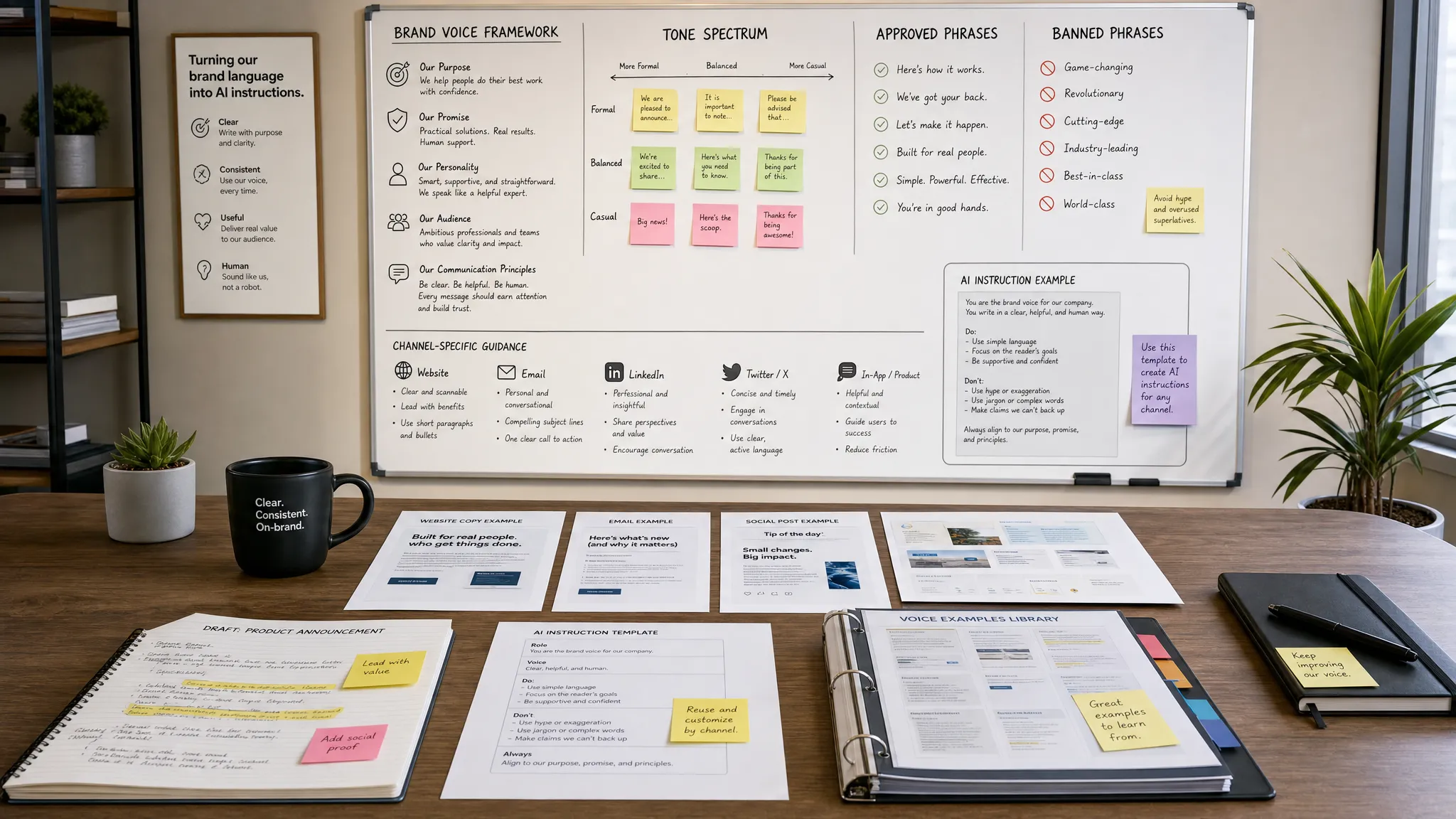
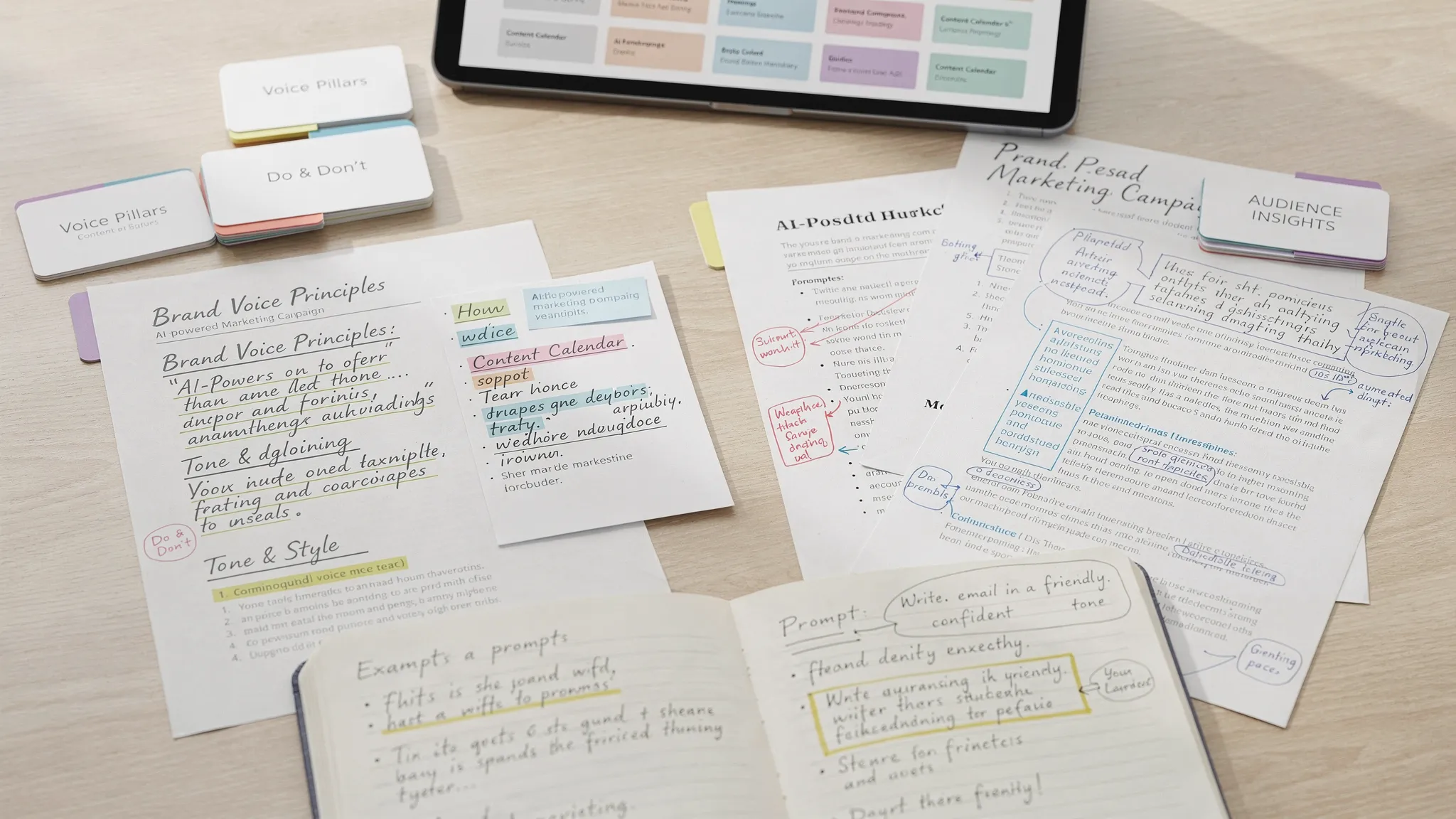
If you are using AI across more than email, keep your voice system consistent. AIMarketer Hub’s guide on using AI for marketing without losing your brand voice is a useful companion when you want AI-generated subject lines to sound like your company, not a generic template.
Use this when you want a broad set of high-quality options before narrowing down to A/B test candidates.
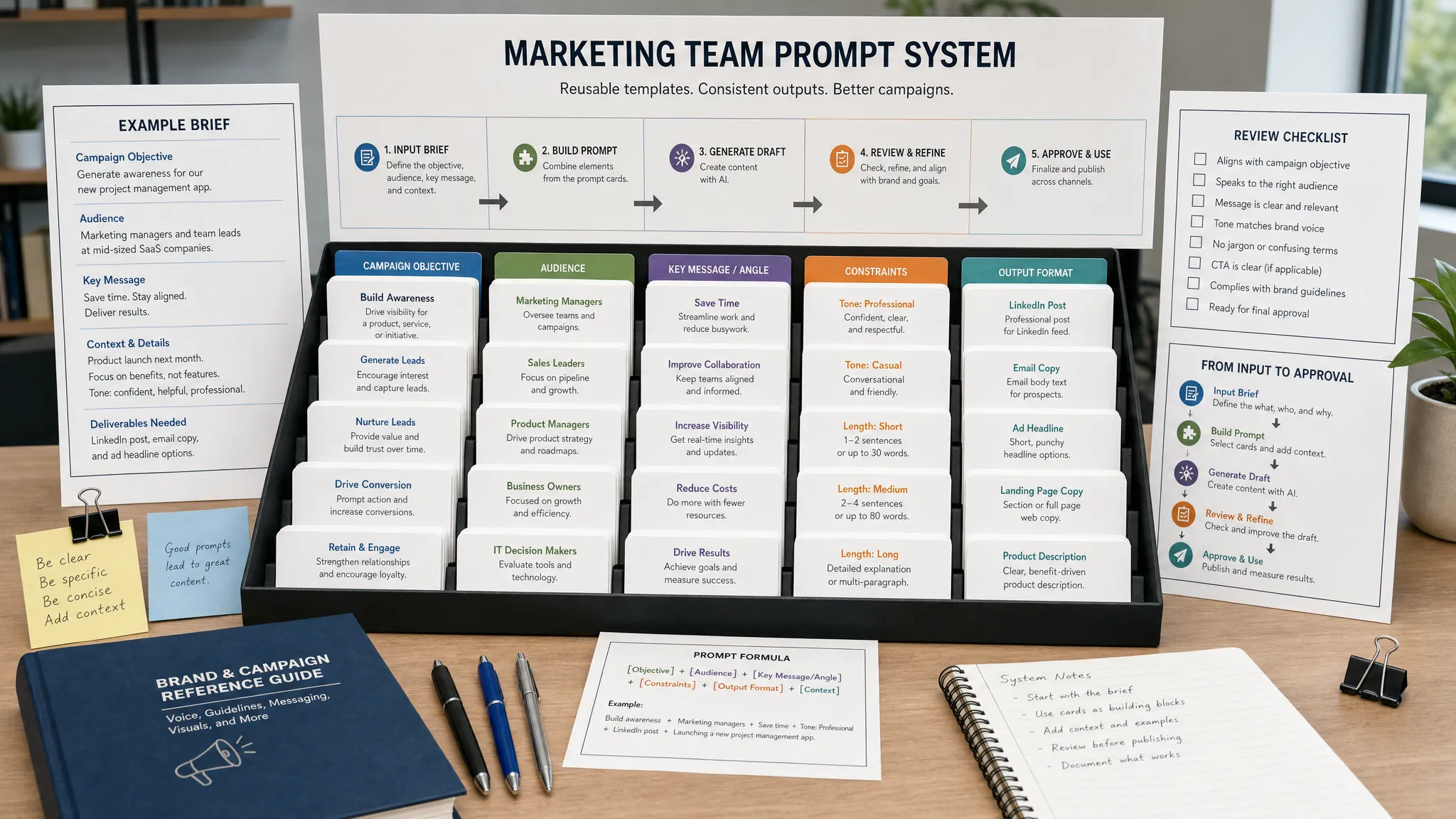
Act as a senior email marketing strategist. Write subject lines for an email campaign with the following context: audience is [describe audience], campaign goal is [goal], email topic is [topic], offer or main value is [offer/value], brand voice is [voice], and the desired action is [action]. Generate 20 subject lines split across these angles: benefit-driven, curiosity-driven, urgency-driven, problem-aware, social proof, and straightforward. Keep most options under 50 characters, avoid clickbait, avoid misleading claims, and include 5 paired preheader options. For each top 5 subject line, explain why it could work and what audience segment it is best for.
This prompt works because it asks AI to think like a strategist, not just a copywriter. It also forces variety, which is critical for testing. If all 20 options sound alike, you do not have a real test.
Different campaigns need different psychological triggers. A flash sale might need clarity and urgency. A B2B newsletter might need expertise and specificity. A re-engagement email might need empathy and a low-friction reason to return.
Use the prompts below as starting points, then edit for accuracy and brand fit.
Write 15 email subject lines for a promotional campaign. The audience is [audience], the offer is [offer], the deadline is [deadline], and the key benefit is [benefit]. Make the subject lines clear, specific, and non-spammy. Include a mix of direct, curiosity-based, and urgency-based options. Avoid excessive punctuation, all caps, and exaggerated claims.
Best for discounts, bundles, seasonal promotions, free shipping campaigns, and limited-time bonuses. The key is to tell the AI exactly what the offer is so it does not invent urgency or overpromise.
Generate 20 subject lines for a weekly newsletter about [topic]. The readers are [audience] who care about [pain point or goal]. The newsletter includes [main article/resource], [secondary topic], and [timely insight]. Make the subject lines feel useful, current, and worth saving. Avoid generic phrases like “monthly update” or “latest news.”
This is ideal for content-led brands, SaaS newsletters, agencies, consultants, and B2B publishers. Specificity usually beats cleverness here. “3 ways to cut reporting time this week” is stronger than “Your weekly marketing update.”
Act as a launch copywriter. Create 20 email subject lines for a new product or feature called [name]. It helps [audience] achieve [outcome] by [brief explanation]. The launch angle should feel [exciting/professional/innovative/practical]. Include subject lines for announcement emails, early-access emails, and follow-up emails. Keep the tone confident but not hype-driven.
Product launch subject lines should create interest without assuming everyone already understands the value. Ask AI to translate the feature into an outcome.
Write 15 subject lines for a webinar invitation. The webinar title is [title], the audience is [audience], the main outcome attendees will learn is [outcome], and the speaker or host is [name/title]. Include options that emphasize learning, urgency, credibility, and practical takeaways. Add 5 reminder subject lines for people who registered but have not attended yet.
Event subject lines perform best when they answer the silent inbox question: “Why should I spend my time on this?” Make the takeaway concrete.
Create 12 abandoned cart email subject lines for [product/category]. The recipient added the item to their cart but did not complete checkout. Use a helpful, low-pressure tone. Include options that mention the product benefit, answer hesitation, and remind them what they left behind. Do not use guilt, false scarcity, or aggressive urgency.
This prompt is especially useful for ecommerce brands that want recovery emails to feel helpful rather than pushy. If you have shipping details, reviews, or return policy information, include it in the prompt only if it appears in the email.
Write subject lines for a free trial onboarding email. The user signed up for [product] but has not completed [activation action]. The goal is to get them to [specific next step]. Generate 15 options that are encouraging, simple, and action-oriented. Include versions for beginners and versions for experienced users.
For SaaS, the best subject line may not be the cleverest one. It is often the one that removes friction: “Set up your first workflow in 3 minutes” is clear and useful.
Act as a lifecycle marketing strategist. Write 15 re-engagement email subject lines for subscribers who have not opened or clicked in [time period]. The brand is [brand type], the original reason they subscribed was [reason], and the email offers [value or choice]. Use a respectful tone. Avoid guilt-based language. Include options that ask a question, offer a preference update, and highlight fresh value.
Re-engagement subject lines should reduce pressure. Give people a reason to return, update preferences, or gracefully opt out.
Create 15 B2B sales follow-up subject lines for prospects in [industry] with the role [job title]. The previous touchpoint was [meeting/demo/download/reply/no response]. The email shares [resource/proposal/idea] and the goal is [book a call/get reply/review proposal]. Make the subject lines concise, relevant, and human. Avoid hype and avoid sounding automated.
For sales emails, relevance matters more than flash. Ask AI for short, human options that sound like something a real person would send.
Write 15 subject lines for a customer retention email. The customer has been using [product/service] for [time period]. The email helps them get more value by [tip/resource/feature/workflow]. Generate subject lines that feel supportive and proactive, not promotional. Include options for power users and newer customers.
Retention emails are often overlooked, but they are a powerful place to use AI. The subject line should reinforce progress, value, and momentum.
Generate 20 subject lines for a seasonal email campaign tied to [holiday/season/event]. The audience is [audience], the offer or message is [offer/message], and the emotional angle should be [relief/excitement/preparation/celebration]. Avoid clichés and overused seasonal phrases. Include options that connect the season to a practical customer need.
Seasonal subject lines can become predictable quickly. This prompt asks AI to avoid the obvious and connect the moment to a real customer goal.
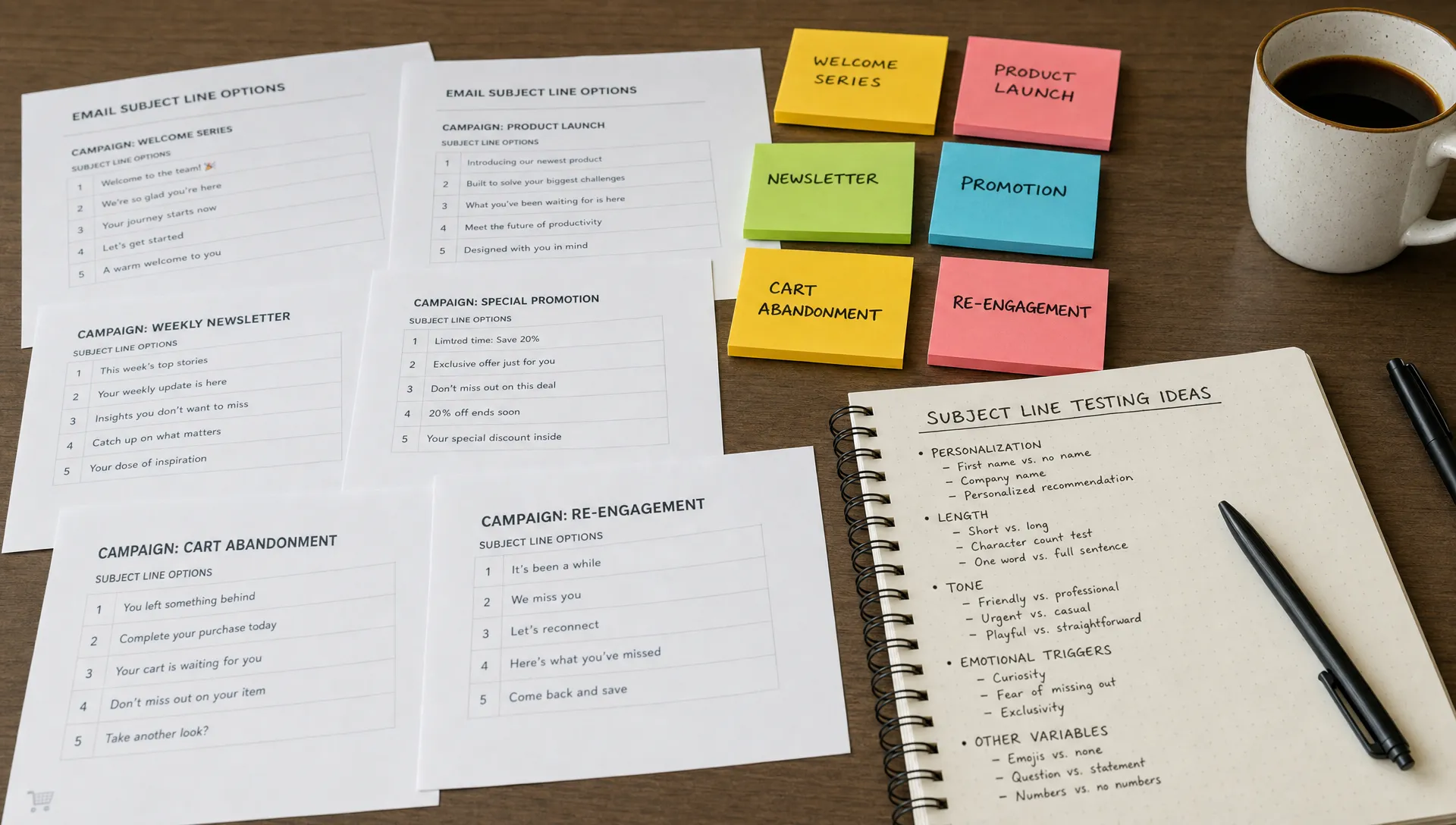
Your first AI output is usually a draft, not the final answer. The best marketers use AI in rounds: generate, critique, refine, segment, and test.
Review these subject lines and rewrite them for mobile inboxes. Keep the meaning intact, prioritize the strongest words near the beginning, and create versions under 35 characters, under 45 characters, and under 60 characters: [paste subject lines].
This is useful because many subscribers scan email on phones. Shorter is not always better, but front-loaded clarity helps.
These subject lines feel too generic. Rewrite them with more specificity using the following details: [details]. Keep them accurate and avoid adding claims not supported by the email. Provide 10 stronger options and explain what changed.
Specific subject lines often signal value faster. Compare “Improve your workflow” with “Cut 2 hours from weekly reporting.” The second option is easier to understand if it is true.
Rewrite these email subject lines in our brand voice. Our voice is [describe voice], we avoid [phrases/tones], and our audience expects [expectation]. Keep the subject lines clear and persuasive without sounding generic. Provide 3 voice variations: safe, balanced, and bold.
This prompt is especially useful when AI gives you mechanically correct subject lines that do not sound like your company. For broader workflow ideas, see AIMarketer Hub’s article on how AI for content creation saves time and scales output.
Take this subject line: [subject line]. Create 12 A/B test variants that keep the same email content accurate. Group them by hypothesis: clearer value, stronger urgency, curiosity, personalization, shorter length, and question format. For each variant, explain what the test is measuring.
A good A/B test needs a hypothesis. If you test two random subject lines, you may get a winner but learn nothing useful.
Create subject line and preheader pairs for this email: [summary]. The subject line should create interest, and the preheader should add context without repeating the same words. Generate 10 pairs. Keep preheaders under 90 characters and make sure the combined message is accurate.
Preheaders are often the difference between “interesting” and “clear enough to open.” AI is excellent at creating complementary pairs if you explicitly ask for them.
Review these subject lines for trust, clarity, and compliance risk: [paste subject lines]. Flag anything that could feel misleading, too aggressive, spammy, or inconsistent with the email content. Suggest safer alternatives that still encourage opens.
This step is not optional for serious brands. The FTC’s CAN-SPAM compliance guide states that subject lines must accurately reflect the content of the message. AI can help you catch risky wording before it reaches your list.
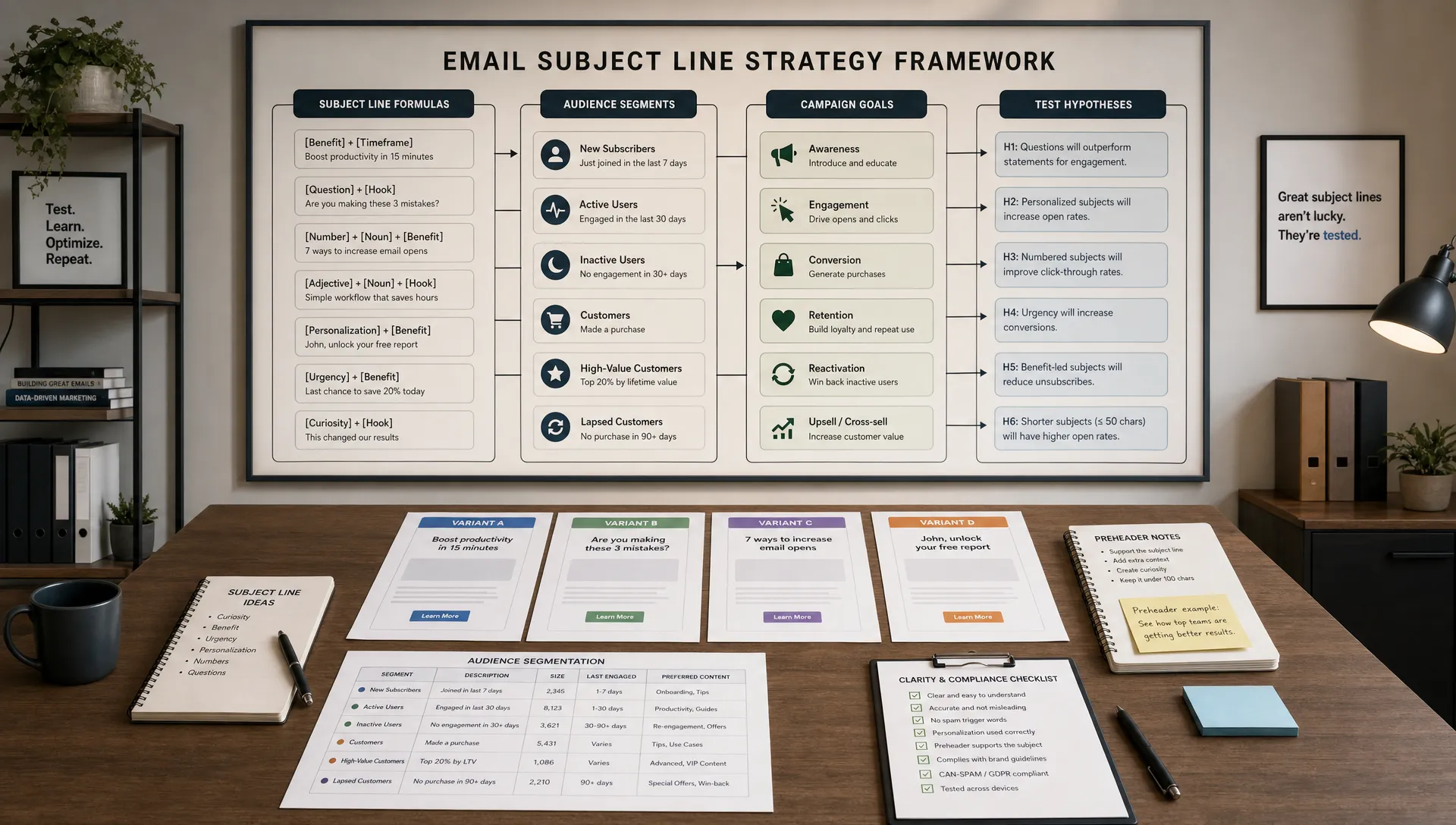
AI prompts become stronger when you give the model proven structures. These are not rigid templates. Think of them as starting points for variations.
To use these with AI, add this line to your prompt:
Generate subject lines using these formulas: benefit first, problem aware, curiosity with context, specific list, deadline, question, social proof, and contrarian. Make each one natural for [audience] and accurate to this email: [summary].
The goal is not to force every formula into a campaign. The goal is to produce strategic variety so your testing is more meaningful.
AI can generate volume, but marketers still need judgment. Before sending, review every subject line through four lenses: clarity, accuracy, audience fit, and testability.
A simple quality check can prevent most weak subject lines:
Deliverability also matters. A strong subject line cannot fix poor list hygiene, missing authentication, or unwanted email. Google’s email sender guidelines emphasize practices like authentication, low spam complaint rates, and easy unsubscribe options. Subject lines work best as part of a healthy email program, not as a shortcut around trust.
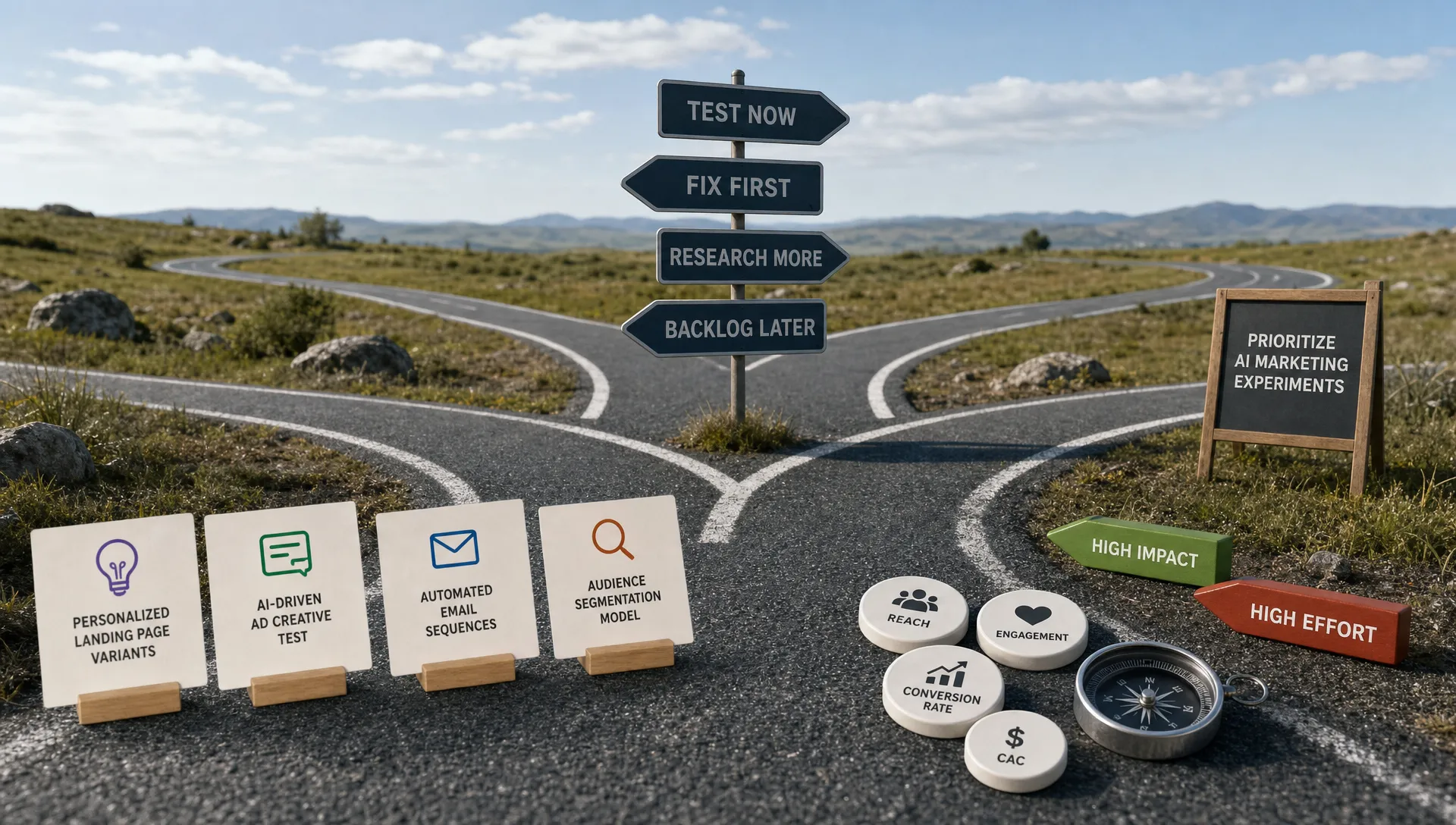
If you need more campaign angles to test alongside email, AIMarketer Hub’s collection of campaign ideas to boost engagement can help you connect subject line testing with broader marketing experiments.
Sometimes the fastest way to improve is to show AI what is wrong and ask it to fix the issue.
Weak subject line: “Our July newsletter”
Better prompt: “Rewrite this newsletter subject line so it highlights the most useful takeaway. The email includes three tips for reducing reporting time, a new AI workflow checklist, and a short customer example. Keep it under 50 characters.”
Stronger options: “3 ways to cut reporting time,” “Your AI workflow checklist is here,” “Faster reporting starts here.”
Weak subject line: “Big sale now!!!”
Better prompt: “Rewrite this promotional subject line so it feels trustworthy and clear. The offer is 20% off annual plans until Friday. Avoid all caps, excessive punctuation, and fake urgency.”
Stronger options: “20% off annual plans until Friday,” “Save on your annual plan this week,” “Your annual plan discount ends Friday.”
Weak subject line: “You forgot something”
Better prompt: “Rewrite this abandoned cart subject line with a helpful tone. The customer left [product] in their cart. The email includes a reminder, customer support link, and return policy details. Avoid guilt.”
Stronger options: “Still considering [product]?” “Your cart is saved,” “Need help choosing?”
These examples show the real advantage of AI: not replacing strategy, but giving you more quality directions to evaluate.
What is the best AI prompt for email subject lines? The best prompt includes the audience, campaign goal, email summary, offer, brand voice, constraints, and desired action. Ask AI for multiple angles, paired preheaders, and a short explanation of why the top options could work.
Can AI-generated subject lines improve open rates? They can help you create more relevant and testable options, which may improve open performance. However, open rates are affected by sender reputation, list quality, inbox placement, timing, and privacy features, so measure clicks and conversions too.
How many subject lines should I ask AI to generate? Start with 15 to 25 options. That gives you enough variety without becoming overwhelming. Then narrow the list to 3 to 5 strong candidates and choose 1 or 2 for testing.
Should email subject lines include emojis? Emojis can work for some brands and audiences, but they should not replace clarity. Use AI to generate versions with and without emojis, then test based on your segment and brand voice.
How long should an email subject line be? There is no universal perfect length, but many teams test options under 35, 45, and 60 characters to account for mobile and desktop inboxes. The best subject line is clear, accurate, and easy to scan.
How do I stop AI from writing clickbait subject lines? Add constraints directly in your prompt. Tell AI to avoid misleading claims, fake urgency, excessive punctuation, guilt-based wording, and anything not supported by the email content.
The best AI prompts for email subject lines do more than produce clever copy. They help your team build a repeatable process for generating ideas, protecting brand voice, testing hypotheses, and learning from campaign performance.
AIMarketer Hub gives marketers practical AI resources, prompt guidance, marketing tools, calculators, SEO resources, and industry-specific guides to automate and optimize everyday work. If you want to move from one-off AI experiments to a more reliable marketing workflow, explore AIMarketer Hub and build a smarter system for content creation, campaign planning, and performance improvement.