Startups entering 2026 have access to more AI tools than most teams can evaluate, let alone use well. That is both an advantage and a trap. AI can help a small team research customers, create content, personalize outreach, analyze campaigns, and automate repetitive work, but only if it is tied to a focused growth strategy.
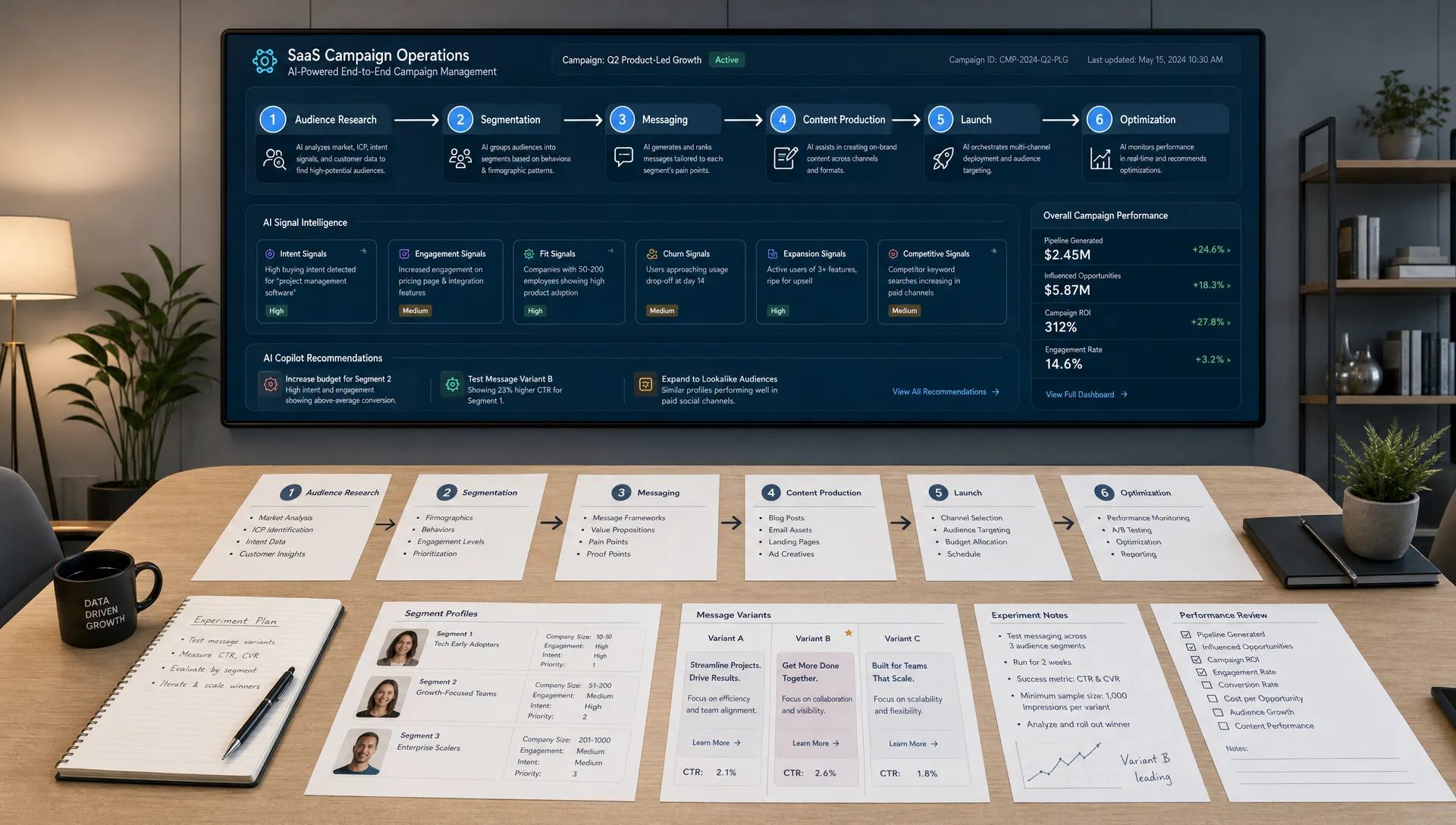
A strong AI marketing strategy for startups is not about replacing marketers or publishing more content for the sake of volume. It is about building a faster learning loop: understand the market, test messages, reach the right buyers, measure what works, and improve every week.
For early-stage teams, that matters because time, budget, and attention are limited. The best strategy is usually not the most complex one. It is the one your team can execute consistently, measure clearly, and adapt quickly.
AI adoption has moved beyond experimentation. In McKinsey’s 2024 global AI survey, 65% of respondents said their organizations were regularly using generative AI, nearly double the share from the previous survey. By 2026, your competitors are not just testing AI. Many are using it inside their daily marketing workflows.
That does not mean every startup should automate everything. In fact, the opposite is often true. The startups that win with AI marketing tend to be the ones that use it selectively, in places where it improves speed, clarity, or decision-making.
A practical AI marketing strategy should help your startup answer five questions:
If you cannot answer those questions, adding more tools will only make your marketing harder to manage.
Many startups begin with AI content generation because it is visible and easy to test. A founder can ask a model for blog ideas, LinkedIn posts, email sequences, or ad copy within minutes. That is useful, but content alone is not a strategy.
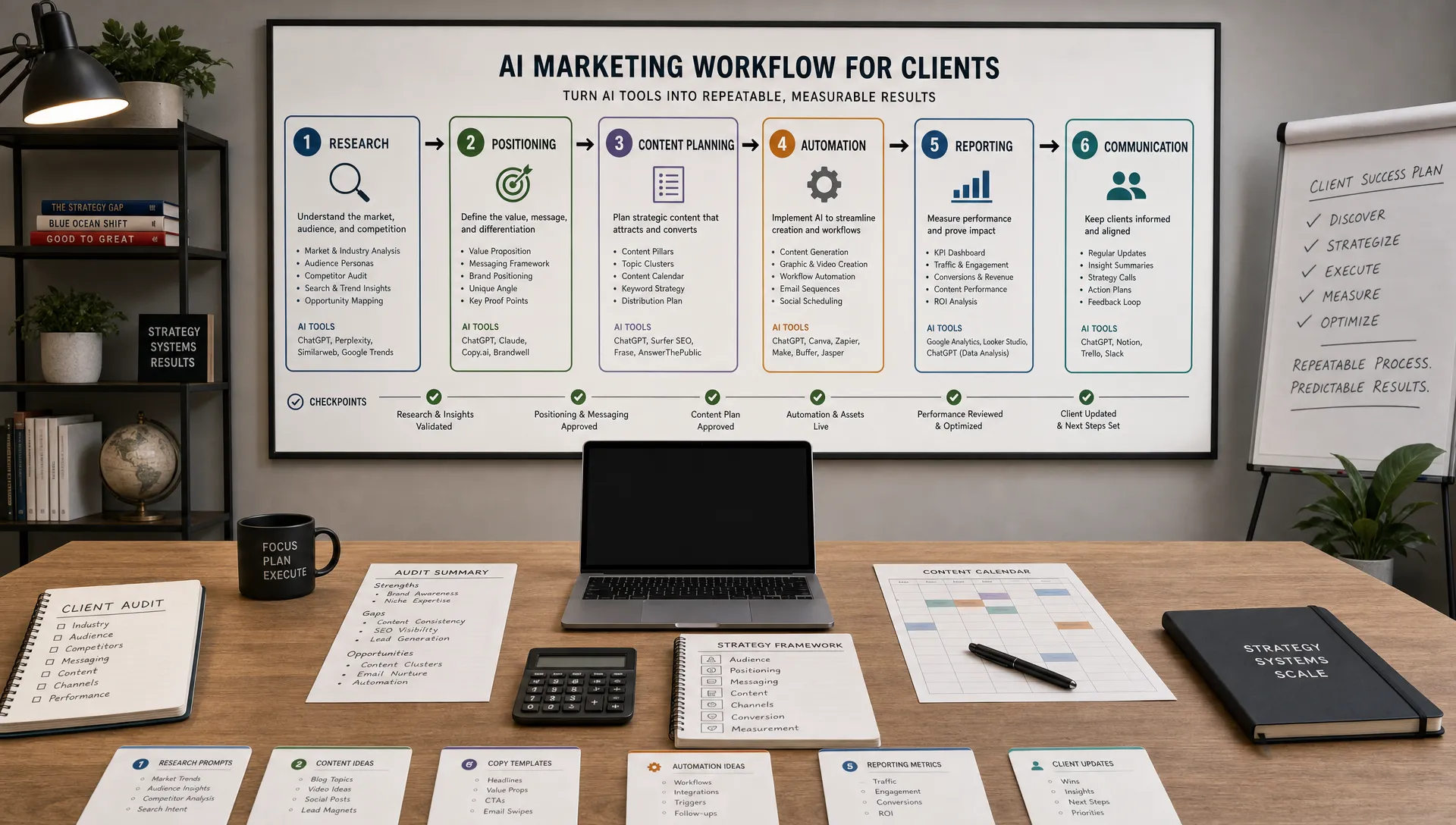
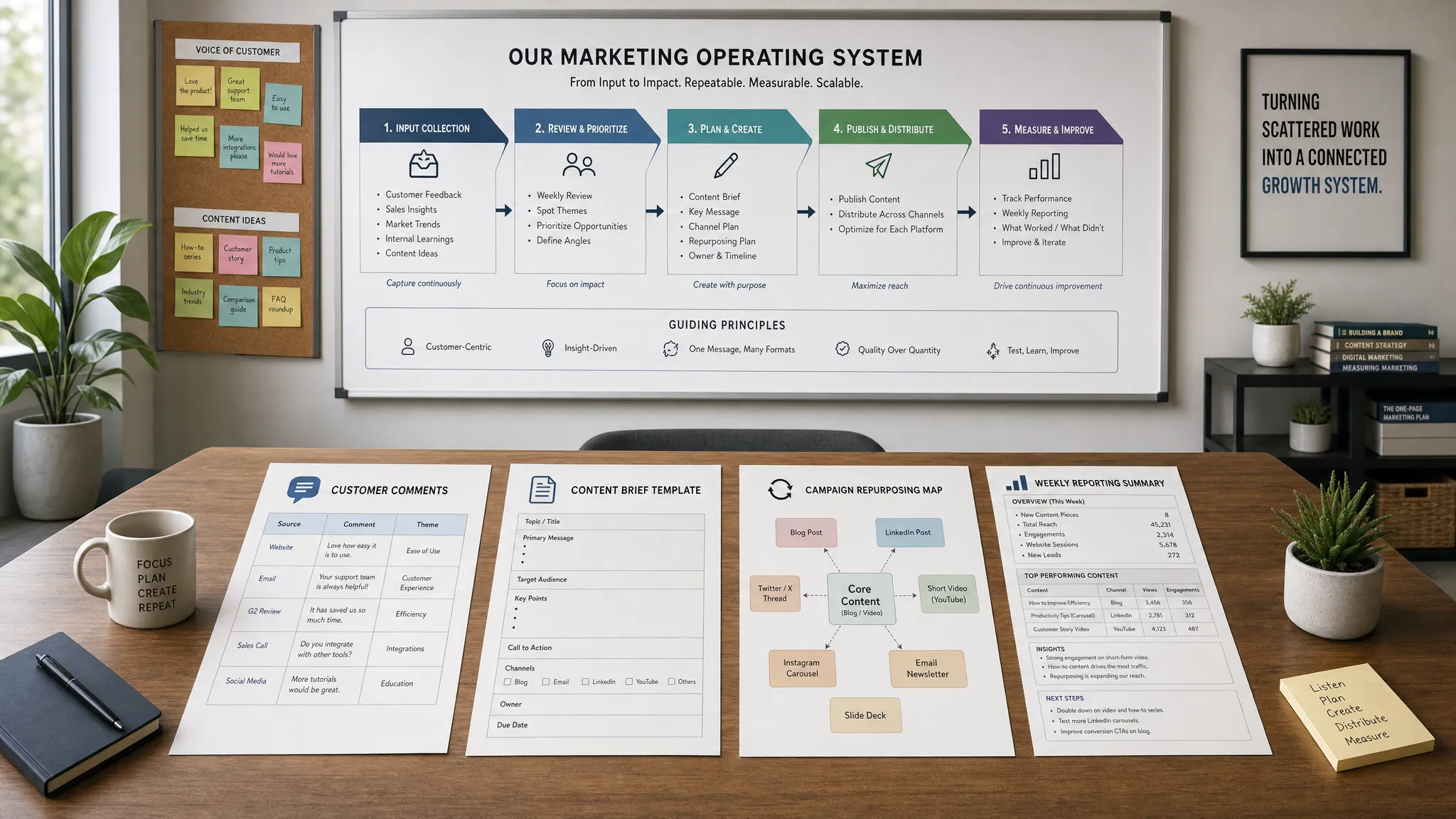
Your real goal is to build a repeatable loop:
AI makes this loop faster. It can summarize customer calls, cluster search intent, draft campaign variations, spot performance patterns, and turn one strong idea into multiple formats. But the strategy still needs human judgment. Your team decides what is true, what is differentiated, what is ethical, and what is worth pursuing.
Before choosing AI tools, write a simple growth thesis. This is the strategic bet that explains how your startup expects to acquire and convert customers.
For example, a B2B SaaS startup might believe that its best early customers are operations leaders at companies with 50 to 200 employees, and that those buyers search for workflow templates before they are ready to book a demo. A consumer fintech startup might believe that short educational videos and calculator-based landing pages will convert better than long-form guides.
Your thesis does not need to be perfect. It needs to be testable.
A useful growth thesis includes four parts: your ideal customer profile, the urgent pain you solve, the primary acquisition channel you will test first, and the conversion action that matters most. That conversion might be a demo request, free trial, waitlist signup, newsletter subscription, or calculator completion.
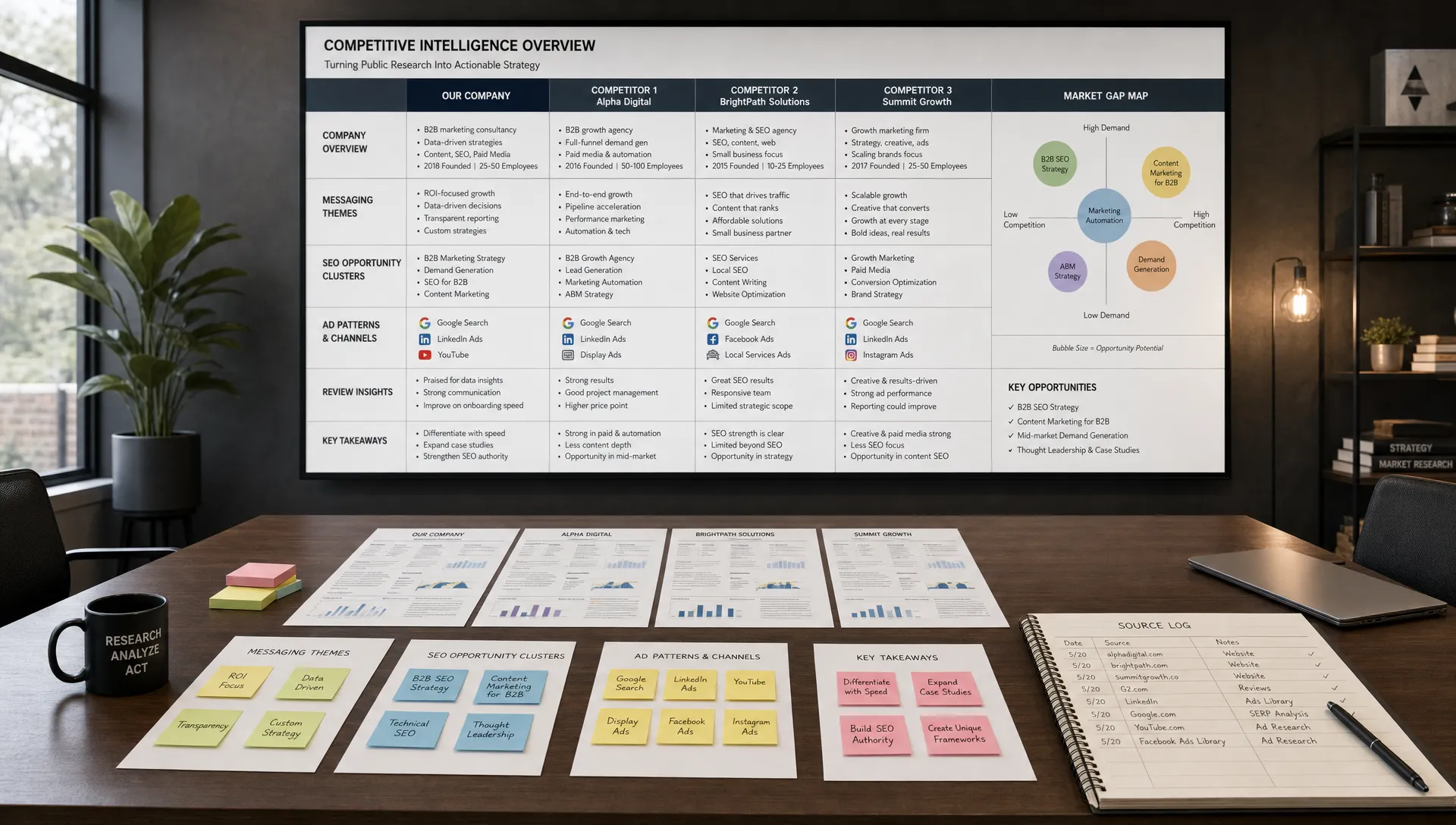
AI can help you pressure-test the thesis. You can use it to compare audience segments, analyze competitor messaging, generate interview questions, and summarize market research. But avoid letting AI invent your positioning from scratch. The best inputs still come from real customers, sales conversations, support tickets, product usage, and founder insight.
AI-powered analytics and marketing workflow automation are only as good as the data underneath them. If your tracking is messy, your CRM is inconsistent, or your campaign naming is random, AI will produce confident but unreliable recommendations.
Start with a lean first-party data foundation. You do not need an enterprise system. You need clean, consistent signals that help you understand where demand comes from and which actions lead to revenue.
At minimum, define how you will track website visits, lead sources, campaign names, form submissions, email engagement, product activation, pipeline stages, and customer status. Use the same naming conventions across your website analytics, CRM, email platform, and ad accounts.
This foundation helps you move from vanity metrics to useful insight. Instead of asking, “Did traffic go up?” you can ask, “Which audience, message, and channel produced qualified leads at a cost we can sustain?”
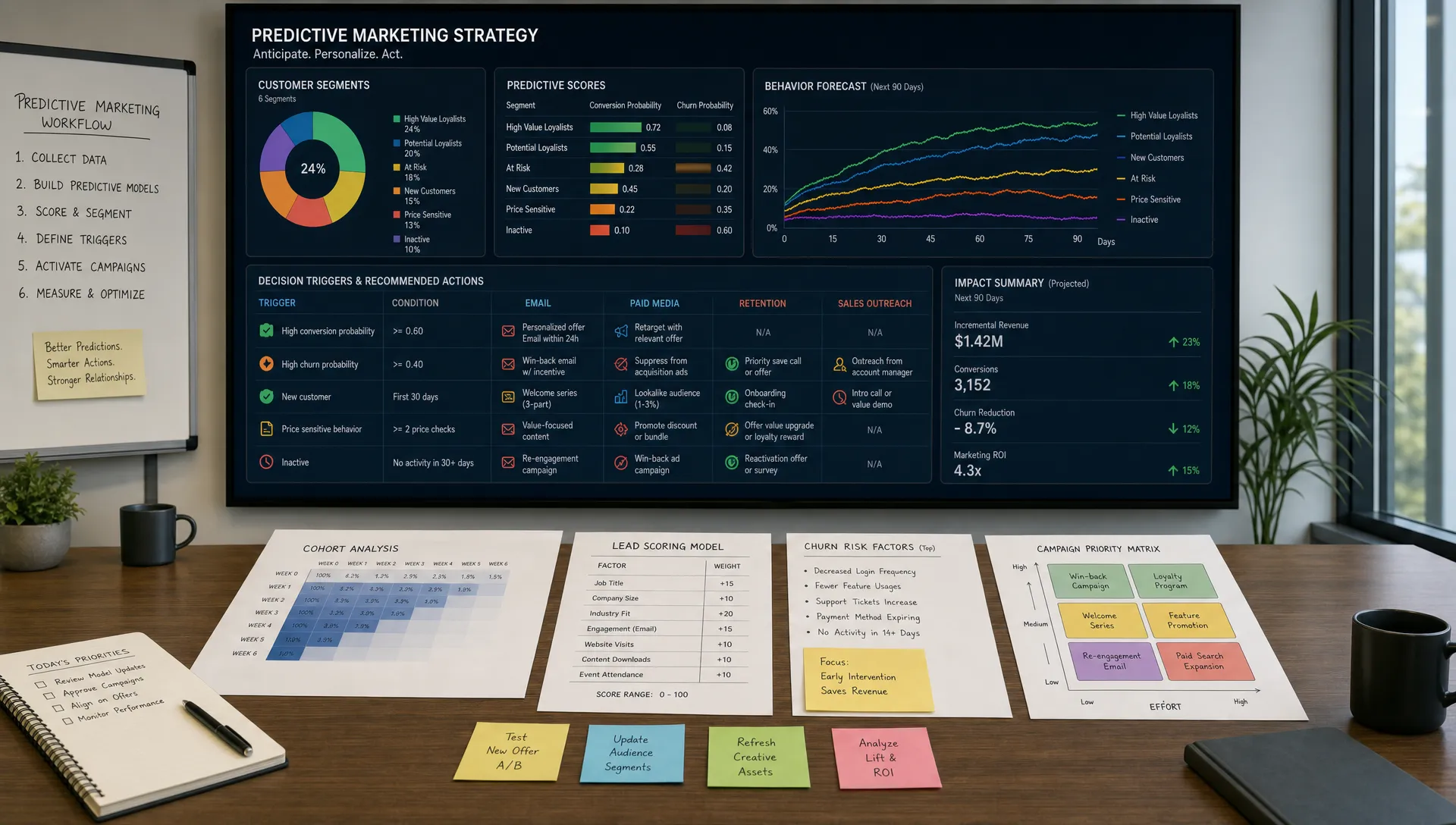
For startups, this is where AI marketing automation becomes powerful. Once your data is clean, AI can help segment audiences, flag drop-off points, summarize campaign performance, and suggest next tests. Without clean data, automation simply scales confusion.
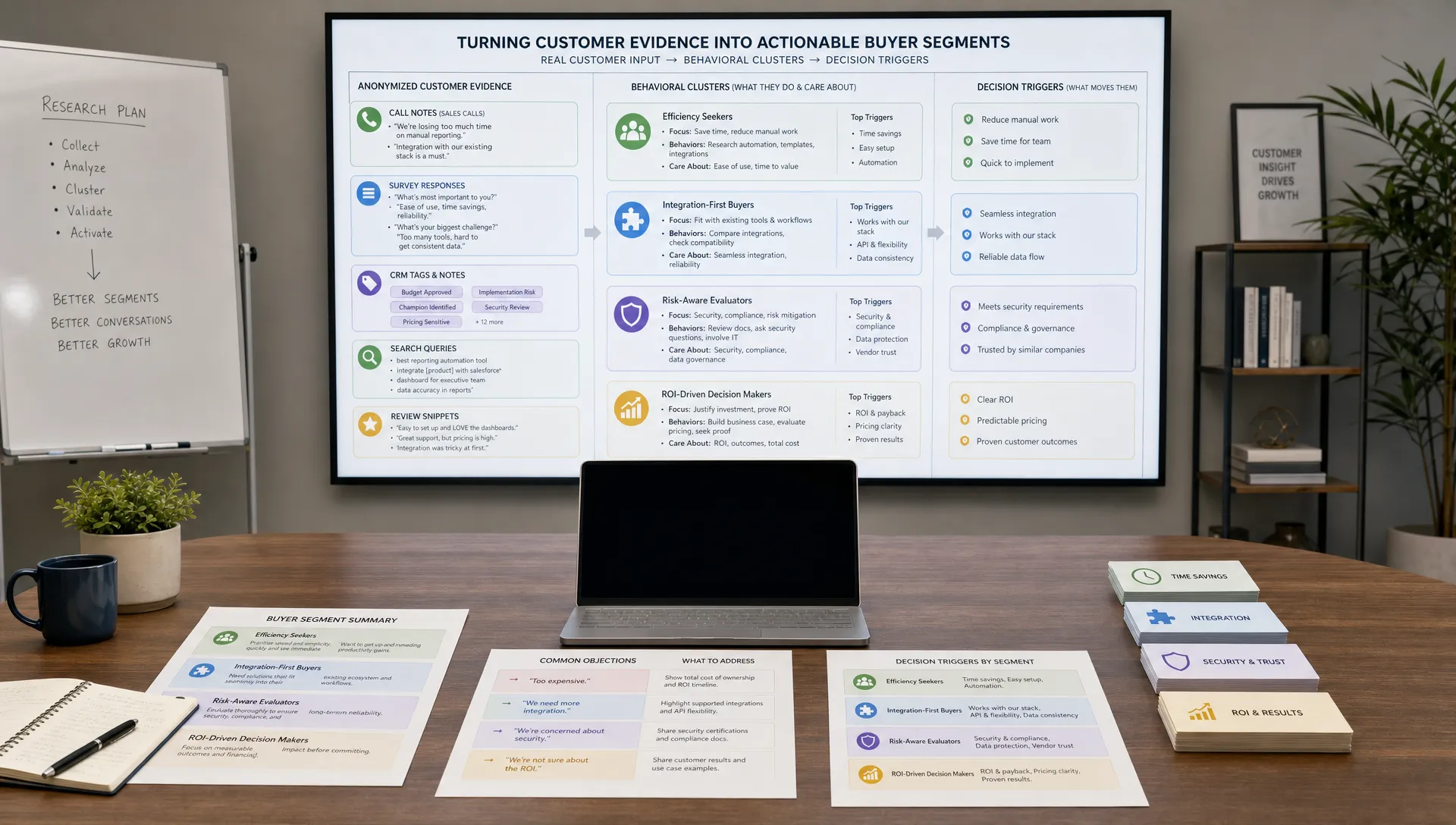
AI is especially valuable for finding patterns in messy qualitative data. If you have sales calls, demo notes, reviews, survey responses, live chat transcripts, or community discussions, AI can help turn them into usable customer insight.
Look for the language buyers actually use. Startup marketing often fails because teams describe the product in internal language instead of buyer language. AI can help identify repeated phrases, objections, triggers, and comparisons across customer conversations.
Focus your analysis on questions like these:
The output should become practical marketing assets: landing page headlines, value propositions, ad angles, sales enablement notes, FAQ answers, and content topics. This is one of the highest-leverage uses of AI for startups because better positioning improves every channel.
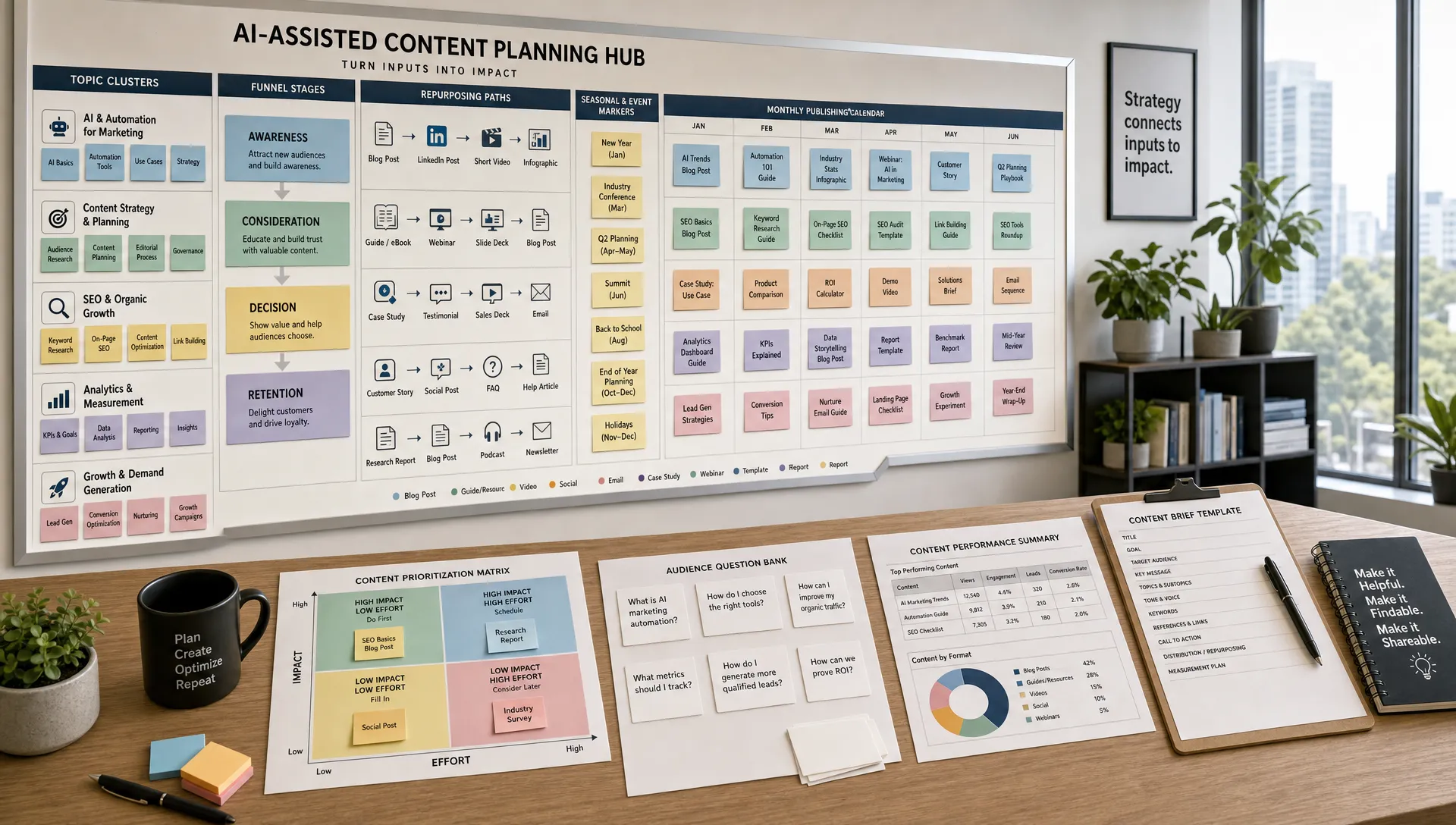
In 2026, startup content needs to be useful, specific, and tied to the buyer journey. Generic posts are easy to create and easy to ignore. The advantage comes from combining AI speed with real expertise.
A strong AI-assisted content engine starts with a small set of content pillars. These should connect to your product, customer pain points, and search demand. For example, a cybersecurity startup might build pillars around compliance readiness, vendor risk, incident response, and security workflows. A marketing software startup might focus on campaign planning, attribution, content operations, and automation.
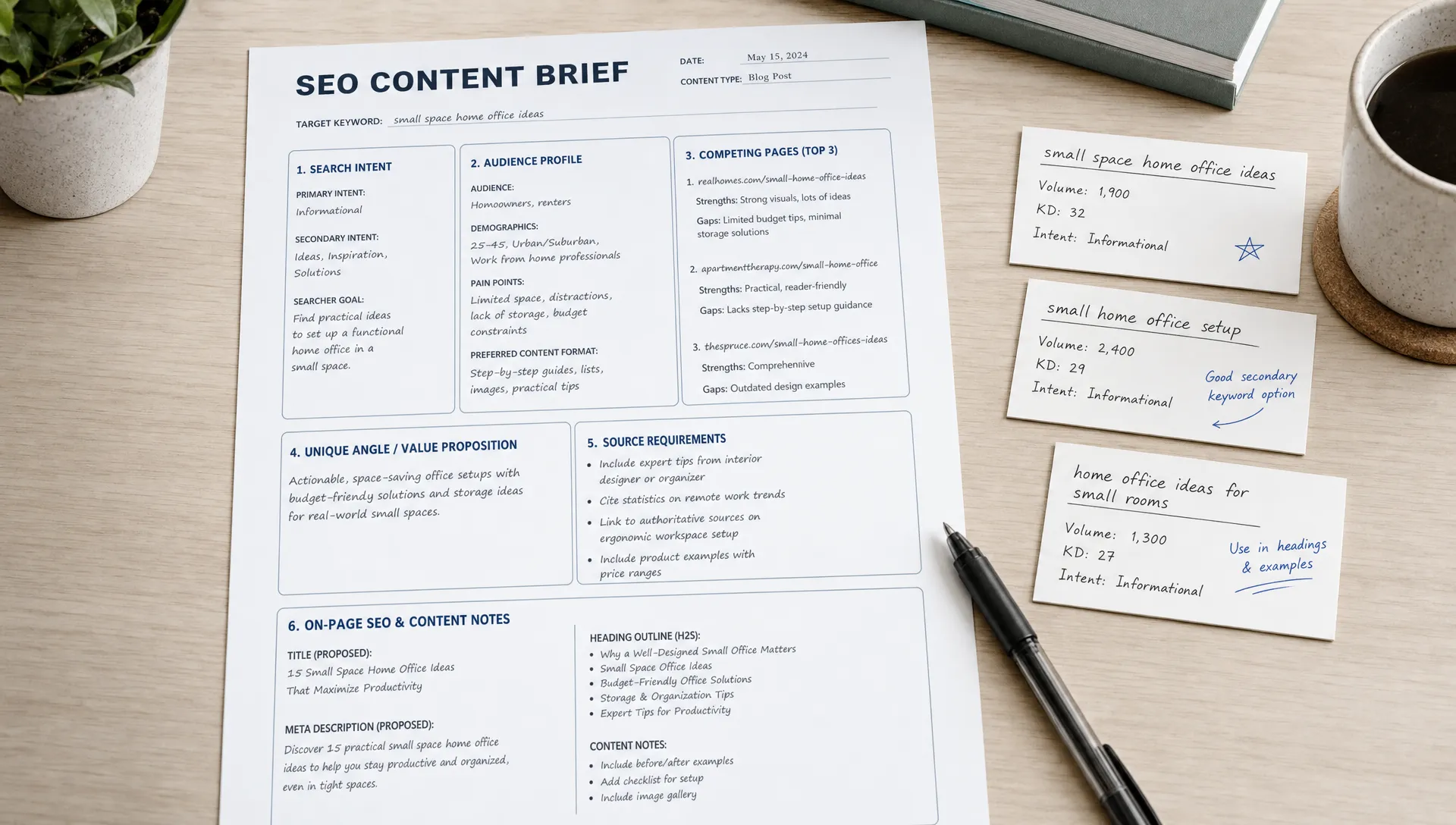
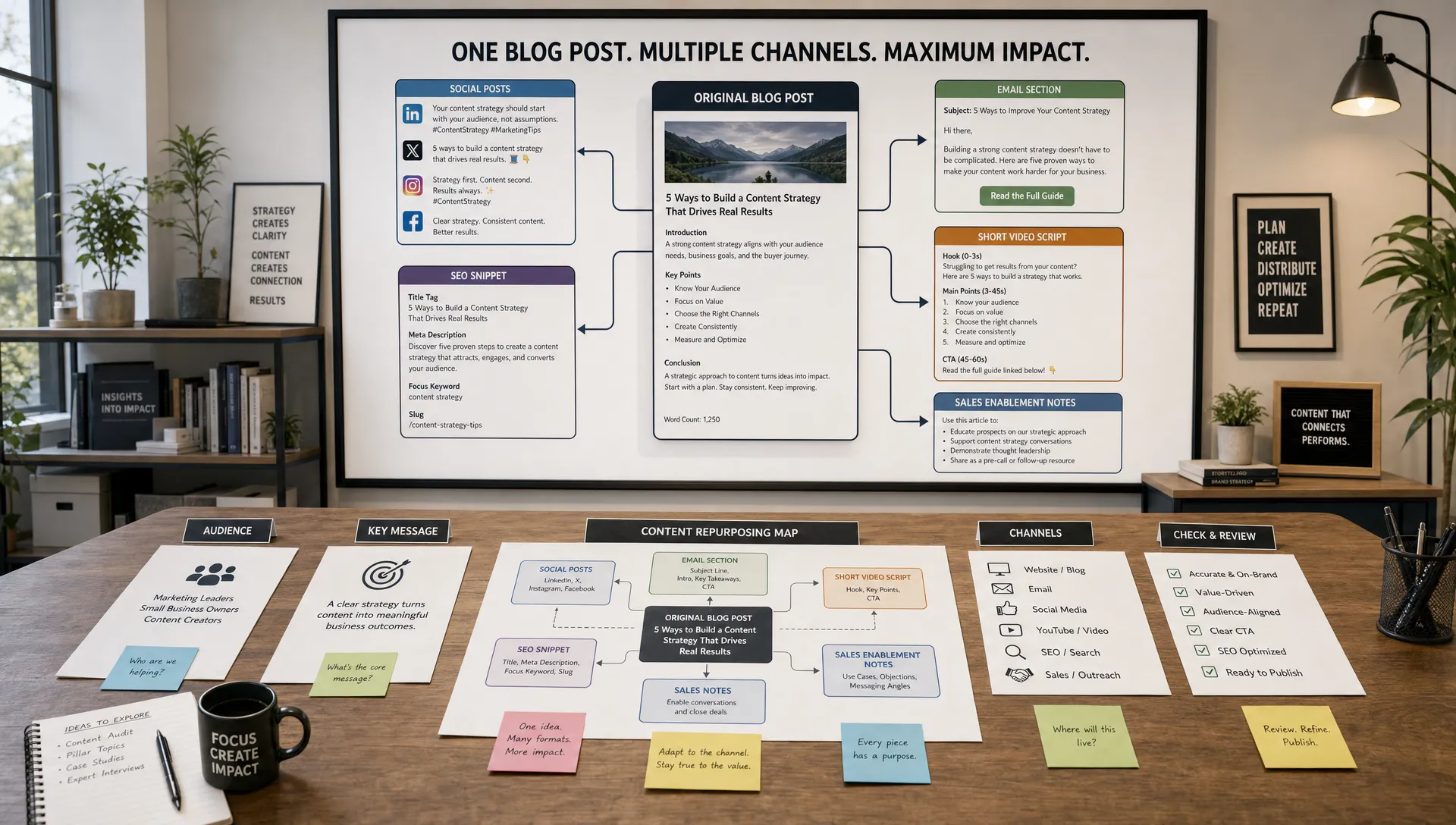
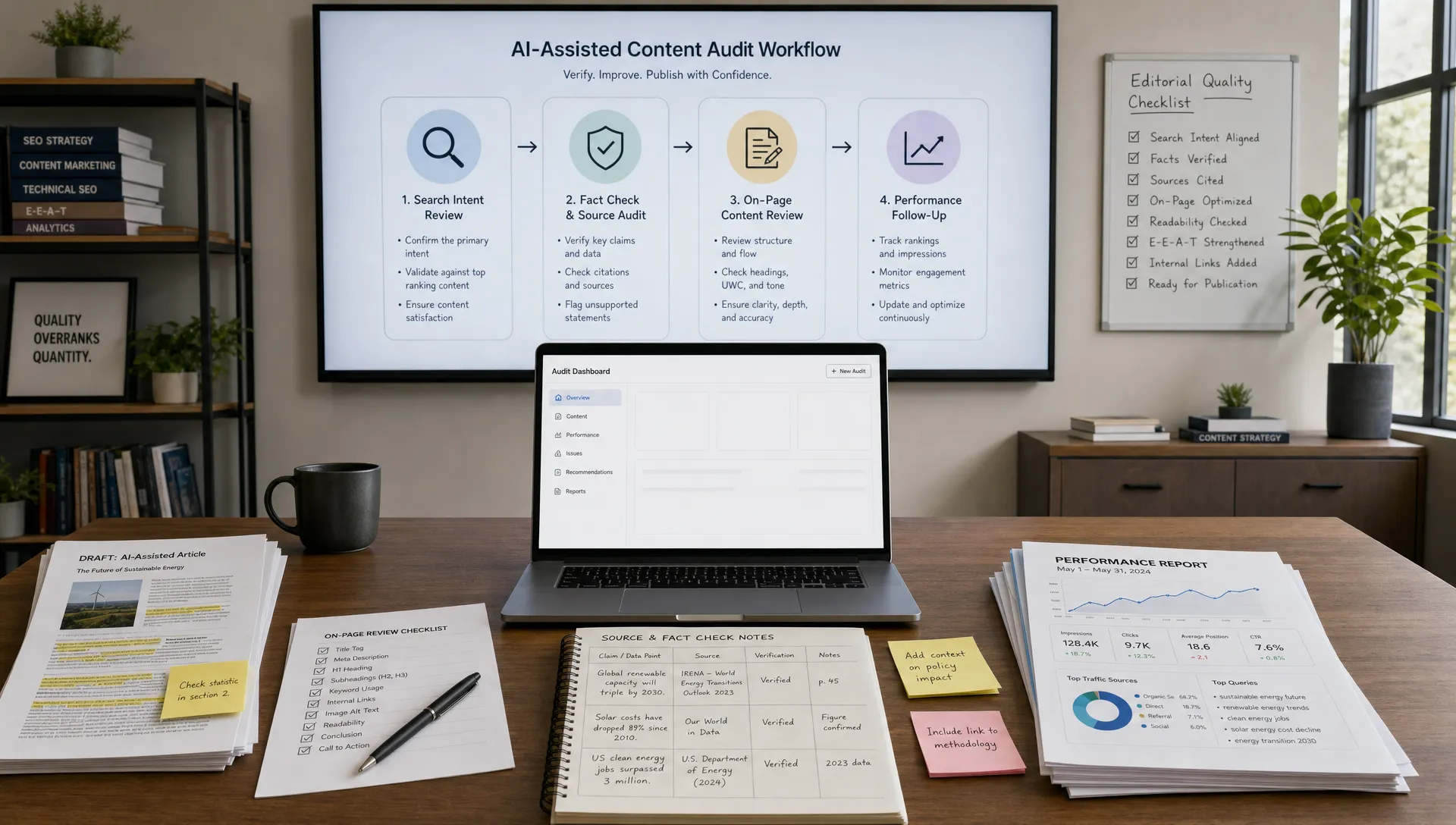
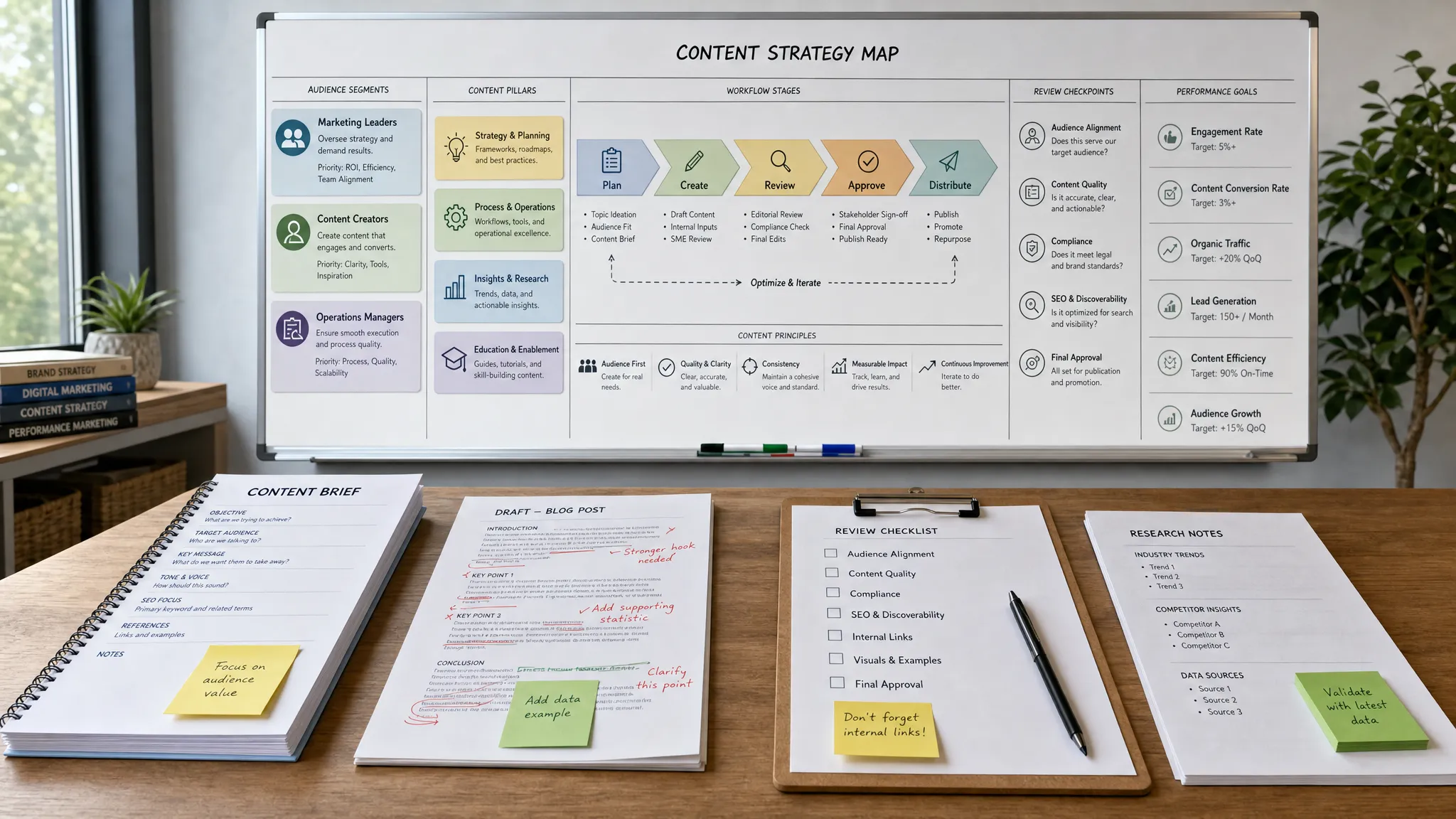
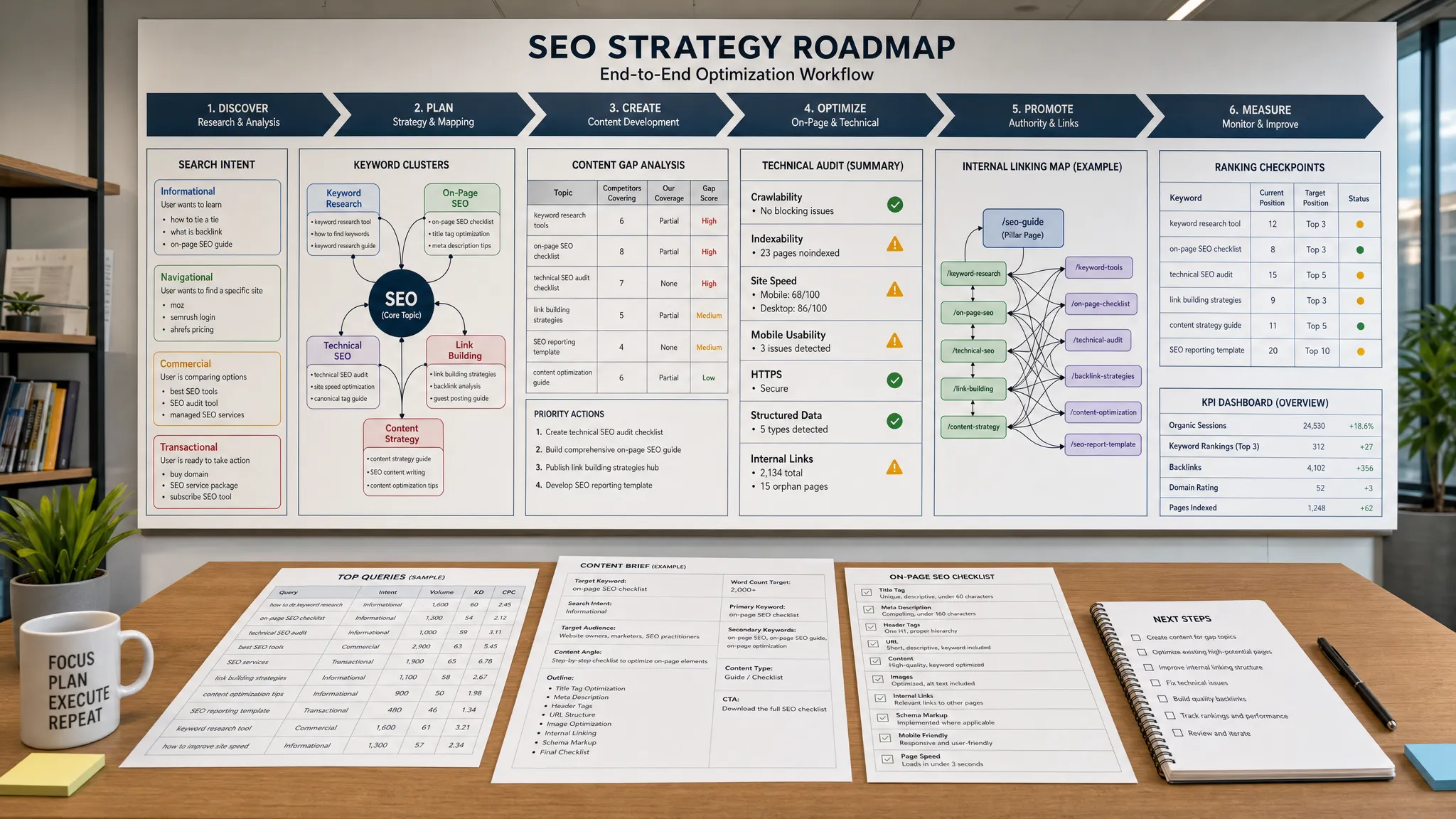
AI can support each stage of the content workflow: topic research, outline creation, draft development, repurposing, SEO optimization, and performance analysis. But the best startup content still needs human review, examples from your market, and a clear point of view.
If your team is trying to improve output without wasting budget, AIMarketer Hub’s guide to AI content generation tips for better ROI is a useful companion to this strategy. The key is to measure content by pipeline influence, lead quality, and conversion support, not just publishing frequency.
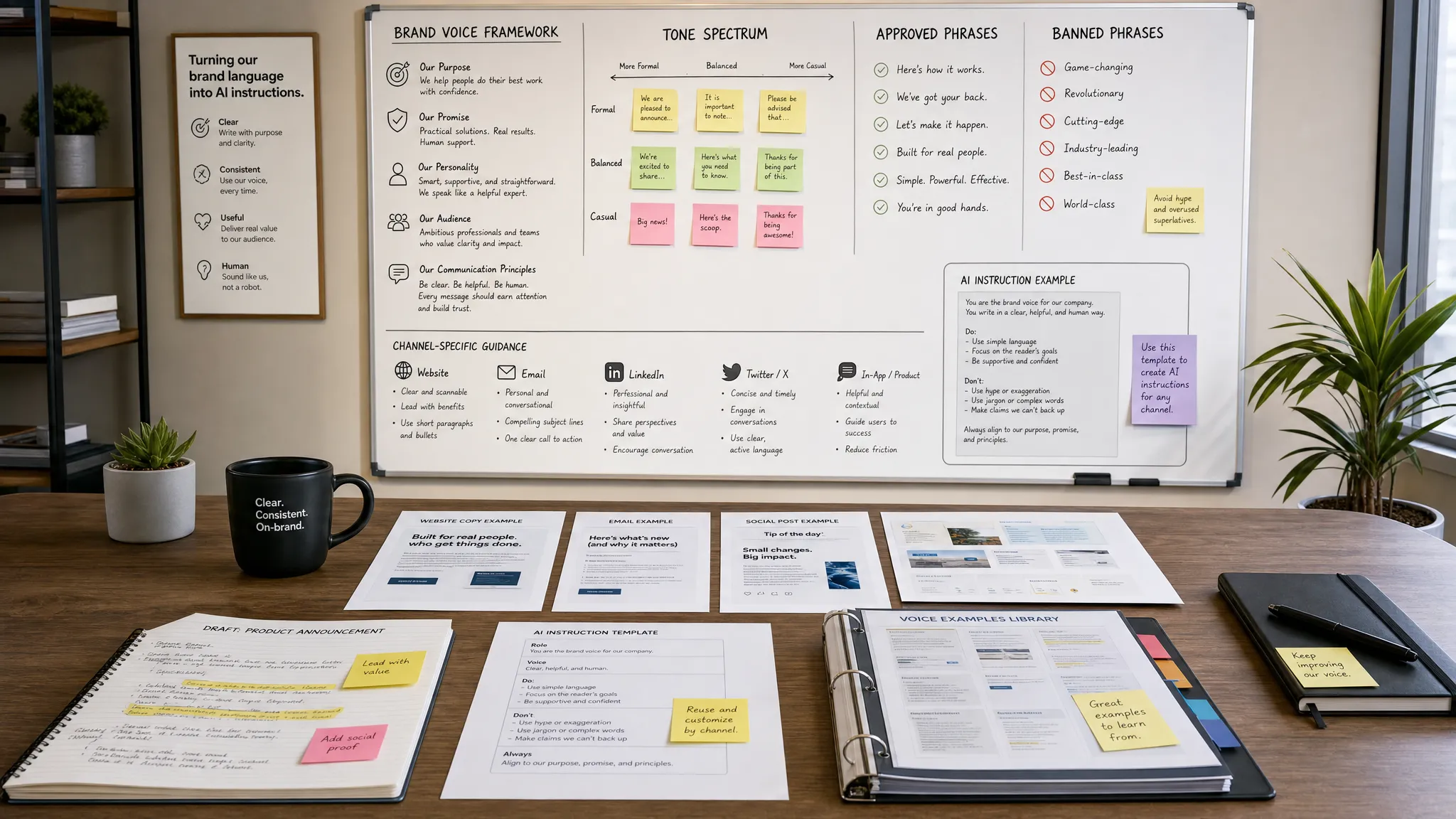
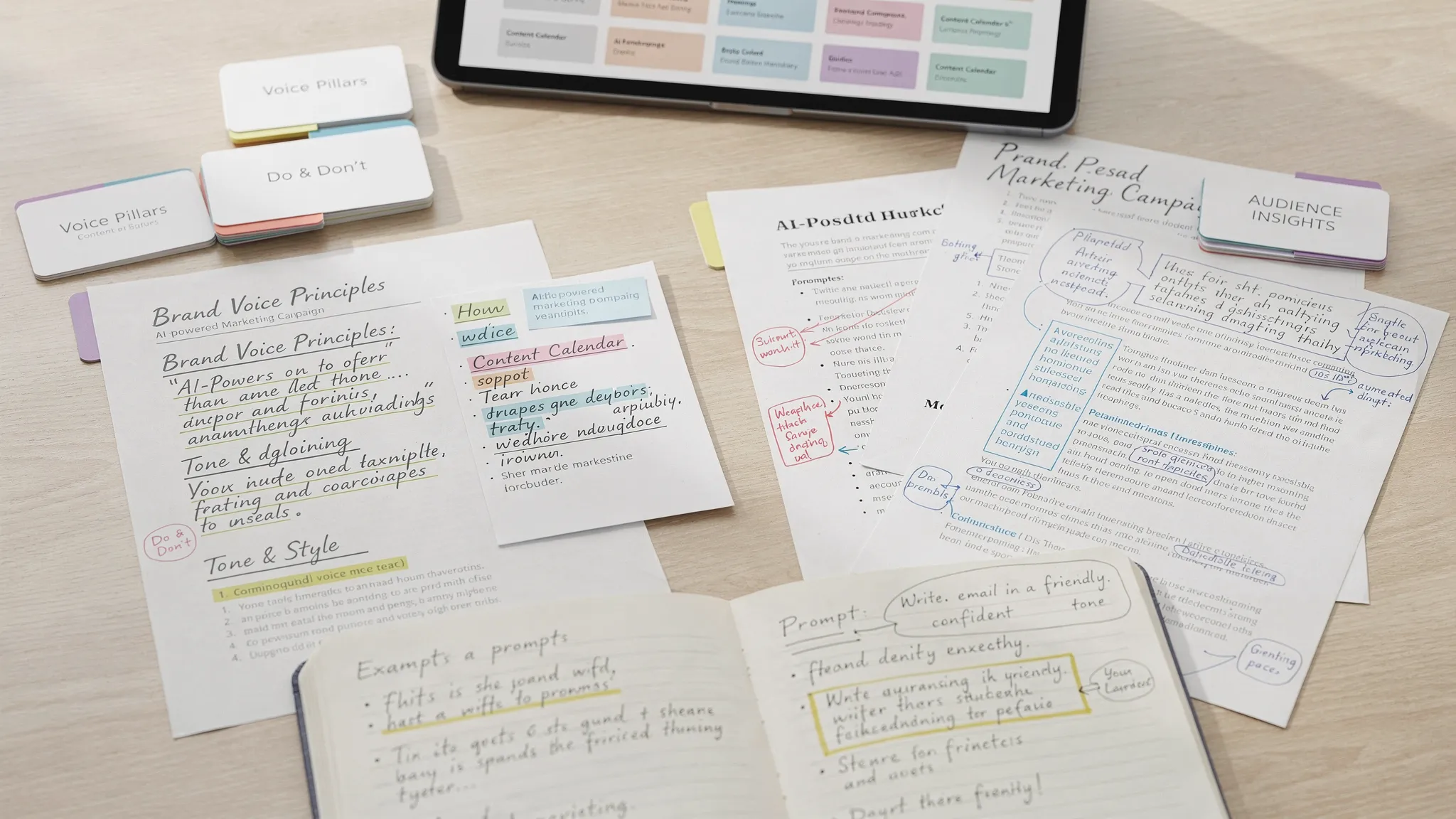
Brand consistency also matters. AI can imitate patterns, but it does not automatically understand your voice, values, or risk tolerance. If you are scaling content across founders, marketers, freelancers, and AI systems, define voice rules clearly. For a deeper look at that balance, see this guide on using AI for marketing without losing your brand voice.
A common startup mistake is automating too early. If your offer, audience, or messaging is still unclear, automation spreads weak marketing faster. First prove that a message resonates. Then automate the journey around it.
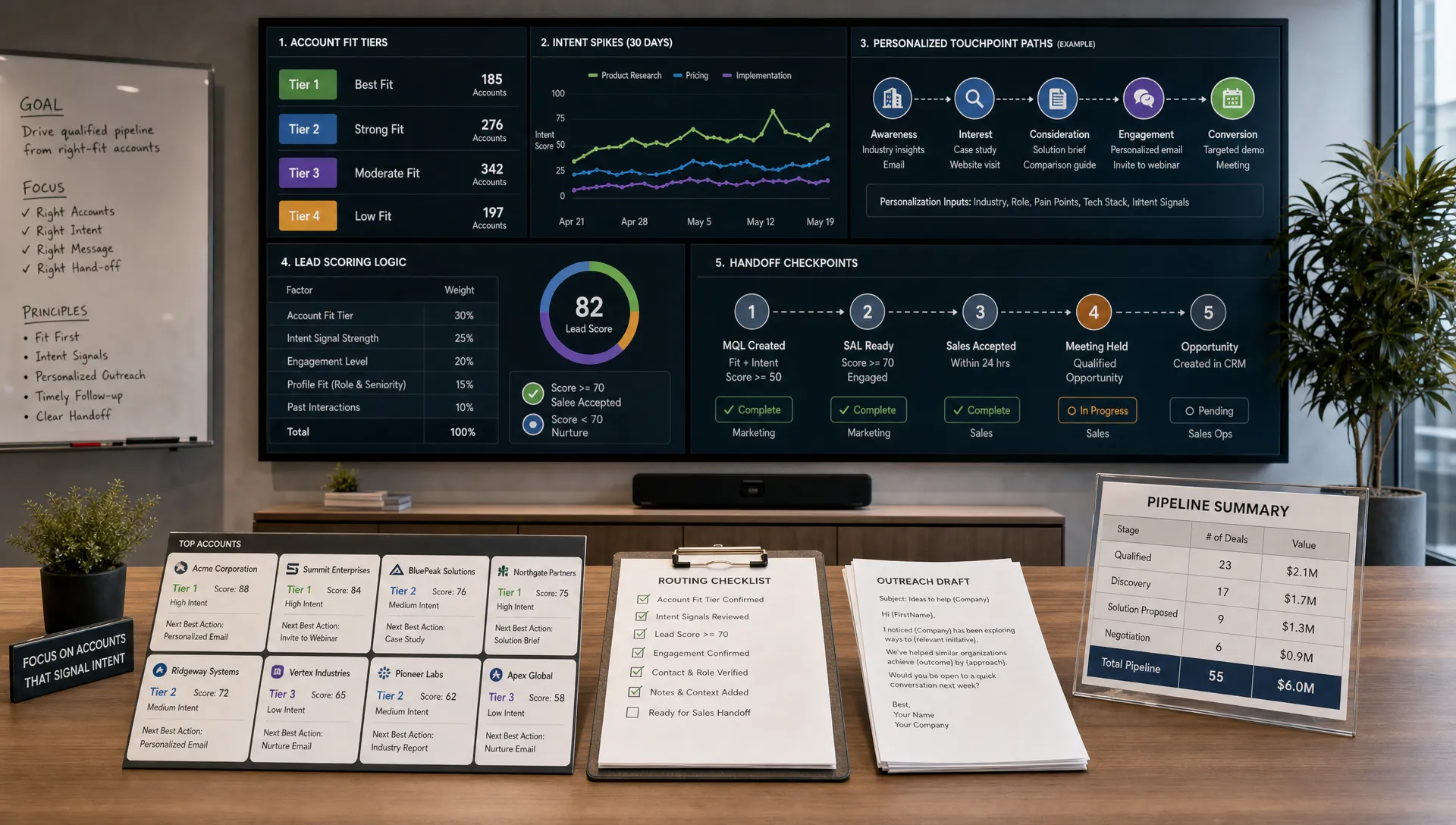
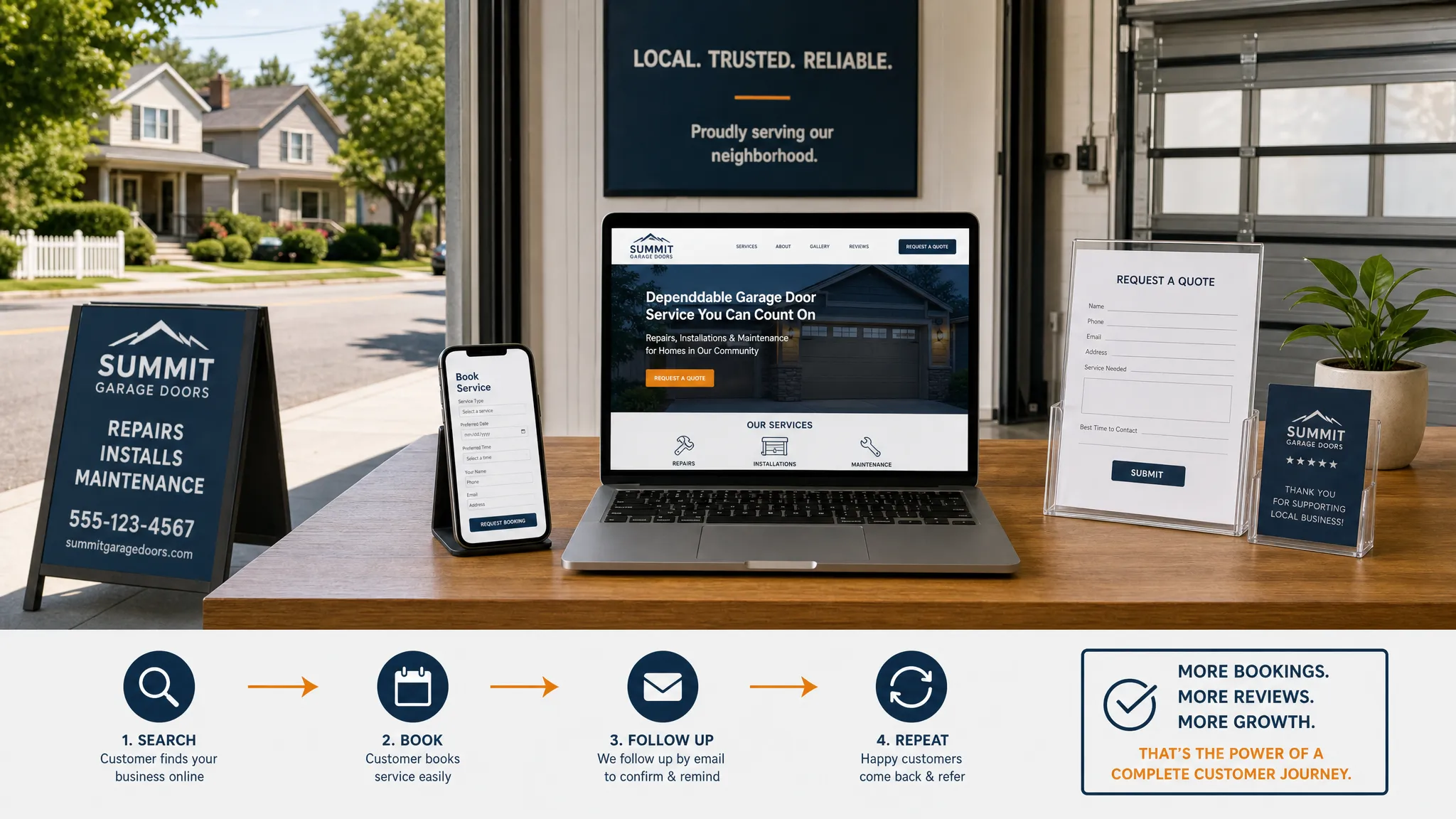
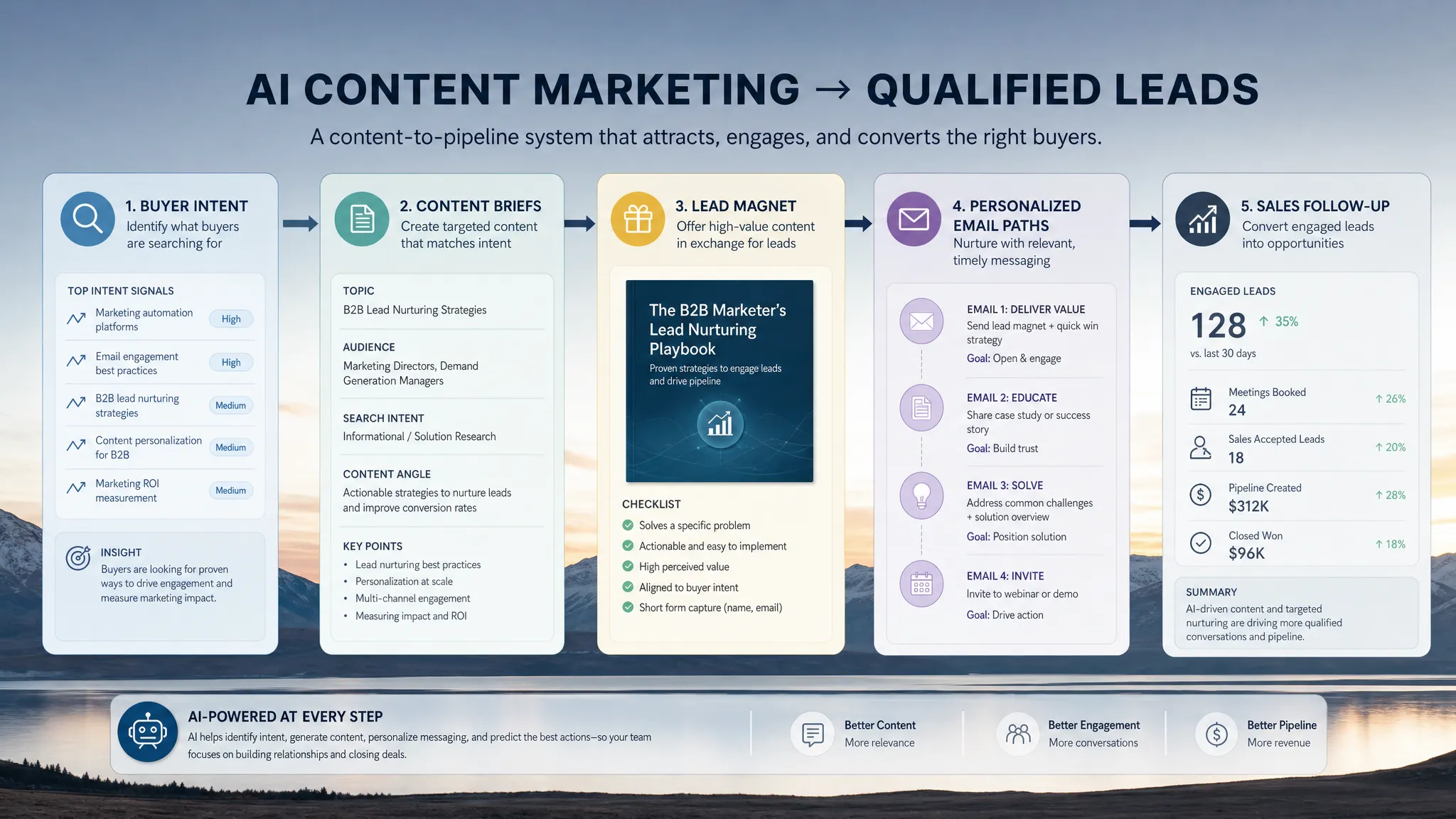
Start with lifecycle moments where timing matters. A new lead downloads a guide, starts a trial, abandons onboarding, views pricing twice, or returns after a sales conversation. These behaviors can trigger relevant follow-up, education, or sales alerts.
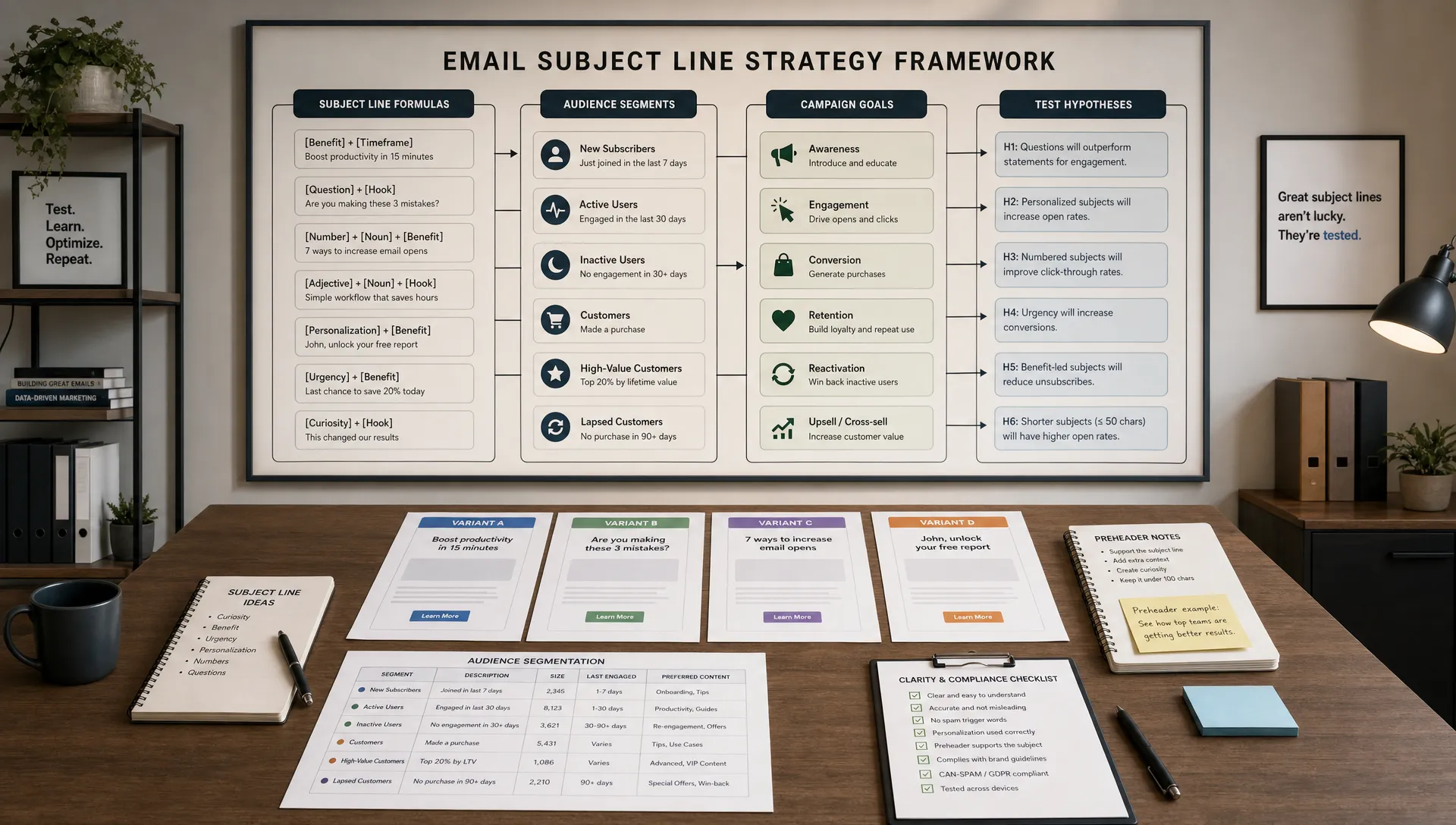
AI can help personalize email sequences, recommend next-best content, score intent signals, and summarize lead activity for sales. But keep the experience simple. A short, relevant sequence is better than a complicated automation map that nobody maintains.
For startups, the best marketing workflow automation usually supports one of three goals: increasing qualified conversions, reducing manual follow-up, or improving activation after signup. If an automation does not support one of those goals, it may be noise.
Paid and organic channels should not operate as separate worlds. Your organic content reveals what buyers search for and what objections they have. Paid campaigns reveal which messages get attention quickly. AI can help connect those signals.
For example, if a blog post converts visitors from a specific search query, you can turn that insight into paid search copy, LinkedIn post angles, webinar topics, or retargeting messages. If a paid ad angle performs well, you can turn it into a landing page section, comparison guide, or sales script.
AI advertising platforms can also test creative variations faster than a small team could manually. That said, do not treat platform automation as a substitute for strategy. You still need a strong offer, clean conversion tracking, clear audience definitions, and creative that speaks to real pain.
If paid media is part of your 2026 plan, it is worth understanding how AI advertising is changing paid media so your team can use automation without losing control of budget and positioning.
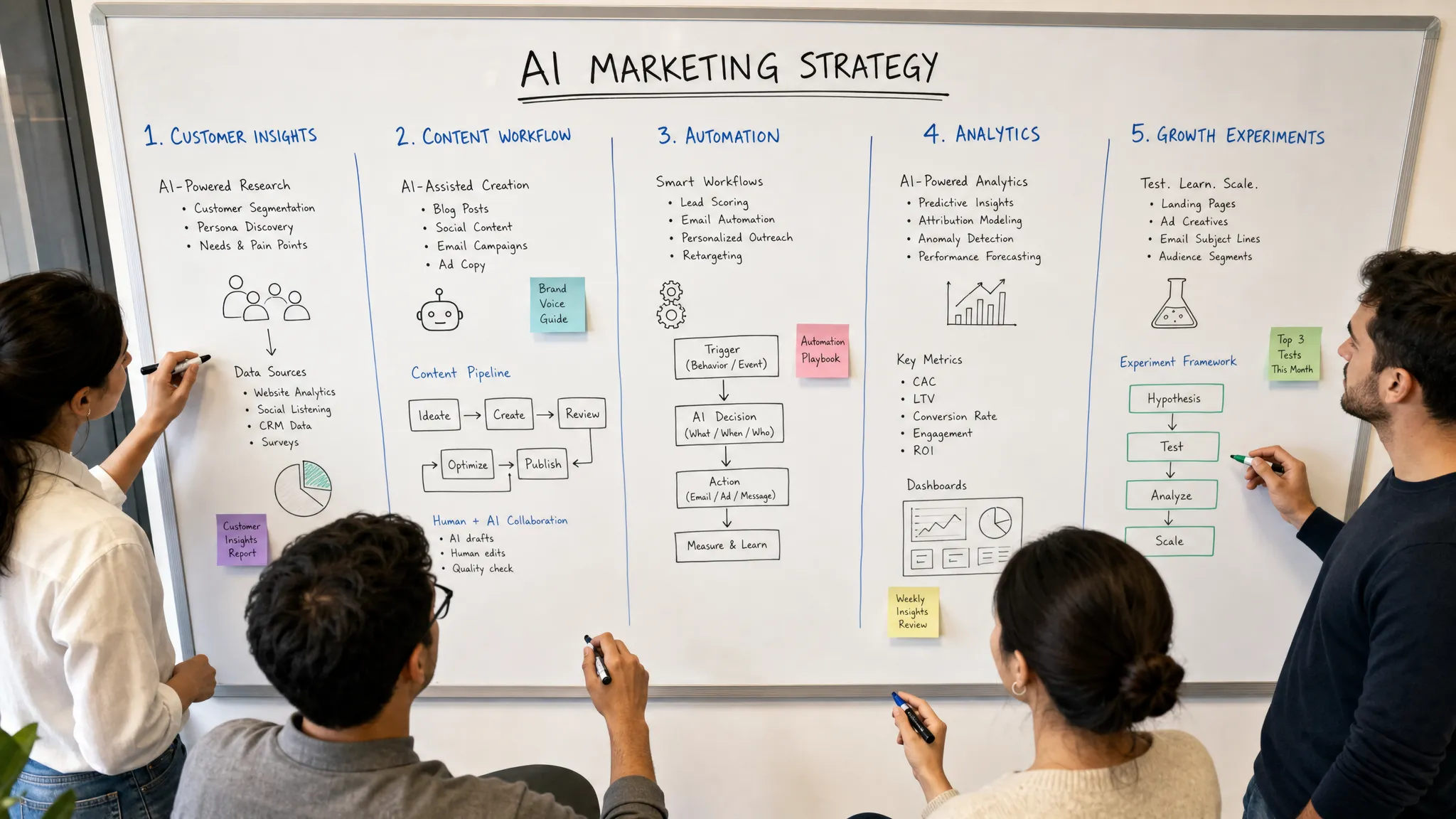
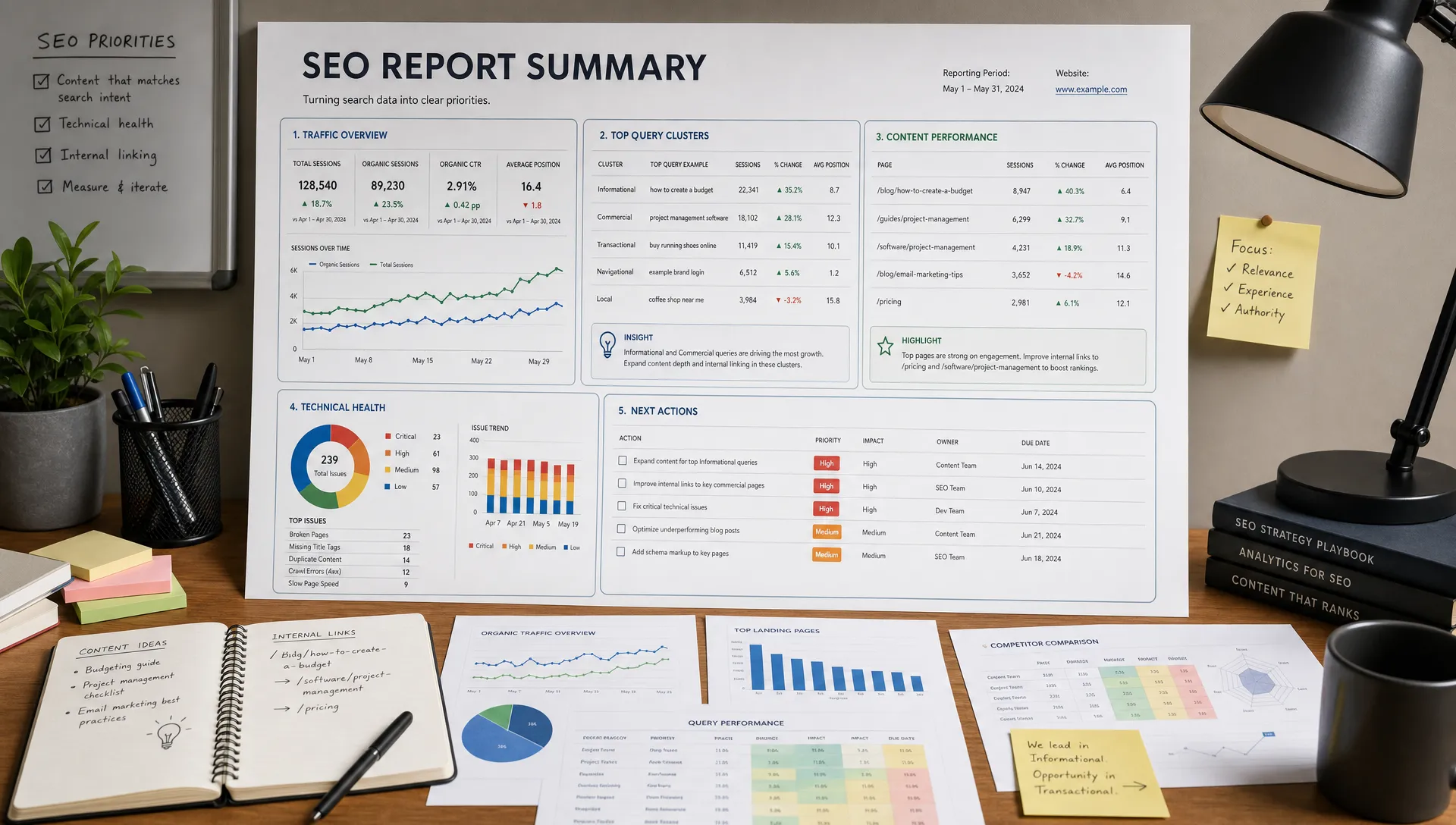
AI can produce more reports than any startup needs. The challenge is not access to data. The challenge is choosing the right data.
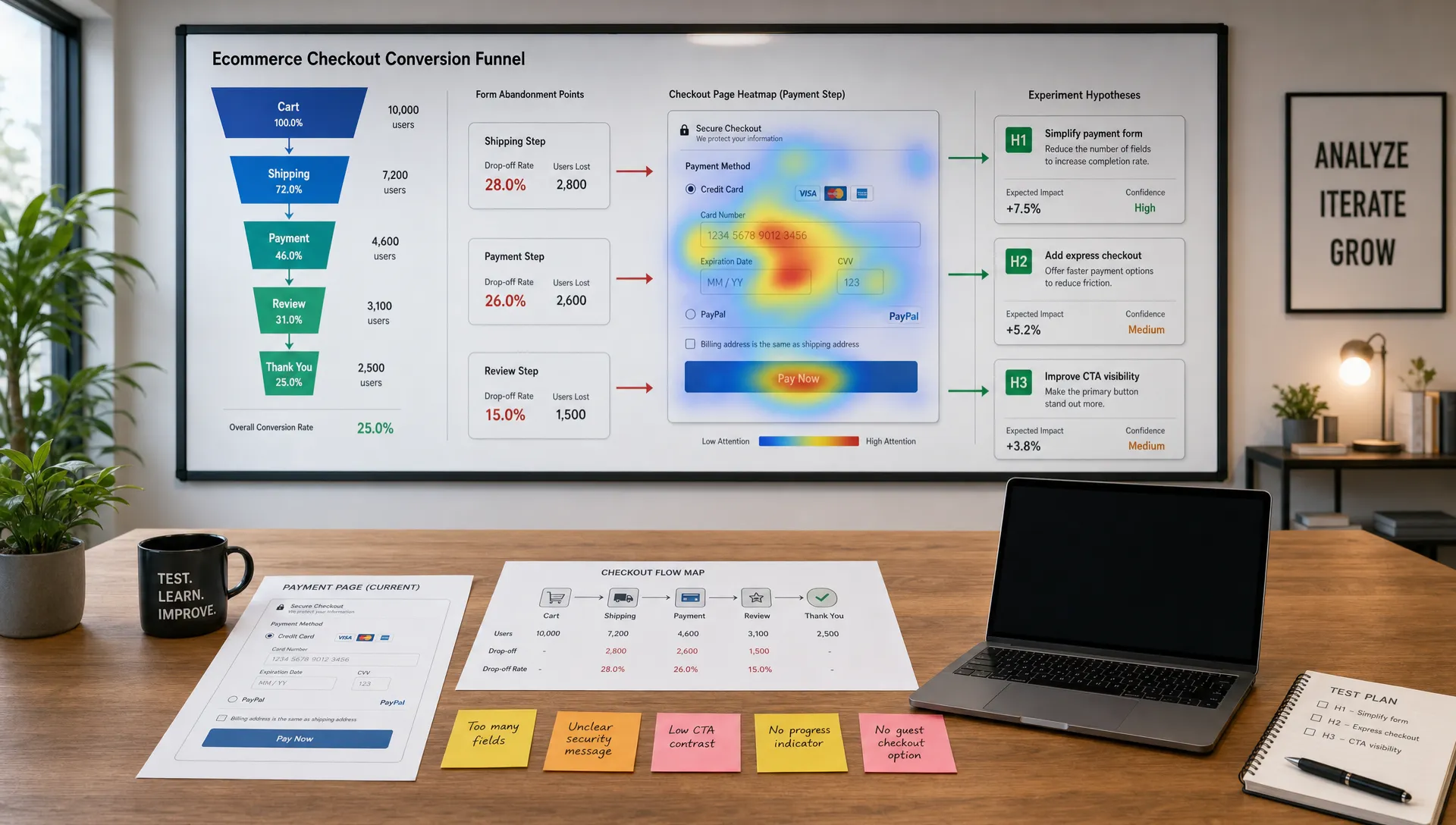
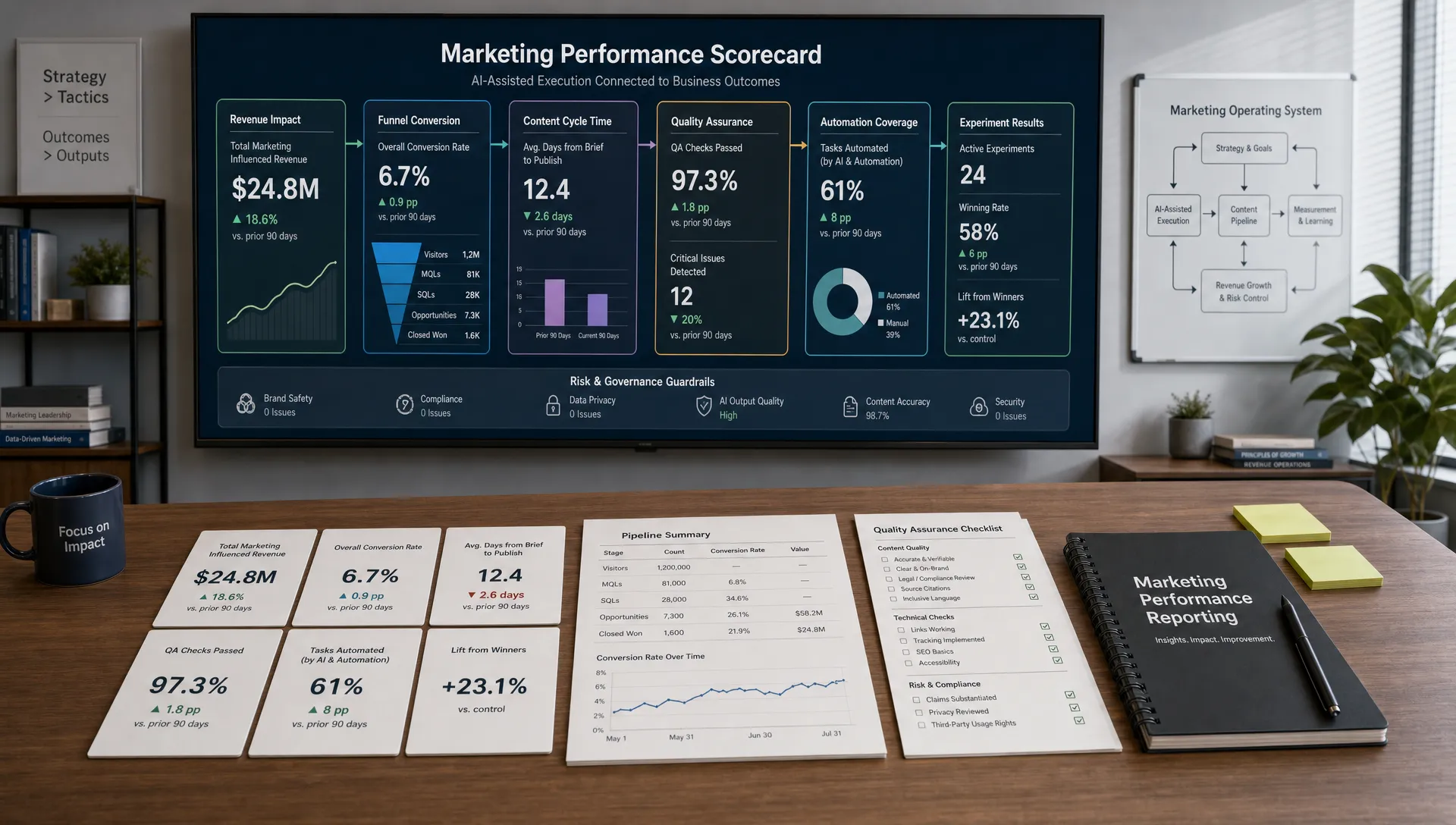
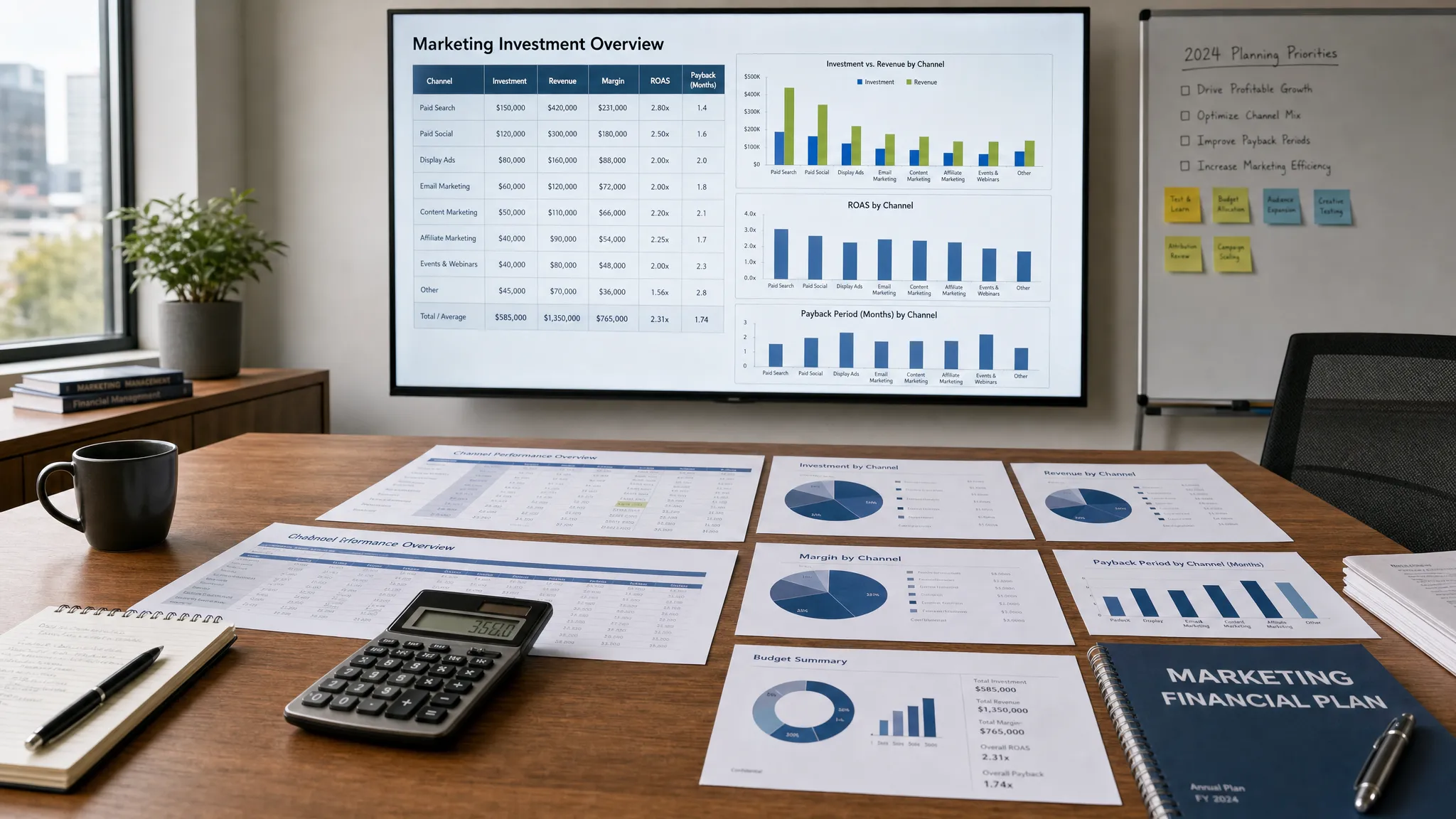
Your dashboard should separate activity metrics from progress metrics. Activity metrics show what marketing did: posts published, emails sent, ads launched, impressions generated. Progress metrics show whether the business is moving: qualified leads, demo conversion rate, activation rate, pipeline contribution, customer acquisition cost, retention, and payback period.
For early-stage startups, a simple scorecard is often enough. Track demand creation, acquisition quality, conversion efficiency, sales velocity, and retention signals. Review it weekly. Ask what changed, why it changed, and what test should happen next.
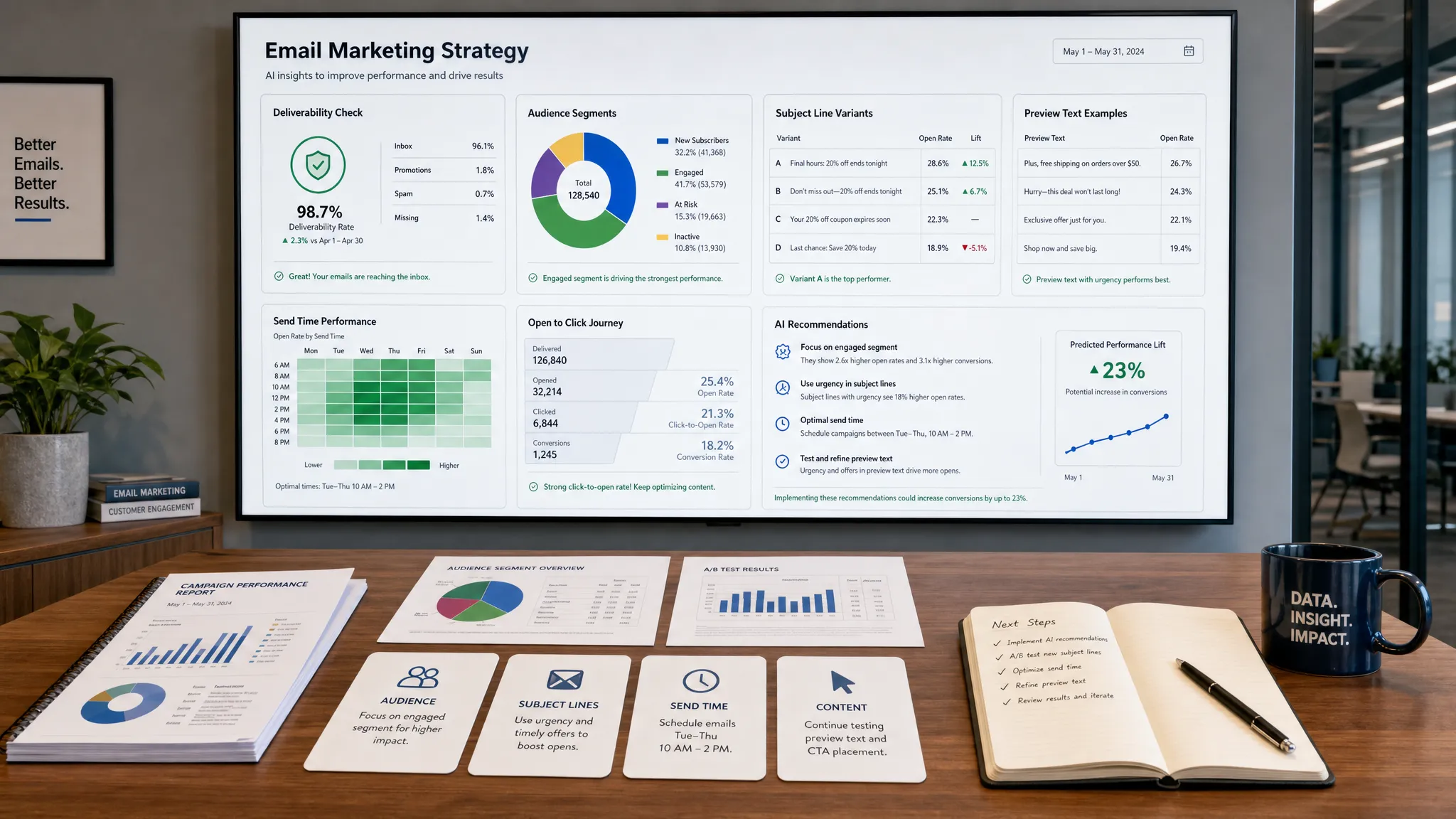
AI-powered analytics can help by summarizing trends, detecting anomalies, comparing campaign cohorts, and generating hypotheses. But do not outsource interpretation entirely. A spike in leads may look positive until you discover they are unqualified. A lower-volume channel may be more valuable if it produces better-fit customers.
The most important question is not, “What happened?” It is, “What should we do next?”
Startups often overbuy software because every tool promises leverage. In reality, too many tools create disconnected workflows, duplicated data, and unnecessary costs.
A lean 2026 AI marketing stack should cover a few core jobs. You need a place to manage customer data, a way to create and optimize content, a system for email or lifecycle communication, analytics that connect marketing to revenue, and a process for campaign planning. Depending on your business model, you may also need SEO tools, social scheduling, ad platform automation, sales enablement, or product analytics.
The best stack is not the one with the most features. It is the one your team uses correctly every week.
When evaluating AI tools, ask practical questions. Does this tool save time on a repeated workflow? Does it improve decision quality? Does it integrate with our existing systems? Can we measure its impact? Does it protect customer data? Who owns the process after implementation?
AIMarketer Hub exists to help marketers and businesses navigate these choices with AI marketing tools, expert guides, calculators, SEO resources, and curated insights. If your team needs a practical starting point, explore the resources at AIMarketer Hub and build from the workflows that matter most to your business.
AI marketing introduces real risks: inaccurate claims, off-brand messaging, privacy issues, biased targeting, and over-personalization that feels intrusive. Startups sometimes ignore governance because they are moving quickly, but trust is harder to rebuild than it is to protect.
Create simple rules for how your team uses AI. Define what data can and cannot be entered into AI systems. Require human review for legal, financial, medical, competitive, or performance claims. Keep records of important prompts, sources, and approvals when content affects customer decisions.
The NIST AI Risk Management Framework is a useful reference for thinking about AI risk in a structured way. For marketing claims, the FTC has also warned businesses to avoid exaggerated or unsupported AI claims in its guidance on keeping AI claims in check.
Governance does not need to slow your startup down. Done well, it gives your team confidence to move faster because everyone understands the boundaries.
Use the first month to define your ideal customer profile, core positioning, primary growth channel, and top conversion goal. Audit your current data, content, tools, and campaigns. Identify where AI can remove friction from work you already do repeatedly.
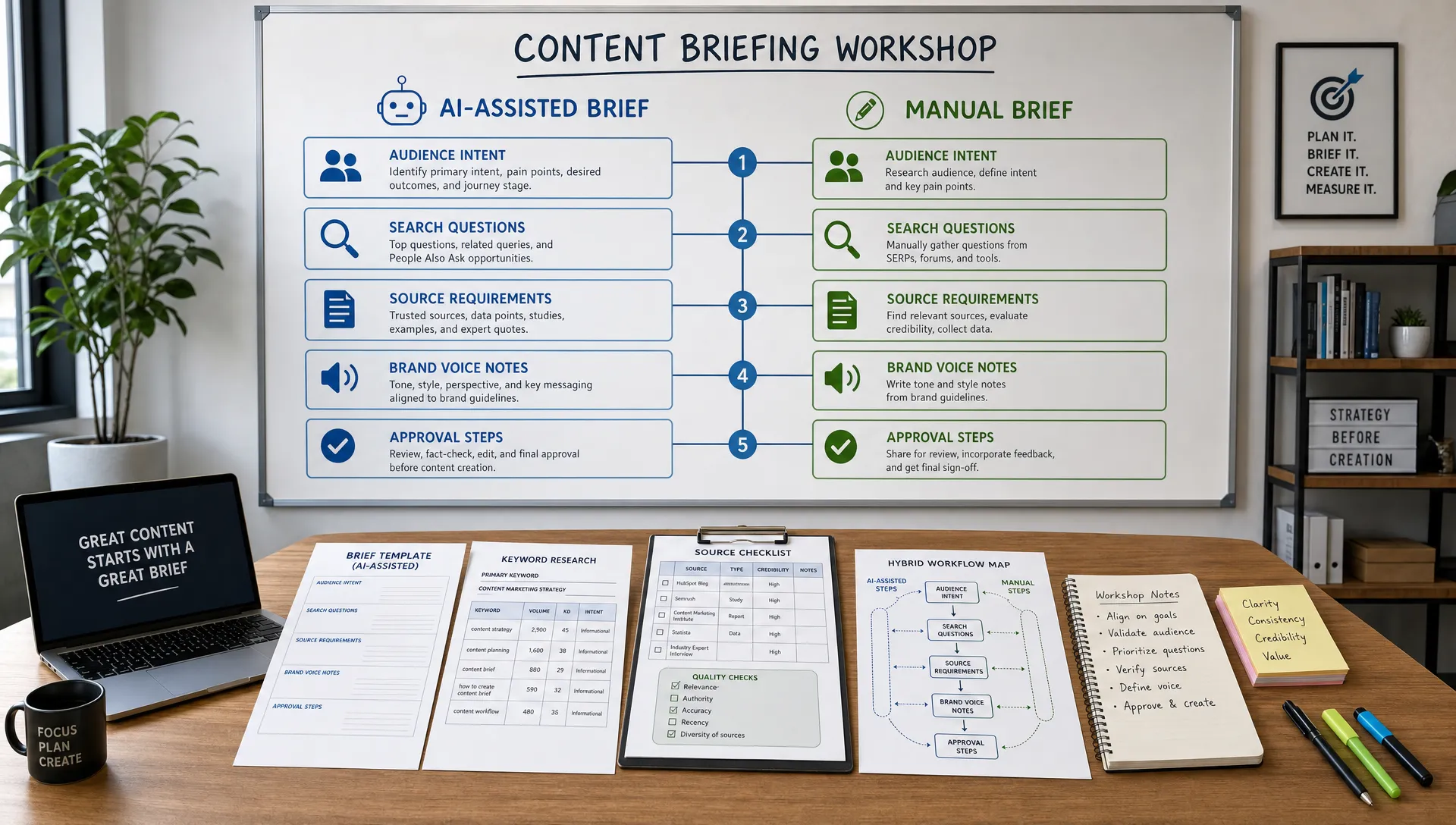
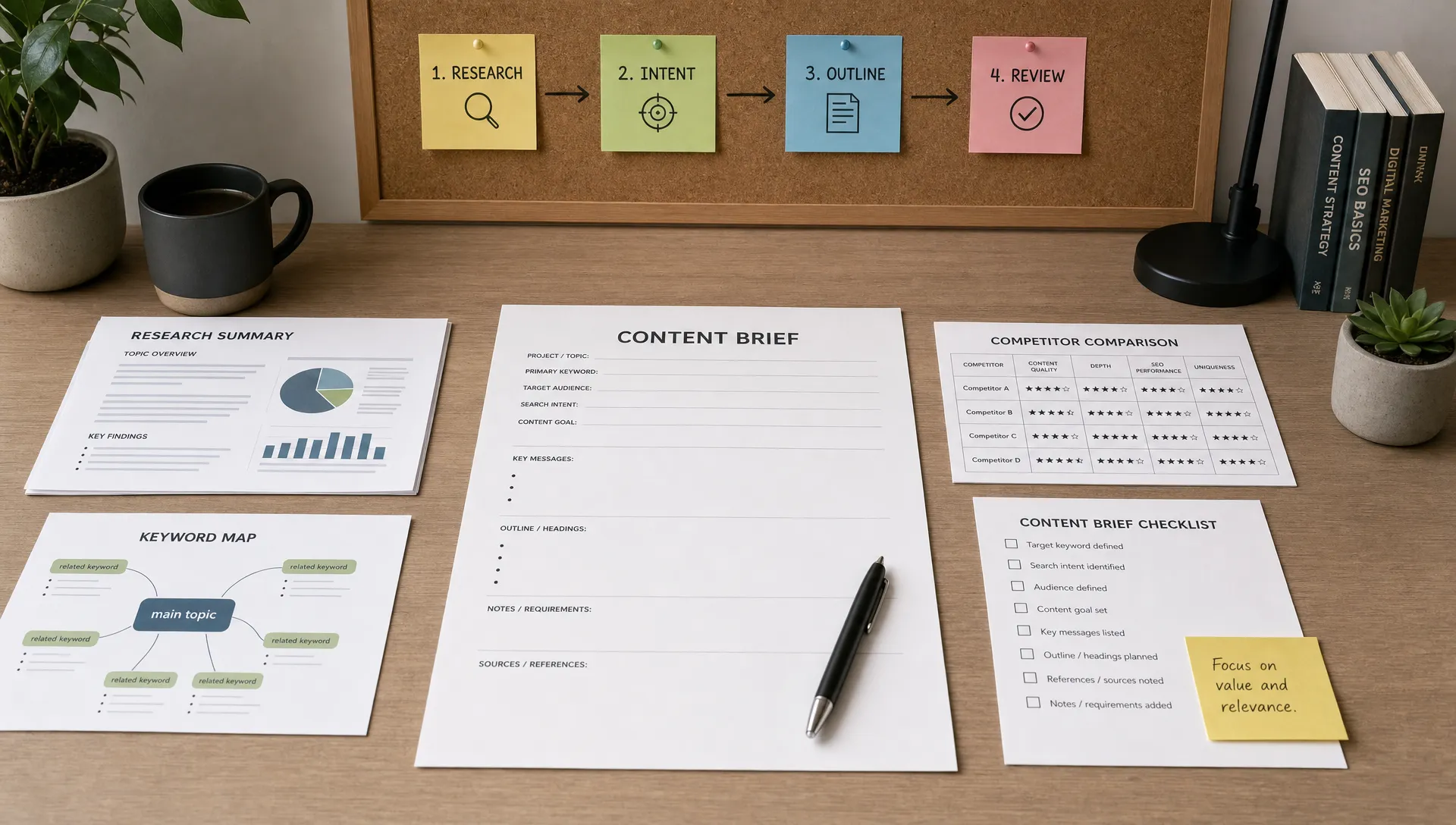
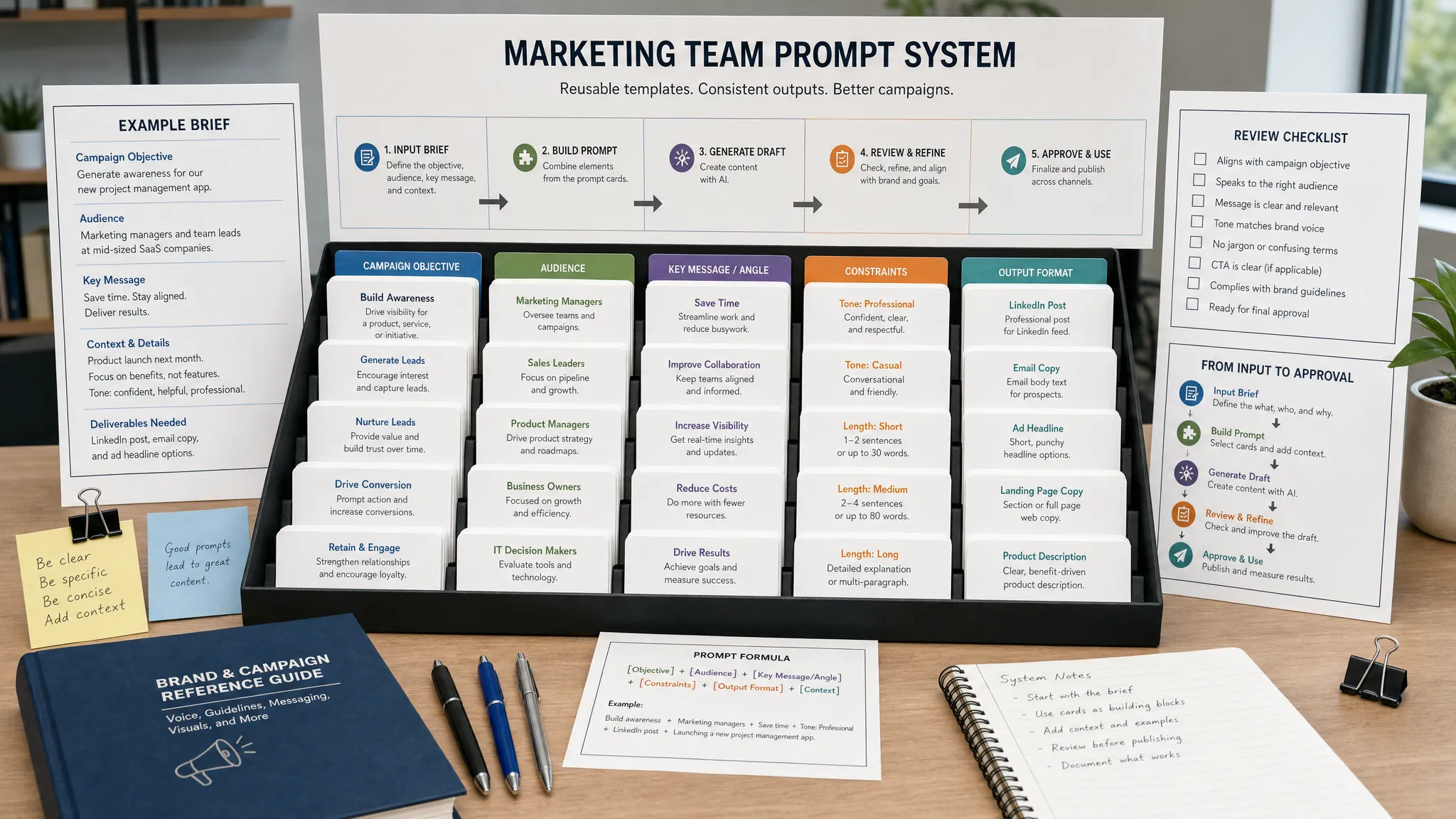
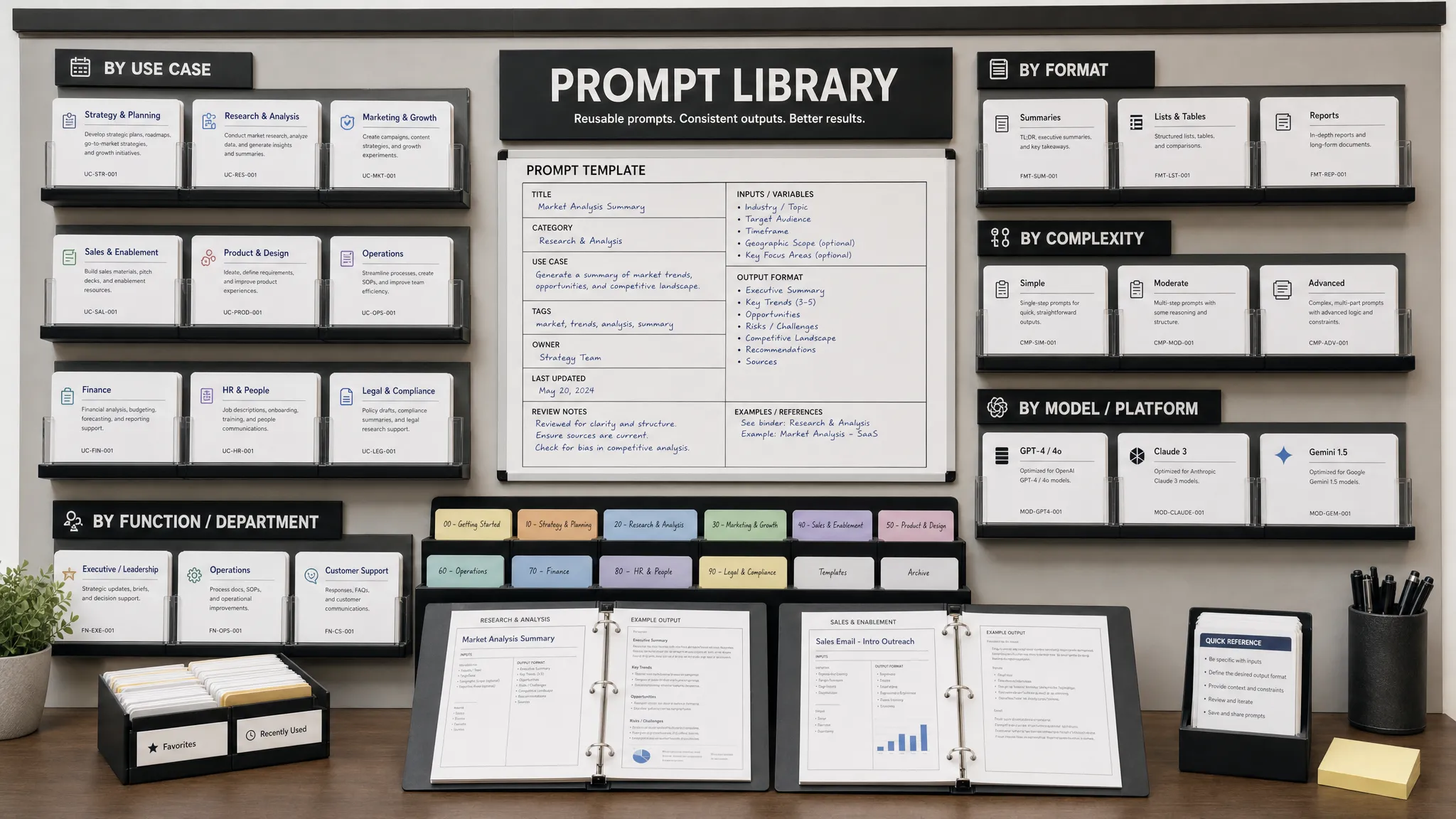
This is also the right time to create a prompt library for recurring marketing tasks such as customer research, content briefs, ad variations, email drafts, and campaign retrospectives. Keep the prompts tied to your brand voice, audience, product facts, and approval process.
In the second month, run a small number of high-signal experiments. Do not spread the team across every channel. Choose one or two acquisition channels and test specific hypotheses.
For example, you might test a search-optimized content cluster, a founder-led LinkedIn campaign, an email nurture sequence, or a paid campaign around a proven pain point. Use AI to draft variations, repurpose assets, and summarize early performance, but keep humans responsible for the message and offer.
The goal is learning speed. By the end of month two, you should know which audience segments, content angles, and conversion paths deserve more investment.
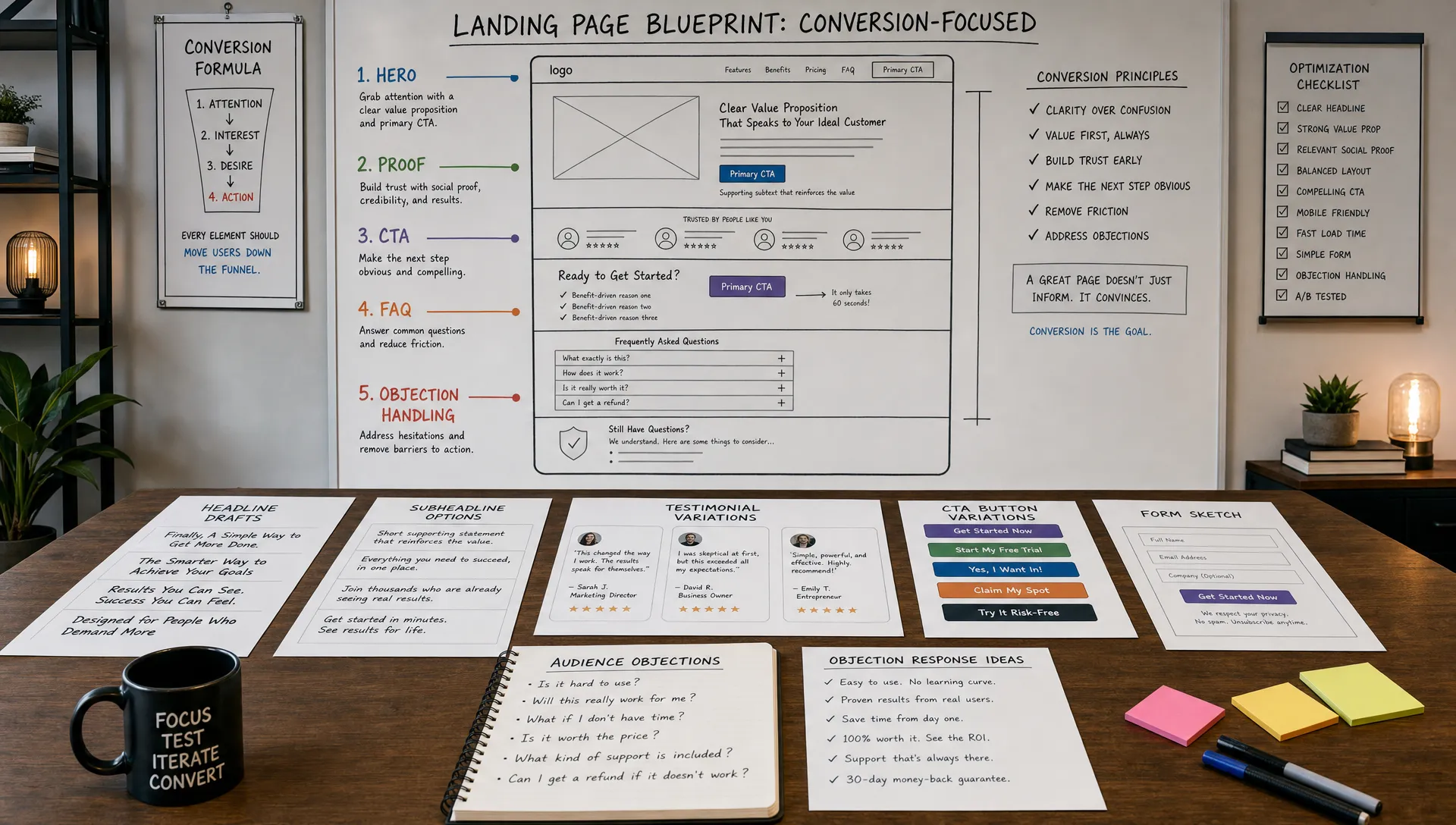
In the third month, scale what is working. Turn repeated manual steps into workflows. Build lifecycle sequences for high-intent leads. Create reusable content templates. Improve landing pages based on real objections. Use AI-powered analytics to identify drop-offs and prioritize the next round of tests.
This is also when you should remove what is not working. Startups do not have the luxury of maintaining low-impact campaigns forever. A good AI marketing strategy creates focus by making performance easier to see.
The biggest mistake is treating AI as the strategy instead of a tool inside the strategy. AI will not fix unclear positioning, a weak offer, poor onboarding, or a product that does not solve an urgent problem.
Other common mistakes include adopting too many tools at once, publishing generic AI content without expert review, automating follow-up before understanding buyer intent, relying only on vanity metrics, and ignoring privacy or compliance until there is a problem.
A better approach is to start small, document what works, and build repeatable systems. When a workflow proves useful, improve it. When it creates noise, cut it. The best startup marketing teams in 2026 will not be the ones using the most AI. They will be the ones using AI with the most discipline.
What is an AI marketing strategy for startups? An AI marketing strategy is a plan for using AI tools, automation, analytics, and content workflows to reach the right customers, improve campaign performance, and support revenue growth. For startups, it should be focused, measurable, and tied to specific growth goals.
Which AI marketing activities should startups prioritize first? Most startups should begin with customer research, positioning, content creation, campaign repurposing, and performance analysis. These areas usually create quick leverage without requiring a large team or complex technology stack.
Can AI replace a startup marketing team? AI can reduce repetitive work and help small teams move faster, but it does not replace strategy, customer understanding, creative judgment, or accountability. Startups still need humans to set direction, validate claims, protect brand voice, and make decisions.
How much should a startup automate in 2026? Automate workflows that are repeatable, measurable, and based on proven messaging. Avoid automating parts of the customer journey that are still unclear or require high-trust human interaction.
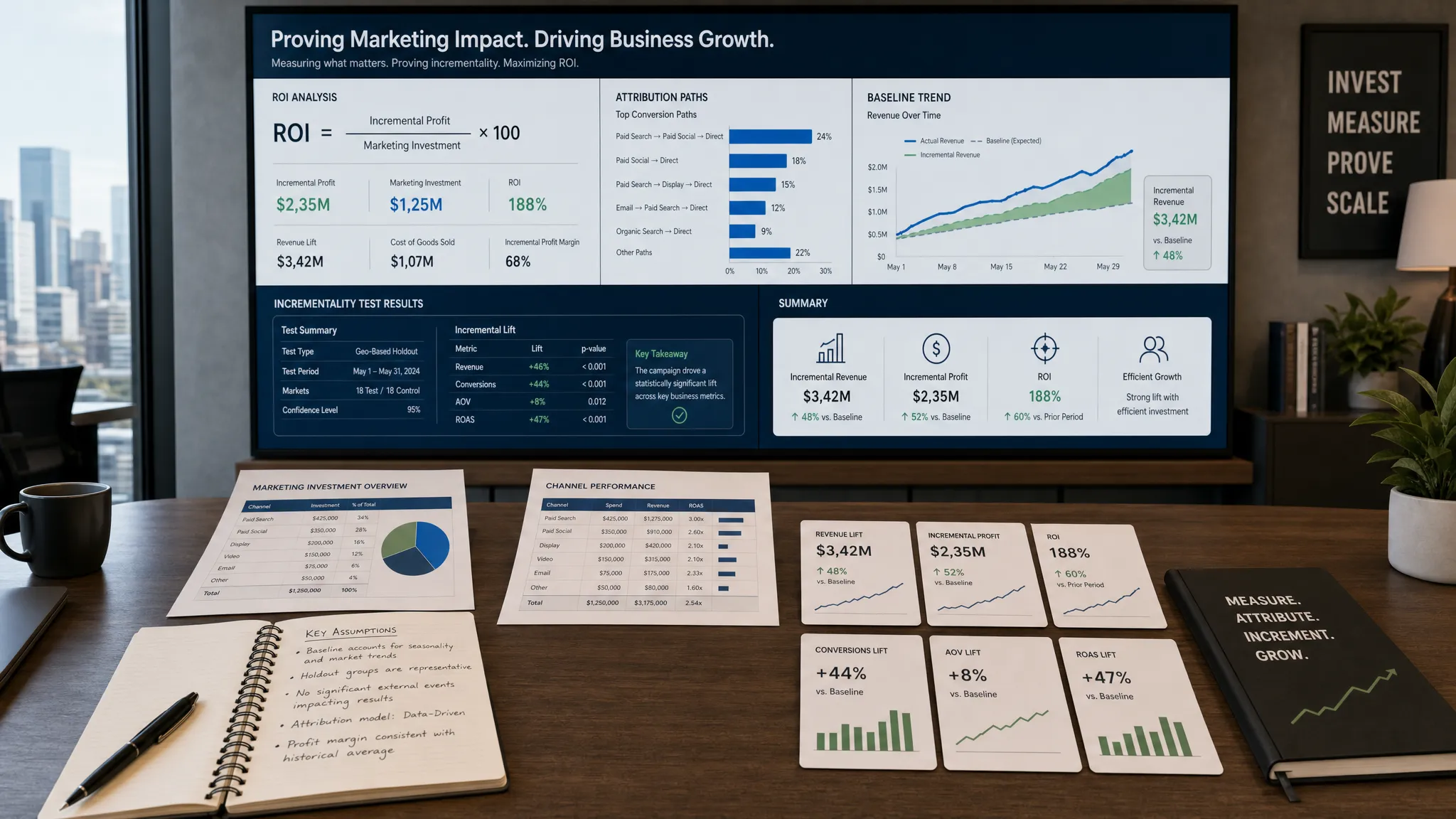
How do startups measure AI marketing ROI? Track time saved, content output quality, conversion rates, lead quality, pipeline contribution, acquisition cost, and retention signals. The best ROI measurement connects AI-assisted work to business outcomes, not just faster production.
AI gives startups the chance to compete with larger teams, but only when it is used with focus. Start with customer insight, build clean data habits, create content with expertise, automate only what is proven, and measure progress against revenue.
If your team wants practical tools, marketing guides, SEO resources, calculators, and AI-focused insights in one place, AIMarketer Hub can help you build a smarter, more efficient marketing operating system for 2026.