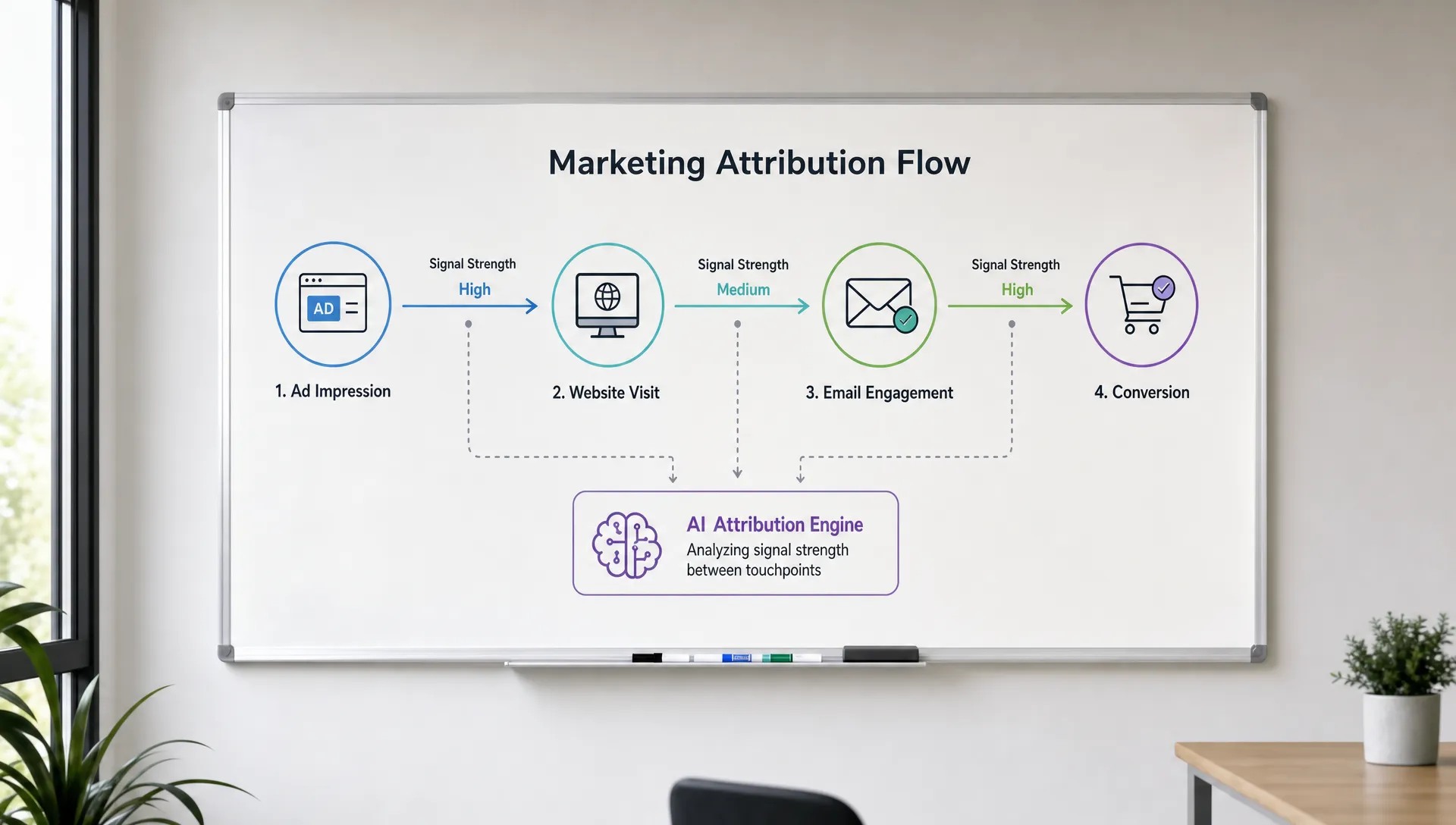
Marketing attribution used to be framed as a reporting problem: Which channel gets credit for the conversion? In 2026, that question is too small. Customer journeys now move across search, paid social, creators, email, dark social, sales calls, marketplaces, partner referrals, and AI-assisted discovery. At the same time, privacy rules, consent settings, browser restrictions, and walled gardens limit the visibility marketers once took for granted.
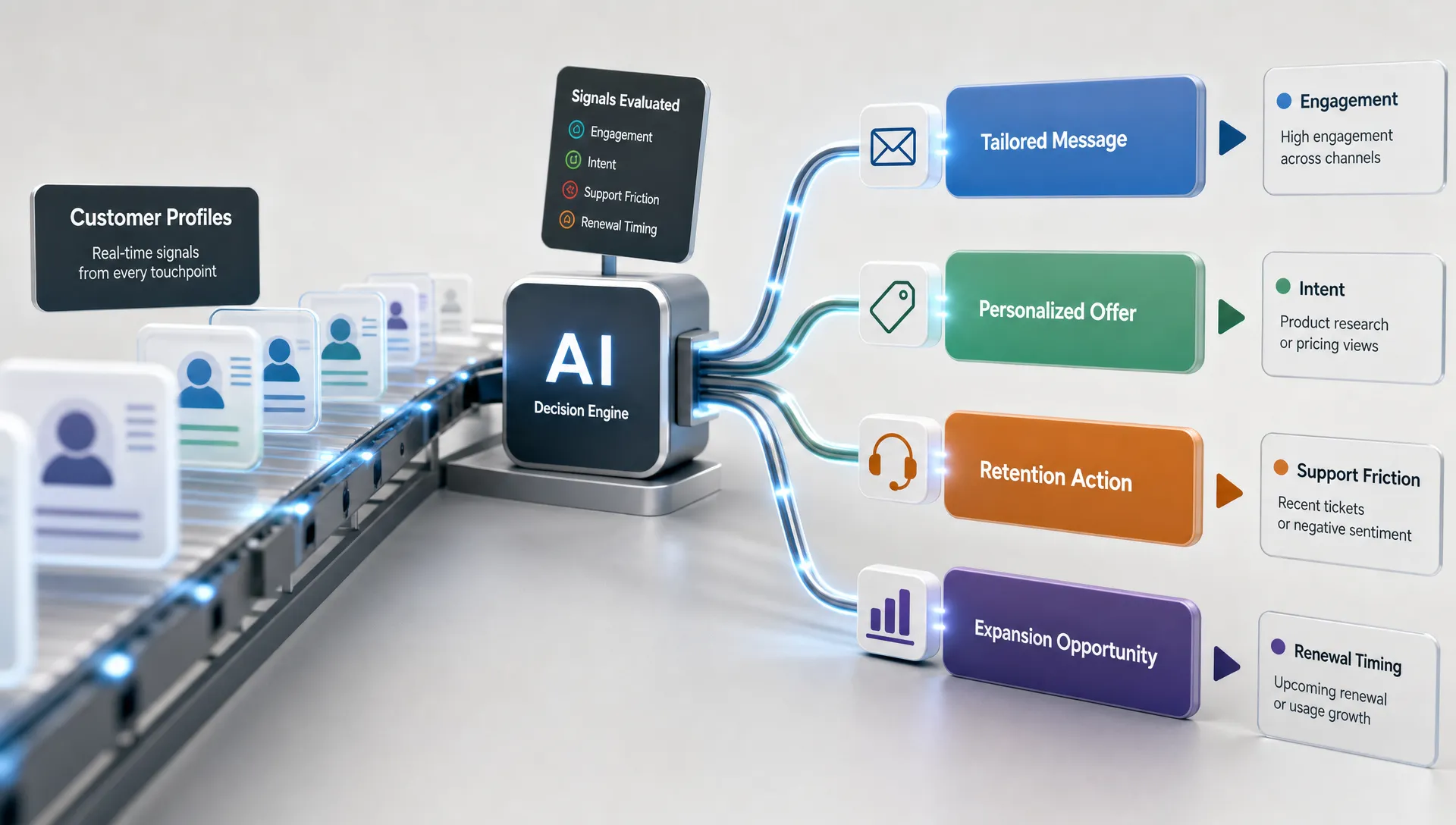
That is why AI for marketing attribution matters. Used well, AI does not magically reveal every hidden touchpoint. It helps marketers combine incomplete signals, detect patterns humans miss, estimate the likely impact of channels, and turn attribution from a backward-looking report into a decision system.
The goal is not to prove that one channel deserves all the credit. The goal is to answer better questions: What is actually moving pipeline? Where should budget shift next month? Which campaigns create incremental demand instead of capturing demand that already existed?
The old attribution stack was built around user-level tracking, cookies, last-click reporting, and simple multi-touch rules. Those methods still appear in dashboards, but they are less reliable as a single source of truth.
Several changes have reshaped attribution:
In this environment, a single attribution model can mislead you. AI helps because it can work across larger, messier data sets and compare multiple measurement methods at once. Instead of asking whether first-click, last-click, or linear attribution is right, modern teams combine user-level signals where consent allows, aggregate performance data, modeled conversions, incrementality tests, and business outcomes.
If you are still building the broader foundation of your AI stack, AIMarketer Hub’s overview of AI tools for marketing teams can help you think beyond attribution and connect measurement to content, SEO, advertising, and workflow automation.
AI can improve attribution, but it cannot fix bad strategy or missing data by itself. The most successful teams treat AI as an analytical layer, not as an oracle.
AI can help you:
AI cannot fully identify anonymous users who never consented to tracking. It cannot prove causality from correlation alone. It cannot tell you what would have happened without a campaign unless you design a valid test. And it cannot replace business judgment about brand, market timing, pricing, and sales execution.
A useful way to frame AI attribution is this: AI helps you reduce uncertainty, not eliminate it.
Many attribution projects fail because teams start with tools instead of decisions. Before you connect data sources or train a model, decide what the attribution system needs to influence.
For example, an ecommerce brand may need to decide whether paid social is creating new customers or simply retargeting shoppers who would have purchased anyway. A B2B SaaS company may need to know which content and campaigns influence qualified pipeline, not just form fills. A professional services firm may care more about consultation requests from high-value accounts than total lead volume.
Start by writing one primary attribution question. Examples include:
This single question determines your conversion events, required data sources, reporting cadence, and model choice. Without that clarity, AI will produce sophisticated outputs that do not change decisions.
AI attribution depends on data quality. In 2026, the best foundation is first-party data collected with clear consent, clean event naming, and strong CRM discipline.
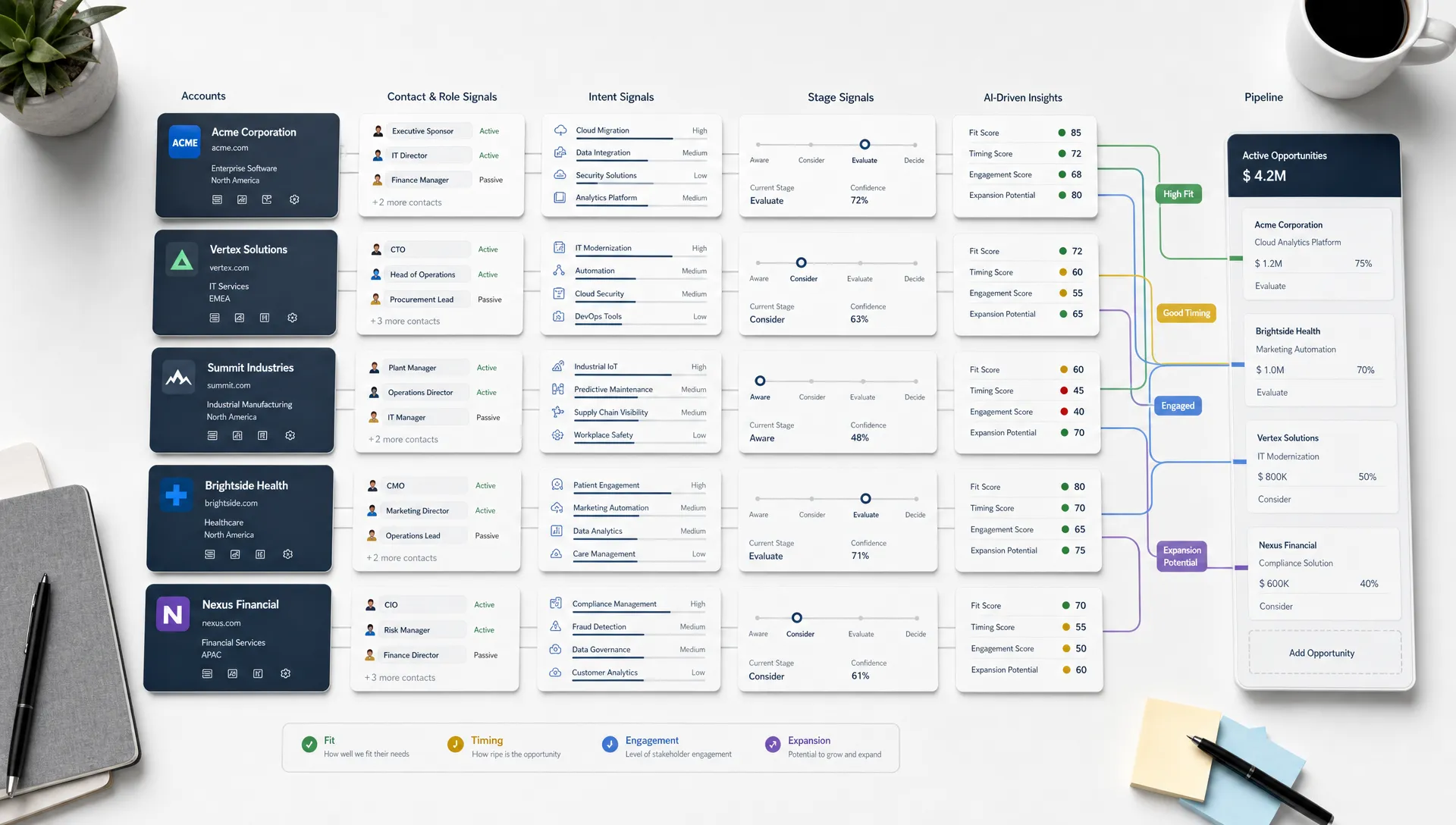
Your core data sources may include website analytics, ad platform data, CRM records, marketing automation events, email engagement, call tracking, webinar attendance, product usage, revenue data, and customer support interactions. The exact mix depends on your business model, but the principle is the same: AI needs connected signals that describe the journey from first meaningful interaction to business outcome.
Focus on these foundations first:
If your data is inconsistent, AI may amplify the mess. For example, if the same campaign is labeled paid_social, Paid Social, Meta Prospecting, and Facebook Ads across systems, your model will treat those as separate signals unless you normalize them.
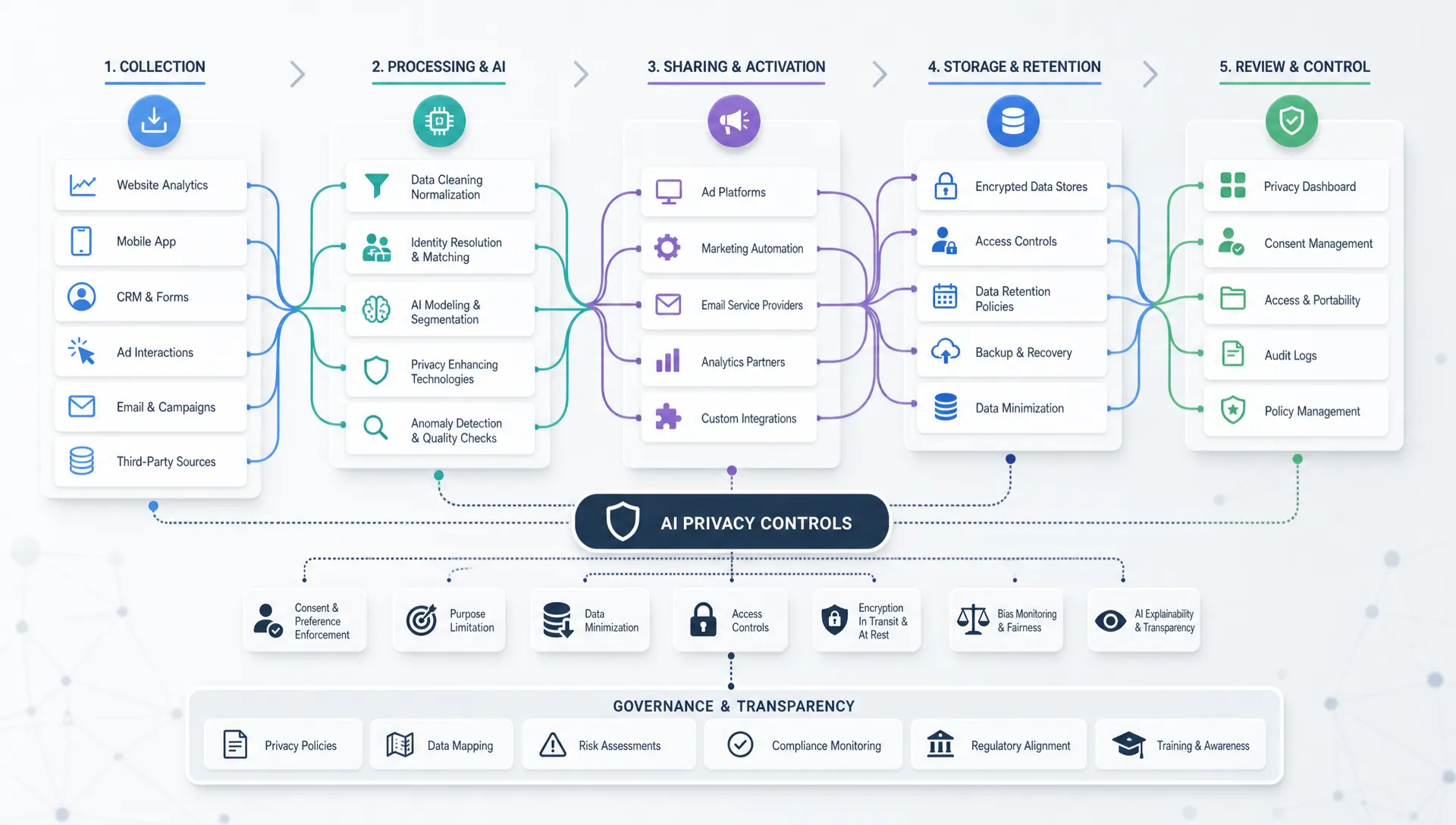
Privacy should be built into the process, not added later. Google’s documentation on Consent Mode is one example of how major platforms are adapting measurement around consent states and modeled conversions. Your legal and data teams should help determine which tracking, modeling, and data retention practices are appropriate for your markets.
There is no universal best attribution model. In 2026, mature teams usually combine several methods, because each answers a different question.
Data-driven attribution uses machine learning to assign credit based on observed conversion paths. Instead of giving all credit to the first or last interaction, the model estimates how much each touchpoint contributed based on patterns across many journeys. Google Analytics, for example, describes data-driven attribution as a model that evaluates paths and assigns conversion credit based on available account data.
This approach is useful when you have enough consented journey data and want to understand how channels interact. It can reveal that paid search captures demand, email accelerates decision-making, and educational content assists conversions earlier in the journey.
The limitation is that multi-touch attribution depends on trackable touchpoints. It may undercount brand, offline sales, influencer exposure, community engagement, and dark social.
Marketing mix modeling, often called MMM, looks at aggregate data over time. Instead of following individual users, it analyzes how spend, impressions, seasonality, pricing, promotions, economic factors, and channel activity relate to business outcomes.
MMM is especially valuable when user-level tracking is incomplete, when channels are hard to measure directly, or when you need board-level budget guidance. It is also useful for offline media, brand campaigns, creator programs, and channels where click-based attribution is weak.
The limitation is granularity. MMM may help you decide whether to invest more in connected TV or paid social, but it may not tell you which individual ad creative drove a specific conversion.
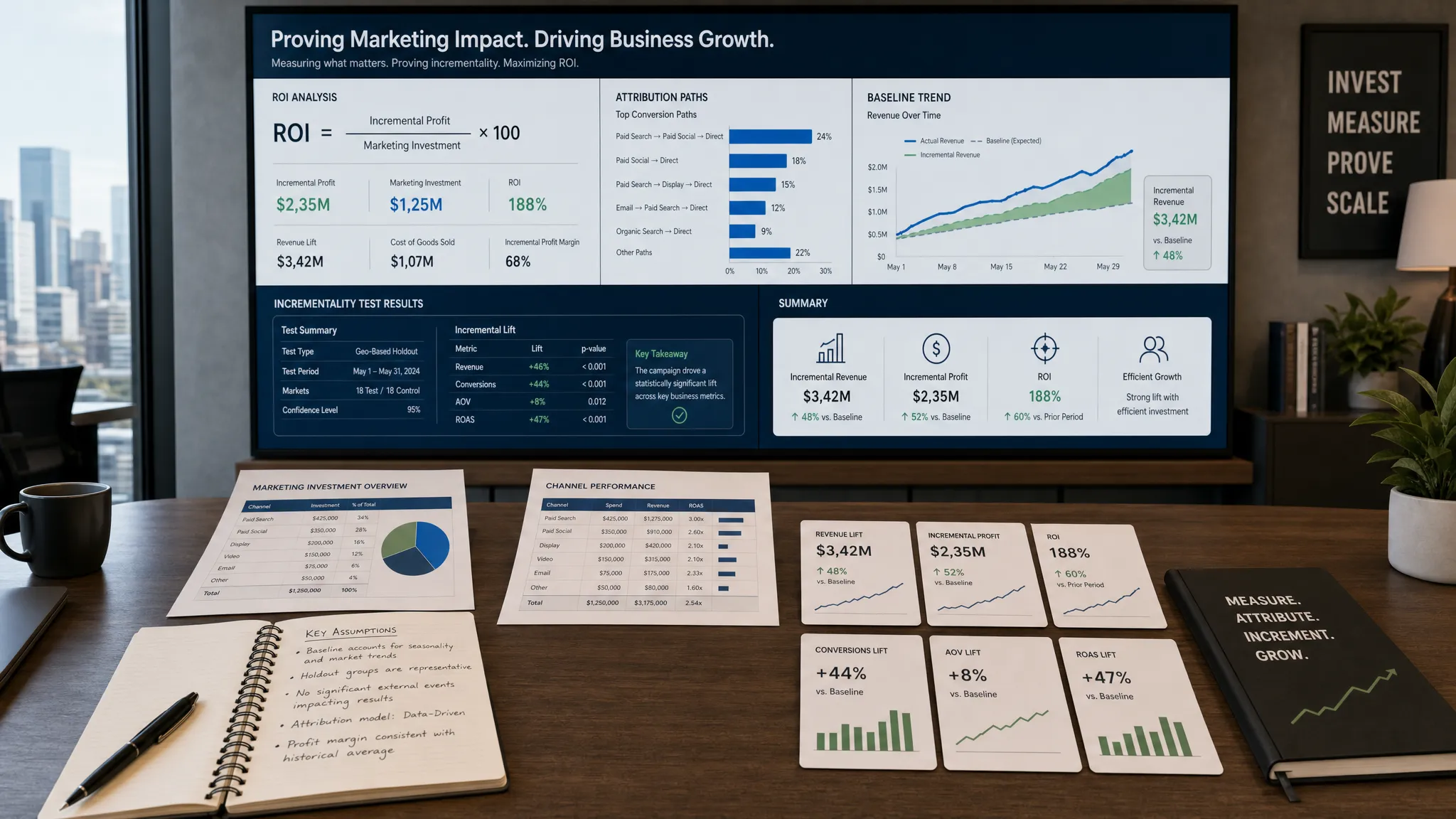
Incrementality testing asks what happened because of the marketing activity that would not have happened otherwise. This can involve geo tests, holdout groups, conversion lift studies, audience exclusions, or time-based experiments.
AI can help design test groups, forecast expected performance, detect statistical anomalies, and interpret results. But the causal power comes from the experiment design, not the model alone.
Incrementality testing is essential when a channel appears strong in attribution reports but may be capturing existing demand. Retargeting, branded search, affiliate marketing, and bottom-funnel paid social often need this kind of validation.
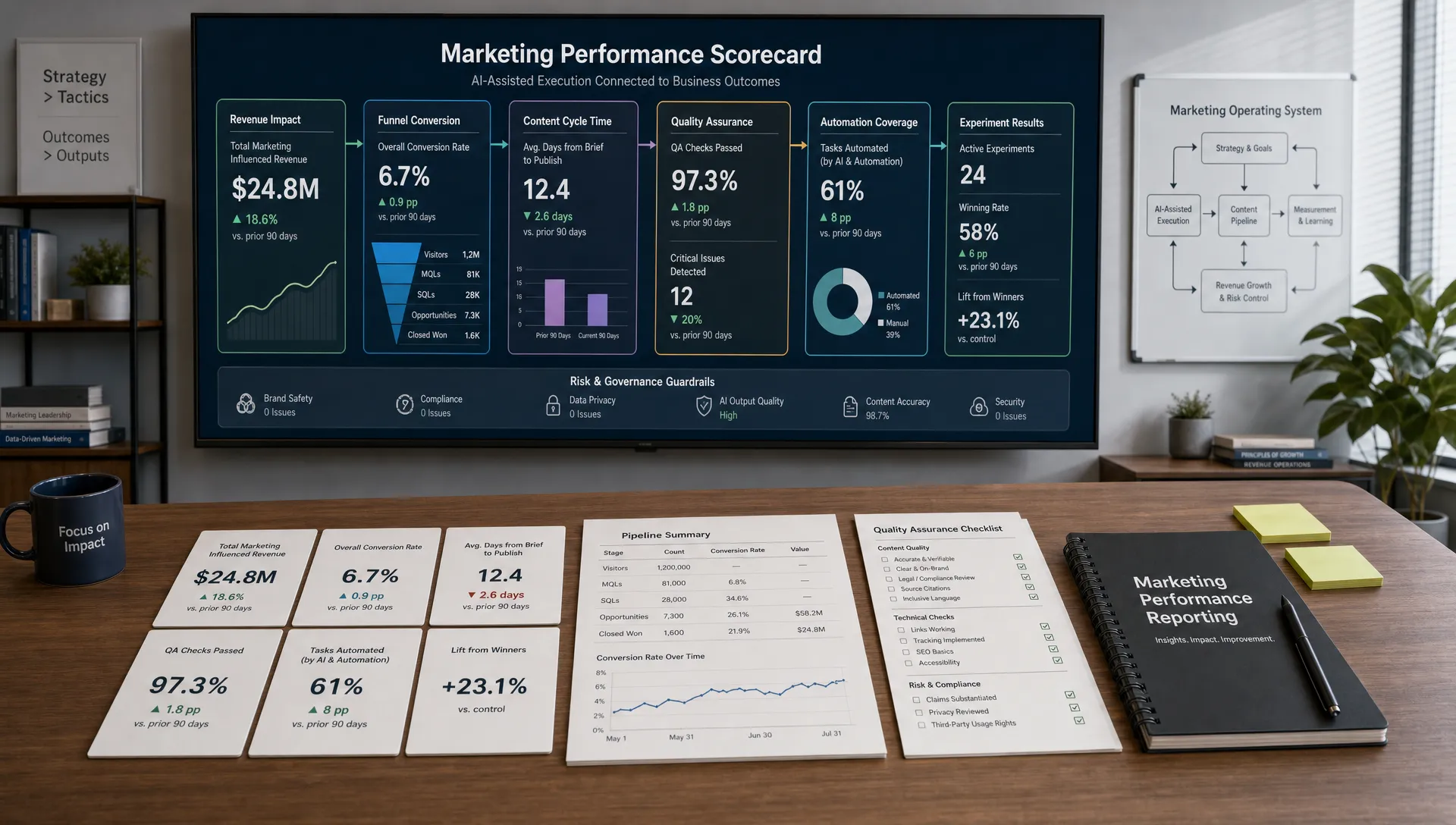
The most useful approach is usually a unified measurement system. That means using multi-touch attribution for journey-level insights, MMM for budget allocation, incrementality tests for causality, and CRM revenue data for business validation.
AI connects these layers by highlighting contradictions. If platform reporting says one campaign is a top performer, but CRM data shows weak pipeline and incrementality tests show little lift, the system should flag the campaign for review. If MMM shows that upper-funnel activity improves branded search and direct conversions after a lag, AI can help quantify that delayed effect.
AI attribution improves when you feed it meaningful features, not just more data. A feature is a variable the model can use to explain or predict outcomes.
Basic features include channel, campaign, source, medium, device, geography, landing page, conversion event, and time to conversion. More advanced features include customer segment, deal size, lifecycle stage, product category, sales touch count, content topic, ad creative theme, frequency, recency, discount exposure, and previous customer behavior.
The best features connect marketing activity to buying intent. For example, a generic blog visit may be less predictive than a visit to a comparison page, pricing page, ROI calculator, case study, or industry-specific guide. A webinar attendance event may matter more if the attendee is from a target account, returns to the site within seven days, and later books a demo.
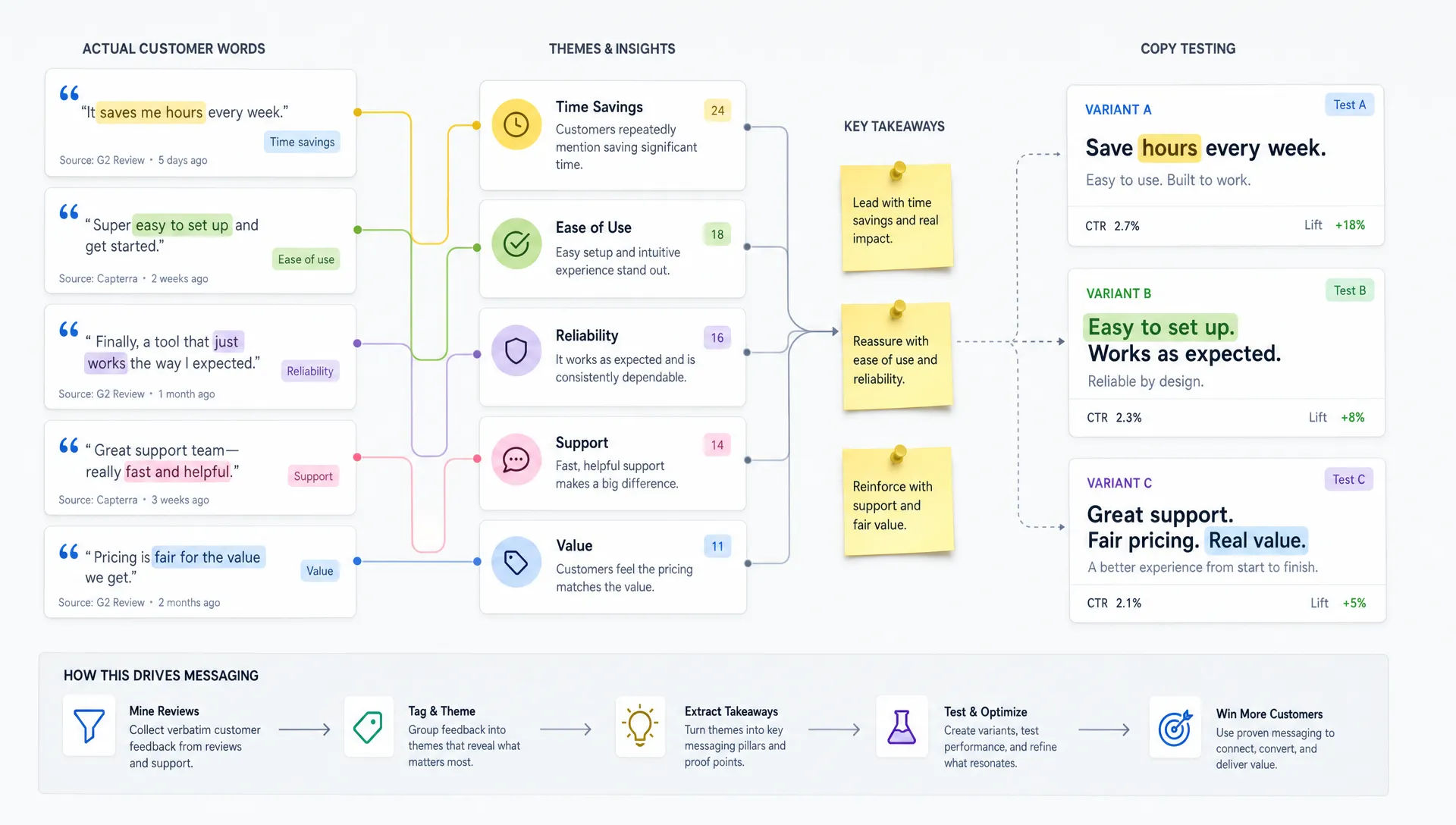
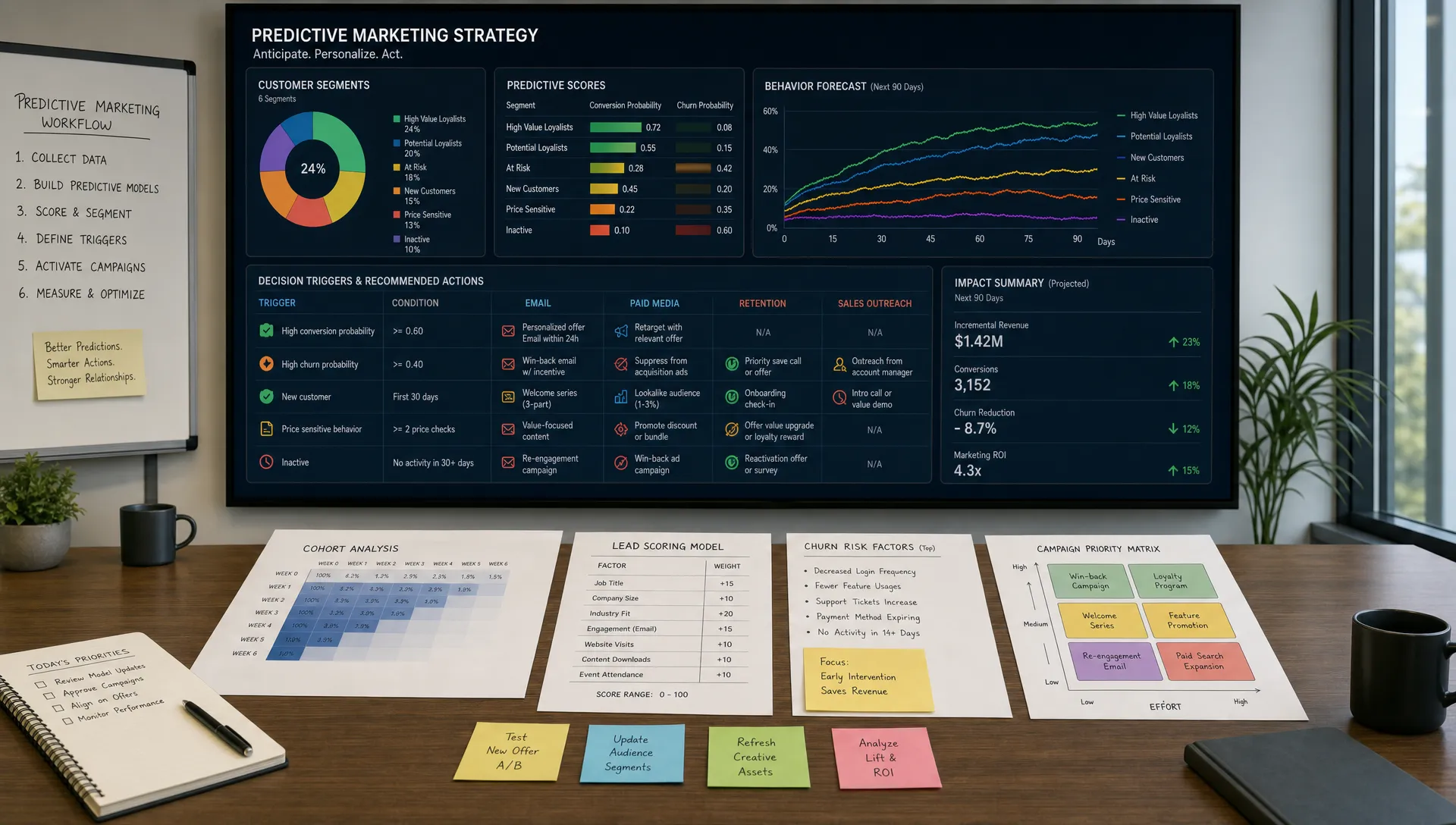
This is where AI-powered analytics become practical. You can use clustering to group similar journeys, natural language processing to categorize content topics, predictive scoring to estimate lead quality, and anomaly detection to spot campaigns that suddenly behave differently.
For teams investing heavily in paid channels, the attribution layer should also connect to creative and media decisions. AIMarketer Hub’s article on how AI advertising is changing paid media is a useful companion if you want to connect attribution insights to campaign optimization.
Once your data is connected, AI can help marketers and analysts ask better questions. This is especially useful for teams that do not have a full-time data science function.
Instead of asking for a generic channel report, use prompts that combine the decision, segment, time frame, and outcome. For example:
The value of these prompts is not just automation. They force your attribution analysis to connect marketing activity with business outcomes. This is where AI marketing automation becomes more than task efficiency. It becomes a way to standardize decision-making across campaigns.
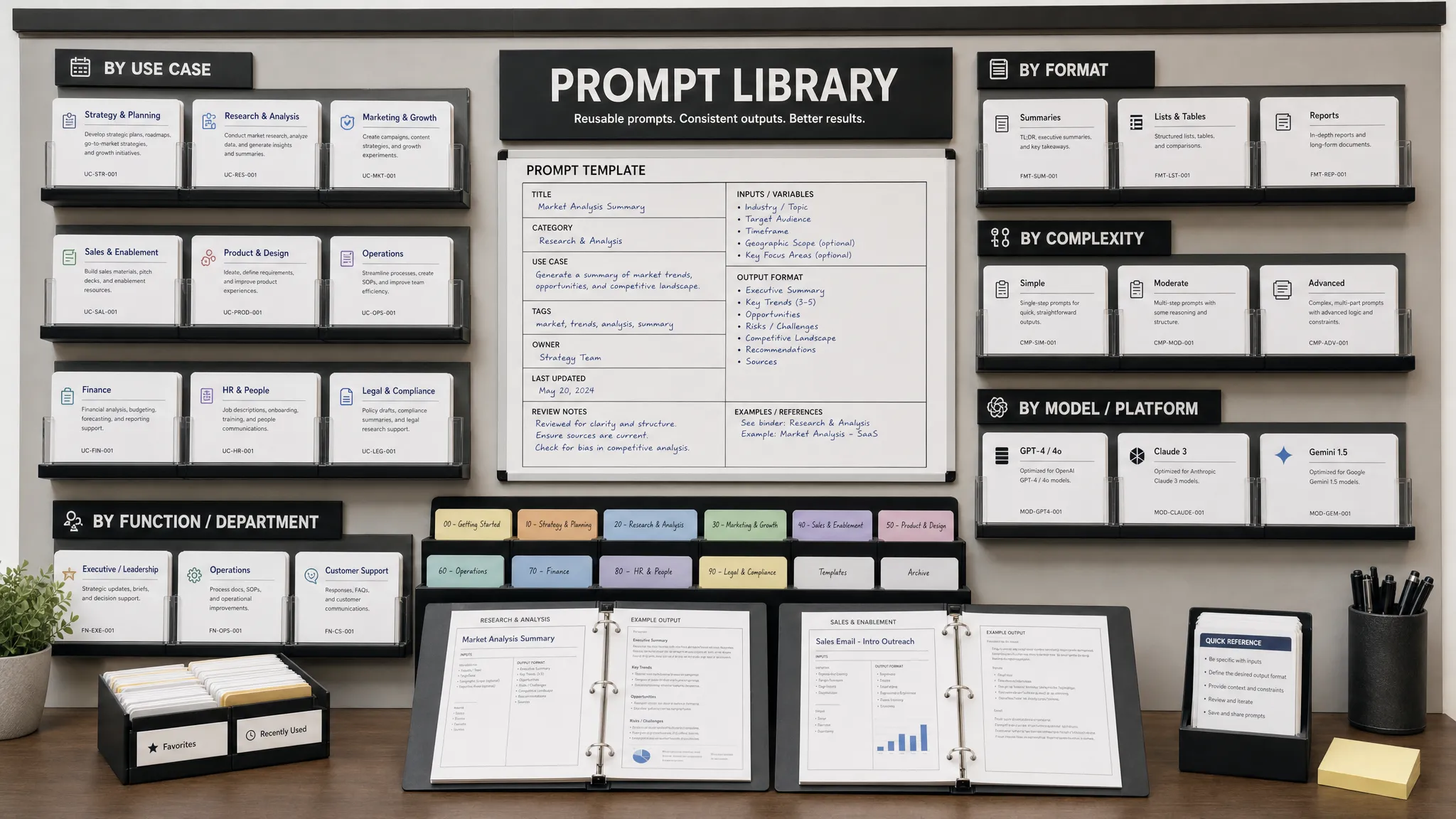
AIMarketer Hub’s broader AI marketing guides and resources can help teams create repeatable workflows for prompts, reporting, and optimization without starting from scratch each time.
Attribution is only useful if it changes what you do next. The strongest teams create a regular decision rhythm, often monthly for tactical changes and quarterly for budget allocation.
A practical AI attribution review should answer four questions:
Avoid moving budget based on a single report. Look for patterns across multiple views: platform data, analytics data, CRM outcomes, MMM estimates, and incrementality tests. If several sources point in the same direction, you can make a stronger decision.
For example, suppose AI finds that organic comparison content rarely gets last-click credit but appears in 42 percent of high-value SaaS deals before a demo request. At the same time, paid search captures many of those final conversions. A weak attribution process might overfund paid search and underfund content. A stronger process would recognize that paid search and content are working together, then invest in both the demand creation layer and the demand capture layer.
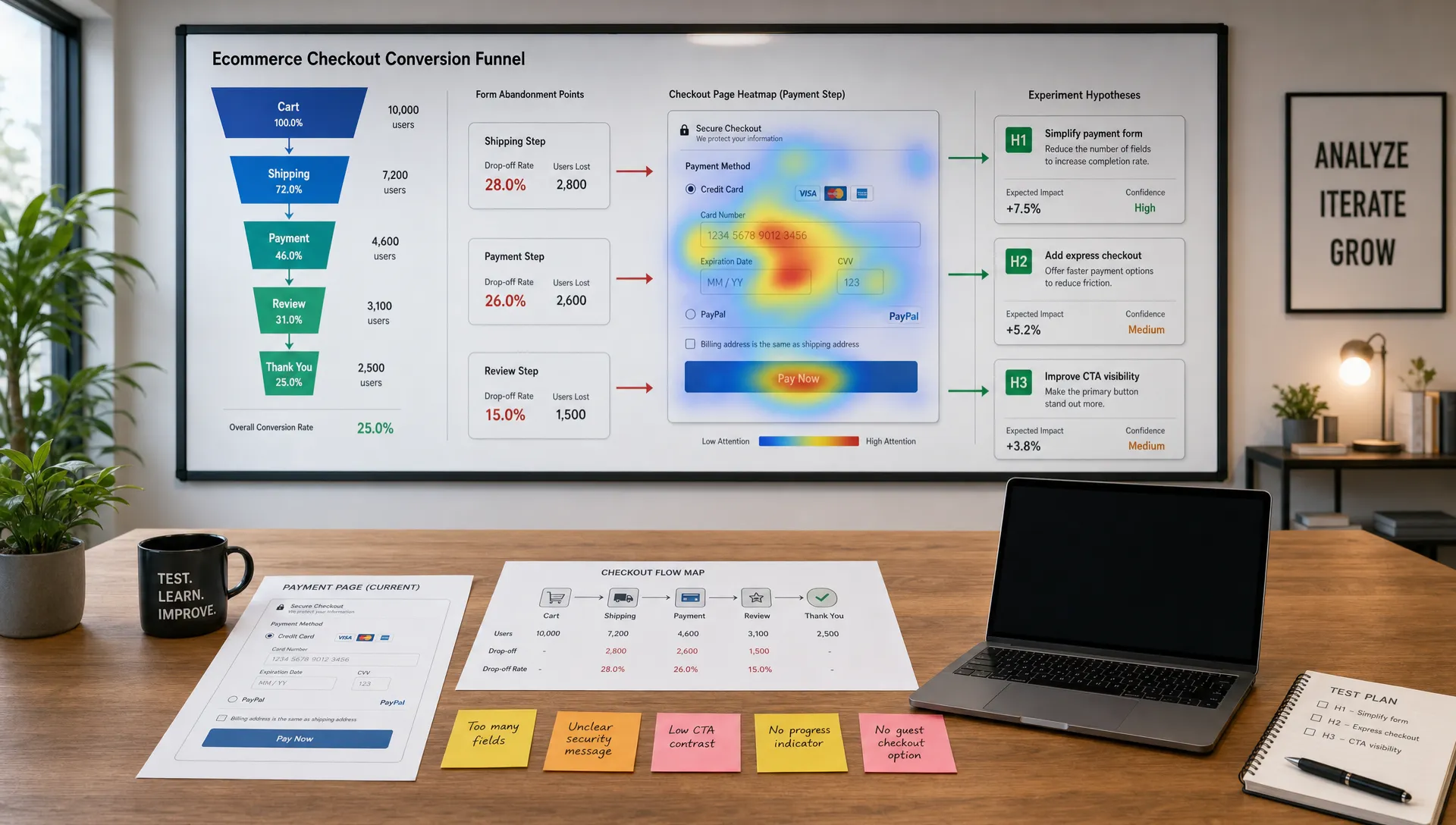
Another example: suppose paid social reports strong conversion volume, but CRM data shows that most leads are low-fit accounts. AI can segment the data, identify which audiences generate better pipeline, and recommend shifting spend toward those groups. The output should not be just a dashboard. It should be a decision memo with recommended action, expected impact, confidence level, and test plan.
AI attribution should always be validated. The easiest way to lose trust is to present model outputs as facts when they are really estimates.
Use experiments to test the model’s recommendations. If AI suggests that a specific channel is undervalued, run a controlled budget increase in selected regions, audiences, or time periods. If AI suggests a campaign is over-credited, create a holdout group or reduce spend in a controlled way to see whether conversions actually decline.
Validation should include both statistical and business checks. Statistical checks ask whether the result is likely meaningful. Business checks ask whether the result makes sense given sales feedback, market context, seasonality, and customer behavior.
Keep a record of each attribution recommendation and outcome. Over time, this creates a feedback loop. Your AI system can learn which signals were predictive, which recommendations worked, and which assumptions need to be adjusted.
Trust is a major part of attribution. If marketing believes the model but finance does not, budget discussions will stall. If sales believes the model ignores relationship-driven deals, adoption will suffer. If executives see changing numbers without explanation, they may default back to last-click reporting because it feels simpler.
Good governance makes AI attribution explainable. Document your data sources, model assumptions, conversion definitions, lookback windows, exclusions, and confidence levels. Create a process for reviewing major changes, such as new channels, campaign naming changes, CRM updates, privacy settings, or website tracking changes.
You should also monitor model drift. A model trained on last year’s buying behavior may become less accurate after a pricing change, product launch, economic shift, algorithm update, or new competitor. Schedule recurring model reviews so your attribution system stays aligned with current conditions.
For responsible AI practices, the NIST AI Risk Management Framework is a helpful reference for thinking about governance, transparency, risk, and trustworthiness. Marketing teams do not need to become regulatory experts, but they do need a clear process for using AI responsibly.
The biggest mistake is treating AI attribution as a replacement for strategy. A model can estimate channel contribution, but it cannot decide your positioning, audience priorities, or growth goals.
Another mistake is optimizing only for short-term conversions. If your model rewards the final click too heavily, you may cut upper-funnel programs that create future demand. This is especially risky in long sales cycles where educational content, brand search, webinars, and analyst relationships influence buyers weeks or months before conversion.
A third mistake is ignoring sales and customer quality. Lead volume is not the same as revenue. Your attribution model should account for qualified pipeline, close rates, retention, expansion, customer acquisition cost, and payback period whenever possible.
Finally, avoid hiding uncertainty. AI outputs should include confidence levels and context. A 5 percent difference between two channels may not justify a budget shift, while a consistent pattern across multiple quarters may be highly actionable.
If you are starting from scratch, keep the workflow simple at first. Define the business question, clean the data, select the right measurement methods, generate AI-assisted insights, validate with experiments, and turn the result into budget decisions.
A realistic first project might focus on one revenue event, such as demo requests that become qualified opportunities. Connect your analytics, ad data, CRM, and email platform. Normalize campaign names. Compare first-touch, last-touch, and data-driven views. Ask AI to identify campaigns and content topics that appear before qualified opportunities. Then validate one insight with a budget or audience test.
From there, expand into more advanced measurement. Add revenue outcomes, customer segments, retention data, media mix modeling, and incrementality testing. The point is not to build the perfect attribution machine in one quarter. The point is to create a measurement system that gets more useful with every cycle.
What is AI for marketing attribution? AI for marketing attribution uses machine learning and statistical modeling to estimate how marketing touchpoints contribute to conversions, pipeline, revenue, or retention. It helps marketers analyze complex journeys that simple first-click or last-click reports often miss.
Is AI attribution better than last-click attribution? Usually, yes, but it depends on the decision. Last-click attribution is simple and can be useful for demand capture analysis, but it often undervalues channels that influence buyers earlier in the journey. AI attribution can provide a more balanced view when the data foundation is strong.
Do small businesses need AI marketing attribution? Small businesses may not need advanced modeling right away, but they can still benefit from AI-assisted analysis. Even simple AI workflows can help clean campaign data, compare channels, summarize CRM outcomes, and identify which marketing activities deserve more investment.
How much data do you need for AI attribution? The answer depends on the model. Multi-touch attribution needs enough consented journey data to detect patterns, while marketing mix modeling can work with aggregate performance over time. If data volume is low, start with cleaner tracking, CRM discipline, and small incrementality tests.
Can AI attribution work without third-party cookies? Yes, but the approach changes. Teams rely more on first-party data, consent-aware measurement, aggregate modeling, platform-reported data, server-side signals where appropriate, CRM outcomes, and experiments. AI can help connect those signals, but it should not be used to bypass privacy requirements.
How often should attribution models be reviewed? Most teams should review tactical attribution insights monthly and model assumptions quarterly. Review sooner if you launch a major campaign, change tracking, update CRM fields, enter a new market, or see a sudden shift in conversion quality.
AI attribution in 2026 is not about chasing perfect credit. It is about making better marketing decisions with imperfect but improving data. When you connect first-party signals, CRM outcomes, AI-powered analytics, and controlled experiments, attribution becomes a growth system rather than a reporting debate.
AIMarketer Hub helps marketers turn AI concepts into practical workflows with expert guides, curated resources, SEO tools, prompt libraries, calculators, and automation-focused insights. Explore AIMarketer Hub to build a smarter, more measurable AI marketing strategy for the year ahead.