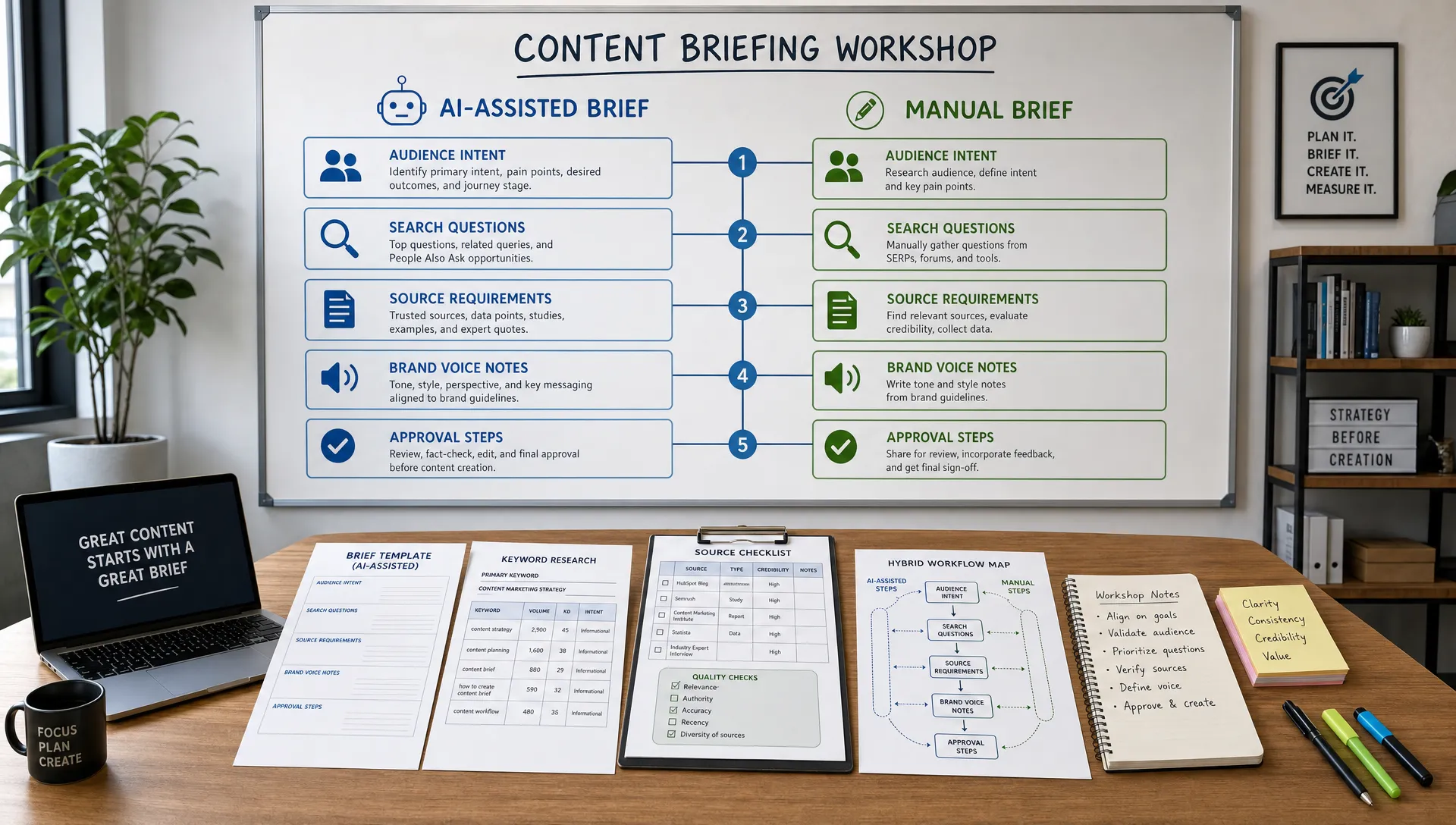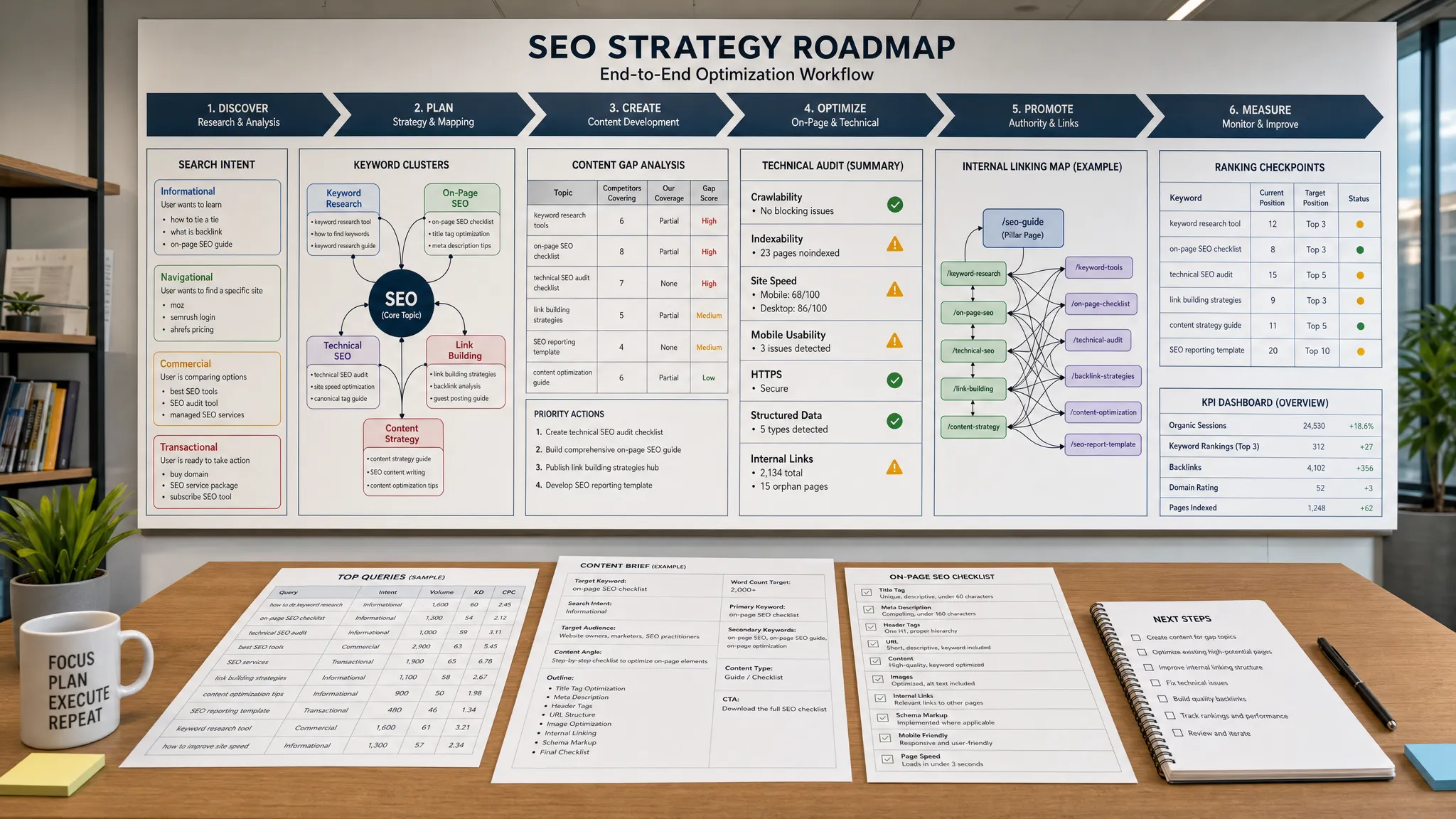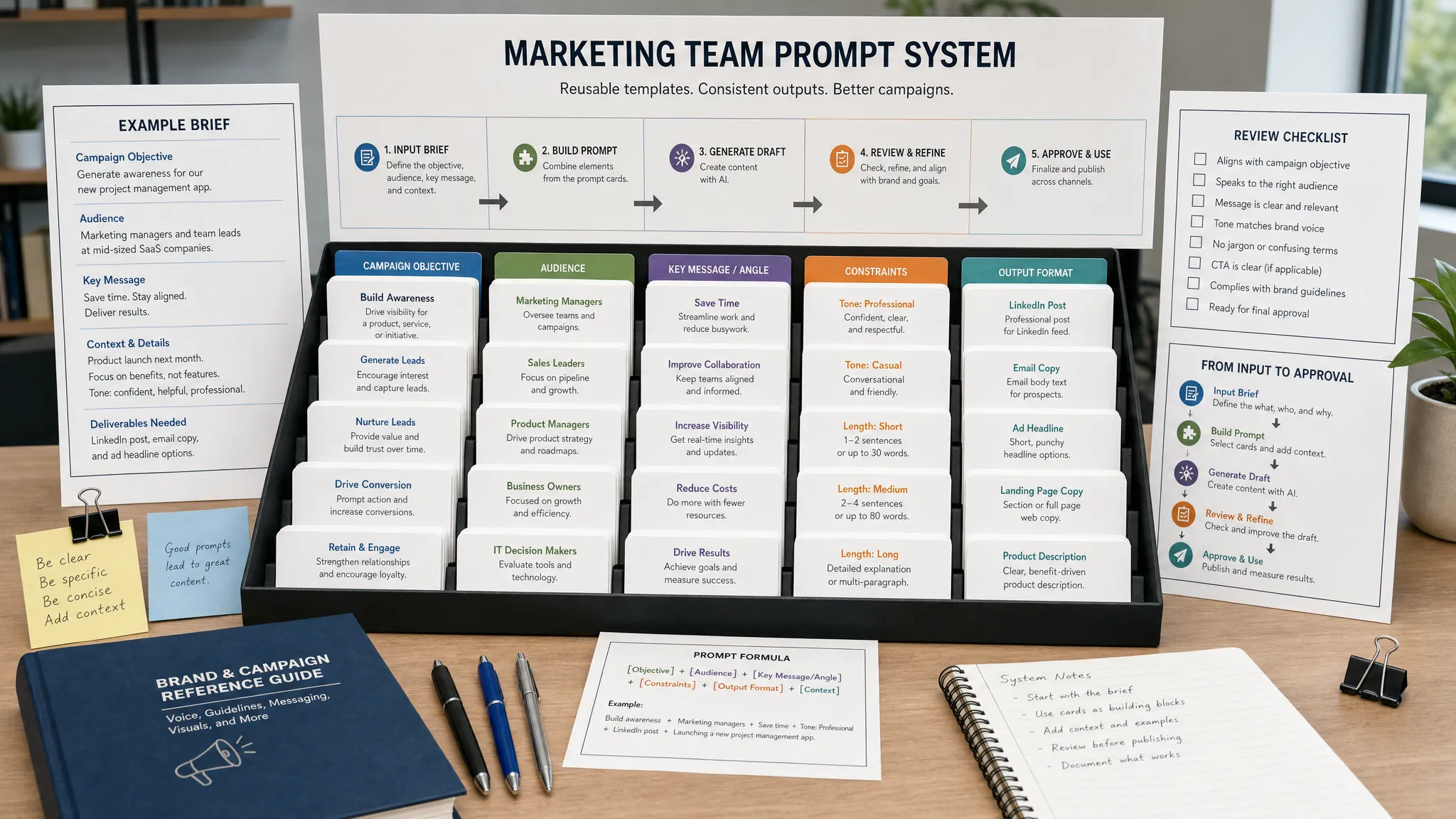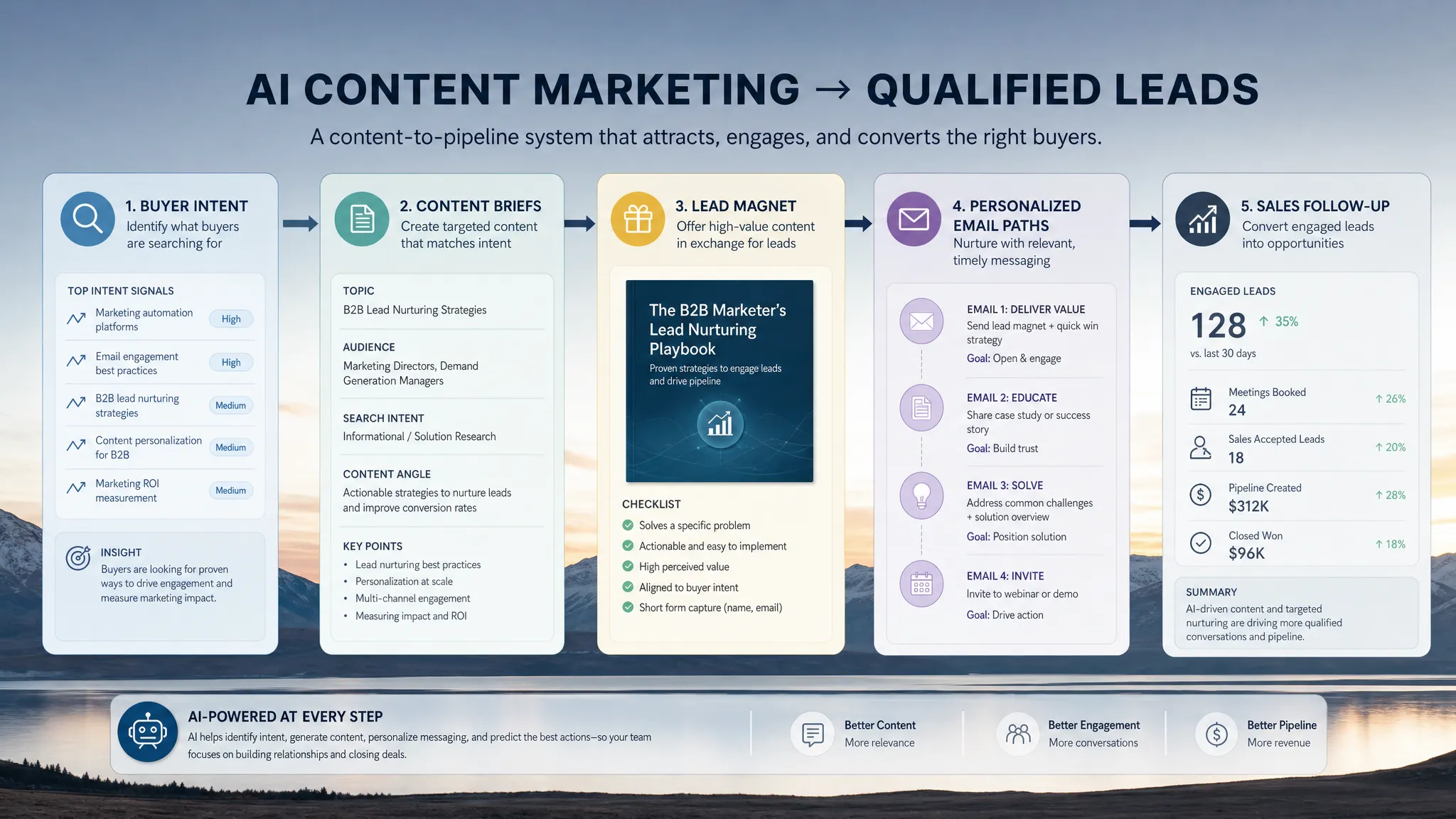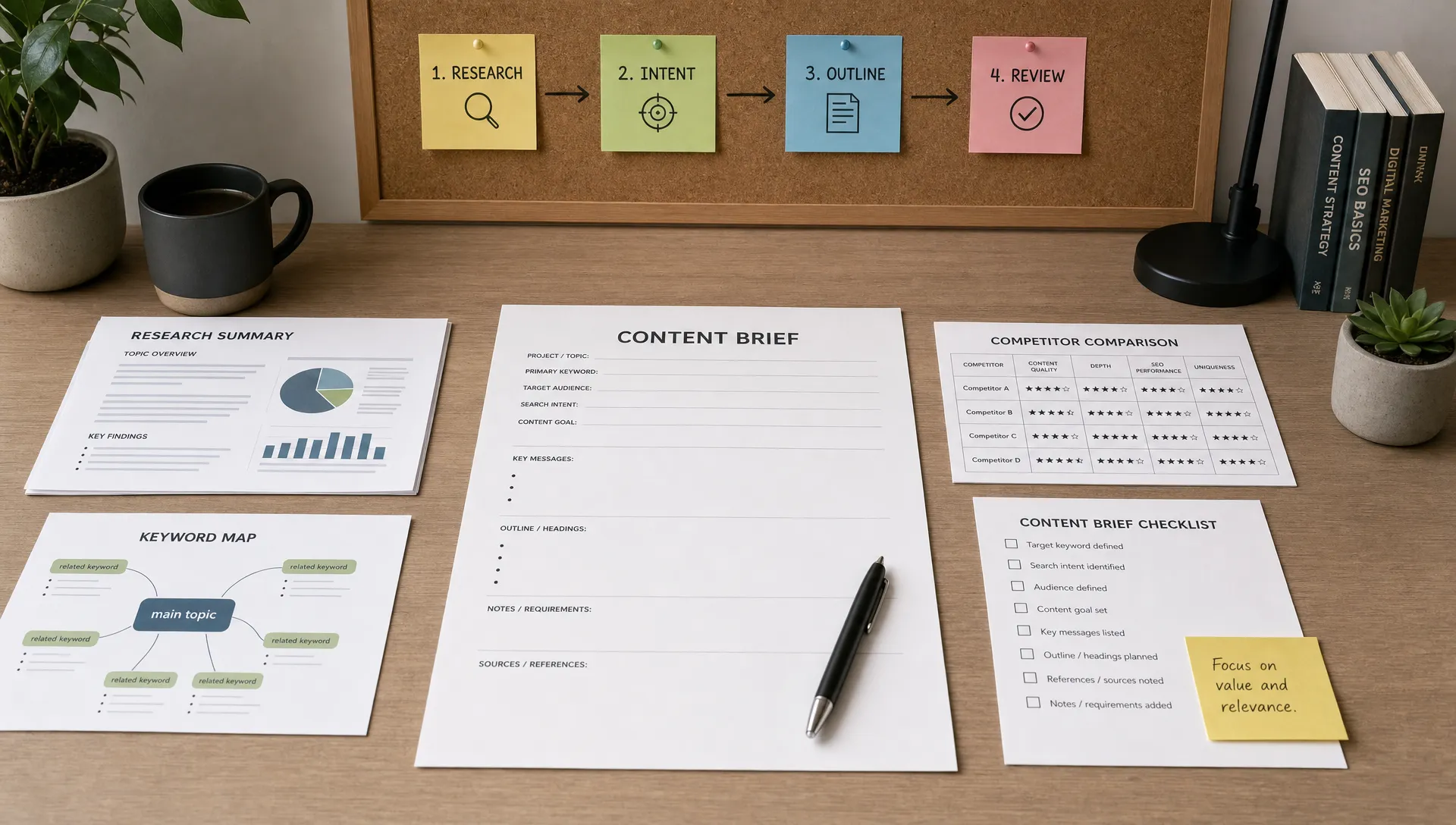
A great content brief should make the writer faster, the editor calmer, and the final article more likely to rank, convert, and sound like your brand. The problem is that creating briefs manually can become a bottleneck. Researching search intent, comparing competitor angles, collecting internal links, defining structure, and adding brand notes can easily take longer than expected.
AI changes that workflow. It can summarize research, cluster ideas, draft outlines, identify missing questions, and turn scattered inputs into a usable brief in minutes. But faster does not mean fully automated. The best results come when marketers use AI as a planning assistant, then apply human judgment to strategy, accuracy, differentiation, and brand fit.
This guide walks through a practical process for using AI for faster content briefs without producing generic, keyword-stuffed instructions that writers will ignore.
AI is excellent at pattern recognition. It can scan notes, summarize themes, compare outlines, suggest questions, and format information consistently. That makes it ideal for the repetitive parts of brief creation.
What AI cannot reliably do on its own is understand your business priorities, verify every claim, know your unpublished customer insights, or decide which angle is most valuable to your audience. Those decisions still need a strategist, editor, or subject matter expert.
Think of AI as the engine that accelerates the brief, not the owner of the strategy. If you give it weak inputs, it will produce a polished but shallow brief. If you give it clear audience, search, product, and editorial context, it can help you move much faster.
Brief component    | Why it matters                                 | How AI speeds it up
Search intent      | Aligns the article with what readers expect    | Classifies intent and suggests reader questions
Audience context   | Keeps the brief specific instead of generic    | Turns personas, pain points, and use cases into writer guidance
Outline            | Gives the writer a logical structure           | Drafts H2s and H3s based on intent and competing angles
Differentiation    | Helps the article add something new            | Flags common competitor points and suggests unique angles
Sources and claims | Protects credibility                           | Creates a fact-checking list, but humans should verify sources
Internal links     | Connects the article to your content ecosystem | Suggests relevant pages based on topic and buyer journey
Brand voice        | Maintains consistency across content           | Converts voice rules into writing dos and don’ts
CTA | Ties content to business goals | Matches the next step to the reader’s stage of awareness Many teams try to fix generic AI output by rewriting the prompt again and again. Usually, the real issue is missing context. Before asking AI to create a content brief, gather the minimum information it needs to make useful decisions.
For a fast but effective brief, prepare these inputs:
If you do not have all of that, AI can help you fill gaps. But you should label assumptions clearly. For example, ask AI to separate confirmed inputs from assumptions so your editor can review them before assigning the piece.
A strong starting prompt looks like this:
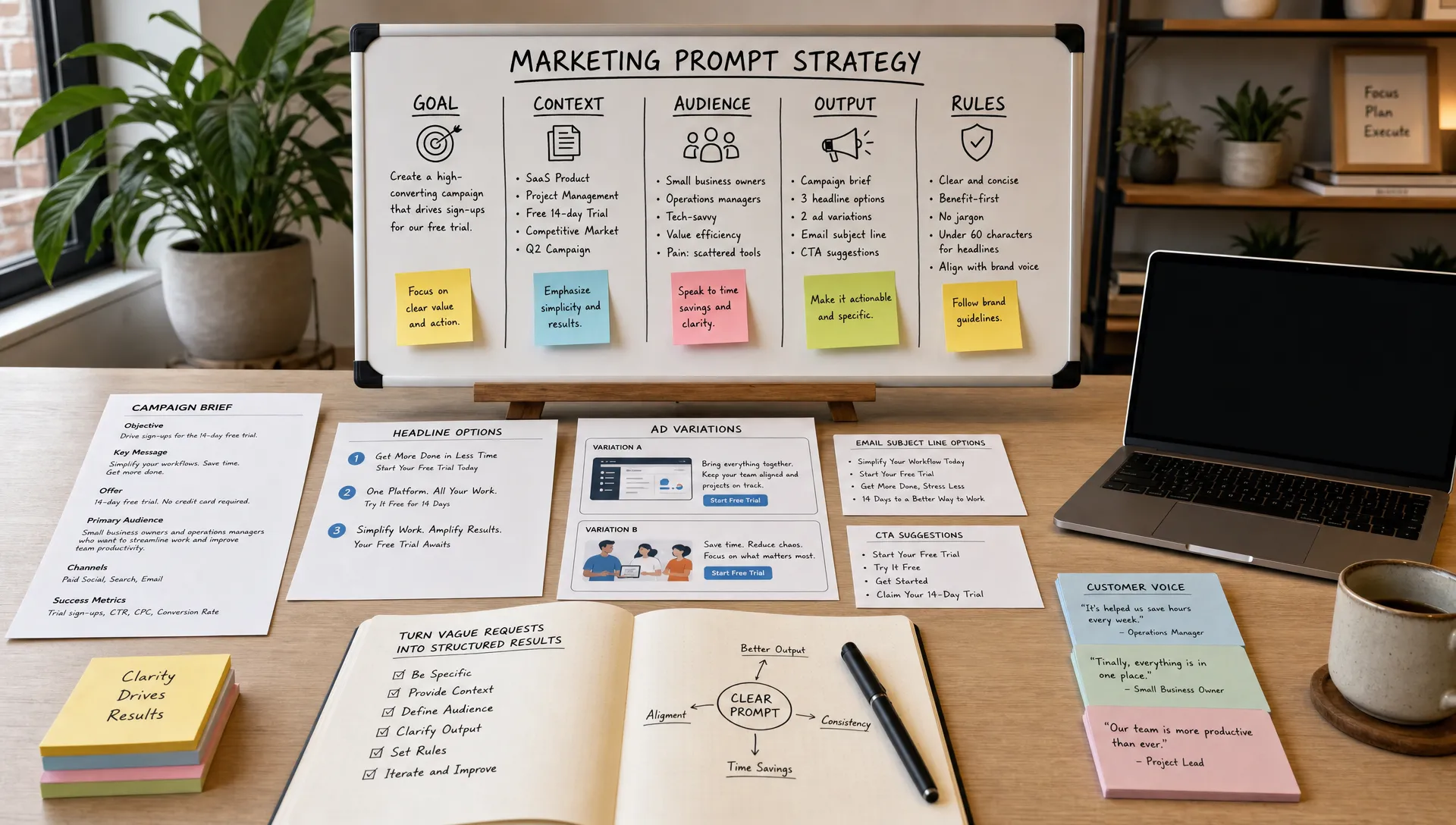
You are a content strategist creating an SEO content brief. Use the inputs below to identify the likely search intent, target reader, article angle, outline, key questions, source needs, internal link opportunities, and CTA. Separate confirmed information from assumptions. Do not invent product features or statistics. If more information is needed, ask clarifying questions before finalizing the brief.
That one instruction already prevents two common problems: hallucinated details and overconfident strategy.
The first job of a content brief is to define what the article should accomplish for the reader. A headline like “How to Use AI for Faster Content Briefs” has clear how-to intent. The reader likely wants a process, prompt examples, a template, and tips for avoiding low-quality AI output.
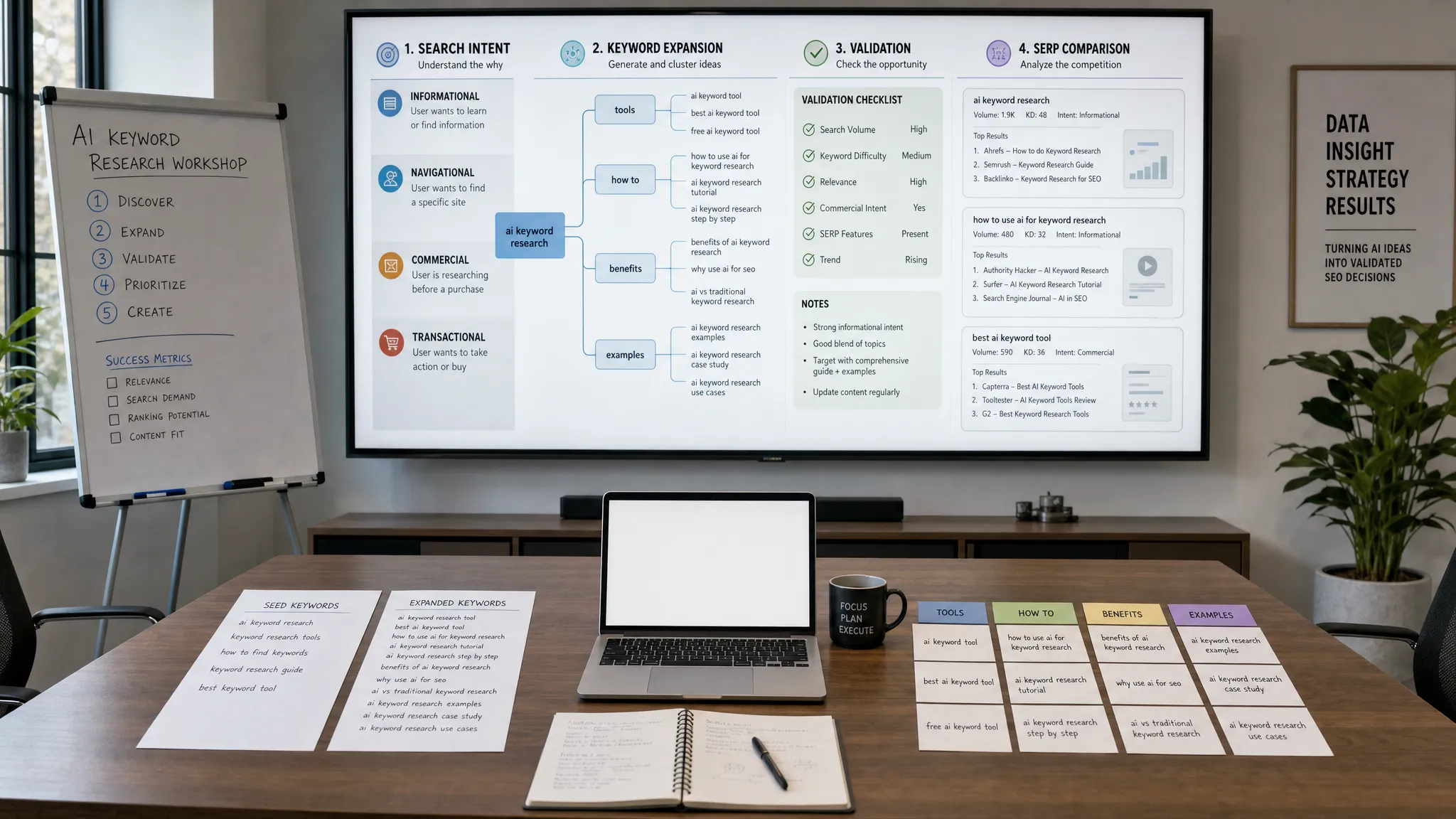
AI can help you classify intent quickly. Ask it to identify whether the topic is informational, commercial, transactional, or navigational. Then ask it to describe what the reader probably already knows, what they are struggling with, and what would make the article satisfying.
For example:
Analyze the topic: How to Use AI for Faster Content Briefs. Identify the primary search intent, secondary intent, reader awareness level, likely pain points, must-answer questions, and what the article should avoid.
The output gives you a strategic foundation. You can then refine it with your own customer knowledge. If your audience is small business marketers, the brief should emphasize simplicity and repeatable workflows. If your audience is enterprise SEO teams, it should include governance, scale, approval processes, and content operations.
This is also where AI-powered analytics can help. If your team has performance data from past articles, feed the model a summarized version. Ask it to identify which article formats, CTAs, or angles tend to perform best for similar topics. Keep the data anonymous and avoid adding sensitive information to public AI tools.
A weak content brief tells the writer to cover a topic. A strong content brief tells the writer how to win the topic.
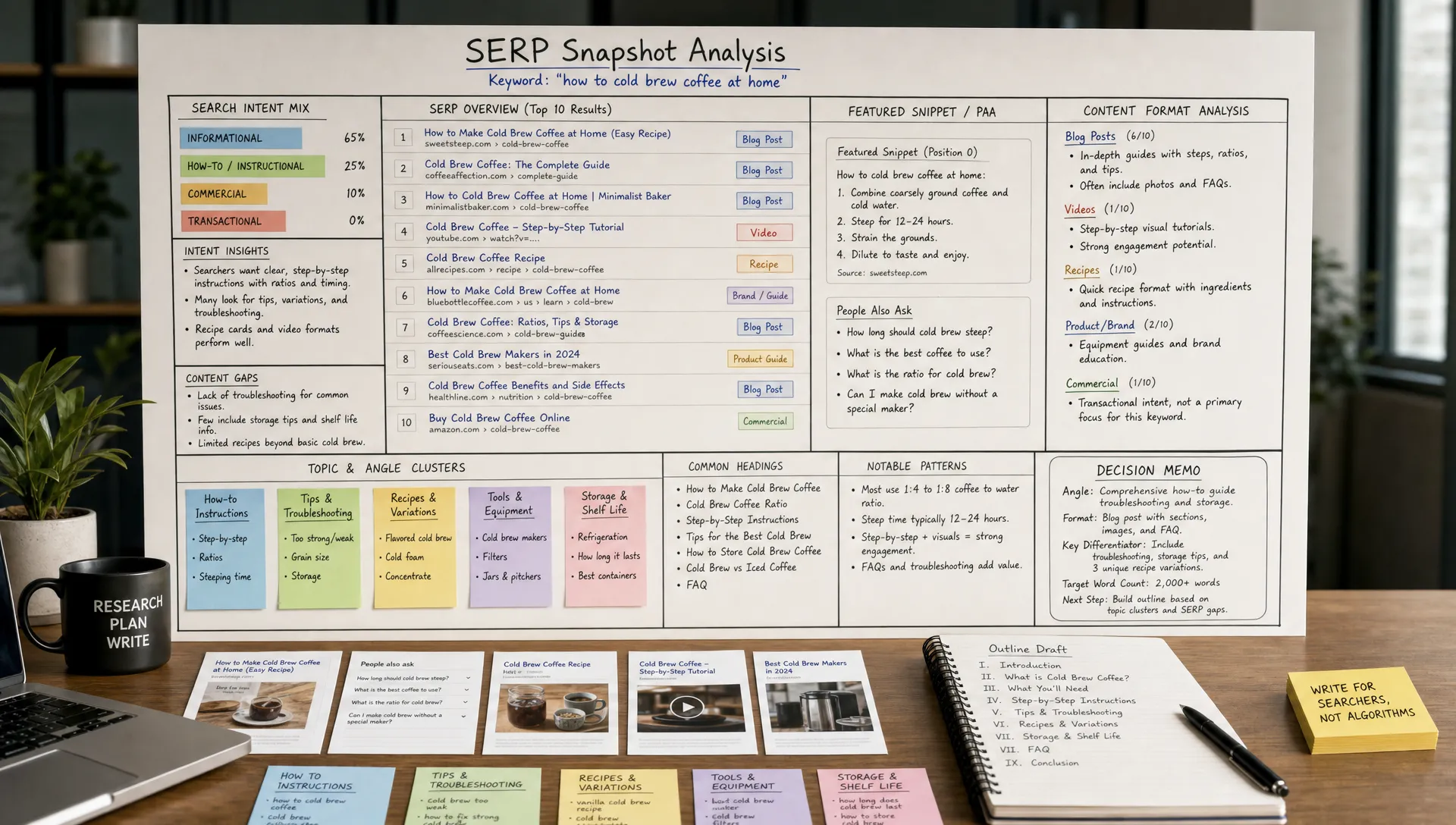
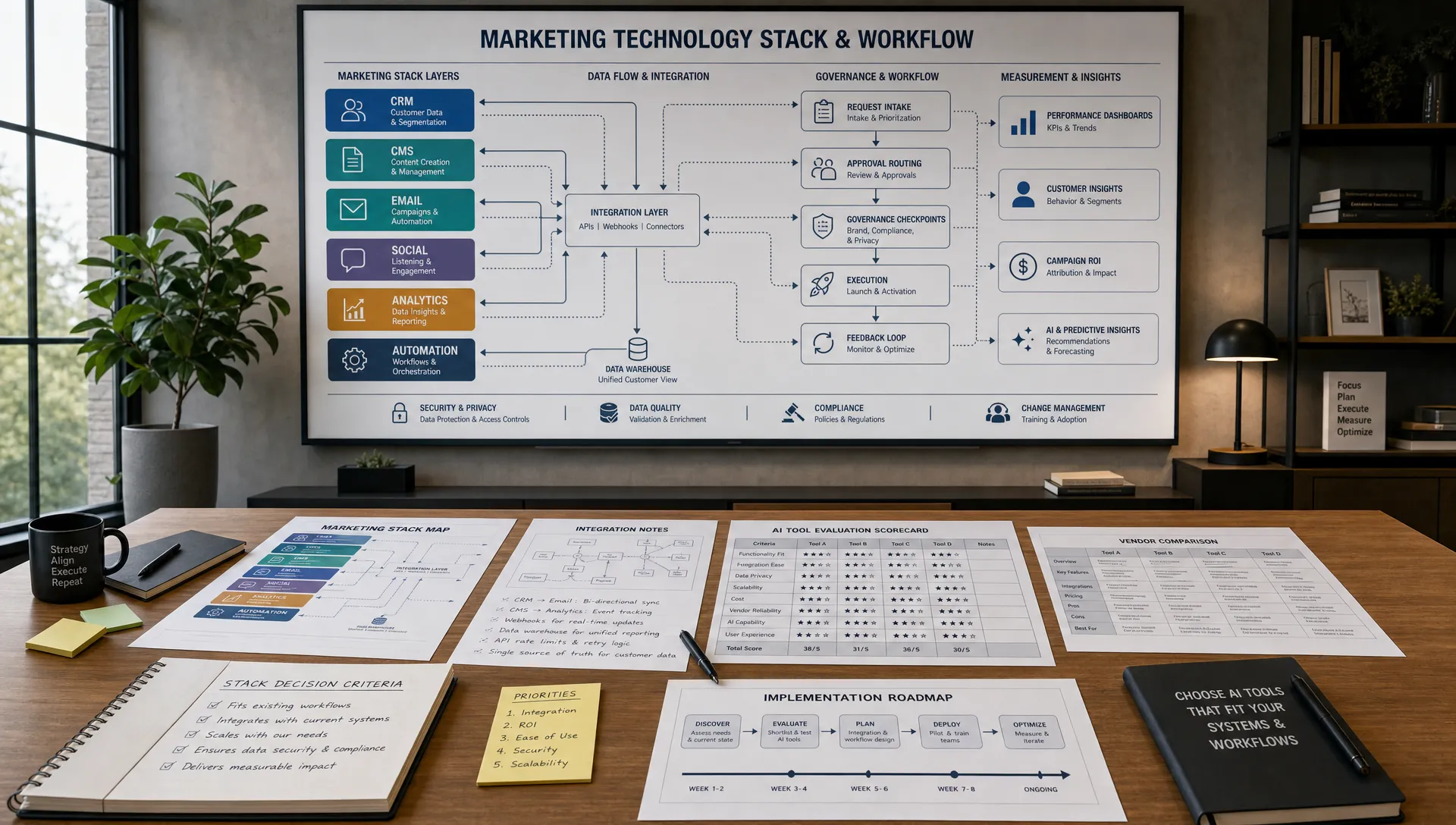
AI can summarize competing content, but it should not simply copy the structure of pages already ranking. Instead, use it to find patterns and opportunities. If you are using SEO tools to review SERP results, export or summarize the top competing headings, featured snippet formats, common questions, and missing details. If you are still building your stack, AIMarketer Hub’s guide to AI SEO tools for small teams can help you think through what is actually useful without overcomplicating your workflow.
Ask AI to compare the available research with your audience needs:
Based on these competitor summaries and audience notes, identify the common advice everyone gives, the gaps they leave, and three differentiated angles we could take. Recommend the best angle for a practical marketing audience and explain why.
The goal is not novelty for its own sake. The goal is usefulness. A differentiated angle might be “AI content briefs should be built around decision checkpoints, not just generated outlines” or “the fastest workflow is a reusable brief system with human QA built in.”
Once you choose the angle, put it near the top of the brief. Writers need to know the central promise before they start drafting.
AI is especially useful for first-draft outlines. It can create a logical sequence, suggest subtopics, and make sure the article addresses key reader questions. But AI outlines often become too symmetrical, too broad, or too similar to everything else online.
A better workflow is to generate two or three outline options, then ask the model to critique them.
Try this prompt:
Create three outline options for this article. Option A should be beginner-friendly, Option B should be tactical for content teams, and Option C should focus on content operations at scale. After the outlines, compare their strengths and weaknesses for search intent, originality, and usefulness.
Then use your judgment. The final outline should answer the reader’s question quickly, build from strategy to execution, and avoid unnecessary theory. For a how-to article, a sequence like “inputs, intent, research, template, prompts, QA, measurement” is usually stronger than a generic sequence like “what is AI, benefits, tools, conclusion.”
A good AI-assisted outline should also include notes under each section. Tell the writer what to cover, what to avoid, and where to include examples. Those notes are often more valuable than the headings themselves.
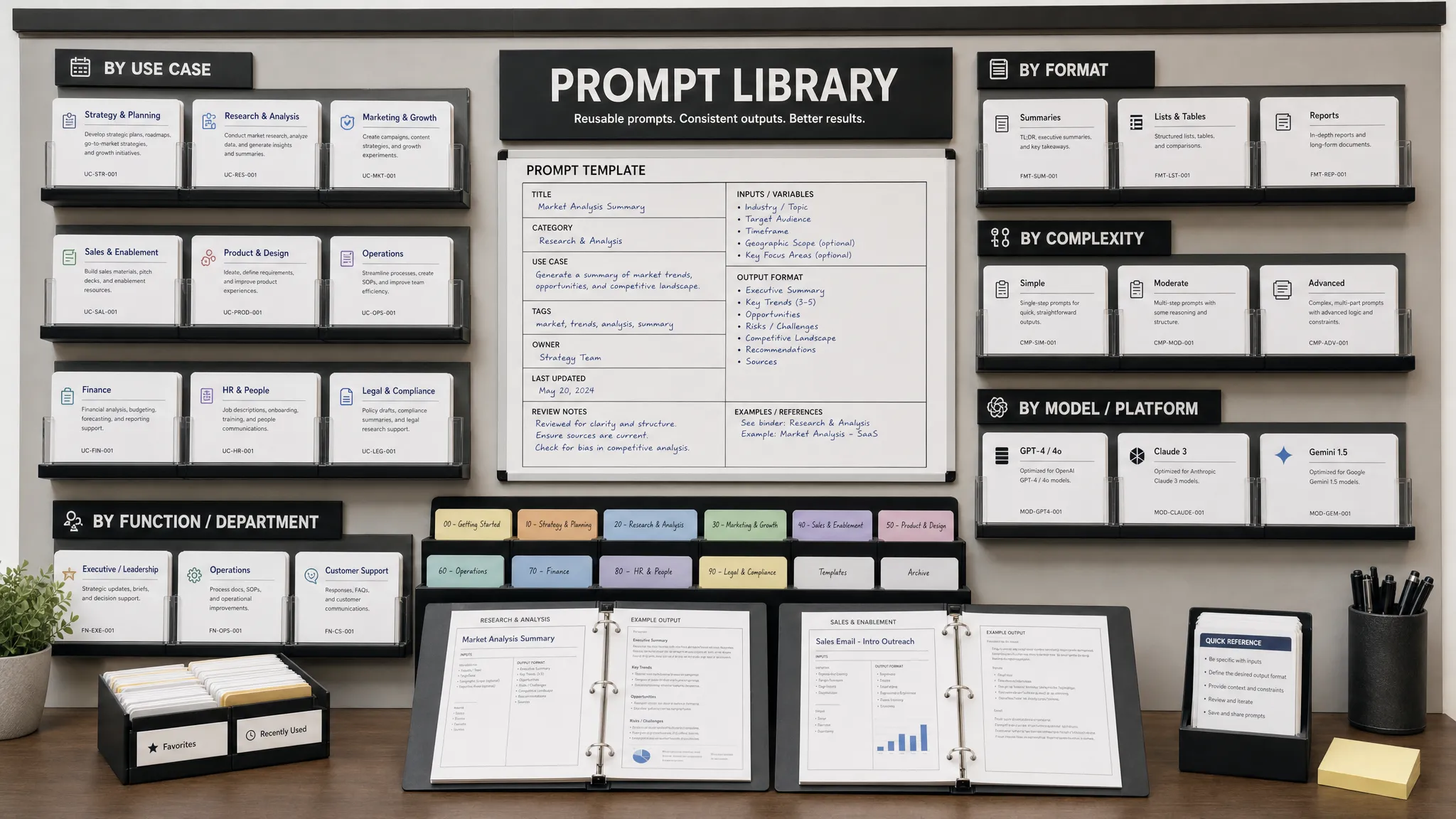
The fastest teams do not start every brief from scratch. They use a standardized template, then ask AI to populate it based on the topic and inputs.
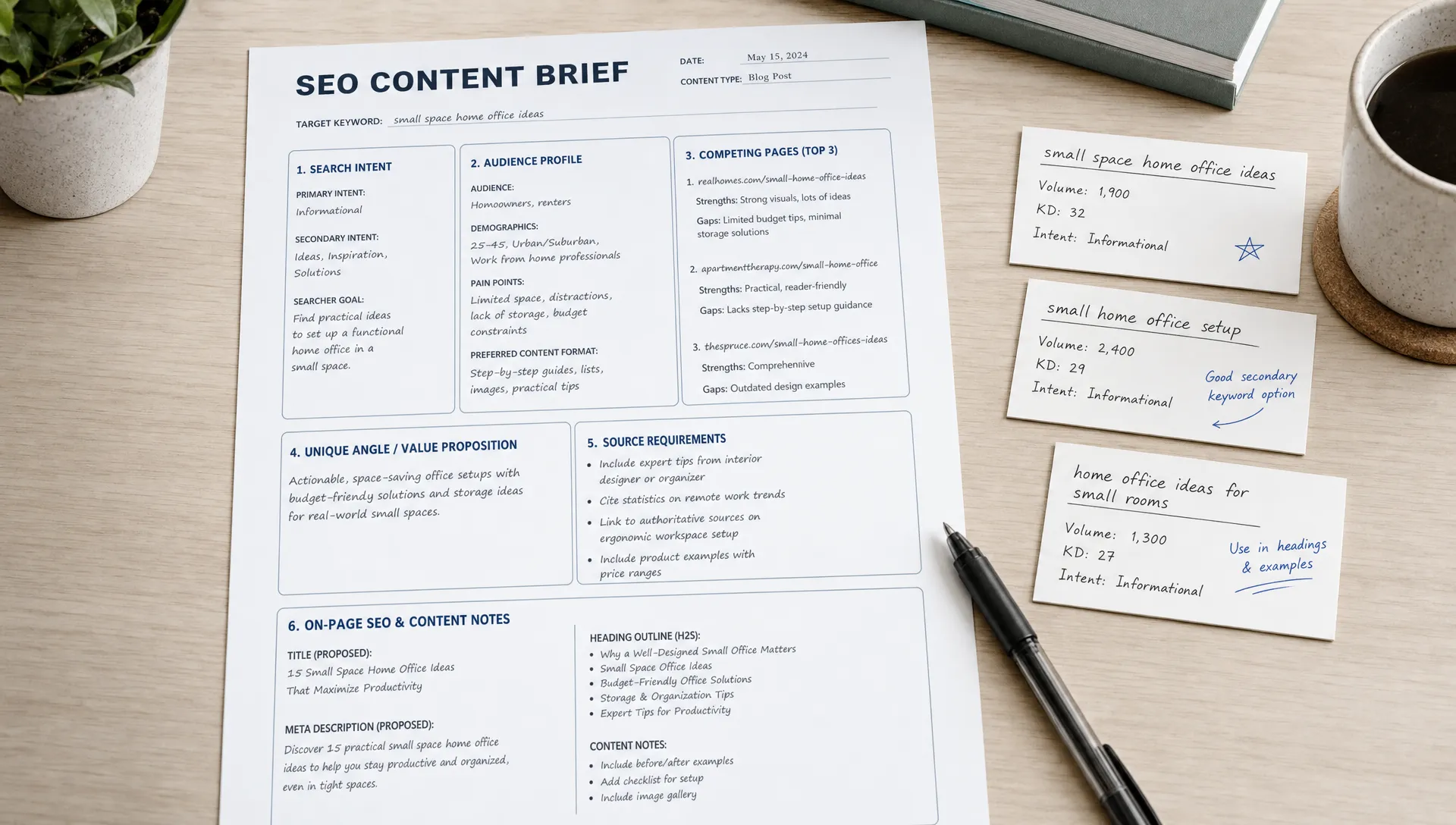
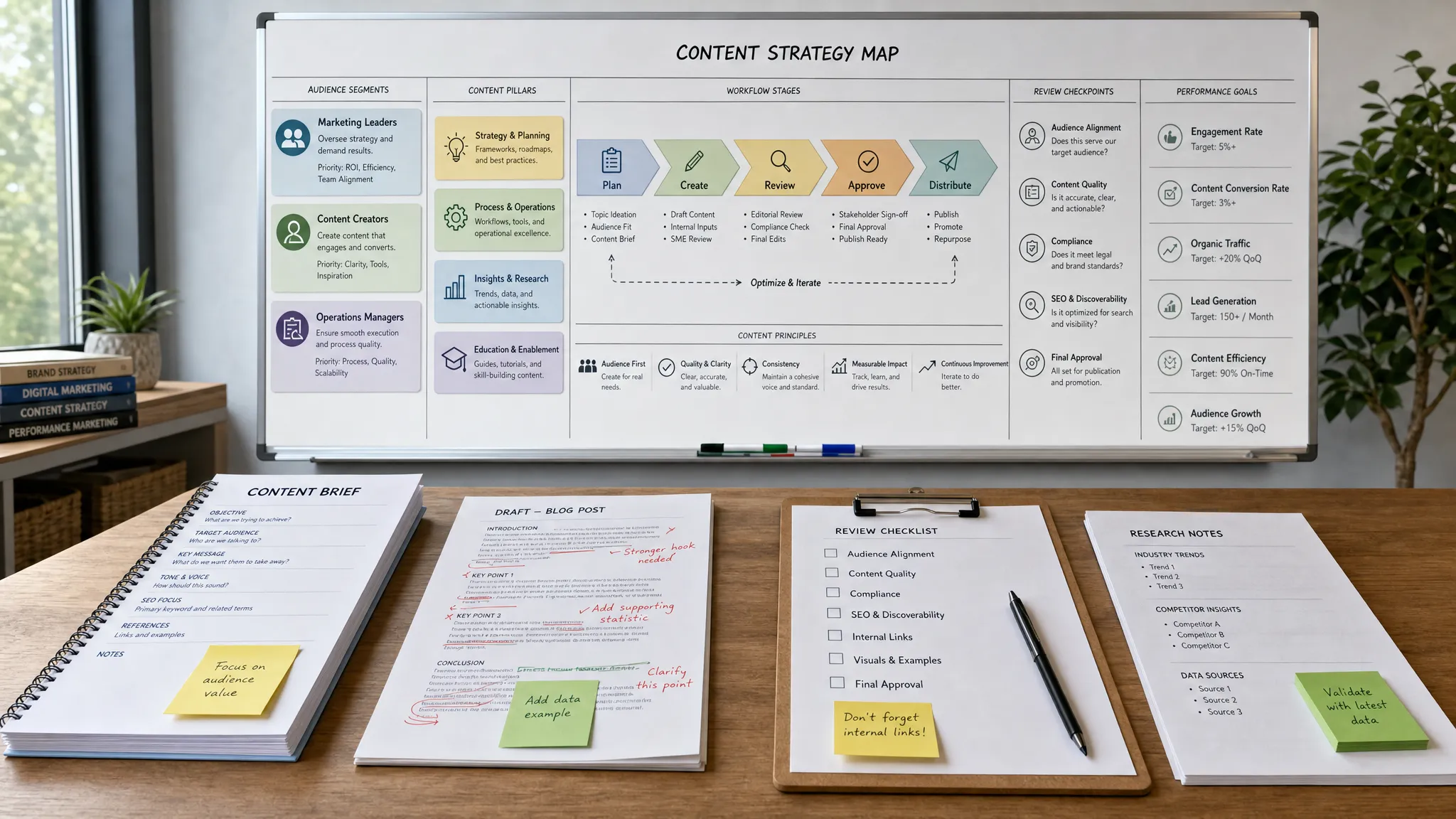
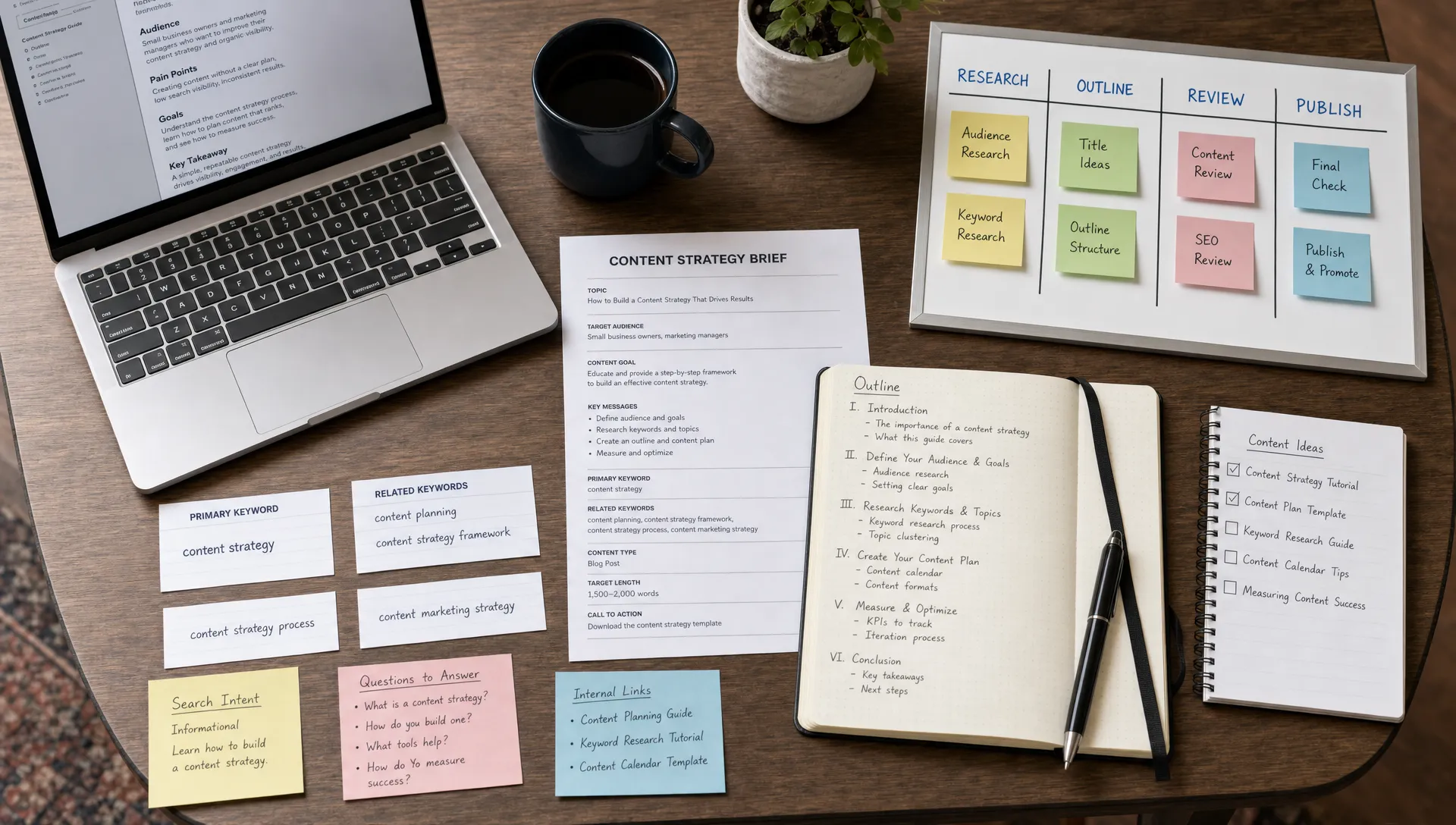
Here is a practical structure you can adapt:
Content Brief Template

Working title:
Primary audience:
Reader awareness level:
Search intent:
Main keyword theme:
Business goal:
Recommended angle:
Unique value the article should add:

Article summary:
Suggested structure:
Key points to cover:
Questions to answer:
Examples or scenarios to include:
Sources or data to verify:
Internal links to consider:
Brand voice notes:
Terms or claims to avoid:
CTA recommendation:
Editor review checklist:
To use the template with AI, paste the structure into your prompt and ask the model to fill it in. Add a rule that it should mark any uncertain section as “needs human input.” That small instruction keeps the brief honest.
You can also create variations by content type. A product comparison brief needs decision criteria, alternatives, and objection handling. A thought leadership brief needs a sharper point of view. A beginner guide needs definitions, examples, and a simpler structure. AI can help adapt the template, but the content team should decide which fields are required.
Speed becomes risky when every AI-assisted brief starts to sound the same. To avoid that, include brand voice guidance directly inside the brief.
Do not settle for vague instructions like “write in a friendly tone.” Give AI concrete voice rules:
If your team is still defining how AI should support brand consistency, the guide on using AI for marketing without losing your brand voice is a useful companion topic.
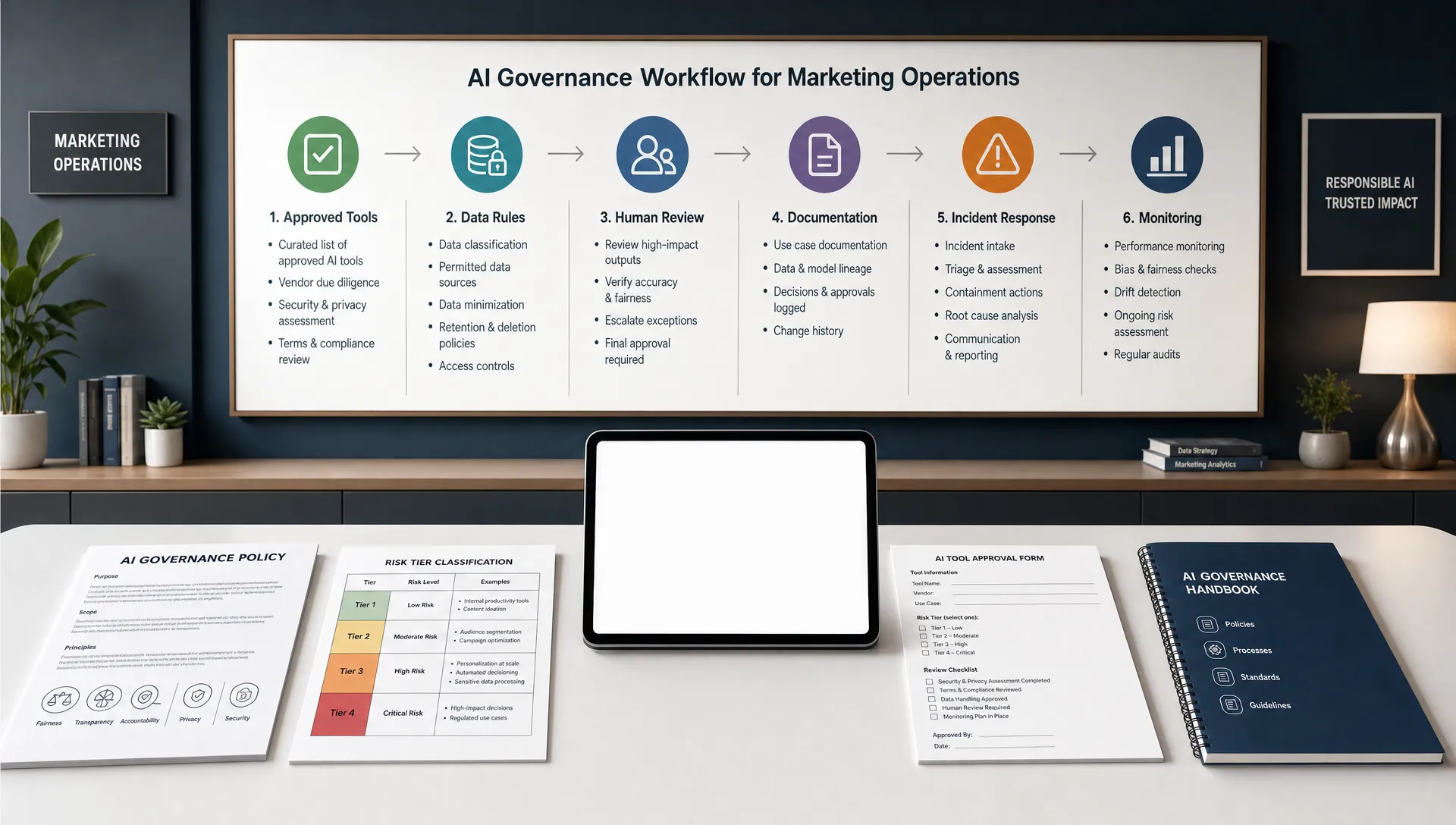
You should also include a source policy. Google has stated that its systems are designed to reward helpful, reliable, people-first content, regardless of whether AI is used in the production process. Its guidance on AI-generated content in Search reinforces the importance of originality, quality, and usefulness.
That means your briefs should tell writers which claims require verification. AI can suggest source needs, but it should not be treated as the source. For example, if the article mentions search behavior, productivity gains, or industry trends, the brief should require credible sources or remove the claim.
A content brief should not only help the writer draft the article. It should also help the article fit into your broader marketing system.
AI can review a list of available internal pages and suggest which ones fit the reader’s journey. The key is to provide the actual URLs, page summaries, and rules for when a link is appropriate. Ask AI to recommend links based on relevance, not just keyword matching.
For example:
Review these internal pages and recommend up to three that would genuinely help the reader. Explain where each link should appear, what anchor text would feel natural, and why the link supports the article’s goal.
This prevents random internal linking. It also helps writers understand the purpose of each link. A content brief about faster AI workflows might link to a broader AI marketing resource, a related SEO tools guide, or a brand voice article, depending on the section.
The CTA should be handled the same way. Match it to intent. A top-of-funnel educational article might invite readers to explore more AI marketing guides. A bottom-of-funnel comparison article might point toward a product page, calculator, demo, or resource library.
For this topic, the best CTA is not “buy now.” The reader is likely learning how to improve their planning workflow. A natural next step is to explore more practical AI marketing resources on the AIMarketer Hub blog.
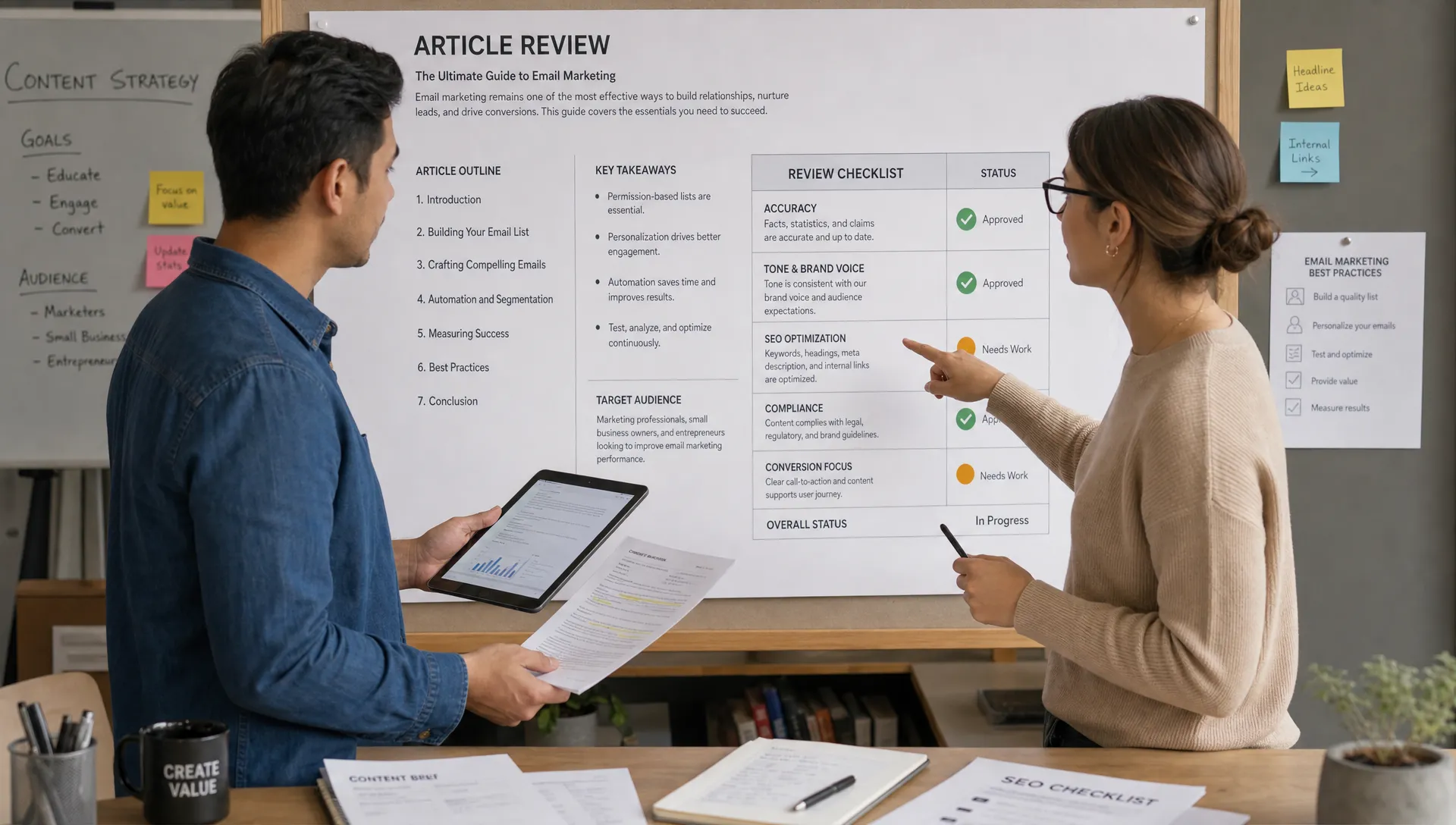
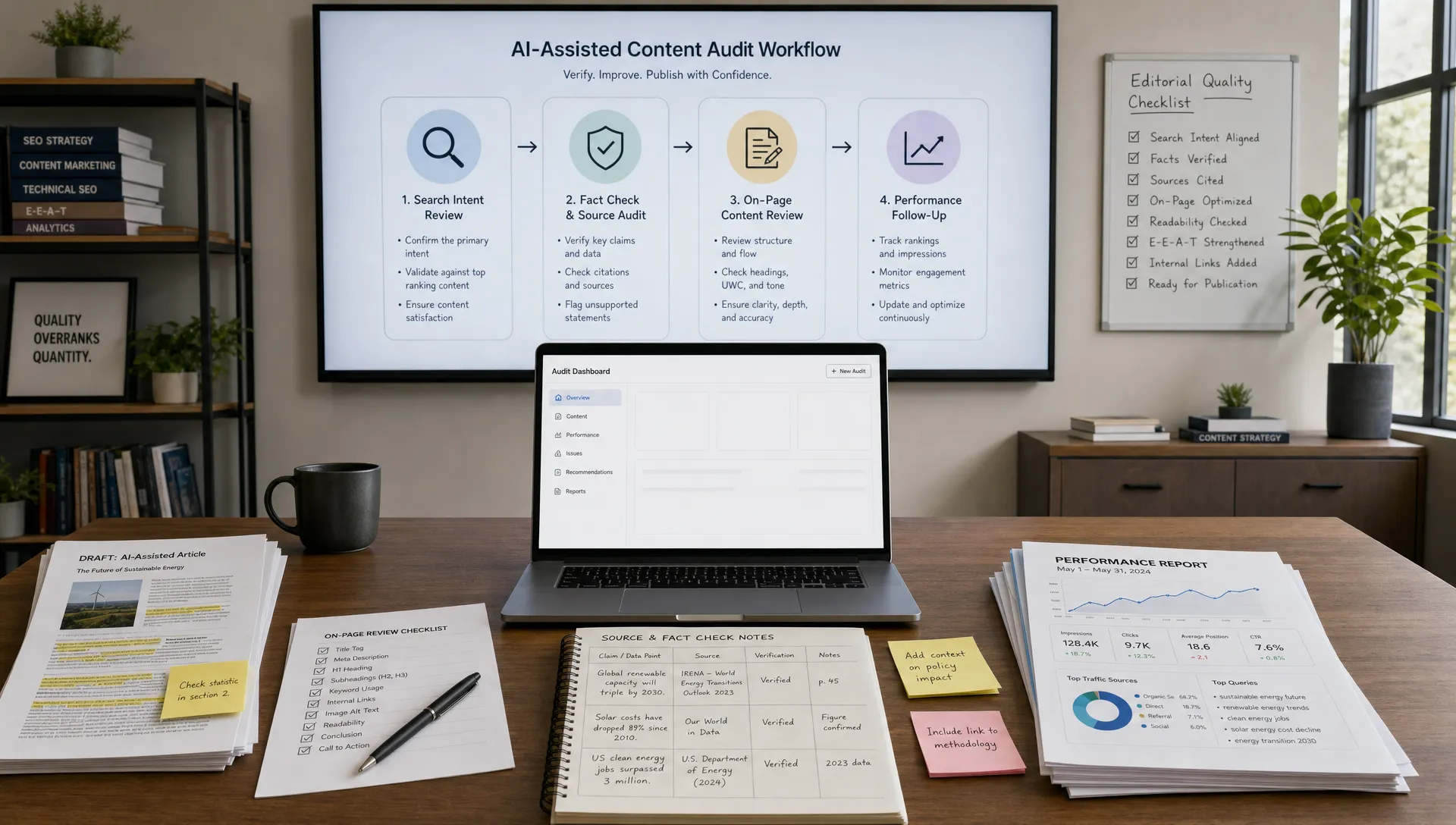
Once AI drafts the brief, do not send it straight to the writer. Run a gap check first.
Use a second prompt that treats the brief as a draft to audit:
Review this content brief as a senior editor. Identify unclear instructions, missing reader questions, weak sections, unsupported claims, search intent mismatches, brand voice risks, and opportunities to make the article more useful. Do not rewrite the brief yet. First, list the issues in order of importance.
This turns AI into a quality control partner. It often catches missing examples, vague CTAs, repetitive section ideas, or places where the outline drifts away from the headline.
After the audit, ask for a revised brief. Then give it a final human review. Your goal is a brief that a writer can act on without needing a long clarification call.
AI can reduce brief creation time because it compresses research synthesis, outline drafting, and formatting. A realistic workflow still includes human decisions at key points.
Time             | Task              | AI role                                          | Human role
0 to 3 minutes   | Gather inputs     | Organizes topic, audience, goal, and constraints | Provides accurate business and audience context
3 to 6 minutes   | Clarify intent    | Identifies likely intent and reader questions    | Confirms what the article should accomplish
6 to 10 minutes  | Compare angles    | Summarizes common approaches and gaps            | Chooses the strongest strategic angle
10 to 14 minutes | Draft outline     | Generates structure and section notes            | Removes fluff and adjusts priority
14 to 17 minutes | Add links and CTA | Suggests relevant internal links and next steps  | Approves only what fits naturally
17 to 20 minutes | QA the brief | Flags missing details and risks | Finalizes instructions for the writer Use these prompts as starting points. The best results will come when you customize them with your audience, offer, and editorial standards.
Create a content brief for the headline below. Include search intent, target reader, recommended angle, outline with section notes, key questions to answer, examples to include, source needs, internal link opportunities, brand voice guidance, CTA recommendation, and editor checklist. Mark assumptions clearly and do not invent facts, statistics, features, or pricing.
Based on these competitor summaries, identify repeated advice, missing details, weak explanations, and opportunities to make our article more useful. Recommend one angle that would satisfy the search intent while adding original value.
Rewrite the brief instructions so they match this brand voice: practical, clear, credible, and useful for marketers. Remove hype, vague claims, and generic AI language. Add specific guidance for examples, tone, and terminology.
Suggest FAQ questions for this article based on reader intent. Prioritize questions that help readers take action, avoid mistakes, or understand the workflow. Avoid questions that repeat the main headings.
Audit this brief before it is assigned. Flag anything that is unclear, unsupported, repetitive, off-intent, too broad, or likely to produce generic writing. Recommend concise fixes.
The biggest mistake is asking AI for an “SEO-optimized brief” without defining what quality means. That phrase often leads to long keyword lists, predictable headings, and generic advice. Be specific about the reader, the goal, the angle, and the type of output you expect.
Another mistake is treating AI’s research summary as final. AI may miss current SERP details, misunderstand a competitor’s positioning, or invent facts if not constrained. Use it to synthesize research you provide, then verify important claims.
Teams also tend to overfill briefs. A 2,000-word brief for a 1,200-word article is not efficient. The brief should remove ambiguity, not become a second article. If a section does not help the writer make a better decision, cut it.
Finally, do not let AI flatten your point of view. Many AI-generated briefs recommend safe, average content. The strategist’s job is to choose what the article will say that is genuinely helpful, specific, and aligned with the brand.
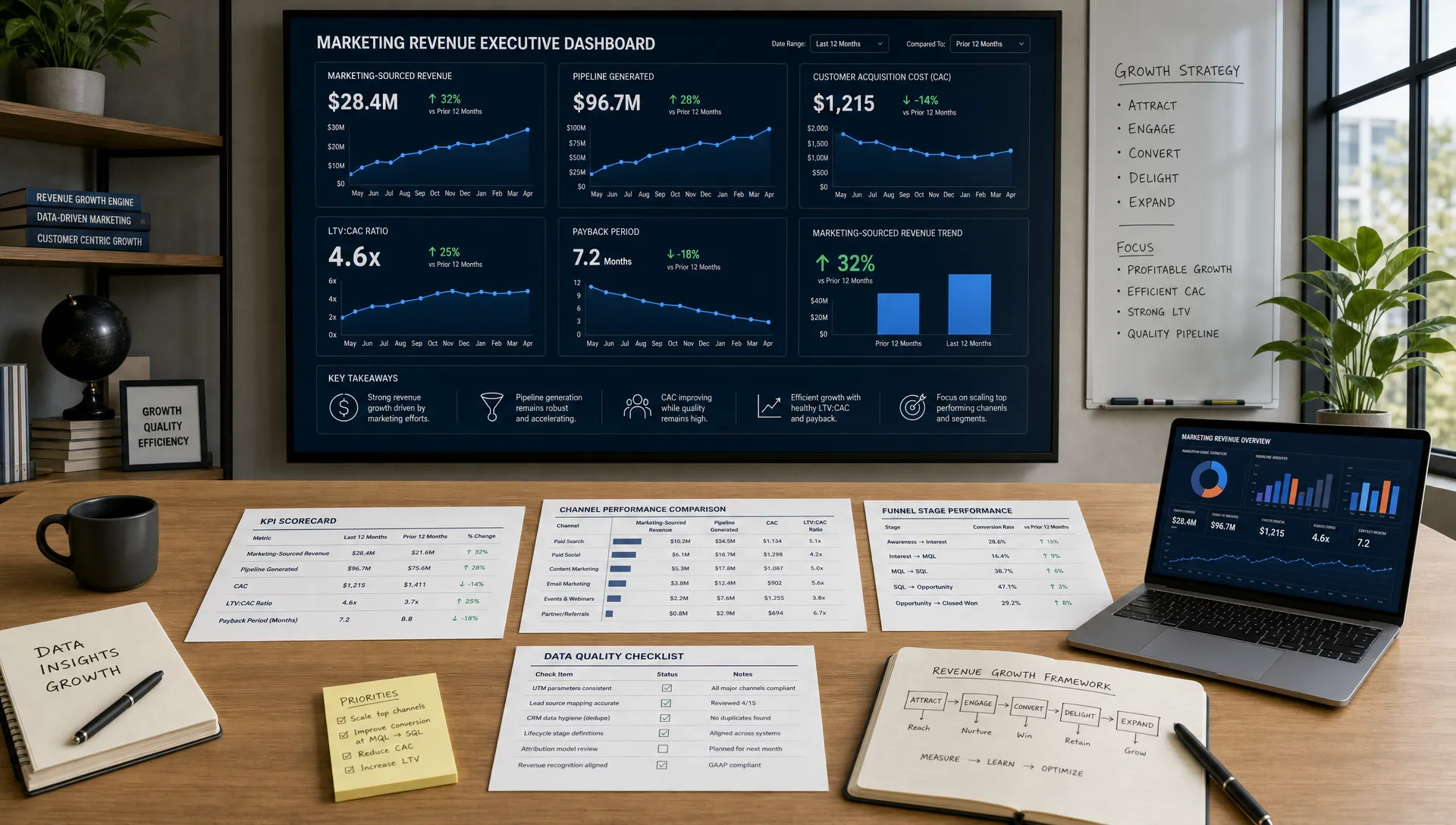
Faster briefs are useful only if they lead to better content production. Track both speed and quality.
Metric                    | What it reveals                           | How to use it
Brief creation time       | Whether AI is reducing planning friction  | Compare average time before and after the workflow
Writer clarification rate | Whether briefs are clear enough           | Track how often writers ask follow-up questions
First-draft acceptance    | Whether the brief leads to usable drafts  | Monitor how much rewriting editors need to do
Editorial revision themes | Which brief sections need improvement     | Look for repeated issues like weak examples or unclear CTAs
Organic performance       | Whether content satisfies demand          | Review rankings, clicks, engagement, and conversions over time
Content velocity | Whether the team can publish consistently | Measure output without lowering quality standards Can AI create an entire content brief by itself? AI can draft an entire brief, but a human should review the angle, claims, sources, internal links, and CTA. The strongest briefs combine AI speed with editorial judgment.
What should I give AI before asking for a brief? Provide the headline, audience, search intent, business goal, keyword theme, competitor notes, internal link options, brand voice guidance, and any claims or sources that must be included.
How do I stop AI briefs from sounding generic? Add specific audience pain points, examples, product context, voice rules, and a clear point of view. Also ask AI to identify common advice and recommend what your article can add that competitors do not.
Should AI choose keywords for the brief? AI can suggest keyword themes and related questions, but you should validate keyword decisions with SEO data and search intent research. Avoid forcing every keyword into the article.
How long should a content brief be? A brief should be long enough to guide the writer and short enough to be usable. For most blog articles, one to three focused pages is better than an overloaded document.
Using AI for faster content briefs is not about removing strategy from the process. It is about giving marketers a repeatable system for moving from topic to assignment with less manual effort and more clarity.
Start with strong inputs. Use AI to classify intent, compare angles, draft structure, and audit gaps. Then let human editors make the decisions that matter most: what the article should say, why it matters, and how it supports the business.
If you want more practical guides, tools, and AI marketing resources for building smarter workflows, explore AIMarketer Hub and keep refining the systems behind your content creation process.