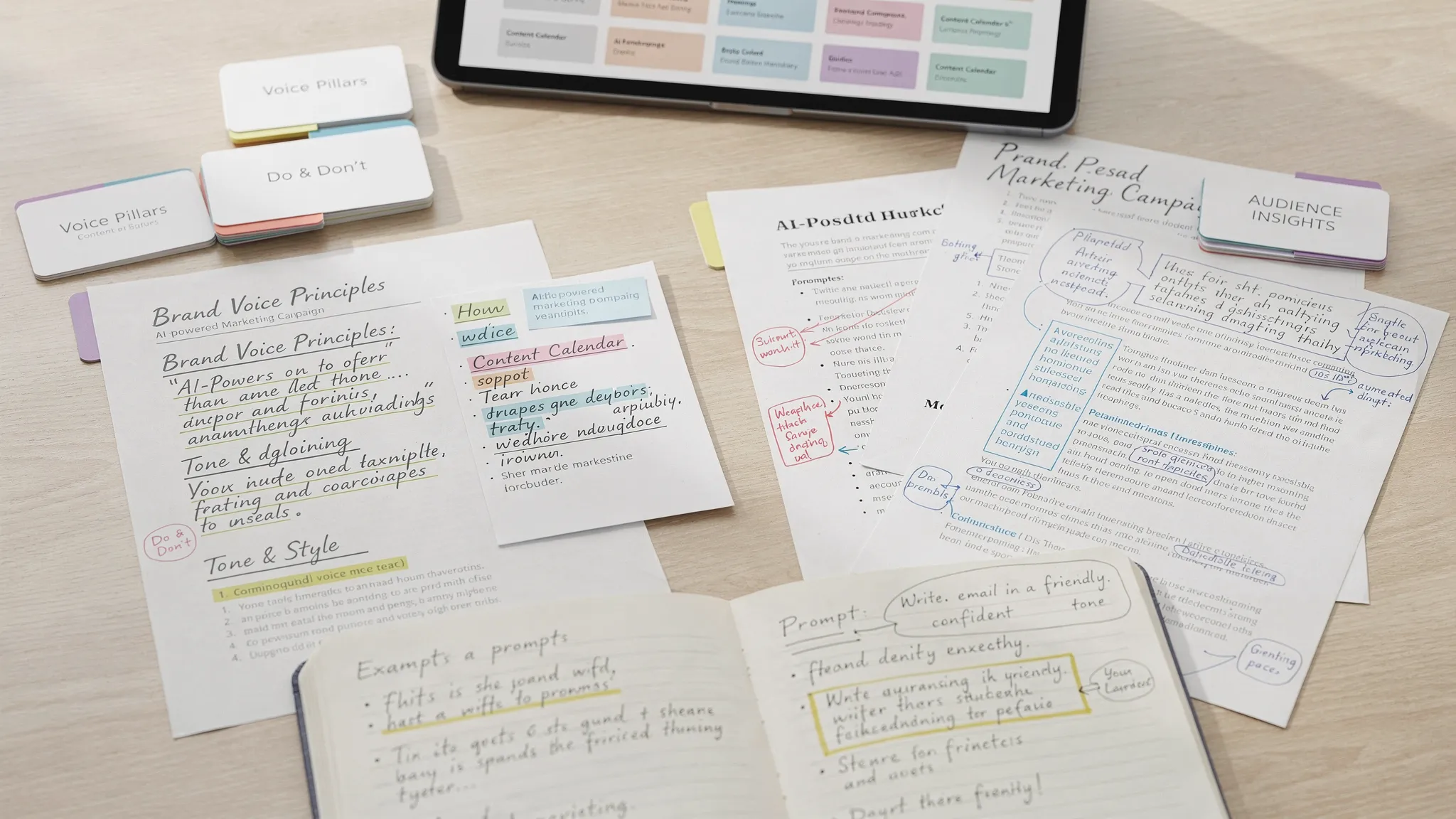
AI content can scale your marketing, but it can also flatten your brand into something generic. One blog post sounds polished and corporate. The next sounds overly playful. Your landing page copy uses one set of promises, while your email sequence uses another. The problem usually is not the AI tool. It is the lack of a clear, usable brand voice guide.
A strong brand voice guide for AI content does more than describe your brand as “friendly” or “professional.” It gives marketers, writers, editors, and AI systems the same source of truth for how your brand should sound, what it should emphasize, what it should avoid, and how to adapt tone across channels.
Below is a practical process for creating a brand voice guide that works in real AI content workflows, from prompts and briefs to editing checklists and final approvals.
Traditional brand guidelines often focus on visual identity: logos, colors, typography, and design rules. Voice is sometimes reduced to a short paragraph like “We are bold, helpful, and human.” That might be enough for a trained copywriter who already understands the brand, but it is not enough for AI-assisted content creation.
AI models generate based on the context you provide. If your prompt says “write in a friendly tone,” the model has to guess what friendly means for your brand. For one company, friendly may mean warm and conversational. For another, it may mean concise, calm, and jargon-free. Without examples and boundaries, AI will fill the gaps with average internet copy.
A good AI-ready voice guide helps you:
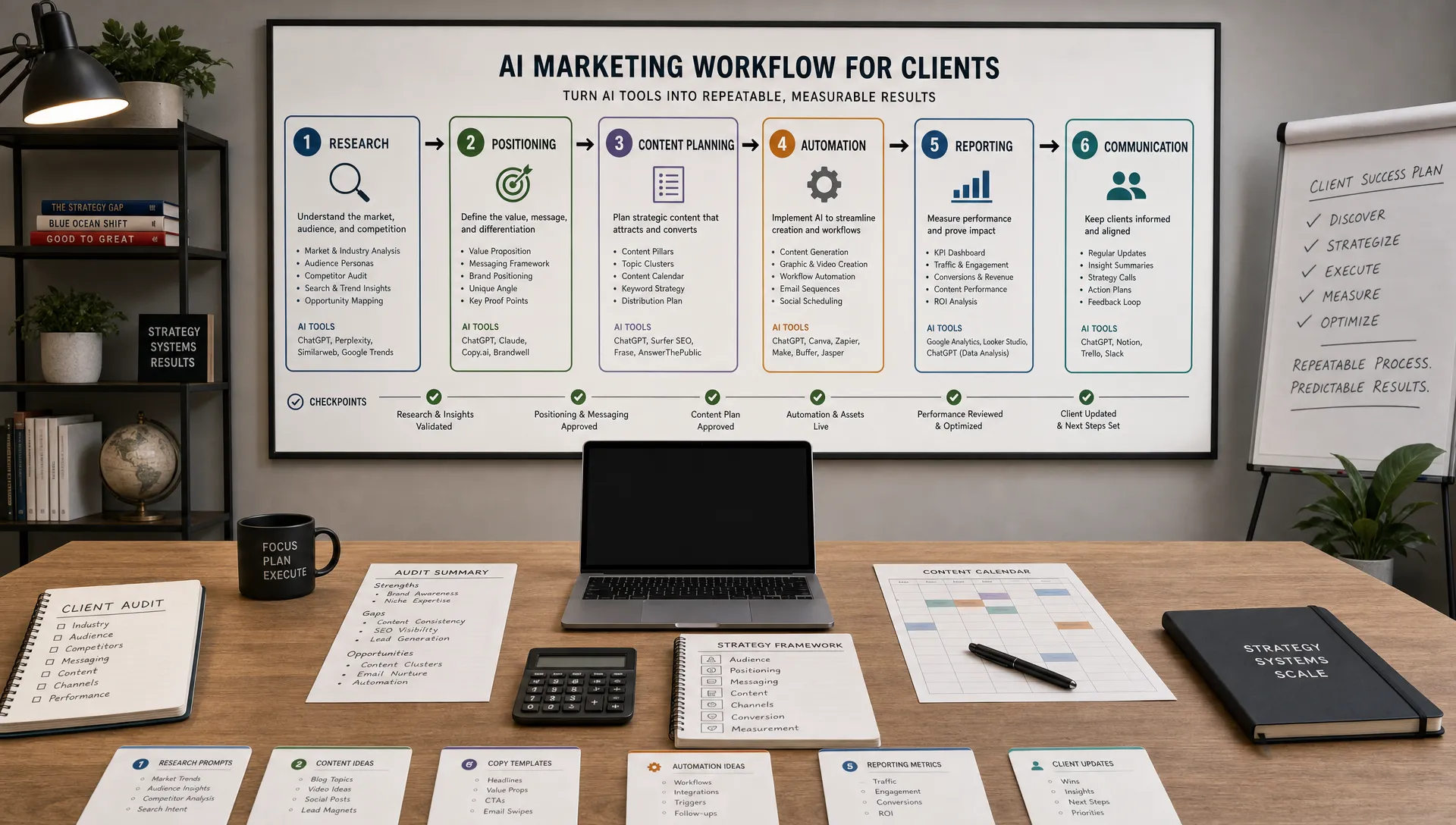
This is especially important as marketing teams adopt more AI marketing automation. The more content you produce, the more visible inconsistencies become. If you are still shaping your broader AI approach, AIMarketer Hub’s guide on using AI for marketing without losing your brand voice is a helpful companion to this process.
Before you define adjectives or prompt instructions, clarify what your brand is trying to communicate at a strategic level. Voice should not be random personality decoration. It should support positioning, audience needs, and business goals.
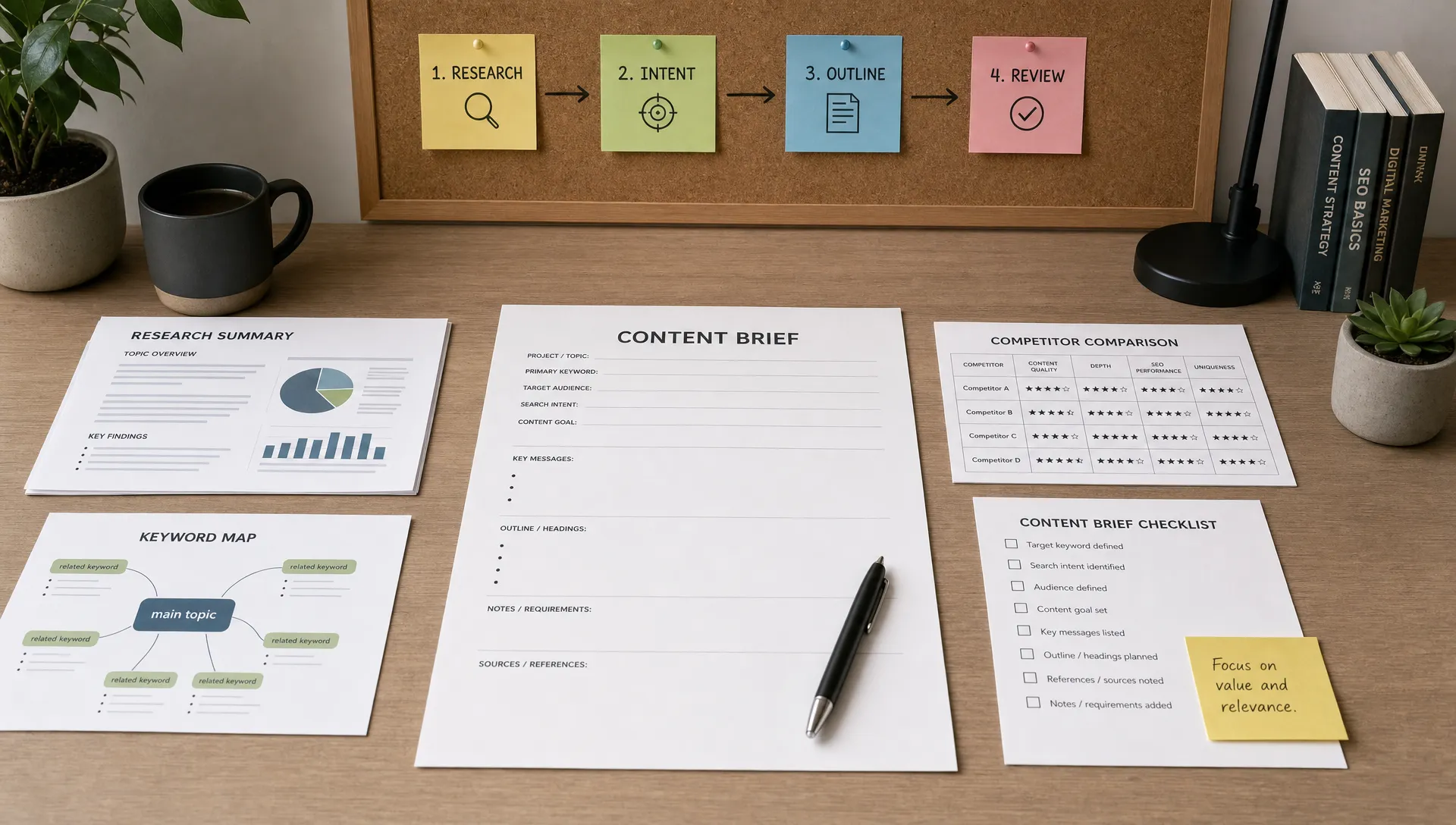
Start by collecting a small set of inputs:
Pay close attention to the words customers use. If customers describe your solution as “saving hours every week,” do not replace that with “unlocking operational excellence” unless that phrase truly matches your market. Strong brand voice often comes from the overlap between how your company sees itself and how customers naturally describe their problems.
This research also helps prevent AI from creating content that sounds good but says little. A brand voice guide should define not only how you speak, but also what you consistently stand for.
Many teams mix voice, tone, and style into one vague section. For AI content, separate them clearly.
Voice is your consistent brand personality. It should remain recognizable across every channel. If your brand voice is practical, direct, and encouraging, that should show up in a blog article, a product email, and a LinkedIn post.
Tone is how your voice adapts to context. A customer onboarding email may sound upbeat and reassuring. A security incident update should sound calm, transparent, and precise. The same brand voice can flex without becoming a different personality.
Style covers the writing mechanics: sentence length, punctuation preferences, capitalization, formatting, terminology, reading level, and grammar choices. Style rules make AI output easier to edit because they remove repeated decisions.
A useful way to define voice is to choose three to five voice pillars. Each pillar should include a short explanation, what it means in practice, and what it does not mean.
For example:
The Nielsen Norman Group’s research on tone of voice dimensions is a useful reference if your team struggles to describe voice precisely. Their framework shows how small shifts in formality, enthusiasm, respectfulness, and humor can change how users perceive a brand.
Once you have voice pillars, turn them into instructions that an AI tool can follow. This is where many brand voice guides fall short. A sentence like “sound knowledgeable but approachable” is better than nothing, but it still leaves too much room for interpretation.
AI-friendly instructions should be specific, observable, and tied to examples. Instead of saying “be clear,” explain what clear writing looks like.
For example:
You can also create a “say this, not that” section. This is one of the most effective formats for AI content because it gives the model contrast.
For instance, instead of writing “Leverage AI to maximize efficiency across your content ecosystem,” your guide might prefer “Use AI to draft, repurpose, and review content faster without losing editorial control.” The second version is more concrete, more useful, and easier to trust.
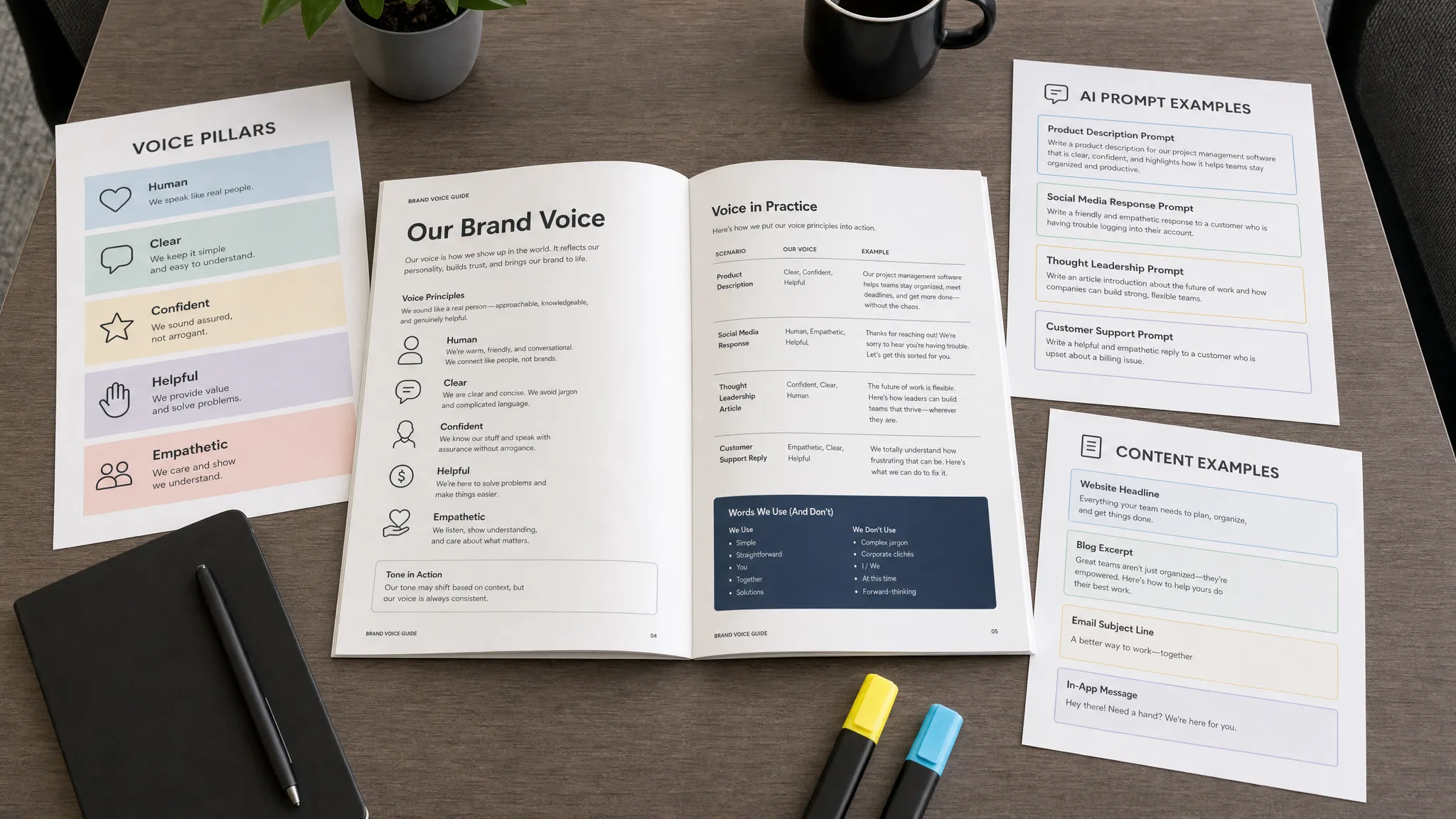
Your brand voice should be consistent, but your tone should shift depending on where the content appears and what the reader needs in that moment. A blog article, a nurture email, a pricing page, and a social post should not sound identical.
Create tone rules for your main content types. Keep them simple enough that a marketer can paste them into an AI prompt.
For blog content, you might instruct AI to use an educational, practical, and search-aware tone. The content should answer the search intent quickly, provide examples, and avoid fluffy introductions.
For email, the tone may be more personal and concise. AI should focus on one idea per email, use natural transitions, and avoid sounding like a generic newsletter.
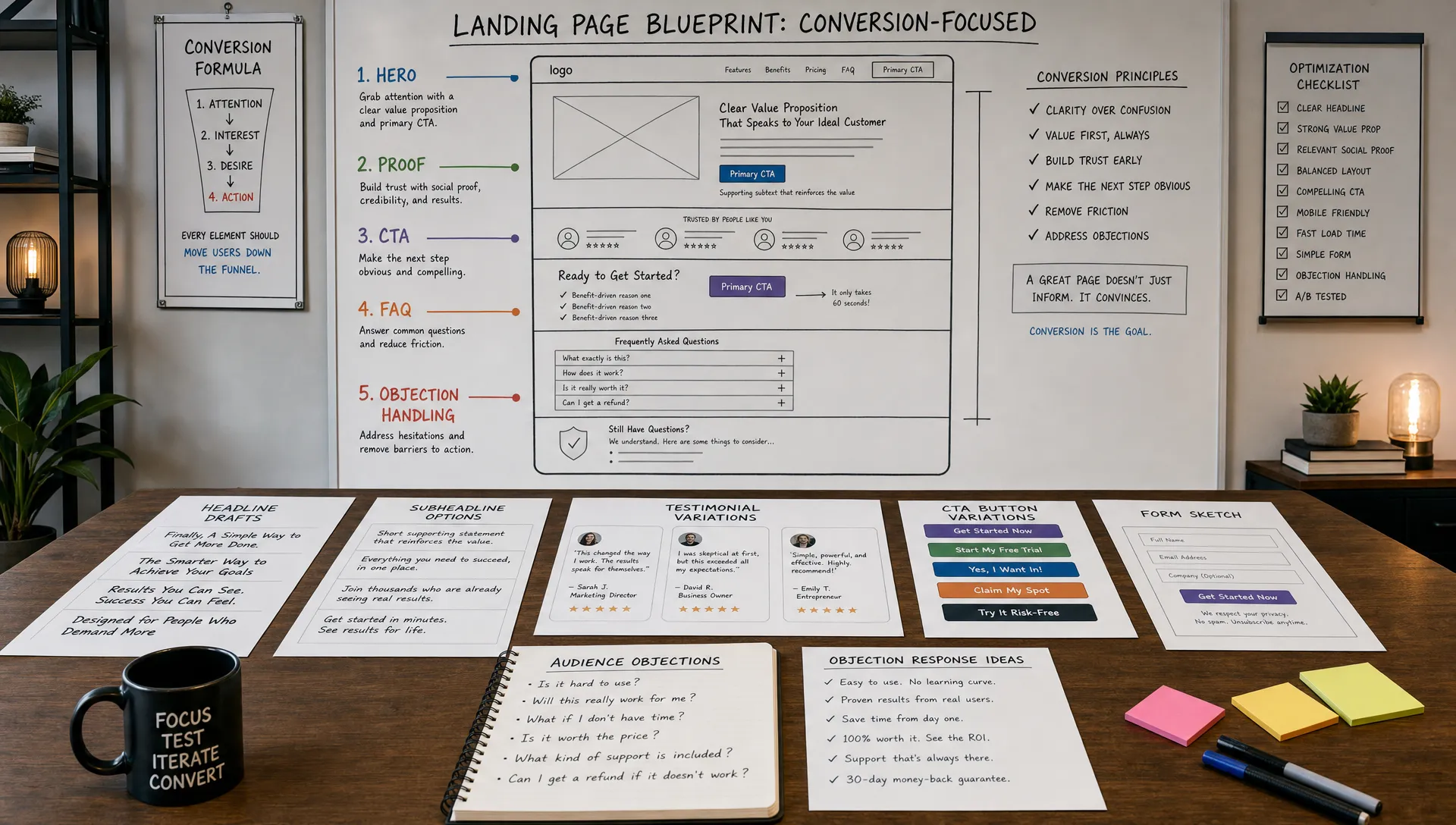
For landing pages, the tone should be benefit-led and conversion-focused. AI should connect features to outcomes, handle objections, and keep calls to action clear.
For social media, the tone may be sharper and more conversational. AI should lead with a strong hook, avoid overexplaining, and adapt to the platform’s norms without chasing trends that do not fit the brand.
This section is also where you can define audience awareness levels. Someone reading an introductory guide needs more context than someone comparing AI tools or building a marketing workflow automation process. When AI understands the reader’s stage, it can choose the right level of detail.
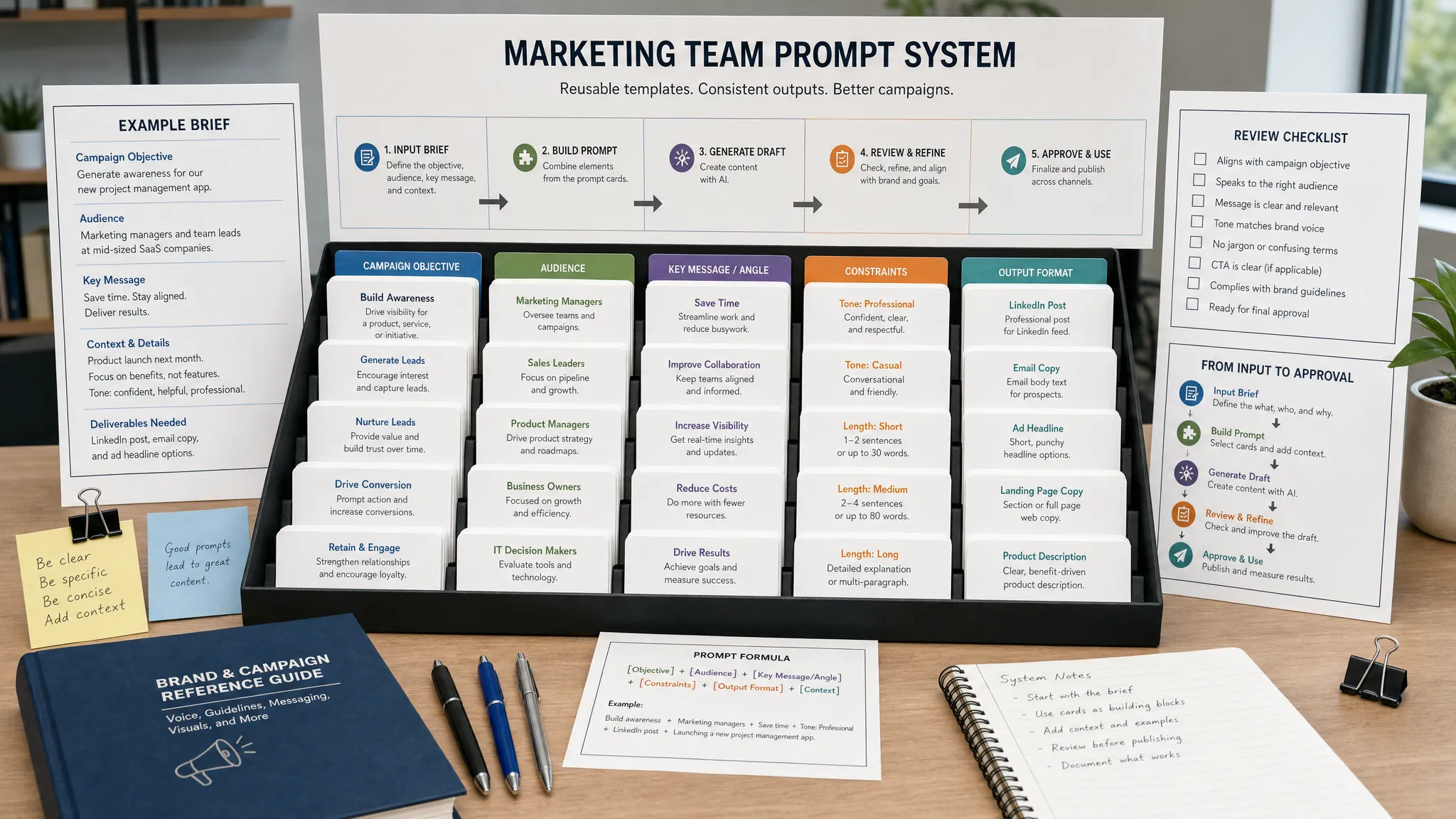
A brand voice guide becomes more powerful when it includes prompt components your team can reuse. Instead of asking every marketer to write prompts from scratch, create a consistent prompt framework.
A strong AI content prompt usually includes:
Here is a simple prompt block you can adapt:
Act as a senior content marketer for [brand]. Write for [audience], who wants to [goal or problem]. Use our brand voice: practical, clear, confident, and supportive. Keep sentences concise, explain technical terms, and avoid hype. Focus on actionable advice and examples relevant to [industry or use case]. Do not make unsupported claims. Use the following structure: [structure]. End with [CTA or next step].
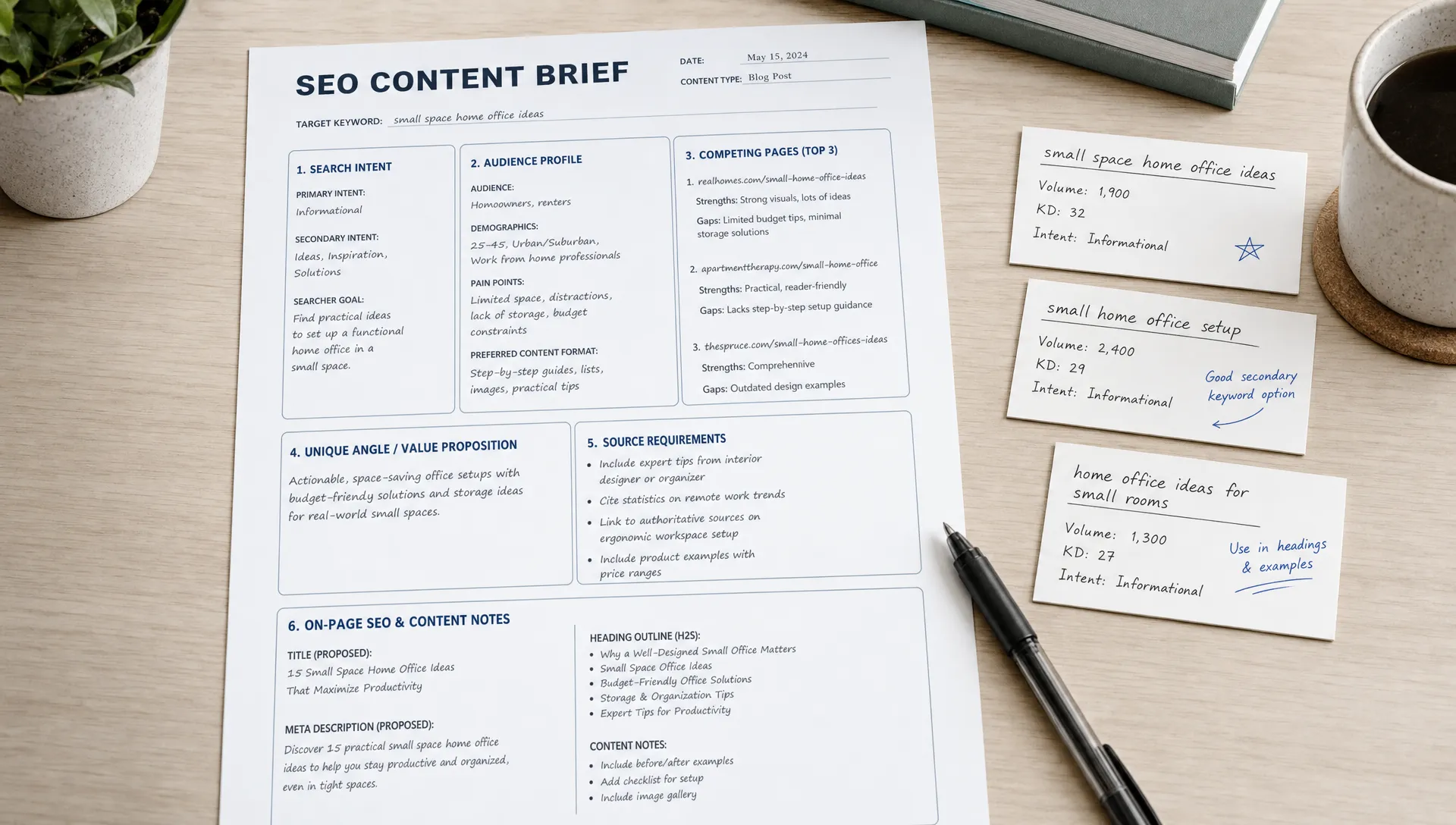
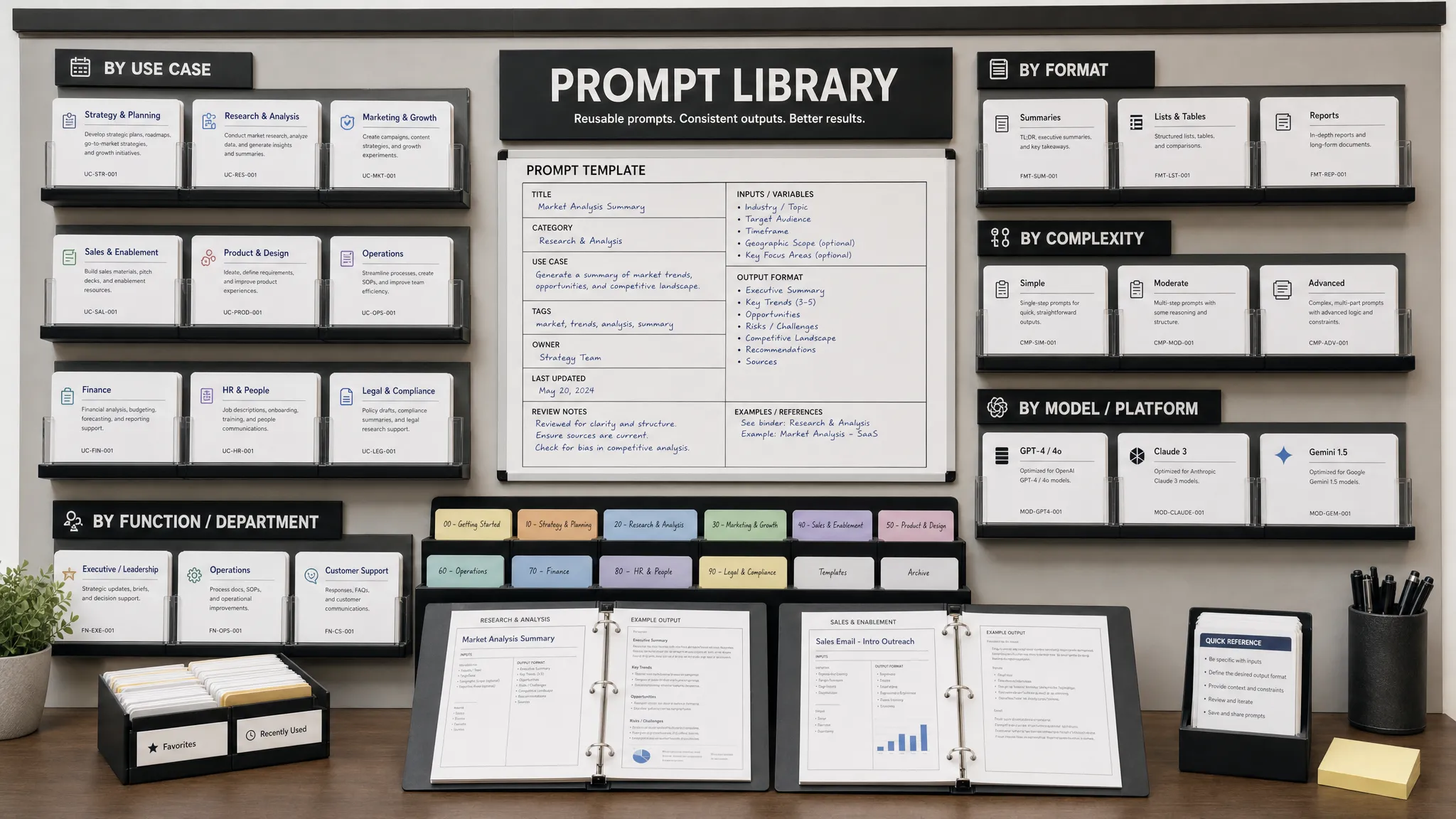
Your guide can include several prompt blocks for different use cases, such as blog outlines, SEO briefs, email sequences, ad copy, and content repurposing. If your team uses AI regularly, storing these prompts in a shared library prevents everyone from reinventing the process. AIMarketer Hub’s broader collection of AI and marketing insights can also help you connect voice guidance with practical campaign workflows.
Examples are the fastest way to make your brand voice guide useful. They show people and AI systems what the rules mean in practice.
For each major content type, include three types of examples.
First, include approved examples from existing content. Choose passages that sound like your brand at its best. Add notes explaining why they work. Maybe the introduction names the problem clearly, the CTA feels natural, or the explanation avoids jargon.
Second, include before-and-after rewrites. Take a generic AI-generated paragraph and revise it into your brand voice. This teaches the model and your team how to improve weak drafts.
Third, include rejected examples. These are phrases, tones, or structures that do not fit your brand. Rejected examples are valuable because they create boundaries. If your brand avoids exaggerated urgency, show what that looks like. If your brand does not use slang, show the difference between conversational and too casual.
A simple annotated example might look like this:
Generic AI version: “In today’s fast-paced digital landscape, businesses must leverage cutting-edge AI solutions to supercharge their content strategy.”
On-brand version: “AI can help marketing teams draft and repurpose content faster, but only if the workflow includes clear prompts, review steps, and brand voice rules.”
Why it works: The revised version is specific, realistic, and practical. It avoids hype while still explaining the value of AI.
Brand voice is not only about personality. It is also about credibility. AI-generated content can accidentally overstate results, invent details, or make broad claims without support. Your brand voice guide should include trust and evidence rules.
Define how your team handles:
For example, your guide might say that AI can draft claims, but a human must verify every statistic and source before publication. It might also state that product features can only be described using approved messaging or current product documentation.
This is especially important for SEO. Google’s guidance on helpful, reliable, people-first content emphasizes usefulness, trust, and content created for people rather than search engines. AI can support content creation, but your editorial process still needs human judgment, factual review, and original insight.
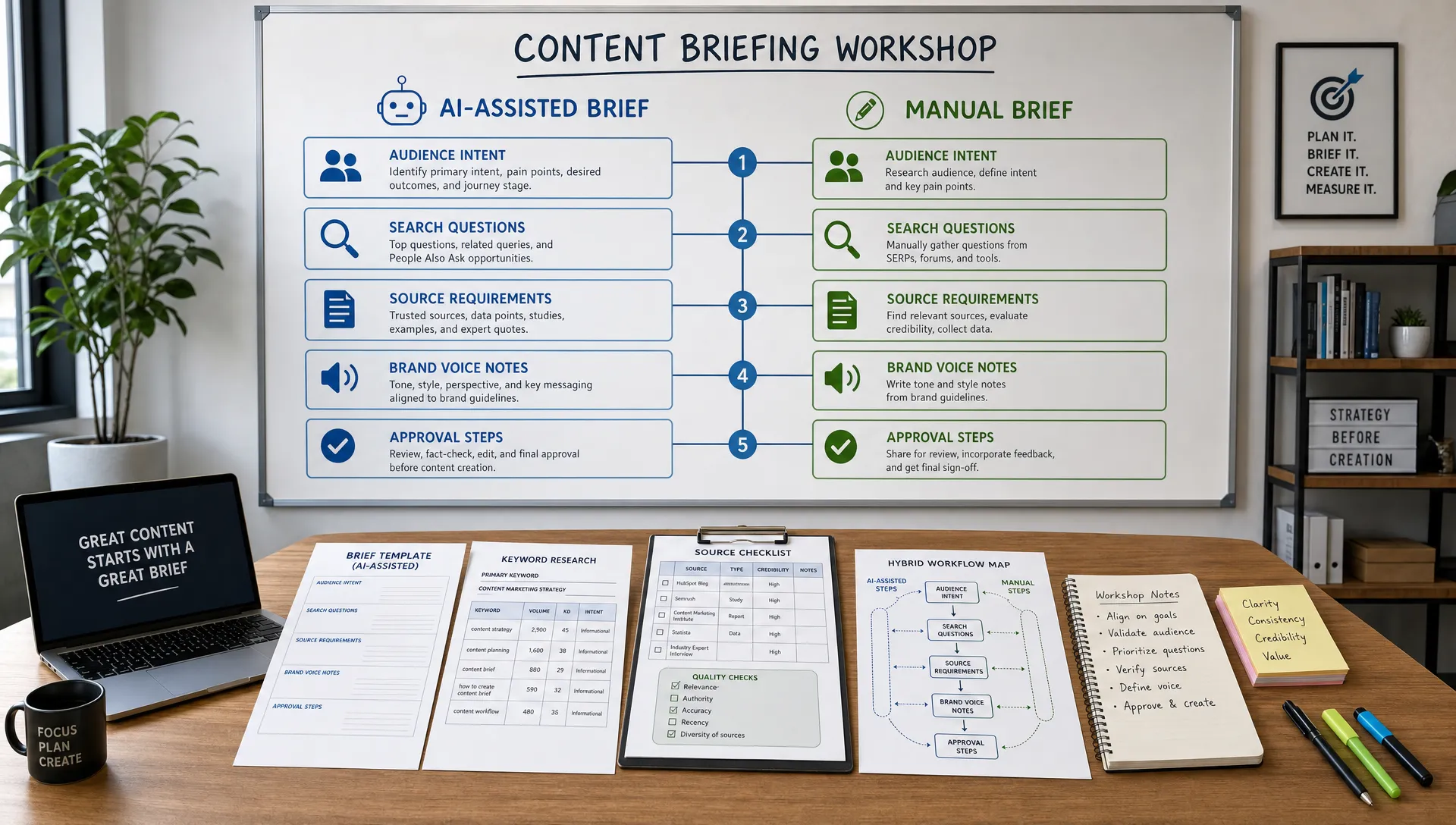
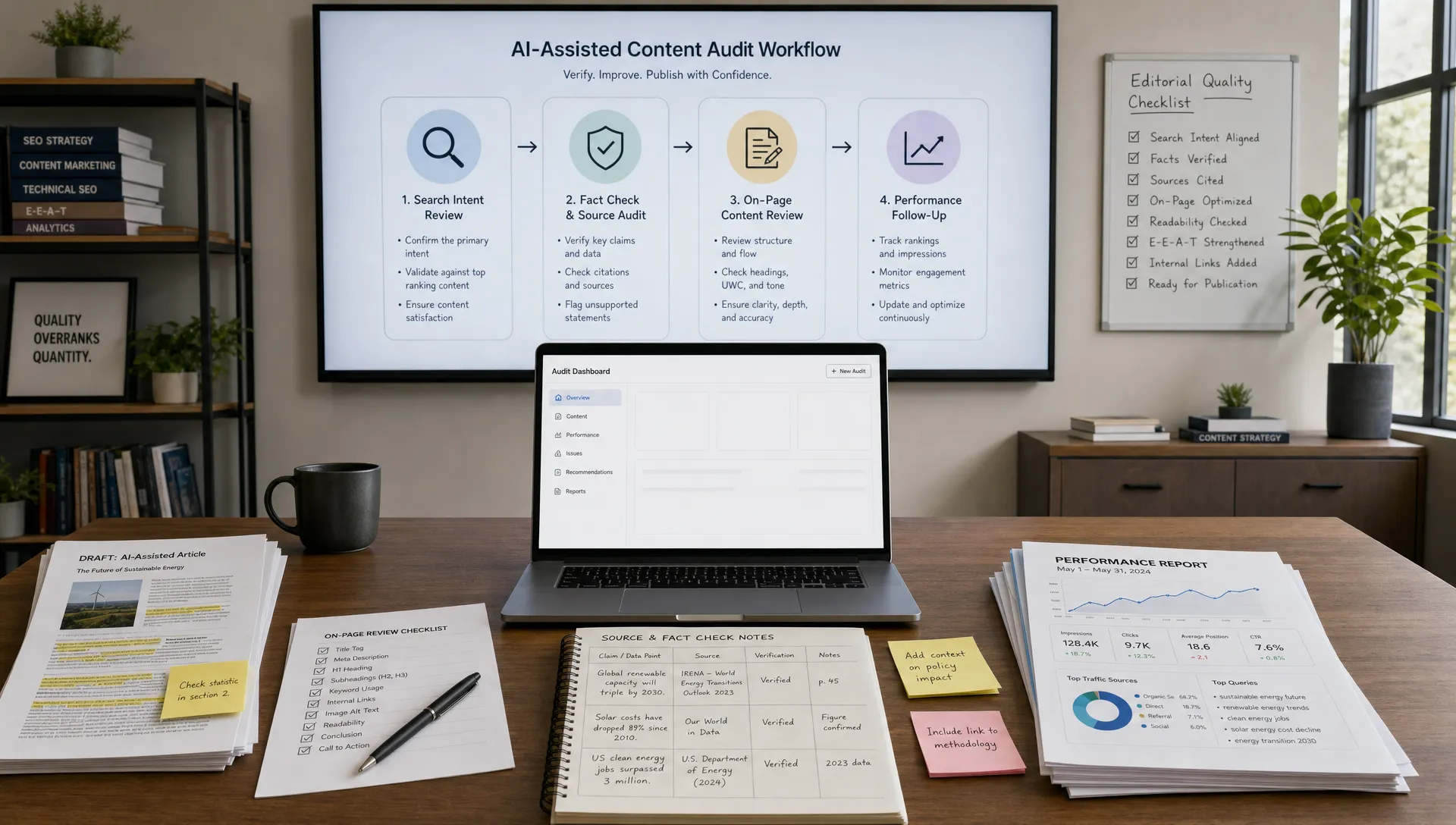
Even with a strong prompt, AI content should not go straight from generation to publishing. Your brand voice guide should include a checklist editors can use to review every AI-assisted draft.
Keep the checklist short enough to be used consistently. A practical version might include questions like:
This checklist turns your brand voice guide into an operational tool. It also helps improve prompts over time. If editors keep fixing the same issue, such as overly long introductions or vague benefits, add that correction directly to your prompt framework.
A brand voice guide should be stable, but not frozen. Your audience, offers, channels, and market positioning may change. AI tools also change quickly, which means your prompting and review practices will need updates.
Assign ownership of the guide to a specific person or team, usually content strategy, brand marketing, or editorial leadership. Set a review schedule, such as quarterly or twice a year. During each review, look at recent content performance, customer feedback, sales team input, and editing patterns.
You do not need to rewrite the entire guide every time. Often, the most useful updates are small:
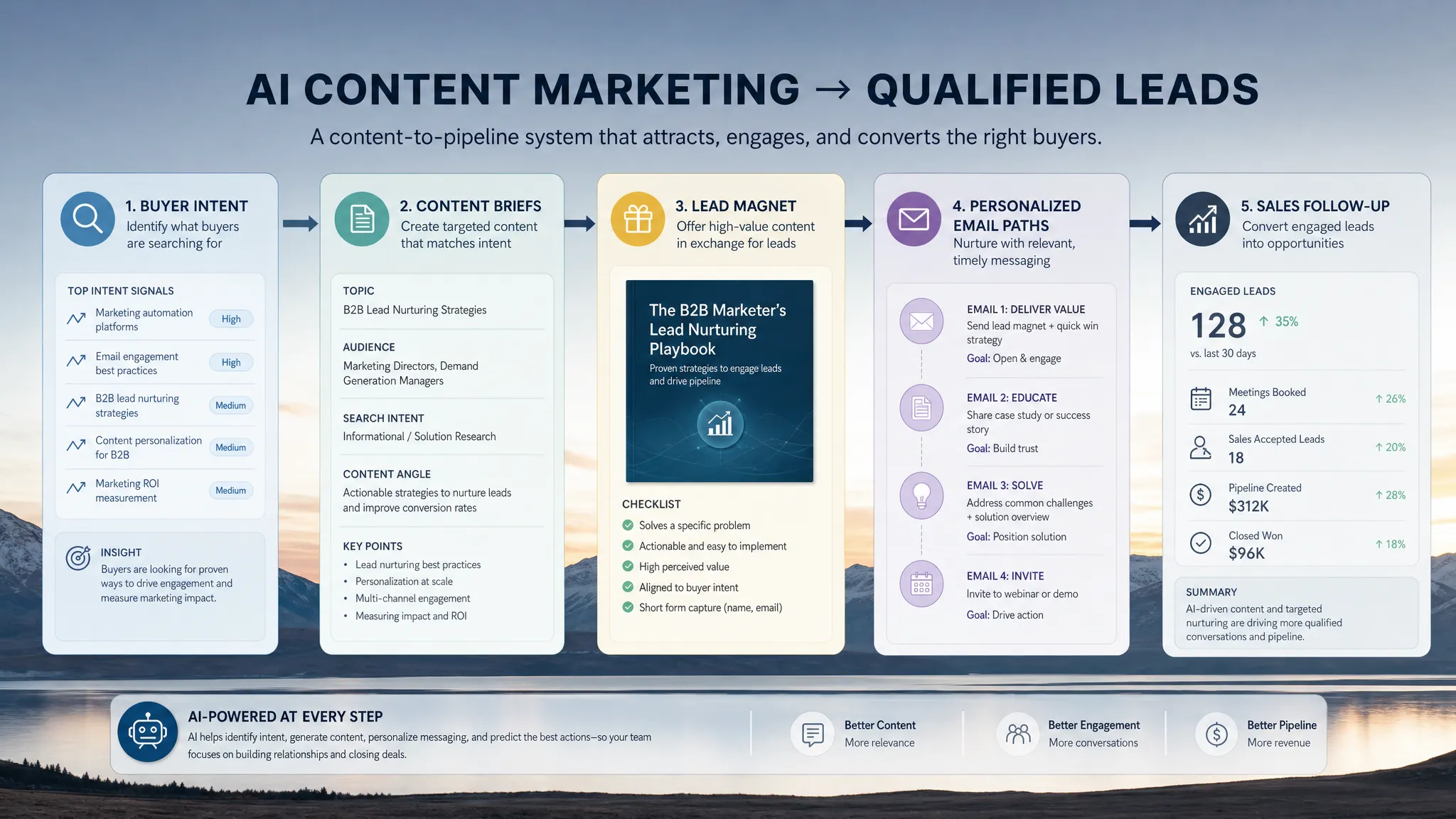
If you are using AI-powered analytics or SEO tools, performance data can help identify which content best reflects your voice while still driving results. For example, if practical how-to content consistently outperforms broad thought leadership, that insight should influence both your voice examples and your AI prompts. For more on aligning AI content with pipeline goals, see AIMarketer Hub’s guide to AI content marketing tactics that drive more leads.
Use the structure below as a starting point. You can keep it in a shared document, content operations platform, or prompt library.
Summarize what your company does, who it serves, and what makes it different. Keep this section short and concrete so it can be pasted into prompts when needed.
Define your primary audience, their goals, their pain points, their level of knowledge, and the language they use to describe their challenges.
List three to five core voice traits. For each one, explain what it means, what it does not mean, and how it should appear in content.
Describe how your tone changes for blogs, emails, landing pages, social media, ads, and product content. Include the reader’s likely mindset for each channel.
Define reading level, sentence length, formatting preferences, punctuation rules, capitalization, terminology, and any grammar choices your team wants to standardize.
Include preferred terms, product descriptions, value propositions, CTA language, and key messages. Make sure these are current and approved by the right stakeholders.
List words, phrases, claims, and tones to avoid. Explain why they are off-brand so writers understand the principle behind the rule.
Add reusable prompts for common content tasks. Include variables your team can customize, such as audience, keyword, channel, offer, and content format.
Provide approved examples, before-and-after rewrites, and rejected examples. Annotate them so the reasoning is clear.
End with a short checklist for editors and marketers to use before publishing AI-assisted content.
The biggest mistake is making the guide too abstract. Words like “innovative,” “authentic,” and “human” can be useful, but only if you explain what they mean in actual copy.
Another common mistake is creating the guide once and never using it. A brand voice guide should be embedded into briefs, prompts, editorial reviews, and content templates. If it lives in a folder nobody opens, it will not improve AI output.
Teams also run into trouble when they use AI to imitate competitors. It is fine to analyze competitor positioning, but your guide should help AI differentiate your brand, not blend into the same category language.
Finally, do not confuse consistency with sameness. Your brand should be recognizable, but not robotic. The goal is to give AI enough structure to stay on-brand while leaving room for channel, audience, and campaign context.
What is a brand voice guide for AI content? A brand voice guide for AI content is a practical document that explains how your brand should sound and gives AI tools specific instructions, examples, restrictions, and review criteria for producing on-brand content.
How is an AI brand voice guide different from a normal style guide? A normal style guide often focuses on grammar, formatting, and terminology. An AI-ready guide also includes prompt blocks, approved and rejected examples, tone rules by channel, and guidance for reviewing AI-generated drafts.
How many voice pillars should a brand have? Most brands only need three to five voice pillars. Fewer pillars are easier to remember and apply. The key is to define each pillar with examples, not just adjectives.
Can AI learn our brand voice from existing content? AI can analyze existing content and identify patterns, but it still needs human direction. Your team should choose the best examples, explain why they work, remove outdated language, and define boundaries for claims and tone.
Who should own the brand voice guide? Brand, content, or editorial leadership should usually own the guide, with input from product marketing, sales, customer support, and legal when needed. Ownership matters because the guide must stay current as messaging and campaigns evolve.
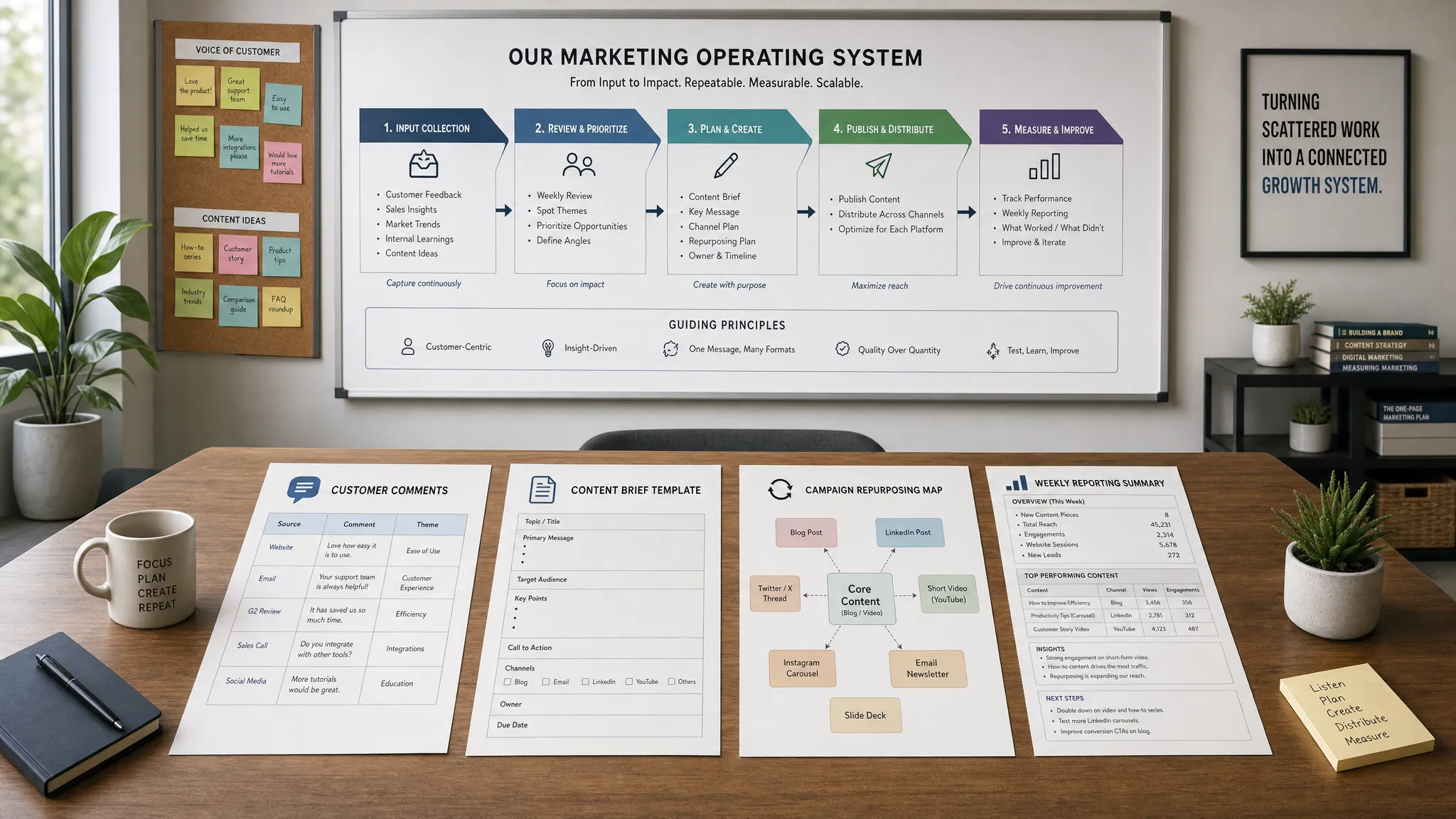
A brand voice guide is not just a branding exercise. It is the operating system for better AI content. When your team defines voice pillars, channel-specific tone, approved language, prompt blocks, and review standards, AI becomes easier to direct and easier to trust.
If you want to build more consistent AI-assisted marketing workflows, explore AIMarketer Hub for AI content generation resources, marketer-focused prompt ideas, SEO tools, calculators, and practical guides designed to help teams automate and optimize their marketing without losing what makes their brand distinct.