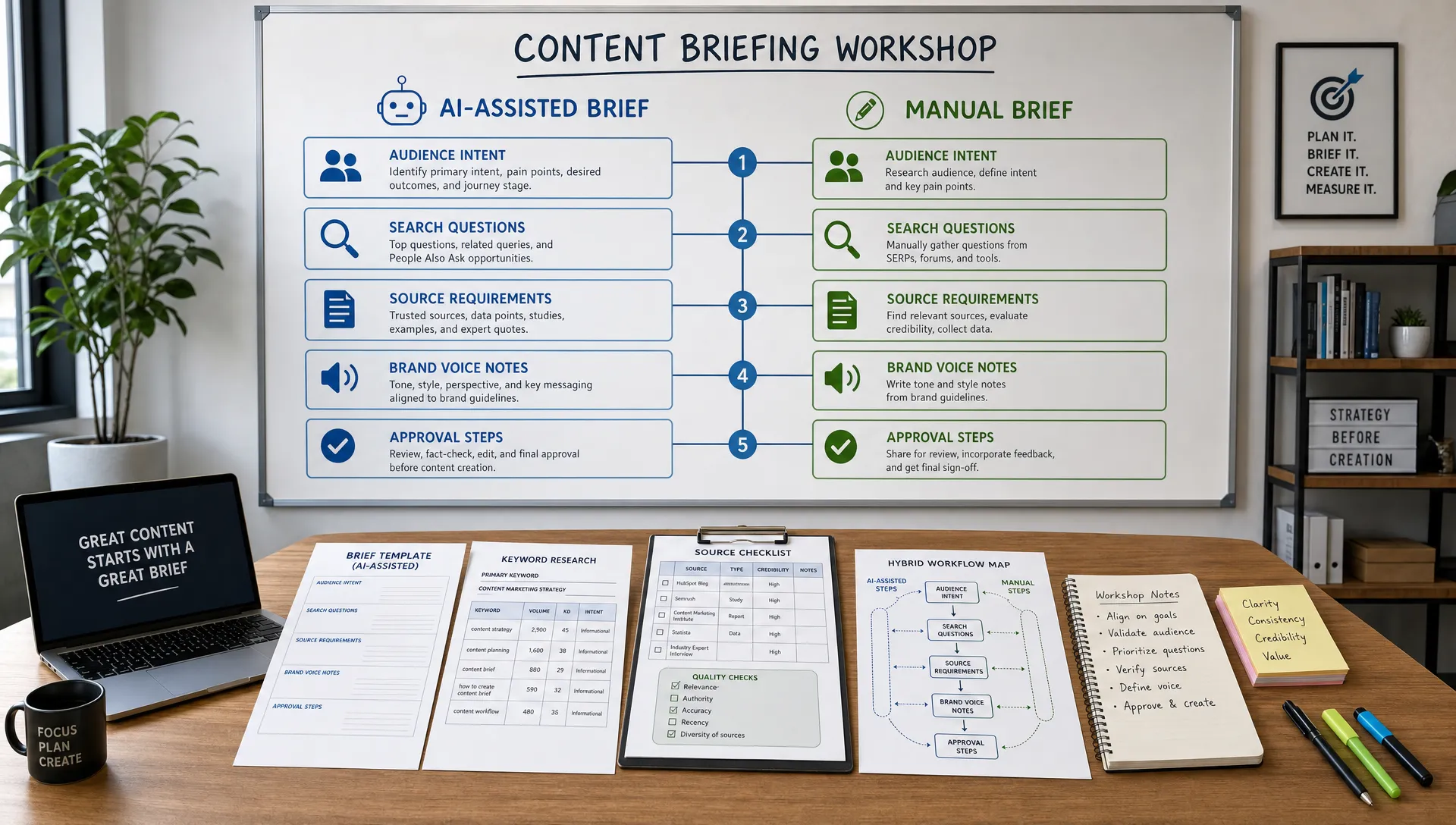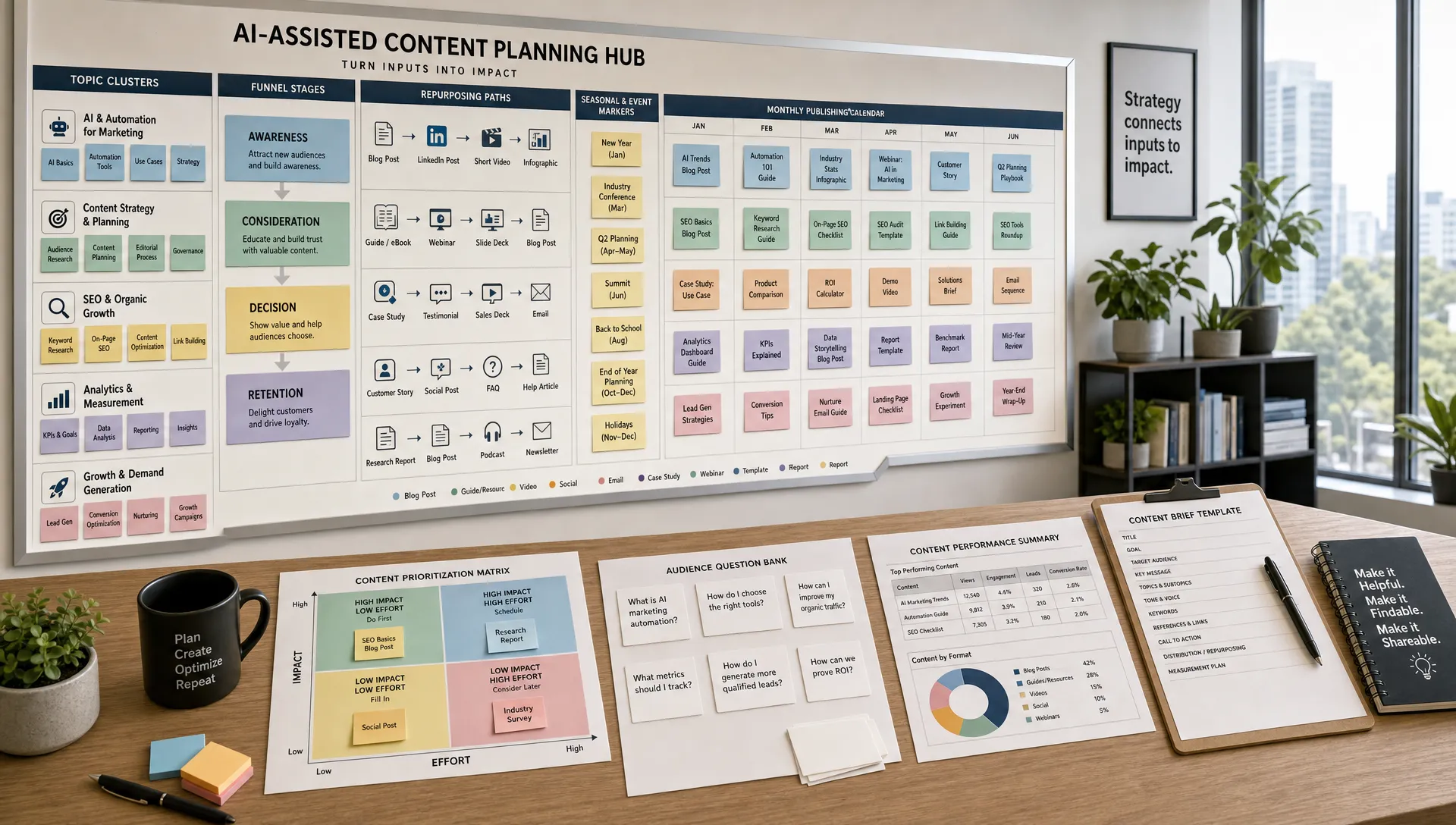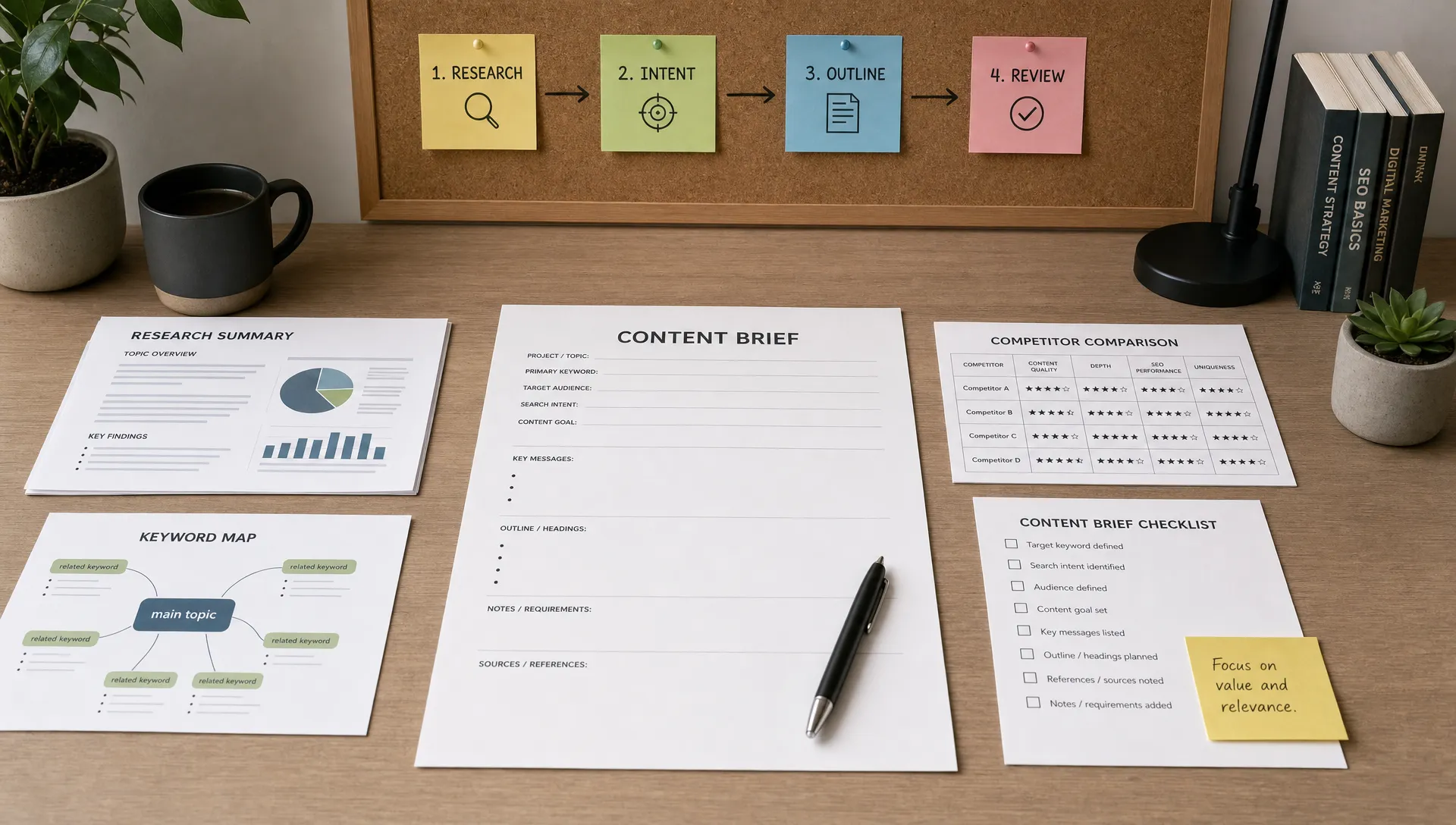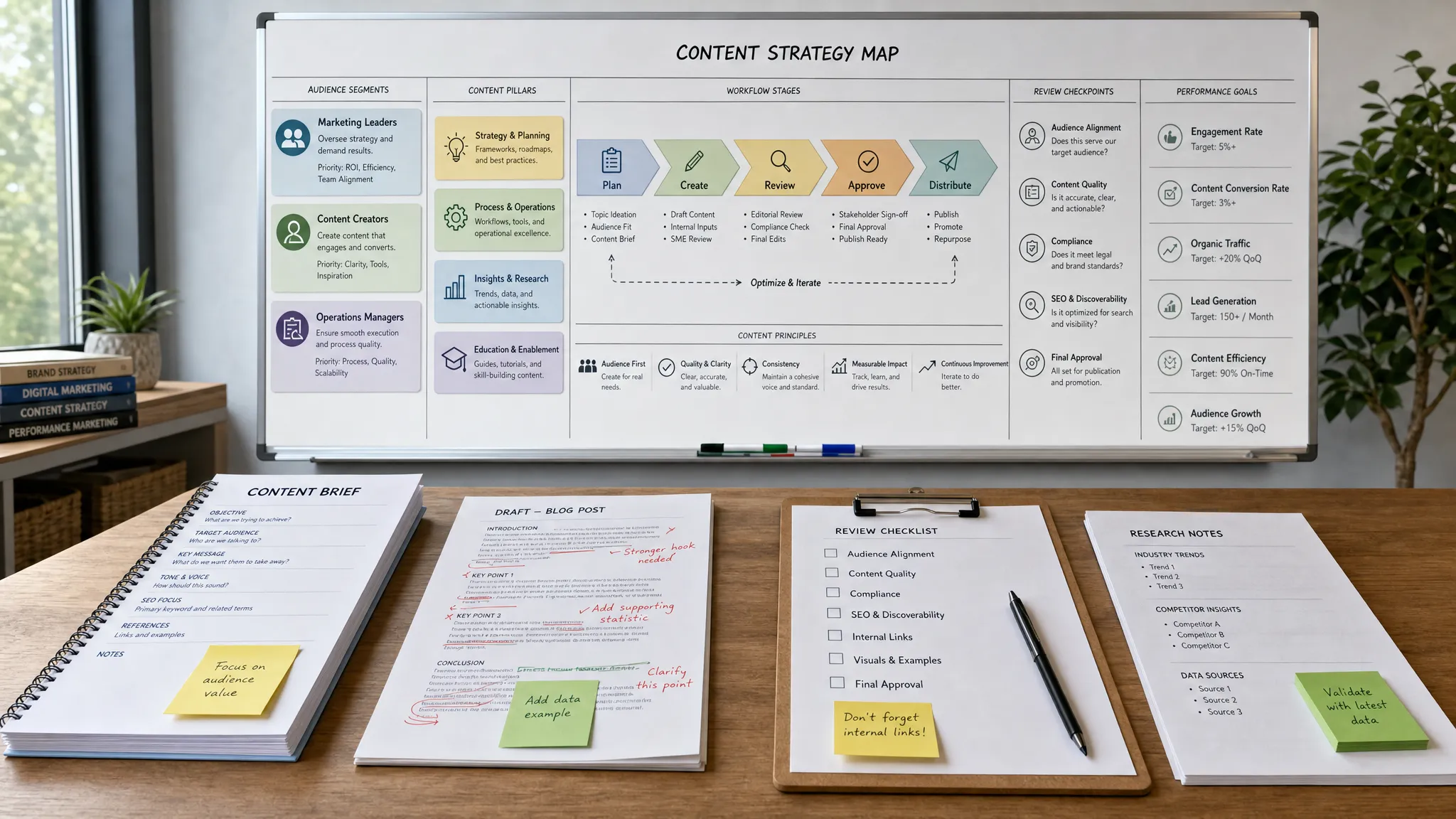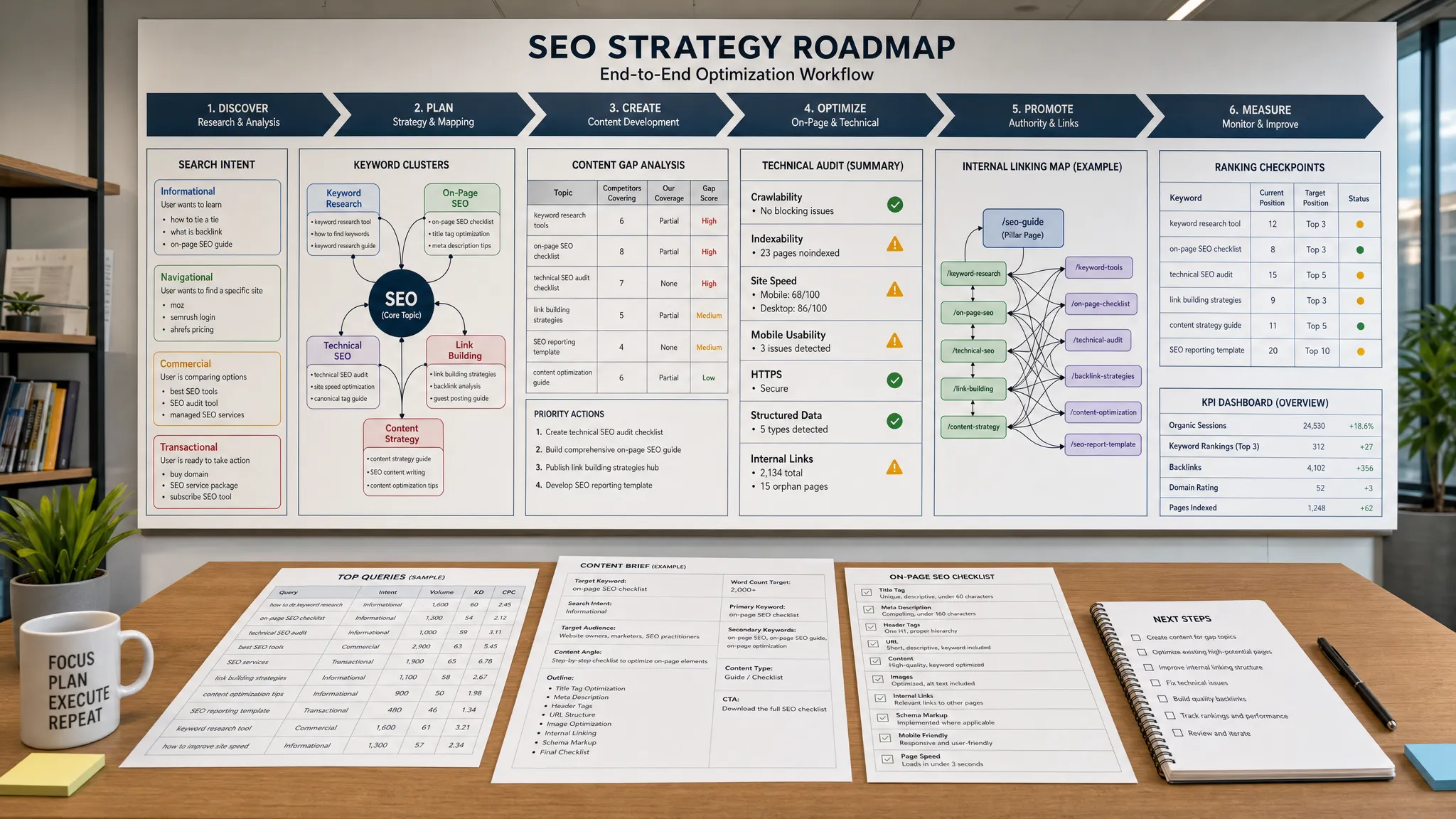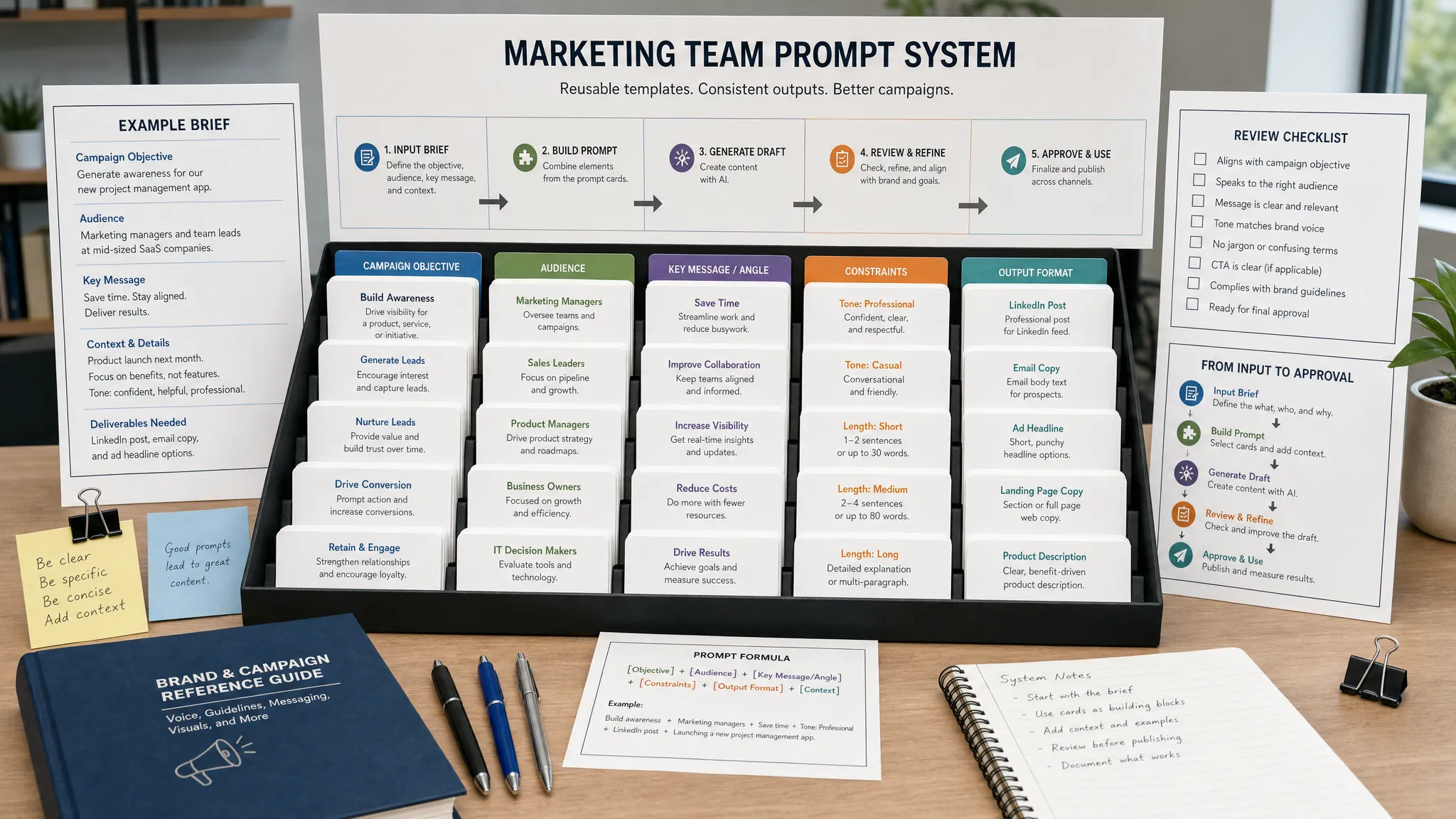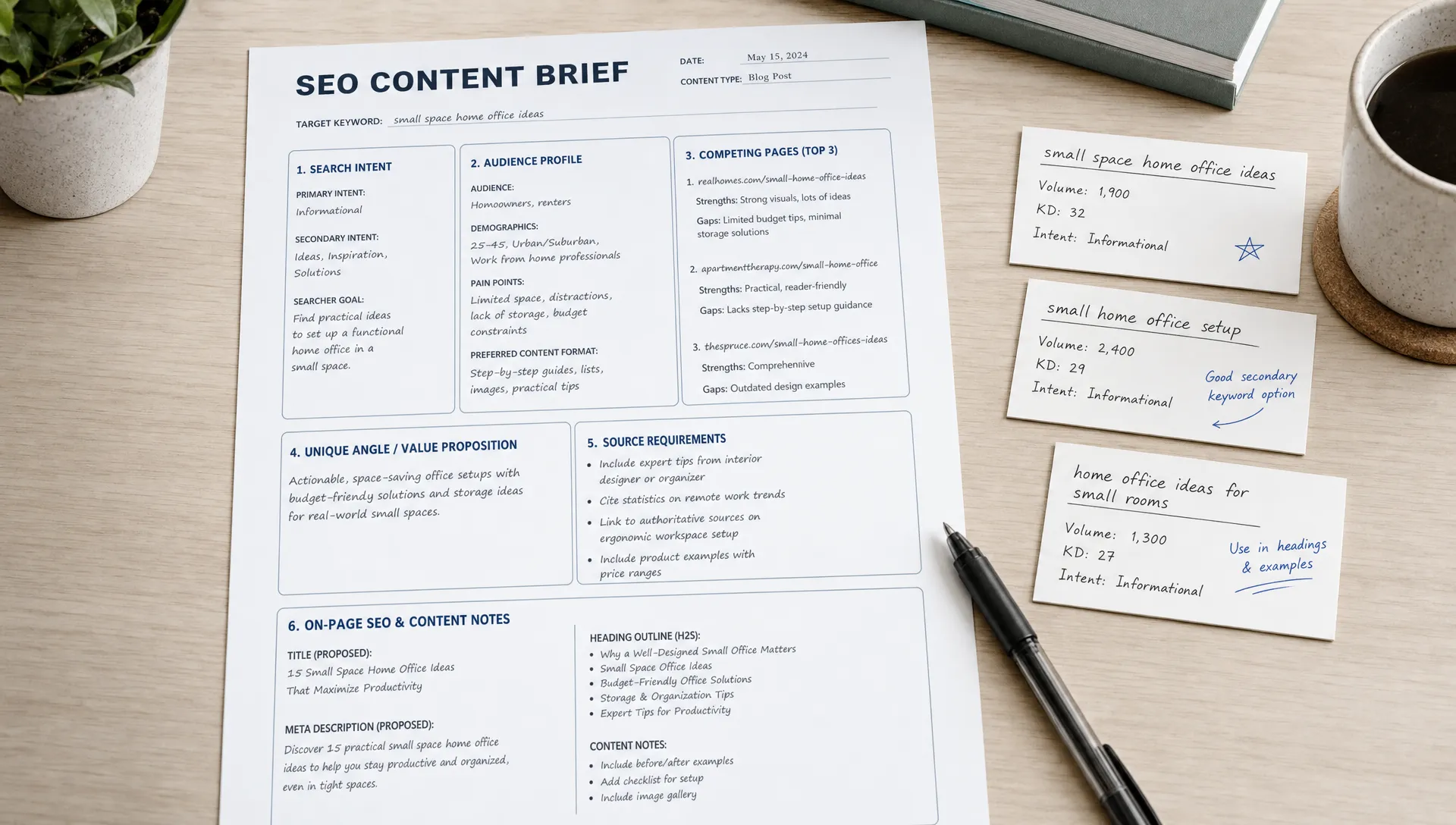
A ranking article rarely starts with a blank page. It starts with a sharp brief: a document that turns search intent, audience knowledge, SERP patterns, brand positioning, and editorial standards into a clear plan a writer can execute.
AI can make that process faster, but speed is not the same as strategy. If you ask an AI tool to generate a brief from a keyword alone, you will often get a generic outline that looks polished and says very little. A strong AI SEO content brief adds context, constraints, evidence, and human judgment so the final article has a real chance to compete.
This guide walks through how to build an AI SEO content brief that ranks, without reducing SEO to keyword stuffing or letting automation flatten your brand voice.
An AI SEO content brief is a structured plan for creating search-optimized content with help from artificial intelligence. It gives writers, editors, and AI content tools the inputs they need to produce a useful, accurate, and differentiated article.
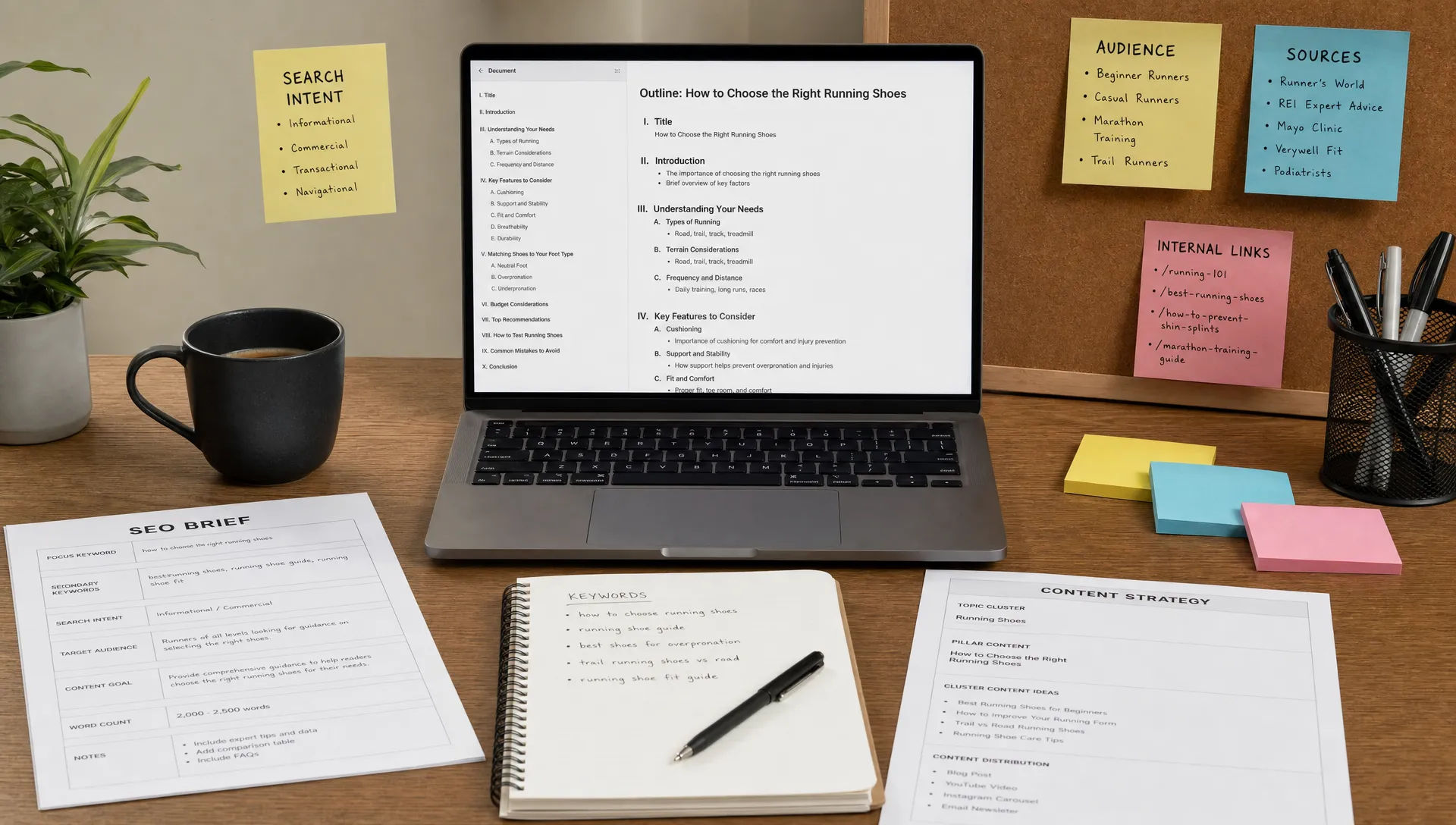
A typical brief includes the target keyword, search intent, audience profile, recommended headings, related questions, source requirements, internal links, on-page SEO notes, and brand voice guidance. The AI part comes from using tools to accelerate research, cluster topics, analyze competing pages, extract entities, draft outlines, and identify missing angles.
The best briefs are not just AI-generated. They are AI-assisted and human-approved.
That distinction matters because Google has long emphasized helpful, reliable, people-first content. Its guidance on creating helpful content asks whether content is made primarily to help users and whether it demonstrates expertise, experience, authoritativeness, and trust. Your brief should support those goals before it ever talks about word count.
Most weak AI briefs fail for one of five reasons. They start with a keyword but skip the intent. They copy the same heading structure as everyone else. They include too many loosely related keywords. They give the writer no original angle. Or they do not define what a good answer looks like.
The result is content that may be technically optimized but strategically forgettable.
A ranking-focused brief should answer these questions before drafting begins:
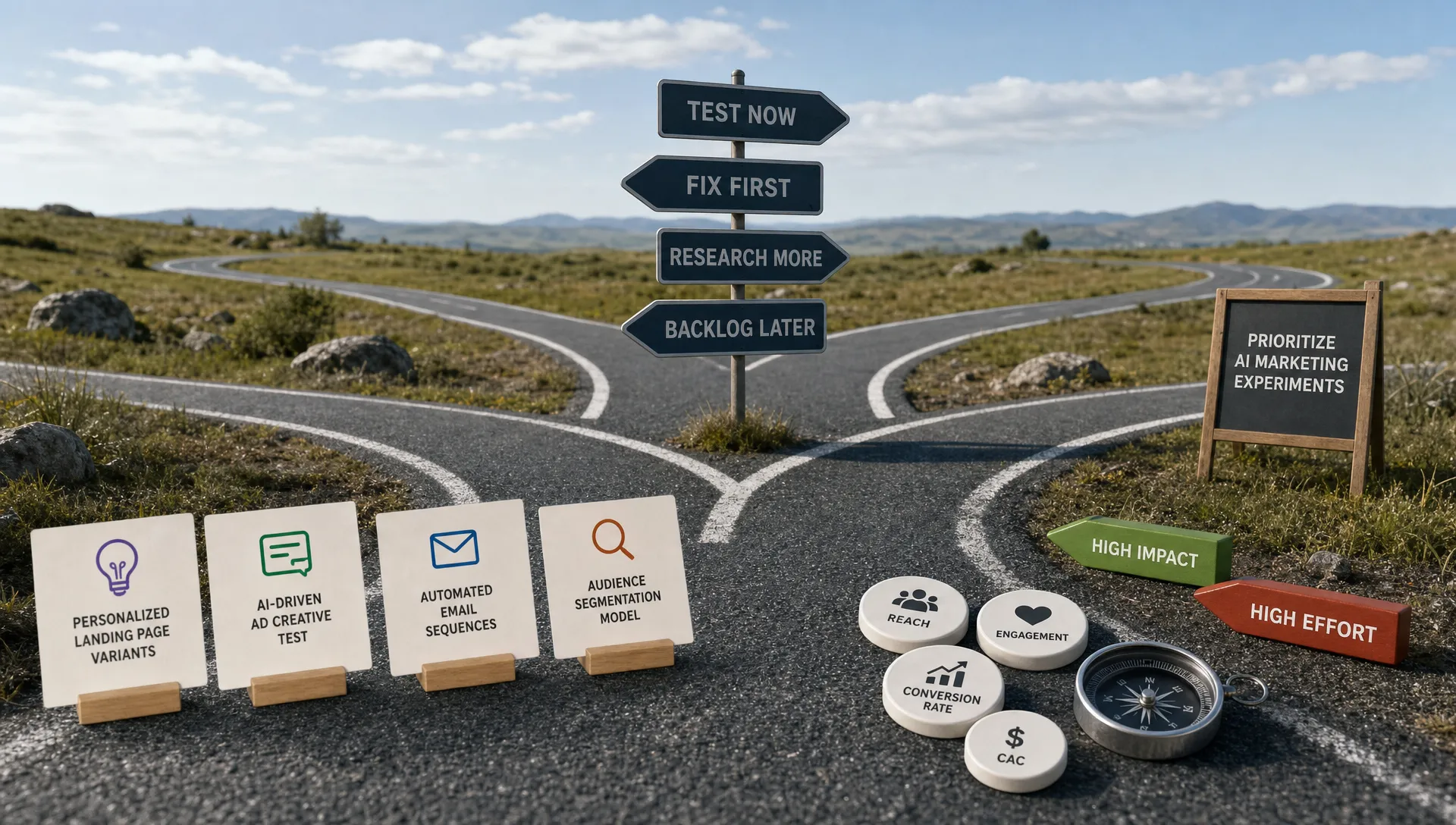
AI is excellent at pattern recognition. It can summarize SERPs, surface questions, group subtopics, and draft first-pass outlines. But it still needs a strategist to decide what matters, what to ignore, and how the article should earn trust.
Search intent is the reason behind the query. If you misread it, every other part of the brief becomes weaker.
For the keyword AI SEO content brief, the likely intent is informational with a practical, mid-funnel angle. The searcher is not just asking what a brief is. They probably want a repeatable process, a template, and enough detail to improve content performance. They may be a content marketer, SEO manager, agency strategist, founder, or in-house marketer using AI tools to scale content creation.
Before building the brief, classify the intent:
Intent layer          | Question to answer                               | Example for this topic
Primary intent        | What does the searcher want right now?           | Learn how to create an AI-assisted SEO brief
Secondary intent      | What else would make the result more useful?     | Get a template, workflow, prompts, and QA checklist
Business intent       | How close is the searcher to needing a solution? | They may need SEO tools, prompt libraries, or workflow automation
Content format intent | What format does the SERP likely reward? | Step-by-step guide, template, examples, FAQ Analyze the search intent behind the keyword: AI SEO content brief. Identify the likely audience, funnel stage, desired outcome, preferred content format, and what would make a result more helpful than generic SEO advice.
Then review the output like an editor. If the AI says the keyword is purely beginner-level, ask whether the SERP suggests a more advanced need. If it recommends a 3,000-word article, ask whether that length helps the reader or simply fills space.
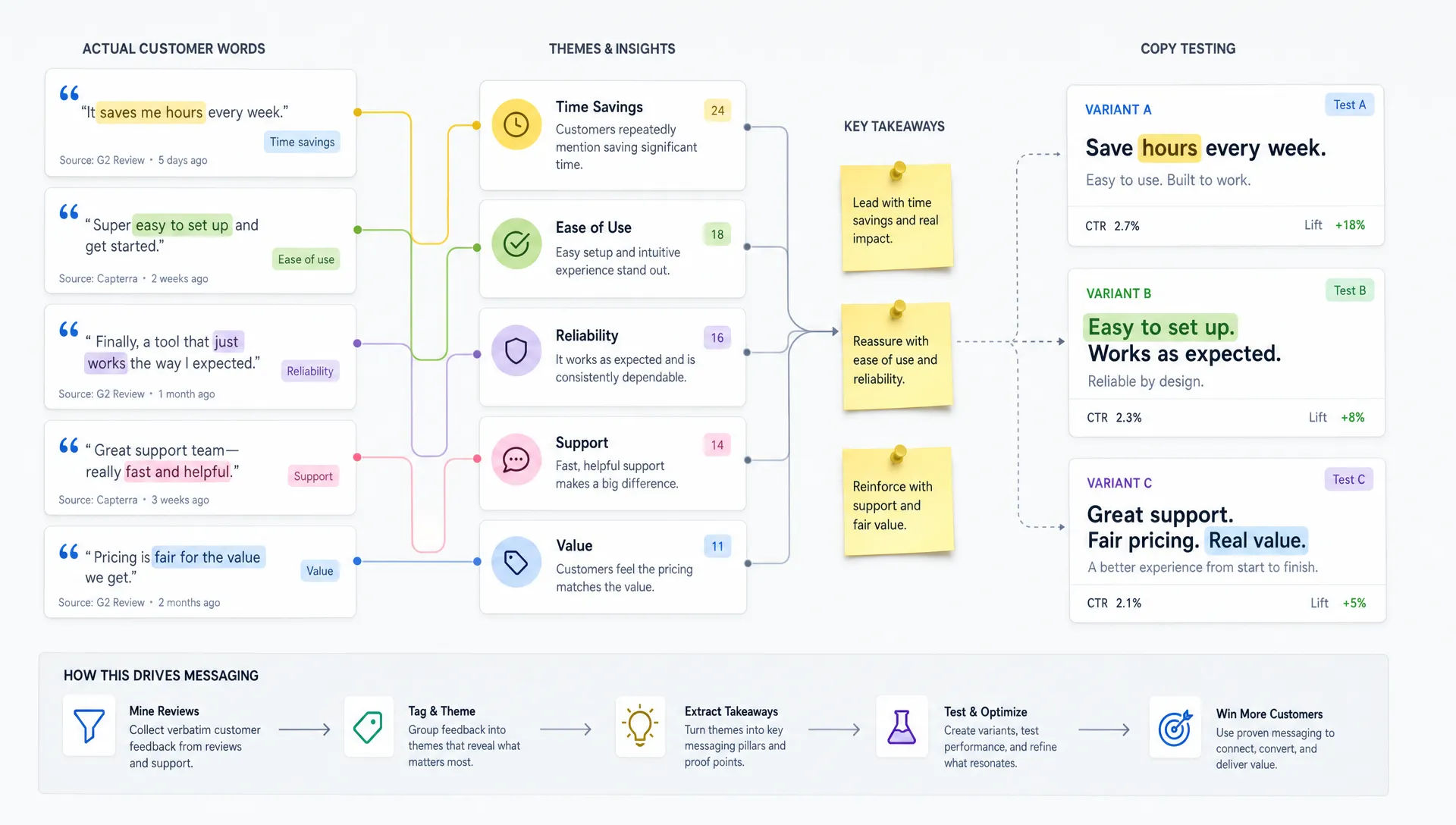
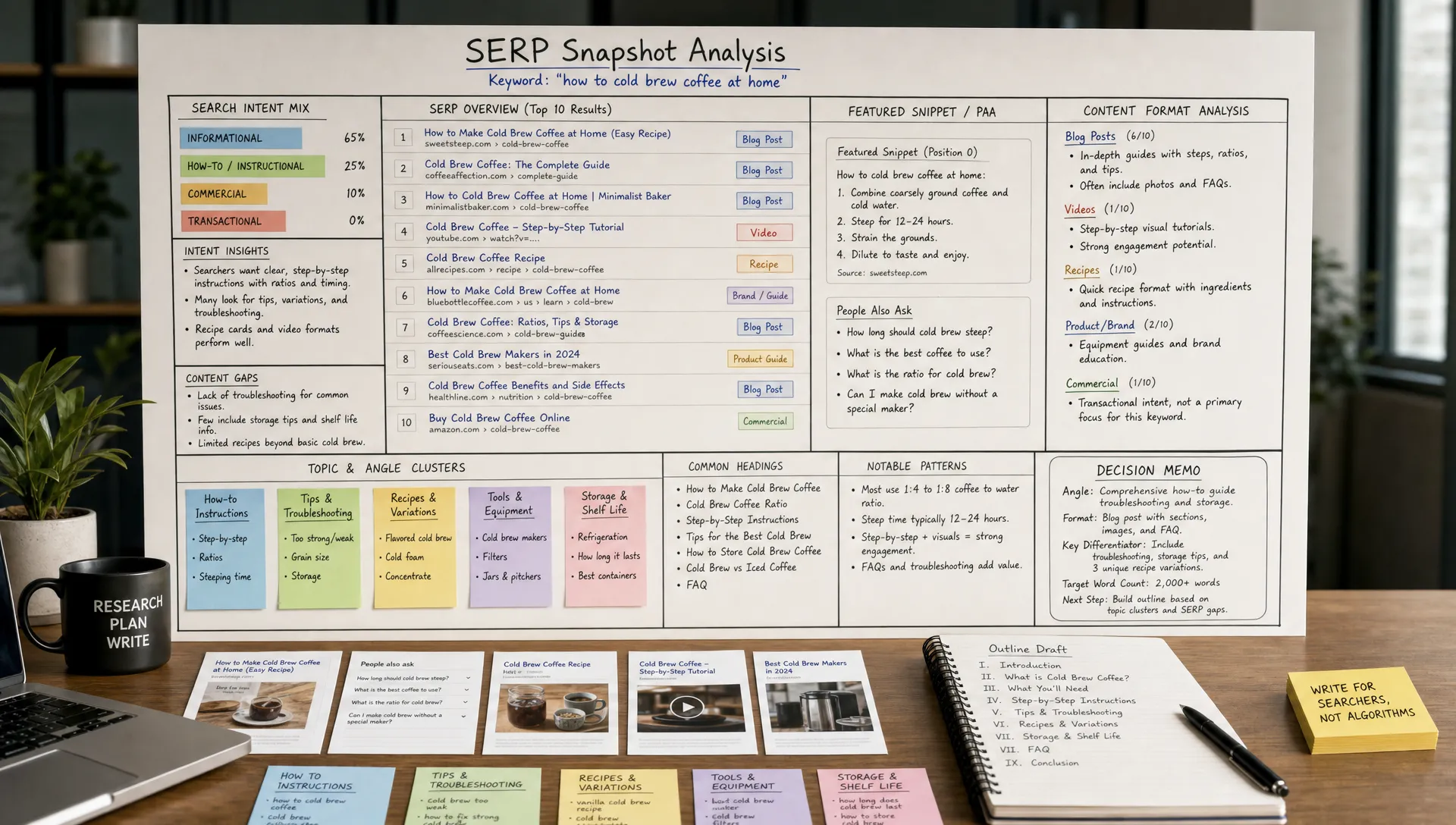
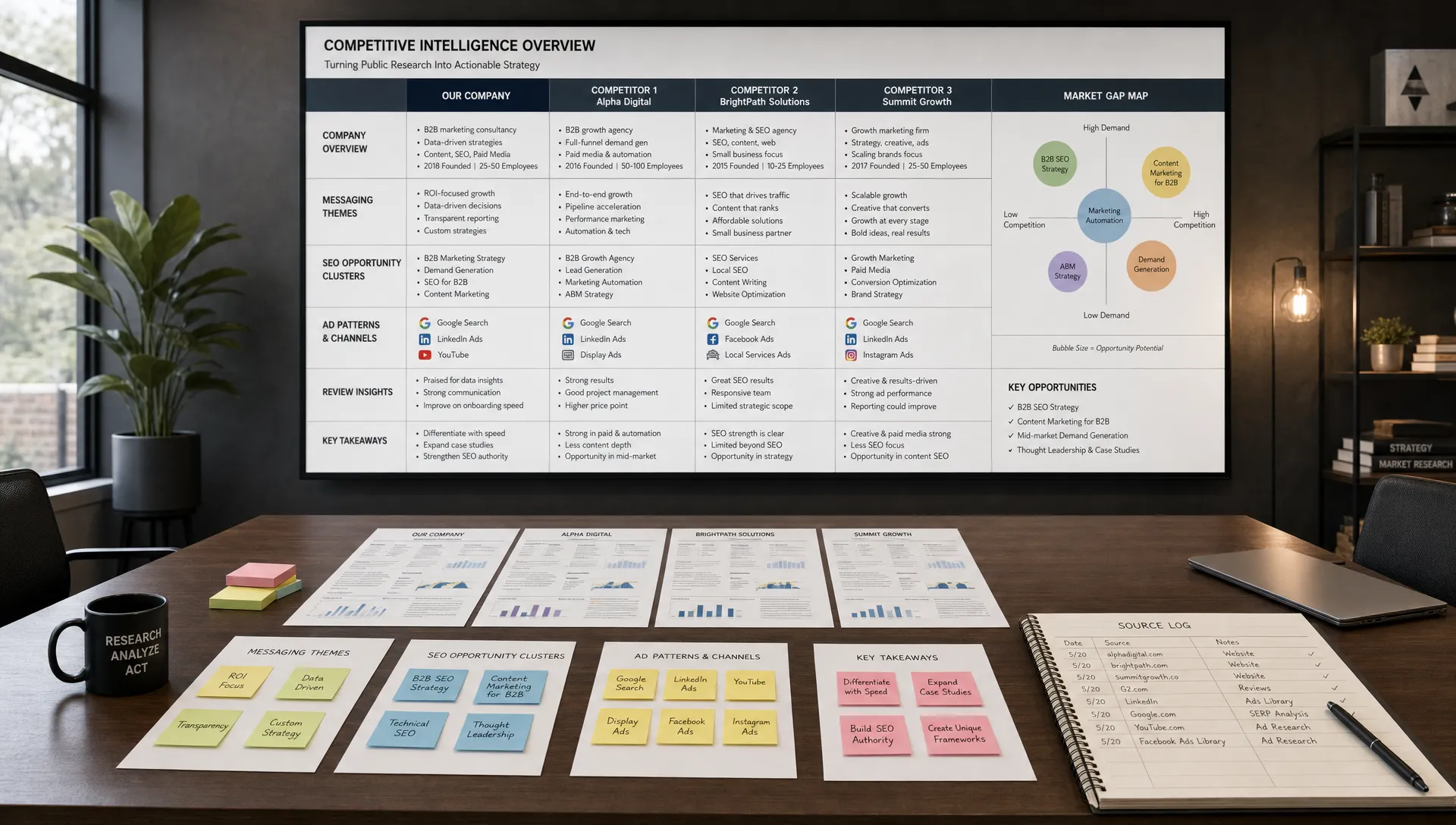
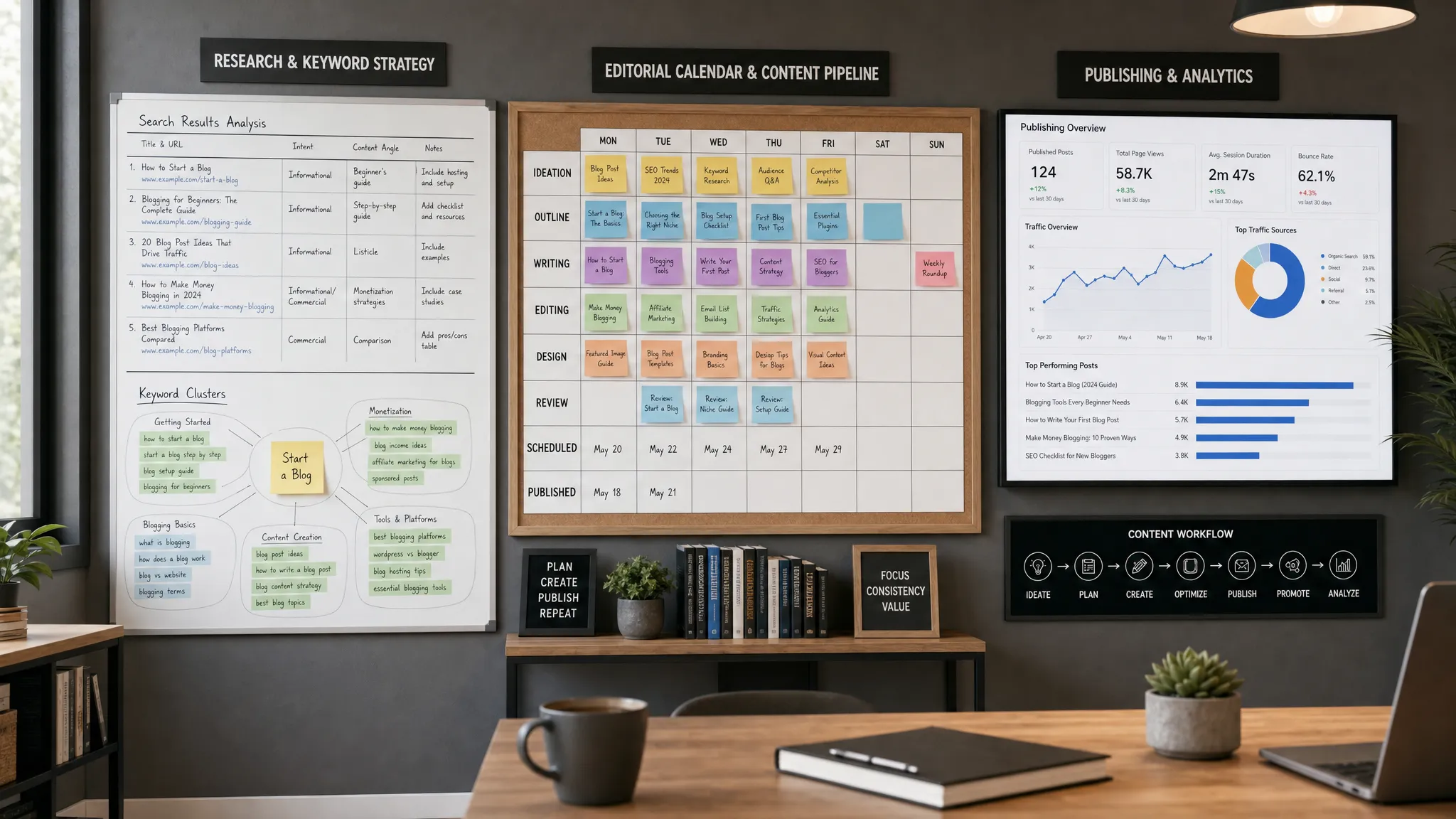
An AI SEO content brief that ranks should be based on the actual search results, not assumptions. SERP analysis shows what Google is currently rewarding, but the goal is not to copy competitors. The goal is to understand the pattern, then find a better angle.
Look at the top-ranking pages and document:
AI can summarize this quickly if you provide the content or your notes. Be careful with tools that claim to know live search results but do not actually browse current pages. If your AI tool lacks live access, paste excerpts or SERP notes into the prompt.
A practical SERP summary prompt:
I am creating an SEO brief for the keyword: AI SEO content brief. Based on the competitor notes below, identify common patterns, missing angles, weak sections, and opportunities for a more useful article. Do not create an outline yet. Focus only on SERP insights.
This separation is important. If you ask for insights and an outline in the same prompt, AI often rushes to structure before thinking deeply.
If you are still choosing your SEO stack, AIMarketer Hub has a practical guide on AI SEO tools for small teams that can help you compare lightweight options before building a repeatable briefing workflow.
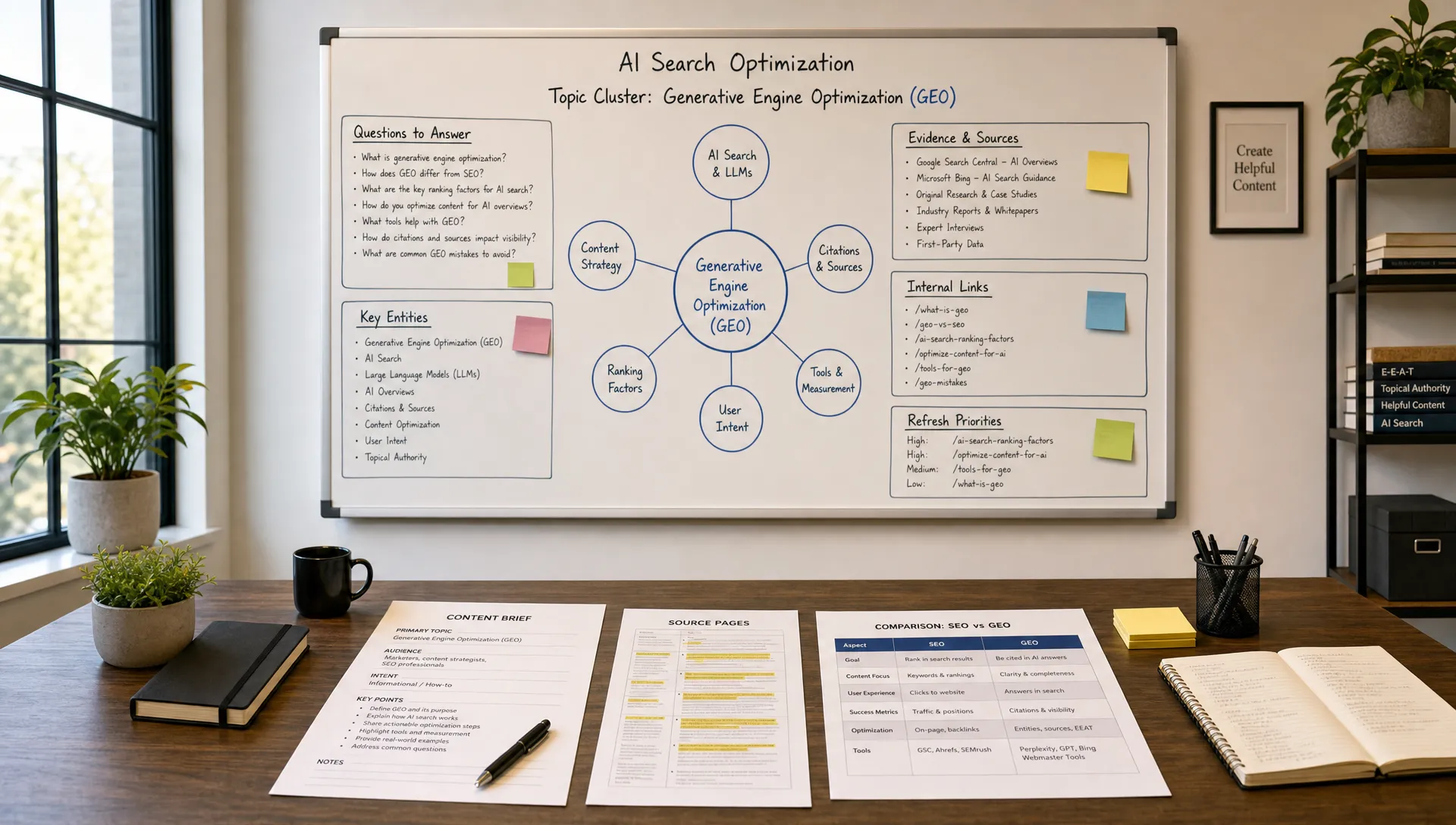
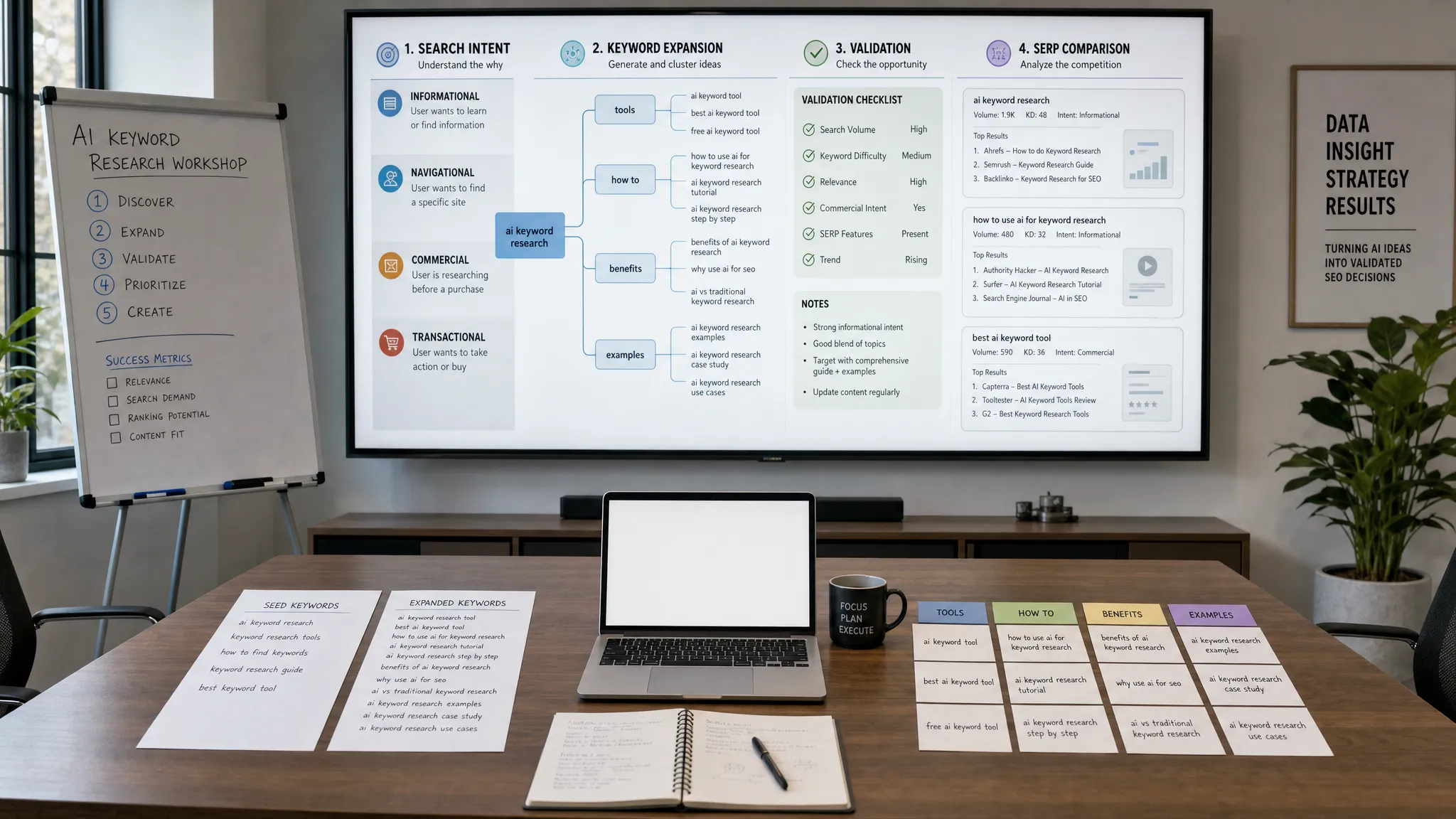
A modern brief should include more than a target keyword. Search engines evaluate content in context, and readers expect a complete answer. That means your brief should map the primary keyword, closely related terms, entities, and natural questions.
Avoid turning this into a giant keyword dump. A writer does not need 75 phrases to force into an article. They need a focused map of concepts that should be covered naturally.
Here is a simple structure:
Brief element      | Purpose                                   | Example
Primary keyword    | Main topic and SEO focus                  | AI SEO content brief
Secondary keywords | Close variants and support terms          | SEO content brief, AI content brief, content brief template
Entities           | Concepts that establish topical relevance | search intent, SERP analysis, E-E-A-T, internal links, schema, editorial workflow
Questions          | FAQ and section ideas                     | What should an SEO brief include? Can AI write content briefs?
Exclusions | Topics to avoid or keep brief | General AI marketing history, unrelated automation tools A useful rule: if a term does not help the writer answer the searcher’s real question, remove it.
Search results are crowded with lookalike content. If your brief only says create a comprehensive guide, the finished article will likely sound like every other guide.
Instead, define the unique angle before the outline. For an AI SEO content brief article, possible angles include:
Information gain is the additional value your page offers beyond what already exists. It can come from first-hand examples, original frameworks, expert commentary, internal data, screenshots, templates, or better synthesis.
For a client or internal team, your brief should include a line like this:
Unique angle: This article should show marketers how to use AI as a research and structuring assistant while keeping human strategy, source validation, brand voice, and editorial QA at the center of the process.
That sentence gives the writer a lens. Without it, the article becomes a checklist.
A good outline follows the reader’s decision flow, not just keyword variations. Someone learning how to build an AI SEO content brief needs to understand what it is, why it matters, how to research it, what to include, how to prompt AI, and how to review the output.
Your AI-generated outline should be edited for logic. Ask whether each section earns its place. Remove headings that repeat the same idea with different wording.
A strong brief outline usually includes:
The outline should also specify what not to do. For example, tell the writer not to include outdated advice like exact-match keyword density targets or generic claims that AI content automatically ranks.
AI can summarize confidently even when it is wrong. Your brief should prevent that by defining source expectations.
For SEO and marketing topics, prioritize primary or highly credible sources. Google Search Central, official platform documentation, peer-reviewed research, government data, reputable industry studies, and original company data are stronger than random blog summaries.
The brief should specify:
For example, if the article discusses on-page SEO basics, linking to Google’s SEO Starter Guide is more authoritative than citing a thin roundup article.
You do not need to cite every sentence. But any claim involving ranking systems, search guidelines, legal or financial implications, statistics, or platform-specific features should be checked.
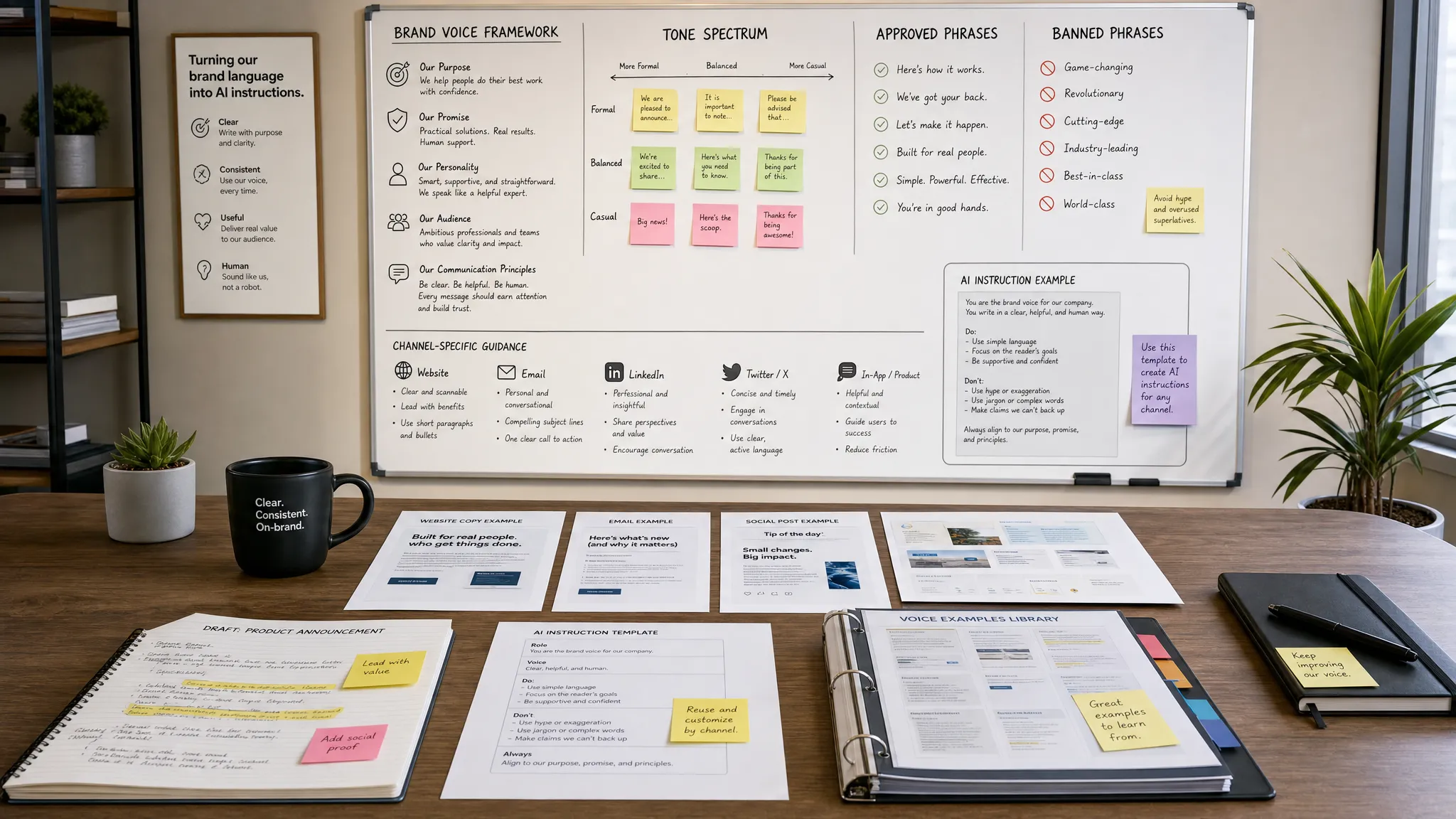
AI-generated briefs often miss brand voice because they focus only on SEO. That creates content that ranks for nobody because it sounds like everyone.
A useful brief should tell the writer how the article should feel. Is the brand direct and tactical? Analytical and data-heavy? Friendly and beginner-focused? Opinionated and expert-led?
For AIMarketer Hub’s audience, the tone should be practical, clear, and strategy-focused. The reader is likely looking for AI marketing workflows they can actually use, not abstract commentary. If your team uses AI for drafting, include voice rules in every prompt and brief.
For deeper guidance on this balance, the AIMarketer Hub article on using AI for marketing without losing your brand voice is a useful companion resource.
Editorial guardrails can include simple rules such as:
These constraints make AI outputs more consistent and reduce editing time.
Your brief should translate SEO strategy into publishable requirements. Keep this section clear and practical.
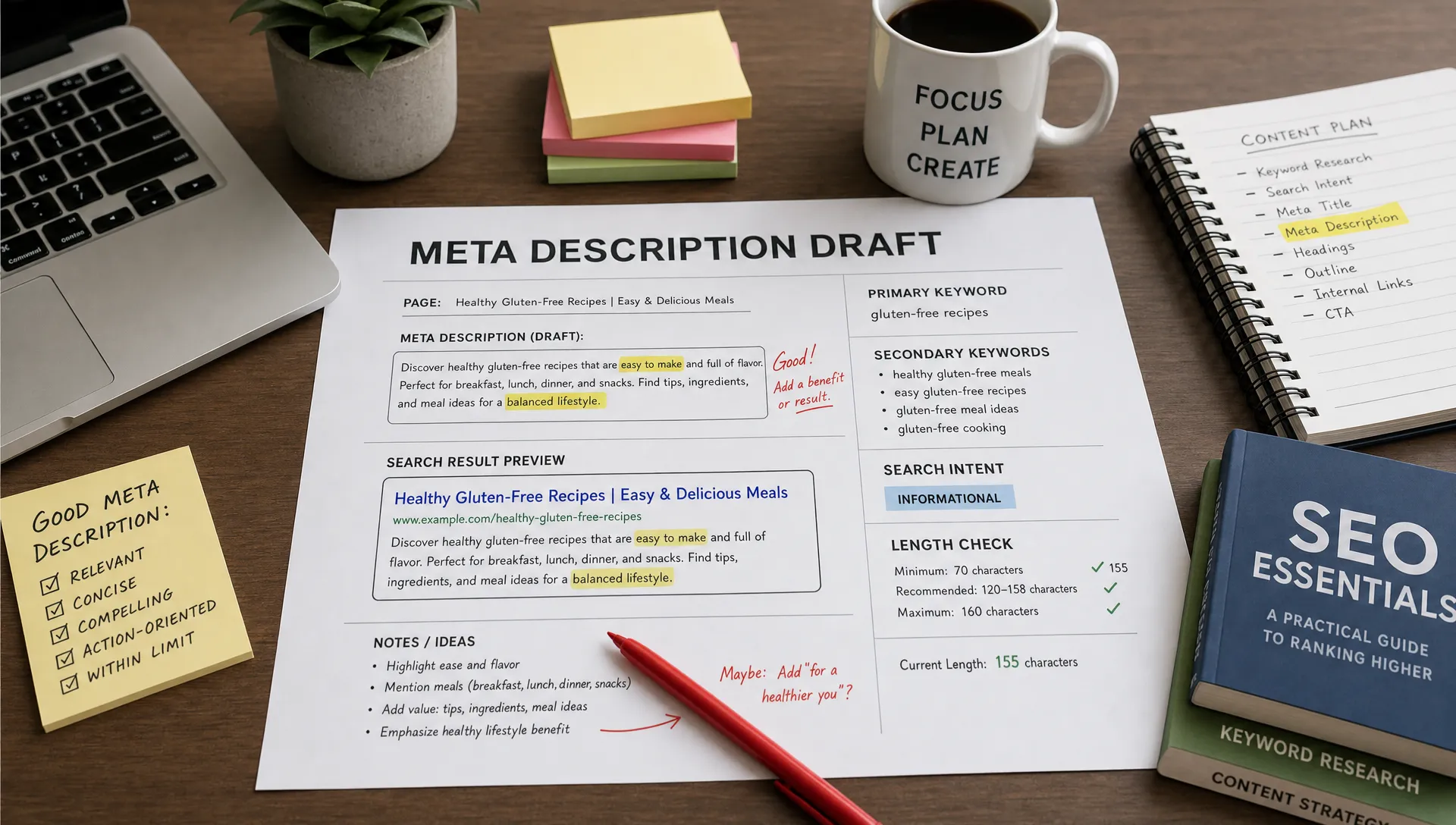
Include the recommended URL slug, meta title direction, meta description direction, heading hierarchy, internal link targets, external source suggestions, image recommendations, schema opportunities, and call-to-action placement.
Do not overload the writer with technical noise. The goal is to give enough structure for optimization while leaving room for a natural article.
A compact on-page SEO section might look like this:
Requirement      | Brief instruction
URL slug         | Use a concise slug such as ai-seo-content-brief
Meta title       | Include the primary keyword and a clear benefit
Meta description | Explain the workflow and outcome in under 155 characters
H2 structure     | Follow the reader’s process from research to template to QA
Internal links   | Link to relevant AI marketing, SEO tools, or brand voice resources
External links   | Cite Google or other authoritative sources for SEO guidance
Images           | Include one useful workflow or template-style visual
FAQ | Answer practical questions that support the main intent One of the biggest mistakes marketers make is asking AI to create the entire brief in a single prompt. Better results come from staged prompting.
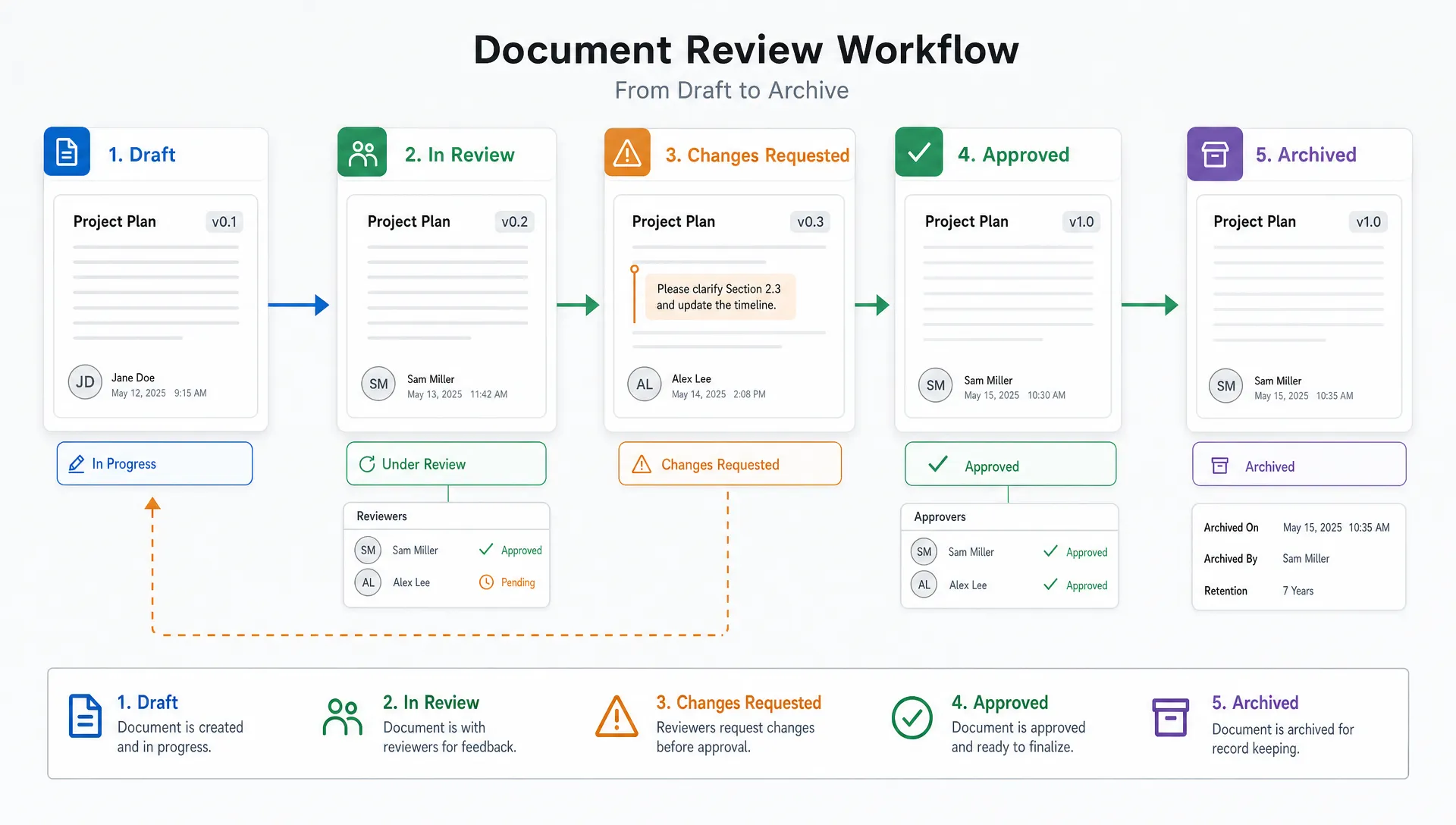
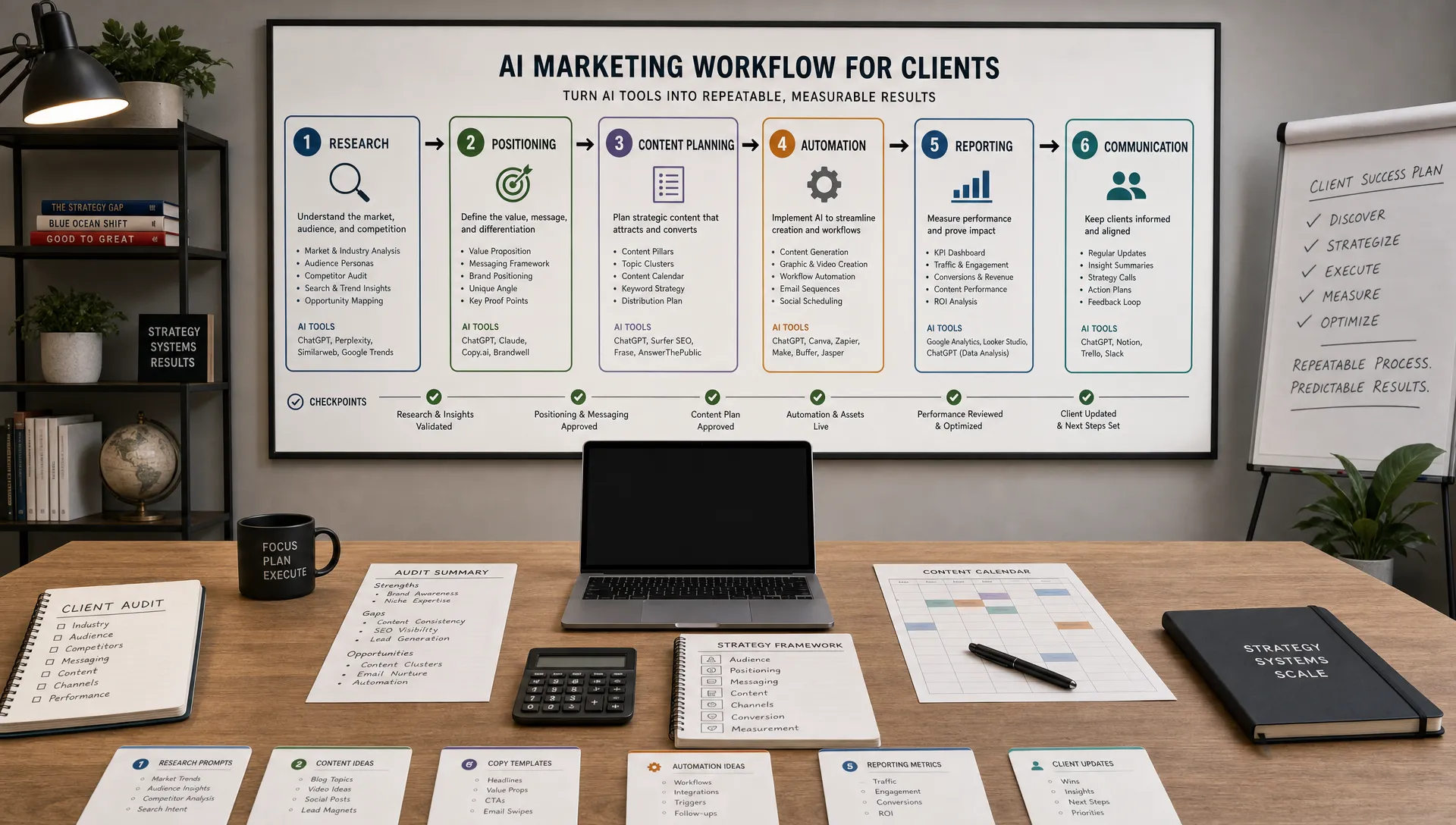
Use AI like a specialist at each phase:
Stage            | AI task                                           | Human review focus
Intent analysis  | Identify audience, funnel stage, and likely goals | Confirm against SERP and business context
SERP synthesis   | Summarize competitor patterns and gaps            | Remove shallow or inaccurate observations
Topic clustering | Group keywords, entities, and questions           | Cut irrelevant terms and duplicates
Outline drafting | Suggest logical heading structure                 | Improve flow and add unique angle
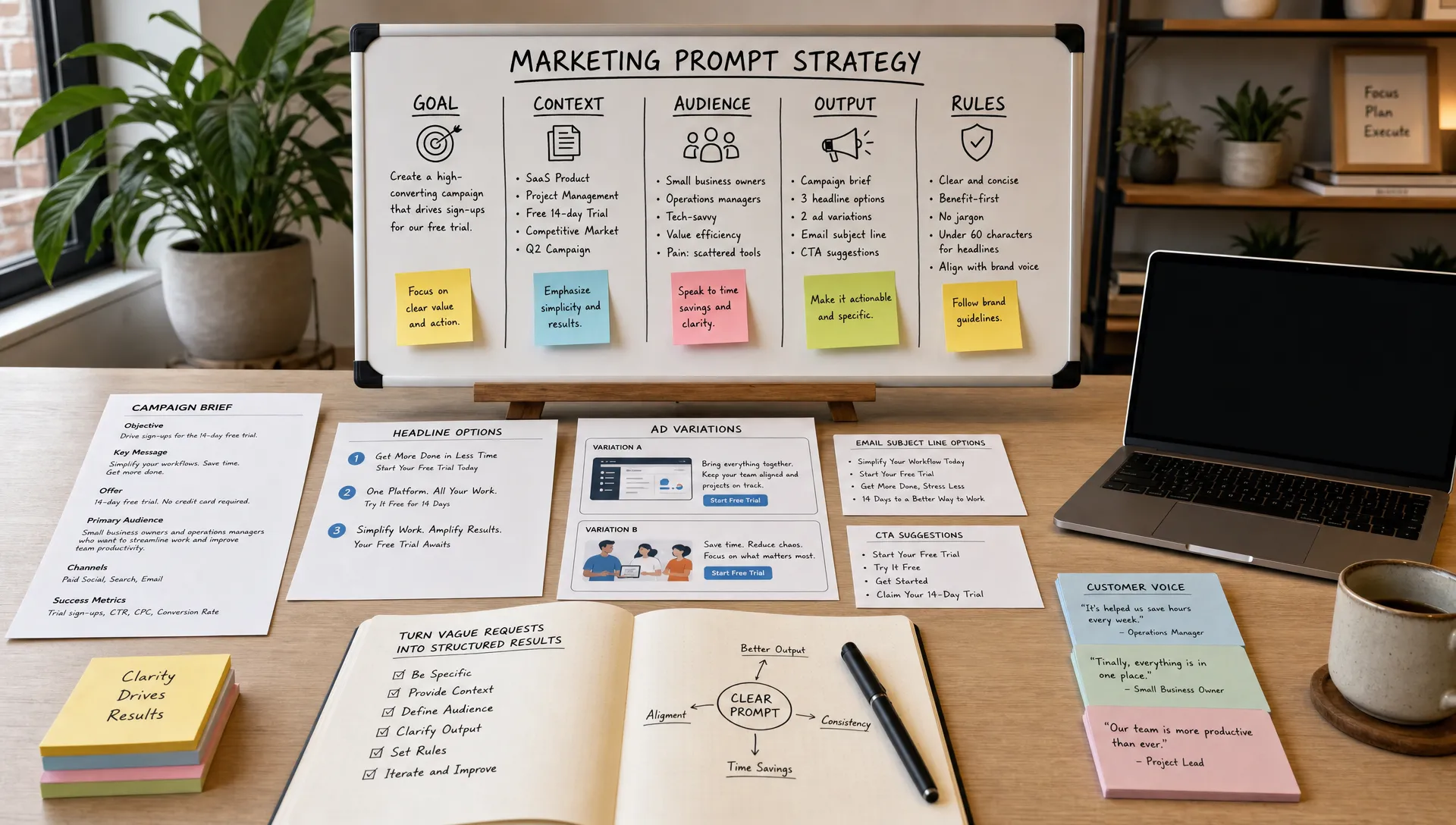
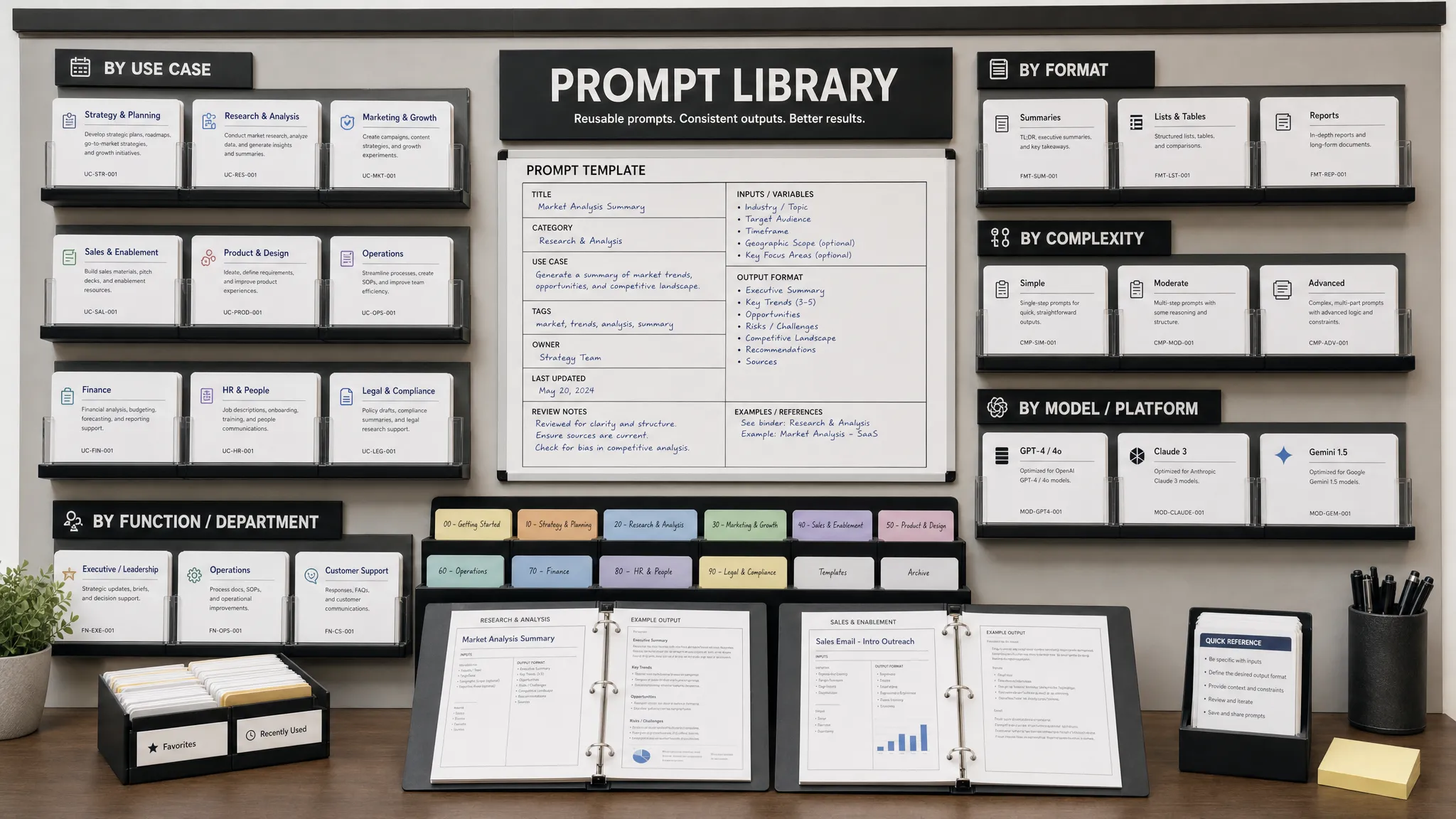
Brief polishing | Format the final brief for writers | Check clarity, accuracy, and constraints Prompt 1: Analyze the search intent for the keyword: AI SEO content brief. Identify audience, funnel stage, pain points, and ideal content format.
Prompt 2: Based on these SERP notes, summarize common ranking patterns, gaps, and opportunities for differentiation.
Prompt 3: Turn this keyword list into a concise topic map with primary keyword, secondary keywords, entities, questions, and exclusions.
Prompt 4: Create an SEO outline that follows the reader’s decision flow. Include H2 and H3 recommendations, but avoid repetitive headings.
Prompt 5: Convert the strategy into a writer-ready brief with audience, angle, outline, sources, internal links, on-page SEO notes, and quality checklist.
This workflow gives you more control. It also makes errors easier to catch because you can inspect each layer before moving forward.
You can adapt the following template for blog posts, landing pages, comparison articles, and thought leadership pieces.
Include the working title, target keyword, secondary keywords, audience, funnel stage, search intent, and desired reader outcome.
Example desired outcome: After reading, the marketer should be able to create a complete AI-assisted SEO brief that a writer can use without additional clarification.
Define the unique angle, information gain, brand point of view, and what the article should not become.
This section is where you prevent generic content. If the article needs to challenge a common misconception, say so. If it needs to be beginner-friendly but not shallow, say that too.
Summarize what competing pages cover, what formats appear most often, and what gaps your article can fill. Include notes about featured snippets, People Also Ask questions, videos, tools, or templates if they appear in the results.
Provide H2 and H3 headings with short notes under each one. Do not just list headings. Explain the job of each section so the writer understands the argument.
Include the primary keyword, natural variations, related concepts, and questions. Make it clear that these should be used naturally, not forced.
List required sources, suggested examples, internal data points, expert quotes, or screenshots. If the writer needs to verify claims, say exactly which claims.
Recommend 1 to 3 internal links that genuinely help the reader. Add suggested anchor text, but keep it natural. Internal links should support the journey, not distract from it.
Add guidance for the meta title, meta description, slug, image alt text, schema, and CTA. This ensures the content is optimized before it reaches the publishing stage.
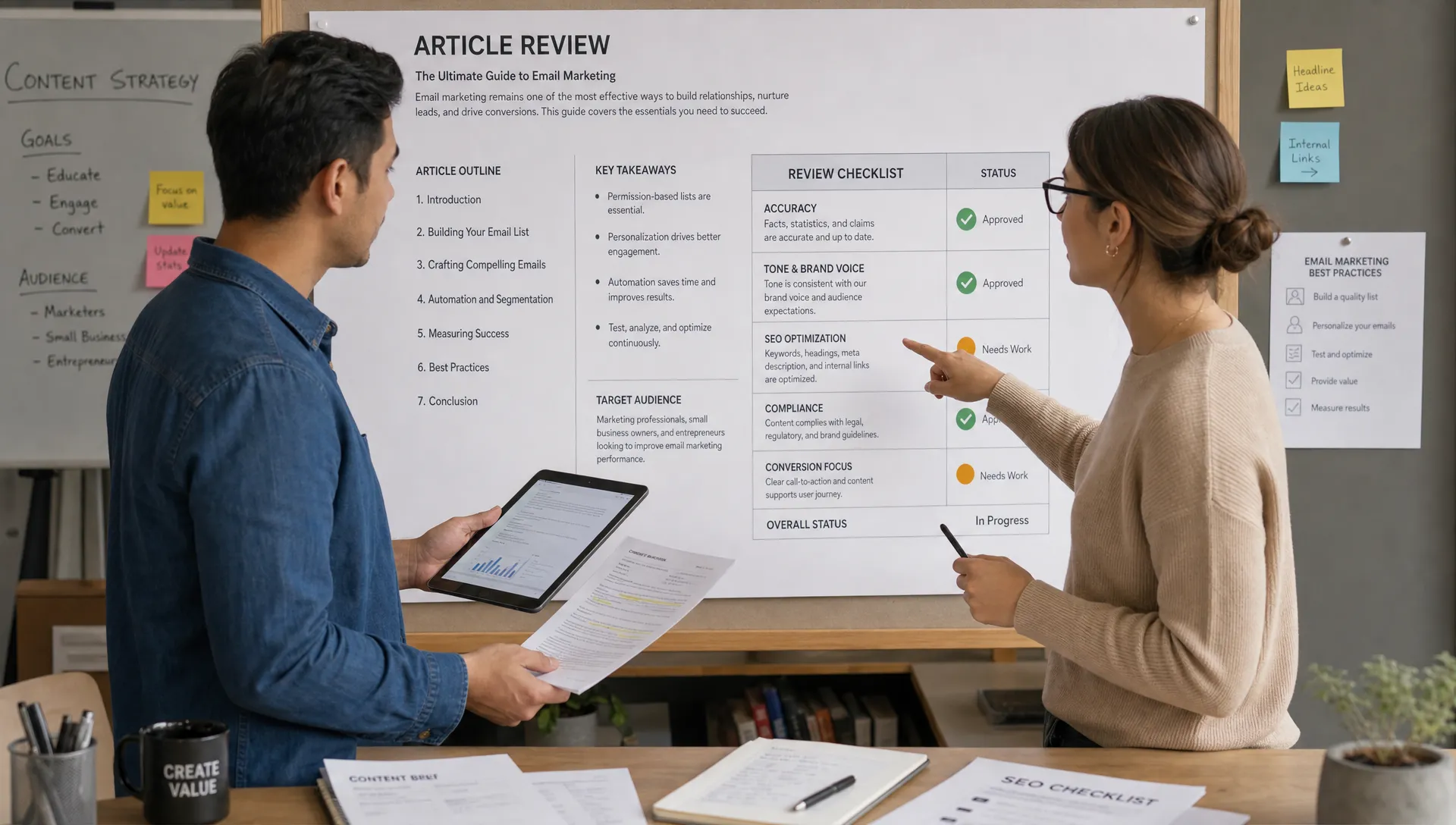
Define how the draft will be judged. A good checklist might include accuracy, intent match, usefulness, originality, source quality, readability, brand voice, and conversion alignment.
A brief is not finished when it looks detailed. It is finished when a writer can act on it without guessing.
Before assigning the brief, ask these questions:
You can also ask AI to review the brief, but do not let it be the final judge. Use a prompt like this:
Review this SEO content brief as a senior editor. Identify unclear instructions, missing context, weak differentiation, SEO risks, and anything that may lead to generic AI content. Suggest specific improvements.
The final approval should come from someone who understands the audience, the brand, and the business goal.
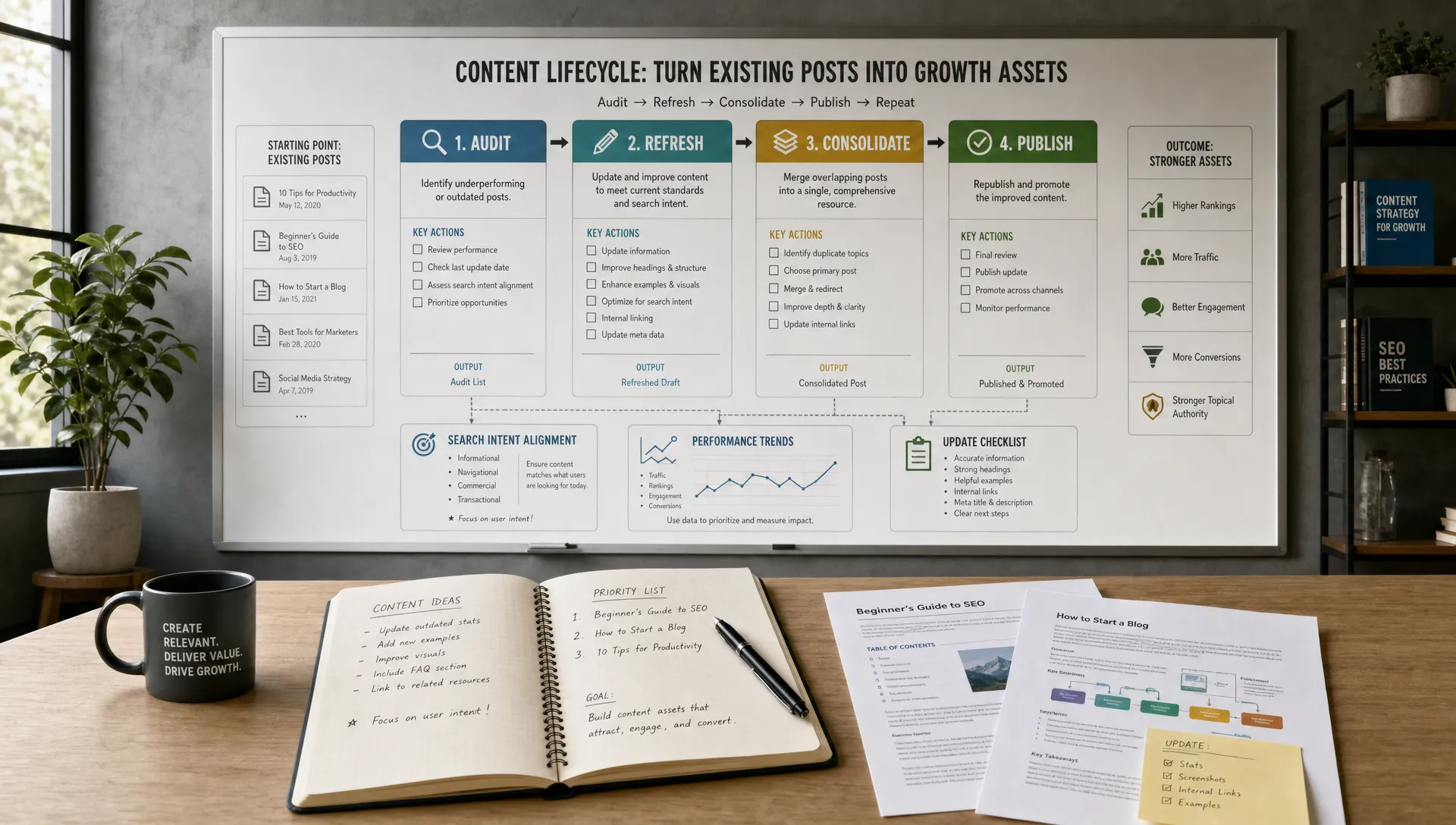
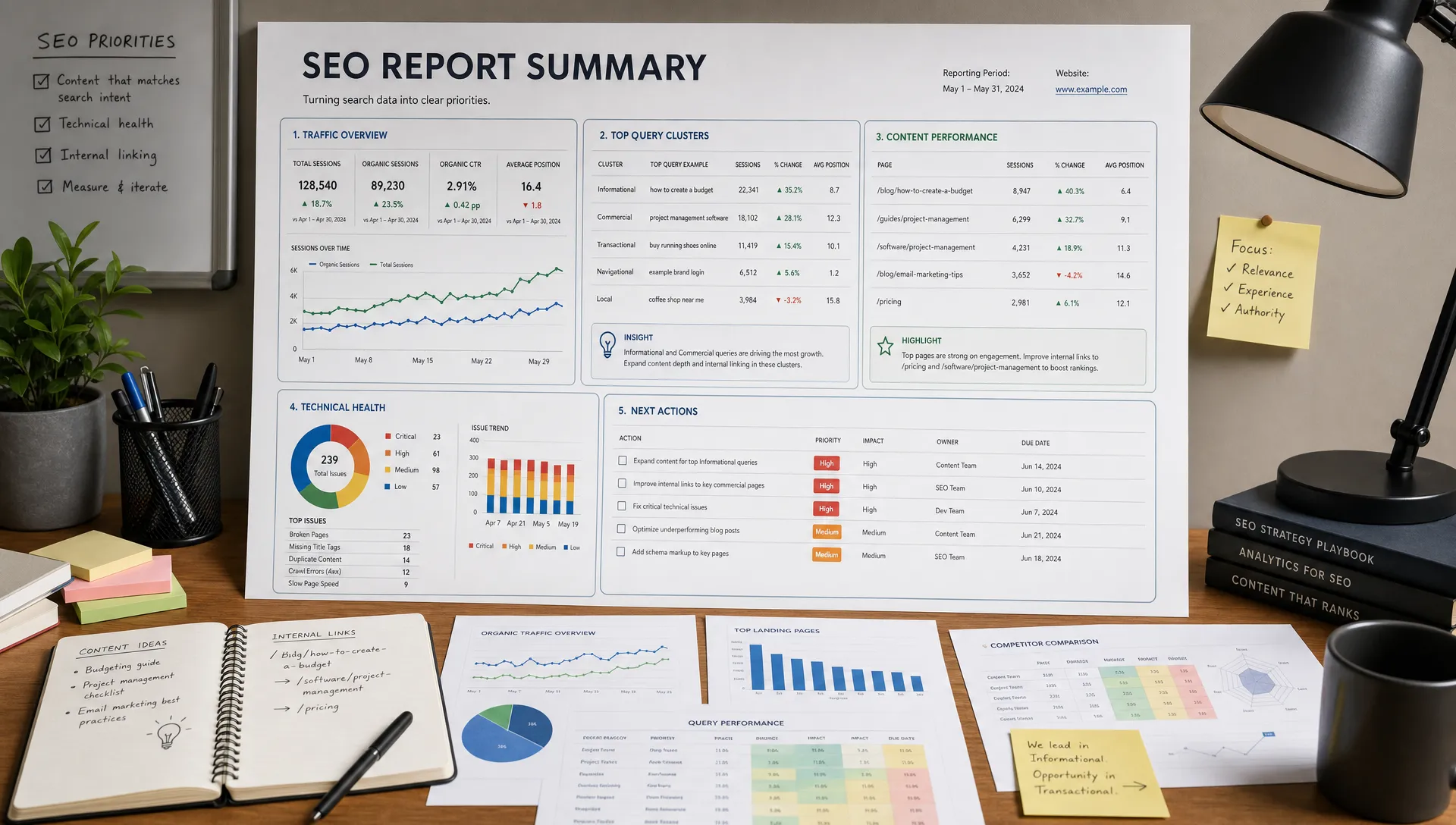
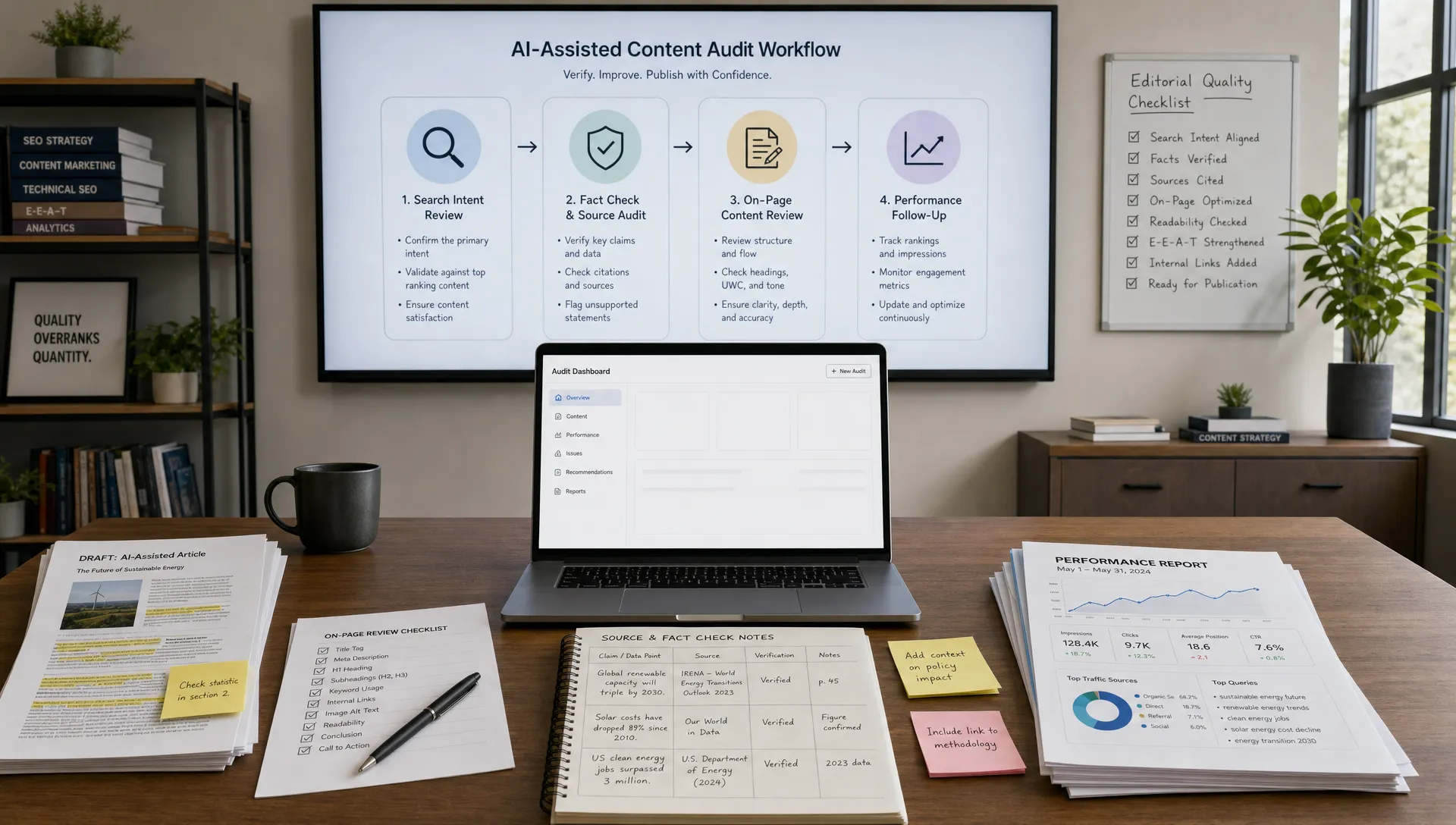
The best content teams treat briefs as living strategy documents. After the article is published, revisit the brief when you review performance.
Look at impressions, rankings, click-through rate, engagement, conversions, assisted conversions, and qualitative feedback from sales or customer-facing teams. If the article gets impressions but few clicks, the title and meta description may need work. If it gets traffic but weak engagement, the intent or introduction may be off. If it ranks for unexpected queries, you may find new content opportunities.
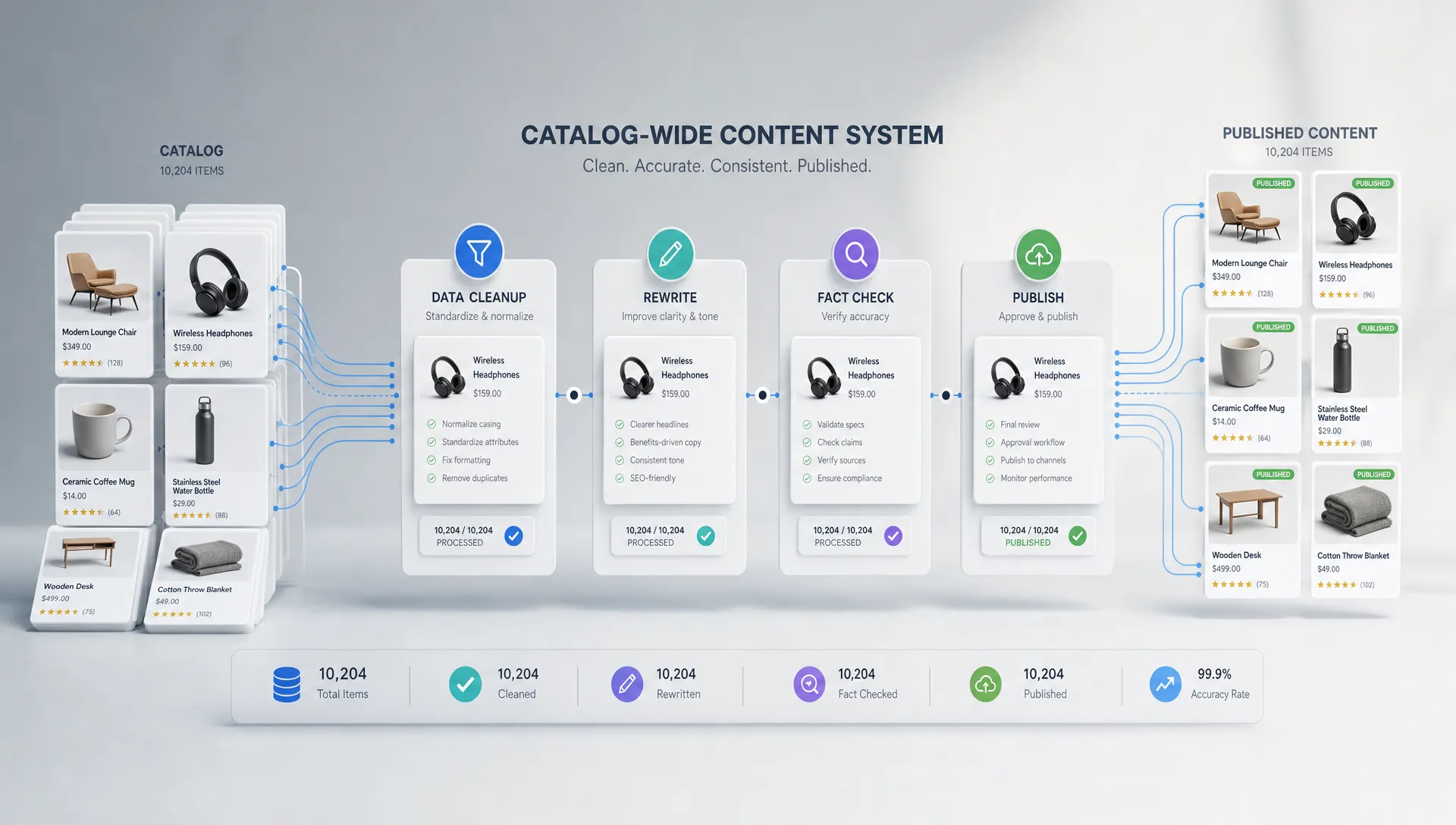
This is where AI-powered analytics and marketing workflow automation become especially useful. They can help identify patterns across multiple articles, surface refresh opportunities, and turn performance insights into better briefs for the next content cycle.
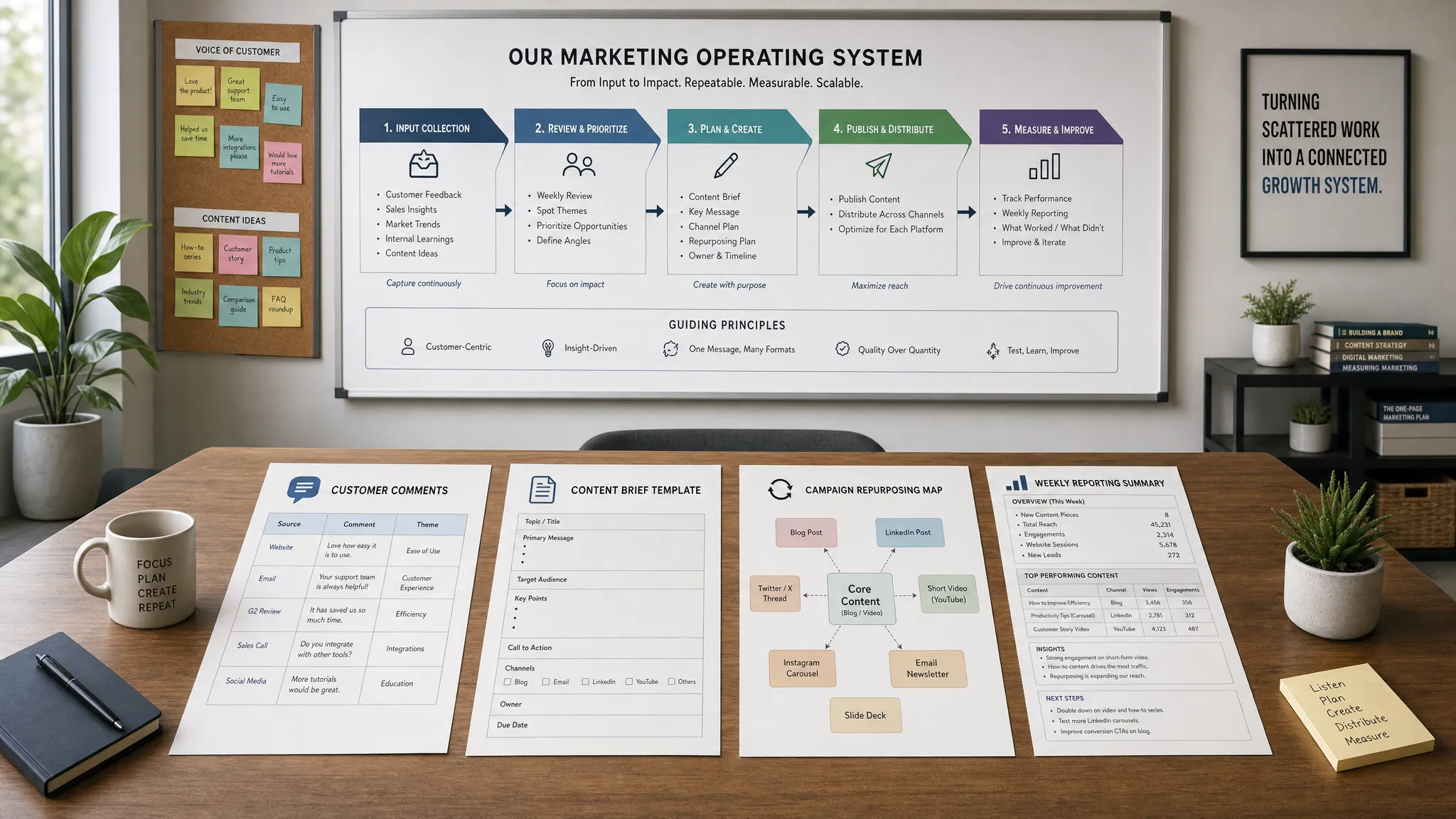
For teams building repeatable AI marketing systems, the goal is not just one better article. The goal is a briefing process that improves every time you publish.
Even experienced marketers can weaken AI-assisted briefs by over-optimizing the wrong things.
The first mistake is letting AI choose the strategy from a keyword alone. Always add audience, brand, SERP, and business context.
The second mistake is copying competitor outlines too closely. SERP analysis should reveal expectations, not create a clone.
The third mistake is including too many keywords. This makes the writer anxious and the article unnatural.
The fourth mistake is skipping source validation. AI can fabricate citations, misunderstand studies, or treat outdated advice as current.
The fifth mistake is ignoring the post-publication loop. If you never compare the brief against performance, you cannot learn which assumptions were right.
A ranking-ready brief is focused, evidence-based, differentiated, and easy to execute.
What should an AI SEO content brief include? An AI SEO content brief should include the target keyword, search intent, audience profile, SERP insights, unique angle, outline, keyword and entity guidance, source requirements, internal links, on-page SEO notes, and a quality checklist.
Can AI create an SEO brief by itself? AI can create a first draft, but it should not work alone. Human review is needed to validate search intent, confirm sources, refine the angle, protect brand voice, and make sure the brief supports business goals.
How long should an SEO content brief be? It should be long enough to remove ambiguity but short enough to be usable. For a standard blog post, a focused brief of 1 to 3 pages is often more practical than a long document filled with unused keyword data.
Do AI-generated content briefs help articles rank? They can help when they improve research, structure, topical coverage, and editorial consistency. They do not guarantee rankings. The final content still needs to be helpful, accurate, original, and aligned with search intent.
How often should I update an SEO brief template? Review your template at least quarterly or whenever search behavior, SERP formats, product positioning, or editorial standards change. You should also update it based on what your published content performance reveals.
An AI SEO content brief that ranks is not just a document. It is a repeatable system for turning research into useful, search-ready content.
If you want to streamline that system, AIMarketer Hub offers AI-powered marketing tools, prompt resources, SEO guidance, calculators, and practical content resources for teams that want to automate smarter without losing strategic control. Use it to sharpen your workflow, improve content planning, and build marketing assets with more confidence.