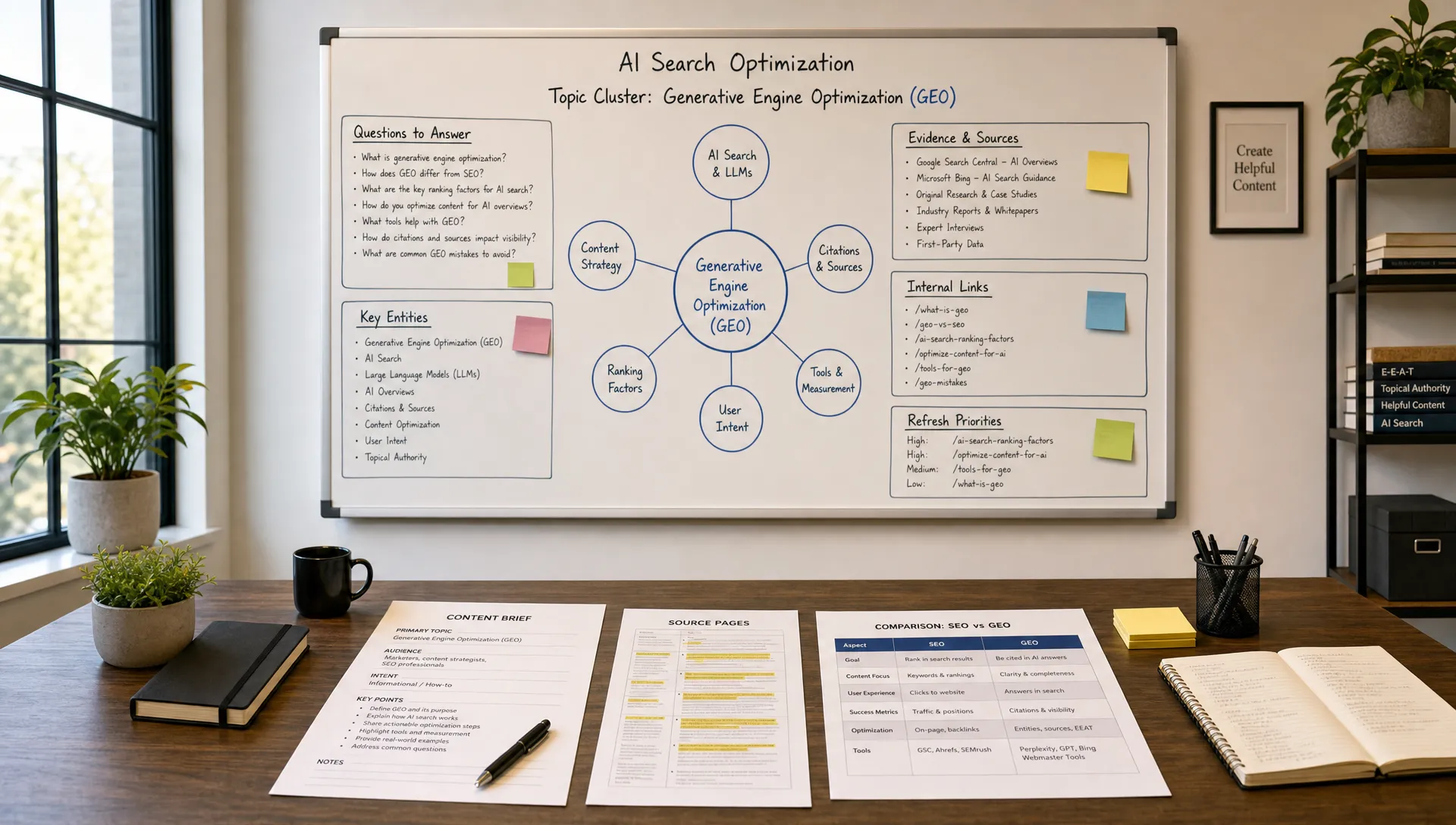
In 2026, search no longer ends at a list of blue links. Buyers ask Google AI Overviews, ChatGPT, Perplexity, Copilot and other answer engines for recommendations, definitions, comparisons and step-by-step advice. If your content is not easy for these systems to retrieve, understand and cite, you can lose visibility even when your traditional SEO looks healthy.
AI search optimization is the practice of making your content more useful, clear and trustworthy for AI-generated answers. It does not replace SEO. It builds on the same fundamentals (crawlability, authority, relevance and user value) but adds a sharper focus on extractable answers, entity clarity, source quality and evidence.
For marketers, the goal is not to trick an AI model into mentioning your brand. The goal is to publish content that deserves to be used as a source because it answers real questions better than competing pages.
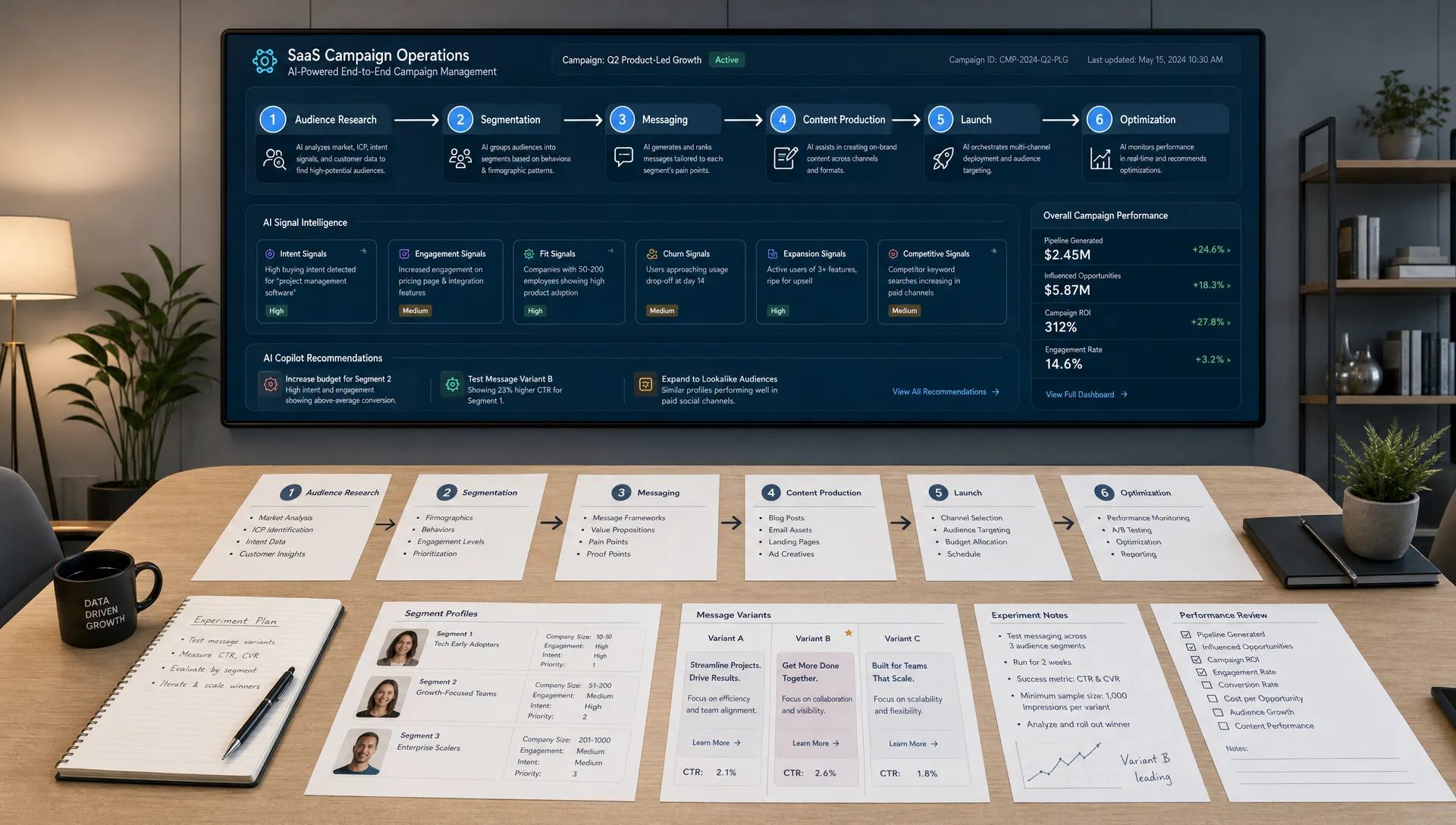
Every AI search product works differently, but most citation behavior follows a similar pattern. The system interprets the user query, retrieves relevant documents or passages, generates a response and attaches citations that support the answer.
That means your content has to succeed at several layers:
Traditional rankings still matter because many AI answer systems pull from indexed web results. But ranking alone is not enough. A page buried in vague prose, outdated claims or thin AI-written filler is less likely to become a citation than a focused page with clear answers and verifiable support.
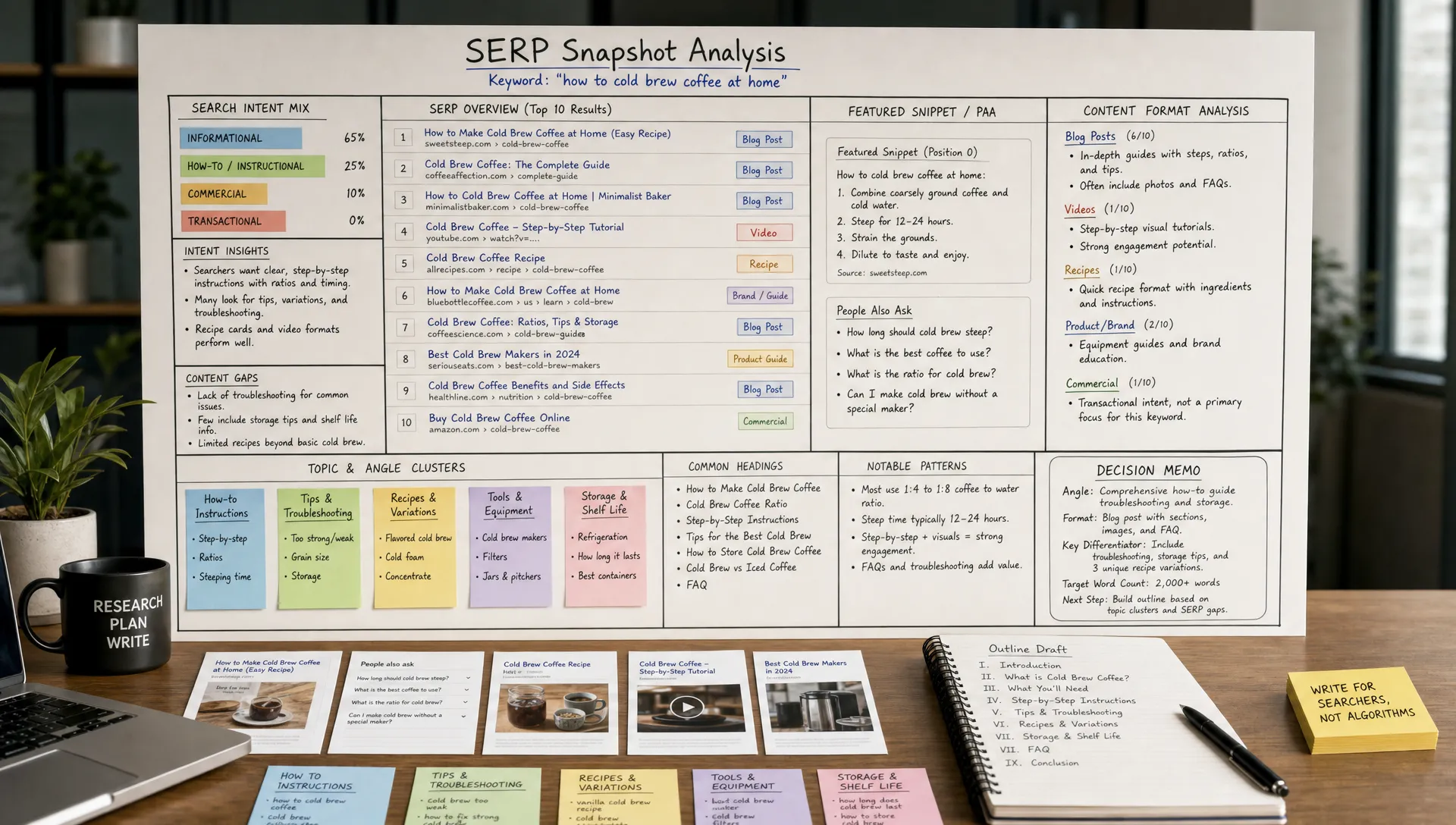
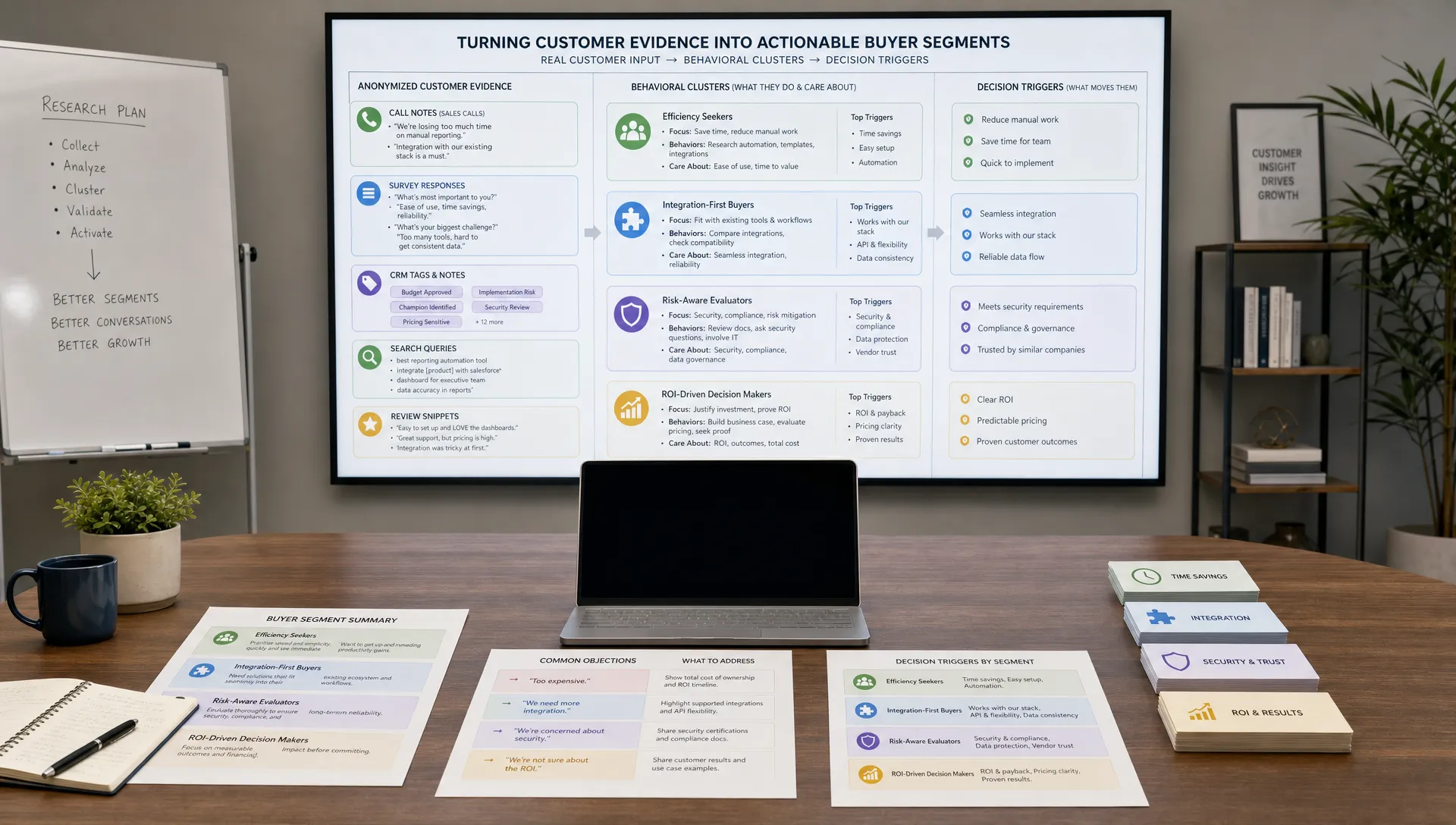
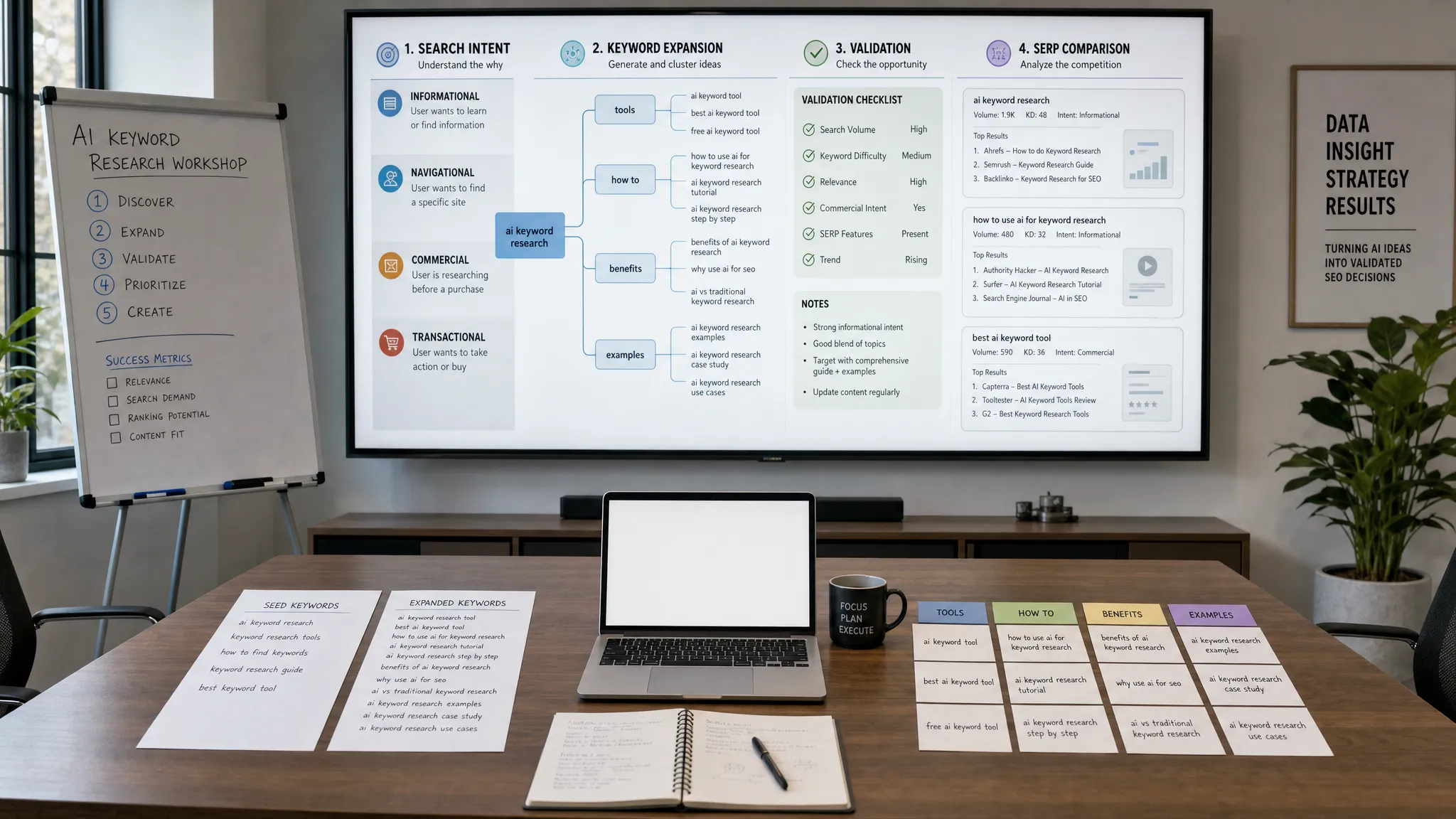
AI answers are triggered by questions and tasks. A keyword such as AI marketing automation can represent many intents: a beginner wants a definition, a manager wants software options, a SaaS team wants workflow examples and a CFO wants ROI assumptions.
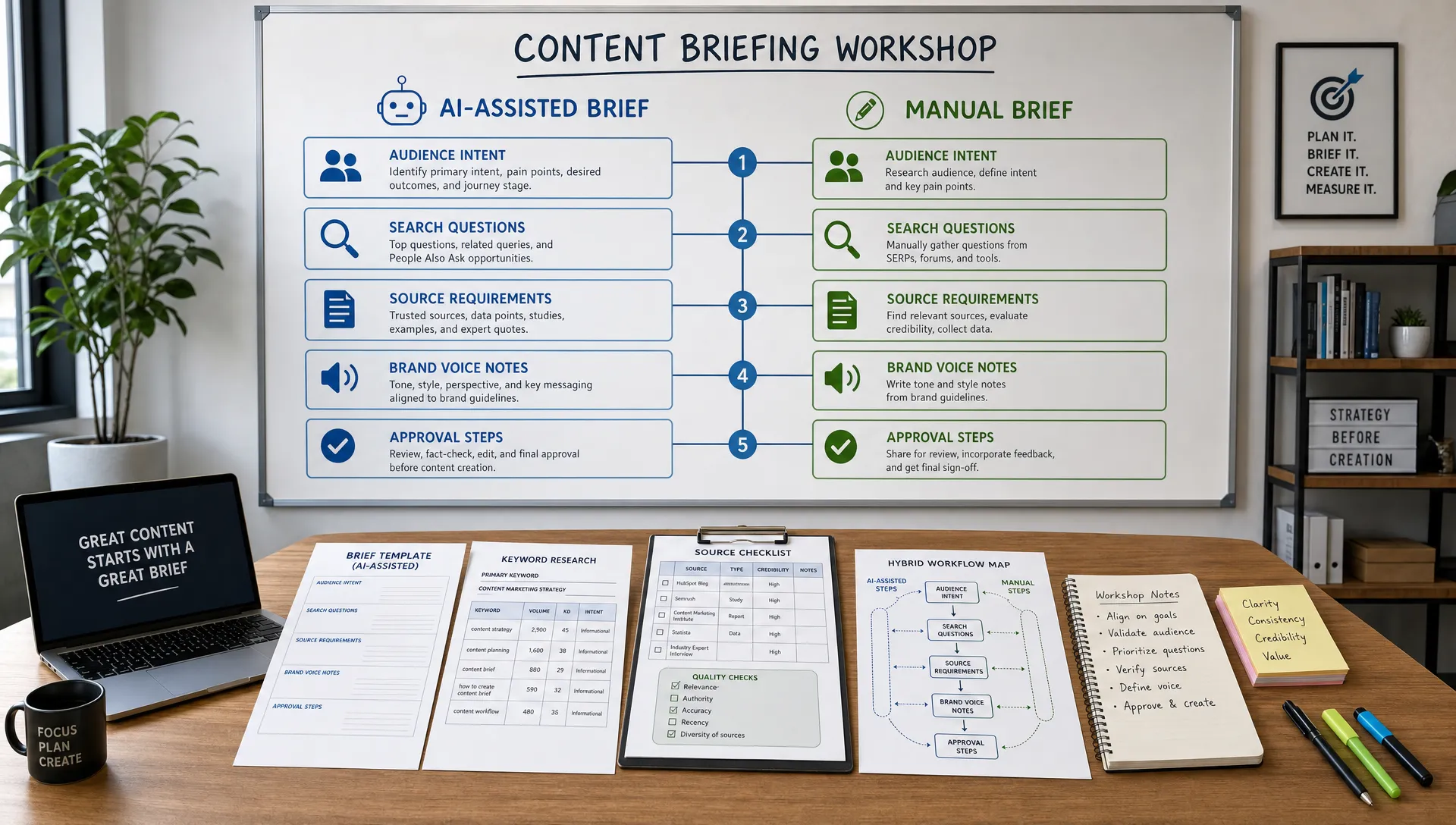
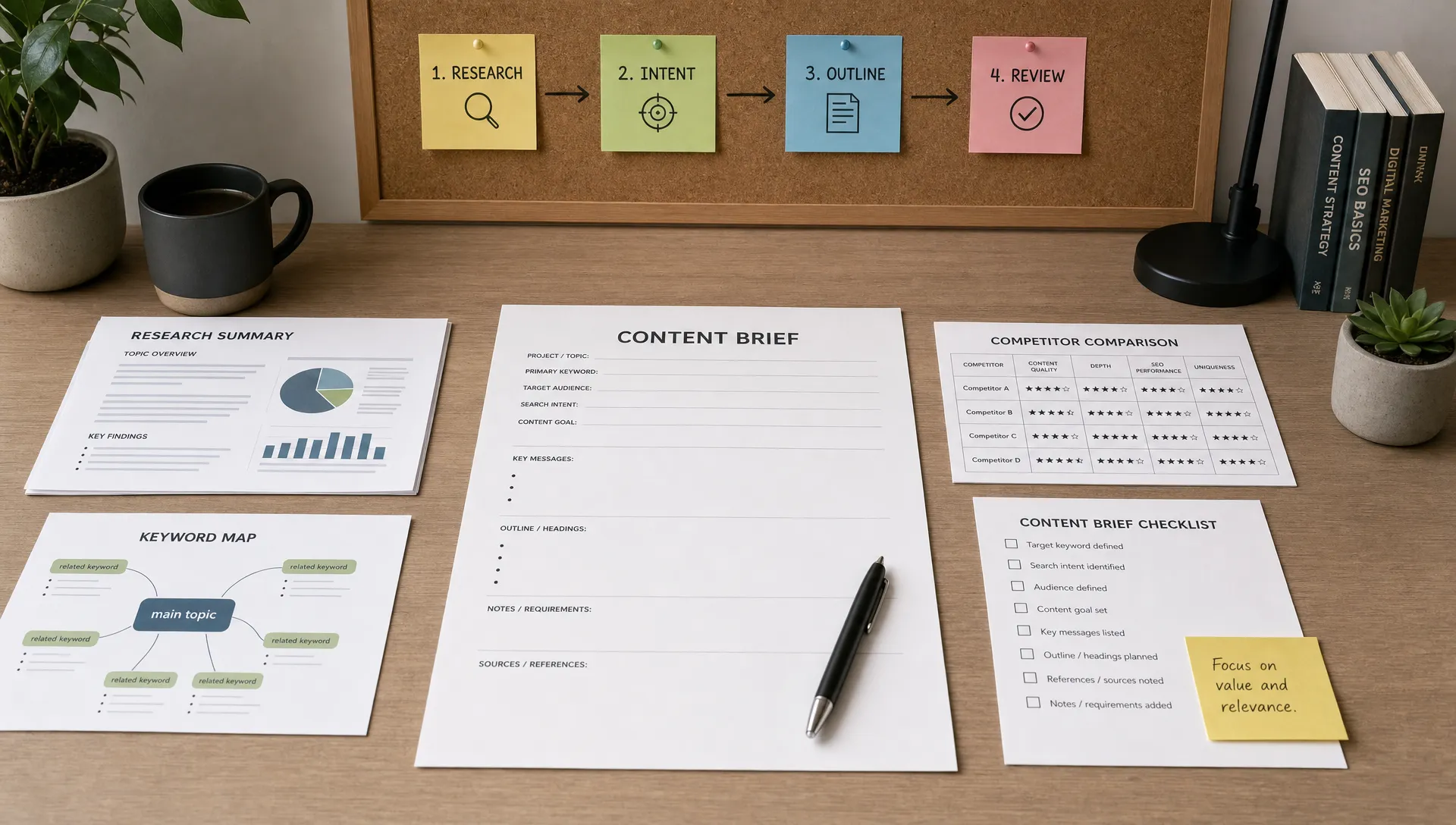
Before drafting content, map the question behind the search. For each page, define:
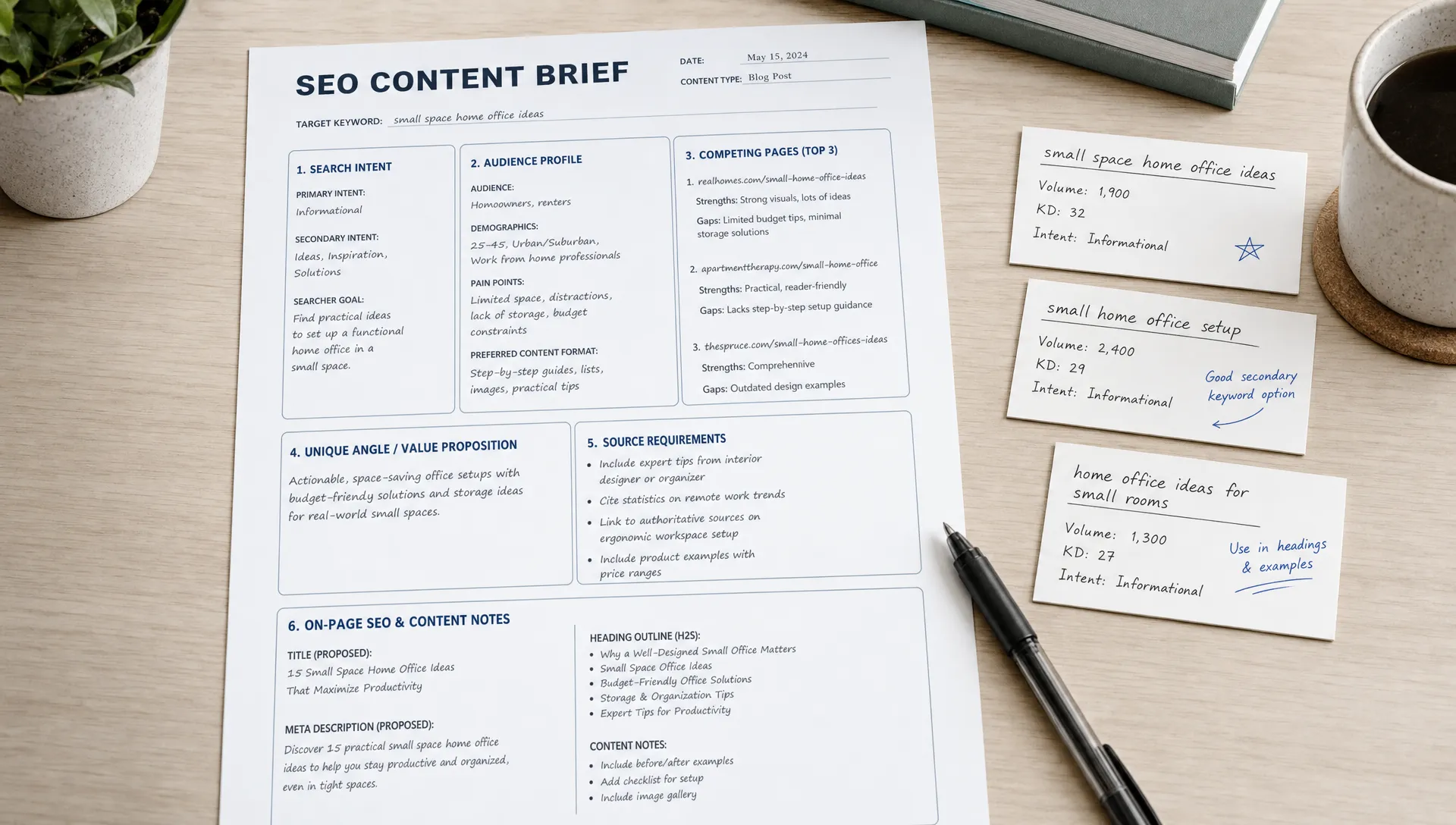
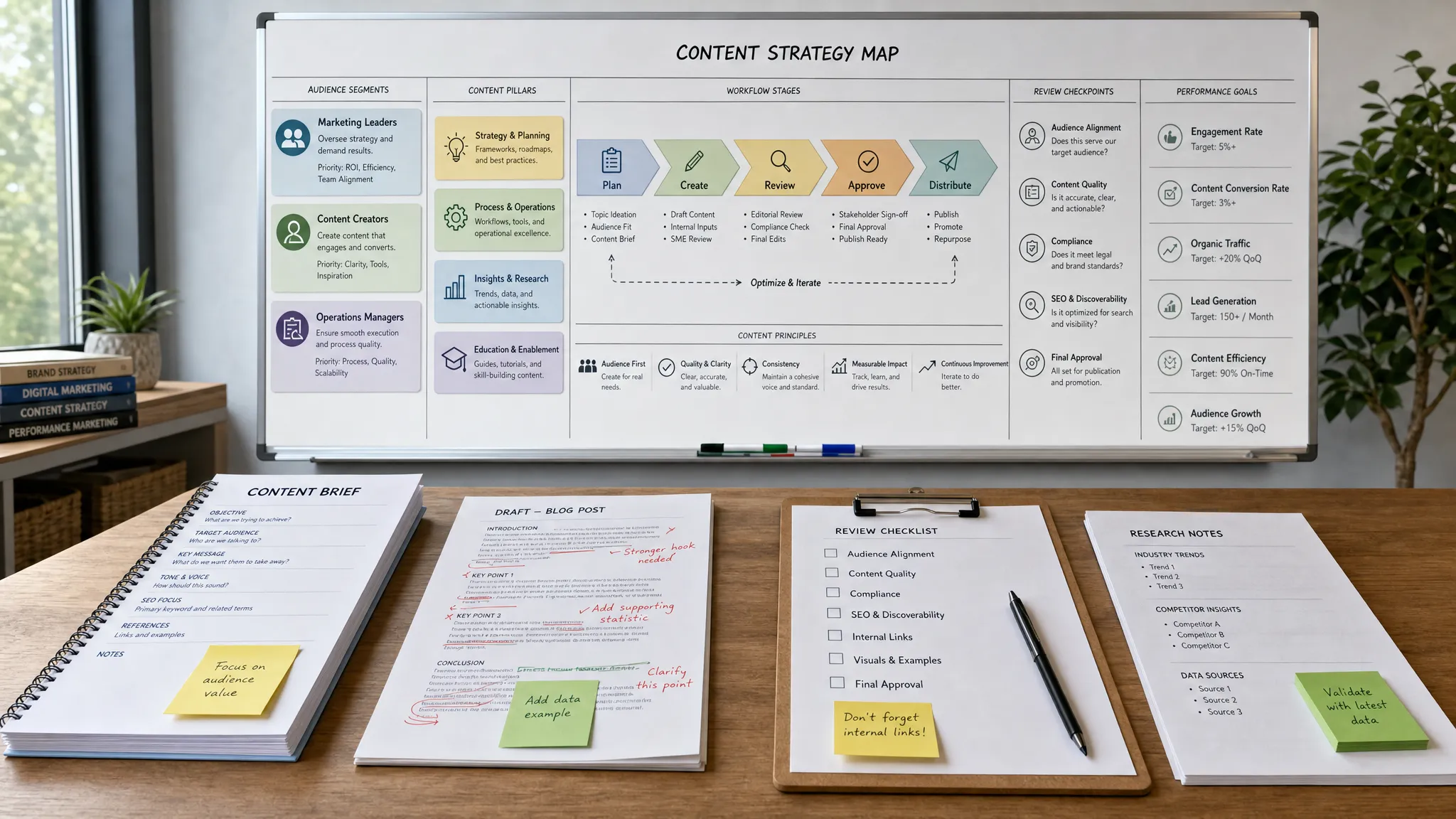
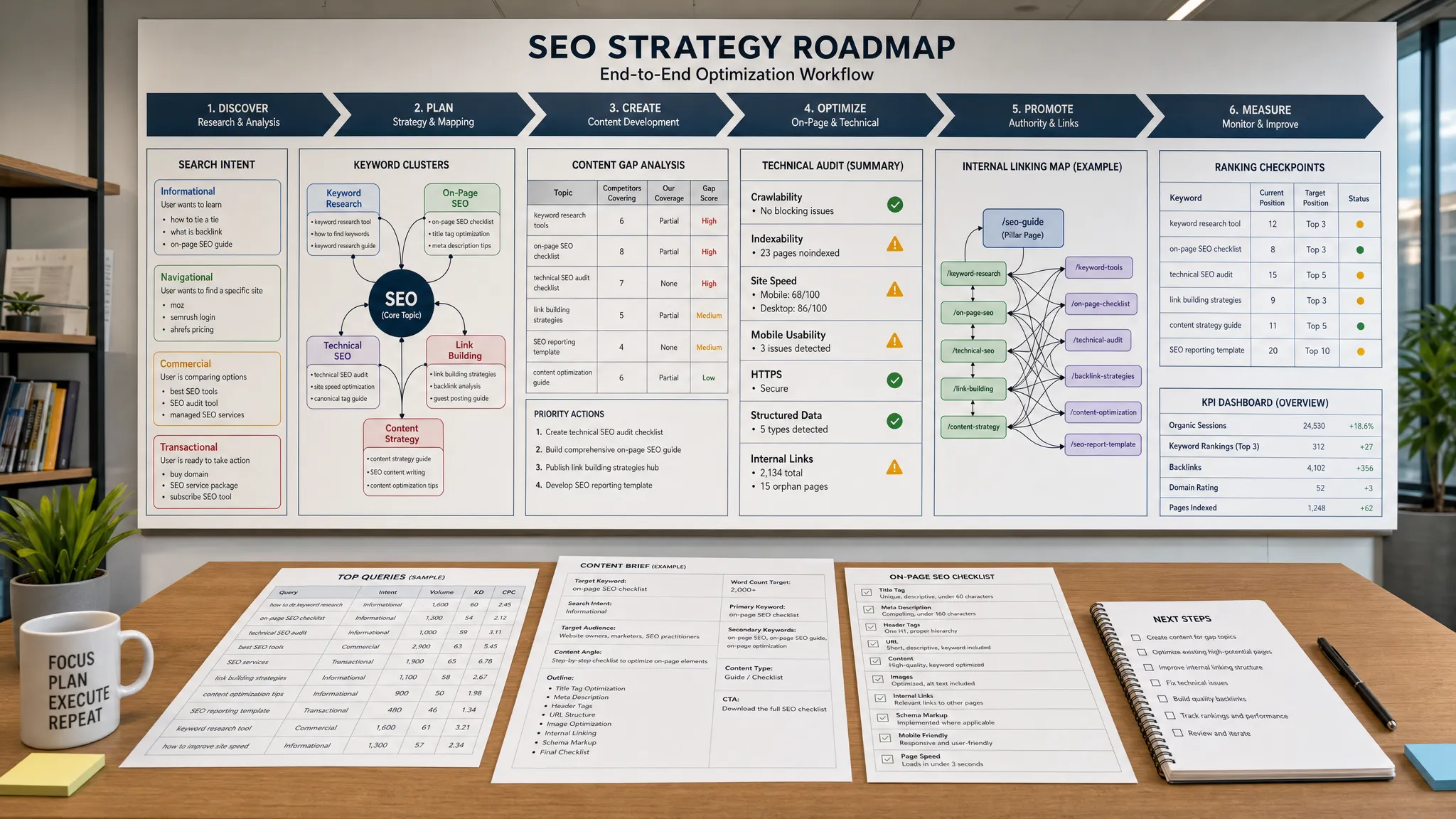
This is where strong planning matters. If your team already uses AI in SEO planning, a structured process like building an AI-assisted SEO content brief that ranks can help you connect intent, entities, source material and content structure before anyone writes a draft.
The best pages for AI search are not broad essays with every possible subtopic. They are focused resources that answer one intent deeply, then connect to related pages through internal links.
AI systems often cite specific passages, not entire articles. If the clearest answer is scattered across five paragraphs, the model may choose a competitor whose explanation is easier to lift and verify.
Use a structure that gives answer engines clean, self-contained blocks:
For example, a weak opening says: AI is changing how people find information, and brands need to adapt their approach across many channels.
A stronger opening says: AI search optimization is the process of structuring content so AI answer engines can retrieve it, understand its claims and cite it as a trusted source in generated responses.
The second version is clearer because it defines the concept in one complete passage. It is useful to a reader and easier for an AI system to cite accurately.
A common content mistake is relying on vague references such as this approach, these tools or the above strategy. Human readers can usually infer the meaning, but AI retrieval systems may extract a paragraph without the surrounding context.
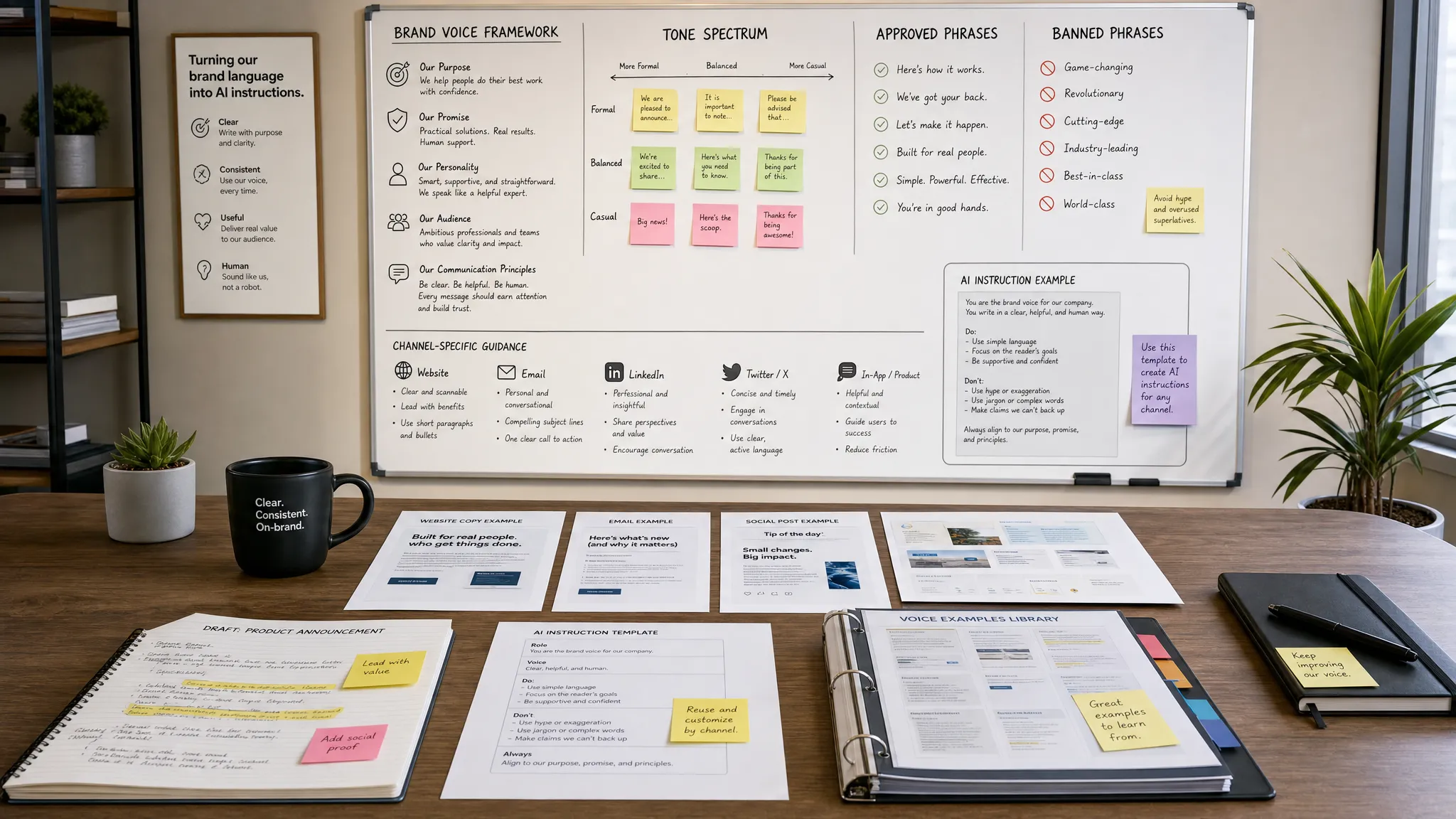
Write important paragraphs so they still make sense when viewed alone. Instead of saying, This improves visibility, say, Structured FAQ sections can improve AI search visibility because they pair common questions with concise answers that are easy to retrieve.
This does not mean every paragraph should repeat the exact keyword. It means each section should identify its subject clearly. Use natural nouns, specific entities and precise verbs. Clarity beats repetition.
Generic content is the easiest content for an AI system to ignore. If ten pages explain the same concept with no original evidence, the model has little reason to cite yours.
Add evidence that makes your page more useful:
If your team researches long PDFs, podcast transcripts, videos or dense articles before creating content, a tool such as unrav.io's AI-powered reading companion can help turn complex source material into clearer understanding before writers build the final page.
Do not add citations as decoration. A source should support a claim, explain a method or give the reader a way to verify the point. AI search optimization rewards content that reduces uncertainty, not content that buries weak claims under a pile of links.
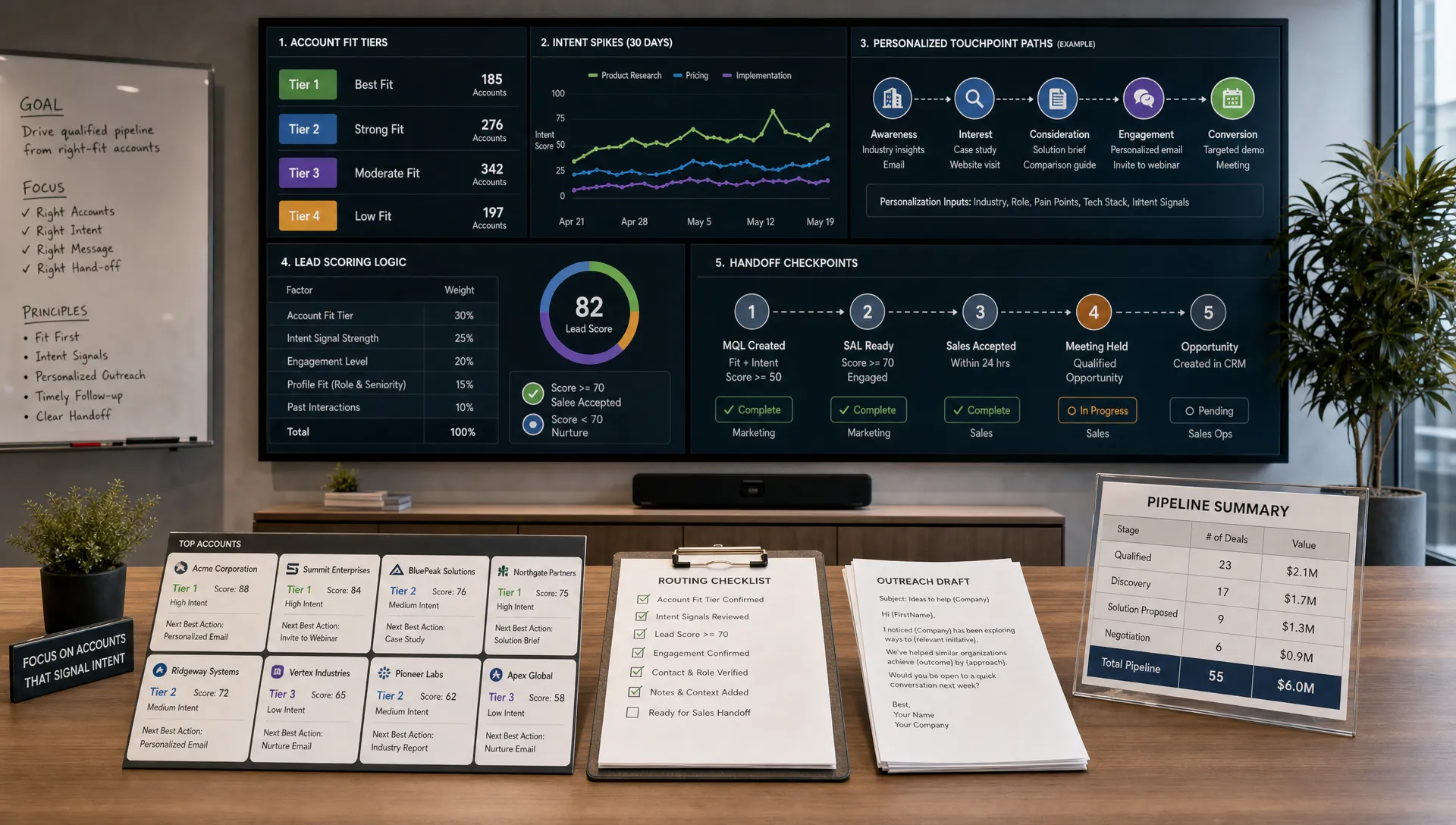
AI systems do not only read pages. They connect entities: brands, authors, products, categories, industries, locations and topics. If your brand is consistently associated with AI marketing, SEO tools, prompt libraries or marketing workflow automation, AI systems have a better chance of understanding where your content fits.
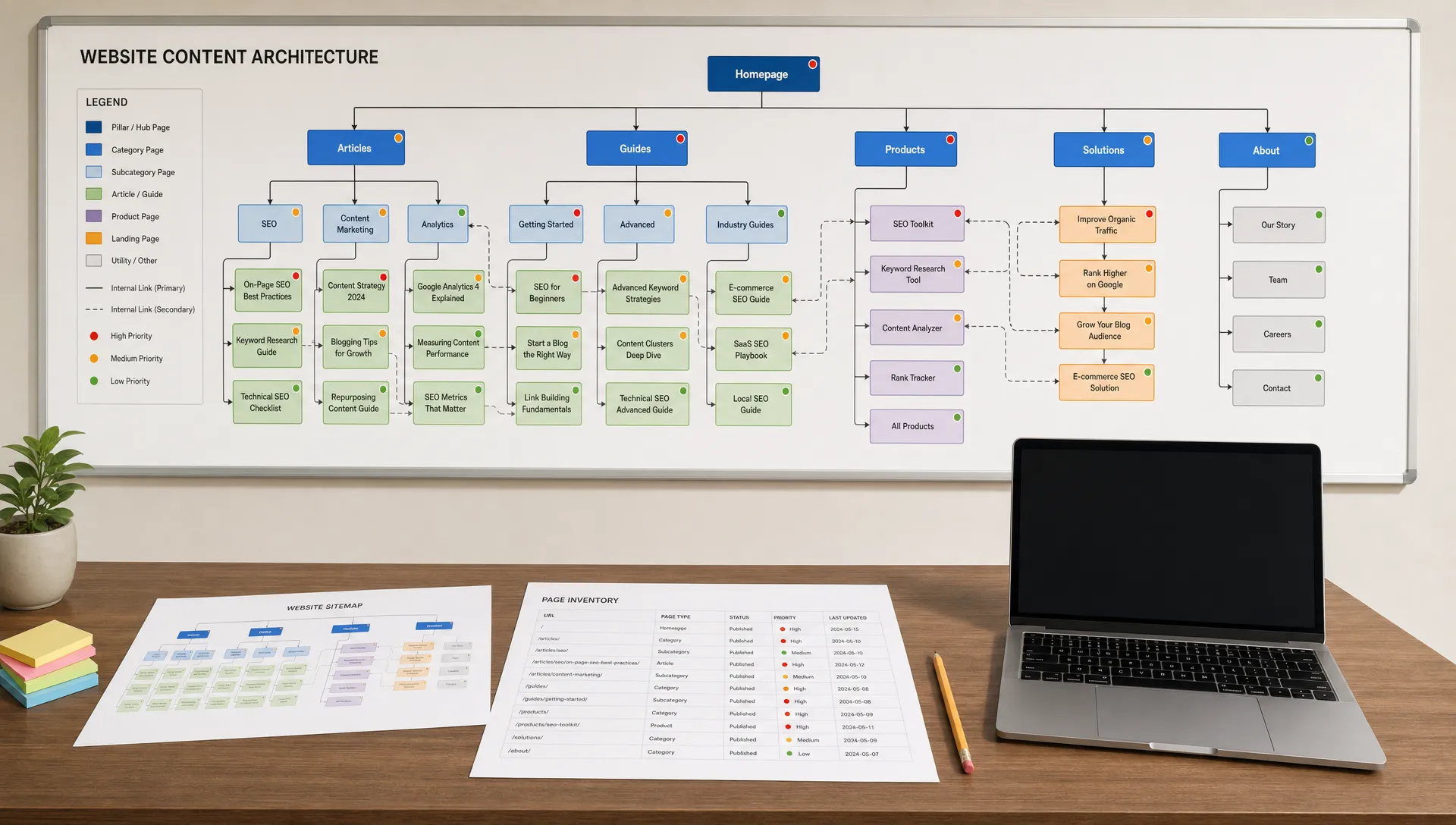
Practical ways to improve entity clarity include naming your brand consistently, maintaining clear author and organization information, using descriptive page titles, linking related resources together and publishing in topic clusters rather than random one-off posts.
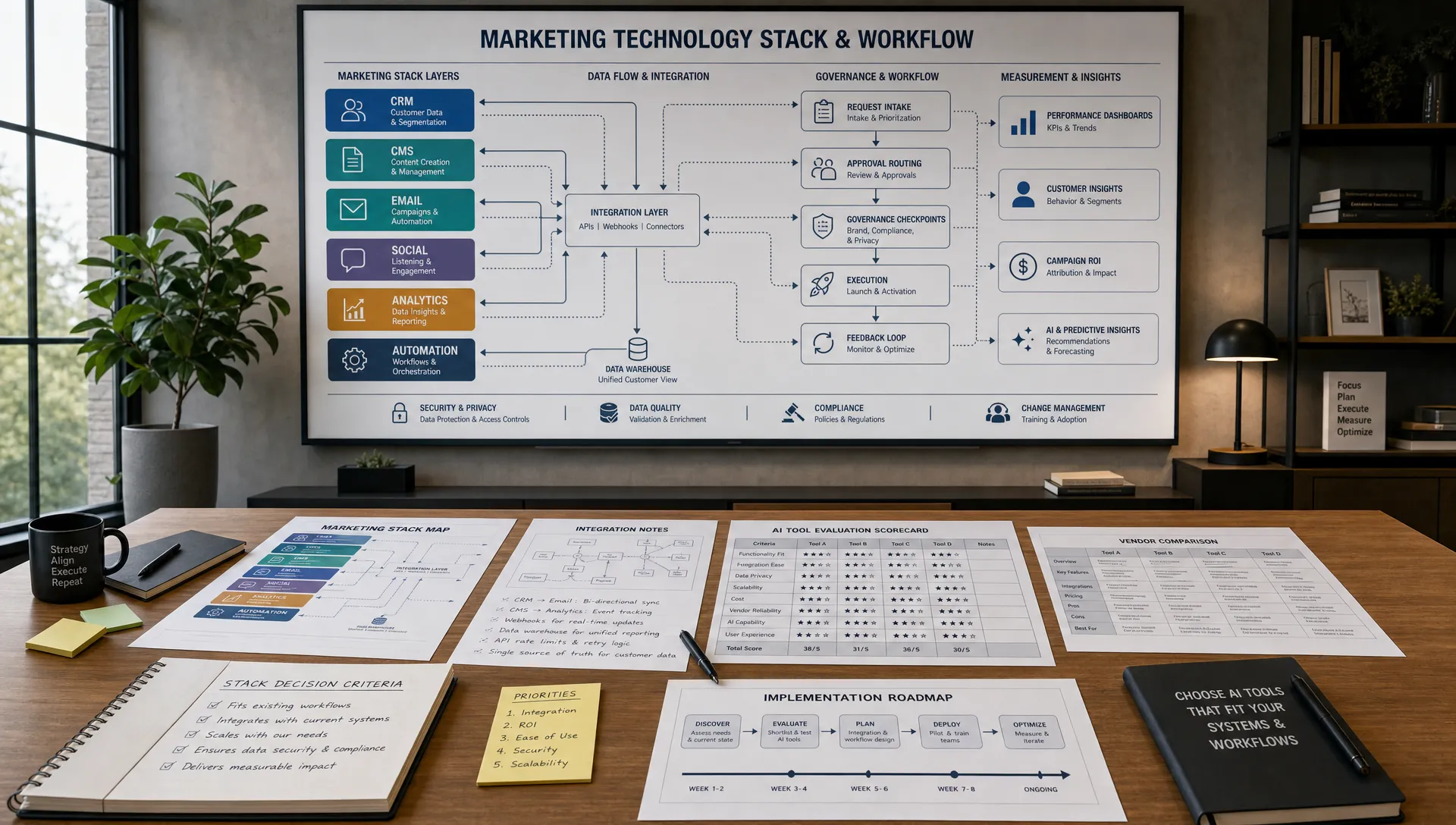
Internal links are especially useful because they show relationships between your pages. A guide about AI search optimization can link to pages about content briefs, technical SEO workflows, analytics and content refreshes. If your internal linking is inconsistent, you can use AI to spot gaps, improve anchor text and support stronger topic clusters. AIMarketer Hub has a deeper guide on how to use AI to improve internal linking without turning your site into a maze of forced links.

AI search visibility starts with basic technical access. If a page cannot be crawled, rendered or understood, the quality of the writing may not matter.
Check the basics before chasing advanced tactics:
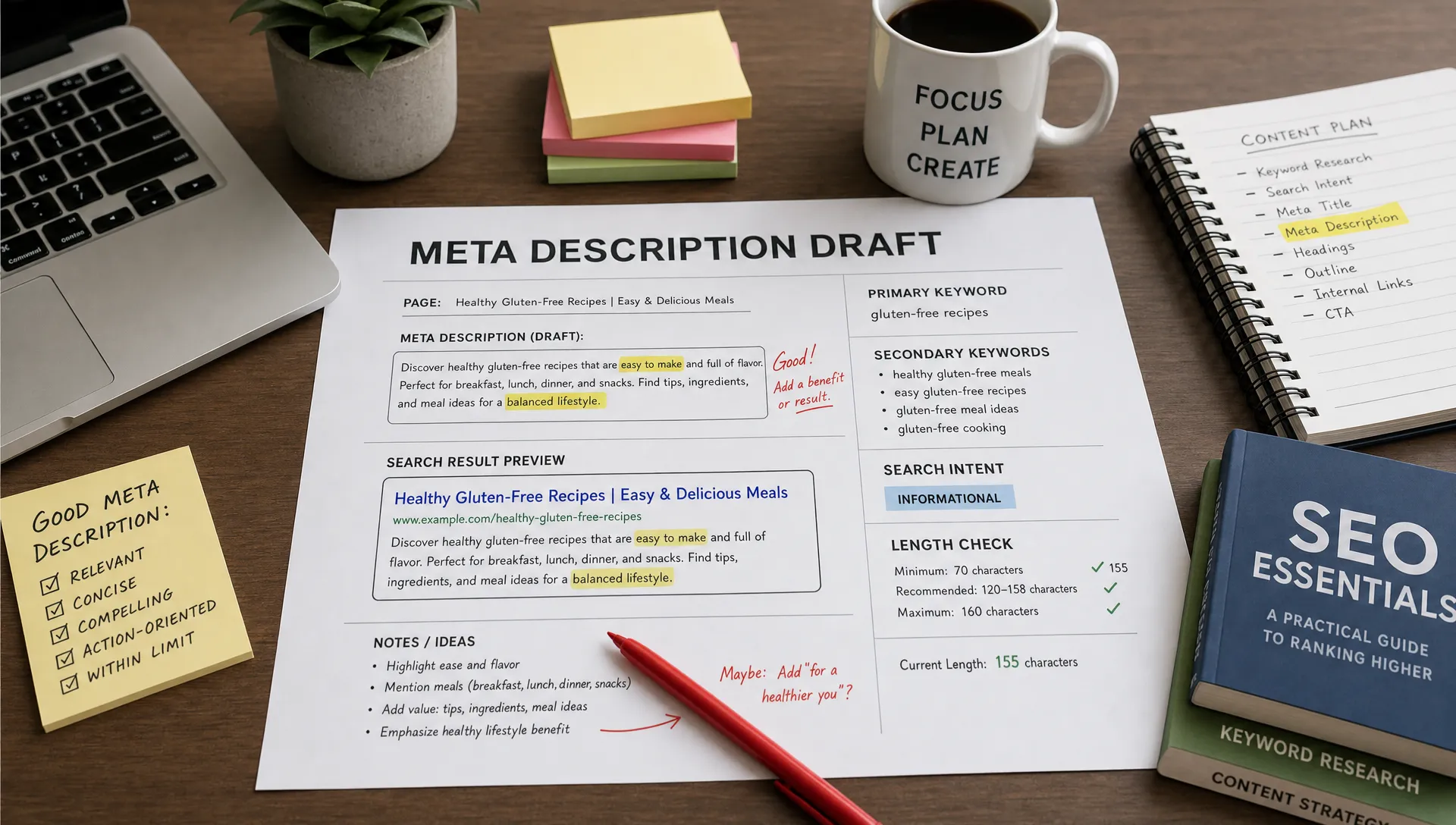
Structured data will not guarantee an AI citation, but it can reduce ambiguity. Article, FAQ, HowTo, Breadcrumb, Organization and Product schema can help search systems understand page type, authorship, hierarchy and purpose when used correctly.
Avoid marking up content that is not visible on the page. Schema should clarify your content, not make claims your page does not support.
Some formats naturally work better for AI answers because they match how users ask questions. If your site only publishes opinion pieces or broad trend articles, you may miss many citation opportunities.
Useful formats include definitions, comparison pages, step-by-step workflows, glossary entries, FAQs, troubleshooting guides, industry-specific examples and calculator explainers. For calculator pages, do not only show the output. Explain the formula, assumptions, limitations and example use cases so both users and AI systems can understand what the tool does.
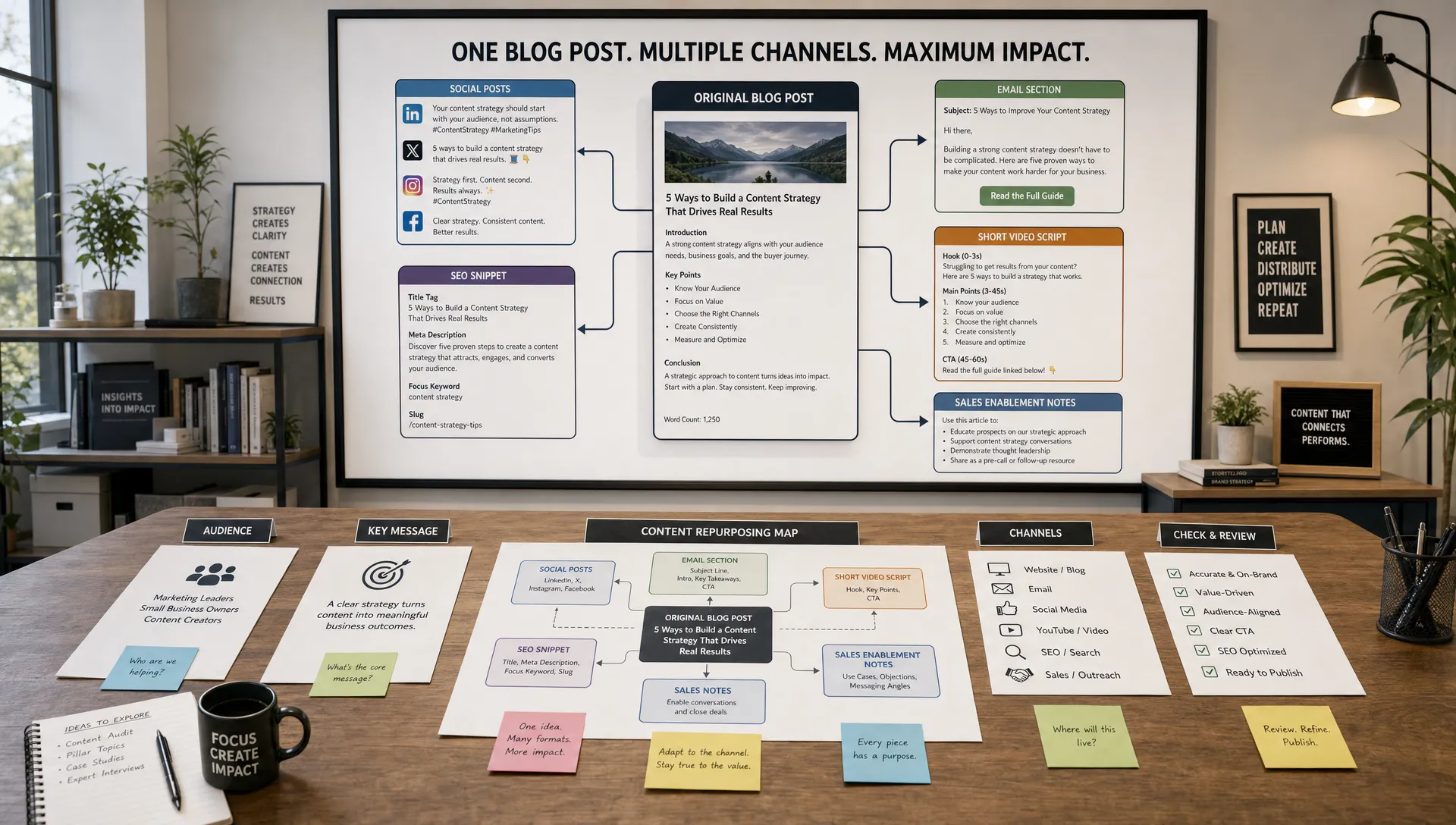
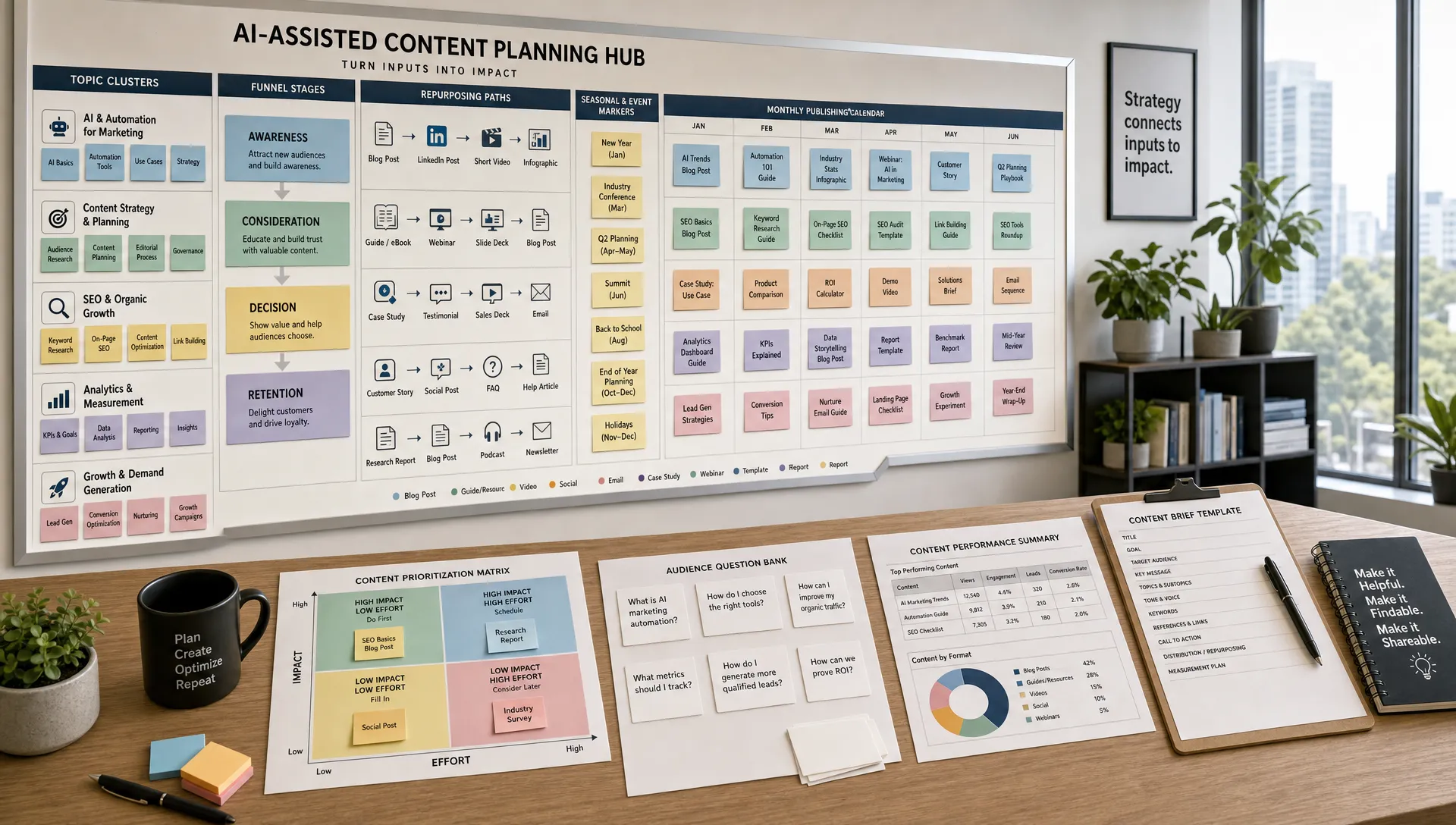
For marketing teams, a strong content mix might include:
Each page should have a distinct intent. If several pages answer the same question with slightly different wording, consolidate them or clarify their purpose. Thin overlap can dilute authority and confuse both users and AI systems.
AI answers often reflect the broader web. If your brand is only described on your own site, answer engines have fewer external signals to validate your authority.
Build credibility through real distribution, not artificial mention schemes. Contribute expert commentary, publish original research, appear in relevant directories, speak on industry podcasts, earn coverage from trade publications and encourage partners to describe your product category accurately when they reference you.
The goal is co-citation. If trusted pages frequently discuss your brand alongside topics such as AI marketing tools, content creation workflows or SEO analytics, AI systems can form stronger associations. This works best when the mentions are specific. A vague brand mention is less valuable than a paragraph explaining what your company does and who it helps.
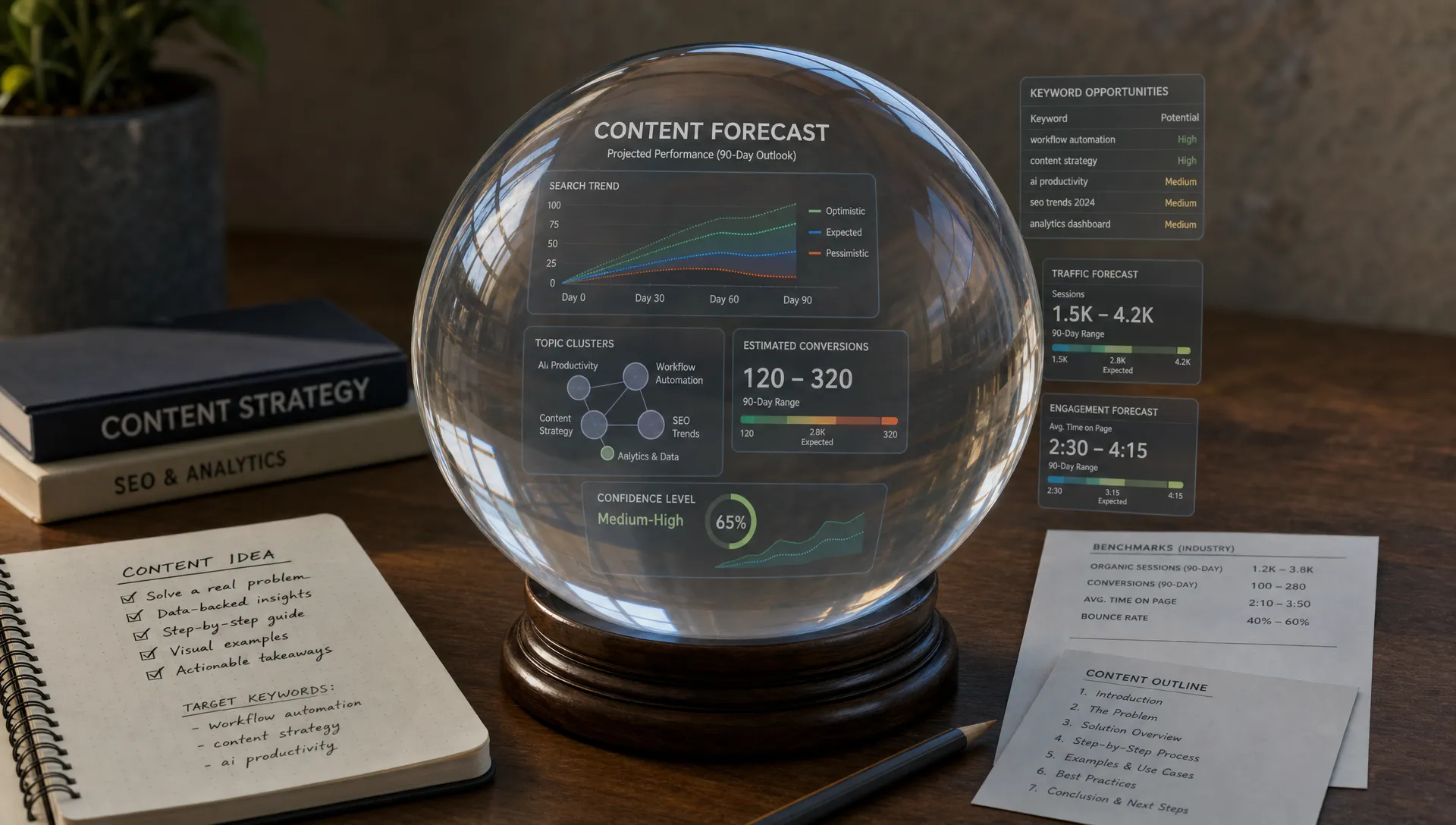
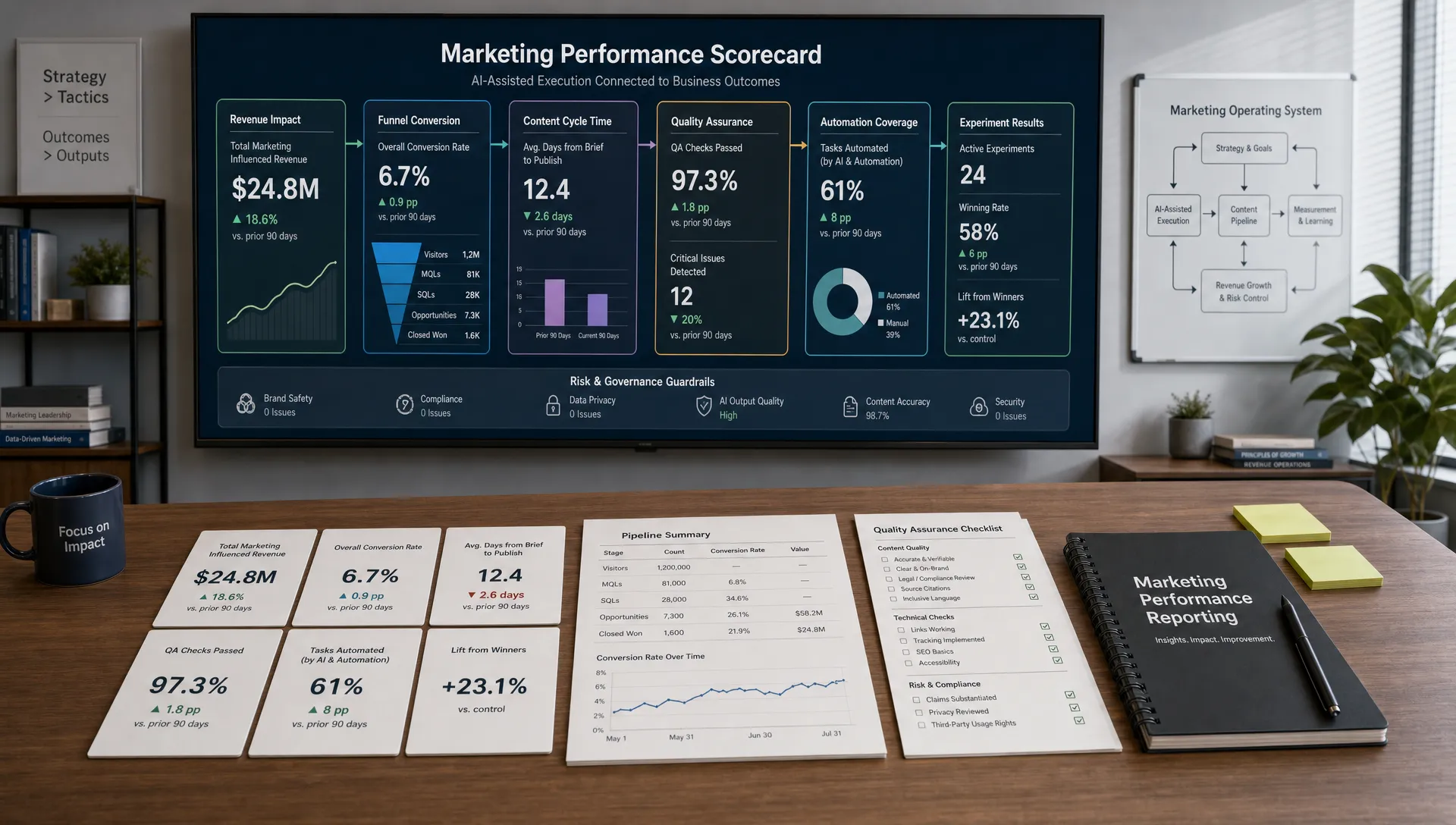
AI answers are dynamic. They vary by platform, location, personalization, prompt wording and date. A single chatbot response is not a reliable performance report.
Create a stable prompt set for the topics you care about. Include informational, comparison and decision-stage queries. Then track the same prompts on a schedule across the platforms that matter to your audience.
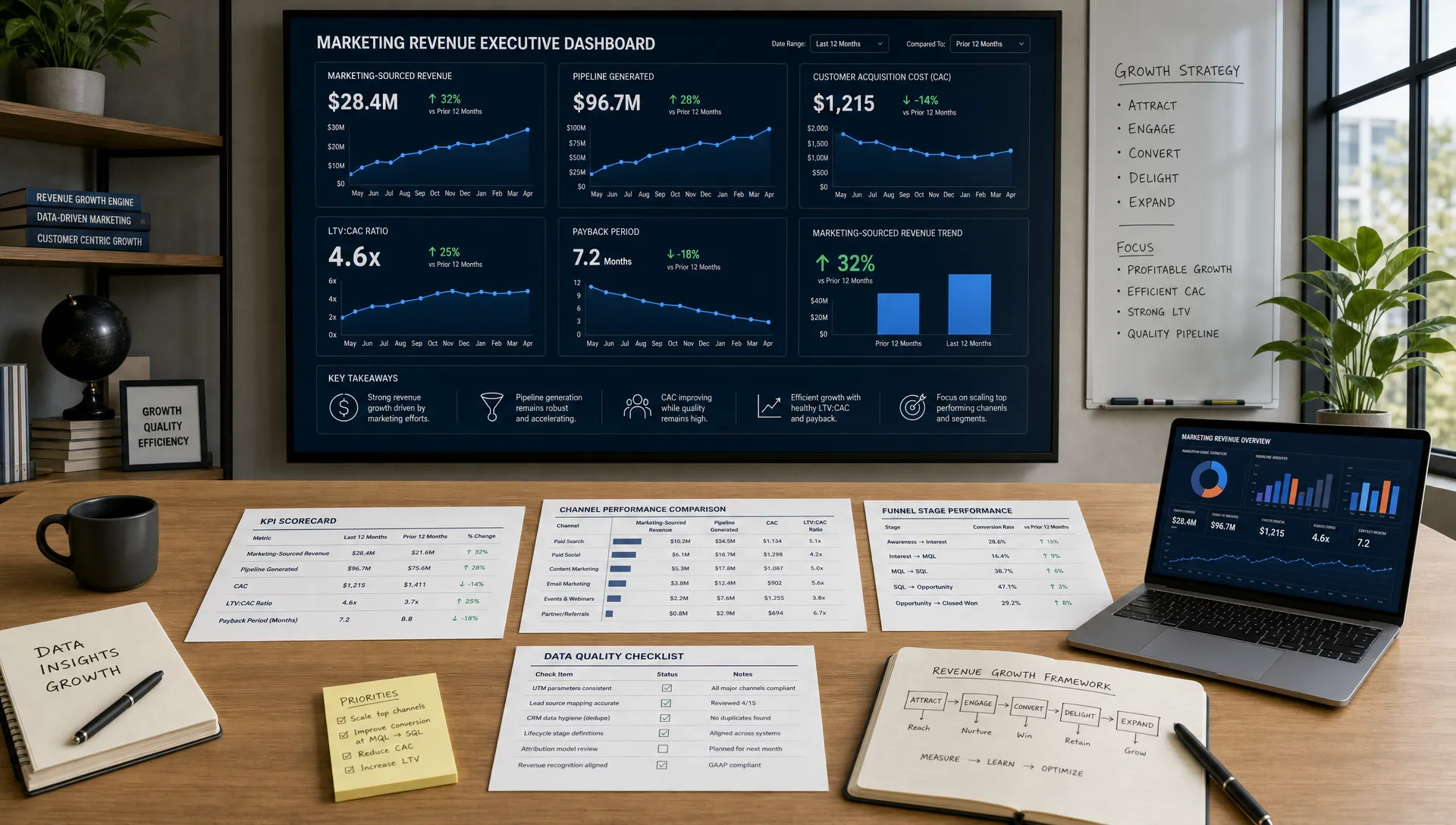
Record the AI engine, prompt, date, cited URLs, competitor mentions, answer sentiment and likely source passage. Over time, this gives you a clearer view of where your brand is gaining or losing visibility.
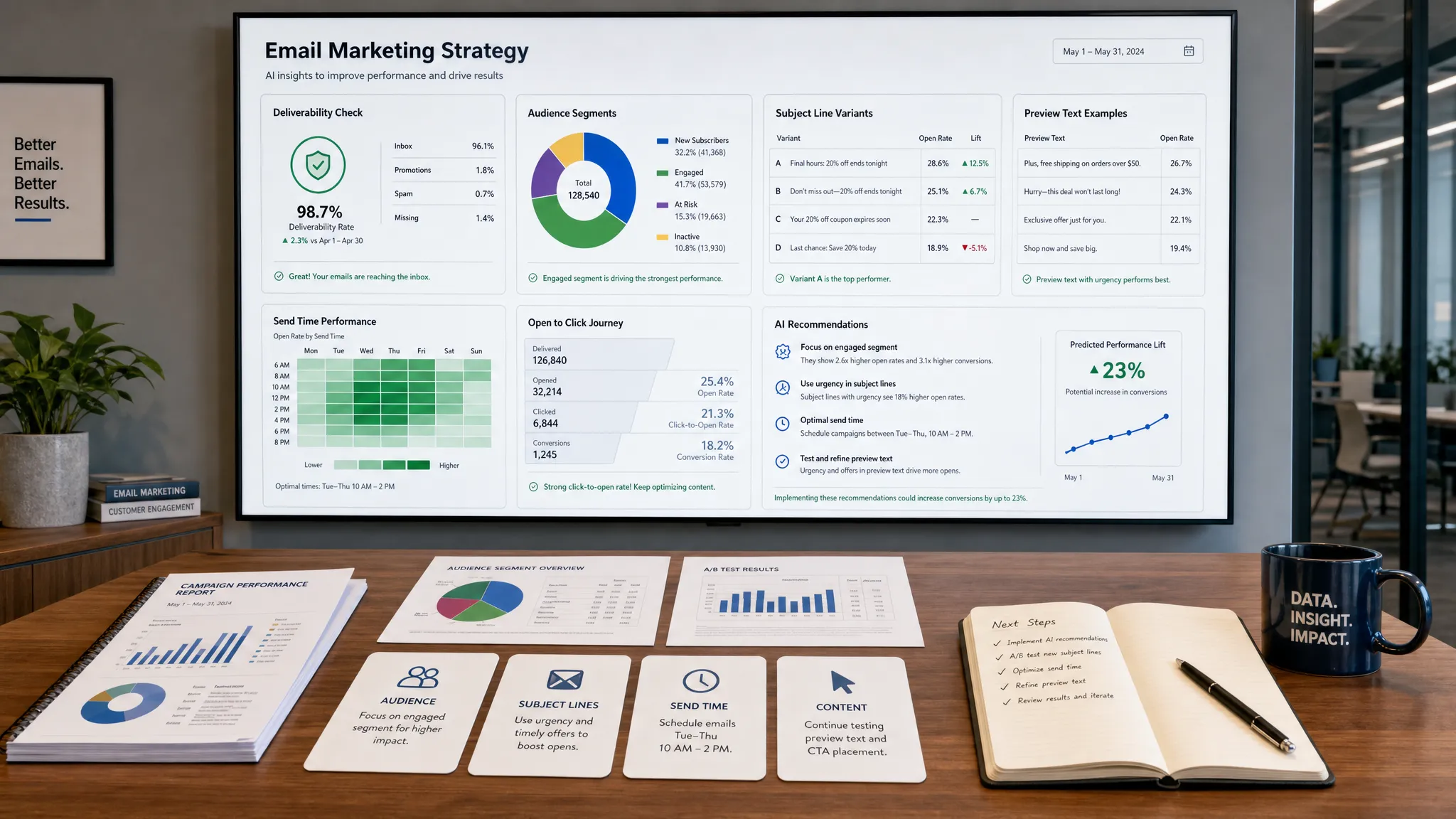
AI-powered analytics can help summarize patterns, but human review is still needed. A citation is not automatically valuable. The answer might cite your page for a minor definition while recommending a competitor for the buying decision. Your reporting should separate visibility from influence.
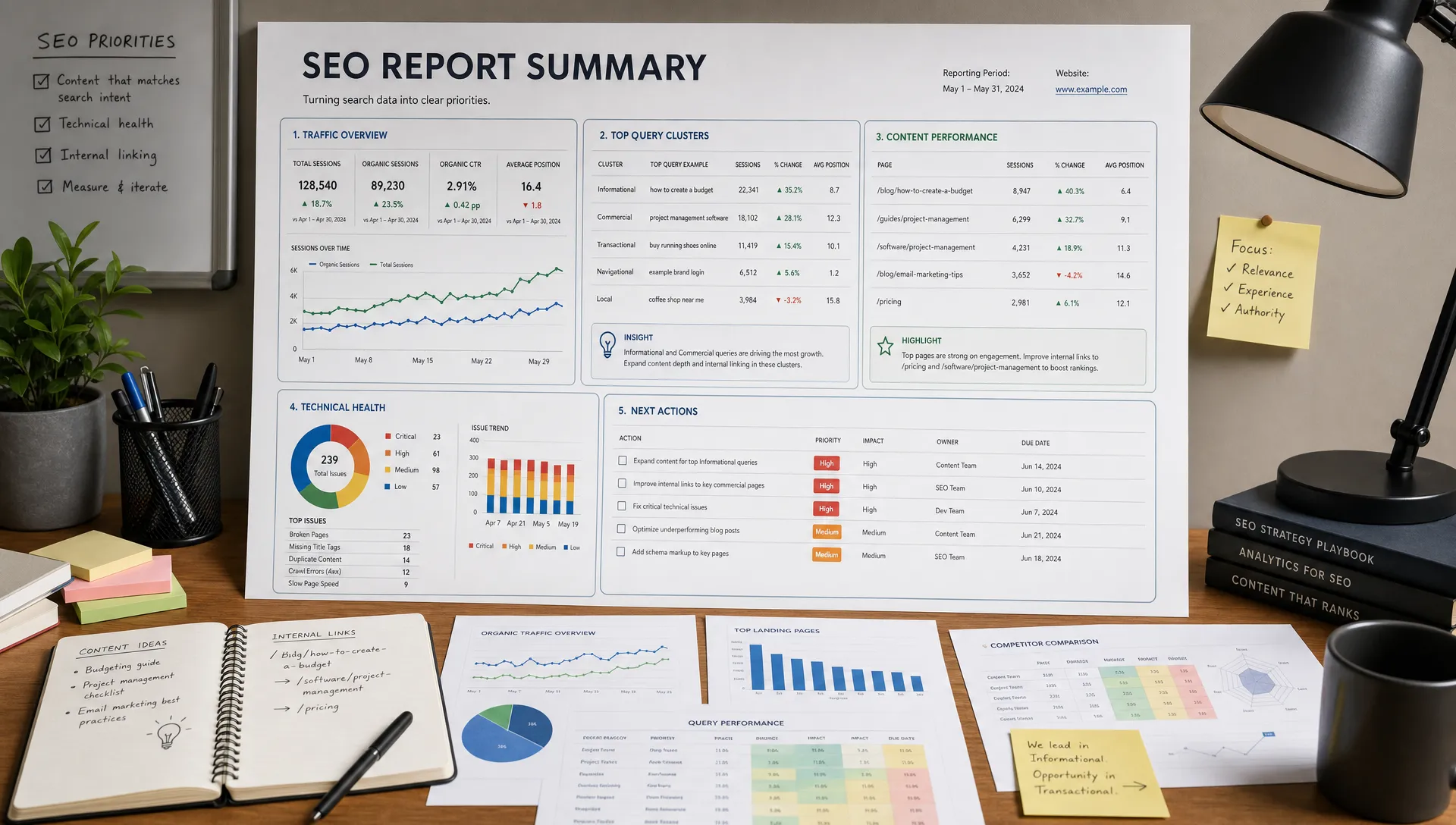
If you want a stronger measurement workflow, AIMarketer Hub explains how to turn search data into useful insights in its guide to SEO reporting with AI.
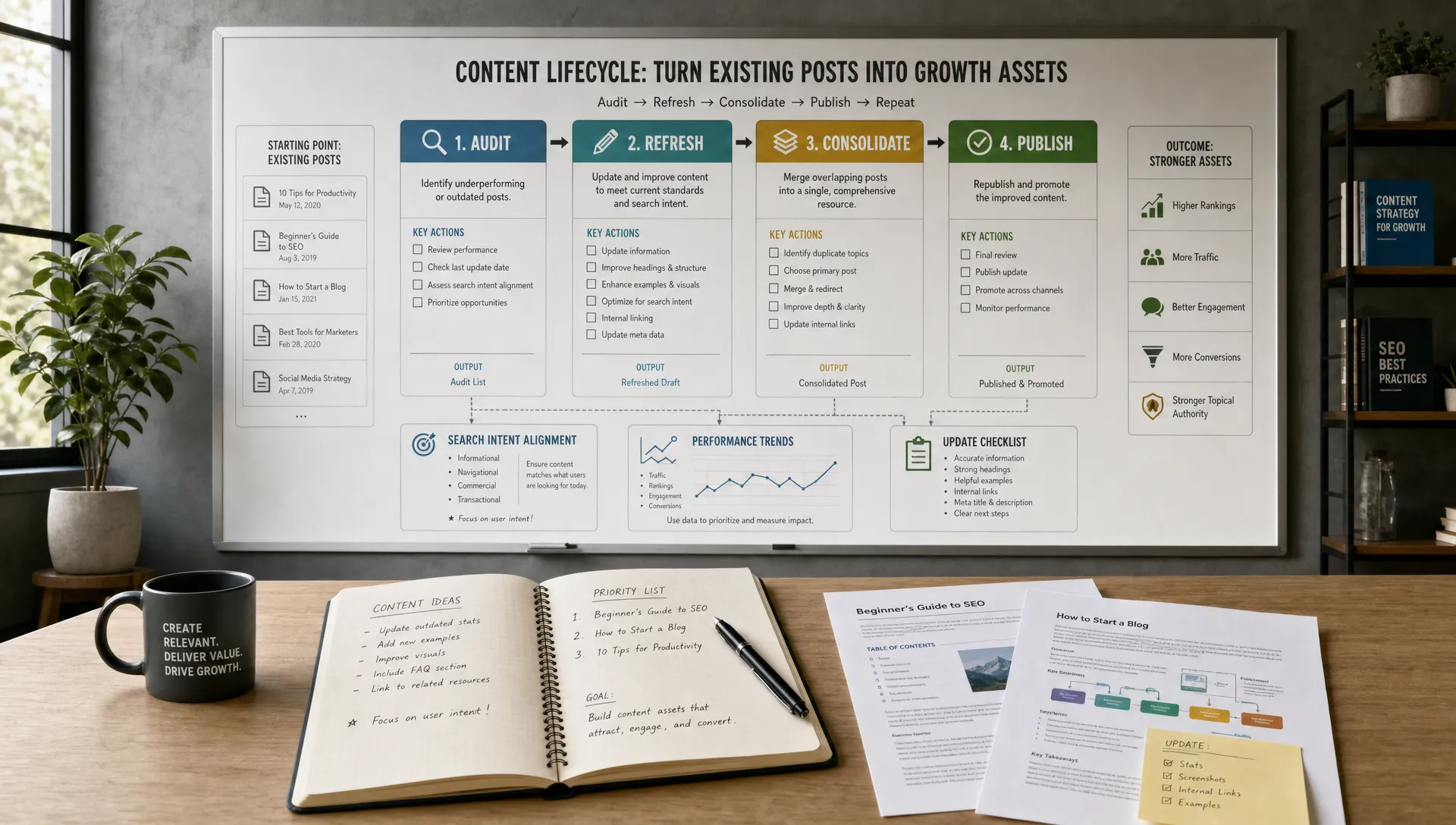
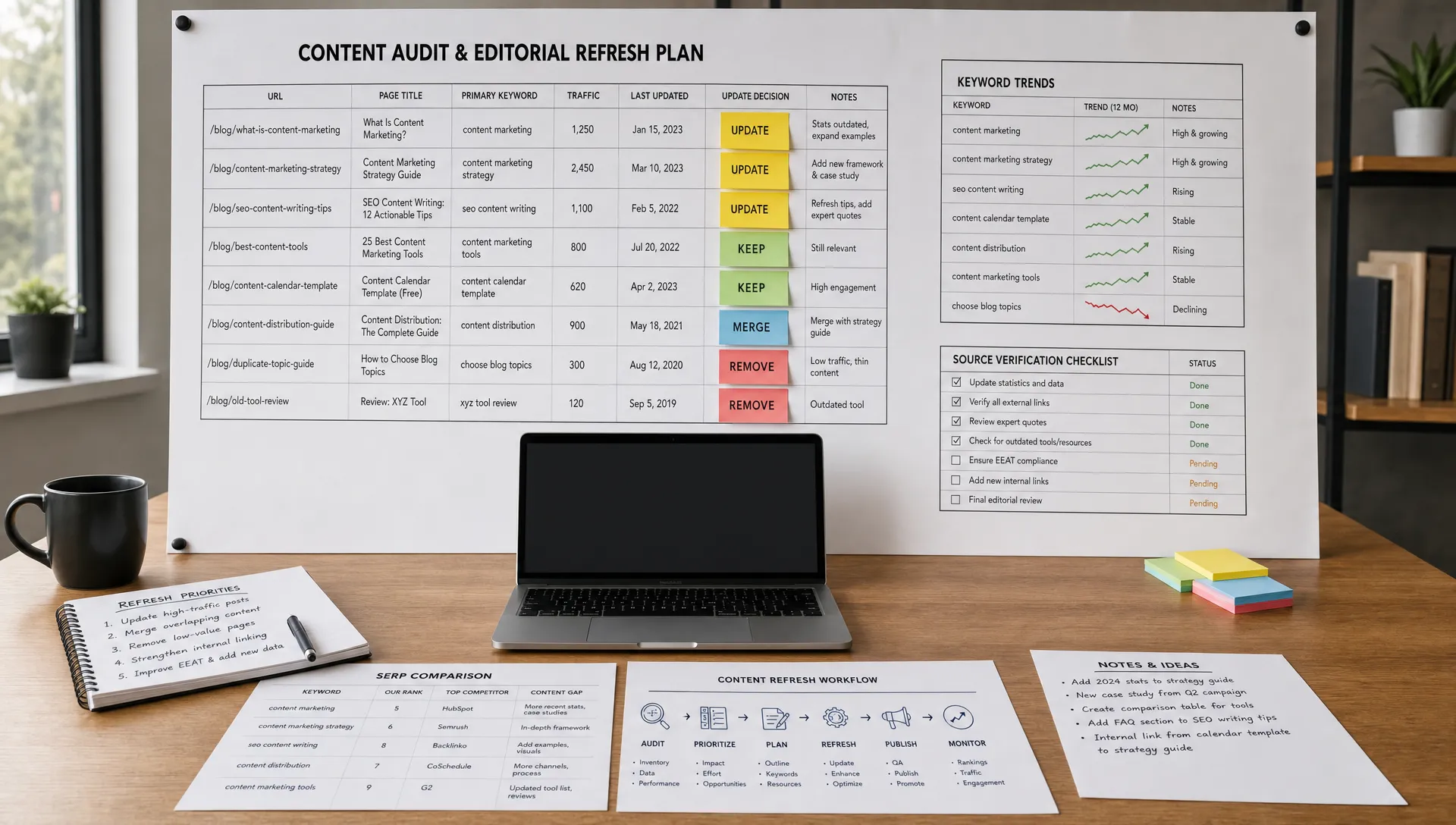
You do not need to create every AI search opportunity from scratch. Many sites already have content that can be improved for AI answers with focused updates.
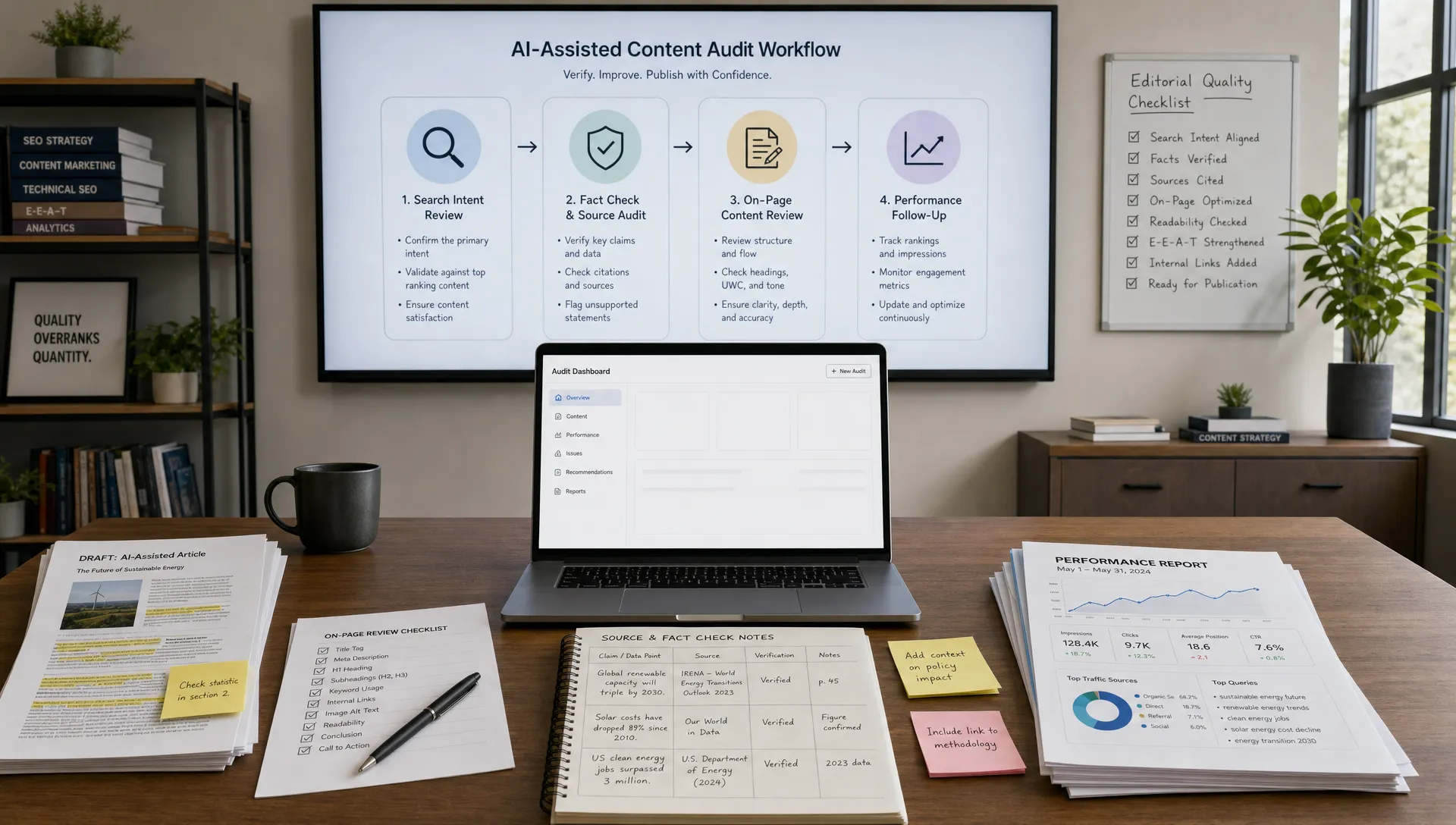
Start with pages that rank, earn impressions or attract qualified traffic but are not being cited in AI answers. Review whether the page answers the main question quickly, includes current information, uses clear headings and supports claims with evidence.
Refresh the content by adding concise definitions, stronger examples, updated sources, FAQ sections, clearer author information and better internal links. Remove filler that does not help the reader. AI answer systems have no reason to cite a bloated page when a cleaner one answers the same query in half the time.
A content refresh should also check whether the search intent has changed. If users now want a tool comparison but your page still reads like a beginner guide, updating the wording alone will not fix the problem.
Many AI search optimization failures come from trying to optimize for machines at the expense of readers. The content becomes longer, vaguer and less useful.
Avoid these mistakes:
The simplest quality test is direct: would a knowledgeable human choose your page as the best source for the answer? If not, an AI answer engine may not choose it either.
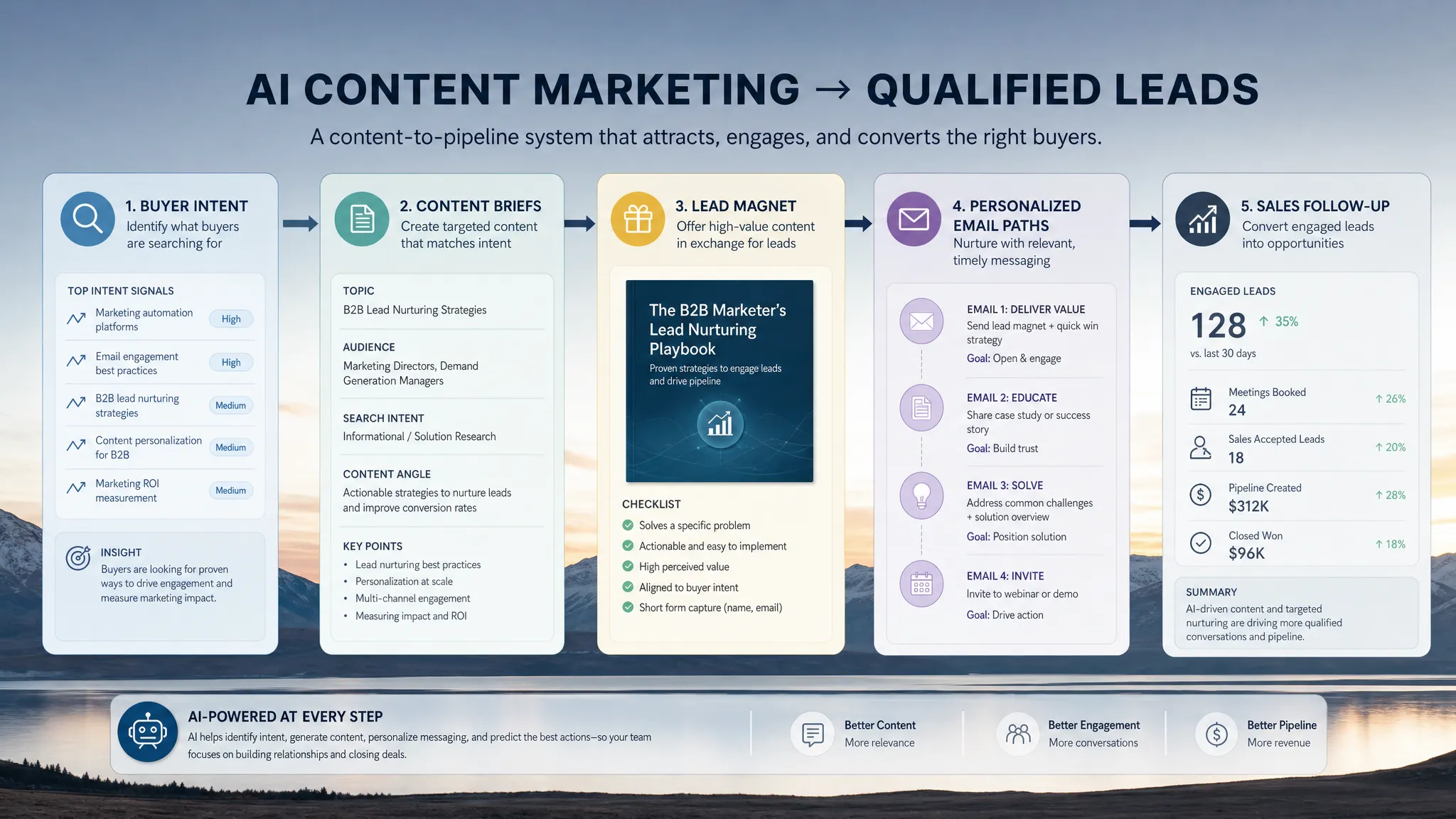
In week one, audit your highest-value topics. Identify the prompts buyers use when they are learning, comparing options and deciding what to do next. Search those prompts in AI answer tools and document which sources are cited.
In week two, choose five to ten pages with the best opportunity. Improve their openings, headings, definitions, evidence and internal links. Add concise FAQ sections where they genuinely help.
In week three, strengthen entity signals. Review author pages, organization information, schema, category pages and topic cluster links. Make sure your brand positioning is consistent across your site and major external profiles.
In week four, measure again. Compare citation changes, answer quality and competitor visibility. Use the results to decide which pages need more authority, which need better structure and which topics deserve new content.
AI search optimization is not a one-time edit. It is a content quality system built around clear answers, trustworthy evidence and repeatable measurement.
What is AI search optimization? AI search optimization is the process of improving content so AI answer engines can find it, understand it and cite it in generated answers. It includes SEO fundamentals, answer-focused writing, entity clarity, technical accessibility and evidence quality.
Is AI search optimization replacing traditional SEO? No. Traditional SEO still matters because many AI answer systems use search indexes and web results. AI search optimization adds another layer focused on citations, extractable passages and trustworthy source signals.
How do I get my website cited in AI answers? Create pages that answer specific questions clearly, support claims with evidence, use descriptive headings, build topical authority, maintain technical crawlability and earn credible mentions beyond your own website.
Does schema markup guarantee AI citations? No. Schema markup can help search systems understand your content, but it does not guarantee citations. The visible content still needs to be useful, accurate and relevant to the user query.
How long does it take to see AI answer citations? Timing varies by platform, crawl frequency, topic competitiveness and brand authority. Some updates may appear within weeks, while competitive topics often require stronger content, better links and repeated measurement over several months.
Getting cited in AI answers is not about chasing every new platform update. It is about building content that is easy to understand, easy to verify and genuinely useful for the questions your audience asks.
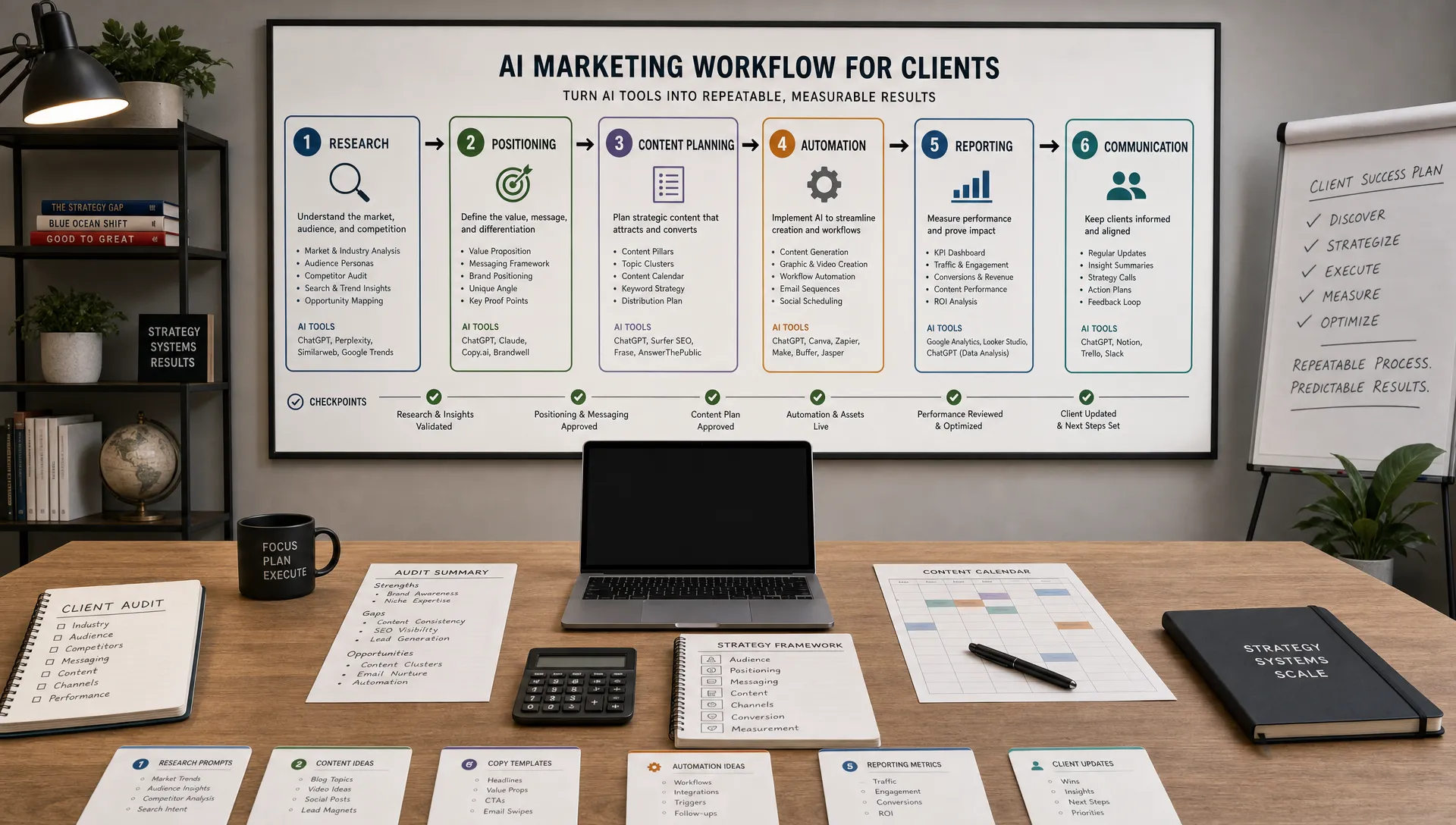
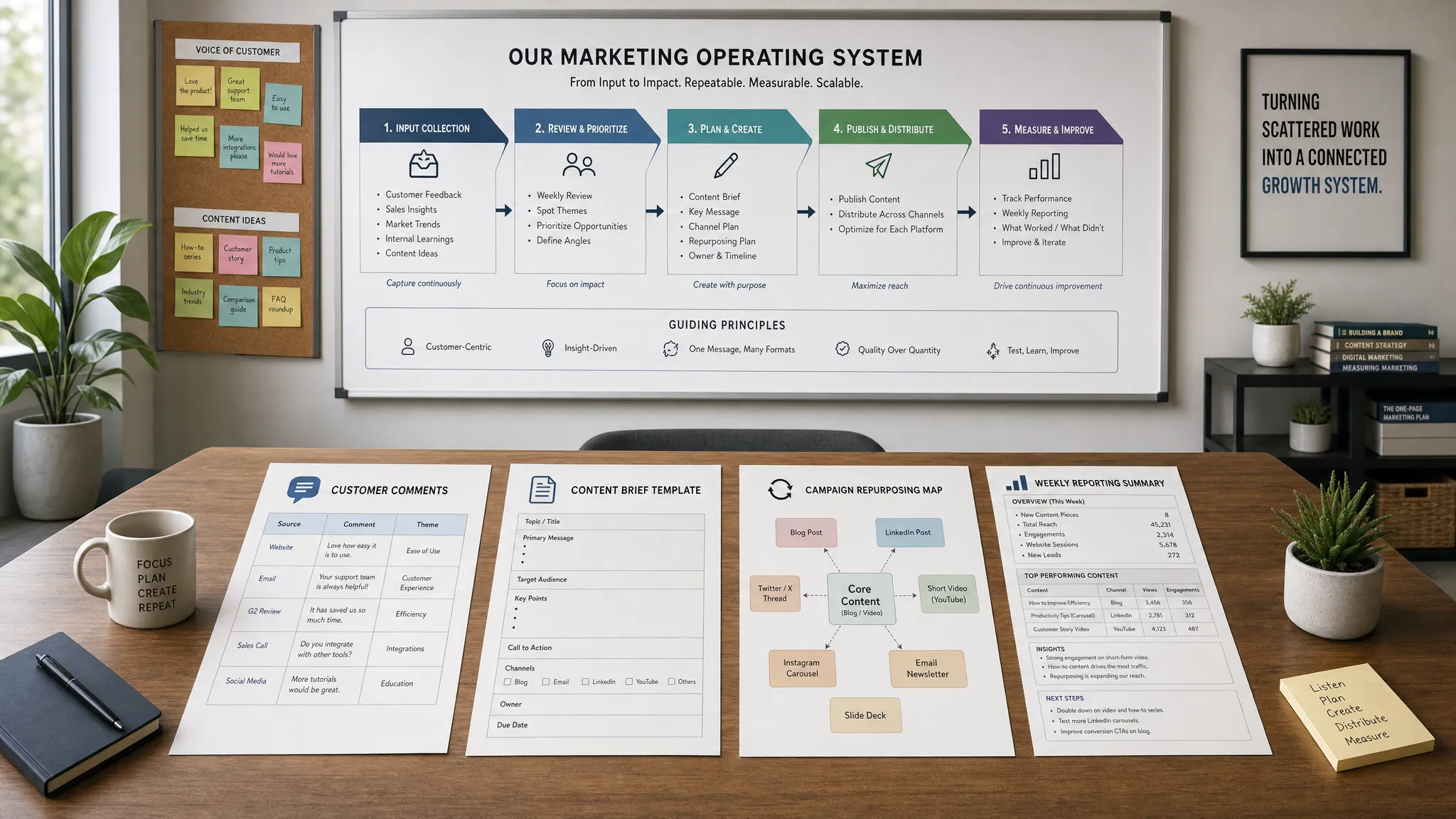
AIMarketer Hub helps marketers turn that work into repeatable systems with AI-powered marketing resources, content creation guidance, SEO tools, calculators and industry-specific guides. Use those workflows to plan better pages, refresh aging content and measure whether your brand is becoming part of the answers buyers trust.