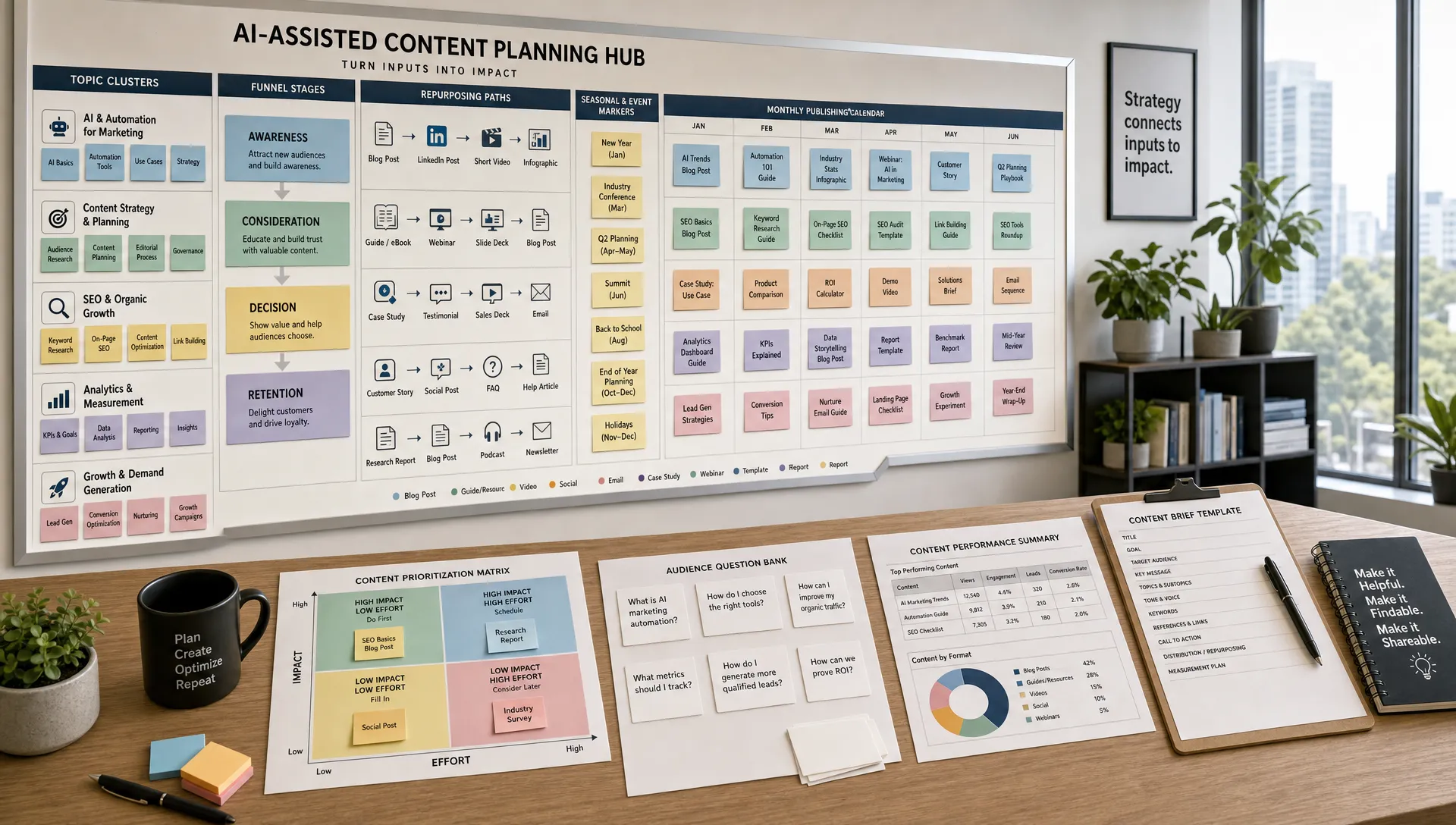
AI marketing for law firms works best when it does three things at once: attracts the right matters, improves response speed, and protects professional trust. The mistake is treating AI like a shortcut for more blog posts, more ads, or more generic social media updates. Legal buyers are not looking for volume. They are looking for credible answers, proof of experience, and a clear next step.
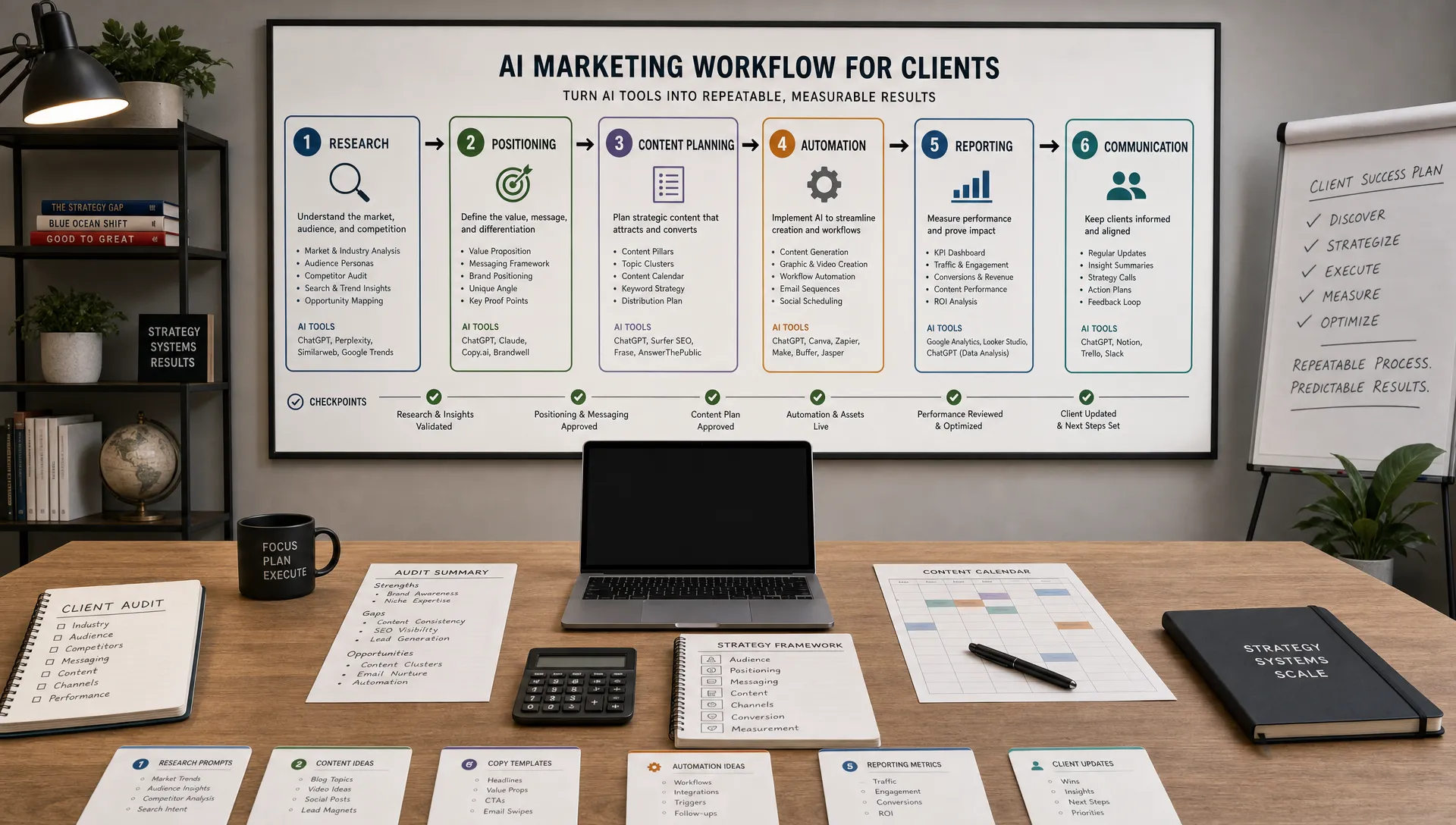
For a law firm, AI should support the parts of marketing that are repetitive, data-heavy, or slow to execute. It should not replace attorney judgment, ethical review, or client-specific advice. The firms seeing real gains are using AI as a workflow layer across SEO, content planning, intake, paid campaigns, client follow-up, and performance analytics.
That distinction matters. In legal services, a faster marketing engine is only useful if it is also accurate, compliant, and aligned with the types of clients and cases the firm actually wants.
Law firm marketing has constraints that most industries do not face. Advertising rules vary by jurisdiction, legal claims must be carefully worded, confidentiality is non-negotiable, and trust is often built before a prospect ever speaks to an attorney.
The American Bar Association's Model Rule 7.1 says lawyers must not make false or misleading communications about their services. State rules can add more requirements around testimonials, specialization claims, past results, disclaimers, solicitation, and referrals. That means AI-generated marketing content needs a review process, not just a publish button.
The opportunity is still significant. Legal clients are searching online, comparing options, reading reviews, asking AI search tools for summaries, and expecting fast responses. AI helps firms meet those expectations without forcing attorneys to spend hours on repetitive marketing tasks.
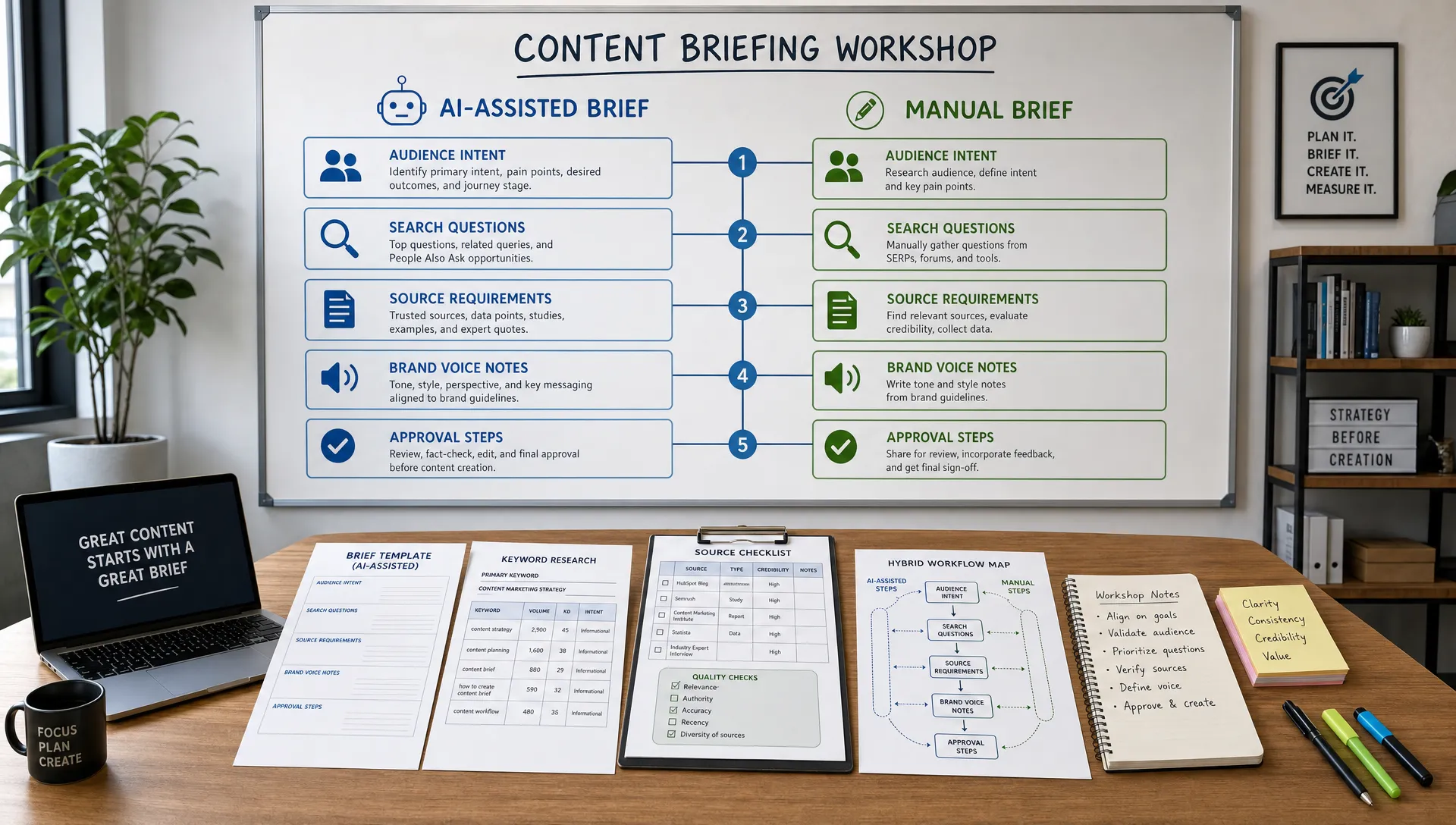
The strongest use cases share a pattern: AI handles the draft, analysis, segmentation, or routing, while attorneys and trained marketers handle positioning, compliance, and final decisions. If you want a broader framework for using AI without losing strategic control, AIMarketer Hub's guide on what smart teams do differently with digital marketing and AI is a useful companion.
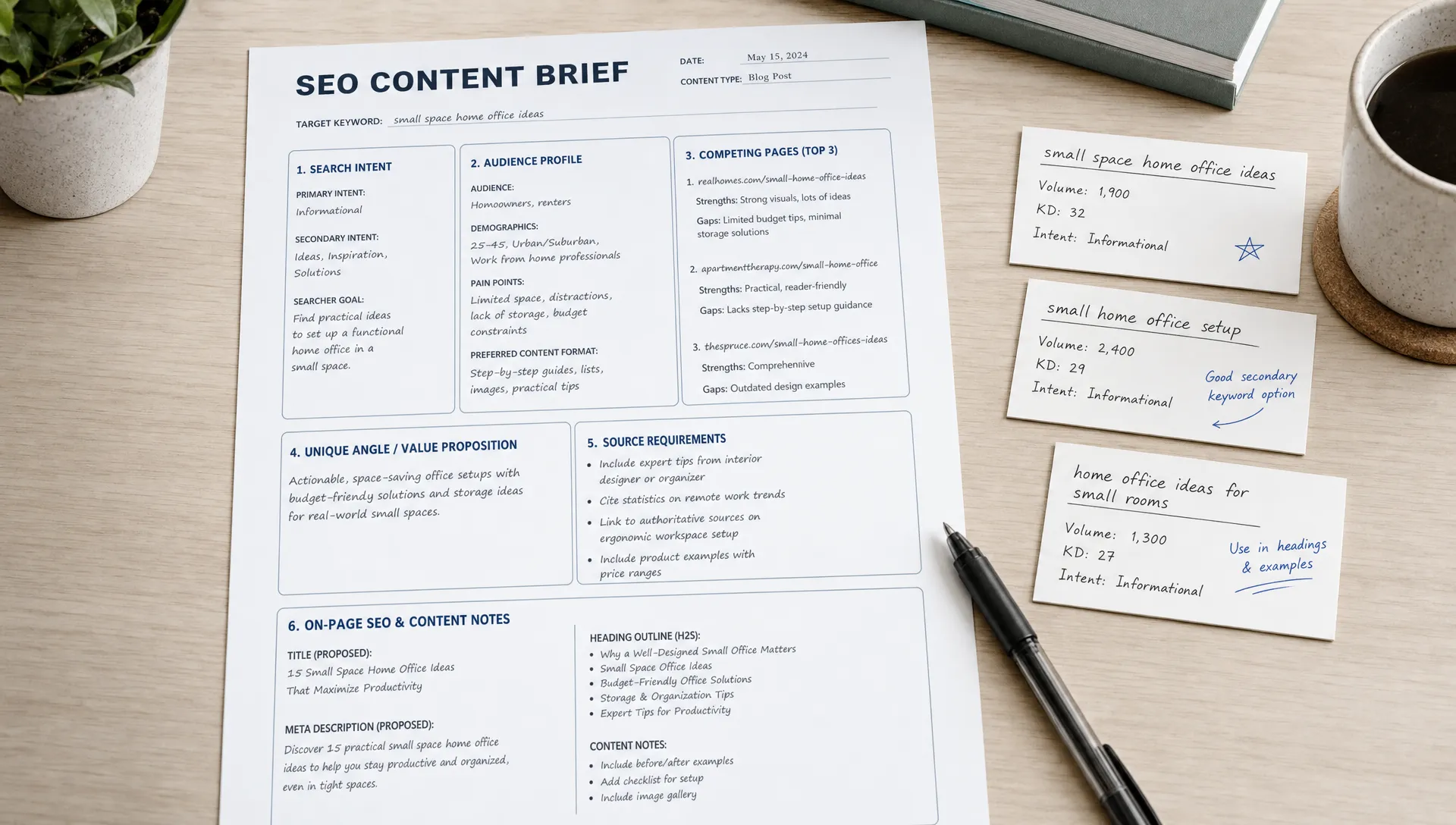
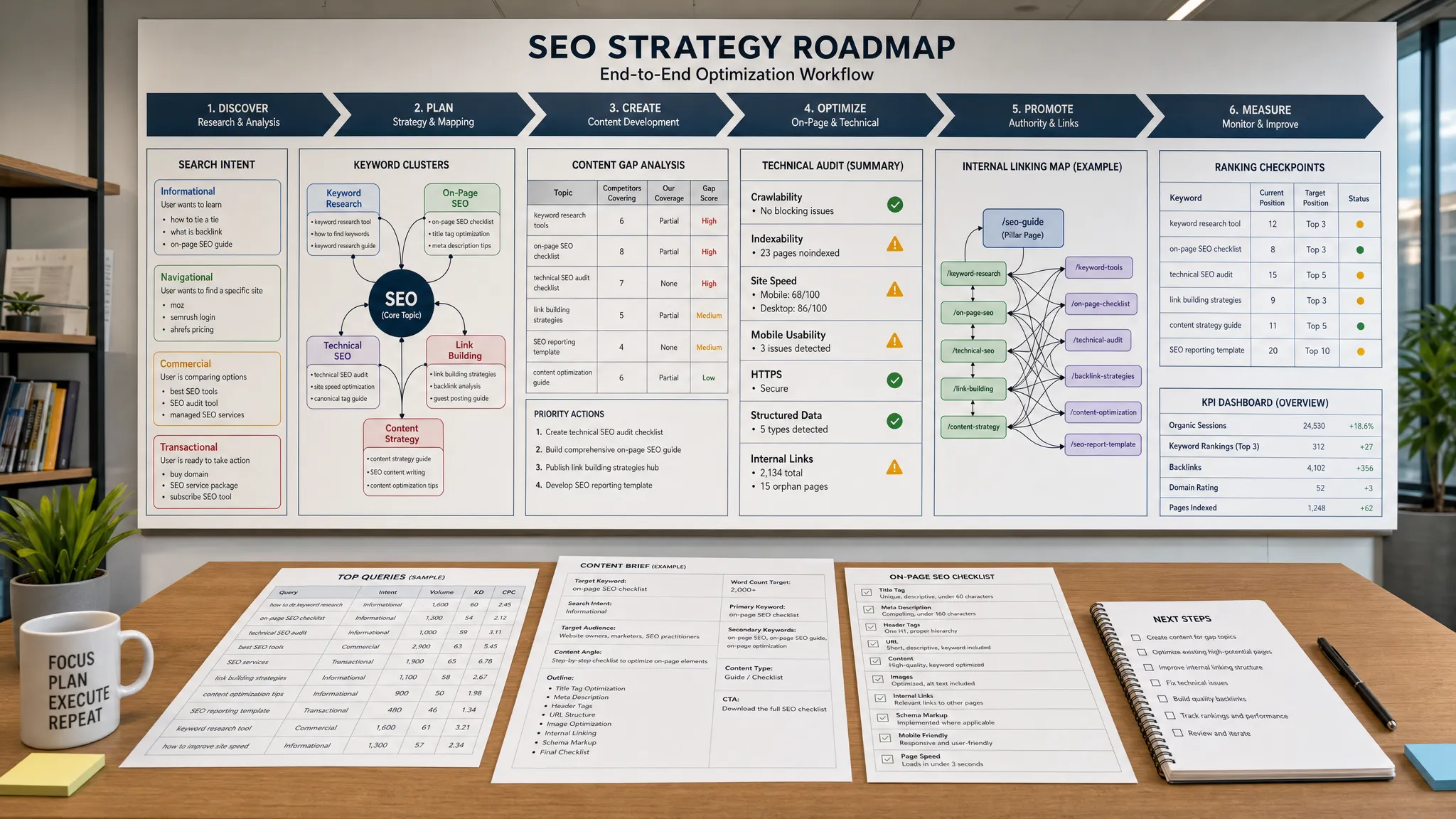
For most firms, organic search is still one of the highest-leverage channels. But AI has changed what effective legal SEO looks like. It is no longer enough to publish a generic article like “What to Do After a Car Accident” or “Do I Need an Estate Plan?” and hope it ranks.
AI works when it helps the firm map search intent more precisely. A family law prospect searching “how is custody decided in Texas” has a different intent than someone searching “best divorce lawyer near me.” A business owner searching “commercial lease dispute attorney” is closer to hiring than someone reading a broad explainer on lease terms.
AI tools can help identify patterns across:
The output should be a content map, not a pile of disconnected articles. For example, an employment law firm might build pages around wrongful termination, wage disputes, retaliation, severance review, and executive employment agreements. Each page should answer practical questions, explain process, clarify who the firm helps, and guide the reader toward a consultation.
AI can speed up keyword clustering, outline creation, FAQ drafting, internal linking ideas, and metadata. But attorneys should add the elements that make the page trustworthy: jurisdiction-specific context, procedural nuance, examples of common scenarios, and clear boundaries around what is general information versus legal advice.
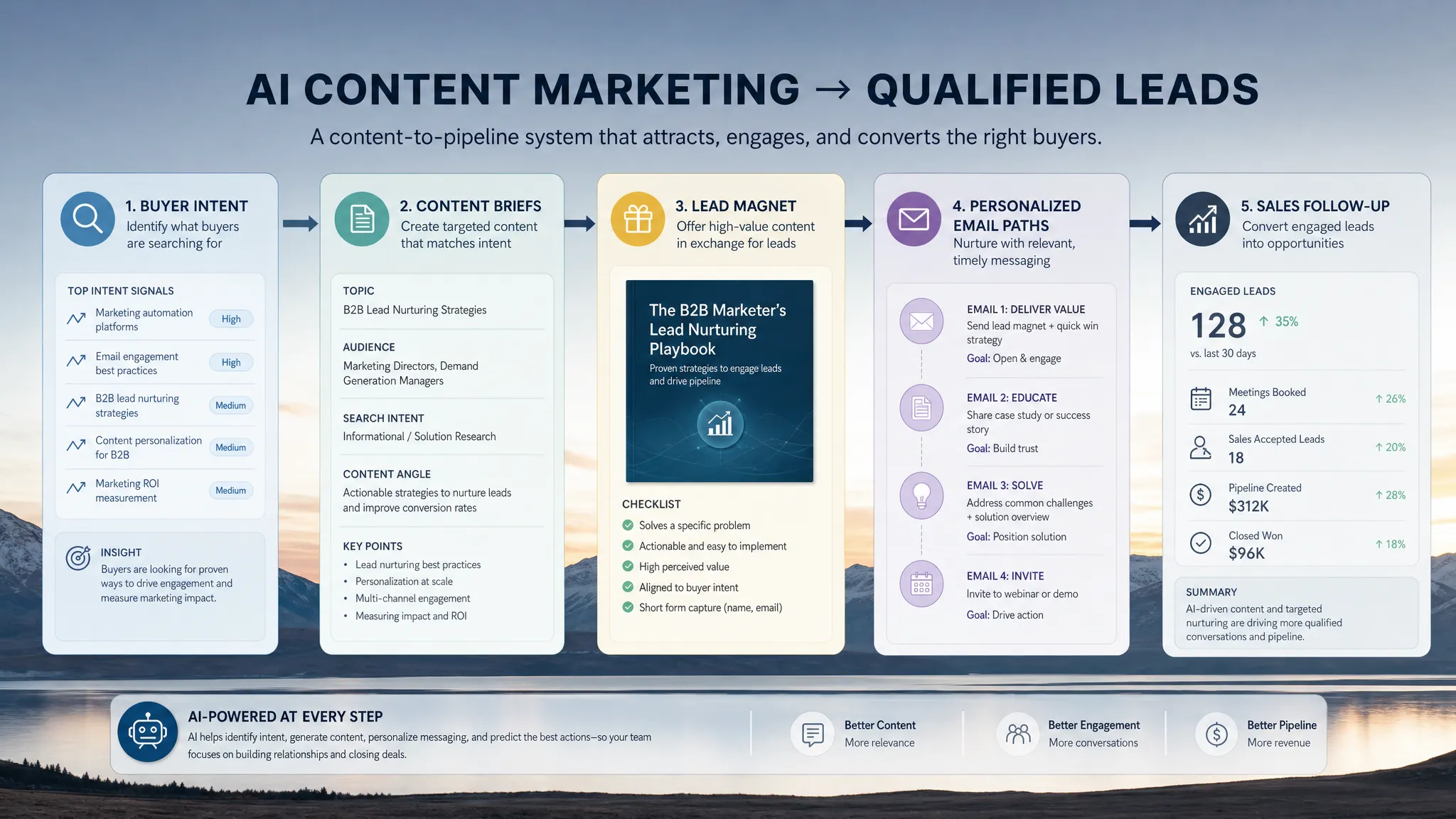
Content creation is one of the most obvious AI marketing use cases for law firms, and also one of the easiest to misuse. The firms that win do not ask AI to “write a blog post about probate.” They give AI structured inputs, such as the audience, jurisdiction, client concerns, attorney notes, common misconceptions, and the desired next action.
A better prompt might ask for an outline for California small business owners facing a partnership dispute, with sections on early warning signs, documents to gather, negotiation options, litigation risks, and when to speak with counsel. That kind of input produces content that is more useful and easier for an attorney to refine.
AI content generation is especially helpful for repurposing attorney expertise. A 20-minute attorney interview can become a long-form article, short LinkedIn posts, newsletter copy, a webinar outline, and a client alert. The key is to keep the original insight human and use AI for structure and adaptation.
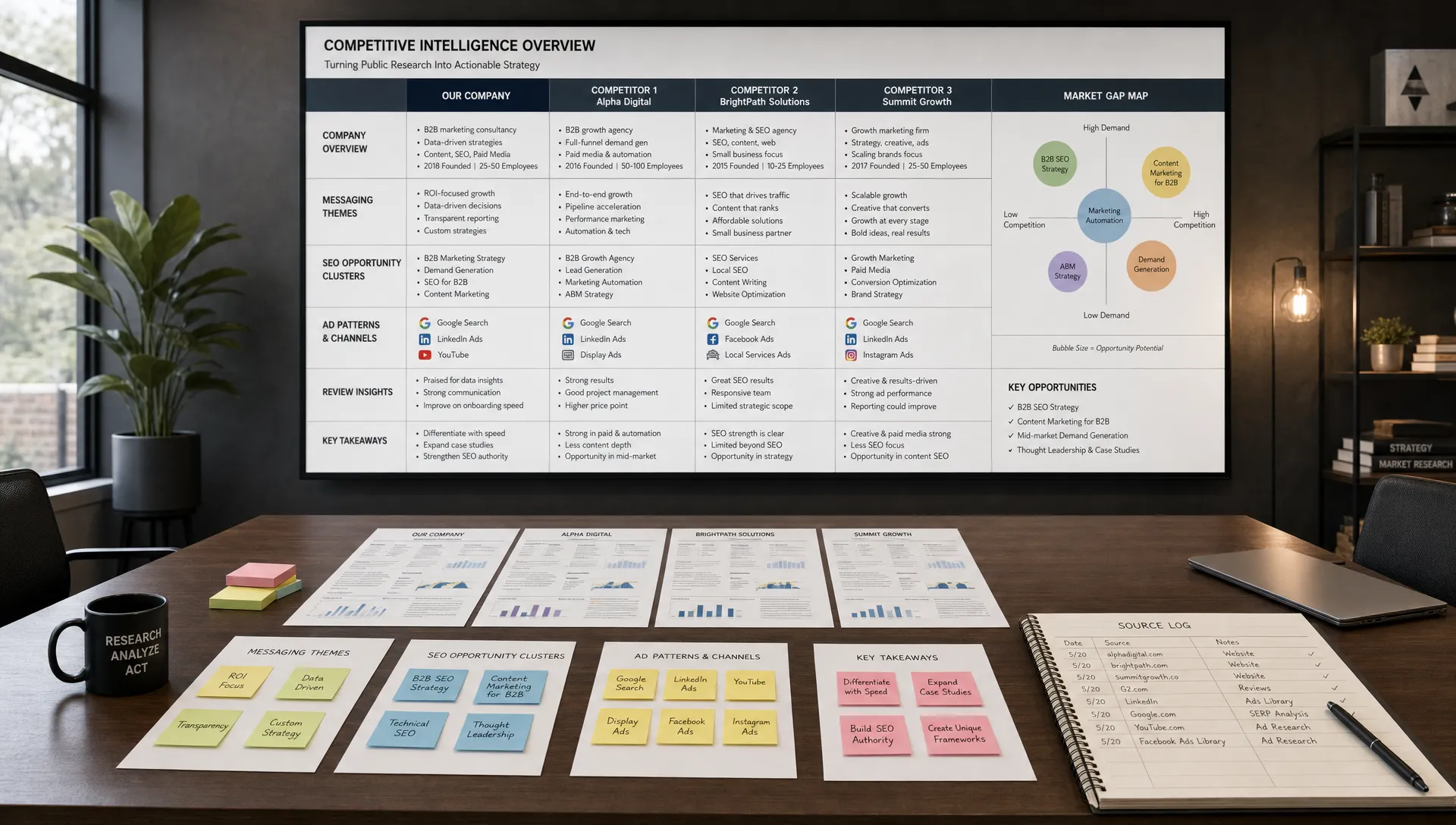
This is where firms can also become more commercially relevant. A law firm serving consumer brands, for instance, can create stronger thought leadership by connecting legal issues to real expansion decisions. If the firm advises on distribution agreements, cross-border compliance, or marketplace entry, market intelligence from an AI-powered global expansion platform can help identify timely topics around GCC, EU, and Asia growth, making the firm's content more useful to executives planning international expansion.
For deeper guidance on turning AI-assisted content into measurable business value, see AIMarketer Hub's article on AI content generation tips for better ROI.
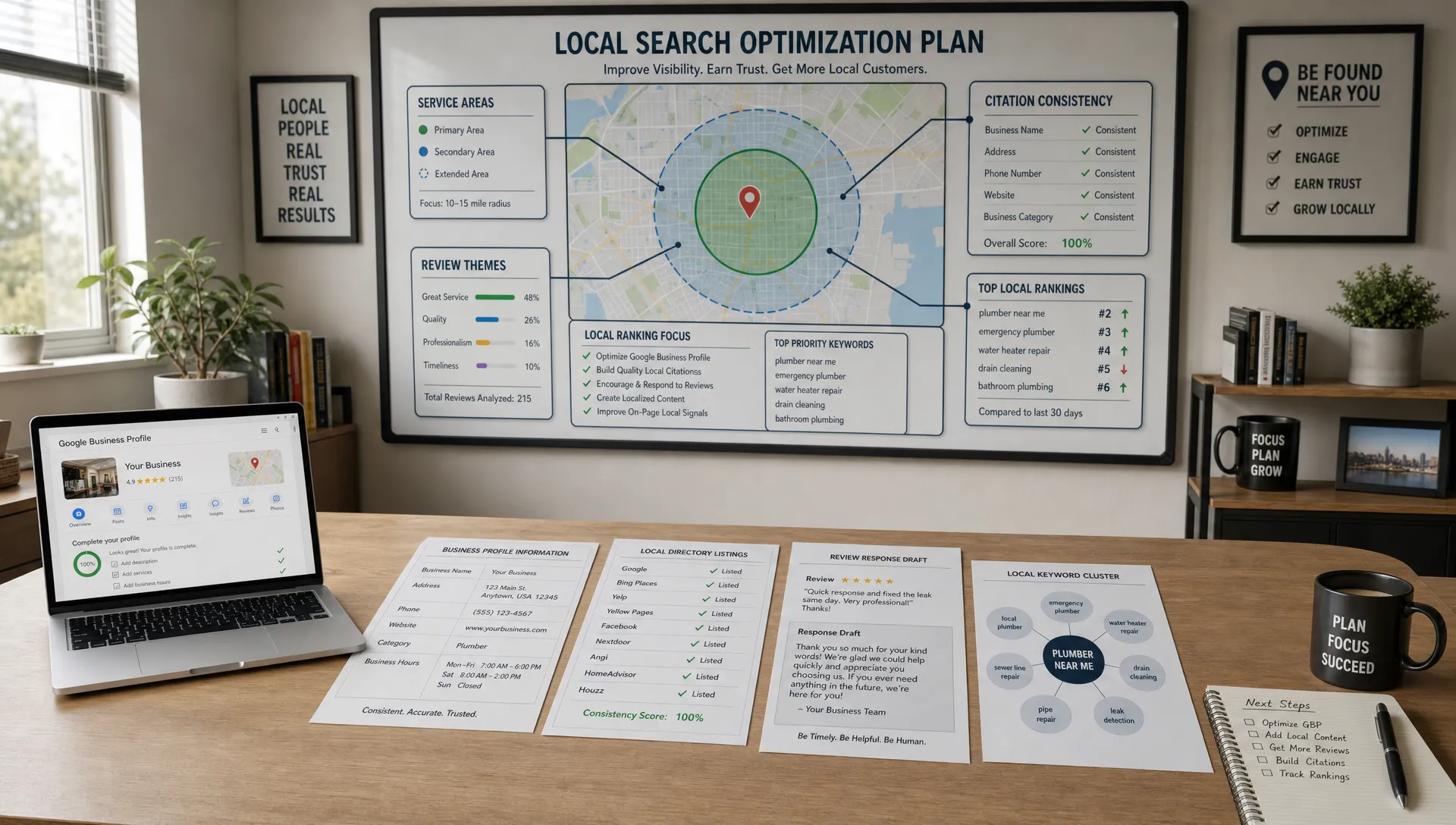
For many practice areas, local visibility is decisive. Personal injury, criminal defense, family law, immigration, estate planning, and real estate law often depend on appearing in the right local searches with enough credibility to earn a call.
AI can help with local SEO by analyzing Google Business Profile categories, review themes, service descriptions, local landing page gaps, and competitor positioning. It can also help draft location-specific page updates, but those pages should never be thin copies with only the city name changed.
What works is specificity. A local landing page should explain who the firm serves in that area, which courts or legal processes may be relevant, what types of matters are commonly handled, and how the consultation process works. AI can help structure this information, but the firm must provide the local substance.
Reputation management is another practical AI use case. AI can summarize review trends, identify recurring client praise or concerns, and help draft polite review responses. However, firms should avoid anything that looks automated, defensive, or dismissive. Reviews often mention sensitive situations, so responses should be brief, professional, and privacy-conscious.

A law firm can have excellent SEO and paid campaigns, but lose cases because it responds too slowly. Intake is where AI marketing starts to connect with revenue.
AI-powered intake workflows can help categorize inquiries, route leads to the right person, flag urgent matters, suggest follow-up questions, and summarize conversations for staff. Chatbots can answer basic process questions after hours, but they should be carefully limited. A chatbot should not give legal advice, create an attorney-client relationship, or imply that the firm has accepted a matter.
The most useful intake automations are practical and conservative:
This improves client experience because prospects know what to expect. It also helps the firm prioritize better. A high-value corporate inquiry should not sit in the same inbox as a vendor pitch, and an urgent criminal defense call should not wait until the next business day if the firm offers rapid response.
The important metric is not just lead volume. It is qualified consultations scheduled, show-up rate, signed matters, and time from inquiry to response.
Paid search can work well for law firms, but it is often expensive. In competitive practice areas, cost per click can be high, and broad targeting wastes budget quickly. AI helps by improving testing discipline.
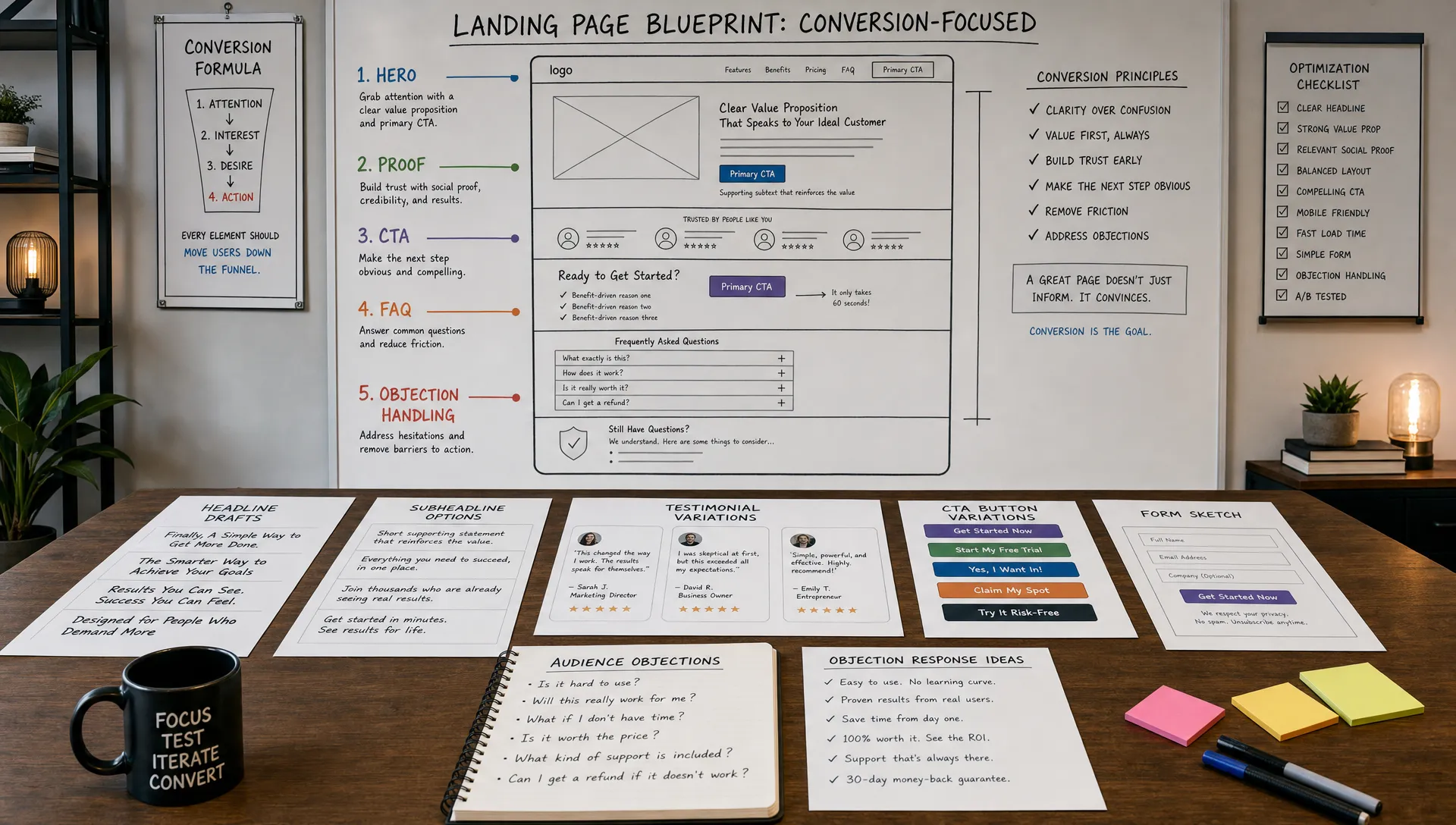
Instead of guessing which ad copy or landing page will perform, firms can use AI to generate variations based on intent segments. A prospect searching “DUI attorney near me tonight” needs a different landing page than someone searching “first offense DUI penalties.” A general counsel searching “SaaS contract lawyer” needs different proof points than a founder searching “startup lawyer for seed round.”
AI can assist with:
Still, legal ad campaigns need strict review. Avoid unqualified guarantees, exaggerated outcomes, or language that could be misleading. If testimonials or results are used, confirm they comply with applicable rules.
The best paid campaigns connect the ad, landing page, intake process, and follow-up sequence. If you are planning a campaign from scratch, AIMarketer Hub's guide on how to launch a digital campaign that performs is especially relevant.
AI marketing for law firms is not only about acquiring new clients. Some of the best opportunities come from past clients, referral sources, and professional networks.
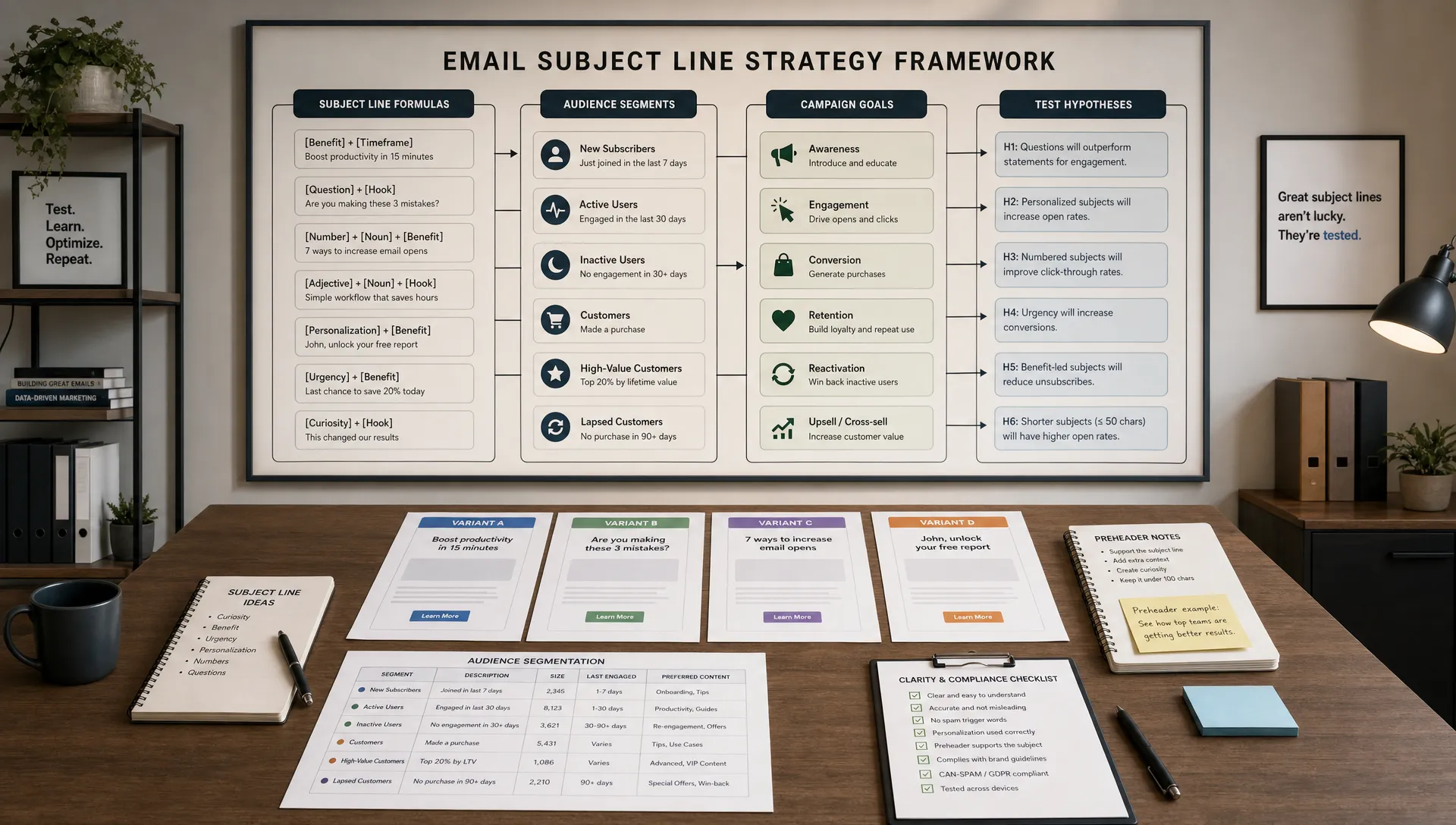
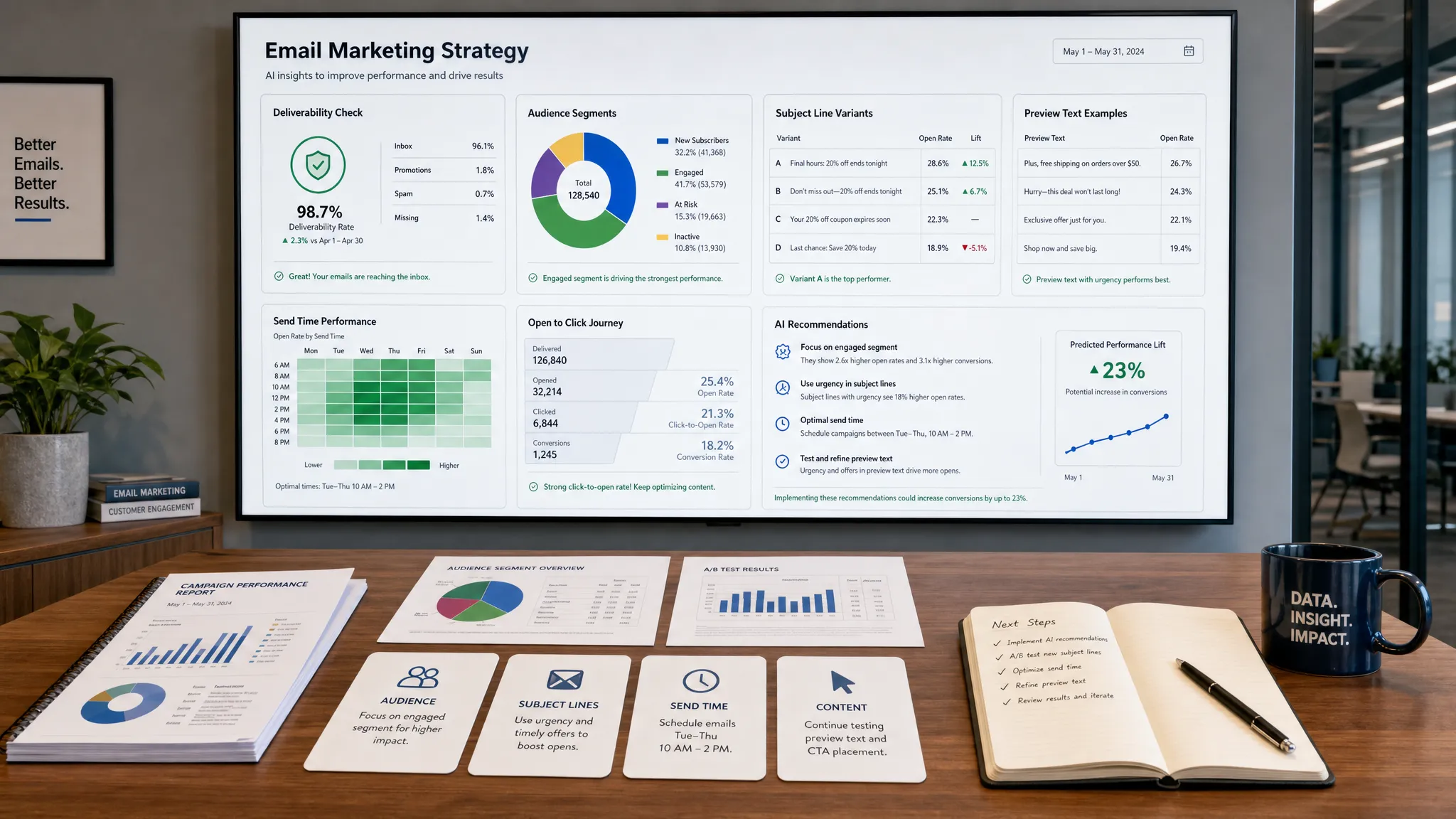
Email can work when it is segmented and genuinely useful. A business law firm might send different updates to startups, real estate investors, healthcare practices, and franchisors. An estate planning firm might segment by young families, business owners, and high-net-worth clients. AI can help draft versions for each audience, but the insight should come from attorneys who understand the client context.
Good law firm email content includes practical alerts, deadline reminders, regulatory changes, risk checklists, and invitations to relevant events. Poor email content is generic, self-promotional, and obviously automated.
AI can also help identify referral patterns. Which accountants, financial advisors, consultants, brokers, or former clients refer the best matters? Which practice areas produce repeat work? Which clients might benefit from a check-in based on a business milestone or legal change? Used carefully, this turns marketing from sporadic outreach into relationship management.
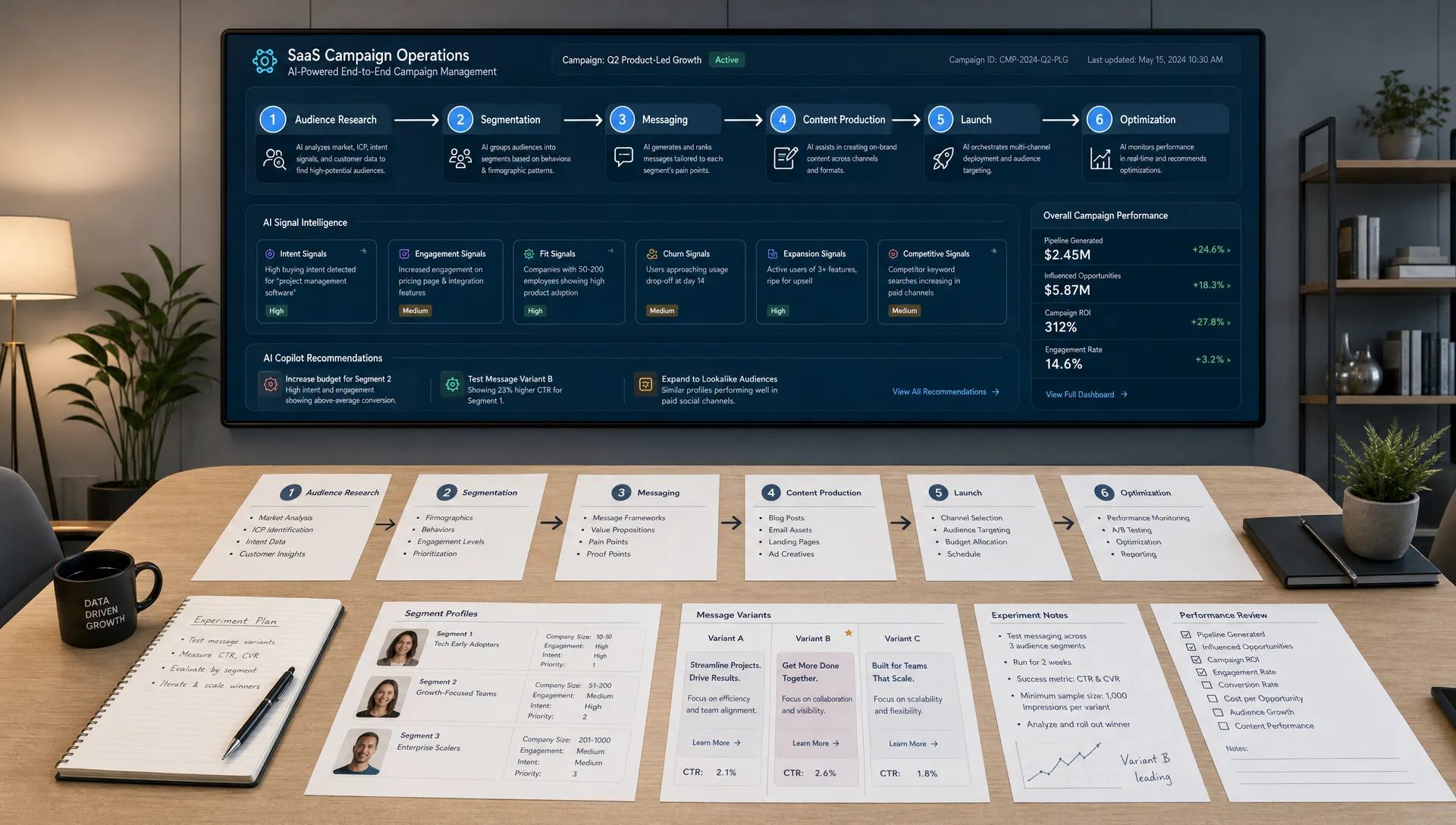
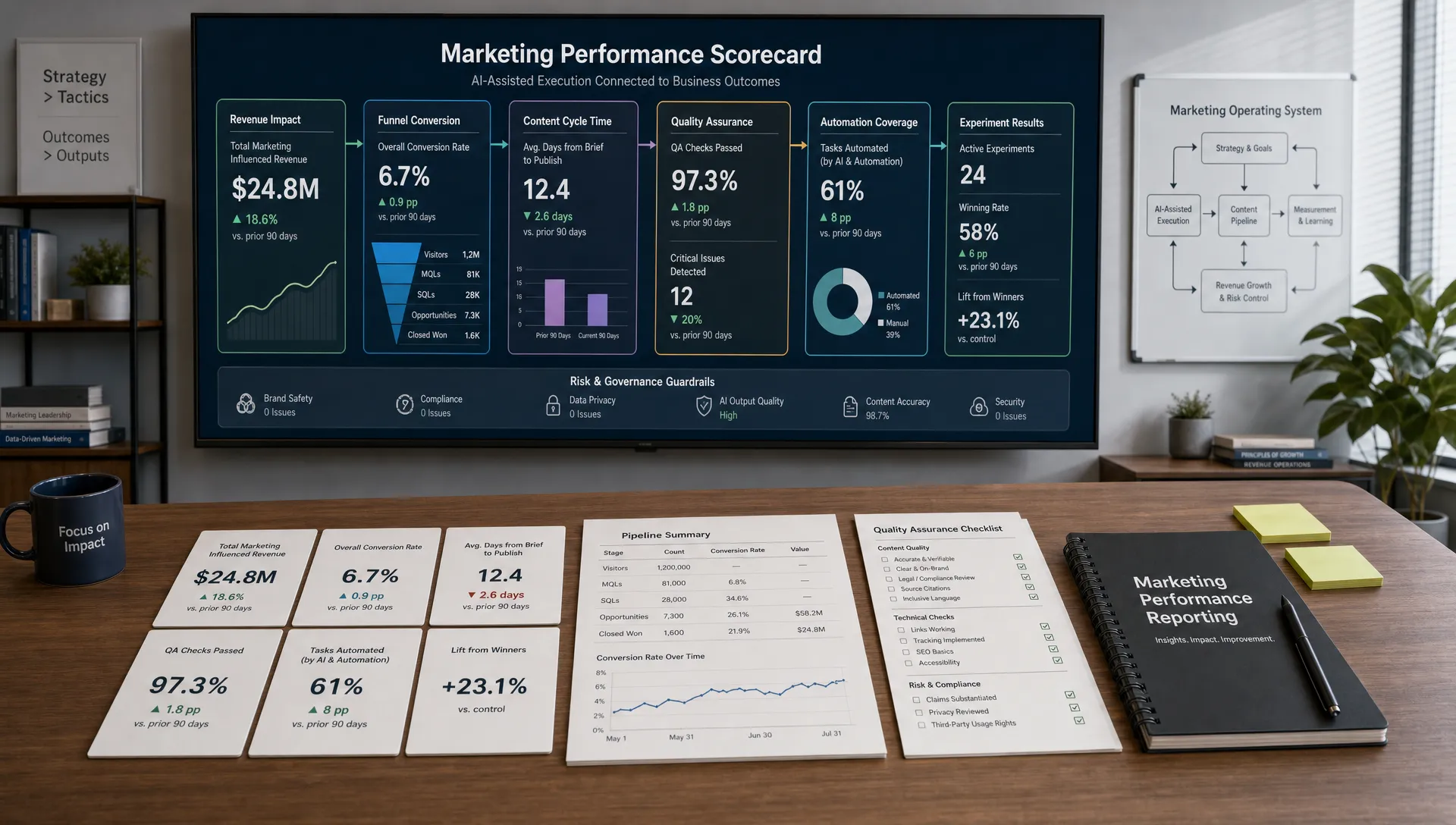
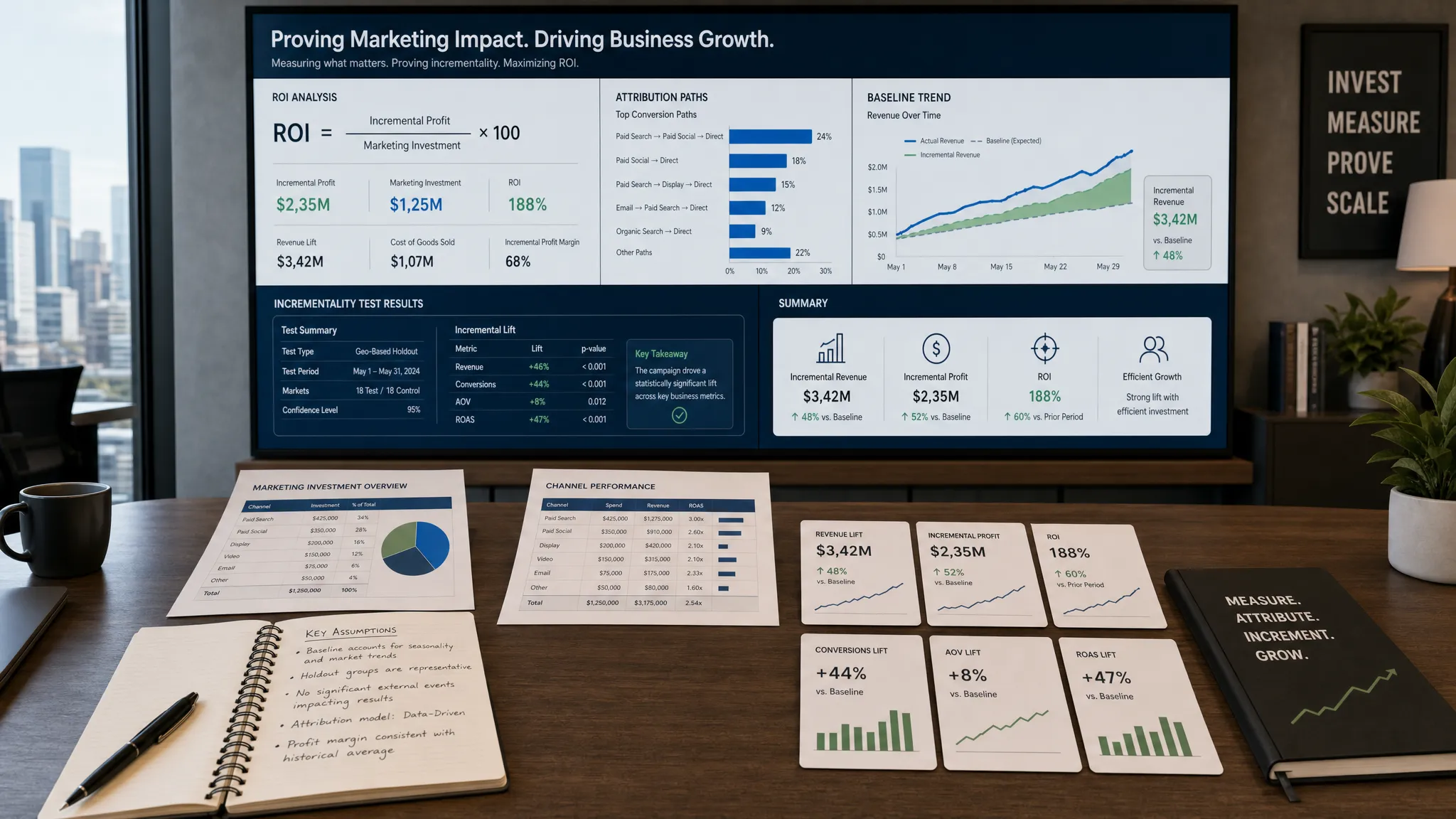
Many law firms track website traffic and leads, but stop short of understanding which efforts produce profitable matters. AI-powered analytics can help connect the dots between channel, campaign, intake quality, consultation, signed engagement, and revenue.
This requires clean data. At minimum, firms should track source, practice area, location, inquiry date, consultation status, signed status, estimated matter value, and reason for disqualification. Without that foundation, AI analysis will be unreliable.
The most useful questions are business questions:
AI can surface patterns faster than a manual spreadsheet review. But the firm still needs leadership judgment. A campaign with fewer leads may be more valuable if those leads become better clients. A high-traffic blog post may be worth less than a lower-traffic page that attracts ready-to-hire prospects.
The biggest failure pattern is using AI to increase output without improving strategy. More content, more emails, and more ads will not help if the message is generic or the intake process is weak.
Several tactics are especially risky:
Law firm buyers are often dealing with stressful, expensive, or high-stakes situations. They can sense when content is generic. AI should make the firm more responsive and useful, not less human.
Start with one practice area and one measurable goal. For example, a family law firm might focus on increasing qualified divorce consultations in one metro area. A business litigation firm might target founder disputes and partnership conflicts. A boutique immigration firm might focus on employer-sponsored visa inquiries.
Next, document the current funnel. Where do prospects come from? Which pages do they visit? How quickly does the firm respond? What questions do intake staff ask? Which leads become consultations? Which consultations become signed clients?
Then apply AI to specific bottlenecks. If the firm lacks visibility, use AI for SEO research and content planning. If it gets leads but loses them, use AI to improve intake routing and follow-up. If ad spend is inefficient, use AI to analyze search terms, landing pages, and campaign structure. If attorneys are too busy to create content, use AI to repurpose interviews and client questions into reviewed assets.
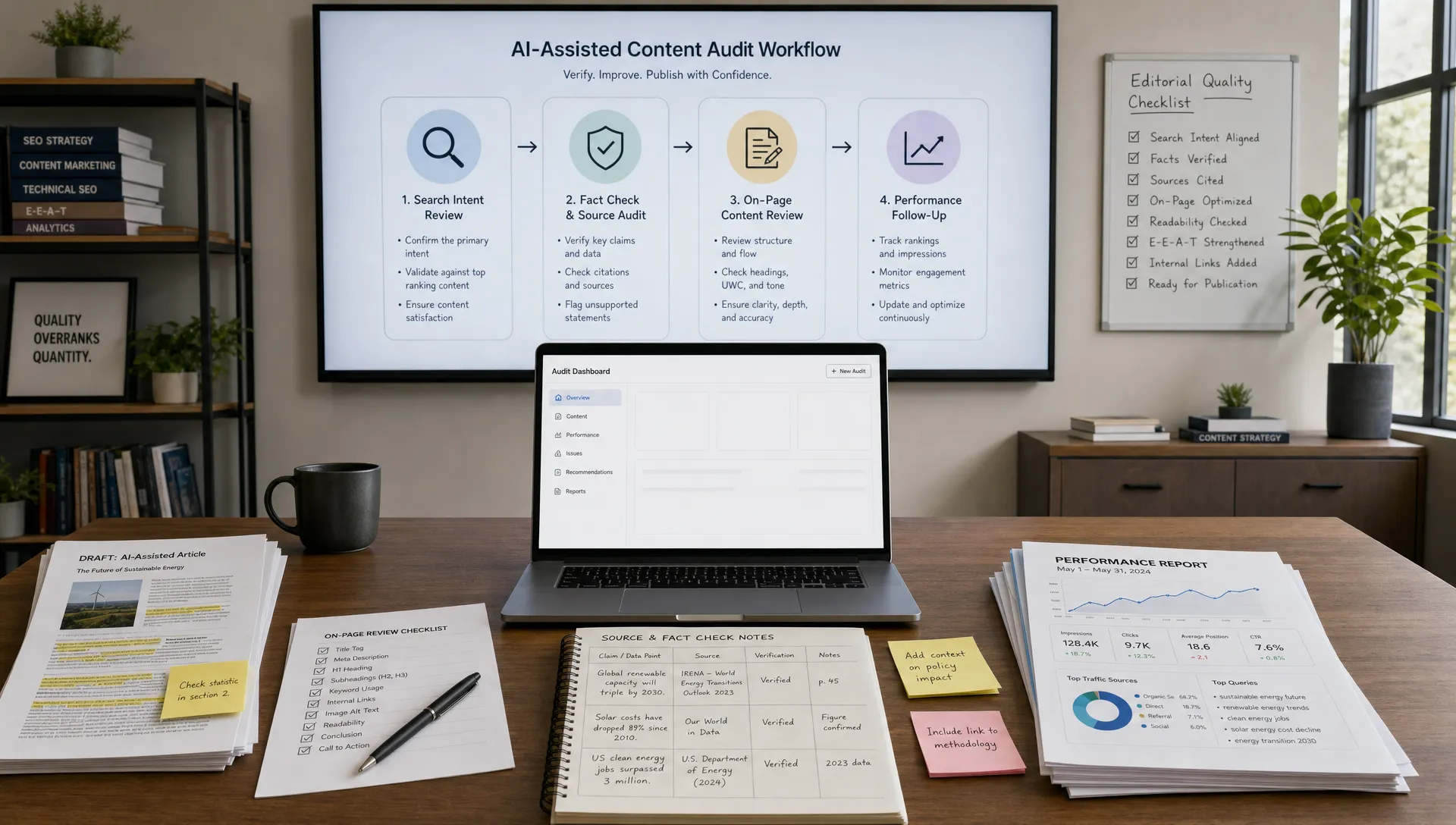
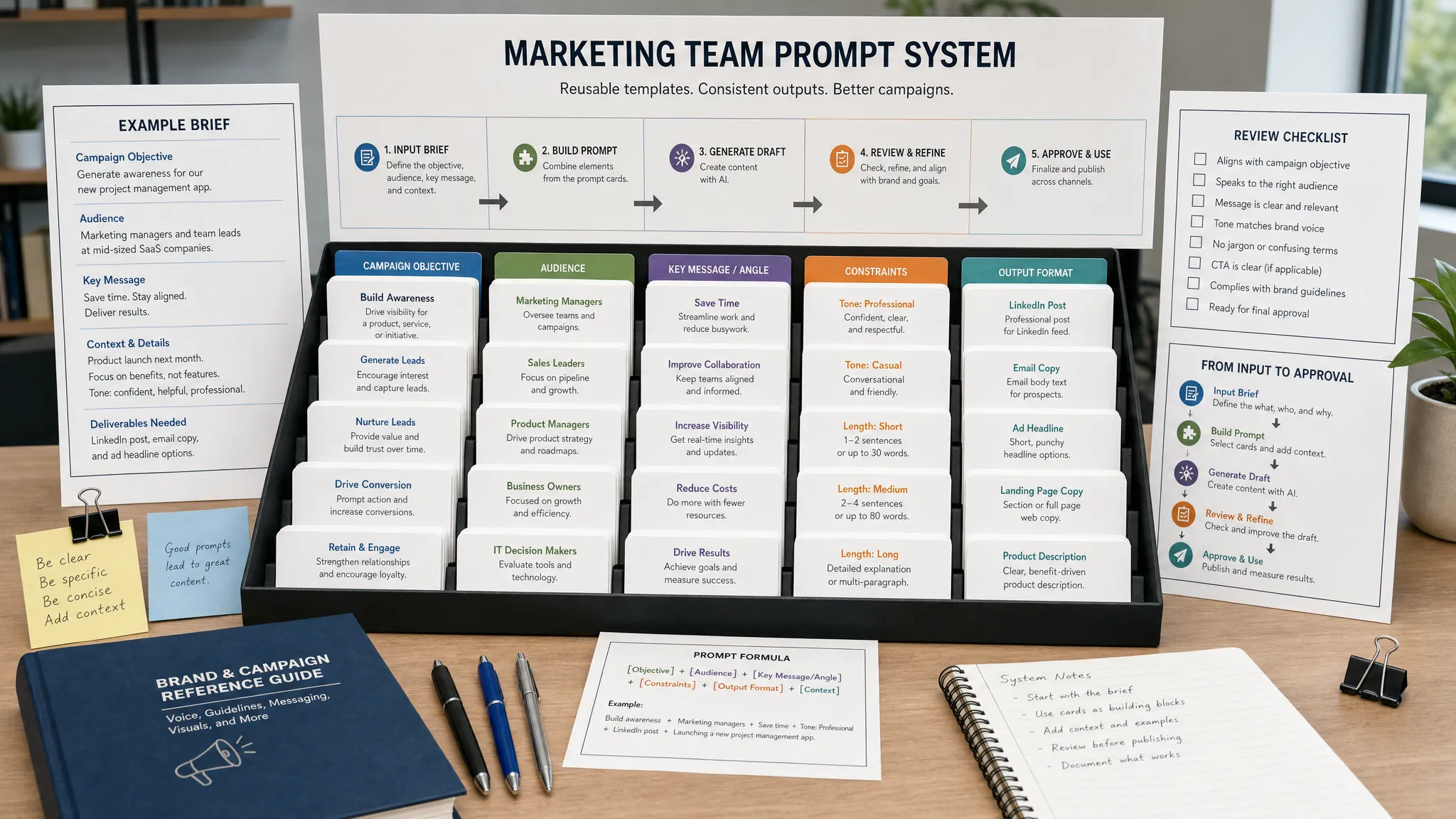
Create a review checklist before publishing or automating anything. The checklist should cover accuracy, jurisdiction, ethics, confidentiality, tone, disclaimers, and call to action. Every firm should adapt this to its own rules and risk tolerance.
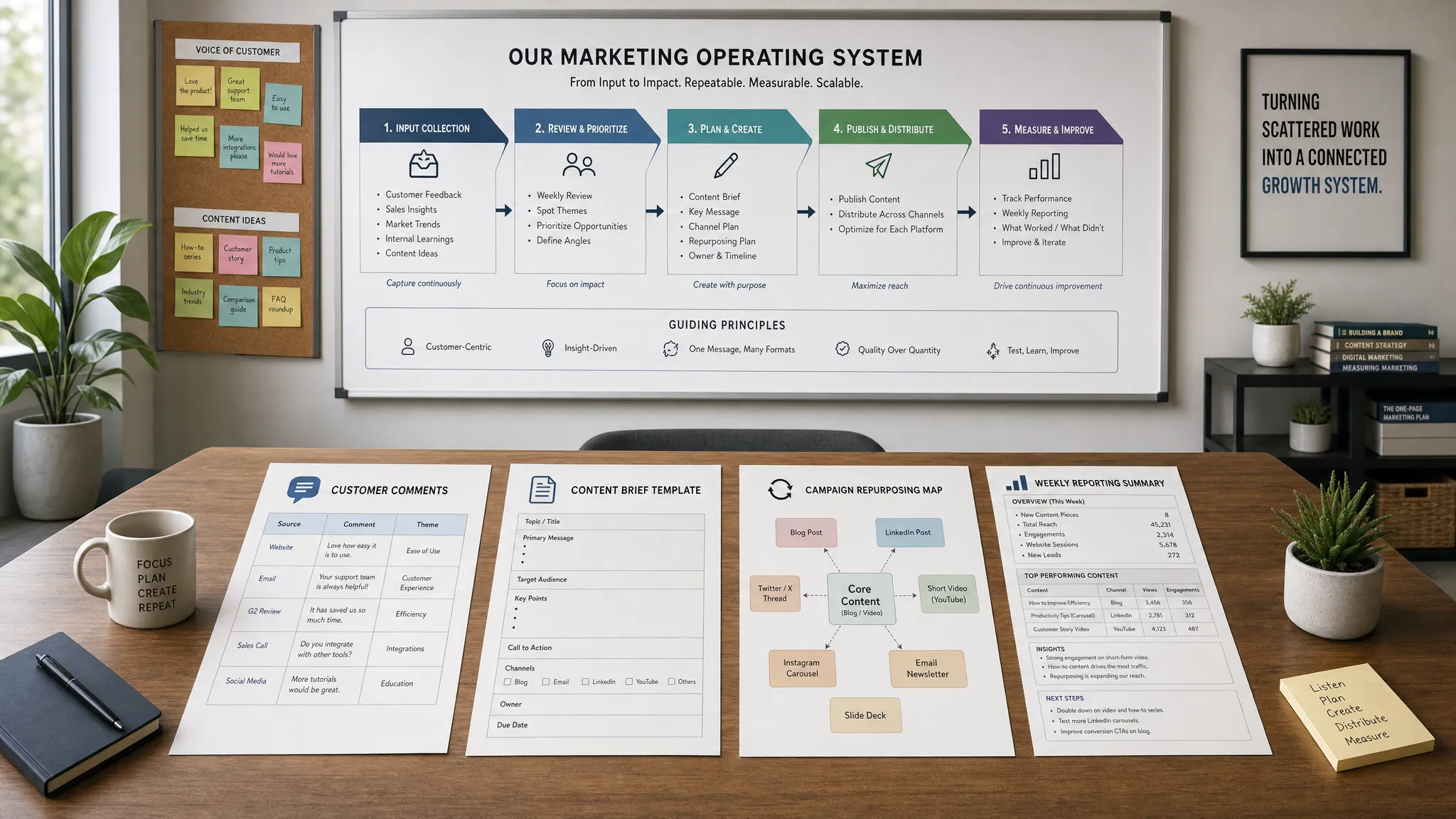
Finally, review performance monthly. AI marketing is not a one-time setup. Search behavior changes, competitors adjust, ad costs move, and client concerns evolve. The firms that benefit most treat AI as an ongoing operating system for better marketing decisions.
AI marketing for law firms works when it is specific, compliant, and tied to business outcomes. The goal is not to automate the attorney's voice out of the process. The goal is to make that expertise easier to find, easier to understand, and easier to act on.
The most effective firms use AI to research better topics, create more relevant content, improve local visibility, respond faster to inquiries, optimize paid campaigns, nurture referral relationships, and measure what actually leads to signed matters.
If your AI strategy does not improve trust, speed, or decision quality, it is probably just adding noise. If it does, it can become one of the most practical growth levers in modern law firm marketing.
Can law firms safely use AI for marketing? Yes, but AI-generated content and automation should be reviewed for accuracy, confidentiality, and compliance with applicable advertising rules. AI should support attorney and marketer judgment, not replace it.
What is the best AI marketing use case for a small law firm? For many small firms, the best starting point is improving local SEO and intake speed. Better practice-area pages, clearer calls to action, faster lead routing, and structured follow-up often produce more impact than publishing large volumes of content.
Should law firms use AI to write blog posts? AI can help draft outlines, summarize attorney interviews, repurpose content, and suggest FAQs. Attorneys or qualified reviewers should still verify legal accuracy, jurisdiction-specific details, and ethical compliance before publication.
Can AI chatbots answer legal questions on a law firm website? They should be limited to general information, intake support, scheduling, and routing. A chatbot should not provide legal advice, promise outcomes, or suggest that an attorney-client relationship has been formed.
How should a law firm measure AI marketing success? Track qualified consultations, signed matters, source quality, response time, cost per signed client, and revenue by practice area. Traffic and impressions are useful, but they are not enough on their own.
Law firms do not need more random automation. They need practical AI workflows that improve visibility, trust, intake, and measurement. AIMarketer Hub offers AI marketing tools, expert guides, prompt resources, and SEO insights to help teams build smarter systems without losing strategic control.
Explore more resources at AIMarketer Hub and start turning AI into a more disciplined marketing advantage.