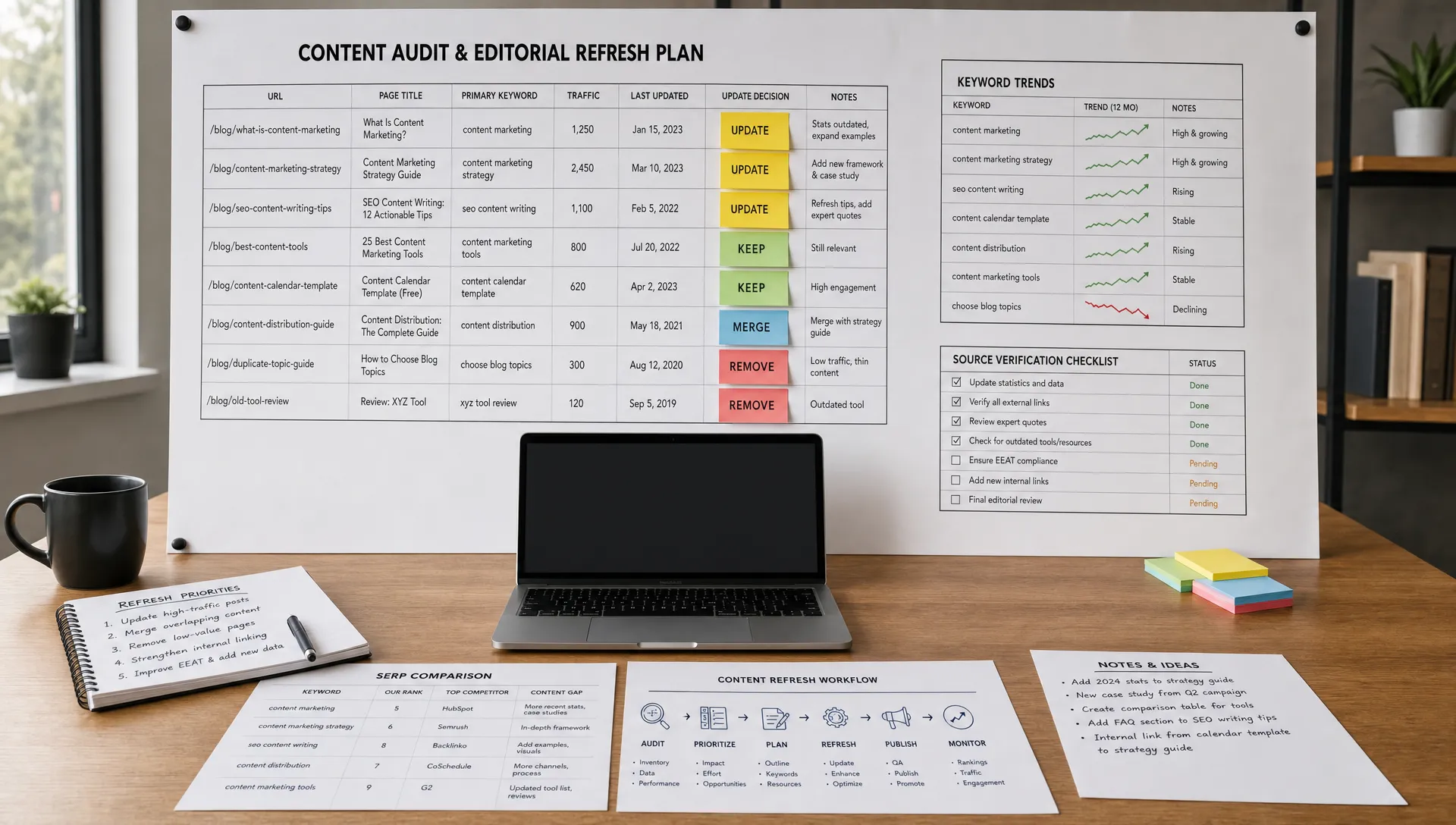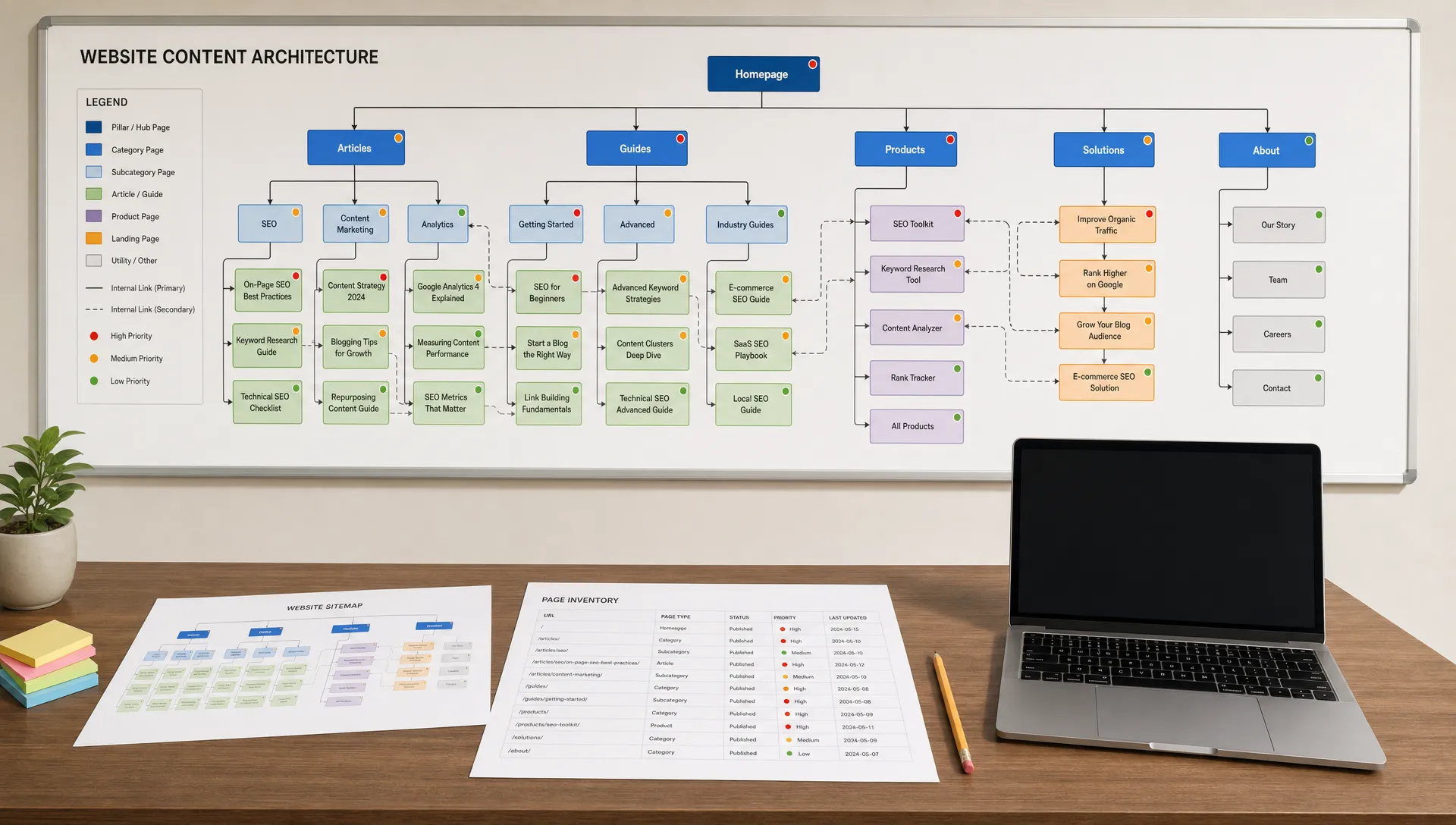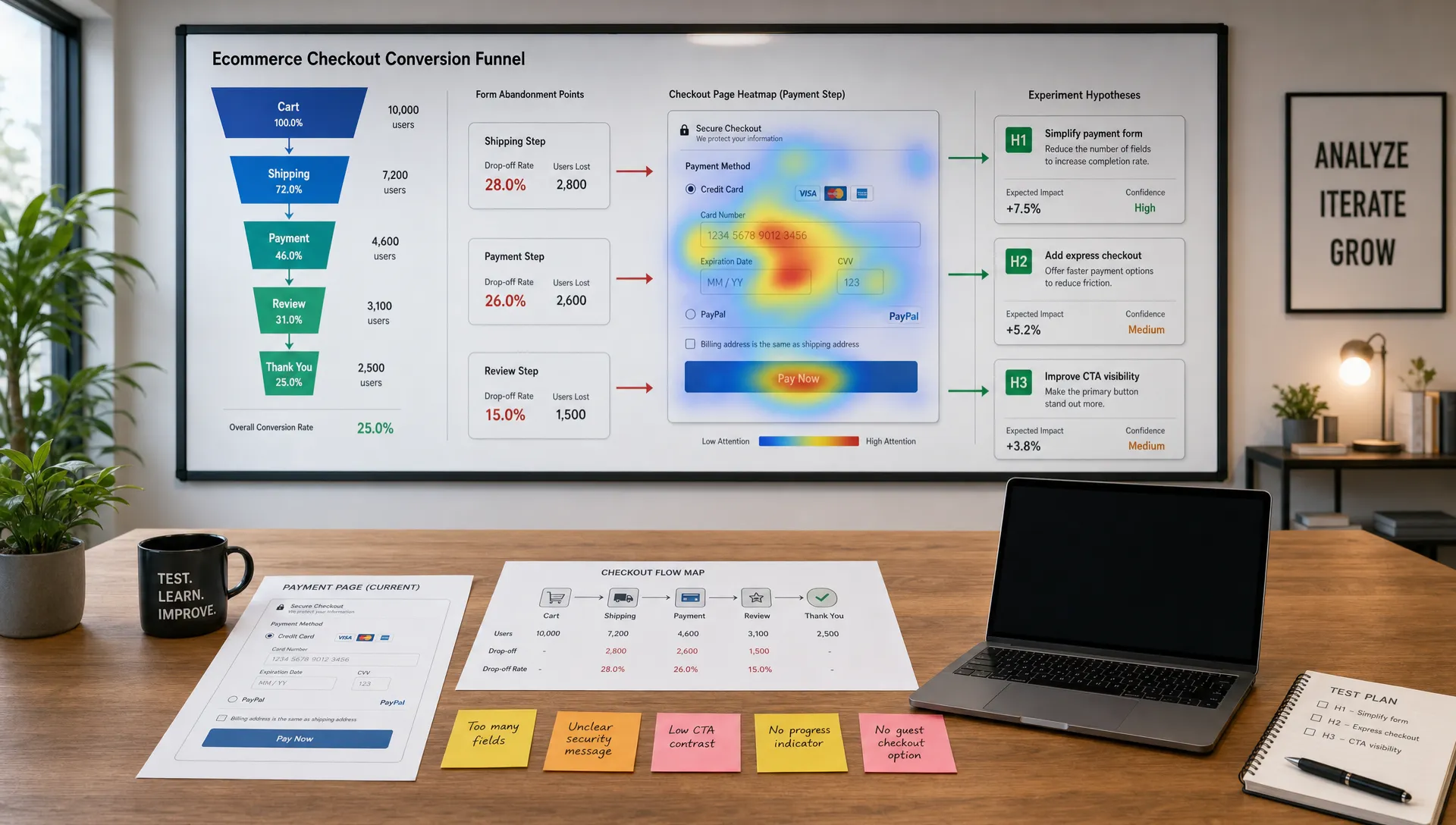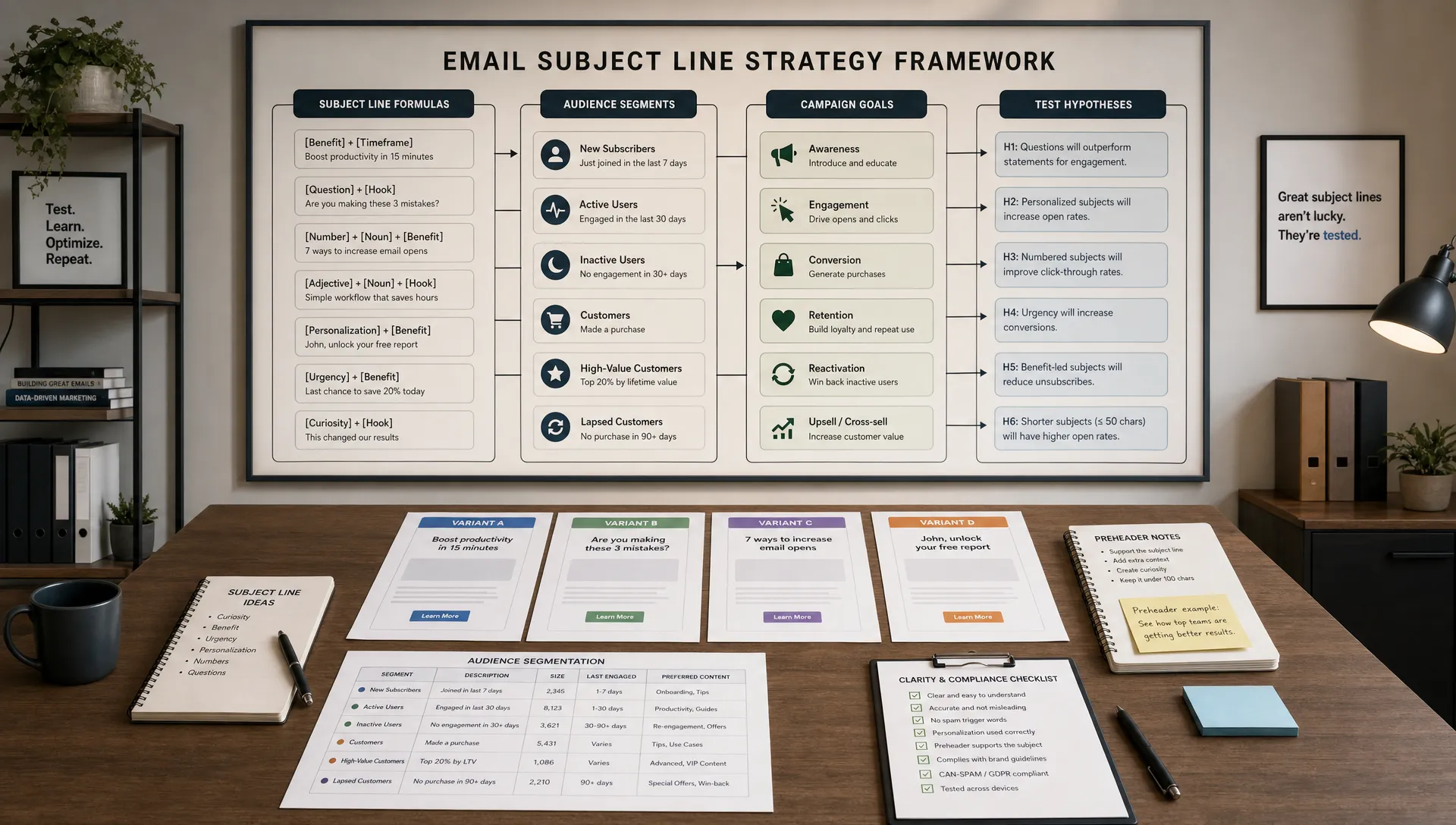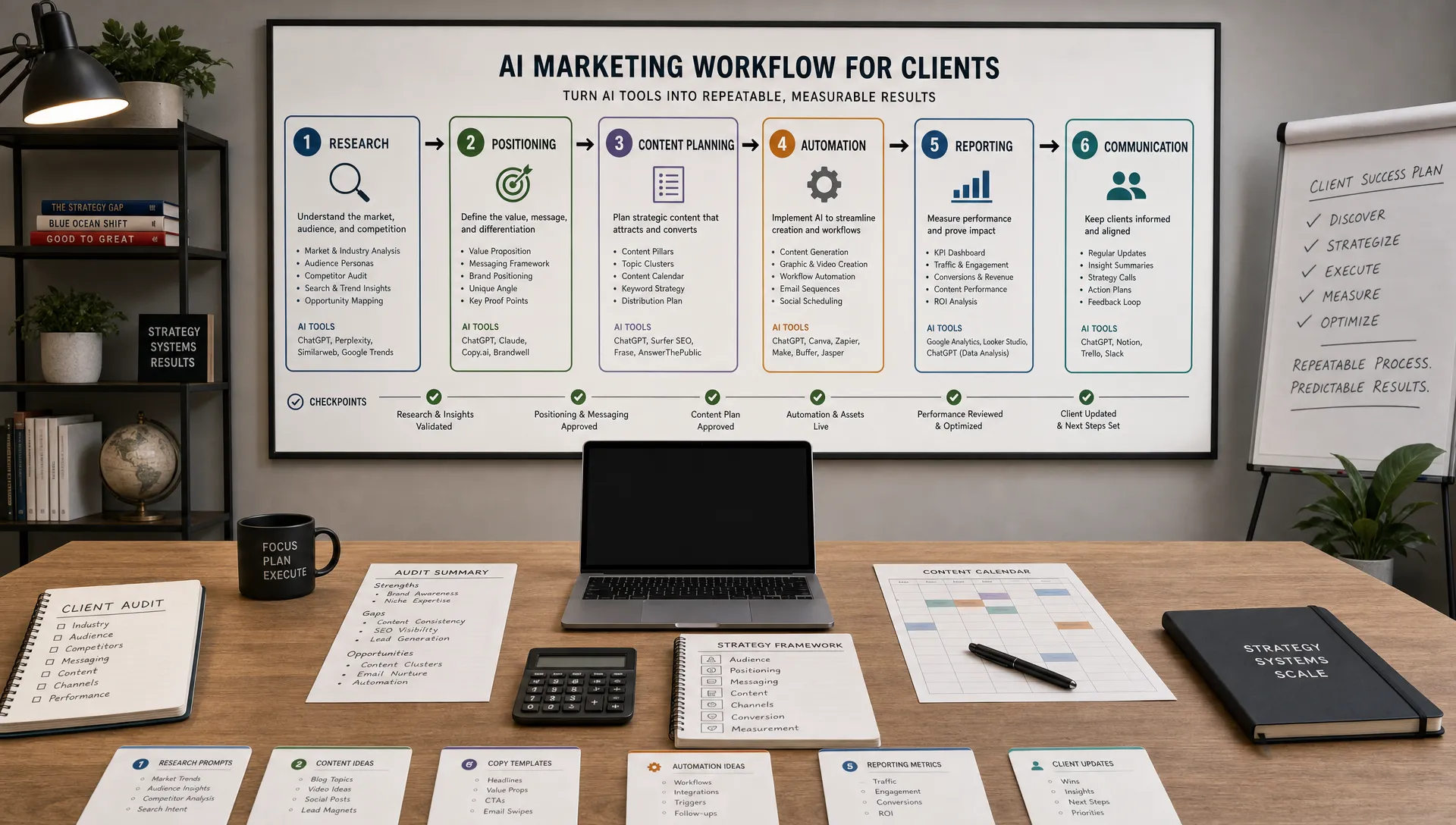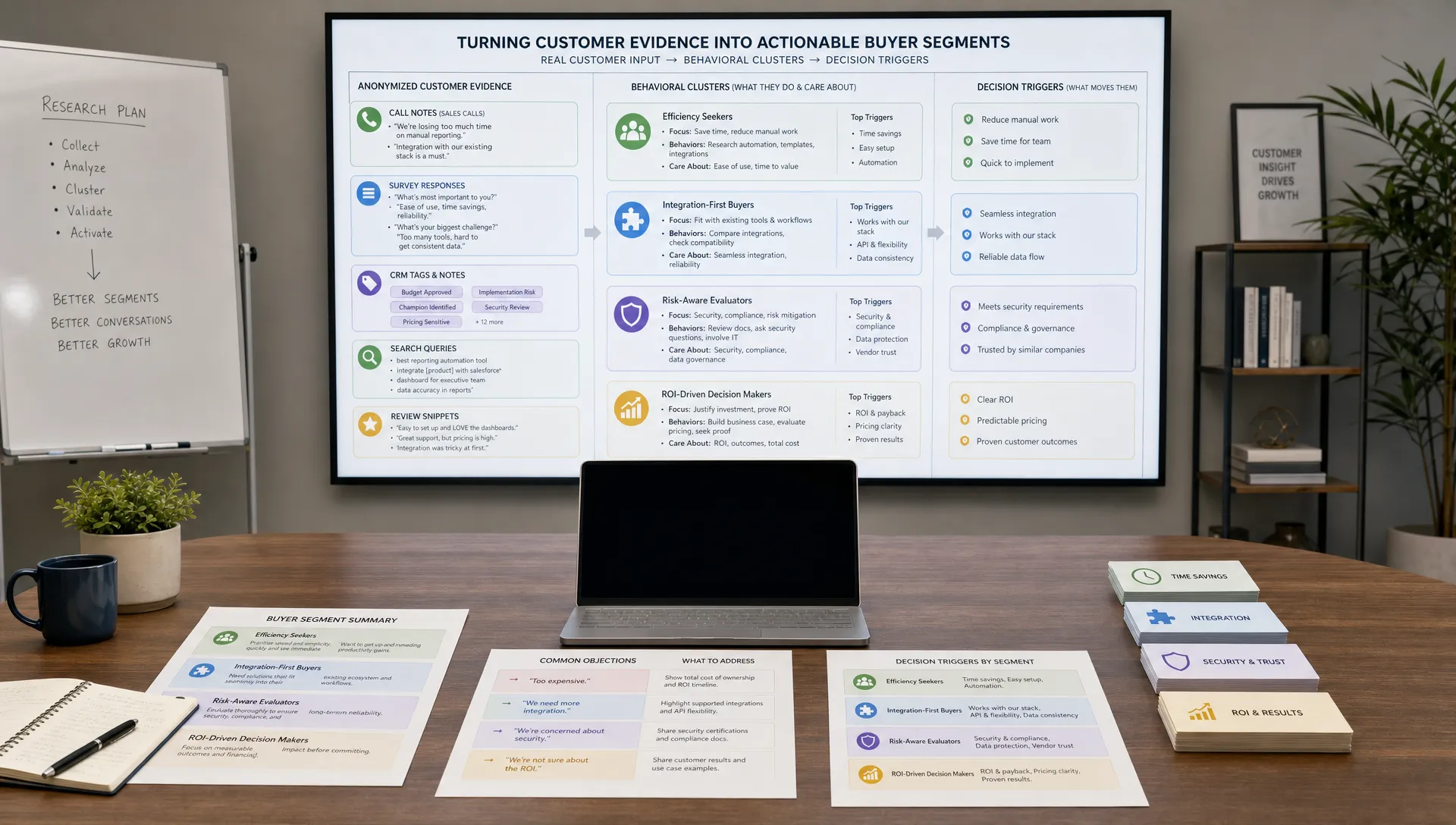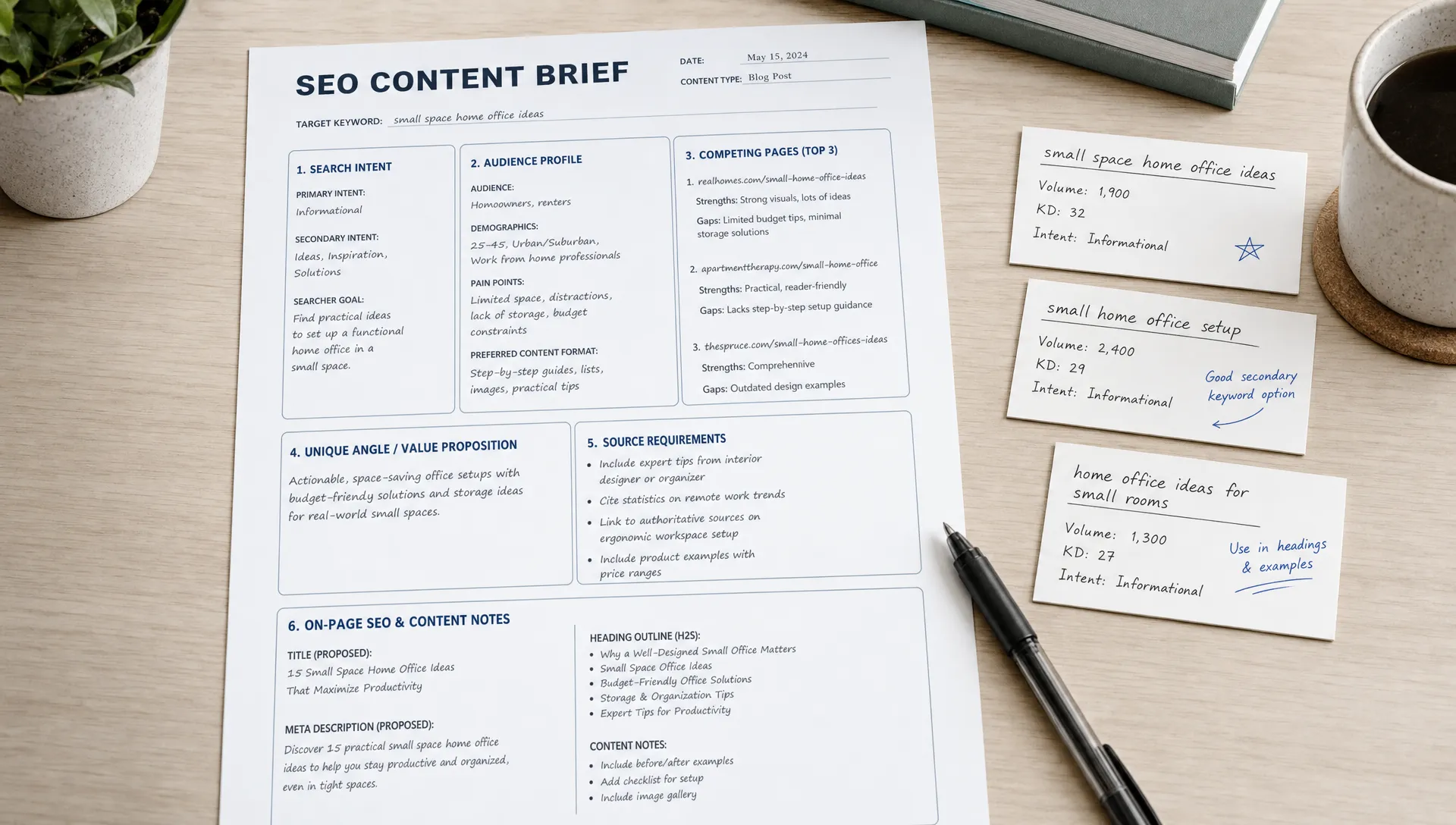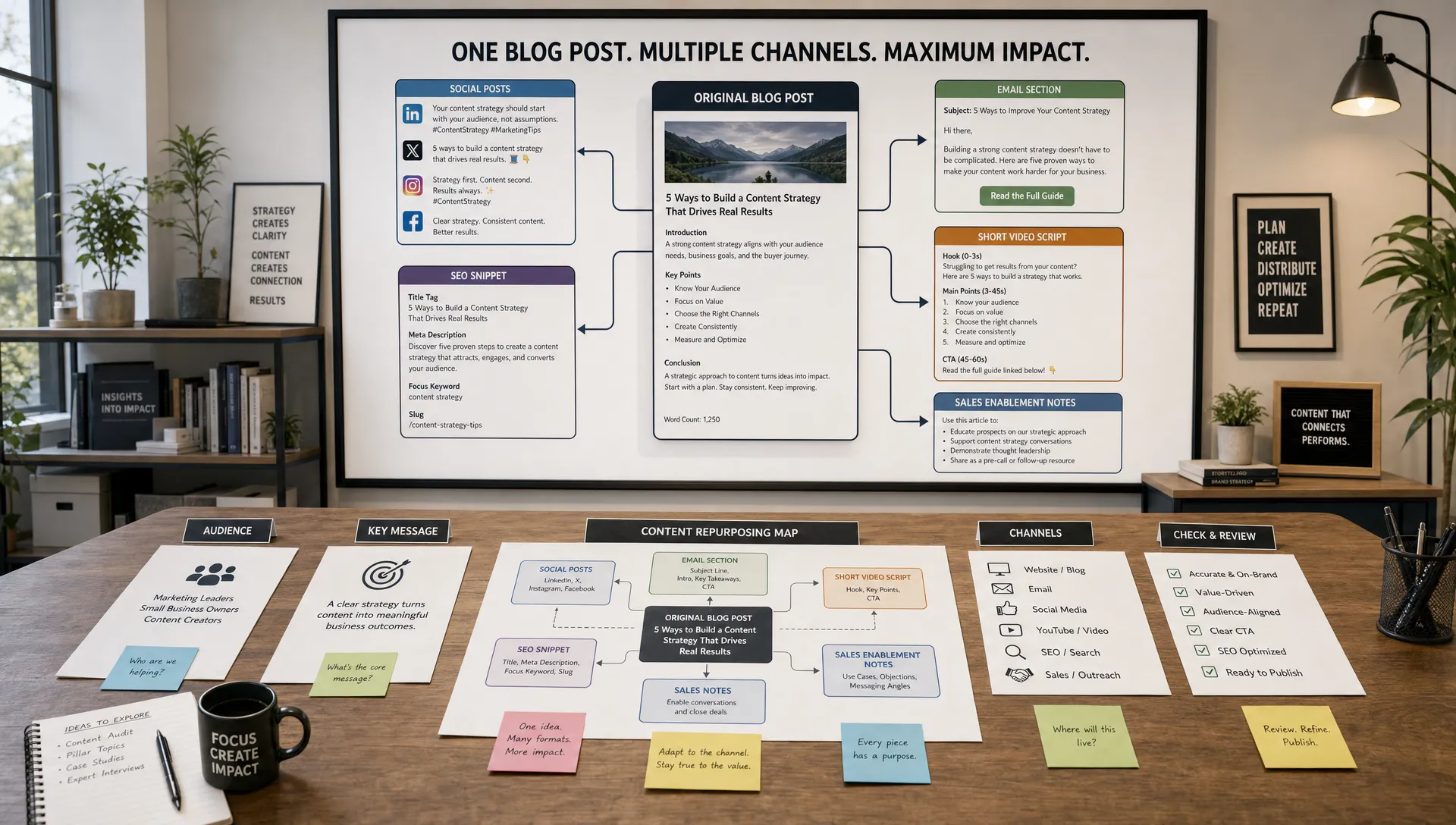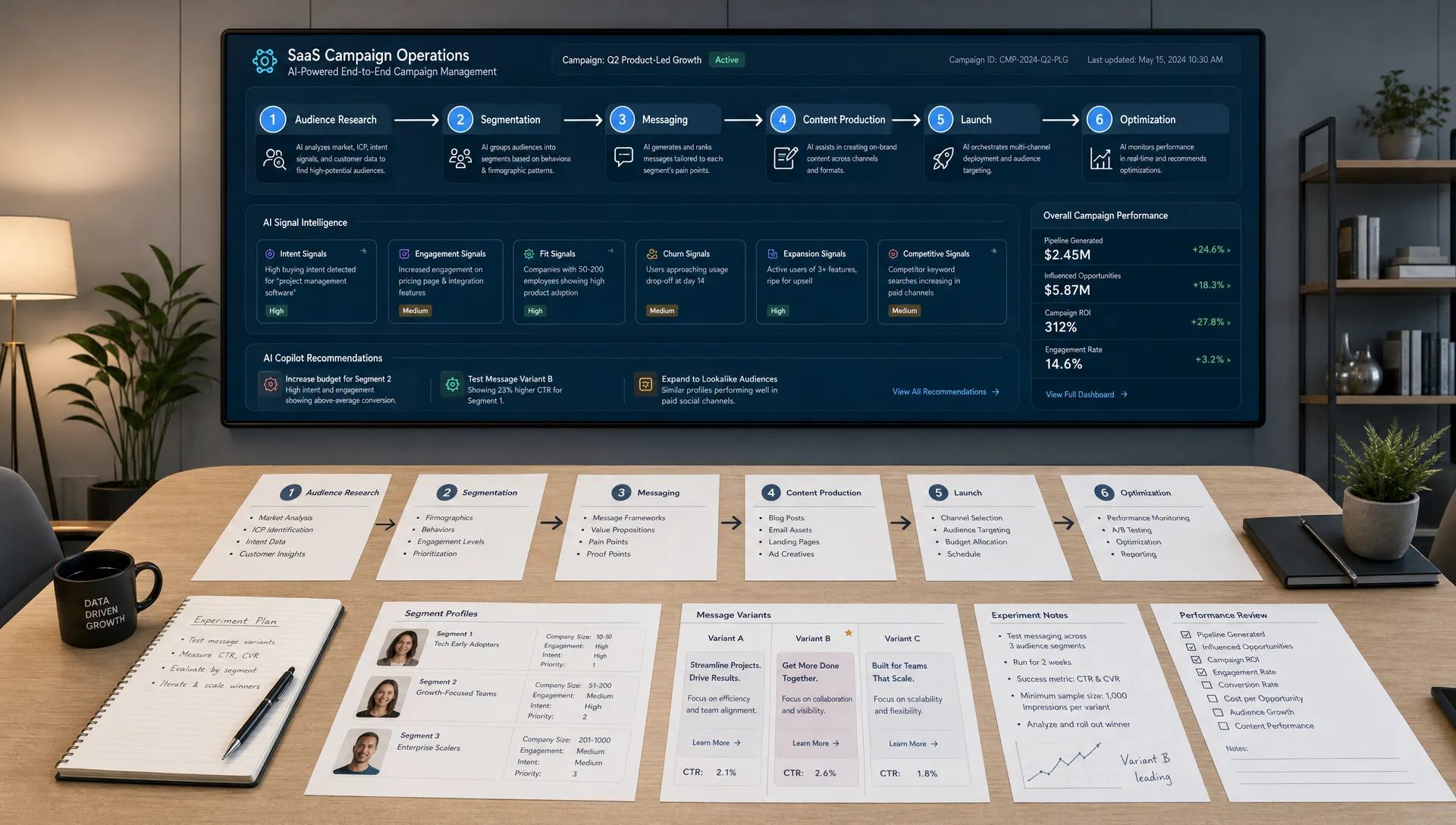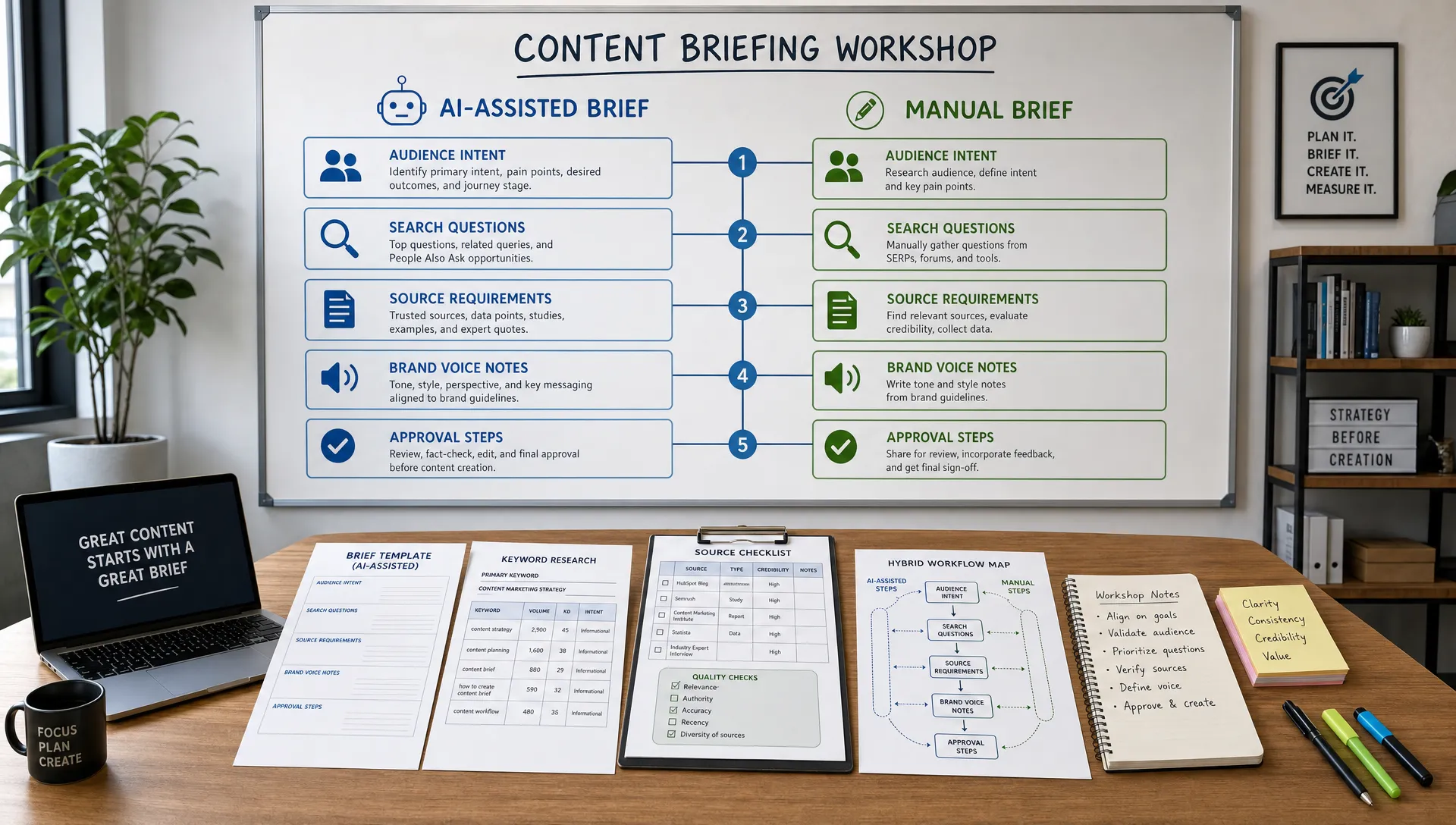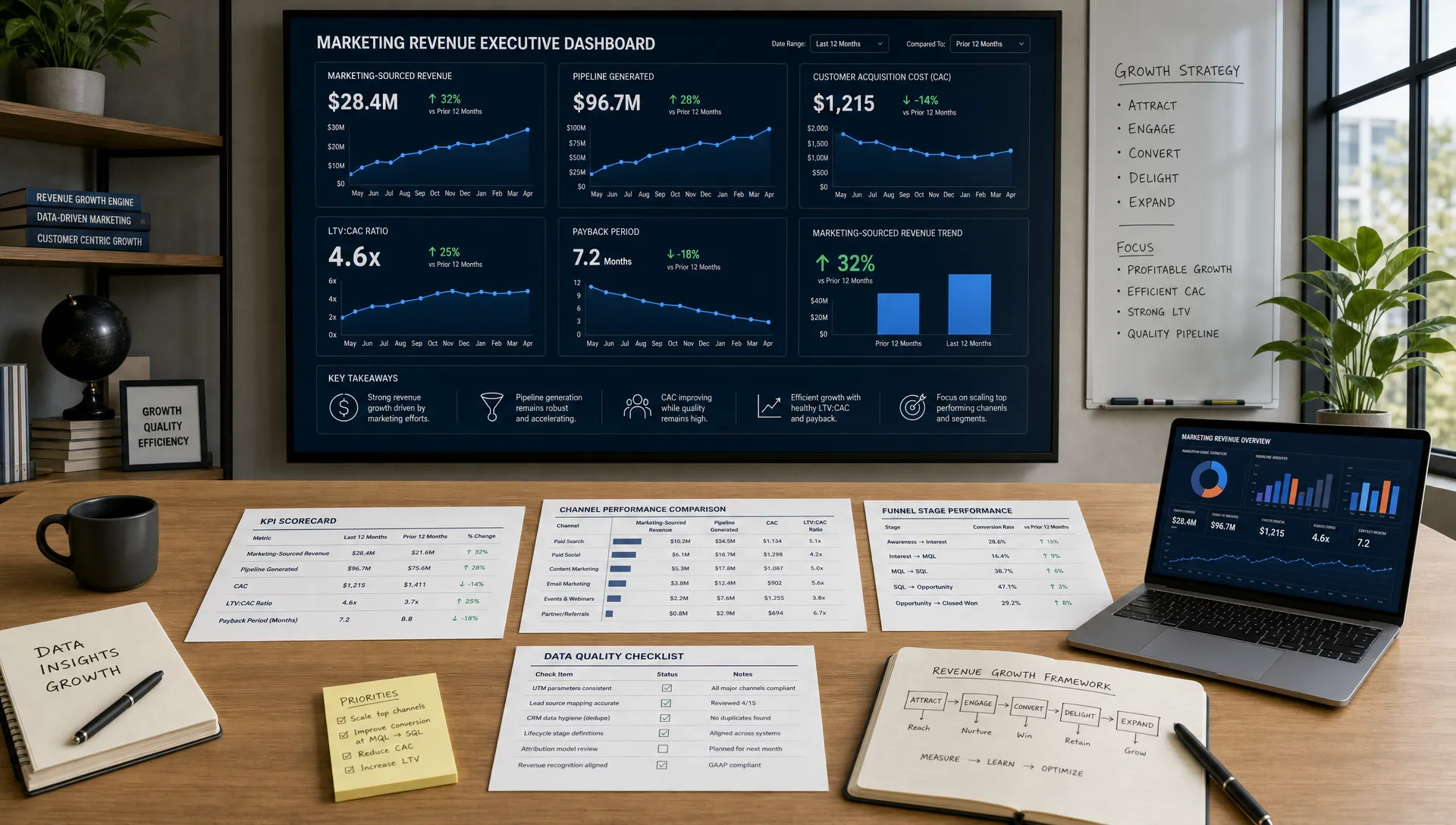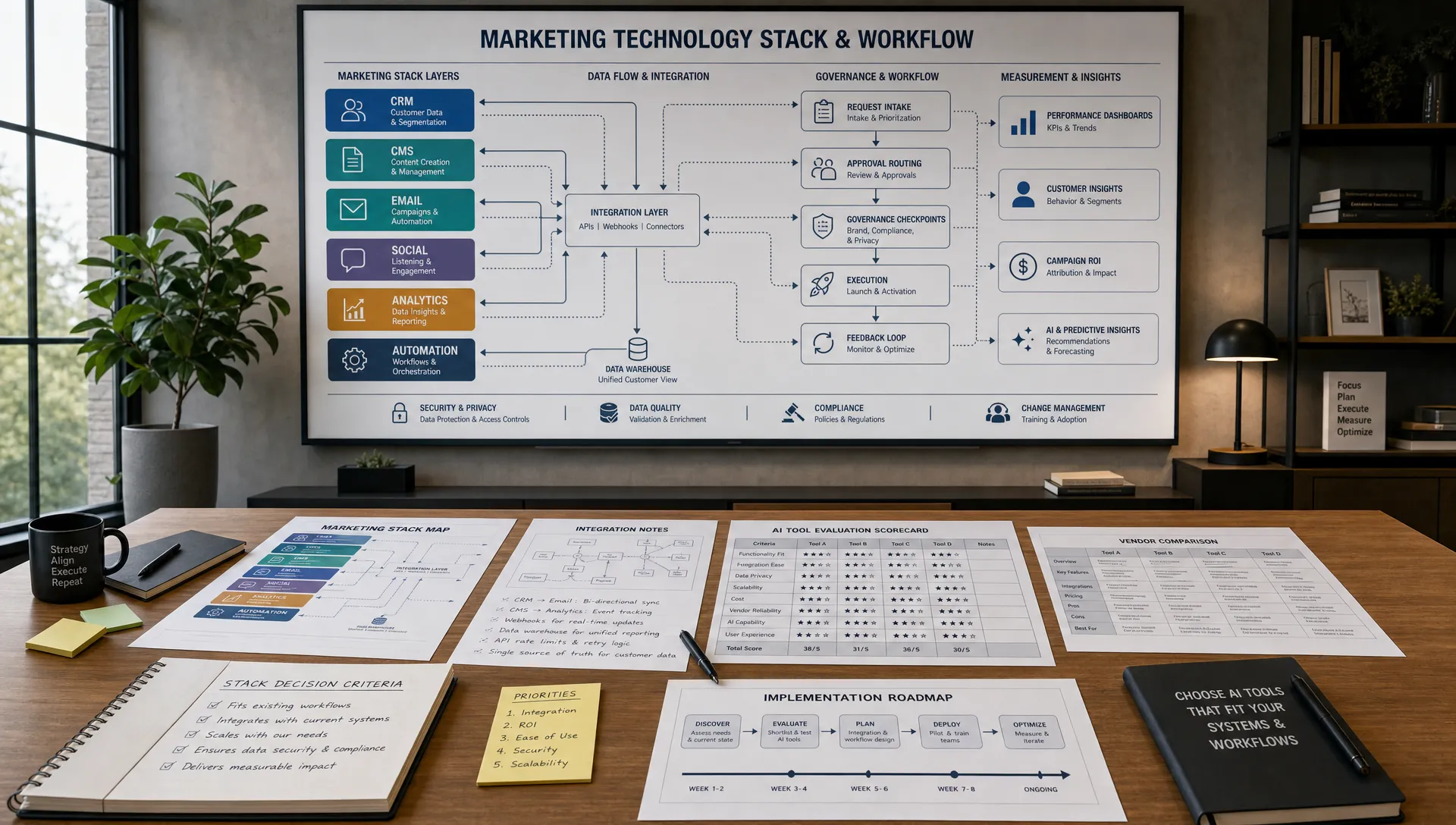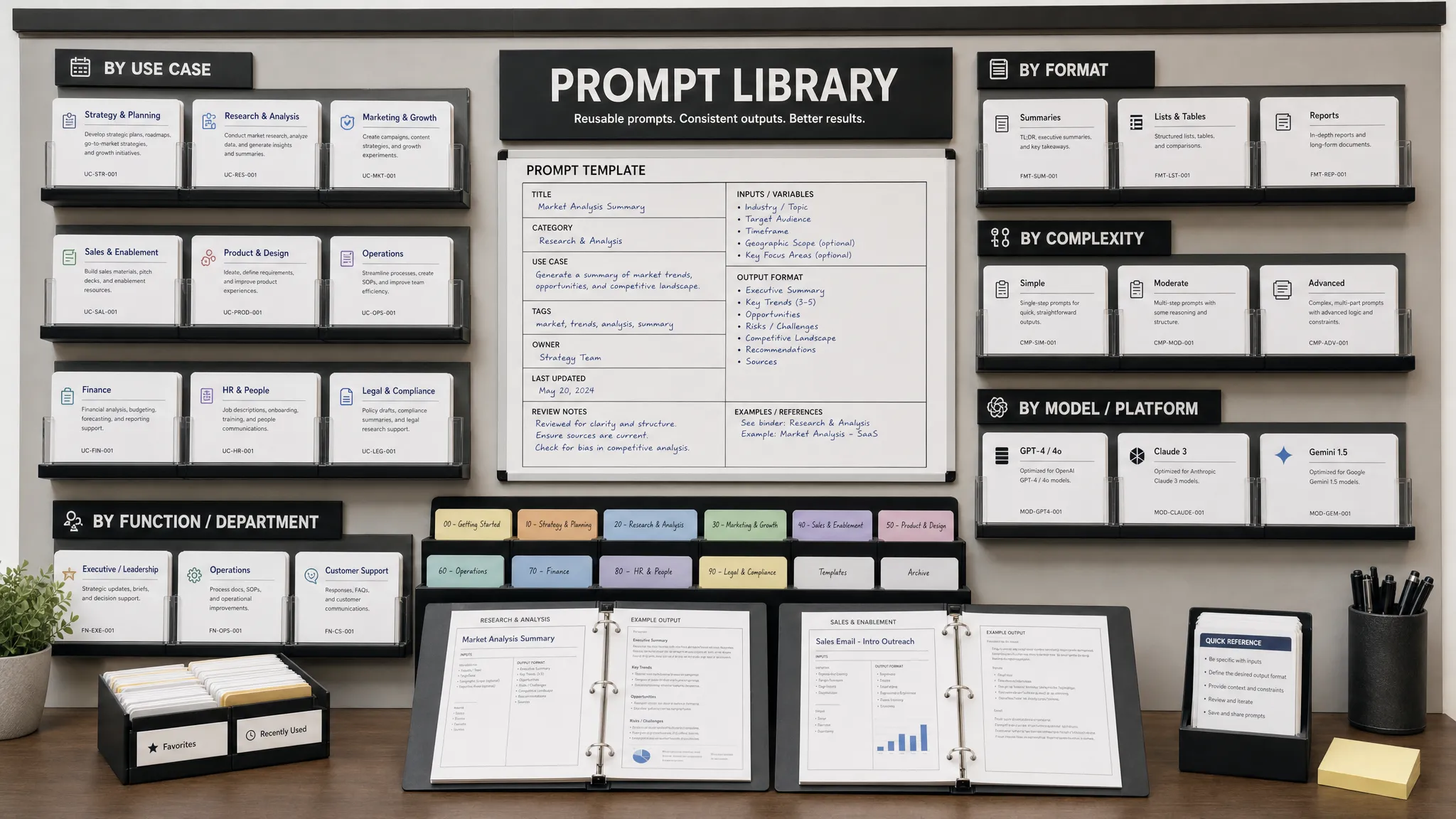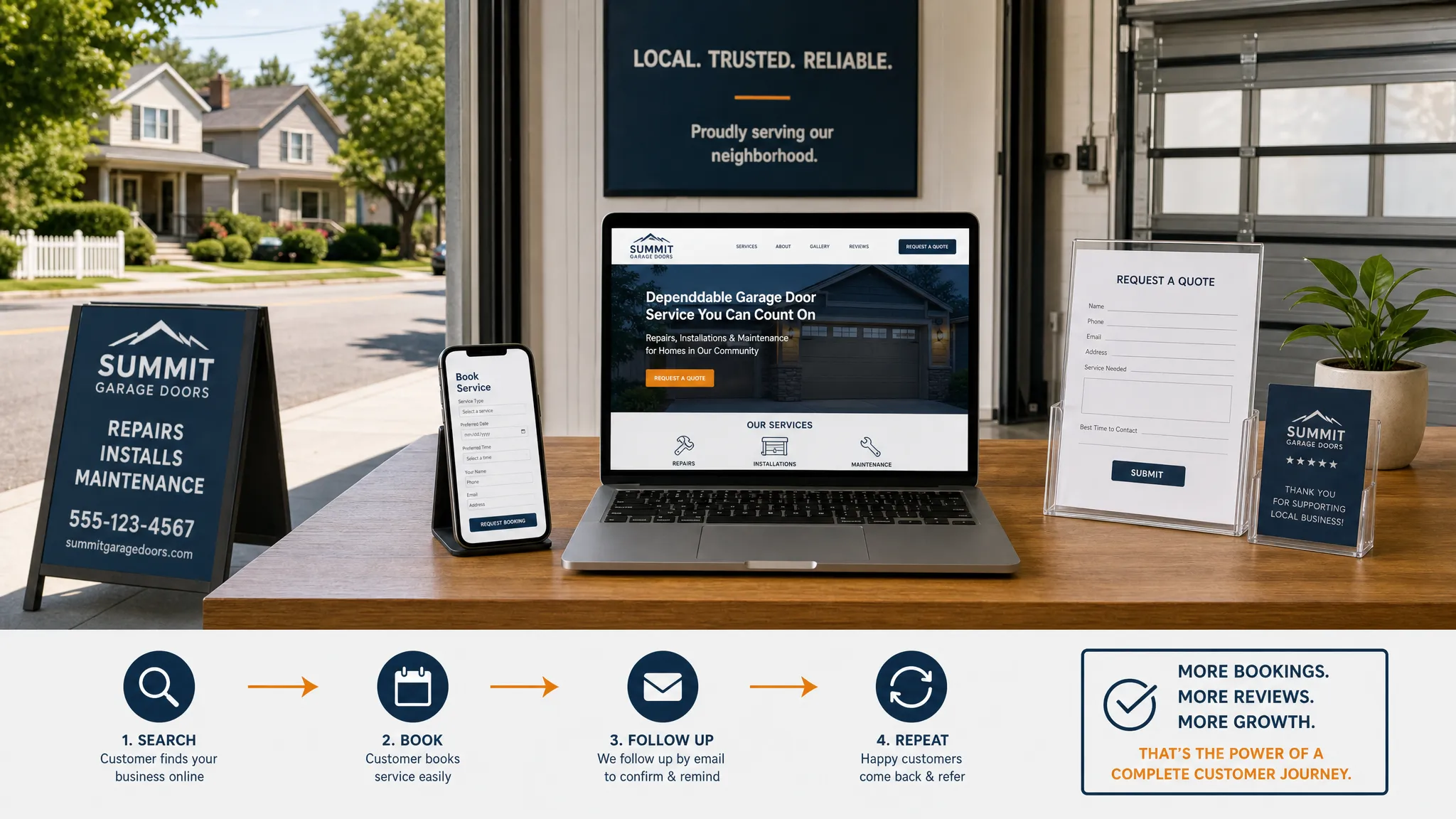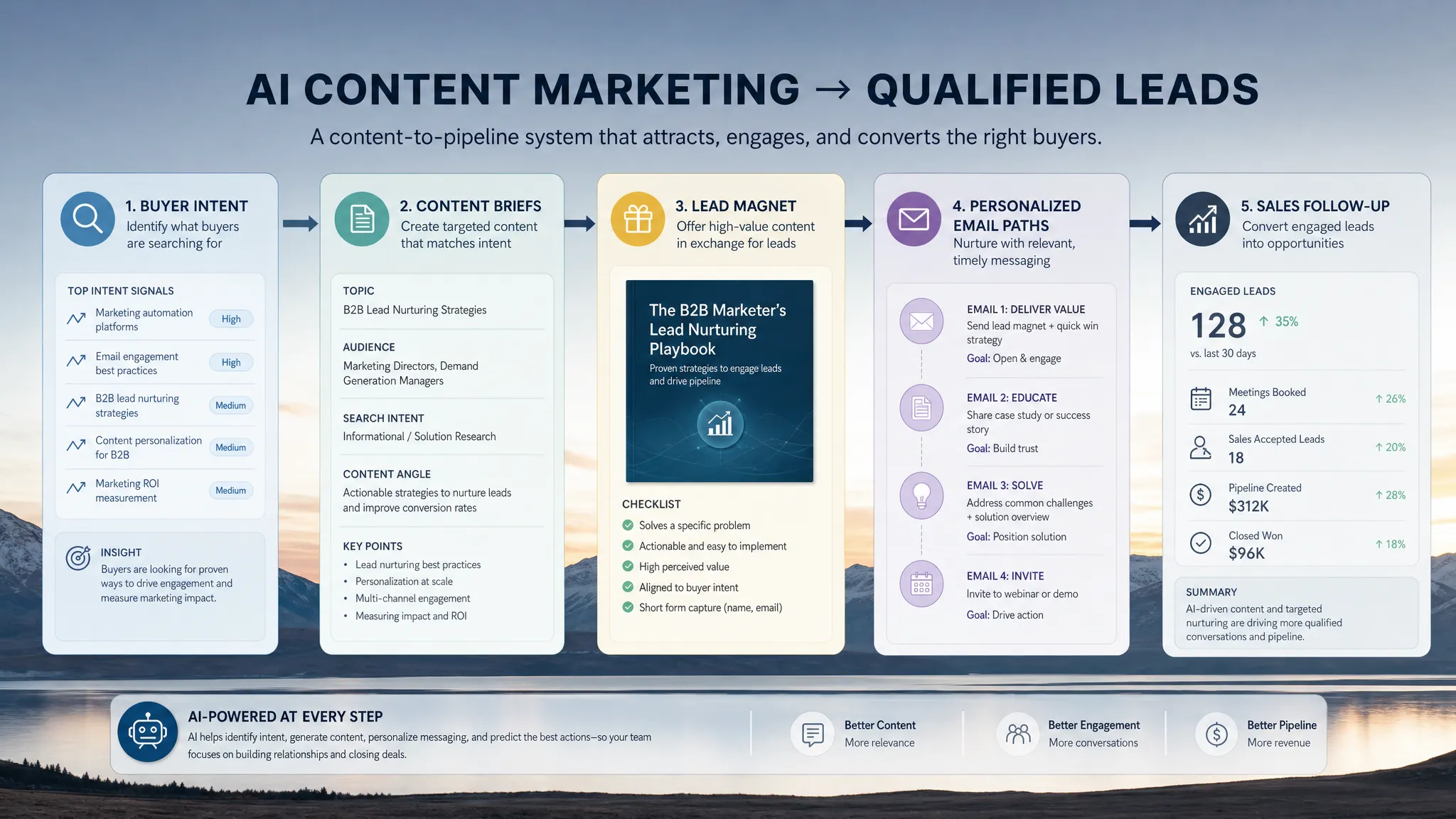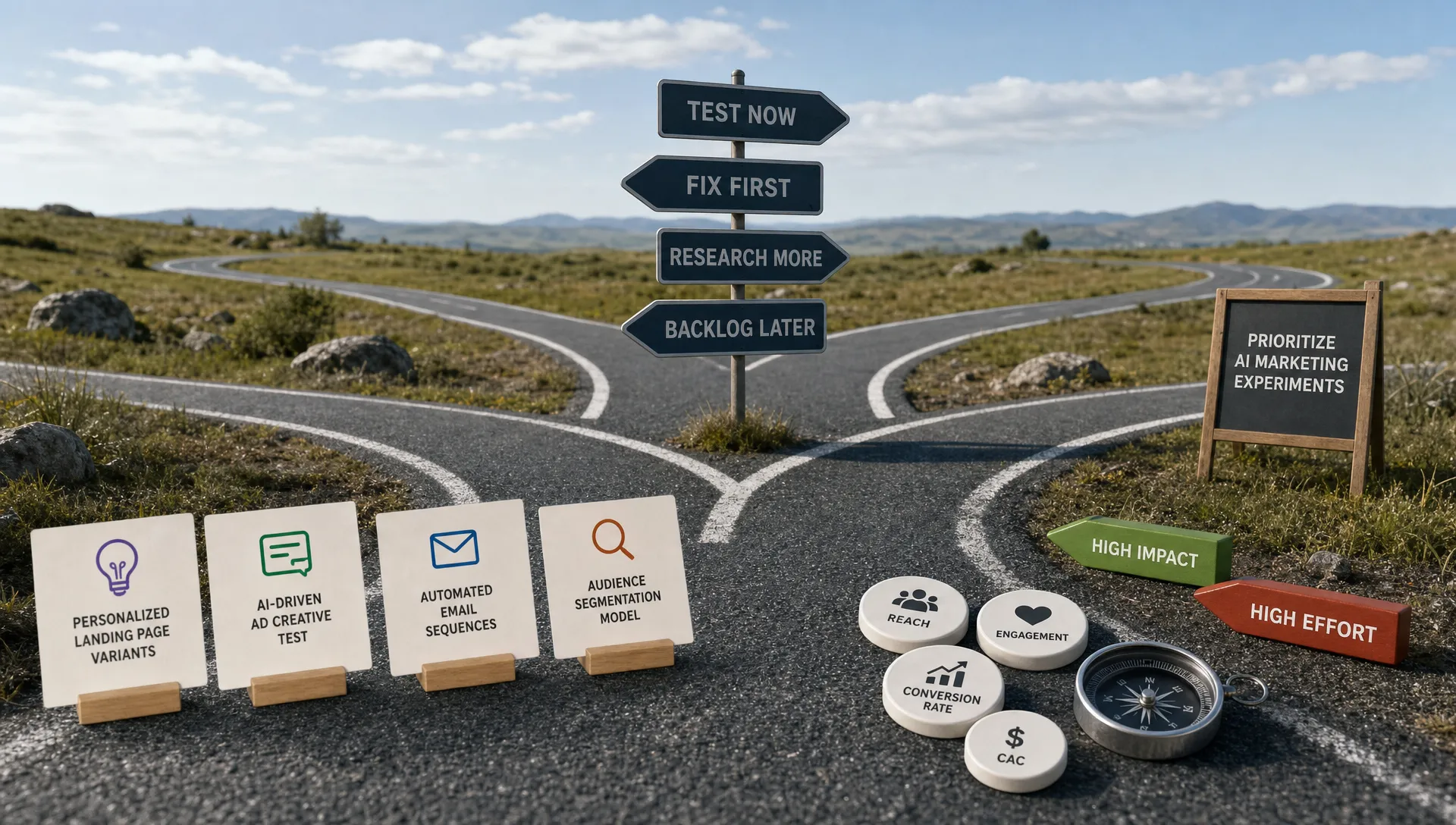
AI can generate more campaign ideas in a day than most teams can test in a quarter. That is useful only if your team knows which ideas deserve traffic, budget and attention.
The real challenge with AI marketing experiments is not idea generation. It is prioritization. Without a clear system, teams end up testing whatever looks clever, whatever the AI tool suggested most recently or whatever a stakeholder is most excited about. That creates motion, but not learning.
A good prioritization process does three things. It connects tests to business goals, filters weak hypotheses before they consume resources and makes trade-offs visible. The goal is not to run more experiments for the sake of speed. The goal is to learn what improves growth, conversion, retention or efficiency with the least waste.
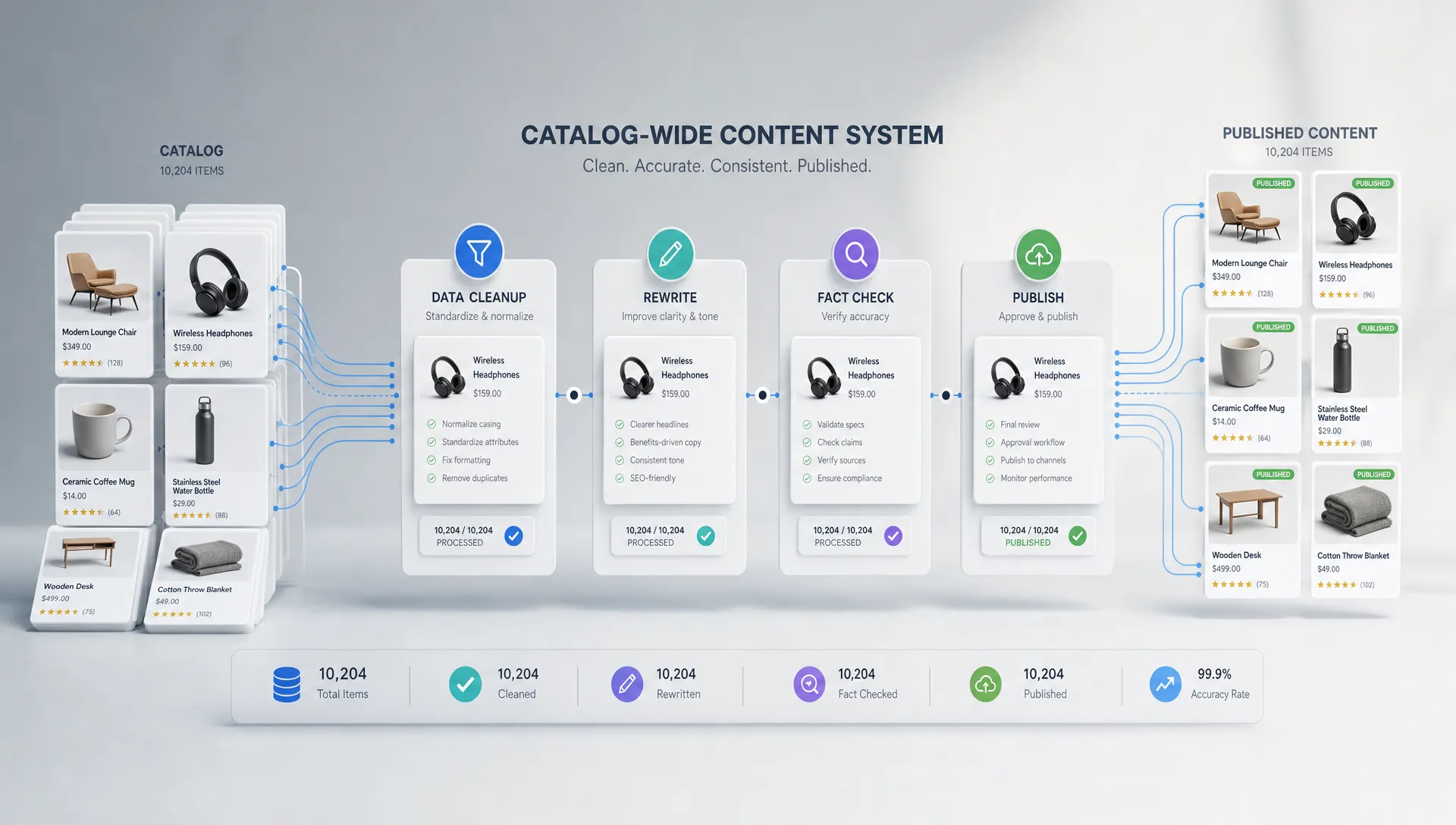
AI marketing automation has changed the volume of possible tests. A marketer can now generate landing page variants, ad angles, email subject lines, audience segments and personalization rules almost instantly. That speed is powerful, but it can also hide a basic problem: not every variation is worth testing.
When experiments are cheap to create, teams often treat them as cheap to run. They are not. Every test still spends something valuable, such as traffic, budget, analyst time, developer capacity, list fatigue or brand trust. A low-quality test can also delay a more important test that would have answered a higher-value question.
Prioritization becomes the operating system for experimentation. It helps a team decide whether an idea should become an A/B test, a user research task, a quick implementation or a backlog item for later. If your team is still deciding what should be automated and what needs human judgment, AIMarketer Hub has a useful comparison of AI-driven and manual A/B testing that can help set expectations before you build your testing process.
The weakest AI marketing experiments start with a tool capability. For example, the team discovers that a platform can generate 50 product page headlines, so it tests headlines. The stronger approach starts with a business constraint: where is the funnel underperforming, and what uncertainty is stopping the team from improving it?
Before adding an idea to the test backlog, answer a few basic questions:
This framing keeps your team from testing disconnected details. A button label test may be worthwhile if analytics show a form abandonment problem and user recordings suggest hesitation at the call to action. The same test is much weaker if it is chosen only because an AI copy tool produced five alternatives.
A useful experiment backlog should look less like a list of ideas and more like a list of decisions the business needs to make.
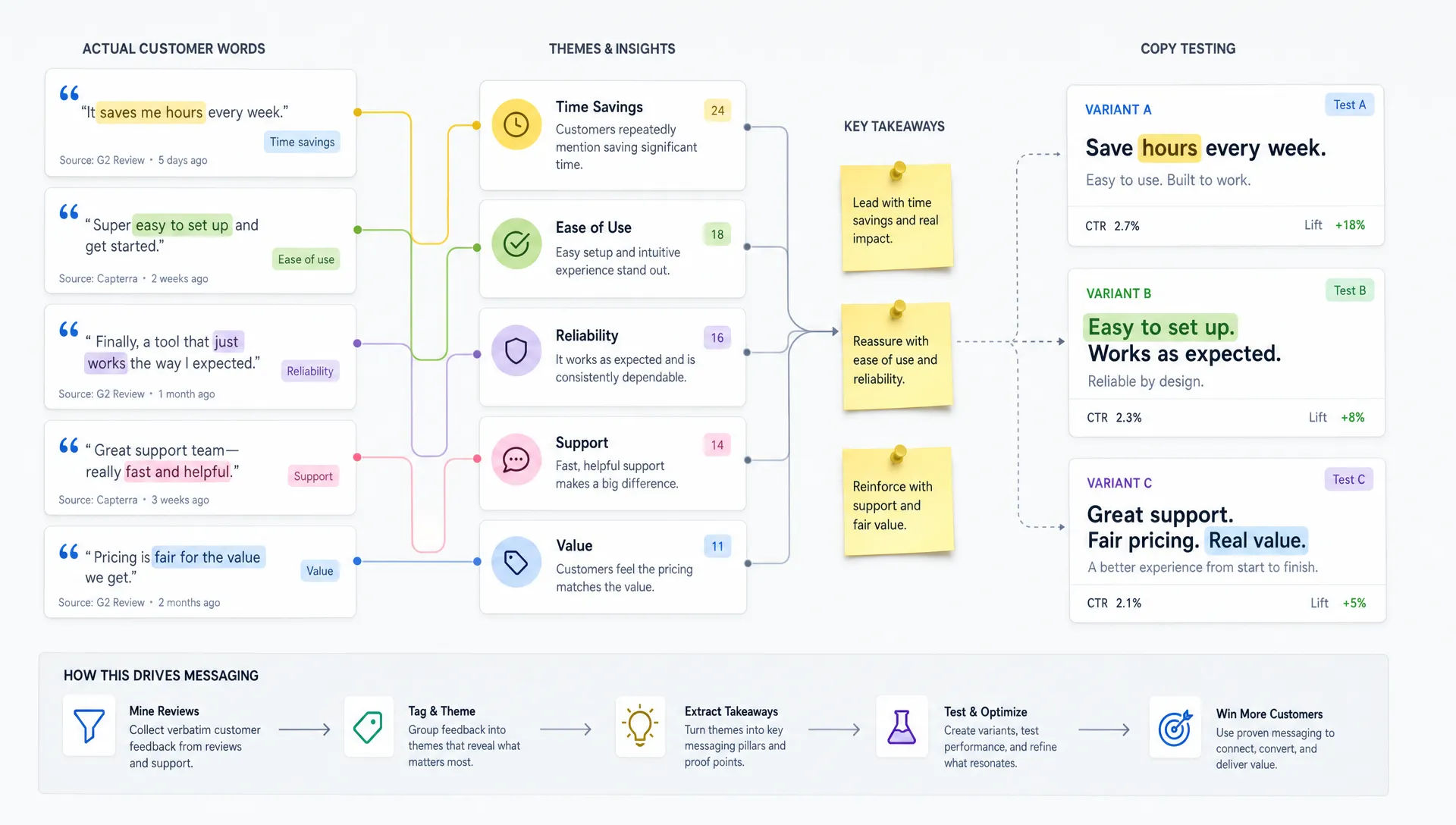
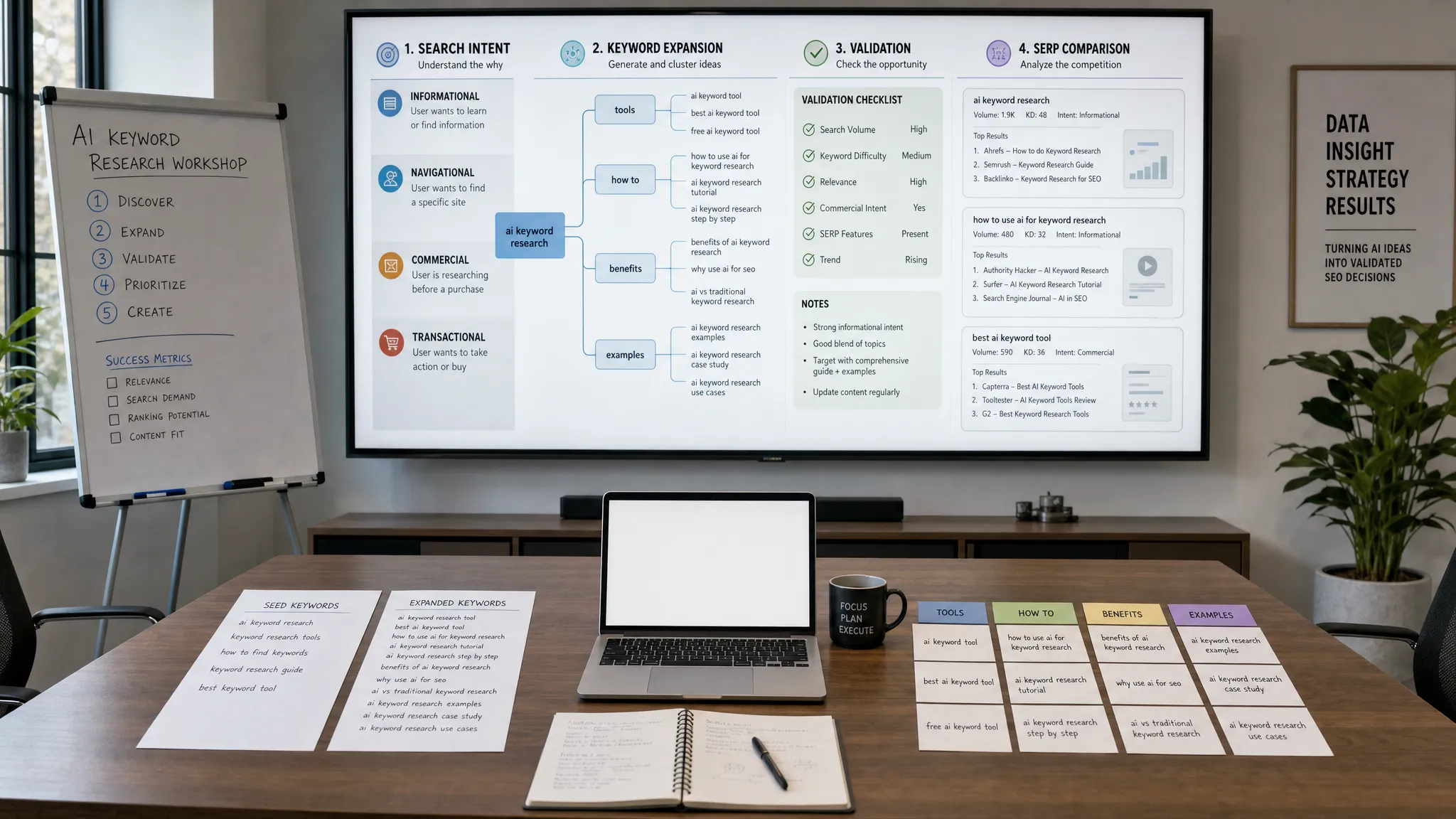
AI is excellent at generating raw possibilities. It can summarize customer reviews, cluster objections, draft copy variants and suggest ways to personalize a journey. Your job is to turn that output into hypotheses that can be tested.
A hypothesis connects a change to a specific audience, behavior and metric. Without that structure, the team may launch an experiment but still struggle to interpret the outcome.
| Weak experiment idea | Stronger testable hypothesis |
|---|---|
| Test new AI-written homepage copy | For first-time visitors from paid search, replacing feature-led copy with outcome-led copy will increase demo clicks because the current page does not match ad intent. |
| Try personalized emails | For trial users who have not activated within 48 hours, an AI-personalized use case email will increase first key action completion. |
| Test more ad creatives | For cold audiences, pain-point creative will reduce cost per qualified visit compared with product feature creative. |
| Change the pricing page | For mid-market buyers, adding procurement and security reassurance above the form will increase sales-qualified demo requests. |
The stronger versions are not longer for the sake of being formal. They clarify what is changing, who is affected, why the change might work and what success means. That makes prioritization much easier because each test can be evaluated against the same criteria.
A simple scoring model is usually enough. You do not need a complex data science system to prioritize most AI marketing experiments. You need shared criteria that force the team to compare ideas consistently.
Score each experiment from 1 to 5 across five factors. A 1 means weak, uncertain or difficult. A 5 means strong, clear or easy.
| Factor | What to ask | What a high score means |
|---|---|---|
| Business impact | If this works, how much could it affect revenue, pipeline, retention or efficiency? | The test is tied to a high-value bottleneck or major cost driver. |
| Evidence strength | What data, research or customer feedback supports the hypothesis? | The idea is backed by analytics, customer language, sales insights or prior tests. |
| Speed to launch | How quickly can the team run the test correctly? | The test can be launched without heavy engineering, legal review or operational change. |
| Learning value | Will the result teach us something reusable? | The outcome will inform future messaging, segmentation, offers or workflows. |
| Risk control | What could go wrong for users, the brand or the business? | The test has low downside or strong guardrails. |
Add the scores to create a simple priority total out of 25. The score is not a replacement for judgment, but it makes the conversation more concrete. If one stakeholder wants to test a small design tweak and another wants to test a new onboarding sequence, the team can compare them by impact, evidence and learning value instead of debating personal preferences.
High-scoring tests usually have three traits. They address a visible bottleneck, have some evidence behind them and create learning that can be reused beyond one page or campaign. Low-scoring tests often have weak evidence, unclear metrics or require too much work for too little learning.
Prioritization improves when you separate experiments by funnel stage. A test that matters for a SaaS trial flow may be irrelevant for a content-led acquisition strategy. The best first test depends on where the current constraint sits.
| Funnel stage | Better first tests | Lower priority tests |
|---|---|---|
| Awareness | AI-assisted ad message angles, audience pain points and creative concepts | Minor visual edits that do not change the message |
| Consideration | Landing page intent match, proof points, comparison content and lead magnet positioning | Testing small wording changes with no traffic source context |
| Conversion | Offer clarity, form friction, CTA relevance and pricing page objections | Button color tests before message and offer clarity are solved |
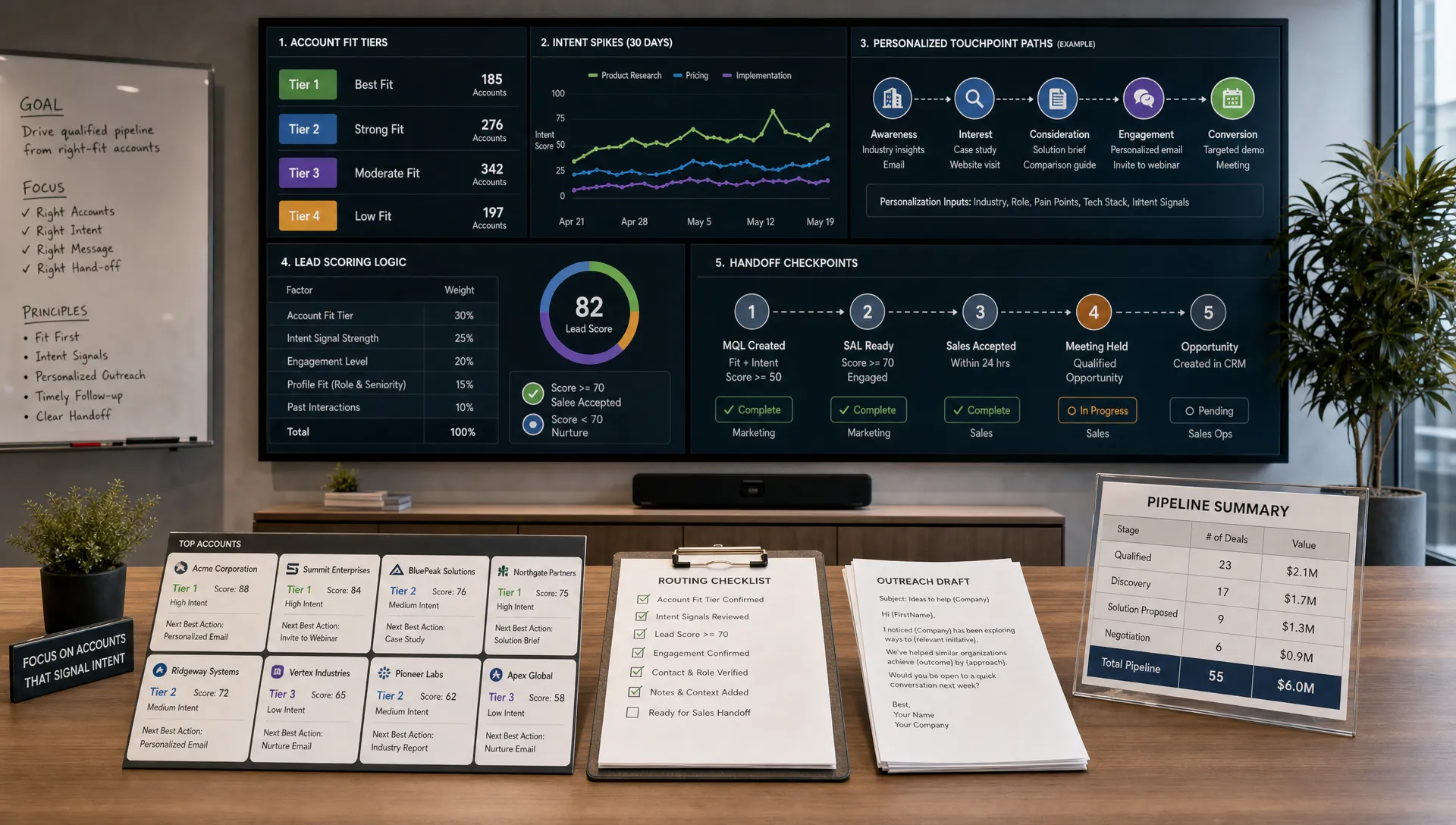
| Activation | Onboarding emails, in-app prompts, use case paths and first value moments | Broad personalization without knowing activation blockers |
| Retention | Lifecycle messaging, churn-risk segments, renewal prompts and customer education | Generic newsletters with no behavior-based logic |
| Operations | Lead routing, quote follow-up, payment reminders and workflow automation | Cosmetic changes that do not reduce delay, leakage or manual work |
Operational experiments deserve special attention because AI marketing is not only about creative output. A campaign can generate demand but still fail if payment, routing or fulfillment systems create friction. An AI-powered upsell or payment reminder experiment may look promising, but it should be evaluated alongside reconciliation, fraud prevention and cash-flow requirements. In travel, for instance, a tourism-focused payment platform like Elia Pay can be relevant operational context when deciding whether checkout, deposit or payment follow-up tests are feasible.
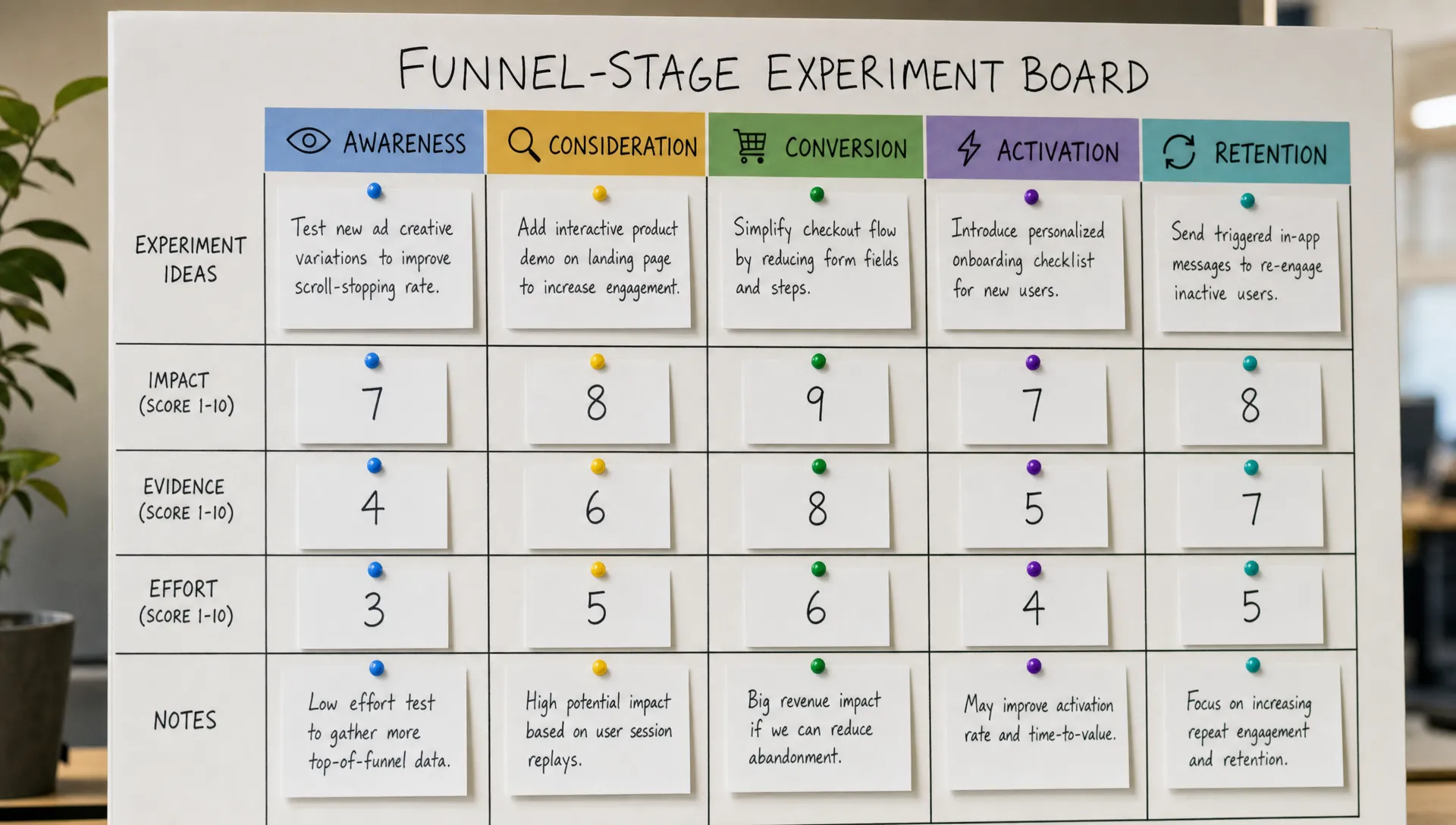
Not every improvement needs an experiment. Some issues should simply be fixed.
If a form is broken on mobile, the page loads slowly or an email contains unclear merge fields, running a test wastes time. These are quality problems, not strategic uncertainties. The same is true for obvious accessibility problems, missing tracking parameters or mismatched ad URLs.
Use testing when there is genuine uncertainty. For example, you may not know whether a pricing page should lead with cost savings or speed, whether an AI-personalized onboarding email will outperform a role-based template or whether a shorter demo form will increase qualified pipeline without lowering lead quality.
A helpful rule is this: fix defects, test decisions. If the team already knows the current experience is objectively broken, prioritize implementation. If the team needs evidence to choose between plausible options, prioritize an experiment.
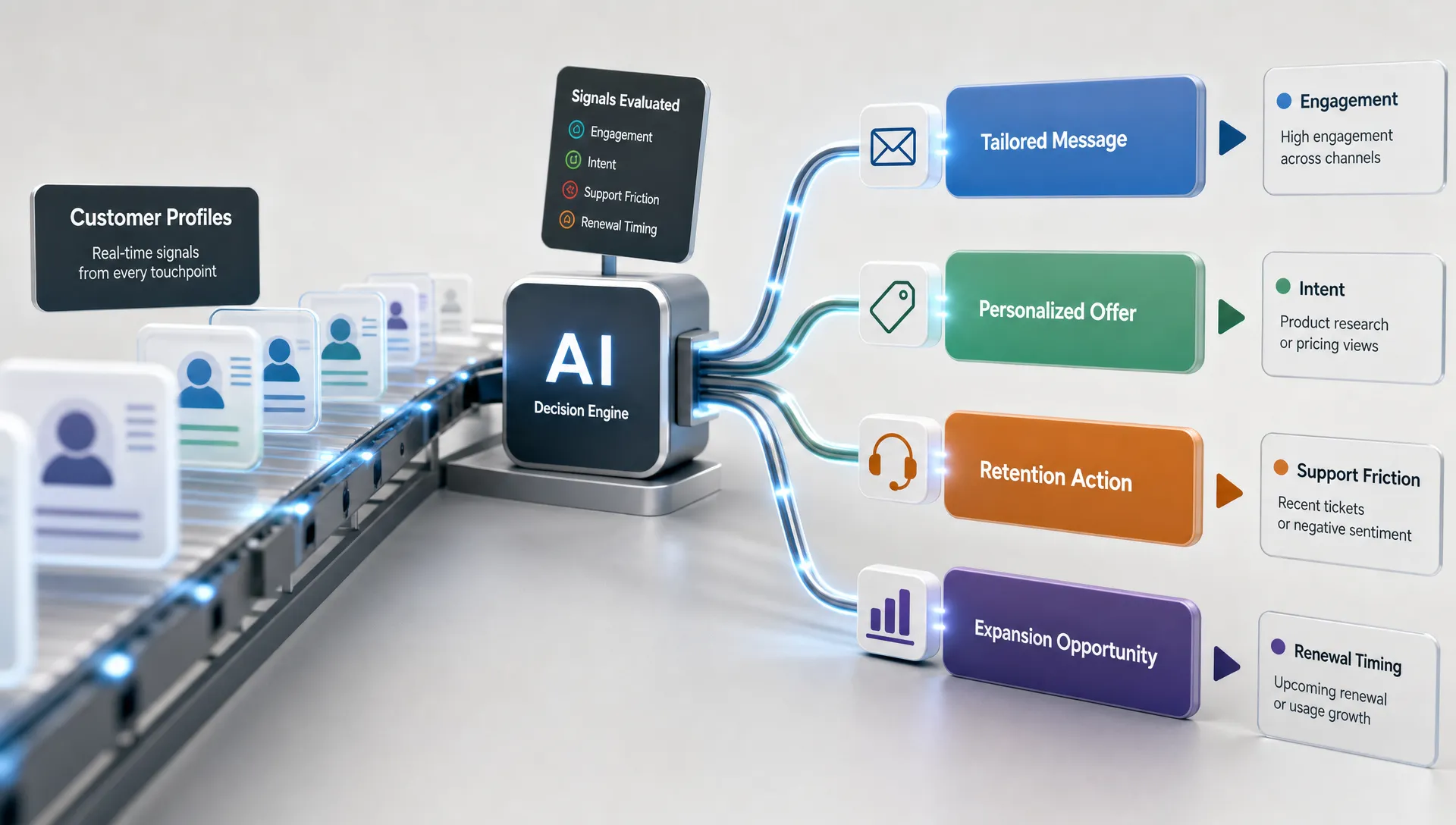
AI can make your prioritization process stronger when it is used as a research and synthesis assistant. It should not be the final decision-maker. The model does not know your margins, sales cycle, legal constraints, customer expectations or internal capacity unless you provide that context.
Useful ways to apply AI before prioritization include:
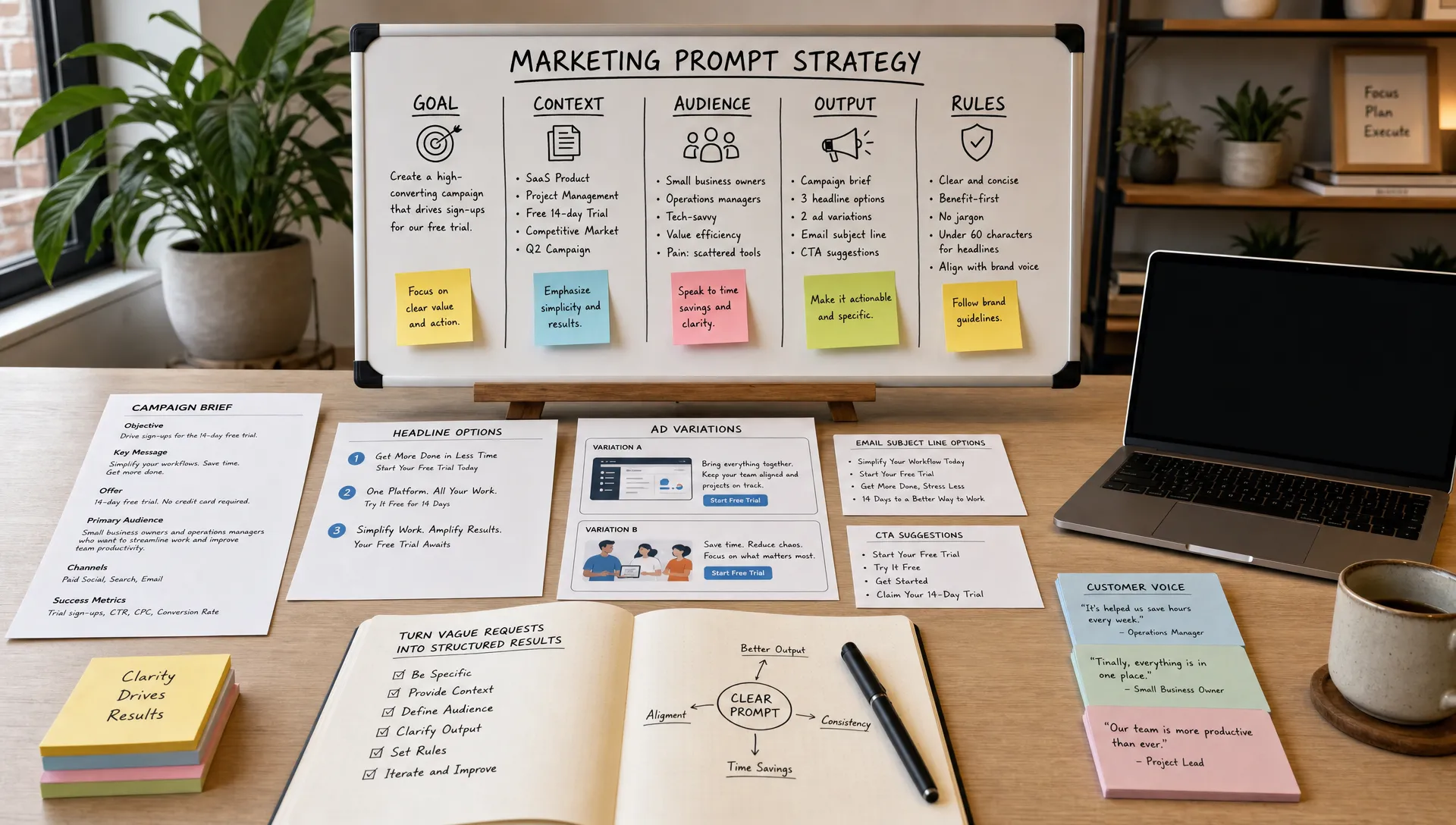
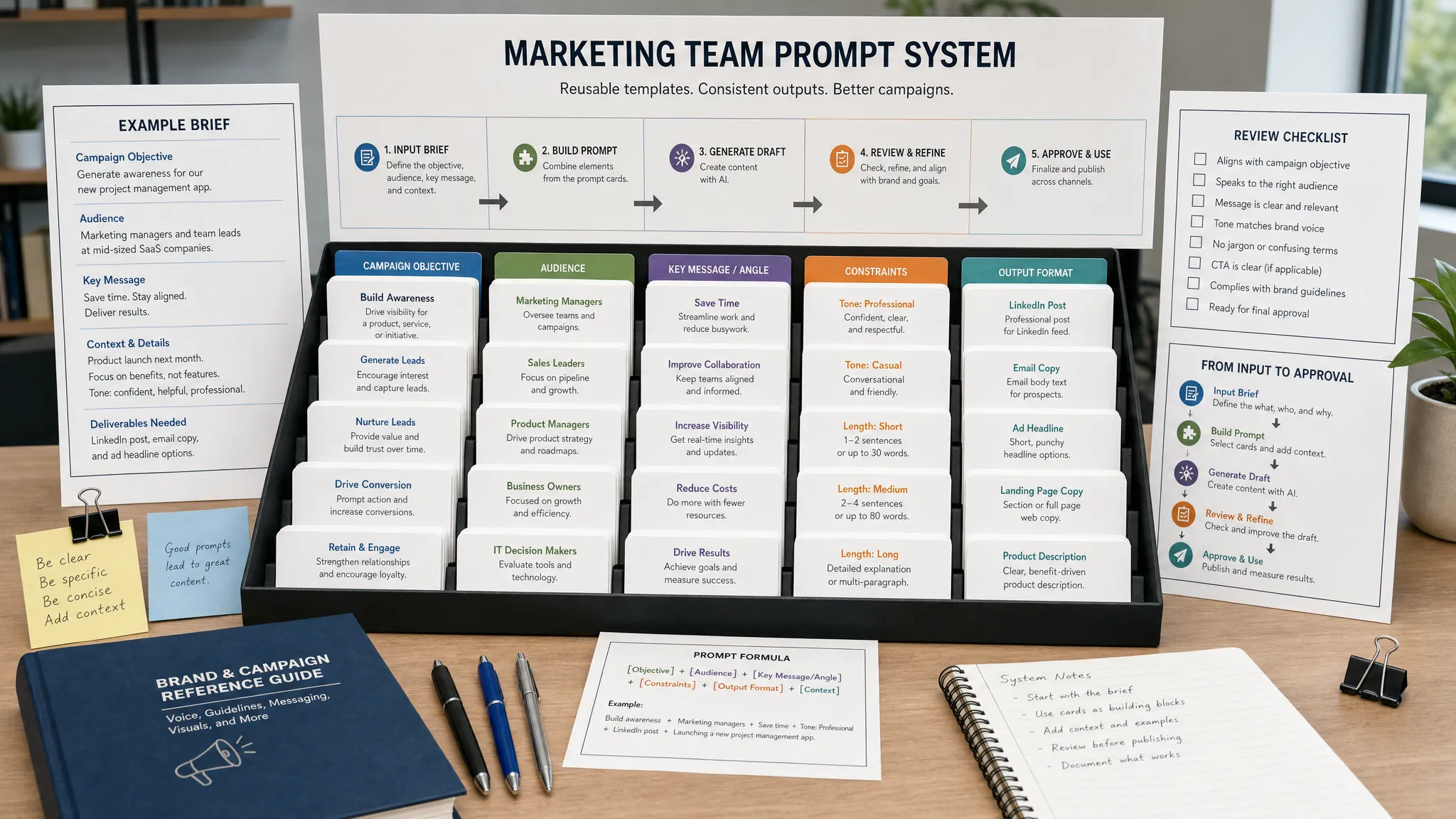
The quality of the input matters. A prompt that says generate marketing tests will usually produce generic suggestions. A prompt that includes the funnel stage, audience, current performance, customer objections, available channels and business goal will produce better candidates. If your team needs a cleaner prompting system, start with this practical guide to AI prompt engineering for marketers before scaling your experiment backlog.
Once AI has helped create the backlog, humans should still score and sequence the tests. That is where market context, risk tolerance and strategic judgment matter most.
Many experiments fail before they start because the team never defines what will count as a decision. A test can produce data and still create confusion if the primary metric, audience or action threshold is unclear.
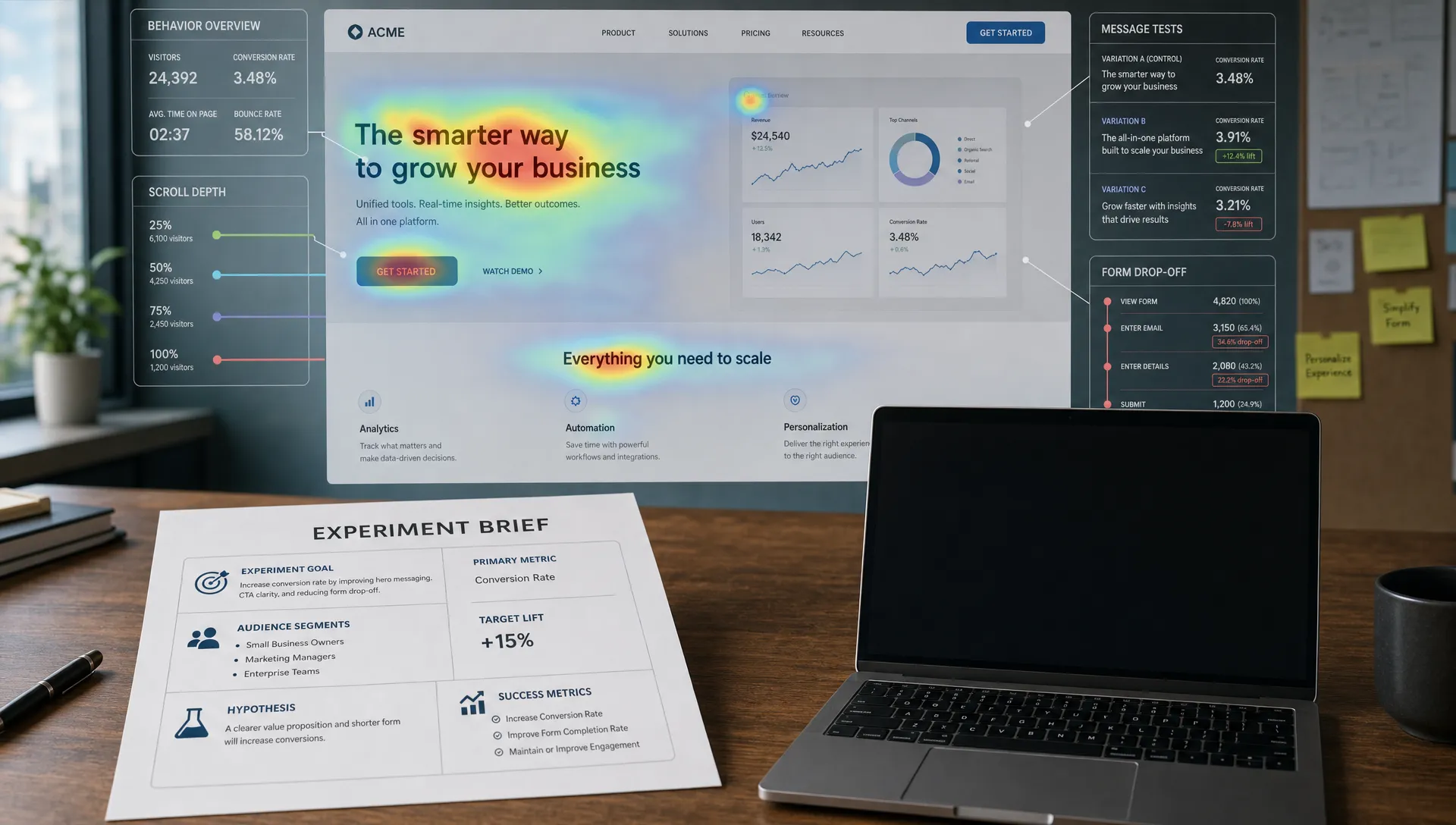
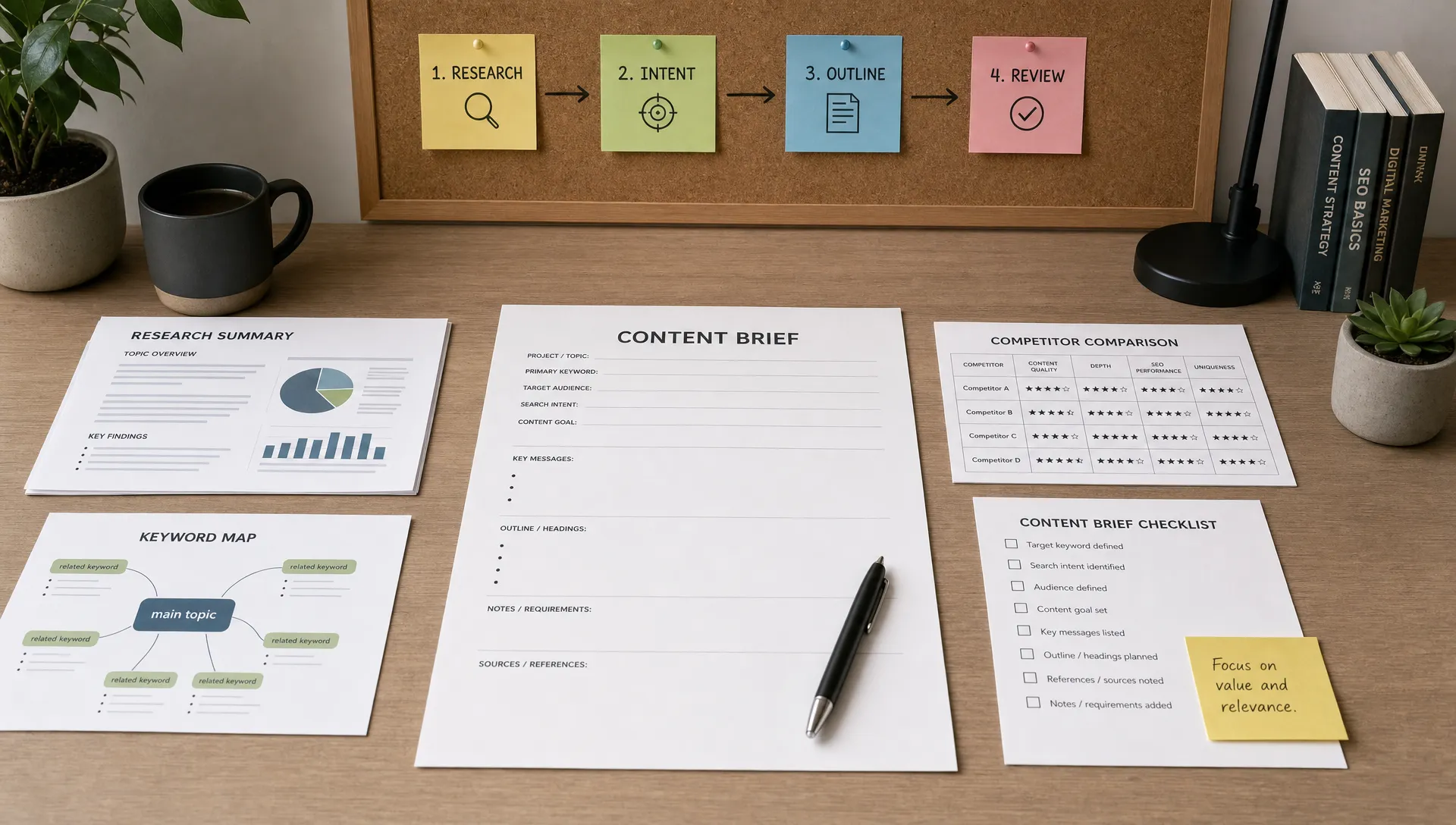
Before launching a high-priority experiment, create a short brief. It does not need to be bureaucratic. It needs to be specific enough that the team can review the result without rewriting the goal afterward.
| Brief section | What to define |
|---|---|
| Hypothesis | The expected behavior change and why it should happen |
| Audience | Who is included and excluded from the experiment |
| Variation | What changes and what stays the same |
| Primary metric | The main metric used to judge success |
| Guardrail metric | A metric that protects quality, revenue or user experience |
| Runtime | The planned duration or minimum data requirement |
| Decision rule | What action the team will take after the result |
| Owner | Who launches, monitors and documents the test |
The decision rule is especially important. For example, a landing page test might require an increase in qualified demo submissions without a drop in sales acceptance rate. An email test might prioritize activation over opens because opens are easy to inflate but may not reflect business value.
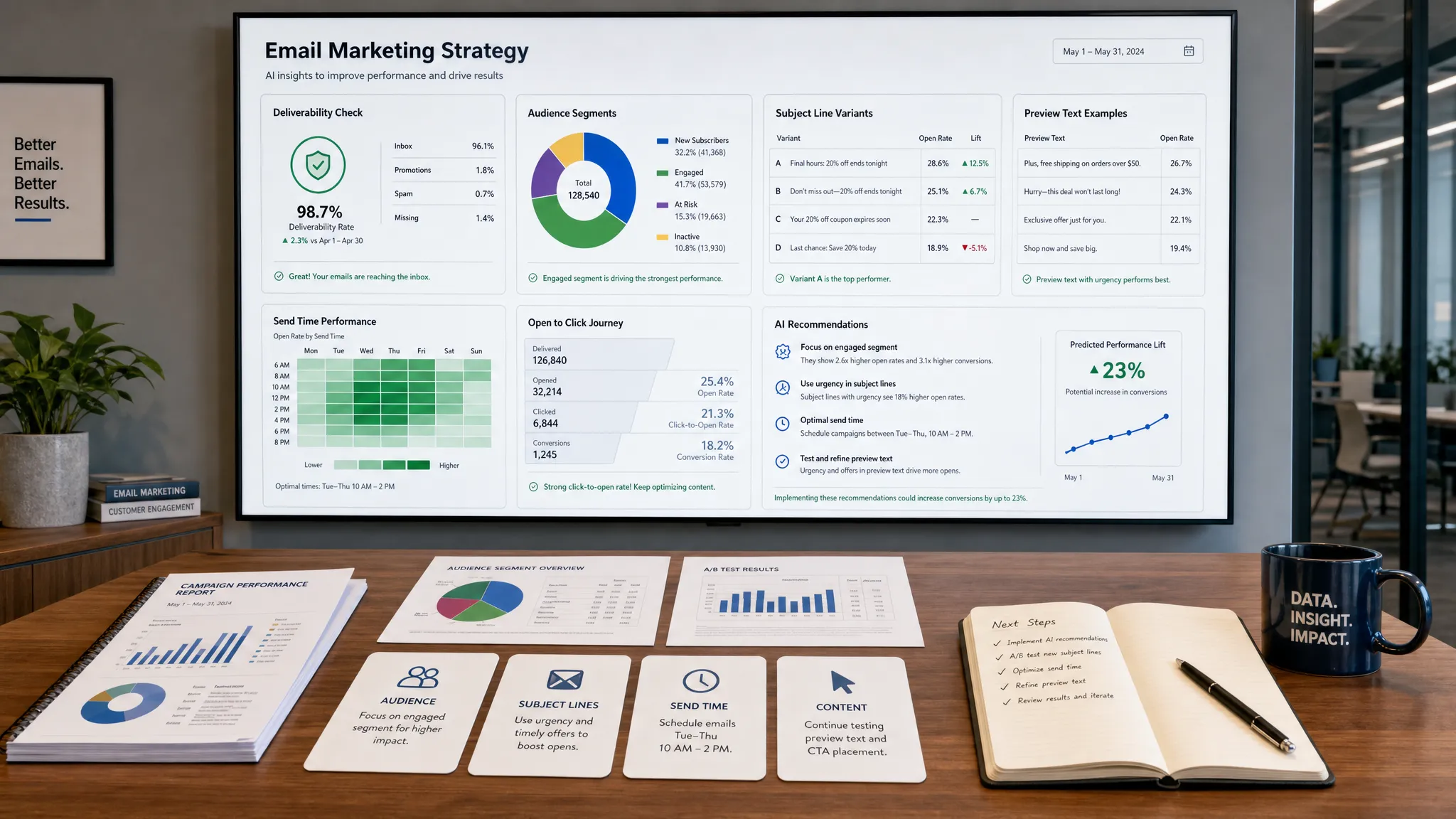
AI-powered analytics can help summarize results faster, but your team still needs to define what matters before the test begins. Otherwise, it becomes too easy to search for a positive-looking metric after the fact.
Small teams often copy testing habits from high-traffic companies and then wonder why results are inconclusive. If a page receives limited conversions, testing tiny changes may take too long to produce a useful signal. In that situation, prioritize larger changes with a clearer behavioral theory.
For lower-traffic sites, stronger test candidates often include offer changes, page structure, audience targeting, sales follow-up timing, lead magnet positioning or onboarding sequence changes. These tests can create larger differences in behavior than a small copy tweak.
You can also use qualitative inputs to support prioritization. Session recordings, sales notes, surveys, support tickets and customer interviews can help identify where uncertainty is worth testing. AI can summarize those inputs, but the priority should still be tied to a decision the team can act on.
For higher-traffic sites, the backlog can include more granular tests. Teams with enough volume can test segmentation, personalization rules, ad creative variants, checkout steps and nurture logic with more confidence. Even then, the highest priority should go to tests with business impact and reusable learning, not simply the easiest variants to generate.
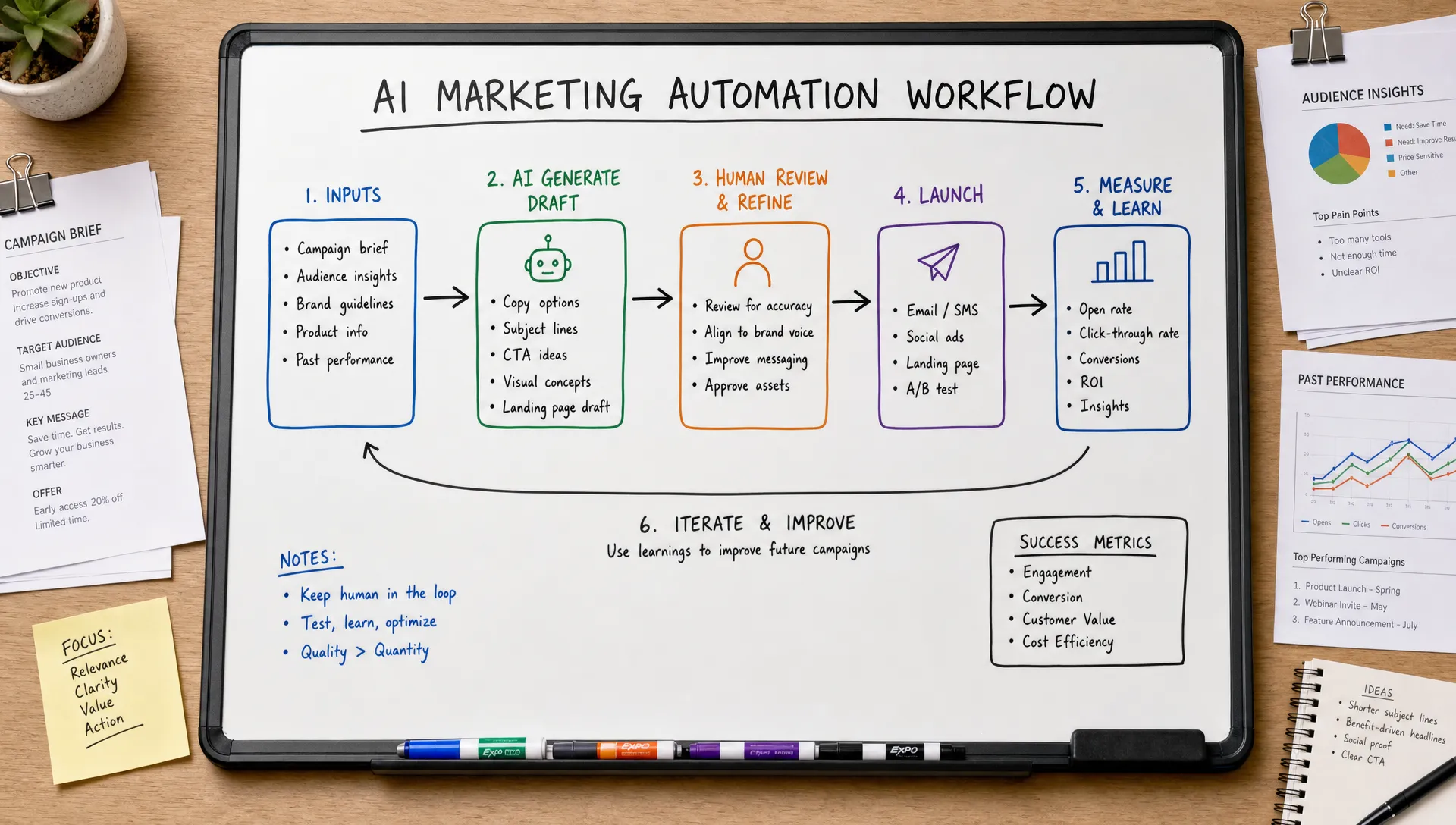
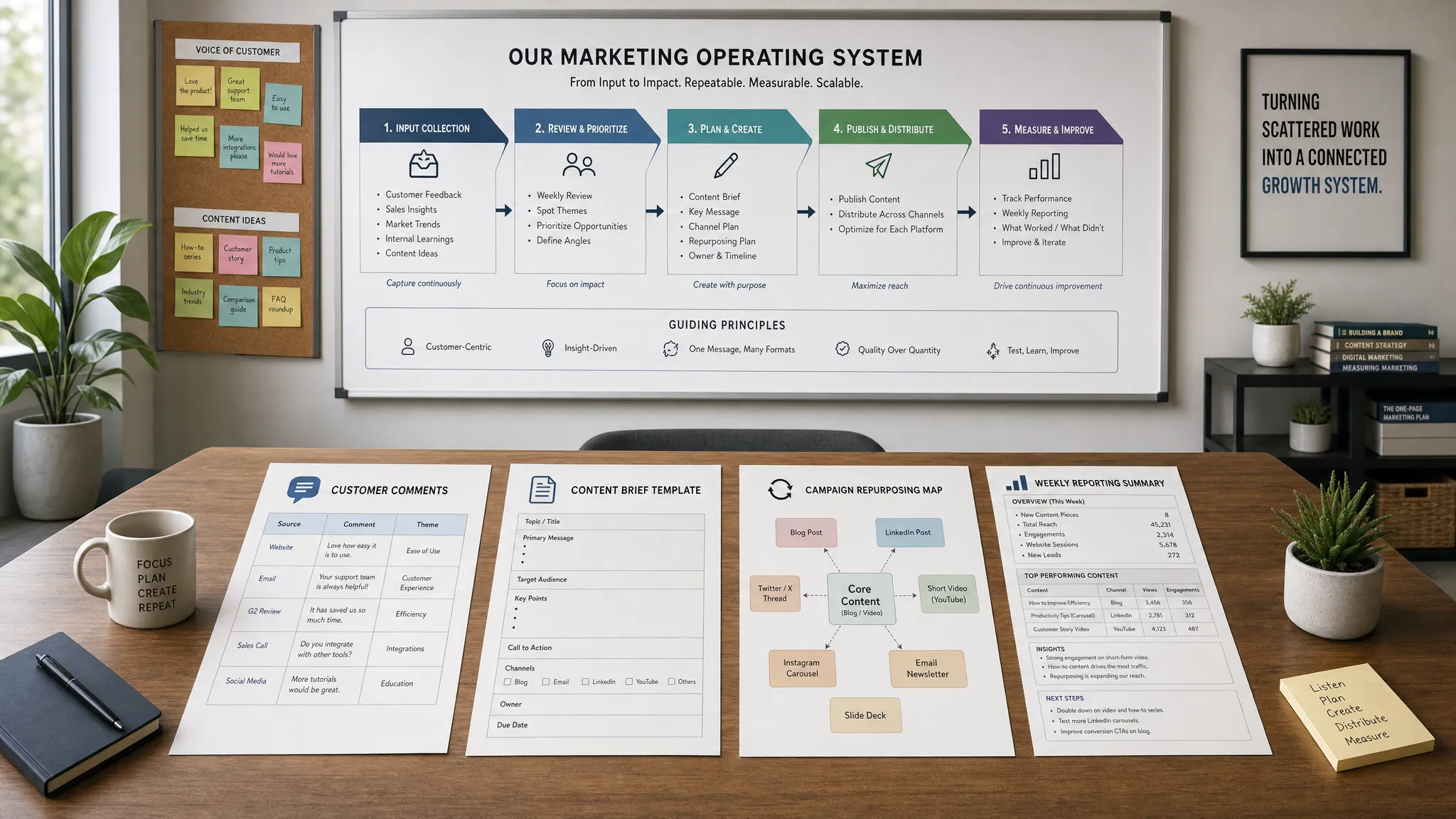
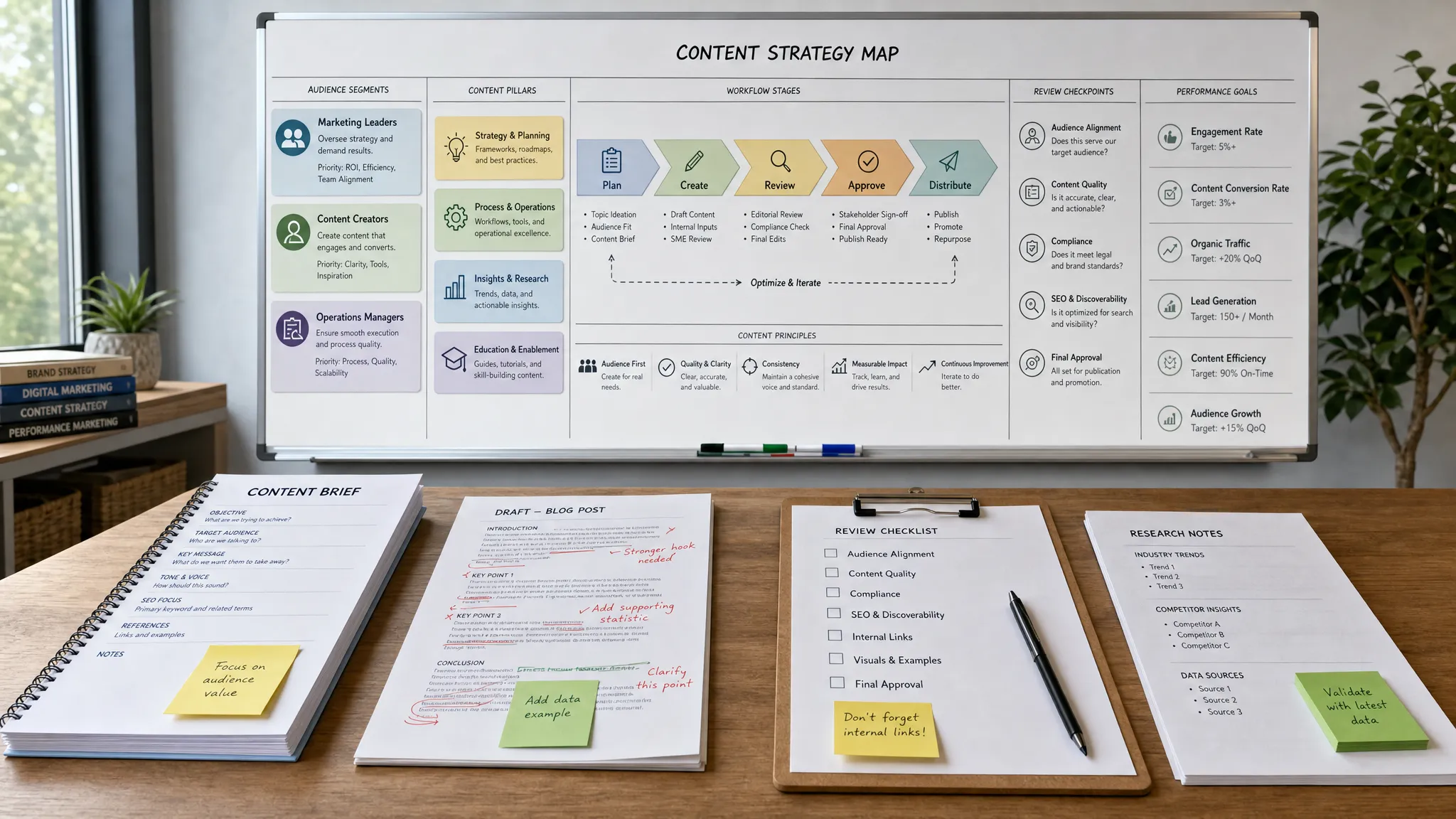
A monthly prioritization rhythm keeps AI marketing experiments focused without slowing the team down. The workflow below works for lean teams because it separates idea generation, scoring and execution.
This rhythm prevents the backlog from becoming a dumping ground. It also gives stakeholders a predictable moment to propose ideas, challenge scores and understand why some experiments move forward while others wait.
AI makes some tasks very easy, especially copy and creative generation. Easy is a valid scoring factor, but it should not dominate the process. A quick subject line test may be useful, yet it should not outrank a high-impact onboarding test if activation is the real growth constraint.
AI-generated content can increase clicks, opens or time on page without improving revenue or pipeline. Prioritize metrics that reflect the job of the funnel stage. For awareness, engagement may matter. For conversion, qualified leads, purchases, trials or activation are usually more meaningful.
More tests can mean slower learning if they overlap, compete for the same audience or stretch the team too thin. A smaller number of well-designed experiments often beats a crowded calendar of weak tests. This is especially true when marketing, sales, product and operations all influence the result.
An experiment can lose overall while winning for an important segment. It can also win overall while harming a high-value audience. Prioritization should consider whether the test affects new visitors, returning prospects, existing customers, enterprise buyers, small businesses or another meaningful group.
A failed test is still useful if it prevents the team from repeating a bad assumption. Document the hypothesis, audience, result and decision. Over time, this creates a learning library that makes future AI-generated ideas sharper because prompts can include what has already been tested.
What is an AI marketing experiment? An AI marketing experiment is a structured test that uses AI in the creation, targeting, personalization, analysis or automation of a marketing activity. Examples include AI-generated landing page copy, personalized email sequences, predictive lead segments or automated ad creative variations.
How do you decide what to test first? Start with the biggest business constraint, then score ideas by impact, evidence, speed, learning value and risk control. The best first test is usually the one that addresses a clear bottleneck, has some supporting evidence and can produce a decision the team will act on.
Should AI choose which marketing experiments to run? AI can recommend and organize ideas, but humans should make the final prioritization decision. Business context, brand risk, customer expectations, legal constraints and operational capacity are difficult for a model to judge without strong human input.
How many AI marketing experiments should a team run at once? Run only as many as you can monitor and interpret correctly. Many lean teams are better served by one to three active tests per month, depending on traffic, budget and internal capacity. Quality of learning matters more than experiment count.
What metrics should AI marketing experiments use? Choose metrics based on the funnel stage. Awareness tests may track qualified traffic or click-through rate, while conversion tests should focus on signups, purchases, demo requests or pipeline quality. Always include at least one guardrail metric to protect user experience or lead quality.
AI gives marketers speed, but prioritization turns that speed into learning. The teams that win with AI marketing experiments are not the ones with the longest backlog. They are the ones that connect experiments to real constraints, score ideas consistently and document what each test teaches.
AIMarketer Hub is built to help marketers do that with practical guides, prompt resources, SEO tools, calculators and AI-powered marketing workflows. If your next step is choosing software to support testing, personalization or optimization, use this guide to the top AI tools for conversion rate optimization to compare options with a clearer prioritization lens.