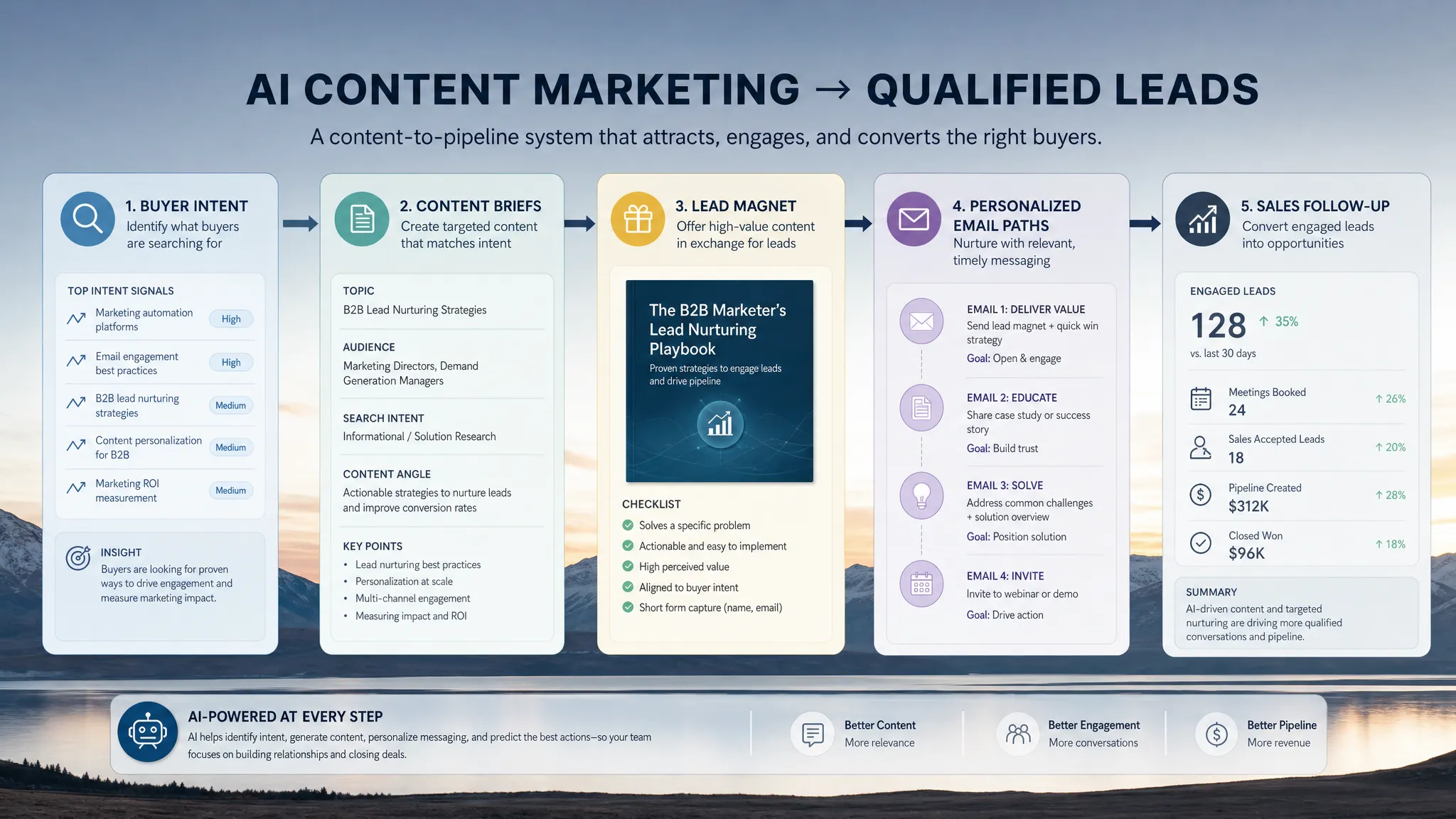
Marketing budget allocation used to be a quarterly spreadsheet exercise: take last year’s channel split, adjust for new targets, negotiate with sales and finance, then hope the plan survives contact with the market. In 2026, that is too slow for most teams.
AI gives marketers a better way to allocate spend because it can analyze signals across campaigns, audiences, creative, seasonality, pipeline quality and customer value faster than a human team can do manually. The goal is not to let an algorithm control the budget. The goal is to use AI marketing methods to make sharper decisions about where the next dollar is most likely to create profitable growth.
Used well, AI helps answer practical budget questions:
This guide walks through a practical framework for using AI to optimize marketing budget allocation without losing human judgment, financial discipline or brand strategy.
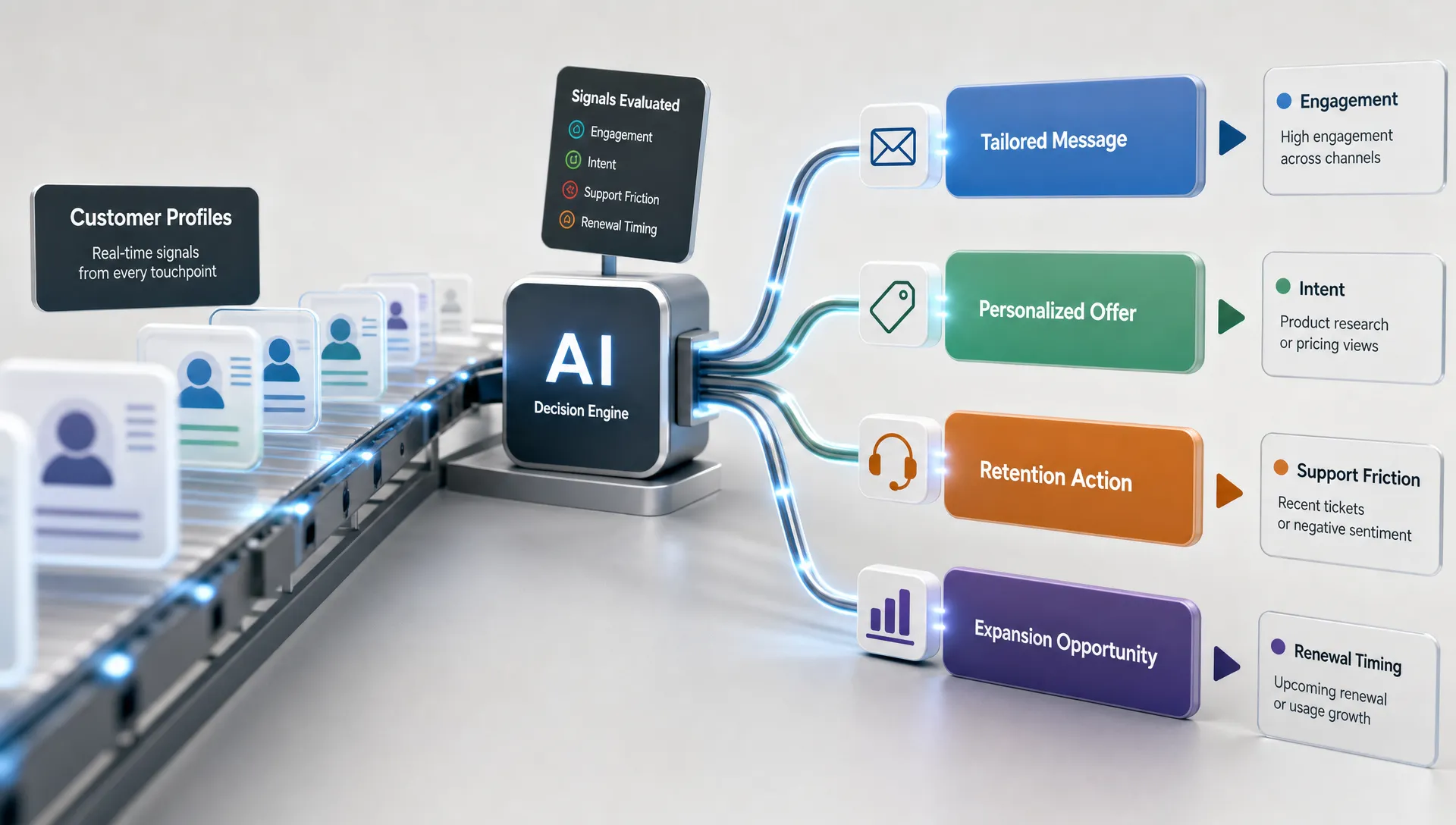
AI budget allocation is the use of machine learning, predictive analytics and automation to recommend how marketing spend should be distributed across channels, campaigns, audiences and time periods.
That can include simple AI-assisted analysis, such as using an LLM to summarize campaign performance, or advanced modeling, such as marketing mix modeling and marginal return forecasting. Most teams should start in the middle: combine clean performance data, clear business goals and AI-powered analytics to improve decisions one budget cycle at a time.
A useful allocation model does three things:
If your team is still forming its AI strategy, it helps to understand the broader ways AI improves digital marketing performance before you build a budget optimization process. Budgeting is only one use case. It becomes much more powerful when connected to audience insights, creative testing, SEO, content operations and lifecycle marketing.
A common mistake is to begin with the tool. Marketers see a dashboard, forecasting model or AI recommendation engine and assume the output is useful because it looks sophisticated. Budget allocation should start with the business outcome you are trying to optimize.
A SaaS company may care most about qualified pipeline and payback period. An ecommerce brand may focus on contribution margin and repeat purchase rate. A professional services firm may prioritize lead quality, sales cycle length and booked consultations. The AI model can only optimize for what you define.
Before you use AI tools for allocation, document the core objective and constraints.
| Budget decision input | Example | Why it matters |
|---|---|---|
| Primary goal | Increase profitable revenue, reduce CAC or grow qualified pipeline | AI needs a target function to optimize |
| Financial constraint | Monthly cash limit, CAC ceiling or margin floor | Prevents recommendations that look good in-platform but fail financially |
| Time horizon | Weekly pacing, quarterly planning or annual budget | Short-term and long-term models use different signals |
| Growth stage | New market entry, mature channel scaling or retention focus | Changes how much risk and learning budget you should allow |
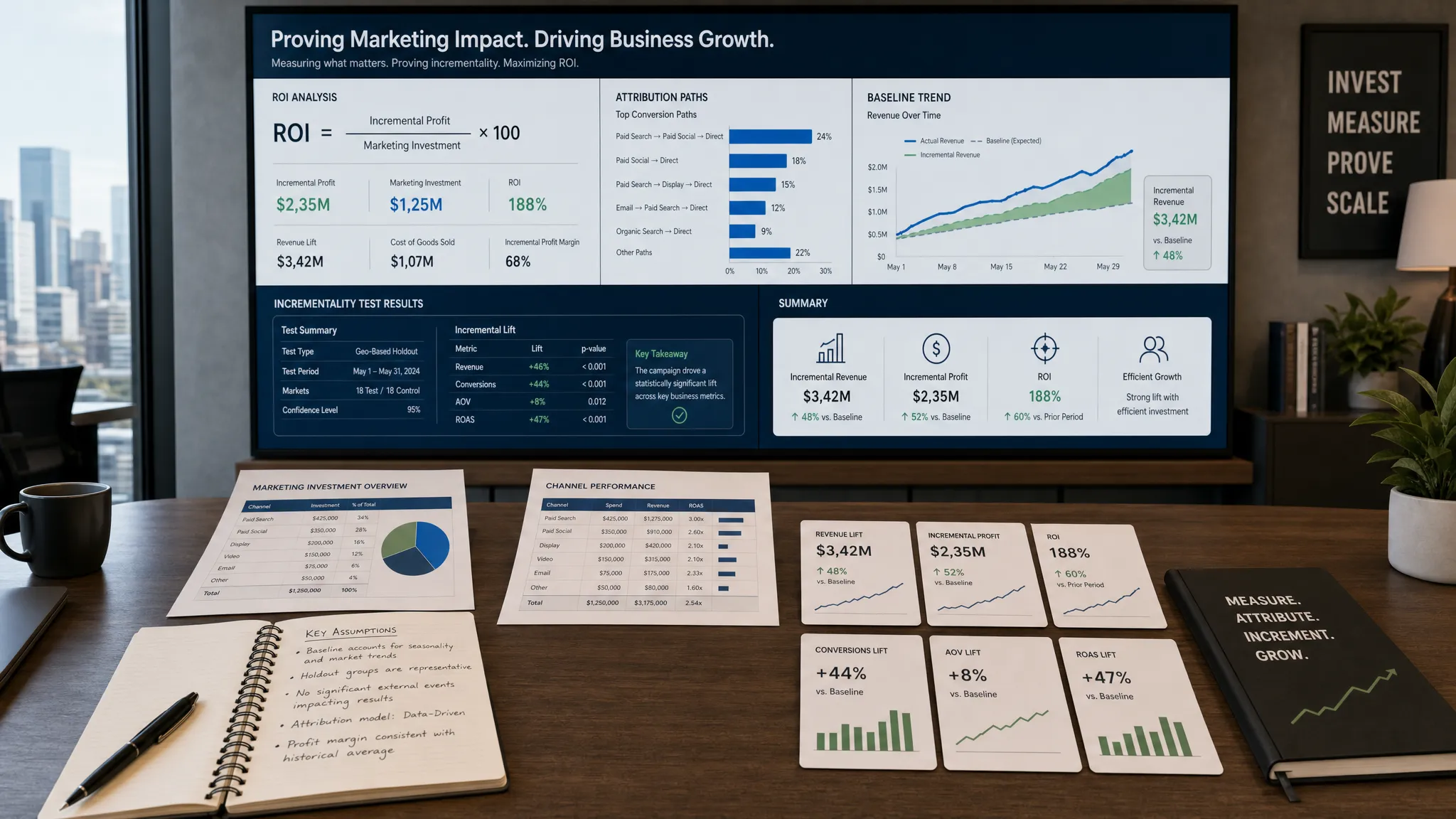
| Measurement standard | Incremental revenue, MER, CAC, LTV or SQL rate | Keeps teams from overvaluing vanity metrics |
This step sounds basic, but it prevents the most expensive failure mode in AI marketing budget allocation: optimizing for the wrong number with impressive precision.
AI is only as useful as the data it can access and interpret. If your spend data lives in ad platforms, your revenue data lives in ecommerce or CRM systems and your finance team uses a separate view of gross margin, the model will produce fragmented recommendations.
Start by connecting the minimum viable data set. You do not need perfection, but you do need consistency.
Useful data sources include:
The best AI marketing automation starts with mapped workflows and reliable inputs. If your allocation process is still manual and messy, the same principle applies as any automation initiative: fix the process before scaling the machine. AIMarketer Hub’s guide on where to start with AI marketing automation is useful if your team needs to tighten the operational foundation first.
Once the data is available, standardize campaign naming, attribution windows, conversion definitions and cost categories. Otherwise, AI may compare campaigns that are not truly comparable.
For example, a paid search campaign optimized for branded demand should not be evaluated the same way as a cold awareness campaign on YouTube or TikTok. A bottom-funnel retargeting campaign may show a strong ROAS, but that does not prove it created all the demand it captured.
There is no single best model for every budget allocation problem. The right AI approach depends on the level of granularity, the amount of data available and the decision you need to make.
| Method | Best for | Watch out for |
|---|---|---|
| Predictive forecasting | Estimating future leads, sales or spend efficiency | Forecasts can fail when market conditions shift quickly |
| Marketing mix modeling | Understanding channel contribution across online and offline spend | Requires enough historical data and careful assumptions |
| Multi-touch attribution | Comparing digital touchpoints in a customer journey | Can overvalue measurable clicks and undervalue dark social or brand effects |
| Incrementality testing | Proving whether spend caused additional outcomes | Needs clean test design and enough volume |
| Customer lifetime value modeling | Allocating budget toward higher-value audiences | Bad inputs can reinforce short-term or biased patterns |
| Budget pacing automation | Keeping spend aligned to targets during the month | Should not override strategy during unusual events |
Open-source projects such as Meta Robyn and Google Meridian have helped make marketing mix modeling more accessible. They are not magic buttons, but they show where serious budget optimization is heading: away from single-platform reporting and toward a more holistic view of incremental business impact.
For many mid-sized teams, the most practical starting point is not a full MMM build. It is a weekly AI-assisted allocation model that combines campaign performance, pipeline quality, margin and forecasted outcomes.
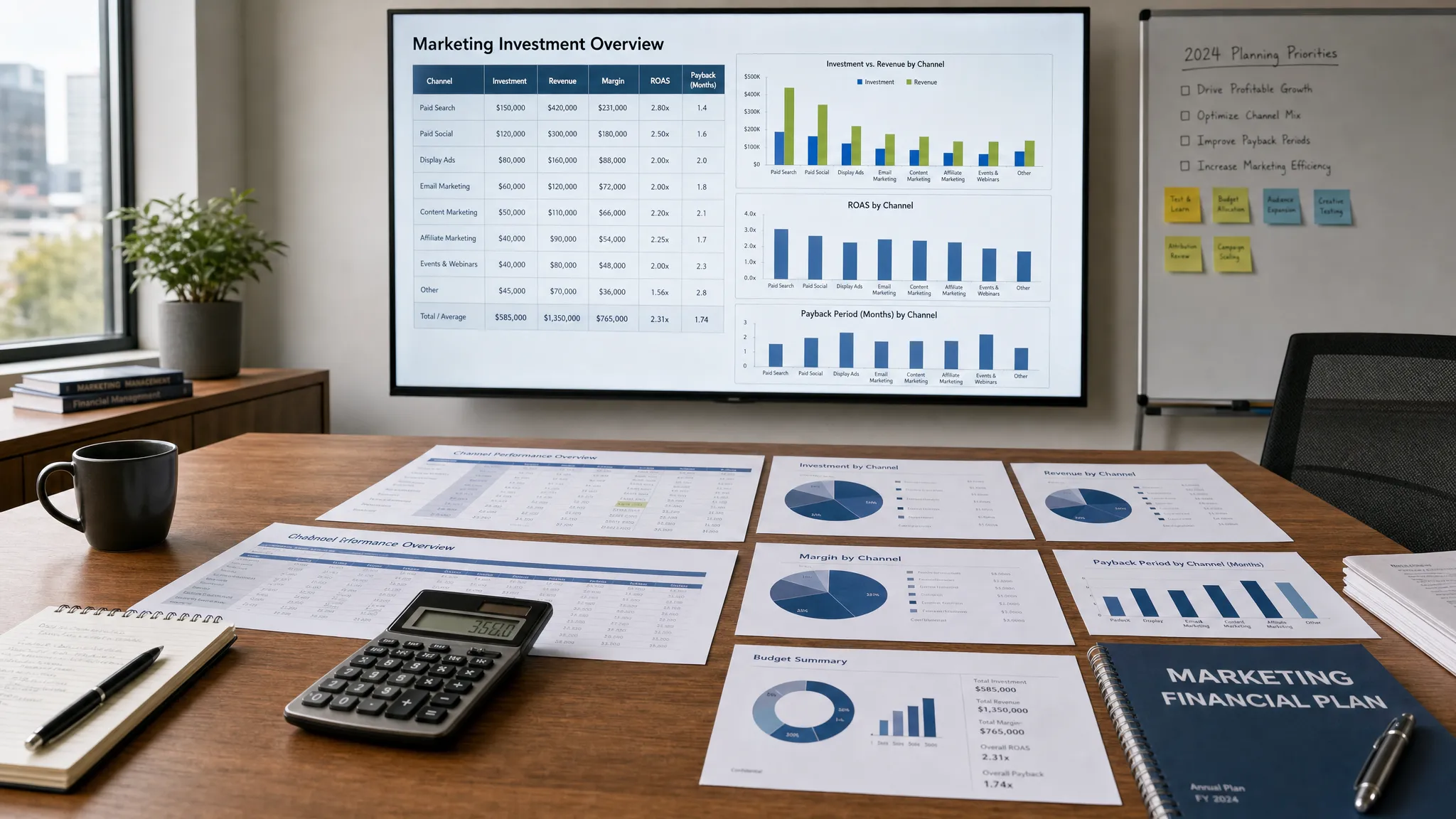
One of the biggest advantages of AI in budget allocation is its ability to estimate marginal return. Average ROAS tells you what a channel has returned overall. Marginal return estimates what you are likely to get from the next dollar spent.
That distinction matters because channels saturate.
A paid search campaign might show a 5x historical ROAS, but if impression share is already high and CPCs are rising, an additional $20,000 may return much less. A paid social campaign might show a lower average ROAS, but still have room to scale if creative fatigue is low and the audience pool is large.
AI can help model this by analyzing curves between spend and outcomes over time. The marketer’s job is to interpret those curves in business context.
| Channel | Current monthly spend | Average ROAS | Estimated ROAS on next $10,000 | Budget implication |
|---|---|---|---|---|
| Branded search | $40,000 | 8.0x | 2.5x | Protect coverage, but avoid overfunding |
| Nonbrand search | $70,000 | 3.2x | 3.4x | Continue scaling if CAC stays acceptable |
| Paid social | $90,000 | 2.6x | 3.1x | Add budget if creative testing supports it |
| Display retargeting | $25,000 | 6.5x | 1.8x | Test holdout impact before increasing spend |
| Email and lifecycle | $15,000 | 10.0x | 5.0x | Increase investment in segmentation and content |
The table is simplified, but the principle is powerful. Budget should move toward the highest expected incremental value, not the prettiest historic dashboard metric.
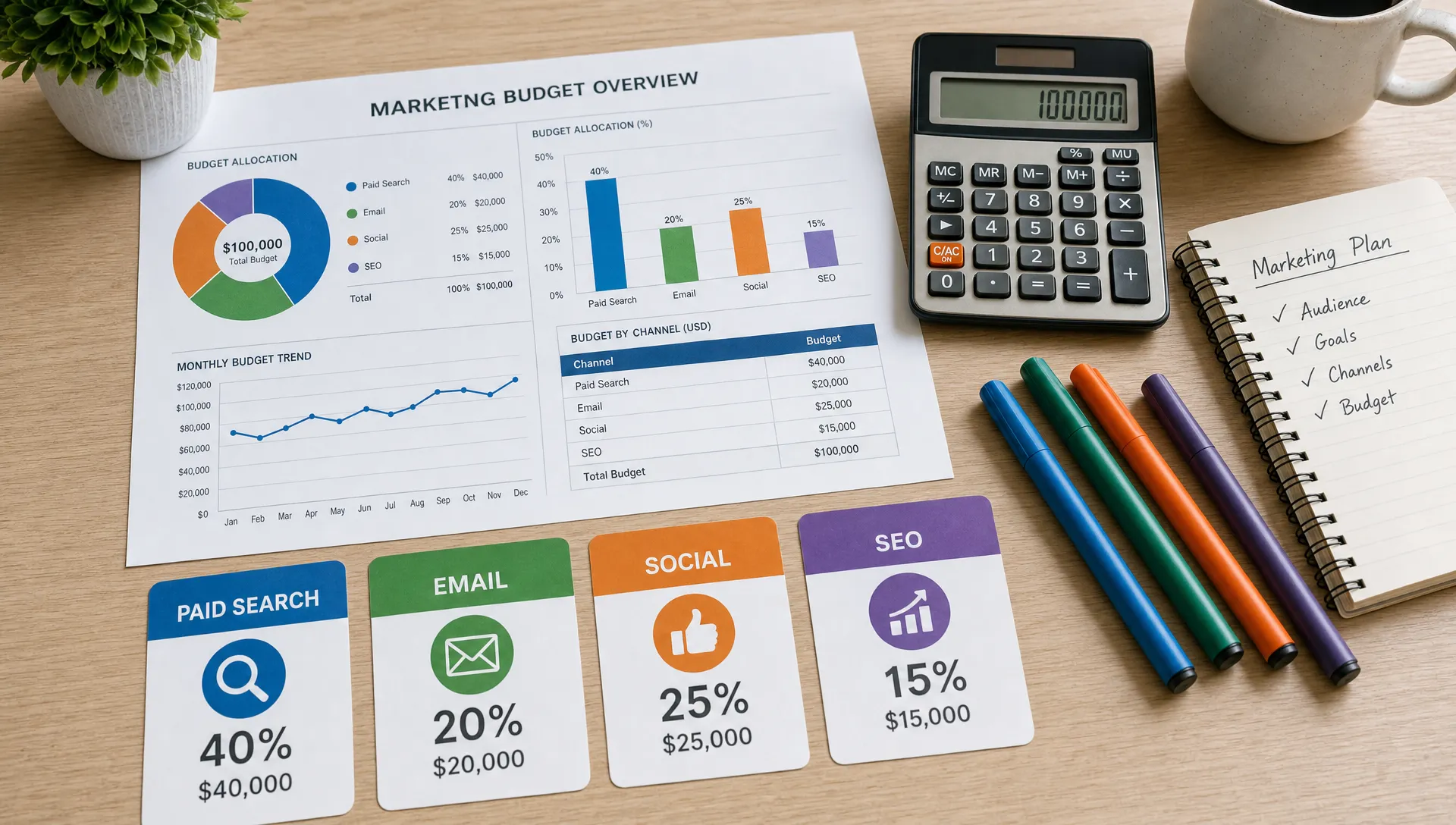
Budget meetings often get stuck because teams debate opinions: sales wants more lead volume, finance wants efficiency, brand wants awareness and channel owners defend their spend. AI helps by converting the debate into scenarios.
Instead of asking, “Which channel should get more budget?”, ask the model to compare likely outcomes under specific constraints.
For example:
| Scenario | Budget change | AI forecast focus | Best use case |
|---|---|---|---|
| Efficiency plan | Reduce spend by 10 percent | Protect revenue while lowering CAC | Margin pressure or uncertain demand |
| Growth plan | Increase spend by 15 percent | Maximize incremental pipeline or sales | Aggressive growth target |
| Diversification plan | Shift 20 percent from one channel to several tests | Reduce dependency risk | Overreliance on paid search or paid social |
| Retention plan | Move budget from acquisition to lifecycle | Increase repeat revenue and LTV | High churn or rising CAC |
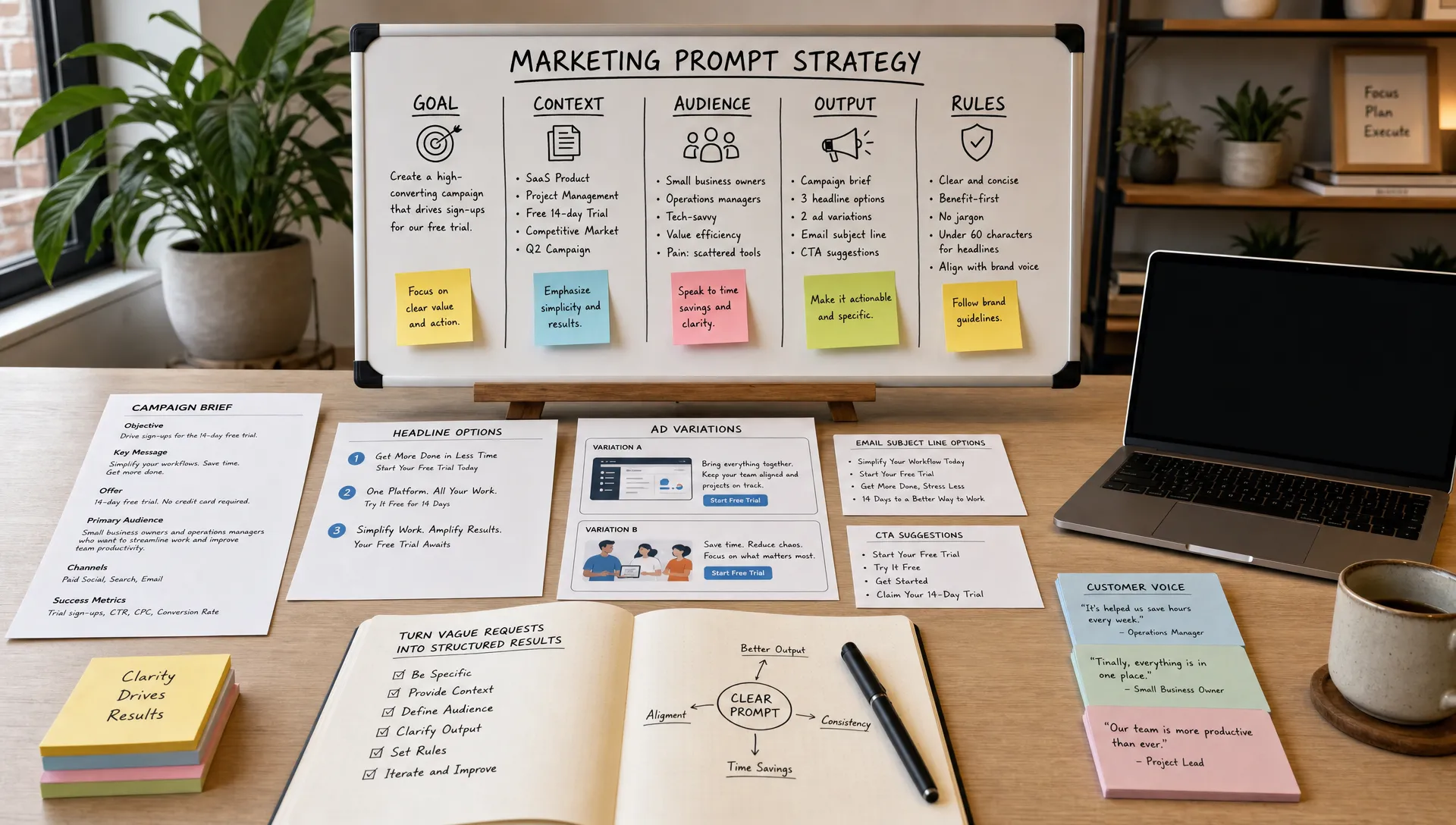
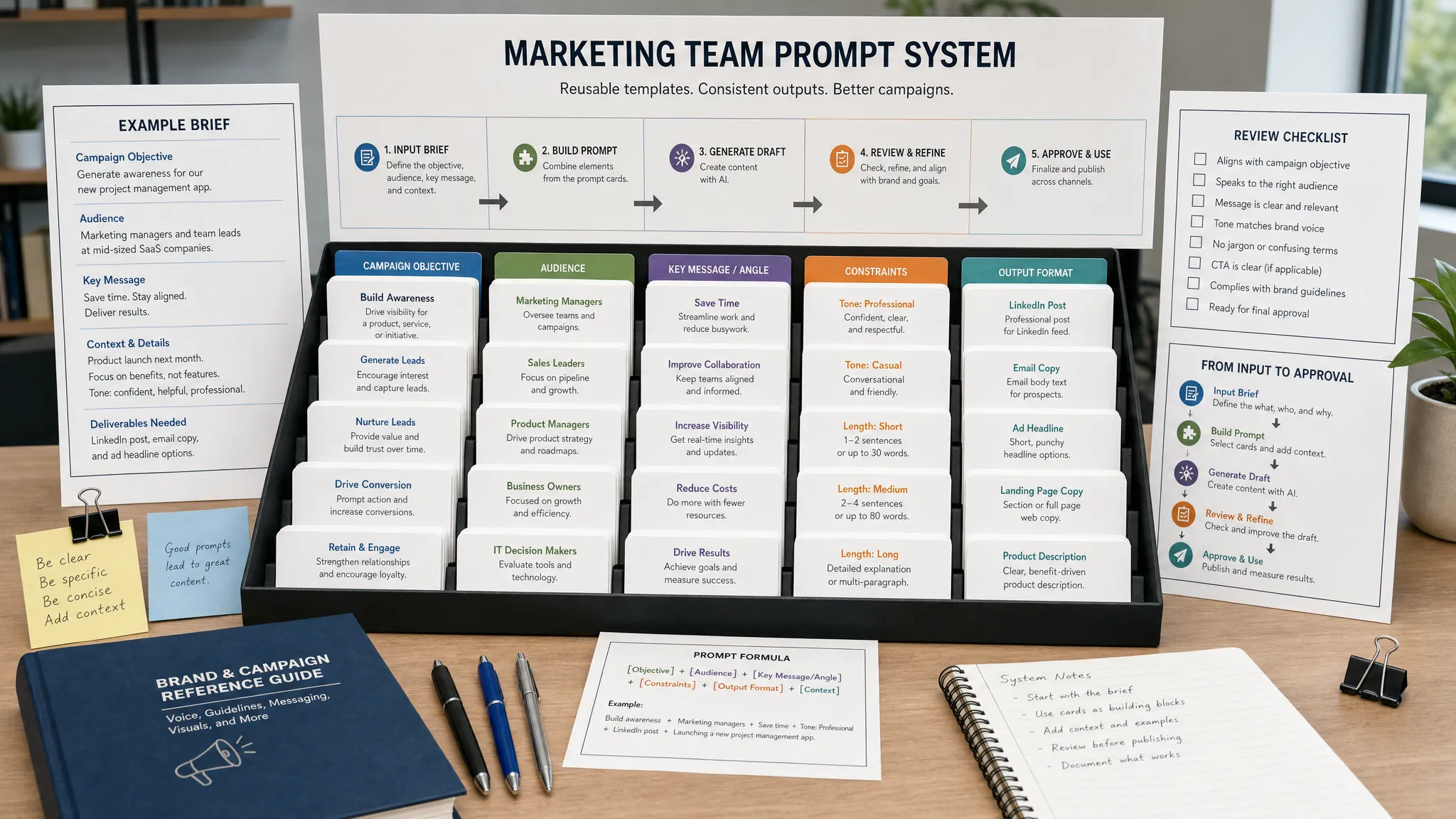
A strong prompt can speed up the analysis, especially when paired with structured campaign data.
Example AI prompt:
“Analyze the attached campaign performance, CRM revenue and margin data. Recommend three budget allocation scenarios for the next quarter: efficiency, balanced growth and aggressive growth. For each scenario, estimate impact on revenue, CAC, contribution margin and pipeline quality. Flag assumptions, risks and data gaps. Do not recommend reallocating budget from campaigns with incomplete revenue tracking unless you explain the uncertainty.”
The prompt does not replace modeling, but it helps marketers force a complete decision frame. It also makes assumptions visible, which is essential when presenting recommendations to finance or leadership.
AI can process data, but it does not automatically understand strategy, inventory, sales capacity, brand positioning or operational constraints. Human review is not a formality. It is where the budget plan becomes realistic.
Imagine an ecommerce business preparing for a seasonal demand spike. A model might recommend cutting upper-funnel spend because last-click ROAS is lower than search, but the team may know that visual discovery and consideration content are essential for new buyers. A niche retailer selling home organization products, such as closet organizer hangers, may also need to account for spring cleaning demand, product bundles, inventory depth and visual merchandising before changing channel budgets.
The same applies in B2B. AI may recommend scaling a campaign that generates low-cost demos, but sales may report that those demos rarely match the ideal customer profile. In that case, the budget should not move until the quality issue is understood.
Use AI recommendations as a decision input, then filter them through questions such as:
Budget allocation is a financial decision, not only a marketing decision. AI improves the analysis, but leadership still owns the tradeoffs.
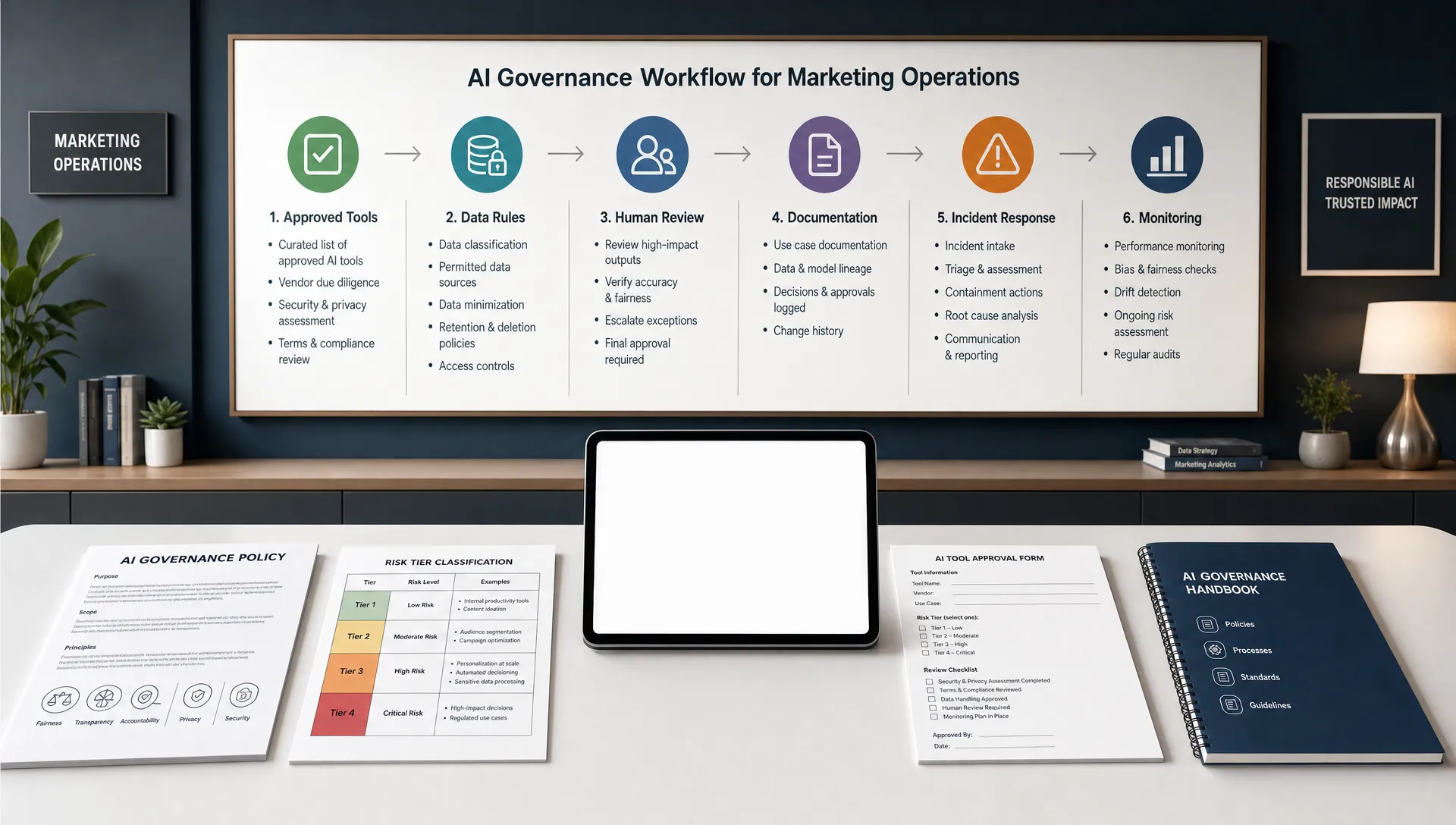
Once your team trusts the analysis, define rules for how budget can move. This is where marketing workflow automation becomes valuable. The point is not to automate every decision. The point is to automate routine adjustments while escalating strategic changes.
A practical rule set might include:
These rules should reflect your business model. A venture-backed SaaS company may tolerate a longer payback period than a bootstrapped ecommerce brand. A legal services firm may value fewer but higher-quality leads. A finance company may need stricter compliance review before launching new campaigns.
AI becomes most useful when it operates inside these boundaries. Without boundaries, it may optimize for short-term efficiency and starve the learning your team needs for future growth.
AI can identify patterns in existing data, but it cannot learn from tests you never run. Every budget plan should include an experimentation reserve.
This matters because the best future channel may look inefficient at first. New creative formats, emerging search behaviors, creator partnerships, AI-generated landing pages and lifecycle segments often need several iterations before they produce reliable results.
A simple approach is to separate the budget into three categories:
| Budget category | Purpose | Typical decision logic |
|---|---|---|
| Core spend | Maintain proven revenue or pipeline channels | Fund based on incremental return and business criticality |
| Scale spend | Increase investment in campaigns with strong marginal returns | Fund based on recent evidence and capacity to grow |
| Test spend | Learn about new audiences, offers, channels or creative | Fund based on hypothesis quality and learning value |
AI can help rank experiment ideas, but prioritization should include strategic value, speed, cost and evidence strength. If you need a framework for that, use this guide to prioritize AI marketing experiments before you commit budget.
The experimentation reserve protects your team from a common budgeting trap: spending everything on today’s winners until those channels become too expensive, too crowded or too dependent on one platform.
Quarterly planning is still useful, but budget allocation should not wait three months to react. A weekly loop gives teams enough speed to catch problems without thrashing campaigns every day.
A practical weekly workflow looks like this:
The decision log is more valuable than many teams expect. Over time, it creates a learning record that shows which recommendations were accurate, which assumptions failed and where the model needs better data.
This also helps with stakeholder trust. Finance and leadership are more likely to support AI-assisted budget changes when they can see the reasoning, not just the recommendation.
Not every budget decision should be automated. High-frequency adjustments are good candidates. Strategic tradeoffs usually need people.
| Decision type | Automate with AI? | Reason |
|---|---|---|
| Daily pacing alerts | Yes | Fast detection prevents overspend or underspend |
| Basic anomaly detection | Yes | AI can spot unusual changes faster than manual review |
| Creative fatigue signals | Yes, with review | Useful for reallocating within a channel |
| Cross-channel budget shifts | Partially | Needs business context and stakeholder alignment |
| Annual planning | No | Requires strategy, finance and leadership input |
| Brand investment decisions | No | Impact may be long-term and hard to capture in short windows |
| Compliance-sensitive campaign changes | No, or only with strict approval | Risk is higher than speed benefit |
This balance keeps AI useful without turning budget allocation into a black box. It also reduces the risk of overreacting to short-term noise.
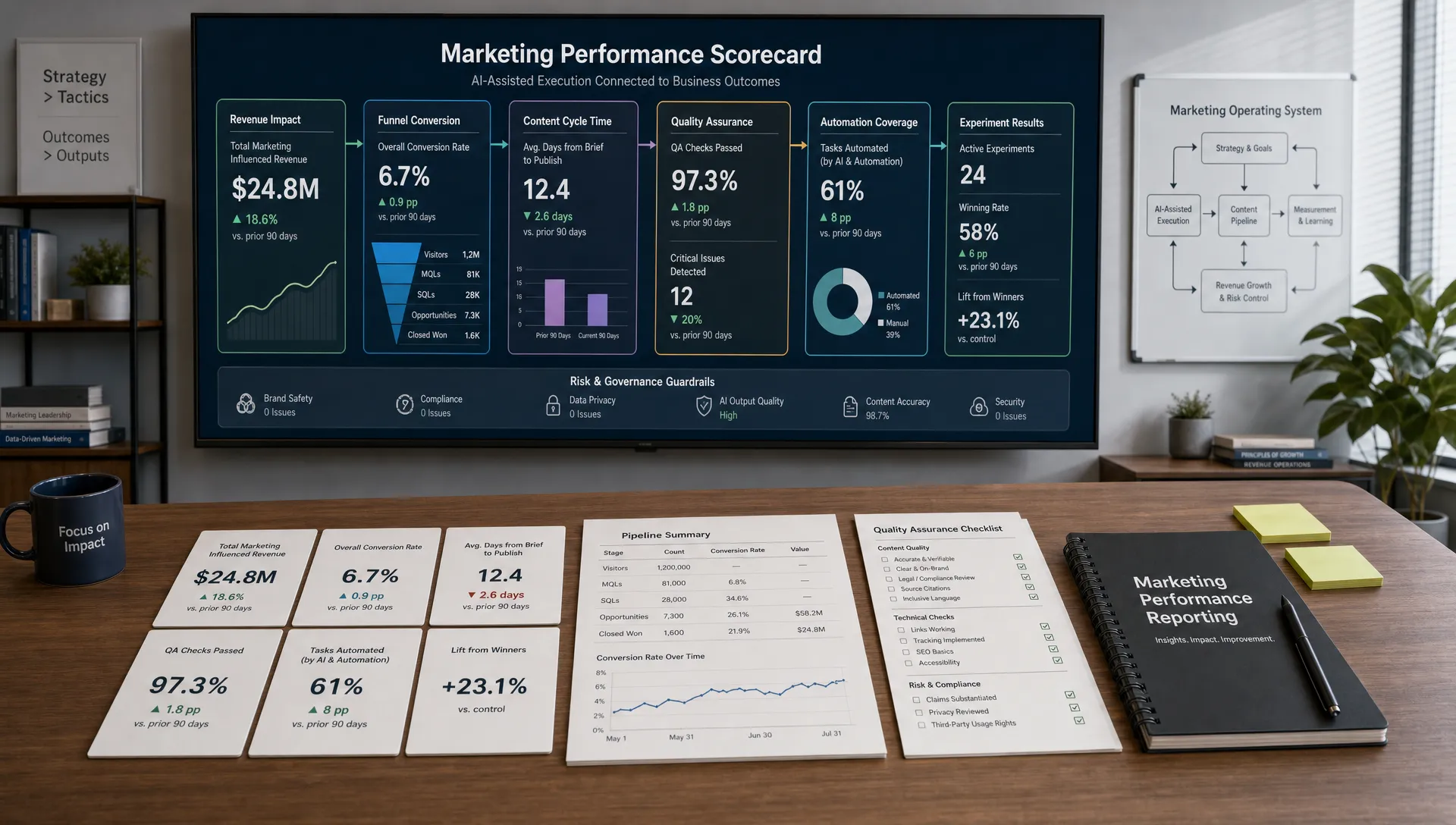
The final step is to evaluate the allocation system itself. If you adopt AI but only measure channel performance, you will miss whether the decision process has improved.
Track metrics that show better budget quality:
You should also monitor whether AI is making your budget too conservative. If the model always recommends proven channels, your short-term efficiency may improve while your long-term growth options shrink. A healthy allocation system balances exploitation and exploration.
Ad platforms are useful, but each one has an incentive to claim credit. AI budget allocation should compare platform data with CRM, ecommerce, finance and incrementality signals wherever possible.
Revenue is not profit. A campaign that drives discounted first purchases with high return rates may look strong in analytics and weak in finance. Feed AI the metrics that matter to the business.
AI can update recommendations daily, but that does not mean budgets should move daily. Algorithms need enough time to learn, and teams need enough data to separate signal from noise.
Performance channels often capture demand that brand, SEO, content, community and word of mouth helped create. If your model only sees the final click, it may recommend cuts that hurt future demand.
Every AI forecast has assumptions. Document them clearly, especially when the recommendation affects major budget movements. This makes future reviews more honest and more useful.
Can AI fully automate marketing budget allocation? AI can automate parts of budget allocation, such as pacing alerts, anomaly detection and scenario generation. Full automation is risky because budget decisions depend on strategy, finance, brand goals, operational capacity and data quality.
What data do I need before using AI for budget optimization? Start with spend, campaign performance, revenue, conversion quality and cost data. For better recommendations, add CRM stages, gross margin, customer lifetime value, seasonality and offline marketing activity.
Is AI budget allocation only for large companies? No. Larger companies may use advanced models like marketing mix modeling, but smaller teams can still use AI to summarize performance, forecast scenarios, identify waste and prioritize experiments.
How often should marketing budgets be reallocated? Many teams benefit from weekly review and monthly reallocation. Daily changes can create noise unless they are limited to pacing, budget caps or clear anomaly responses.
What is the biggest risk of using AI for budget allocation? The biggest risk is optimizing for incomplete or misleading metrics. If the model rewards short-term ROAS without understanding incrementality, margin or customer quality, it can shift spend in the wrong direction.
AI can make marketing budget allocation faster, more evidence-based and easier to explain, but only when it is tied to clean data, clear goals and human judgment. Start with one decision cycle, one reliable data set and one measurable objective. Then build toward forecasting, scenario planning and safe automation.
If your team wants practical AI marketing tools, prompt resources, calculators and guides for building better workflows, explore AIMarketer Hub and turn budget planning into a repeatable growth process.