SERP intent analysis is one of the highest-leverage SEO tasks, but it is also one of the easiest to rush. If you misread what searchers want, even a well-written article can miss the mark. If you spend too long manually reviewing every result, your content workflow slows down before writing even begins.
AI helps solve that bottleneck. Used well, it can summarize search results, classify intent patterns, surface content gaps, and turn messy SERP observations into a sharper SEO brief in minutes. Used poorly, it can simply guess based on a keyword and lead your team in the wrong direction.
The goal is not to let AI replace SEO judgment. The goal is to use AI as a faster research assistant so you can spend less time collecting signals and more time making strategic decisions.
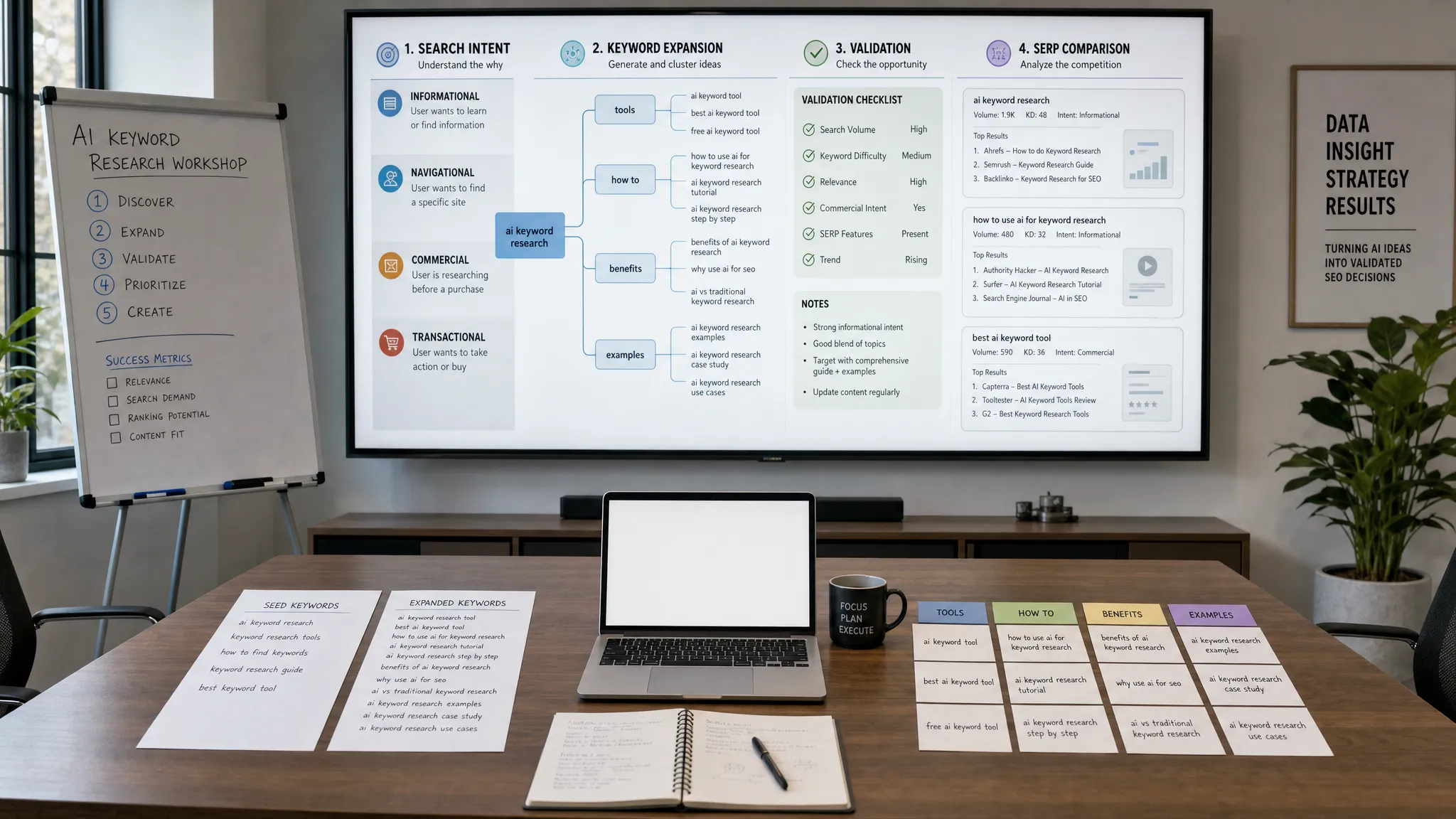
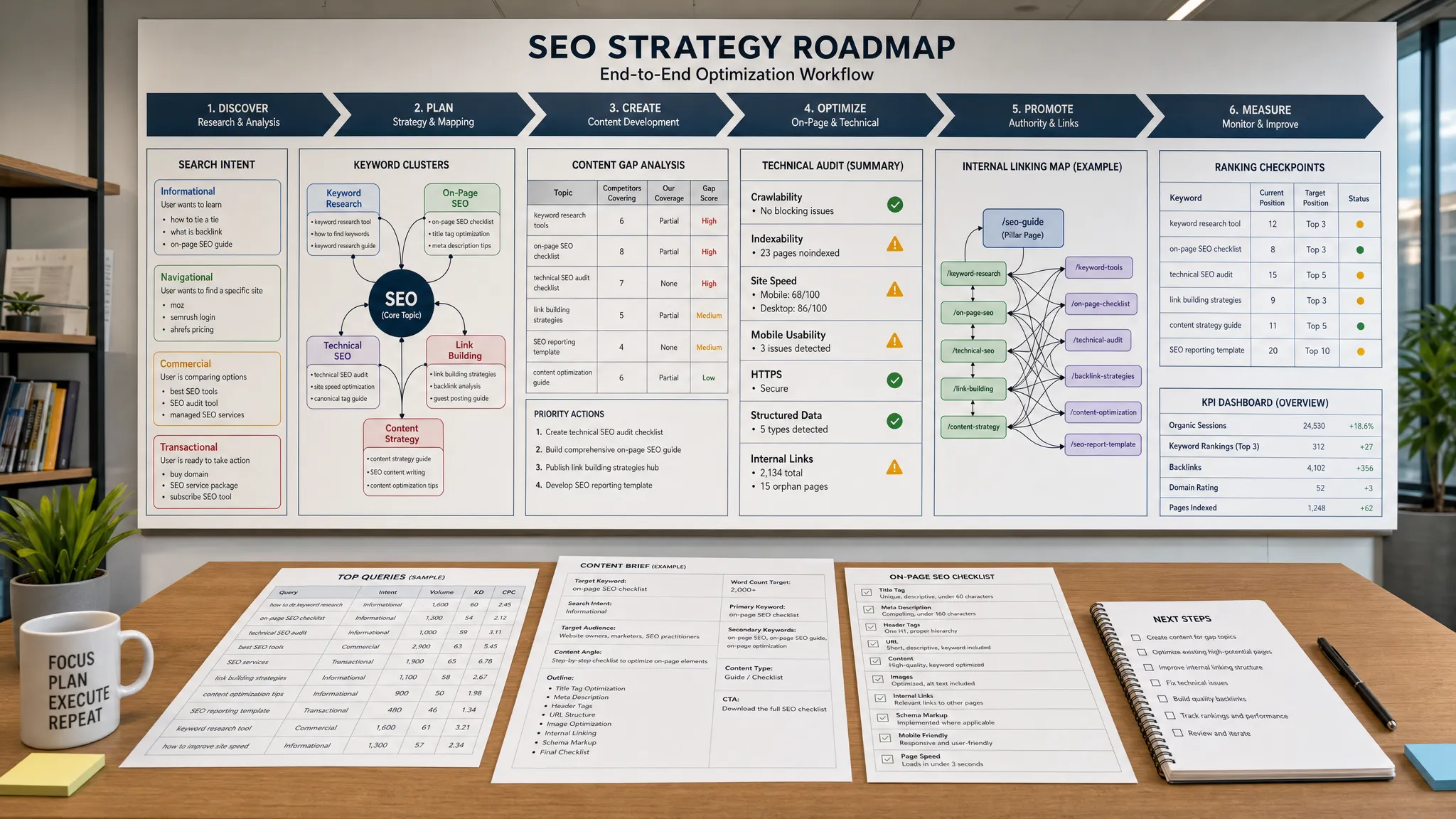
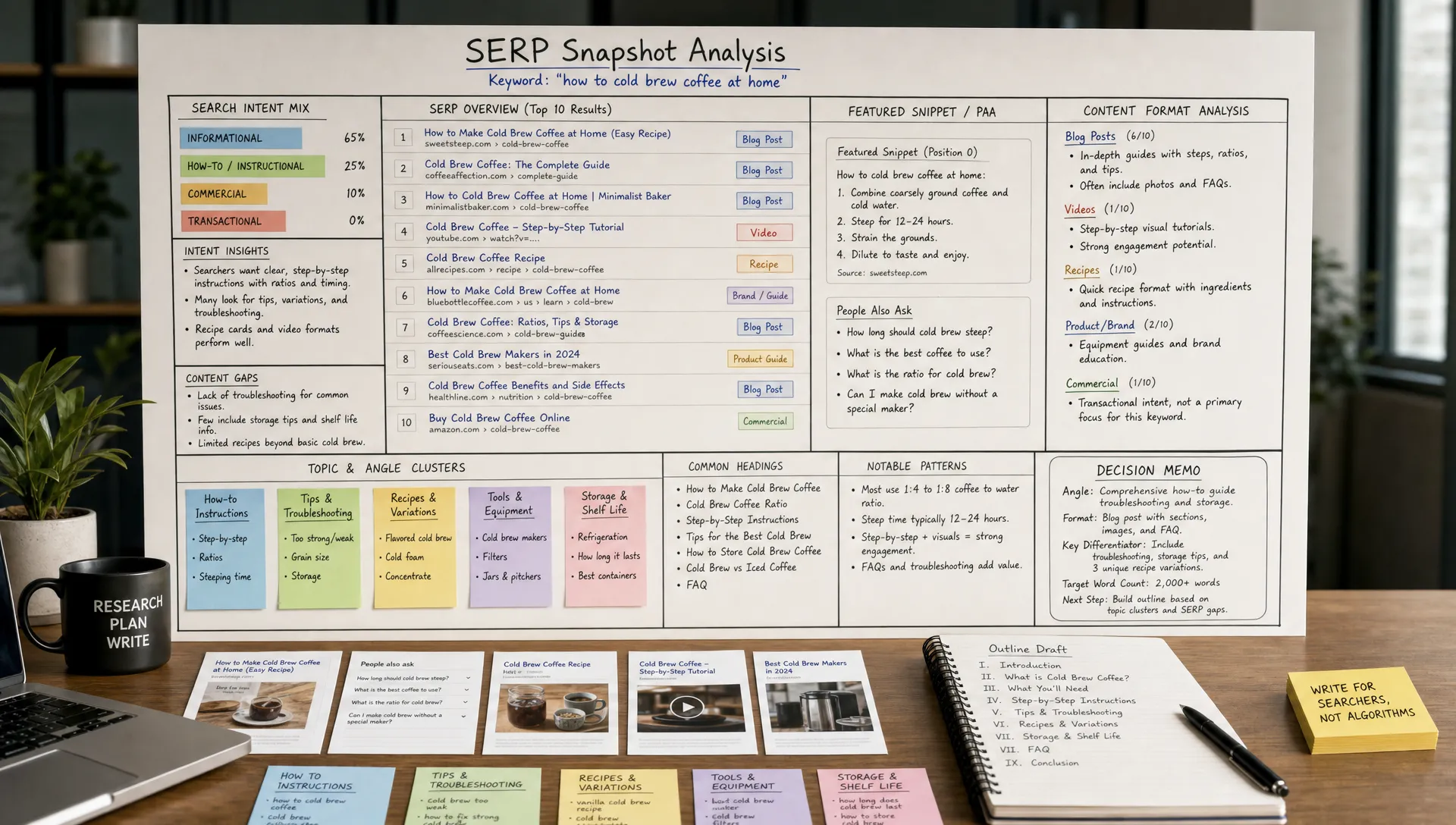
SERP intent is the reason Google is showing the current mix of results for a query. It is not always the same as the literal keyword.
A keyword like best AI writing tools looks commercial, but the SERP might show comparison posts, listicles, review pages, videos, People Also Ask questions, and software category pages. That mix tells you the searcher is likely evaluating options, not ready to land on a single product page.
A keyword like AI marketing automation may look broad, but the SERP could reveal multiple layers of intent, including beginner education, tool comparison, workflow templates, and implementation guidance. Your job is to understand which layer is dominant.
In practice, SERP intent usually includes a blend of:
AI can identify these signals faster, but only if you give it real SERP inputs. Asking a model to infer intent from a keyword alone is convenient, but it is not SERP analysis. It is educated guessing.
Manual SERP analysis is valuable because it forces you to look at what Google is rewarding. The downside is repetition. You may open ten results, scan headings, note formats, identify missing angles, check questions, and then repeat the process for dozens of keywords.
AI speeds up the repetitive parts:
This is especially helpful for marketers managing multiple content clusters. If you are building AI marketing guides, SEO tool pages, or industry-specific content for SaaS, finance, legal, or ecommerce audiences, speed matters. But speed only helps when the analysis remains grounded in the actual SERP.
For a deeper brief-building process after the intent stage, AIMarketer Hub’s guide on how to build an AI SEO content brief that ranks pairs well with the workflow below.
Before using AI, collect a clean snapshot of the SERP. Do not rely on memory or assumptions. SERPs change by location, device, personalization, and date, so your input should be specific enough for a useful analysis.
At minimum, collect:
If you have access to an SEO platform, export this data. If not, you can manually copy the visible results into a document. The quality of your AI output depends heavily on this input.
Once you have the data, ask AI to classify what it sees rather than tell it what to think.
A useful prompt:
Analyze this SERP data for the keyword: [keyword].

Classify the dominant search intent, secondary intent, funnel stage, ranking content types, ranking content formats, and SERP features. Do not infer beyond the data provided. Explain which signals support your classification.

SERP data:
[paste top results and SERP features]
The phrase explain which signals support your classification is important. It forces the model to show its reasoning, which makes hallucinations easier to catch.
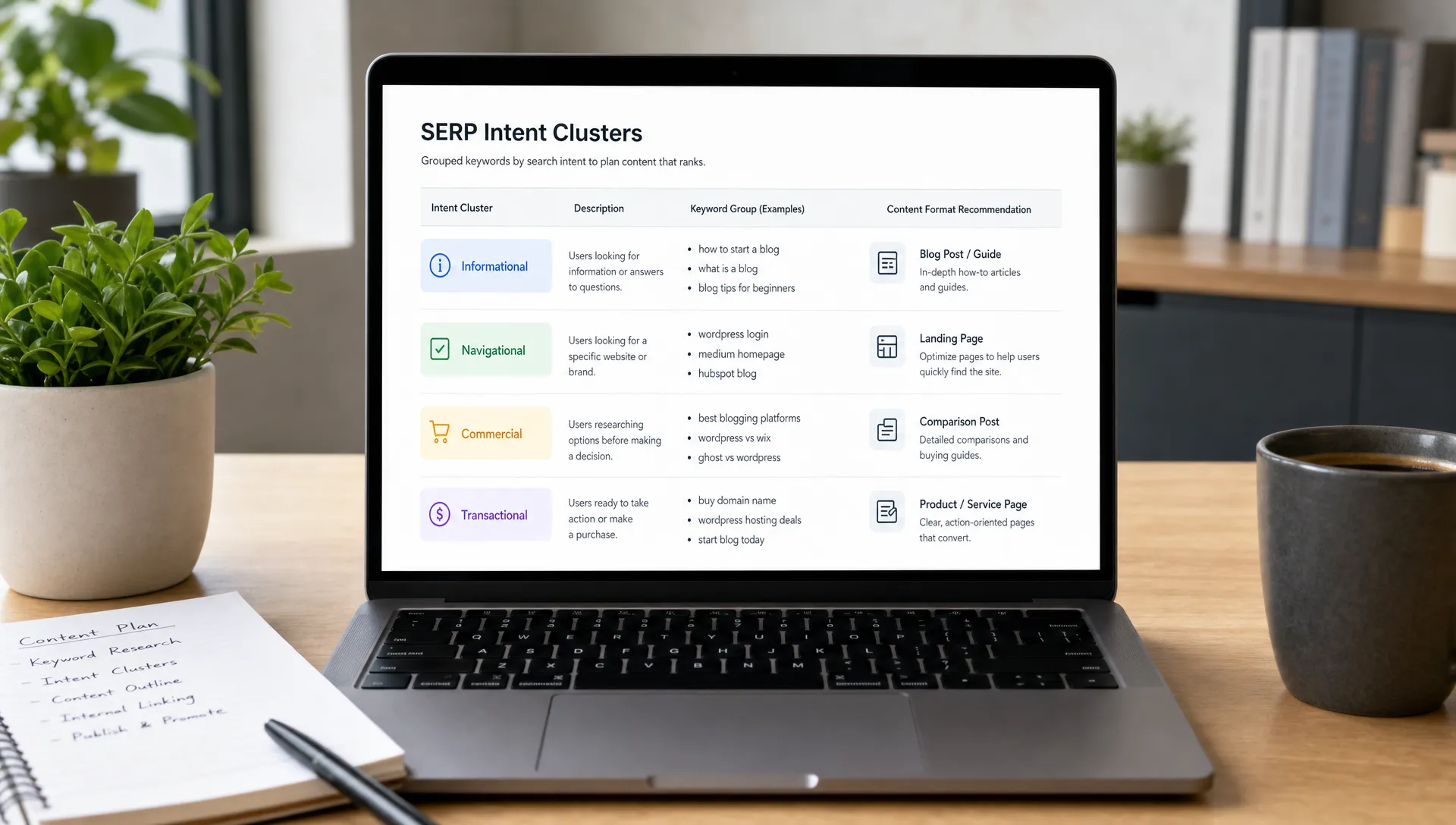
Many keywords have mixed intent. This is where AI can save significant time, because it can quickly group results into patterns.
For example, a SERP might contain:
That is not a single-intent SERP. It likely means searchers are still learning, but some are also evaluating tools. If you create a bottom-of-funnel product page, you may struggle. If you create a generic beginner article, you may miss the commercial angle.
Ask AI to estimate the intent split:
Group these ranking results by intent type. Estimate the percentage of the SERP represented by each intent category. Then recommend the safest content approach for a page trying to rank for this keyword.
The percentages will not be mathematically perfect, but they help you make a strategic call. If 70 percent of the results are educational guides, your content should probably be a guide. If 60 percent are comparison pages, a comparison or listicle may be a better fit.
This is where human judgment matters. AI may say a SERP is commercial because the keyword contains software, but if the results are mostly tutorials, the actual SERP intent is educational or problem-solving.
Once you know the dominant intent, identify the format Google is rewarding. Intent tells you why people search. Format tells you how they want the answer delivered.
Common format patterns include:
AI can extract this from titles, URL paths, and snippets, but it works even better if you include page headings. For important keywords, open the top five pages and copy their H2s into your prompt.
Try this:
Based on these page titles, snippets, URLs, and headings, identify the dominant content format. Then list the format expectations a new page must satisfy to compete.
For a keyword like how to use AI to analyze SERP intent faster, the likely format is a practical how-to guide. The searcher does not want a definition of search intent alone. They want a faster workflow, prompts, examples, and a way to turn analysis into content decisions.
After you know the dominant intent and format, use AI to identify what top pages have in common. This helps you avoid two common mistakes: writing content that is too thin or writing content that is different in a way searchers do not value.
Paste the headings from top-ranking pages and ask:
Compare these ranking pages. Identify recurring subtopics, unique subtopics, missing questions, examples used, level of depth, and trust signals. Then recommend what a better article should include without copying competitors.
Look for patterns such as:
This is where your differentiation emerges. You are not trying to be different just for the sake of being different. You are trying to satisfy the core SERP expectations while adding something more useful, clearer, or more current.
For example, if you are creating content in a specialized niche such as music licensing or intellectual property monetization, intent analysis can help you determine whether searchers want legal education, enforcement workflows, or platform evaluation. A rights holder researching social media music usage may need a very different page than someone comparing IP monitoring solutions such as Third Chair, which focuses on monitoring content use, enforcement, and licensing opportunities.
That same principle applies to AI marketing, SaaS, legal, finance, and ecommerce topics. The SERP reveals the conversation the audience is already having. AI helps you decode it faster.
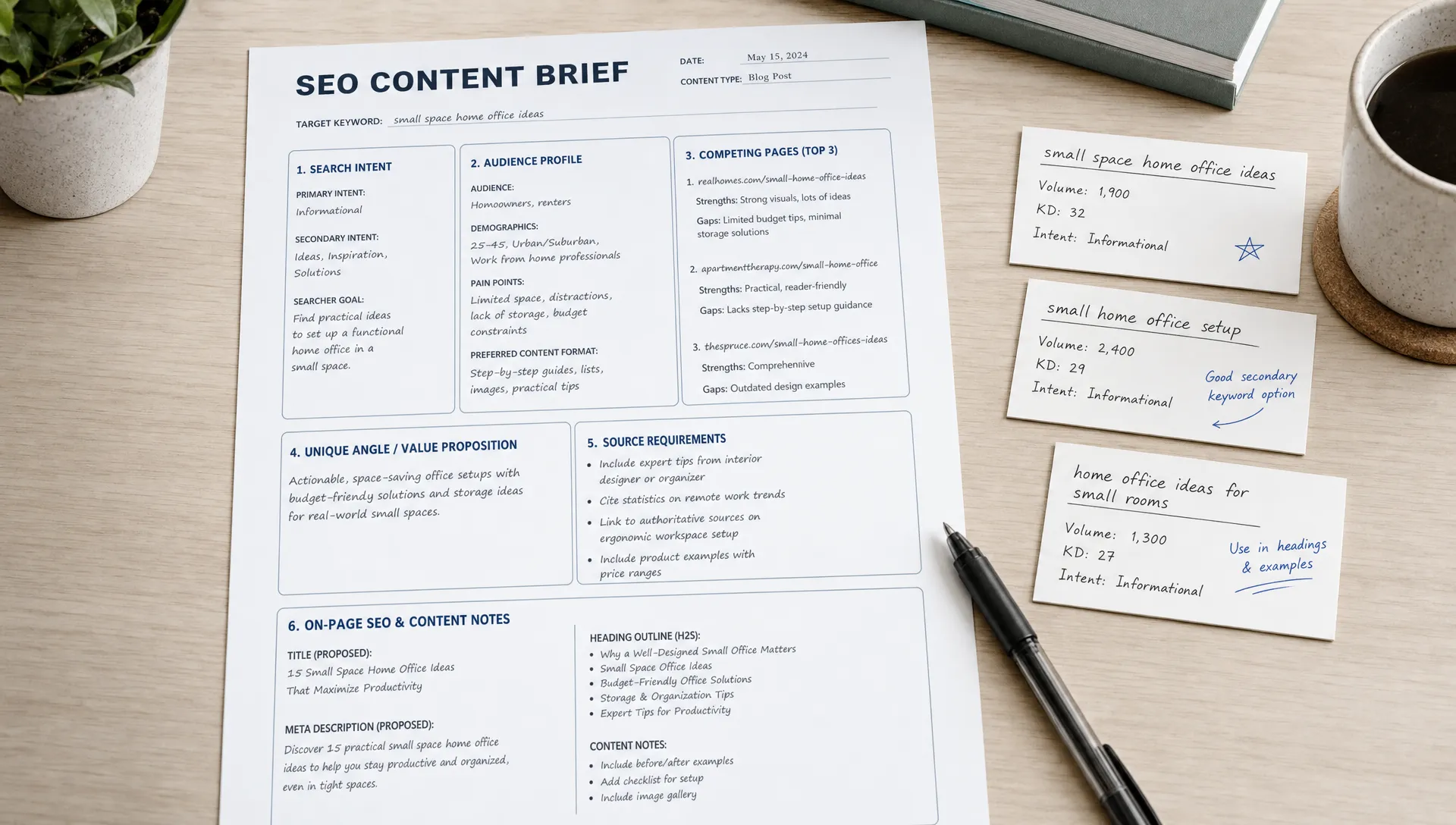
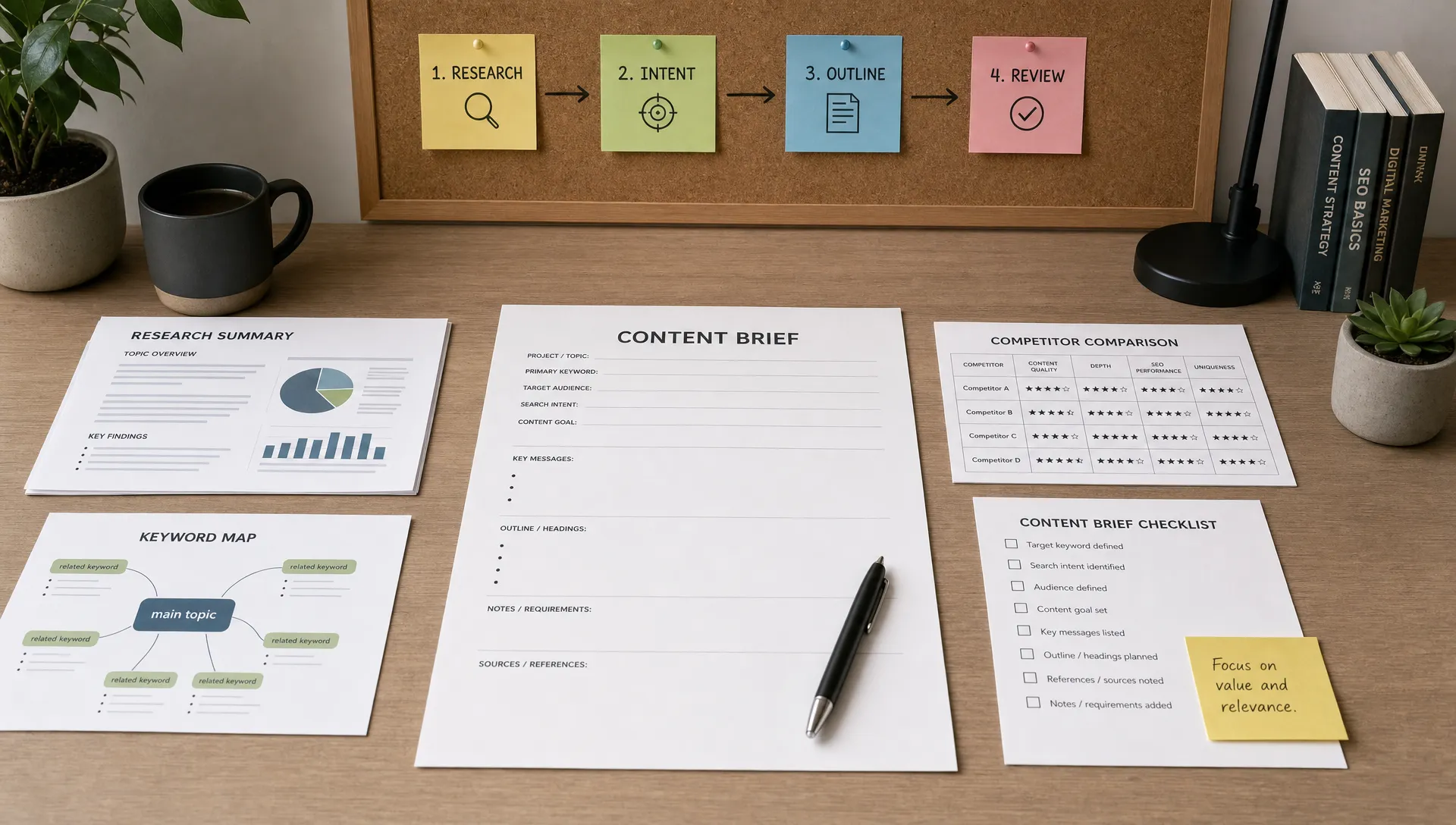
Intent analysis is only useful if it changes the content you create. Once AI has summarized the SERP, ask it to recommend the page type and content angle.
A strong output should answer these questions:
For example, if the query is top-of-funnel, your call to action should not be overly aggressive. A guide, checklist, resource library, or related tool may fit better than a hard sales pitch. If the query is bottom-of-funnel, the page should reduce friction with proof, comparisons, and next-step clarity.
This is also where AI-powered analytics can help beyond the SERP. If your own historical data shows that how-to articles convert through templates or calculators, you can match the CTA to that behavior. If your product-led pages perform better after a comparison section, build that into the brief.
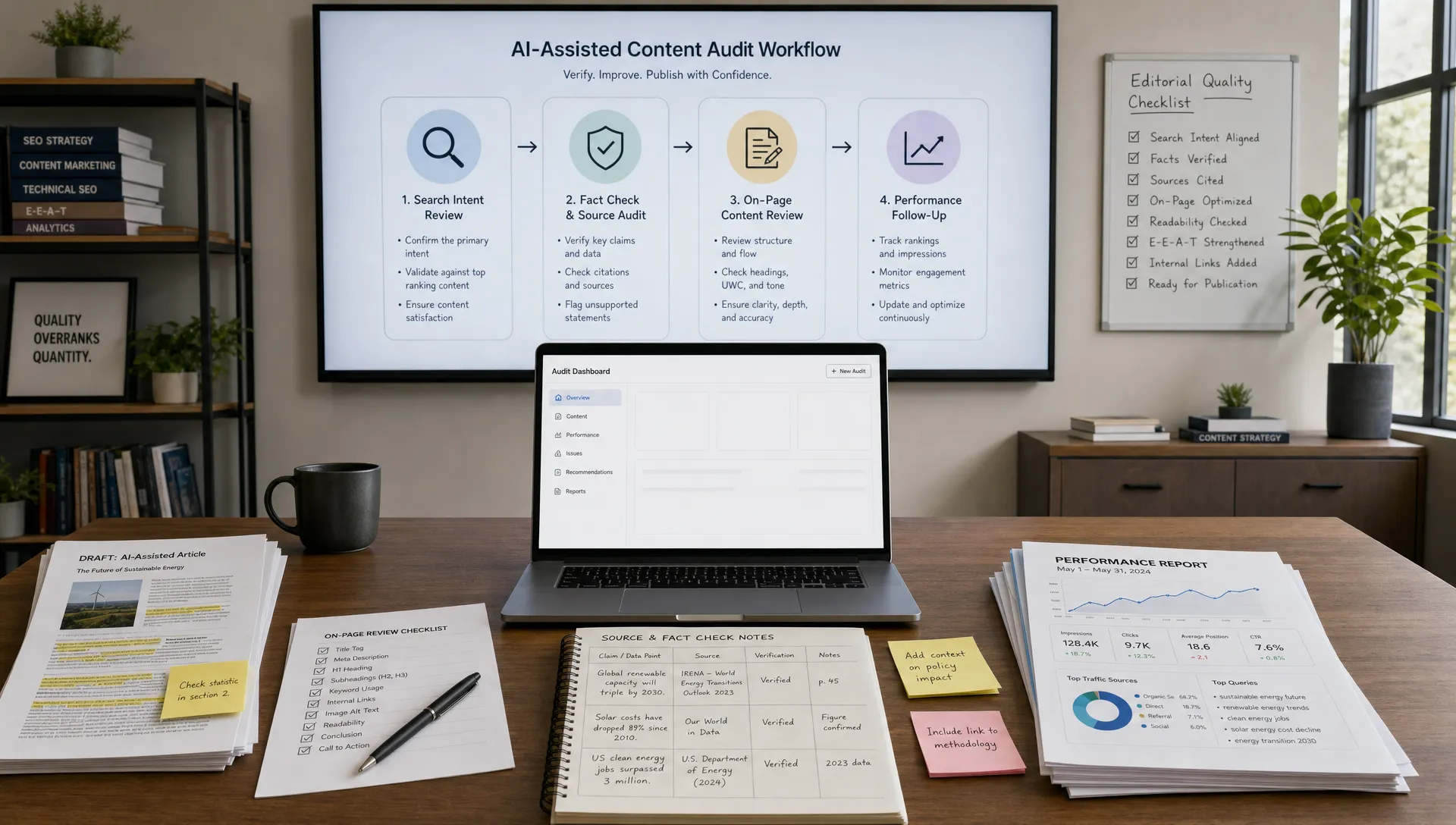
AI can accelerate SERP intent analysis, but it can still make confident mistakes. Always validate the output before assigning the content.
Use a quick quality check:
This review usually takes a few minutes, but it prevents expensive content misalignment. A writer can recover from a rough outline. It is much harder to recover from targeting the wrong intent entirely.
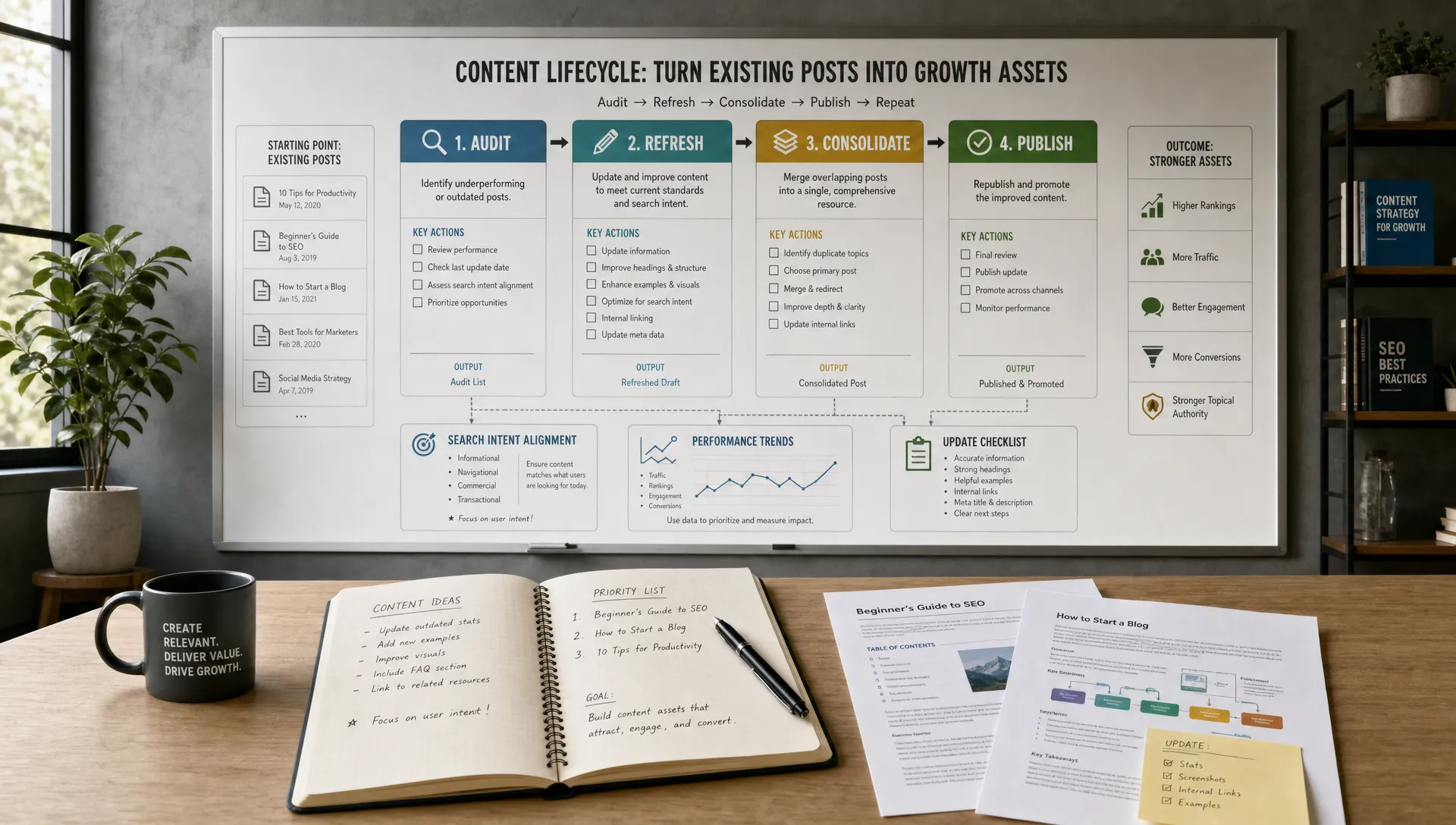
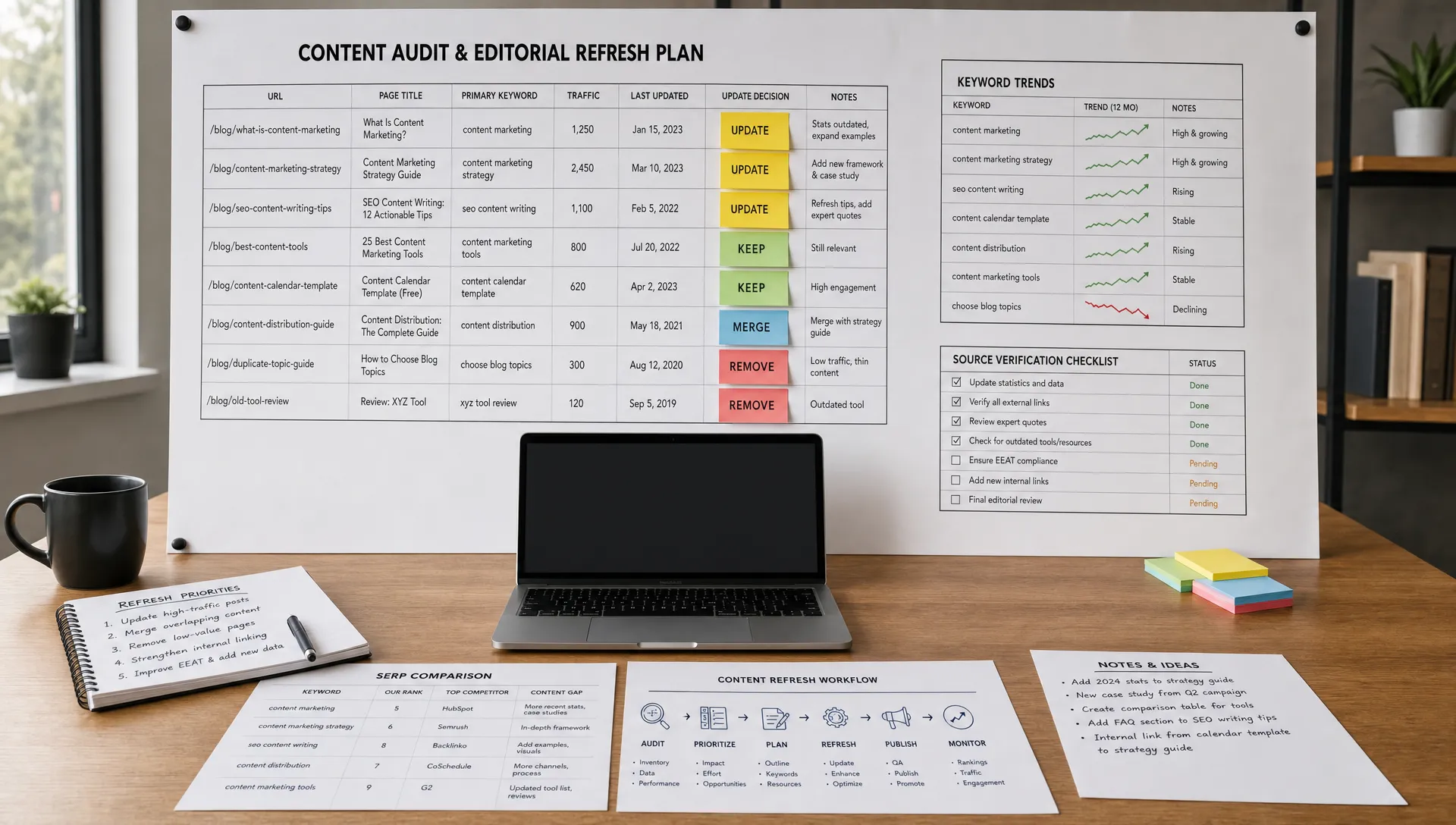
If you are refreshing existing content, compare the old page against the current SERP. AI can quickly identify whether intent has shifted from informational to commercial, from listicle to how-to, or from broad guide to niche use case. For a workflow focused specifically on updating existing assets, see AIMarketer Hub’s guide to the best AI tools for content refresh and update work.
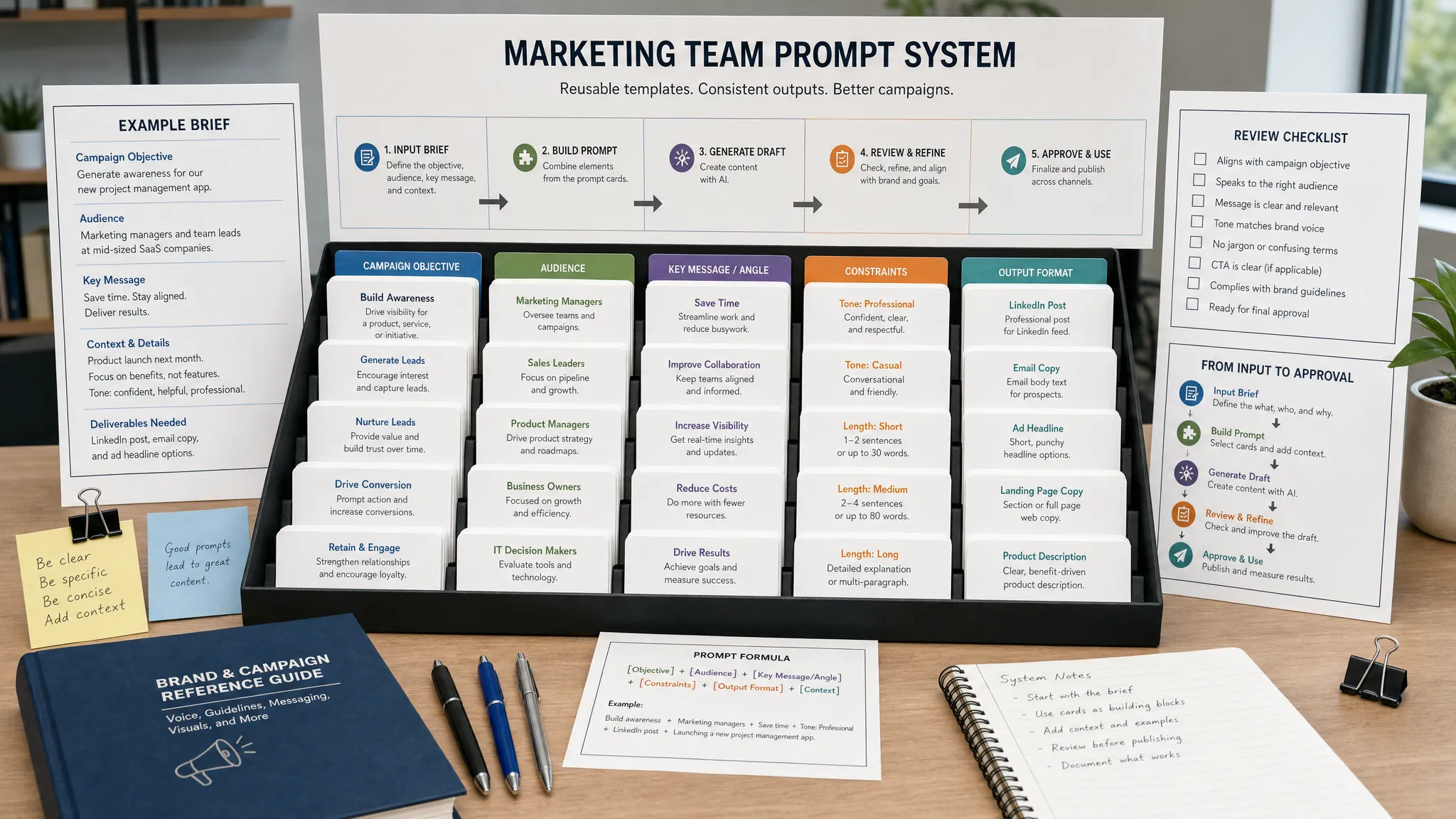
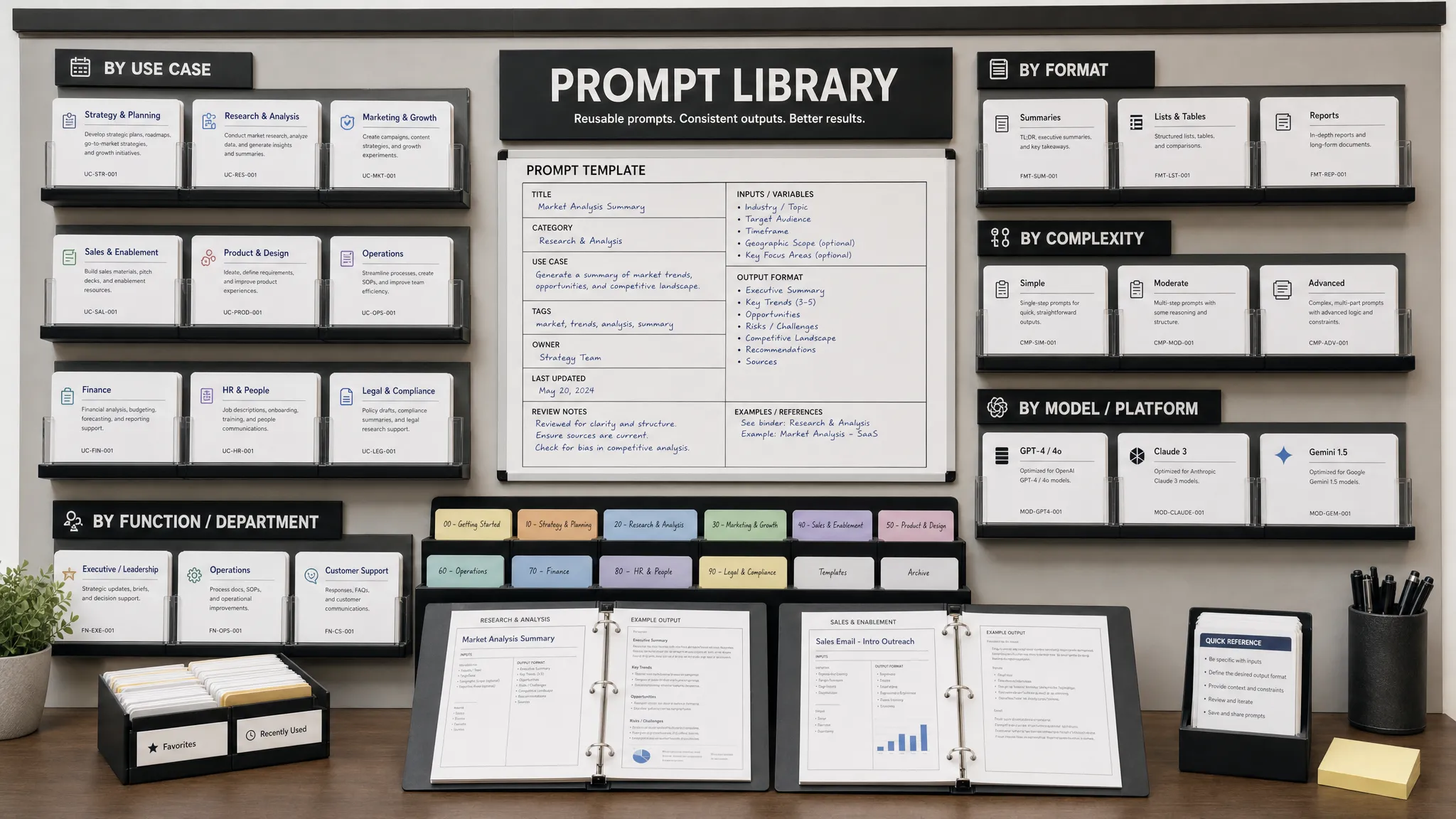
The fastest teams do not reinvent the process for every keyword. They create reusable prompt templates, then customize them with fresh SERP data.
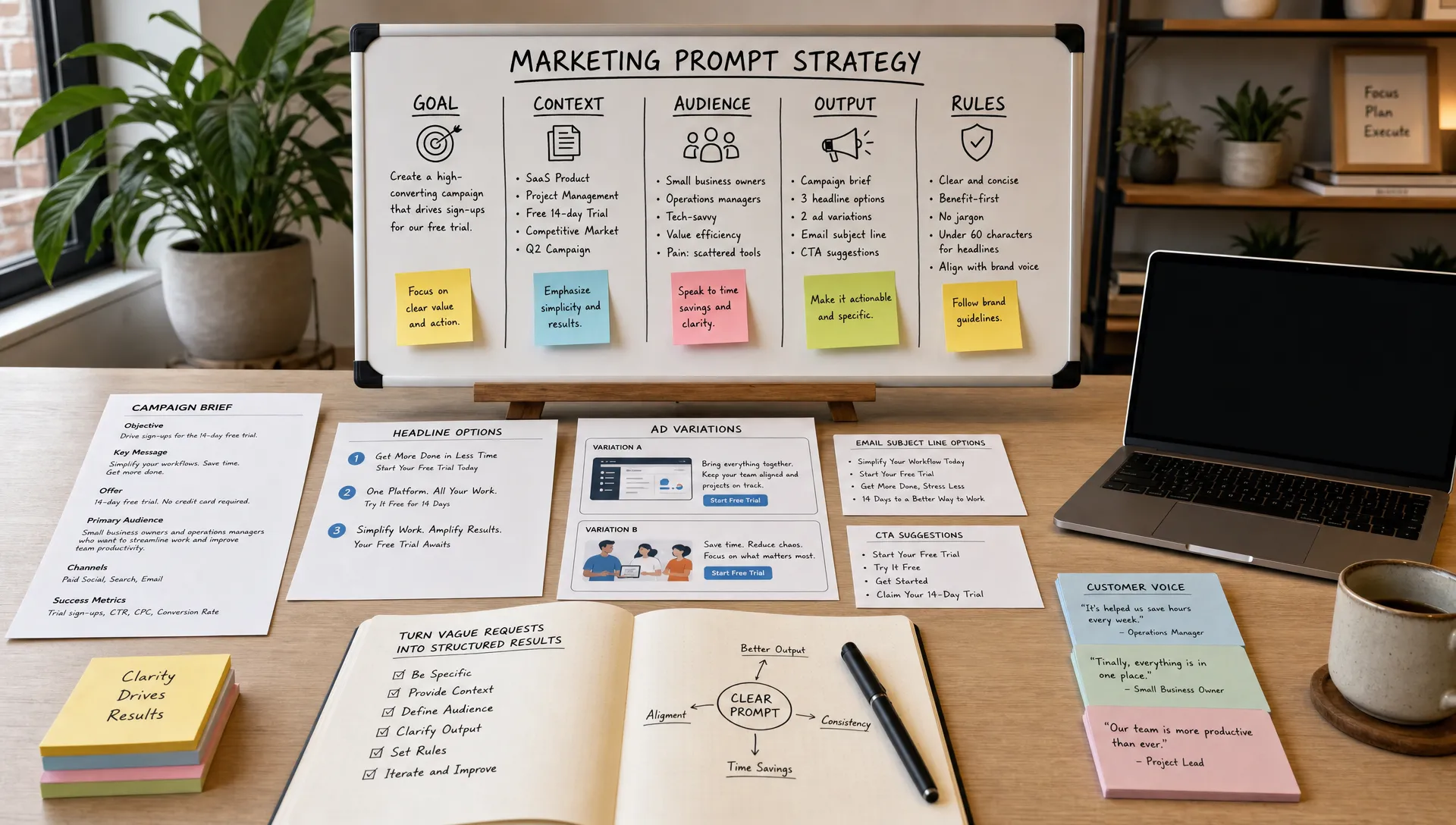
Here is a practical template you can adapt:
You are an SEO strategist analyzing SERP intent.

Keyword: [keyword]
Location: [location]
Audience: [audience]
Business goal: [goal]
SERP data: [paste results, snippets, SERP features, and headings]

Return:
1. Dominant intent
2. Secondary intent
3. Funnel stage
4. Ranking content types
5. Ranking content formats
6. SERP features and what they imply
7. Common subtopics
8. Missing opportunities
9. Recommended page type
10. Recommended outline
11. CTA recommendation based on intent
12. Risks or assumptions to verify manually

Base every conclusion on the supplied SERP data.
This template is intentionally structured. It prevents vague output and gives your team a consistent way to compare keywords across a cluster.
You can also create variants for different workflows, such as ecommerce category pages, SaaS comparison pages, local service pages, or thought leadership articles. The inputs change, but the logic stays the same: observe the SERP, classify the intent, validate the pattern, then build content that fits.
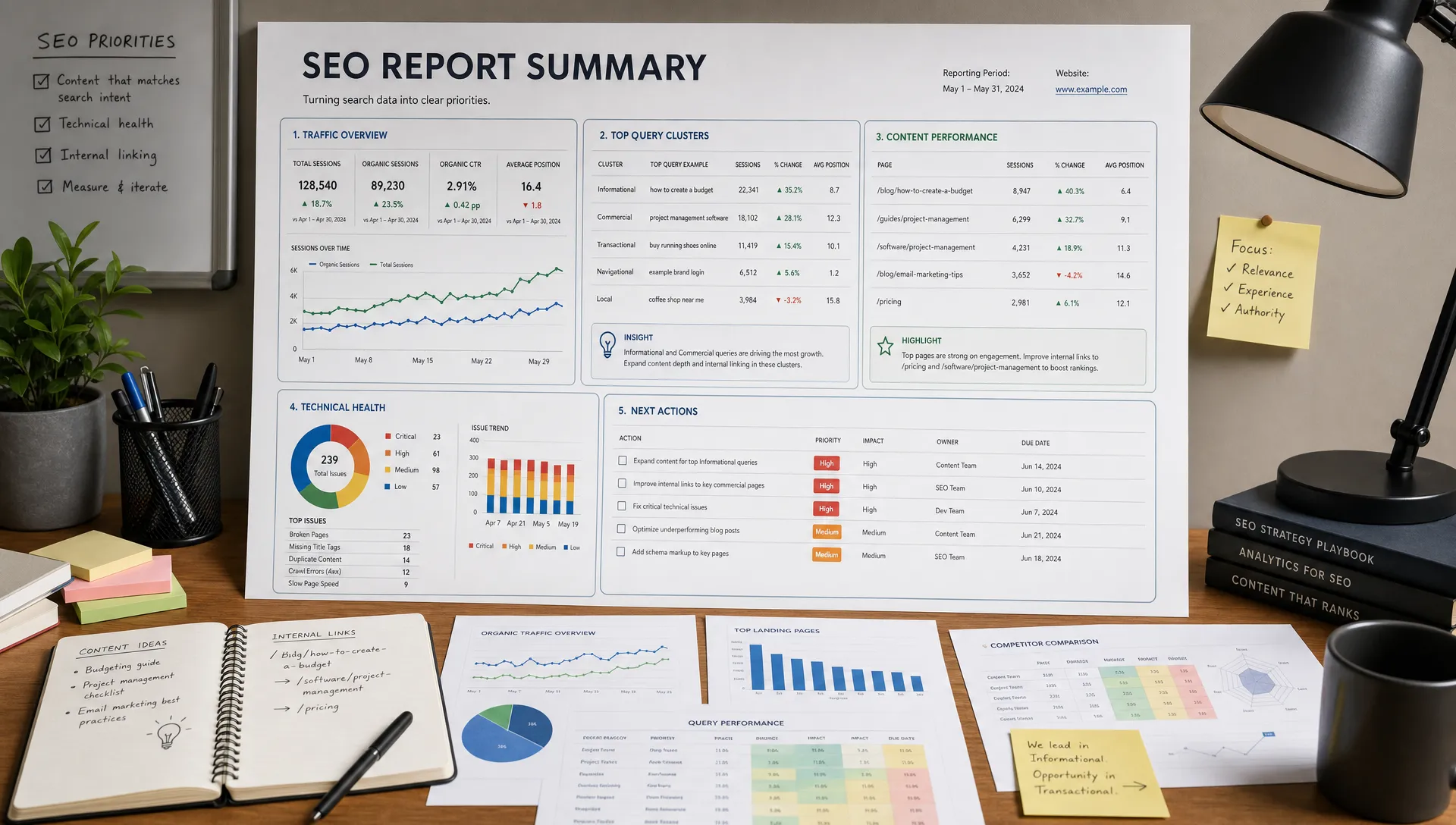
SERP intent analysis should not live only in a brief. It should feed your SEO reporting and content performance reviews.
Track whether pages matched the recommended intent and how they performed after publication. If a page underperforms, ask whether the issue is authority, content quality, internal linking, technical SEO, or intent mismatch.
Useful reporting notes include:
Over time, this gives your team a feedback loop. You may discover that AI-assisted SERP analysis improves brief quality, that certain intent types need more expert input, or that some topics require interactive tools instead of articles.
For a broader measurement workflow, AIMarketer Hub’s article on SEO reporting with AI explains how to turn SEO data into clearer insights and next actions.
The biggest mistake is using AI before looking at the SERP. A model can describe likely intent, but search intent is not the same as SERP intent. Google’s current results are the evidence.
Another mistake is treating intent labels as enough. Saying a keyword is informational does not tell a writer what to create. A beginner definition, an advanced workflow, and a checklist can all be informational, but they serve very different searchers.
Teams also overvalue competitor averages. If every ranking article has the same five sections, that does not mean you should copy the same five sections in the same order. It means those topics are likely expected. Your job is to cover the essentials, then add a clearer process, better examples, fresher data, or a more useful tool.
Finally, do not ignore business fit. A keyword may have traffic potential, but if the intent does not align with your offer, it may not deserve priority. AI can help classify intent, but your marketing strategy should decide whether the topic is worth pursuing.
Can AI determine search intent from a keyword alone? AI can estimate likely intent from a keyword, but that is not the same as SERP intent analysis. For reliable results, provide current SERP data, including ranking titles, URLs, snippets, headings, and SERP features.
How many ranking results should I analyze? For most content briefs, analyze the top 10 organic results plus major SERP features. For high-value keywords, review the top 15 to 20 results and inspect the headings of at least the top five pages.
What is the fastest way to analyze mixed intent? Ask AI to group ranking results by page type, format, and funnel stage. Then estimate which intent appears most often and which secondary intent must be addressed to satisfy the SERP.
Should AI write the content after analyzing SERP intent? It can help draft outlines, briefs, and sections, but human review is still essential. SERP intent analysis tells you what the page needs to accomplish. Editors and subject matter experts ensure the final content is accurate, differentiated, and useful.
How often should I recheck SERP intent? Recheck important keywords every few months, after major ranking changes, or before refreshing content. SERPs can shift when Google starts rewarding different formats, fresher information, or more specialized expertise.
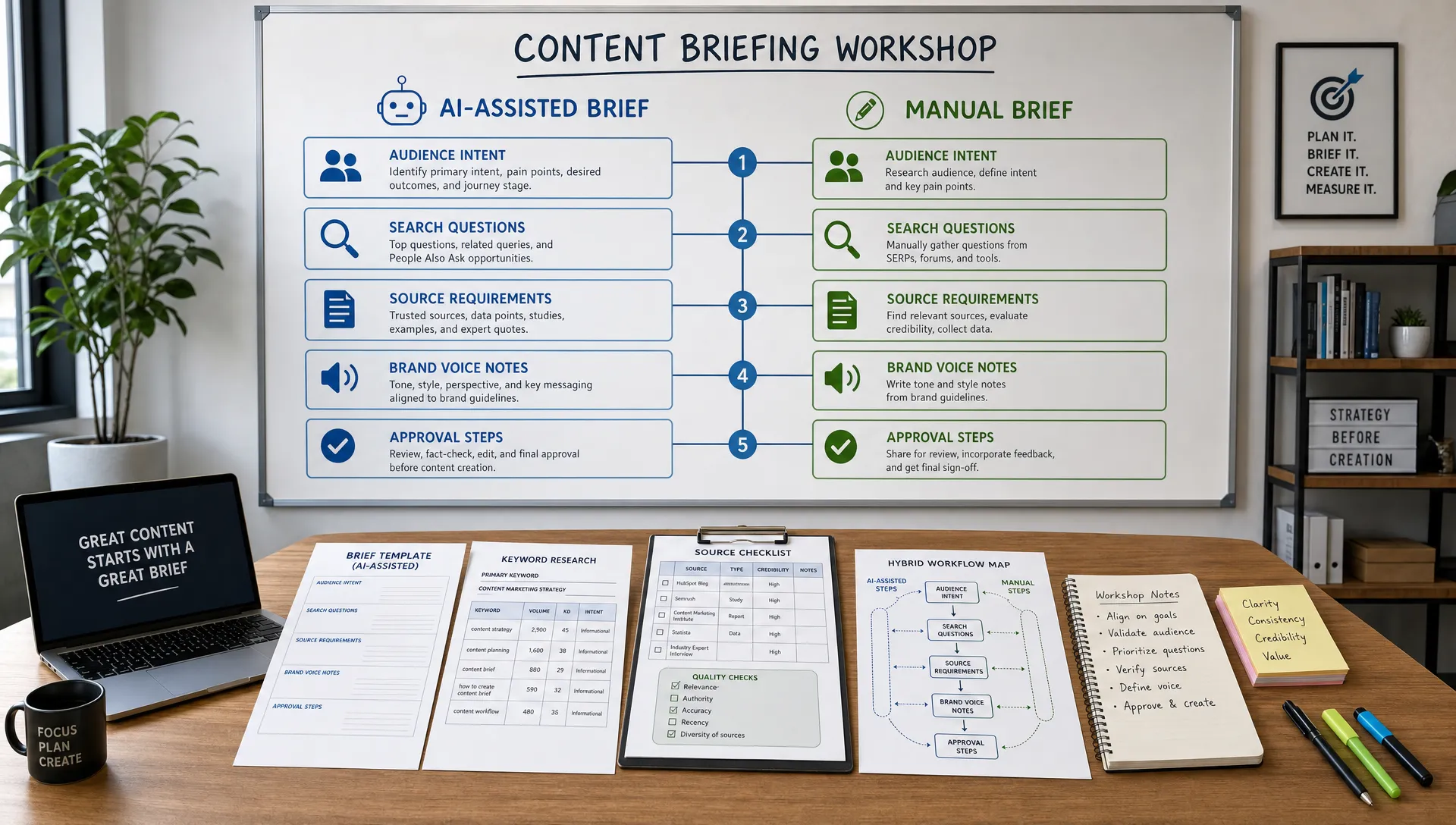
AI can make SERP intent analysis dramatically faster, but the best results come from a disciplined process. Start with real SERP data. Ask AI to classify patterns. Validate the output. Then turn the findings into a practical brief, outline, and measurement plan.
For marketers managing SEO at scale, this workflow reduces guesswork and helps every article start with a clearer strategic foundation. AIMarketer Hub brings together AI marketing guides, SEO resources, prompt workflows, and practical tools to help teams automate smarter without losing human judgment.
Use AI to move faster, but let the SERP tell you what searchers actually want.