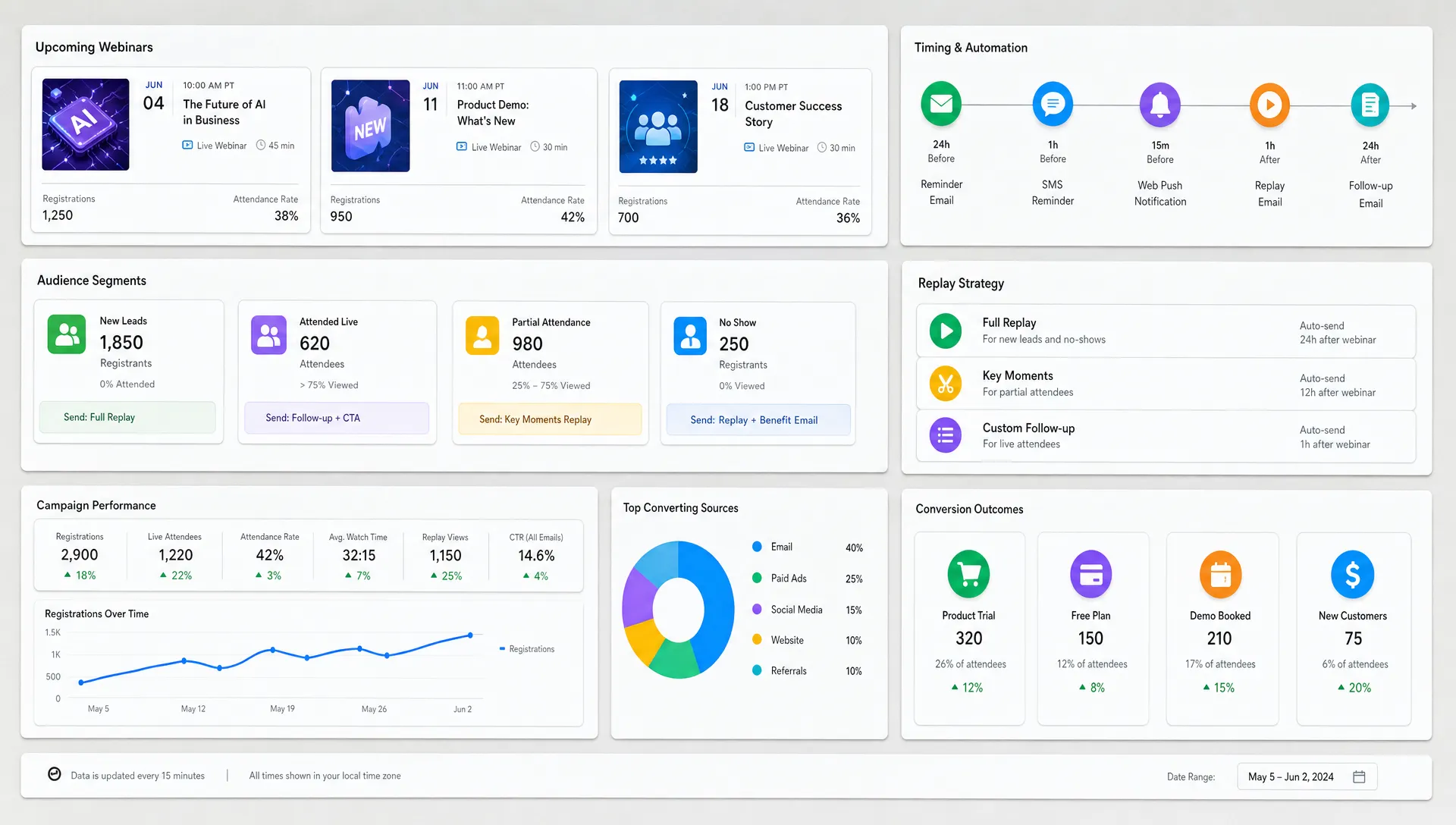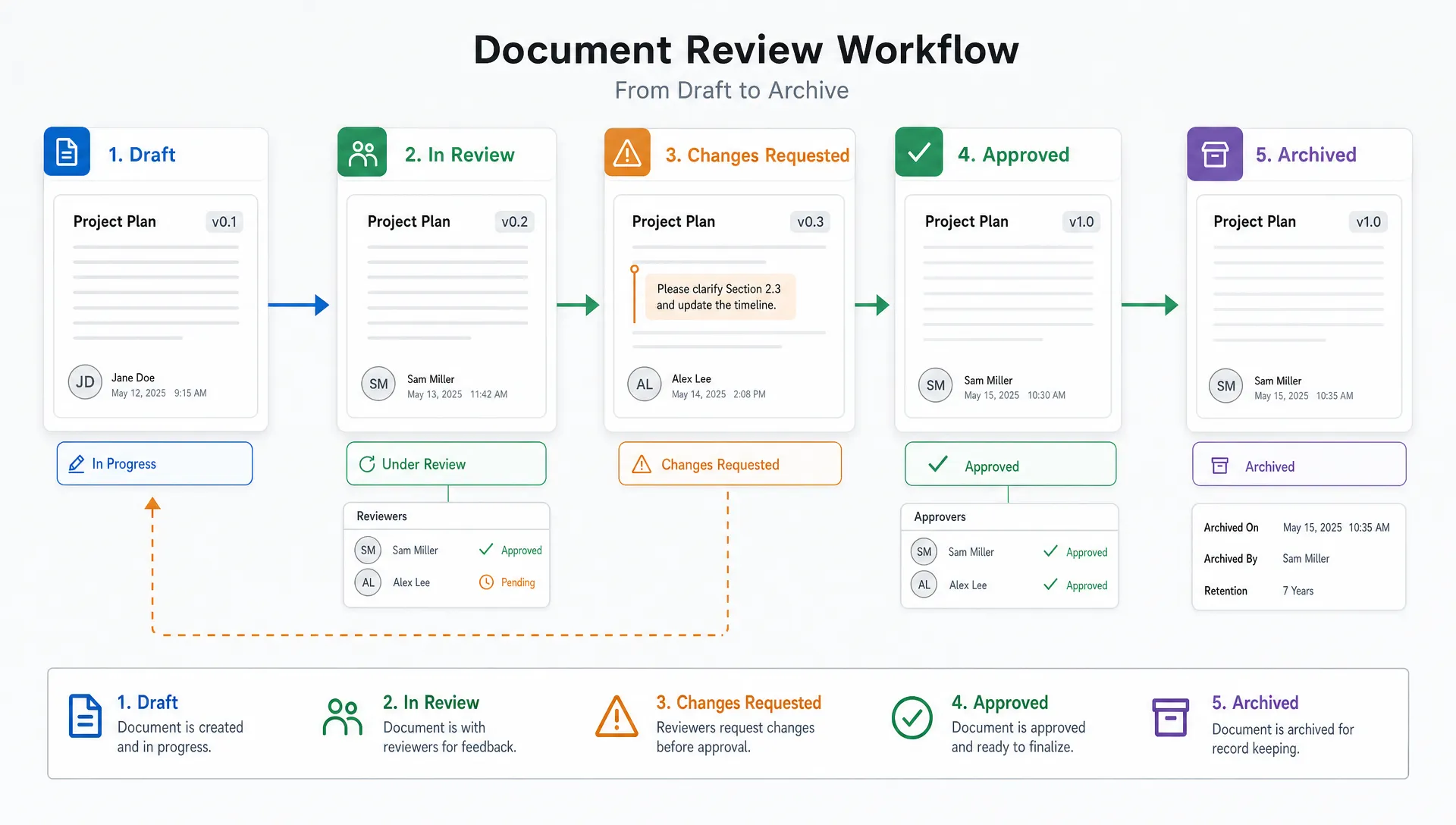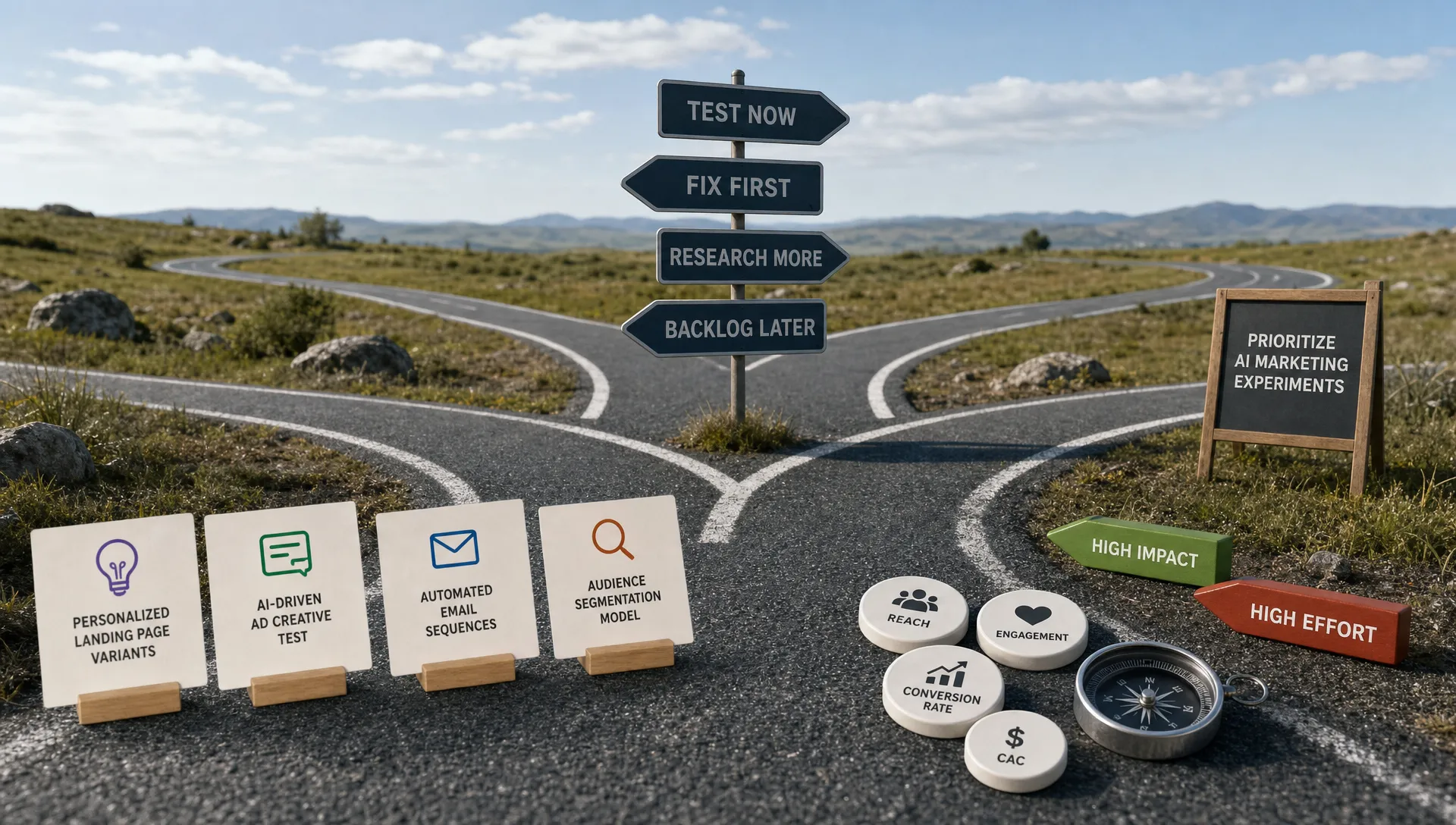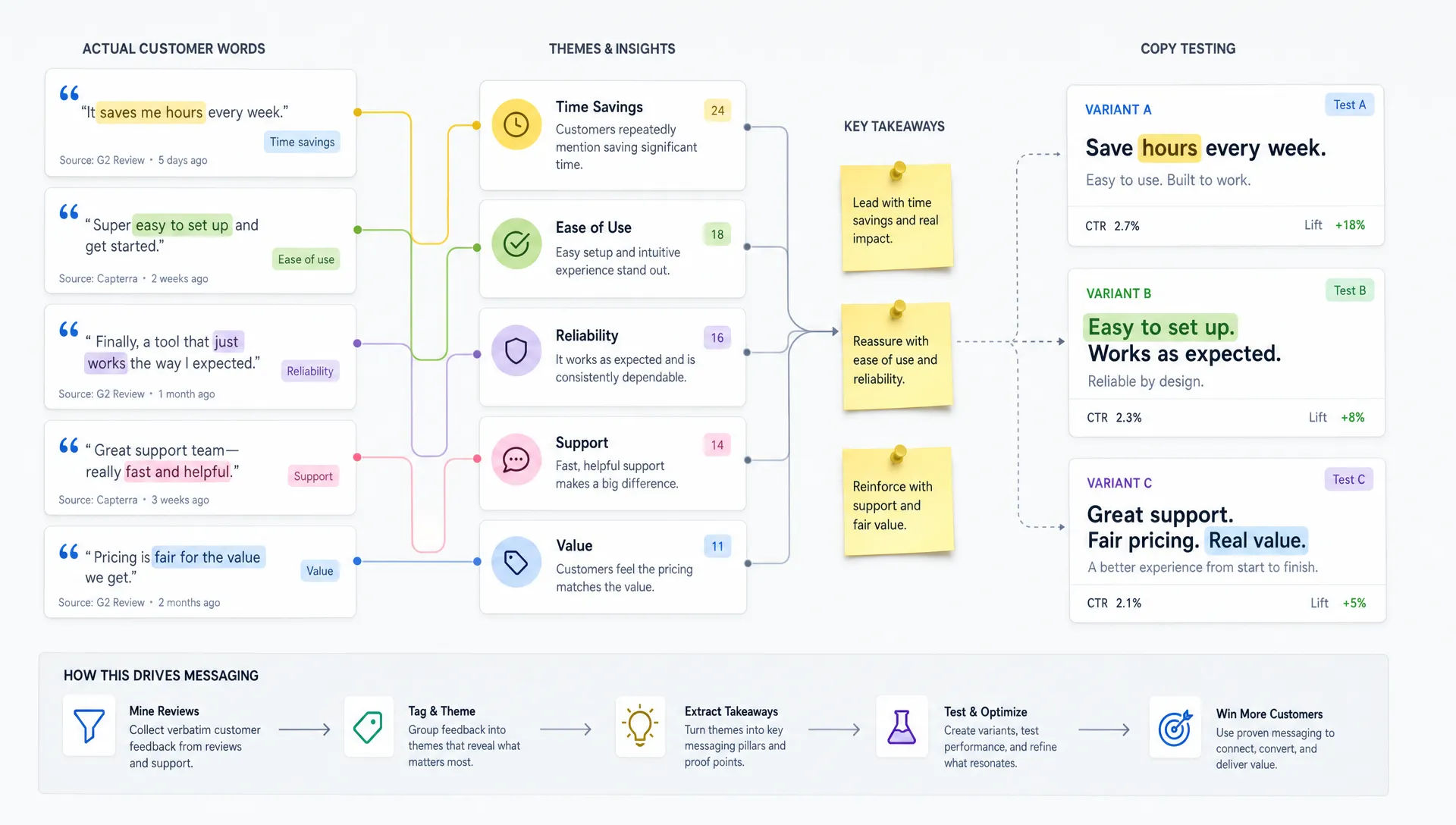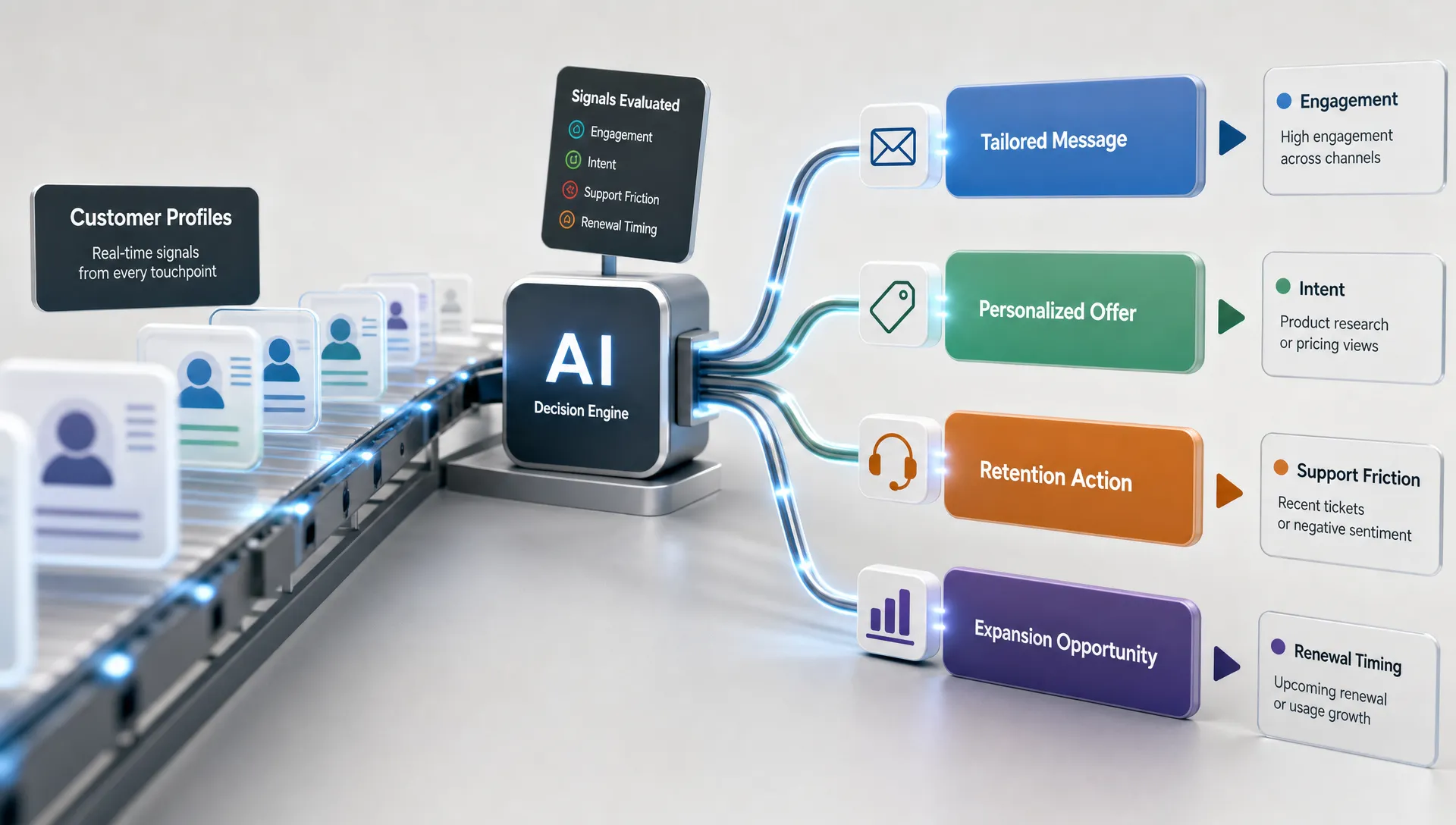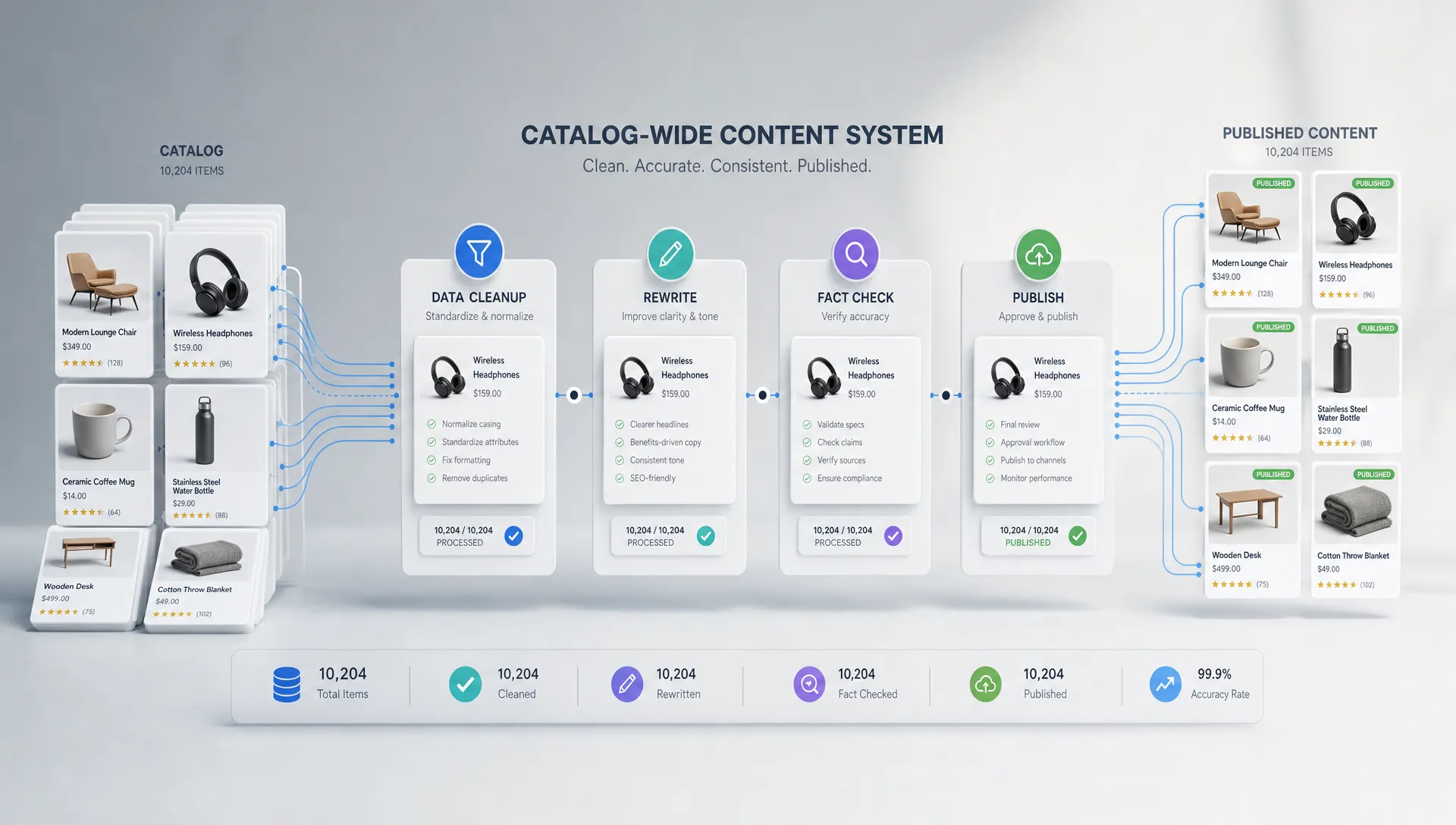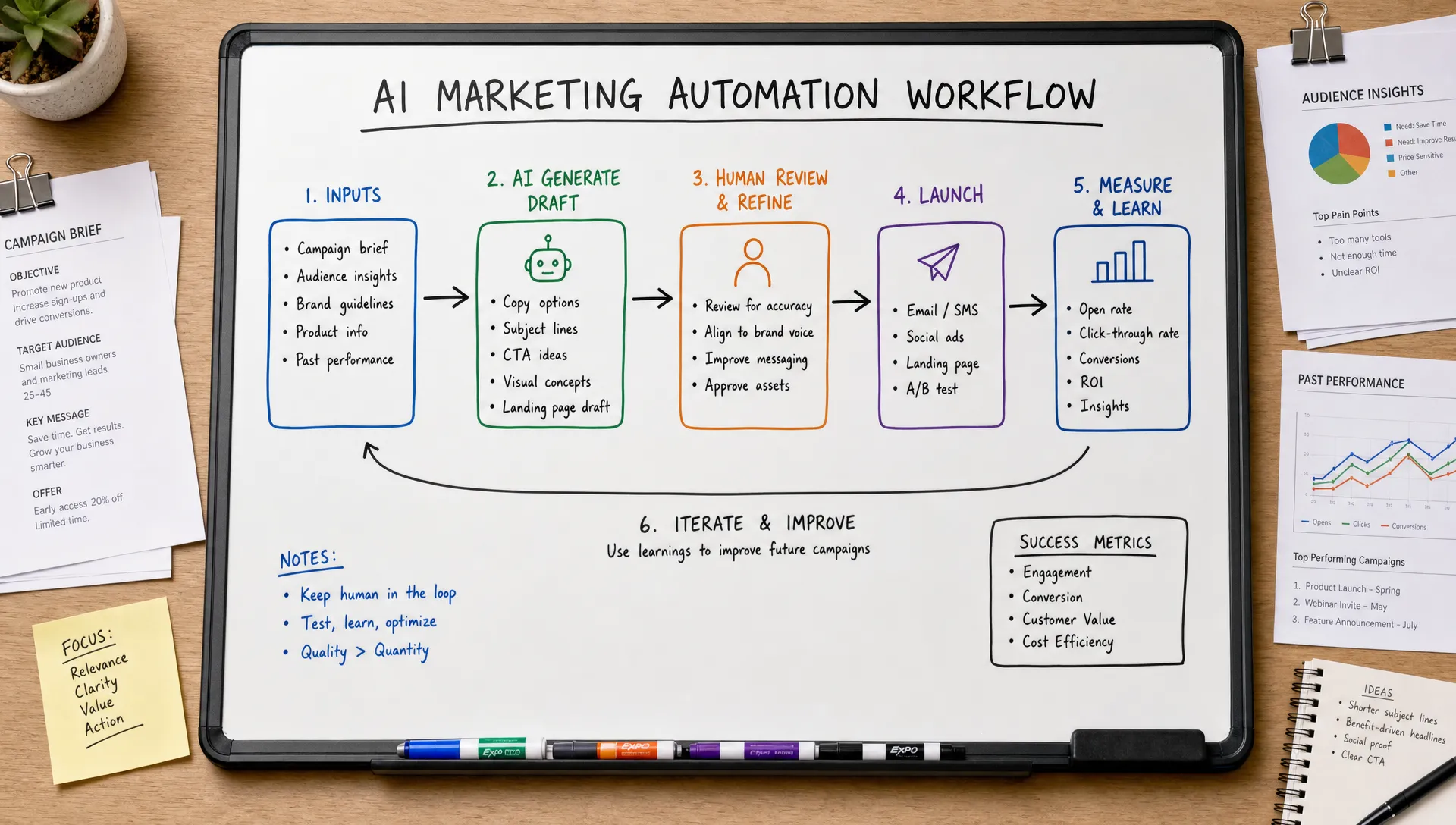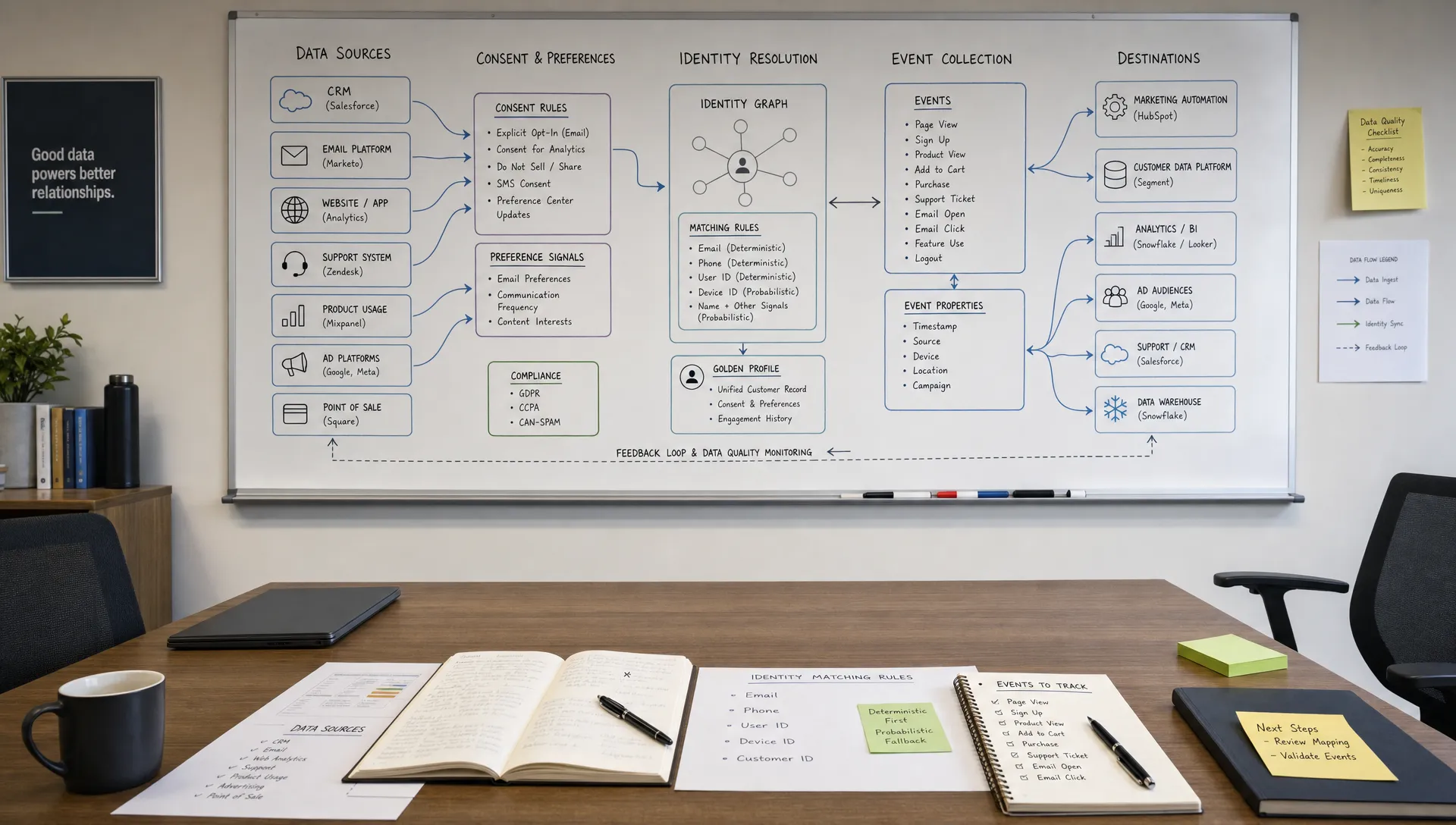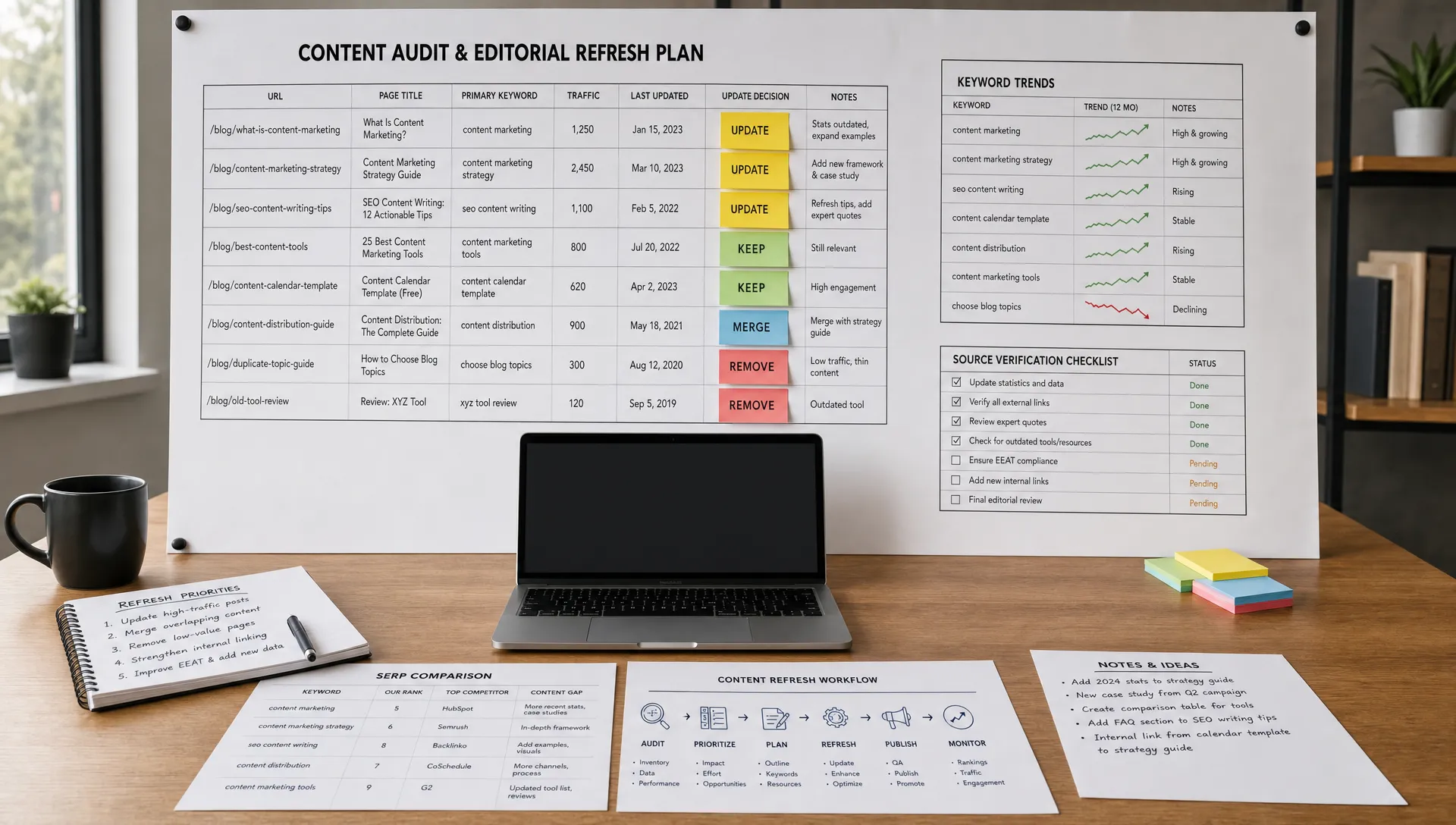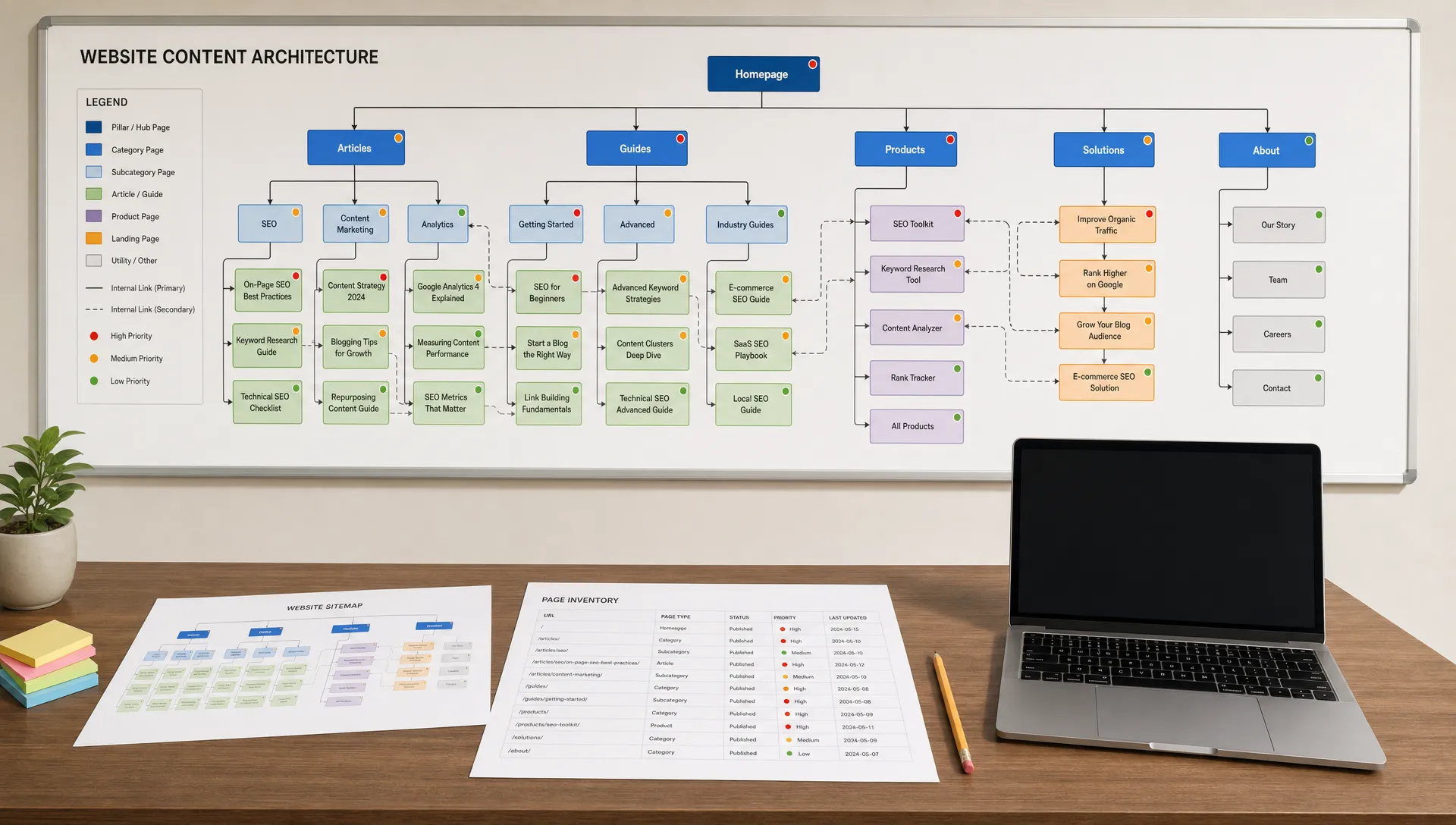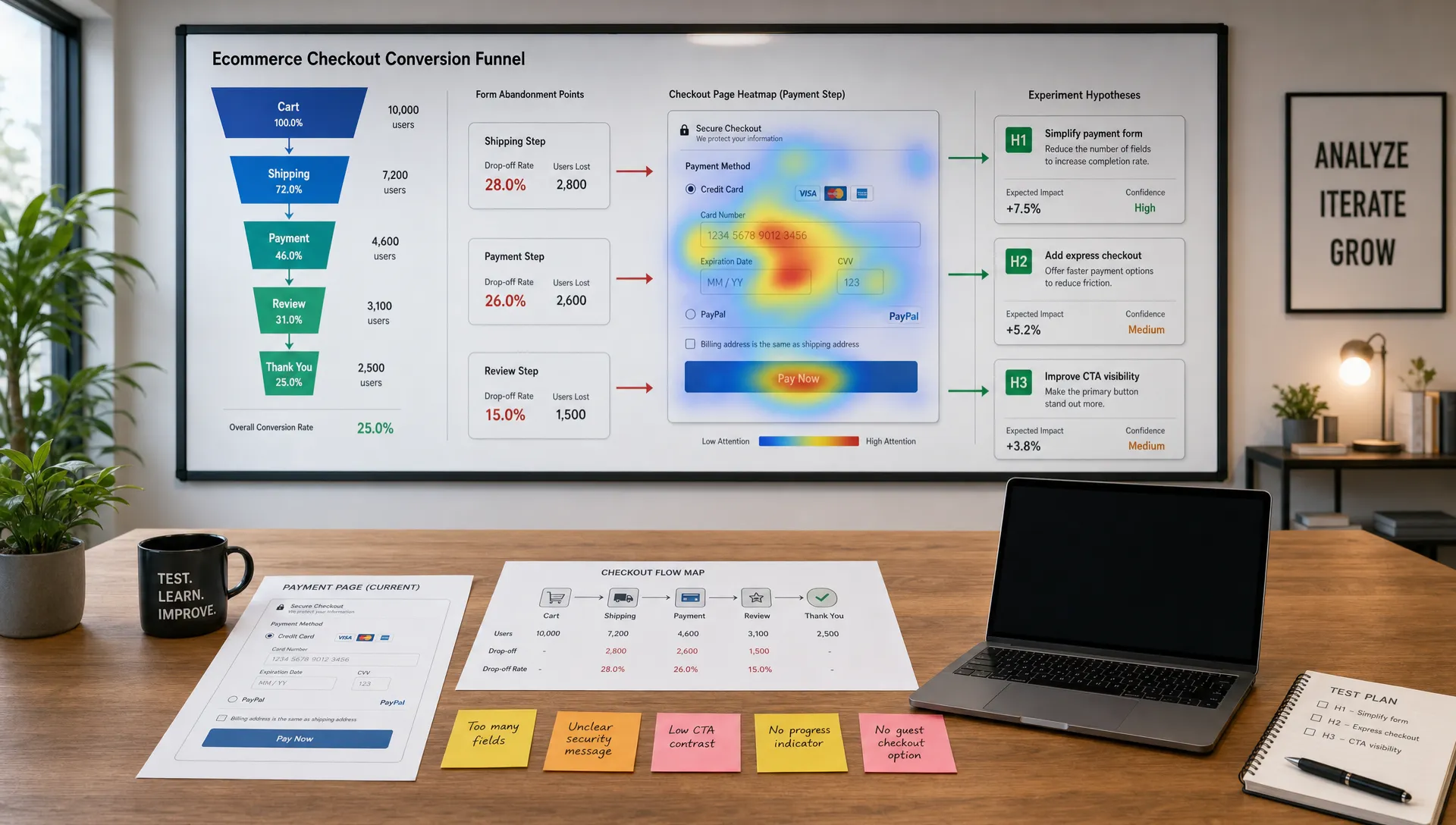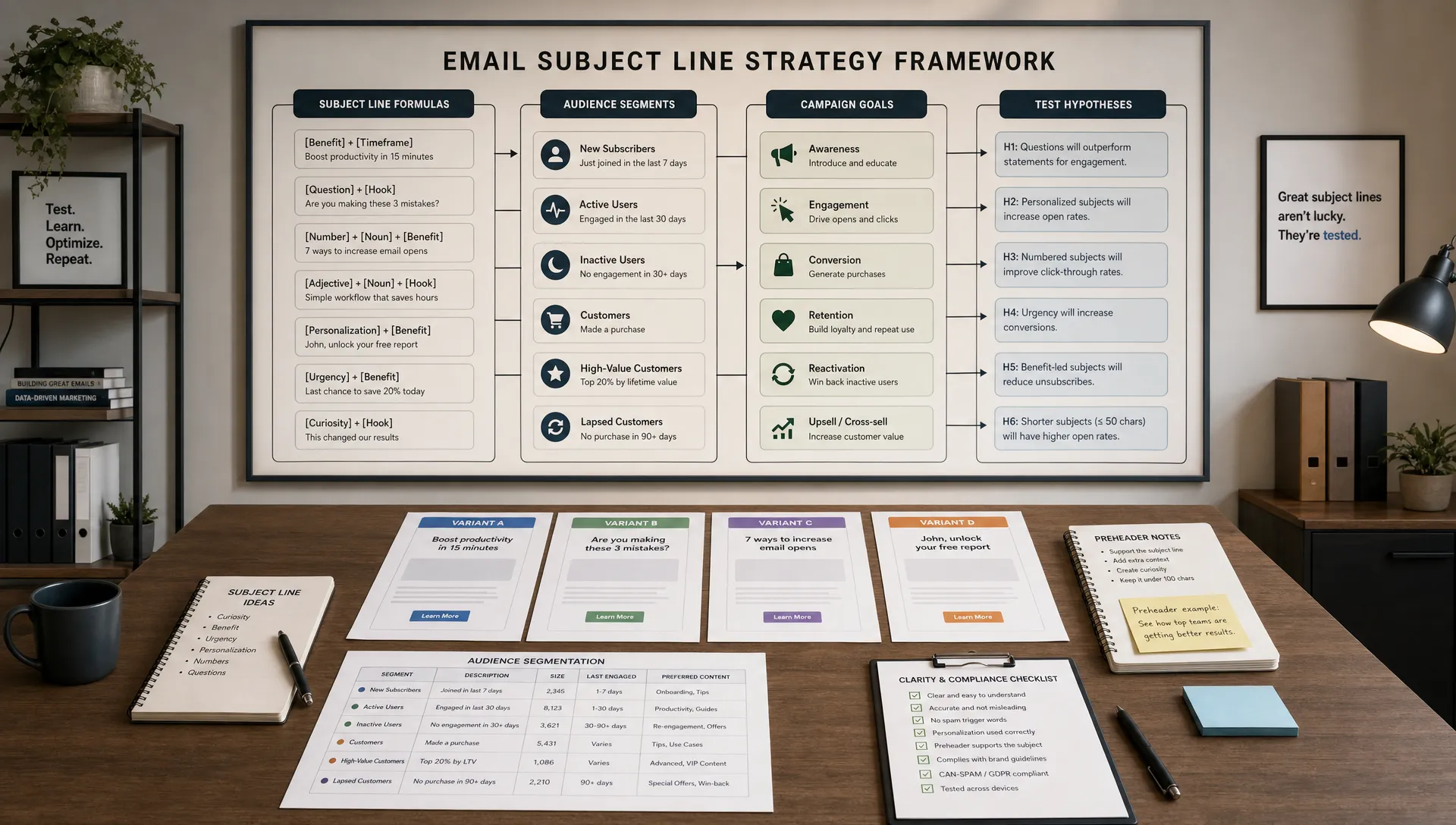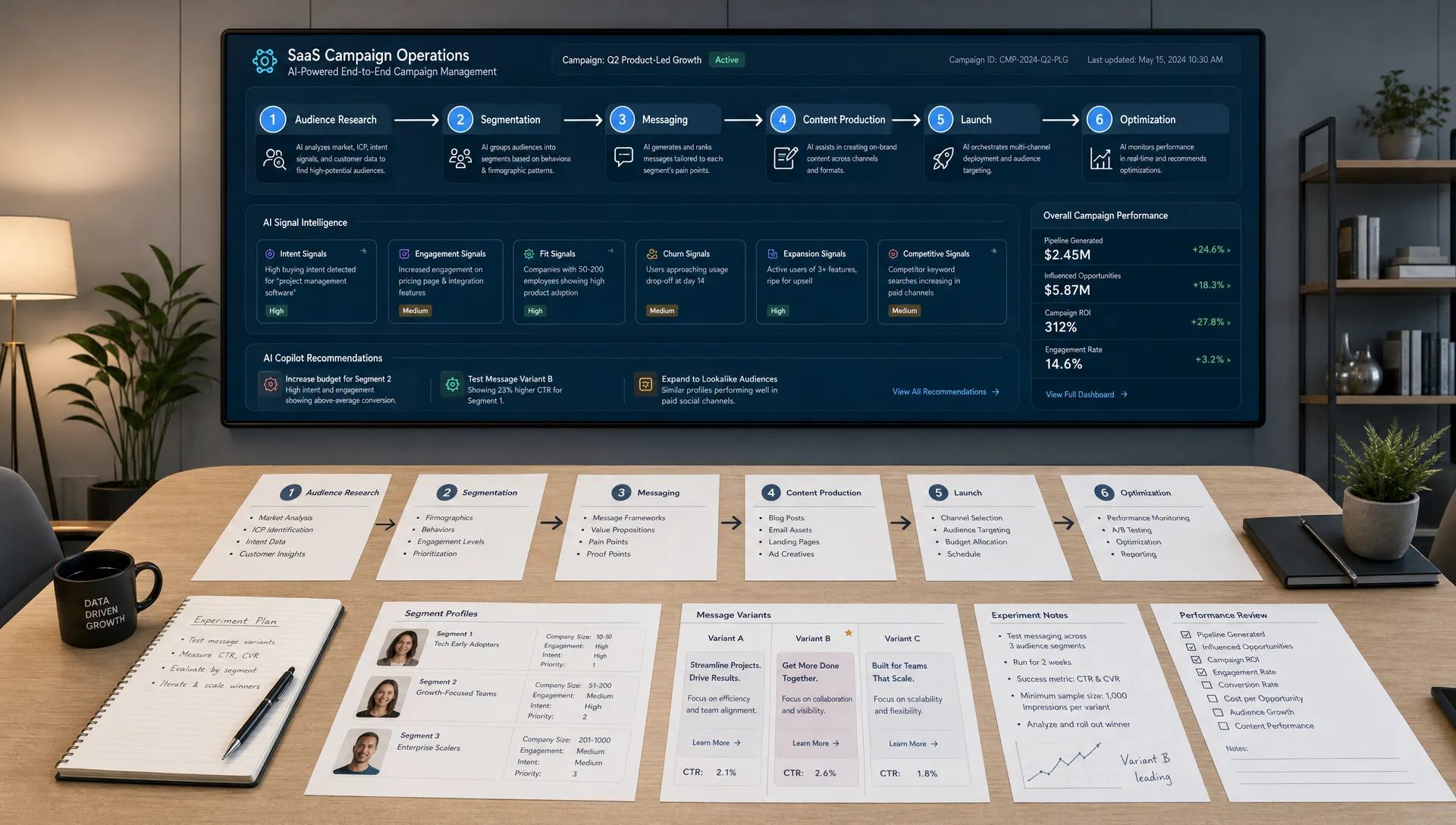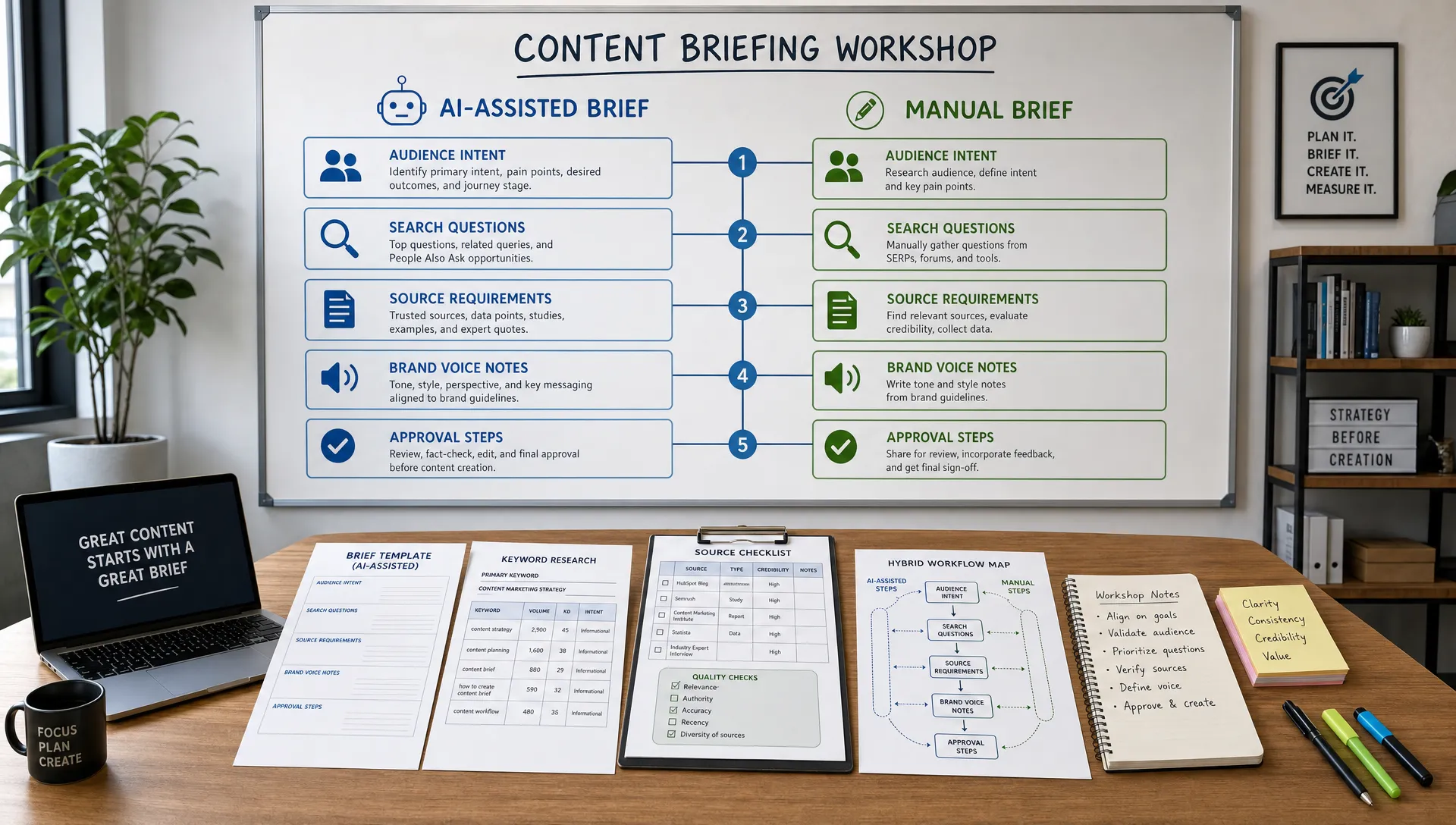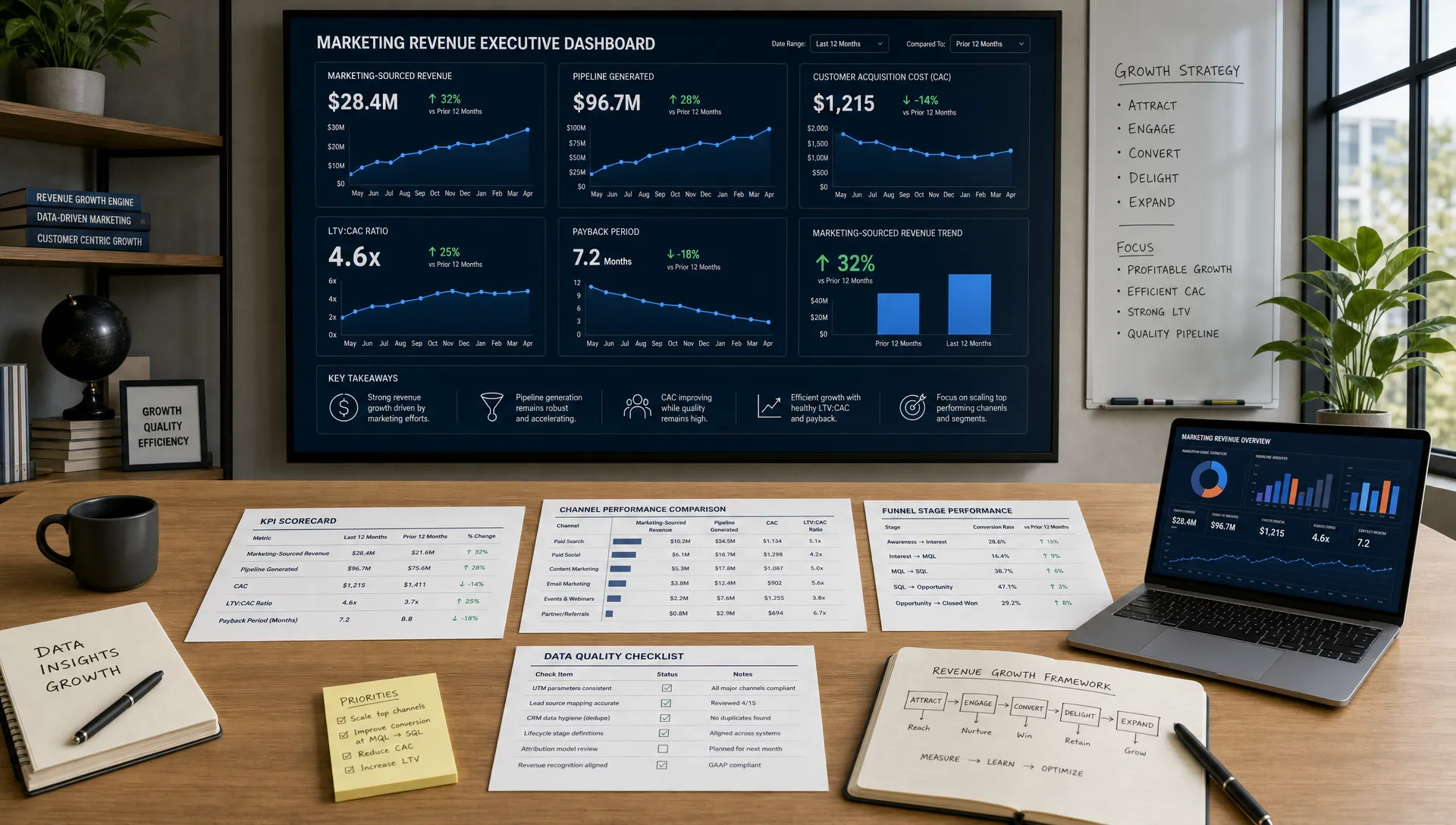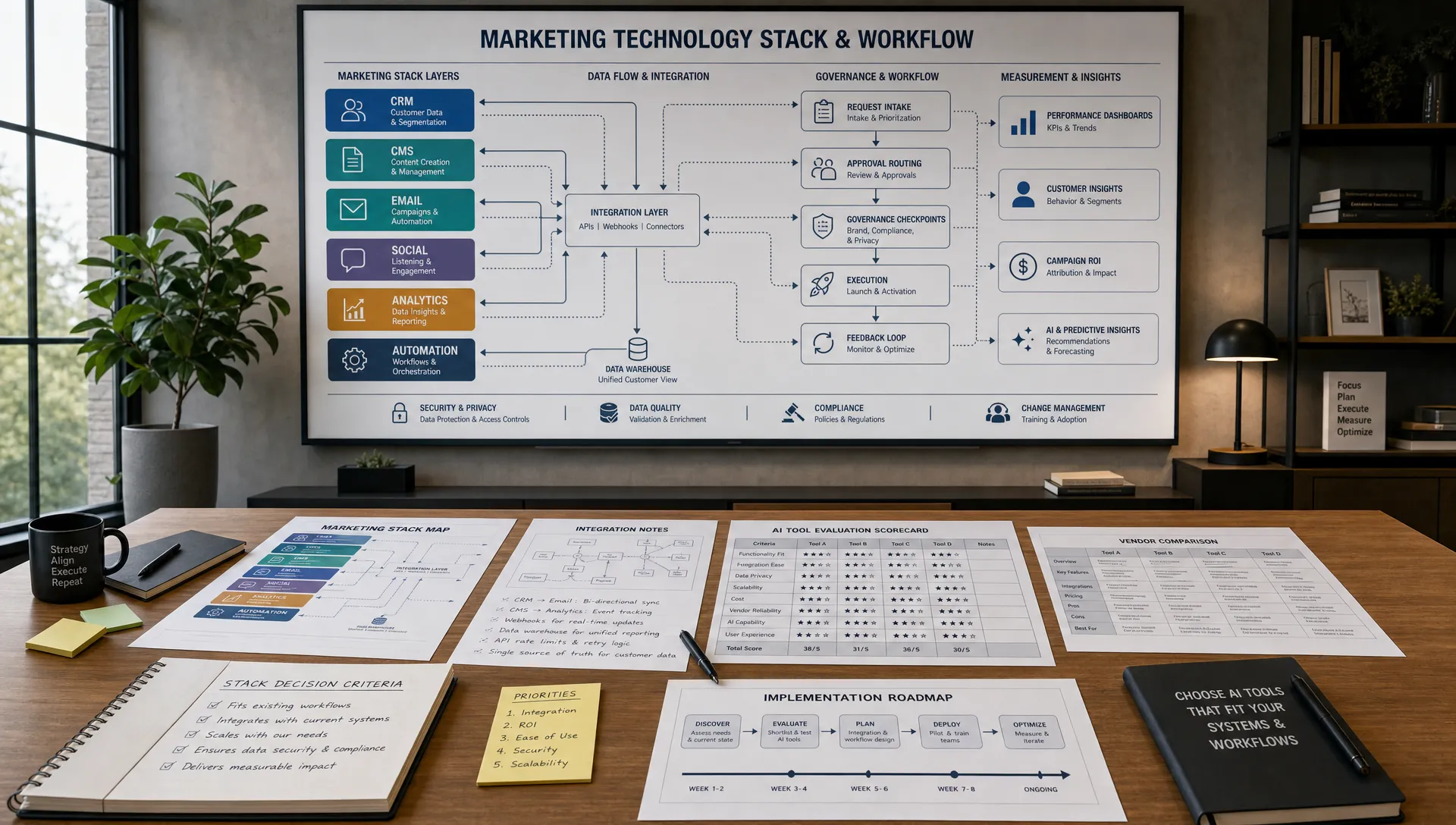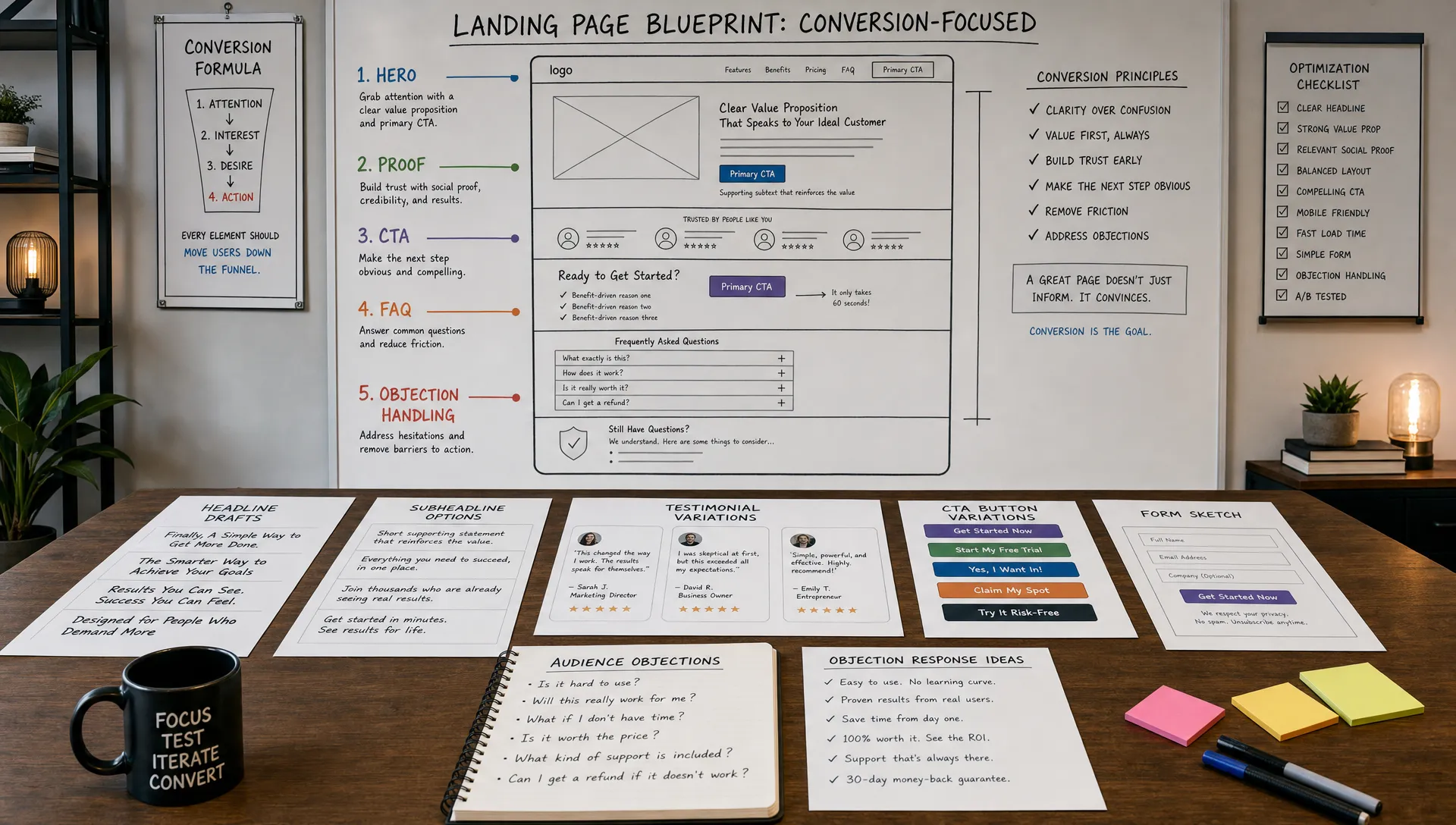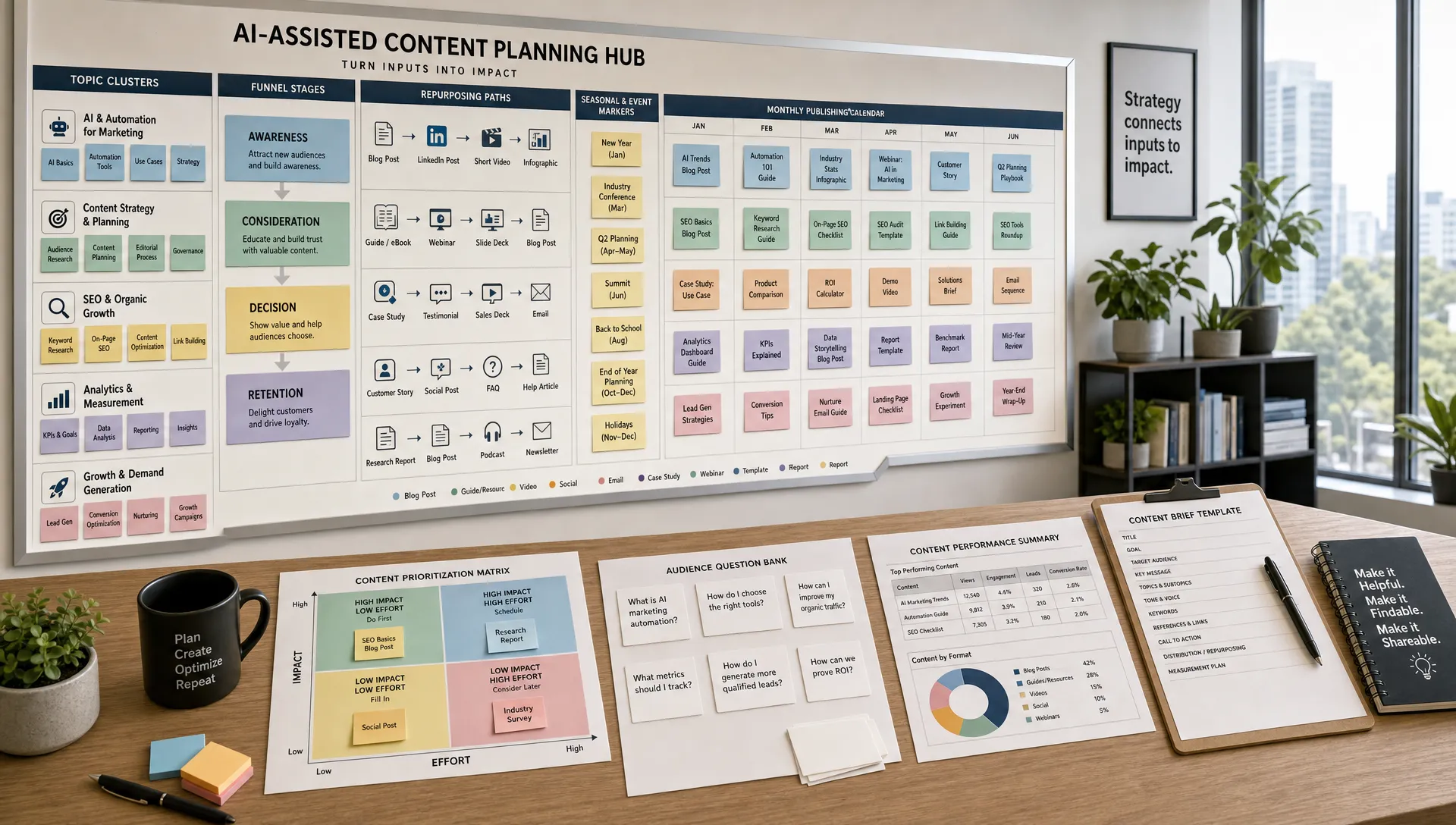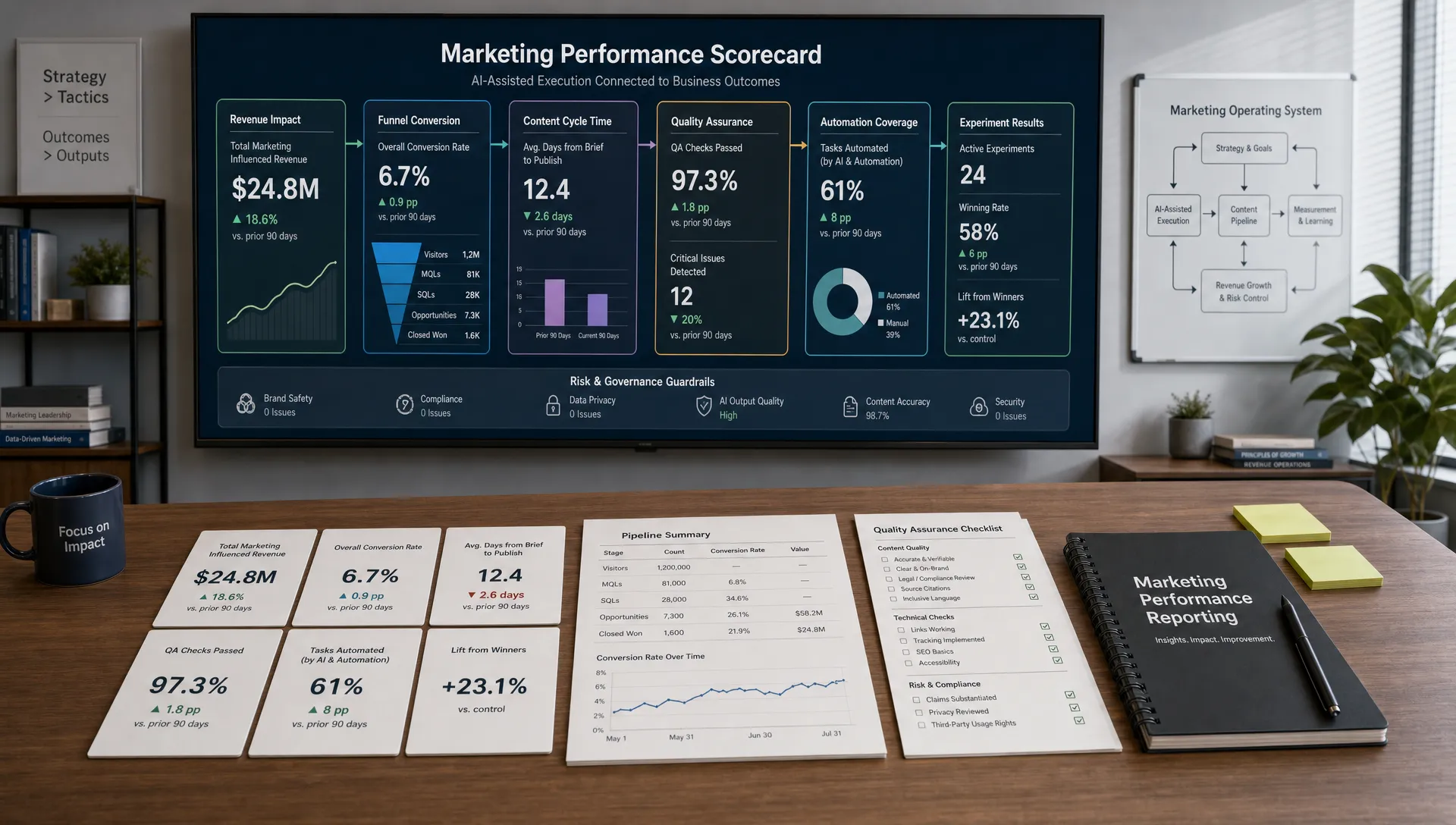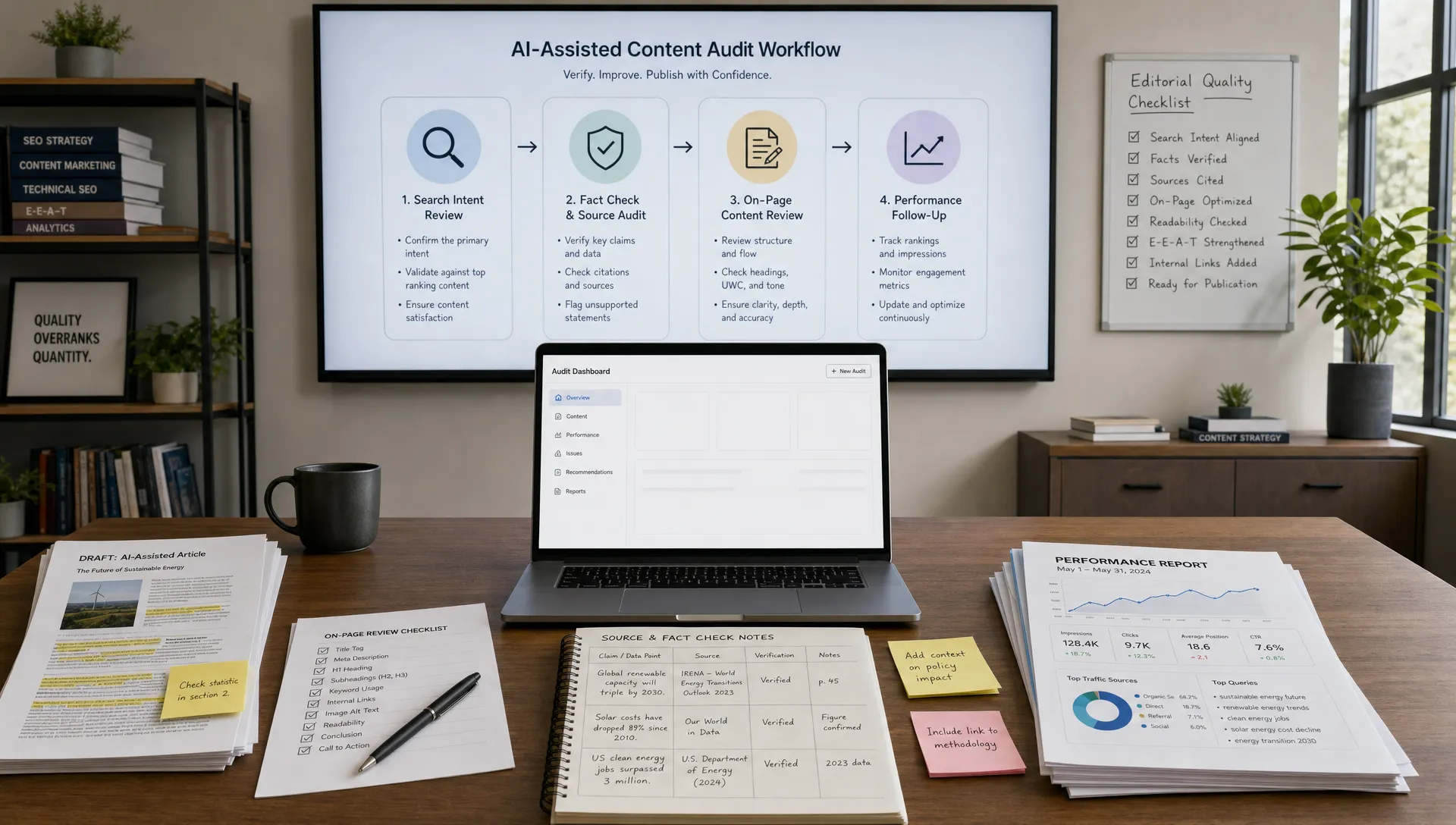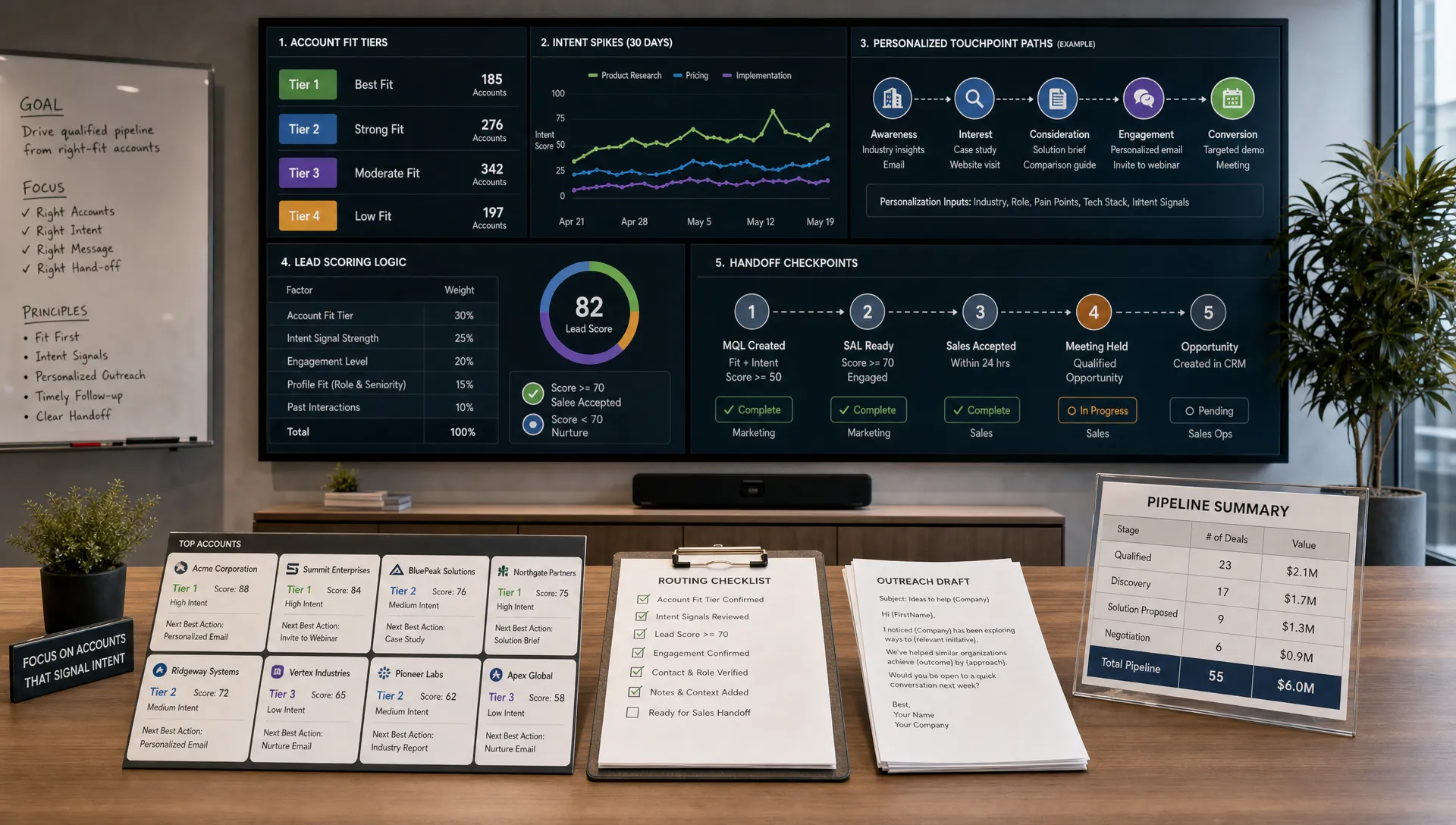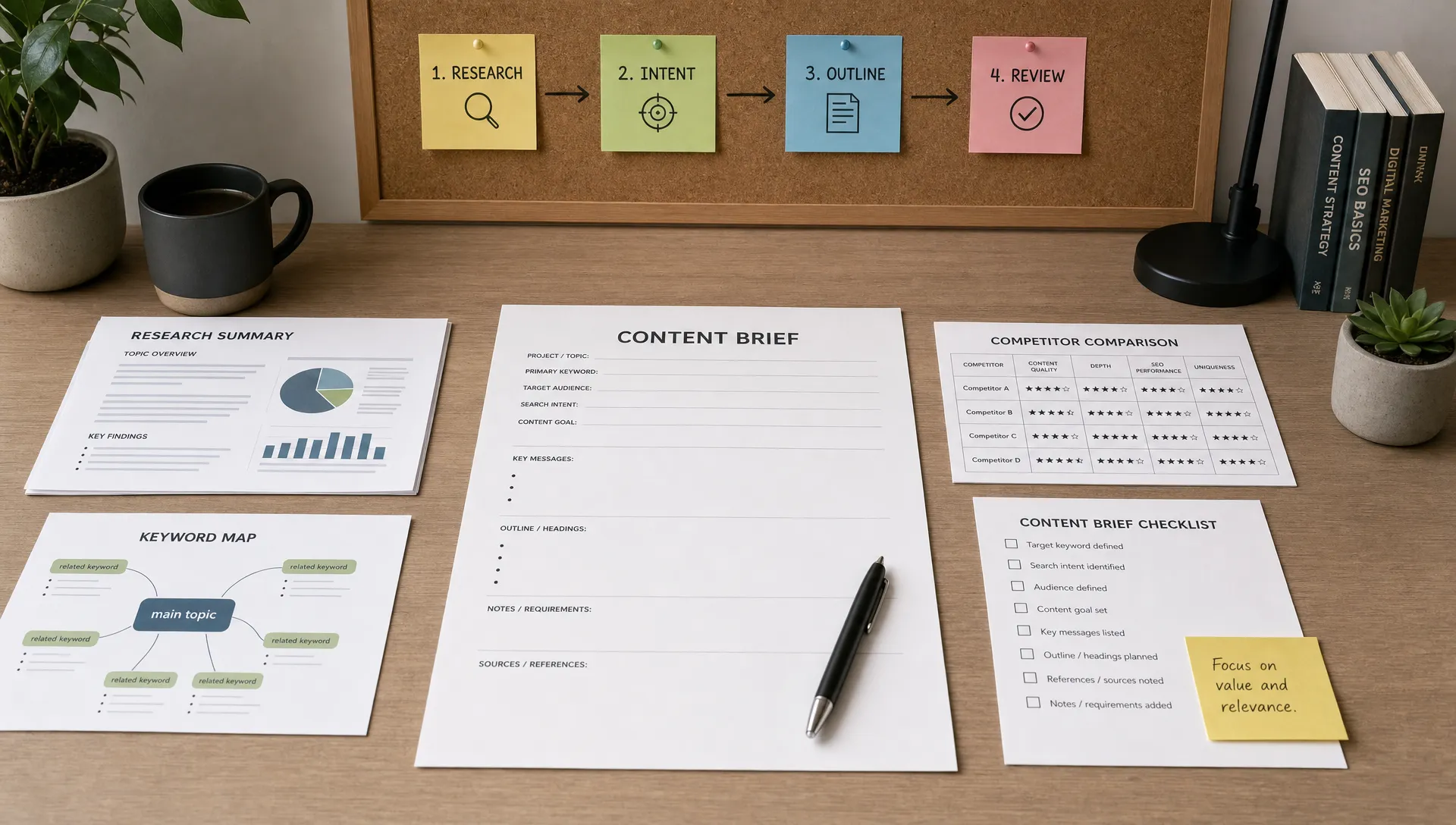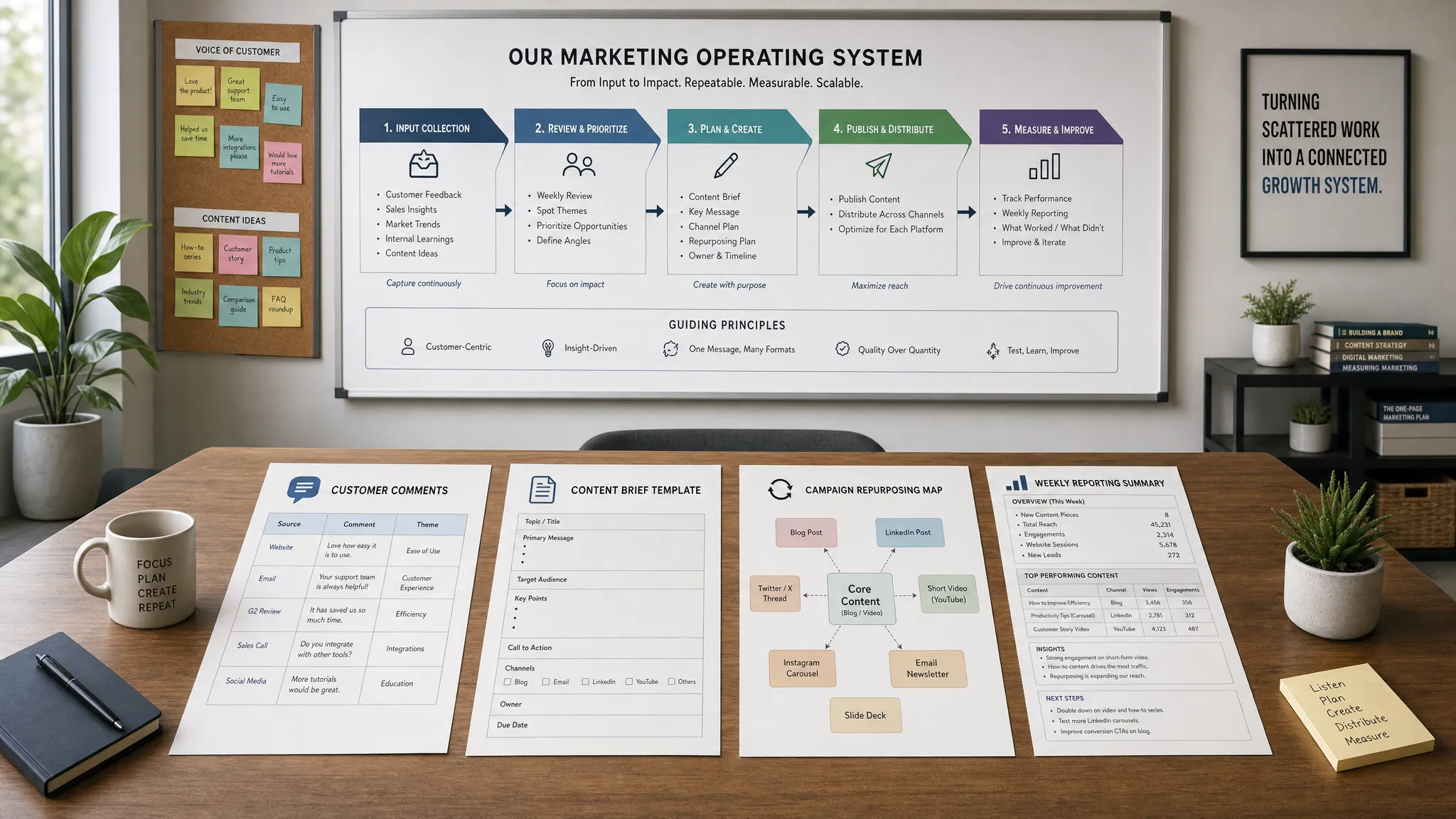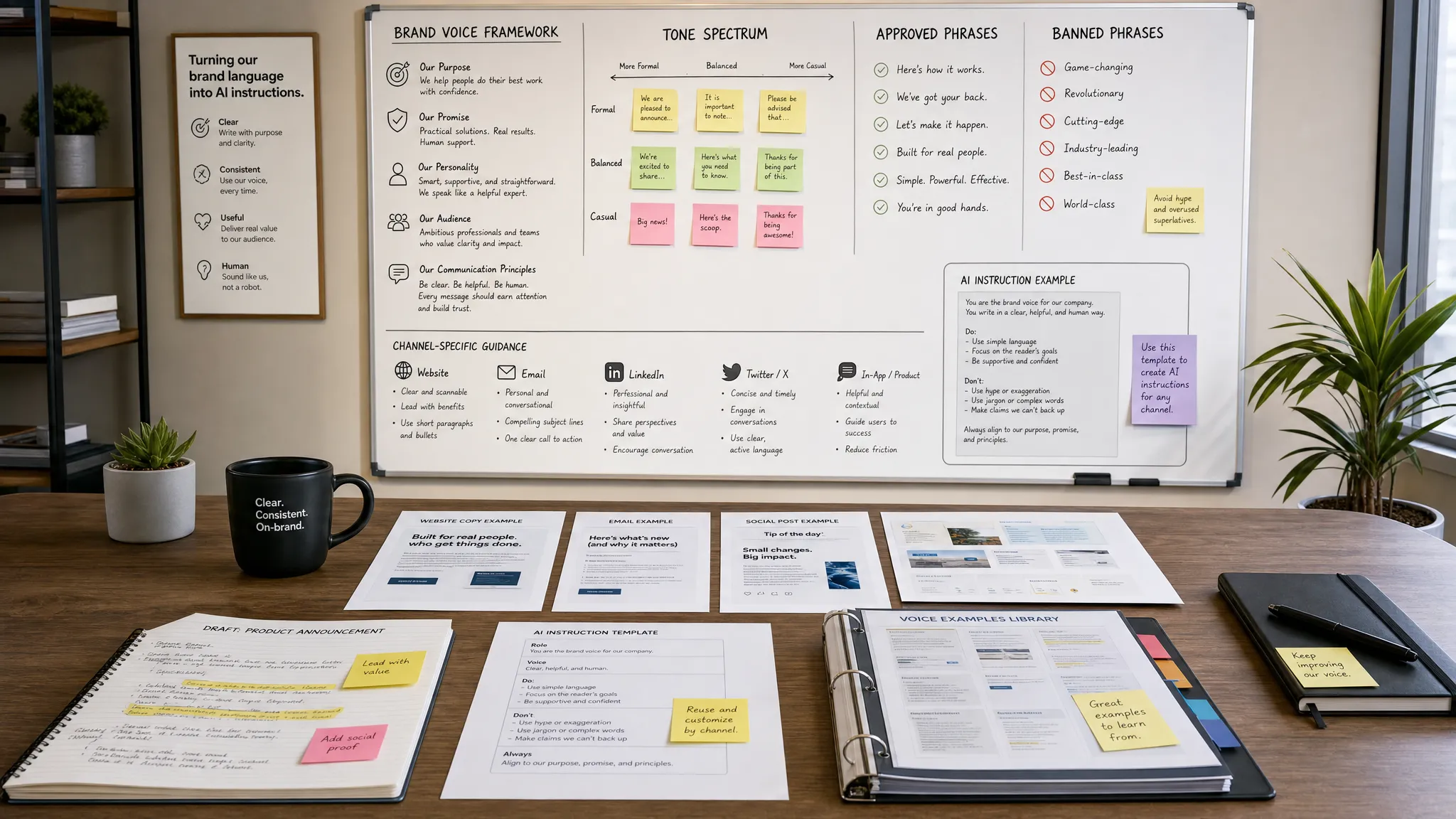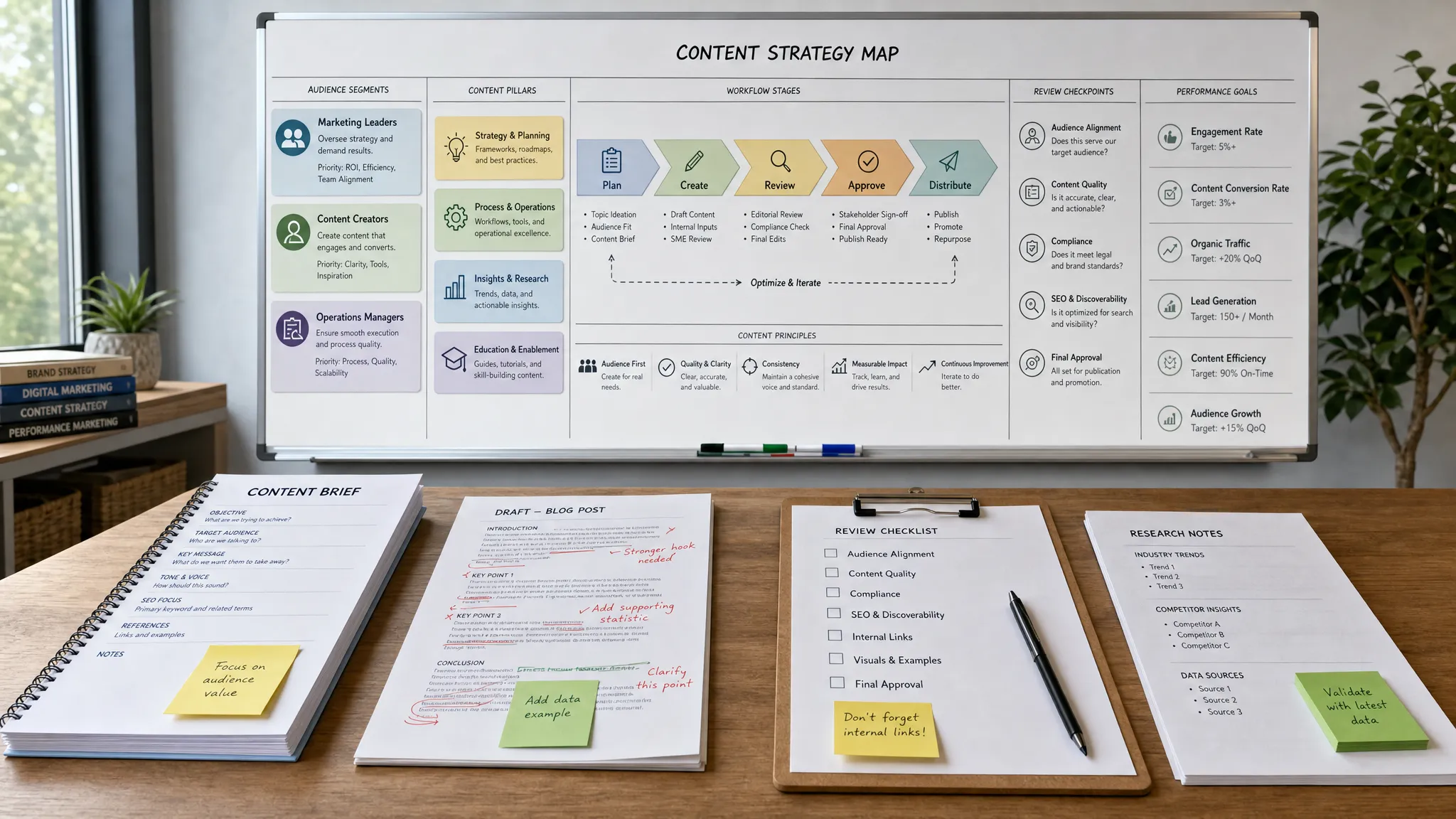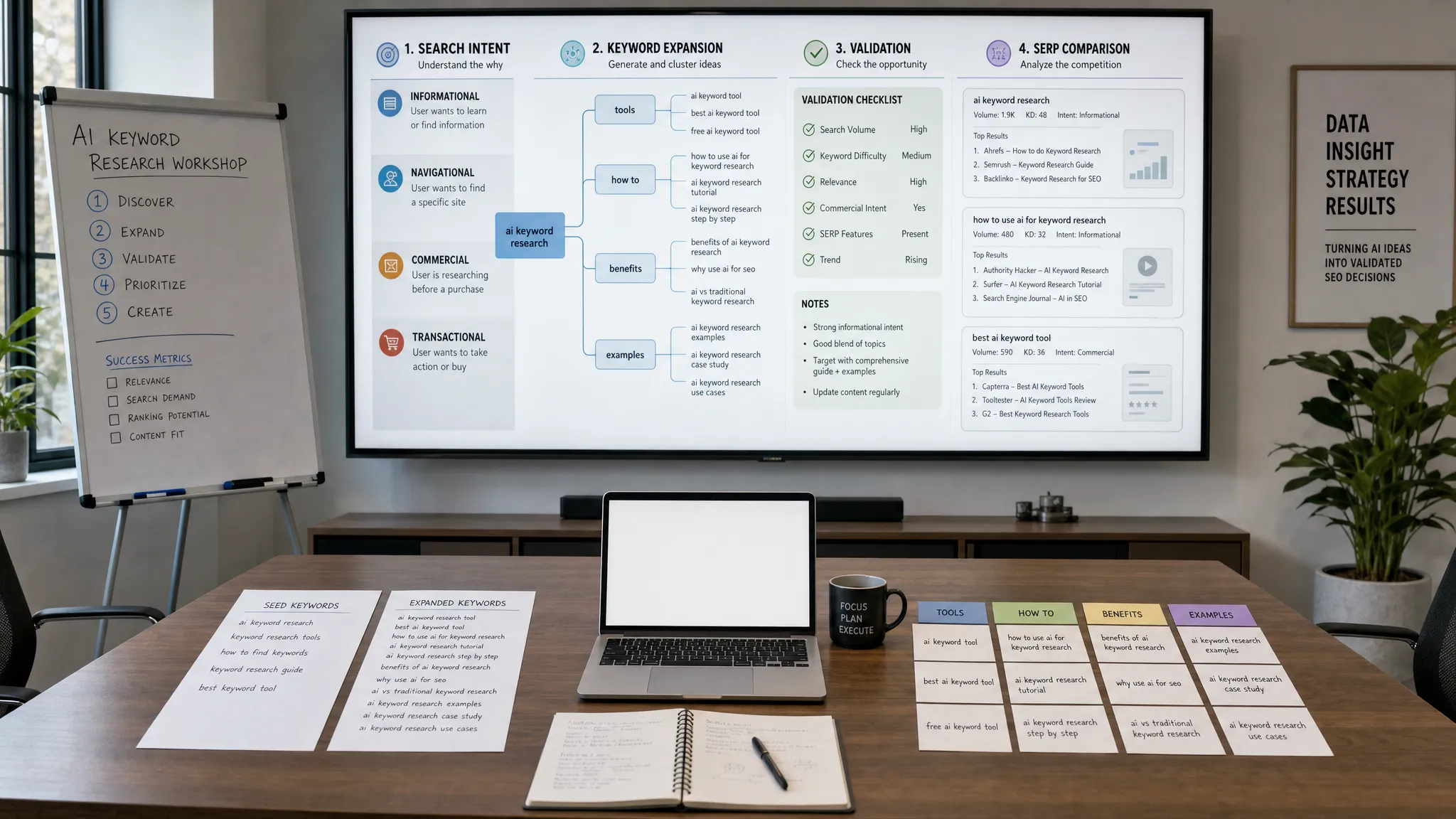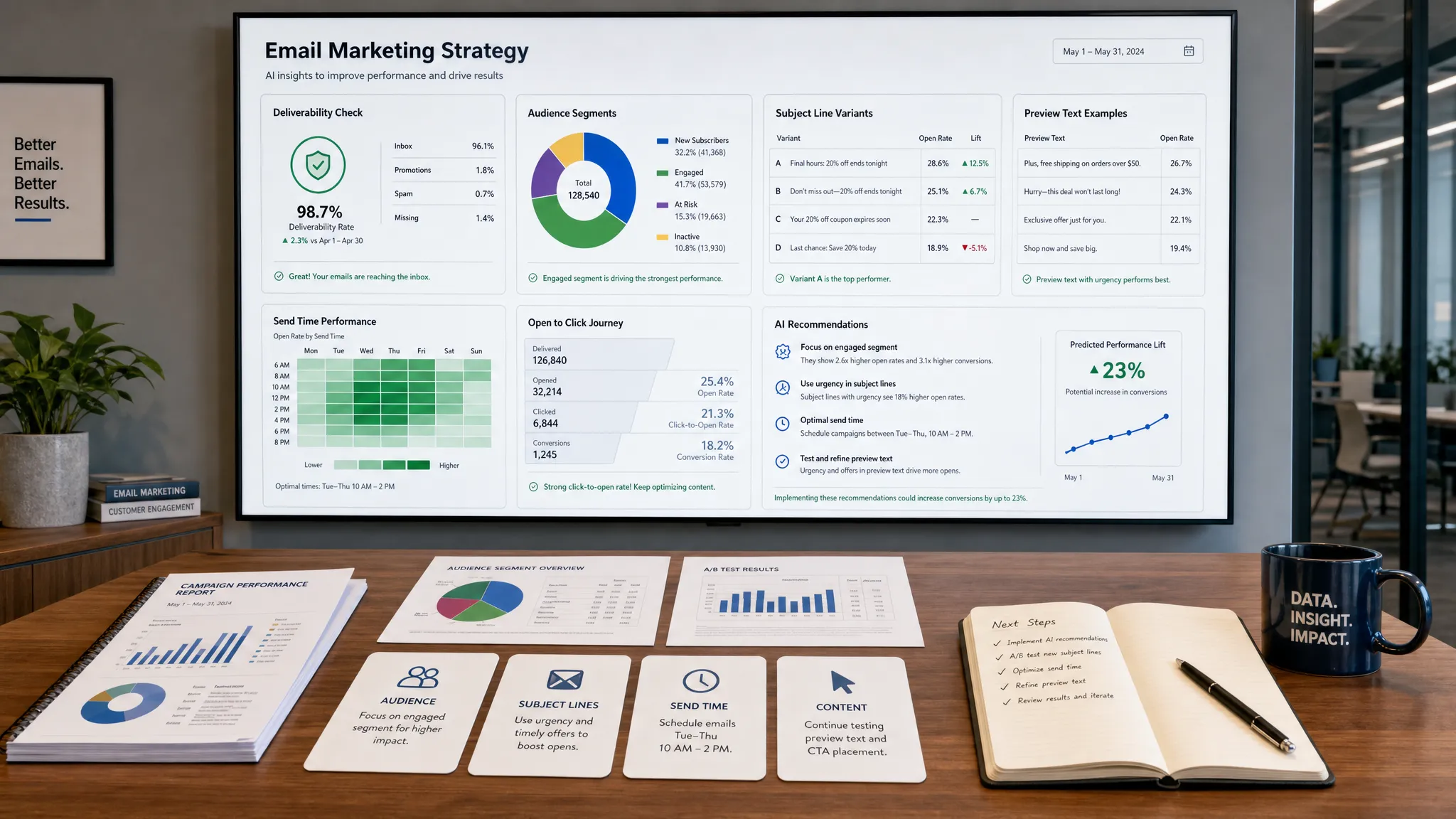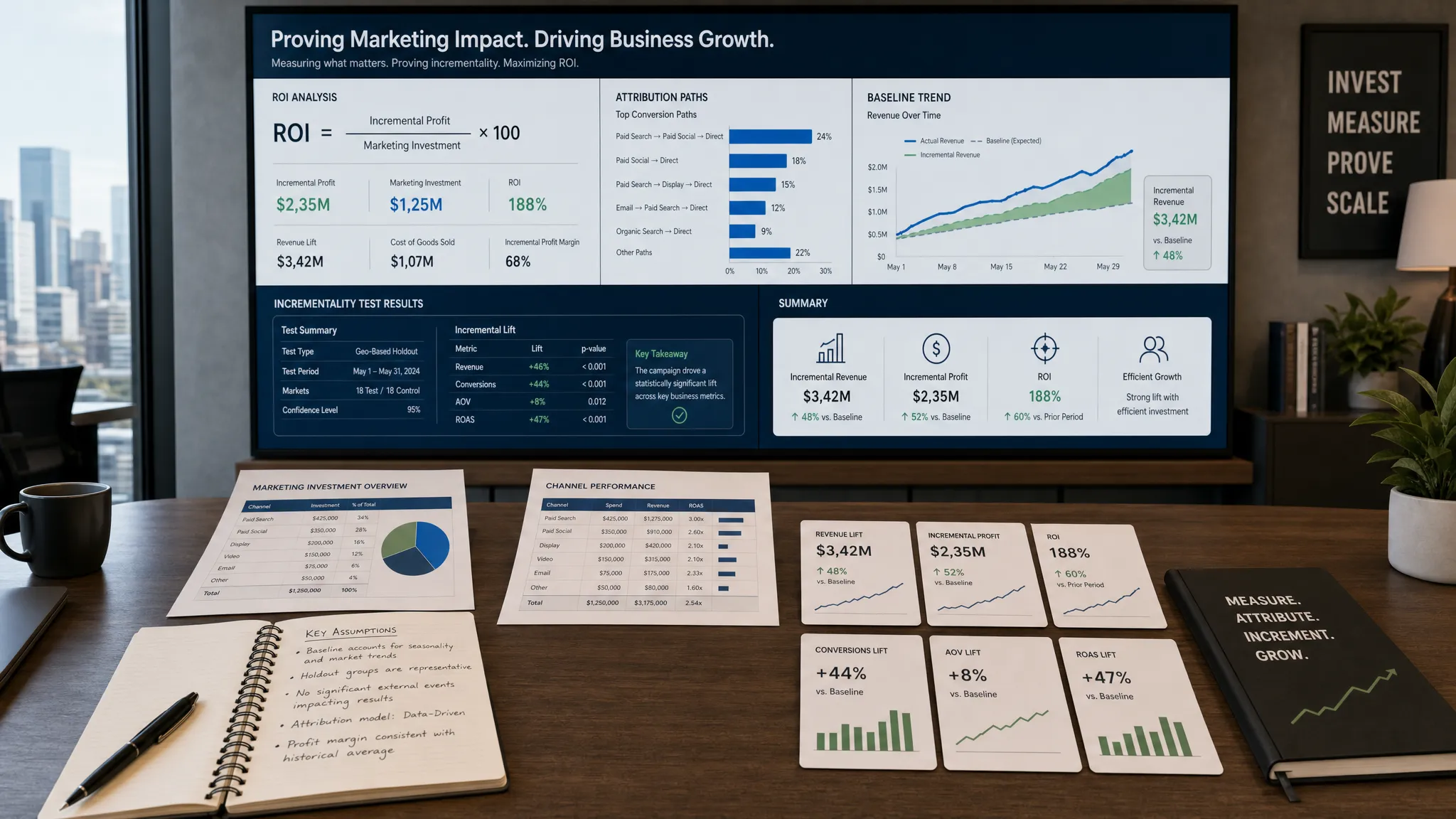
An AI-powered marketing operations system is not a pile of AI tools, prompts and automations. It is the way your team turns strategy into repeatable execution with the help of AI, while keeping quality, brand consistency and measurement under control.
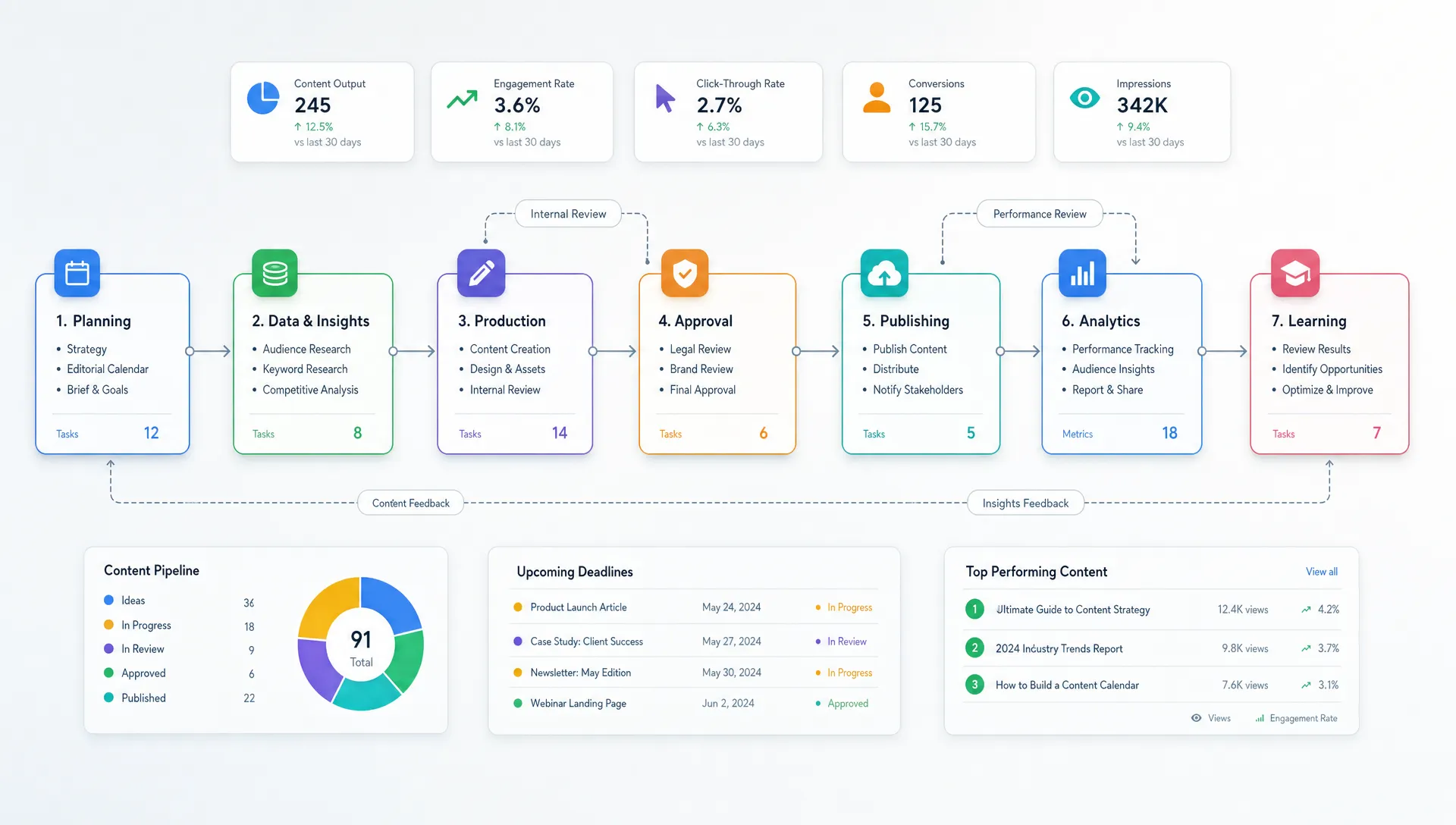
That distinction matters. A team can use AI for content creation and still miss deadlines, duplicate work, publish off-brand assets or optimize the wrong metrics. A real system connects planning, data, production, approvals, publishing, analytics and learning in one operating model.
The goal is simple: make good marketing easier to repeat. AI should reduce manual work, surface better decisions and help marketers move faster without turning your workflow into a black box.
Marketing operations sits between strategy and execution. It translates business goals into campaigns, workflows, roles, data processes and performance reporting. When AI enters the system, it can support nearly every layer, but it should not replace the operating logic.
A useful AI marketing operations system has six core layers:
| System layer | What it manages | How AI helps | Common owner |
|---|---|---|---|
| Strategy | Goals, audiences, positioning and channel priorities | Summarizes research, identifies opportunities and supports scenario planning | Marketing leadership |
| Data | Customer, campaign, content and performance data | Cleans, classifies, enriches and analyzes data | Marketing ops, RevOps, data team |
| Knowledge | Brand voice, product information, audience insights and approved messaging | Powers better prompts and consistent content generation | Content, product marketing |
| Workflow | Campaign planning, production, approvals and publishing | Automates briefs, drafts, QA checks and task routing | Marketing ops, project managers |
| Governance | Privacy, compliance, permissions and human review | Flags risks and enforces review rules | Legal, compliance, marketing leadership |
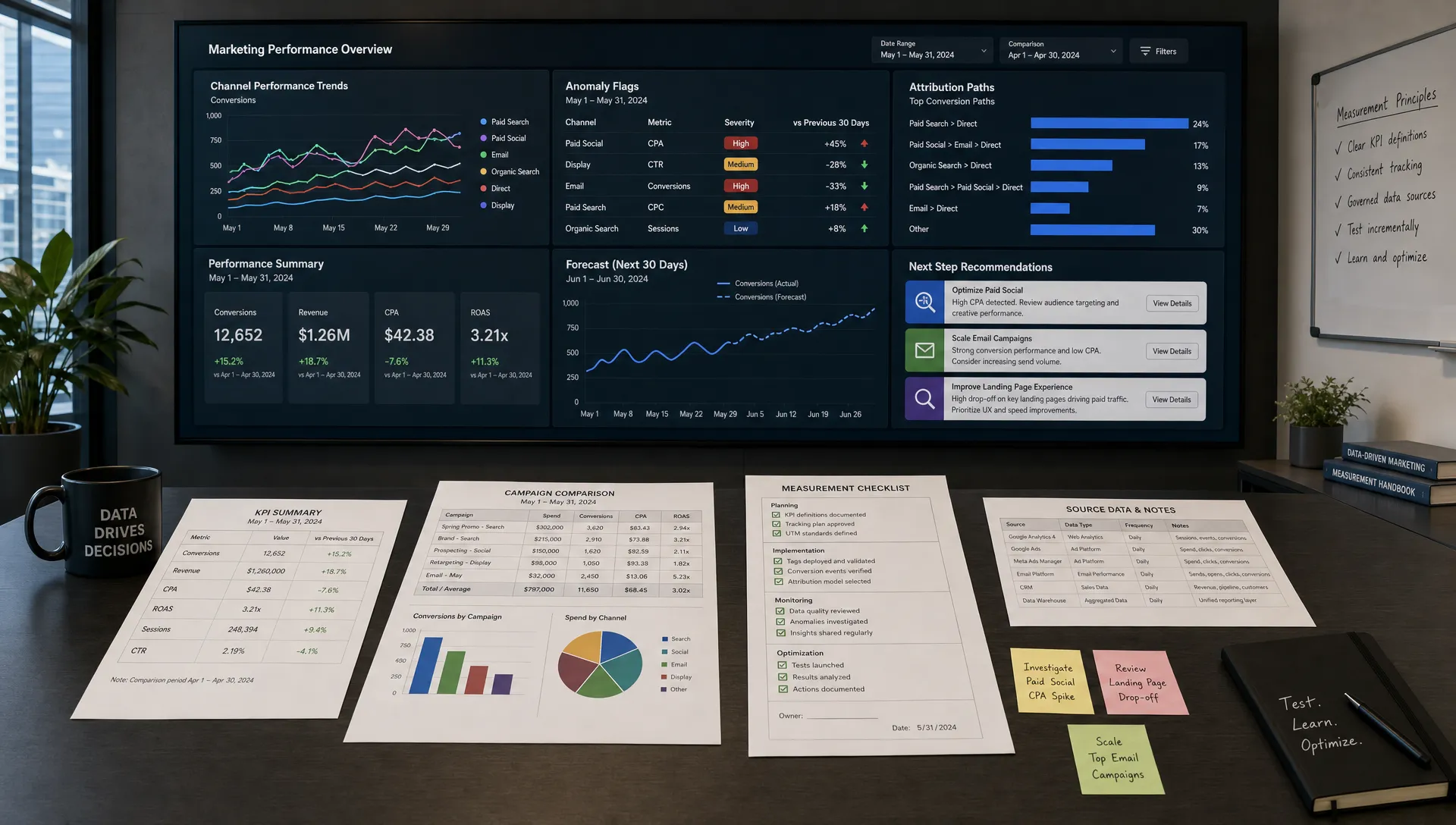
| Measurement | KPIs, attribution, testing and reporting | Finds patterns, forecasts outcomes and recommends next actions | Analytics, performance marketing |
The mistake many teams make is starting in the workflow layer because that is where AI feels most visible. They automate content drafts, social captions and email variants before they clarify what the system is supposed to achieve. Start with the business outcome instead.
Before choosing tools, define the rules your system will follow. These principles keep AI marketing automation useful instead of chaotic.
A strong system should be:
If your team is still deciding where AI fits, start with a focused automation project before expanding. The AIMarketer Hub guide on where to start with AI marketing automation is a useful companion for narrowing the first use case and avoiding common early mistakes.
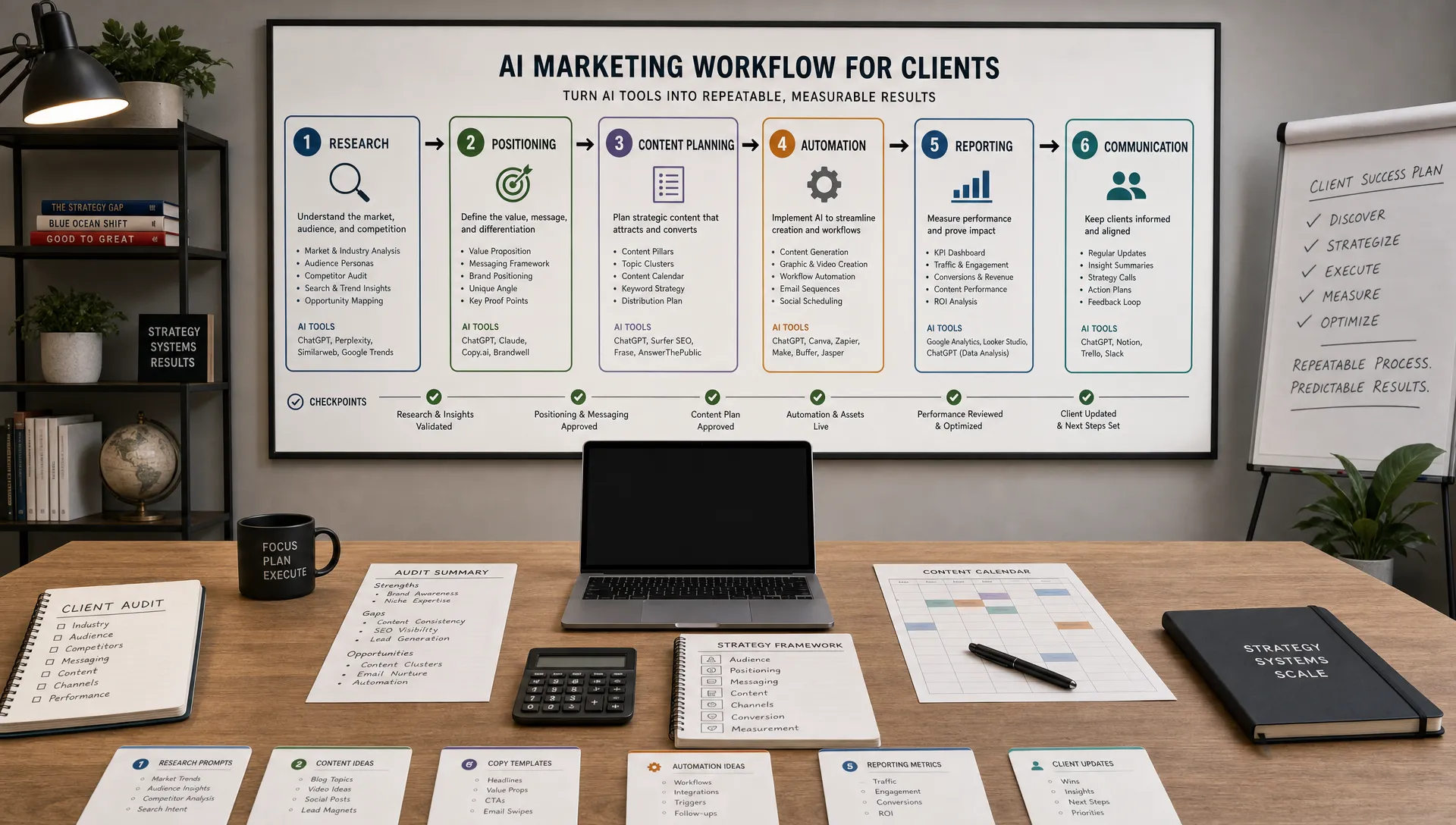
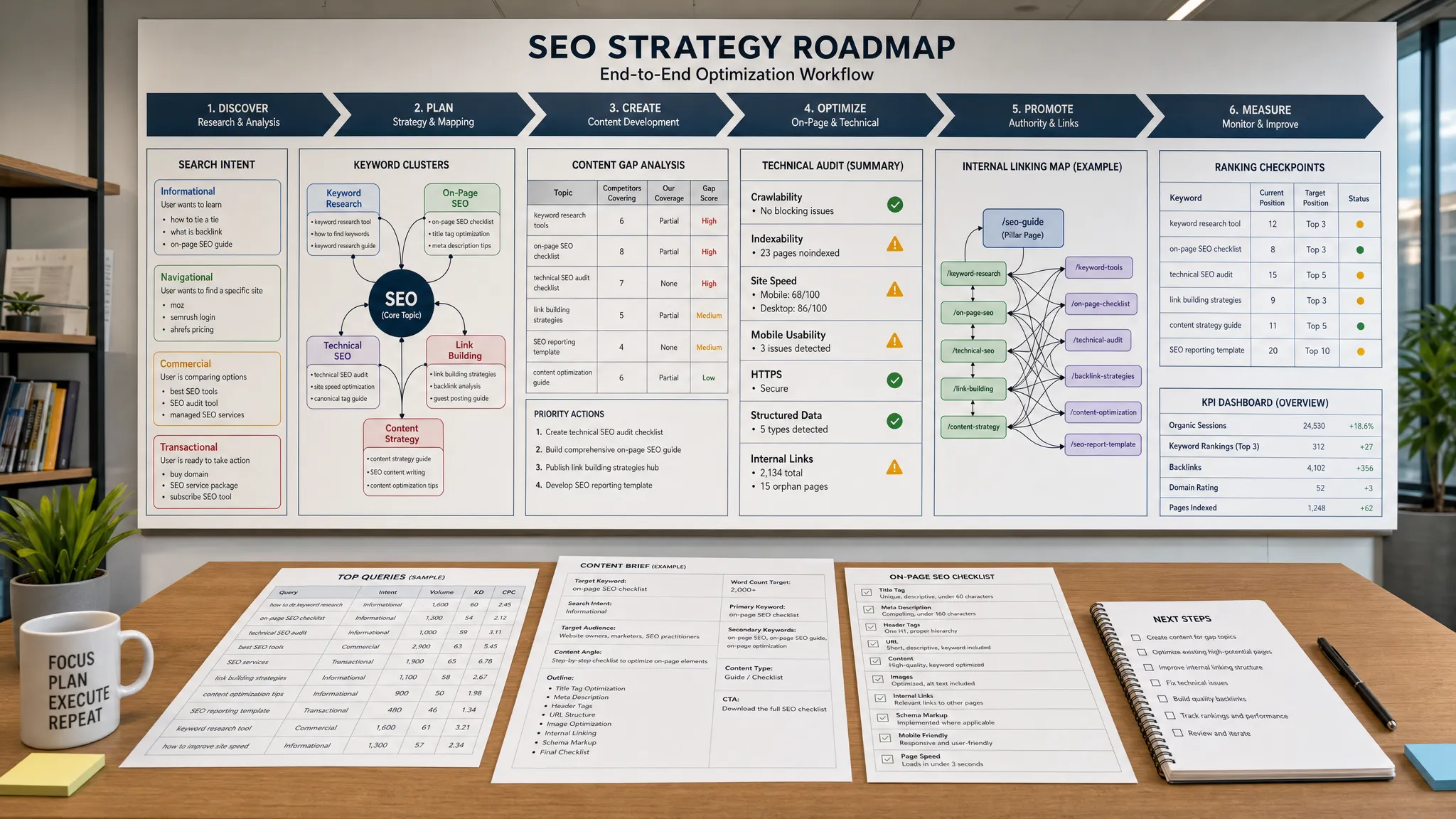
AI works best when it supports a clear process. Map your current marketing lifecycle from planning to learning, then identify the points where work slows down, quality drops or decisions rely too heavily on guesswork.
A simple lifecycle view might look like this:
| Stage | Typical work | AI opportunity |
|---|---|---|
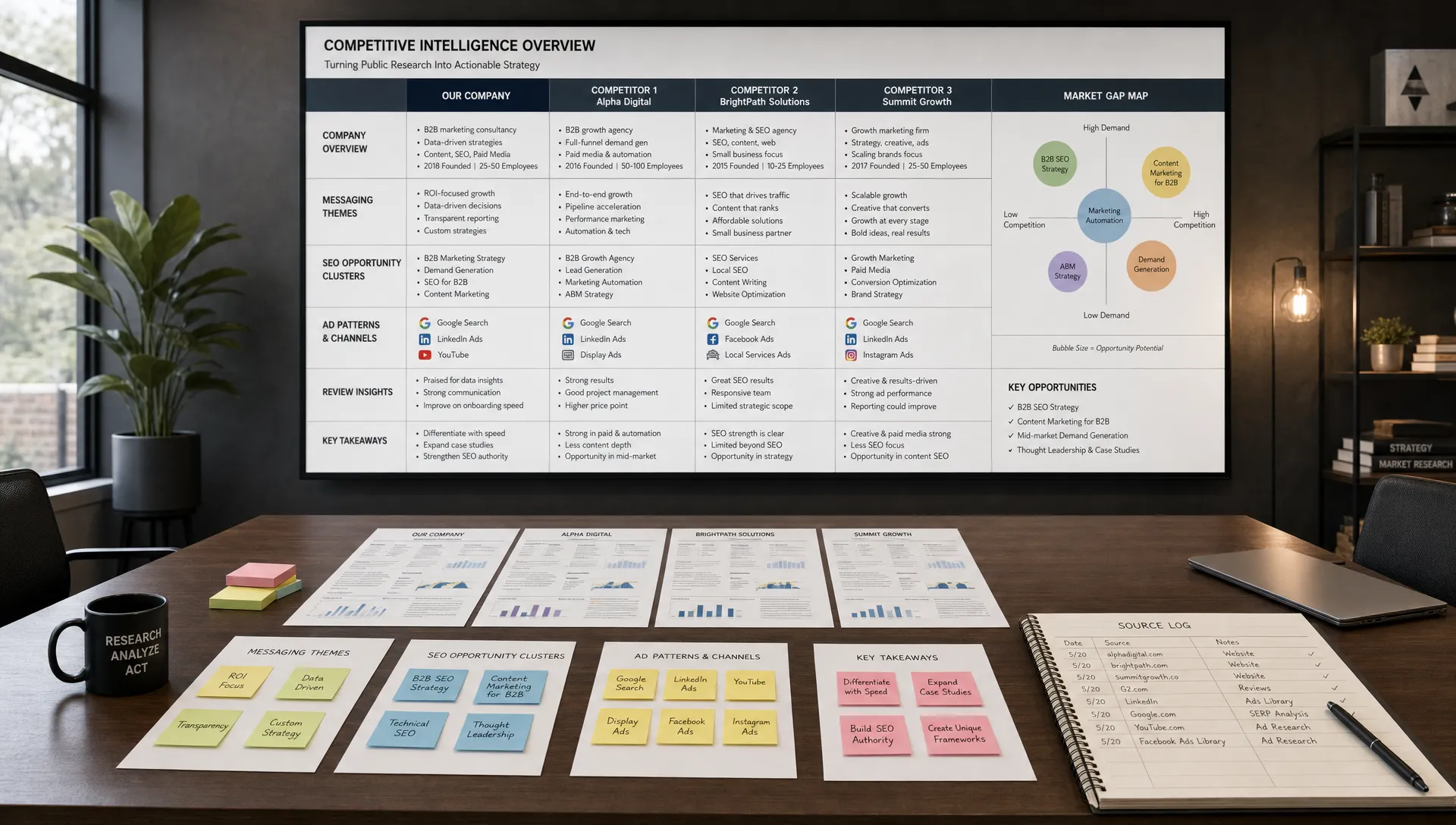
| Research | Audience insights, competitor review, keyword research and customer interviews | Summarize data, cluster themes and reveal content gaps |
| Planning | Campaign briefs, channel plans, calendars and budgets | Generate first drafts, suggest priorities and forecast resource needs |
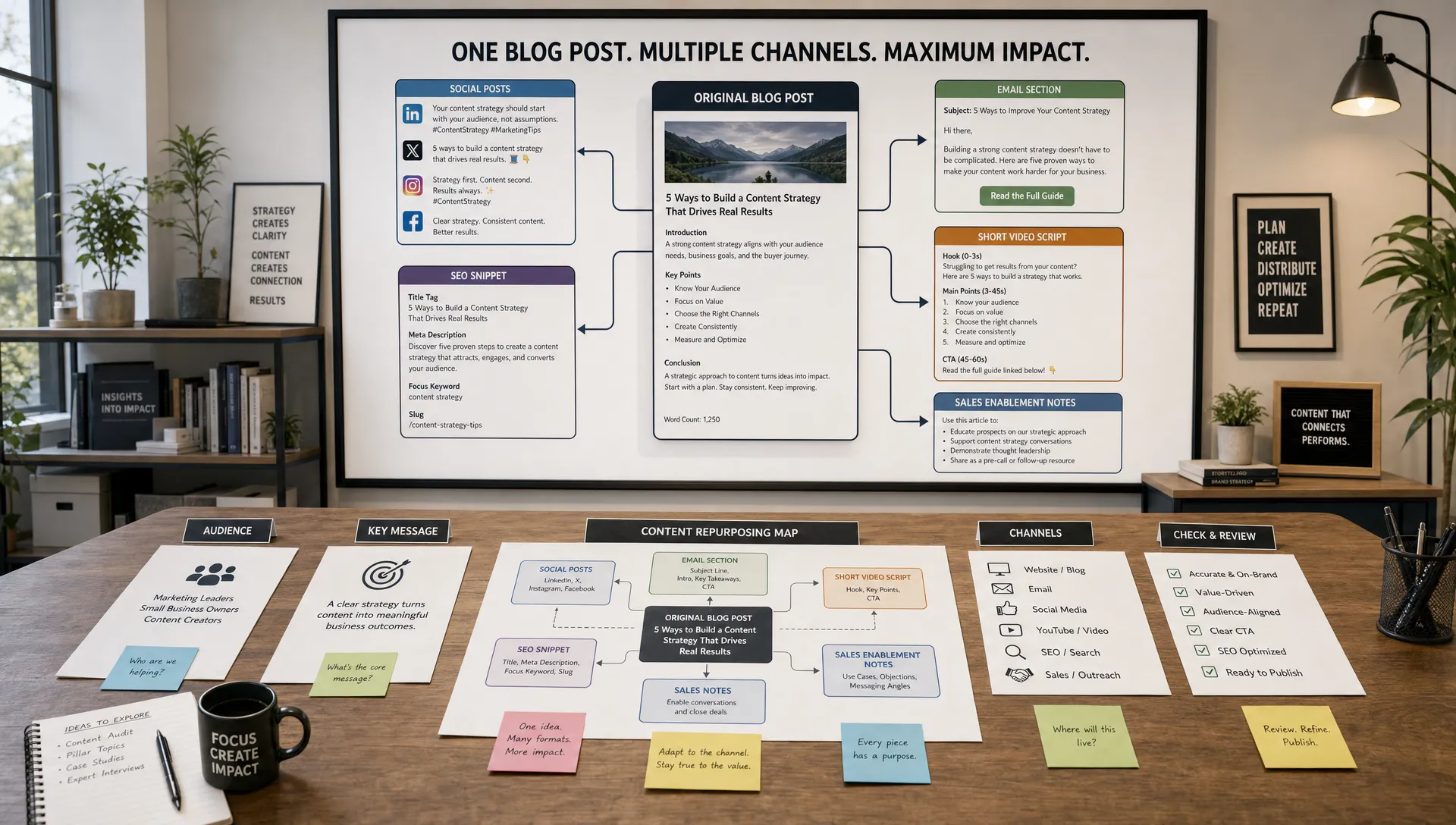
| Production | Blog posts, landing pages, ads, emails, sales enablement and social content | Draft, repurpose, localize and check against brand rules |
| Activation | Publishing, segmentation, lead routing and campaign setup | Automate handoffs, personalize messaging and trigger next steps |
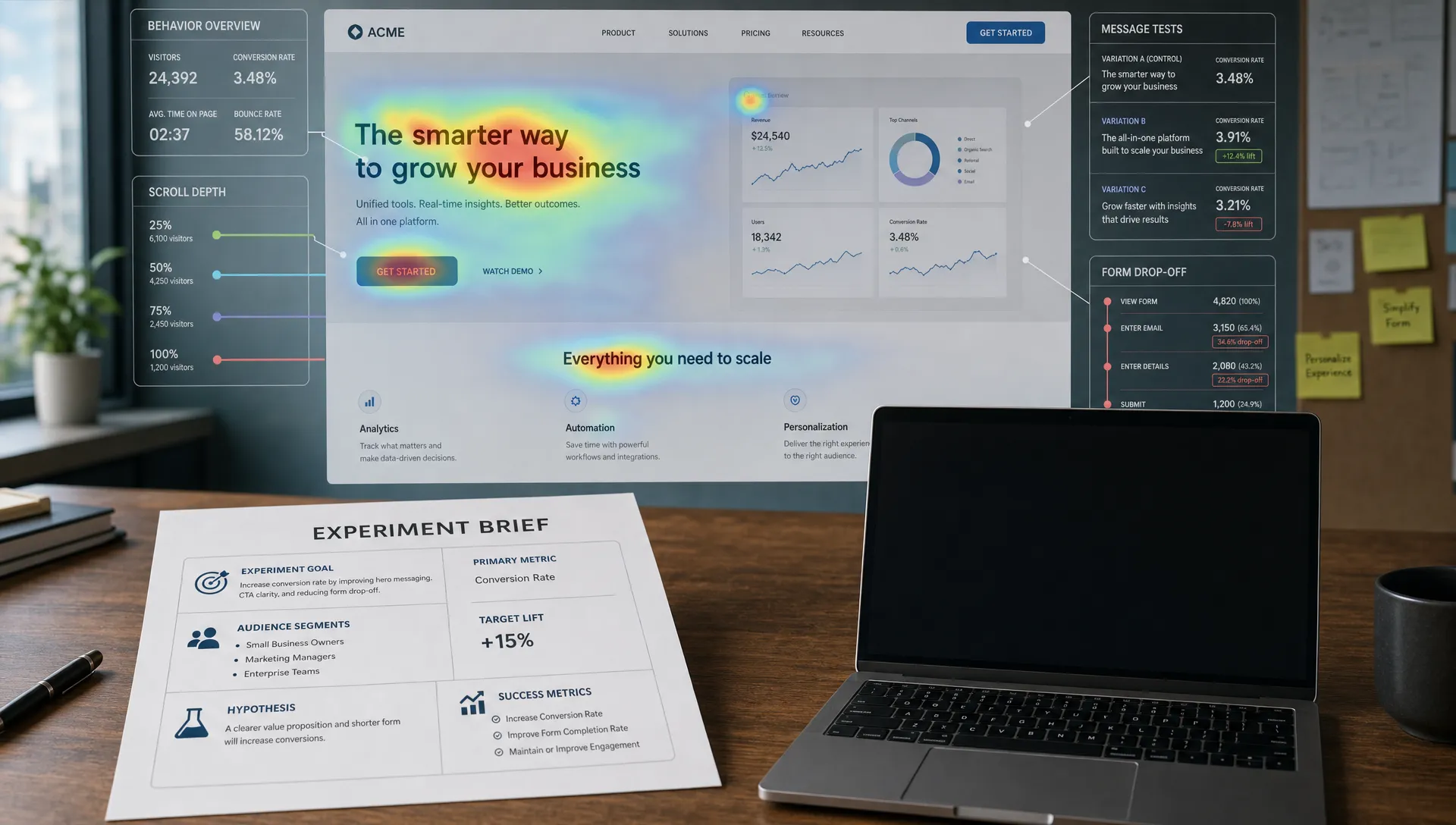
| Optimization | A/B testing, bid changes, SEO updates and conversion review | Detect patterns, recommend tests and surface anomalies |
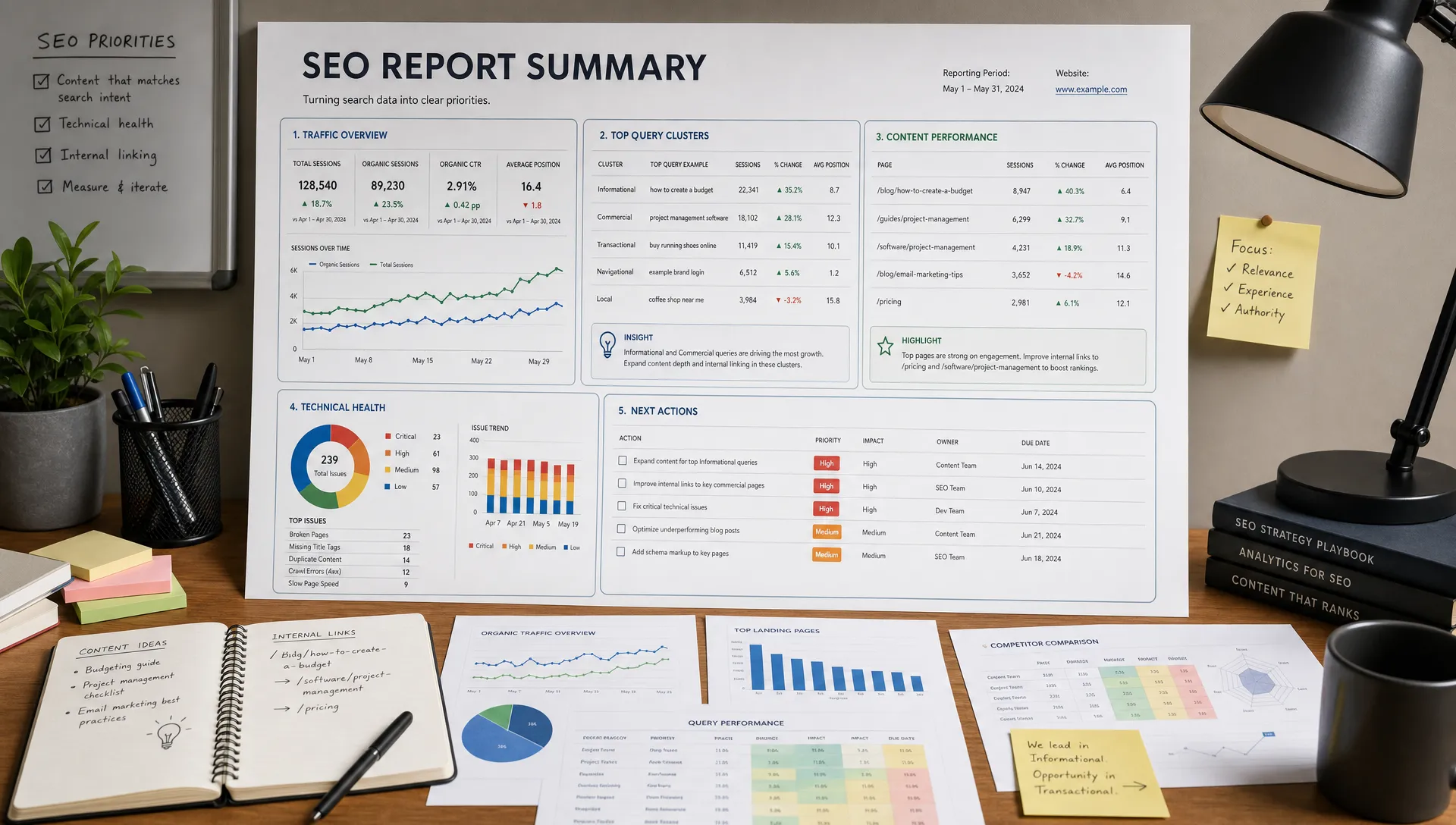
| Reporting | Dashboards, executive summaries and campaign retrospectives | Translate analytics into insights and next actions |
This map should expose the real operational gaps. Maybe your content calendar is strong, but approvals are slow. Maybe campaigns launch on time, but no one turns performance data into a clear next step. Maybe paid media and content teams use different audience definitions. AI can help each problem, but each problem needs a different workflow.
A good AI-powered marketing operations system is specific to the business it supports. A SaaS company might focus on product-led onboarding, lifecycle email, trial conversion and churn signals. A professional services firm may care more about thought leadership, lead qualification and proposal support. An ecommerce brand will likely prioritize merchandising, product content, paid creative testing and retention.
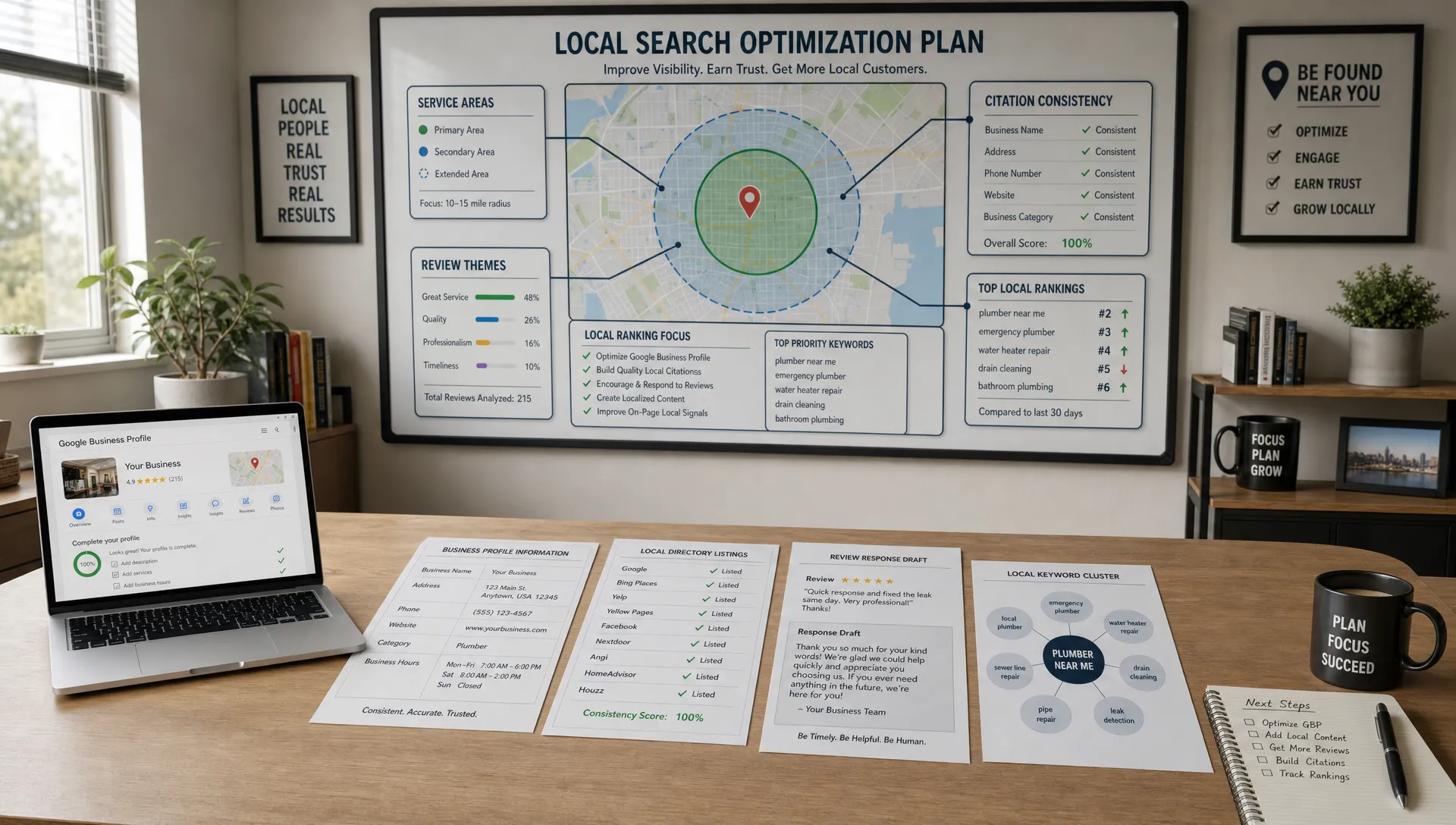
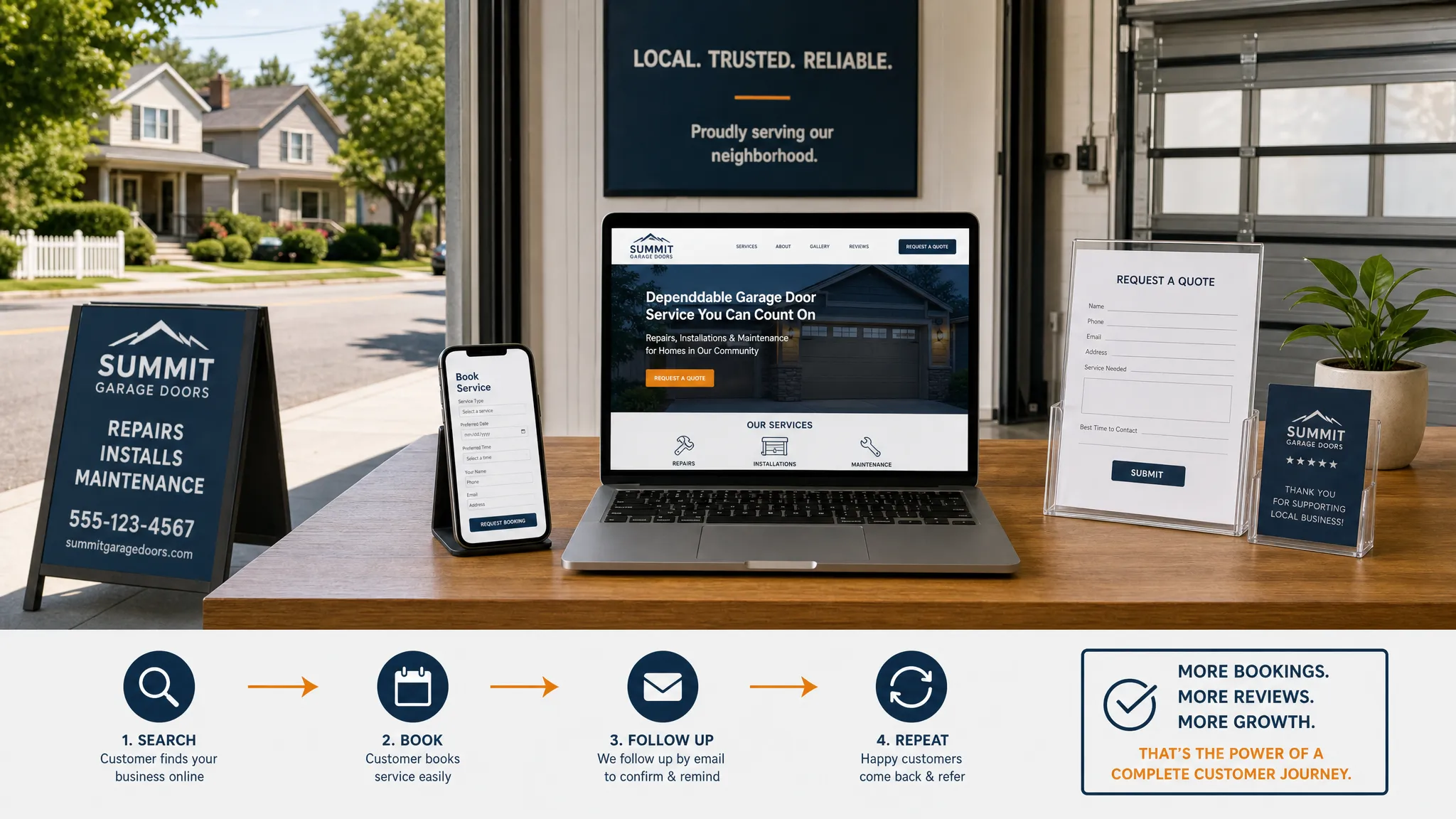
Industry context matters. For example, a local business built around a high-consideration purchase, such as affordable manufactured homes in San Antonio, would need workflows for local SEO, inventory updates, financing questions, review generation, call tracking and fast lead follow-up. That is a different operating system from a self-serve software company, even if both use the same AI writing assistant.
When selecting use cases, prioritize work that is frequent, time-consuming and easy to evaluate. AI is often strongest where the team already has a repeatable process but lacks speed or scale. It is weaker when the team has not yet clarified the offer, audience or success metric.
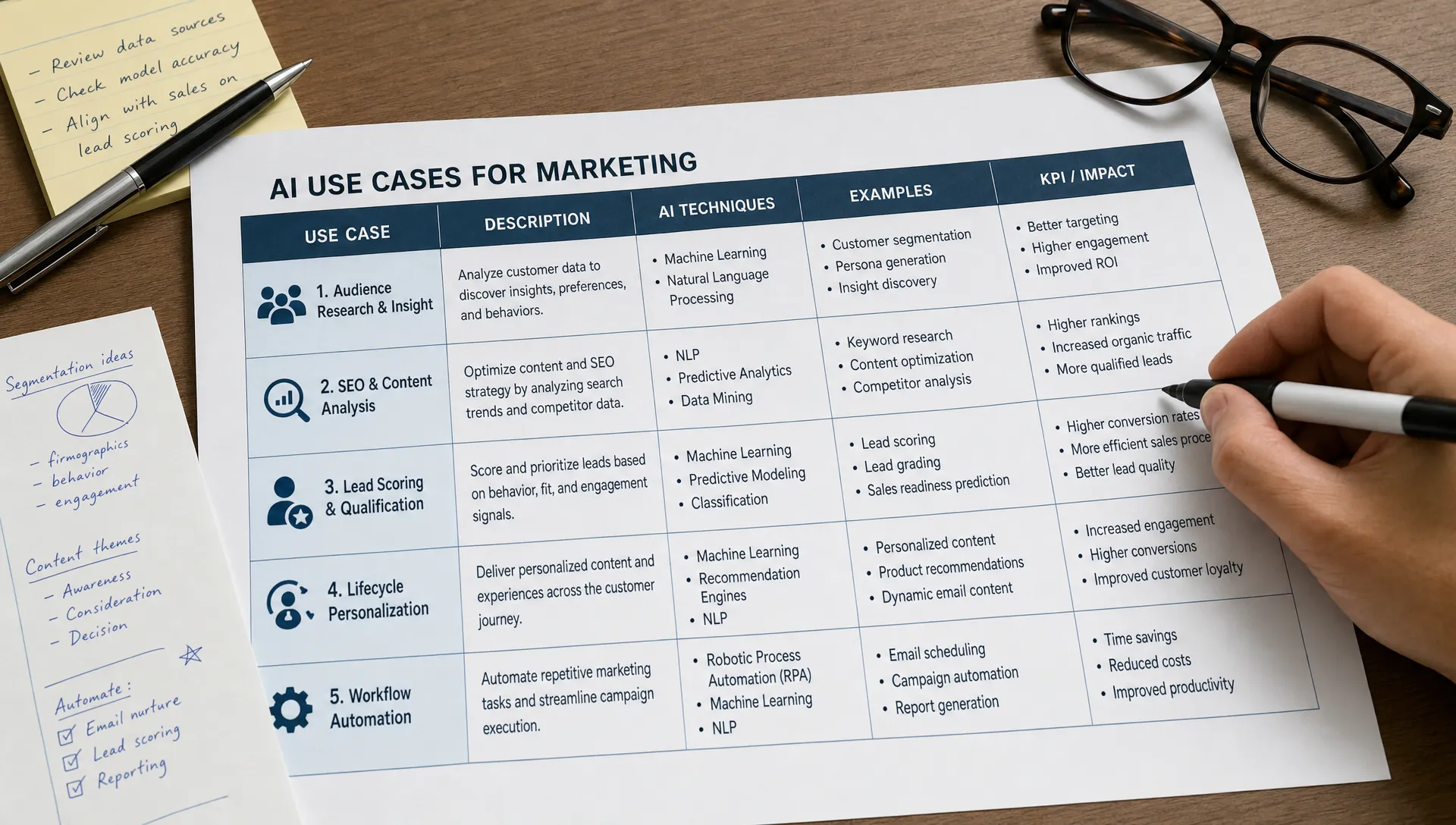
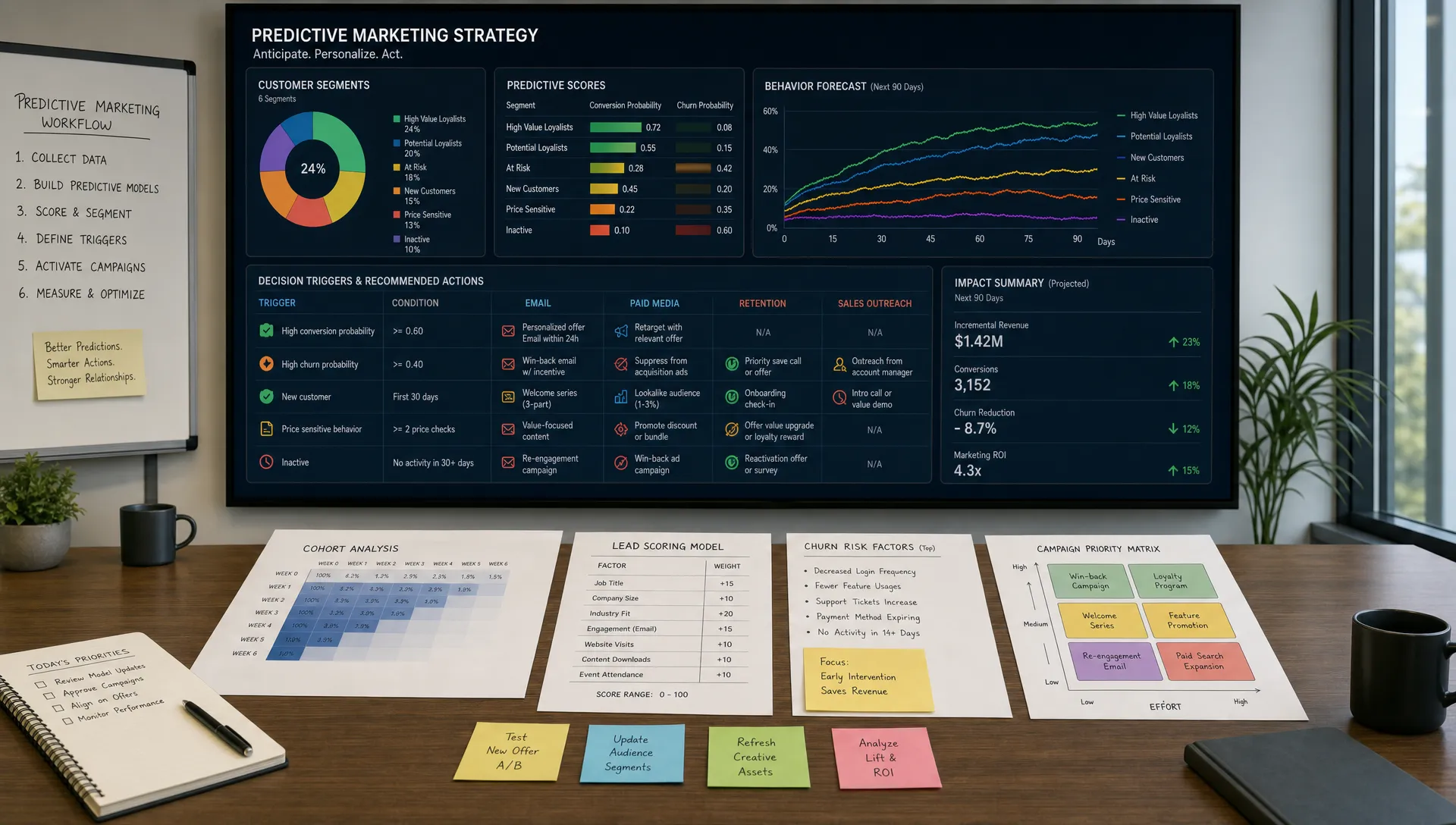
Useful starting points include campaign brief generation, SEO content refreshes, audience research summaries, email personalization, lead scoring support and weekly performance narratives. If you want a broader menu of practical options, review these AI marketing use cases with clear business value and choose only the ones that match your current bottleneck.
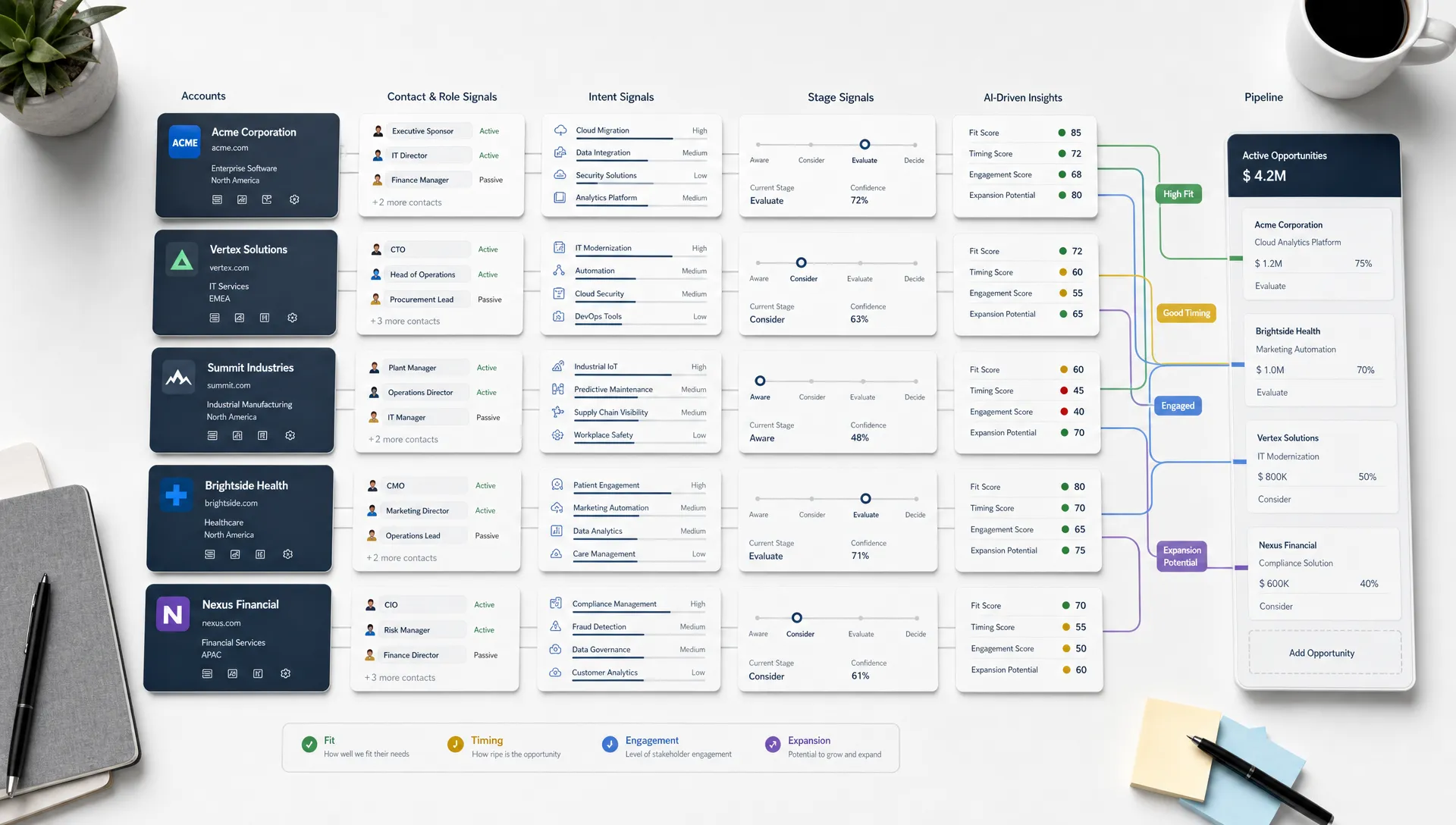
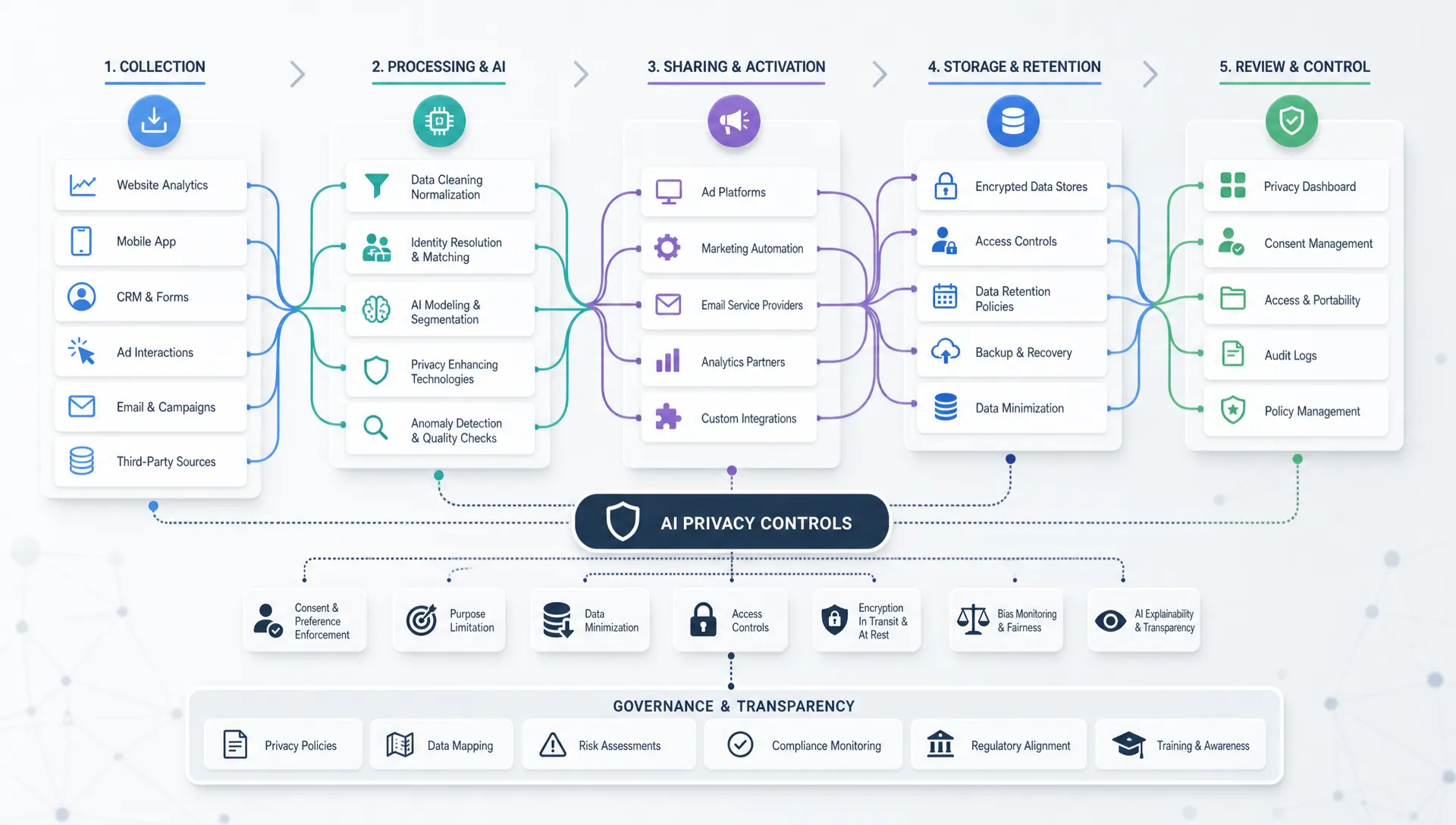
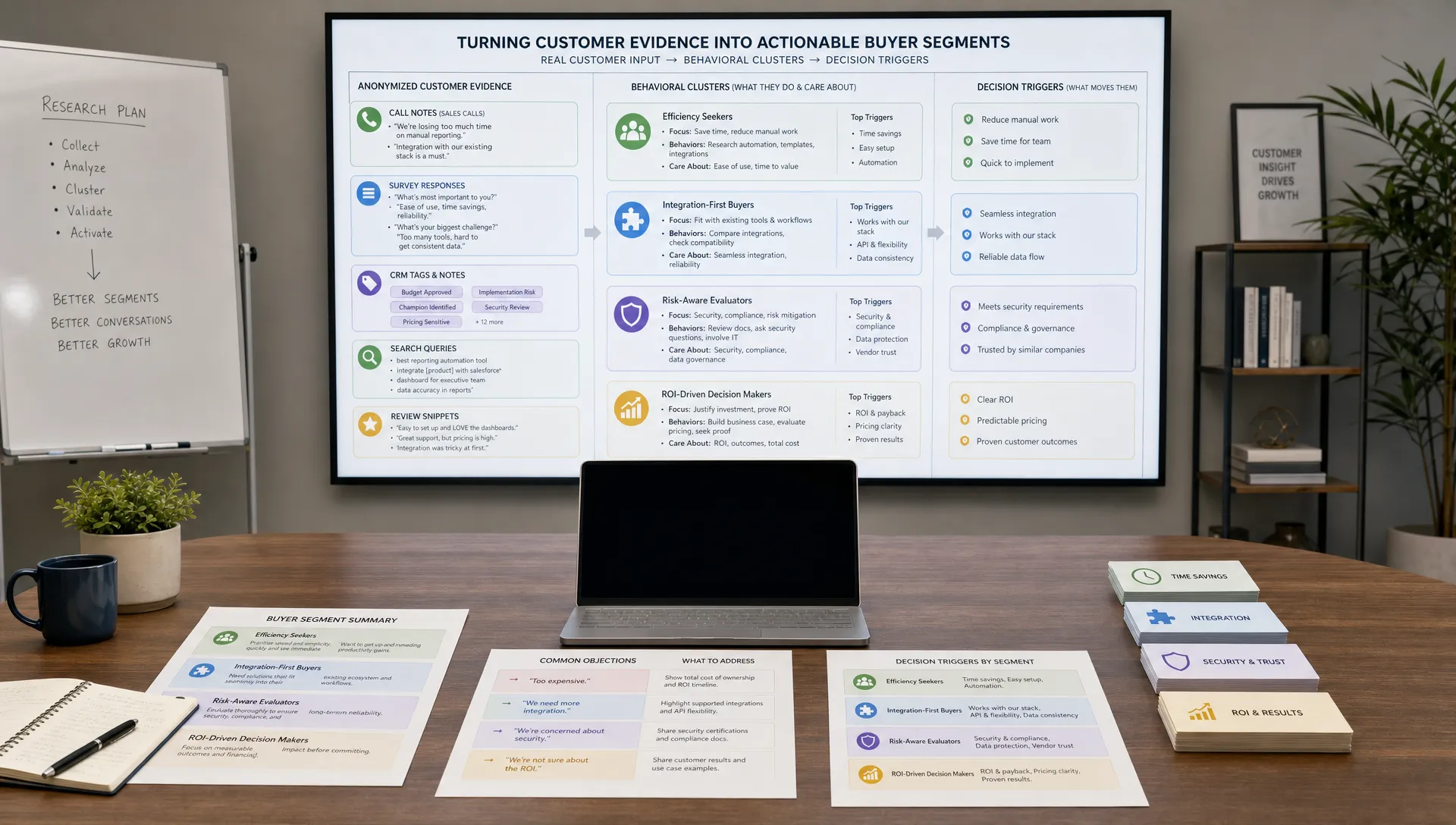
AI-powered analytics and workflow automation depend on trusted data. If customer records are duplicated, campaign naming is inconsistent or consent status is unclear, AI will amplify the mess.
Start with the minimum data foundation your first workflows need. For a lifecycle email workflow, that may include lifecycle stage, product usage, email engagement, consent status and recent sales activity. For SEO operations, it may include keyword groups, content performance, ranking changes, conversion events and content ownership. For paid media, it may include spend, creative metadata, audience segments, conversion quality and revenue influence.
The data foundation should answer four questions:
Do not skip governance. Even basic controls such as access permissions, data retention rules, consent tracking and source documentation make the system safer and more reliable. For a deeper operational checklist, use the guide on creating AI-ready customer data for marketing before connecting customer data to AI workflows.
Your AI marketing stack should support the system, not define it. Many teams buy overlapping tools because each one looks impressive in isolation. The better approach is to assign a role to each tool category.
Most AI-powered marketing operations systems need some combination of content generation, prompt management, SEO research, customer relationship management, marketing automation, analytics, project management and integration tools. Some teams also need digital asset management, call tracking, sales enablement or consent management.
The key is to avoid tool sprawl. If two platforms generate blog outlines, decide which one is the official drafting environment. If one tool stores campaign briefs and another stores final approvals, define the handoff. If analytics live in multiple dashboards, decide where the final performance narrative is created.
A practical test is to ask, “What decision or action does this tool improve?” If the answer is vague, the tool may not belong in the system yet.
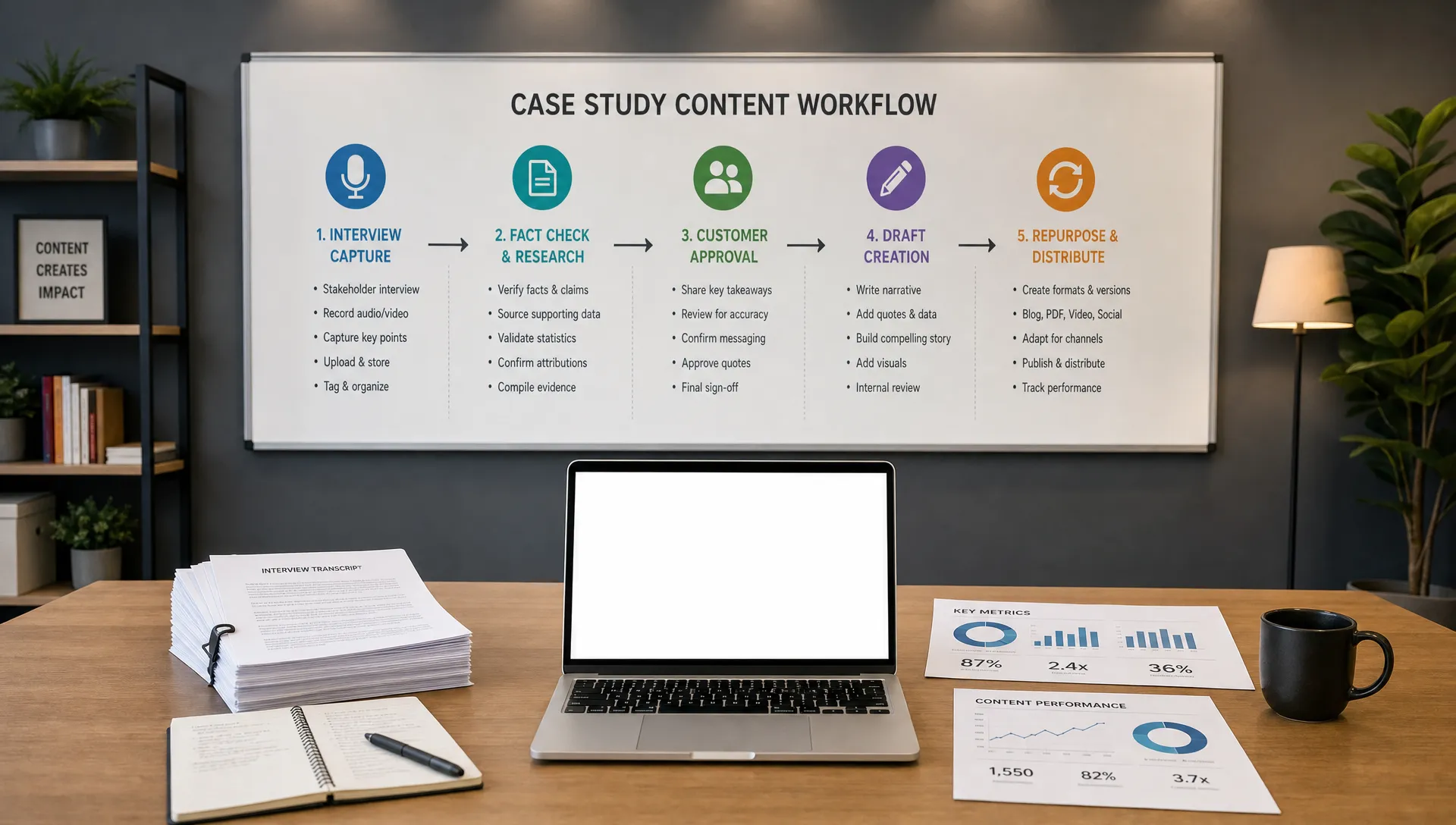
Once your use case, data and tools are clear, design the workflow in enough detail that someone else could run it. A good workflow architecture shows inputs, AI tasks, human checkpoints, outputs, systems of record and measurement points.
For example, an AI-assisted SEO content workflow might follow this sequence:
| Workflow step | Input | AI role | Human role | Output |
|---|---|---|---|---|
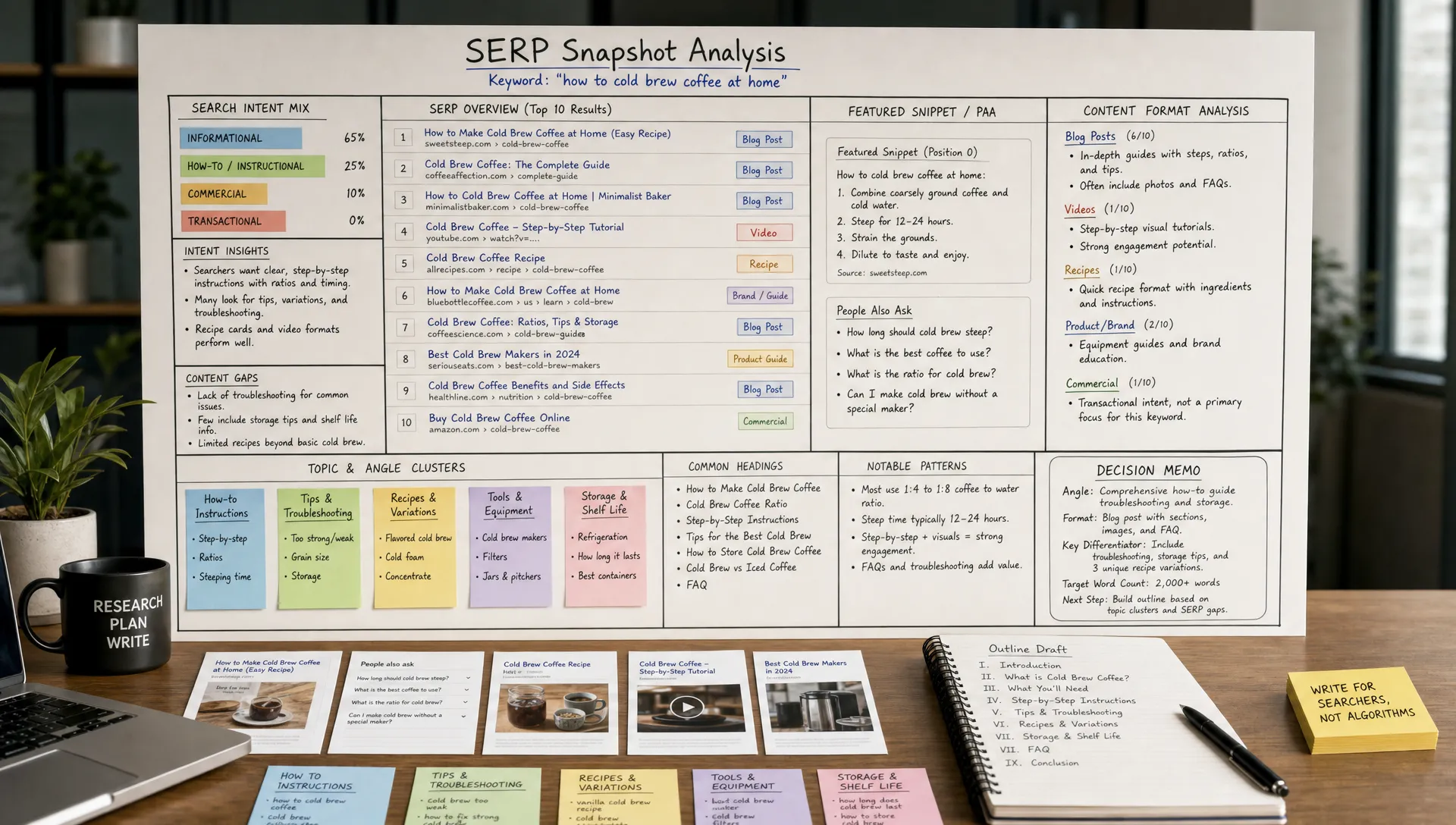
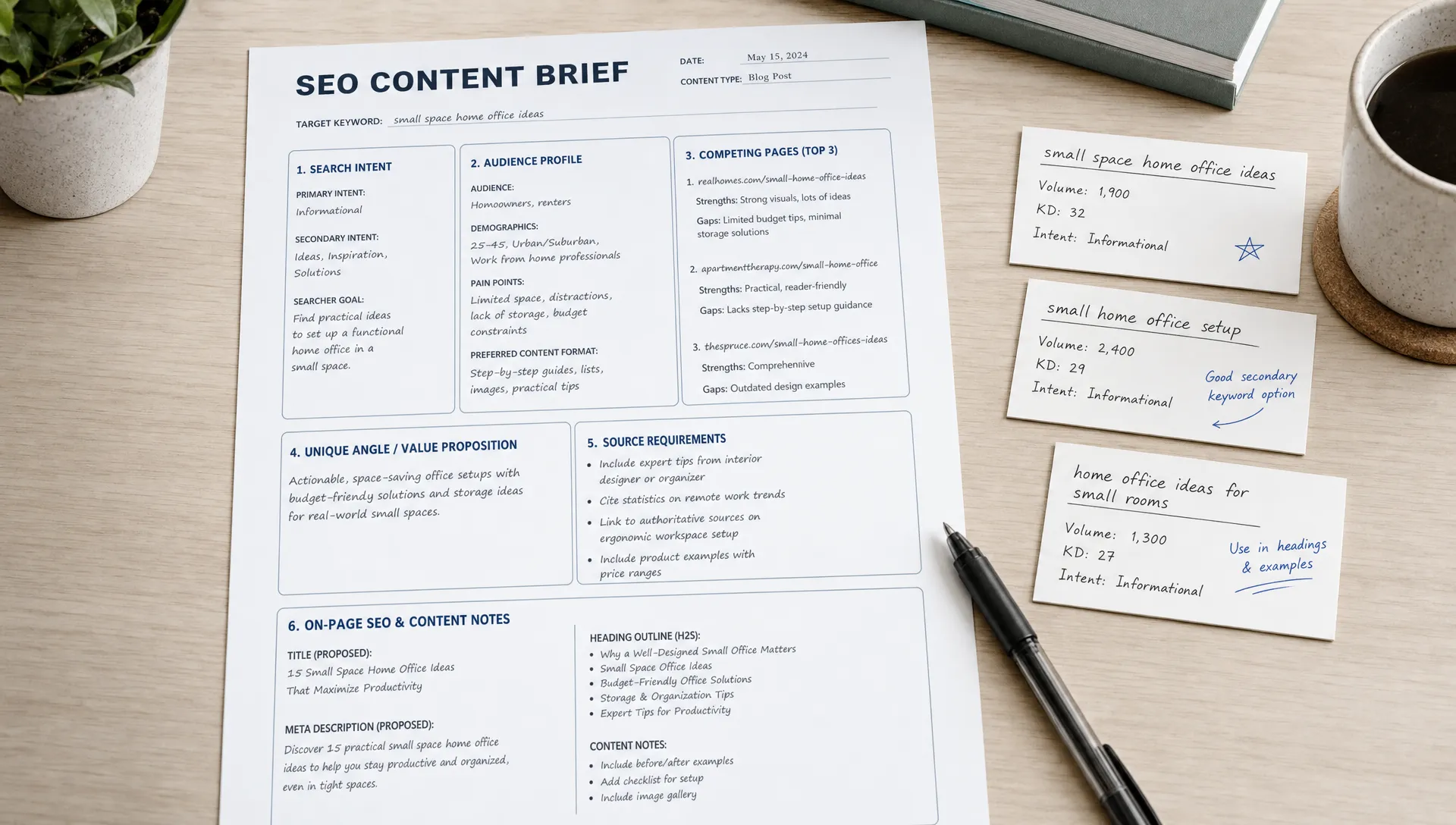
| Topic selection | Keyword data, audience pain points and business priorities | Cluster themes and suggest opportunities | Choose topics that match strategy | Approved topic list |
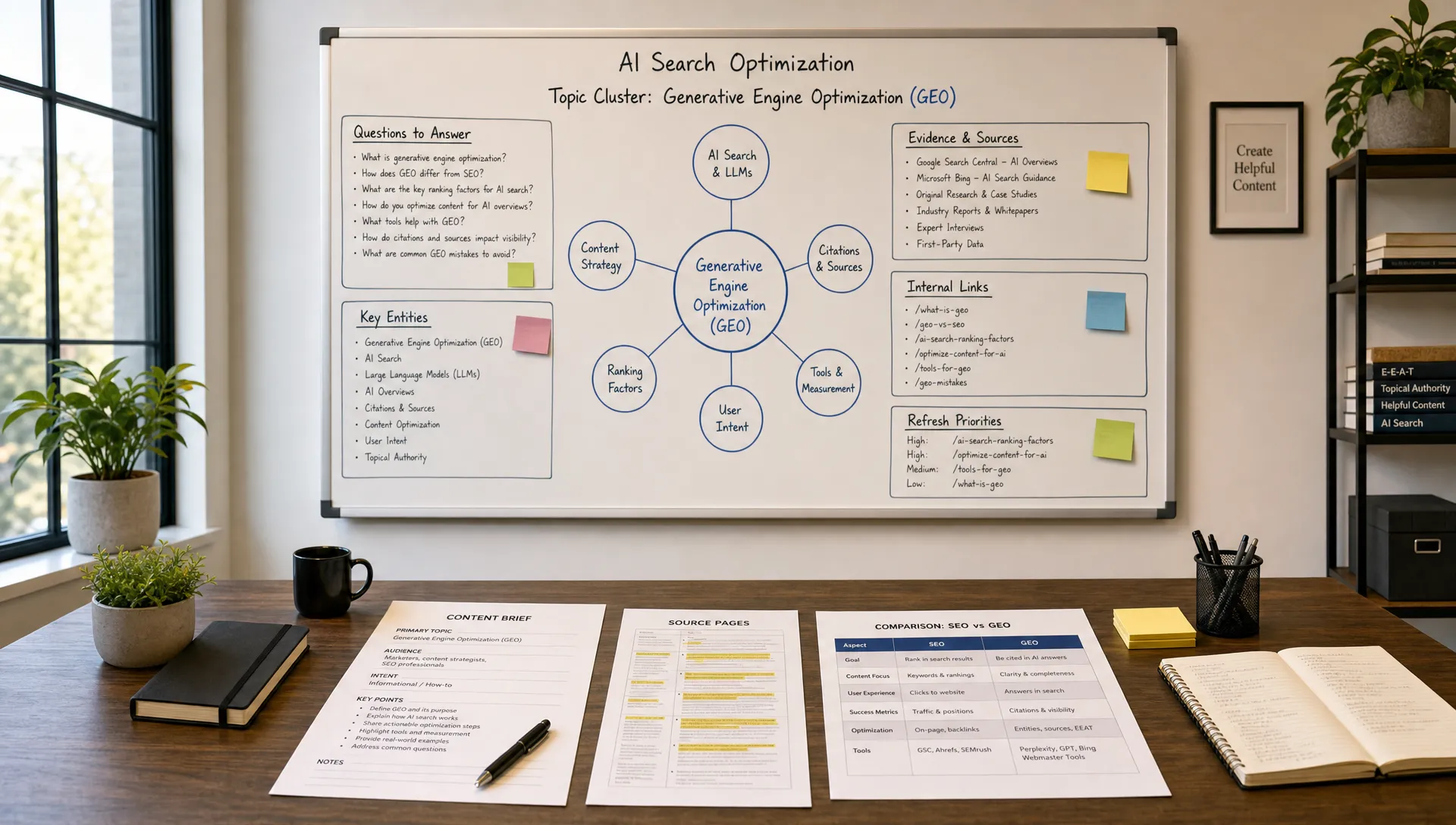
| Brief creation | SERP notes, product messaging and internal expertise | Draft structured briefs | Add positioning and unique insights | Final content brief |
| Drafting | Brief, brand rules and source material | Produce first draft | Edit for accuracy, voice and usefulness | Edited article |
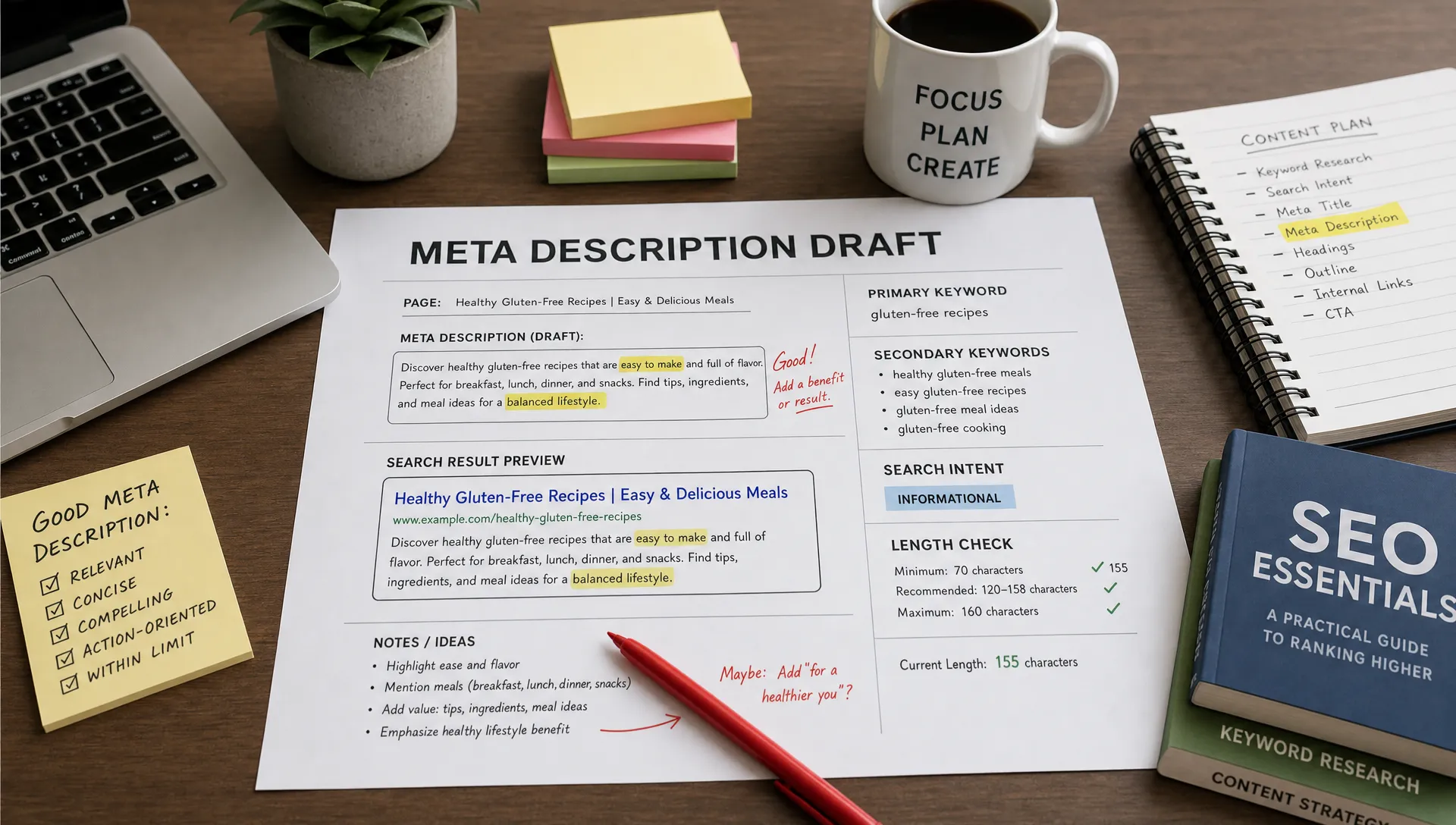
| Optimization | SEO checklist and content standards | Suggest title tags, FAQs and internal links | Approve changes and avoid over-optimization | Publish-ready page |
| Reporting | Rankings, traffic, conversions and engagement | Summarize performance trends | Decide refresh, promotion or expansion | Optimization plan |
This level of detail prevents “AI did it” from becoming an excuse for unclear accountability. The system should make ownership more visible, not less.

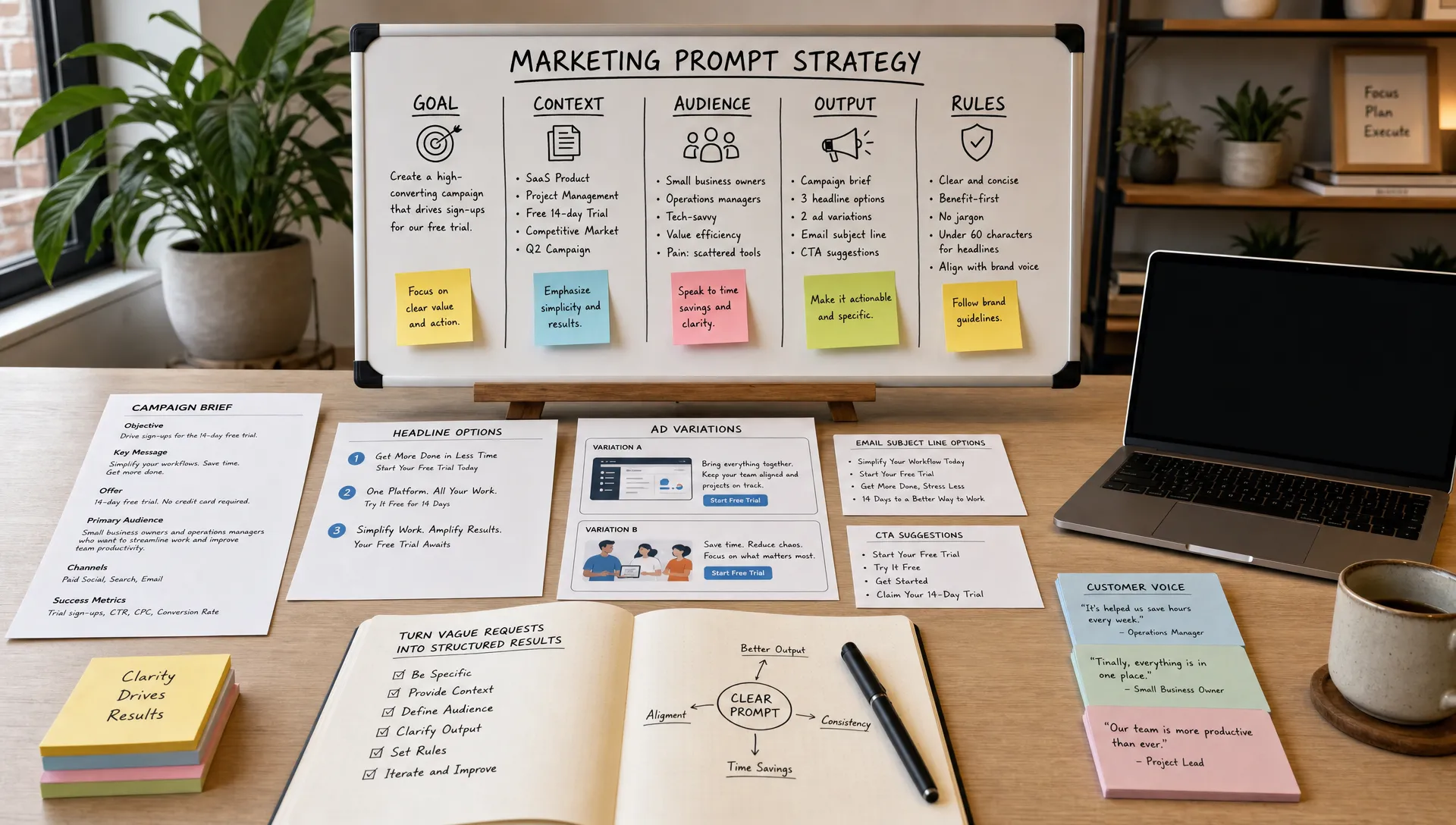
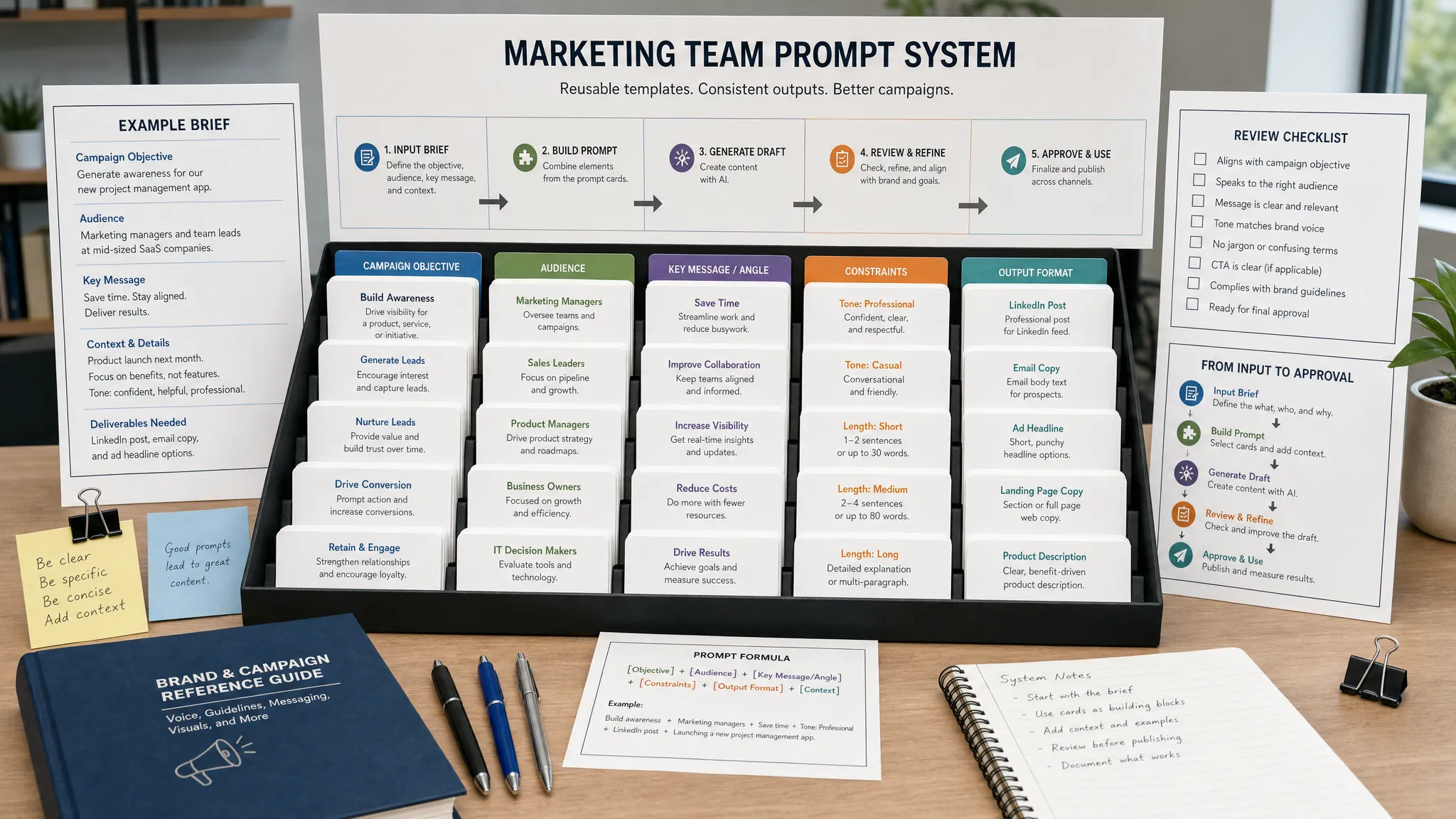
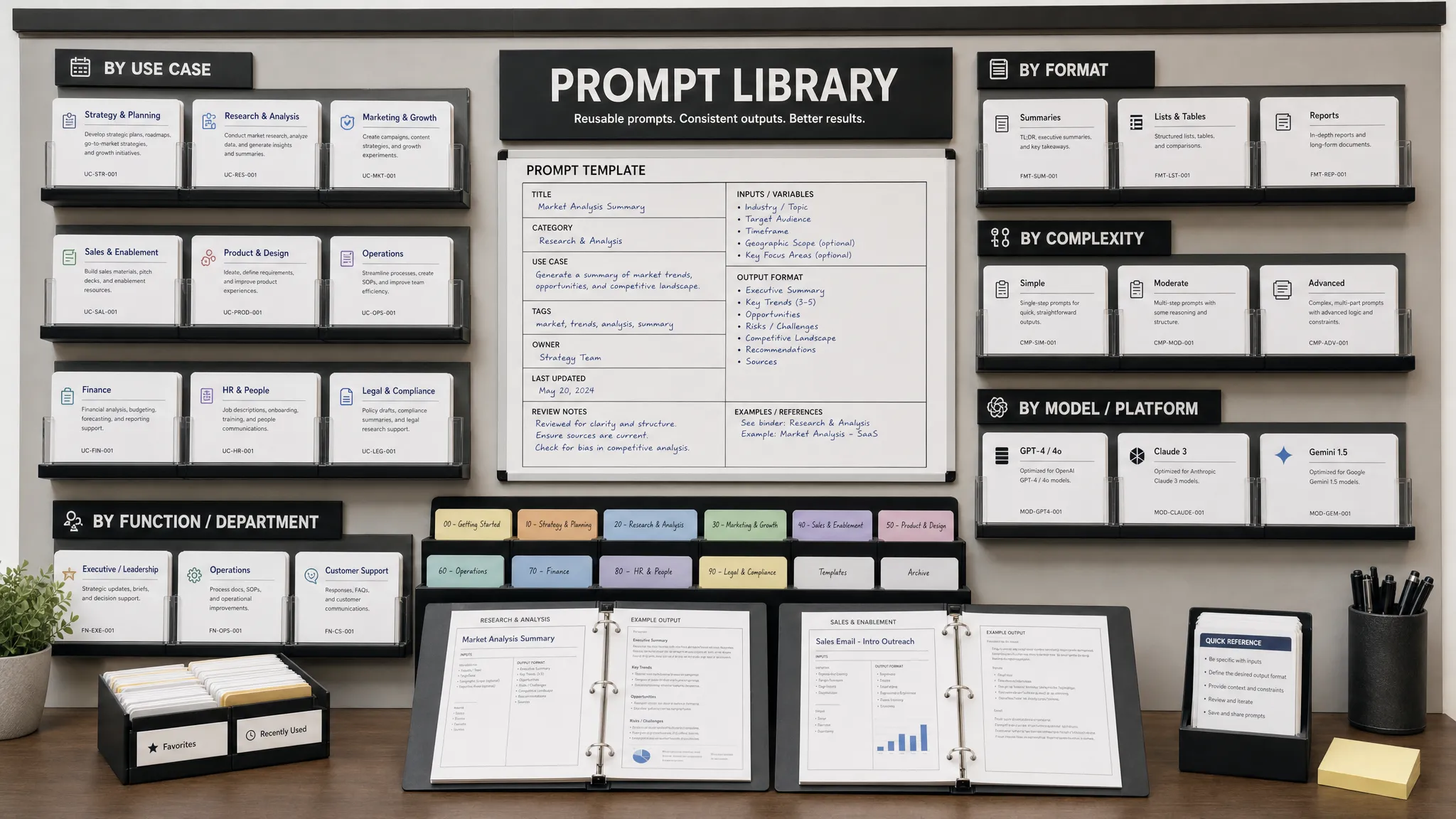
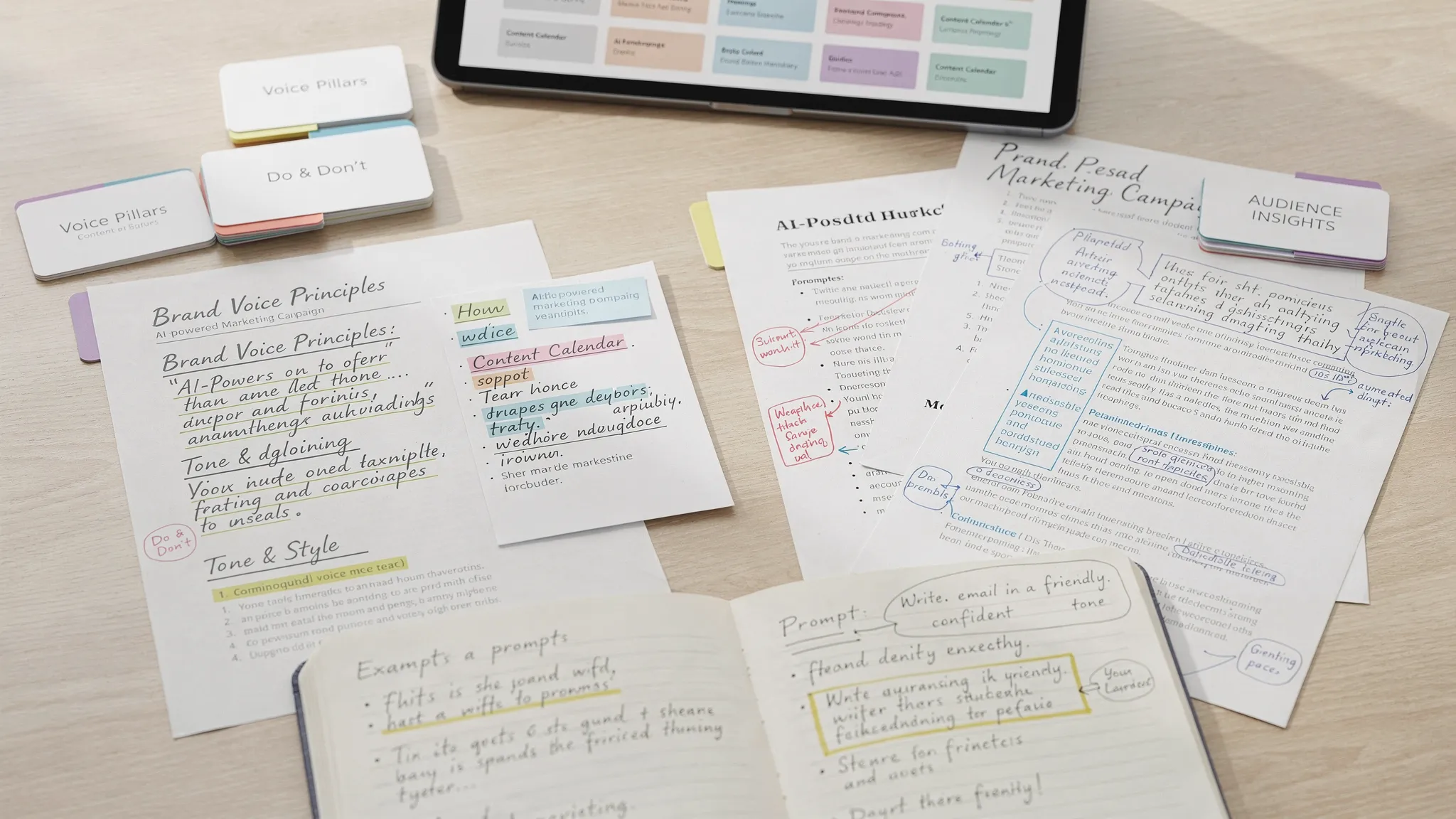
Prompts are operational assets. If every marketer writes prompts from scratch, the team will get inconsistent results and waste time rediscovering what works. A prompt library creates shared standards for briefs, research summaries, content drafts, email variants, reporting narratives and QA checks.
The best prompt systems include context, not just instructions. AI needs approved product descriptions, audience segments, brand voice guidance, customer objections, compliance rules and examples of strong output. In practice, your knowledge system may live across a shared resource library, a brand guide, a content repository and AI tool instructions.
For each recurring prompt, document the following:
Keep the library small at first. Ten reliable prompts are more valuable than one hundred prompts no one trusts. Review them monthly, especially after positioning changes, new product launches or shifts in search behavior.
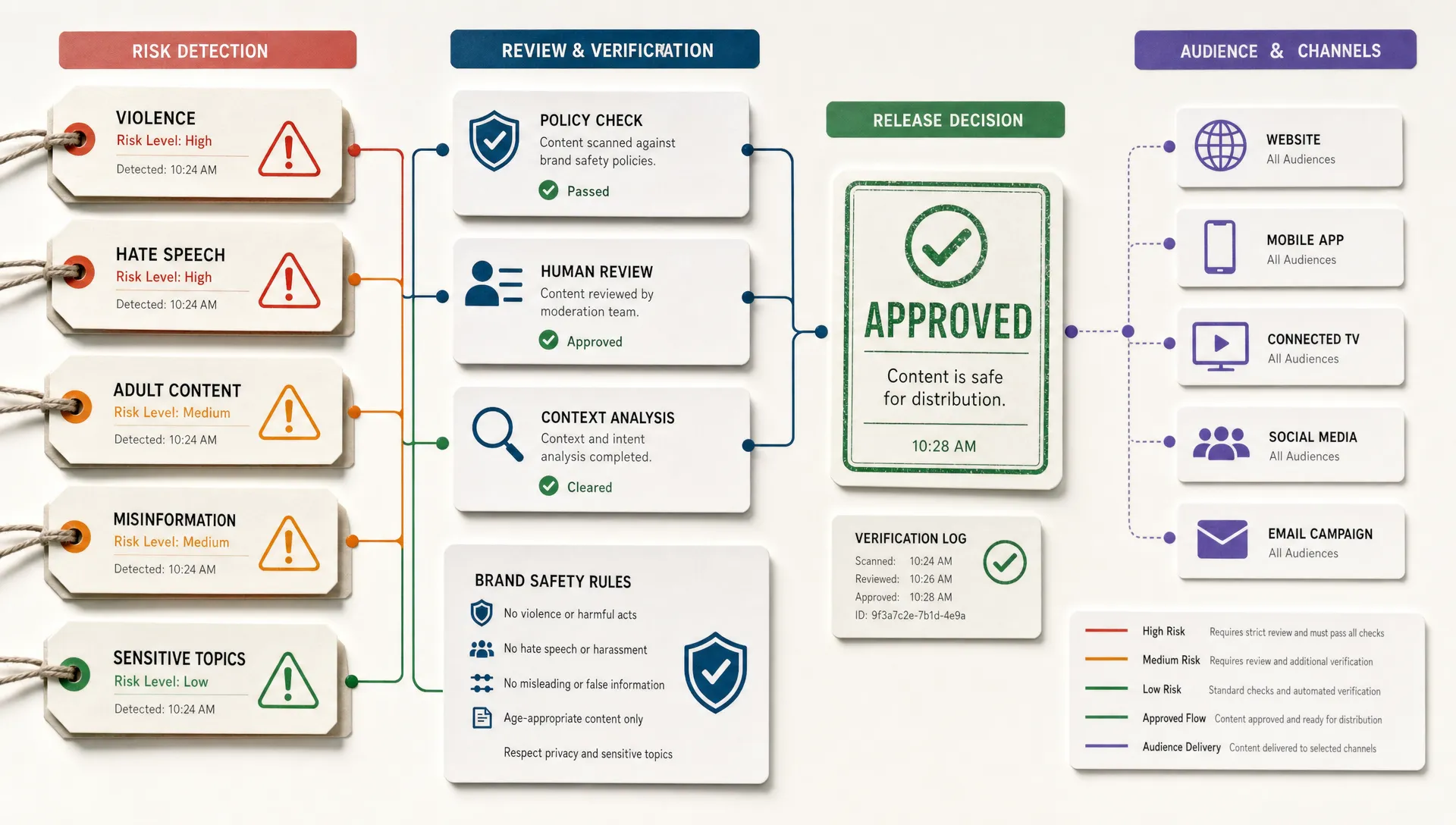
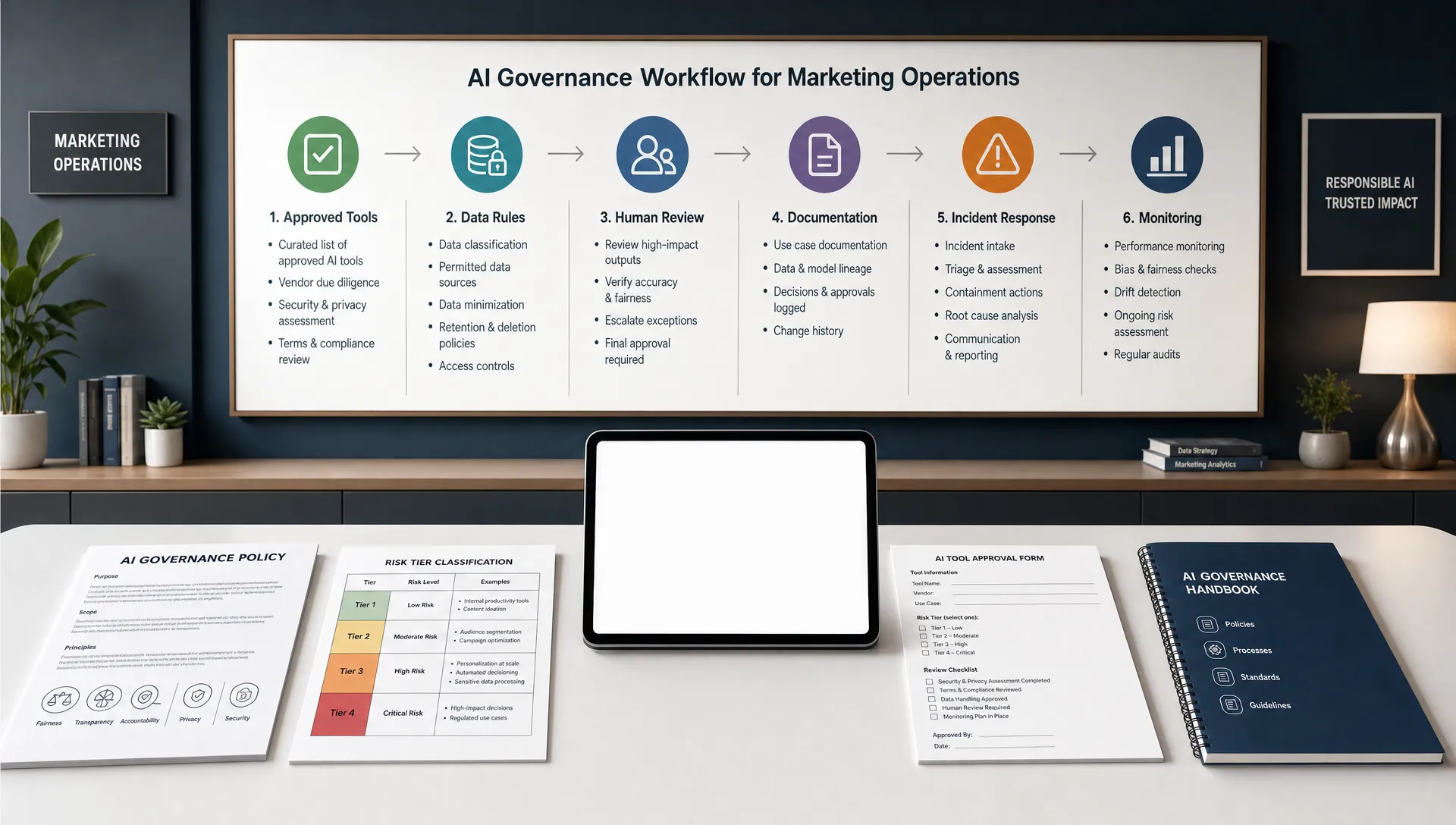
AI governance should not live in a policy document that no one reads. It should be built into the workflow through permissions, approval rules, disclosure standards and review checkpoints.
Start by classifying your AI workflows by risk. Low-risk workflows might include internal brainstorms, content outlines or campaign summaries. Medium-risk workflows might include customer-facing copy, personalization and lead scoring support. Higher-risk workflows may involve regulated claims, sensitive customer data, financial decisions, legal language or automated customer segmentation.
For each risk level, define the review path. Customer-facing content may need a brand review. Claims about pricing, finance, health, law or product performance may need subject matter review. Workflows using customer data may need privacy review. The NIST AI Risk Management Framework is a helpful reference point for thinking through validity, reliability, transparency and accountability, even if your marketing team uses a lighter internal version.
Governance also includes output standards. AI-generated content should be checked for factual accuracy, originality, brand fit, accessibility, SEO quality and usefulness. A marketing operations system should make those checks repeatable.
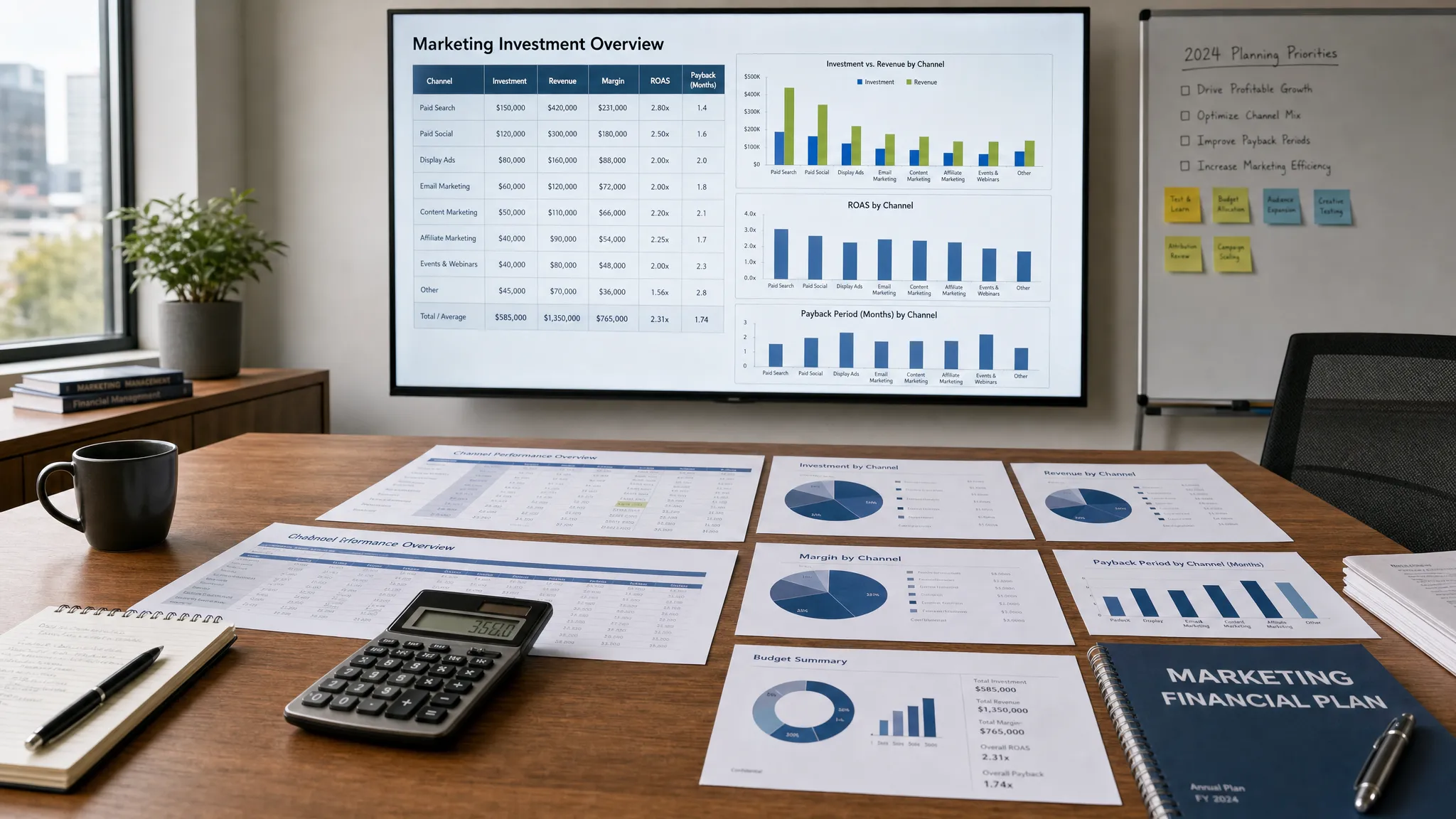
Campaign metrics tell you whether marketing is working. System metrics tell you whether your marketing operations are improving.
Track both. For campaigns, you may already monitor pipeline, conversions, cost per acquisition, retention, traffic, rankings or engagement. For operations, add metrics that show whether AI is making work faster, better and more reliable.
Useful system metrics include cycle time from brief to publish, approval turnaround, percentage of work completed on time, content refresh frequency, number of manual handoffs removed, prompt reuse rate, error rate after QA and time spent on reporting.
Do not treat time saved as the only success metric. If AI helps publish more content but quality drops, the system is failing. If AI improves reporting speed but the team still does not act on insights, the workflow needs a stronger decision step. The best measure is whether AI helps the team make better marketing decisions more consistently.
You do not need to rebuild marketing operations all at once. A phased rollout reduces risk and gives the team evidence before scaling.
| Timeline | Focus | What to build | Success signal |
|---|---|---|---|
| First 30 days | Audit and design | Choose one business outcome, map the workflow, define data needs and write the first prompt set | The team can run one documented AI-assisted workflow |
| Days 31 to 60 | Pilot and refine | Connect tools, test outputs, add review checkpoints and measure cycle time | The workflow saves time without lowering quality |
| Days 61 to 90 | Scale selectively | Expand to one adjacent workflow, create reporting standards and train more users | The system becomes repeatable beyond one person or campaign |
The strongest pilots usually start with a workflow that already happens often. Weekly reporting, content briefs, SEO refreshes, campaign summaries and email testing are good candidates because they produce visible output and measurable process improvement.
Most failed AI marketing operations projects do not fail because the model is weak. They fail because the operating system around the model is unclear.
Watch for these mistakes:
AI adoption is partly technical, but it is also cultural. Teams need to know when to trust AI, when to challenge it and when to slow down for review.
What is an AI-powered marketing operations system? It is a structured way to manage marketing planning, data, workflows, content, approvals, automation and measurement with AI supporting repeatable tasks and decision-making.
Which marketing workflow should we automate first? Start with a frequent workflow that has clear inputs and measurable outcomes, such as content briefs, weekly reporting, SEO refreshes, lead follow-up or email testing.
Do small teams need a full marketing operations system? Yes, but it can be lightweight. A small team may only need documented workflows, a shared prompt library, clean campaign data, simple approval rules and a few core tools.
How do we keep AI-generated marketing content on brand? Use approved brand guidelines, product messaging, audience insights and examples inside your prompt and knowledge system. Add human review before customer-facing content is published.
What metrics show that AI marketing operations are working? Track campaign results and operational metrics such as cycle time, approval speed, prompt reuse, content quality, reporting speed and the number of manual handoffs reduced.
AI creates the most value when it plugs into a disciplined marketing operating system. Start with one business outcome, document the workflow, prepare the data, define review rules and measure whether the process improves.
AIMarketer Hub helps marketers and businesses turn AI into practical execution through AI content generation, prompt resources, SEO tools, performance analytics and industry-specific guides. Use those resources to build workflows your team can repeat, improve and trust.