AI marketing can make campaigns faster, more personalized and easier to measure. It can also move customer data into more tools, models and workflows than a traditional marketing stack ever did. That is where privacy risk grows: not because AI is automatically unsafe, but because teams often adopt it faster than they document what data is being used, why it is needed and who can access it.
A practical AI marketing data privacy program does not have to slow growth. It should help your team use AI tools with more confidence, especially when creating content, segmenting audiences, scoring leads, optimizing ads or automating lifecycle campaigns.
This guide breaks compliance down into the decisions marketing teams actually make: what data to collect, how to use it, how to vet vendors, how to govern prompts and how to prove your process if a regulator, customer or enterprise buyer asks.
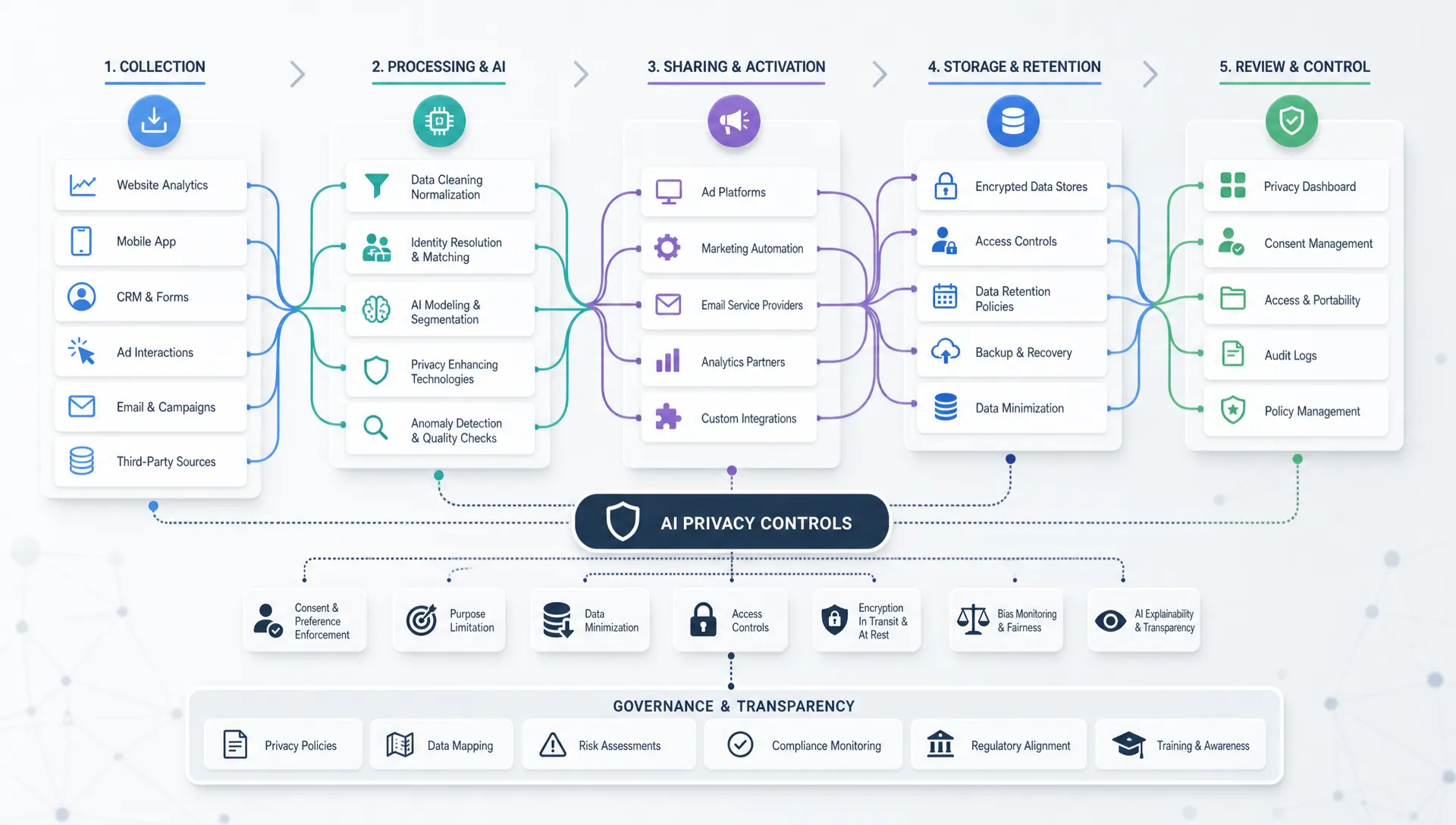
Most marketing privacy programs were built around familiar activities: cookies, email consent, CRM data, analytics platforms and ad pixels. AI expands the surface area because the same customer data may now be used for prediction, generation, classification, enrichment, summarization or automation.
That creates several new risk patterns.
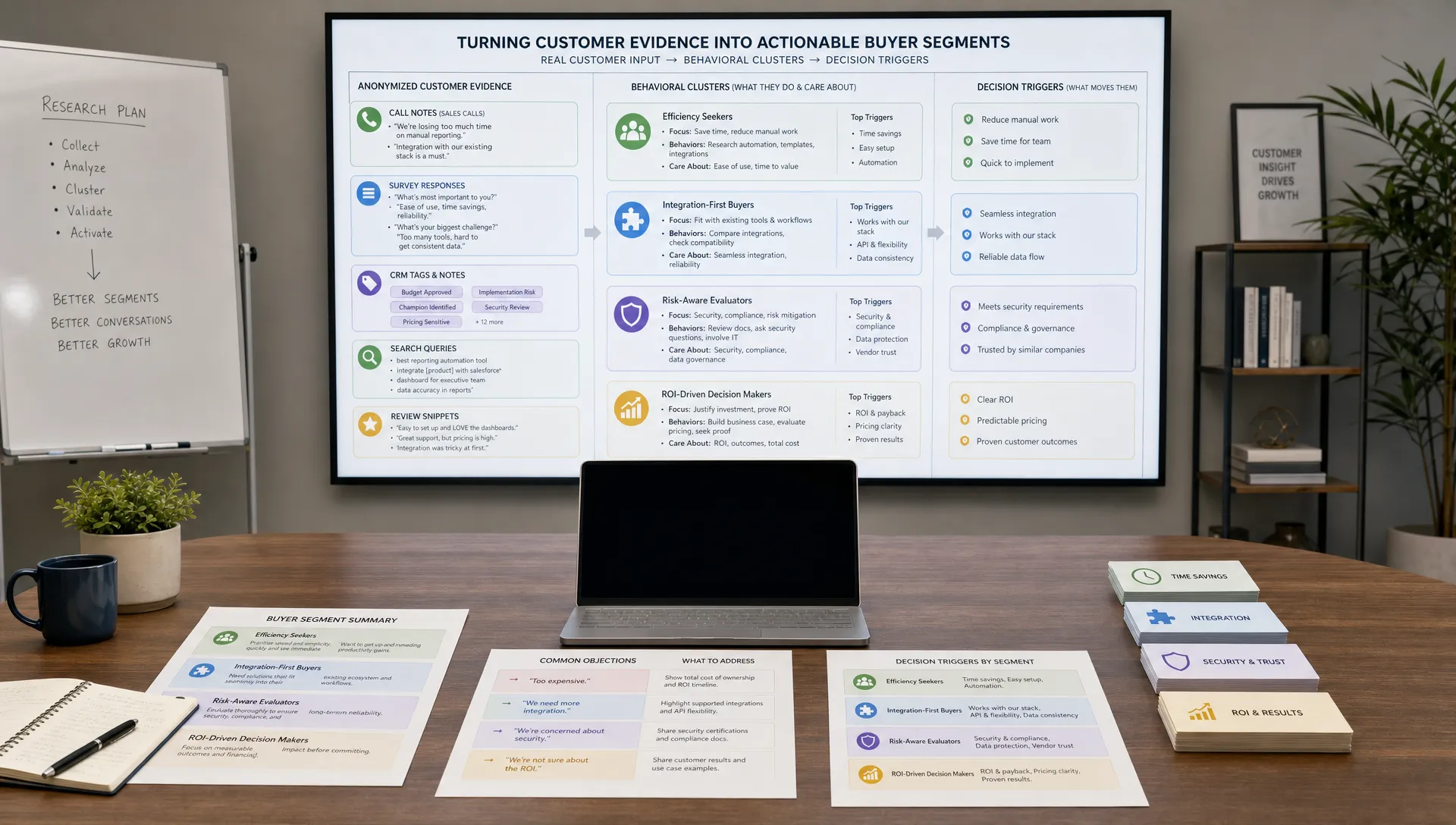
First, AI tools can process more unstructured data. A marketer may paste call transcripts, reviews, form submissions or chat logs into a generative AI tool to summarize insights. If those inputs contain personal data, the team has created a processing event that must be governed.
Second, AI marketing platforms often combine data sources. CRM records, web behavior, support tickets and purchase history may be joined to improve personalization or lead scoring. This can be valuable, but it also raises purpose limitation, consent and data minimization questions.
Third, AI outputs can influence customer treatment. A model might decide who receives a discount, who is assigned to a sales rep or which audience is excluded from a campaign. That is no longer just content support. It can affect fairness, transparency and customer trust.
The compliance goal is not to ban these use cases. It is to define what is acceptable, document the controls and make sure marketing teams can use AI without improvising privacy decisions under deadline pressure.
There is no single global AI marketing privacy law. Most teams need to manage a mix of privacy laws, consumer protection rules and emerging AI governance expectations.
For U.S. marketers, the California Consumer Privacy Act as amended by the CPRA remains a major reference point, especially for access, deletion, correction, opt-out and sensitive data obligations. The California Privacy Protection Agency provides official rulemaking updates and enforcement information.
If you market to people in the European Union or monitor their behavior, the GDPR matters. Its requirements around lawful basis, transparency, data minimization, automated decision-making and processor contracts are highly relevant to AI marketing. The European Data Protection Board publishes guidance that helps teams interpret GDPR obligations.
For email, SMS, telemarketing and advertising, privacy compliance also overlaps with channel-specific laws and platform rules. The FTC has also made clear that companies should avoid deceptive claims about AI capabilities, data use and consumer control. Its business guidance on AI claims is a useful reminder that privacy and truth in advertising are connected.
A good compliance guide should translate these requirements into internal rules your team can follow, not a legal memo nobody reads. Work with counsel, but design the operating process around day-to-day marketing actions.
You cannot govern data you have not mapped. Before updating policies or vendor contracts, create a practical inventory of where personal data enters AI-enabled marketing workflows.
Focus on actual use cases rather than abstract systems. A CRM may power dozens of activities, and each activity can have a different privacy profile. For example, using a first name to personalize an email subject line is not the same as using purchase history, location and predicted income to determine an offer.
Your AI marketing data map should capture:
Keep this inventory specific enough to be useful. “We use AI for personalization” is too vague. “We use browsing behavior and purchase category history to generate product recommendations for opted-in email subscribers” is much better.
If your organization has not yet formalized roles, review AIMarketer Hub’s guide on how to build an AI marketing governance policy. A privacy data map becomes much easier to maintain when ownership is clear.
Data minimization is one of the most practical privacy principles for AI marketing. It means collecting and processing only the data needed for a defined purpose.
In AI projects, teams often assume that more data will produce better outputs. Sometimes it does. Often, it creates unnecessary risk without improving performance. For example, a content generation workflow may not need customer names, emails, phone numbers or account IDs. A campaign analysis prompt may only need aggregated trends, not raw user records.
Before launching an AI marketing workflow, ask three simple questions.
Can we achieve the same result with anonymized or aggregated data? Can we remove direct identifiers before the data reaches the AI tool? Can we limit the data to a narrower time period or audience segment?
The safest version of a workflow is usually the one that gives the model enough context to be useful without exposing personal data it does not need. This is especially important for generative AI tools where employees may be tempted to paste raw exports, customer complaints or sales notes into a prompt.
Data minimization should also apply to AI outputs. If a tool generates a segment like “high-value customers likely to churn,” decide who can see that label, how long it should persist and whether customers can challenge or opt out of related processing.
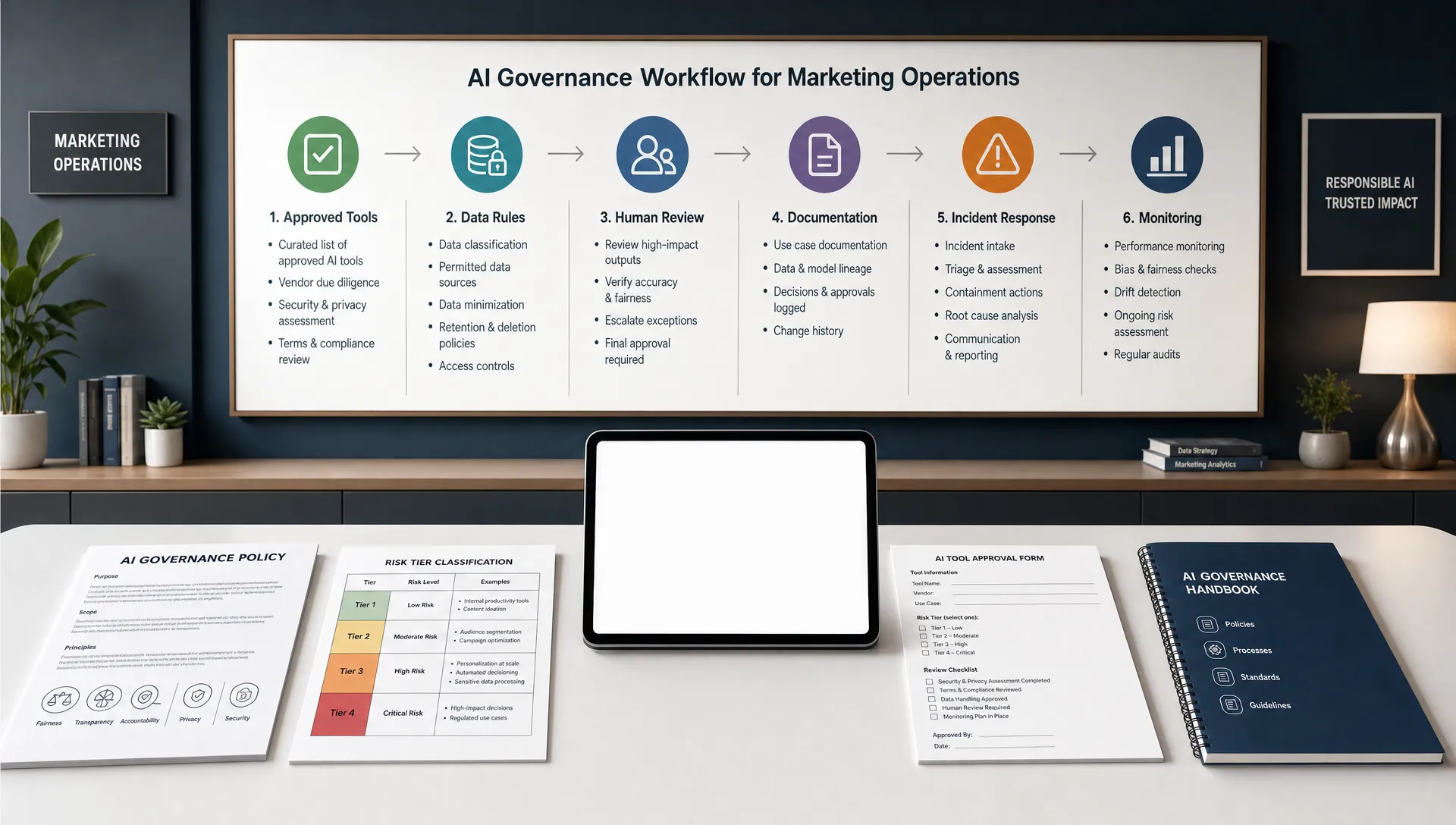
Not every AI marketing use case needs the same level of review. A tiered approach helps teams move quickly on lower-risk work while applying stronger controls to workflows that affect personal data, segmentation or customer decisions.
Low-risk use cases often include brainstorming campaign concepts, rewriting public website copy, generating social post variations from approved messaging or summarizing anonymized performance data. These workflows still need quality control, but they usually involve limited personal data.
Medium-risk use cases include email personalization, lead scoring, audience clustering, chatbot routing and predictive content recommendations. These workflows can influence customer experience and often rely on behavioral or profile data.
High-risk use cases include sensitive audience targeting, automated eligibility decisions, financial or health-related personalization, lookalike modeling from sensitive signals and any AI output that materially affects access to offers, pricing or services.
Risk tiering should determine the review path. Low-risk work can follow standard marketing approval. Medium-risk work may require privacy, security and data owner review. High-risk work should involve legal counsel, senior approval and documented testing.
This is also where industry context matters. Financial services, legal, healthcare and SaaS companies often face stricter expectations from customers, regulators or enterprise procurement teams. If you operate in finance, AIMarketer Hub’s article on AI marketing for financial services covers sector-specific risks such as compliance, bias and reputation management.
Prompt governance is now part of data privacy. A prompt is not just an instruction to an AI tool. It can be a container for confidential information, customer data, business strategy and regulated records.
Teams should create prompt rules that are easy to remember and enforce. Avoid asking marketers to interpret complex privacy law in the moment. Give them clear examples of what can and cannot be entered into AI tools.
A practical prompt policy might include these rules:
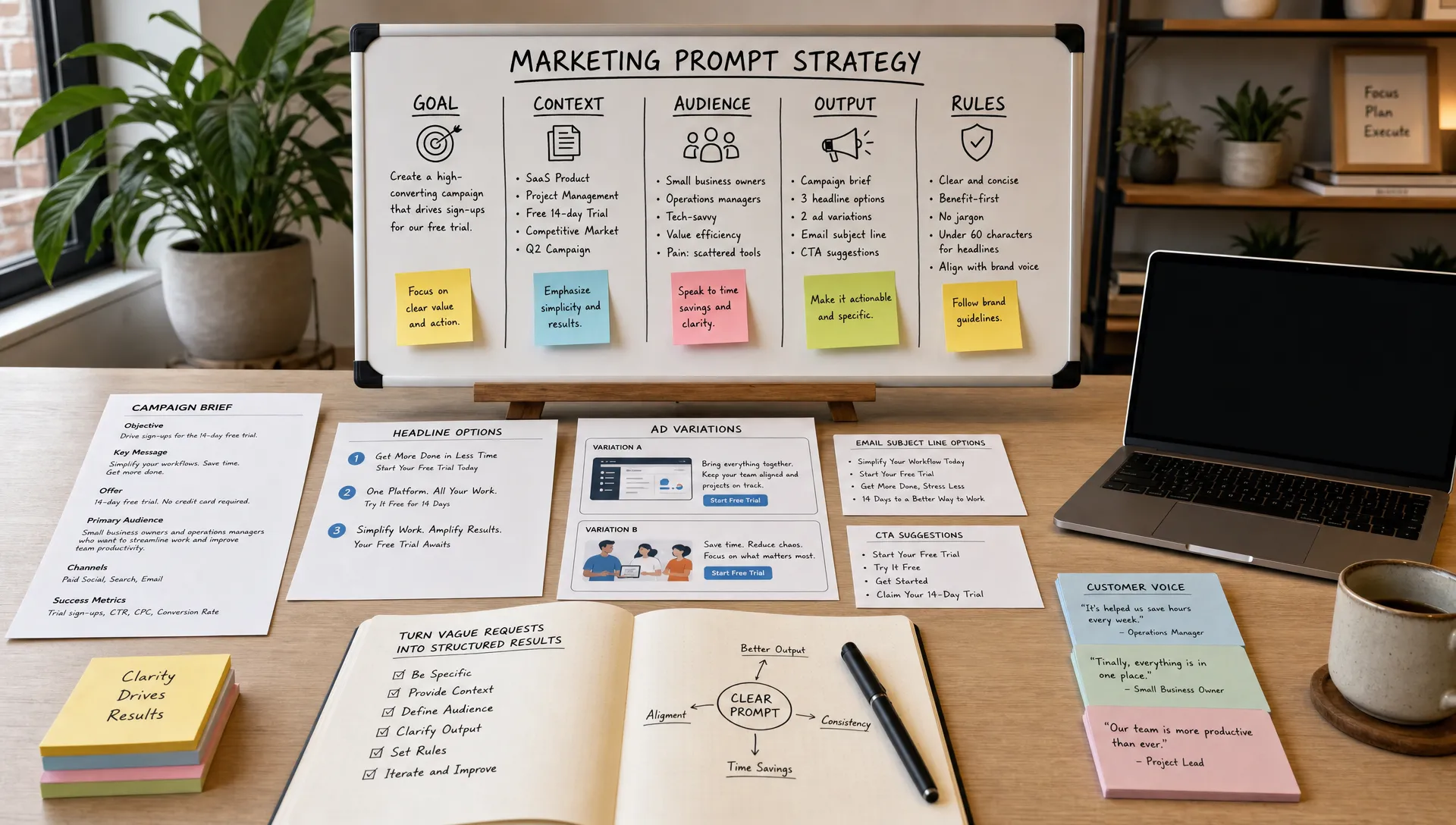
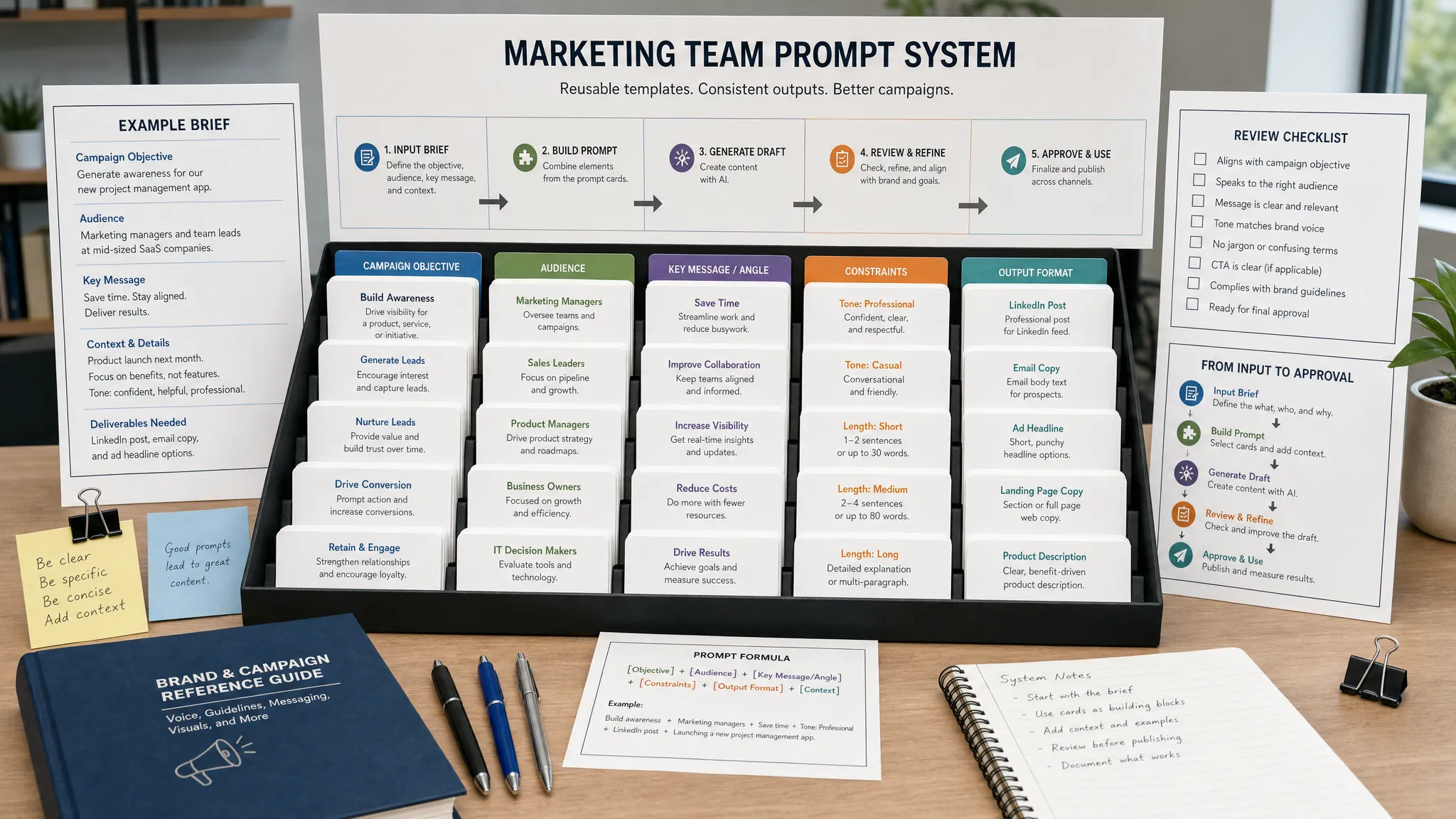
Prompt templates can reduce both privacy risk and output inconsistency. For example, a template for summarizing customer feedback can instruct the model to use anonymized themes, avoid quoting identifiable comments and flag any sensitive categories for human review.
For AI-assisted publishing workflows, privacy is only one part of the review process. AIMarketer Hub’s AI content quality control checklist can help teams combine privacy checks with fact-checking, brand review and compliance approval.
Vendor review is one of the highest-leverage privacy controls because once a tool is connected to your CRM, analytics platform or ad account, risk can spread quickly.
Before adopting an AI marketing platform, ask how the vendor handles your inputs, outputs, customer records, training rights, subprocessors and deletion requests. You do not need every vendor to answer in the same format, but you do need written answers your legal, security and procurement teams can evaluate.
Key questions include:
The review should also cover integrations. Privacy risk often appears between systems, not only inside the AI tool. If marketing data flows through ERP, billing or operational platforms such as NetSuite, include those systems in your review. Mid-market companies with complex NetSuite environments may need specialized AI automation and NetSuite integration support to understand configuration drift, access risks and compliance dependencies across connected systems.
When choosing a platform, do not treat privacy as a final checkbox. It should be part of the selection criteria from the start, alongside output quality, workflow fit and integration depth. AIMarketer Hub’s guide on how to pick the right AI marketing platform walks through that broader evaluation process.

Privacy notices often fail because they use broad language that technically covers many activities but does not help customers understand what is happening. AI marketing makes vague disclosure even less effective.
Customers do not need a machine learning lecture. They need clear information about what data you collect, why you use it, how it affects their experience and what choices they have.
For example, a practical disclosure might explain that you use purchase history and browsing behavior to personalize product recommendations, or that you use customer support themes to improve onboarding emails. If you use AI to score leads or route inquiries, explain the categories of data involved and how people can contact you about their information.
Consent also depends on context. Some personalization may be covered by legitimate business purposes under applicable law, while other activities may require opt-in consent or a clear opt-out. Sensitive data, precise location, children’s data and certain cross-context behavioral advertising practices require extra caution.
Do not hide AI use behind generic phrases like “we may use data to improve services.” That kind of language may not meet customer expectations or regulatory scrutiny when AI is used for meaningful personalization or profiling.
Many AI privacy programs focus on inputs, but retention is just as important. AI tools may store prompts, generated outputs, embeddings, logs, feedback ratings, conversation histories and workflow metadata.
Each of those records can contain personal data. A chatbot transcript may include a customer’s email, complaint, order details or legal issue. A prompt used for campaign segmentation may include audience criteria. A generated output may repeat personal data from the input.
Your retention rules should cover the full AI workflow, not just the original CRM record. Decide how long prompts and outputs are stored, who can search them, whether they are included in legal holds and how deletion requests are honored across connected systems.
This is especially important for customer rights requests. If someone asks your company to delete their personal data, can you identify whether their information also exists in AI logs, enrichment tools or exported training datasets? If the answer is no, your data map needs more work.
AI marketing data privacy is not only about secrecy. It is also about how customer data is used. If AI models create segments, predictions or recommendations that disadvantage certain groups, privacy and fairness concerns can overlap.
Bias can enter through training data, audience selection, proxy variables or campaign objectives. A model does not need to use a protected class directly to create unfair outcomes. ZIP code, device type, income signals, browsing patterns and education level can act as proxies in some contexts.
Marketing teams should test AI-supported campaigns for unexpected exclusions or outcome disparities, especially when offers relate to credit, insurance, employment, housing, education or other sensitive areas. Even outside regulated categories, biased targeting can damage brand trust.
Practical safeguards include human review of sensitive segments, limits on protected or proxy attributes, documentation of campaign logic and periodic performance checks across audience groups. If you cannot explain why a customer was included or excluded from a significant campaign, the workflow needs more transparency.
A compliance guide becomes useful when it changes how work gets approved. Build a workflow that fits the pace of marketing rather than requiring a full legal review for every AI prompt.
A simple operating model can include four review levels.
Level one is self-service approval for low-risk AI use, such as drafting copy from public information or summarizing anonymized reports. Marketers follow approved prompt rules and content review standards.
Level two is manager review for workflows using internal business data, campaign performance data or non-sensitive audience segments. The manager checks that data minimization, vendor approvals and brand standards are followed.
Level three is privacy and security review for workflows involving personal data, CRM integrations, automated segmentation, lead scoring or customer-facing chatbots. Reviewers confirm lawful basis, consent, access controls, retention and vendor terms.
Level four is legal and executive review for sensitive data, regulated industries, automated decisions, children’s data, cross-border transfers or high-impact personalization. These workflows need documented risk assessment and approval before launch.
This structure gives marketers a path to yes. The goal is not to create friction. It is to make sure higher-risk work gets the right attention before data is connected or campaigns go live.
Privacy compliance depends on evidence. If a customer, regulator, auditor or enterprise buyer asks how your AI marketing program works, verbal assurances will not be enough.
Keep lightweight documentation for each AI marketing use case. The record should identify the purpose, data categories, tool used, owner, risk tier, approval date, retention rule and customer rights process. For higher-risk use cases, include testing results, legal analysis and any mitigation steps.
Documentation also helps teams avoid repeating mistakes. If a vendor was rejected because it trained on customer data by default, future buyers should be able to see that history. If a campaign was approved only with anonymized data, that condition should be visible to anyone reusing the workflow.
Good documentation supports faster marketing. Teams spend less time asking the same questions, and compliance reviewers can focus on exceptions instead of rebuilding context every time.
Annual privacy training is rarely enough for AI marketing. Teams need short, practical guidance tied to the tools they use every day.
Training should include examples from real marketing tasks: building personas, analyzing survey responses, drafting lifecycle emails, creating ad audiences, summarizing sales calls and using chatbots. Show what a safe prompt looks like. Show what data must be removed. Show when a workflow needs approval.
Make training role-specific. A content marketer needs different guidance than a paid media manager, lifecycle marketer, RevOps analyst or demand generation lead. The more closely training maps to daily work, the more likely people are to follow it.
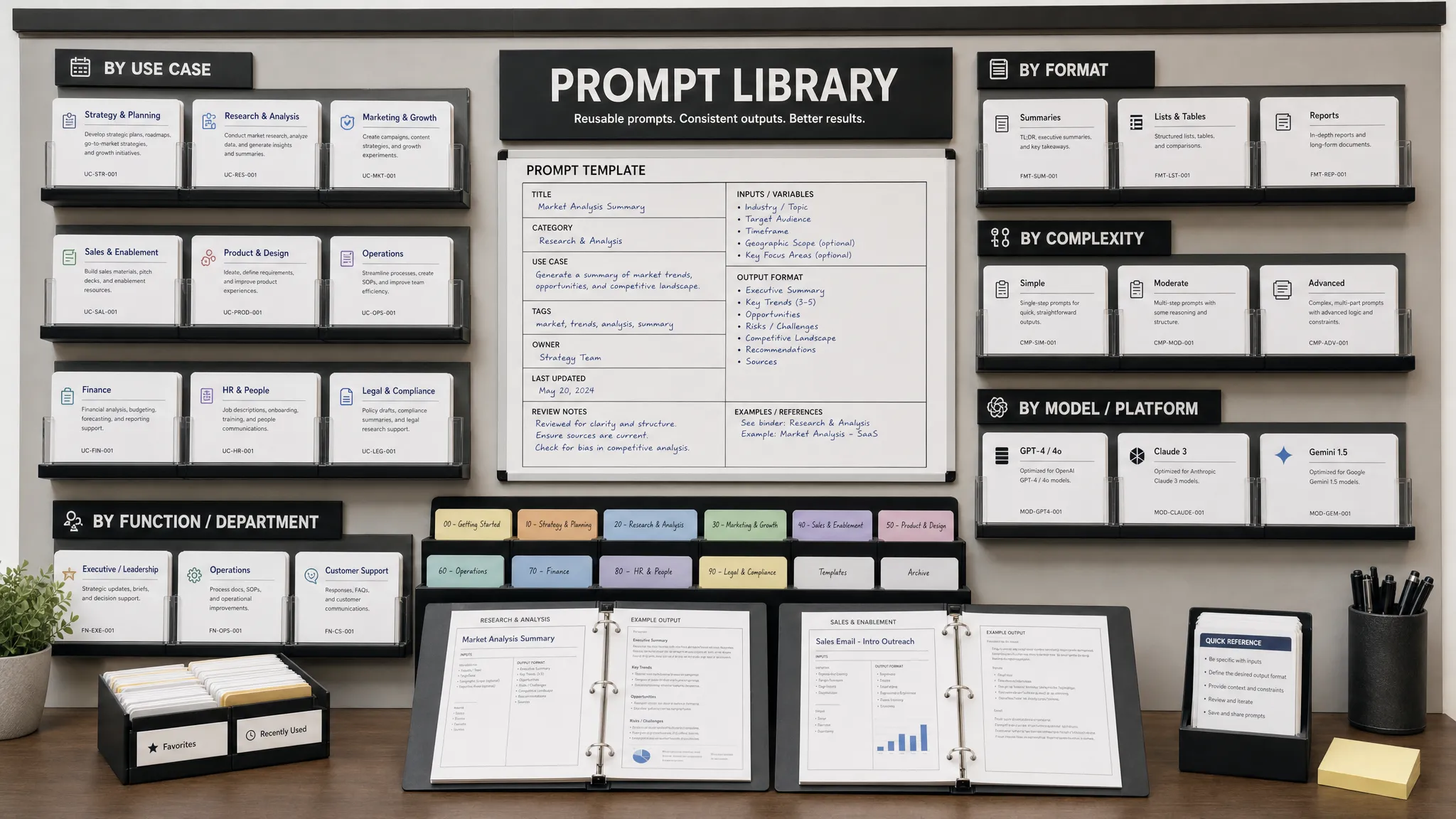
Reinforce the rules inside tools where possible. Approved prompt libraries, intake forms, vendor lists and campaign checklists are more effective than policy PDFs that sit in a shared drive.
Use this checklist before launching a new AI-enabled marketing workflow:
A checklist will not replace legal advice, but it gives marketing teams a consistent baseline. Over time, it also creates a record of responsible AI use.
What is AI marketing data privacy? AI marketing data privacy is the practice of protecting personal data when AI tools are used for marketing tasks such as personalization, segmentation, content creation, analytics, lead scoring and automation.
Can marketers use customer data in generative AI tools? They can only do so when the tool, data type, purpose and vendor terms are approved under the company’s privacy and security rules. In many cases, marketers should anonymize data or use approved internal tools instead of public AI systems.
Does AI personalization require consent? It depends on the jurisdiction, data type and use case. Some personalization may be allowed under existing customer relationships, while sensitive data, cross-context behavioral advertising or automated profiling may require opt-in consent or clear opt-out rights.
What should an AI marketing vendor review include? A vendor review should cover data use, model training rights, subprocessors, storage locations, security controls, retention, deletion support, audit documentation and contractual privacy terms.
Who should own AI marketing privacy compliance? Ownership is usually shared. Marketing owns the use case and execution, privacy or legal owns regulatory interpretation, security reviews technical risk and RevOps or IT often manages data flows and integrations.
AI marketing works best when customers trust how their data is used. A practical compliance program helps your team move faster because the rules are clear, vendors are vetted and risky workflows are reviewed before they create problems.
Start with a data map, classify your use cases, tighten prompt rules and build vendor review into your buying process. Then turn those decisions into checklists, training and documentation your team can actually use.
AIMarketer Hub provides practical AI marketing guides, tools and resources to help teams automate responsibly, improve content workflows and build more effective digital marketing strategies without losing sight of compliance and trust.