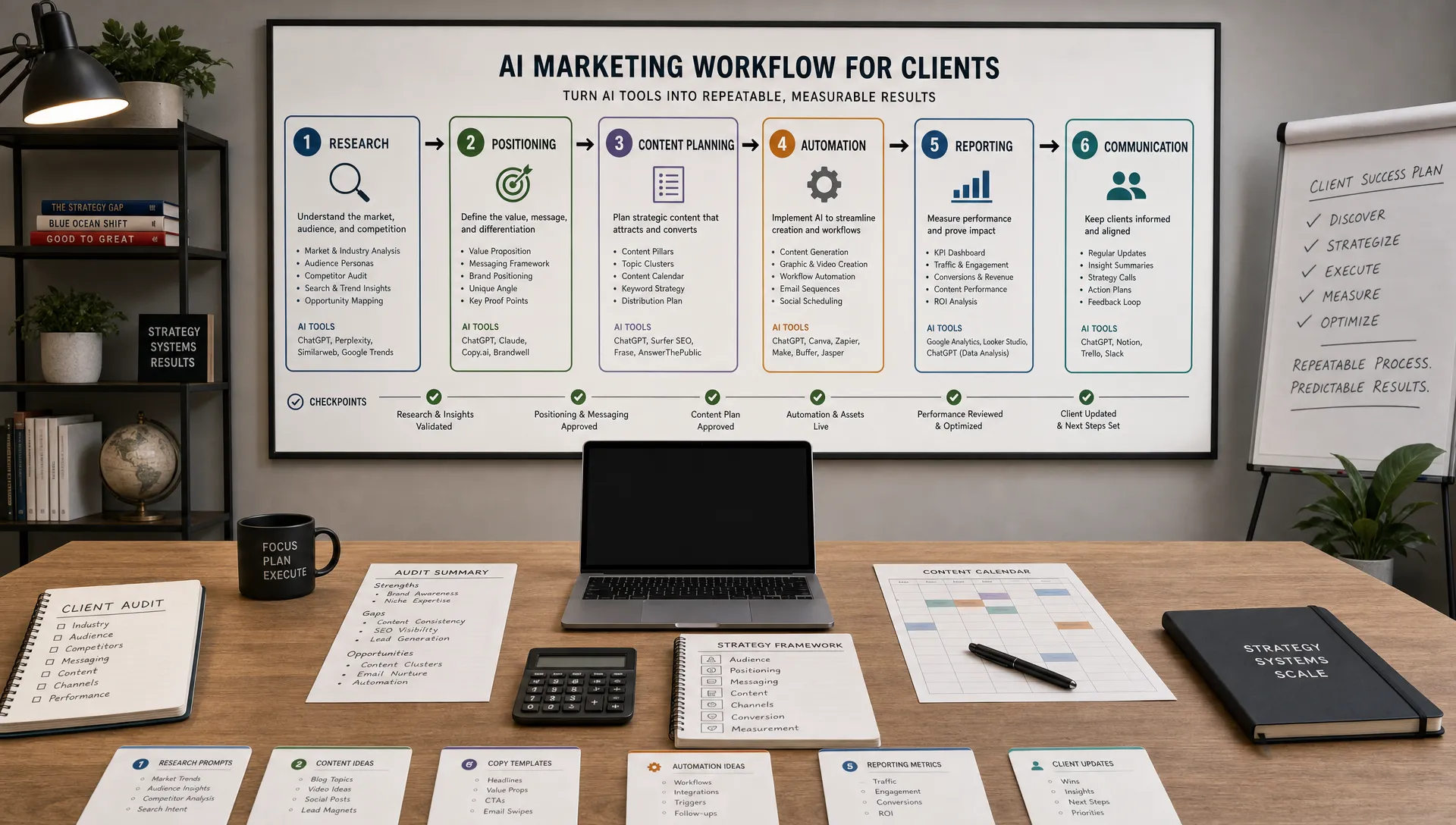
AI can help a marketing team move faster, from campaign research and content creation to segmentation, reporting, and testing. But speed creates a new management problem: if everyone uses AI tools differently, the organization can quickly lose control over data, brand consistency, approvals, compliance, and measurement.
That is where an AI marketing governance policy becomes essential. It is not meant to slow creative work. A good policy gives marketers permission to use AI confidently because it defines what is allowed, what needs review, and what should never happen.
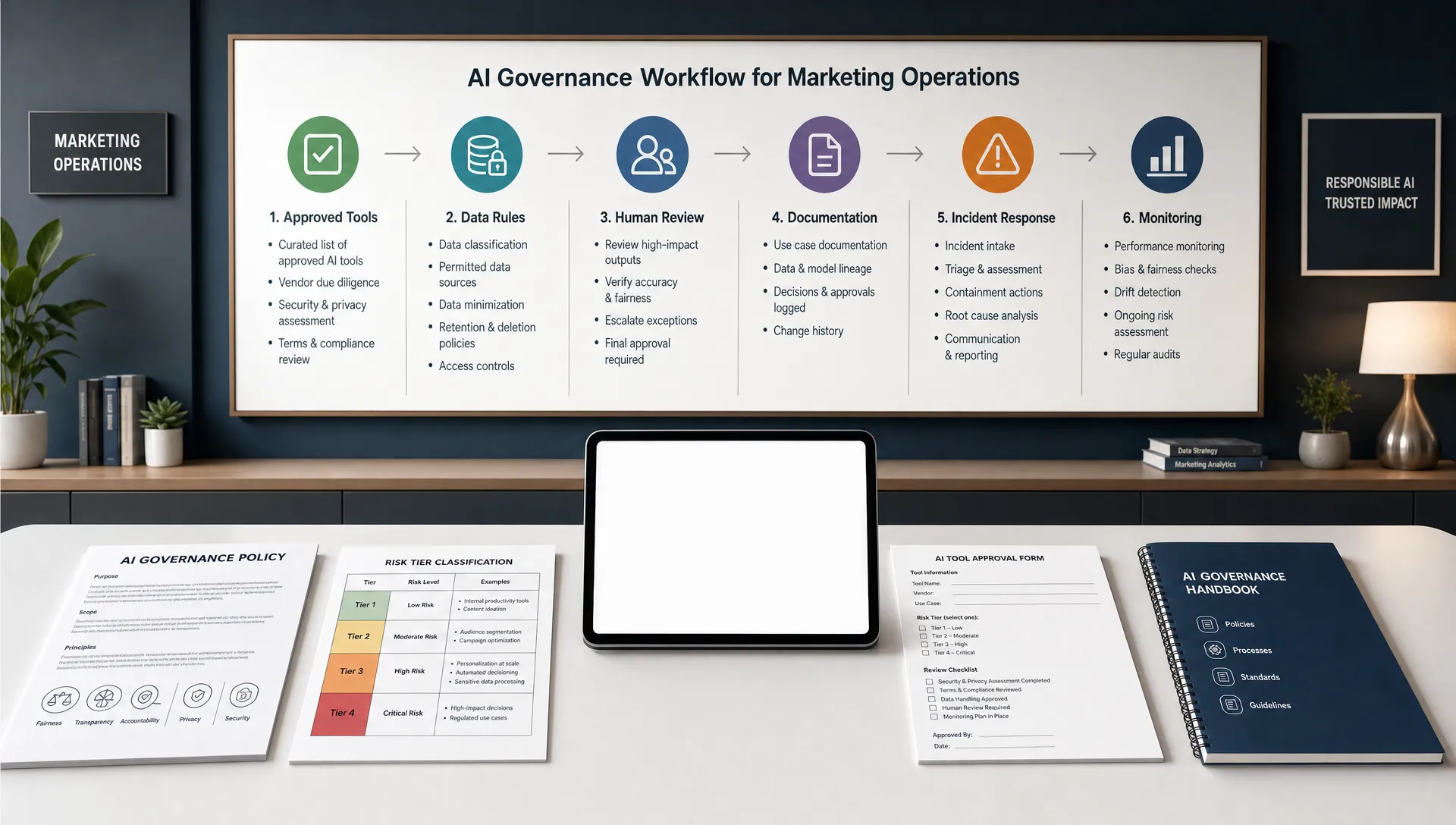
Think of it as the operating system for AI marketing. It tells your team how to choose tools, protect customer data, review AI-generated content, document decisions, and respond when something goes wrong. Below is a practical framework you can adapt for a small team, a growing SaaS company, an agency, or a regulated enterprise.
AI tools are no longer experimental side projects. They are embedded in content calendars, paid media workflows, email personalization, social listening, SEO research, analytics, and customer lifecycle marketing. Without governance, even well-intentioned marketers can introduce serious risk.
The most common issues are not futuristic AI disasters. They are everyday marketing problems amplified by automation: inaccurate claims, off-brand messaging, accidental use of confidential information, biased audience targeting, duplicate content, weak attribution, and overreliance on outputs that no one properly reviewed.
The NIST AI Risk Management Framework recommends a risk-based approach to AI that includes governing, mapping, measuring, and managing AI risks. Marketing teams do not need to copy a government framework word for word, but they should adopt the same principle: the higher the business, legal, or customer impact, the stronger the review process should be.
Regulators are also paying attention. The FTC has warned companies not to exaggerate AI capabilities or make unsupported claims. For marketers, this means AI governance must cover both how you use AI internally and how you talk about AI in public-facing messaging.
An AI marketing governance policy should answer five practical questions. If a marketer can find clear answers to these questions, the policy is probably useful. If not, it is likely too vague.
The goal is not to write a 40-page policy that no one opens. The goal is to create a short, enforceable standard, then support it with checklists, examples, and team training.
A policy is different from a playbook. The policy defines the rules. The playbook explains how to apply them in workflows such as blog production, paid search testing, email campaigns, or customer segmentation. Most teams need both, but the policy should come first.
Start by listing where AI is already being used or where your team wants to use it. Many organizations skip this step and write a generic policy, then discover that it does not cover the highest-risk workflows.
Your scope should include AI tools used for content creation, image generation, SEO research, social media scheduling, customer research, campaign analytics, personalization, translation, chatbots, sales enablement assets, and reporting. It should also include AI features embedded inside existing platforms, not just standalone AI tools.
For each use case, capture the task, tool, user group, data involved, output type, publishing destination, and business owner. For example, AI-assisted blog drafting is different from AI-driven ad targeting, and both are different from using AI to summarize customer interviews.
This inventory does not need to be perfect on day one. The key is to make it a living document. Every time a new tool or workflow is introduced, it should be added to the inventory before it becomes part of standard marketing operations.
AI governance fails when everyone is responsible in theory but no one is accountable in practice. Your policy should name clear owners for AI marketing decisions.
In a small company, the marketing lead may own the policy, with legal, security, or operations reviewing high-risk use cases. In a larger organization, you may need a cross-functional AI governance group that includes marketing, legal, privacy, IT, security, compliance, brand, and data analytics.
The policy should define who can approve new AI tools, who can approve new AI use cases, who reviews customer-facing content, who handles incidents, and who updates the policy. This does not have to be bureaucratic. Even a simple approval path is better than informal tool adoption across the team.
A strong rule of thumb is this: the person using AI can create or analyze, but a qualified human owner remains accountable for the final business outcome. AI should not be treated as the accountable party.
Not every AI marketing use case needs the same level of control. A marketer using AI to brainstorm subject line ideas does not need the same approval process as a team using AI to generate claims for a financial services landing page.
Create risk tiers that are easy for non-technical marketers to understand:
Risk tiers help marketers move quickly on safe tasks while adding guardrails where stakes are higher. They also make approvals easier because managers can focus attention on the workflows that truly need scrutiny.
Data rules are the backbone of any AI marketing governance policy. Marketers often work with sensitive information, including customer lists, CRM notes, survey responses, ad performance data, competitive research, product launch details, and pricing information.
Your policy should define data categories in plain language. Public information can usually be used more freely. Internal business information may be allowed only in approved tools. Confidential information, such as customer records, contracts, unreleased product details, and financial performance data, should require strict controls. Regulated or personal data should be handled only under approved privacy and legal processes.
The policy should also state that marketers may not paste personal data, customer identifiers, private customer messages, access tokens, legal documents, or non-public financial information into AI systems unless the tool and workflow have been approved for that specific use.
For AI-powered analytics and personalization, require a data protection review before launch. This review should confirm the purpose of processing, the data source, user consent status, retention rules, access controls, and whether outputs could unfairly exclude or target specific groups.
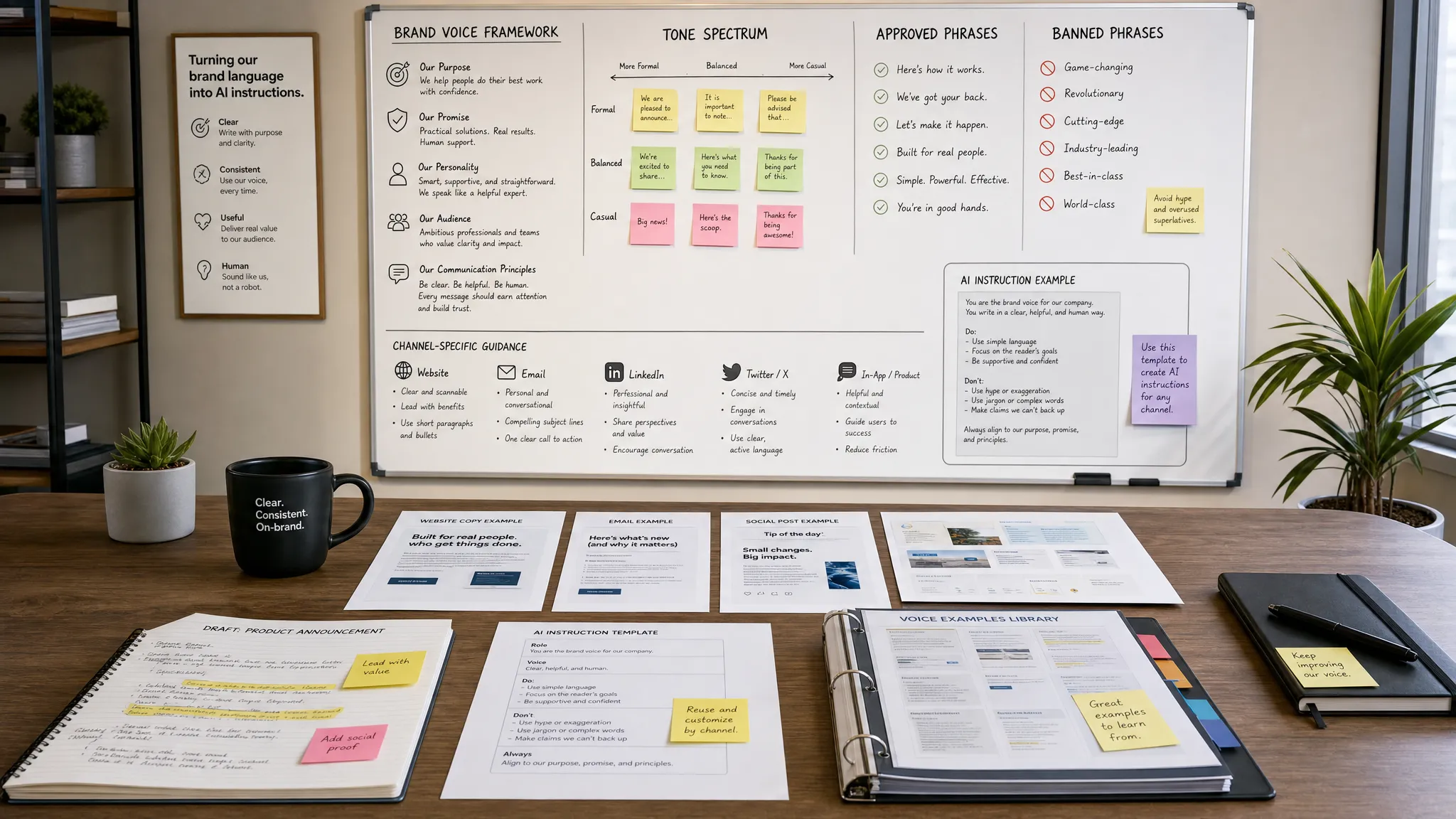
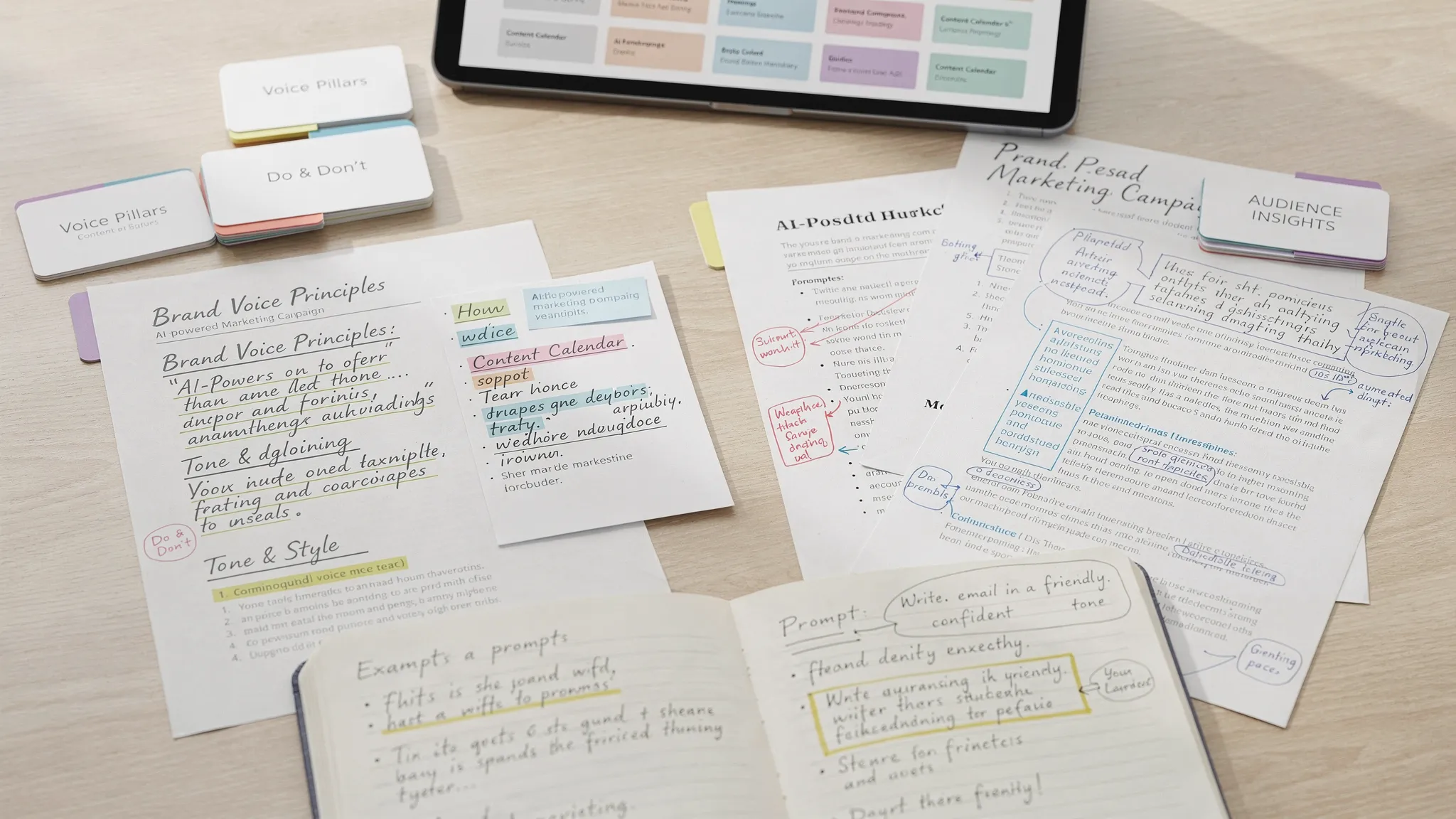
AI governance is not only about preventing bad behavior. It is also about improving quality. If every marketer prompts AI differently, results will vary wildly. Standardizing prompt inputs can improve consistency without turning creative work into a rigid script.
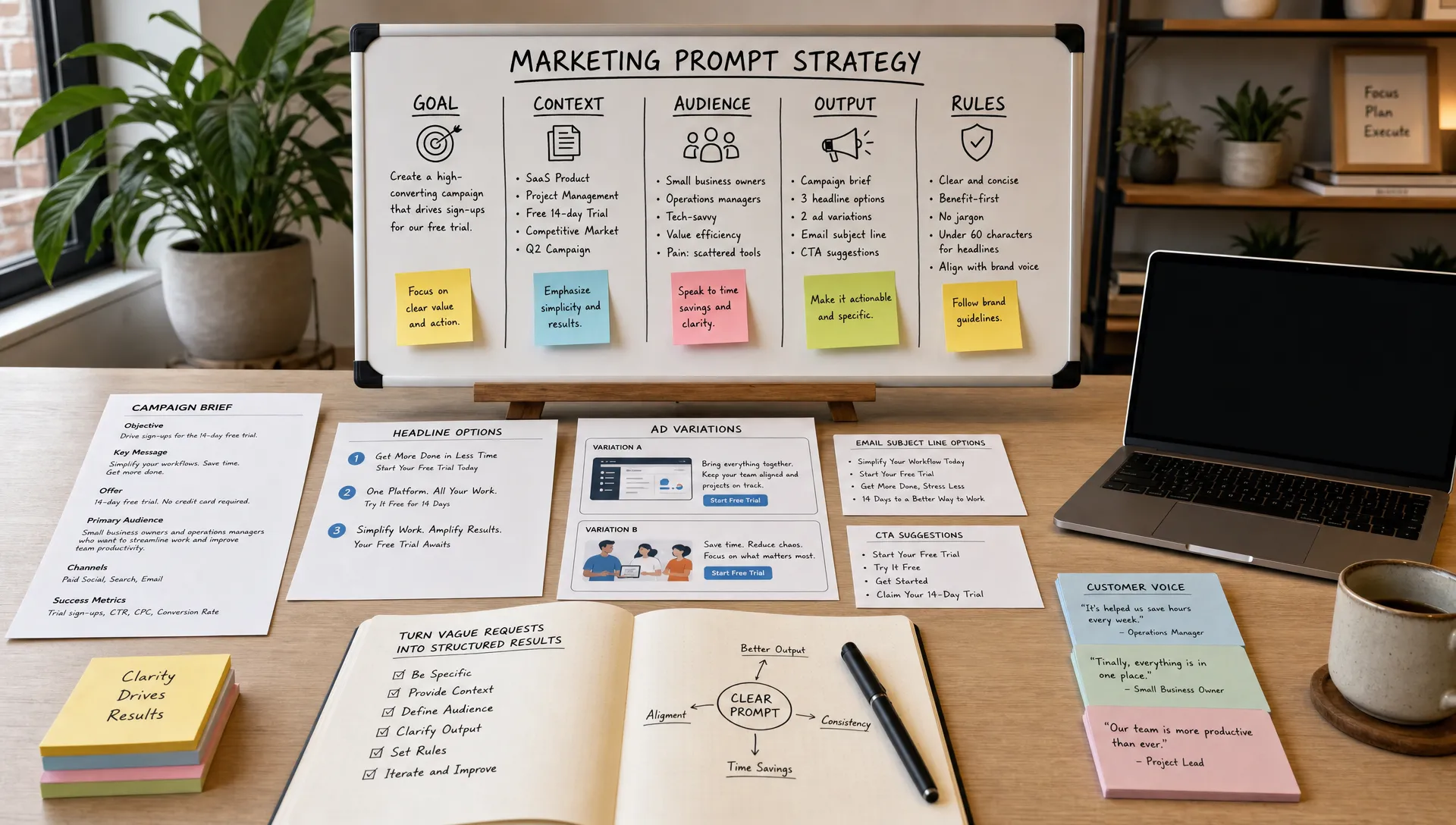
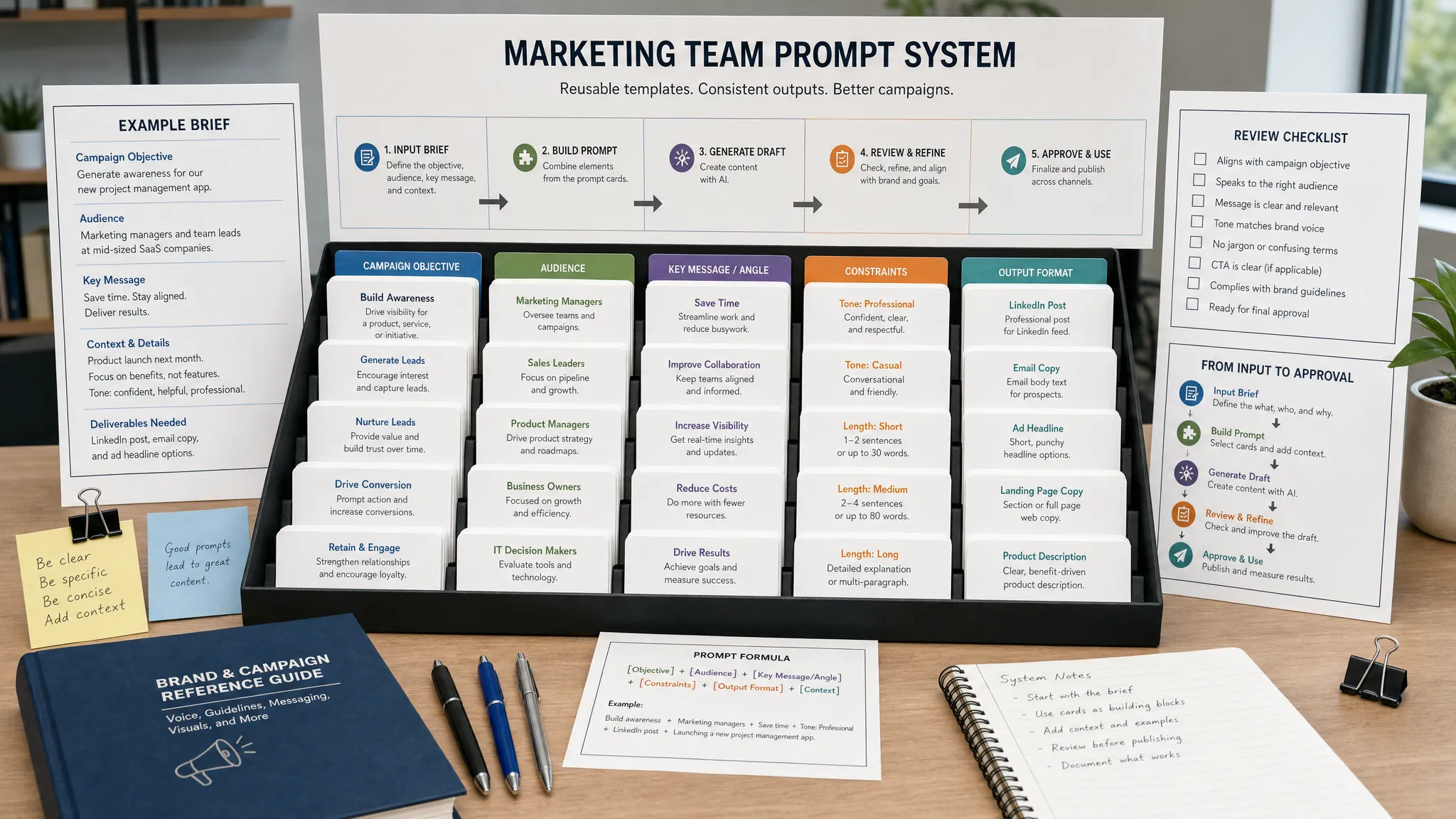
Your policy should require marketers to include the campaign objective, audience, funnel stage, offer, brand voice, source material, required claims, restricted claims, and approval requirements when using AI for content creation. The best prompts are not magic words. They are structured briefs.
The policy should also define acceptable source usage. For example, AI may help summarize approved research, but the final content owner must verify statistics, quotes, product details, pricing, legal claims, and comparisons against trusted sources. If a claim cannot be verified, it should be removed or rewritten.
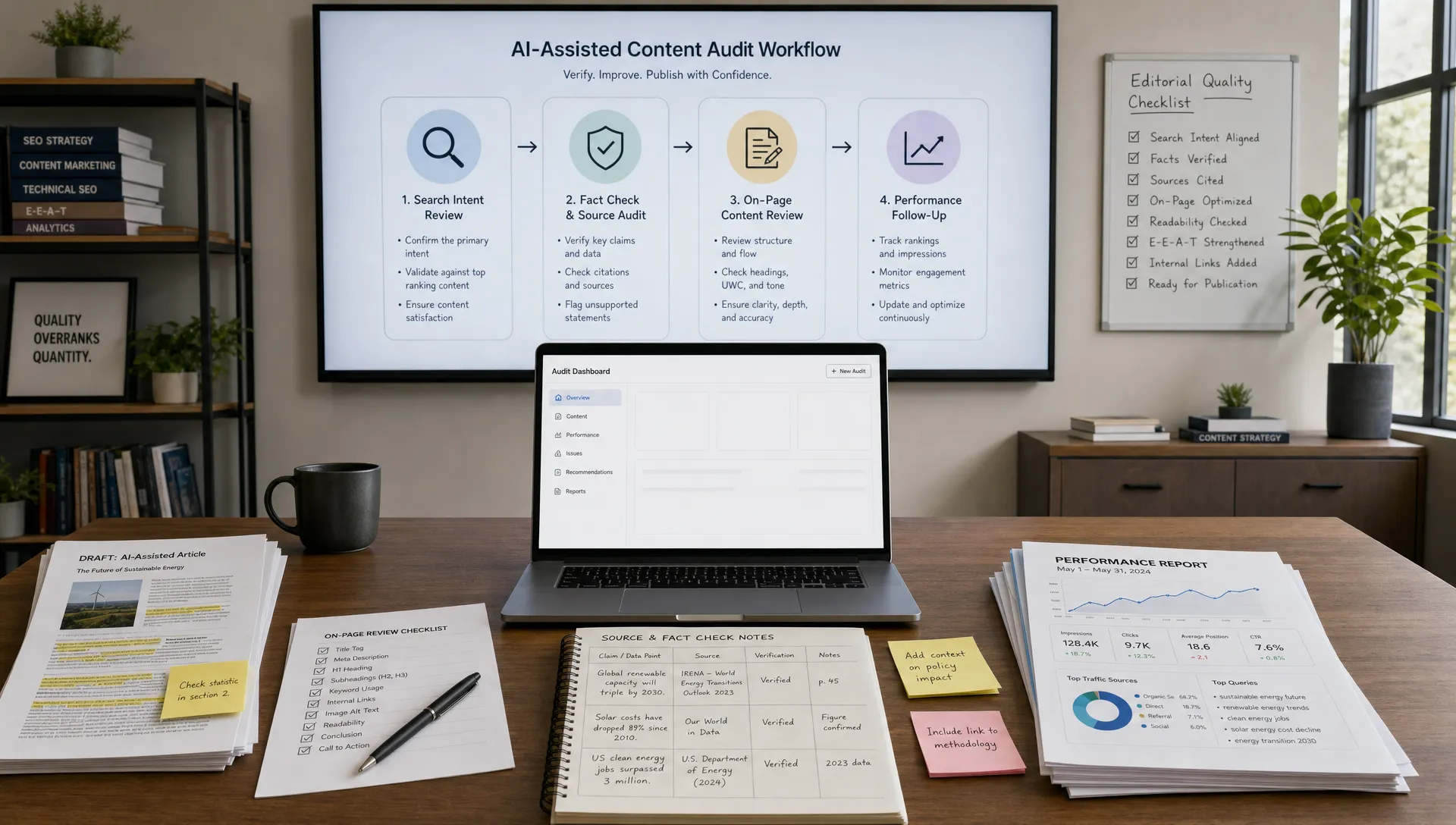
This is especially important for AI content generation at scale. More output does not automatically mean more growth. Teams that care about ROI need quality controls, review standards, and measurement. For a practical review workflow, use an AI content quality control checklist before publishing AI-assisted assets.
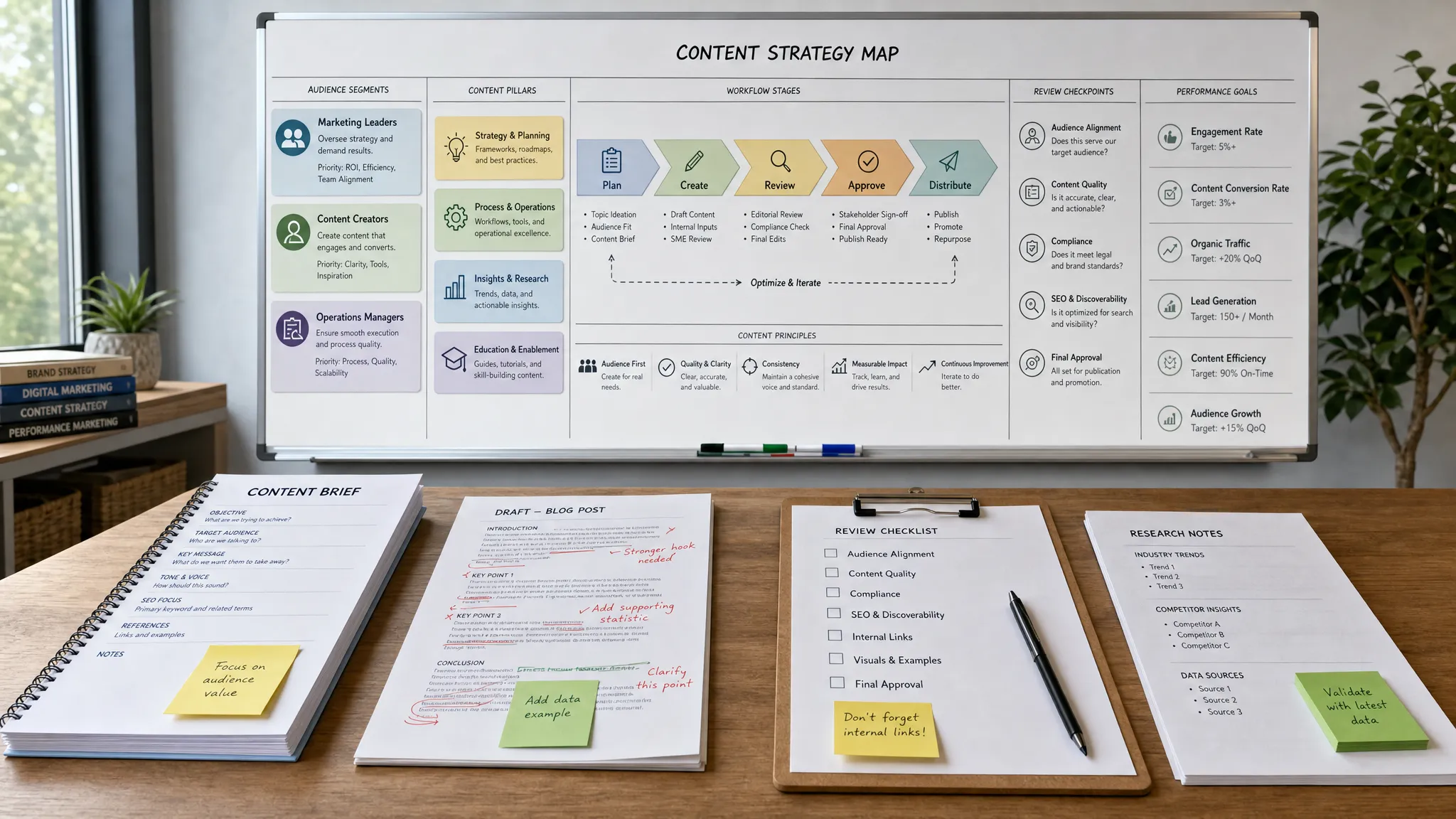
Human review is the difference between AI-assisted marketing and unmanaged automation. Your governance policy should define what must be reviewed, by whom, and before which actions.
At minimum, customer-facing AI-generated content should be reviewed for factual accuracy, brand voice, originality, compliance, accessibility, and audience fit. For high-risk content, add legal, compliance, or subject matter expert review. For paid media, review targeting, claims, landing page alignment, and disclaimers before launching campaigns.
The reviewer should not only ask whether the asset sounds good. They should ask whether it is true, useful, fair, properly sourced, and appropriate for the audience. They should also check whether the content creates promises the business cannot support.
A simple policy statement can work well:
AI may be used to assist drafting, analysis, ideation, and optimization, but no customer-facing output may be published without human review and approval by the assigned content owner.

New AI tools appear constantly, and many are easy to adopt with a credit card or browser extension. That convenience is useful, but it also creates shadow AI risk. Your policy should make it clear that teams cannot use unapproved tools for business data or customer-facing work.
A vendor review should evaluate data handling, security, model training practices, retention settings, admin controls, integrations, user permissions, export options, audit logs, and contract terms. Marketing leaders should also test output quality. A tool that looks impressive in a demo may still produce weak, generic, or risky content in real campaign workflows.
If your team is comparing platforms, governance should be part of the buying process from the start. AIMarketer Hub’s guide on how to pick the right AI marketing platform covers evaluation areas such as workflows, integrations, privacy, and quality testing.
Once a tool is approved, define who can access it, which use cases it supports, what data is allowed, and how outputs are reviewed. Approval should not be permanent. Reassess vendors when features change, contracts renew, or the tool begins supporting higher-risk workflows.
Documentation helps with accountability, troubleshooting, and compliance. But if documentation is too heavy, marketers will avoid it. The right level depends on the risk tier.
For low-risk tasks, documentation may be as simple as using approved tools and following the prompt standards. For medium-risk content, teams should save the brief, source links, draft history, reviewer, and approval date. For high-risk workflows, keep more detailed records, including the business purpose, data sources, model or tool used, review notes, legal approvals, and performance monitoring plan.
Documentation is especially important when AI affects segmentation, personalization, lead scoring, budget allocation, or recommendations. If a customer, regulator, executive, or partner asks how a decision was made, the marketing team should be able to explain the workflow in plain language.
Your policy should also require disclosure rules where appropriate. Not every AI-assisted asset needs a public label, but internal teams should understand when disclosure is legally required, contractually required, or important for trust.
Even strong governance will not prevent every mistake. Your policy should explain what marketers must do when AI contributes to an error, data issue, biased output, inaccurate claim, copyright concern, or public complaint.
An incident process should include immediate containment, owner notification, evidence collection, impact assessment, correction, customer or partner communication if needed, and a post-incident review. The goal is not to blame the marketer who used AI. The goal is to fix the issue and improve the system.
Common triggers for escalation include publishing false claims, exposing confidential information, using an unapproved tool with sensitive data, generating offensive or discriminatory content, violating platform rules, or discovering that an AI workflow is producing misleading performance insights.
The policy should also state who has authority to pause AI-driven campaigns. If the team is unsure whether an issue is serious, the default should be escalation, not silence.
A governance policy only works if people know how to apply it. Training should focus on real marketing scenarios, not abstract AI theory. Show examples of acceptable prompts, risky prompts, approved workflows, poor outputs, and strong review comments.
New hires should receive AI governance training as part of onboarding. Existing team members should complete refreshers when tools, laws, or company policies change. Contractors and agencies should also follow the policy when working on your behalf.
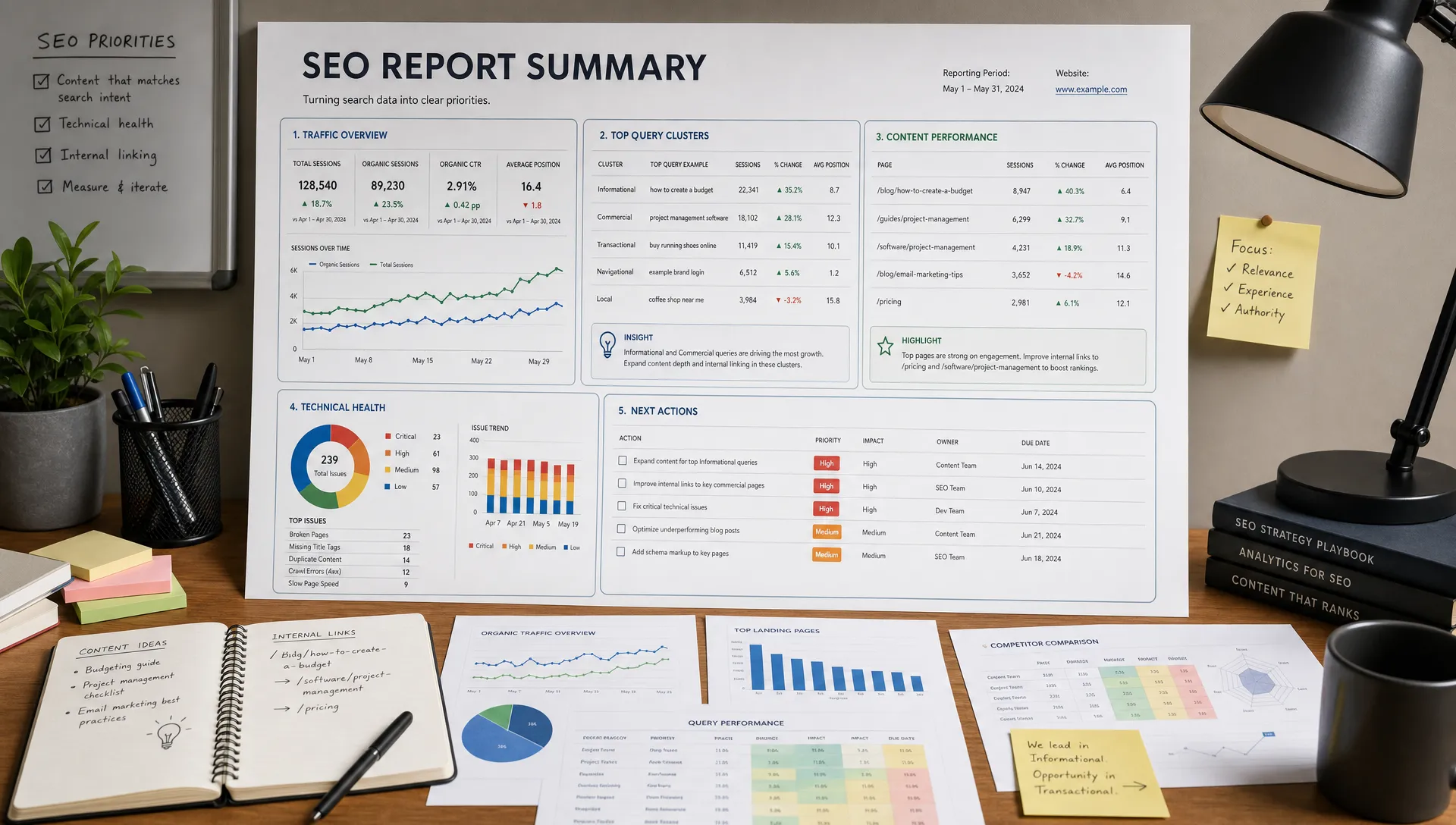
Review the policy at least twice a year, or more often if your organization is scaling AI quickly. Track practical indicators such as the number of approved AI use cases, rejected tool requests, review turnaround time, content correction rates, incidents, and campaign performance quality. Governance should make marketing better, not just safer.
Use the structure below as a starting point. Keep the first version simple, then improve it as your AI marketing maturity grows.
This template is intentionally practical. You can expand it with legal language, procurement requirements, security controls, and industry-specific rules as needed. For regulated industries, involve legal and compliance teams before the policy goes live.
The biggest mistake is writing a policy that sounds responsible but does not change daily behavior. If marketers cannot tell whether a tool, prompt, or workflow is allowed, the policy needs more examples.
Another mistake is treating AI governance as only a legal or IT issue. Marketing owns many of the outputs customers actually see, so brand, content, performance, and customer experience leaders need a seat at the table.
Finally, avoid banning AI broadly unless there is a specific reason. Blanket bans often push usage underground. Clear rules, approved tools, and practical training are more effective than pretending employees will not use AI at all.
Do small teams need an AI marketing governance policy? Yes. Small teams may not need a complex committee, but they still need clear rules for approved tools, data privacy, human review, and accountability. A one-page policy is better than informal AI use with no standards.
Who should own AI marketing governance? Marketing should usually own the day-to-day policy, but legal, privacy, security, IT, and compliance should help review higher-risk workflows. The right owner depends on company size and industry risk.
Can AI-generated content be published without disclosure? It depends on the context, jurisdiction, platform rules, contract terms, and customer expectations. Your policy should define when disclosure is required and when internal documentation is enough.
How often should an AI marketing governance policy be updated? Review it at least twice a year, and sooner when your tools, data practices, laws, or marketing workflows change. AI capabilities evolve quickly, so stale policies become risky.
What is the fastest way to start? Inventory current AI use, approve a short list of tools, define prohibited data inputs, require human review for customer-facing content, and create an escalation path for mistakes. You can mature the policy over time.
AI marketing governance is not about adding friction for the sake of control. It is about making AI useful, repeatable, measurable, and trustworthy. When marketers know the rules, they can move faster with fewer mistakes.
If you are building smarter AI marketing workflows, explore AIMarketer Hub for practical guides, prompt resources, calculators, SEO tools, and AI-powered marketing resources designed to help teams automate and grow responsibly.