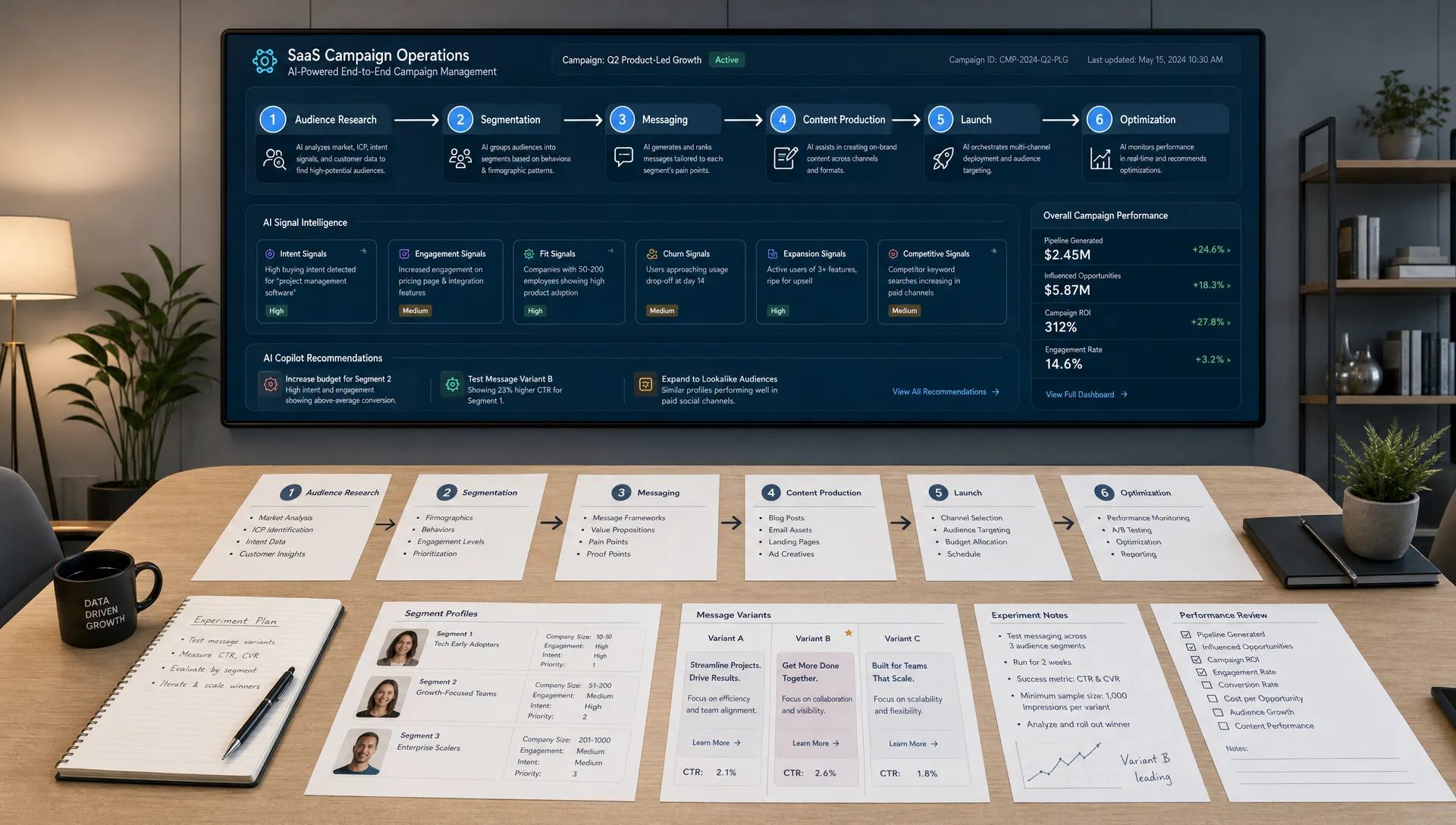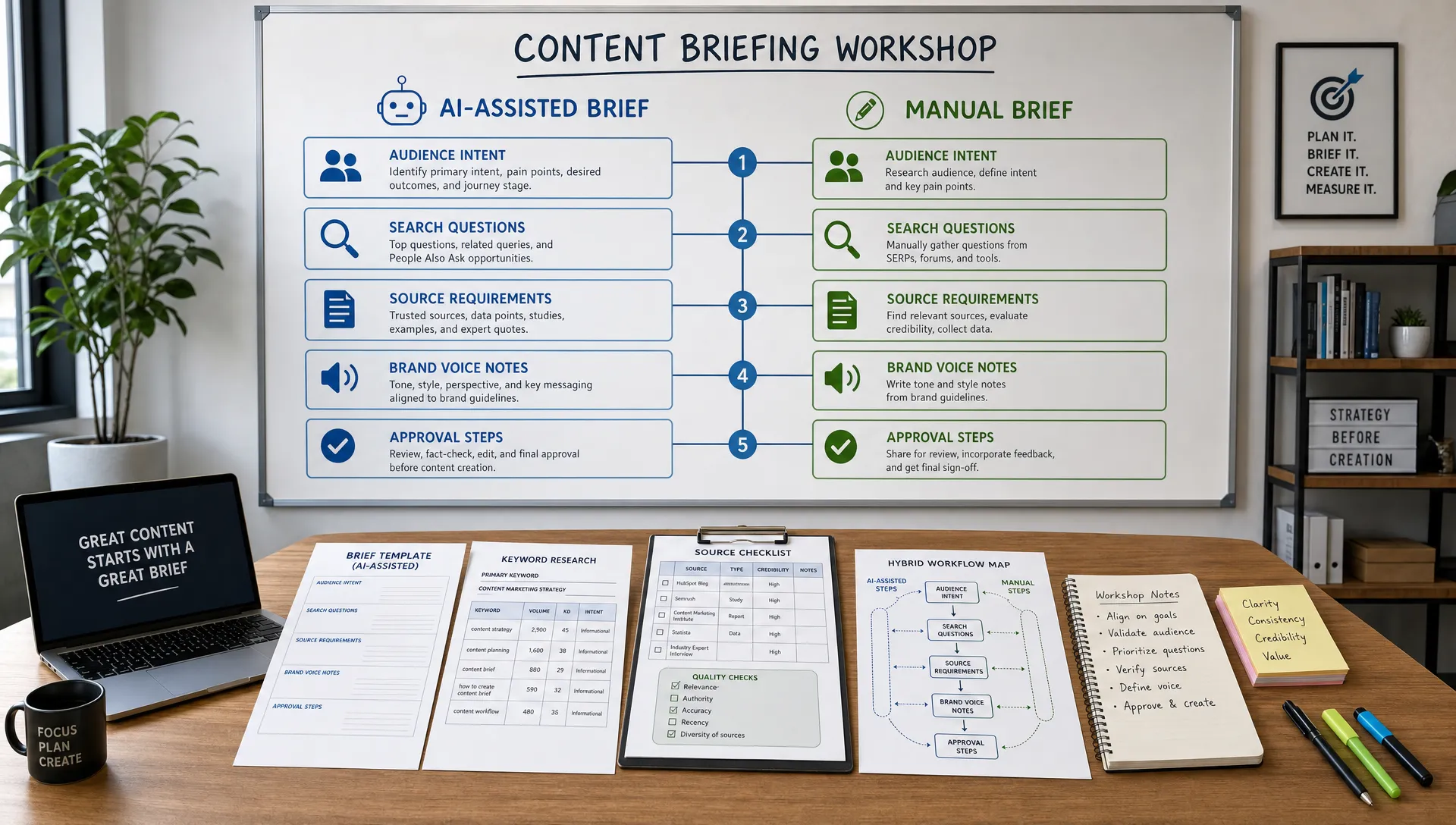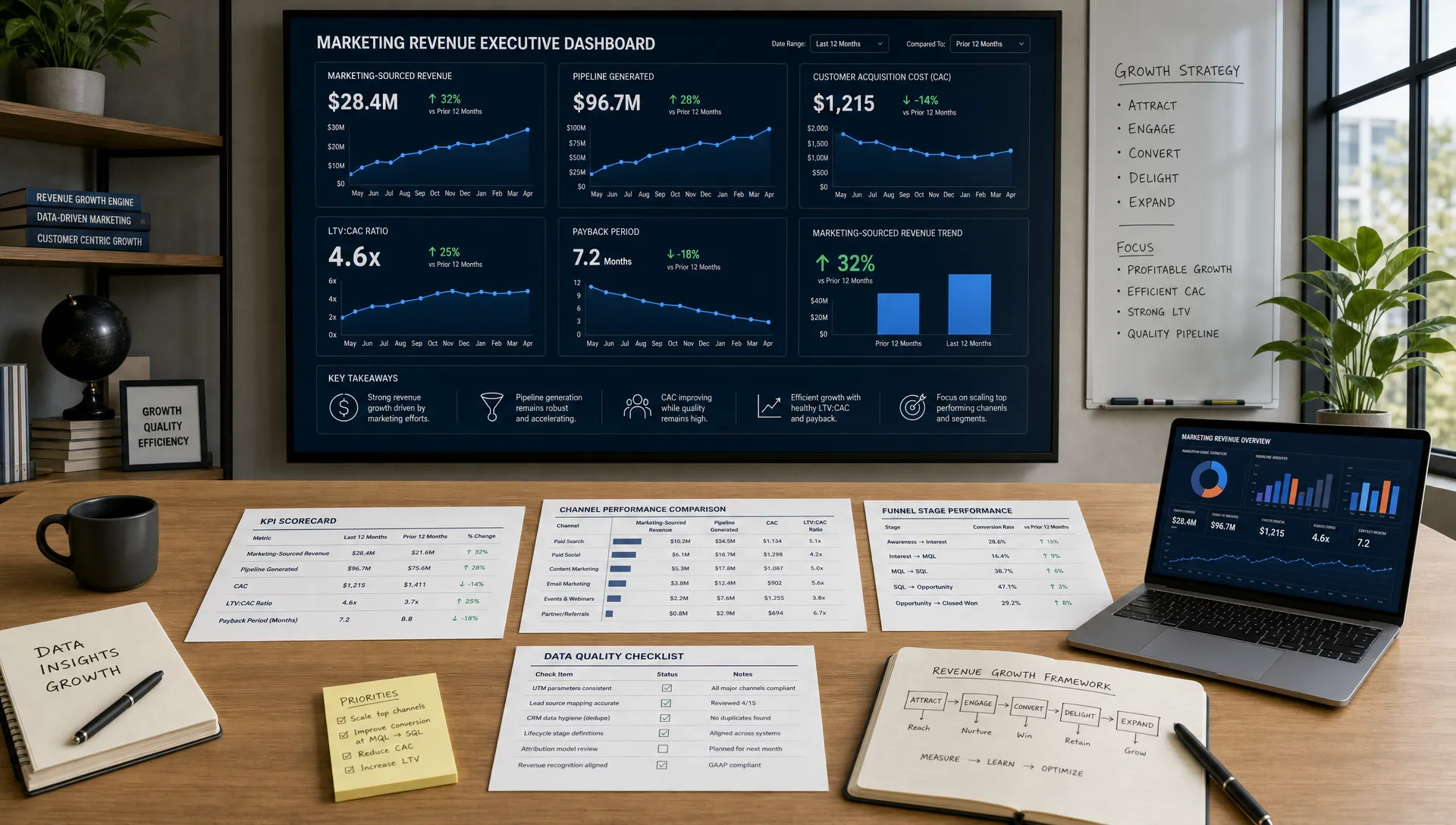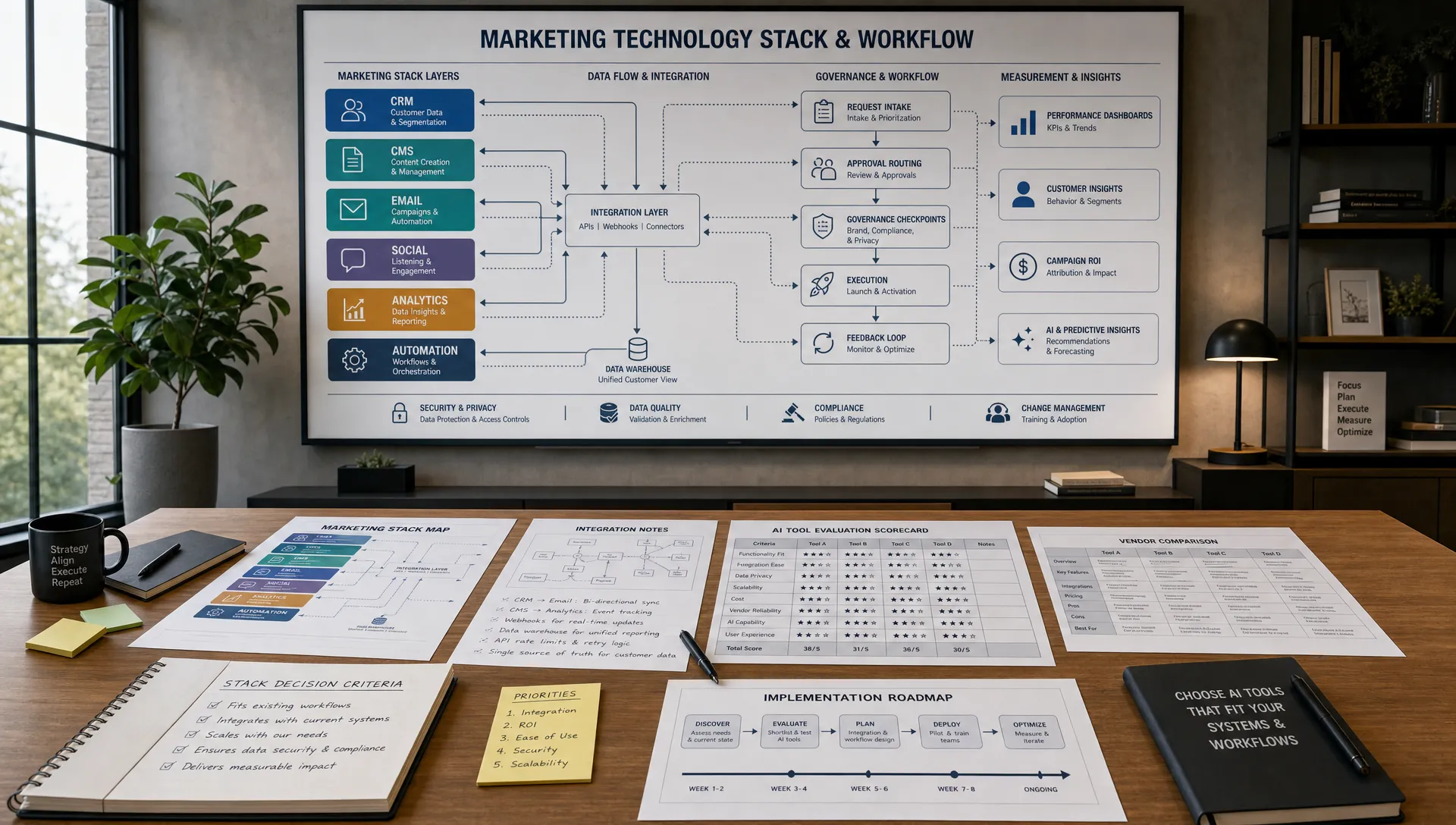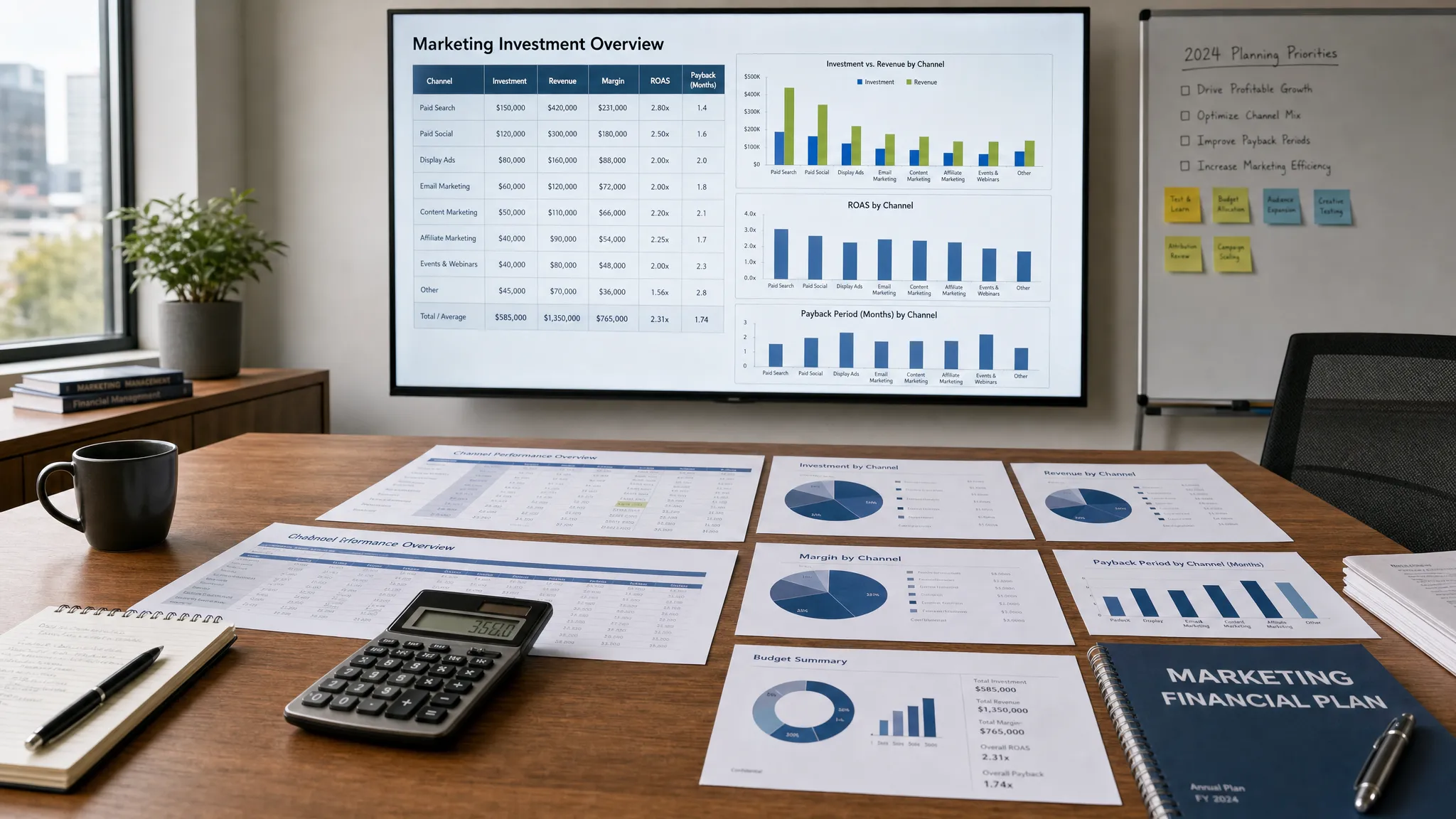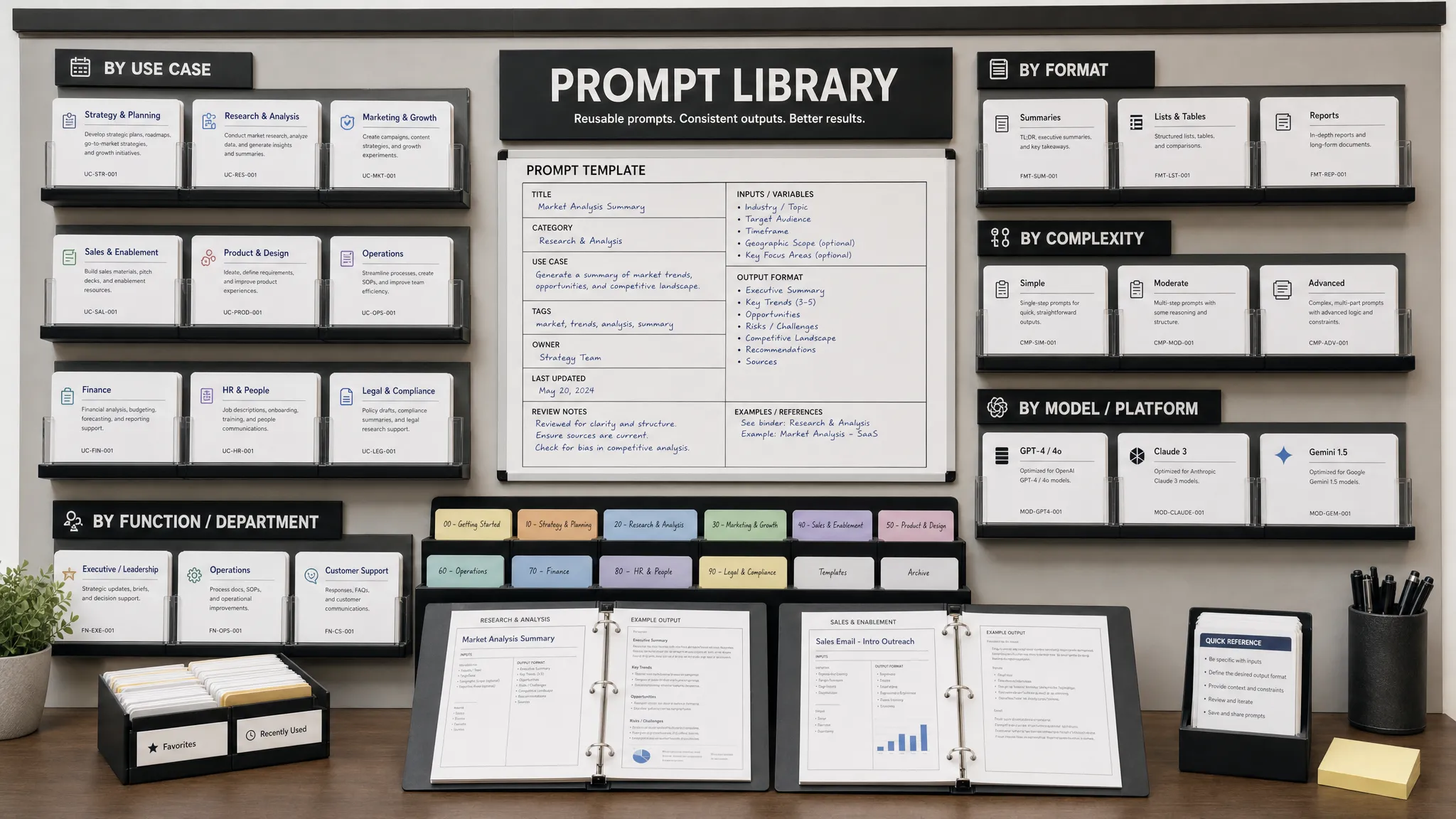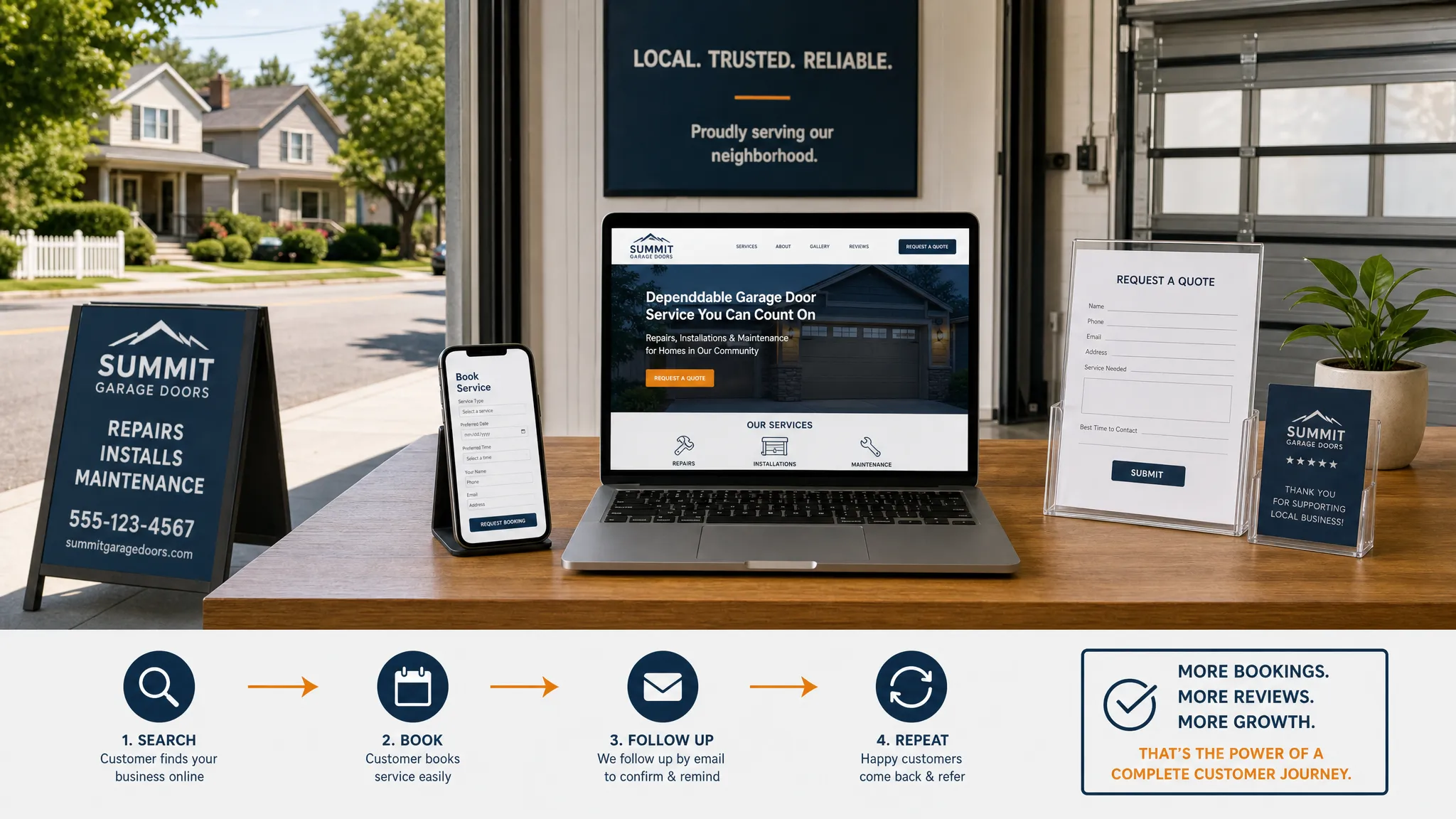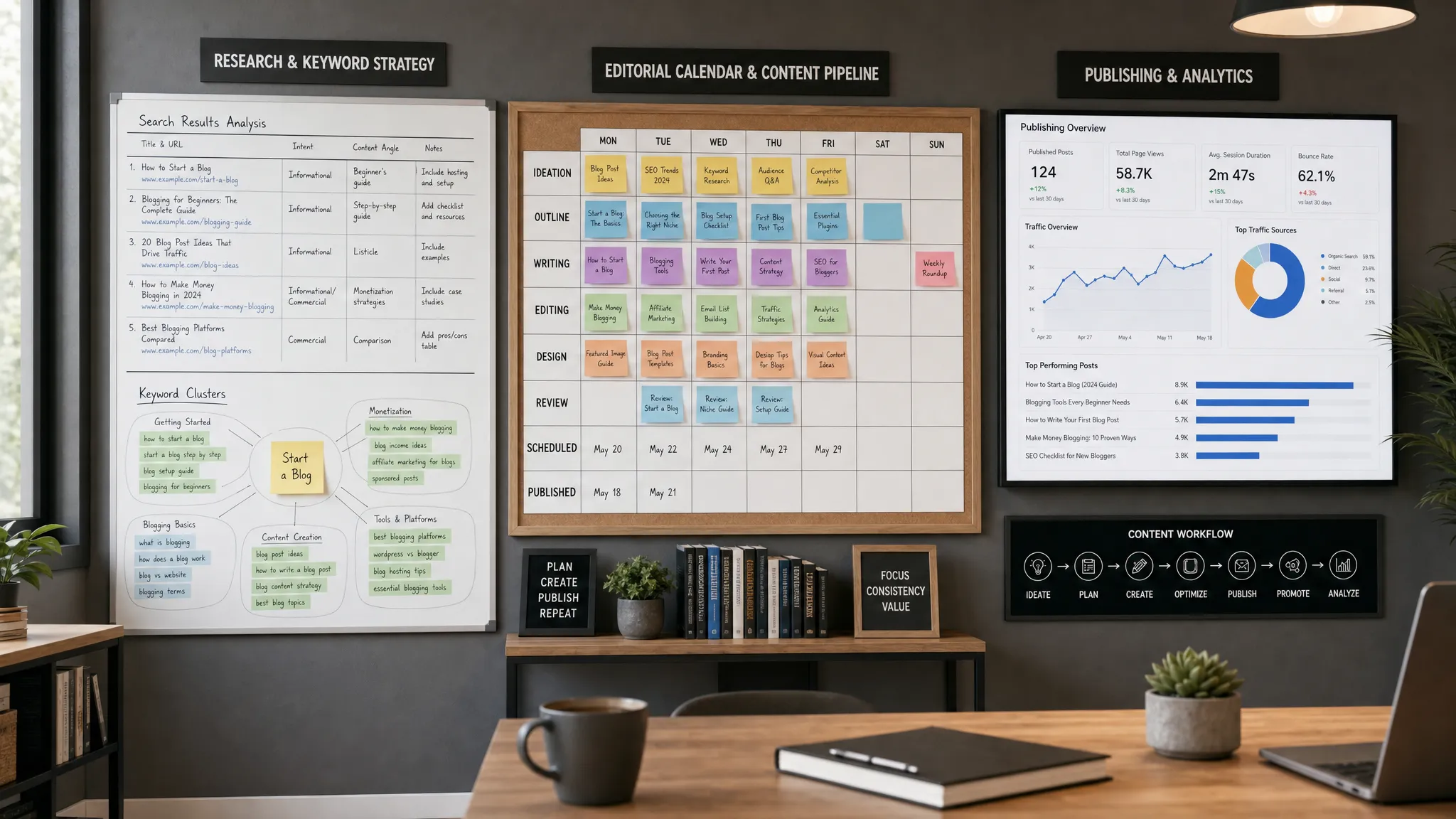
AI for customer segmentation works best when it is treated as a business setup project, not a one-off modeling experiment. The goal is not to create impressive clusters with clever names. The goal is to help marketing, sales and customer success teams decide who should receive which message, offer or experience next.
Traditional segmentation often relies on broad categories such as industry, company size, age range or purchase history. Those inputs still matter, but they miss the signals that change quickly: browsing behavior, product usage, content engagement, support issues, buying intent and churn risk. AI can combine those signals into segments that update as customers change.
The setup matters more than the model. A simple AI segmentation workflow with clean data and clear activation rules will outperform a complex model that nobody trusts or uses.
Customer segmentation should make marketing decisions easier. A useful segment is specific enough to guide action, large enough to matter and stable enough to measure.
For example, a segment called high-value customers is too broad unless the team knows what to do with it. A better segment might be renewal-ready accounts with high product adoption and low support friction. That segment suggests an action: ask for a longer contract, introduce premium features or route the account to customer success.
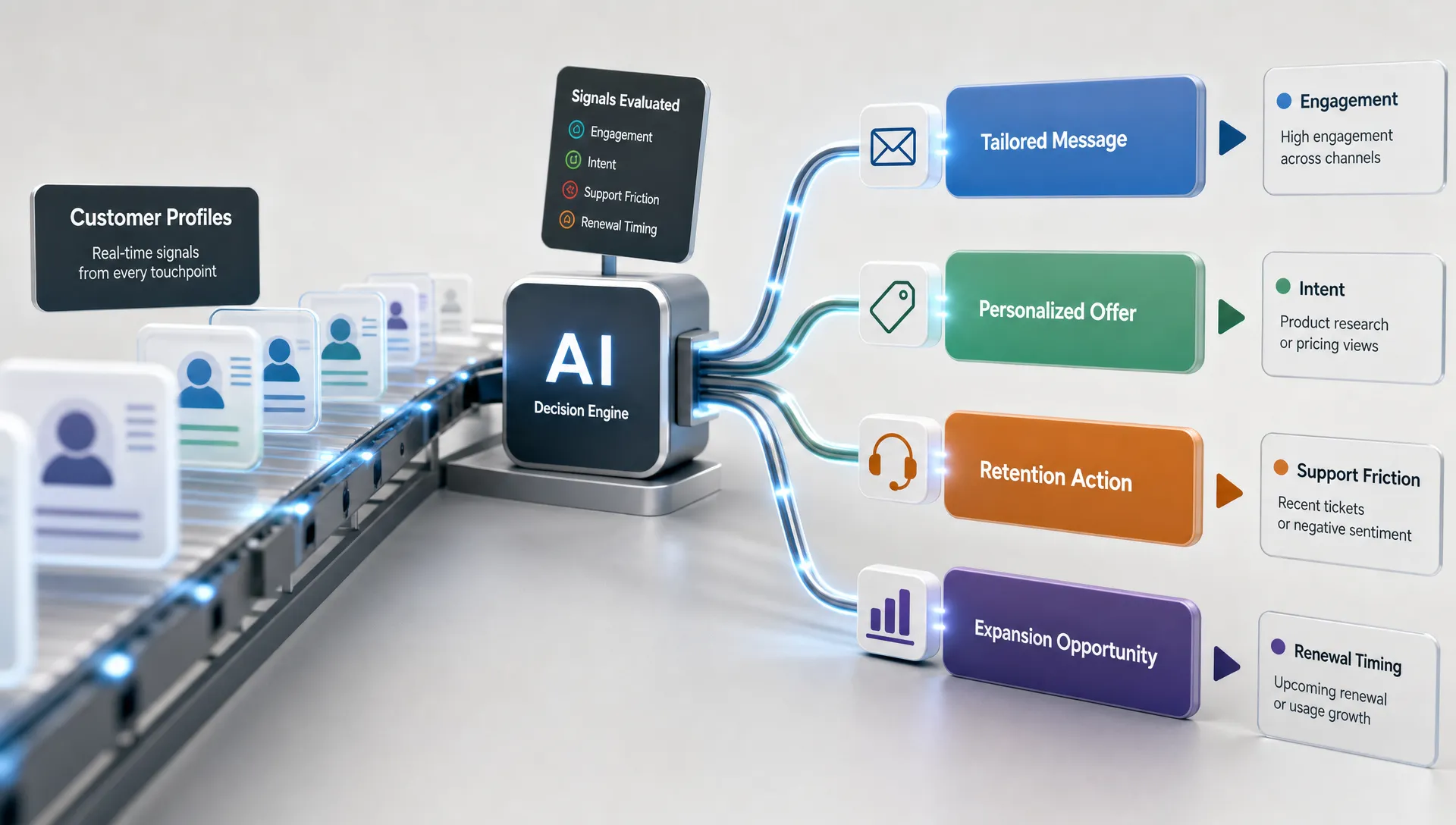
AI can help with four segmentation tasks:
The strongest programs combine AI outputs with marketing judgment. AI may identify that a cluster has high engagement, frequent product logins and rising support volume. A marketer still needs to decide whether that group needs education, account management or a retention campaign.
Start with the decision you want segmentation to improve. If the goal is vague, the output will be vague too.
A good setup begins with one primary use case. Common starting points include improving email relevance, reducing churn, prioritizing sales follow-up, increasing upsell conversion, reducing wasted ad spend or personalizing onboarding.
Before you touch a model, answer these questions:
For a B2B SaaS company, the first use case might be account expansion. The decision is which accounts should receive a premium feature campaign. The users are lifecycle marketing and customer success. The metric is expansion pipeline generated. That framing gives the AI system a practical target.
For an ecommerce brand, the first use case might be win-back campaigns. The decision is which lapsed customers should receive a discount, a new product recommendation or no promotion at all. The metric is incremental revenue after campaign costs.
Many teams skip this step and end up with segments that are technically correct but operationally awkward. Decide what you are segmenting before deciding how to segment.
In B2C, the unit may be an individual customer, household, device, subscription or loyalty account. In B2B, it may be a contact, account, opportunity, buying committee or workspace. Each choice changes the data you need and the campaigns you can run.
If you sell to businesses, account-level segmentation is often more useful for sales and customer success, but contact-level segmentation can still help with email personalization. A CFO and a product manager at the same company may belong to the same account segment but need different messaging.
If you sell to consumers, household-level segmentation can be helpful for financial services, insurance, travel or telecom. Individual-level segmentation works better for personalized product recommendations, content journeys and loyalty campaigns.
The practical rule is simple: segment at the level where someone can take action. If your CRM, ad platform or email tool can only activate contact-level audiences, do not build a segment that only exists at an abstract household level unless you also have a plan to translate it into contacts.
AI segmentation does not require every data source on day one. It needs enough reliable data to identify meaningful differences between customers.
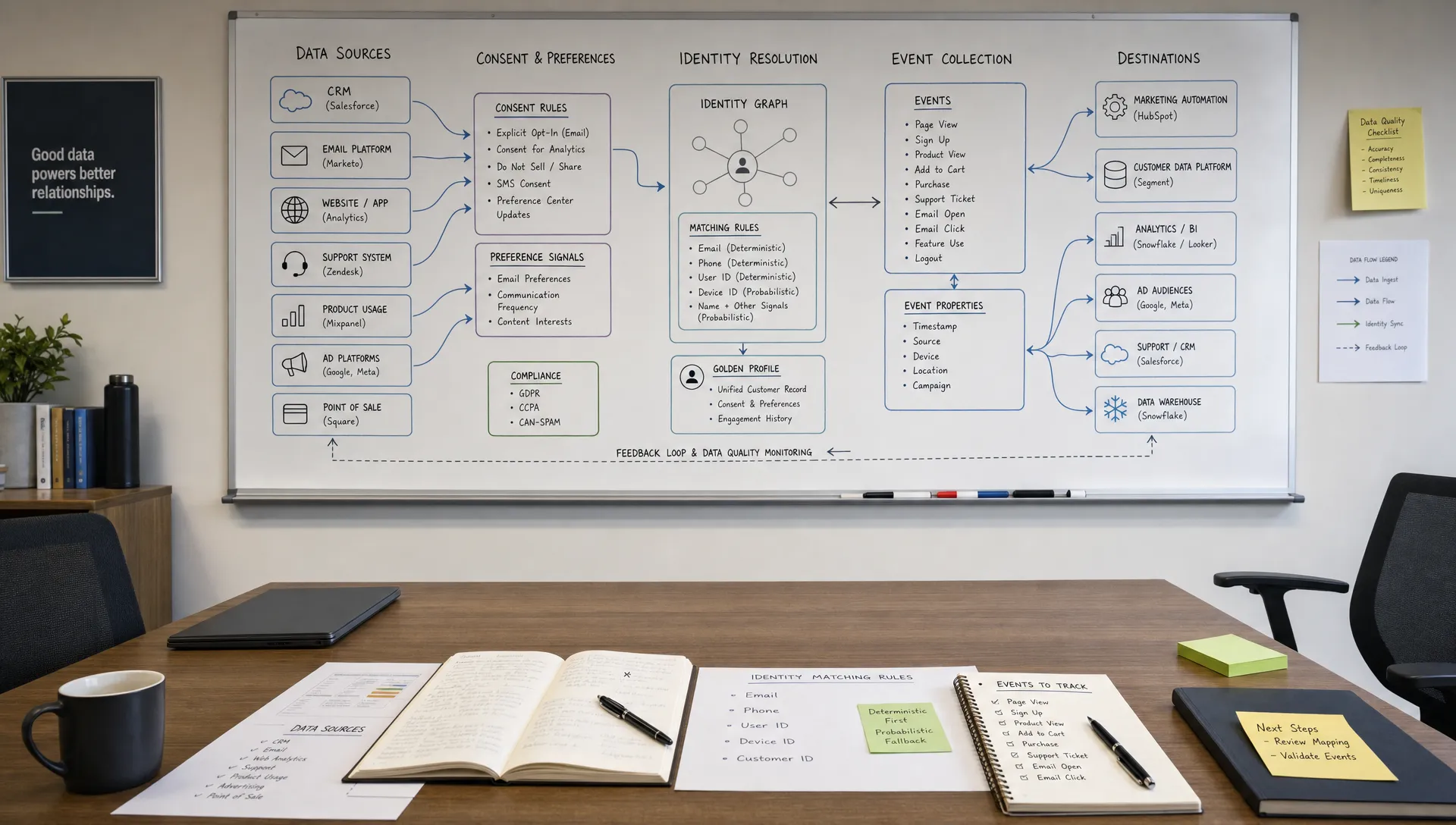
Start with a minimum viable dataset that connects customer identity, behavior, value and consent. If your data is messy, the best first move is not a more advanced model. It is making the data usable. AIMarketer Hub has a detailed guide on creating AI-ready customer data for marketing that covers cleaning, structuring and governing customer data before AI workflows depend on it.
For segmentation, prioritize signals that match the use case:
Avoid feeding every available column into the model. More data can create noise, duplicate signals and privacy risk. Choose inputs that a marketer can interpret and that the business can act on.
AI for customer segmentation is not one method. Different jobs require different approaches. Most teams should use a layered setup rather than betting everything on one algorithm.
Rule-based segmentation is the baseline. These segments use clear logic, such as customers with more than three purchases in the last 90 days or accounts with low usage after onboarding. They are easy to explain and useful for early activation.
Clustering groups customers based on similarity. It can reveal patterns across behavior, value and engagement. Clustering is helpful when you do not already know which segments exist, but it needs human interpretation because the model will not automatically know which groups are worth targeting.
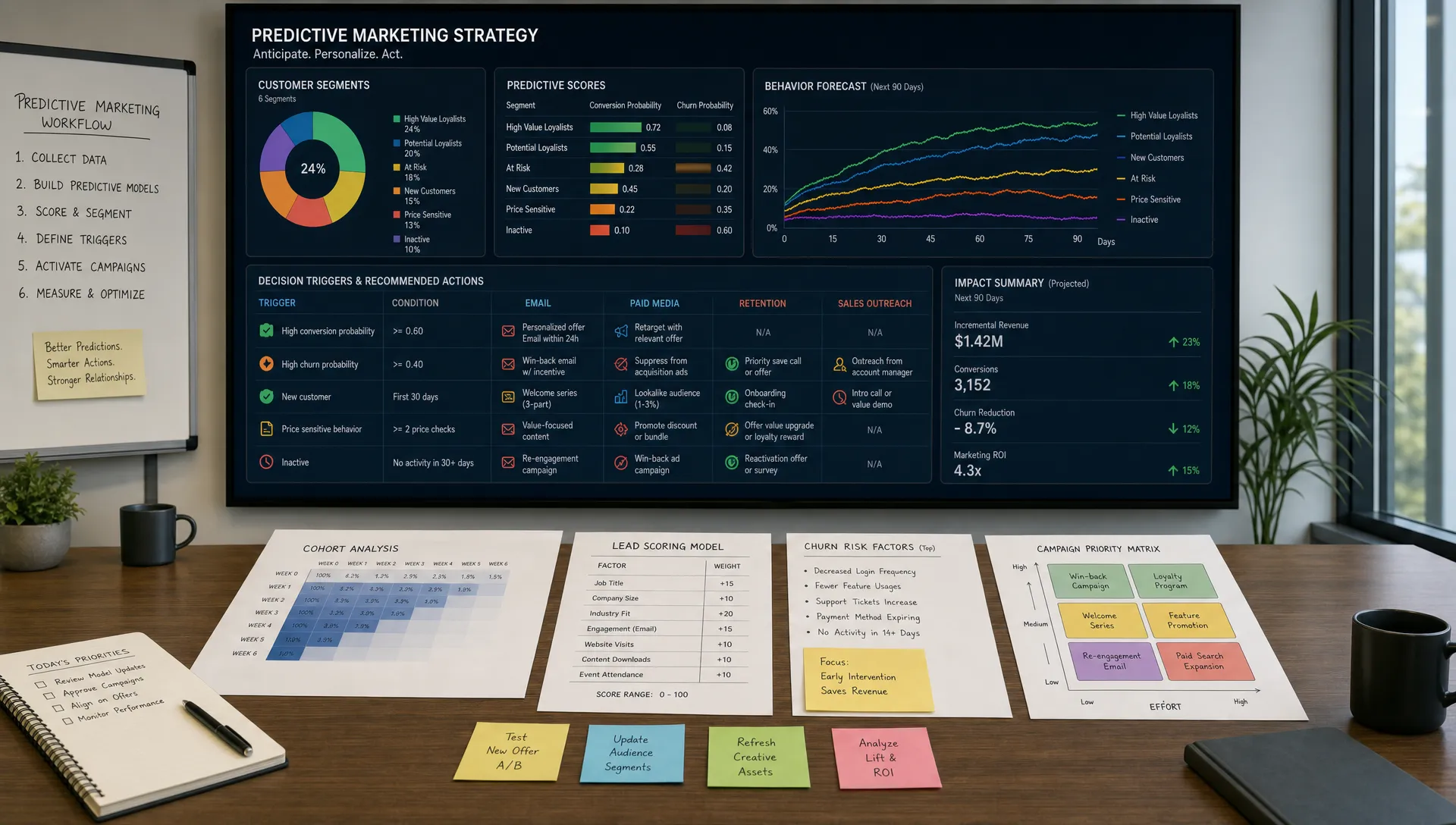
Predictive segmentation scores customers by likely outcomes, such as likelihood to buy, churn, renew or expand. This is powerful when the business has a clear historical outcome to train against.
AI text analysis is useful when important segmentation signals live in unstructured data. Support tickets, sales notes, reviews, call transcripts and survey comments can reveal motivations and objections that structured fields miss.
A practical first setup might use rules for lifecycle stage, clustering for behavior patterns and predictive scoring for next-best action. That gives the team explainability, discovery and prioritization without overcomplicating the system.
In AI segmentation, a feature is a variable the model uses to compare customers. Good features translate raw activity into meaningful signals.
Instead of using raw pageview counts, create features such as pricing page visits in the last 14 days, product comparison content viewed or return visits after a demo request. Instead of total email opens, use recent engagement trend or engagement with bottom-funnel content.
Useful feature categories include recency, frequency, monetary value, engagement depth, product adoption, buying intent, service friction and lifecycle movement. For B2B, add account fit signals such as industry, employee count, tech stack, funding stage or region if those fields are relevant and permitted.
Watch for data leakage. If you build a churn risk segment using cancellation status as an input, the model is not predicting churn. It is reading the answer after the fact. The same problem happens when teams use sales opportunity stage to predict sales readiness. Use signals that would have been available before the outcome.
Feature quality is also a governance issue. If two systems define active customer differently, the model may behave inconsistently. Align definitions before activation, especially for metrics like active account, qualified lead, renewal risk and high value.
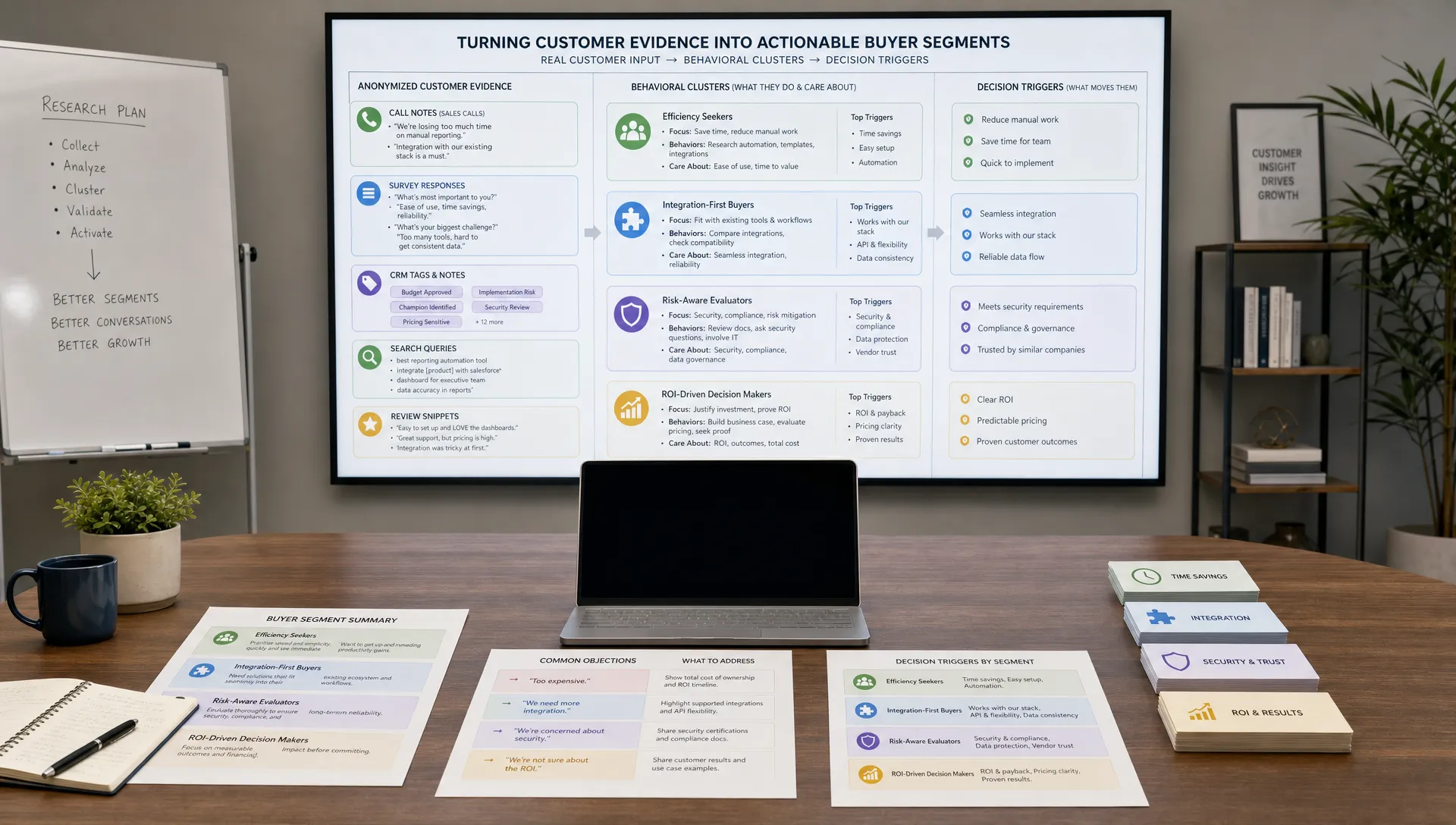
Once the model groups or scores customers, translate the output into a format the business can use. Do not stop at cluster 1, cluster 2 and cluster 3. Create segment cards that explain what each group means.
A useful segment card includes:
Naming matters, but accuracy matters more. Avoid catchy labels that hide the actual behavior. Deal researchers with high pricing intent is more useful than busy evaluators. Loyal low-margin repeat buyers is more useful than brand fans if the margin issue affects the campaign strategy.
AI can help summarize segment traits and draft segment cards, but a marketer or analyst should review every output. If your team also uses personas, keep the distinction clear. Segments are audience groups for action and measurement. Personas are narrative profiles that help teams understand motivations. If you need that layer, use real evidence and follow a structured process for creating buyer personas with AI rather than turning model clusters into fictional characters.
Validation protects the team from attractive but useless segments. A segment can look interesting in a dashboard and still fail in-market.
Check each segment against six practical criteria. It should be large enough to justify effort, distinct from other segments, stable enough to act on, easy enough to explain, reachable in your marketing tools and tied to a measurable business outcome.
Then run a small activation test. For example, if AI identifies a segment of customers with high upgrade potential, send a tailored campaign to that group and compare results against a relevant control group. Measure incremental lift, not just total conversions. A segment that already converts at a high rate may not need additional budget.
Qualitative validation helps too. Ask sales, support or customer success teams whether the segment matches what they see in real conversations. If the model says a group is price sensitive but sales notes show implementation anxiety, the campaign message should change.

Segmentation only creates value when it changes execution. Build activation rules for each channel instead of handing teams a static audience list.
Email can use segments to adjust message angle, cadence, offer and educational content. Paid media can use segments for audience exclusions, lookalike seed selection and budget prioritization. Website personalization can adjust proof points, calls to action or recommended content. Sales can use segments to prioritize outreach and tailor talking points. Customer success can use segments to identify onboarding risk or expansion opportunities.
For B2B teams, segmentation often overlaps with lead and account prioritization. If your next step is routing or scoring prospects, connect segmentation with a simple approach to AI lead scoring so sales receives clear signals rather than another dashboard to interpret.
Activation should include suppression rules. A high-intent segment may still exclude customers with open support escalations, recent refunds, expired consent or active sales conversations. These rules prevent AI from creating bad customer experiences at scale.
Segments should not be refreshed randomly. Match the cadence to the decision.
A daily refresh may make sense for cart abandonment, trial activation and sales intent. Weekly refreshes often work for lifecycle marketing, onboarding and churn risk. Monthly or quarterly refreshes can be enough for strategic planning, persona research, loyalty tiers and account planning.
Assign ownership across three roles. Marketing owns the use case and message. Data or operations owns data quality and workflow reliability. Legal, privacy or compliance owns acceptable data use. In smaller teams, one person may cover multiple roles, but the responsibilities still need to be explicit.
Document what happens when a customer moves between segments. If someone shifts from new trial user to onboarding risk, should they leave the welcome sequence immediately? If an account moves from expansion-ready to support-sensitive, should sales outreach pause? These transition rules are where segmentation becomes real workflow automation.
AI segmentation is not finished after launch. Customer behavior changes, campaigns change and data pipelines break. Monitoring should cover both marketing performance and technical reliability.
Track segment size, conversion rate, revenue impact, unsubscribe rate, complaint rate and movement between segments. Also watch model drift, which happens when the data patterns used to create segments no longer match current customer behavior. Drift can come from seasonality, pricing changes, new competitors, product updates or changes in acquisition channels.
Technical monitoring matters because segmentation depends on timely data. If web events stop flowing, consent updates fail or CRM syncs break, customers can receive irrelevant messages. For teams that depend on marketing sites, APIs and customer-facing systems to trigger segmentation workflows, pairing campaign monitoring with uptime and network monitoring can help catch outages before they damage customer journeys.
Create a review rhythm. A monthly segmentation review is enough for many teams. Look at which segments are growing, which are shrinking, which campaigns are improving and which assumptions no longer hold. Retire segments that no longer drive action.
Imagine a SaaS company wants to increase expansion revenue from existing customers. The team defines the segmentation unit as account, not contact, because customer success manages expansion at the account level.
The initial dataset includes plan type, number of active users, feature adoption, support tickets, renewal date, product usage trend, billing value and email engagement. The team excludes sensitive free-text notes from the first version and confirms consent rules for marketing outreach.
The first model creates four usable segments. One group has high adoption, low support friction and steady growth in active users. This becomes the expansion-ready segment. Another group has moderate adoption but frequent help center activity, suggesting education is needed before any upsell. A third group has declining usage and an approaching renewal date, so it becomes a retention segment. A fourth group has low adoption and low engagement, so the team routes it to a reactivation journey.
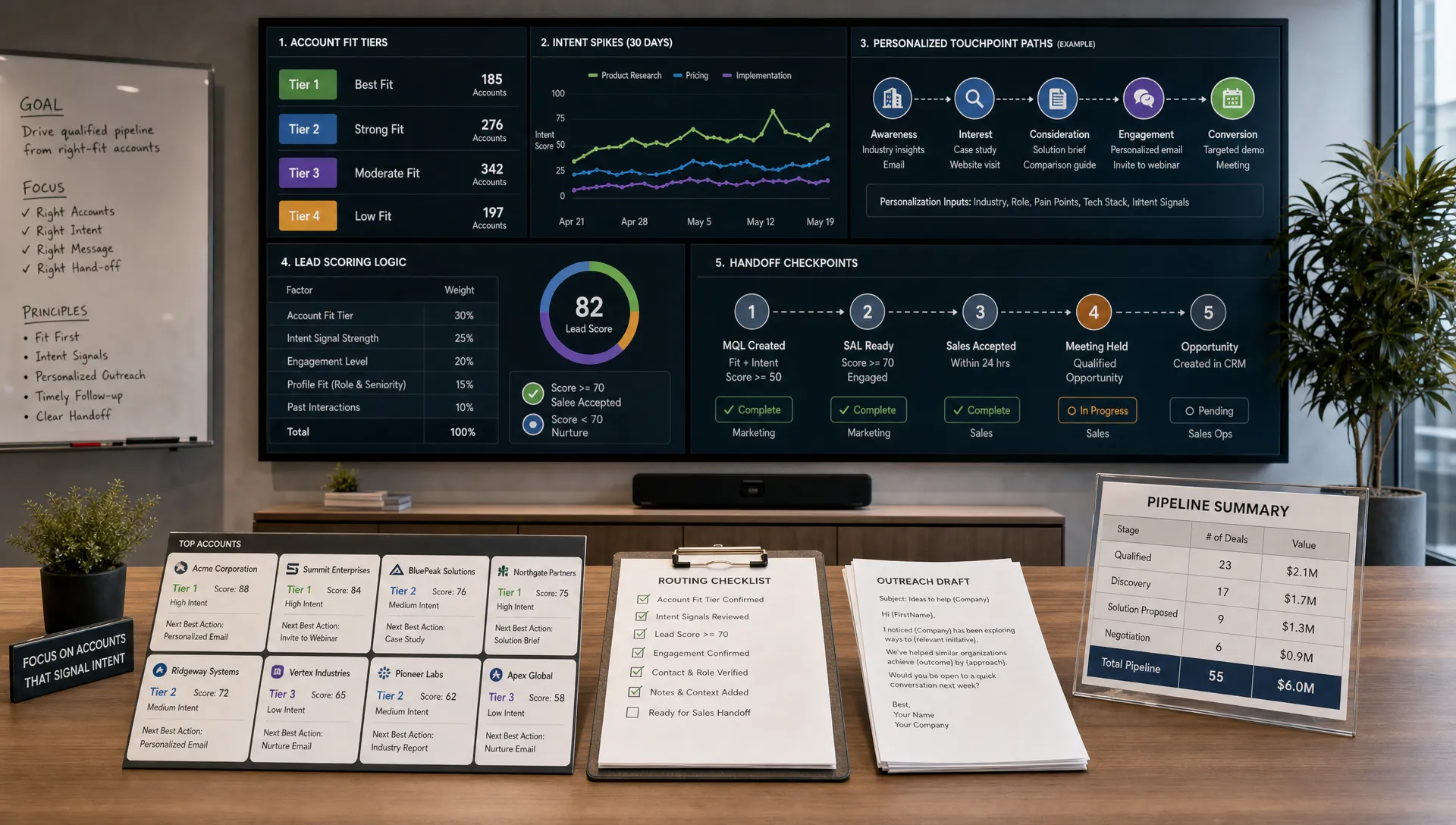
The activation plan is different for each segment. Expansion-ready accounts receive premium feature content and customer success outreach. Education-needed accounts receive role-specific tutorials. Retention-risk accounts are reviewed before marketing sends any promotional message. Reactivation accounts enter a product value campaign with lower frequency.
The team measures expansion pipeline, renewal impact, email engagement, support ticket volume and customer success feedback. After two months, the segments are adjusted because one group is too small and another contains accounts from two very different industries. That refinement is normal. AI segmentation improves through controlled use, not through a perfect first launch.
The biggest mistake is oversegmentation. If your team creates 18 segments but only has three campaign paths, most of those segments will never be used. Start with fewer groups and expand only when the extra detail changes execution.
Another mistake is treating AI as a fix for weak data. AI can infer patterns, but it cannot reliably correct broken identity resolution, missing consent fields or inconsistent lifecycle definitions. Bad data becomes confident-looking bad segmentation.
Teams also fail when they activate segments without a measurement plan. If every high-value group receives a campaign and there is no control group, you may not know whether AI improved results or simply targeted customers who would have converted anyway.
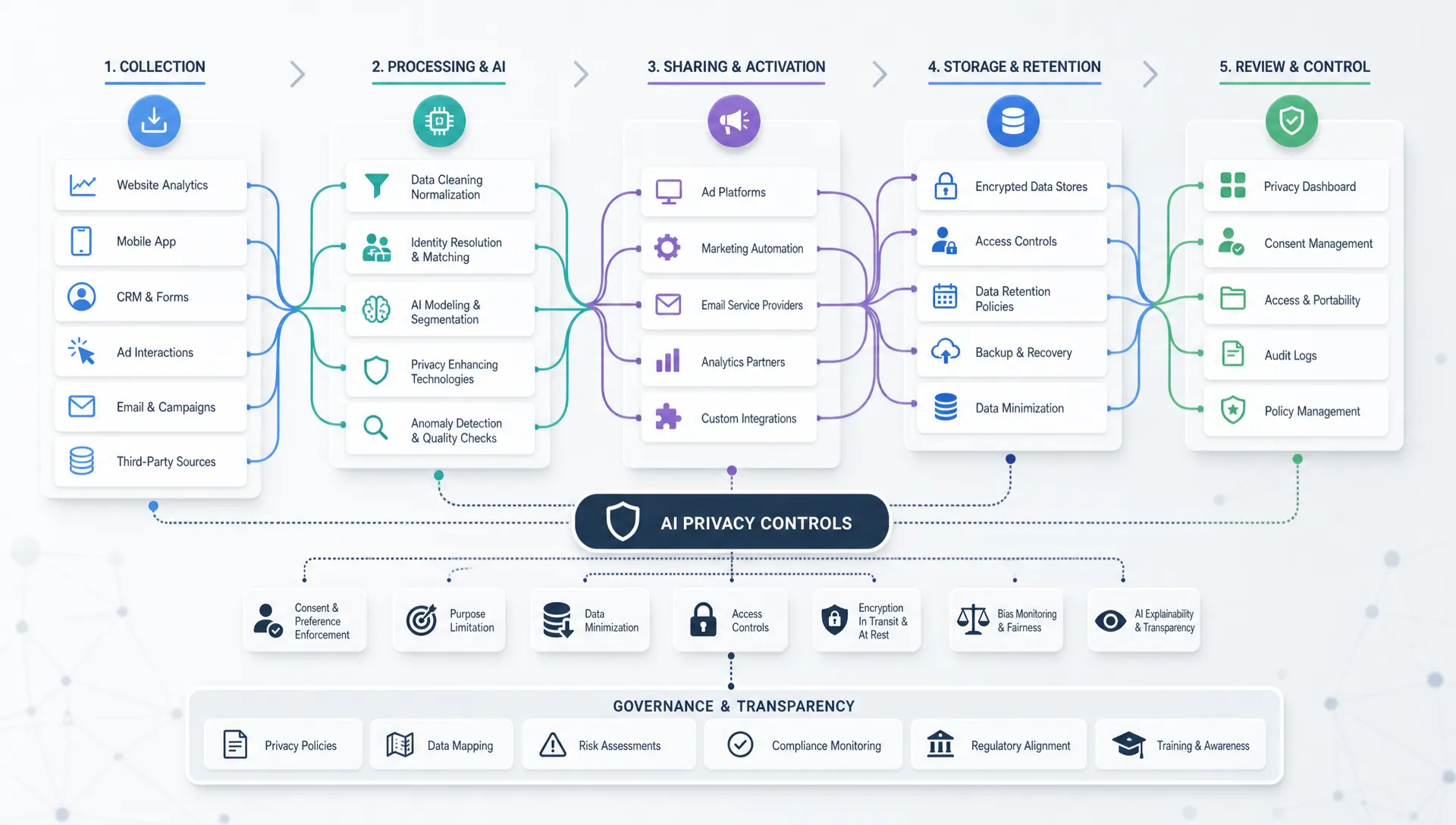
Privacy can also be mishandled. Segmentation often combines behavioral, demographic and transactional data, which raises consent, fairness and compliance questions. Review what data is allowed, how long it can be kept and whether customers can reasonably expect it to be used in that way. For a deeper operational checklist, see AIMarketer Hub's practical compliance guide for AI marketing data privacy.
You do not need a year-long transformation to start using AI for customer segmentation. A focused 30-day pilot is often enough to prove value.
In week one, define the business decision, success metric, segmentation unit and activation channel. Keep the first use case narrow. In week two, prepare the minimum viable dataset and confirm data definitions, consent rules and exclusions. In week three, build the first segmentation model or workflow, then turn the output into segment cards. In week four, run a controlled activation test and review results with marketing, sales, operations and compliance stakeholders.
The first pilot should answer one question: does AI help the team make a better audience decision than the current approach? If the answer is yes, improve the workflow and expand it. If the answer is no, inspect the use case, data quality and activation plan before changing tools.
What is AI customer segmentation? AI customer segmentation uses machine learning, predictive models or language models to group customers based on shared behaviors, needs, value, intent or risk. The purpose is to improve marketing actions such as personalization, targeting, retention and sales prioritization.
Do I need a large data science team to use AI for customer segmentation? Not always. Many teams can start with marketing automation data, CRM fields, analytics exports and AI-assisted analysis. A data specialist helps with quality and governance, but the first pilot can be narrow if the use case is clear.
How many customer segments should we create? Start with three to six actionable segments. If your team cannot create different messages, offers or workflows for each group, you probably have too many segments.
How often should AI segments refresh? Match refresh cadence to the action. Sales intent and cart behavior may need daily updates. Lifecycle, onboarding and churn segments often work with weekly updates. Strategic planning segments may only need monthly or quarterly refreshes.
Can AI segmentation replace buyer personas? No. Segments and personas serve different purposes. Segments help teams target and measure audience groups. Personas help teams understand motivations, objections and context. The best programs use segmentation for action and personas for messaging insight.
What is the biggest risk in AI customer segmentation? The biggest operational risk is activating inaccurate or inappropriate segments at scale. Reduce that risk with clean data, consent checks, human review, small tests, monitoring and clear ownership.
AI for customer segmentation becomes valuable when it is connected to decisions, channels and measurement. Start with one use case, use the smallest reliable dataset, validate the segments with real campaigns and refine the workflow as results come in.
AIMarketer Hub provides practical AI marketing guides, prompt resources, SEO tools and workflow-focused resources for teams that want to automate and optimize without losing control of strategy. Use those resources to plan your first segmentation pilot, document your segment cards and turn customer insight into measurable marketing action.