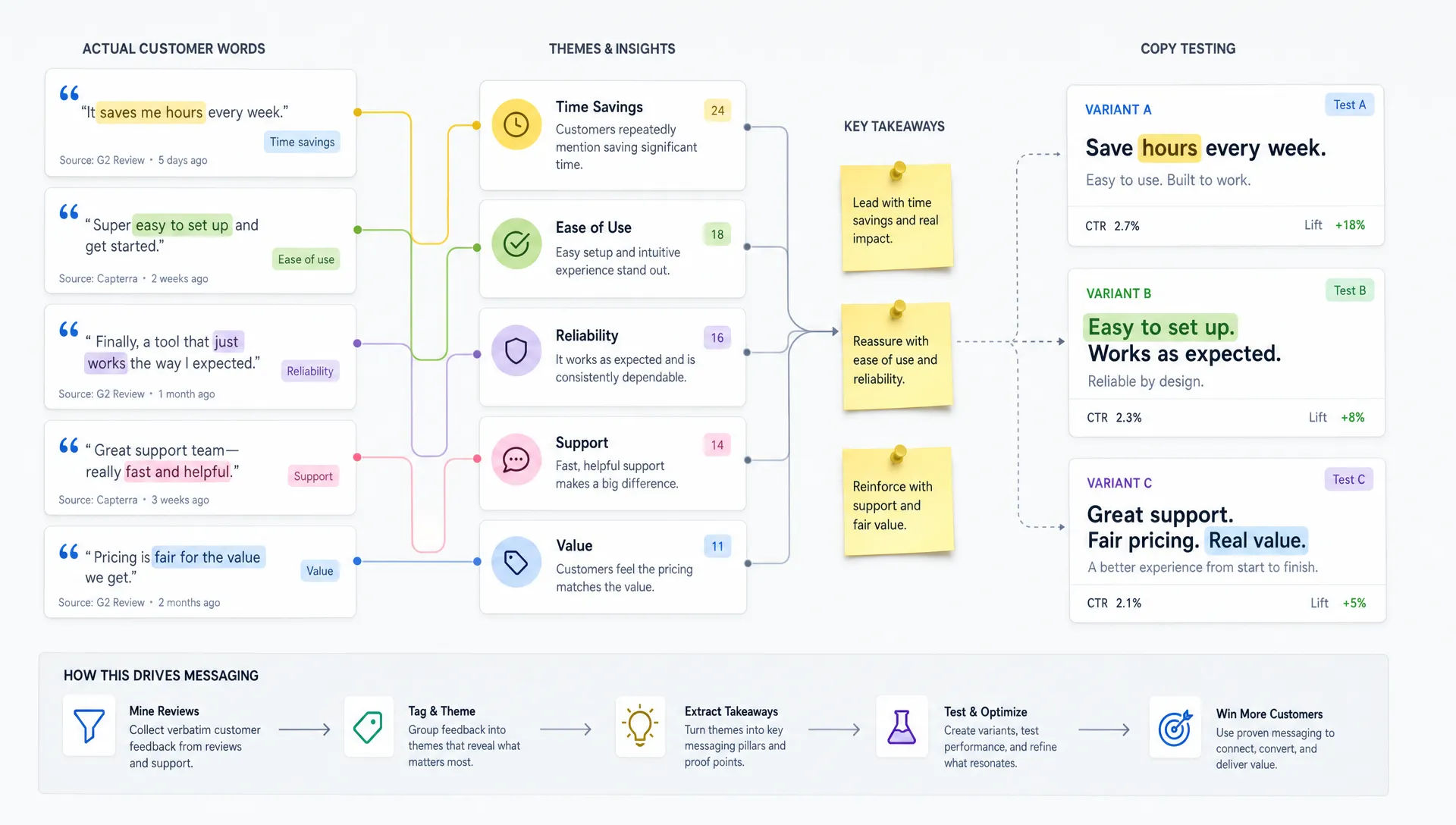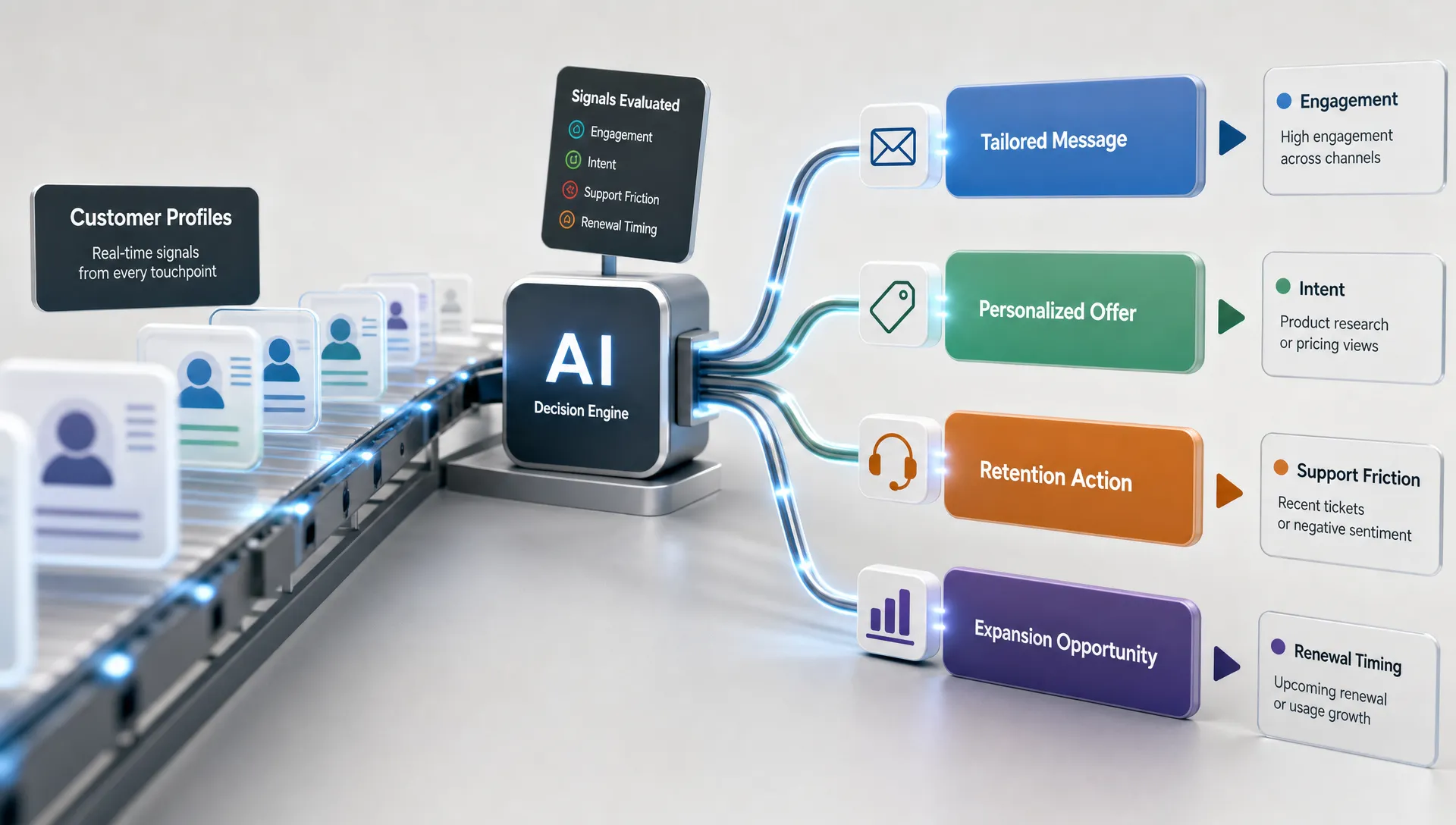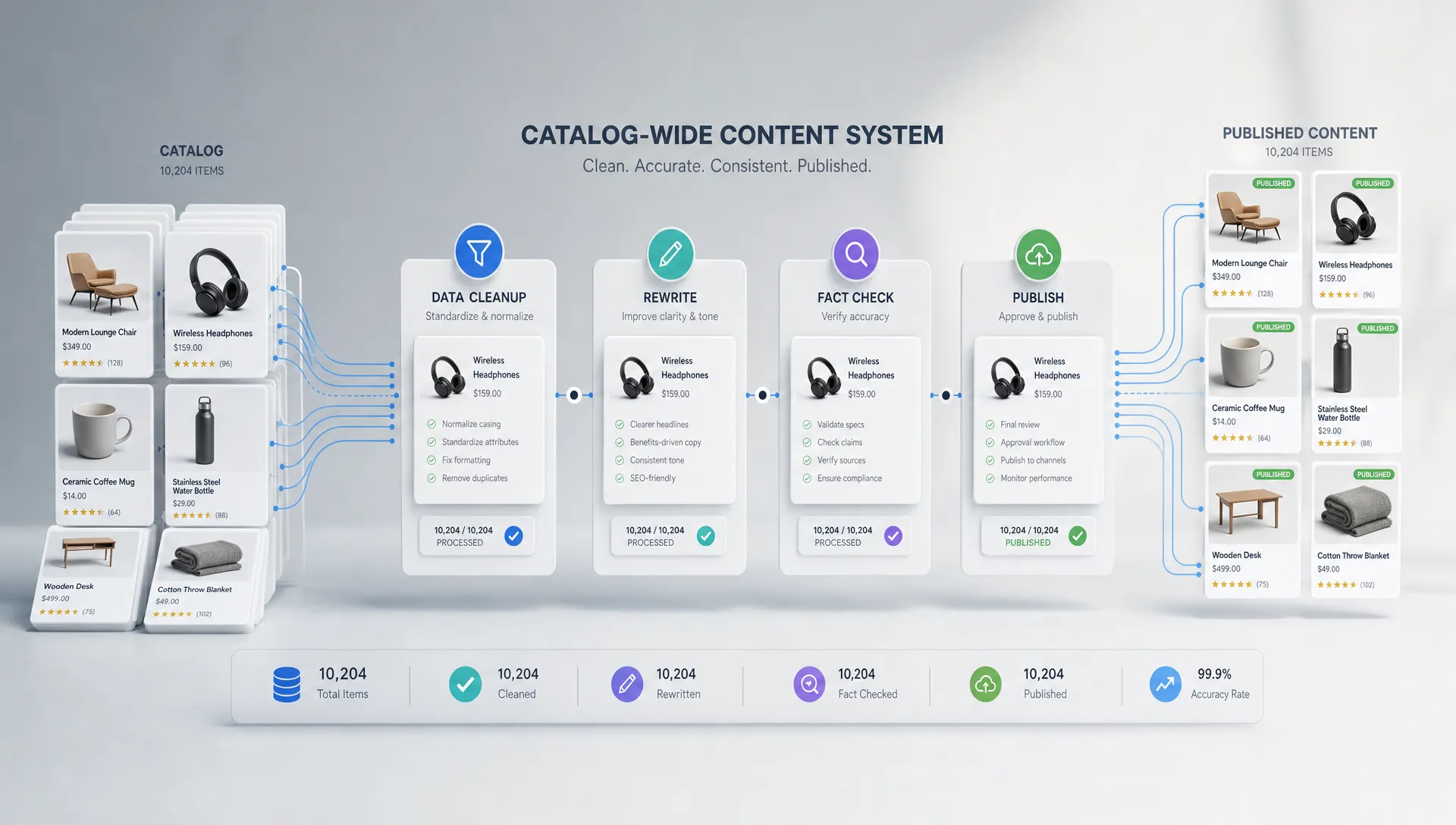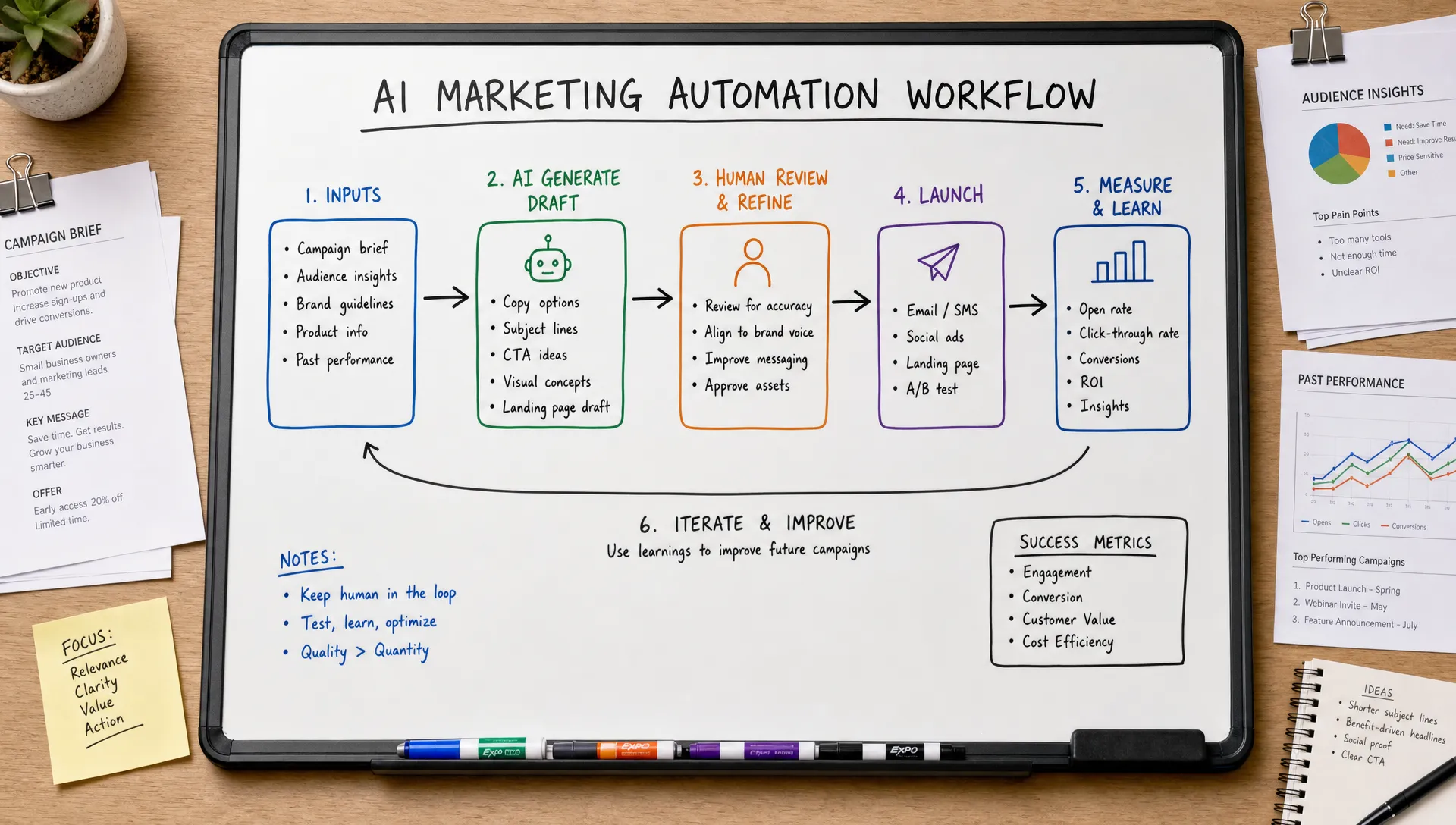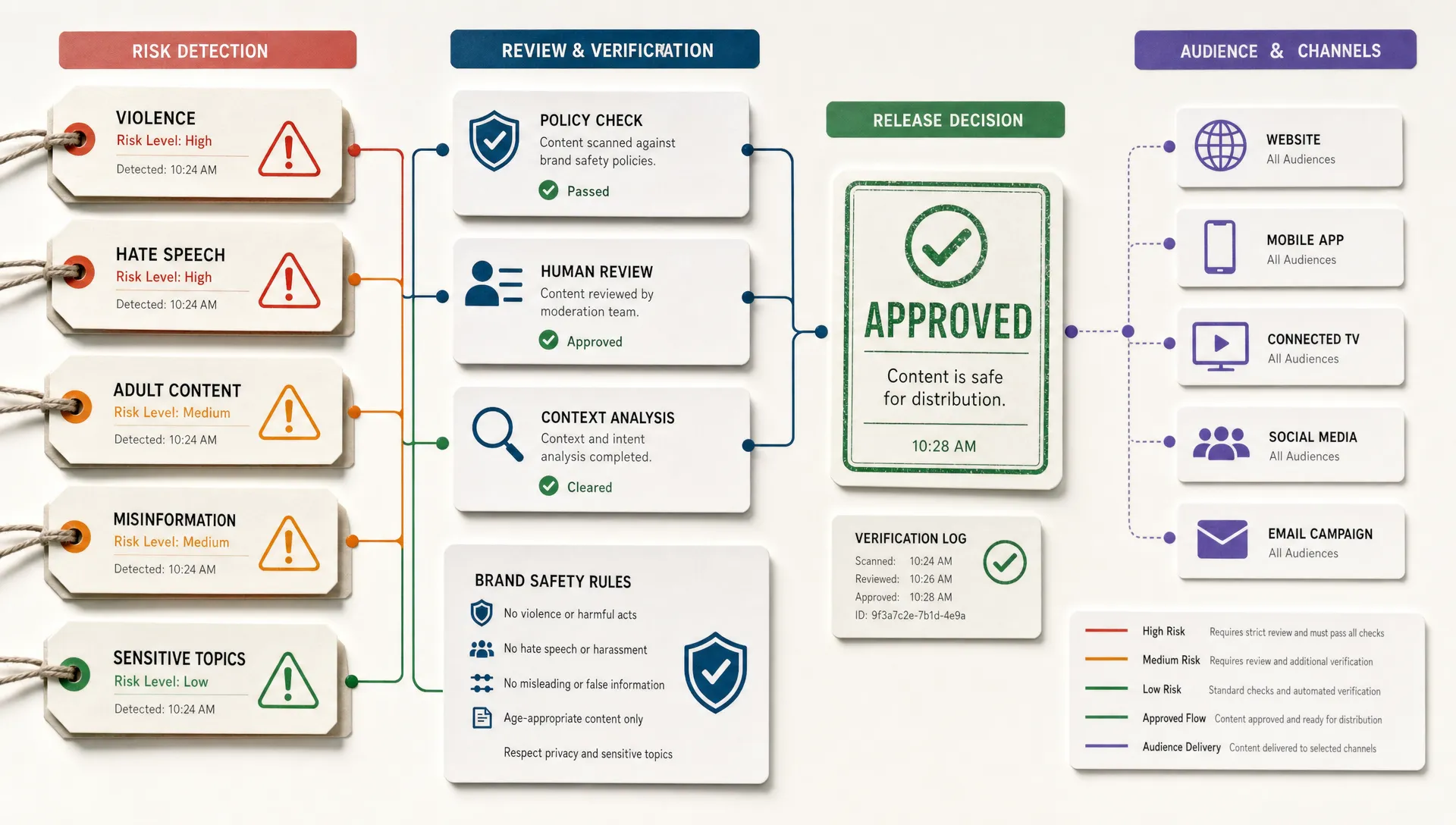
AI brand safety used to be treated as a media buying problem: keep ads away from harmful content, avoid controversial placements and protect the logo. That is still part of the job, but AI has expanded the risk surface.
Marketing teams now use AI tools to generate copy, summarize research, personalize campaigns, build audience segments, localize content, analyze performance and support customer conversations. Each use case can improve speed, but each can also create brand, legal or reputational exposure if the workflow is unmanaged.
The real question is not whether marketers should use AI. The question is where AI can act safely, where humans must stay in control and which risks need formal governance before content reaches customers.
AI brand safety is the practice of preventing AI-assisted marketing activities from damaging trust, violating policy or creating avoidable business risk. It covers content accuracy, brand voice, data handling, audience targeting, ad placement, cultural context, legal claims and the behavior of AI agents connected to marketing systems.
Brand safety is different from brand suitability. Brand safety focuses on clear risks such as misinformation, harmful content, privacy exposure or unlawful claims. Brand suitability is more contextual. A topic might be safe in general but still wrong for your brand, industry, audience or campaign.
For example, an AI-generated social post may be factually accurate but too casual for a financial services brand. A paid ad may appear beside content that is not illegal or offensive but still conflicts with the campaign message. An AI chatbot may answer quickly, but if it invents a refund policy or medical benefit, speed becomes a liability.
That makes AI brand safety a shared responsibility across marketing, legal, compliance, procurement, IT, data and executive leadership. Marketing owns the customer-facing outcome, but it cannot manage every risk alone.
AI risks are not all equal. Some create minor editing work, while others can trigger regulatory scrutiny, customer backlash or contract exposure. A practical AI marketing program starts by naming the risks clearly.
Generative AI can produce fluent content that sounds acceptable at first glance but does not sound like your brand. The issue is often subtle: wrong tone, generic positioning, exaggerated benefits, inconsistent product language or phrasing that clashes with how your audience expects you to communicate.
This risk grows when teams use different AI tools, personal prompt habits or outdated campaign briefs. Without approved messaging, AI can drift away from the brand over time, especially across email, social, ads, landing pages and sales enablement content.
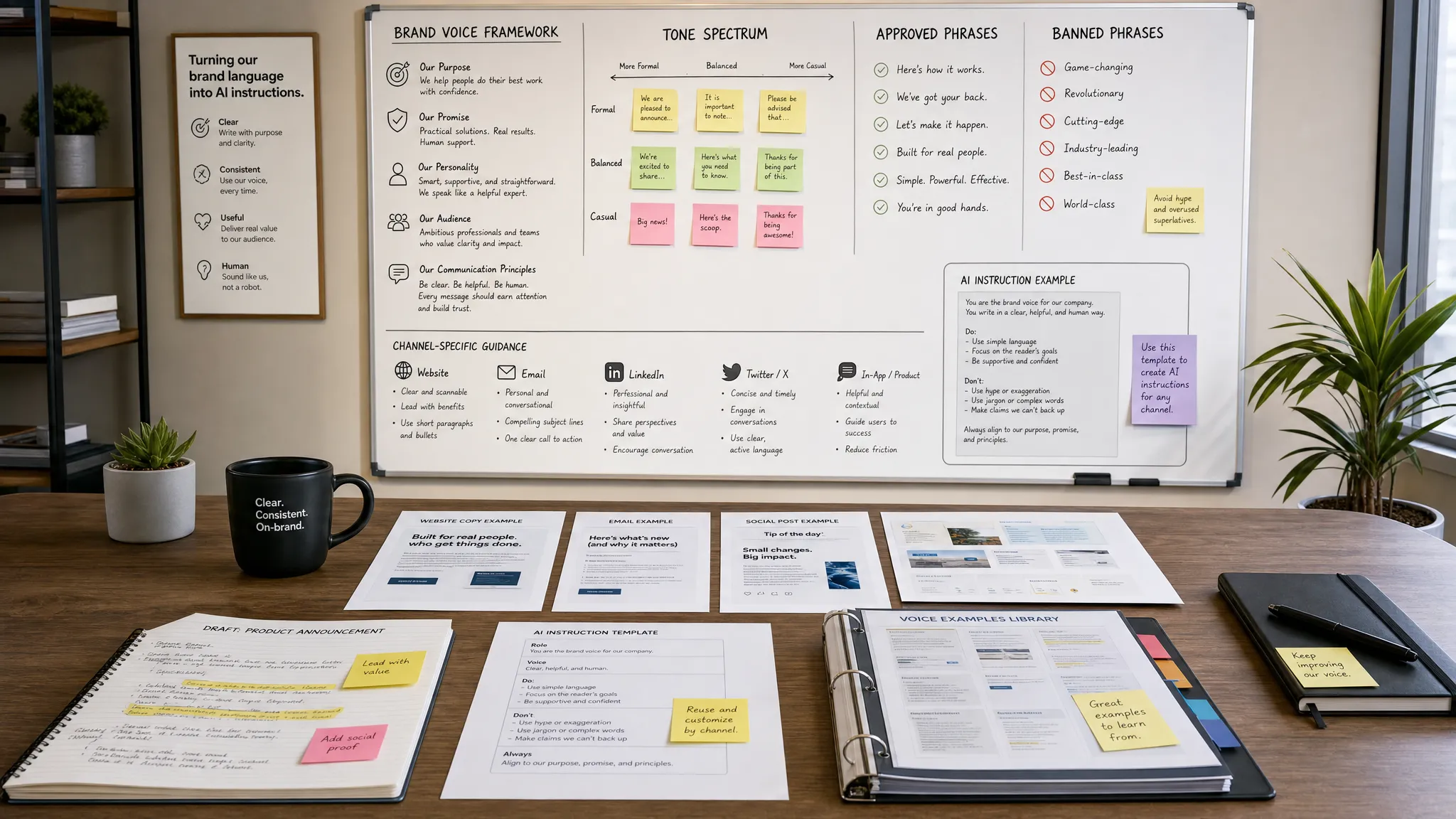
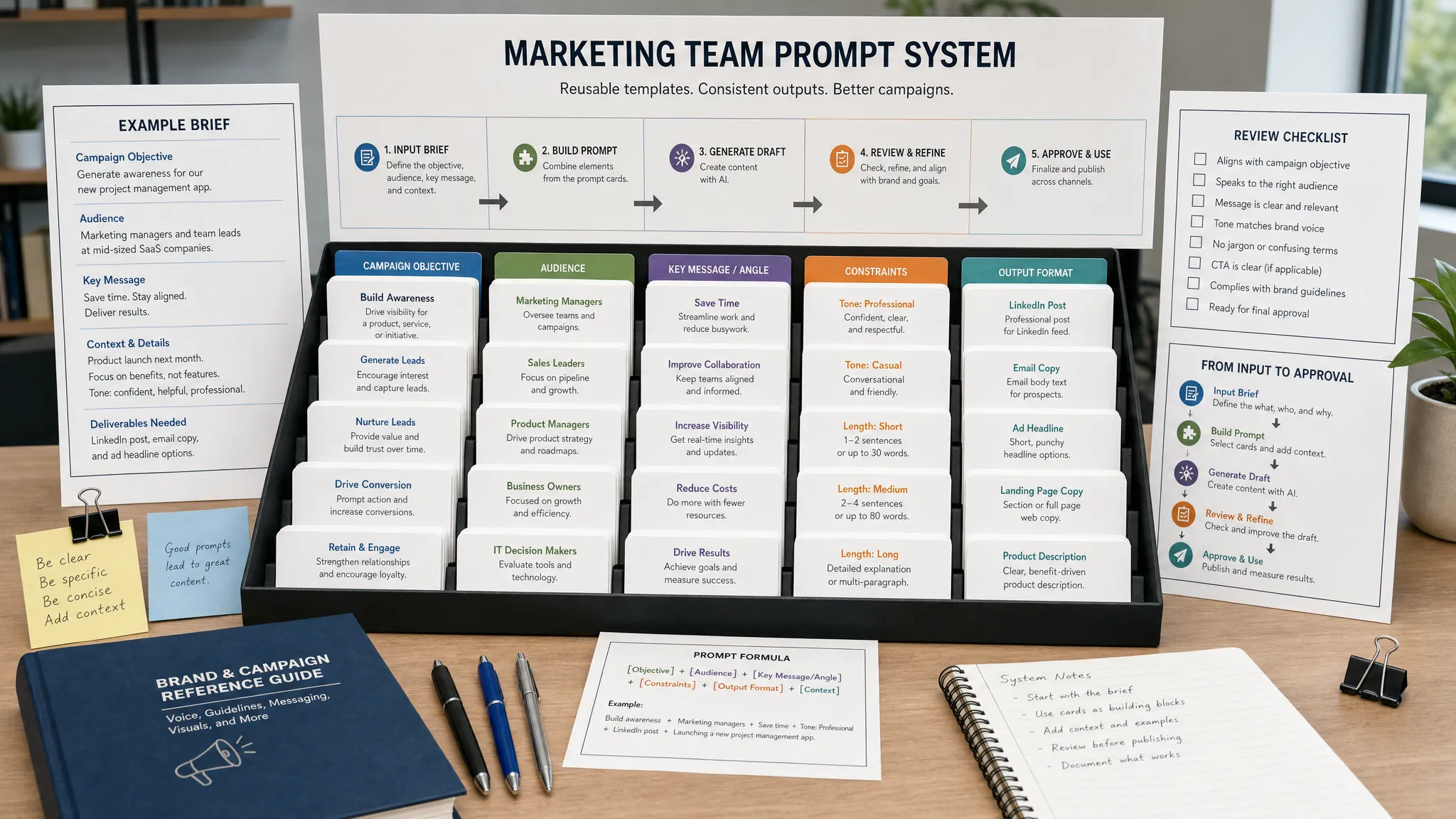
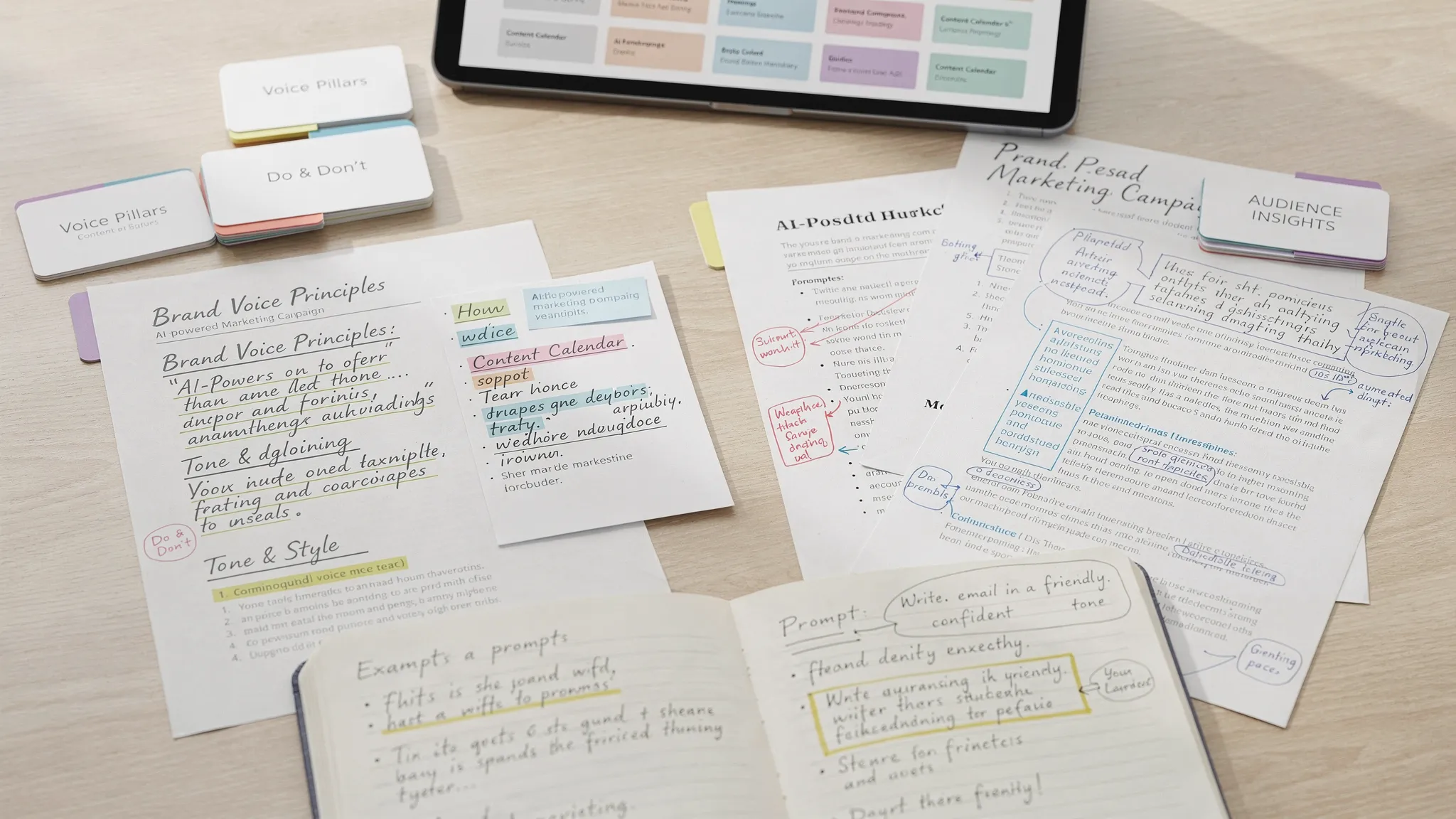
A strong brand system gives AI less room to improvise. That includes approved value propositions, voice rules, forbidden claims, audience definitions, product naming conventions and examples of acceptable and unacceptable language.
AI tools can generate confident statements that are false, outdated or impossible to verify. For marketers, hallucinations often appear as invented statistics, fabricated customer outcomes, inaccurate product details, misleading comparisons or regulatory claims that were never approved.
This is especially risky in industries such as finance, healthcare, legal services, insurance, cybersecurity and SaaS. The Federal Trade Commission has repeatedly warned advertisers that AI claims must be truthful, substantiated and not misleading. If a human would need evidence to make the claim, an AI-generated version needs the same evidence.
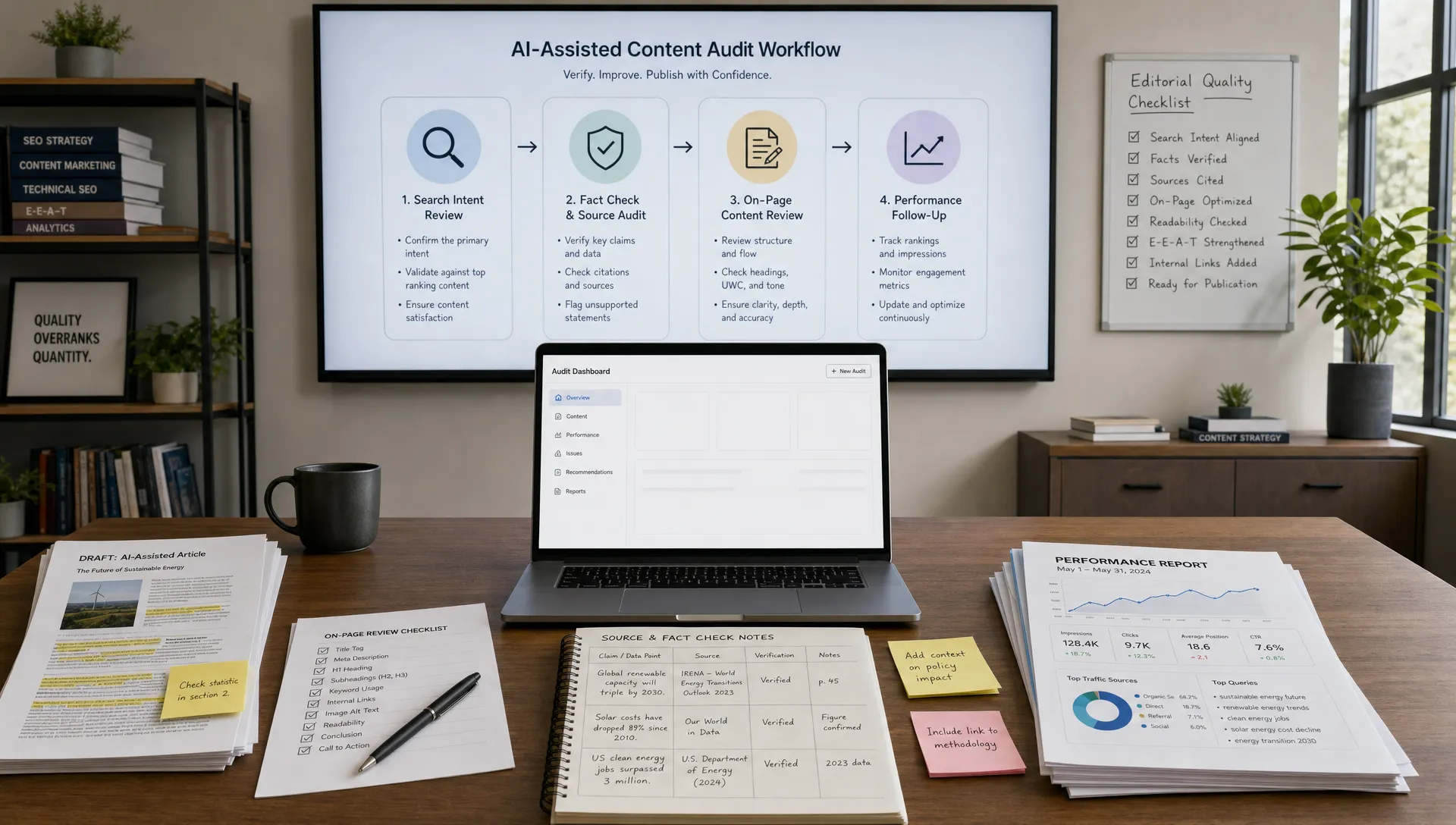
Marketing teams should treat factual claims as a separate review category. A content asset can be on-brand and still unsafe if it includes a claim no one can support.
AI marketing workflows often involve customer profiles, campaign performance data, market research, sales notes, call transcripts and proprietary strategy documents. If employees paste sensitive information into tools without clear rules, the brand risk is not limited to content output. The risk includes data exposure, contractual violations and loss of customer trust.
Privacy risk is higher when teams use AI for personalization, segmentation, lead scoring or customer journey automation. Even when the output seems harmless, the inputs may include personal data, confidential business information or regulated attributes.
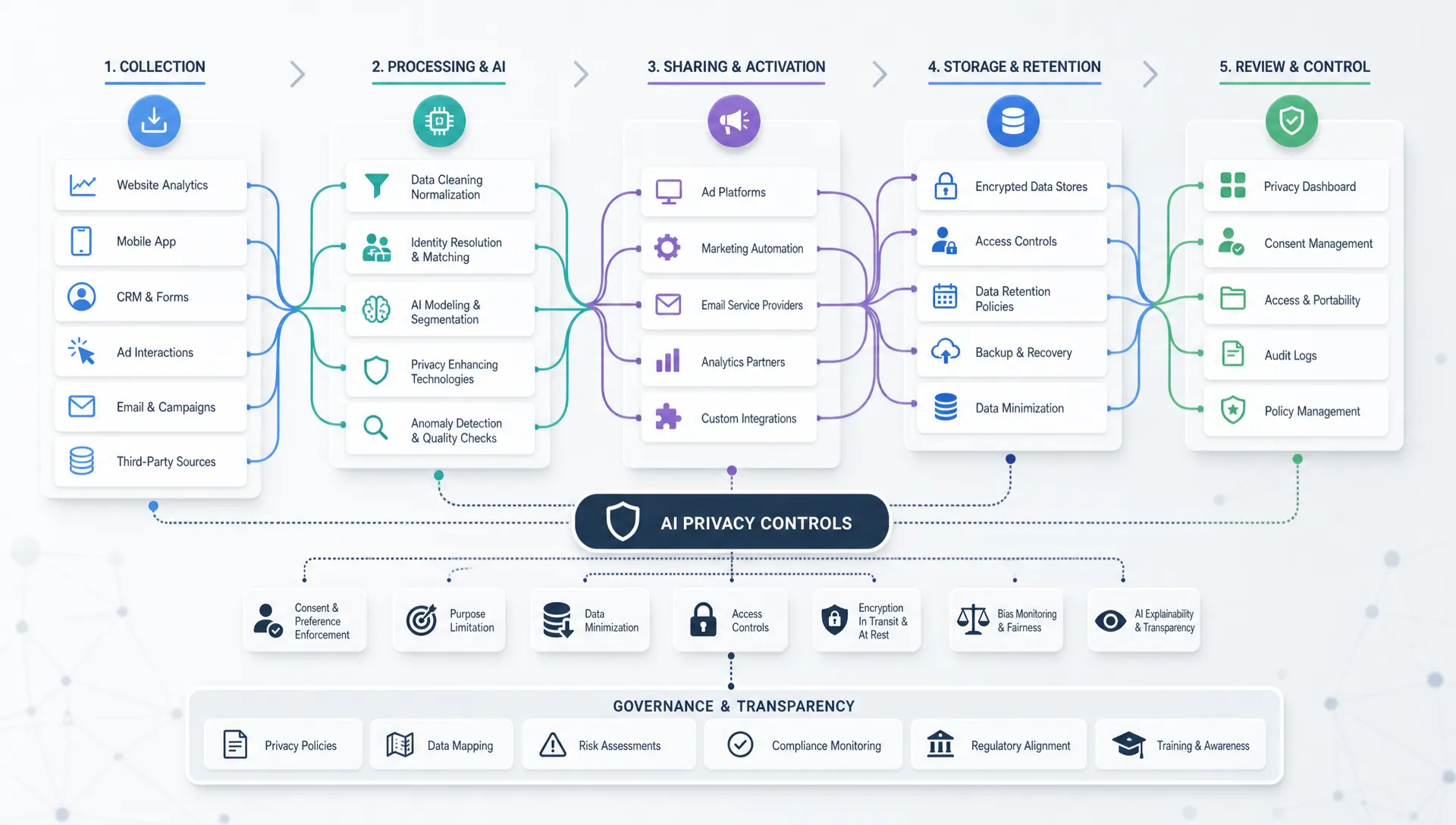
A privacy-aware workflow should define which data can be used, which data must be anonymized, which tools are approved and which use cases require review. AIMarketer Hub has a separate AI marketing data privacy guide for teams building that compliance layer into their marketing operations.
AI systems can reproduce bias from training data, campaign history, audience signals or team assumptions. In marketing, this can show up as exclusionary audience segments, stereotyped creative, unfair pricing messages, inaccessible language or personalization that feels invasive.
Bias is not only a legal issue. It can also weaken campaign performance by narrowing reach, alienating customers or producing creative that feels out of touch. The risk becomes more serious when AI recommendations influence financial offers, employment-related messaging, housing, healthcare or other sensitive categories.
Marketers should review AI outputs for representation, accessibility, audience fairness and unintended exclusion. For larger programs, teams should document who reviews these issues and how objections are escalated.
AI can make content creation faster, but marketers still need to know whether they have the right to use the final asset. Risk can arise from generated images that resemble protected work, copy that closely mirrors a competitor, unlicensed source material in prompts or unclear ownership terms in vendor contracts.
This does not mean teams should avoid AI content creation. It means high-value, public-facing assets need clear usage rules. Product launches, paid campaigns, hero visuals, brand slogans and long-term evergreen assets deserve more scrutiny than internal brainstorms or draft outlines.
A simple control is to separate ideation from production. Use AI to explore angles, briefs and variants, then apply human review, originality checks and legal review where needed before the asset goes live.
AI-powered advertising platforms can optimize placements, bids and creative combinations at a scale humans cannot manually inspect. That creates efficiency, but it can also place ads beside unsuitable content or combine copy, targeting and context in ways that create reputational risk.
Brand safety in paid media should include exclusion lists, inclusion lists, publisher quality rules, sensitive category controls, regular placement reports and escalation paths for questionable inventory. Marketers should also watch for dynamic creative combinations that are technically compliant but contextually awkward.
The more automated the media plan, the more important it is to monitor not just performance metrics but the environments where the brand appears.
Agentic AI can do more than generate content. Depending on how it is connected, it may draft campaigns, trigger workflows, update records, recommend budgets, create audience variations or interact with customers. That moves AI from assistant to actor.
The brand risk is not only a bad sentence. It is an automated action taken too quickly, too broadly or without the right approval. If an AI agent can publish, personalize, route leads, change bids or trigger outreach, governance must define permissions, limits, logging and human override.
Commercial governance matters here as well. When AI systems are priced by usage or consumption, uncontrolled automation can create budget pressure that indirectly affects brand safety, especially if teams cut review steps to keep pace. Procurement teams evaluating enterprise AI should pay attention to agentic AI cost exposure because usage spikes, reporting gaps and unclear ownership can become operational risks, not just finance issues.
A risk matrix helps teams decide when AI can move quickly and when it needs review. The goal is not to slow every task. The goal is to apply the strongest controls where the downside is highest.
| Risk area | Where it appears | Possible impact | Practical control |
|---|---|---|---|
| Off-brand messaging | Social posts, ads, email, landing pages | Lower trust, inconsistent positioning | Approved voice guide, prompt templates, content review |
| False claims | Product pages, comparison content, regulated campaigns | Legal exposure, customer complaints | Claim substantiation, source checks, legal review |
| Privacy exposure | Prompts, personalization, segmentation | Data breach risk, compliance issues | Data minimization, approved tools, prompt rules |
| Bias | Audience targeting, creative, personalization | Exclusion, reputational harm, unfair outcomes | Bias review, accessibility checks, audience testing |
| IP risk | Images, slogans, long-form content | Takedowns, disputes, rework | Originality checks, licensing review, asset tracking |
| Unsafe adjacency | Programmatic ads, influencer content, AI media buying | Brand association with unsuitable content | Placement controls, monitoring, escalation process |
| Agent overreach | AI agents, workflow automation, customer interactions | Unapproved actions, budget spikes, public errors | Permission limits, logs, human approval, kill switch |
This kind of matrix should be adapted by industry. A B2B SaaS company, a consumer brand and a bank will not assign the same risk level to every activity.
The best AI brand safety programs are practical. They do not ask marketers to submit every brainstorm to legal. They create clear pathways based on risk.
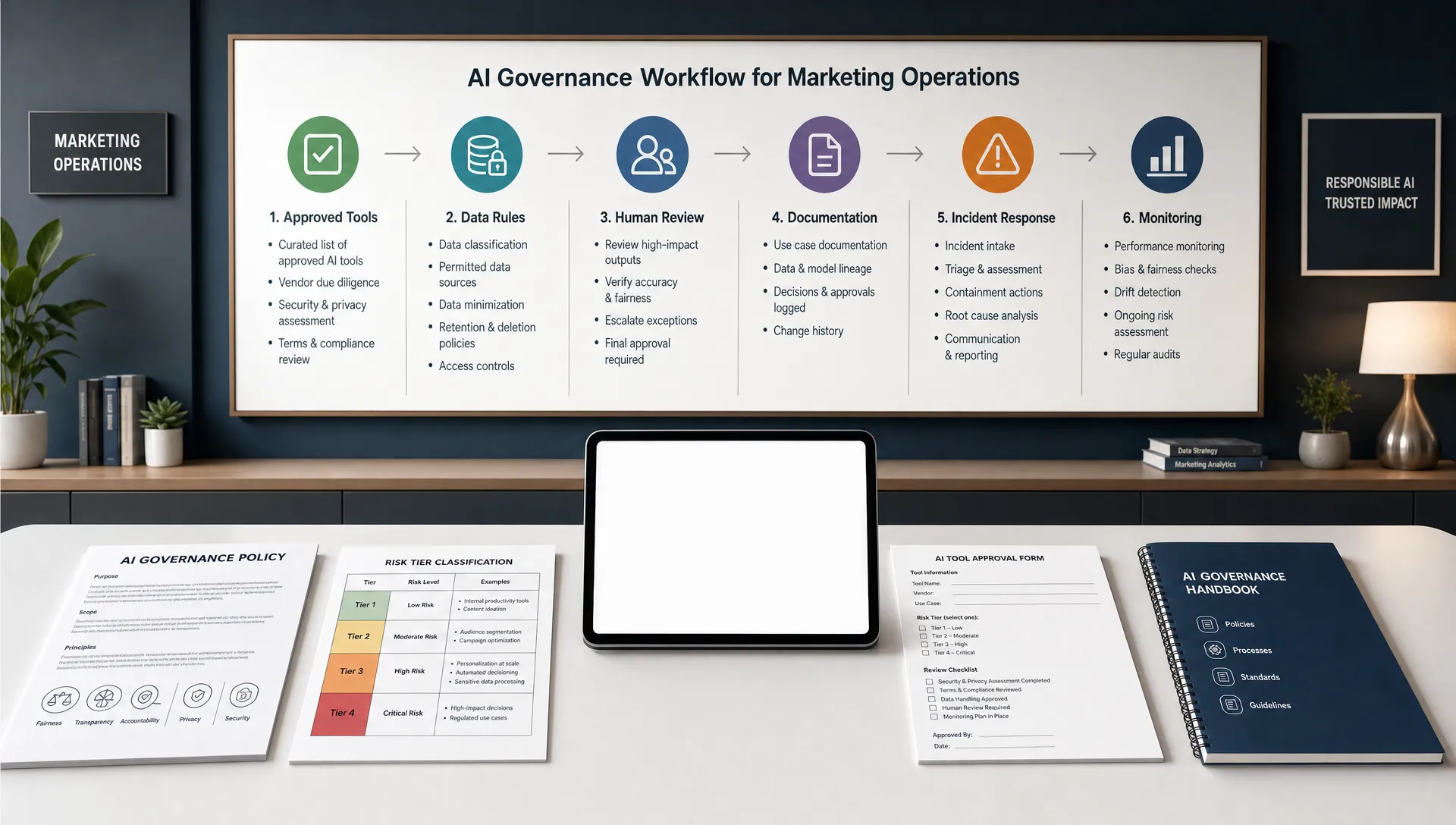
Start with policy. A good policy should explain approved use cases, restricted use cases, prohibited data, review requirements, tool approval standards and incident response steps. If your team does not have one yet, use this guide on how to build an AI marketing governance policy as a foundation.
Then create risk tiers. Low-risk work might include internal ideation, outline generation, headline variations and research summaries that are not published without review. Medium-risk work could include blog drafts, nurture emails, social posts and non-regulated ad copy. High-risk work includes claims about performance, pricing, financial outcomes, health outcomes, legal matters, customer data use, crisis communications and any AI action that publishes or triggers customer contact automatically.
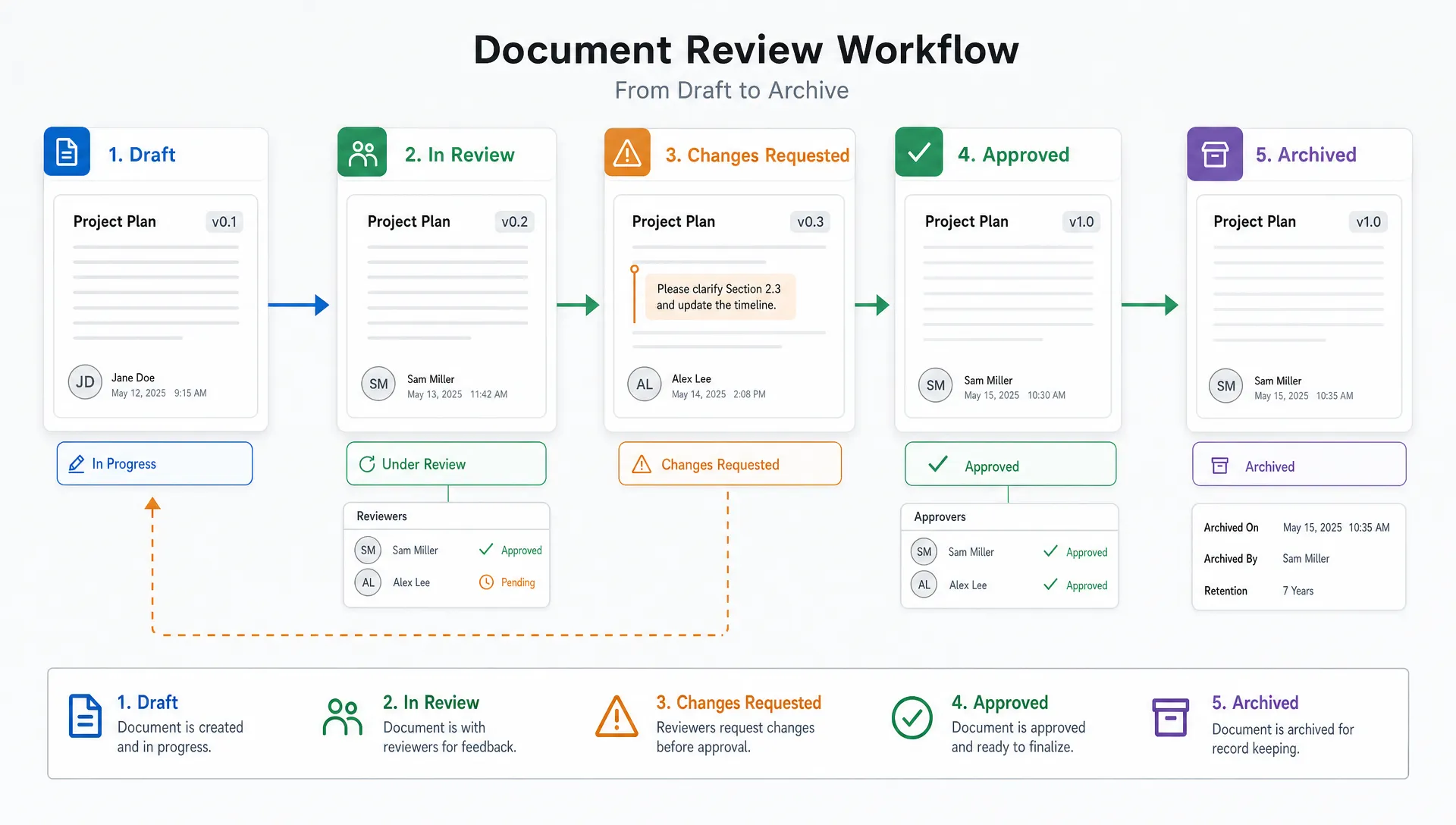
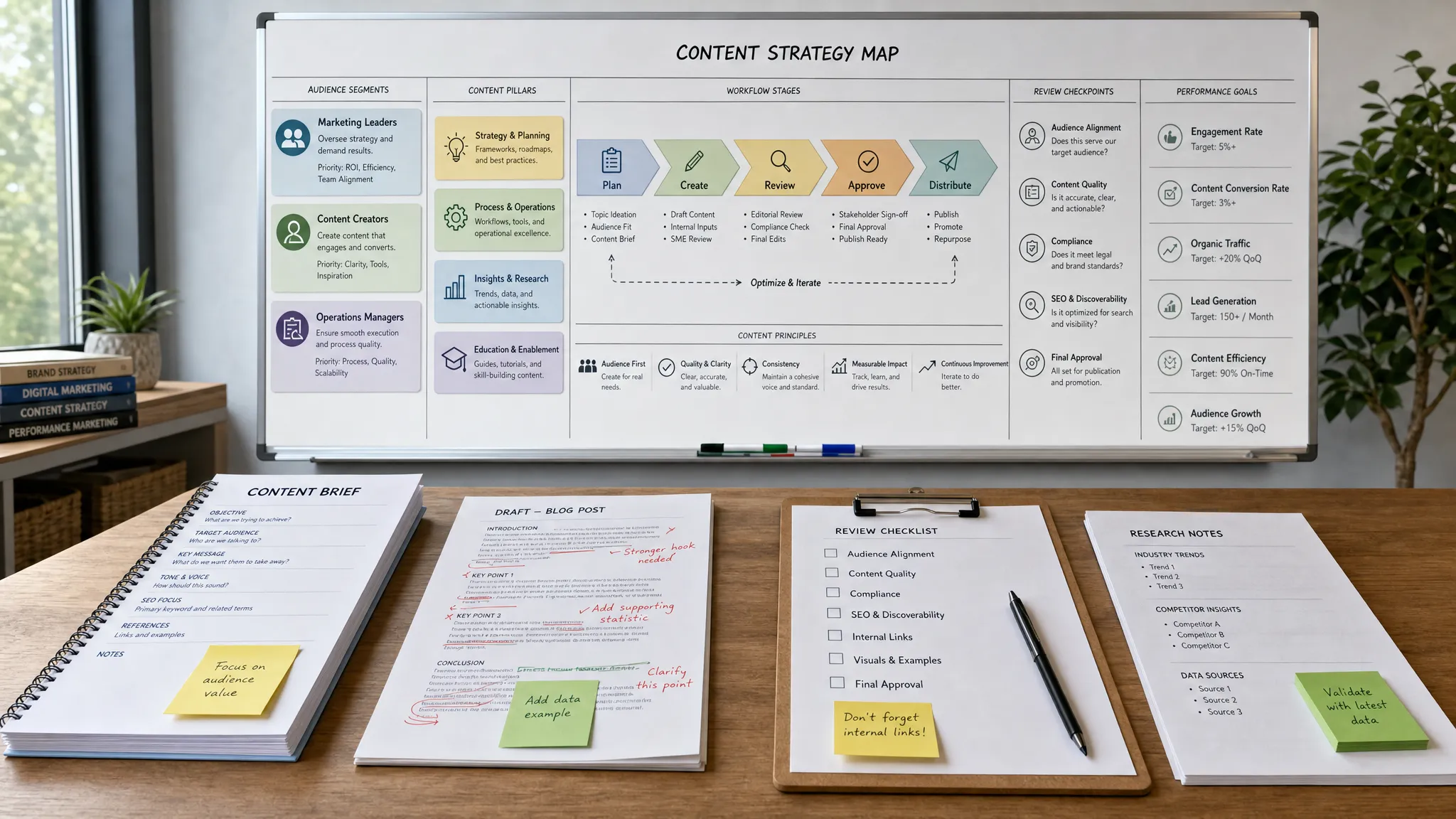
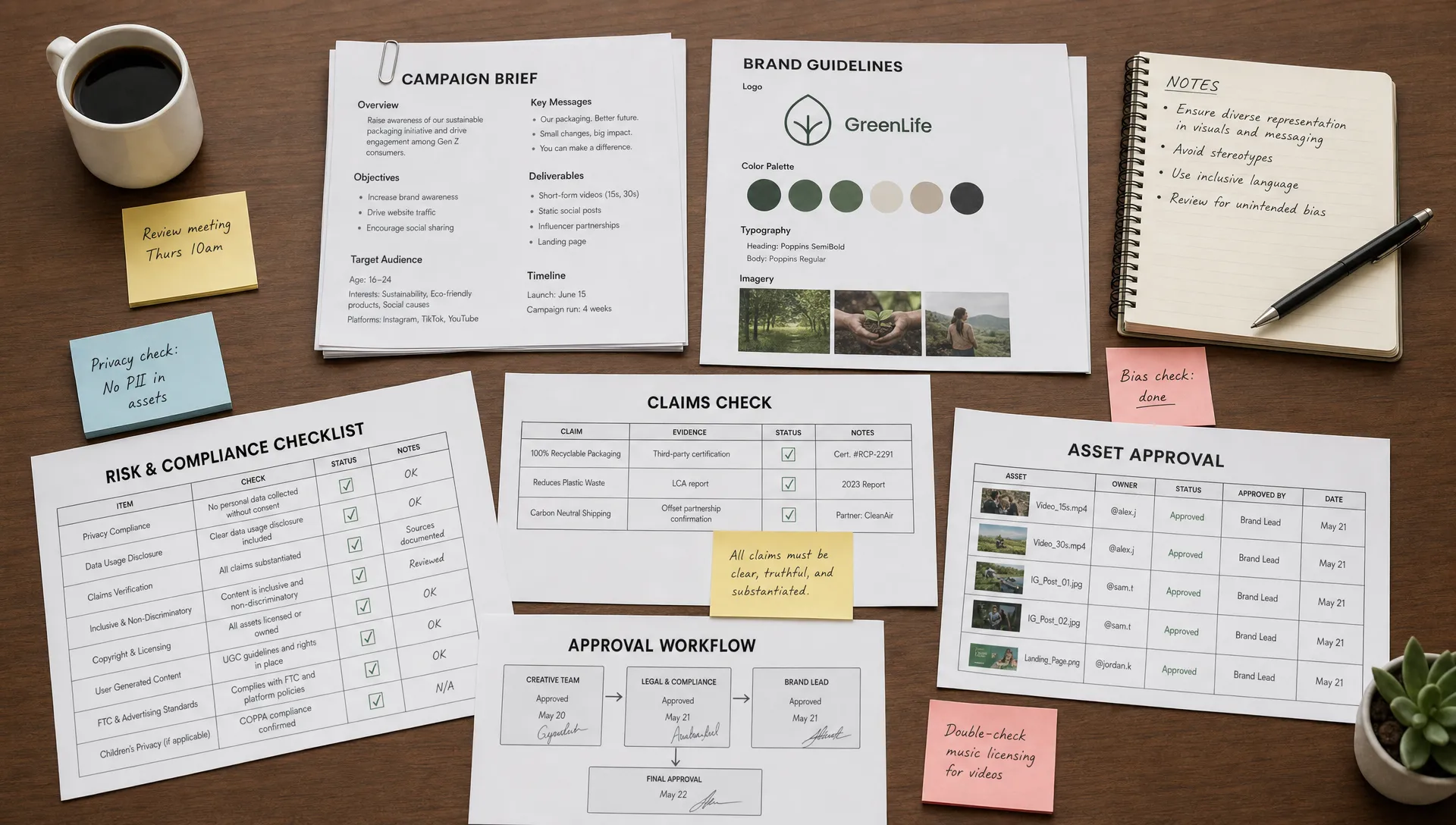
Approval should match the risk tier. A junior marketer may review low-risk AI drafts for clarity and tone. A brand lead may review campaign messaging. Legal or compliance should review regulated claims. Data or security teams should review workflows that use sensitive data or connect AI to operational systems.
AIMarketer Hub also has a practical guide to creating an AI approval workflow for brand safety if you need a more detailed operating model for reviews, roles and escalation.
A checklist turns brand safety from a vague concern into a repeatable habit. Use it before publishing AI-assisted content, launching AI-powered campaigns or connecting AI tools to customer-facing workflows.
This checklist should be short enough that marketers actually use it. If it becomes a legal memo for every asset, people will route around it. Keep the everyday version simple, then require deeper review only for higher-risk campaigns.
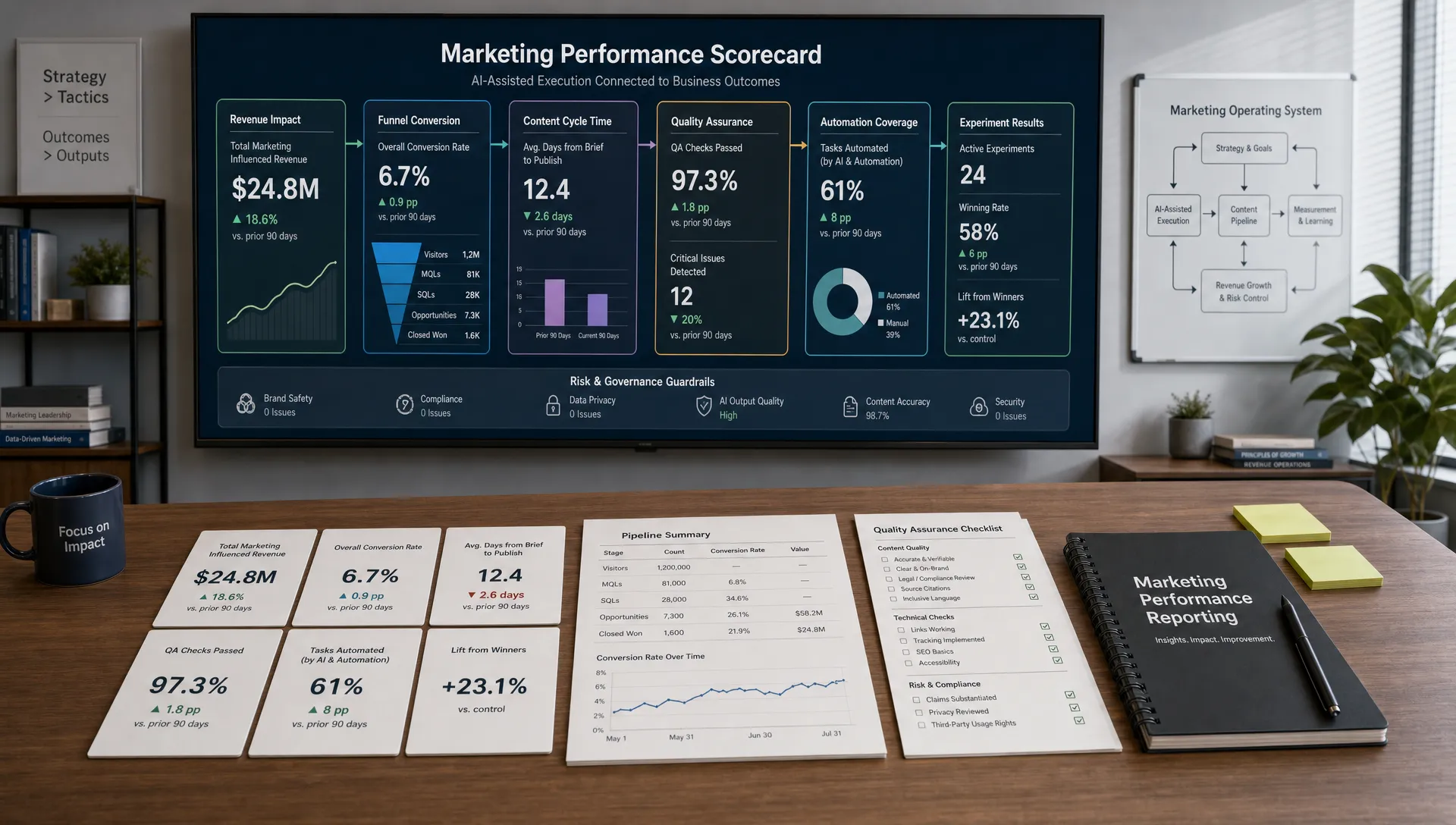
Brand safety cannot be managed only through policy documents. Teams need signals that show whether AI controls are improving quality or creating bottlenecks.
Useful metrics include AI content rejection rate, claim correction rate, approval turnaround time, privacy exceptions, policy violations, customer complaints tied to AI-assisted content, media placement incidents and the percentage of AI workflows with documented owners.
For agentic AI, add usage metrics such as actions triggered, human overrides, failed tasks, unexpected outputs, workflow pauses and cost per automated action. These metrics help marketing leaders see whether automation is behaving as intended.
Do not track only incidents. Track near misses too. A near miss might be an unsupported claim caught before publication or a prompt that included sensitive data but was blocked by policy. Near misses reveal where training, tooling or process needs improvement.
Fast AI adoption is not always the same as mature AI adoption. If your team is seeing repeated factual errors, unclear approval ownership, sensitive data in prompts, inconsistent brand voice, unexplained media placements or AI tools connected to customer systems without logs, slow the rollout and fix the operating model.
The same applies when AI is being used across multiple regions without localization review. A message can be acceptable in one market and inappropriate in another. Cultural nuance, legal requirements, idioms, claims and visual signals all need review before AI-assisted localization scales.
The safest approach is staged expansion. Start with internal and low-risk use cases, document what works, train the team, add review capacity, then expand into public-facing and automated workflows. AI marketing automation can deliver real gains, but only if the system protects the brand while it scales.
What is AI brand safety? AI brand safety is the process of preventing AI-assisted marketing from creating reputational, legal, privacy, bias, media placement or customer trust risks. It applies to content, targeting, automation, personalization and AI agents.
Who should own AI brand safety in a marketing team? Marketing should own the customer-facing outcome, but the program should include legal, compliance, IT, data, procurement and brand leadership. The owner can be a marketing operations or governance lead, as long as decision rights are clear.
Can marketers use AI for content creation safely? Yes, if AI is used with approved prompts, brand guidelines, factual review, privacy controls and human approval for public-facing assets. AI is safest when it supports marketers rather than replacing accountability.
Which AI marketing activities are highest risk? High-risk activities include regulated claims, personalized offers, customer data analysis, autonomous publishing, AI chat interactions, paid media automation and any content related to finance, health, legal rights or sensitive audiences.
How often should AI brand safety rules be reviewed? Review rules at least quarterly and after any major tool change, campaign incident, regulatory update or expansion into a new market. AI workflows change quickly, so static policies become outdated fast.
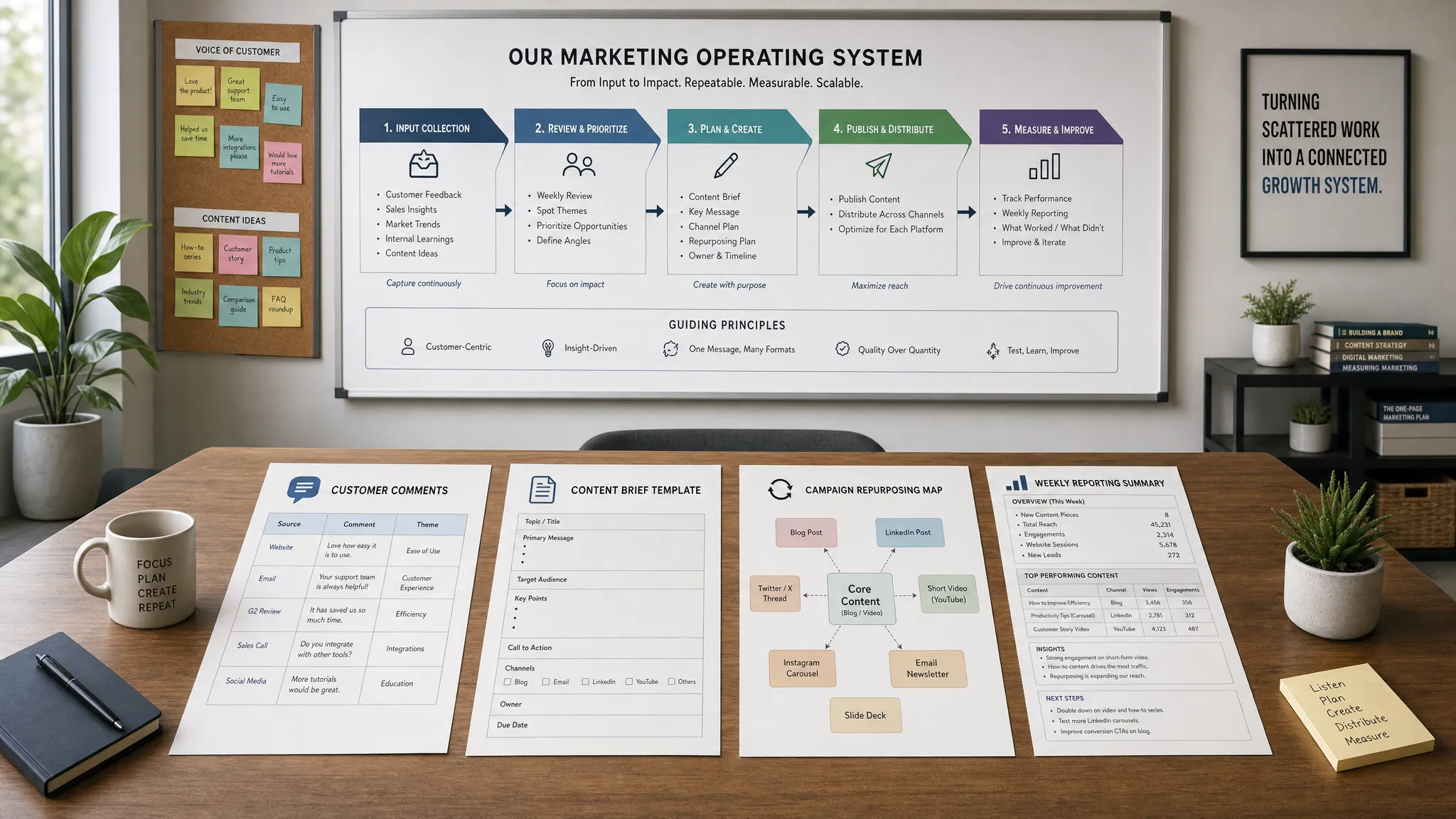
AI brand safety is not a one-time review before launch. It is an operating system for how your team creates, approves, measures and improves AI-assisted marketing.
AIMarketer Hub helps marketers turn AI adoption into repeatable practice with expert guides, prompt resources, SEO tools, calculators, AI content support and industry-specific resources. Use those resources to build workflows that help your team move faster without giving up accuracy, trust or control.