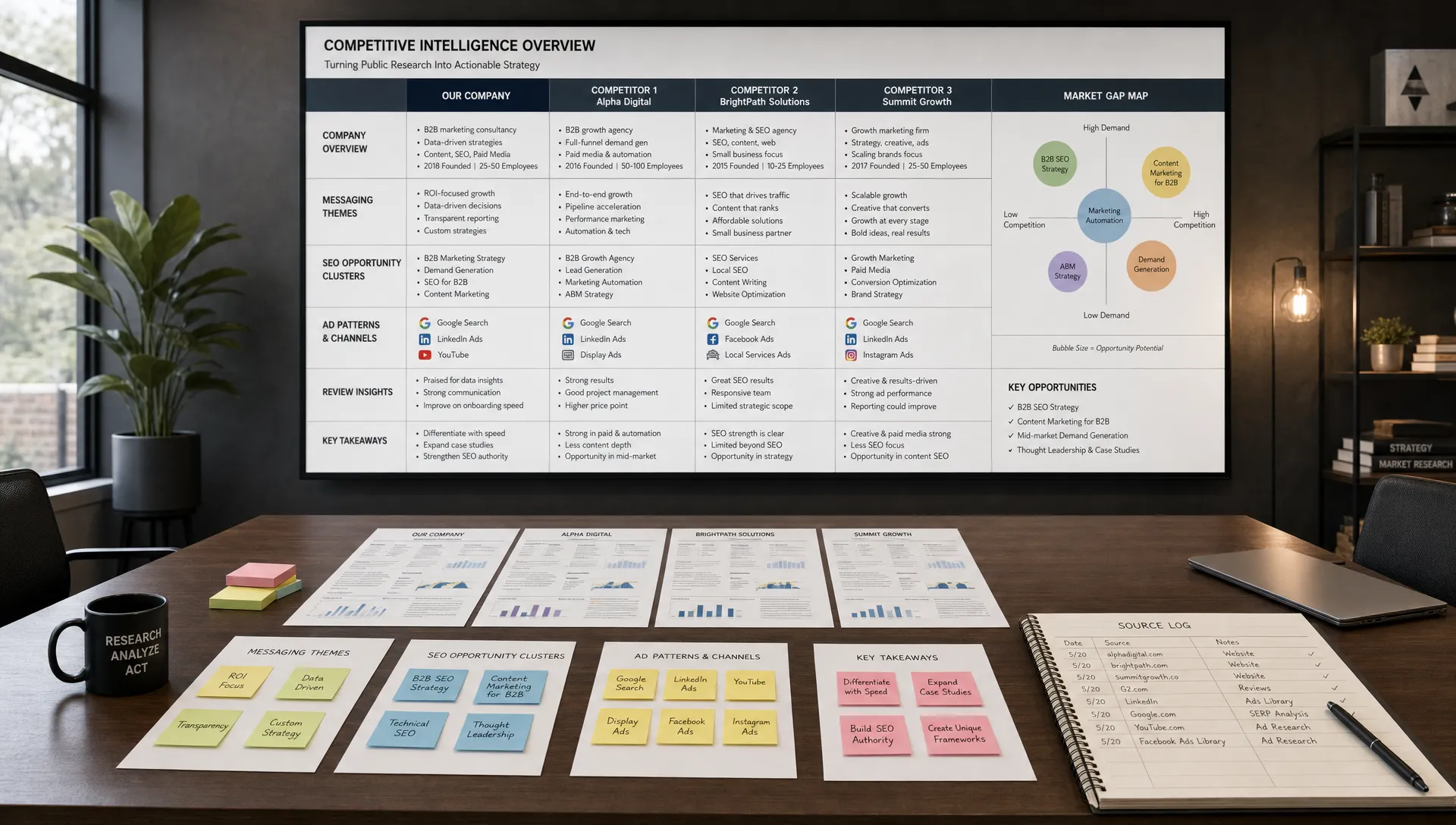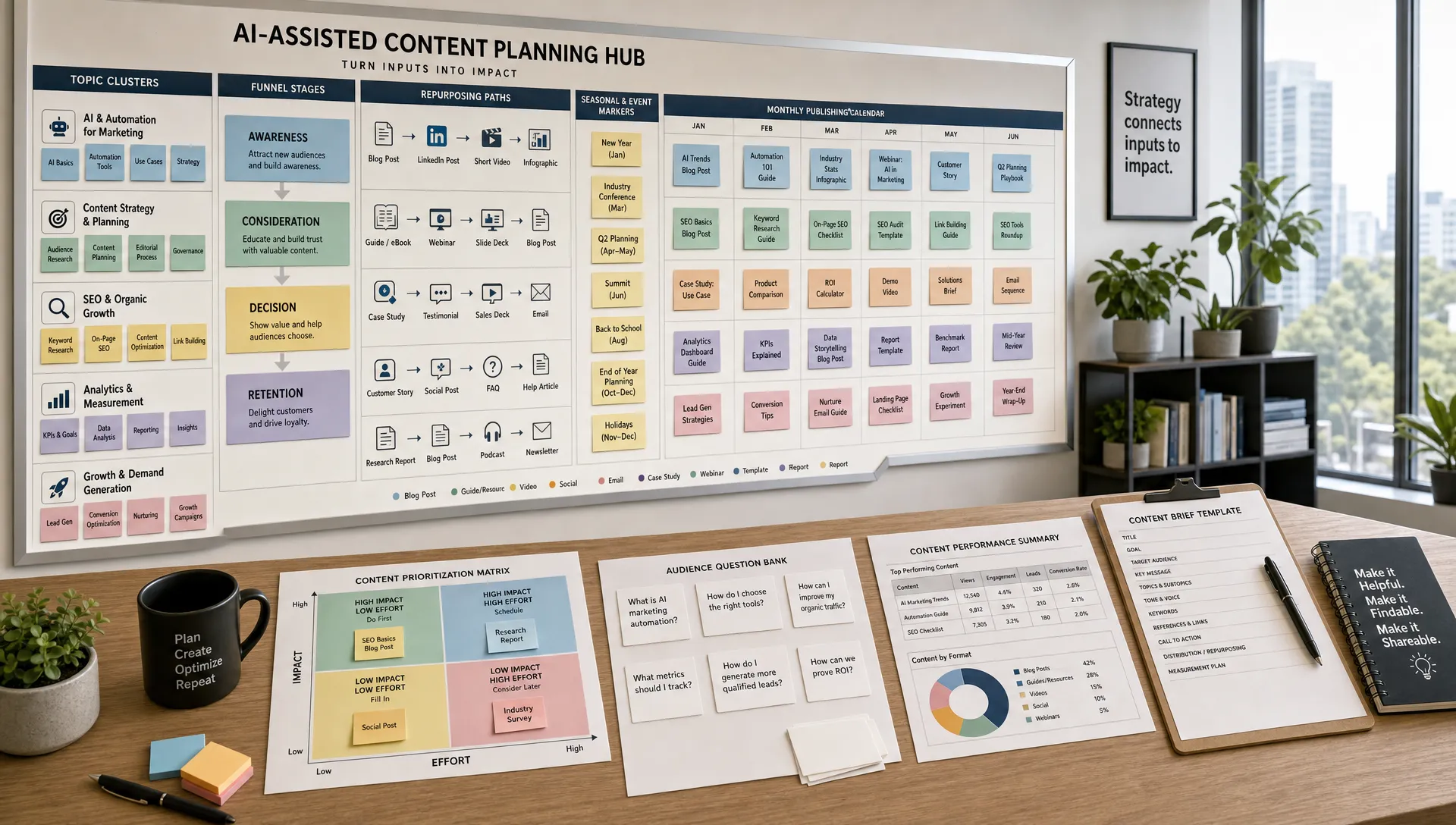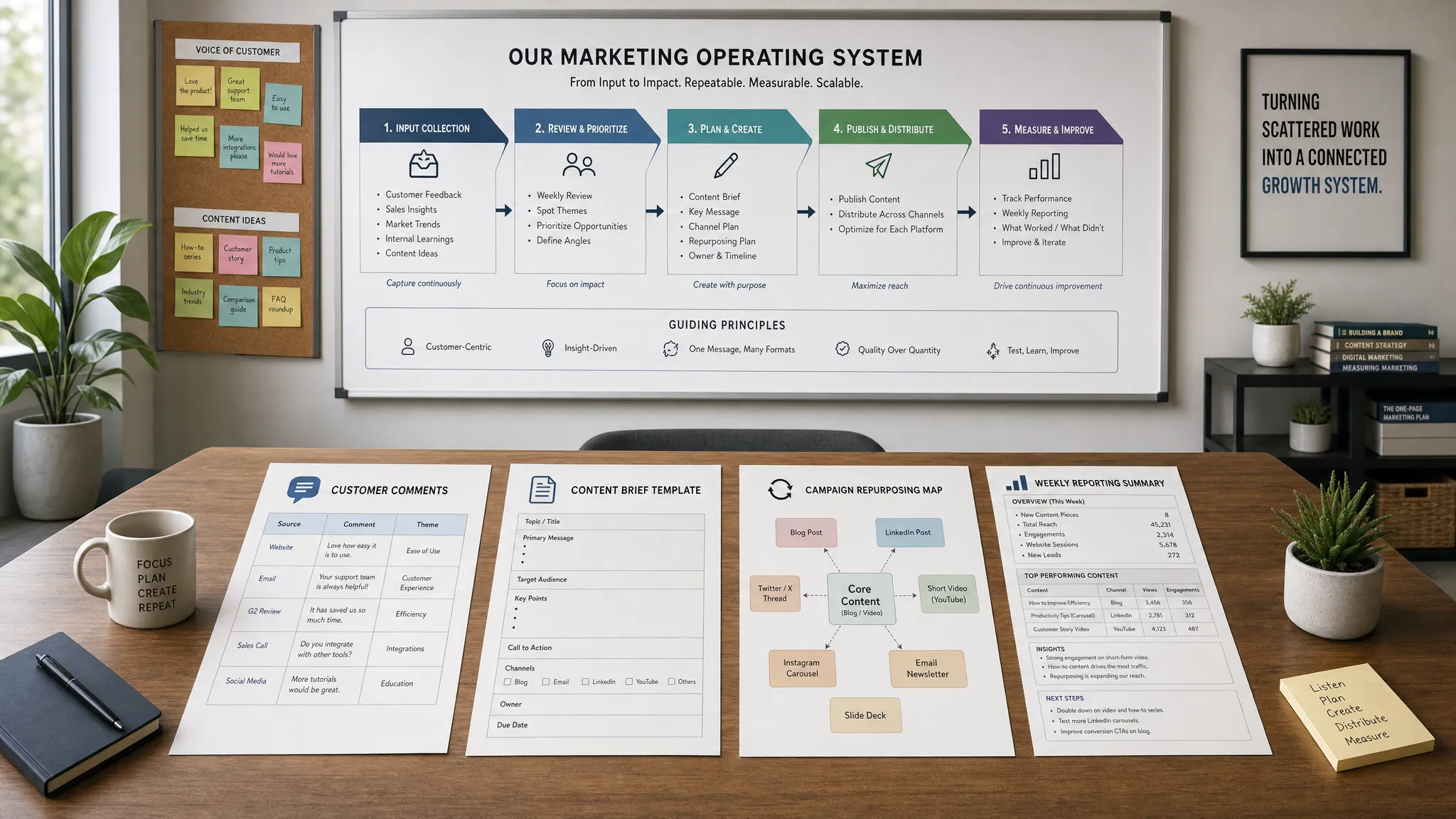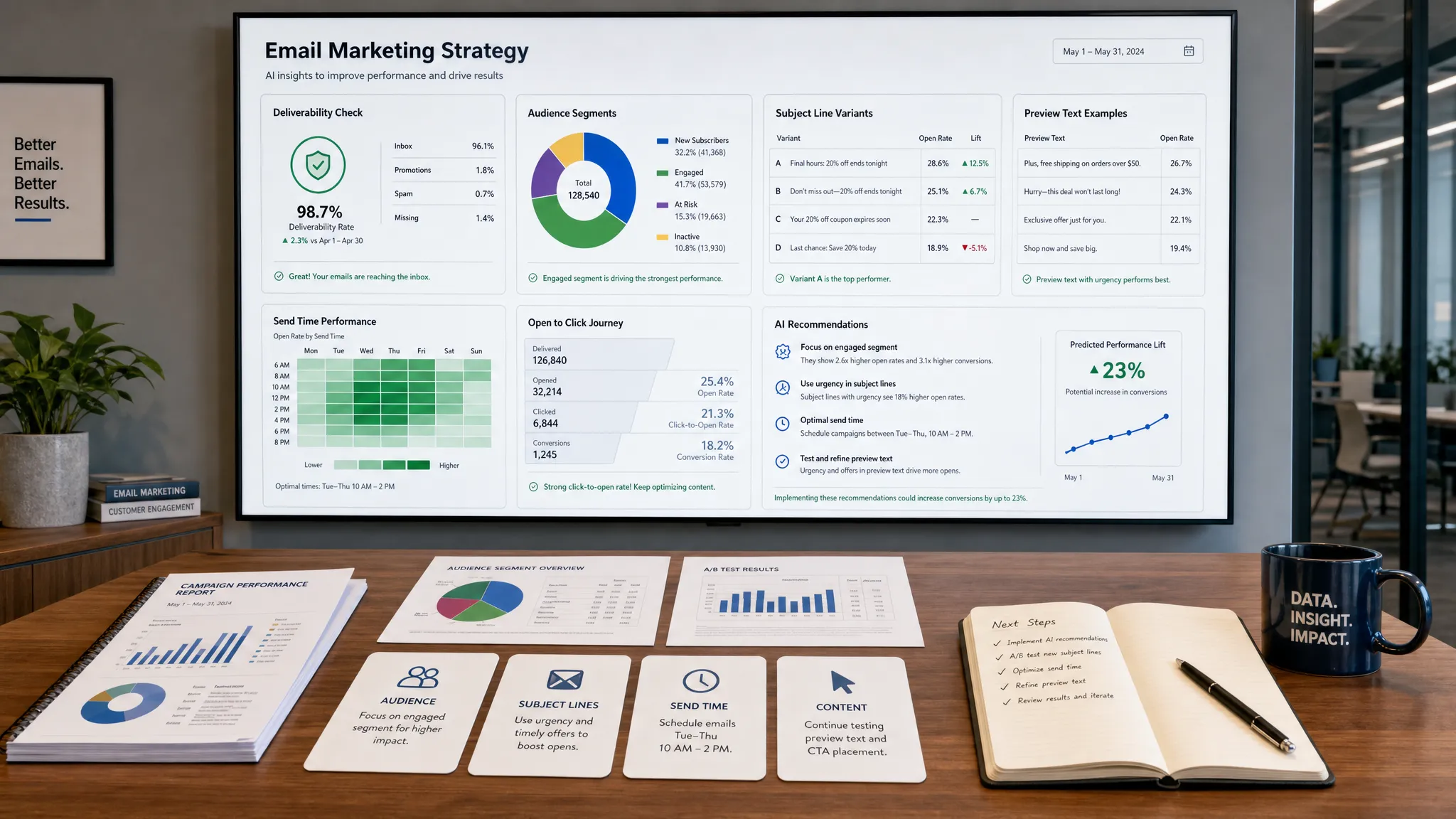
Lean teams are not small versions of enterprise marketing departments. They cannot win by copying every channel, hiring for every role, or chasing every trend. They win by making sharper choices.
For a founder-led company, startup, agency, niche SaaS brand, or small in-house marketing team, marketing growth comes from focus: choosing the right audience, building repeatable systems, using AI where it removes friction, and measuring the few signals that actually connect to revenue.
The goal is not to do more marketing. The goal is to create more qualified demand with fewer wasted motions.

Marketing growth is not just more traffic, more followers, or more campaigns. Those can help, but they are not the end goal. For lean teams, growth means increasing the number of right-fit prospects who discover, trust, and choose your business without requiring a proportional increase in headcount or budget.
That definition matters because many teams confuse activity with progress. Publishing five blog posts a week, launching three social channels, and testing every AI tool on the market may feel productive. But if those efforts do not create pipeline, sales conversations, product signups, demo requests, customer retention, or other meaningful outcomes, they are just noise.
A lean team growth strategy should answer three questions clearly:
Once those answers are clear, every channel decision becomes easier. SEO is no longer about ranking for every possible keyword. Email is no longer about sending newsletters because everyone else does. Paid media is no longer about boosting posts for visibility. Each channel has a job.
The best marketing growth strategies for lean teams begin with constraints, not ambition. Constraints force prioritization. They make it obvious which ideas are realistic and which ideas belong in a later stage.
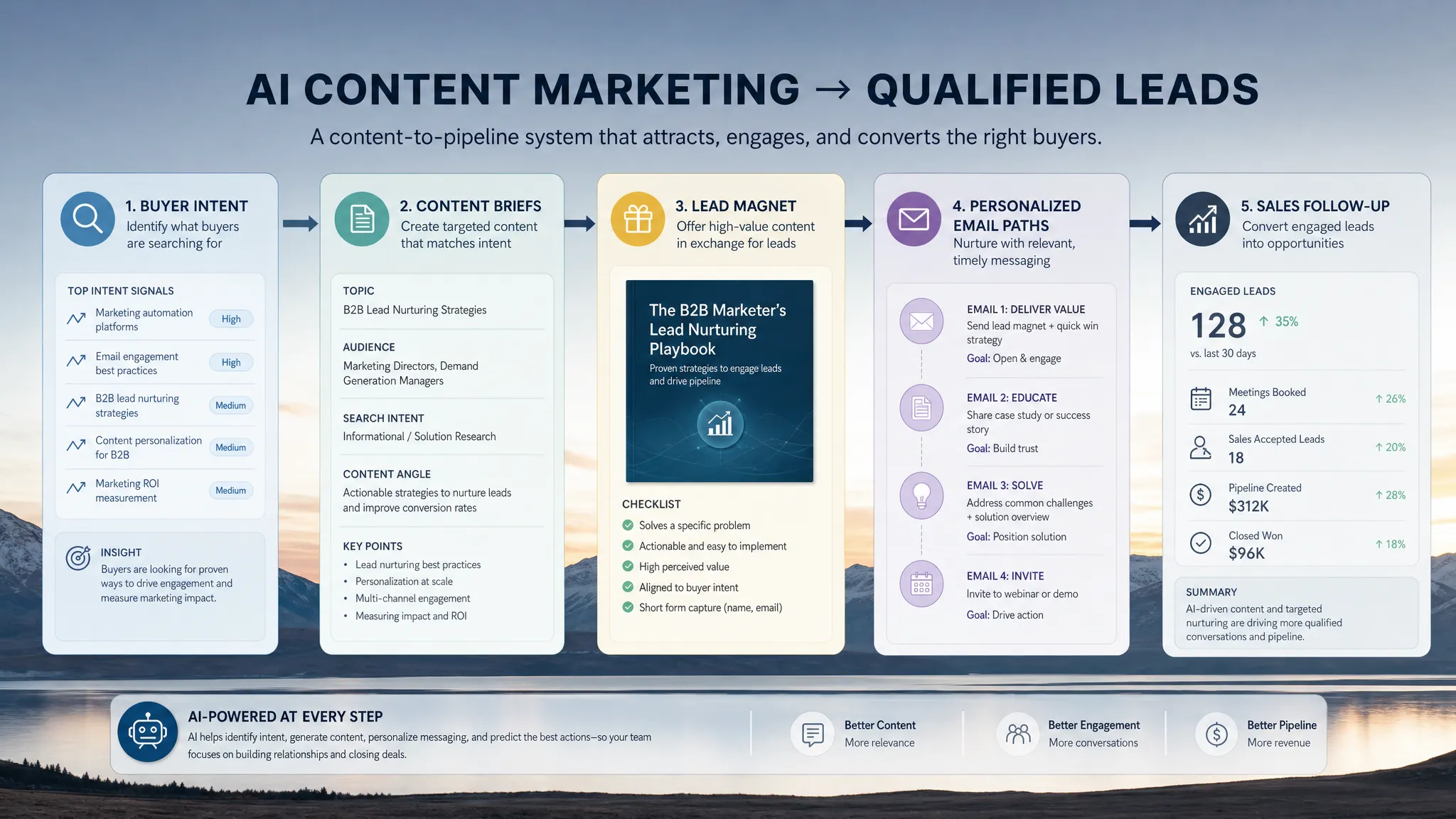
Before choosing tactics, define your growth model in plain language. A simple version might be: We attract operations leaders through search-driven content, convert them with practical templates, nurture them through email, and turn the most engaged leads into sales conversations.
Another version might be: We grow through founder-led LinkedIn content, repurpose the best posts into newsletters and SEO articles, and invite high-intent readers to try our tool.
Your model does not need to be complicated. In fact, it should be easy enough for every person on the team to repeat. If your growth model requires a diagram with 17 arrows, it is probably too complex for a lean team to execute consistently.
A practical growth model includes five core elements:
This foundation keeps your team from spreading itself thin. It also gives AI tools, freelancers, agencies, and internal stakeholders clearer direction. AI can accelerate execution, but it cannot fix a vague strategy.
Lean teams often struggle because they try to maintain a presence everywhere. The logic is understandable. Buyers use search, social media, email, communities, review sites, events, webinars, and referrals. But maintaining every channel is different from winning one or two.
The stronger approach is to choose channels based on fit, not popularity. Ask where your audience already looks for solutions and where your team has a realistic advantage.
Search works well when your buyers actively research problems, compare solutions, or need education before making a decision. LinkedIn can work well for B2B teams with strong points of view and visible subject matter experts. Email is powerful when you already have a growing audience or can offer useful resources worth subscribing to. Partnerships work when your product or service complements another company’s audience.
For most lean teams, the best starting point is one primary channel and one support channel. The primary channel creates demand or captures demand. The support channel deepens trust, nurtures prospects, or repurposes the best ideas.
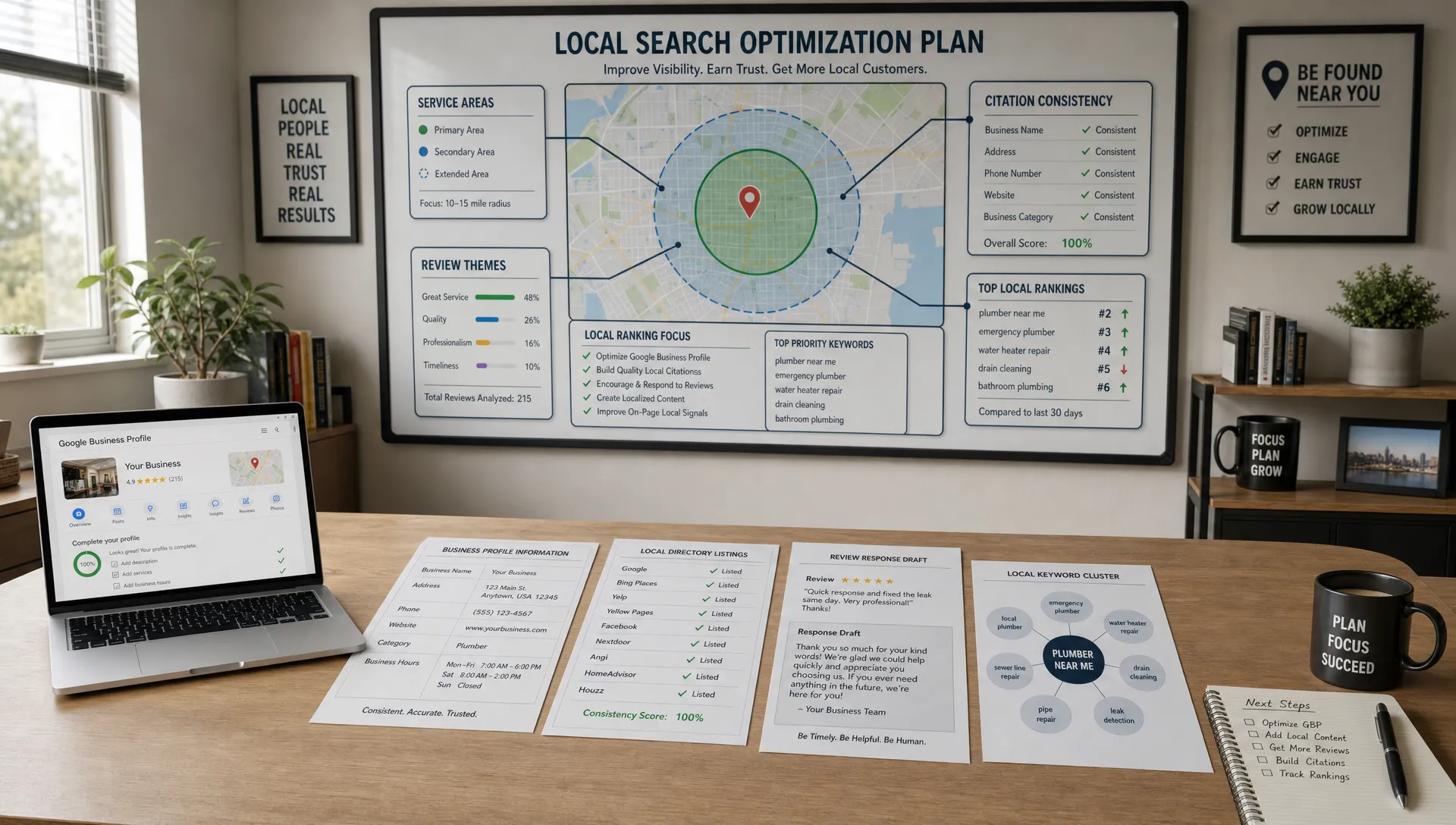
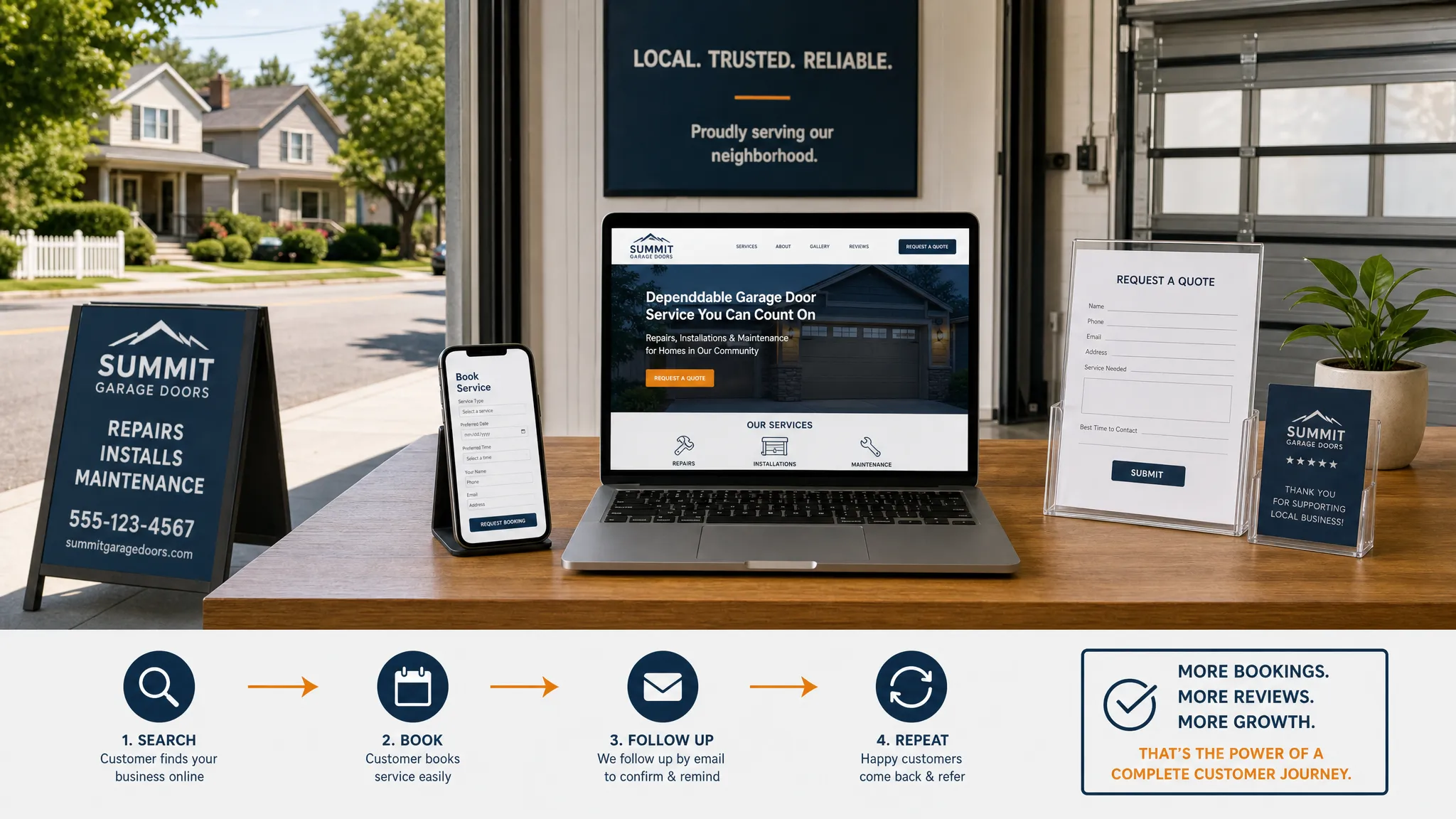
For example, a lean B2B SaaS team might use SEO as the primary channel and email as the support channel. A consulting firm might use LinkedIn as the primary channel and webinars as the support channel. A local service business might use Google Business Profile and referral partnerships before investing heavily in content.
The key is to avoid building a marketing calendar that assumes unlimited capacity. A focused channel strategy executed weekly will outperform a broad strategy executed inconsistently.
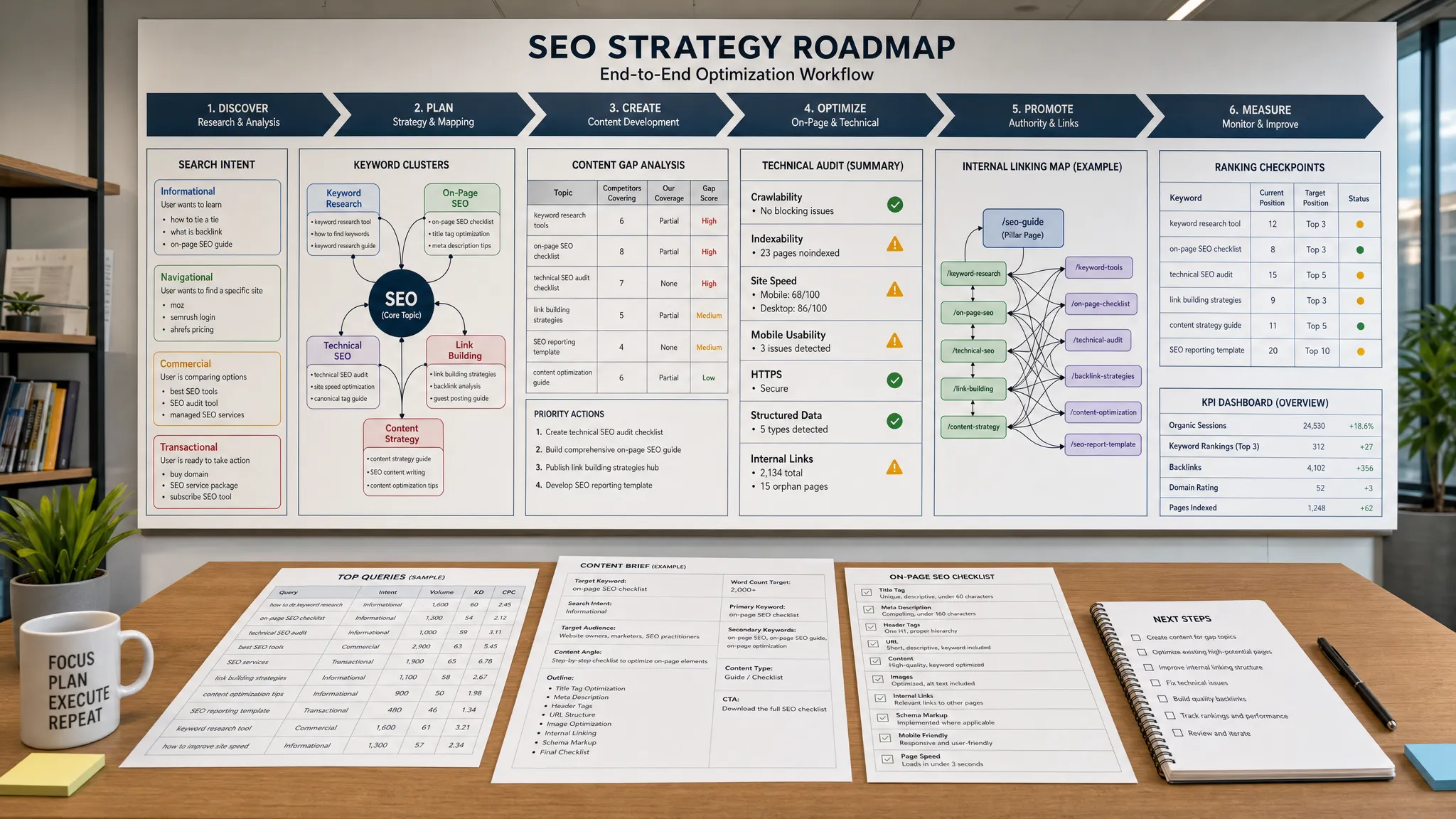
Content is still one of the most efficient marketing growth strategies for lean teams, but only when it is mapped to customer intent. The mistake is starting with formats: blog posts, videos, carousels, newsletters, podcasts, case studies. Formats matter, but they should come after the customer job.
A customer job is the thing your buyer is trying to accomplish. They might be trying to reduce software costs, compare vendors, automate reporting, improve lead quality, understand a new regulation, or convince leadership to approve a budget.
When you build content around those jobs, your ideas become more useful and easier to repurpose. One strong customer problem can become a search article, a LinkedIn post, an email, a sales enablement resource, and a short demo script.
A lean content system should cover three intent levels:
This structure is especially useful because it prevents overinvesting in top-of-funnel content that attracts readers but not buyers. Educational content is valuable, but lean teams need a healthy mix of topics that support real buying journeys.
For example, instead of only writing broad posts like What Is Marketing Automation, a lean team could create more specific assets such as Marketing Automation Workflows for Small B2B Teams, How to Score Leads Without a Full RevOps Team, or Email Nurture Templates for High-Intent Demo Requests.
Specificity improves relevance. Relevance improves conversion.
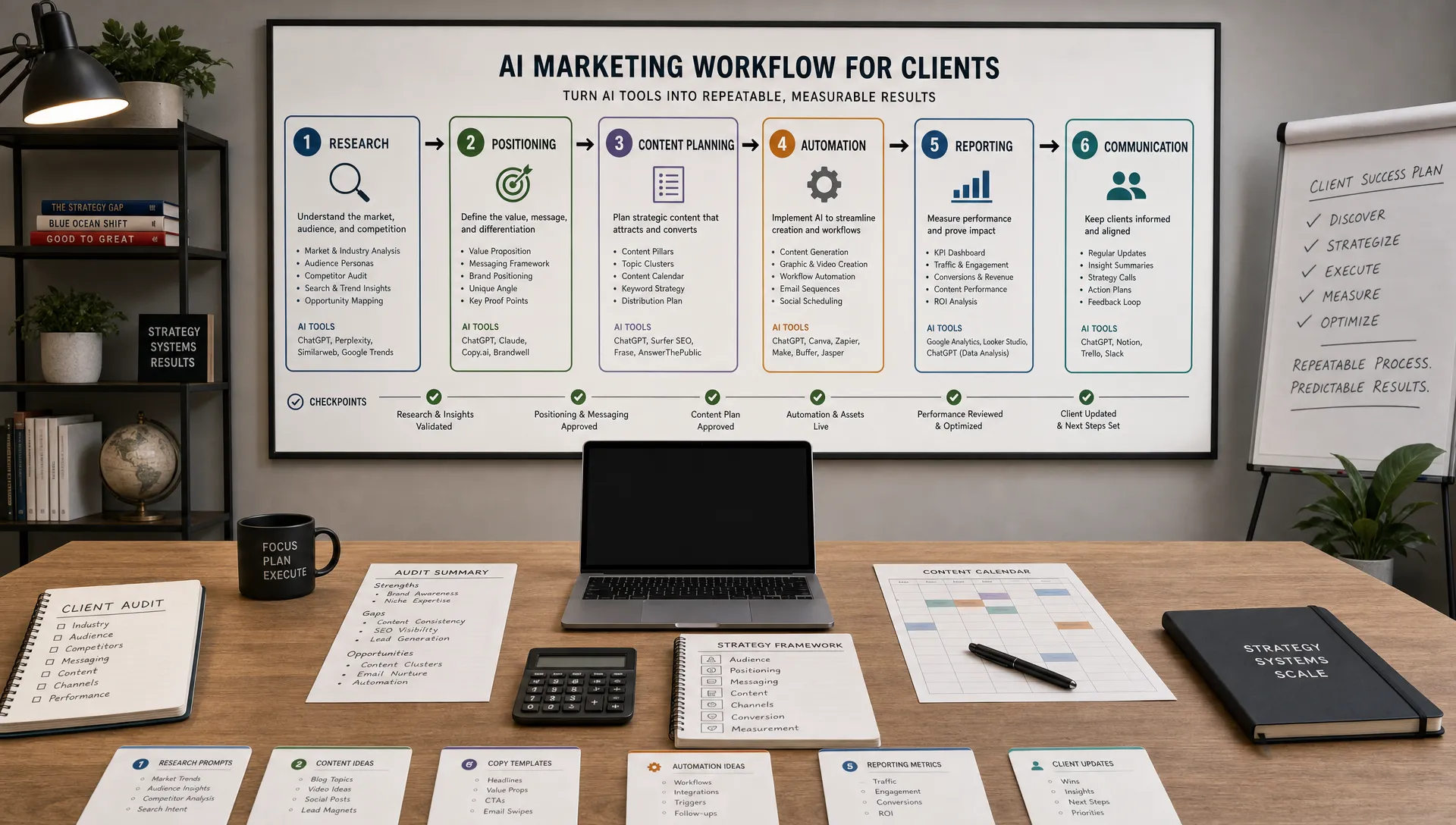
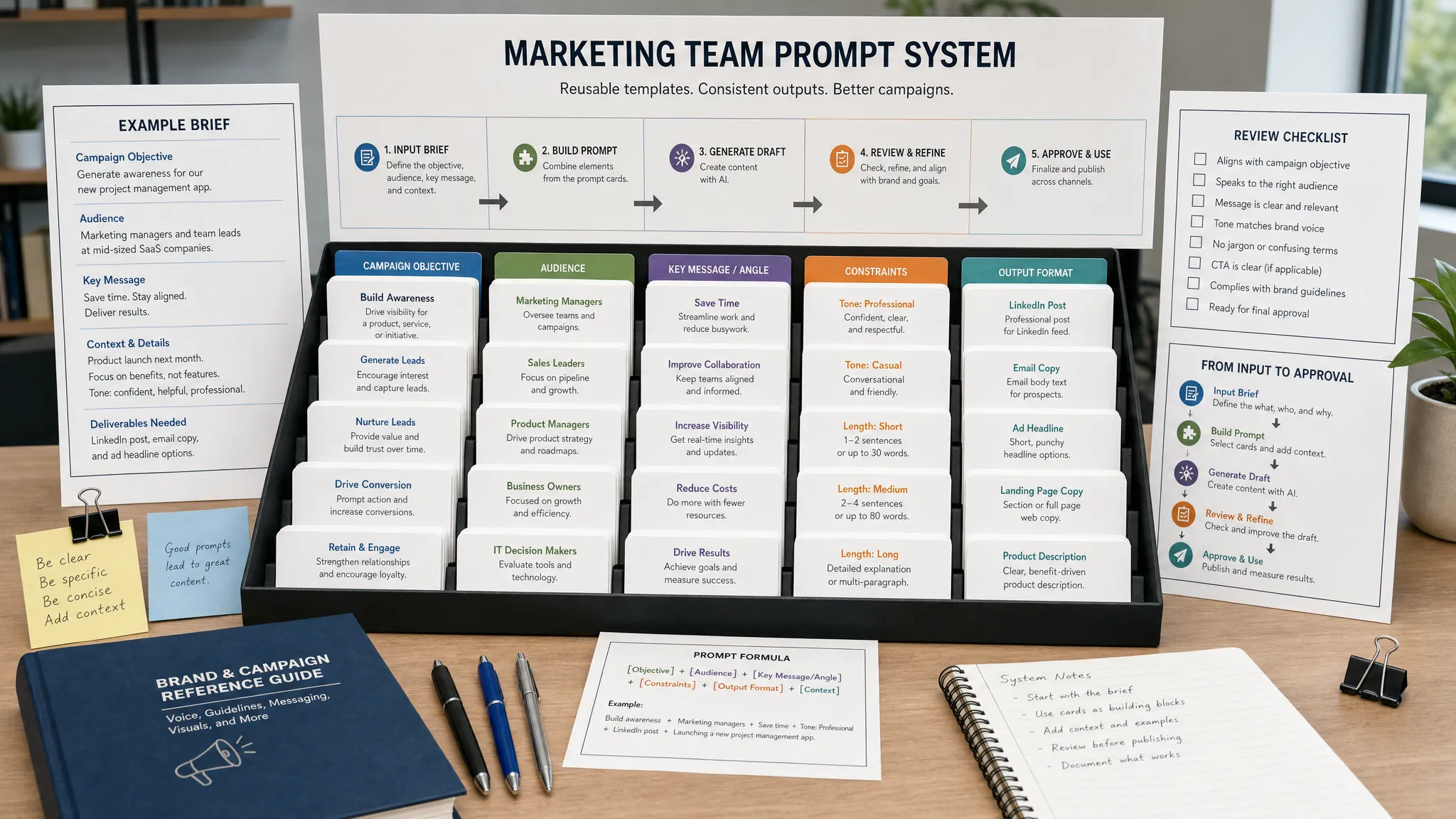
AI can be a major advantage for lean teams because it reduces the time spent on drafting, research organization, repurposing, ideation, summarization, and workflow documentation. But the highest-performing teams use AI as an operating layer, not as a replacement for marketing judgment.
The difference is important. If you ask AI to create a generic campaign without customer insight, it will usually produce generic output. If you feed it customer interviews, sales objections, product positioning, search intent, and examples of strong brand voice, it can help your team move much faster.
Useful AI-assisted workflows include:
This is where a resource like AIMarketer Hub can fit into a lean workflow. AI content generation, prompt libraries for marketers, SEO tools, calculators, and industry-specific guides can help teams reduce blank-page work and standardize common marketing tasks.
Still, every AI-assisted asset needs human review. Your team should own the positioning, proof points, claims, examples, and final editorial judgment. AI can help you produce faster. It should not make your marketing sound interchangeable.
Many lean teams think they have a traffic problem when they actually have an offer problem. If visitors do not convert, adding more traffic may simply expose the weakness faster.
A strong marketing offer gives prospects a clear reason to take the next step. It does not always have to be a discount or a demo request. For B2B and high-consideration buyers, the best offer is often a useful resource that helps them solve a painful problem while revealing why your product or service matters.
Examples include calculators, templates, checklists, assessments, comparison guides, ROI worksheets, teardown reports, industry benchmarks, and short email courses. These assets work because they exchange value for attention. They also give your sales or nurture process more context.
The best offers are specific, practical, and aligned with buying intent. A generic ebook may attract casual readers. A calculator that helps a finance leader estimate cost savings or a checklist that helps a marketing manager audit lead quality is more likely to attract people with active needs.
For lean teams, one high-performing offer is better than five average ones. Build it carefully, connect it to a simple landing page, promote it across your chosen channels, and improve it based on conversion data.
Creating content is only half the work. Distribution is where many lean teams lose momentum. They publish once, share once, and move on. That approach wastes the effort invested in creating the asset.
Instead, build distribution loops. A loop is a repeatable process that turns one marketing activity into several touchpoints. For example, one customer interview can become a case study, three social posts, a sales objection-handling document, a newsletter section, and a quote in a future blog article.
A strong distribution loop might look like this:
The benefit is not just efficiency. Repetition across channels helps your message stick. Buyers rarely convert after one exposure. They need to see a consistent point of view, useful proof, and a clear next step over time.
Lean teams should also document distribution checklists. When the process lives only in one person’s head, consistency breaks as soon as workload increases. A simple checklist makes it easier to delegate, automate, or improve over time.
Automation is most valuable when it removes manual work from high-frequency processes. For lean teams, this often includes lead routing, email follow-ups, reporting, content scheduling, CRM updates, form notifications, internal approvals, and recurring campaign tasks.
Start by identifying bottlenecks. Where does work get delayed? Where does information get copied from one tool to another? Where do leads wait too long for a response? Where does the team spend time creating the same report every week?
Once those friction points are visible, automation becomes strategic rather than decorative.
For example, a lean team might automate the process of sending a relevant resource after someone completes a form. A small SaaS company might trigger a nurture sequence based on product signup behavior. A professional services firm might route inbound inquiries by industry or service need.
Industry-specific automation can also create major leverage. In insurance, for instance, platforms such as AI-powered insurance automation for underwriting and claims show how specialized workflows can reduce operational drag in complex, regulated environments. The same principle applies broadly: the closer automation is to a real business workflow, the more valuable it becomes.
The warning is to avoid automating chaos. If your lead stages, content taxonomy, or follow-up process is unclear, automation may simply help you make mistakes faster. Clean the process first, then automate.
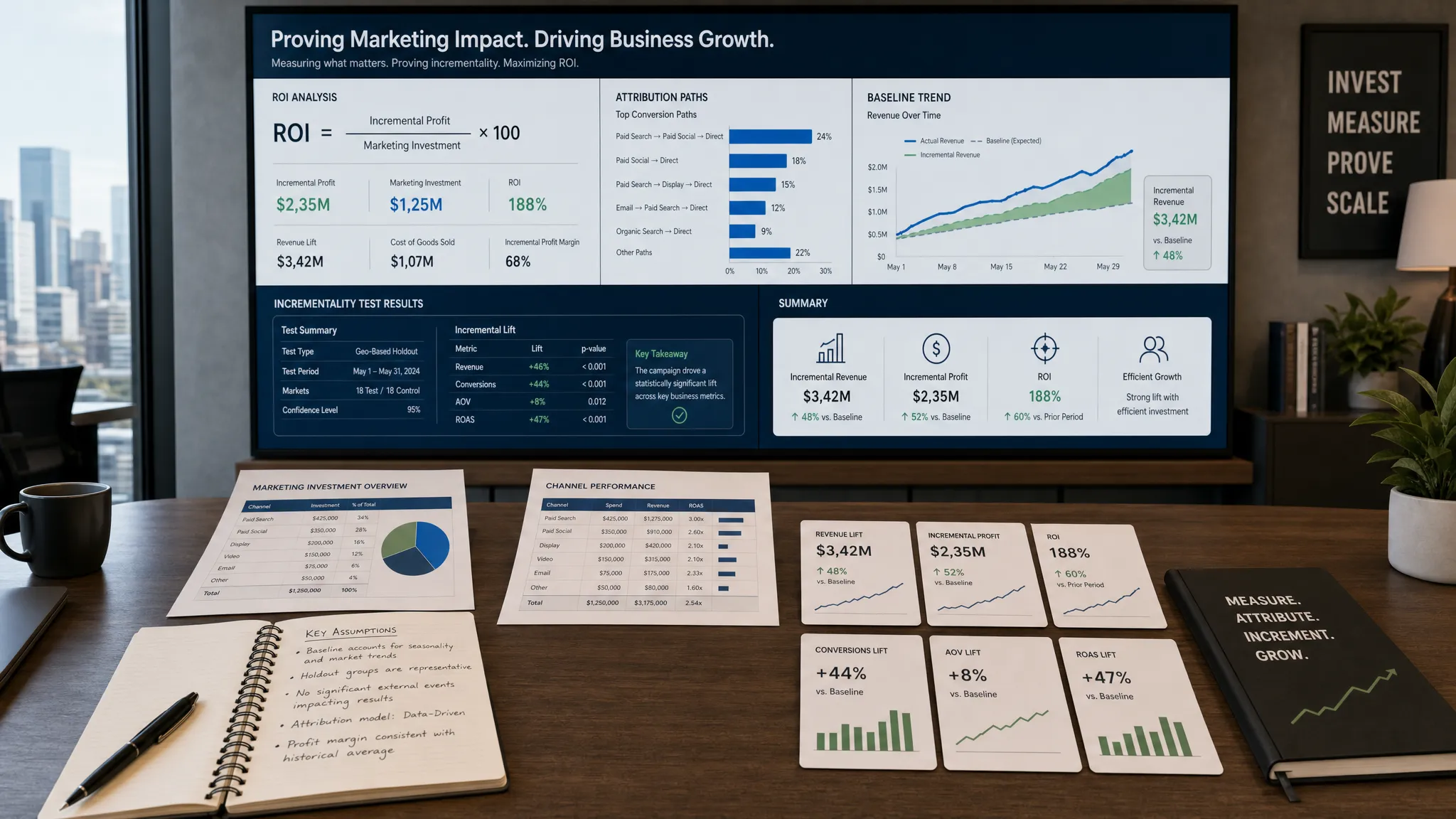
Lean teams need simple dashboards. Too many metrics create confusion, especially when different stakeholders care about different signals. The solution is not to ignore data. It is to organize it around decisions.
A practical measurement system connects marketing activity to business outcomes. Instead of reporting every possible metric, choose one primary metric for each stage of the funnel.
At the awareness stage, you might track qualified organic sessions, branded search growth, or target-account engagement. At the conversion stage, you might track resource downloads, trial signups, demo requests, or consultation bookings. At the revenue stage, you might track marketing-sourced pipeline, conversion rate from lead to opportunity, or customer acquisition cost.
The key is to define what good looks like before evaluating performance. A blog post that attracts 300 highly qualified visits and generates five demo requests may be more valuable than a viral post that brings 10,000 irrelevant clicks. A small email list with high engagement can be more profitable than a large list that never converts.
Lean teams should also review metrics on a consistent rhythm. Weekly reviews are useful for campaign execution. Monthly reviews are better for channel decisions. Quarterly reviews help you decide whether to double down, pivot, or stop.
Growth is not only about getting more people into the funnel. It is also about helping qualified prospects move through the funnel with less hesitation. Trust assets do this job.
A trust asset is any piece of content that answers a buyer’s unspoken question: Can I believe you, and is this the right choice for me?
Examples include customer stories, proof pages, comparison content, transparent methodology pages, security or compliance explainers, pricing guidance, implementation timelines, and objection-specific FAQs.
Lean teams often postpone these assets because they seem less exciting than acquisition campaigns. That is a mistake. If your sales process repeatedly gets stuck on the same objections, trust content can improve conversion without increasing traffic.
Start by asking sales, support, founders, or customer success teams what prospects ask before they buy. Then turn those answers into reusable content. A single well-written comparison guide or implementation FAQ can support dozens of sales conversations.
Trust assets are also useful in AI-driven search environments. As search experiences become more answer-based, brands with clear, specific, well-structured content have a stronger chance of being understood and cited by both people and machines.
Lean teams cannot always outspend competitors, but they can often outlearn them. Customer insight is one of the most underrated marketing growth strategies because it improves every other tactic.
Talk to customers regularly. Review sales calls. Read support tickets. Analyze form responses. Watch how prospects describe their problems in communities, review sites, and search queries. The exact language your customers use is often more powerful than internally polished messaging.
Look for patterns in four areas:
These insights can reshape your homepage, ads, SEO strategy, nurture emails, sales enablement, and product messaging. They also make AI-assisted content significantly better because the inputs become more specific.
A lean team that captures customer language every week will usually produce more relevant marketing than a larger team relying only on assumptions.
If your team needs momentum quickly, avoid launching a complicated transformation. Use the next 30 days to build a focused growth system.
This plan is intentionally simple. The objective is not to solve every marketing challenge in a month. It is to create a repeatable operating rhythm your team can build on.
Even smart teams fall into predictable traps. The most common is chasing tactics before defining strategy. A new tool, channel, or campaign will not fix unclear positioning.
Another mistake is overproducing content without improving conversion paths. If your calls to action are vague or your landing pages do not match visitor intent, more content may not produce meaningful growth.
Lean teams also under-document processes. This creates hidden dependency on one or two people. When those people are busy, campaigns stall. Documenting repeatable workflows may feel slower at first, but it protects momentum.
Finally, many teams review data too soon or too late. Some channels, like paid search, can show directional signals quickly. Others, like SEO and brand building, require patience. The solution is to set expectations by channel and review performance at the right cadence.
What is the best marketing growth strategy for a lean team? The best strategy is usually a focused system built around one clear audience, one primary acquisition channel, one strong conversion offer, and a small set of measurable outcomes. Lean teams grow faster when they concentrate resources instead of trying to be everywhere.
How can AI help small marketing teams grow? AI can help with content drafts, research summaries, prompt-based campaign planning, SEO briefs, repurposing, reporting, and workflow documentation. The strongest results come when AI is guided by real customer insights, clear positioning, and human editorial review.
Should lean teams invest in SEO or paid ads first? It depends on your timeline, budget, and buyer behavior. SEO is powerful when customers search for problems and solutions, but it takes time. Paid ads can test messaging faster, but they require budget and strong conversion paths. Many lean teams use paid campaigns for learning and SEO for compounding growth.
How many channels should a small team manage? Most lean teams should start with one primary channel and one support channel. This keeps execution manageable and makes it easier to learn what works. Additional channels should be added only when the first system is consistent.
What metrics matter most for marketing growth? Focus on metrics that connect to business outcomes, such as qualified traffic, conversion rate, demo requests, trial signups, marketing-sourced pipeline, customer acquisition cost, and revenue influenced by marketing. Avoid optimizing for vanity metrics that do not affect decisions.
Lean teams do not need to do everything. They need to do the right things consistently.
The strongest marketing growth strategies combine sharp positioning, useful content, focused distribution, thoughtful automation, and simple measurement. AI can accelerate the work, but customer insight and strategic focus still determine whether that work produces results.
If you want practical tools to plan, create, and optimize campaigns with less manual effort, explore AIMarketer Hub. Use AI content generation, marketer-focused prompt resources, SEO tools, calculators, and industry guides to build a leaner growth engine that is easier to execute and improve over time.