Choosing a marketing company is not just a vendor decision. It is a growth decision that affects how efficiently your business turns budget, attention, and data into revenue over time.
The wrong partner can keep you busy with reports that look impressive but do not move pipeline, retention, or profit. The right partner helps you clarify positioning, prioritize the highest-return channels, improve conversion paths, and build a repeatable system for growth.
That is why long-term ROI should be the lens from the first discovery call. Instead of asking, “Which agency can get us the most impressions?” ask, “Which marketing company can help us create measurable, compounding business value?”
Before you compare proposals, define the outcome you actually want. “More marketing” is not a strategy. Neither is “more leads” if those leads do not close, retain, or expand.
For a SaaS company, long-term ROI may mean lower customer acquisition cost, higher trial-to-paid conversion, and stronger expansion revenue. For a professional services firm, it may mean better-qualified inquiries, shorter sales cycles, and higher average contract value. For an ecommerce brand, it may mean profitable customer acquisition, repeat purchases, and stronger lifetime value.
A strong marketing company will want to understand these economics before recommending tactics. If an agency jumps straight into paid ads, SEO packages, or social calendars without discussing margins, sales process, target customers, and attribution, that is a warning sign.
Useful ROI inputs to clarify before outreach include:
You do not need perfect data to start. But you do need enough business context to judge whether a marketing partner is optimizing for outcomes that matter.
Many companies hire a marketing company because they need help with a specific channel: SEO, paid search, social media, email, content, or marketing automation. Channel expertise matters, but it should not come before strategy.
A channel-first partner asks, “Do you want 10 blog posts per month?” or “How much ad spend can we manage?” A strategy-first partner asks, “Where are your best customers coming from today, what is stopping more of them from converting, and which channels can produce profitable growth based on your market?”
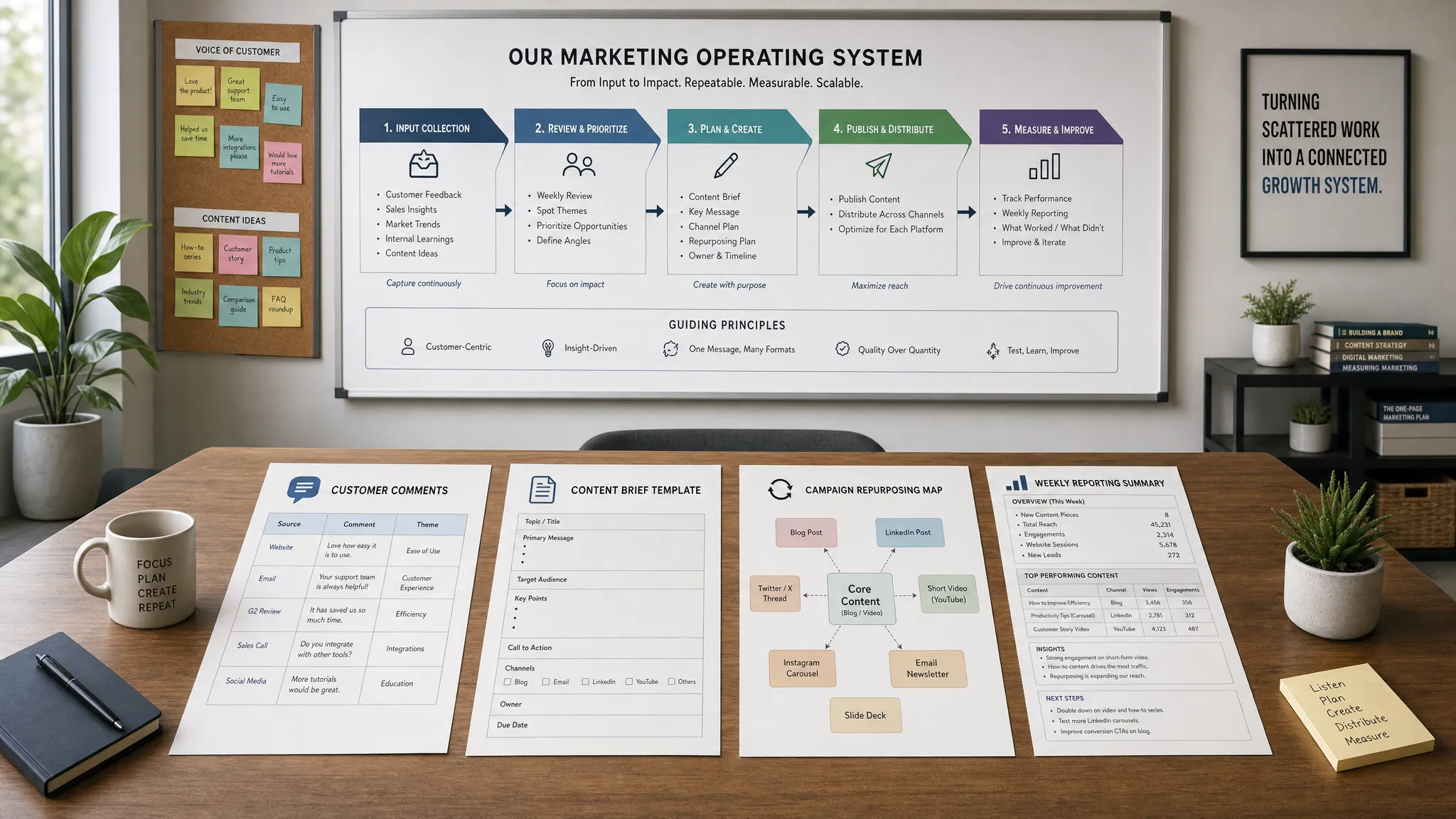
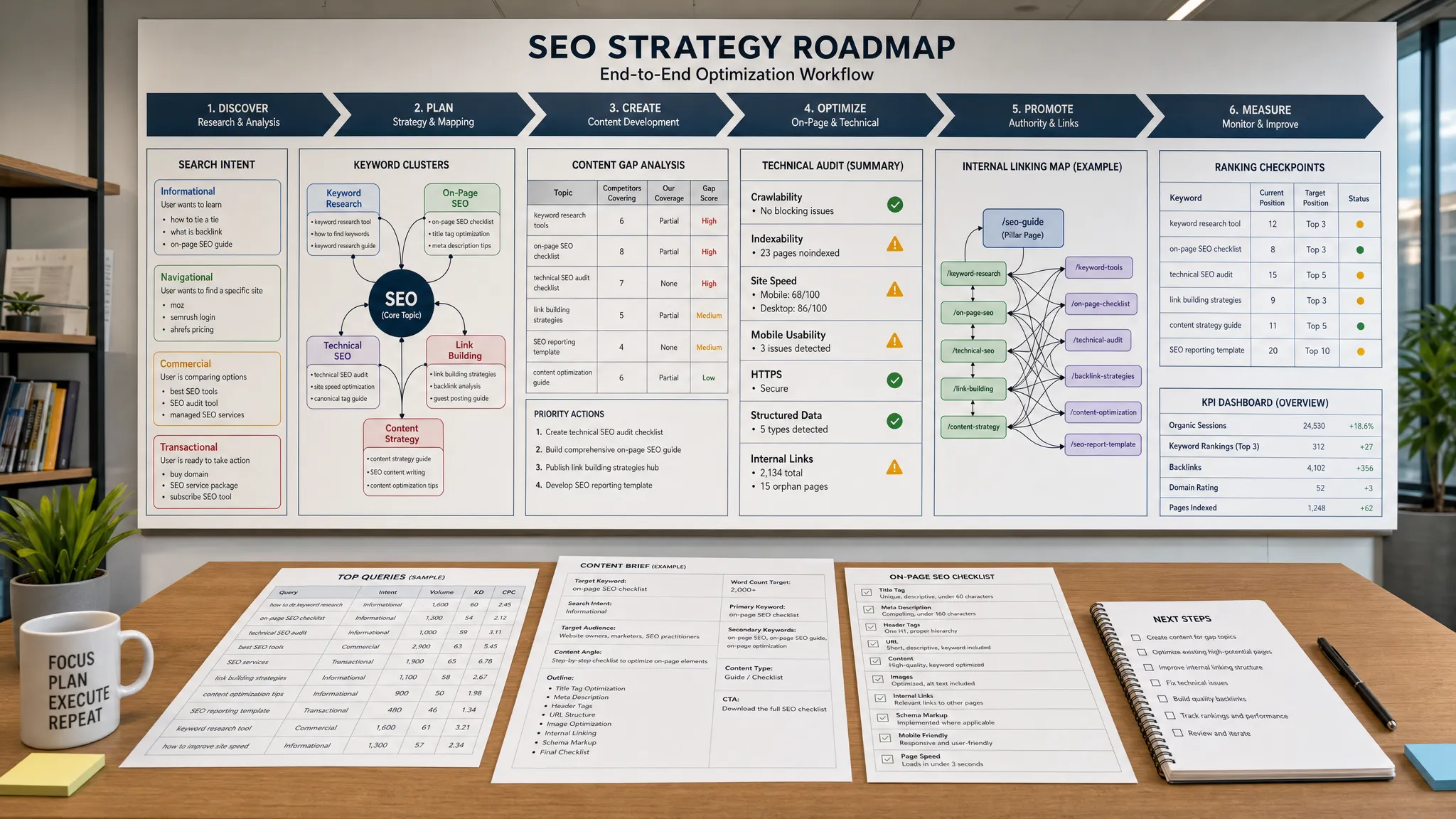
That distinction is critical. Long-term ROI usually comes from the interaction of multiple levers, not one isolated tactic. Better positioning can improve paid ad performance. Stronger landing pages can raise the return on SEO traffic. Sales enablement content can help leads close faster. Email nurturing can recover opportunities that would otherwise go cold.
The right marketing company should be able to explain how each activity connects to the customer journey and revenue model. If the plan feels like a menu of deliverables instead of a connected growth system, keep asking questions.
A marketing company does not need to have served only businesses identical to yours. In fact, relevant pattern recognition across industries can be valuable. But they do need to show that they can learn your market quickly and deeply.
During the evaluation process, listen for whether they understand:
This is especially important in complex sectors like finance, legal, B2B SaaS, healthcare, or professional services, where trust, compliance, and sales cycles play a major role. A generic campaign may generate activity, but long-term ROI depends on relevance.
Ask prospective partners how they conduct discovery. Do they review sales calls? Interview customers? Analyze competitors? Audit search intent? Examine existing CRM data? A company that builds marketing around customer insight is more likely to create assets and campaigns that keep producing value.

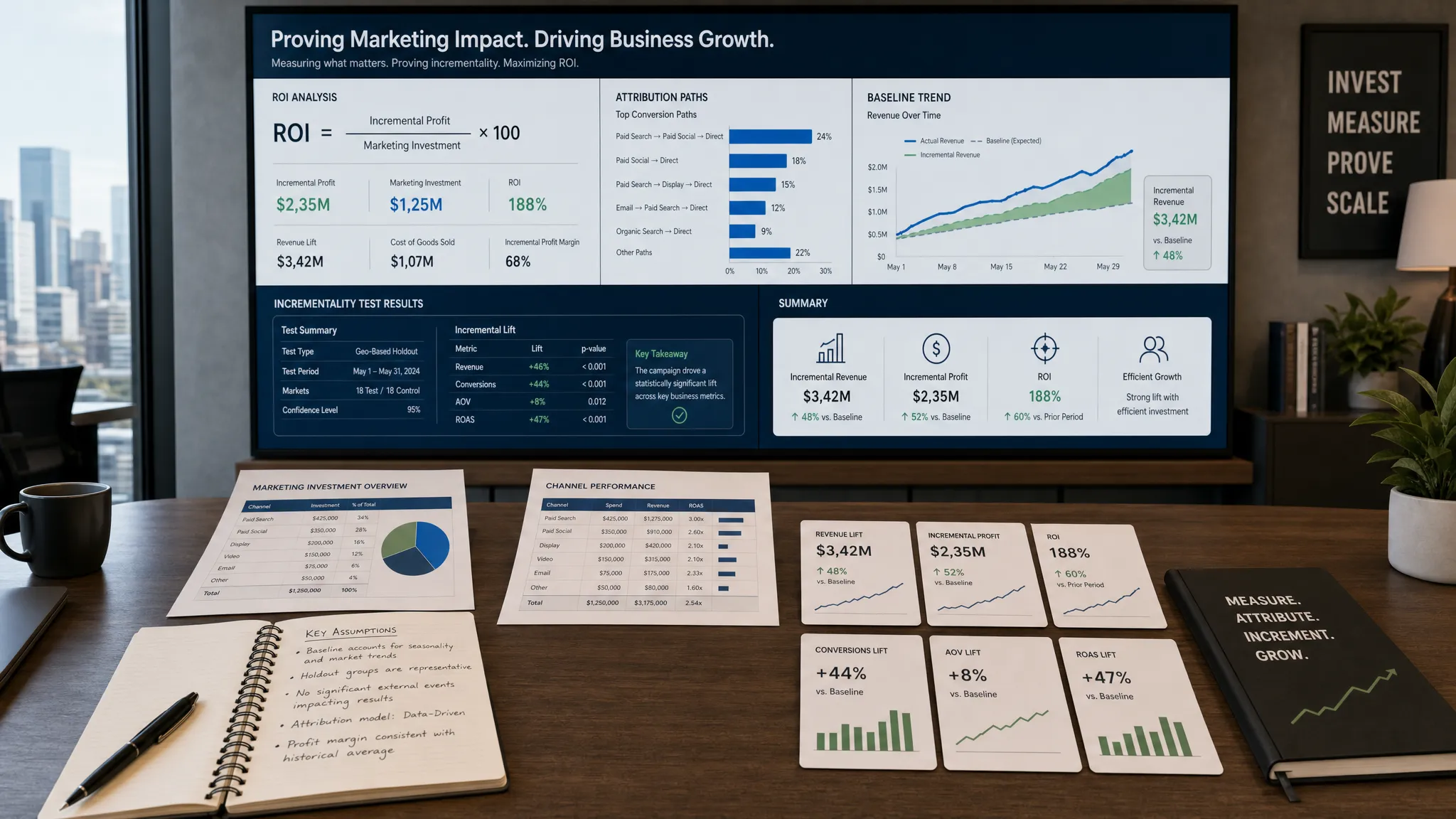
A credible marketing company should be comfortable discussing measurement in plain language. They should not hide behind vanity metrics like impressions, clicks, likes, or traffic without explaining how those metrics contribute to revenue.
That does not mean every marketing activity must produce immediate sales. Brand awareness, organic content, and demand generation often take time. But there should still be a measurement logic. For example, early-stage content might be judged by qualified traffic, engaged sessions, newsletter signups, assisted conversions, or sales conversations influenced over time.
Ask how the company defines success at different stages:
The best partners set expectations honestly. They can distinguish between leading indicators and lagging indicators. They can also explain what they will do if performance misses the target.
Attribution is essential, but it is rarely perfect. Buyers often interact with ads, search results, review sites, social posts, referrals, emails, webinars, and sales conversations before converting. A marketing company that promises perfect attribution is overselling.
What you want is not perfect certainty. You want a disciplined measurement system that helps you make better decisions.
A practical attribution approach usually includes clean analytics setup, conversion events, CRM integration, UTM standards, lead source rules, call tracking when relevant, and regular review of both quantitative and qualitative data. It should also include human context from sales teams, customer feedback, and pipeline quality.
Good agencies are transparent about attribution limits. They will help you avoid two common mistakes: giving all credit to the last click and continuing campaigns that look busy but do not produce qualified opportunities.
Case studies and testimonials can be useful, but they do not tell the full story. A polished portfolio shows what an agency has done. Their process shows whether they can do it reliably for you.
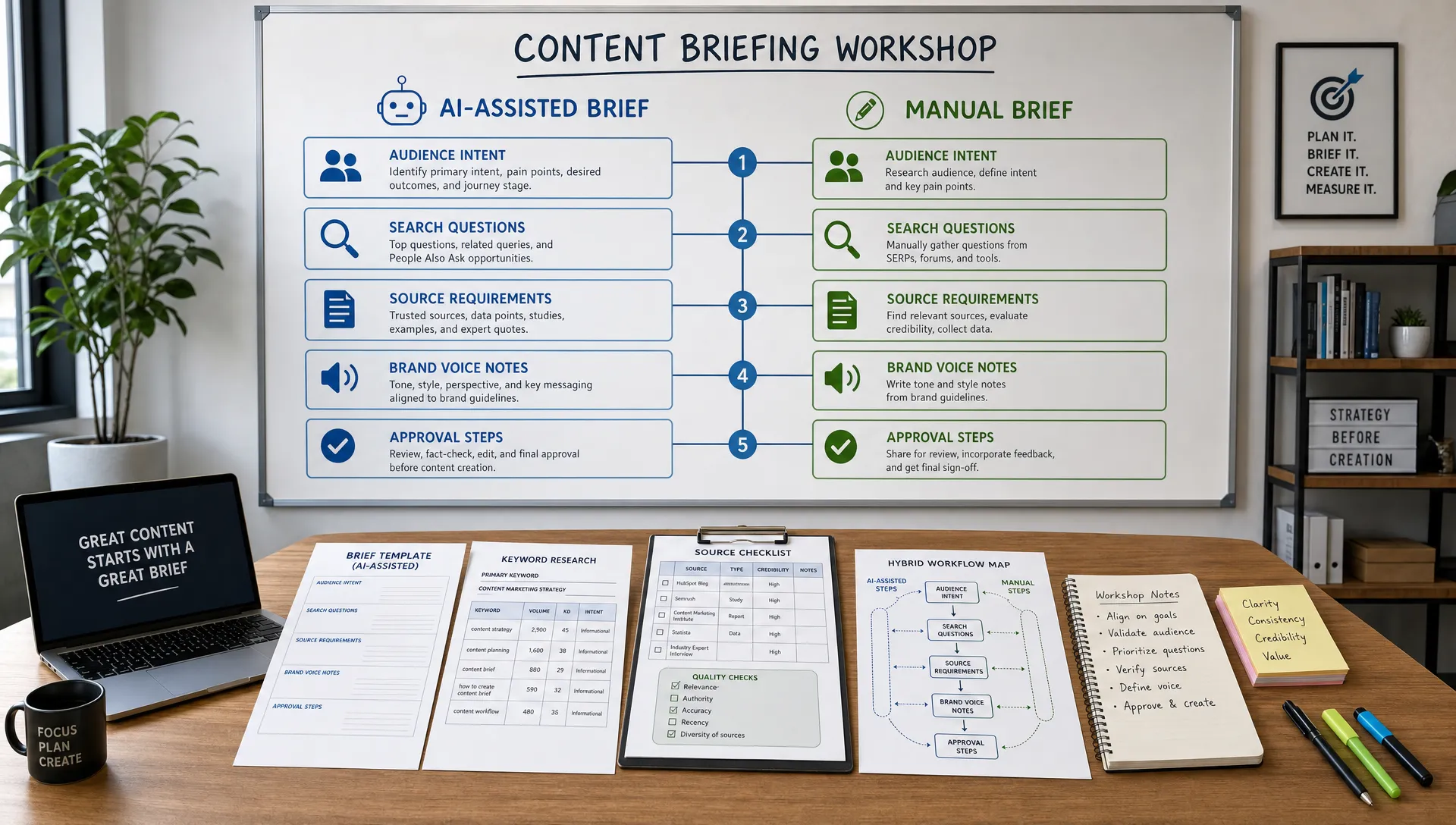
During conversations, ask them to walk through a recent engagement from start to finish. Listen for structure. A mature process often includes discovery, audit, strategy, prioritization, implementation, testing, reporting, and continuous optimization.
You should also ask how they make decisions. Do they prioritize based on impact and effort? Do they document experiments? Do they use data to adjust campaigns? Do they create a learning loop from sales outcomes back into marketing strategy?
Long-term ROI improves when your marketing partner is systematic. Creative ideas are valuable, but repeatable decision-making is what turns marketing into an asset instead of a guessing game.
Pricing models can influence behavior. A company paid only to produce deliverables may focus on quantity. A company paid based on ad spend may be motivated to increase budget, even before the funnel is efficient. A company on a vague retainer may lack urgency if expectations are not clearly defined.
No pricing model is automatically good or bad. What matters is whether scope, accountability, and incentives are aligned.
Before signing, clarify what is included, what is not included, how priorities are set, and how success will be reviewed. If performance-based components are involved, make sure the metrics are fair and tied to outcomes the marketing company can reasonably influence.
For example, an agency can influence lead quality, conversion rate, content performance, campaign structure, and funnel visibility. It may not fully control sales follow-up speed, product-market fit, pricing, customer retention, or operational capacity. Long-term ROI depends on both sides owning the right responsibilities.
The best type of marketing company depends on your business stage and internal capabilities.
A specialist agency can be a strong choice when you already have strategy in place and need deep execution in one area, such as technical SEO, paid media, conversion rate optimization, or lifecycle email. A full-service agency may be better if you need integrated planning across multiple channels and do not have a large internal team. A hybrid partner may combine strategic leadership with selected execution support.
The key is to avoid buying more complexity than you need. A lean company with limited budget may get better ROI from a focused partner solving one bottleneck than from a broad retainer spread thin across many channels. A larger company with multiple markets may need a more integrated team that can coordinate campaigns, analytics, creative, and automation.
Ask yourself what gap you are really filling: strategy, execution, expertise, capacity, technology, or accountability. The clearer the gap, the easier it is to choose the right partner.
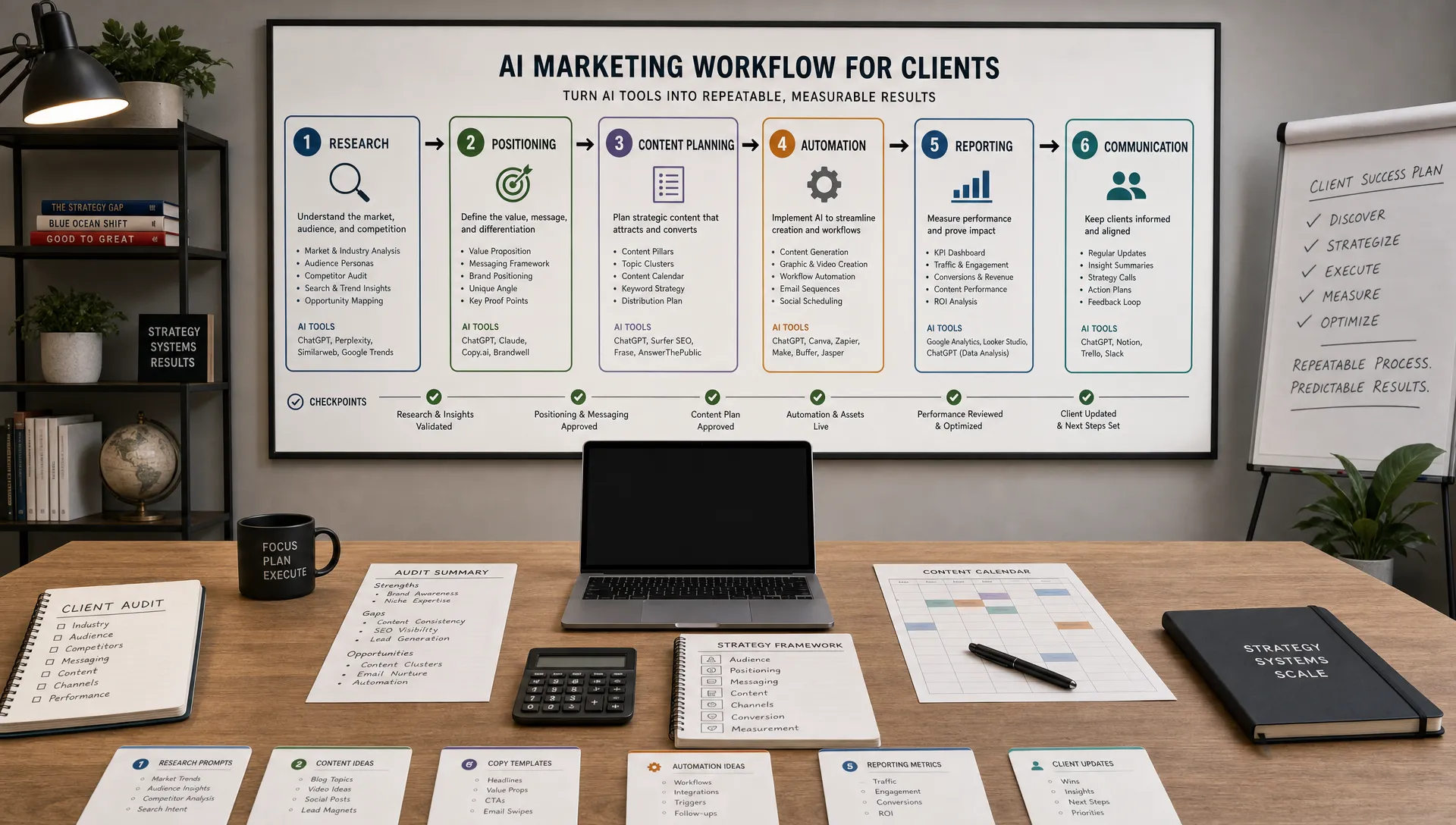
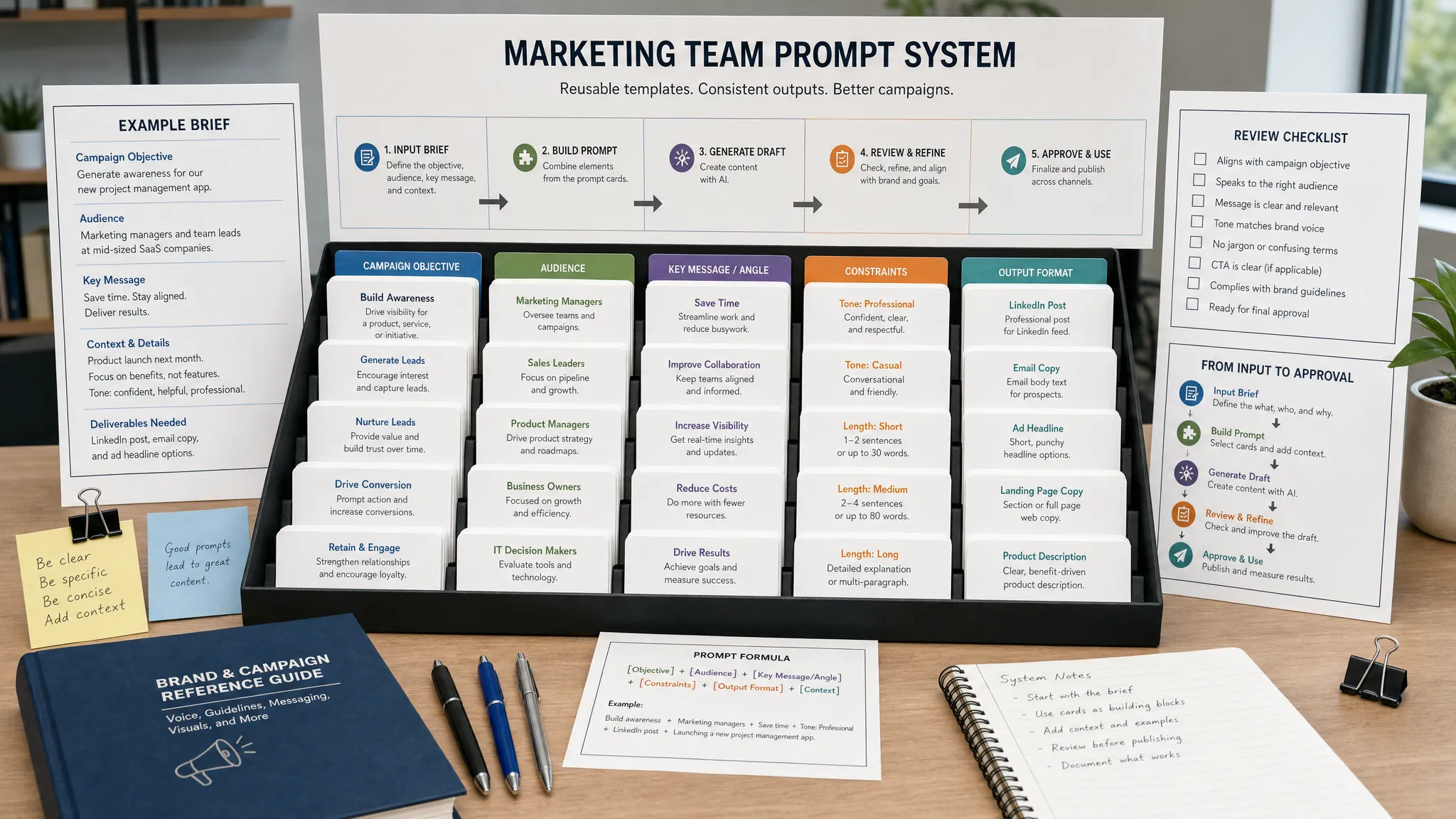
AI has changed what businesses should expect from a marketing company. Modern partners should be able to use AI to improve research, content workflows, audience analysis, testing, reporting, and personalization. But AI should support strategy, not replace it.
Be cautious of agencies that treat AI as a shortcut for generic output. Long-term ROI comes from combining automation with human judgment, brand understanding, customer insight, and quality control.
A good AI-enabled marketing partner should be able to explain where automation saves time, where human review is required, and how they protect brand voice and accuracy. For example, AI can help generate draft content, summarize customer research, cluster keyword themes, or create first-pass campaign variations. But final messaging, positioning, compliance review, and strategic prioritization still require expert oversight.
This matters because AI can either compound quality or compound mediocrity. The difference is process.
The quality of communication often predicts the quality of the partnership. If a marketing company is unclear, slow, or overly salesy during the buying process, that behavior may continue after the contract is signed.
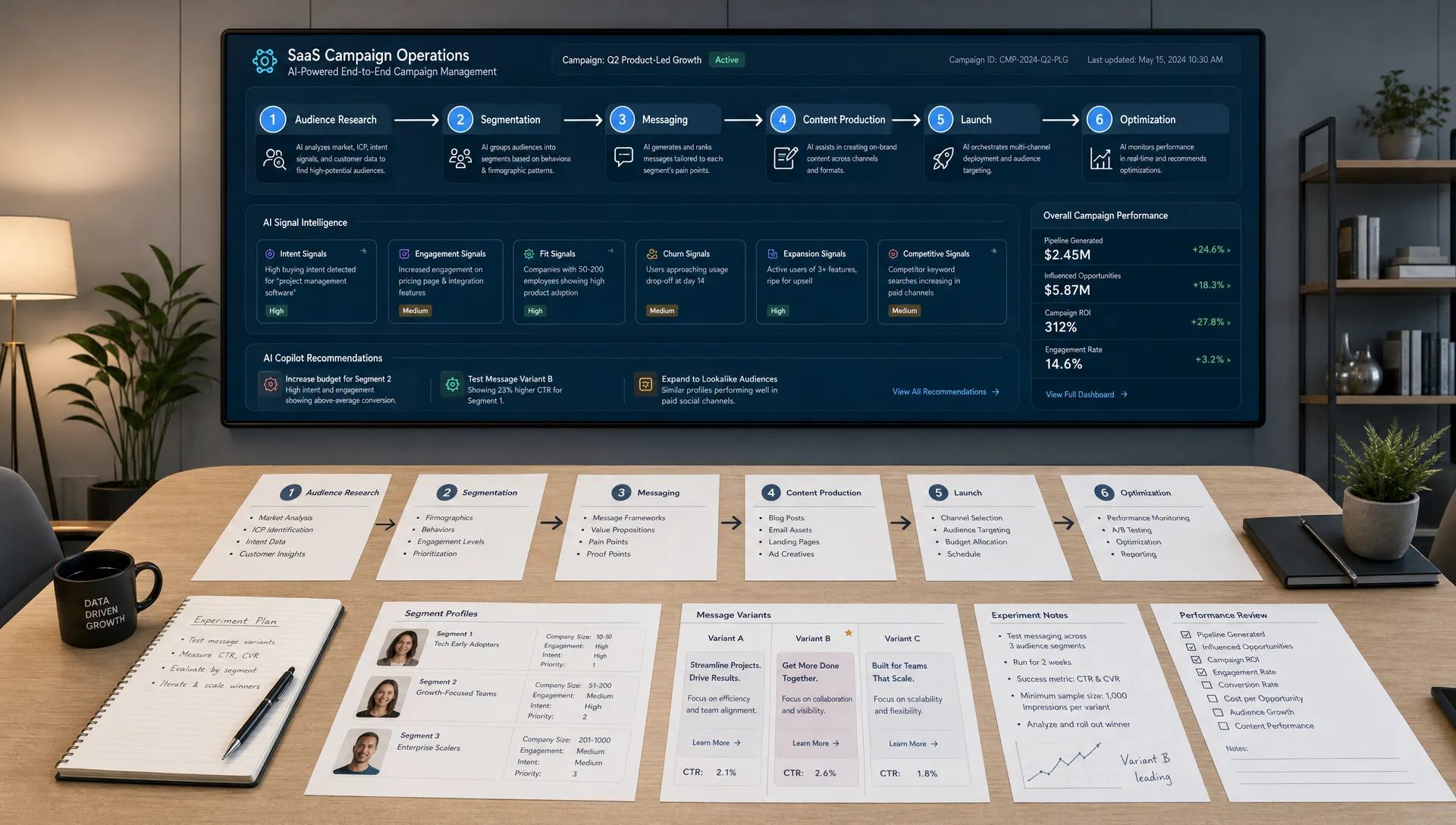
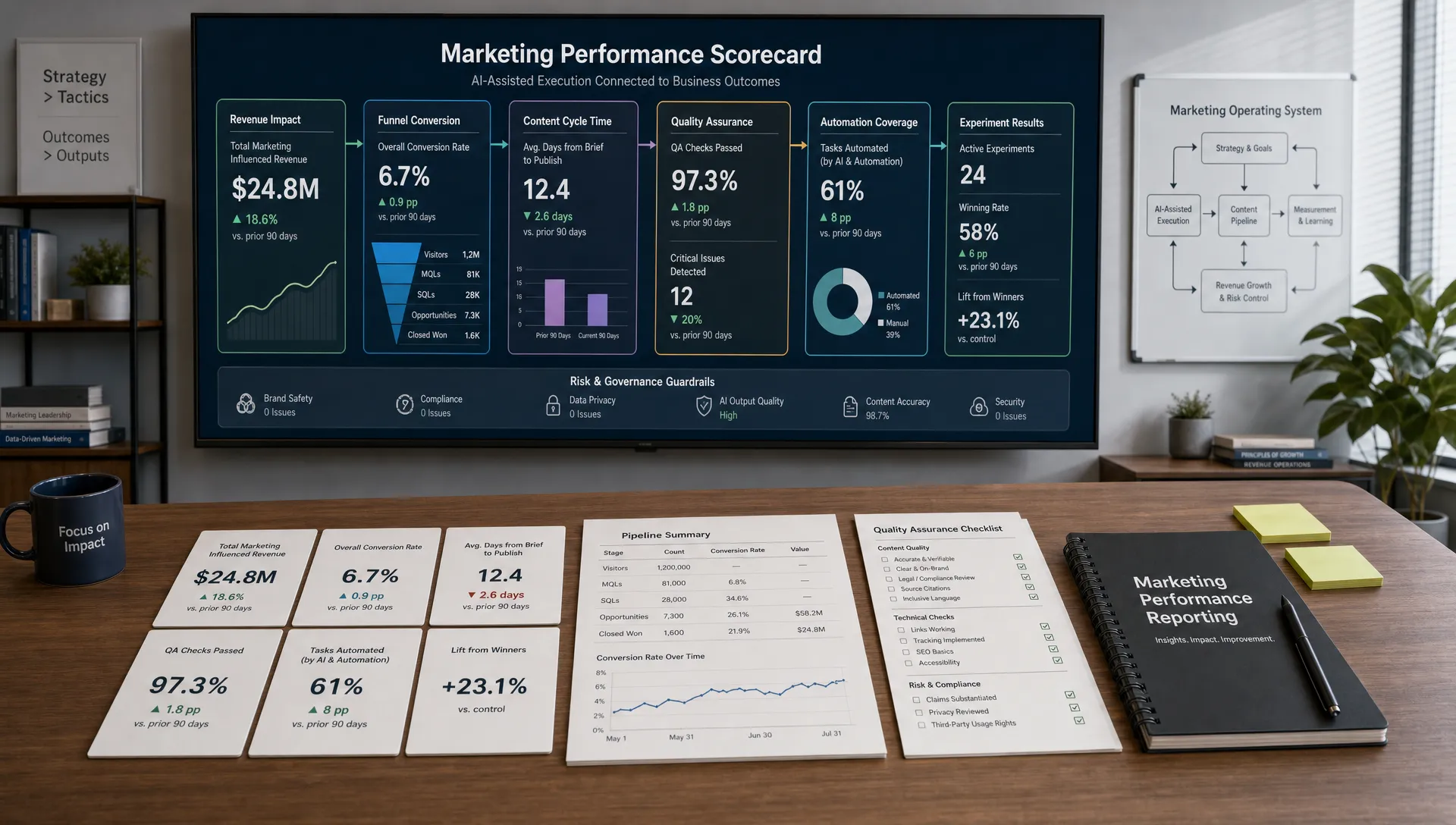
Look for a partner that communicates with clarity and consistency. Reporting should explain what happened, why it happened, what was learned, and what will change next. A dashboard alone is not enough. You need interpretation.
Strong reporting usually includes:
You should also agree on meeting cadence. Weekly check-ins may be useful during onboarding or campaign launches. Monthly strategy reviews may be enough once the system is running. Quarterly reviews are valuable for larger business decisions, budget planning, and strategic pivots.
The questions you ask will shape the quality of answers you receive. Instead of asking only about services and price, ask questions that reveal how the company thinks.
Strong questions include:
Pay close attention to specificity. Vague answers often lead to vague performance. A strong marketing company will be comfortable saying, “It depends,” but then they should explain what it depends on and how they would find out.
Some warning signs are obvious, such as guaranteed rankings, unrealistic revenue promises, or pressure to sign quickly. Others are subtler.
Be cautious if a marketing company avoids discussing business economics, cannot explain its reporting, focuses only on activity volume, or offers the same strategy to every client. Also be wary of partners that dismiss your internal knowledge. You know your customers, product, and sales process. The best agency relationships combine your expertise with their marketing discipline.
Another red flag is lack of ownership around learning. Marketing rarely works perfectly from day one. The issue is not whether every test wins. The issue is whether the partner learns quickly, documents insights, and improves the system over time.
Long-term ROI is built through iteration. If an agency cannot explain how it learns, it may simply repeat tactics until the budget runs out.
Many businesses choose a marketing company to “get more leads.” That may be the right goal, but it is often incomplete.
If your website does not convert, more traffic may waste money. If your sales team receives unqualified leads, more form fills may create friction. If onboarding is weak, acquisition growth may hide retention problems. If customers do not understand your full value, upsell and referral opportunities may be missed.
A long-term ROI mindset looks at the full journey:
A marketing company does not have to manage every stage. But it should understand how its work affects the entire revenue engine.
If the investment is significant, consider a paid discovery project, audit, or 90-day pilot before a long contract. This gives both sides a chance to test working style, strategic thinking, responsiveness, and early traction.
A useful pilot should have a clear scope. For example, it might include a funnel audit, analytics review, customer research, messaging recommendations, and one or two priority campaigns. The goal is not to prove every long-term outcome immediately. The goal is to see whether the partner can create clarity, execute well, and generate useful learning.
Avoid free strategy requests that ask agencies to solve your entire business before being hired. Serious partners deserve to be paid for serious diagnostic work. At the same time, you should expect enough detail during the sales process to feel confident in their approach.
A contract should protect both sides and support a healthy working relationship. Review the scope, timeline, deliverables, ownership of assets, termination terms, reporting expectations, and confidentiality provisions.
Make sure you understand who owns ad accounts, analytics properties, creative files, landing pages, and content assets. Ideally, your business should retain access and ownership of key accounts and data. Losing access to historical performance data can damage long-term ROI and make future transitions harder.
If the marketing company will communicate with stakeholders, customers, or partners on your behalf, provide clear brand and communication guidelines. For formal business communications, tools like an AI letter generator for professional letters can also help teams create polished drafts for outreach, complaints, resignations, or other written scenarios that need a clear tone.
The best contracts create structure without locking both parties into a plan that cannot evolve. Marketing should be accountable, but it also needs room to adapt as data improves.
Even the best marketing company cannot create long-term ROI alone. Your internal readiness matters.
Before hiring, identify who will approve work, provide feedback, share sales insights, and remove blockers. Make sure the agency can access the tools and information it needs. If approvals take weeks or data is unavailable, results will slow down.
You should also prepare your team for collaboration. A good agency will challenge assumptions. They may recommend changes to messaging, landing pages, sales follow-up, budget allocation, or reporting. If your team only wants execution without strategic input, be honest about that. If you want a growth partner, be ready to engage.
The strongest client-agency relationships are not transactional. They are collaborative, transparent, and focused on shared learning.
When you are comparing multiple options, do not rely on gut feel alone. Score each marketing company against criteria that connect to long-term ROI.
Consider these factors:
The right choice is rarely the cheapest or the flashiest. It is the partner most likely to improve your growth system over time.
How long does it take to see ROI from a marketing company? It depends on your channels, sales cycle, budget, and starting point. Paid campaigns may produce learnings within weeks, while SEO, content, and brand-building often take months. A strong partner should define early indicators and longer-term ROI milestones.
Should I choose a niche agency or a full-service marketing company? Choose based on your gap. If you need deep expertise in one channel, a specialist may be better. If you need integrated strategy and execution across channels, a full-service partner may create more value.
What budget should I have before hiring a marketing company? There is no universal number. Your budget should be large enough to cover both professional fees and the media, tools, or production needed to execute the strategy. Ask agencies what budget level is realistic for your goals.
What is the biggest mistake businesses make when hiring a marketing company? The biggest mistake is hiring for activity instead of outcomes. More campaigns, posts, or clicks do not guarantee ROI. Choose a partner that understands your revenue model and can explain how marketing work will improve it.
Can AI replace a marketing company? AI can accelerate many marketing tasks, but it does not replace strategy, customer understanding, creative direction, or accountability. The best results often come from combining AI-powered workflows with experienced human decision-making.
Choosing a marketing company for long-term ROI is not about finding a vendor with the longest service list. It is about finding a partner that can understand your economics, prioritize the right opportunities, measure what matters, and improve performance over time.
If you want to evaluate partners more effectively, strengthen your internal marketing process, or explore AI-powered ways to scale content, SEO, and campaign planning, AIMarketer Hub offers practical tools, expert guides, calculators, and curated resources for modern marketing teams.
Use the selection process as a strategic exercise. The more clearly you define success, the easier it becomes to choose a marketing company that can help you build durable, measurable growth.