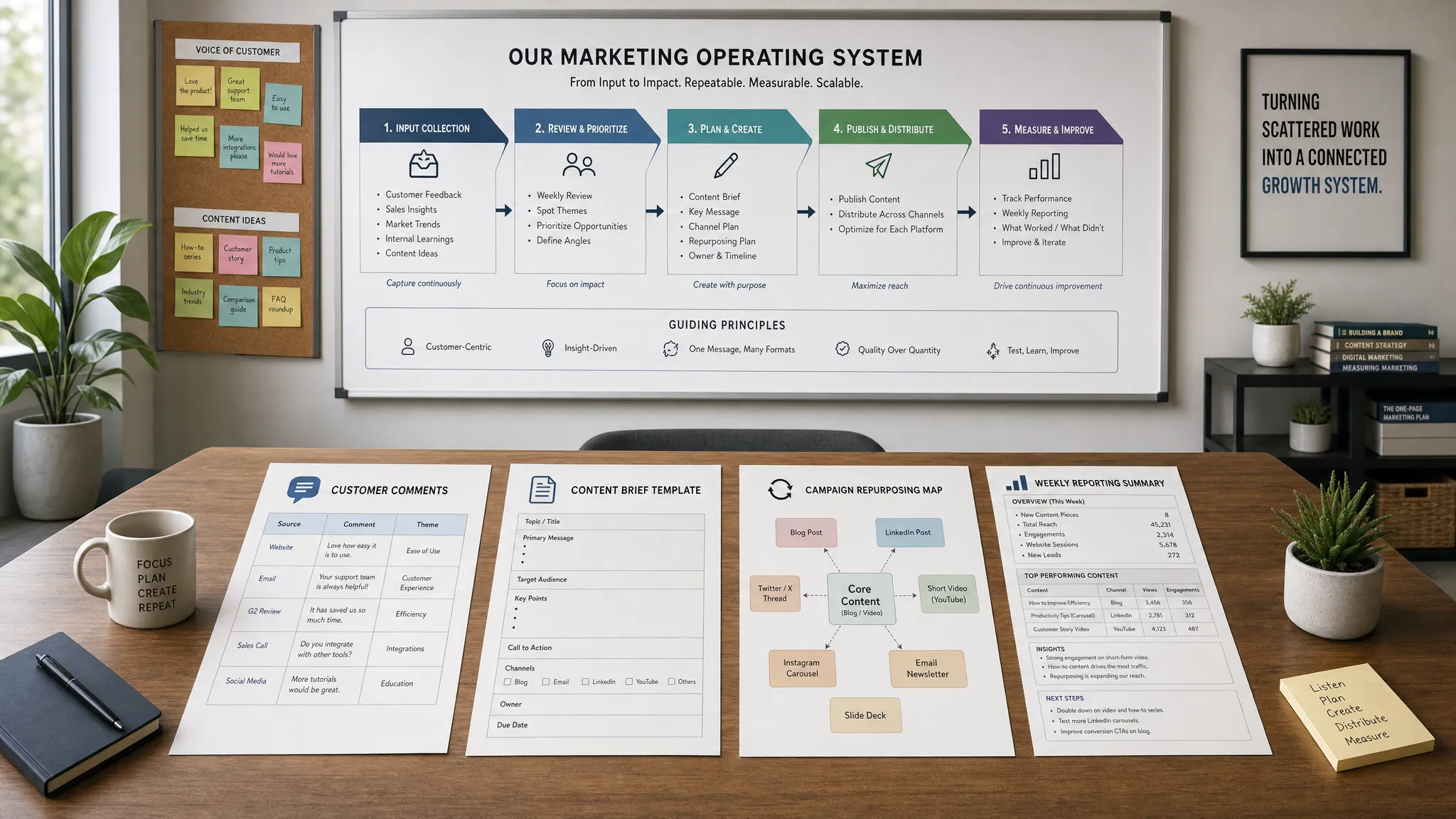
Most marketing strategies do not fail because the team lacks ideas. They fail because the ideas are not connected to a clear customer, a measurable conversion goal, and a repeatable execution system.
A marketing strategy that actually converts is not a collection of channels, campaigns, and content calendars. It is a decision-making framework. It tells your team who you are trying to reach, what problem you are solving, why your offer is the right fit, where to engage prospects, and how to move them from attention to action.
In 2026, that framework matters more than ever. Buyers compare more options, AI-generated content has raised the volume of competition, and attribution is less straightforward than it used to be. The brands that win are not always the loudest. They are the clearest, most relevant, and most consistent.
A converting marketing strategy turns a business objective into a focused path for customer action. That action might be a demo request, newsletter signup, consultation booking, trial activation, quote request, purchase, renewal, or referral.
The key word is focused. If your strategy tries to speak to everyone, promote every feature, and show up on every platform, it becomes difficult to convert anyone. Conversion comes from removing friction and increasing relevance at every step.
A useful distinction is the difference between strategy and planning:
Component          | What it answers                                                            | Example
Marketing strategy | Where should we compete, who should we serve, and why will they choose us? | Target mid-market SaaS teams that need faster content production with clear governance
Marketing plan     | What will we do, when, and with which resources?                           | Publish 4 comparison pages, launch LinkedIn retargeting, and run 2 webinars this quarter
Marketing tactics  | Which specific actions will execute the plan?                              | Create ad variants, write email sequences, optimize landing page CTAs
Measurement system | How will we know if it is working? | Track qualified leads, demo conversion rate, CAC, pipeline contribution, and content-assisted conversionsMany teams begin by asking: Which channel should we use? A better first question is: What action do we need the right audience to take?
Your conversion goal should connect directly to a business outcome. For a SaaS company, that might be trial signups that become product-qualified leads. For a legal or financial services firm, it might be consultation requests from high-fit prospects. For a B2B marketing team, it might be sales-qualified opportunities influenced by organic search and email nurturing.
Use a simple KPI tree before choosing campaigns:
Business objective          | Primary conversion             | Supporting conversion   | Leading indicators
Increase qualified pipeline | Demo request                   | Case study download     | Landing page conversion rate, return visits, email engagement
Grow organic acquisition    | Trial signup                   | Newsletter subscription | Search impressions, rankings, content engagement, internal link clicks
Improve retention           | Renewal or upsell conversation | Feature adoption        | Product usage, customer email clicks, support themes
Build authority in a niche  | Consultation request           | Webinar registration    | Branded search, social saves, referral traffic
A strategy converts when it is built around the buyer's reality, not your internal assumptions. That means going beyond demographics and firmographics.
Your ideal customer profile should clarify three things: the customer situation, the pain that creates urgency, and the outcome they are trying to achieve. This is especially important in AI marketing, finance, legal, and SaaS sectors, where trust, risk, compliance, and return on investment often shape purchase decisions.
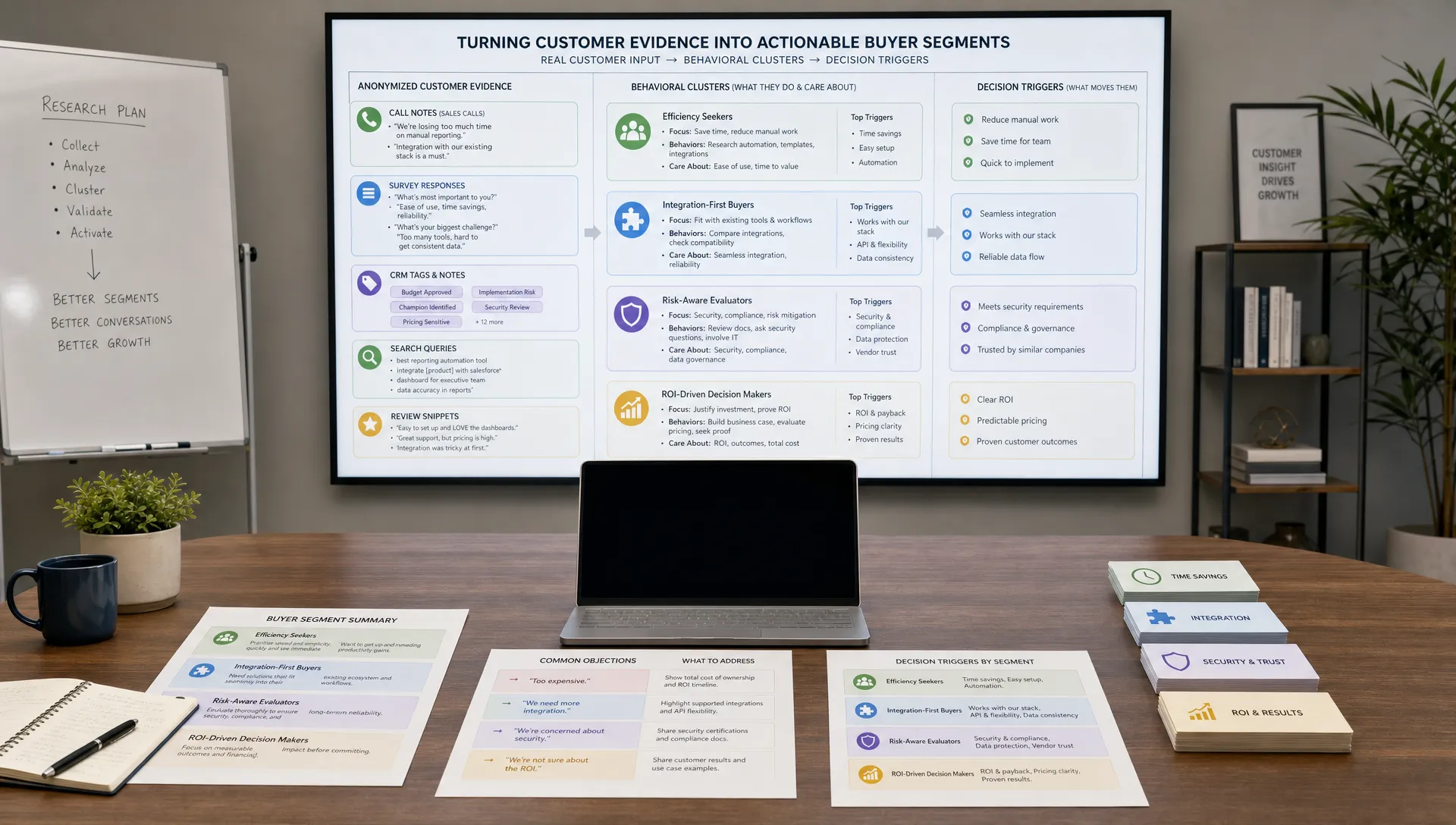
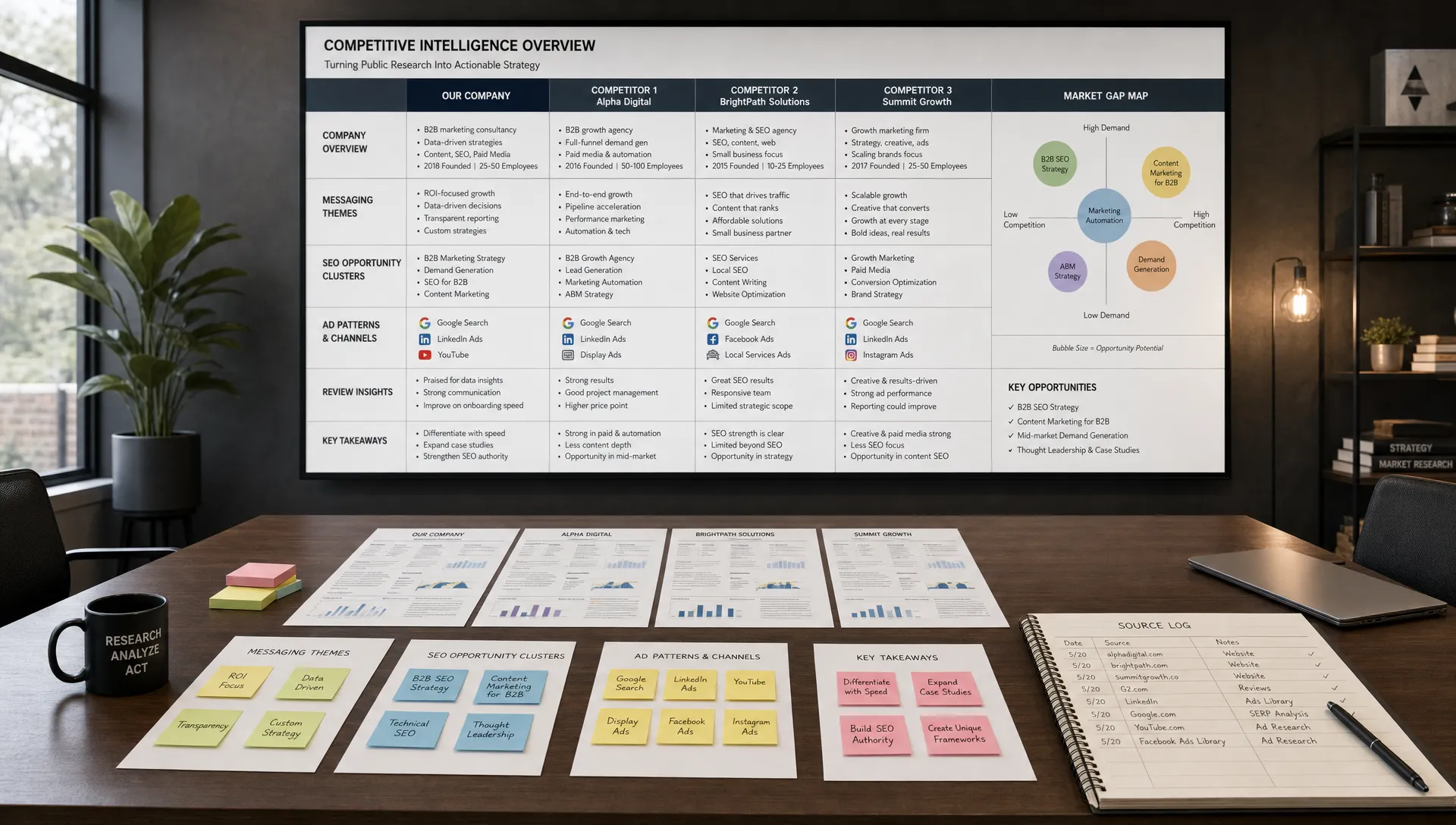
Good customer research sources include CRM notes, sales call transcripts, support tickets, customer interviews, survey responses, on-site search data, competitor reviews, and search engine results pages. The goal is not just to collect data. It is to identify the language customers use when they describe the problem.
Ask questions like:
This research prevents a common mistake: marketing the product from the company's point of view instead of the customer's point of view. Customers rarely wake up wanting a platform, tool, or service category. They want fewer bottlenecks, lower risk, faster execution, stronger performance, or a simpler way to do their job.
Once you understand the customer, turn that insight into a value proposition. A value proposition should explain who you help, what outcome you create, and why your approach is credible.
A practical formula is:
For [specific audience] who struggle with [urgent problem], we help them achieve [measurable or meaningful outcome] through [distinct approach], supported by [proof].
The wording does not have to appear exactly like that on your website, but your team should be able to say it clearly. If your value proposition requires five minutes of explanation, it is not ready to convert.
Use a message map to keep campaigns consistent:
Message element | Purpose                        | Example prompt
Audience        | Shows relevance                | Who is this specifically for?
Pain            | Creates recognition            | What problem is costing time, money, trust, or growth?
Outcome         | Builds desire                  | What improves after the customer acts?
Mechanism       | Explains why you are different | What approach, expertise, or system makes the outcome possible?
Proof           | Reduces doubt                  | What evidence supports the claim?
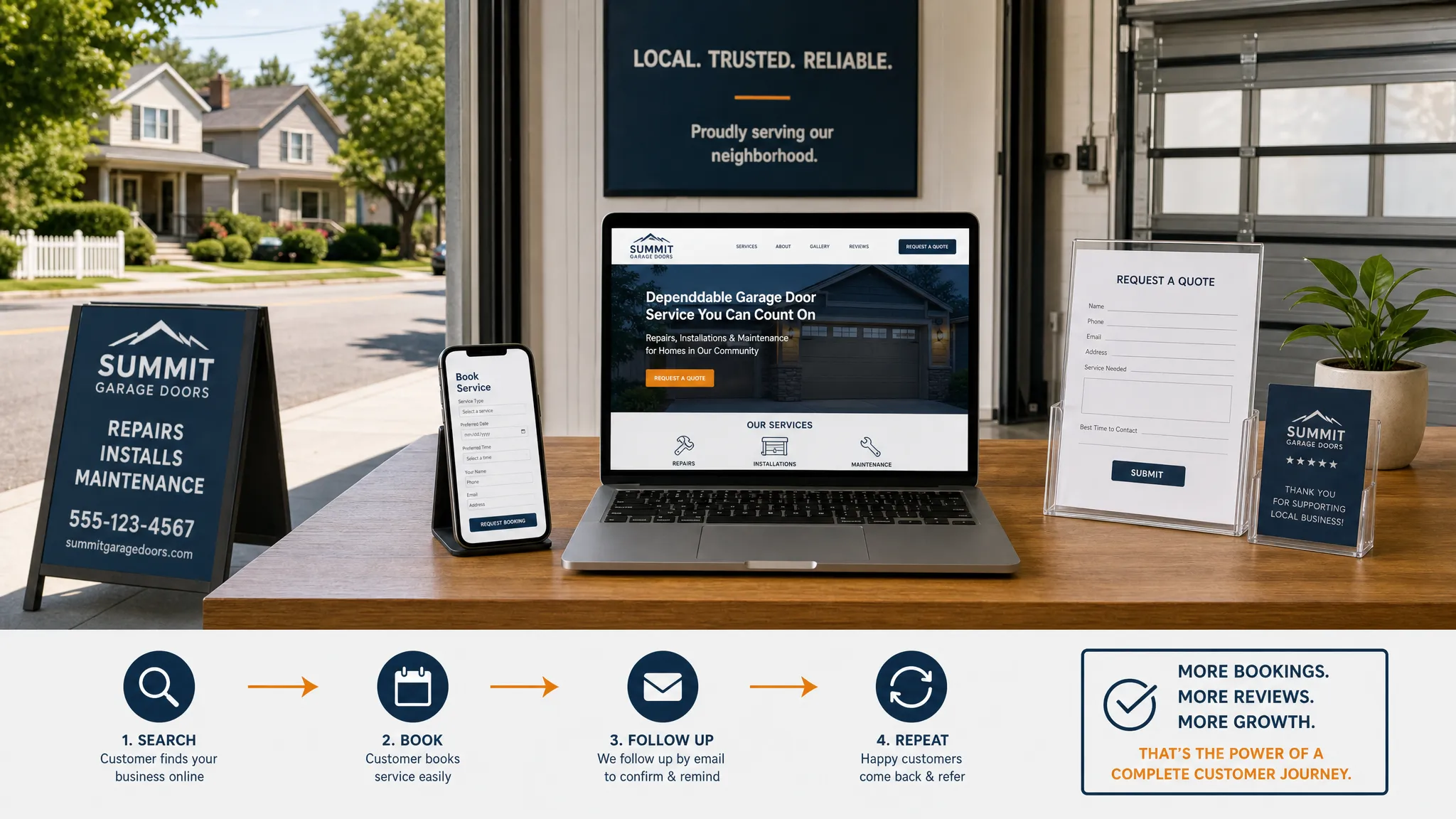
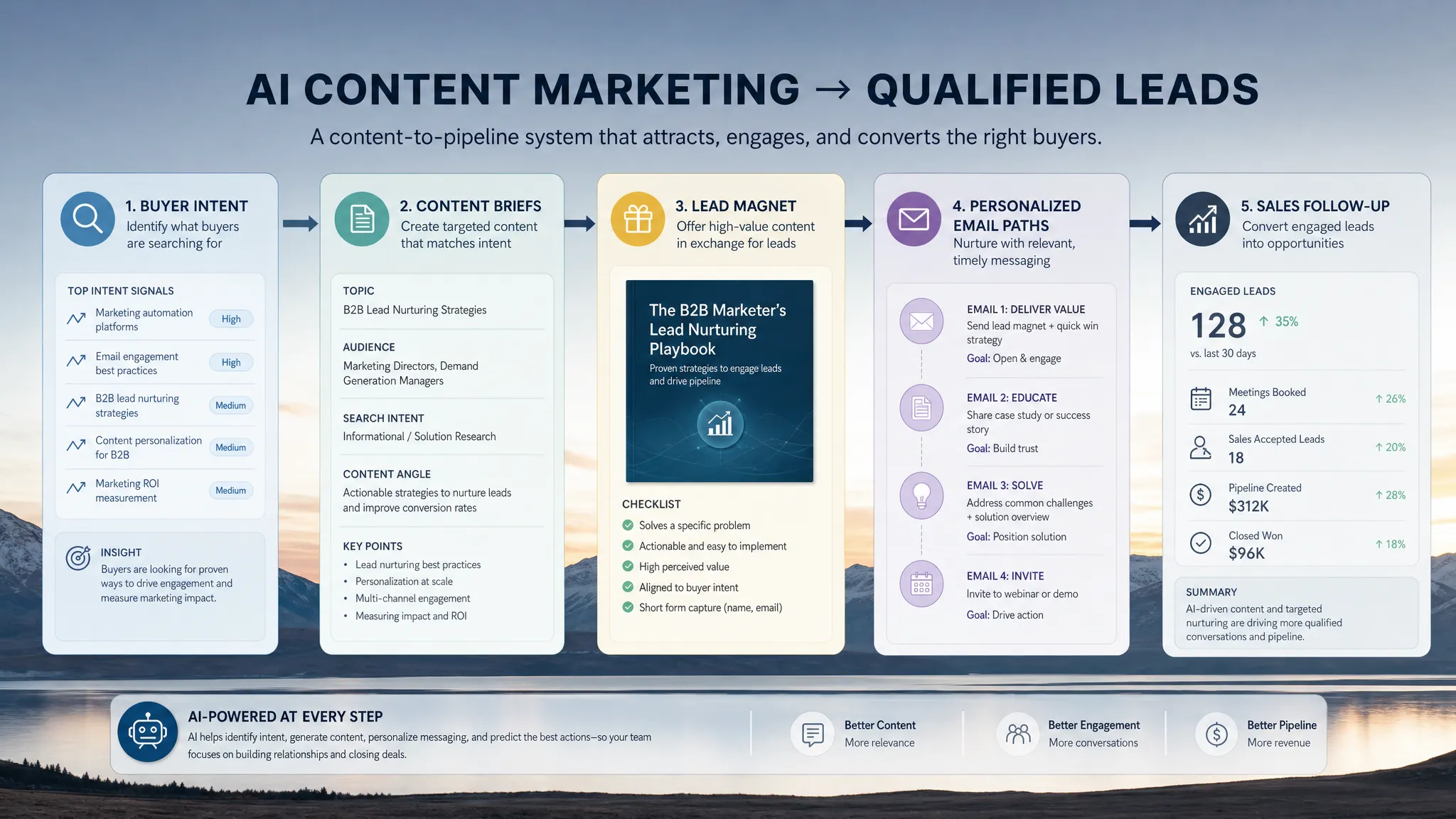
CTA | Directs action | What is the next best step? A common reason marketing does not convert is a mismatch between content and buyer intent. Someone reading an educational guide may not be ready for a sales call. Someone searching for pricing, alternatives, or implementation details may need a direct conversion path.
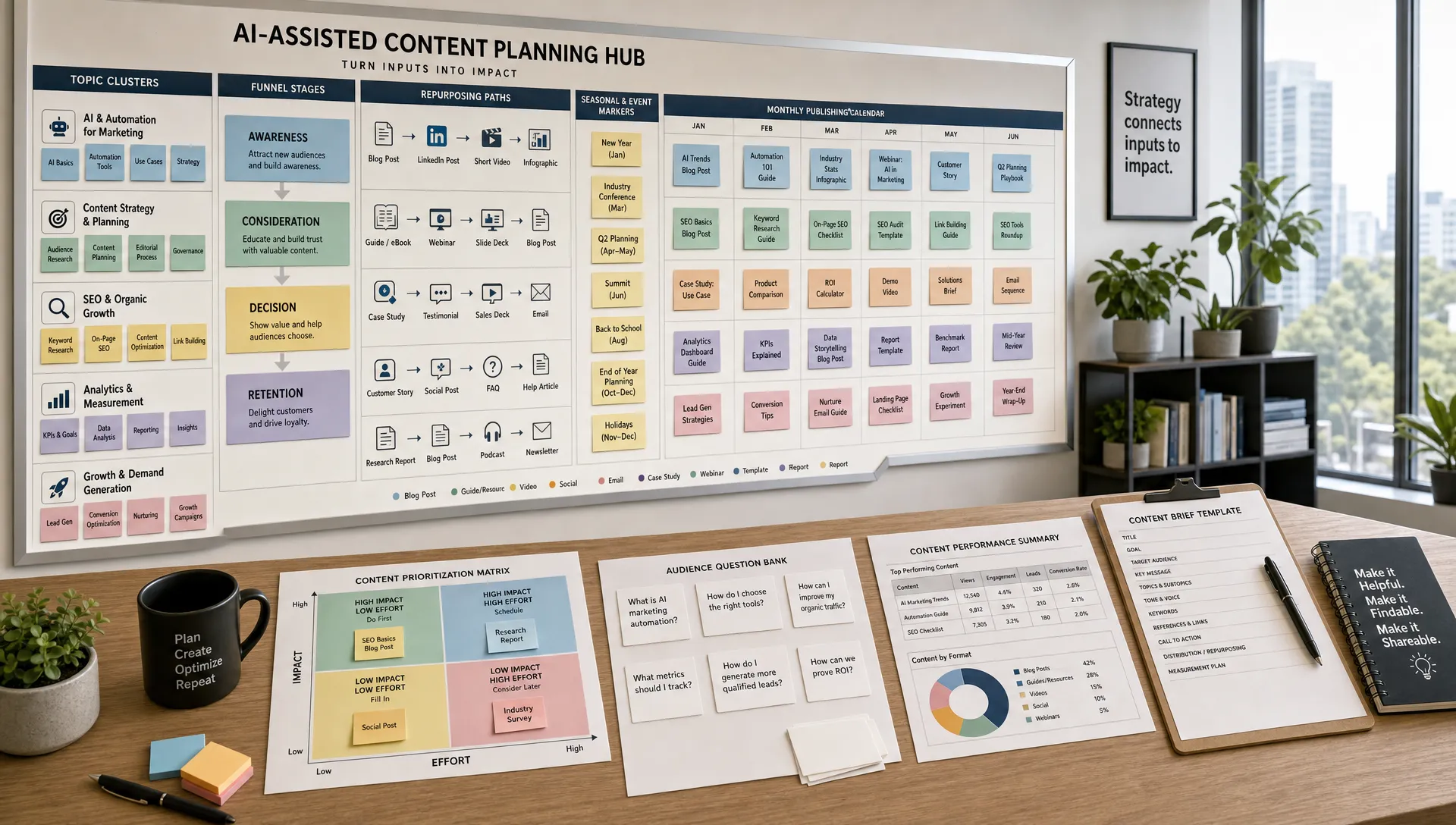
Think of the journey in terms of intent stages rather than a perfectly linear funnel:
Intent stage    | Buyer mindset                       | Best content types                                                     | Conversion goal
Problem aware   | I need to understand this issue     | Educational guides, checklists, trend reports                          | Newsletter signup, resource download
Solution aware  | I am comparing approaches           | Frameworks, webinars, ROI explainers, use cases                        | Webinar registration, assessment, calculator use
Vendor aware    | I am evaluating providers           | Comparison pages, case studies, demos, FAQs                            | Demo request, consultation booking
Decision ready  | I need confidence before committing | Pricing guidance, implementation plans, security or compliance answers | Sales conversation, trial, proposal request
Customer growth | I want more value after purchase | Tutorials, playbooks, benchmarks, advanced guides | Renewal, upsell, referral 
You do not need to be everywhere. You need to be where your audience already looks for answers, proof, and recommendations.
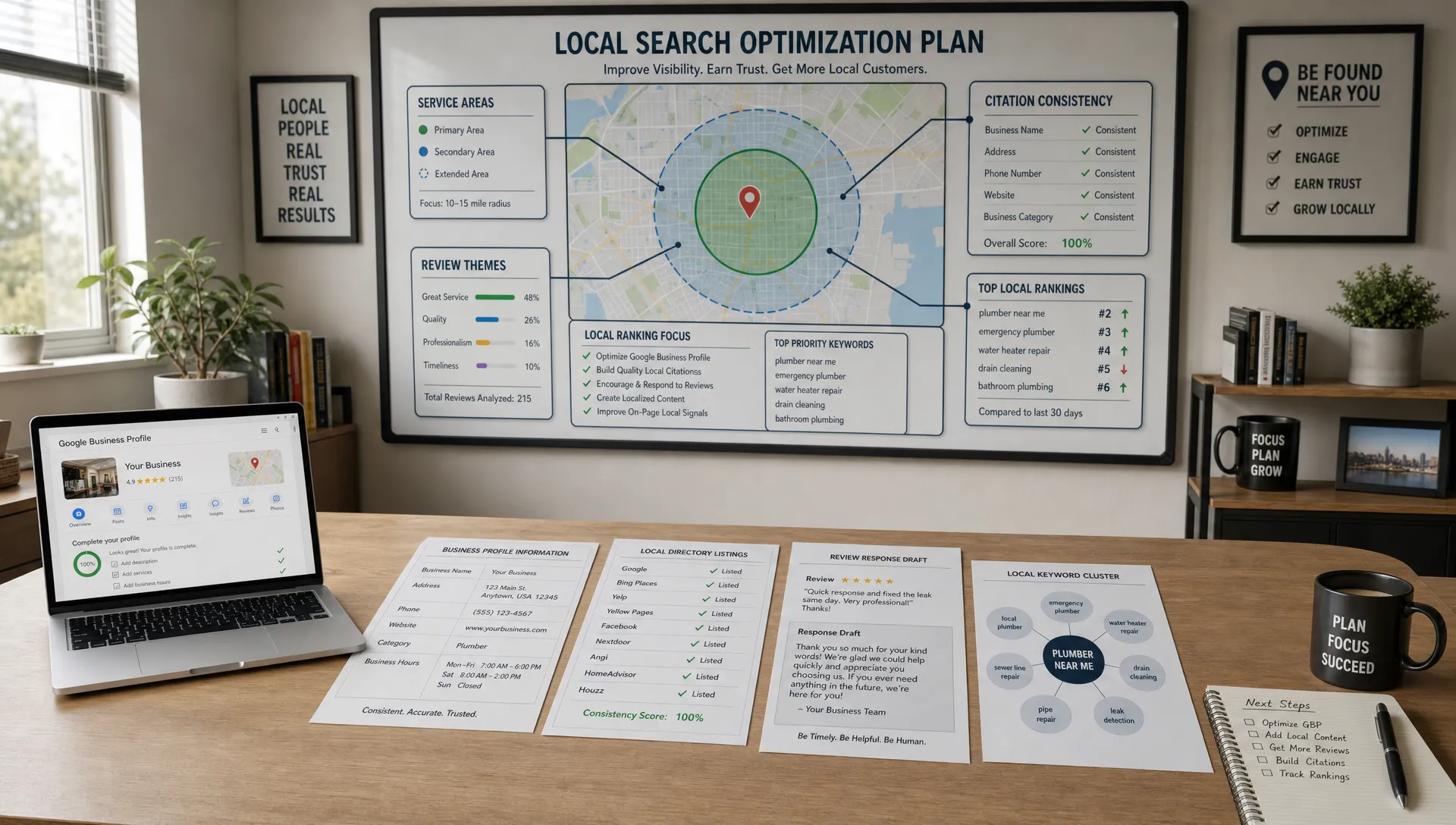
A channel is a fit when it aligns with your buyer's behavior, your offer complexity, your sales cycle, and your team's ability to execute consistently. For example, SEO can be powerful for capturing high-intent demand, but it requires patience and content quality. Paid search can capture buyers with immediate intent, but it needs strong landing pages and conversion tracking. LinkedIn may work well for B2B authority and retargeting, but the message has to be sharp enough to stop the scroll.
Use this channel selection table before committing budget:
Channel             | Best for                                         | Watch out for
SEO                 | Compounding demand capture and authority         | Slow feedback loops and weak content differentiation
Paid search         | High-intent prospects actively comparing options | Expensive clicks if conversion pages are unclear
Email marketing     | Nurturing, retention, and reactivation           | Low performance if segmentation is poor
LinkedIn or social  | Thought leadership and audience building         | Vanity metrics without conversion paths
Webinars and events | Trust-building for complex offers                | Low ROI if follow-up is weak
Partnerships        | Access to trusted audiences                      | Misalignment if incentives are unclear
Retargeting | Bringing warm visitors back | Poor results if the offer repeats the same message A single contact us CTA is rarely enough. Different buyers need different next steps depending on how much they know, how urgent the problem is, and how much risk they perceive.
Your offer should reduce the perceived effort of taking action. For early-stage visitors, a calculator, checklist, benchmark, or practical guide may be more appropriate than a sales call. For high-intent visitors, a demo, assessment, or consultation can work well if the value is clear.
Here are examples of conversion offers by stage:
Stage          | Offer idea                                 | Why it works
Early research | Educational guide or checklist             | Helps prospects understand the problem without pressure
Evaluation     | ROI calculator or comparison guide         | Helps buyers justify action and compare options
Decision       | Demo, consultation, or tailored assessment | Gives high-intent prospects direct support
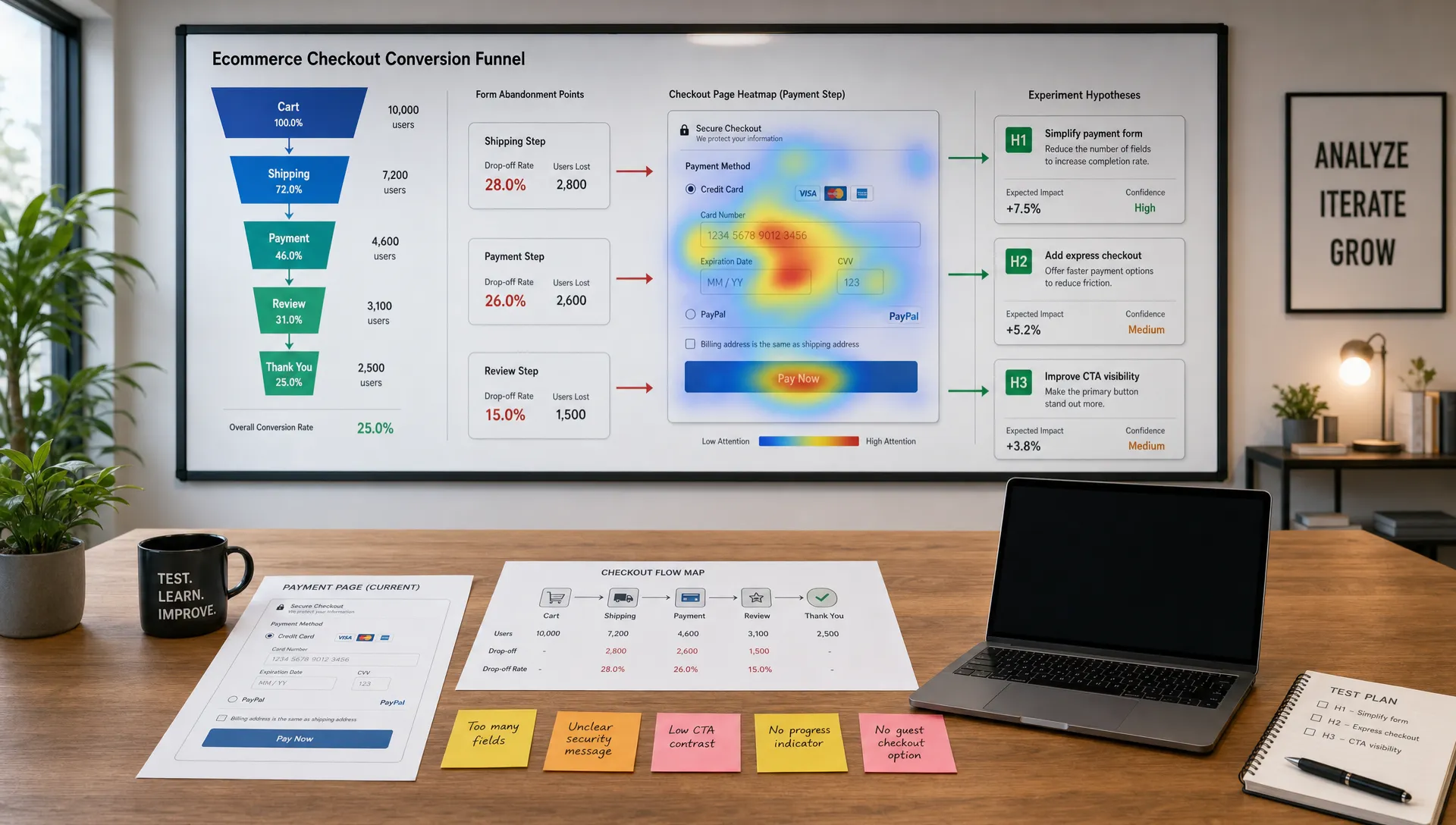
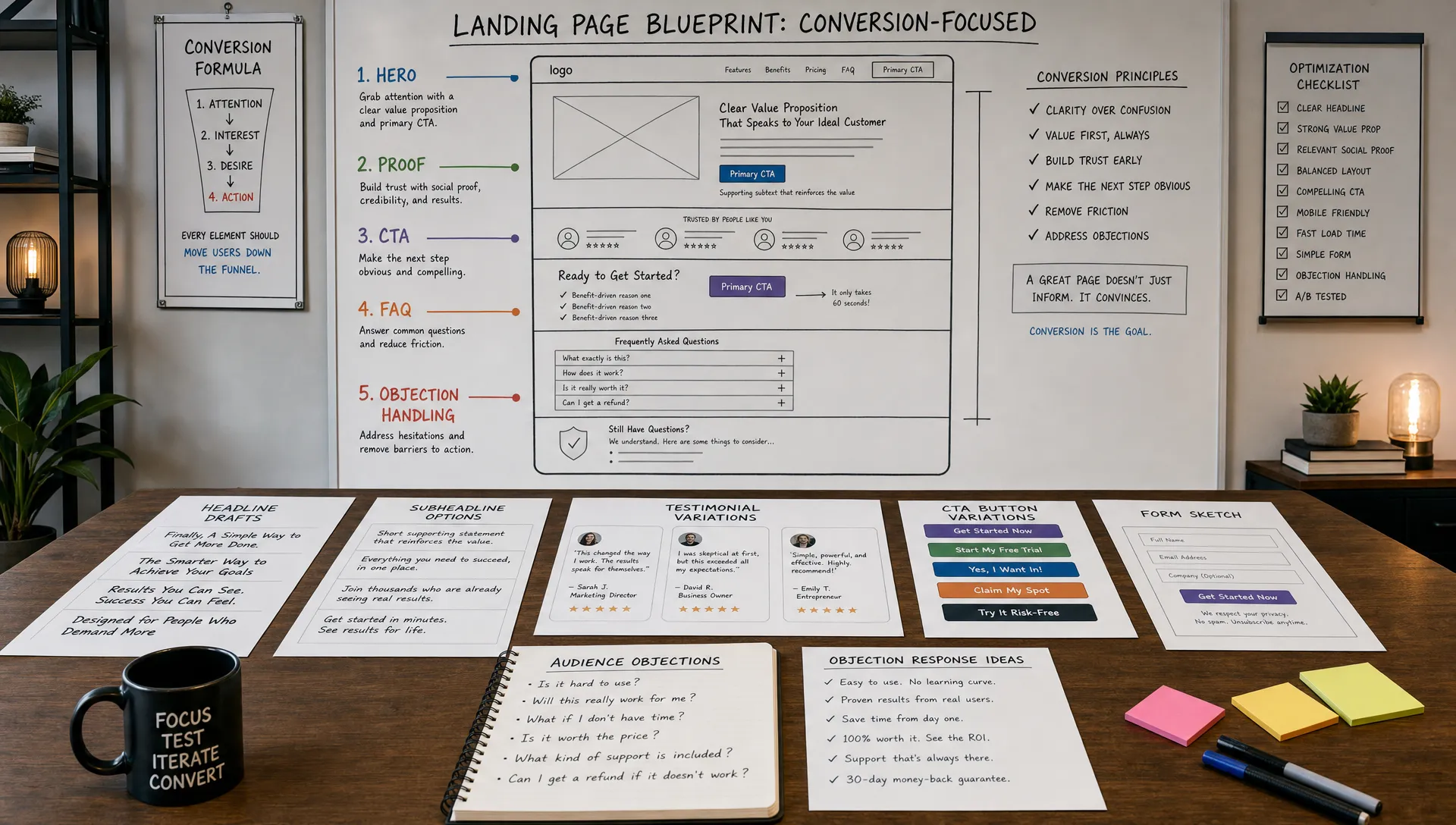
Post-purchase | Advanced playbook or performance review | Supports retention and expansion Your strategy can be strong and still underperform if the conversion page is weak. Landing pages are where intent becomes action, so every element should reduce confusion or doubt.
A conversion-focused landing page needs a clear promise, specific audience fit, persuasive proof, low-friction CTA, and a logical flow. It should answer the visitor's silent questions: Is this for me? Do they understand my problem? What happens if I act? Can I trust them? What should I do next?
Use this landing page checklist:
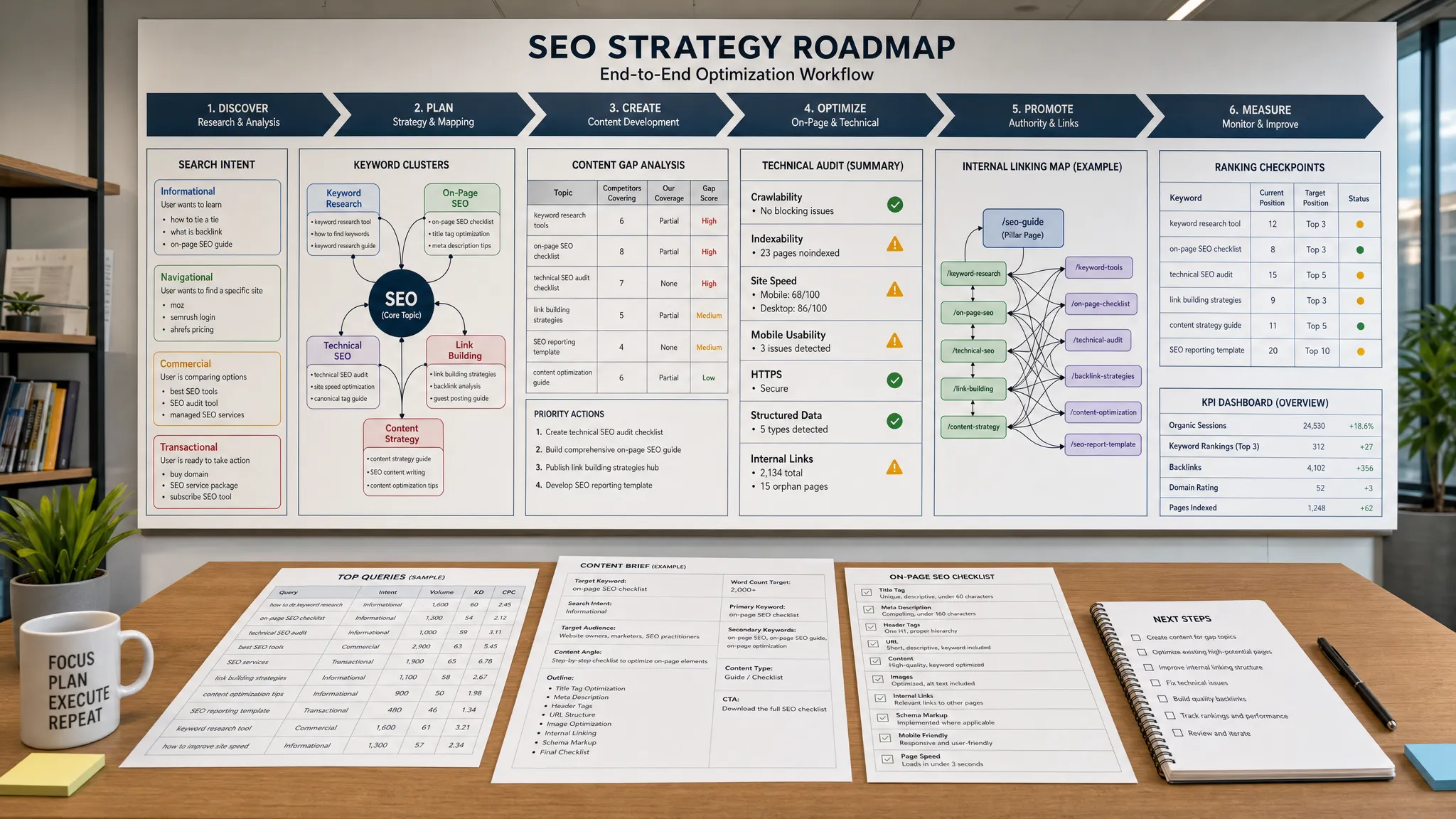
For SEO-driven pages, follow technical and content fundamentals from resources like Google Search Central's SEO Starter Guide. Helpful content, clear structure, crawlability, and strong user experience all support the conversion path because they make the page easier to find and easier to use.
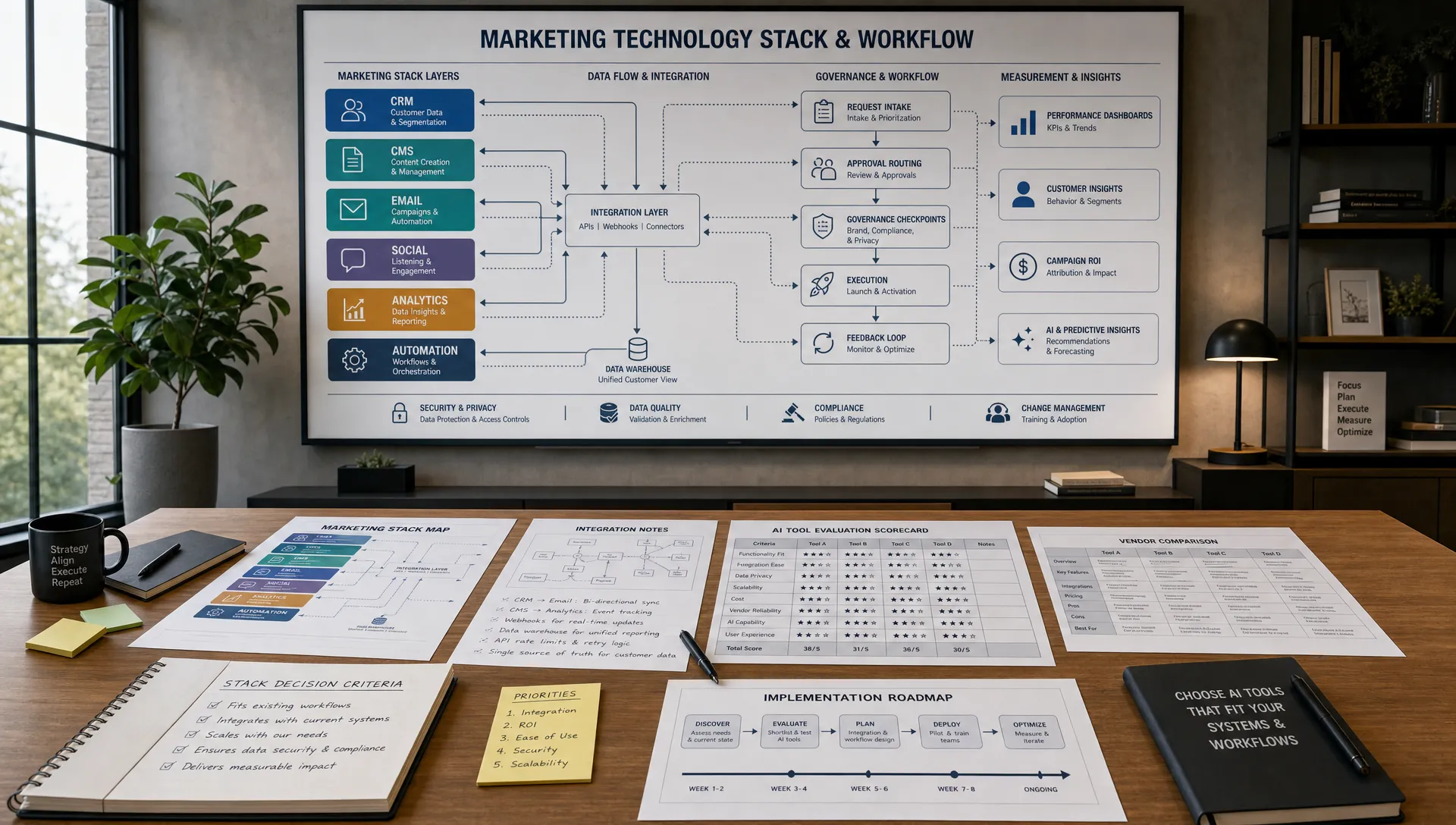
AI can make a marketing strategy faster to execute, but it cannot fix a weak strategy. If the audience, offer, and message are unclear, AI will simply produce more unclear assets.
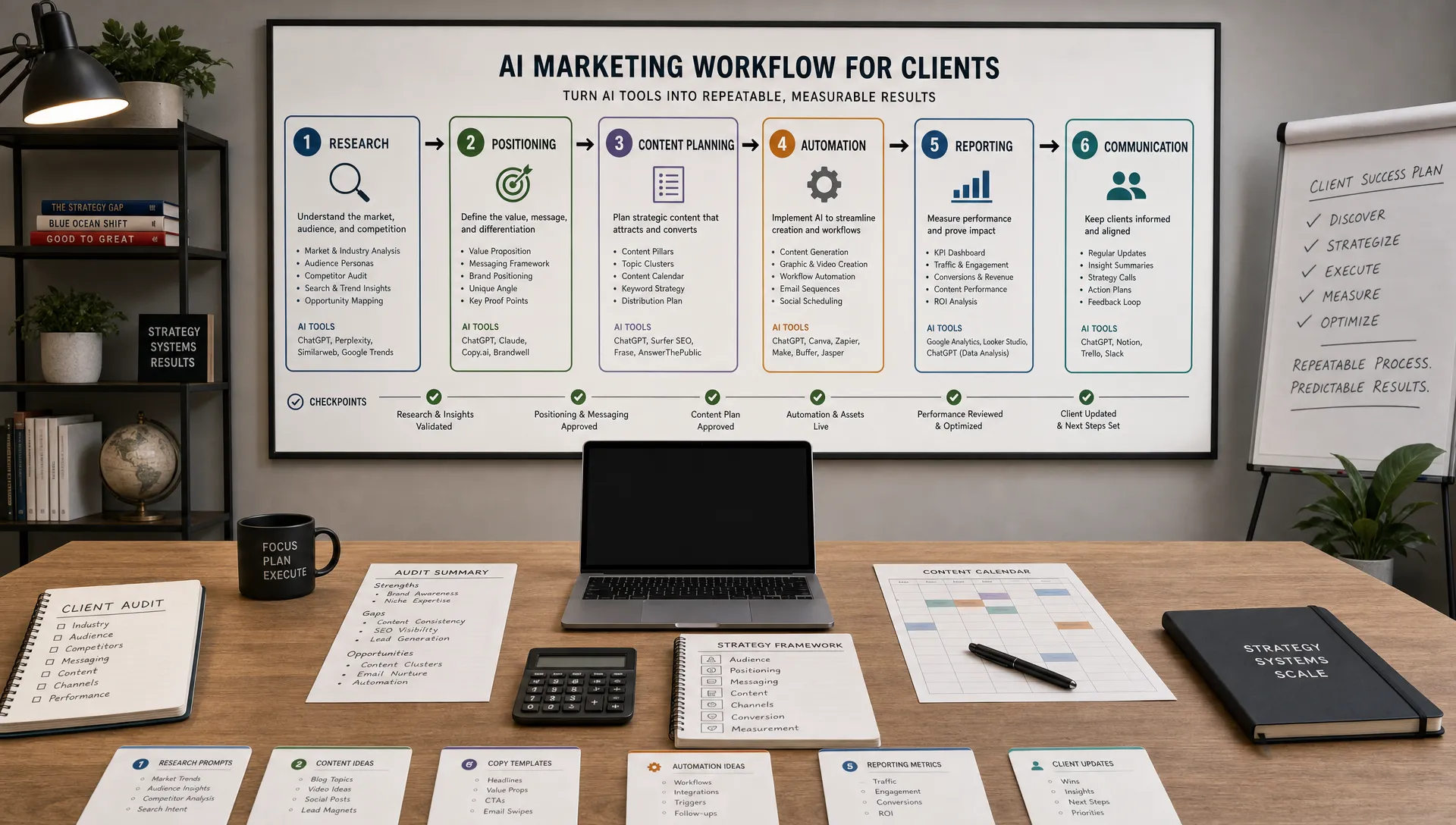
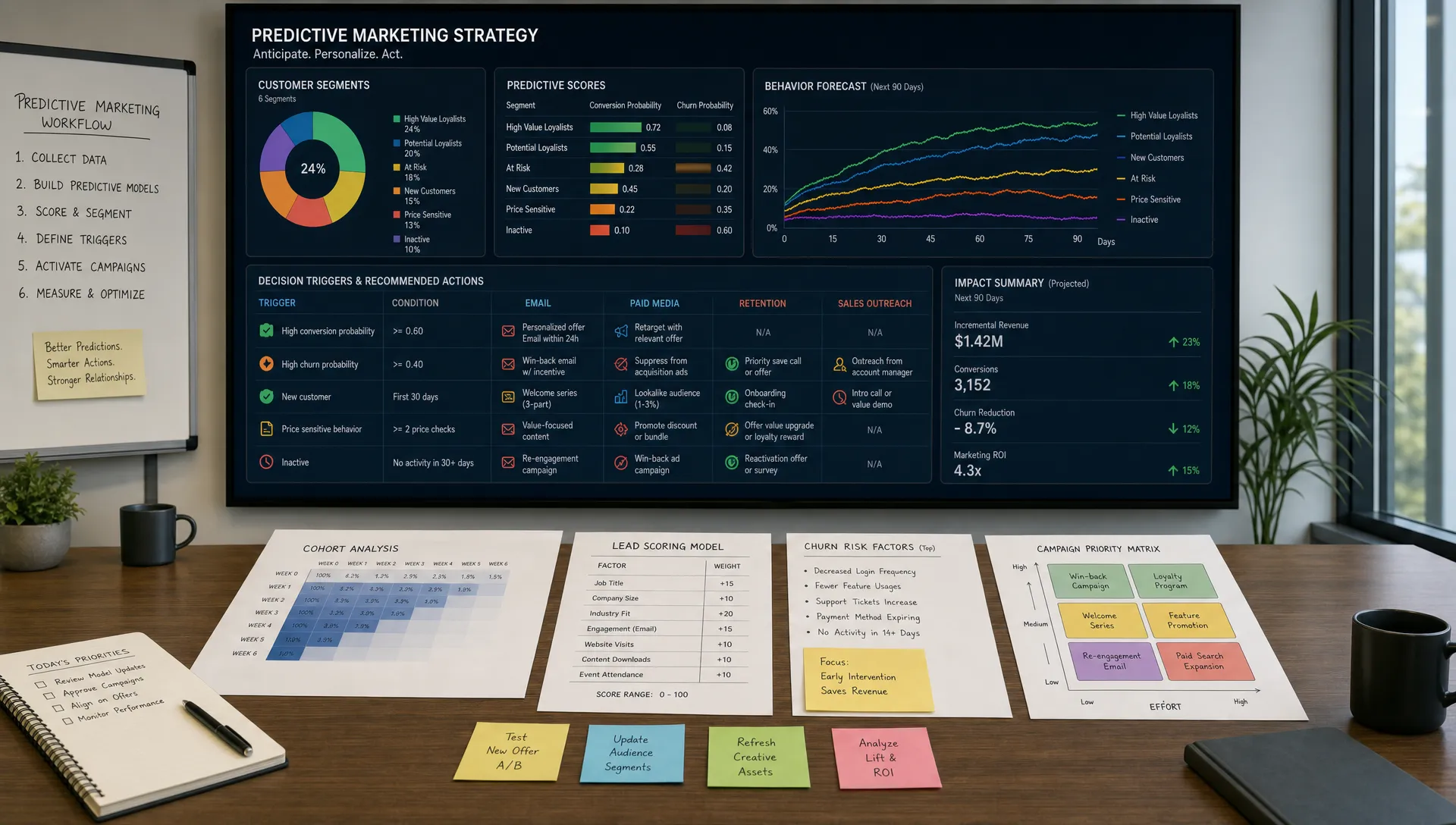
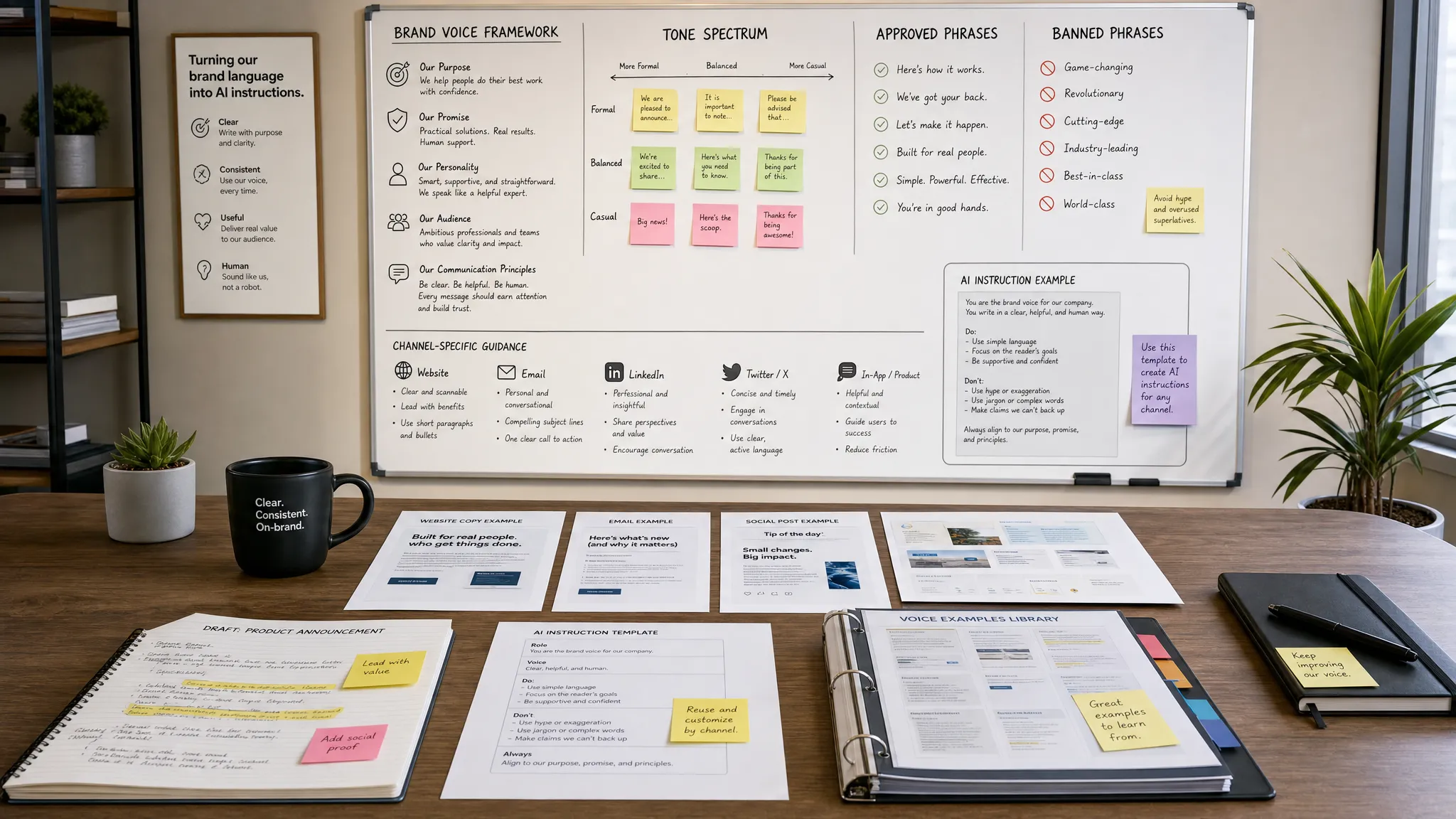
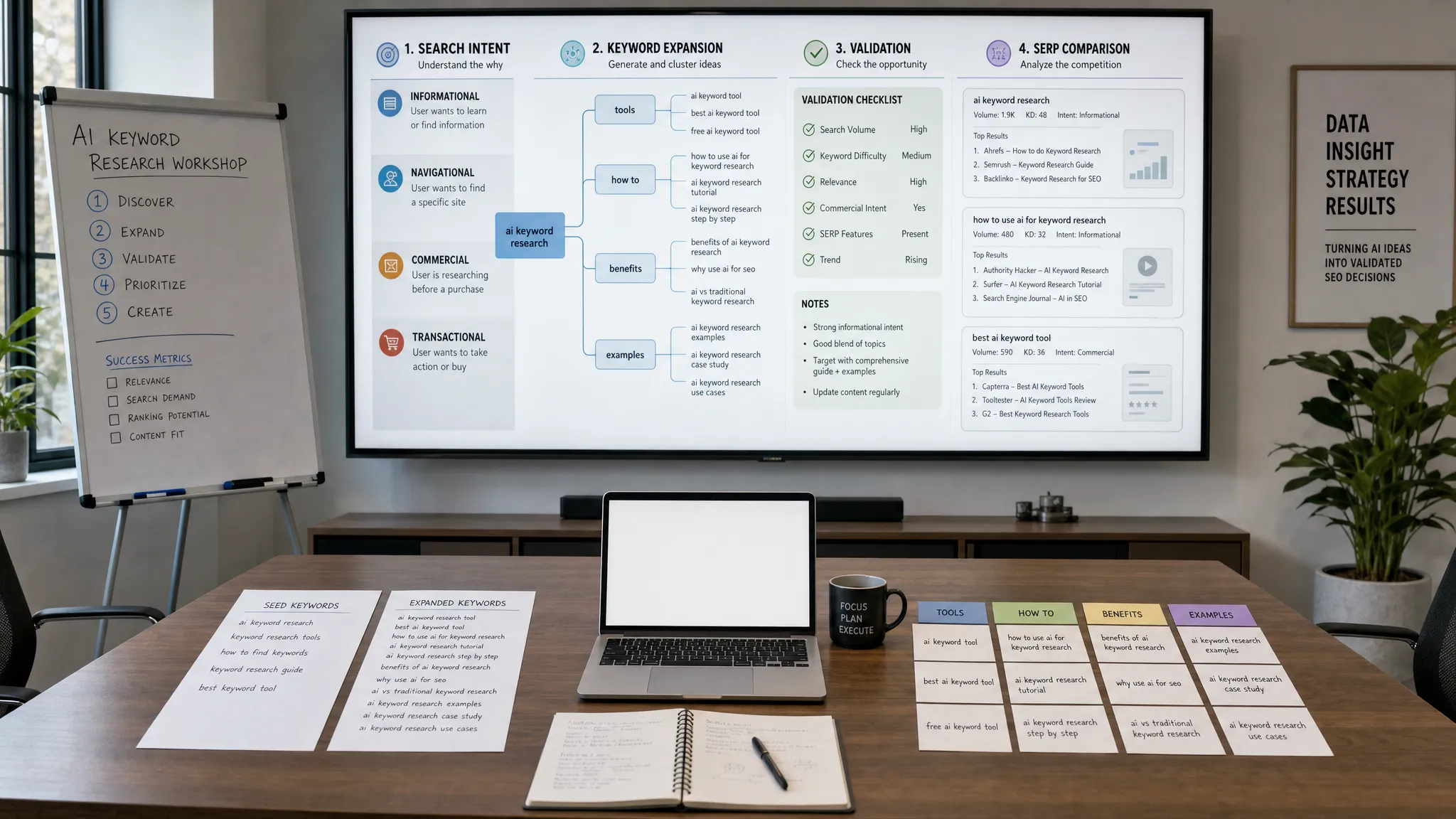
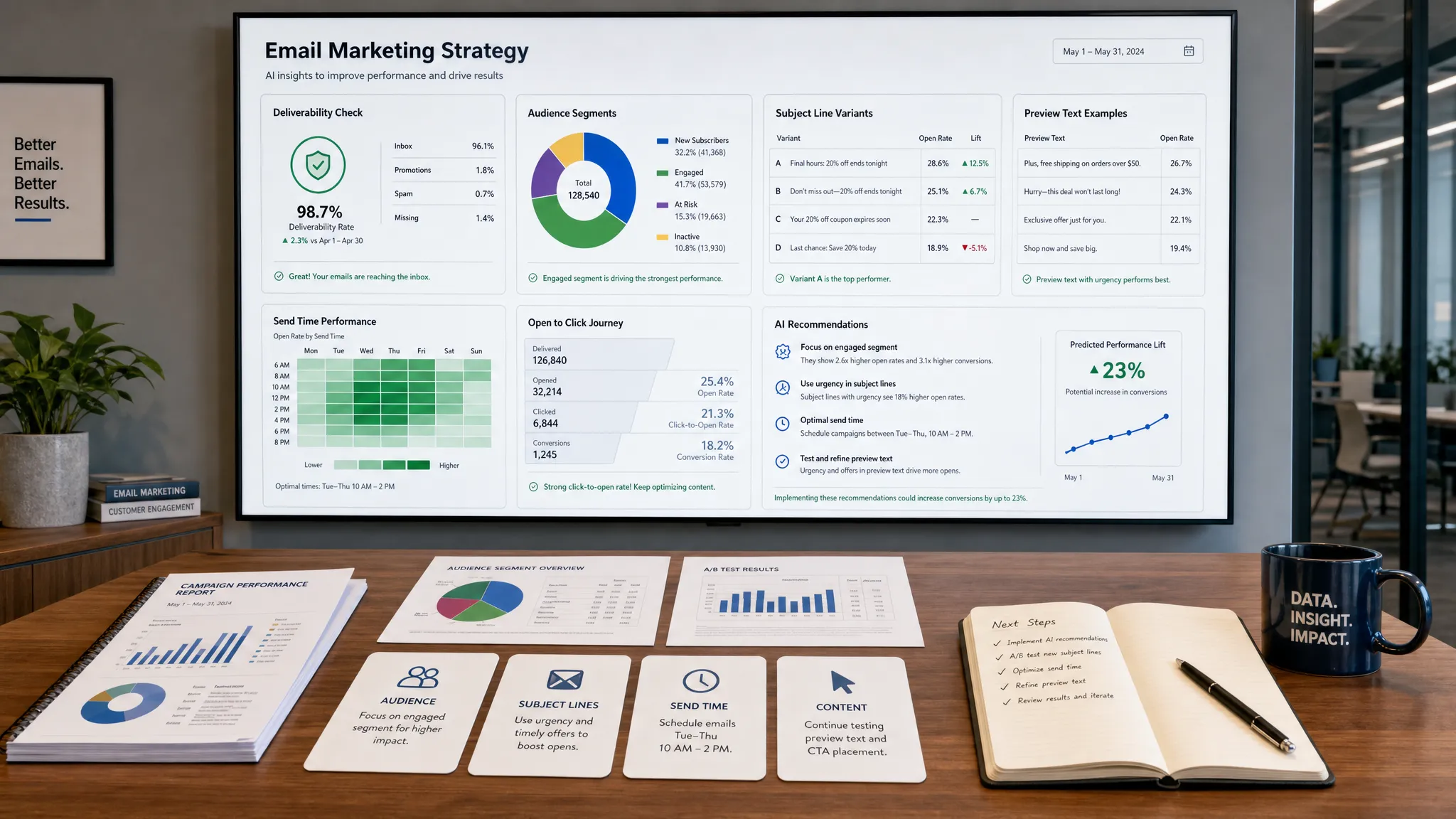
Used well, AI helps marketing teams move faster through research synthesis, content ideation, keyword clustering, campaign variation, email drafting, personalization, and performance analysis. The strongest use case is not replacing marketers. It is giving marketers more leverage while preserving human judgment.
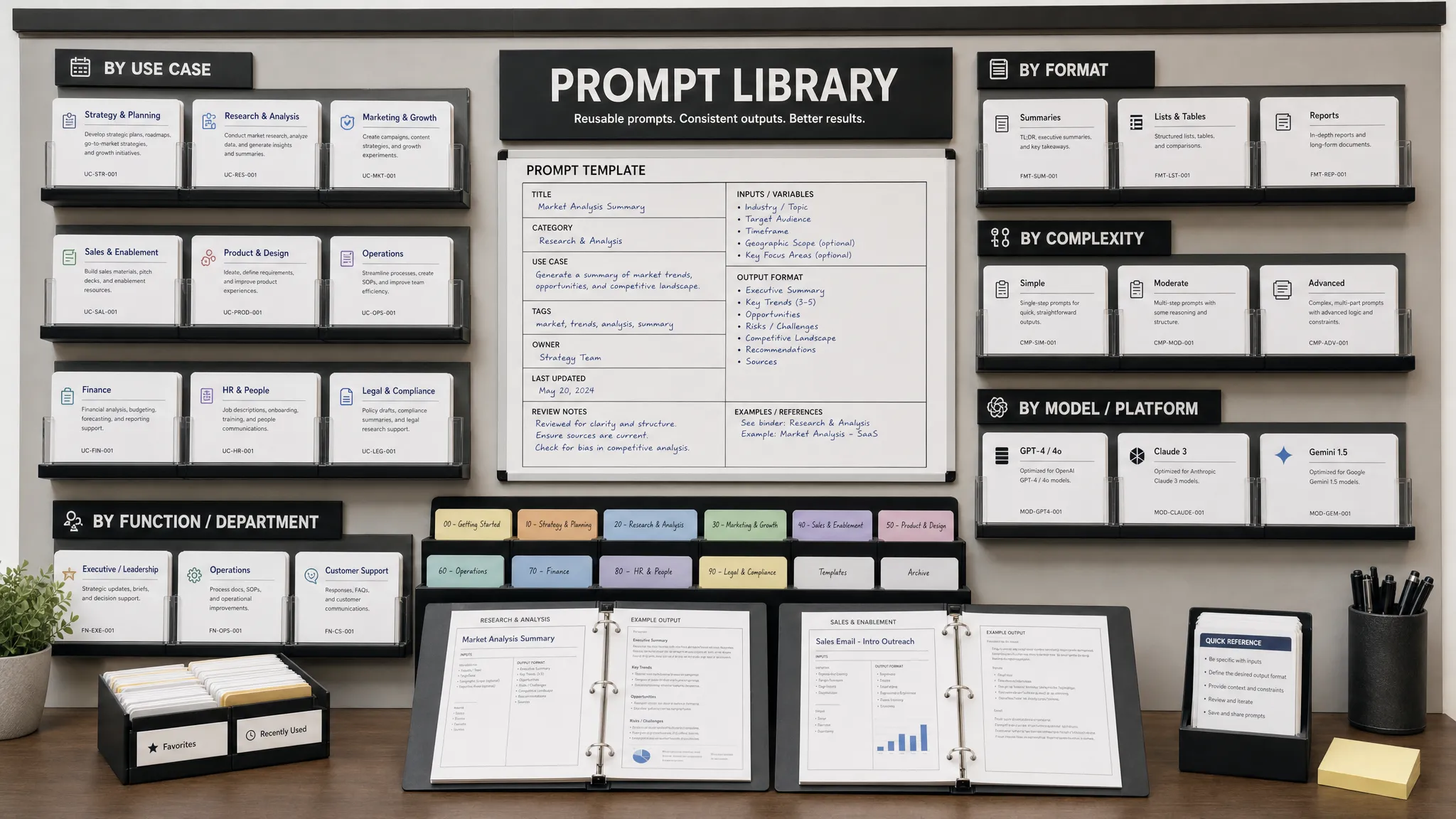
Practical AI use cases include:
However, AI output should always be reviewed for accuracy, brand voice, compliance, and originality. This is especially important in finance, legal, healthcare, and other high-trust categories. Human expertise is what turns AI-generated drafts into credible marketing assets.
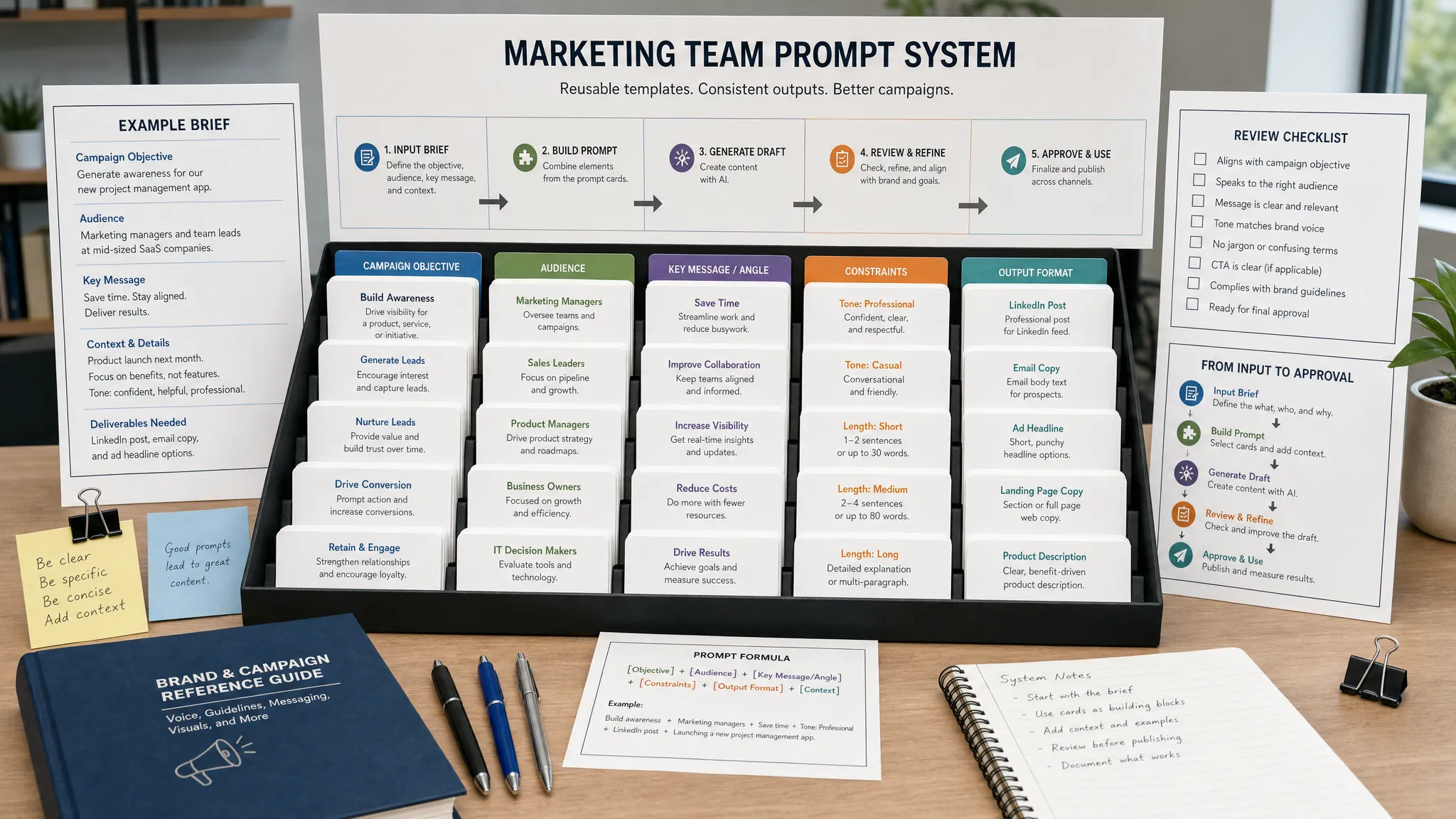
A platform like AIMarketer Hub can support this workflow with AI content generation, marketer-focused prompts, SEO tools, performance analytics, calculators, and industry-specific resources. The strategic advantage comes from combining those tools with a clear conversion framework.
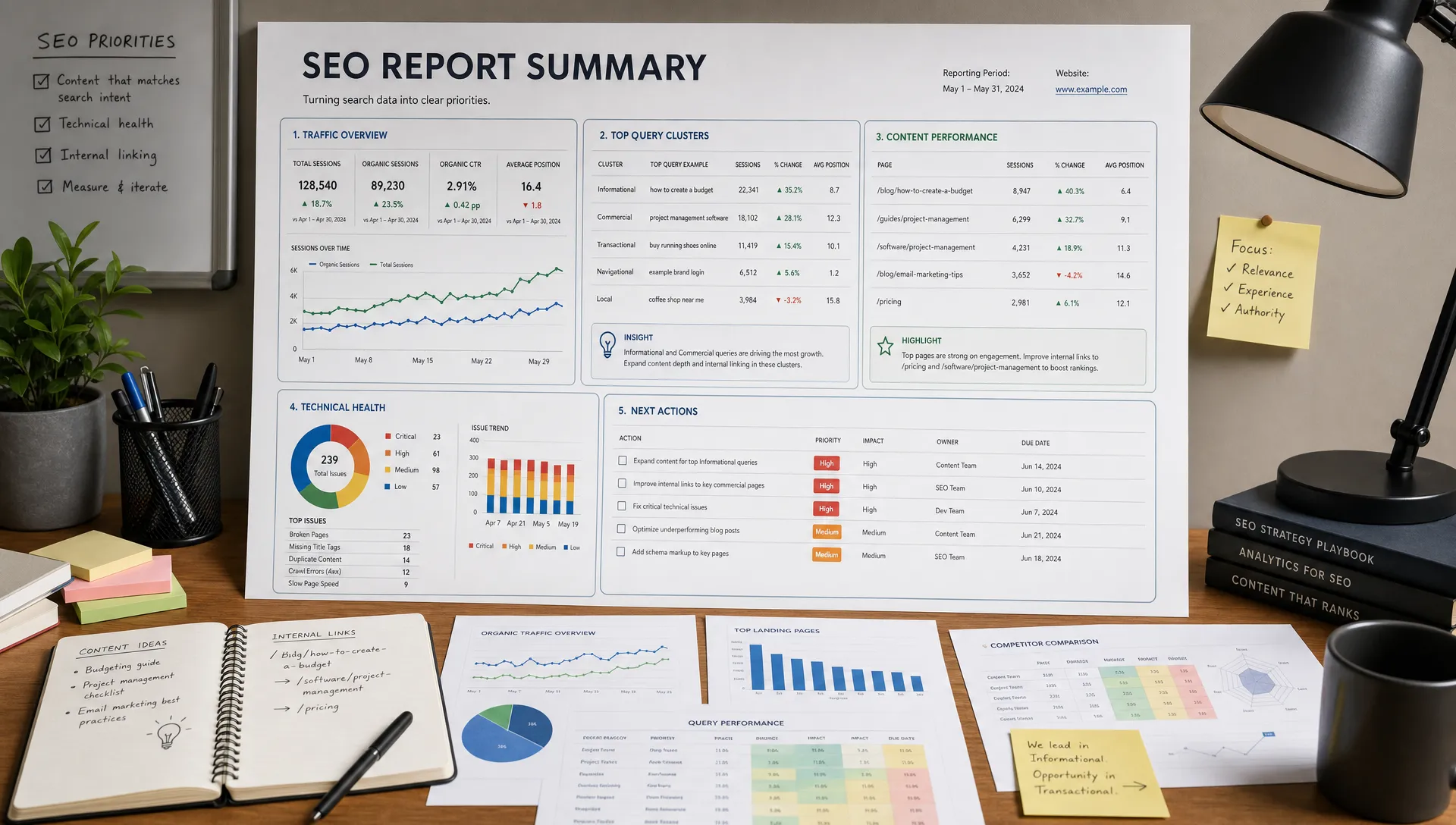
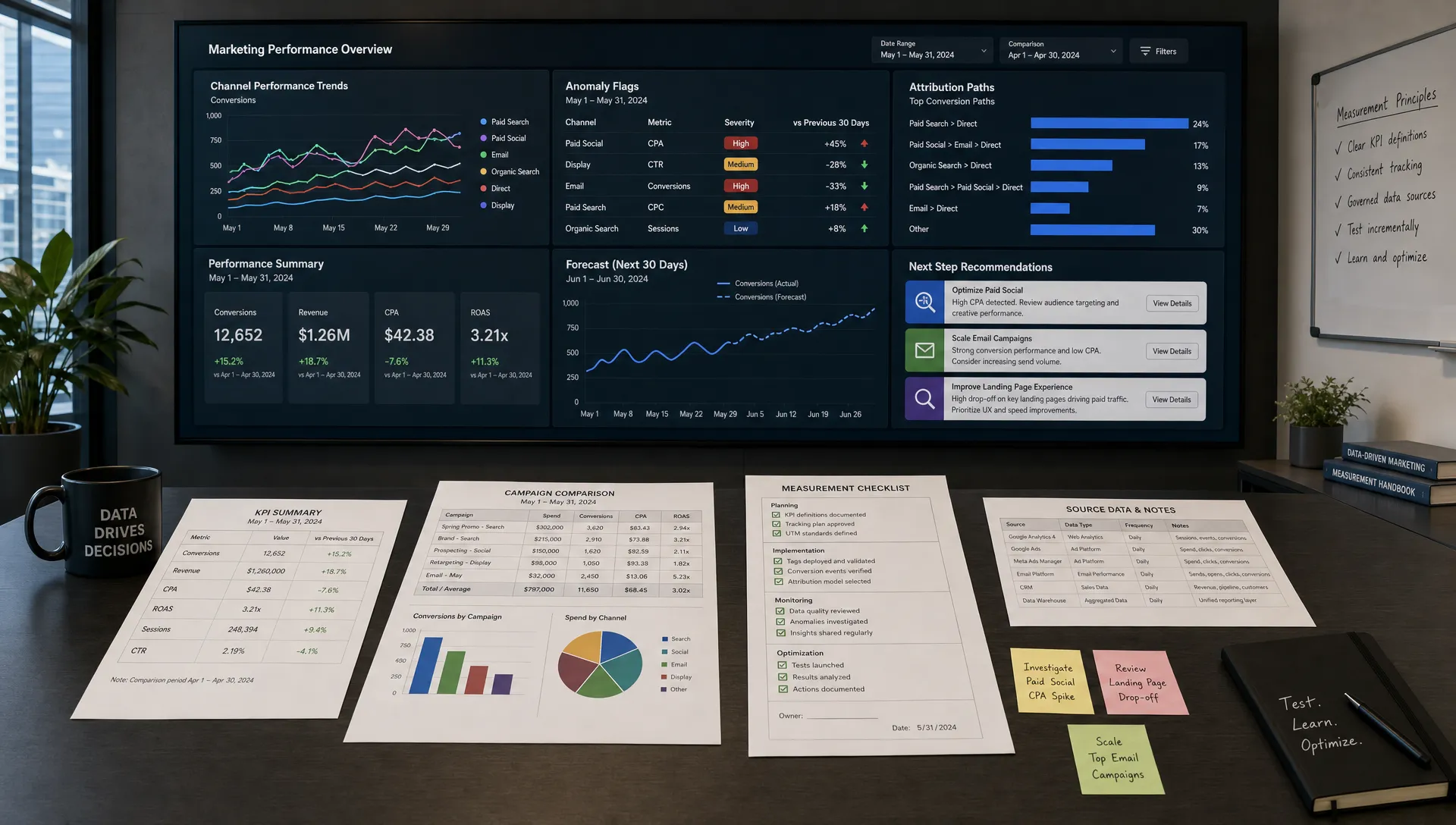
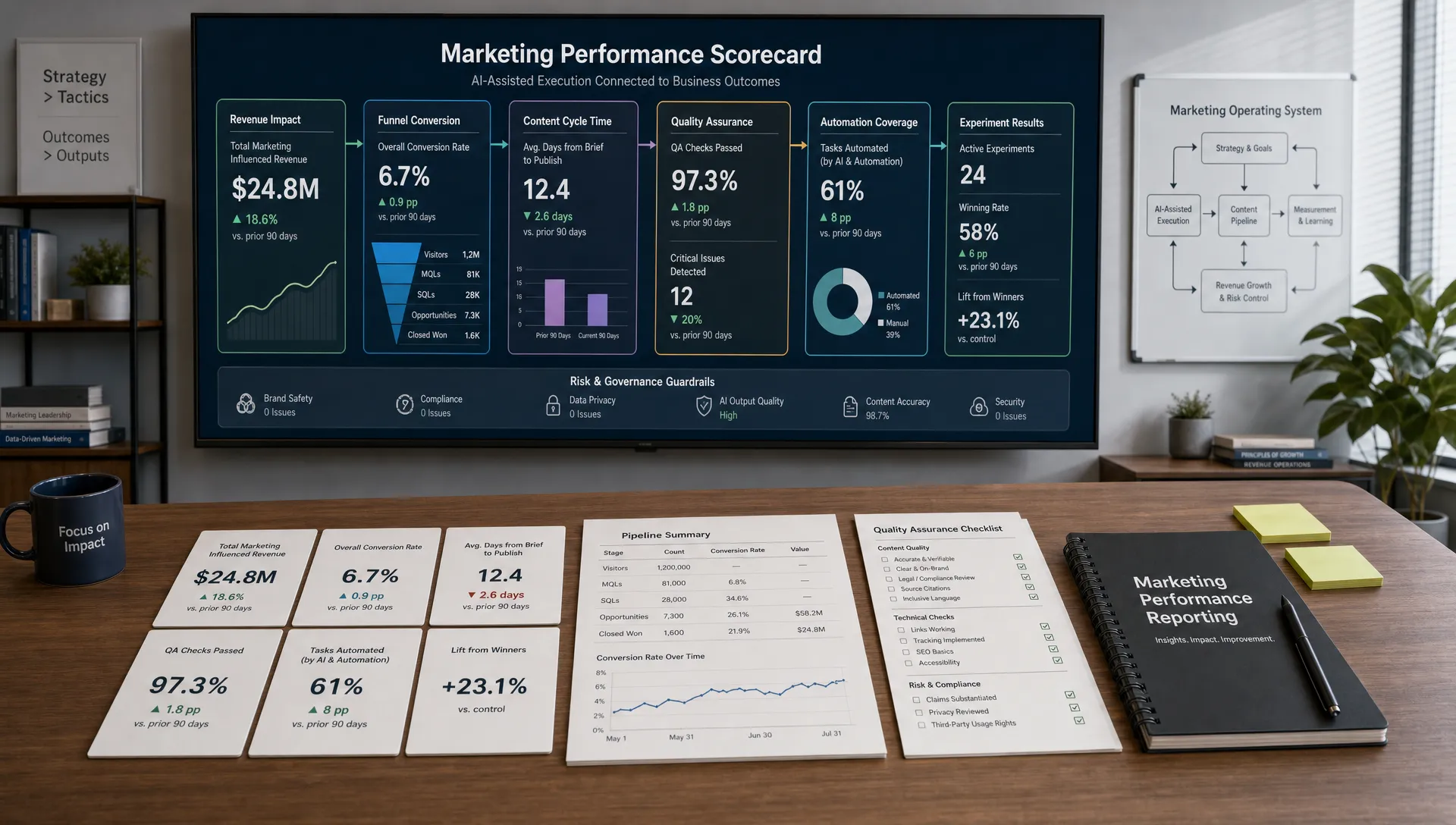
If you cannot measure the right actions, you cannot optimize the strategy. Measurement should be set up before a campaign launches, not after performance becomes confusing.
At minimum, define your primary conversion, secondary conversions, traffic sources, campaign naming conventions, and reporting cadence. Use UTM parameters consistently so you can compare channels and campaigns. In Google Analytics 4, marketers can configure important actions as key events, which helps teams understand user behavior and conversion patterns.
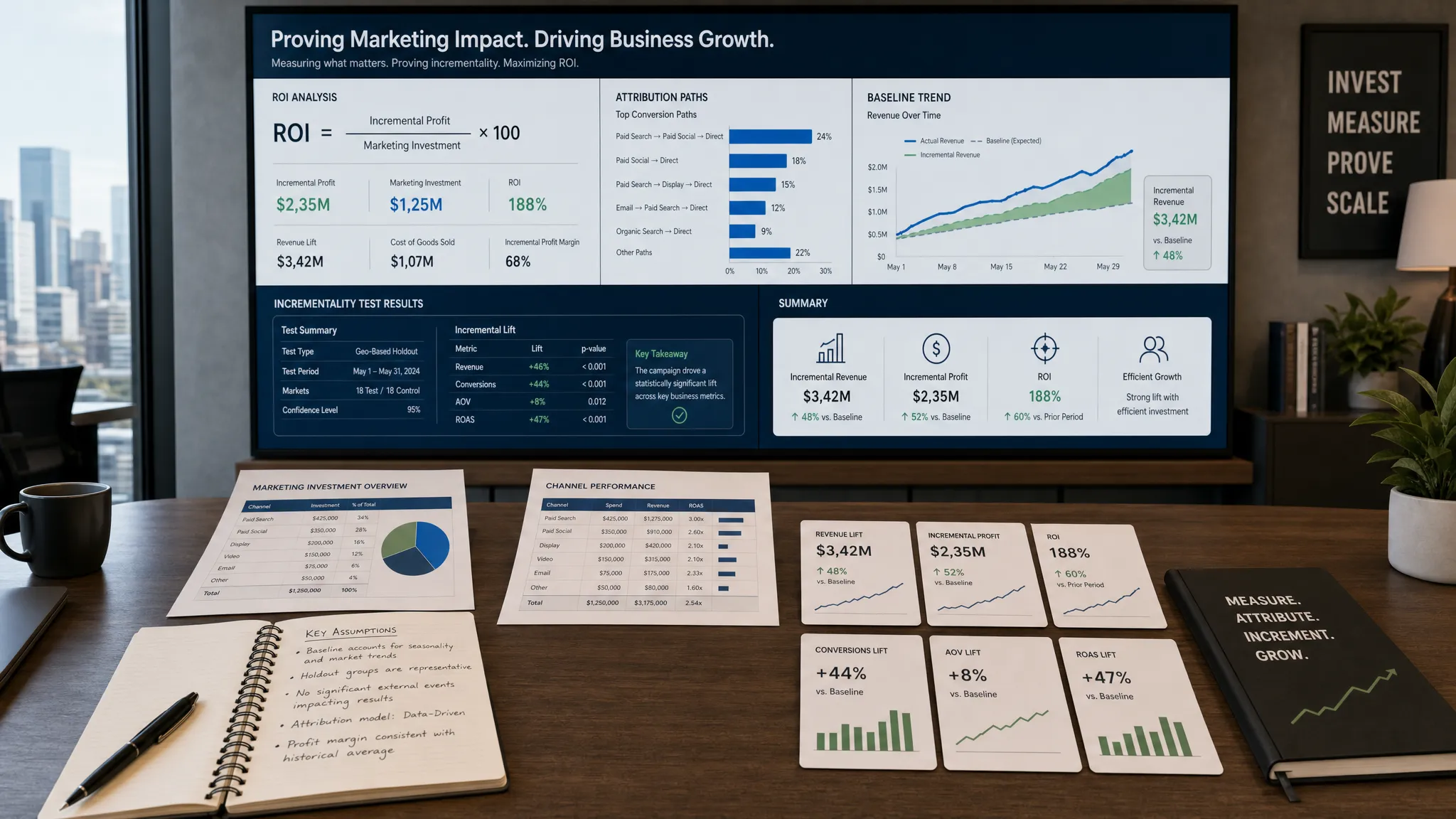
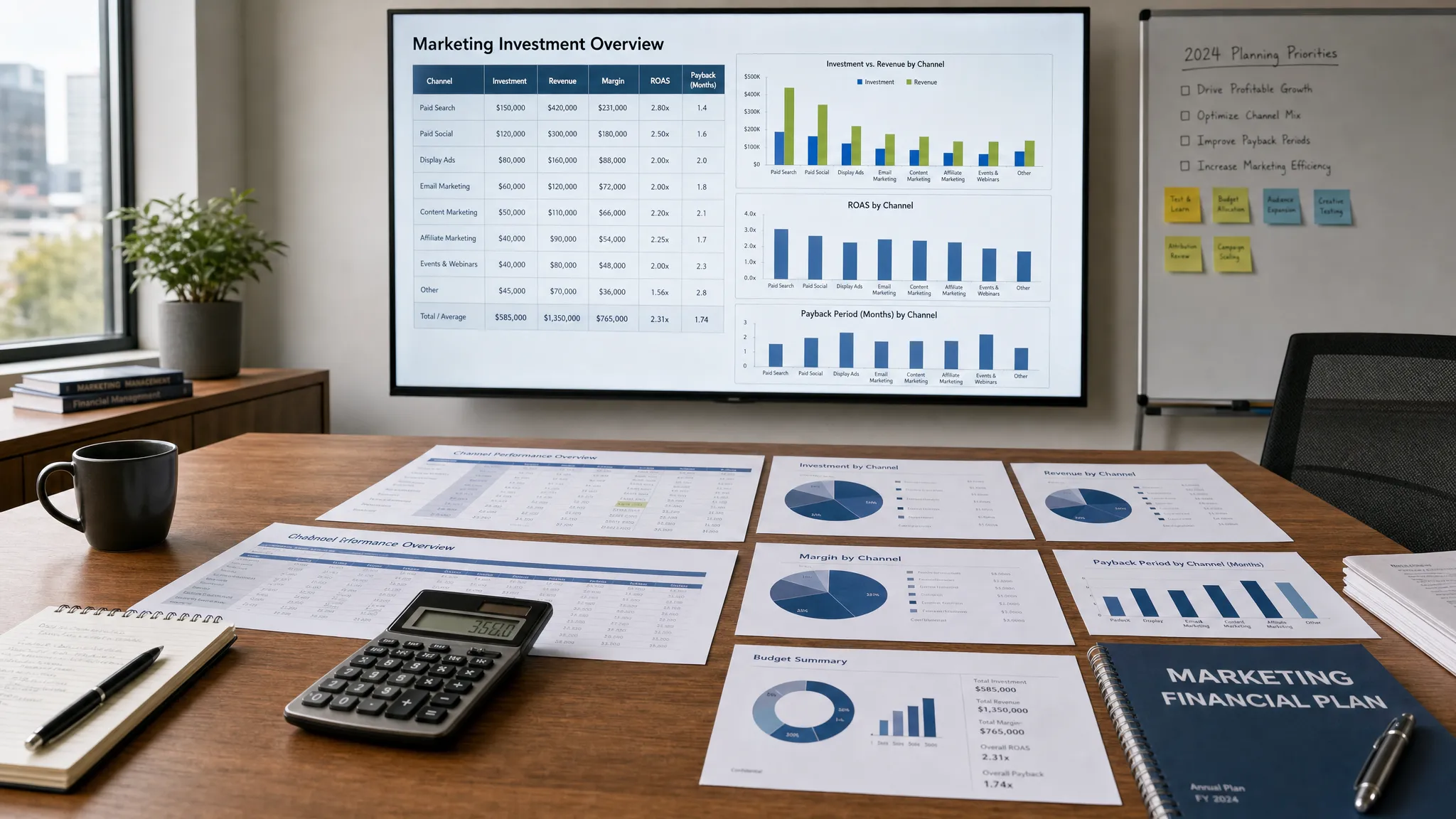
For B2B teams, do not stop at form fills. Track lead quality, sales acceptance, pipeline value, win rate, and sales cycle length. A channel that produces fewer leads may still be more profitable if those leads convert at a higher rate.
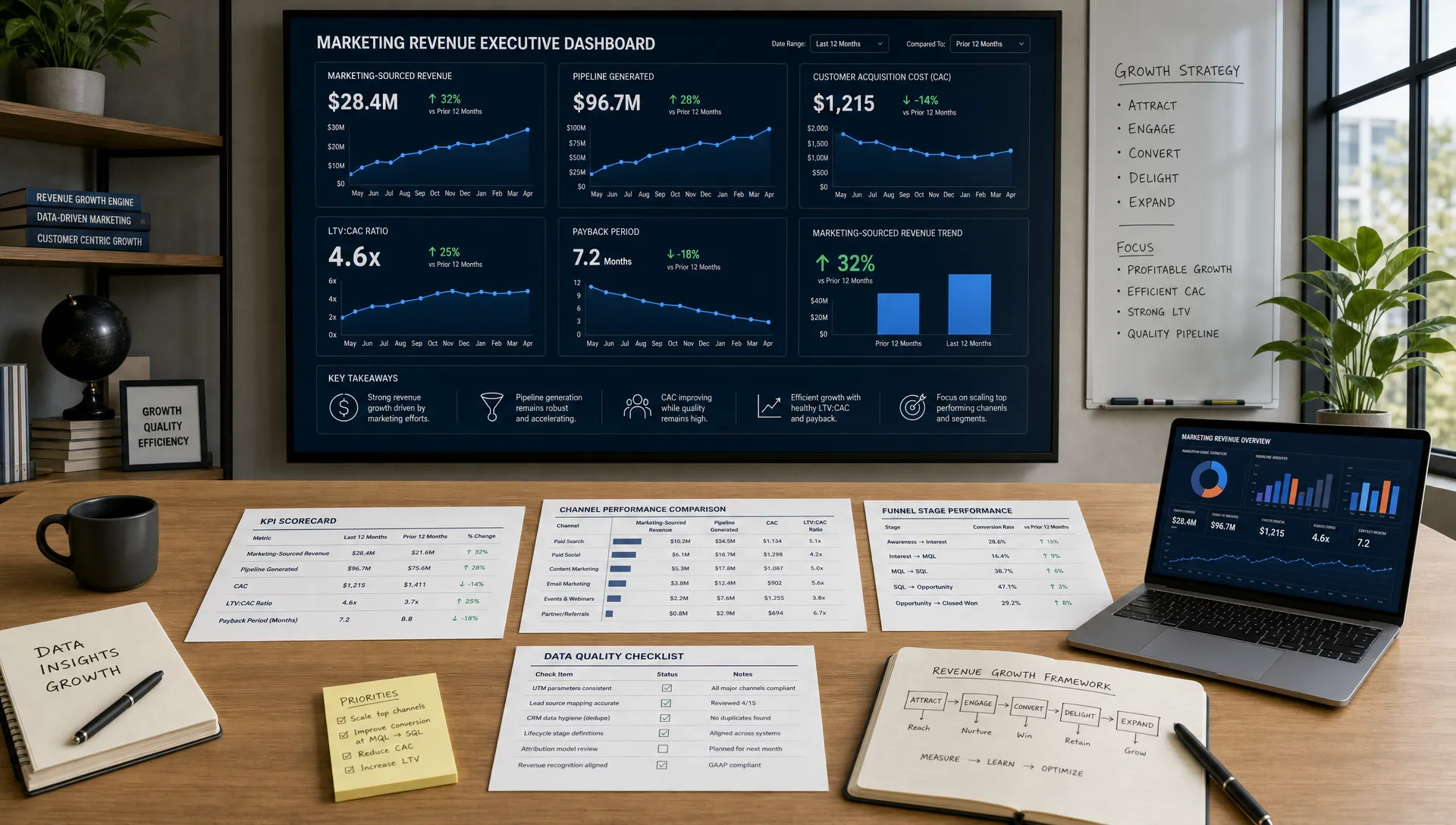
A healthy marketing dashboard should answer:
The goal is not perfect attribution. Perfect attribution is often unrealistic across long buying journeys. The goal is decision-grade insight: enough reliable information to adjust budget, messaging, content, and offers.
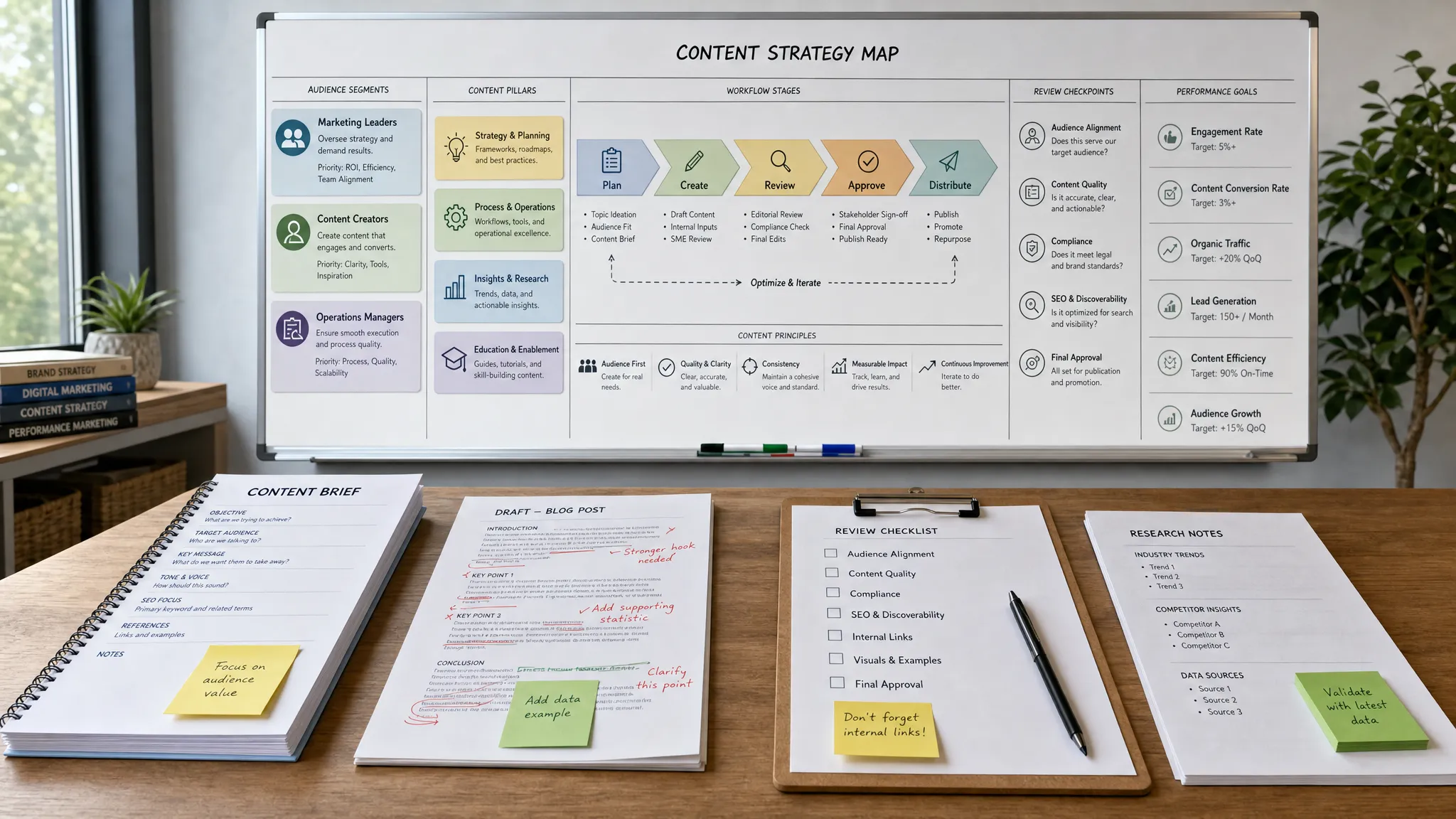
A strategy becomes valuable when it changes what the team does this week. A 90-day plan keeps execution focused while giving campaigns enough time to produce meaningful signals.
Here is a simple rollout model:
Timeframe     | Focus                     | Key outputs
Days 1 to 30  | Research and foundation   | ICP definition, value proposition, journey map, KPI tree, analytics audit
Days 31 to 60 | Asset creation and launch | Landing pages, content briefs, lead magnets, email nurture, paid or organic campaign launch
Days 61 to 90 | Optimization and scaling | Conversion tests, channel analysis, content updates, budget shifts, sales feedback loop This approach is especially helpful for small teams because it creates sequencing. You do not need a huge marketing department to convert better. You need fewer scattered efforts and more disciplined execution.
Even experienced teams fall into patterns that weaken conversion. The most common issue is channel-first thinking. If the strategy starts with we need to post more on social or we need to run ads, it may skip the deeper question of why buyers should care.
Another issue is weak segmentation. A campaign aimed at founders, enterprise marketers, finance teams, and legal teams at the same time will usually become too generic. Each audience has different priorities, objections, and proof requirements.
Conversion also suffers when the offer is too big for the visitor's readiness level. Asking an early-stage visitor to book a demo may feel premature. Asking a high-intent visitor to download a beginner guide may slow momentum. Match the CTA to intent.
Finally, many teams fail to close the loop between marketing and sales. Sales conversations reveal objections, competitor comparisons, budget concerns, and urgency triggers. If that information never makes it back into messaging and content, marketing performance plateaus.
Use this canvas to summarize your strategy before building campaigns:
Strategy element   | Your answer
Business objective | What revenue, pipeline, retention, or growth goal are we supporting?
Primary audience   | Who is the highest-fit customer segment?
Urgent problem     | What problem is painful enough to motivate action?
Desired outcome    | What result does the customer want most?
Positioning        | Why are we a credible and differentiated choice?
Main conversion    | What action do we want the audience to take?
Core offer         | What will make that action feel valuable and low-risk?
Priority channels  | Where can we reach this audience with the strongest intent or trust?
Proof points       | What evidence reduces doubt?
Measurement | Which metrics will guide decisions? What is the first step in building a marketing strategy? Start by defining the business objective and primary conversion goal. Once you know what action you need the right audience to take, you can build the audience research, messaging, channel mix, and measurement system around that goal.
How long does it take for a marketing strategy to convert? It depends on the channel, offer, audience, and sales cycle. Paid campaigns can produce signals quickly, while SEO and authority-building often take longer. A 90-day plan is a practical starting point because it gives enough time to launch, measure, and optimize without drifting.
What makes a marketing strategy different from a marketing plan? A strategy defines who you serve, what value you create, how you are positioned, and how you will win. A marketing plan translates that strategy into campaigns, timelines, channels, budgets, and responsibilities.
How can AI improve a marketing strategy? AI can speed up research, content creation, keyword analysis, campaign testing, and performance review. It works best when guided by a clear strategy and reviewed by humans for accuracy, brand fit, and customer relevance.
Which metrics matter most for a conversion-focused strategy? Focus on metrics tied to business outcomes, such as qualified leads, demo requests, sales acceptance rate, pipeline contribution, customer acquisition cost, conversion rate, retention, and revenue. Traffic and impressions can be useful, but they should not be the only measures of success.
A strategy that converts is not built from guesswork. It comes from clear positioning, customer insight, focused execution, and continuous optimization.
AIMarketer Hub helps marketers and businesses put that system into action with AI content generation, prompt libraries, SEO tools, performance analytics, calculators, industry-specific guides, and curated resources. Whether you are building campaigns for SaaS, finance, legal, or broader business growth, the right tools can help you move from scattered activity to measurable progress.
Explore AIMarketer Hub to start building a marketing strategy that is clearer, faster to execute, and designed to convert.