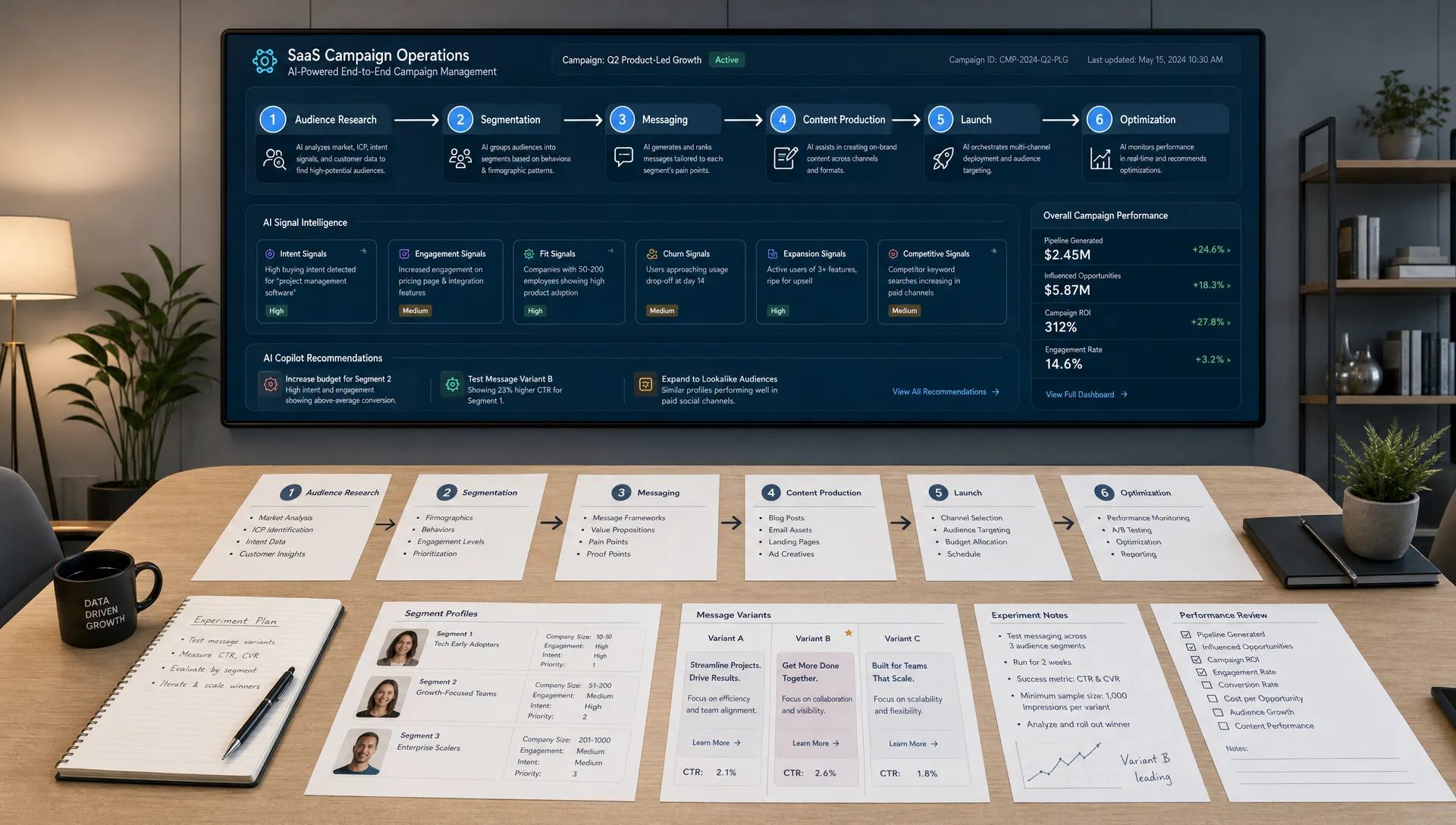
AI is no longer a side experiment in the marketing department. It is becoming part of how brands research audiences, create campaigns, personalize journeys, forecast demand, and measure growth. For leaders, the challenge is not whether to use AI. The challenge is knowing which shifts matter, which ones are noise, and how to build a marketing organization that can adapt without losing trust, quality, or strategic focus.
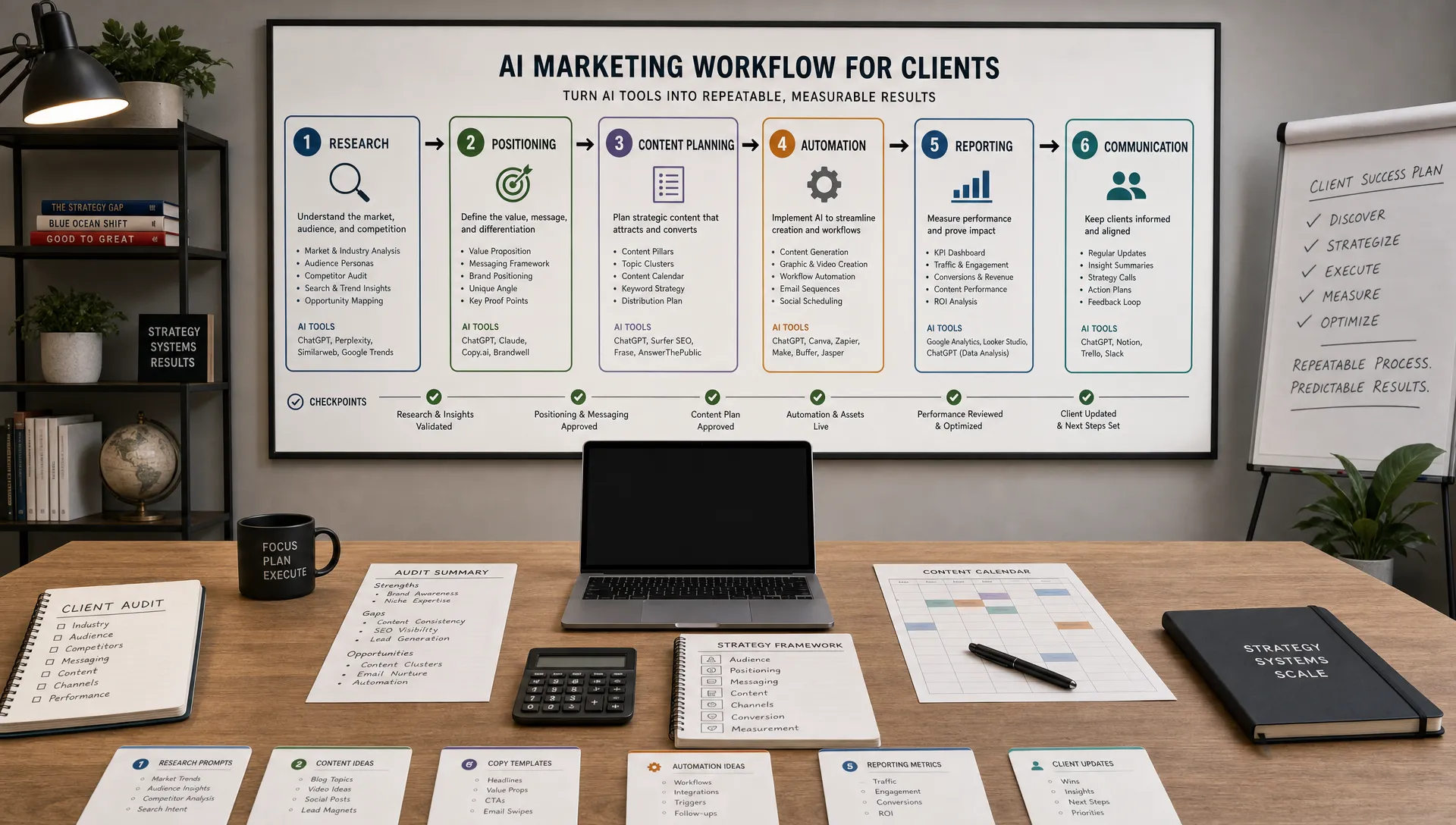
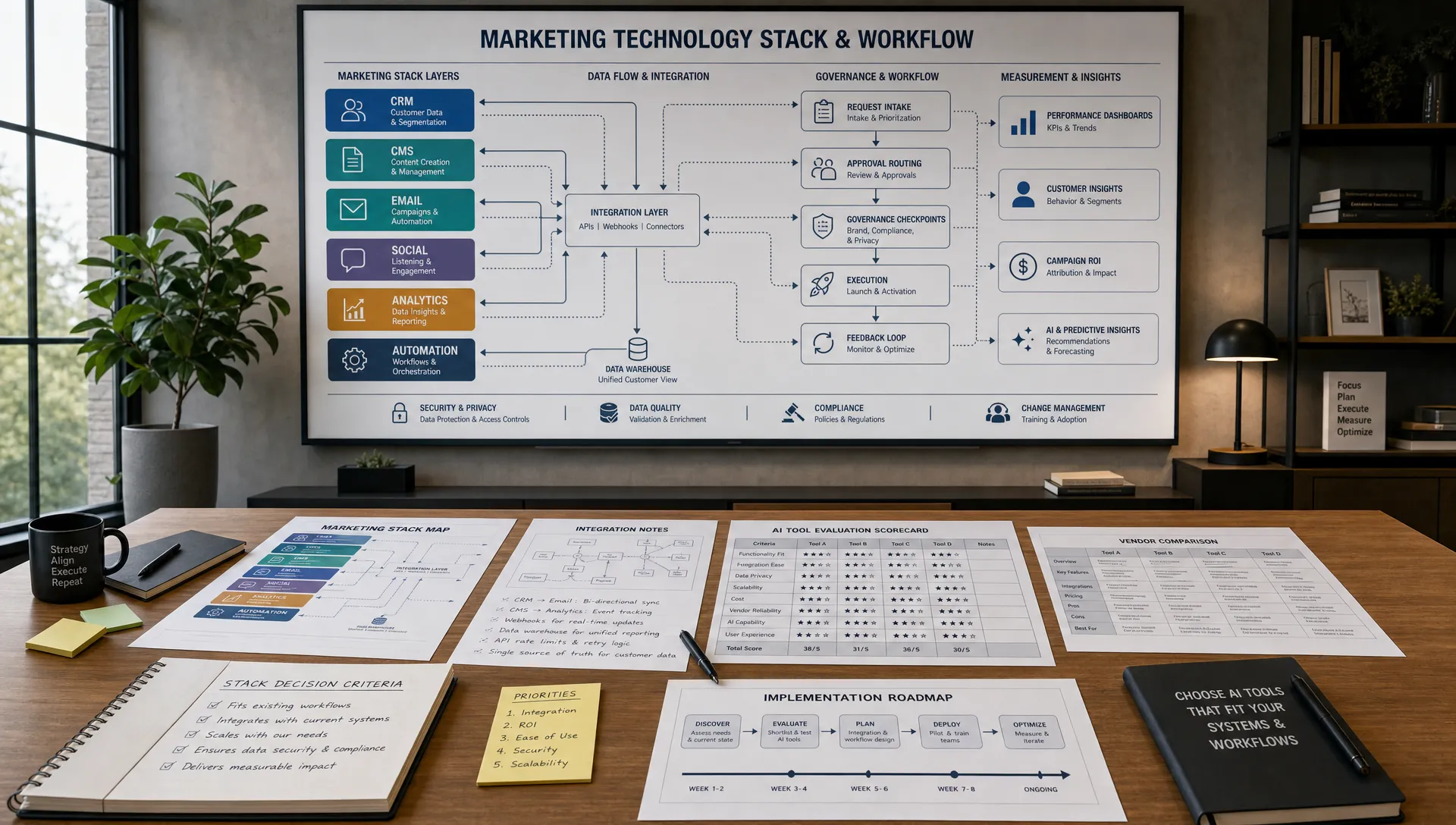
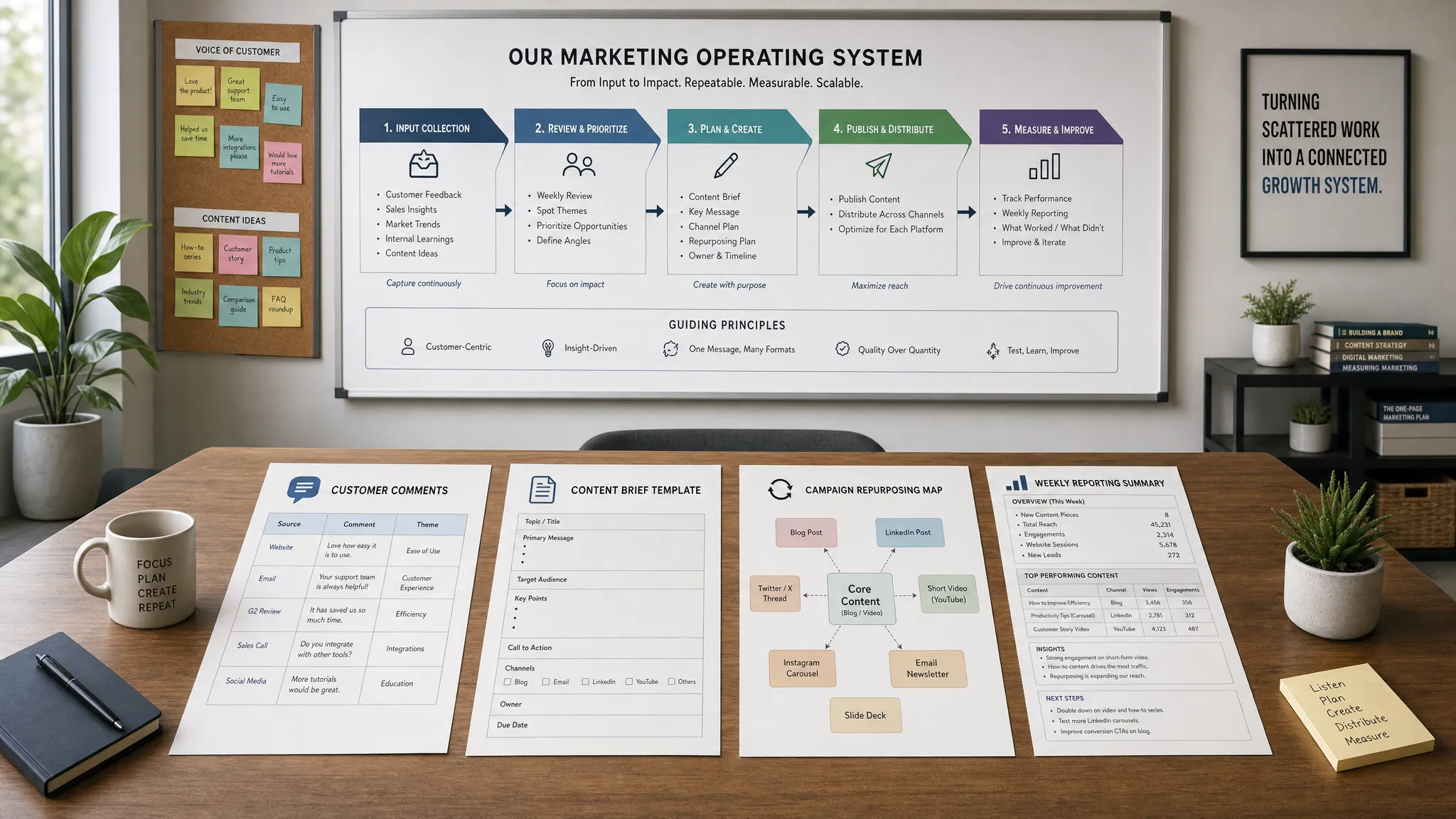
The most important AI and marketing trends share one theme: the advantage is moving from isolated tools to connected systems. A single AI content generator can save time, but an AI-enabled operating model can reshape how campaigns move from insight to execution. Leaders who understand that difference will be better prepared to invest wisely, govern responsibly, and build teams that use AI as a multiplier rather than a shortcut.
Below are the trends every marketing leader should watch, along with practical implications for strategy, budget, talent, and execution.
Marketing has always been shaped by technology, from email automation to programmatic advertising to analytics platforms. What makes the current AI wave different is its breadth. Generative AI, predictive analytics, machine learning, natural language interfaces, and workflow automation are now touching nearly every stage of the customer journey.
That creates a leadership problem. If AI adoption is left only to individual teams, companies often end up with fragmented tools, inconsistent brand voice, unclear data practices, and duplicated spend. If leaders move too slowly, competitors may gain speed in testing, content production, personalization, and customer engagement.
The goal is not to replace marketers. It is to redesign the work so marketers spend less time on repetitive production and more time on positioning, audience insight, creative judgment, customer experience, and revenue strategy.
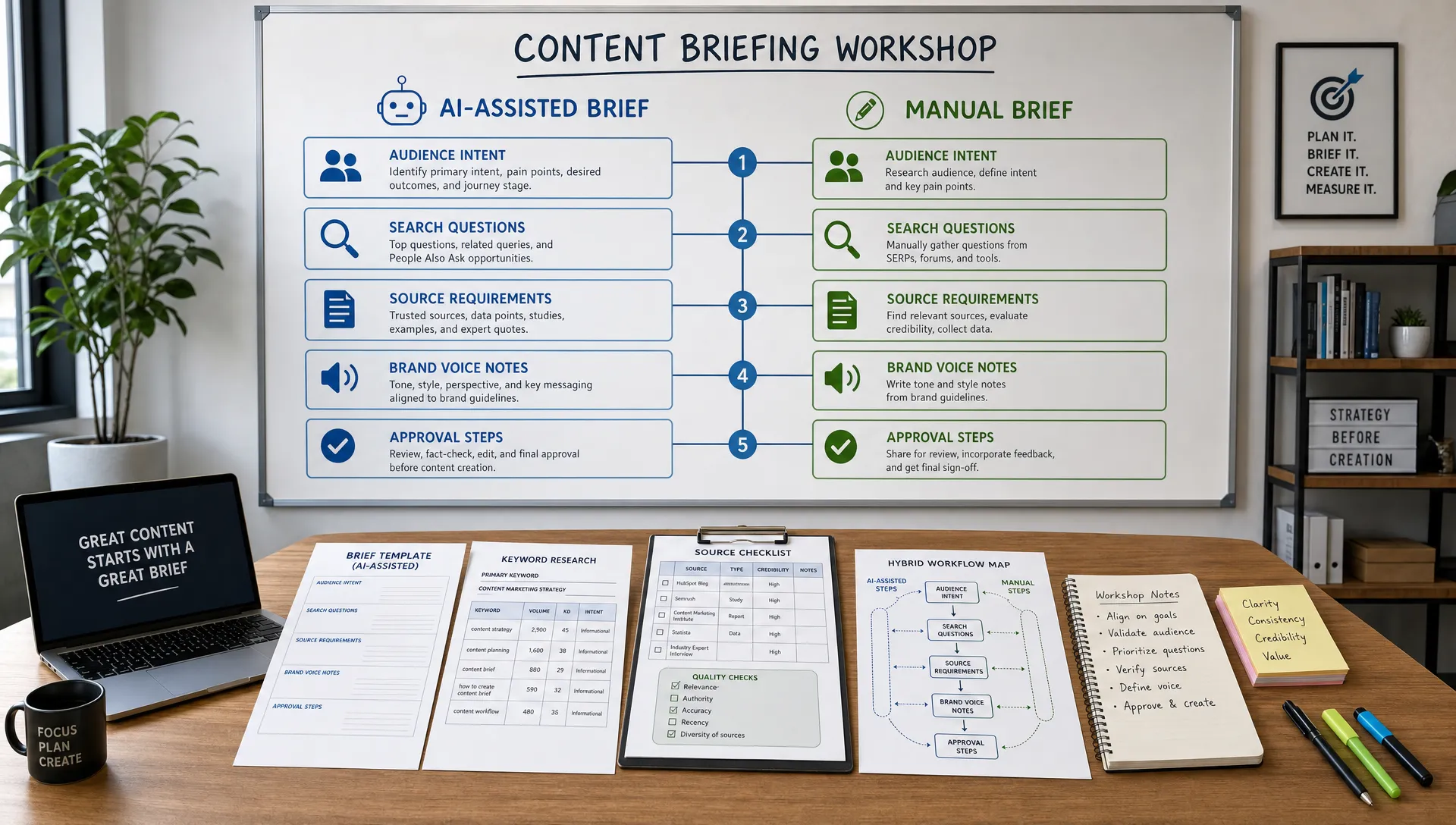
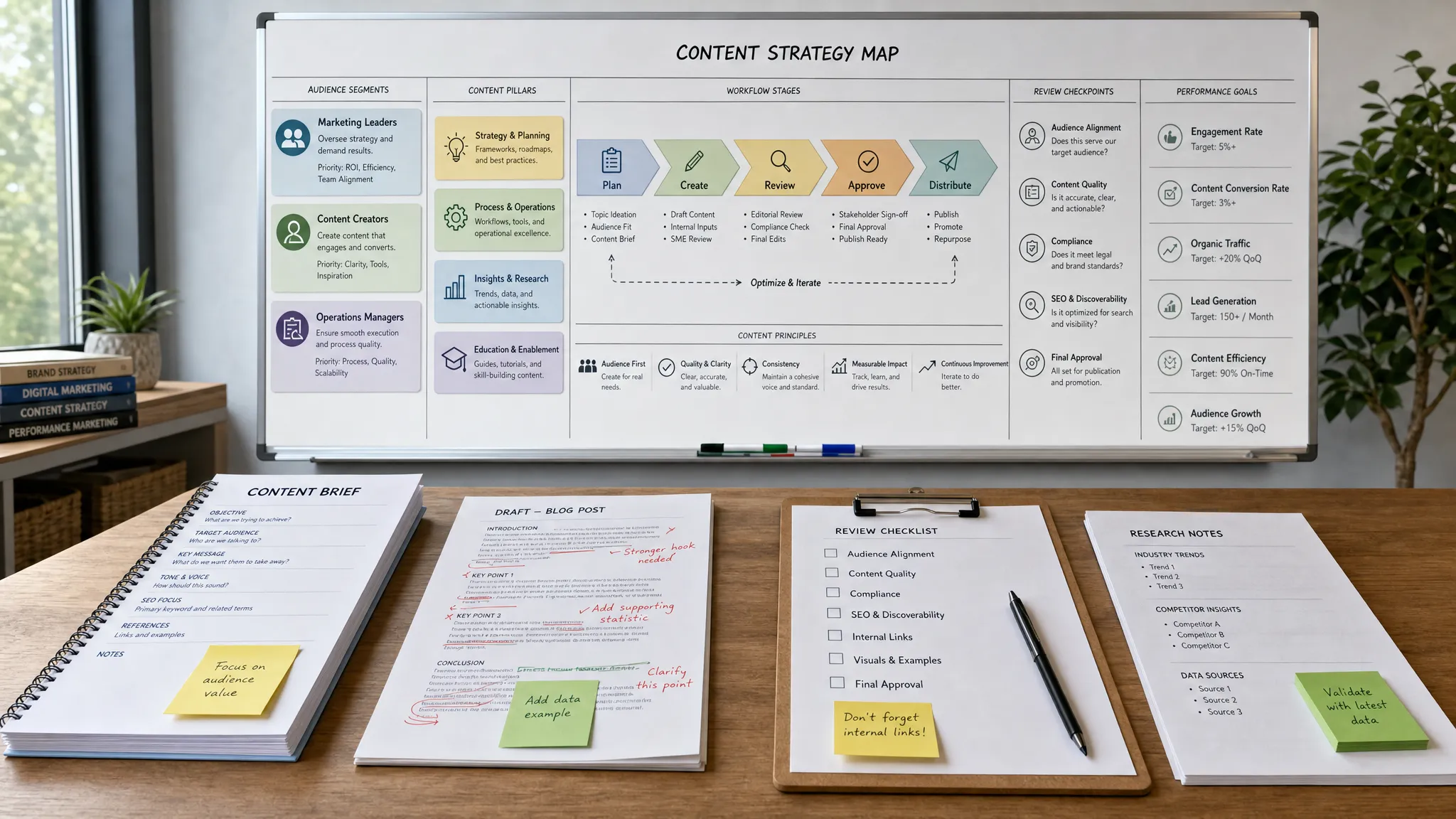
Early AI adoption in marketing often looked simple: a marketer entered a prompt, generated copy, edited it, and published. That approach can still be useful, but the more important trend is the rise of AI-native content operations.
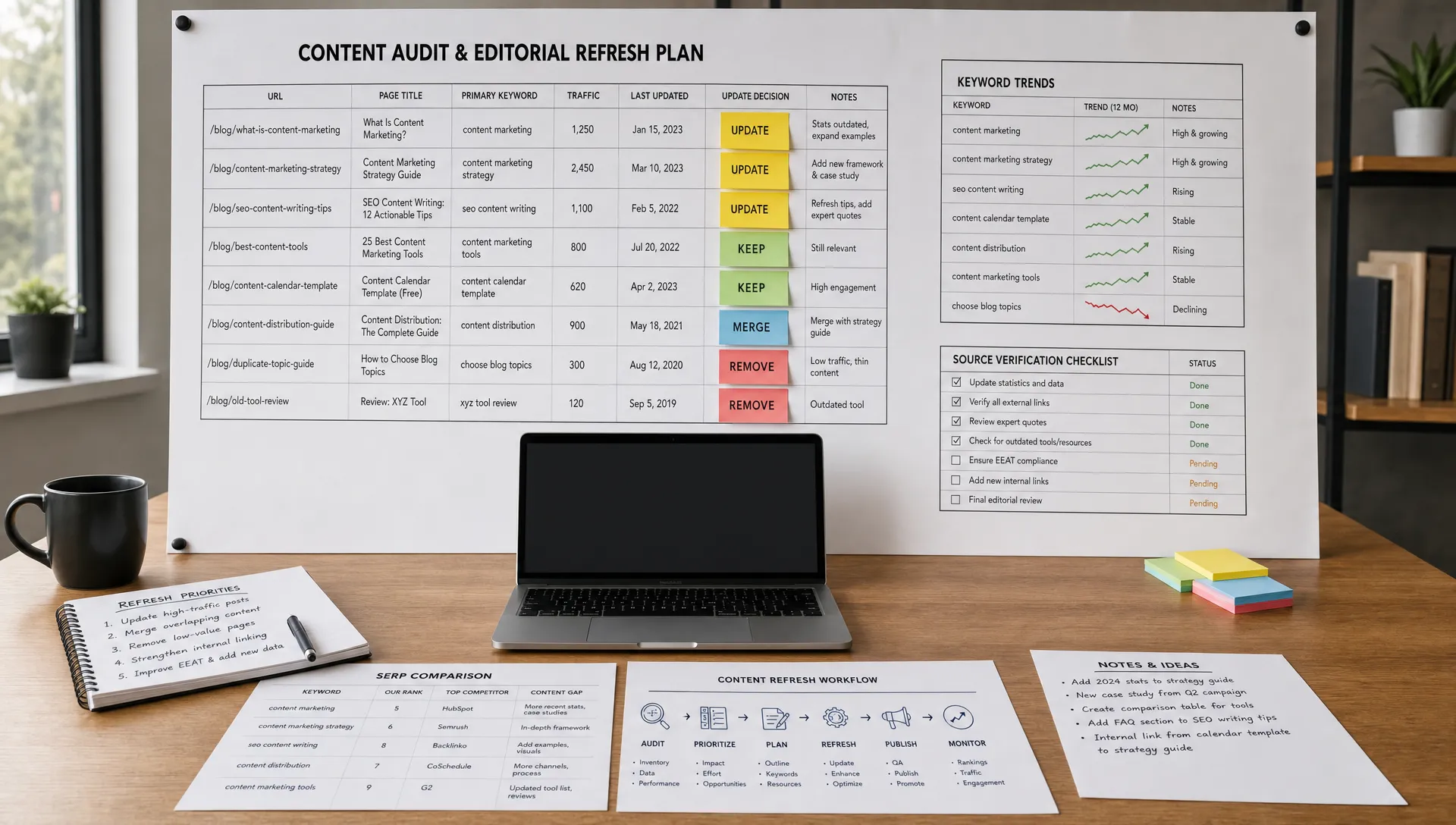
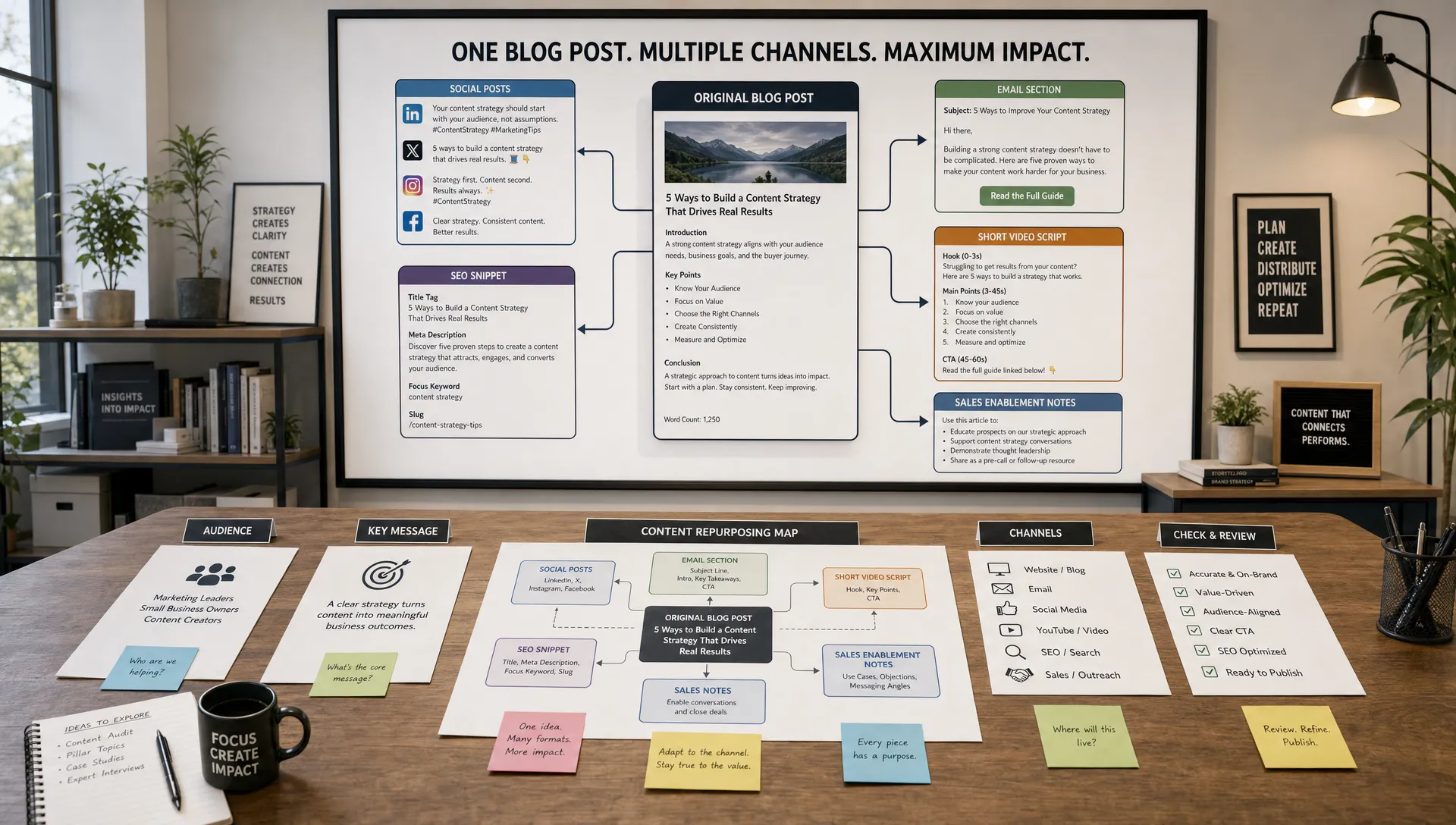
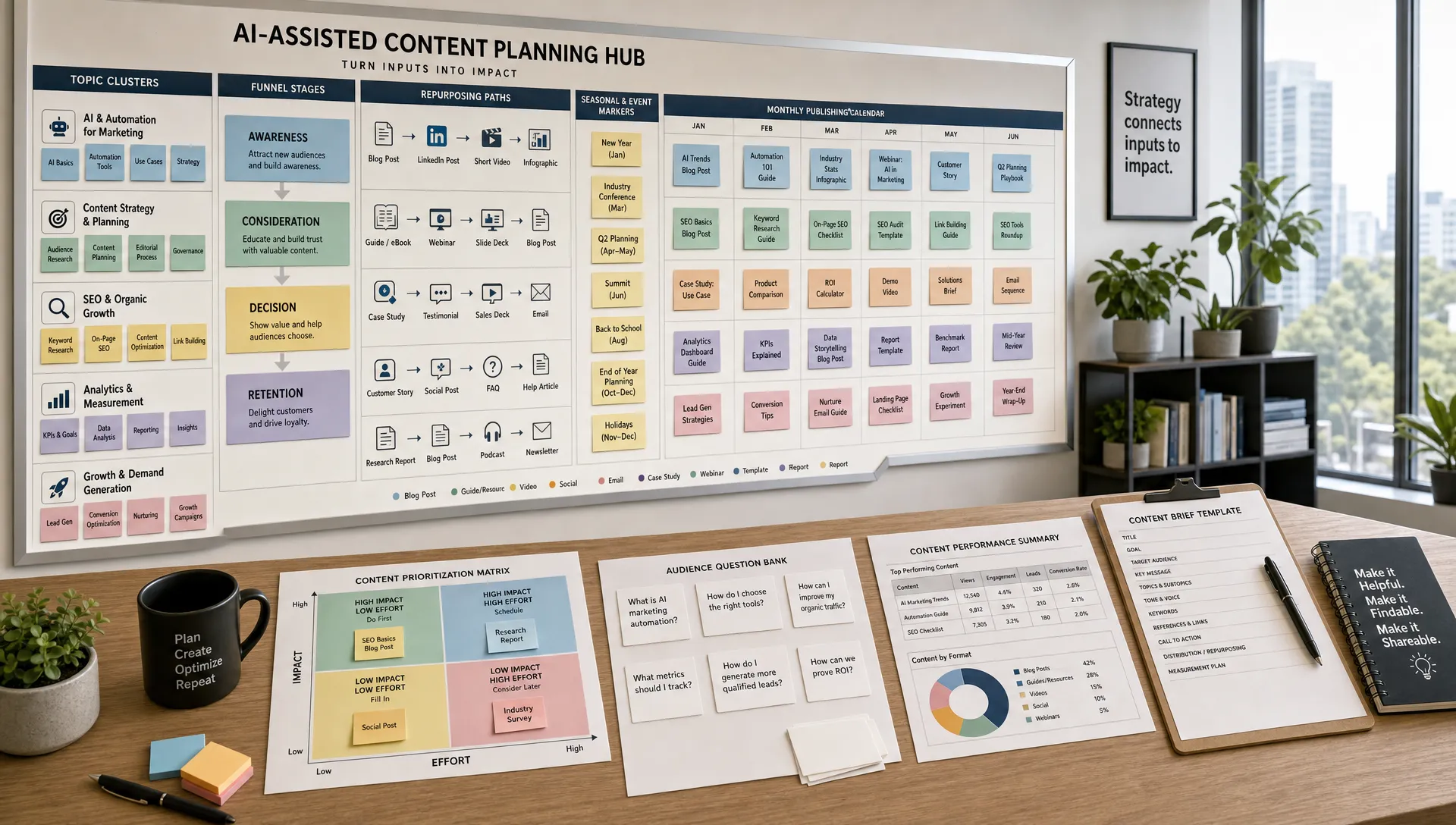
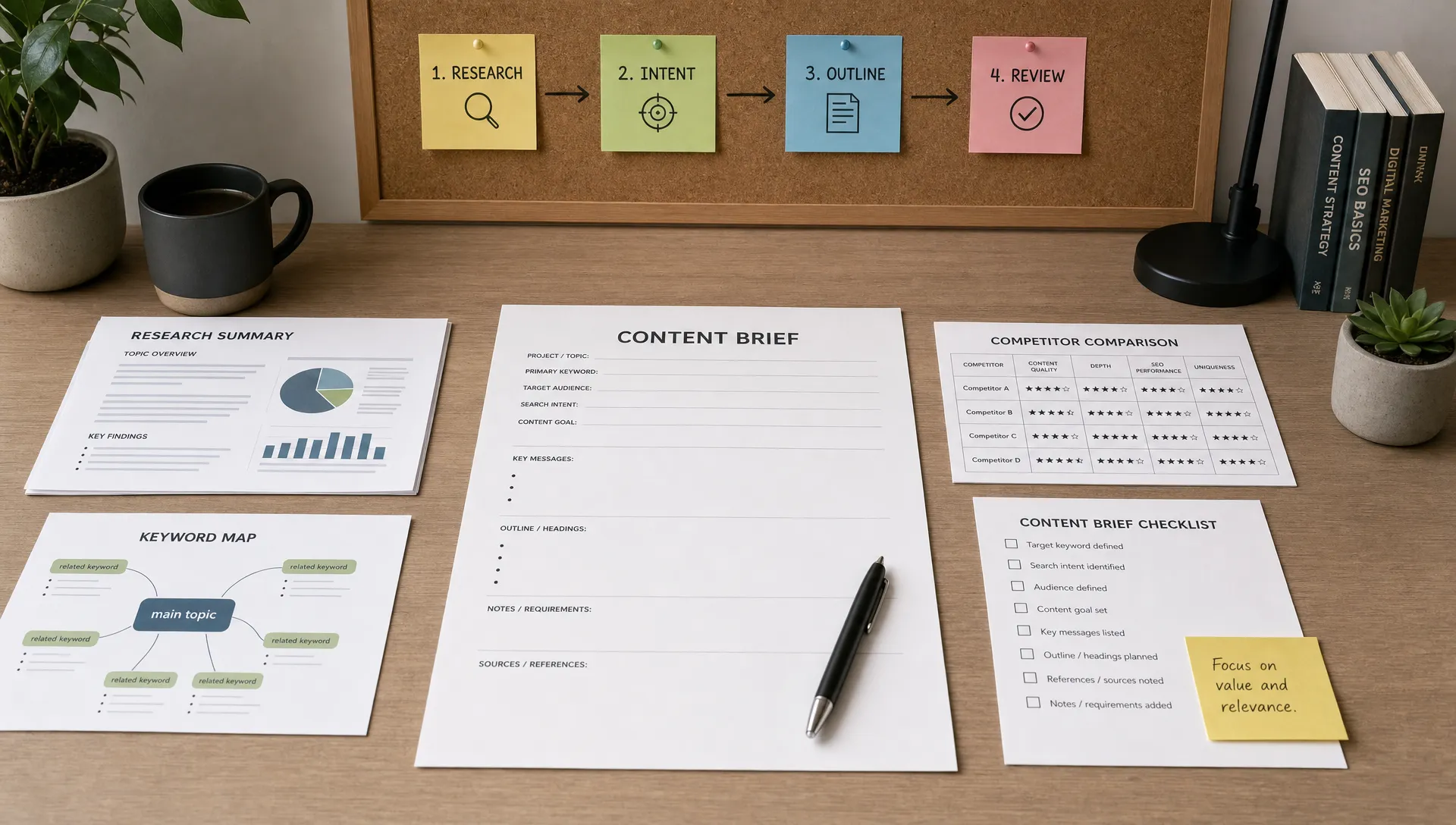
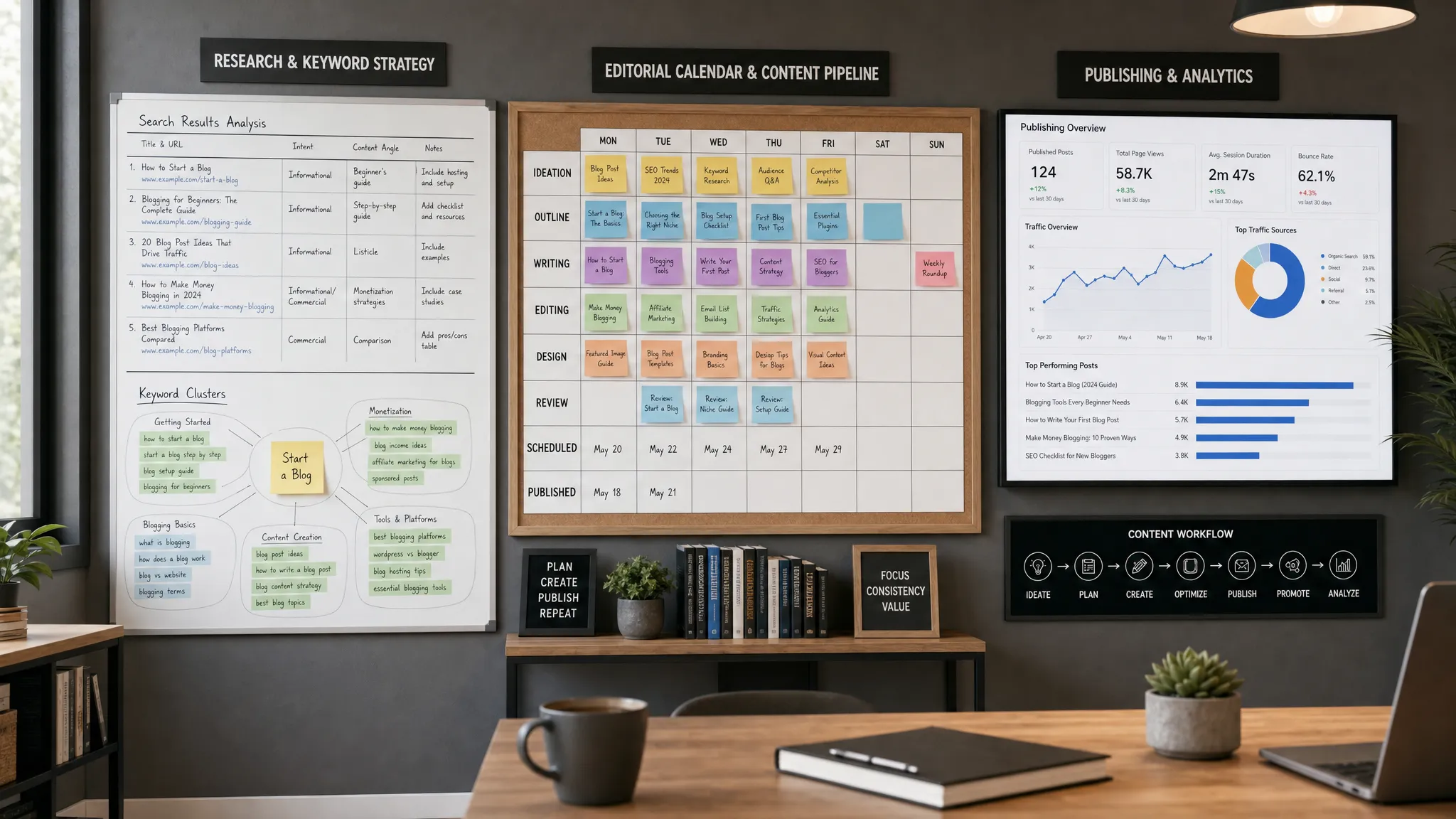
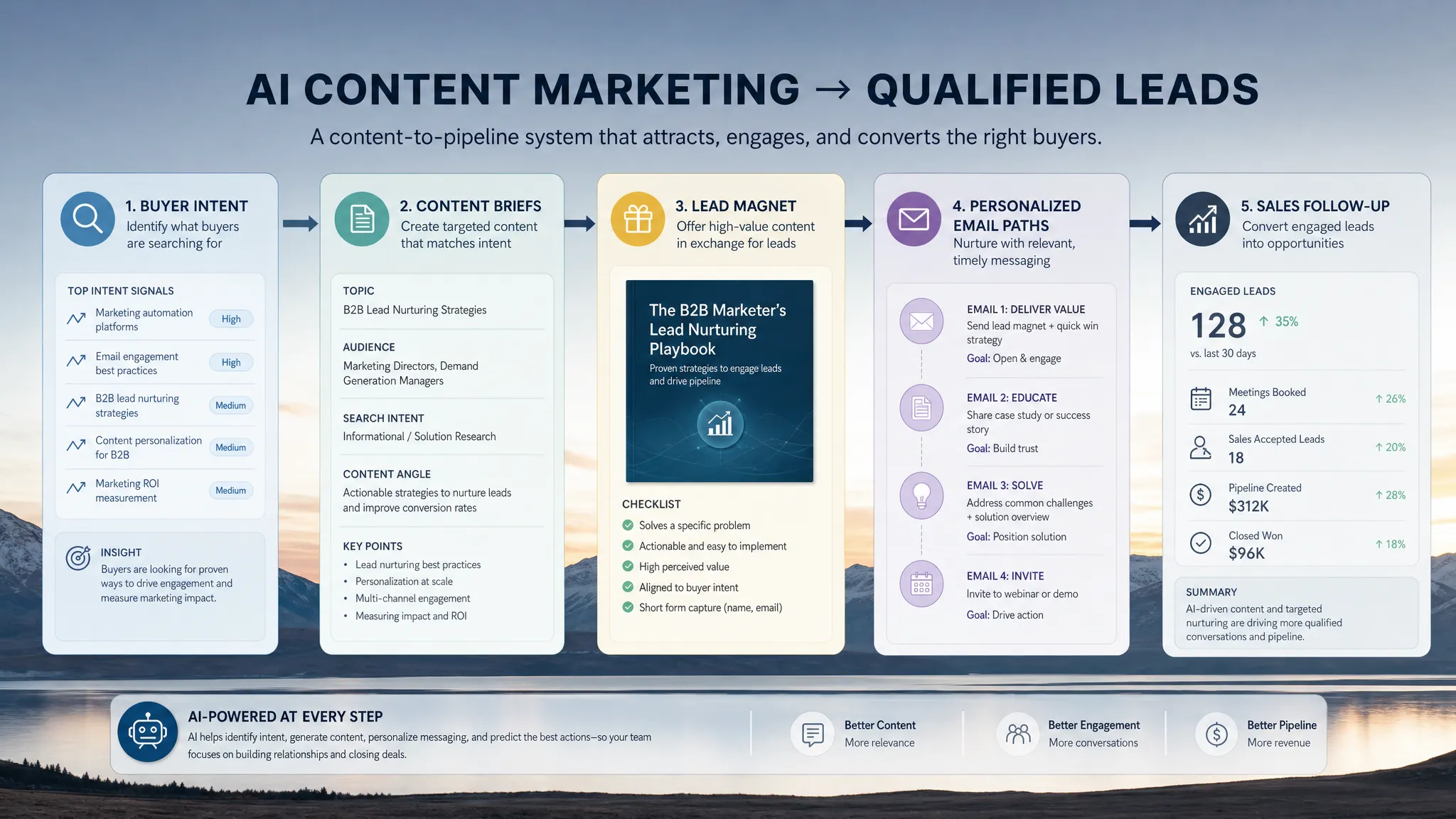
In an AI-native workflow, content is not just created faster. It is planned, briefed, drafted, reviewed, repurposed, localized, and measured with AI support at each step. A blog article can become social posts, email variations, sales enablement snippets, landing page copy, and paid ad concepts. A webinar can become a long-form guide, short clips, search-optimized FAQs, and nurture sequences.
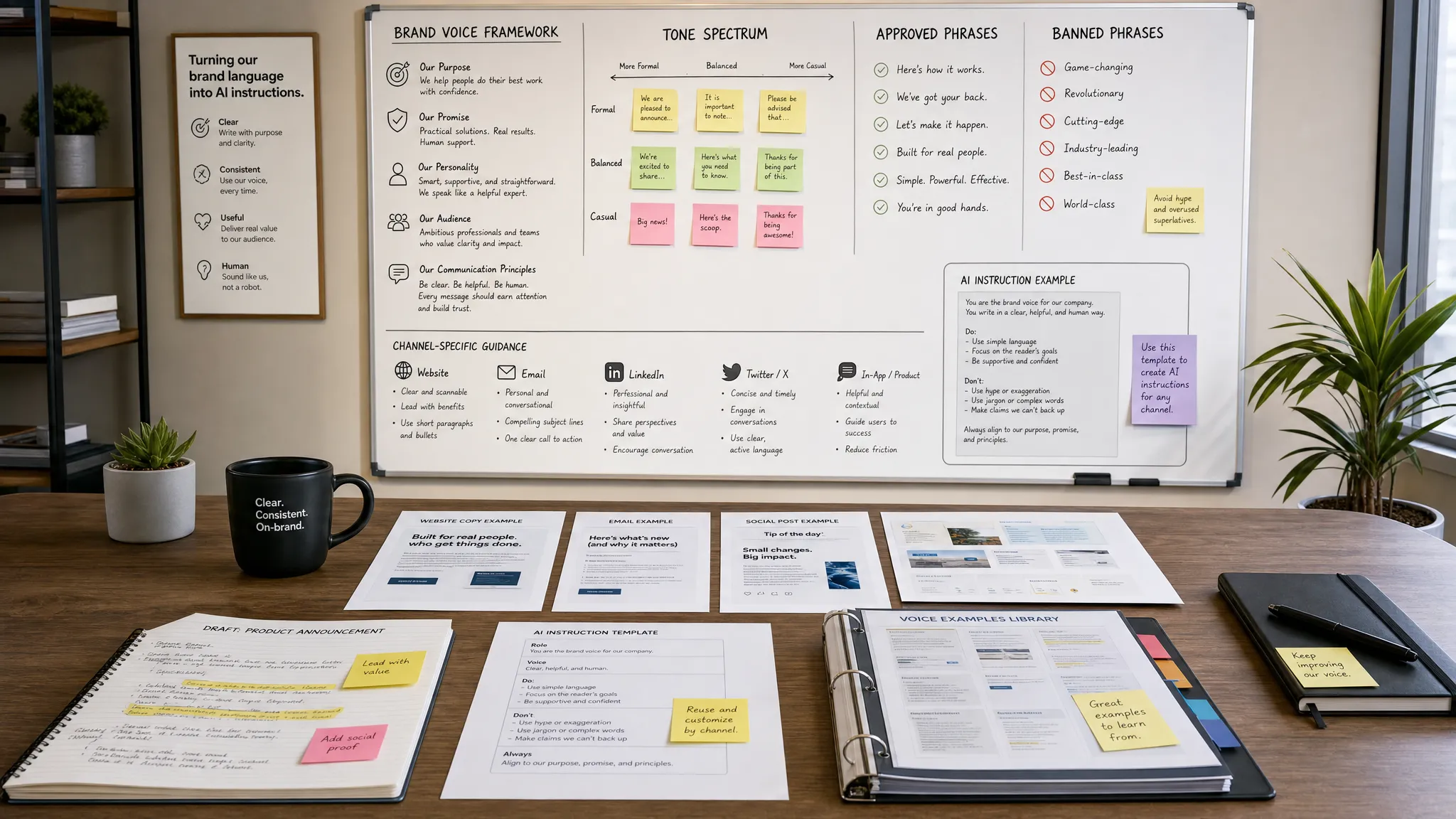
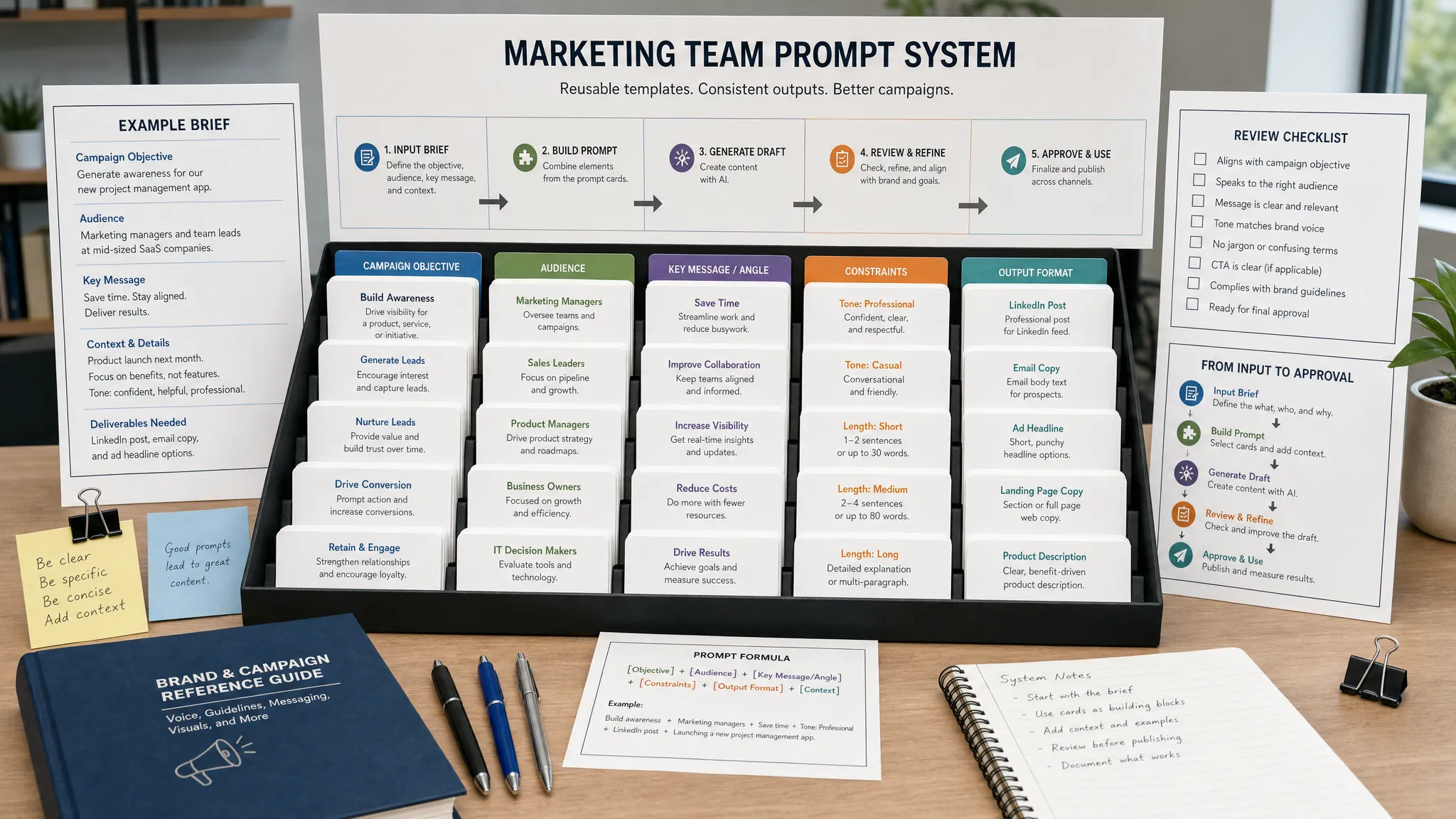
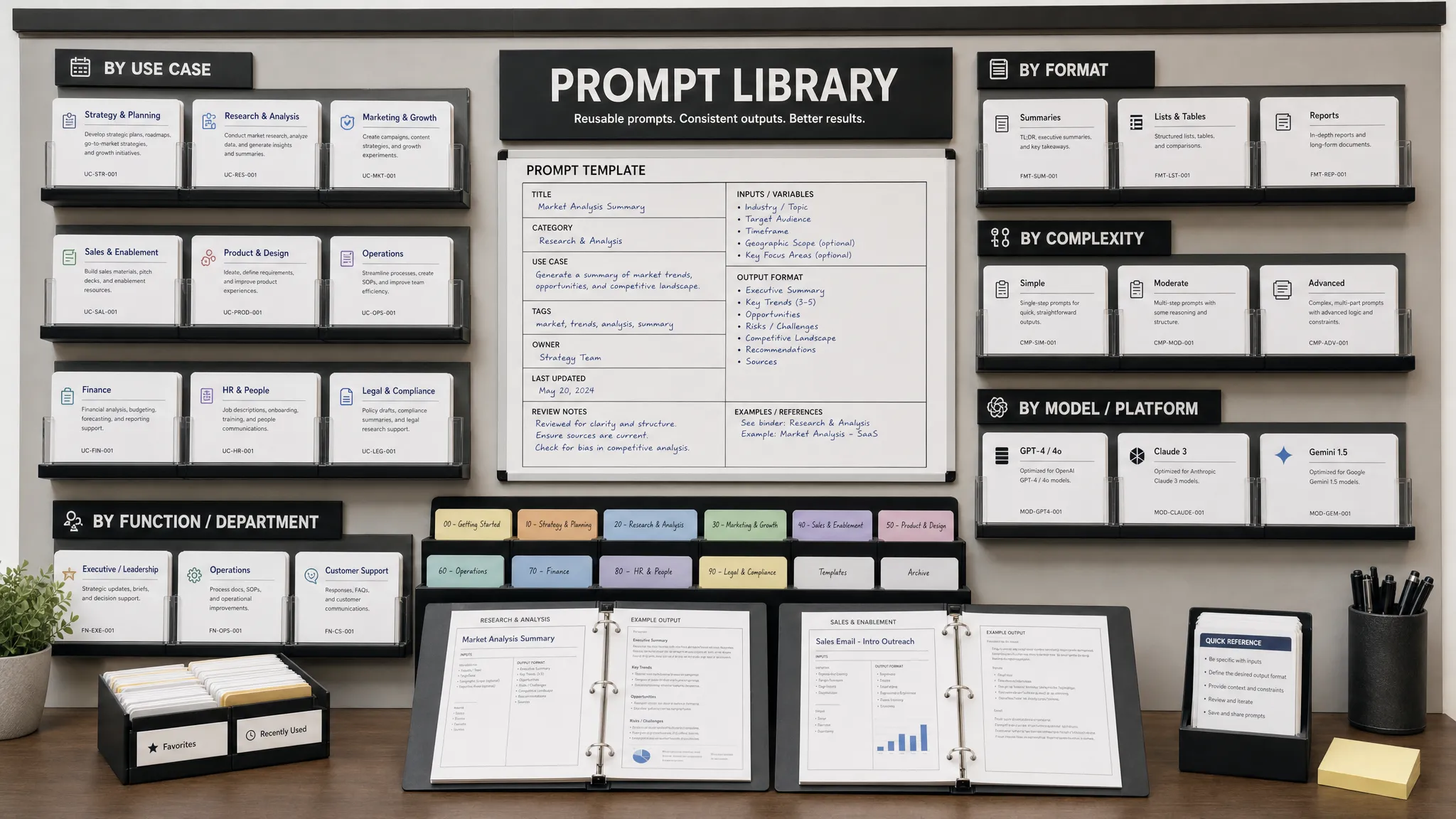
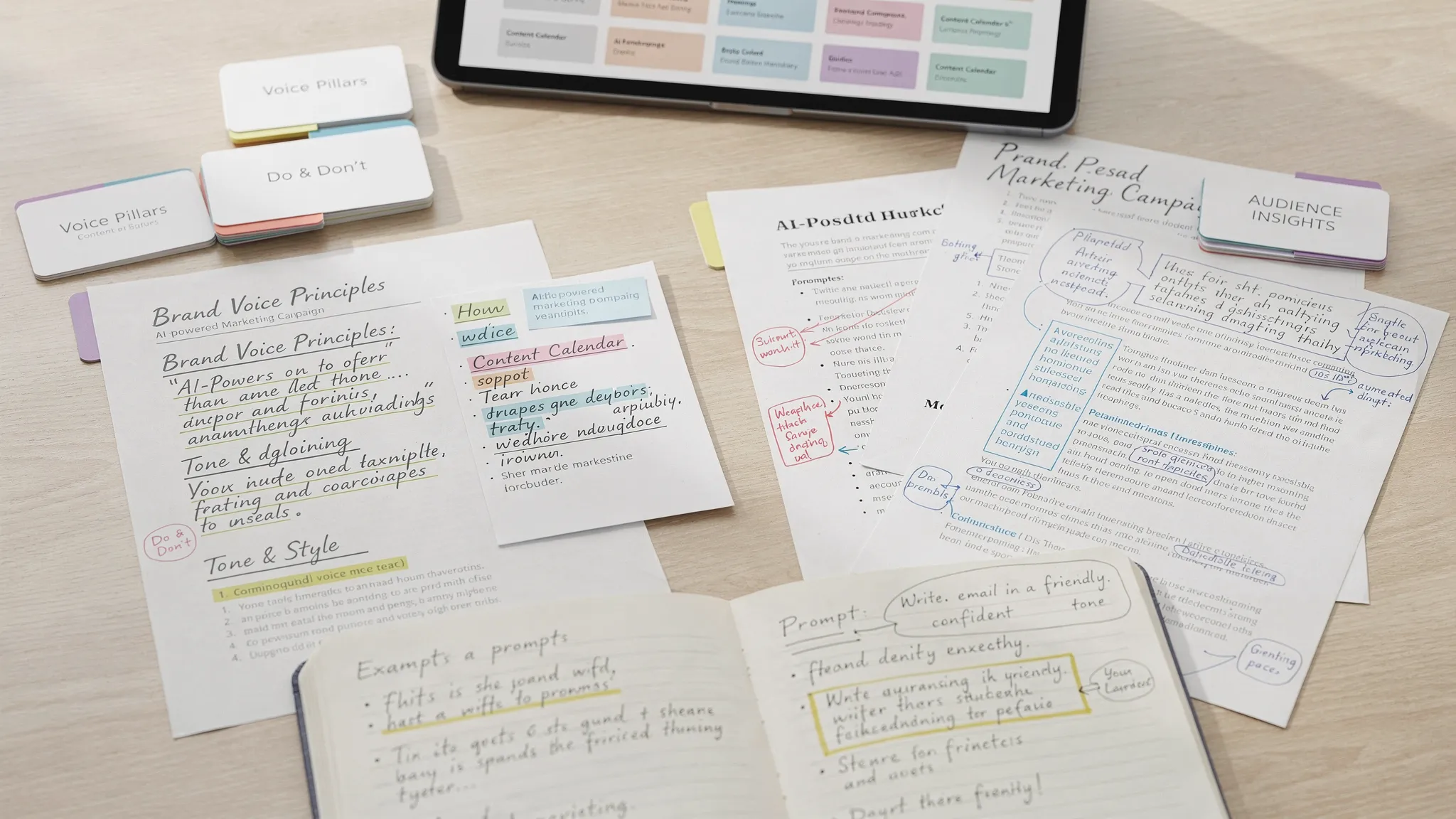
The leadership implication is clear: content teams need systems, not random prompt experimentation. They need approved brand guidelines, documented review processes, reusable prompt frameworks, and clear quality standards.
Leaders should ask:
The teams that win will not be the ones publishing the most AI content. They will be the ones using AI to produce more relevant, more consistent, and more useful content at a sustainable pace.
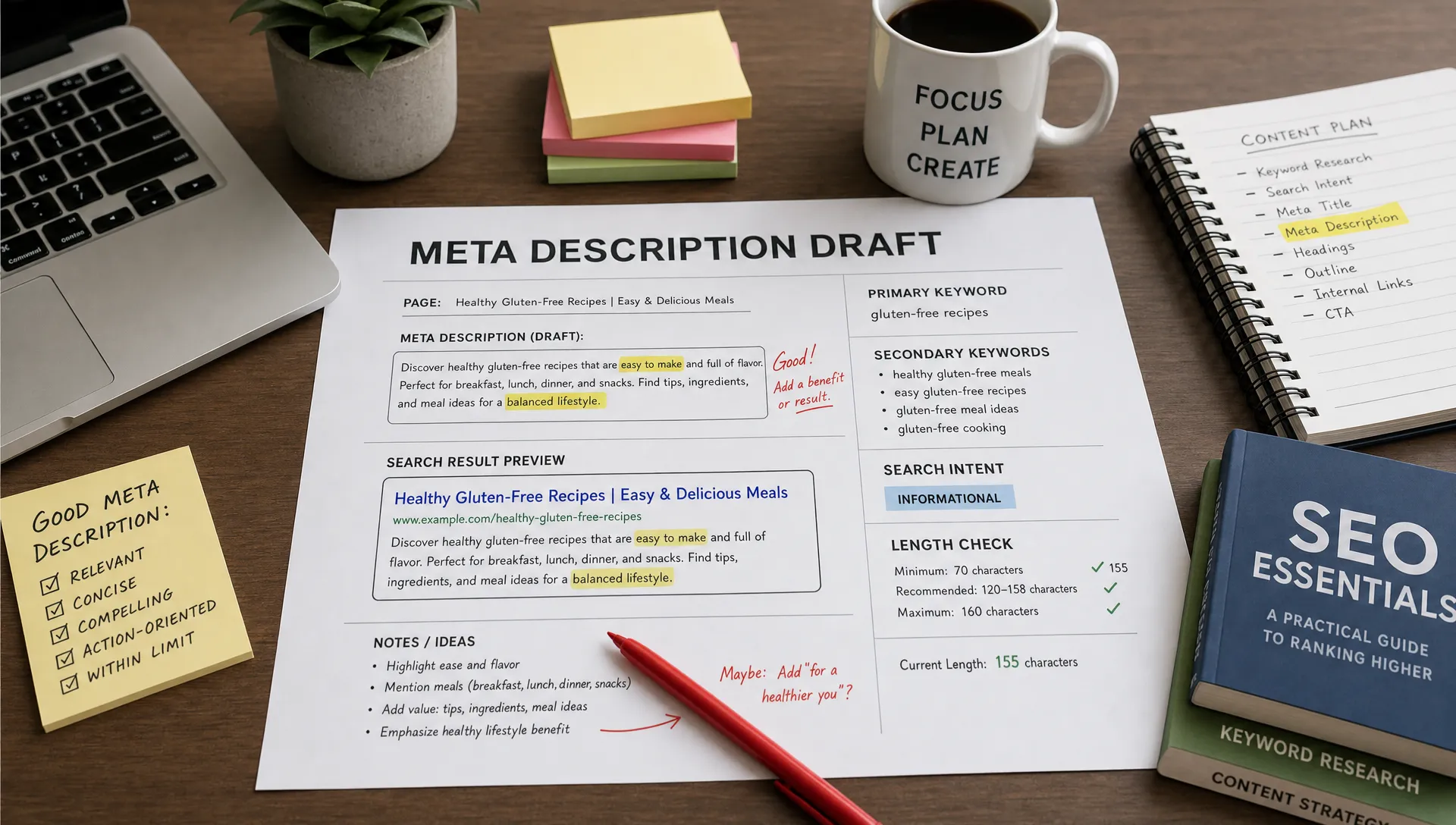
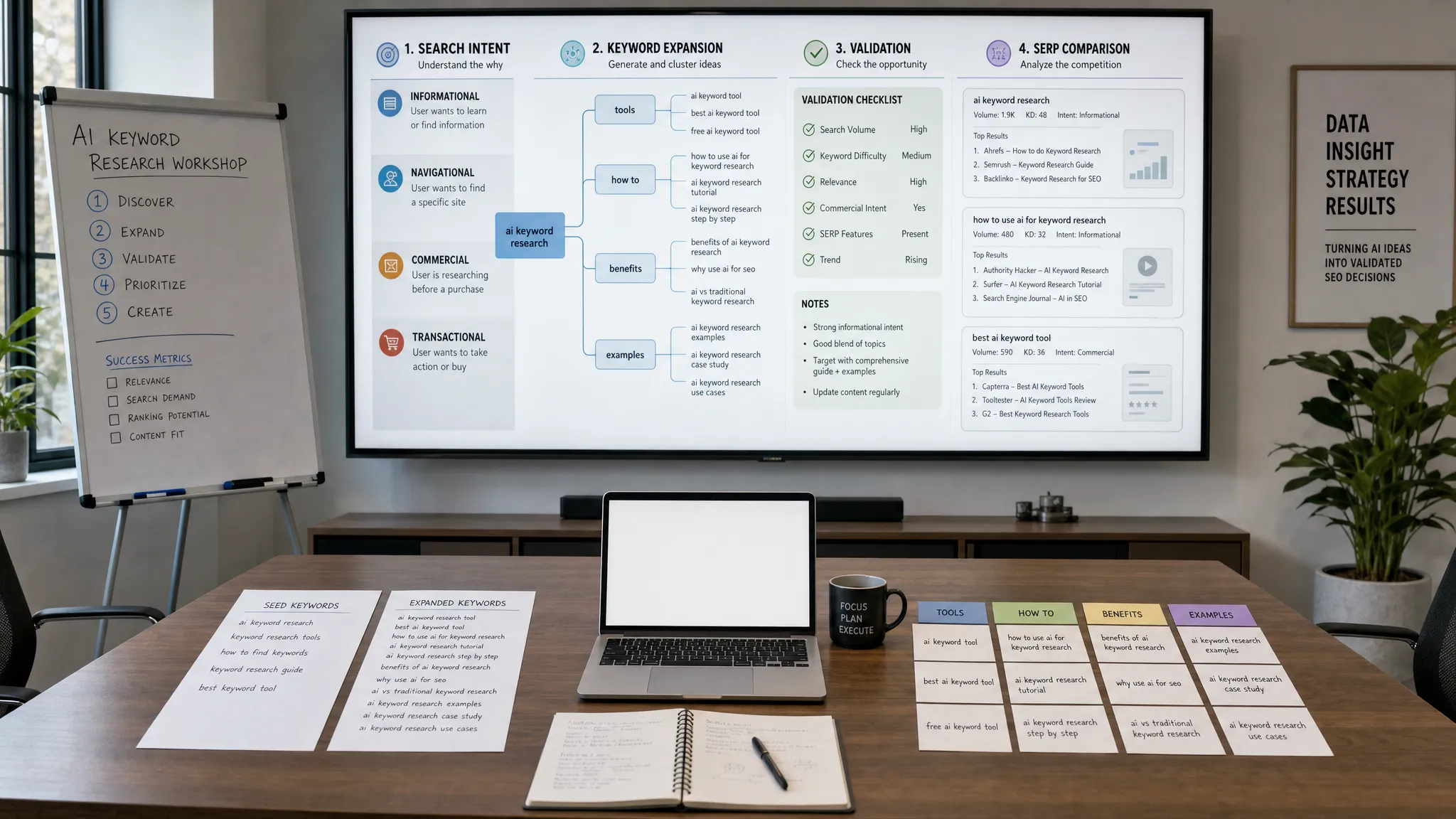
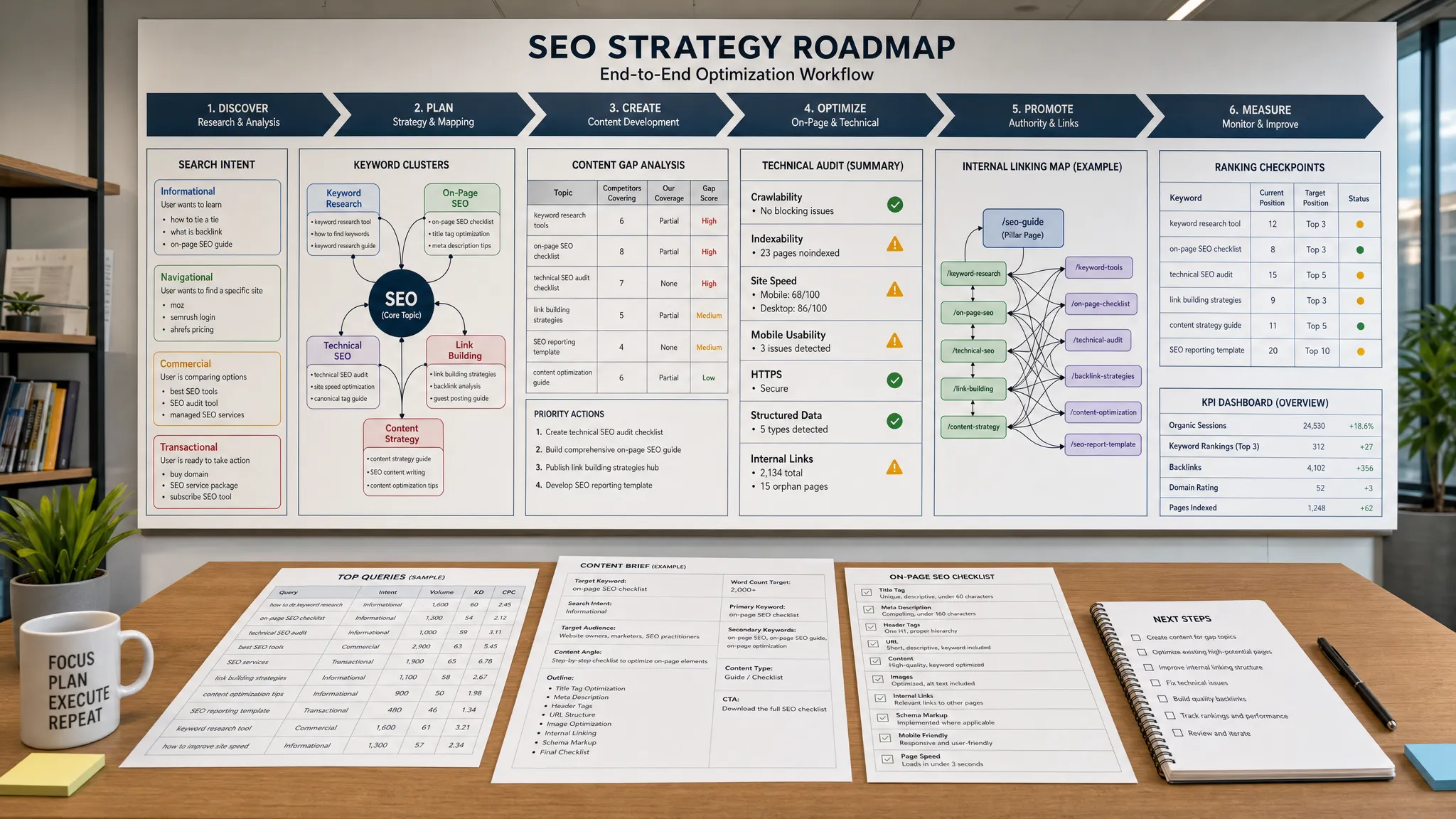
SEO is not disappearing, but search behavior is changing. Users increasingly expect direct answers, summarized recommendations, comparison guidance, and conversational follow-up. AI-powered search experiences, answer engines, and chat-based discovery are making it more important for brands to create content that is clear, authoritative, structured, and genuinely helpful.
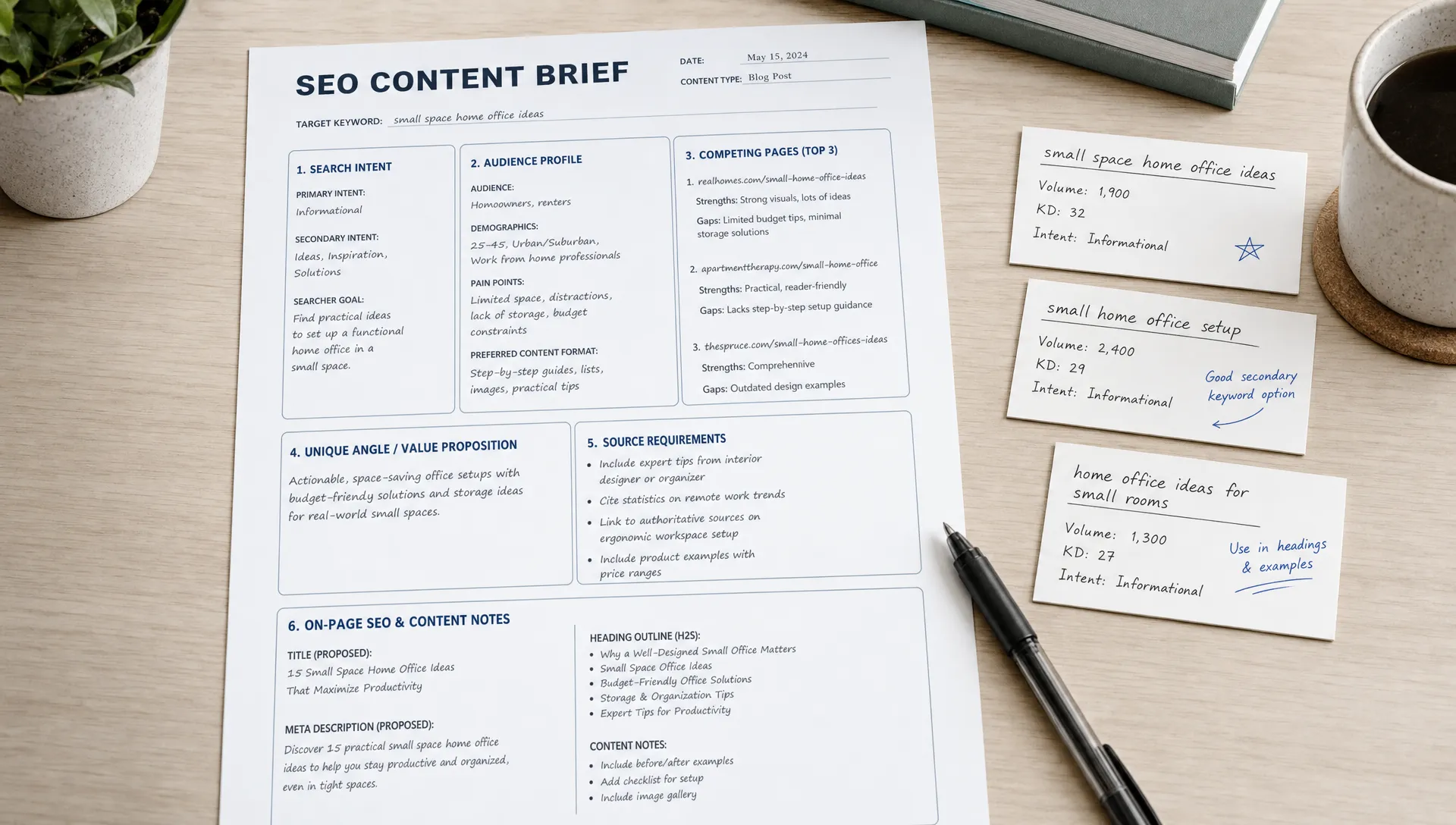
For marketing leaders, this means traditional keyword targeting is no longer enough. Brands need to understand the questions buyers ask at each stage of the journey and create content that answers those questions with depth and credibility.
This trend also increases the value of expert-led content. AI systems are more likely to surface and summarize information that is specific, well-organized, and supported by real expertise. Generic content that repeats common advice is less likely to stand out.
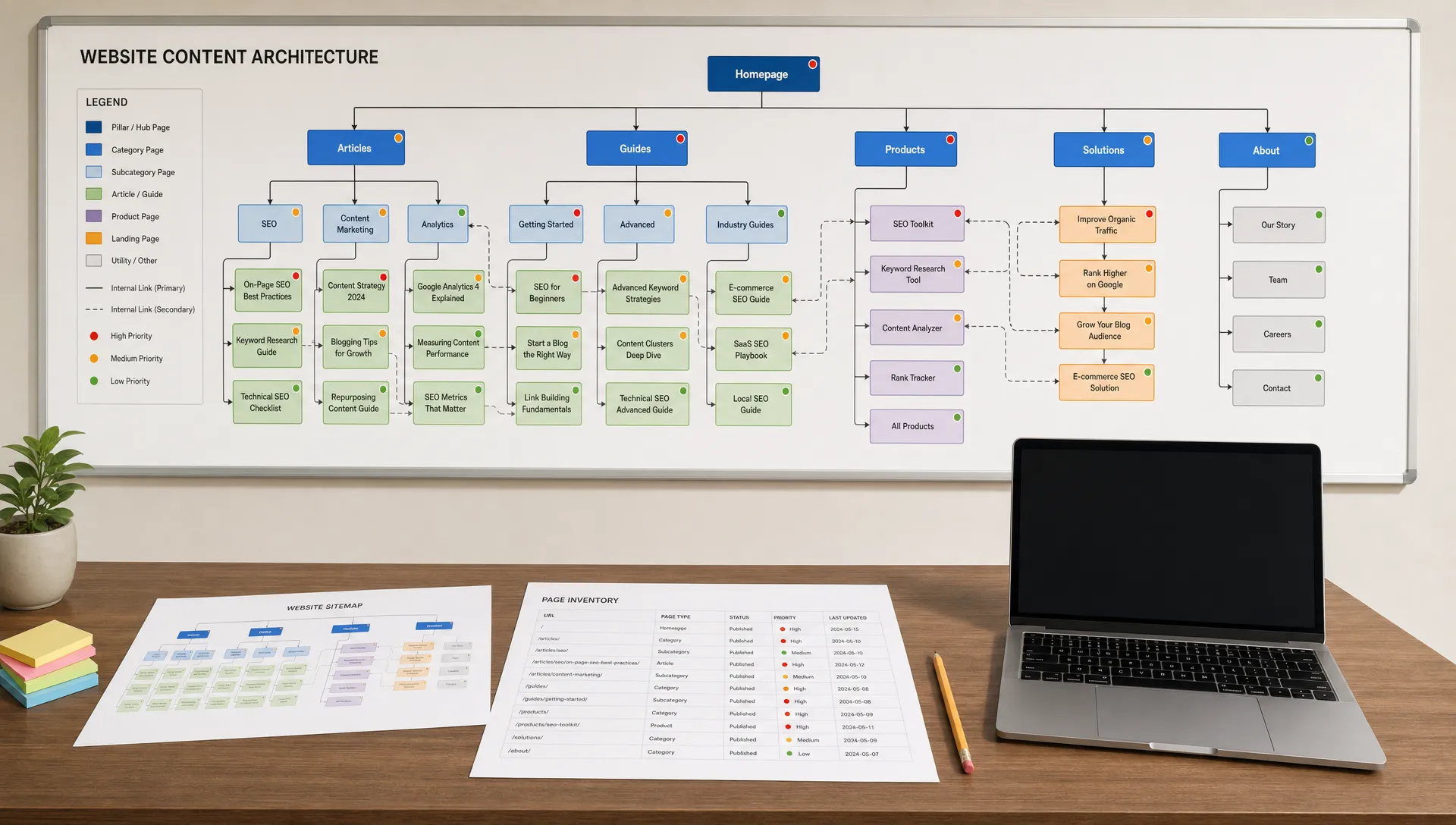
A practical response is to build content around decision journeys rather than isolated keywords. For example, a SaaS buyer may search for category education, comparison criteria, implementation concerns, pricing models, risk factors, and internal stakeholder objections. AI and marketing teams should map these questions and create assets that help buyers move forward with confidence.
Personalization has been a marketing priority for years, but AI raises both the opportunity and the risk. Customers expect relevant experiences, yet they are more aware of data privacy, tracking, and how brands use personal information.
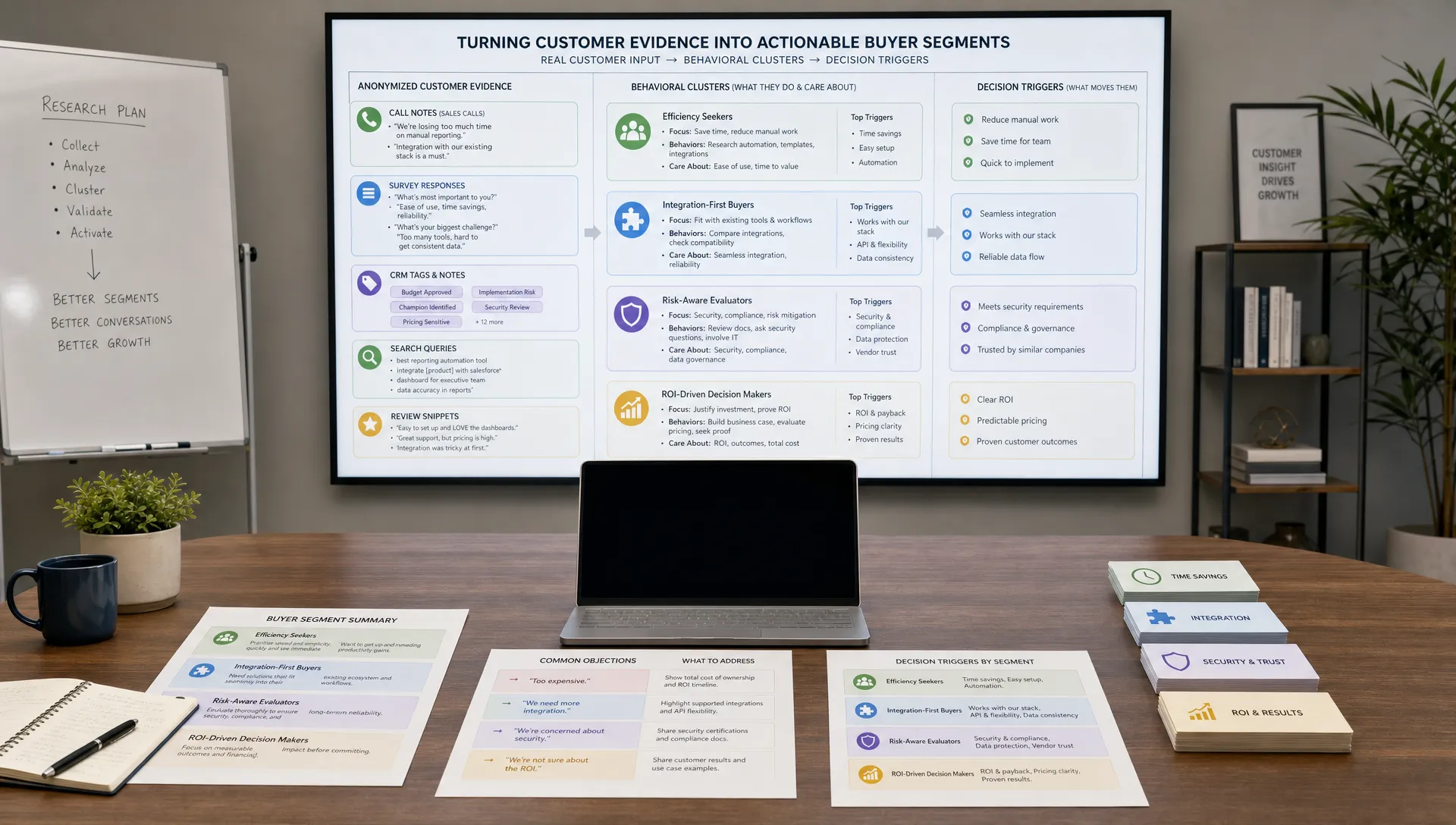
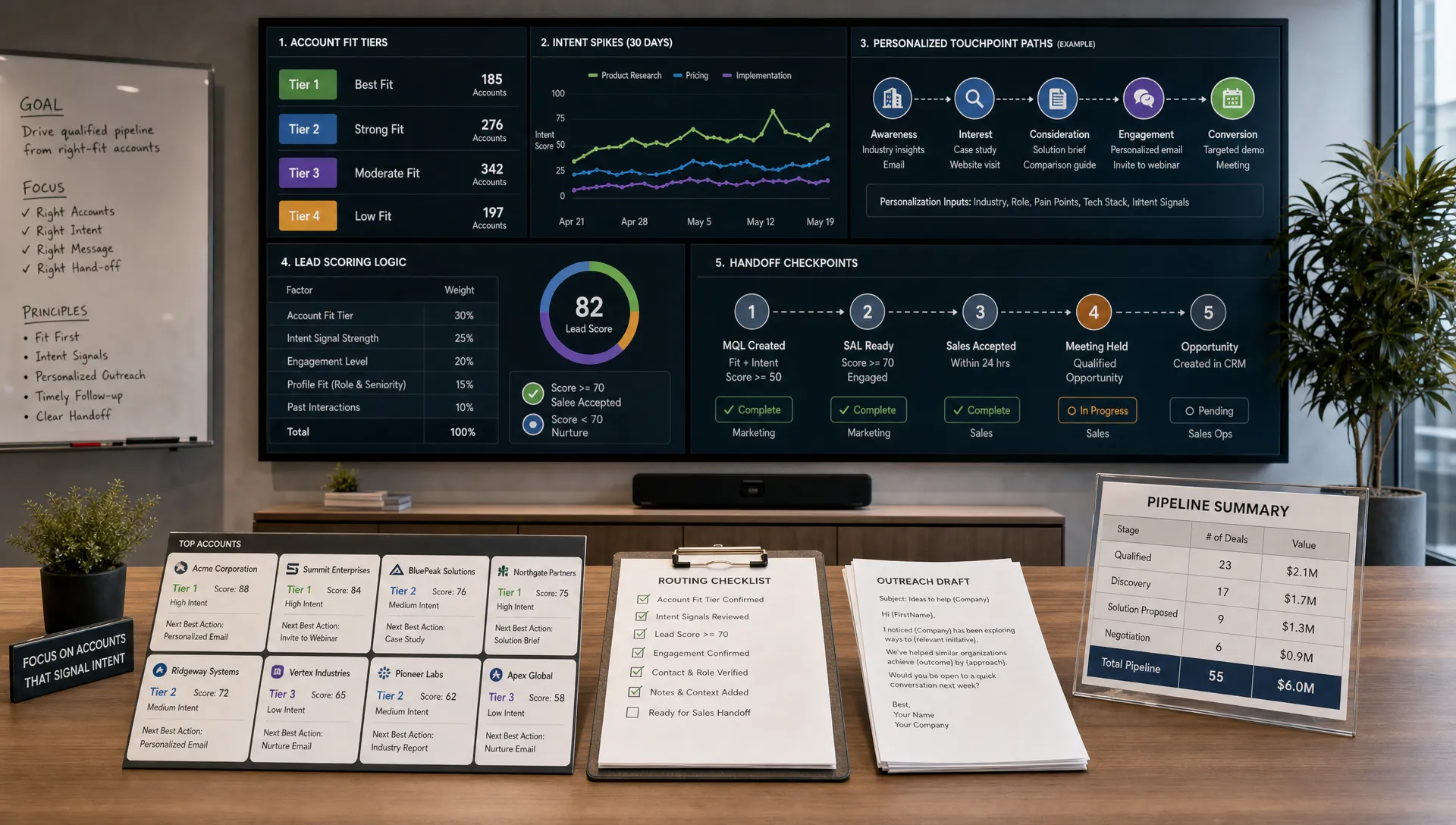
The next phase of personalization will depend less on broad third-party tracking and more on first-party data, consent-based interactions, contextual signals, and intelligent segmentation. Instead of personalizing only by demographic attributes, AI can help identify patterns based on behavior, lifecycle stage, content interests, purchase intent, and engagement history.
The key is restraint. Personalization should feel helpful, not invasive. A useful product recommendation, relevant email sequence, or tailored onboarding message can improve the customer experience. A message that appears to know too much or uses sensitive data carelessly can damage trust.
Leaders should treat privacy-safe personalization as both a growth initiative and a brand trust initiative. That means aligning marketing, legal, data, and customer experience teams around clear policies for consent, data access, retention, and usage.
One of the biggest AI and marketing trends to watch is the shift from AI assistants to AI agents. A basic assistant responds to a prompt. An agentic workflow can complete multi-step tasks within defined boundaries, such as researching competitors, drafting campaign briefs, generating audience variants, preparing reports, or routing leads based on behavior.
This does not mean leaders should hand over strategy to autonomous systems. It means marketing operations will increasingly include AI workflows that can execute repeatable processes under human supervision.
Examples include:
The risk is that automation can scale mistakes as quickly as it scales output. Leaders need approval gates, permissions, audit trails, and escalation rules. Agentic AI should be introduced where the process is well-defined, the data is reliable, and the cost of error is manageable.
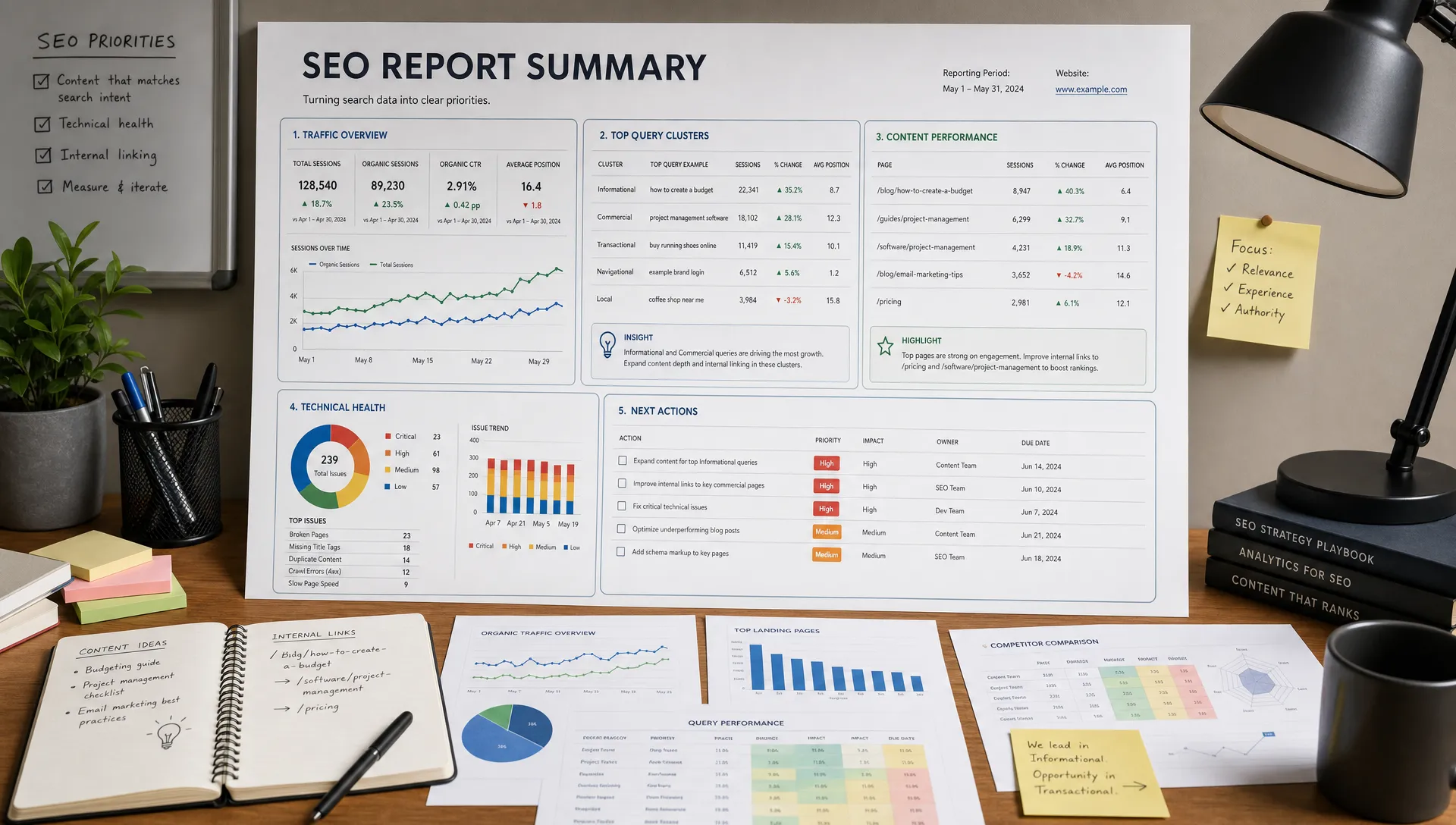
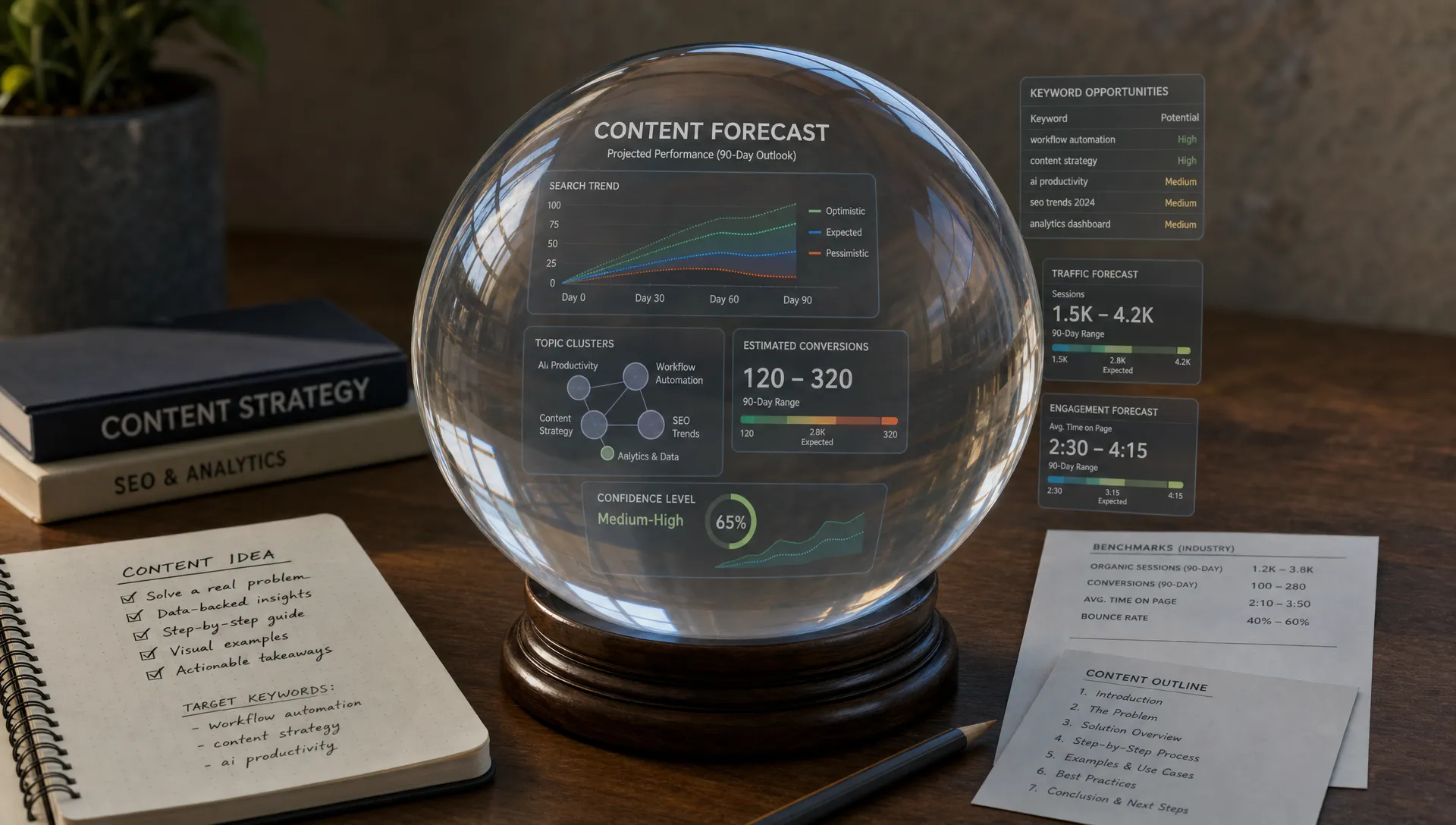
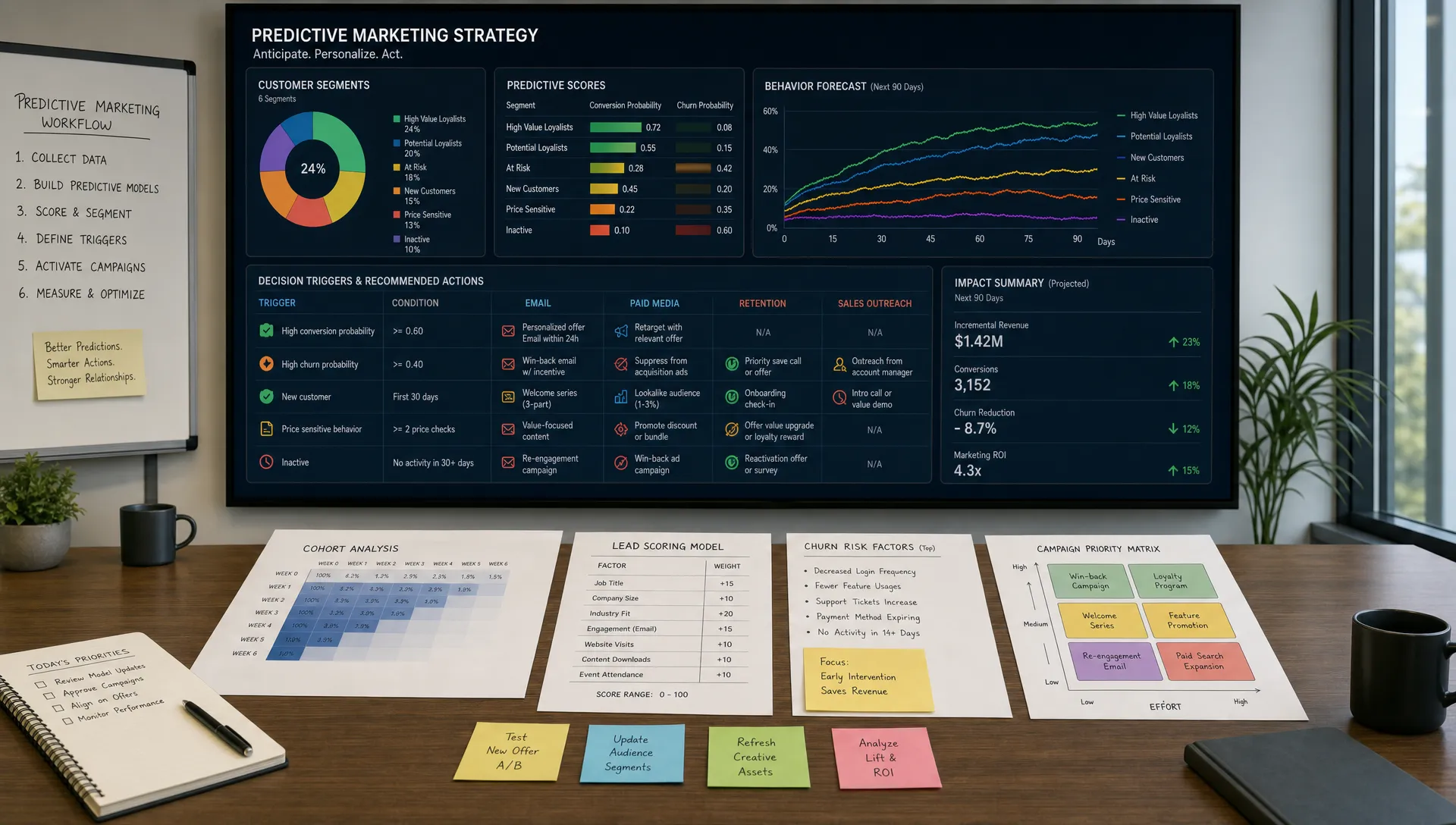
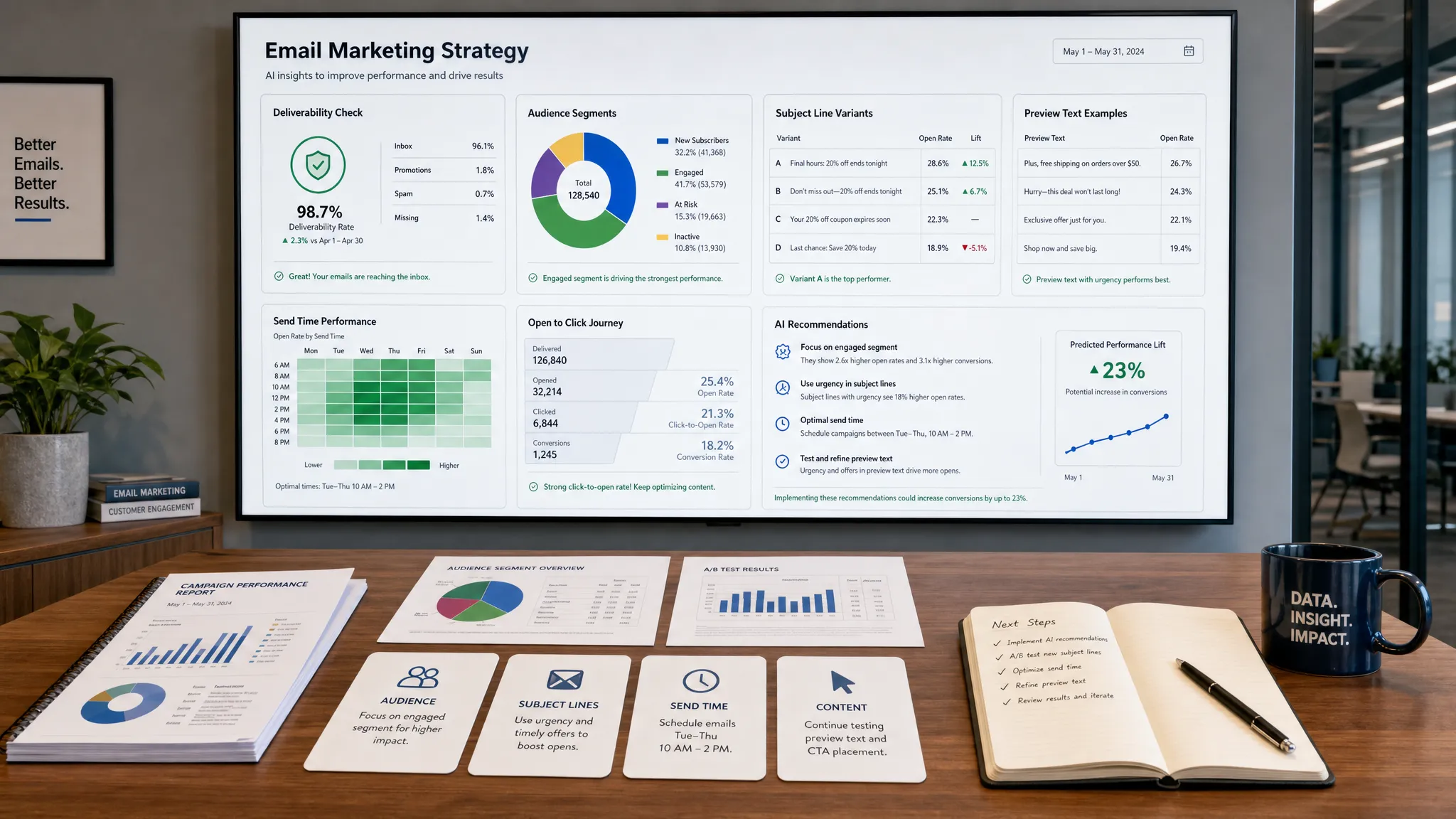
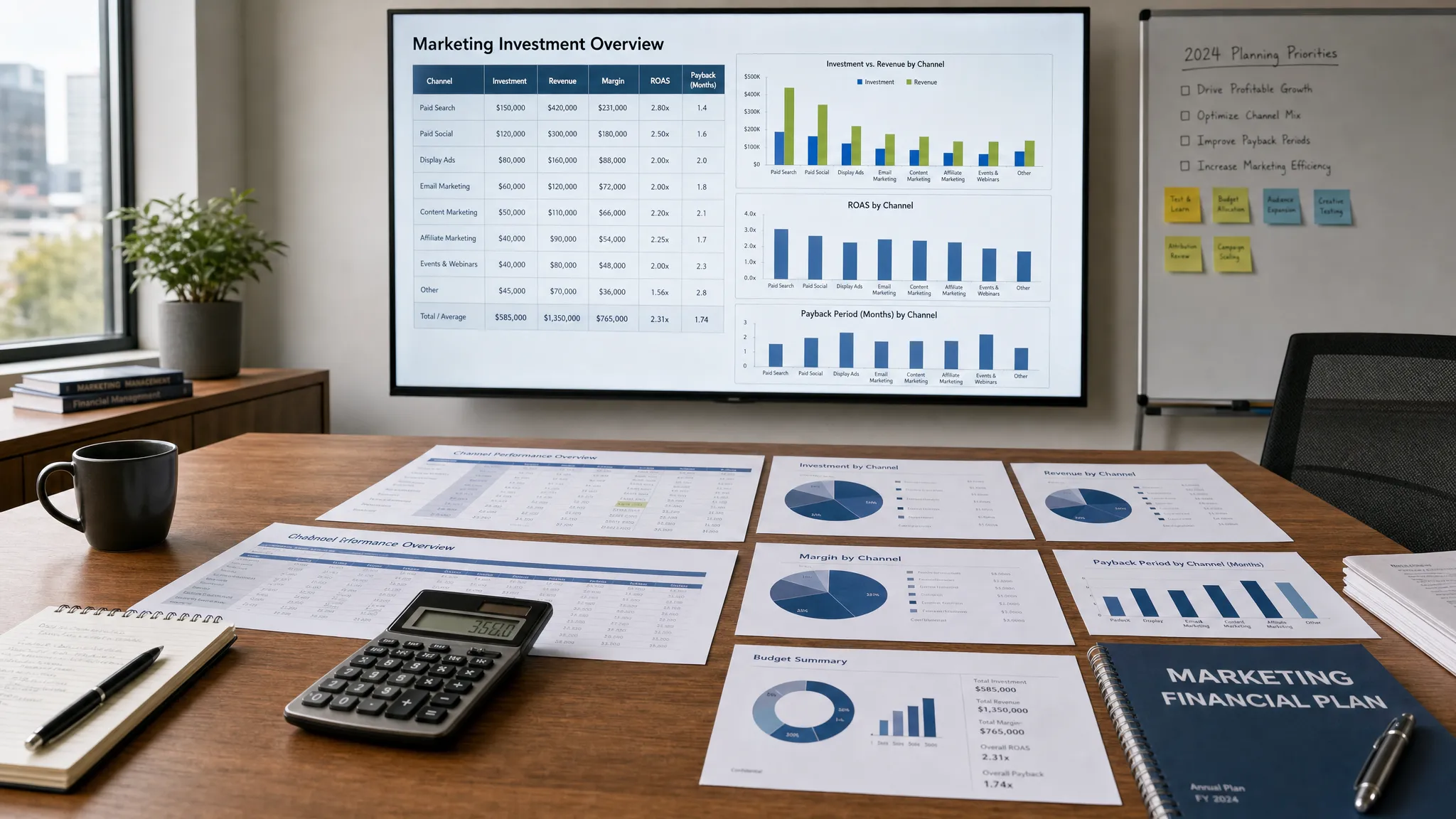
Marketing planning has often relied on historical performance, intuition, and quarterly reporting cycles. AI makes predictive analytics more accessible, helping teams forecast demand, estimate campaign performance, identify churn risk, and model budget scenarios.
For leaders, this changes how marketing investments are evaluated. Instead of asking only what happened last month, teams can ask what is likely to happen next and what actions could improve the outcome.
Predictive analytics can help marketing teams prioritize:
Still, predictions are not guarantees. AI models depend on the quality and relevance of the data behind them. Leaders should avoid treating predictive scores as absolute truth. The best teams use predictions as decision support, then combine them with market context, customer feedback, and business judgment.
For a broader look at how analytics, automation, personalization, and AI-powered customer engagement are changing digital strategy, this overview of the AI-driven marketing revolution offers a useful companion perspective.
AI can generate headlines, ad concepts, image prompts, landing page variations, and email subject lines at a speed that was impossible for most teams a few years ago. This will make creative testing faster and cheaper.
But there is a catch. If every brand uses similar tools trained on similar patterns, average creative will become easier to produce and harder to notice. The real advantage will come from combining AI speed with a distinctive point of view.
Leaders should push teams to use AI for exploration, not imitation. AI can help generate a wide range of creative territories, but humans still need to decide which ideas are strategically sharp, emotionally resonant, legally appropriate, and aligned with the brand.
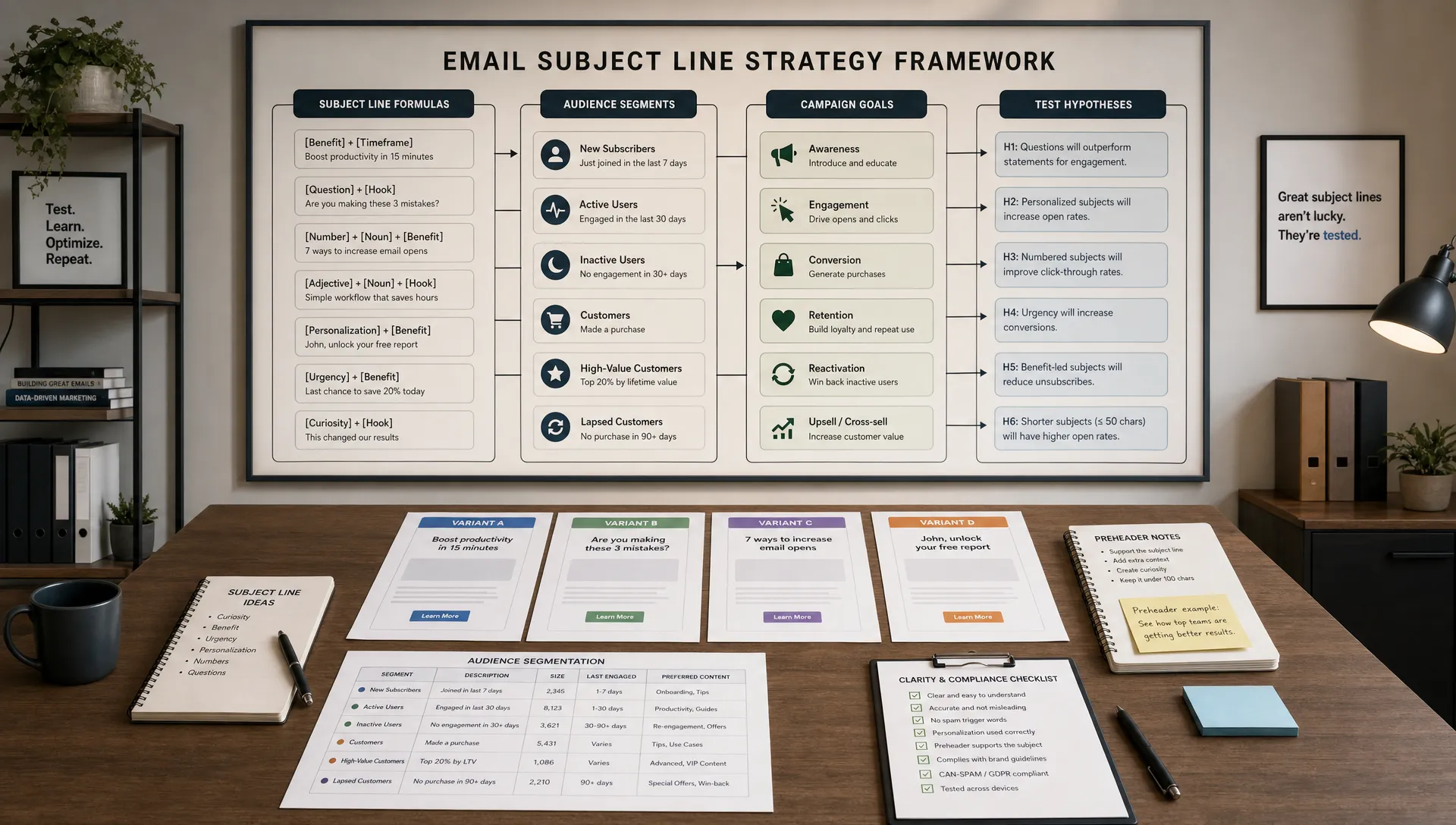
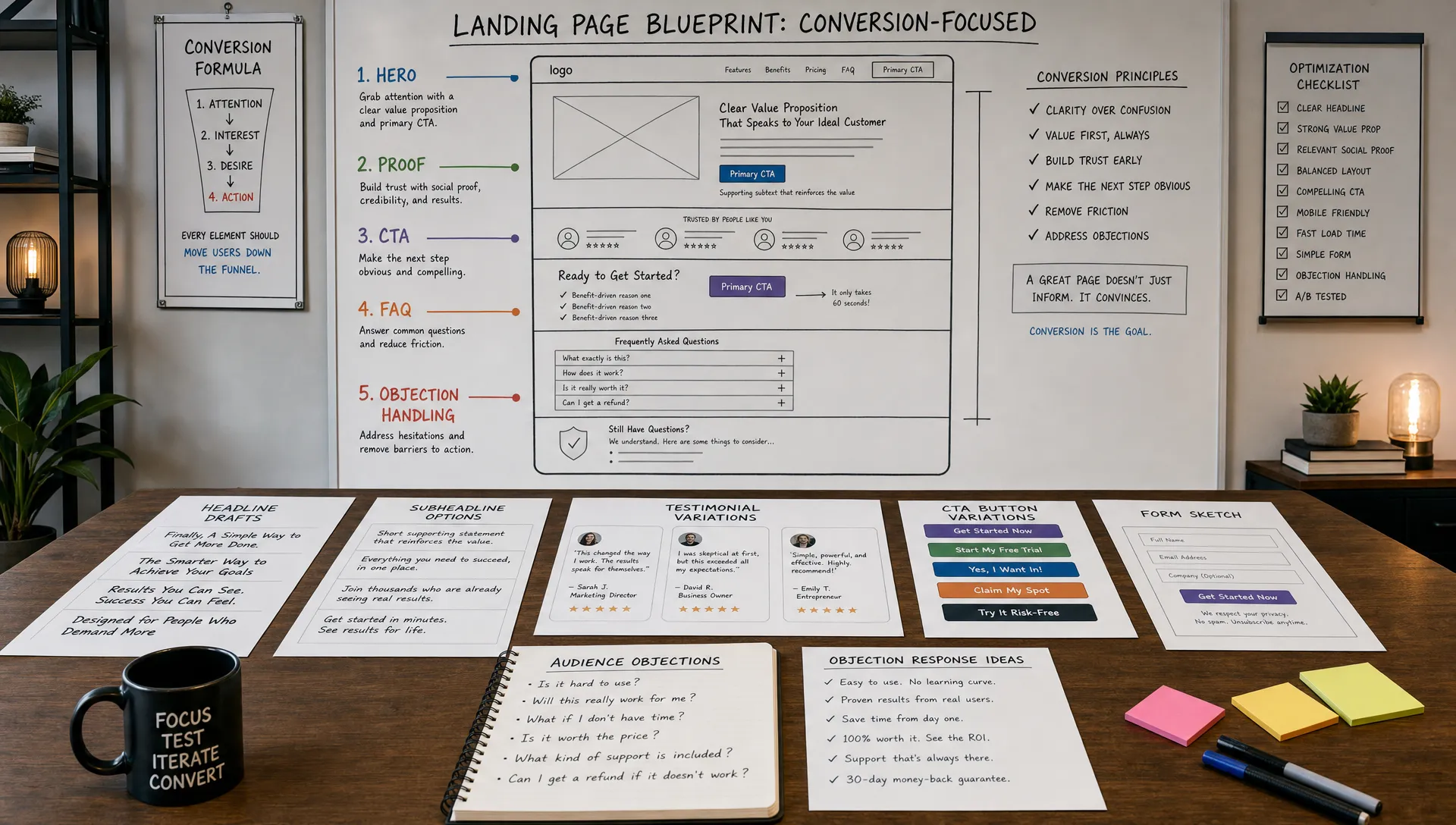
A strong creative testing program should include a clear hypothesis. Instead of testing random variations, teams should test meaningful differences: value proposition, emotional angle, audience pain point, offer structure, visual concept, or call to action. AI can accelerate the production of variants, but strategy should guide what gets tested.
AI chatbots were once viewed mainly as customer support tools. Now, conversational interfaces are becoming part of the full customer journey. They can help users compare products, qualify needs, find resources, complete onboarding steps, book demos, troubleshoot issues, and access personalized recommendations.
For marketing leaders, this creates a new kind of digital experience. Instead of forcing visitors to navigate static pages, brands can offer guided conversations that adapt to the user's intent.
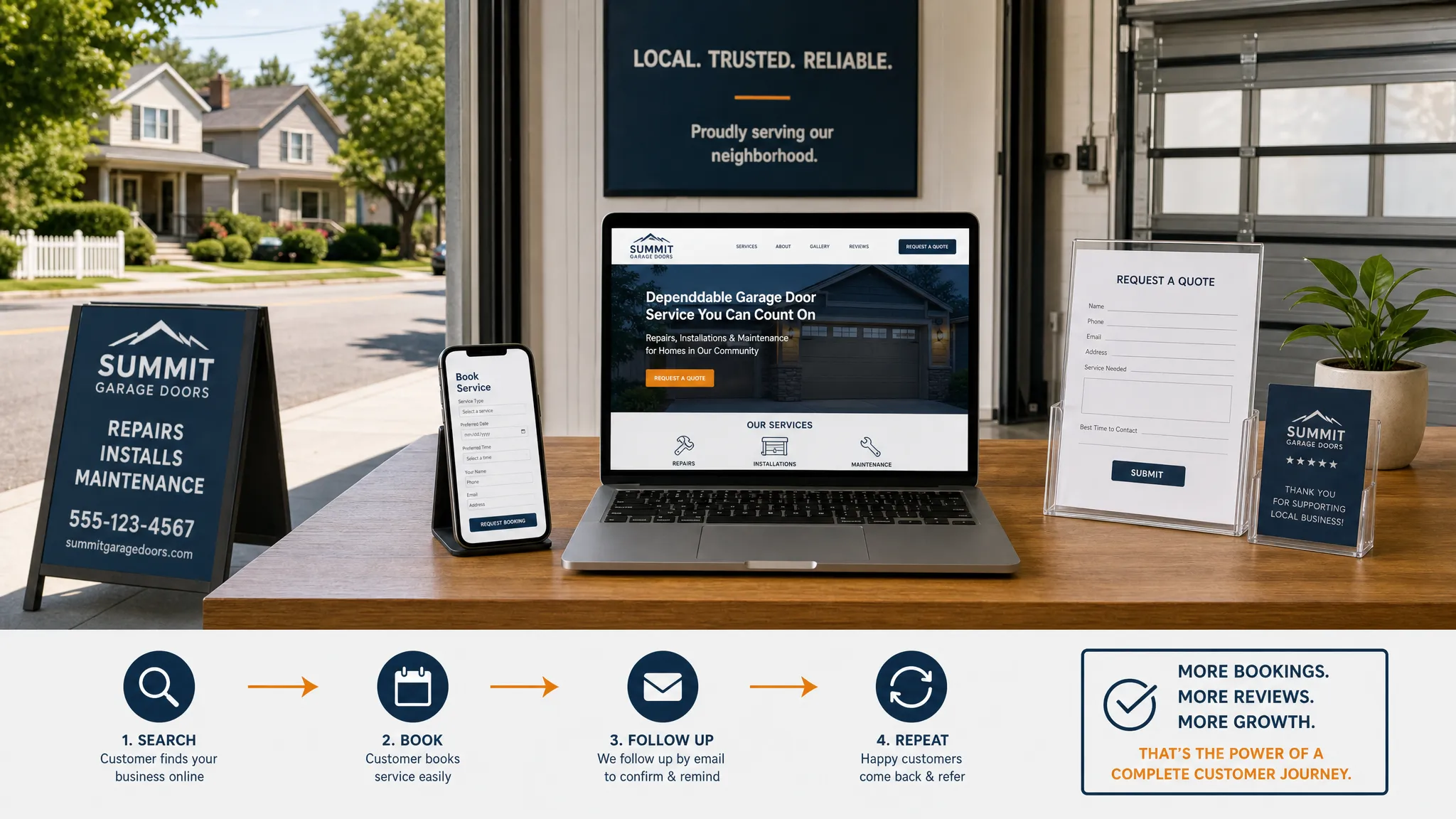
The best use cases are practical and specific. A B2B website might use conversational AI to guide visitors to the right case study, calculator, or product page. An ecommerce brand might help shoppers compare options based on preferences. A professional services firm might use AI to answer common questions before routing qualified prospects to a human expert.
The important principle is transparency. Users should know when they are interacting with AI, when information may need verification, and how to reach a human when the issue is complex or sensitive.
Many leaders think of AI governance as a legal or compliance topic. It is also a marketing performance topic. Without governance, teams risk publishing inaccurate claims, using unapproved brand language, mishandling customer data, violating platform policies, or creating inconsistent customer experiences.
Effective governance does not have to slow teams down. In fact, clear rules often make adoption faster because marketers know what is allowed, what requires review, and which tools are approved.
A practical marketing AI governance framework should define:
Leaders should also clarify accountability. If an AI-assisted campaign includes an inaccurate claim, the responsibility still belongs to the organization. Governance helps teams innovate while protecting trust.
AI adoption will not look the same in every industry. A SaaS company, law firm, financial services brand, healthcare organization, and ecommerce retailer all face different buying cycles, compliance expectations, data considerations, and content needs.
Generic automation can save time, but industry-specific AI marketing can create stronger results. For example, a finance brand may prioritize compliant educational content and risk-aware personalization. A legal brand may focus on trust-building guides and intake workflows. A SaaS company may use AI to improve onboarding, lifecycle messaging, product-led growth, and account expansion.
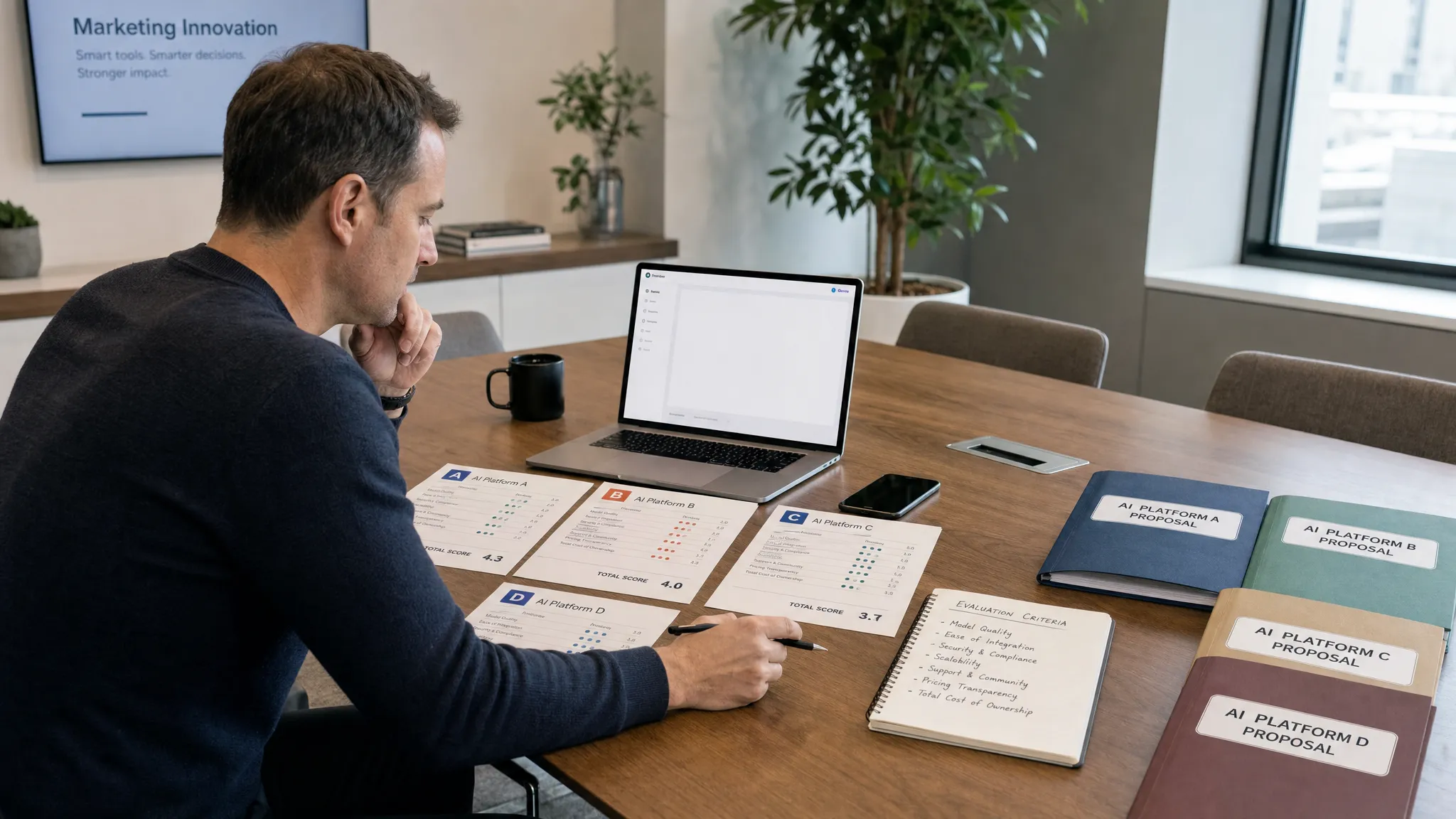
This is where leadership context matters. AI tools are most valuable when they are connected to the realities of the business model. Leaders should avoid adopting technology just because it is popular. Instead, they should define the marketing problems that matter most in their sector and then select tools, prompts, workflows, and analytics around those priorities.
AI will not eliminate the need for marketers, but it will change what great marketing talent looks like. Teams will need people who can combine strategic thinking with AI fluency, data interpretation, experimentation, and editorial judgment.
Prompting is useful, but it is only one skill. Marketers also need to know how to evaluate AI output, structure workflows, interpret analytics, protect brand voice, understand customer psychology, and collaborate with legal, sales, product, and data teams.
Leaders should consider upskilling in areas such as:
The most effective teams will not separate AI strategy from marketing strategy. They will build AI into recurring planning cycles, campaign retrospectives, content operations, and performance reviews.

Watching trends is useful only if it leads to action. The next step is to turn AI from an abstract priority into a focused roadmap.
Start with an audit. Identify where your team already uses AI, which tools are approved, which workflows are informal, and where risk may exist. Many organizations discover that AI adoption is already happening quietly across content, analytics, design, research, and sales enablement.
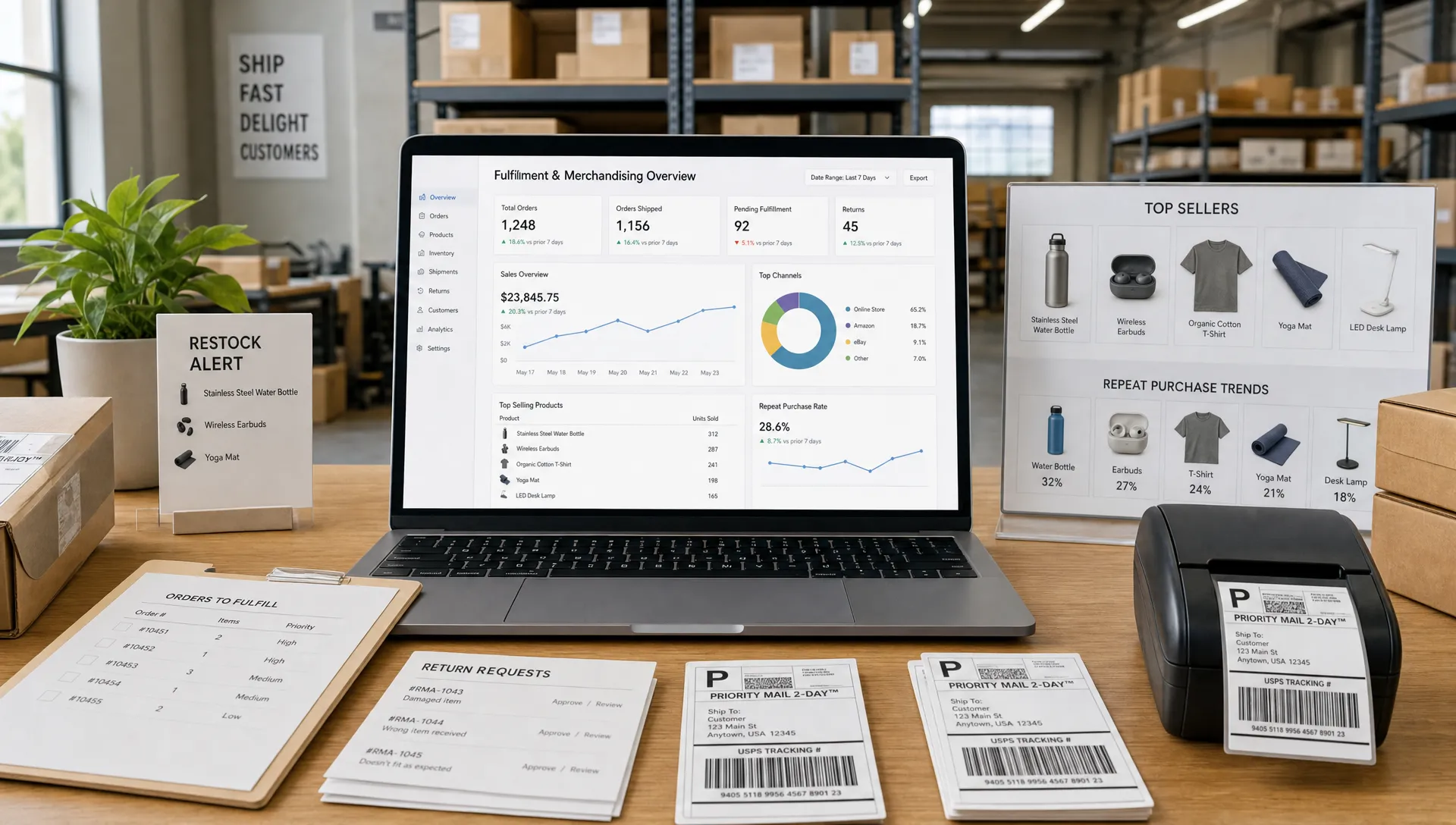
Next, select a small number of high-value use cases. Good candidates are tasks with high repetition, measurable outcomes, and manageable risk. Content repurposing, reporting summaries, campaign briefs, SEO research, email testing, and lead scoring support are often practical starting points.
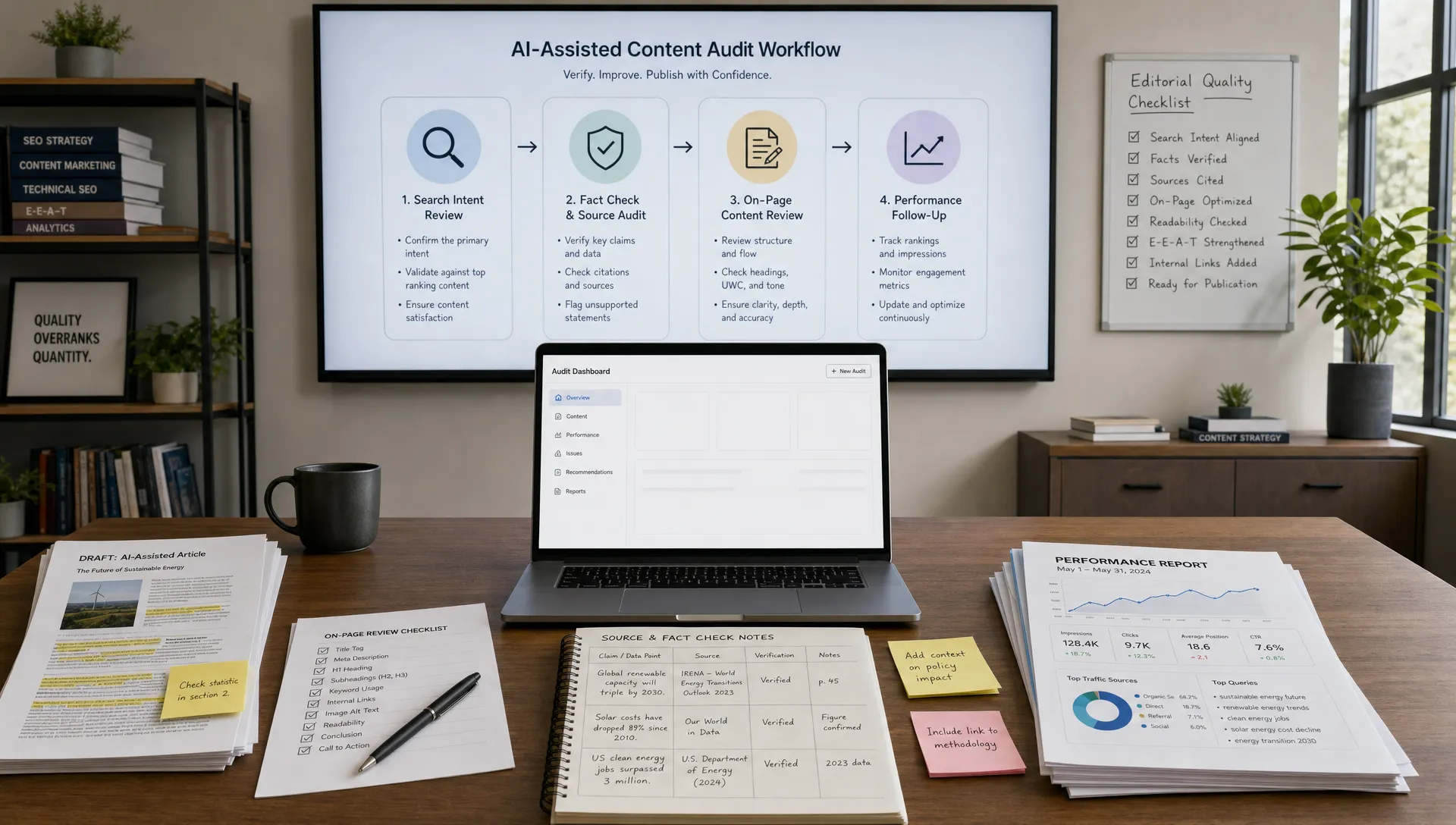
Then create standards. Define what quality looks like, how outputs are reviewed, what data is restricted, and who owns final approval. This step is essential because AI can make teams faster, but speed without standards creates inconsistency.
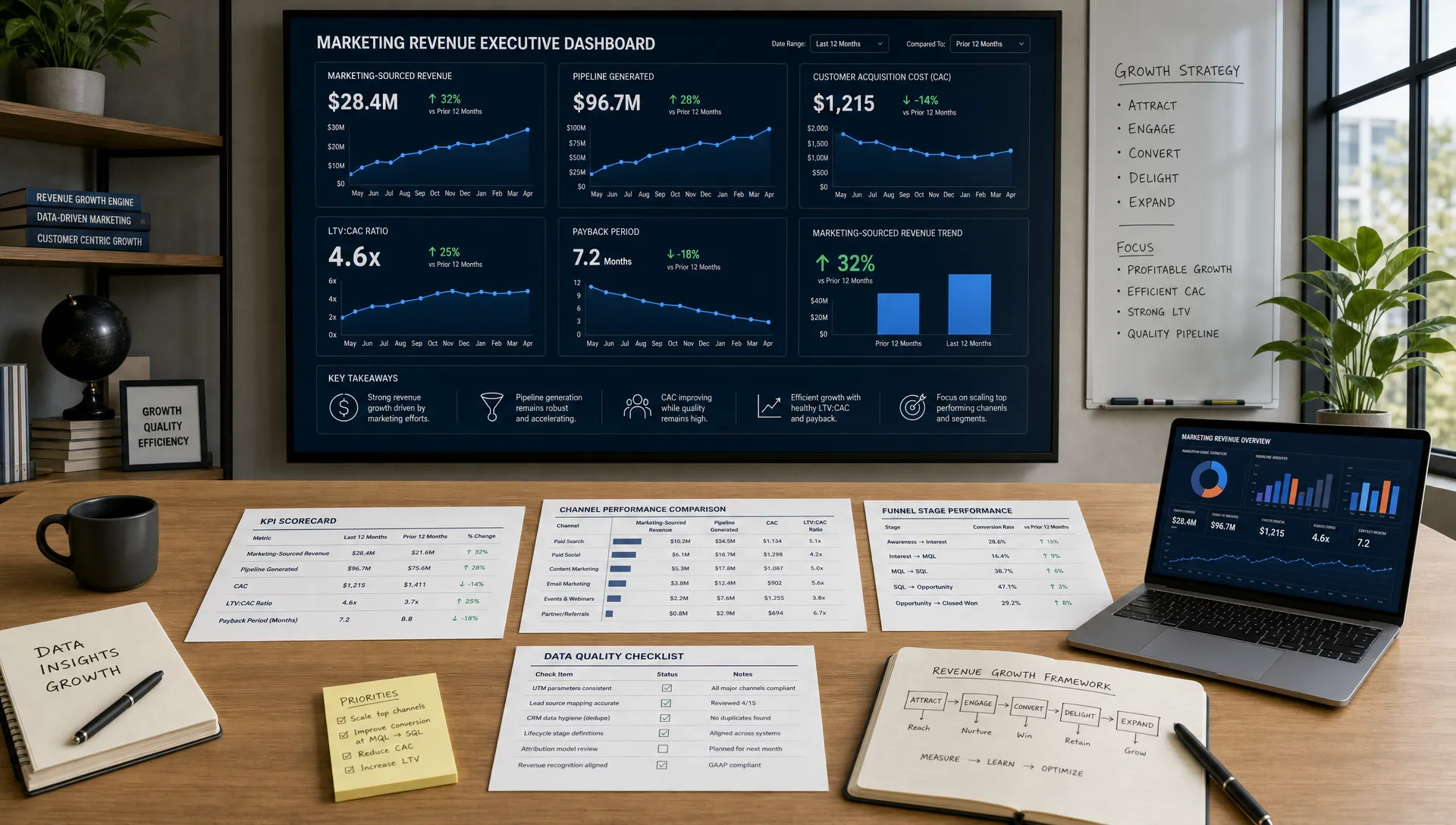
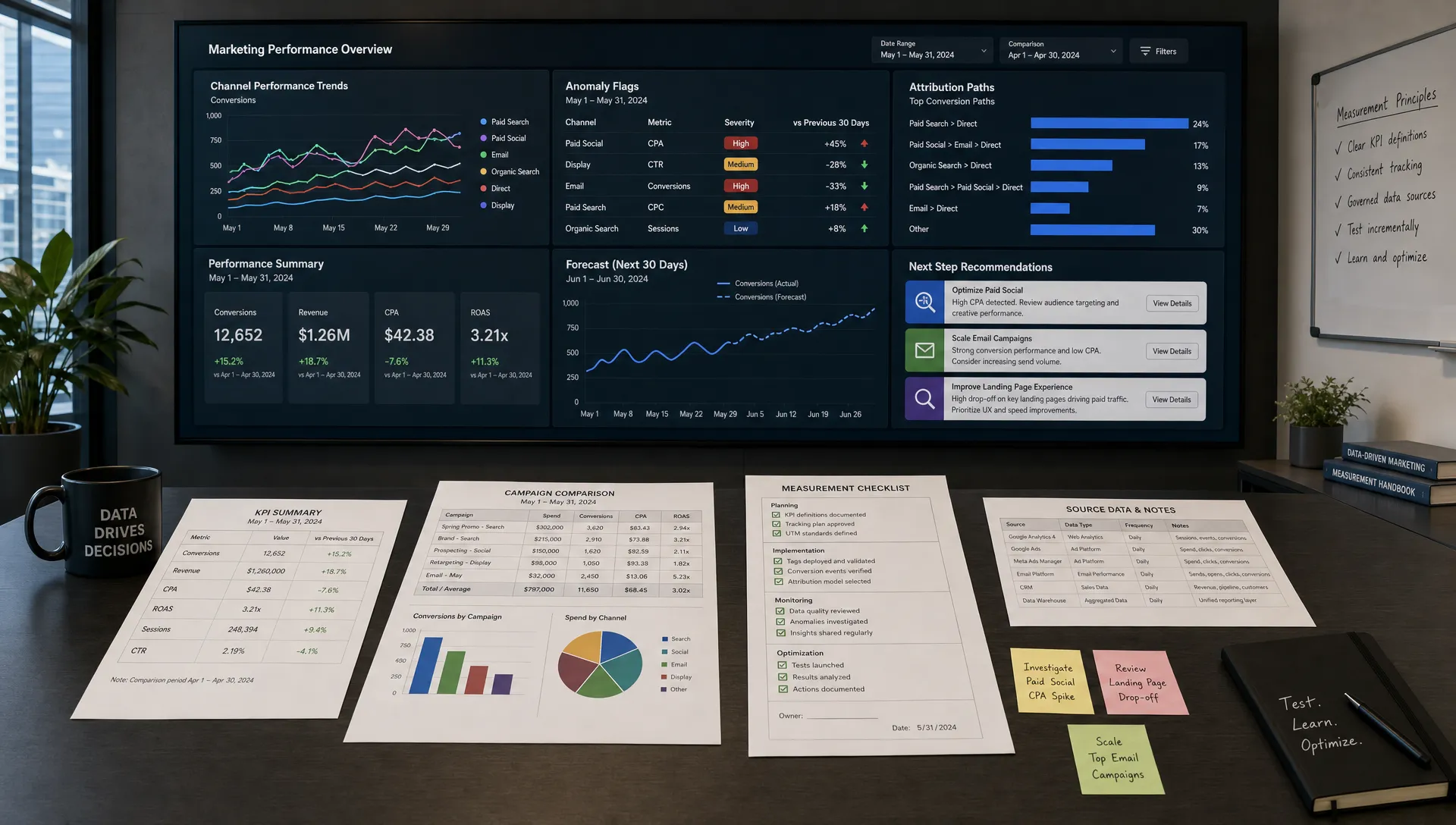
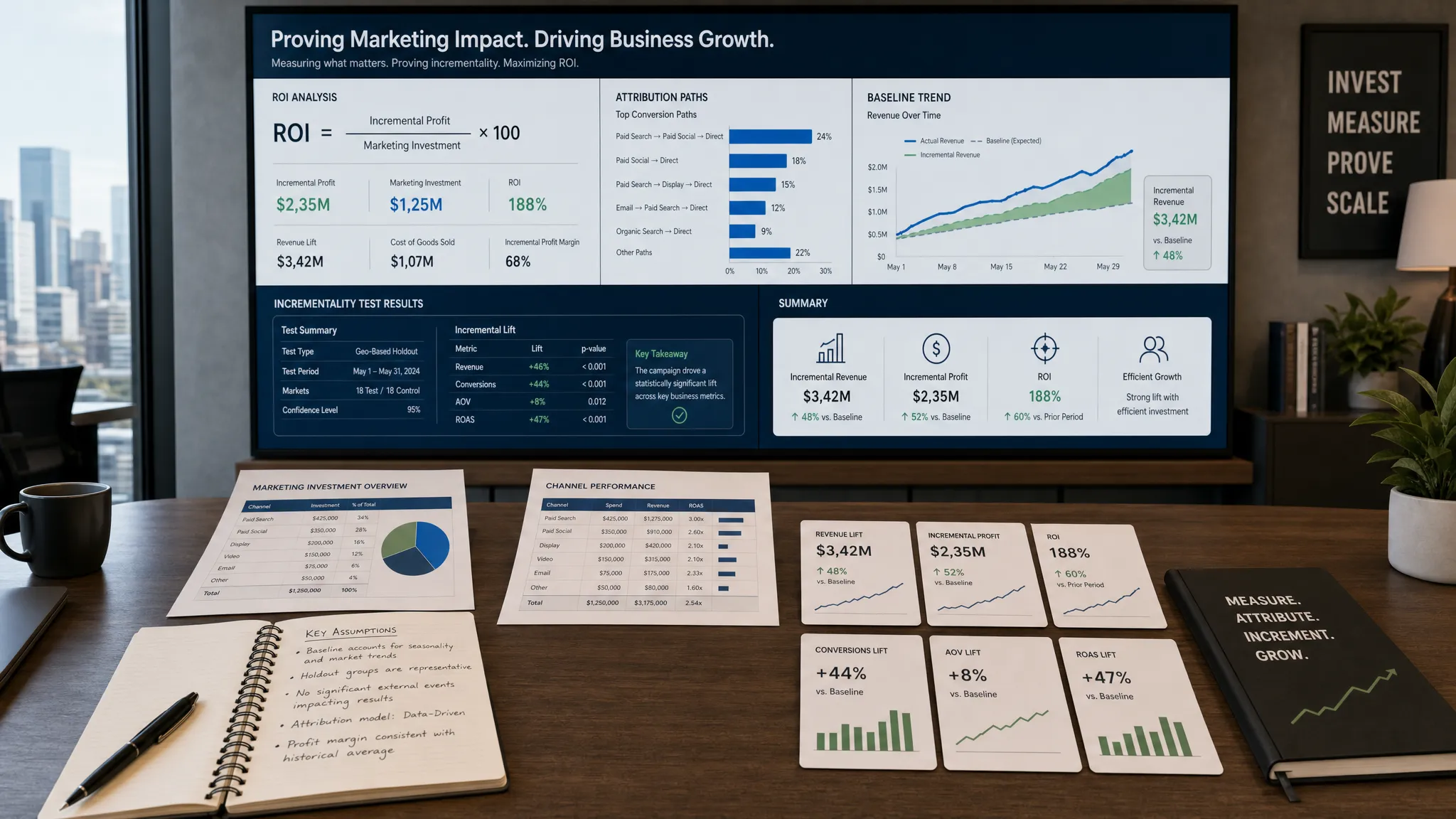
Finally, measure business impact. Do not measure AI adoption only by time saved. Track whether AI-supported workflows improve conversion rates, content performance, campaign velocity, customer satisfaction, cost efficiency, or sales alignment.
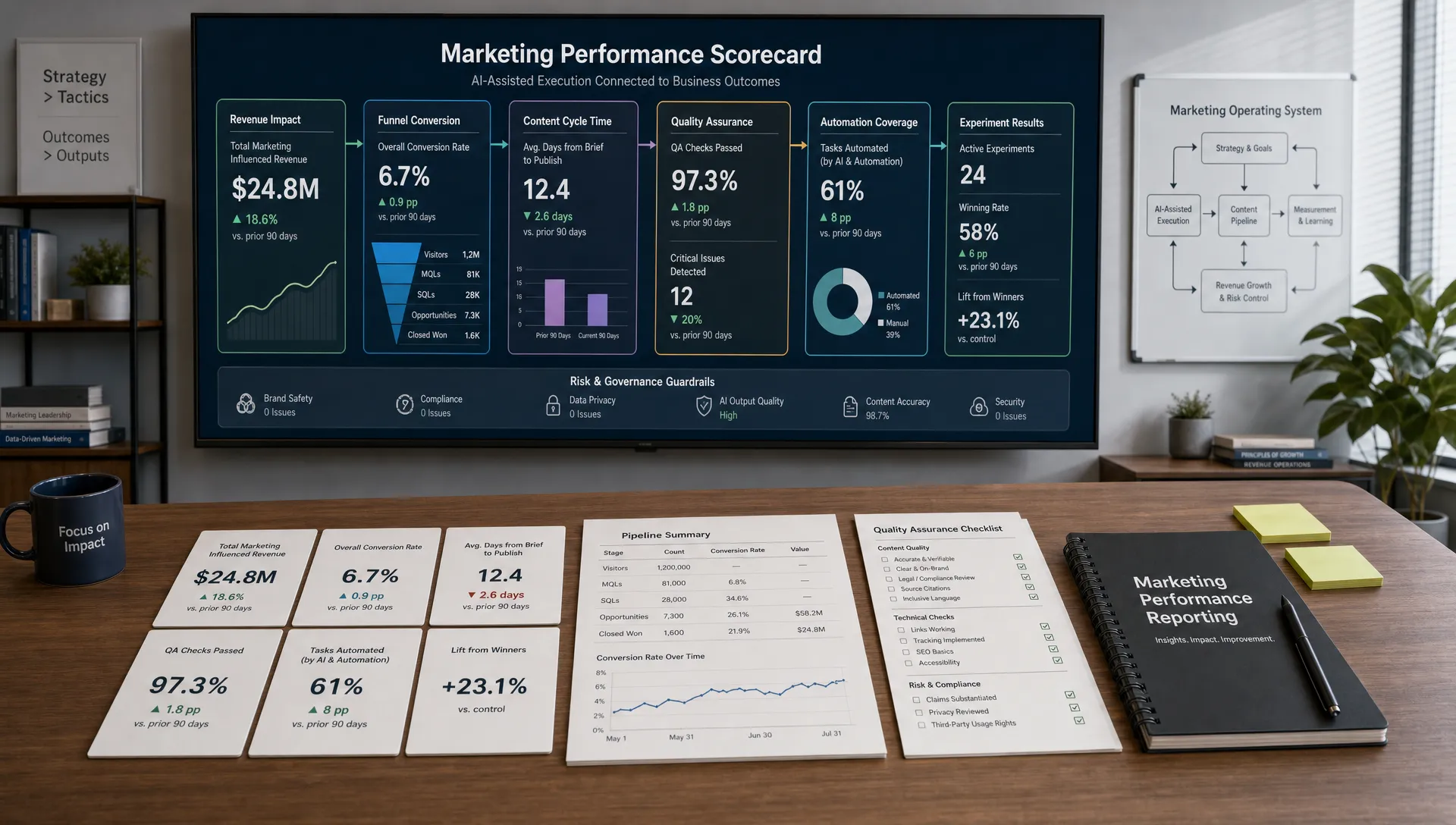
Leaders need a balanced scorecard. If the only metric is output volume, teams may produce more content without improving growth. If the only metric is cost reduction, the organization may miss opportunities for better customer experience and stronger positioning.
Consider tracking:
The best AI and marketing programs will connect efficiency metrics with growth metrics and trust metrics. That balance is what turns AI adoption into durable advantage.
What is the biggest AI and marketing trend leaders should watch? The biggest trend is the shift from isolated AI tools to connected AI workflows. Leaders should focus on how AI improves the full marketing operating system, including planning, content, personalization, analytics, automation, and governance.
Will AI replace marketing teams? AI is more likely to change marketing roles than replace entire teams. Repetitive production tasks may become more automated, while strategy, creativity, customer insight, brand judgment, and cross-functional leadership become even more important.
How should a company start using AI in marketing? Start with a practical audit of current AI usage, then choose a few measurable use cases with manageable risk. Build review standards, define approved tools, train the team, and track impact on business outcomes rather than output alone.
What are the main risks of using AI in marketing? Key risks include inaccurate claims, generic content, privacy issues, bias, brand inconsistency, and over-automation of customer interactions. These risks can be reduced with governance, human review, clear data policies, and strong quality standards.
How can small marketing teams benefit from AI? Small teams can use AI to speed up research, draft content, repurpose assets, summarize performance data, generate campaign ideas, and improve testing. The biggest benefit is focus: AI can reduce manual work so lean teams spend more time on strategy and growth.
The future of AI and marketing belongs to teams that combine speed with strategy. Leaders do not need to chase every new tool, but they do need a clear plan for where AI fits, how it is governed, and how it supports measurable growth.
AIMarketer Hub helps businesses and marketers explore practical AI-powered marketing tools, prompt resources, SEO support, calculators, performance insights, and industry-specific guides. If your team is ready to automate smarter, optimize campaigns, and build a more scalable marketing workflow, start exploring the resources at AIMarketer Hub.